

SUBSCRIBE TO OUR FREE NEWSLETTER
Daily news & progressive opinion—funded by the people, not the corporations—delivered straight to your inbox.
5
#000000
#FFFFFF
To donate by check, phone, or other method, see our More Ways to Give page.
Daily news & progressive opinion—funded by the people, not the corporations—delivered straight to your inbox.
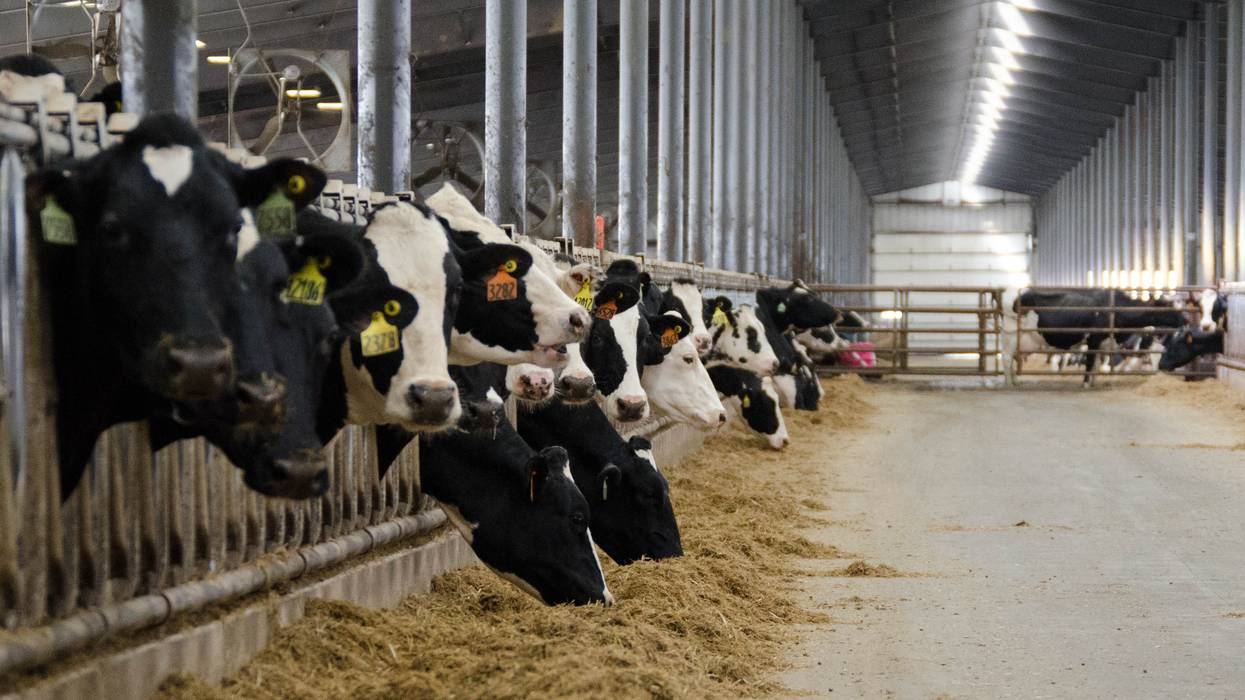
Congress should pass measures like the Milk From Family Dairies Act (MFDA), which ensures farmers a decent price without driving up costs for consumers and relying on taxpayer-funded subsidies.
Sometimes the truth stares you right in the face.
Case in point—in the middle of his agricultural roundtable event with farmers and Republican representatives held this past June 5 in Chippewa Falls, Wisconsin, President Donald Trump took a moment to reflect about a different meeting he once had with another group of producers. As the president remembered, he told the farmers, “I’m going to get you a subsidy.” To his surprise they responded that they didn’t want subsidies, but rather, “a level playing field.”
It would be easy to gloss over the truth in Trump’s recollection, especially as he rambled on about many things unrelated to farming such as repairing monuments around Washington DC, his disdain for Democrats, and how the Southern border was closed to migrants. This, as NFL Hall-of-Famer Joe Thomas sat to Trump’s side and drew gushing remarks from the president about the retired player’s body.
Unlike Thomas, most farmers cannot draw on millions to stay on the land. Instead, they can turn to the government to promote fair markets. As much could happen now, during June Dairy Month, as the Farm Bill is working through Congress and much needed relief could come by including in the ominous piece of legislation key reforms to the dairy industry.
Instead of such piecemeal fixes, the dairy industry needs industry-wide reform, as the farmers who spoke with Trump once said, “to level the playing field.”
To be fair, discussion during Trump’s roundtable did include some dairy policies.
Agriculture Secretary Brooke Rollins, for instance, alluded to trade deals that would increase exports. Rep. Derrick Van Orden (R-Wis.), whose district the roundtable took place in and who appears in danger of losing his seat to the daughter of dairy farmers, Rebecca Cooke, touted the Whole Milk for Healthy Kids Act. The act restores whole and reduced fat (2%) milk options at schools.
The problem is that both initiatives don’t do much.
First, the evidence shows that increasing exports doesn’t keep people farming.
Farm Bureau data shows that since 2016, total dairy export value has doubled from just over $4 million to over $8 in 2024. But during this same period, the number of licensed dairy herds has collapsed, from over 40,000, to under 25,000.
Meanwhile, serving milk at school lunch does open markets. And nationwide, since 2024, more people have been consuming milk after years of decline. But even amid rising demand, in 2025 Wisconsin saw a 700% increase in bankruptcies, particularly hitting dairy farmers.
Instead of such piecemeal fixes, the dairy industry needs industry-wide reform, as the farmers who spoke with Trump once said, “to level the playing field.”
The proposal that would advance such change is the Milk From Family Dairies Act (MFDA). Created by the National Family Farm Coalition and endorsed by over 90 organizations, the MFDA ensures farmers a decent price without driving up costs for consumers and relying on taxpayer-funded subsidies.
The principle behind the MFDA is supply management, similar to the system in Canada. In this system, consumer supply demands are balanced with prices that farmers are paid for their milk in regular meetings of stakeholders. For farmers, receiving compensation for at least the cost of production is a big deal, as since 2021, even taking into consideration advantages of increasing herd size, dairy producers across the board have consistently had to sell their milk at a loss as the price of feed, seed, and fertilizer rise.
Consumers benefit as the MFDA makes investments in local dairy processors, increasing competition to drive down prices, and corporate concentration in the industry is targeted with anti-trust enforcement to curtail price gouging by large-scale retailers at the grocery store. Currently, taxpayers pick up the tab for farmers who have financial troubles with subsidies, or direct payments, which Trump has handed out repeatedly across his administrations.
Unlike Joe Thomas, most farmers don’t have millions to keep them going. Instead, they have the government, which should ensure fair markets. So, to mark June Dairy month, our lawmakers should listen to farmers, level the playing field, and include elements from the MFDA into the Farm Bill.
"Greenwashing and false marketing will not be tolerated, no matter how big you are and where you are based," said one Greenpeace Denmark campaigner.
Greenpeace Denmark this week filed a formal complaint against the Denmark-based dairy producer Arla Foods, accusing the firm of creating a "false and misleading picture" of actual emission reductions the company has achieved.
The green group is arguing the company has both misled consumers when it comes to Arla's progress toward achieving climate goals and that its reporting does not meet requirements under the Danish Annual Accounts Act.
Arla is the world's fifth-largest dairy company, according to its website.
Greenpeace Denmark submitted the complaint to the Danish Business Authority, the body in Denmark that controls and supervises compliance with business regulations, on Monday.
Greenpeace Denmark says it is concerned that data from Arla's annual reports appears to show that Arla has "changed its calculation methods and data foundation for Scope 3 emissions per kilogram of milk and whey since the original 2015 baseline year," but the dairy producer has not consistently or transparently adjusted that baseline across all of its reporting.
"The 2015 baseline is built on older, less precise national statistics from 2012, and the subsequent shift to more specific farm-level data and new emission factors—without a clear and consistent baseline adjustment—creates major uncertainty about Arla's real emission reductions since 2015," per the complaint.
The Danish Annual Accounts Act includes requirements to disclose corporate social responsibility information that is true and not misleading. Compliance with this provision, according to the complaint, "is essential because the provision is intended to ensure transparency about a company's environmental and broader sustainability impacts. The rules aim to give investors, partners, and society at large access to essential, credible, and comparable information about corporate sustainability practices, risks, and objectives."
"Arla presents itself as a Big Dairy role model on climate and nature, with a concern for animal welfare. But behind the scenes, it is lobbying to repeal laws that ensure the well-being of farm animals. This must stop, and the public needs to know," said Gustav Martner, creative lead and advertising expert at Greenpeace Nordic, in a statement published Wednesday.
This latest complaint comes on the heels of two complaints filed by Greenpeace Sweden against Arla, also alleging "systemic greenwashing," and a lawsuit filed by Greenpeace Aotearoa (New Zealand) last year against the dairy firm Fonterra.
"By coordinating complaints against Arla in both countries it calls home, we aim to set a precedent: Greenwashing and false marketing will not be tolerated, no matter how big you are and where you are based," said Christian Fromberg, campaign lead of agriculture and nature at Greenpeace Denmark, in a statement on Wednesday.
Common Dreams wrote to Arla for comment about the complaints. The company did not respond before press time.
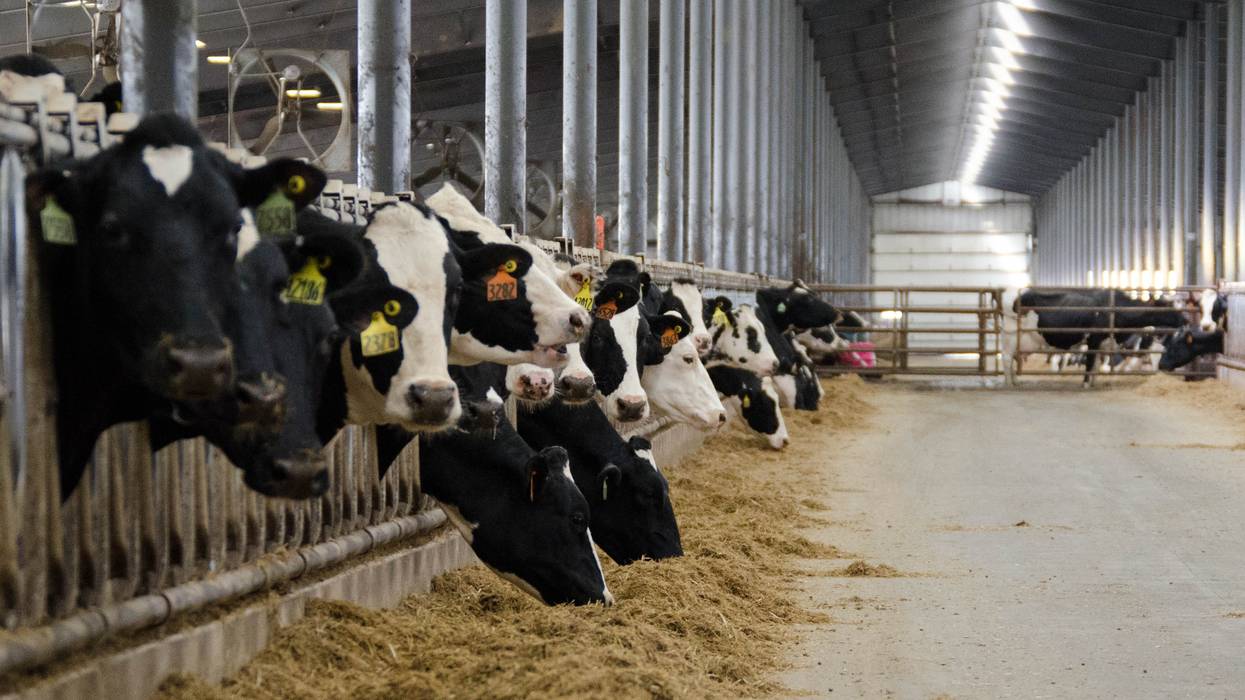
"Secretary Vilsack can't keep his head in the sand anymore, because this letter delivers the message loud and clear," said a Center for Biological Diversity campaigner.
More than 250 advocacy groups, scientists, and other experts on Thursday urged U.S. Secretary of Agriculture Tom Vilsack to "stop disregarding the science on the climate cost of meat and dairy in high-consuming countries like the United States, and advancing the industries that are driving agricultural emissions."
The coalition's letter—spearheaded by the Center for Biological Diversity—came after Vilsack attended the United Nations Climate Change Conference (COP28) last month and was asked if he was hearing about cutting meat consumption as a climate solution.
According to Politico, Vilsack responded that "I don't hear much about that," but "I did hear about the important role that strategies for methane reduction could play in making the current livestock industry more sustainable."
"We have to address our meat-heavy diets now, or the climate emergency will force us to."
The letter pushes back, highlighting that "in addition to numerous panels discussing this topic at COP28, the United States joined more than 150 nations in signing the Emirates Declaration on Sustainable Agriculture, Resilient Food Systems, and Climate Action."
"Furthermore, during the first-ever Food, Agriculture, and Water Day at COP, which you personally attended, the U.N. Food and Agriculture Organization launched a highly publicized roadmap to align food systems with the Paris agreement," the letter adds. "The FAO roadmap specifically identifies the inclusion of environmental considerations in national dietary guidelines as well as the importance of improving school food and public procurement programs as effective government actions."
Despite industry pressure, the meat and dairy sector's contributions to the climate emergency as well as the related crises of the accelerated spread of disease, biodiversity loss, deforestation, and water pollution were documented and acknowledged by scientists, campaigners, and governments long before COP28—which was flooded by lobbyists for not only fossil fuel giants but also Big Ag.
As the letter details:
The Intergovernmental Panel on Climate Change not only identified dietary shifts, including meat reduction, as a vital climate mitigation strategy needed to meet the urgent emissions-reduction targets but emphasized the urgency to act. Research has shown that even if the energy sector immediately became climate-neutral, we still would not be able to achieve the reductions necessary to avoid catastrophic climate change without reducing meat and dairy consumption.
Additionally, the Kunming-Montreal Global Biodiversity Framework for the Conference on Biodiversity reaffirms the need to reduce animal protein under Target 16. Reducing animal protein is specifically named in the International Union for Conservation of Nature's Global Species Action Plan to achieve the Kunming-Montreal goals. Studies show that climate and biodiversity action must be aligned and failing to do so impedes our ability to address either crisis and further threatens food security.
"The science shows sustainable dietary shifts are key in high-consuming nations like the United States. Changes to production alone are not enough," the letter asserts. "The United States must take a leading role in reducing food system emissions with strategies that address both production and consumption of animal-based foods."
The U.S. Department of Agriculture "has repeatedly been urged by scientists (including its own scientific advisory committees), environmental experts, and public health advocates over the past decade to address excessive meat and dairy consumption in food and nutrition policy," the coalition wrote to Vilsack. "Under your leadership, the USDA has instead relied on false solutions such as feed additives, which have minimal impact in reducing emissions and aren't scalable, and biogas, which worsens the problem of pollution and greenhouse gas emissions."
The groups have three key demands for the USDA chief:
"Secretary Vilsack can't keep his head in the sand anymore, because this letter delivers the message loud and clear," said Jennifer Molidor, a senior food campaigner at the Center for Biological Diversity, in a statement. "We have to address our meat-heavy diets now, or the climate emergency will force us to."
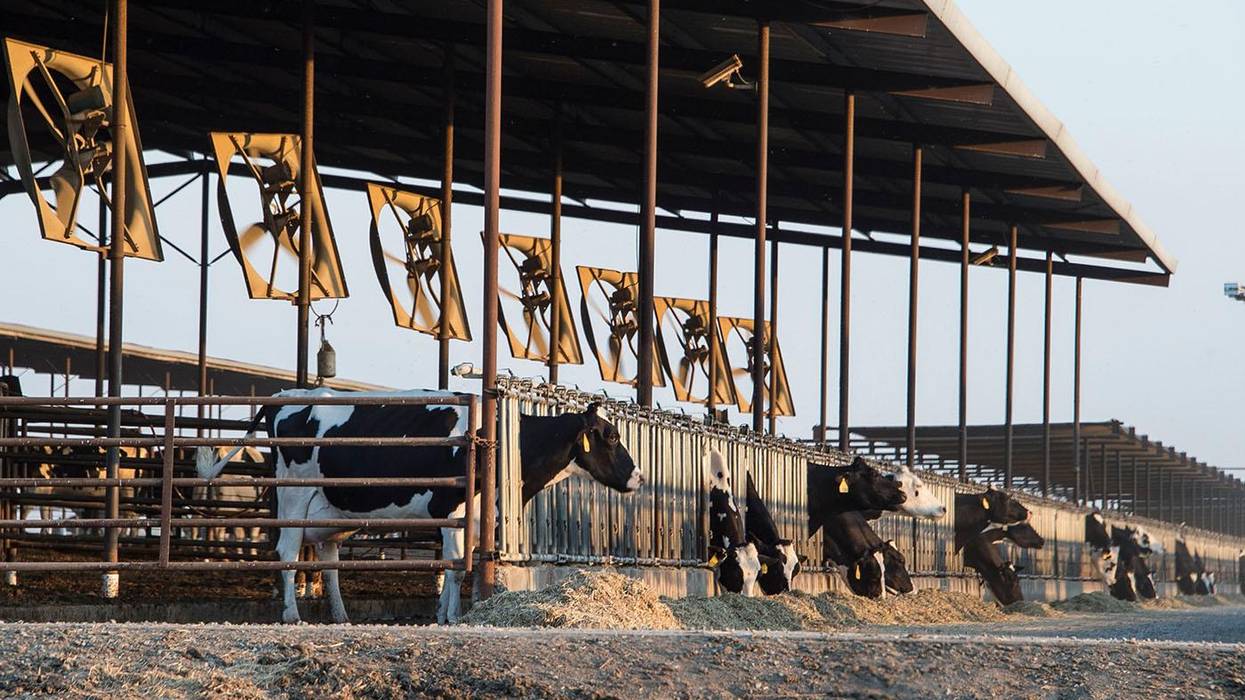
"Wherever you go, whatever you do, if it involves revealing anything about the devastating impacts of animal agriculture... you are beaten down for it," said one advocate.
A landmark report by the United Nations Food and Agriculture Organization forced global policymakers to consider greenhouse gas emissions from livestock and the corporate farming industry nearly two decades ago—and current and former officials at the agency revealed Friday that they were subjected to censorship and internal pressure from meat and dairy industry lobbyists for years afterwards, with ramifications that likely persist today.
As policymakers prepare to discuss agriculture and the climate crisis at the upcoming 2023 United Nations Climate Change Conference (COP28), The Guardian spoke to 20 former and current FAO officials about the response from the industry after the FAO revealed in 2006 that about 18% of global greenhouse gas emissions were attributable to livestock.
Between 2006 and at least 2019, the staffers said, FAO management frequently tried to suppress further investigations into the connection between livestock, factory farming, and the climate crisis—in an attempt to prevent the agency from building on its findings in the landmark report.
Big Ag lobbyists were a major driver of the suppression attempts, said ex-officials.
"There was substantial pressure internally and there were consequences for permanent staff who worked on this, in terms of their careers."
"They had a strong impact on the way things were done at the FAO and there was a lot of censorship," said one of the former staffers, many of whom spoke anonymously. "It was always an uphill struggle getting the documents you produced past the office for corporate communications and one had to fend off a good deal of editorial vandalism."
The "editorial vandalism" included the rewriting and diluting of key passages regarding greenhouse gas emissions and livestock, while management also "buried" a paper critical of Big Ag. Some officials who focused on the issue were excluded from meetings and summits.
"It's not that anyone would come to you and say: 'Stop this! We don't like this work,'" one former official told The Guardian. "They would just make your work difficult. They would not invite you to a meeting with a donor. You would not get a slot when you should be speaking. You would not get the support from project development, from capacity building, from all kinds of other units in the FAO that others would get."
Henning Steinfeld, the head of the FAO's livestock policy division who led the publication of the 2006 report, titled Livestock's Long Shadow, told The Guardian that he and like-minded staffers came to be seen as "a pest that needs to be eradicated," while lobbyists for the meat and dairy industries, which were each valued at close to $1 trillion in recent years, complained that the FAO had "fallen into the hands of vegan activists."
"There was substantial pressure internally and there were consequences for permanent staff who worked on this, in terms of their careers," said another former official. "It wasn't really a healthy environment to work in."
Joanna Randall, a plant-based food advocacy campaigner with the Humane Society International in the U.K., said considering the "absolutely historic impact" that the FAO's 2006 report had on public understanding of the greenhouse gas emissions caused by livestock, she was "absolutely not" surprised to learn about the censorship that followed.
The Guardian noted that the pressure felt by officials in recent years at FAO may have resulted in questionable official estimates regarding the current state of methane emissions from livestock and their contribution to planetary heating.
After estimating in 2006 that 18% of global emissions came from livestock, a 2013 paper by the agency claimed the number ws only 14.5%. The FAO currently estimates that about 11.2% of emissions are attributed to the meat and dairy industry.
"This seems counter-intuitive, given that during the same period, the FAO recorded a 39% increase in global meat production," The Guardian noted.
Other studies completed outside the FAO have concluded between 16.5% and 20% of greenhouse gas emissions come from animal products
"It's no coincidence that industry's involvement has led to lower overall relative estimates of emissions for livestock," University of Miami environmental science professor Jennifer Jacquet told the outlet. "Industry was taken aback by Livestock's Long Shadow. It caught them on the backfoot and they had to regroup, double down, and figure out how to get control of the narrative—and over the science to some degree."
At COP28 next month, policymakers will participate in the first-ever dedicated "food day" at a U.N. climate change summit, and will discuss food, agriculture, and water at at least 22 major events at the conference in Dubai.
"The emissions from farming is a huge driver of the climate crisis," Jennifer Larbie of Christian Aid told The Guardian, "and one which needs to be tackled at COP28 if we are to keep global heating in check."

"We encourage the IPCC to maintain its credibility by taking steps to ensure that Big Agriculture and the global meat industry have no influence over future reports."
As the United Nations marked International Day for Biological Diversity on Monday, advocacy groups and activists underscored the devastating impact of animal agriculture on the Earth's climate, while urging a leading U.N. panel to rebuff efforts by the meat and dairy industries to water down key processes and publications.
In recent letter to Hoesung Lee, who heads the Intergovernmental Panel on Climate Change, 98 groups and individuals noted how the IPCC in 2021 removed language from its Sixth Assessment Report underscoring the urgency of reducing meat consumption—especially in developed nations—and shifting to a plant-based diet as a crucial means of combating the climate emergency.
"The provision was reportedly heavily contested—and actively lobbied against—by the global meat industry via Brazil and
Argentina's delegations," the letter states. "Our organizations, representing millions of individuals who are concerned about the future of our planet, are deeply troubled by the potential influence of the meat industry's years-long campaign of interference on any climate recommendations that include plant-based diets as a solution."
"We are writing to urge the IPCC to fully recognize the scientific evidence that shows the role of food and agriculture in driving the climate crisis and to ensure that future reports specifically highlight plant-based diets as a key climate strategy," the letter states. "Furthermore, we encourage the IPCC to maintain its credibility by taking steps to ensure that Big Agriculture and the global meat industry have no influence over future reports."
According to the U.N. Food and Agriculture Organization, animal agriculture produces 16.5% of global greenhouse emissions. On its own, the global livestock industry—which emits the methane equivalent of 3.1 gigatons of carbon dioxide annually—would be the world's third-largest greenhouse polluter.
Nearly one-third of Earth's ice-free land is currently used for livestock production. Beef production alone is responsible for more than 40% of the world's tropical deforestation, while a single quarter-pound beef burger requires the equivalent of 460 gallons of water to produce.
The letter continues:
Meat and dairy industry actors have long obfuscated the negative climate impacts of their practices while putting up roadblocks against healthy and necessary regulations. In fact, the industry's tactics seem to be modeled on the fossil fuel playbook, using its tremendous lobbying power to pressure lawmakers to prevent regulations.
While the IPCC has historically managed to recommend plant-based diets, mention of plant-based diets was notably lacking from this year's report. The scientific community and the public at large deserve to have the IPCC's recommendations be unbiased, untainted, and undiluted by interference from industries that are financially incentivized to undermine science. The IPCC's recommendations would be more powerful and more effective with the assurance that there was no interference [from] industry lobbyists and political actors who prioritize their industry over the common good.
The letter's signatories recommend "avoiding meat and dairy products" as "the single-biggest way to reduce an individual's environmental impact on the planet."
According to the letter, if the world's biggest meat-eaters limited their beef intake to 1.5 hamburgers per week, "they could
avoid about 5.5 billion tons of greenhouse gas emissions per year—twice the annual emissions of India."
Additionally, "if everyone in the U.S. ate no meat or cheese just one day a week, it would have the same environmental impact as taking 7.6 million cars off the road."
"We urge you to take steps to prevent both any potential future interference by the meat and dairy industries, and the appearance of such interference, in a manner that could weaken these necessary recommendations around the urgent need to reduce meat consumption and production," the letter concludes. "The world is counting on the IPCC to communicate the most accurate science and most effective solutions for the safekeeping of our planet's future."