
SUBSCRIBE TO OUR FREE NEWSLETTER
Daily news & progressive opinion—funded by the people, not the corporations—delivered straight to your inbox.
5
#000000
#FFFFFF
To donate by check, phone, or other method, see our More Ways to Give page.


Daily news & progressive opinion—funded by the people, not the corporations—delivered straight to your inbox.
It is a tragic irony that murals meant to represent the contract between the government and its citizens—the Social Security that over 70 million Americans rely on today—would be sold to the highest bidder rather than preserved for posterity.
Painted figures haunt an empty building. A boy leaning on a pair of crutches. A father and son wandering a barren railroad track. A nuclear family at a picnic table. These poignant scenes were painted by two of the foremost American artists of the twentieth century, Ben Shahn and Philip Guston. No one is around to see them. They are on the walls of the Wilbur J. Cohen Building in Washington, DC, one of forty-five federal properties currently earmarked for sale. The staff who worked in the building have been mostly fired, furloughed, or relocated. Only the murals remain—and perhaps not for long.
The Cohen Building has been called the “Sistine Chapel of the New Deal” for its ambitious mural cycles. Shahn and Guston, as well as Seymour Fogel and Ethel and Jenne Magafan, gave indelible form to New Deal tenets: the dignity of labor, the benefit of public works, and the need for a social safety net. A detail of Fogel’s Wealth of the Nation, painted for the lobby, is on the cover of my survey of New Deal art: it crystallizes the period belief in the mutual power of mind and muscle to secure a prosperous future. If the Cohen building is sold, these masterpieces of public art will be in peril. As Timothy Noah has reported, a private developer is unlikely to bear the cost of renovating and maintaining the building, much less the murals. It would be cheaper to tear the whole thing down.
Is it frivolous to worry about art when the world is on fire? The Franklin D. Roosevelt administration didn’t think so. In the midst of the Great Depression, the worst economic calamity in the country’s history, FDR’s New Deal invested in culture as essential to a more “abundant life” for US citizens.
The government paid struggling artists like Shahn, Guston, Jacob Lawrence, Alice Neel, and Jackson Pollock to create artworks for post offices, schools, hospitals, and airports across the country, in big cities and rural hamlets. New Deal art extolled American livelihoods and landscapes in an accessible style, reassuring anxious viewers about the state of the nation and the economy. “In encouraging the creation and enjoyment of beautiful things,” FDR said in a 1939 address, “we are furthering democracy itself.”
The Cohen murals, like all New Deal art, were made by and belong to the people. They tell us about who we’ve been, who we are, and who we aspire to be.
The Cohen murals were among the New Deal's highest-profile works. Commissioned by the Treasury Department’s Section of Fine Arts, the agency that oversaw art for federal buildings (such as your local post office, which may house a New Deal mural), the murals celebrate the Social Security Act of 1935. The landmark law established retirement benefits and unemployment insurance at a time when most Americans worked until they dropped and risked starvation if fired or injured. When Ben Shahn learned he’d won the commission, he wrote to the head of the Section: “To me, it is the most important job that I could want. The building itself is a symbol of perhaps the most advanced piece of legislation enacted by the New Deal, and I am proud to be given the job of interpreting it, or putting a face on it.”
Shahn and Guston knew social insecurity firsthand. Both came from immigrant Jewish families in flight from persecution. Sympathy for the poor and downtrodden is a leitmotif of Shahn’s career, made vivid by the recent retrospective at the Jewish Museum in New York. Guston, also the subject of a major traveling retrospective, was ten years old when he found his father’s dead body hanging from a noose in the backyard shed: a suicide of despair after a protracted struggle to find work. Guston might have met a similar fate if the federal art projects hadn’t “kept me alive and working,” as he recalled, “It was my education.” Their murals combine humanist conviction with visual invention (“the best work I’ve done,” in Shahn’s estimation), testaments to the idea that art, like social security, should be a shared resource to benefit the public.
It is a tragic irony that murals meant to represent the contract between the government and its citizens—the Social Security that over 70 million Americans rely on today—would be sold to the highest bidder rather than preserved for posterity. The Cohen building is listed on the National Register of Historic Places, which should require a review and consultation before it’s sold or torn down—but wasn’t that also true of the White House’s historic East Wing? While the nonprofit Living New Deal has taken steps to intervene and issued a petition to save the murals, the administration’s “move fast and break things” ethos may run roughshod over due process.
So it must be said: The Cohen murals, like all New Deal art, were made by and belong to the people. They tell us about who we’ve been, who we are, and who we aspire to be. Preserving them would not only steward a significant chapter of American cultural history—itself a civic responsibility—but also keep alive the New Deal dream of social security for all, especially for society’s most vulnerable. This was Roosevelt’s definition of liberty: something that required “a living which gives man not only enough to live by, but something to live for.” While Social Security has helped hundreds of millions of Americans earn “enough to live by,” the Cohen murals help us see what Americans “live for”: peace, prosperity, and mutual aid for our fellow citizens.
"We have no idea what this man’s motive was at this point, and yet the Trump administration is already moving to paint every Afghan as a threat to this country," said one immigrant rights advocate.
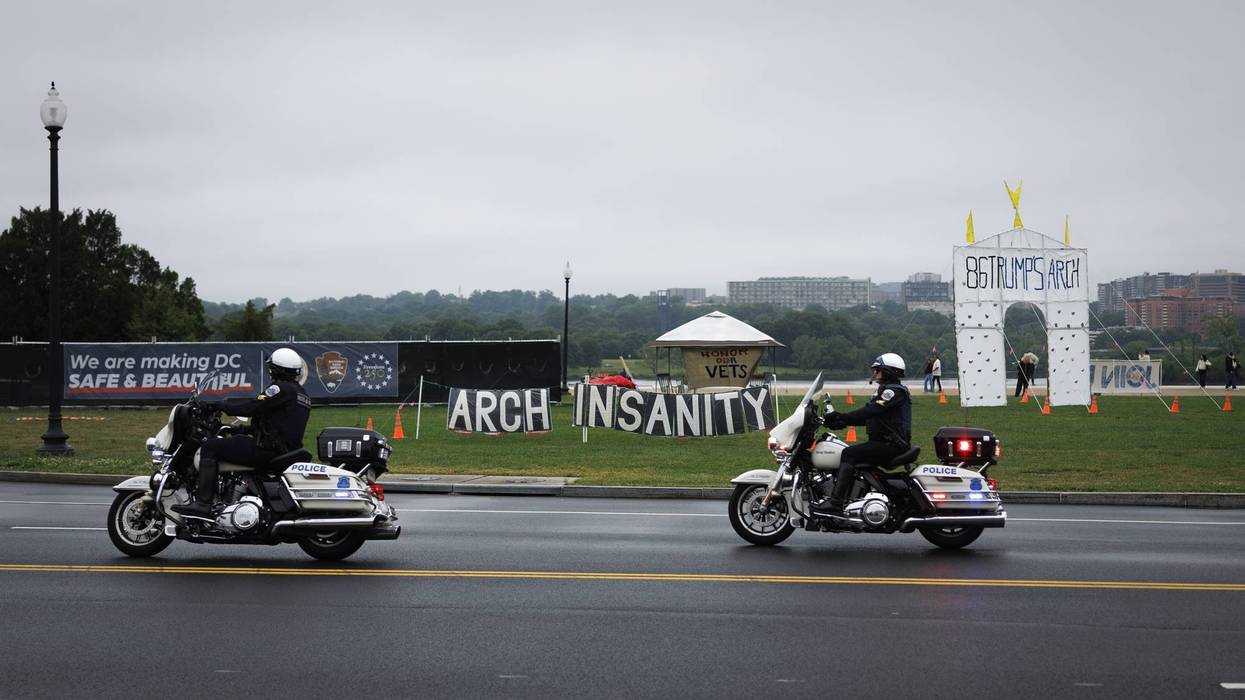
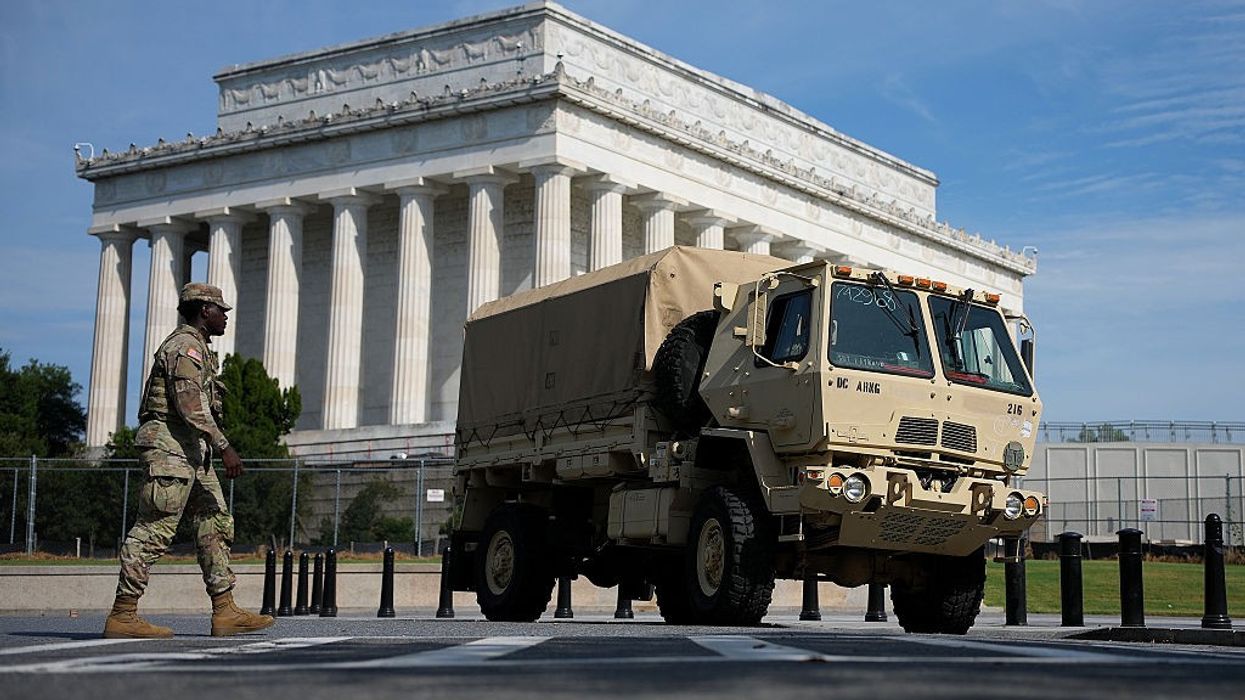
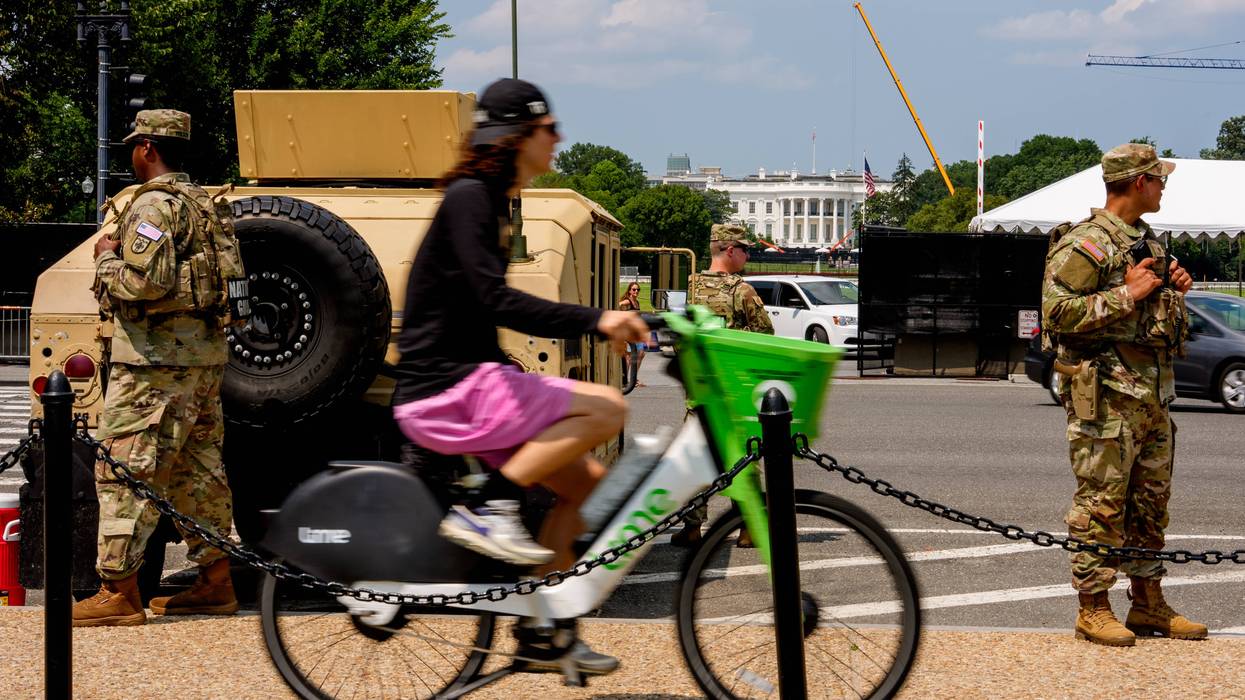
Following Wednesday's shooting of two National Guard troops in Washington, DC, President Donald Trump has responded with a pair of authoritarian measures: flooding the city with hundreds more guard members and pledging a crackdown against Afghan immigrants.
A suspect is in custody after firing at the two guard members outside the White House, which left them in critical condition. The suspect—who was also shot and is now hospitalized—has been identified by law enforcement as 29-year-old Rahmanullah Lakanwal, who relatives say served alongside US troops in Afghanistan during America's two-decade war. According to senior law enforcement agents, the shooting is being investigated as a potential act of terrorism.
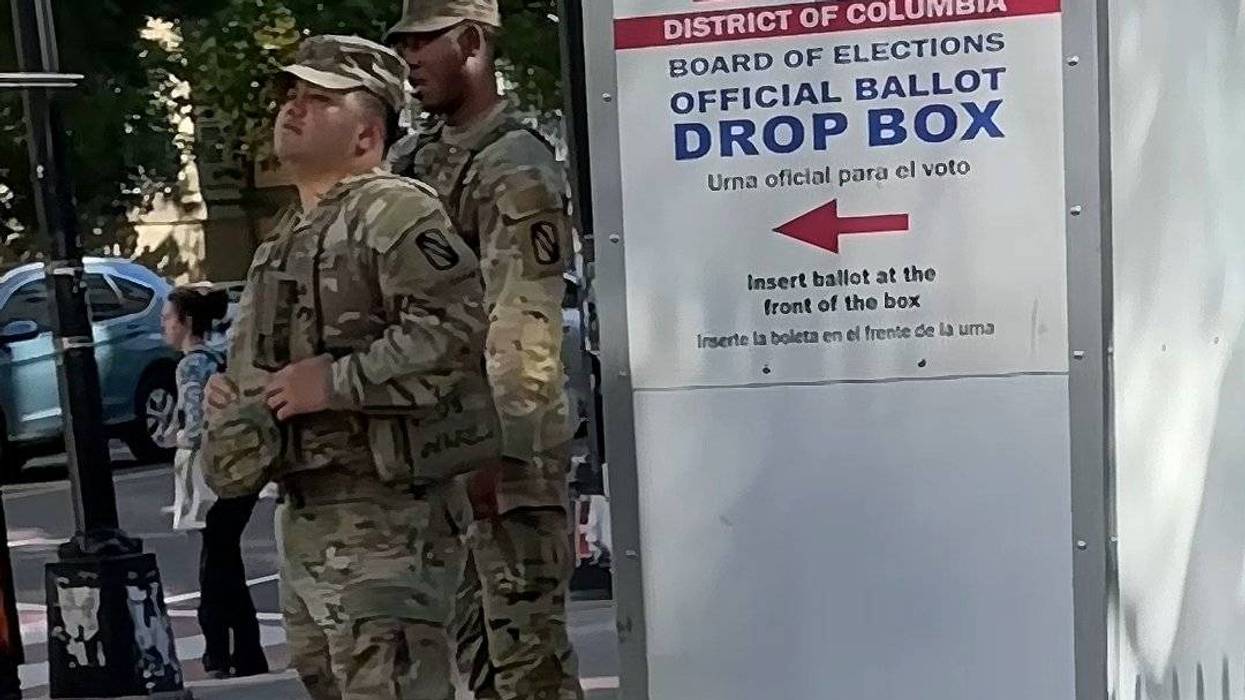
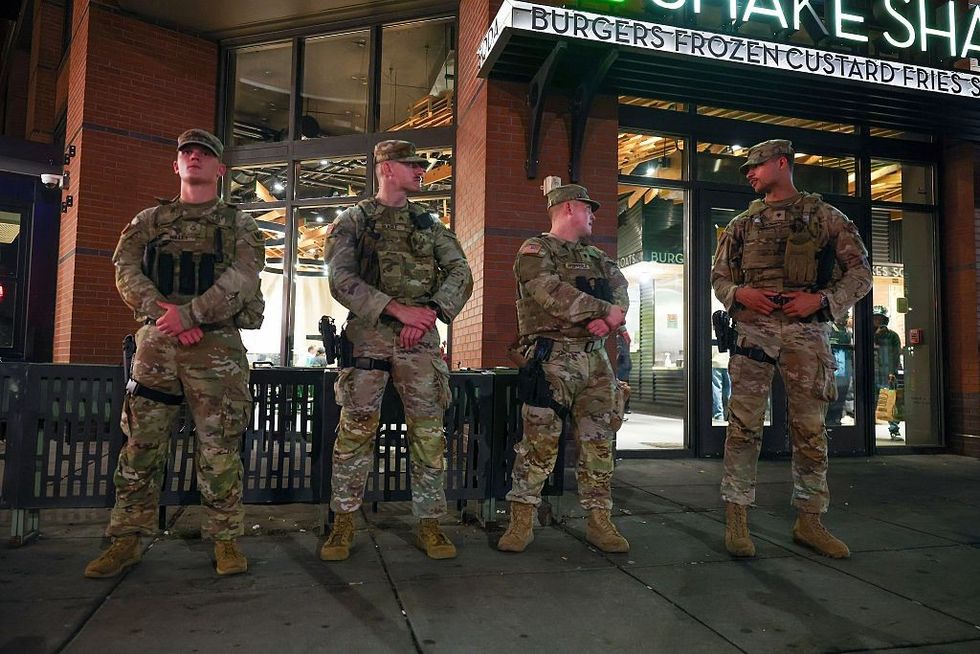
Within hours of the shooting, Defense Secretary Pete Hegseth announced that the Trump administration was deploying an additional 500 National Guard troops to DC, adding to the 2,200 that are already present as part of what Trump has claimed is a crackdown on surging crime.
In reality, crime had fallen to record lows in the city for over a year before Trump sent in the troops this past August over the objections of DC officials. This week the president falsely claimed that the city had not had a single homicide since his troop surge began.
In comments to the Guardian, Gary Goodweather, a Democratic candidate in next year's mayoral election and a former US Army captain who served in the National Guard, said Trump's deployment of troops against US citizens made such a backlash inevitable.
"If I’m completely honest, we’ve been expecting this. It hurts me to the core,” he said. “Look around us. These are citizens, they’re residents, they’re human beings. Activating the United States military against people within our own country, within Washington, DC, is the wrong message.”
He added that he feared sending even more troops would just "inflame" tensions further.
David Janovsky, acting director of the Constitution Project at the Project on Government Oversight, described the response as an unnecessary overreach.
"No one should be harmed just for doing their job, and our thoughts are with them and their families," he said of the two guard members. "At the same time, we do not believe that sending even more troops into the city is the solution. By sending more troops in, the administration risks inflaming tensions and undermining civil rights. As more information comes to light about this despicable tragedy, we urge against the administration putting more armed troops on our street corners.”
The new surge of federal troops follows a court ruling issued last week by US District Judge Jia Cobb, who wrote that the Trump administration “exceeded the bounds of their authority” and “acted contrary to law” by deploying the National Guard “for nonmilitary, crime-deterrence missions in the absence of a request from the city’s civil authorities.”
That ruling barred the Trump administration from sending any more troops to DC. However, it is delayed from going into effect until December 11 to give the administration time to appeal.
Thus far, no motive for the attack has been determined. But Trump has already begun to use it to stoke fears about Afghan immigrants.
“We must now reexamine every single alien who has entered our country from Afghanistan under [former President Joe] Biden,” Trump said in an address Wednesday night in which he called the shooting an “act of terror.” The US Citizenship and Immigration Services (USCIS) then announced that "effective immediately, processing of all immigration requests relating to Afghan nationals is stopped indefinitely pending further review of security and vetting protocols.”
Secretary of Homeland Security Kristi Noem claimed via social media that Lakanwal, the alleged shooter, was "mass paroled into the United States under Operation Allies Welcome," the program to allow Afghans who served alongside the US military to seek refuge in the US following the Taliban's return to power in 2021. According to a June 2025 audit by the Office of the Inspector General, around 90,000 "vulnerable" Afghans were admitted to the US under the program.
While Noem said those admitted under the program were "unvetted," this is untrue. As the audit shows, the program assigned several agencies to screen evacuees, check terror watch lists and criminal history, and attempt identity verification. It stated that in cases where it discovered evacuees on terror watch lists, "in each of these cases, we determined that the FBI notified the appropriate external agencies at the time of watch list identification and followed all required internal processes to mitigate any potential threat."
Trump's pledge to reexamine every Afghan who entered the US under Biden came just days after his administration announced that it was freezing the distribution of green cards for over 235,000 refugees for what it said was “detailed screening and vetting,” even though residents who arrive through the refugee process are already among the most heavily vetted immigrants who enter the United States.
Speaking of the alleged DC shooter, Aaron Reichlin-Melnick, a senior fellow at the American Immigration Council, said: "We have no idea what this man’s motive was at this point, and yet the Trump administration is already moving to paint every Afghan as a threat to this country. This comes as the country has dealt with dozens of mass shootings this year alone, carried out by people of varied origins."
West Virginia's governor initially announced that both members of his state's National Guard "passed away from their injuries," but he then said that "we are now receiving conflicting reports" about their condition.
This is a developing story… Please check back for updates…
Two National Guard members and one suspect were shot on Wednesday afternoon near the White House in Washington, DC.
Vito Maggiolo, the public information officer for the District of Columbia Fire and Emergency Medical Service Department, confirmed that first responders transported all three people from the scene to the hospital, and unnamed law enforcement officials told multiple media outlets that the Guard members were in critical condition.
West Virginia Gov. Patrick Morrisey wrote on the social media platform X that "it is with great sorrow that we can confirm both members of the West Virginia National Guard who were shot earlier today in Washington, DC have passed away from their injuries." However, he then said that "we are now receiving conflicting reports about the condition of our two Guard members."
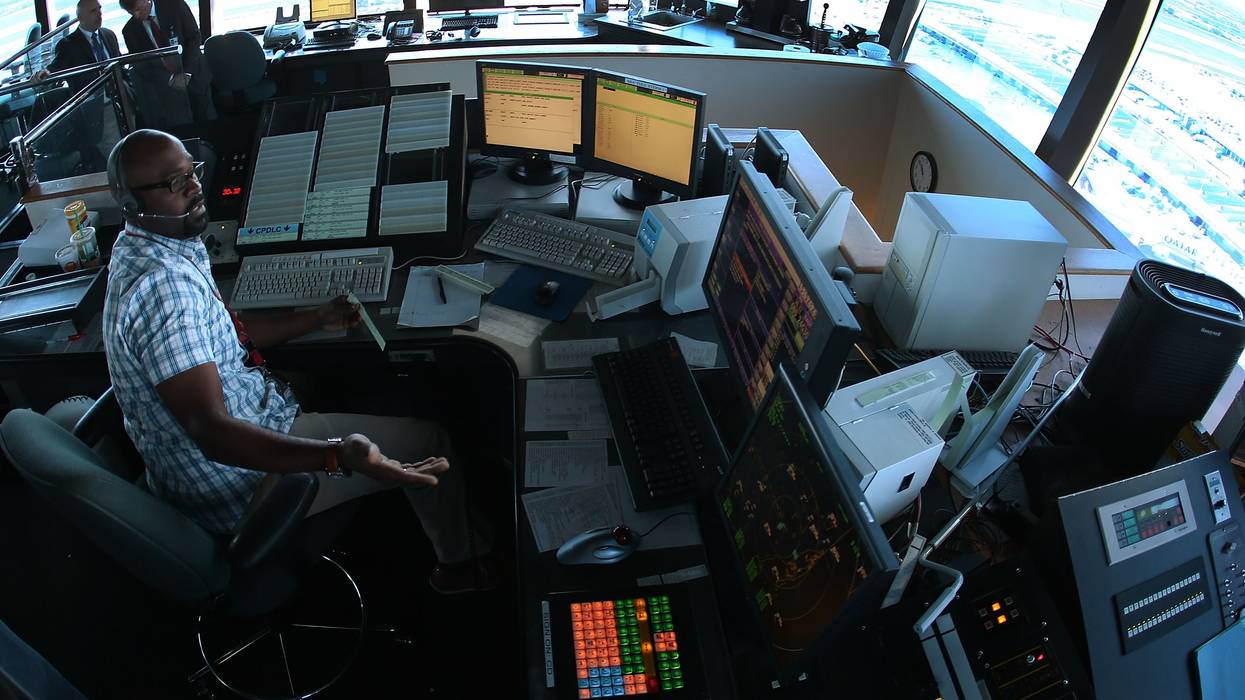
Multiple agencies responded to the shooting on 17th Street, between I and H Streets—which briefly grounded flights at Reagan National Airport and put the White House on lockdown. President Donald Trump is in Florida, and Vice President JD Vance is in Texas.
Trump said on his Truth Social platform that "the animal that shot the two National Guardsmen, with both being critically wounded, and now in two separate hospitals, is also severely wounded, but regardless, will pay a very steep price. God bless our Great National Guard, and all of our Military and Law Enforcement. These are truly Great People. I, as President of the United States, and everyone associated with the Office of the Presidency, am with you!"
According to the Washington Post, US Secret Service spokesperson Anthony Guglielmi said the shooting had "no known direction of interest towards the White House other than the location at this time," and agency members at the scene did not fire shots.
ABC News noted that "the National Guard was deployed to the nation's capital as part of President Trump's federal takeover of the city in August. According to the most recent update, there are 2,188 Guard personnel assigned to DC."
US District Judge Jia Cobb, an appointee of former President Joe Biden, ruled last week that the deployment in DC is illegal and must come to an end, but she gave the Trump administration until December 11 to file an appeal.