

SUBSCRIBE TO OUR FREE NEWSLETTER
Daily news & progressive opinion—funded by the people, not the corporations—delivered straight to your inbox.
5
#000000
#FFFFFF
To donate by check, phone, or other method, see our More Ways to Give page.
Daily news & progressive opinion—funded by the people, not the corporations—delivered straight to your inbox.

"Nothing more Christian than to be a hateful wretched fuck on Jesus’ birthday," quipped one critic.
In a message called typically on-brand by observers, US President Donald Trump wished "Merry Christmas to all"—including his political opponents, whom he described in decidedly unchristlike language.
"Merry Christmas to all, including the Radical Left Scum that is doing everything possible to destroy our Country, but are failing badly," Trump said Christmas Eve on his Truth Social network.
"We no longer have Open Borders, Men in Women’s Sports, Transgender for Everyone, or Weak Law Enforcement," the president added. "What we do have is a Record Stock Market and 401K’s, Lowest Crime numbers in decades, No Inflation, and yesterday, a 4.3 GDP, two points better than expected. Tariffs have given us Trillions of Dollars in Growth and Prosperity, and the strongest National Security we have ever had. We are respected again, perhaps like never before. God Bless America!!!"
While nothing new—Trump has used past Christmas messages to tell people he doesn't like to "go to hell" and "rot in hell"—observers, including some MAGA supporters, were still left shaking their heads.
"Radical Left Scum" 😂🤣😂🤣😂🤣Christmas greetings from a liar, traitor, pedophile, and overall shitstain upon society.
[image or embed]
— Bill Madden (@maddenifico.bsky.social) December 24, 2025 at 9:00 PM
"Nothing more Christian than to be a hateful wretched fuck on Jesus’ birthday!" liberal political commentator Dean Withers said on X.
Another popular X account posted: "A sitting president of the United States using Christmas Day to spew venom at fellow Americans he calls 'Radical Left Scum' isn’t just unpresidential—it’s unhinged, un-Christian, and utterly beneath the office."
"This is the behavior of a bitter, small man who can’t even pretend to unify for one holy day," she added. "Shameful. Disgraceful. Pathetic."
In Jesus’ own words, Christianity is a faith where the first shall be last and the last shall be first. It is meant not for the rich, the satisfied, and the powerful. Rather it is first intended for the poor, the hungry, the downtrodden, and the rejected.
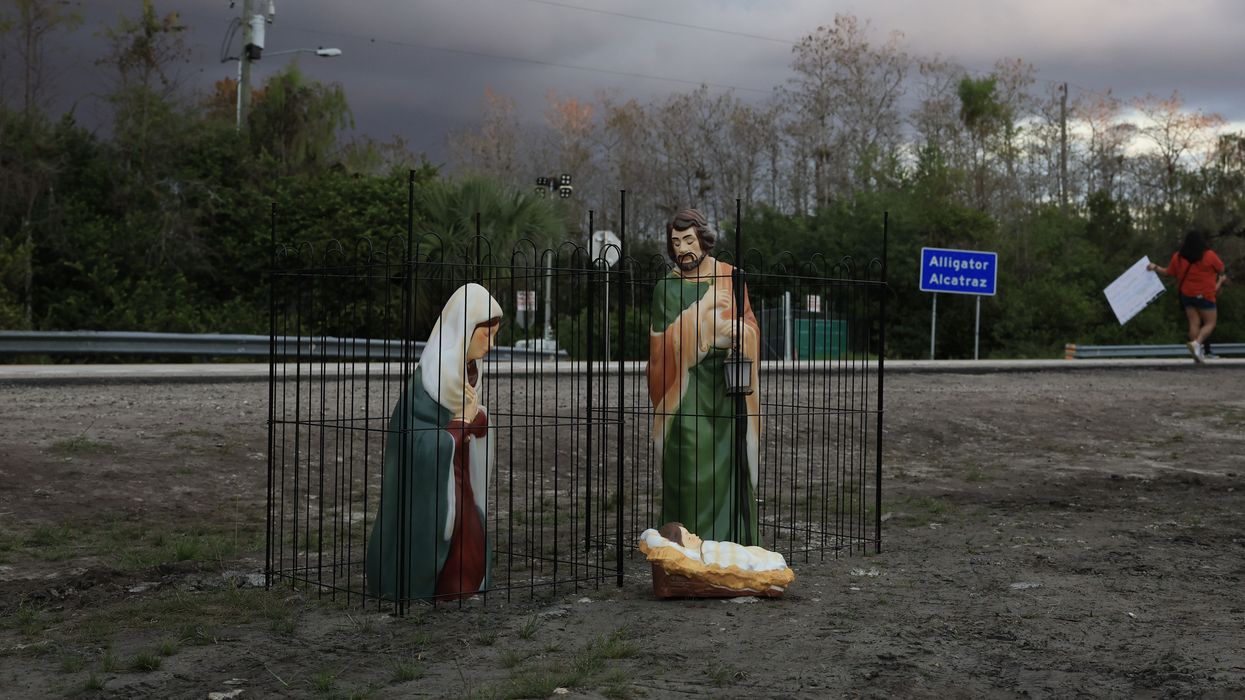
Catholic churches have traditionally erected Nativity scenes outside at Christmas time. To represent the birth of Jesus, the scenes include the baby, his mother and father, Mary and Joseph, together with the shepherds, their animals, and the “wise men from the East” who came to witness the birth.
Despite the fact that the story is rich in meaning and symbolism, these Nativity scenes have been stripped of their deeper meaning and have become quite two-dimensional and shallow. Like the anodyne carols that have come to define the season, the portrait of the birth that emerges is “peaceful,” “calm,” and “bright.” There is no hint of the oppressive Roman occupation that forced this couple to travel across the country to register in a new census mandated by the empire. Nor is there a recognition of the many ironies underlying the story: that this Jewish baby, who is to be a savior, is born in a cave surrounded by animals, or that the first to come to pay homage are lowly sheep herders and non-Jewish travelers from afar.
In fact, it is these various ironies and others like them that truly define the biblical Christian narrative. It is, in reality, an upside-down faith. In Jesus’ own words, it is a faith where the first shall be last and the last shall be first. It is meant not for the rich, the satisfied, and the powerful. Rather it is first intended for the poor, the hungry, the downtrodden, and the rejected. And it is for those who recognize this and who therefore commit themselves to serving “the least of these.”
With this in mind, it is fascinating to see how in recent years some Christians have taken to reclaiming the challenge inherent in their faith.
Just two years ago a Palestinian clergyman in Bethlehem replaced the stable in the Nativity scene with rubble in order to portray what was unfolding in Gaza. His setting of “Jesus in the rubble” eloquently told the story of the Palestinian people: vulnerable, stripped of their humanity, and subjected to indignities. As if to more deeply develop this identification, last year, Pope Francis was shown in quiet prayer before a manger scene in which the baby Jesus was wrapped in a Palestinian keffiyeh.
In somewhat the same vein, this year, a Catholic community in Massachusetts, given the threats faced by migrants and refugees in the United States, found their own deeper meaning in the Christmas story. In the Nativity scene they erected outside their church, there is no Jesus, Mary, or Joseph. Instead, there is a sign noting that because of concern that ICE (the immigration enforcement police) would be conducting one of their raids, the family had gone into hiding and was seeking sanctuary inside the church.
There are reports of other similar efforts by churches to capture the challenge of the Christmas narrative—with references to ICE, the detention of immigrants, and the mistreatment of immigrant children figuring prominently in many of these portrayals.
In the case of the Massachusetts church, Catholic leaders in the state rebuked the church in question accusing them of playing politics. The Nativity scene, they said, was to provide opportunities for quiet prayerful reflection, not divisive politics. What these church leaders miss, of course, is that if they strip the birth story (and, one might add, the rest of the biblical narrative and for that matter the rest of the New Testament and the many radical injunctions Jesus gives to his followers) of its essential content, then it is they who are playing divisive politics. By not grounding the Nativity in its real-world context, there is the danger that the “contemplative prayer” the leaders are advocating can become shallow and contentless.
After all, the writers of the biblical stories had a point to convey. They weren’t just painting a pretty picture to some day appear in pastel tones on a holiday card. There are reasons why the child was born in a cave and first welcomed not by the high priests but by the lowest and foreigners. Why, in the face of repression, his parents had to take him and flee into Egypt. And why, as he grew, he made every effort to challenge the stale and corrupt religious hierarchy of his day, providing his followers with a challenging message of service to the rejected, the vulnerable, and those in need.
Every year around this time, our mailboxes are filled with mostly brightly decorated holiday greeting cards. About a decade ago, I was shocked to open one from a friend in Lebanon. It featured the anguished and dirtied face of a young boy in a tattered t-shirt staring out from behind a wire fence. Inside it read “Holiday Greetings.” At first, I was confused. “Why this card, with this incongruous message? And why now?”
After reflection, I realized that the plight of this young Syrian refugee, forced to flee his homeland, and now trapped in a camp living in squalor, hungry and dirty, is the perfect image to convey the meaning and challenge of the Christmas story. That story wasn’t written to give comfort to the rich, powerful, and clean. It was to give hope to the destitute and the powerless. And to challenge the rest of us to recognize that.
"This year's celebrations carry a message of hope and resilience for our people and a message to the world that the Palestinian people love peace and life."
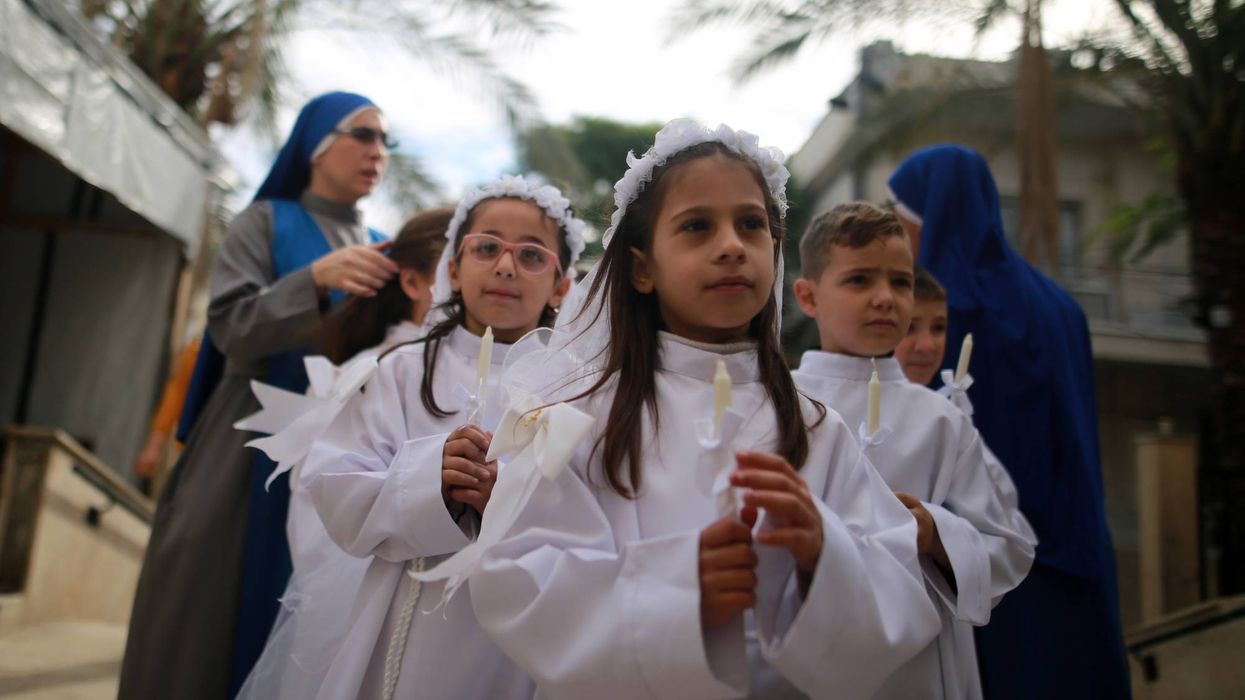
With Gaza's Christian population decimated by Israeli attacks and forced displacement over the past two years, those who remain are taking part in muted Christmas celebrations this week as the West Bank city of Bethlehem displays its tree and holds festivities for the first time since Israel began attacking both Palestinian territories in October 2023.
Middle East Eye reported that while Cardinal Pierbattista Pizzaballa, the Latin patriarch of Jerusalem, led a Christmas Mass at Holy Family Church in Gaza City on Sunday and baptized the newest young member of the exclave's Christian community, churches in Gaza have been forced this year to keep their celebrations indoors as the Israel Defense Forces (IDF) have continued its attacks despite a "ceasefire" that Israel and Hamas agreed to in October.
"Churches have suspended all celebrations outside their walls because of the conditions Gaza is going through," Youssef Tarazi, a 31-year-old Palestinian Christian, told MEE. "We are marking the birth of Jesus Christ through prayer inside the church only, but our joy remains incomplete."
"This year, we cannot celebrate while we are still grieving for those killed, including during attacks on churches," Tarazi said. "Nothing feels the same anymore. Many members of our community will not be with us this Christmas."
The IDF, Israeli officials, and leaders in the US and other countries that have backed Israel's assault on Gaza have insisted the military has targeted Hamas and its infrastructure, but Christian churches are among the places—along with schools, refugee camps, hospitals, and other civilian buildings—that have been attacked since 2023.
At least 16 people were killed just days into the war when the IDF struck the Church of Saint Porphyrius, one of the oldest churches in the world. In July, Israel attacked the only Catholic church in Gaza, killing two women and injuring several other people.
Palestinian officials say at least 44 Christians are among more than 71,000 Palestinians who have been killed since Israel began its assault in retaliation for a Hamas-led attack. Some have been killed in airstrikes and sniper attacks while others are among those who have died of illnesses and malnutrition as Israel has enforced a blockade that continues to limit food and medical supplies that are allowed into Gaza.
United Nations experts, international and Israeli human rights groups, and Holocaust experts are among those who have called Israel's assault a genocide, and the International Criminal Court issued a warrant last year for the arrest of Israeli officials including Prime Minister Benjamin Netanyahu for war crimes and crimes against humanity in Gaza.
George Anton, the director of operations for the Latin patriarchate in Gaza, estimated that the number of Christians killed so far is at least 53, with many dying "because we could not reach hospitals or provide medicine, especially elderly people with chronic illnesses."
In the past, Muslims in Gaza have joined Christian neighbors for the annual lighting of Gaza City's Christmas tree and other festivities, and churches have displayed elaborate lights and decorations in their courtyards for the Christmas season.
"We decorated our homes," Anton told MEE. "Now, many homes are gone. We decorated the streets. Even the streets are gone... There is nothing to celebrate."
"We cannot celebrate while Christians and Muslims alike are mourning devastating losses caused by the war," he added. "For us, the war has not ended."
Hilda Ayad, a volunteer who helped decorate Holy Family Church earlier this month, told Al Jazeera that "we don't have the opportunity to do all the things here in the church, but something better than last year because last year, we didn't celebrate."
“We are trying to be happy from inside.”
Palestinian children are decorating Gaza’s only Catholic church for Christmas celebrations for the first time after 2 years of genocide. Pope Francis used to call the Holy Family Church almost every day until his death. pic.twitter.com/dtCdFjcTyo
— AJ+ (@ajplus) December 24, 2025
About 1,000 Christians, who were mainly Greek Orthodox or Catholic, lived in Gaza before Israel's latest escalation in the exclave began in 2023.
Greek Orthodox Church member Elias al-Jilda and Archbishop Atallah Hanna, head of the church's Sebastia diocese in Jerusalem, told the Washington Post that the population has been reduced by almost half. More than 400 Christians have fled Gaza in the last two years. Those who remain have often sheltered in churches, including the ones that have sustained attacks.
Al-Jilda told the Post that this year's celebrations "will not be full of joy, but it is an attempt to renew life."
In Bethlehem in the West Bank, officials have sought to send a message to the world this Christmas that "peace is the only path in the land of Palestine," Mayor Hanna Hanania told Anadolu Agency.
"This year's celebrations carry a message of hope and resilience for our people and a message to the world that the Palestinian people love peace and life," he said.
At Al Jazeera, Palestinian pastor Rev. Dr. Munther Isaac wrote that "celebrating this season does not mean the war, the genocide, or the structures of apartheid have ended."
"People are still being killed. We are still besieged," he wrote. "Instead, our celebration is an act of resilience—a declaration that we are still here, that Bethlehem remains the capital of Christmas, and that the story this town tells must continue."
"This Christmas, our invitation to the global church—and to Western Christians in particular—is to remember where the story began. To remember that Bethlehem is not a myth but a place where people still live," Isaac continued. "If the Christian world is to honor the meaning of Christmas, it must turn its gaze to Bethlehem—not the imagined one, but the real one, a town whose people today still cry out for justice, dignity, and peace."
Christmas, once a time to gather, reflect, and renew our obligations to one another, and the social rituals that once cultivated empathy and reinforced civic responsibility, have been reduced to a spectacle of distraction, dead trees, credit card receipts, and gift wrapping.
When we think of Christmas today, what comes first to mind? Twinkling lights along Main Street, the ceaseless hum of commerce, the relentless parade of advertisements promising joy measured in price tags. Rarely, if ever, do we pause to consider the ethical marrow beneath this season. And yet, for all its modern commercial veneer, Christmas—like the solstice festivals and civic rituals that preceded it—was once, and could be again, a moral and civic compass pointing toward generosity, compassion, and shared responsibility. Long before Christianity claimed this season as its own, human societies looked to the turning of the year and found in its darkness a lesson not only of survival but also of communal obligation, recognizing that vulnerability, scarcity, and the fragile ties that bind a community demand attention and care. In the forests of Northern Europe, the Yule log burned, a symbol of light returning to the world; in Rome, Saturnalia erupted in feasts and gift-giving, a deliberate inversion of hierarchy, reminding citizens that social cohesion required recognition of all members, even the lowliest; and in the Near East, solstice celebrations marked a liminal time when ordinary rhythms of life were suspended, and moral reflection took precedence over practical concerns.
Across cultures, these seasonal rituals share a common thread: attention to the vulnerable, cultivation of generosity, and the reinforcement of communal bonds. What united these disparate societies was the recognition that humanity flourishes not by the accumulation of wealth or the assertion of dominance, but by generosity, hospitality, and attention to the vulnerable. In these shadows of history, we find the first glimmers of civic duty: the ethical imperative to care for neighbors, to acknowledge the marginalized, to place the health of the community above the satisfaction of individual desire.
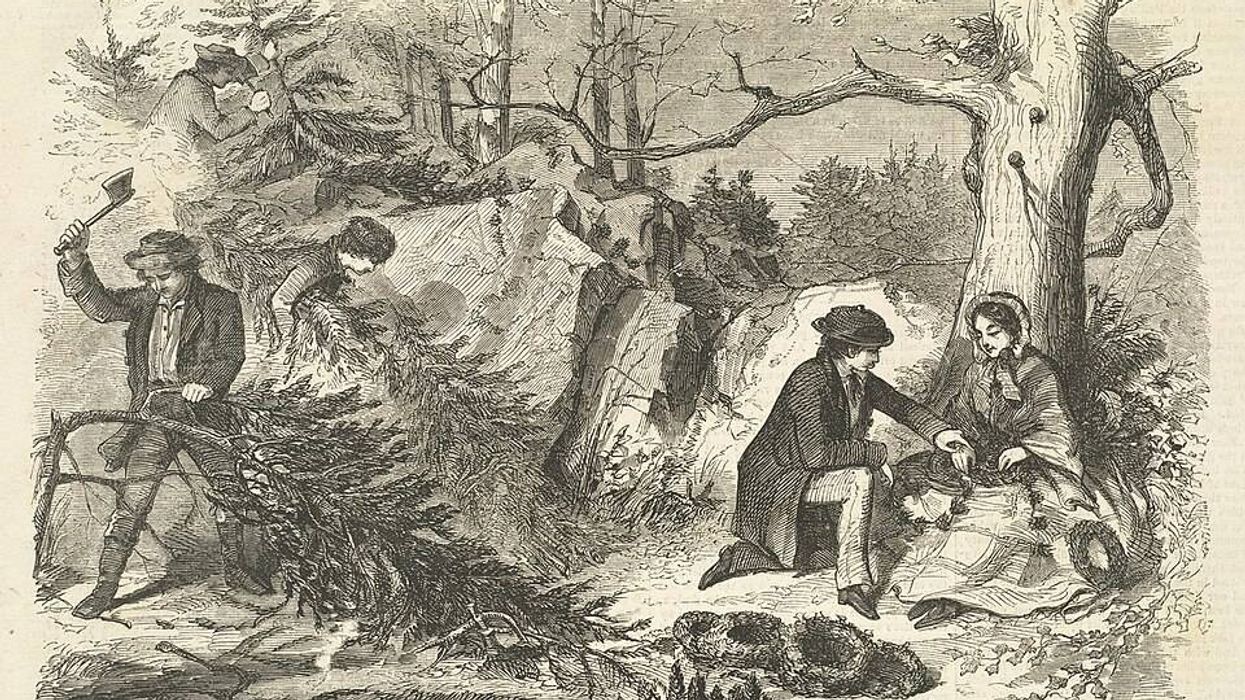
When Christianity emerged and incorporated the winter solstice into the story of the Nativity, it did more than assert doctrinal authority; it reinterpreted the old moral lessons through the lens of narrative: the story of a child born in a stable, heralded by shepherds and angels, whose birth was at once humble and cosmic, ordinary and transformative. Here was a story that celebrated vulnerability, humility, and hope, stripped of theological ornamentation, offering an ethical exemplar and telling the listener to pay attention to those on the margins, to protect the weak, to recognize that moral light can shine in the darkest of times. The ethical heartbeat of the season, however, has largely been drowned out in contemporary America. In our hyper-individualistic culture, compassion has been privatized, morality commercialized, and communal attention fractured across economic, racial, and ideological lines. Christmas, once a time to gather, reflect, and renew our obligations to one another, and the social rituals that once cultivated empathy and reinforced civic responsibility, have been reduced to a spectacle of distraction, dead trees, credit card receipts, and gift wrapping, obscuring the enduring potential for ethical reflection and civic repair.
No society is too divided, no darkness too deep, for human generosity, moral courage, and civic imagination to take root. The ethical and civic heart of Christmas, once recovered, can illuminate a path toward a more compassionate, cohesive, and just America.
To reclaim this potential, we must trace the ethical throughlines not only through Christian thought but through the shared moral heritage of the Abrahamic religions. Judaism, Christianity, and Islam converge in insisting upon care for the vulnerable, justice, and humility. In Judaism, tzedakah is not optional; it is the act of righteousness, the concrete demonstration that a society’s moral health is measured by how it treats those who have the least. In Islam, zakat functions similarly: wealth is a trust, a means to uphold social solidarity, and a moral duty to support the community’s weakest members. Christianity, through agape, extends love as an ethic: love of neighbor, love of stranger, love that is deliberate and disciplined rather than sentimental or fleeting. Across centuries and continents, these traditions converge on the principle that morality is communal, not merely personal, and a bridge emerges, demonstrating that the ethical lessons embedded in seasonal rituals are not the property of any one faith but a shared inheritance. Across other cultural and spiritual traditions as well, rituals of giving, care, and communal attention underscore the same principles. Recognition of vulnerability, cultivation of generosity, and attention to justice are civic imperatives, as resonant today as they were thousands of years ago.
The Christmas story, in this light, is as much civic as it is spiritual, emphasizing ethical action over dogma, placing the marginalized and vulnerable at the moral center. To give to the poor, to welcome the stranger, to act with humility—these are civic rituals enacted through narrative, story, and symbol. Stripped of theology, Christmas becomes a rehearsal of the social virtues that sustain society. Generosity, humility, and hospitality are not merely sentimental ideals; they are practical guides for civic life. The story of a humble birth, heralded by the lowly, reminds us that the moral and civic duties of a society are inseparable from the care of its most vulnerable members.
Practical reclamation begins with attention. Schools, community centers, and local governments can frame seasonal activities around service, reflection, and ethical engagement rather than solely entertainment. Families can teach children not only the joy of giving but the moral reasoning behind giving. Civic organizations can revive interfaith dialogues, exploring shared values rather than emphasizing doctrinal differences. Individuals, through conscious acts of care, become participants in a civic ritual that slowly restores trust, empathy, and moral imagination. Seasonal rituals thus function as rehearsals for civic life. Just as societies once lit fires to mark the solstice, today we can perform acts of ethical attention that illuminate darkness in the social fabric, reminders that light, generosity, and hope are communal achievements, not merely personal experiences.
The relevance is immediate. Economic inequality demands generosity and advocacy. Racial and religious divides demand tolerance and empathy. Political polarization demands engagement and ethical imagination. In all these realms, the principles embedded in Christmas—drawn from solstice traditions and Abrahamic moral codes—offer guidance. Ethical attention to the Other, practiced seasonally and deliberately, eventually becomes a civic habit. Healing the nation is not a single act but a series of small, cumulative practices: sharing resources, listening across differences, protecting the vulnerable, and actively participating in community life. These are the same virtues that sustained human societies through long winters and precarious times, centuries before the commercial trappings of modern holidays emerged.
The story of Christmas, then, is a story of civic possibility. It tells us that light can emerge from darkness, that generosity is stronger than greed, that community is more resilient than isolation, and that the vulnerable are essential to the moral health of society. These lessons transcend theology: they are part of humanity’s shared moral imagination. To celebrate Christmas as it was meant to be celebrated—ethically, communally, civically—is to perform an act of moral restoration. It reminds us that empathy, tolerance, and civic duty are not abstract ideals but practical obligations. In a nation so rent by difference, these seasonal rituals offer a roadmap for ethical engagement, one small act at a time. Though Christmas is the lens here, its lessons—the renewal of communal bonds, the practice of generosity, the cultivation of empathy—are universal, inviting all communities to participate in the ethical work of society.
No society is too divided, no darkness too deep, for human generosity, moral courage, and civic imagination to take root. The ethical and civic heart of Christmas, once recovered, can illuminate a path toward a more compassionate, cohesive, and just America. Each act of care and attention reveals the enduring power of shared moral practice and the pulse of civic life, offering the promise that, even in our most fractured moments, the light of ethical and civic consciousness can return, as reliably as the turning of the year itself.
The grim data arrive as President Donald Trump is reportedly planning to "aggressively push back" on negative perceptions about his economy.
A new batch of data is offering more evidence that the US economy is in rough shape heading into the holidays.
The latest Economic Confidence Index released by Gallup on Thursday has found that Americans' confidence in the economy has fallen by seven points over the last month, and now stands at its lowest level in more than a year.
Overall, Gallup found that just 21% of Americans currently describe the economy as excellent or good, while 40% describe it as poor. The outlook for the near future also looks grim, as more than two-thirds of Americans surveyed said the economy is currently getting worse.
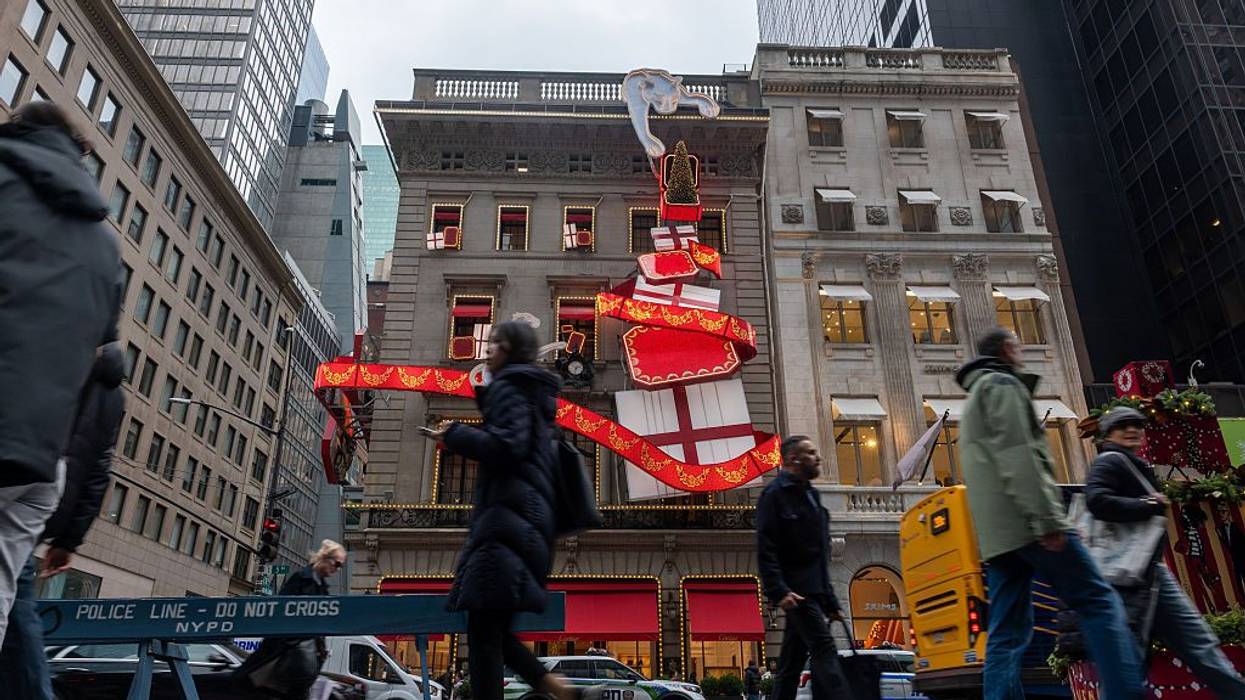
This deteriorating economic confidence is weighing on Americans' holiday shopping plans, as Gallup found that planned holiday spending expenditures have "plummeted" from just over $1,000 in October to $778 in November. The decline in spending expectations also occurred across all income groups, although it was particularly steep among low-income households, which slashed their estimated holiday spending by an average of $267.
Gallup noted that while it's common for shoppers to trim their spending plans the closer it gets to the holidays, the drop between October and November this year was the biggest it has ever recorded, even "surpassing the $185 drop seen during the 2008 global financial crisis."
The Gallup survey was not the only troubling economic data to drop on Thursday, as outplacement firm Challenger, Gray, and Christmas released its latest report showing that hiring in the US has slowed to its lowest level in the last 15 years, while layoffs now total their highest level since 2020, when the country was at the peak of the Covid-19 global pandemic.
The data on layoffs came just one day after global payroll processing firm ADP estimated that the US economy lost 32,000 jobs in November, with small businesses shouldering by far the most job losses.
President Donald Trump, who earlier this week dismissed concerns Americans might have about affordability as a "Democrat scam," has reportedly decided to hit the road in an effort to convince voters that they've never had it so good.
According to Axios, Trump next week will start touring the country to tout his administration's economic policies, and he is expected to "aggressively push back against criticism over the cost of everyday essentials—an issue that helped propel him to victory over Kamala Harris last year."
However, a new poll published by Politico on Thursday shows that Trump may have an uphill climb selling his economy even to his own voters.
Overall, the poll found that 37% of voters who backed Trump last year now say that the cost of living crisis is the worst they have experienced in their lifetimes, while only 24% of 2024 Trump voters say that the cost of living crisis at the moment is "not bad."
The poll also found that Trump's efforts to blame former President Joe Biden for the current state of the economy aren't flying, as 46% of voters say that Trump is most to blame for the current state of the economy, compared to 29% of voters who put the primary blame on Biden.
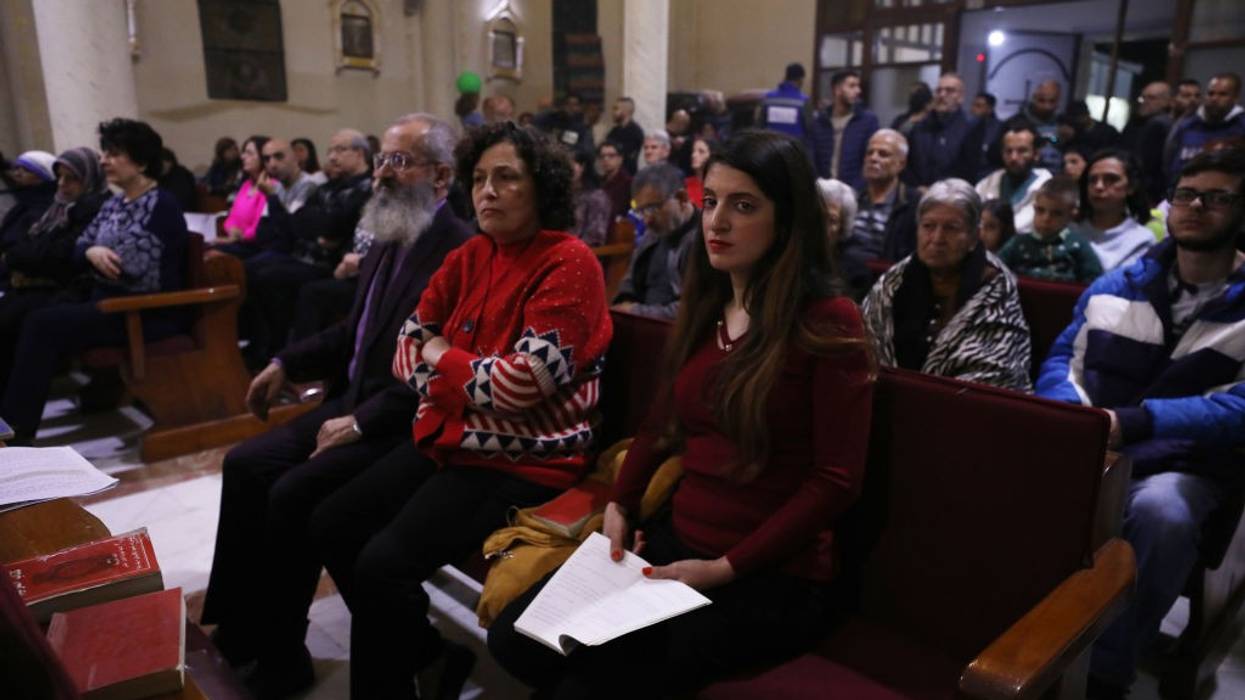
"I wish the war would end and we could return to our homes in peace," said one little girl whose grandmother was killed by an Israeli sniper.
From the illegally occupied "little town of Bethlehem" in the West Bank to a pair of churches in Gaza where Israel's bombs and bullets have killed clerics and congregants alike, Palestinian Christians marked another somber Christmas amid a relentless Israeli assault whose victims on Wednesday included refugees sheltering in tents and medical staff and patients at a besieged hospital.
For the second year in a row, public Christmas celebrations were canceled at the Nativity Church in Bethlehem, which is built over the spot where Christians believe Jesus Christ was born.
"This should be a time of joy and celebration. But Bethlehem is a sad town in solidarity with our siblings in Gaza," Lutheran Pastor Munther Isaac said during his Christmas sermon at a church whose nativity display again had baby Jesus lying in a pile of rubble.
"It's hard to believe that another Christmas has come upon us and the genocide has not stopped," Isaac added. "Decision-makers are content to let this continue. To them, Palestinians are dispensable."
In Gaza, hundreds of Palestinian Christians huddled in two churches amid ongoing attacks by Israeli forces.
"This year, we will conduct our religious rites and that's it," Ramez Souri told The New York Times at the St. Porphyrius Greek Orthodox Church in Gaza City. "We're still in mourning and far too sad to celebrate, or do anything except to pray for peace."
Hundreds of Palestinians were sheltering on the grounds of the 12th century church—Gaza's oldest—when Israeli forces bombed it in October 2023, killing 18 people including Souri's three children and relatives of former Republican U.S. Congressman Justin Amash of Michigan.
In a pre-Christmas homily at Holy Family Church in Gaza City—Gaza's only Catholic church— Cardinal Pierbattista Pizzaballa, the Latin Patriarch of Jerusalem, told congregants, "You have become the light of our church in the entire world."
"At Christmas, we celebrate the light and ask: Where is this light?" Pizzaballa continued. "The light is here, in this church."
"I don't know when or how this war will end, and every time we approach the end, it seems like we start anew," he added. "But sooner or later, the war will end, and we must not lose hope. When the war ends, we will rebuild everything: our schools, our hospitals, and our homes. We must remain resilient and full of strength."
Like St. Porphyrius, Holy Family has suffered a deadly Israeli attack. Last December, an Israeli sniper shot Nahida Khalil Anton, the elderly matriarch of the largest Catholic family in Gaza, as she crossed a courtyard in the church compound on her way to the bathroom. Her daughter Samar was shot in the head when she rushed out to try and help her mother.
Both women died. Seven other people were shot and wounded. Israeli soldiers and veterans have said that they were given permission and even orders to shoot anyone who moves in parts of Gaza.
"I wish the war would end and we could return to our homes in peace." A Christian Palestinian girl in Gaza wishes for peace on Christmas Day amid Israel's war, at the Holy Family Church in Gaza City.
[image or embed]
— aljazeera.com (@aljazeera.com) December 25, 2024 at 5:52 AM
On Sunday, Pope Francis—who in a new book called for a genocide investigation of Israel's war on Gaza—said: "Yesterday, children have been bombed. This is cruelty; this is not war."
The cruelty continued on Christmas as Israeli attacks throughout Gaza killed at least 13 people, according to officials. The dead include people sheltering in a tent northwest of Khan Younis, Palestine Red Crescent Society volunteer Alaa al-Derawi—who was shot in the chest while at work transporting patients—and Walaa al-Faranji, a well-known fashion designer, author, and photographer who was killed along with her husband Ahmed Salama in an airstrike on their home in the Nuseirat refugee camp.
Local media also reported continued Israeli shelling and attacks on Kamal Adwan Hospital in Beit Lahia, where staff and scores of patients including premature babies have endured weeks of siege conditions.
All told, Gaza and international agencies say that at least 45,361 Palestinians have been killed in Gaza and more than 107,800 others wounded by Israeli forces since the Hamas-led attack of October 7, 2023. At least 11,000 other Gazans are missing and believed to be dead and buried beneath the rubble of hundreds of thousands of bombed buildings. Millions more Palestinians have been forcibly displaced, starved, or sickened.
Thousands more people have been killed or wounded by Israeli forces in the occupied West Bank and East Jerusalem, according to the United Nations agency for Palestinian refugees.
Israel is currently on trial for genocide at the International Court of Justice in The Hague. Last month, the International Criminal Court, also based in The Hague, issued arrest warrants for Israeli Prime Minister Benjamin Netanyahu and Yoav Gallant, his former defense minister, as well as for Hamas leader Mohammed Diab Ibrahim Al-Masri, for alleged war crimes and crimes against humanity.
Back at St. Porphyrius, parishioners pooled what little food they could find to prepare a communal Christmas Eve meal. Although many Gazan Christians have expressed fears that their community—one of the oldest Christian communities in the world—could be wiped out by Israel's genocidal onslaught, the holiday meal represented a faint glimmer of hope.
"We wanted to do something to show that we're still here," Souri explained, "despite it all."
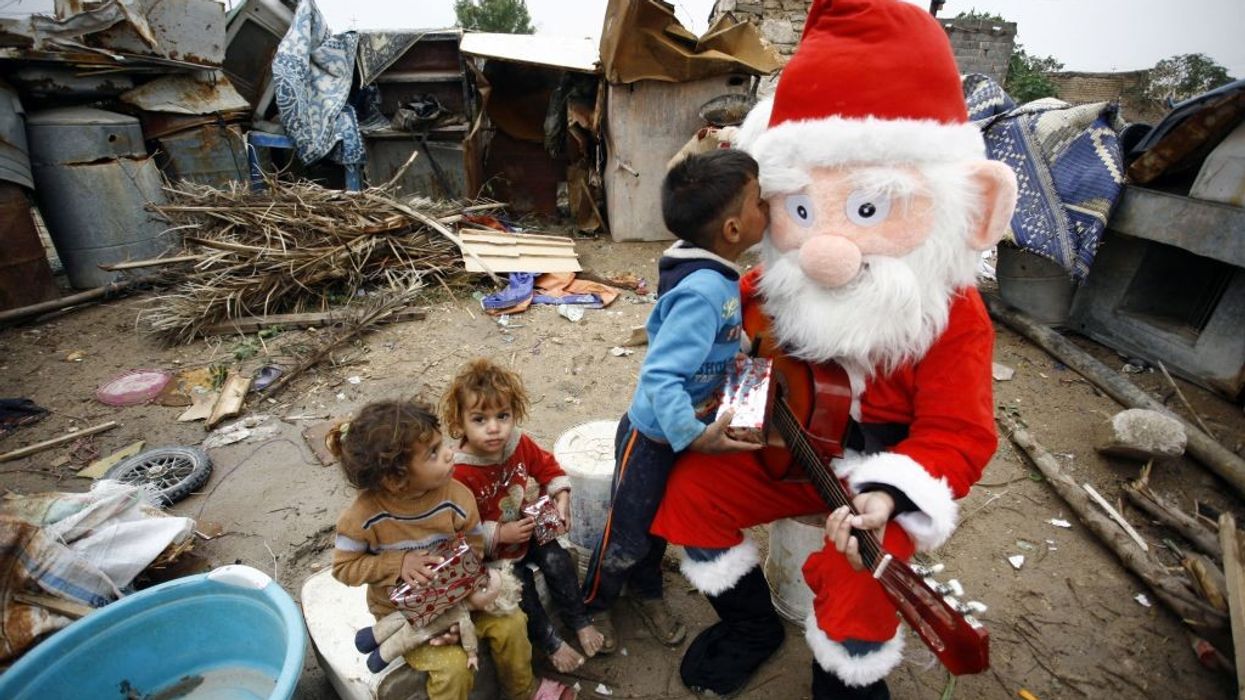
A reflection on a 'Christmas Song'—our family's favorite—and one that speaks solemnly and soulfully to the deep drive that fuels our common dreams.
It’s true I have a favorite Christmas song, but as it turns out, it’s not one that many people know—at least I assume most people don’t know it.
Funny enough, the title is simply “Christmas Song,” and it was performed—at least the version I know—by songwriter Greg Brown during a live show back in 2001.
Though an atheist, my fondness for Christmas—perhaps like it is for many—is wrapped in the nostalgia of the holiday of my upbringing as well as the ongoing joys I find during this “season of giving.” Like religious celebrations across many faiths, Christmas has the ability to open the human heart and reminds us (if we let it) of that spirit that enriches us and challenges us to understand what it means to share, not material gifts, but time and warmth with one another.
In Brown’s song—which I encourage you to listen to here or below—the story of Jesus is subtly inverted.
Rather than a story of miraculous birth—”It was the night before Christmas,” the song begins, “but nobody was really noticing that”—it is a story about the routine of birth (“something women do” and that “men kinda, sorta, a little bit… help”) in which the only miracle is the gift of life that we’ve all been granted.
Just getting born is such an amazing thing
You'd think we'd all just be nice forever after—
Just to get to be a part of it.
You'd think that anybody that ever held a little baby in their arms
Would be so careful not to ever do any damage
To another human being—or to the creation
Of which we are so obviously a part.
The song presents a story of Jesus that escapes Christianity, which is perhaps why I find it so lovely and piercing, and opens the door to thinking about the hidden promise of a holiday that too often asks us “what we want” as opposed to reflecting on the joys of what we’ve been given.
Sometimes when I get distraught
About our world and what we're doing to it
I remind myself that little children like that are being born every day.
The story in the song is not about a boy who grew up to “found any big religions, with shiny churches,” but rather a story “about a world so much better than this one.” In this story, the unnamed boy “was just a child full of love, who went around and talked about love.”
And so it follows that the lesson of such a child is not that he was exemplary (though perhaps he was), but that we too often fail to recognize the potent and profound goodness of so many people among us, past and present—not children of God, but examples of humility and decency.
Sometimes when I get distraught
About our world and what we're doing to it
I remind myself that little children like that are being born every day.
They may not make a lot of big news
But in their life, they’re kind;
They take care of people;
They don’t blow things all out of proportion.
They spread the news that this life,
So mysterious and hard, is a wonderful enterprise
That should be cherished.
And Brown, led all along by the slow strum of guitar, speaks sorrowfully but clearly as he tells his listener:
So Christmas, if it’s anything at all,
It’s every day. It’s every night.
And even when things look dark, way down…
In the human heart,
That we all share...
There’s a light.
And, only to the song’s credit, it makes me think that’s true. I don’t call it religion, but that idea has shaped my understanding of what the promise of human goodness really is. We know it exists, not because we read about it or were told to believe in it—but because we’ve seen it. We’ve witnessed it.
So Christmas, if it’s anything at all, it’s every day. It’s every night.
Even amidst all the horror and violence and injustice, we know in our life, the good people—young and old and those neither young nor old—and they don’t ask us to believe, but show us the way.
When I listen to this song—as I often will at this time of year—it does something solemn to my heart, the hearts of my family, and those we share it with.
Since I first heard it, the song has always been to me a magnificent expression, though that was not its intent, of what Common Dreams seeks to represent—a world full of people who embody that spirit of loving one another and defending the common good while challenging “the political leadership of the day,” as the song puts it.
We don’t often use that kind of language, but that’s what this project we call Common Dreams is about: love. The news we report and the opinions and analysis we share are all grounded in a deep love for people, community, life of all kinds, and the planet that sustains us all.
I know very well how dark it feels right now for so many. We are right to be frightened and angry and frustrated. And at the same time, we must remember that the light “we all share, in the human heart” is the beginning of our path forward. We are going to have to fight like hell, but that fight will be built on love and solidarity or nothing at all.
With endless gratitude for all you do in the world, dear reader, and the example you set for the rest of us.
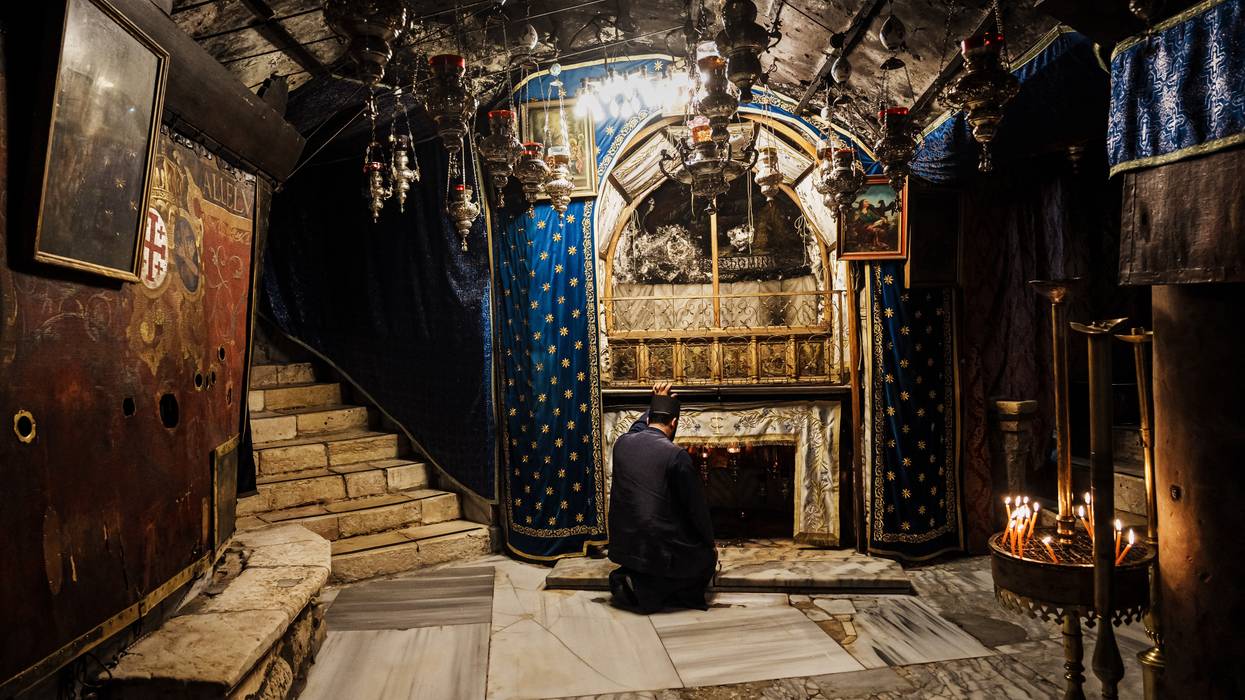
I give you my promise, that I will do my best to help create a future that does not repeat the violent history of the past.
I’m sorry that I didn’t buy a single present for you this year. It’s not in my heart. Maybe I will pick up some candy canes on my way home from CVS. I know you like candy canes.
In Bethlehem, the place Jesus was born, they cancelled Christmas this year.
The only joy in my heart is bittersweet. But I treasure every second of it, the blessing of your delightful, warm skin still attached to your strong, delicate bones, the privilege of listening to your breath while you are sleeping, feeling your heart beat against my fingertips as I lift you into bed. The reminder that these are privileges that our cousins’ cousins in Gaza do not have.
For our Palestinian and Lebanese family, the warplanes are rarely silent.
My father, your grandfather, when he was the same age as you, was forced to leave his home in Jerusalem during the first Nakba. My grandmother packed the house neatly. They told the children they were going on vacation in Egypt. They had the means to escape, a privilege that their cousins did not have. During the first Nakba, which means catastrophe in Arabic, Zionist militias expelled over 750,000 Palestinians from their homes and villages, in the process of creating the state of Israel in 1948. Then, as now, the world powers endorsed this violent expulsion of our people.
In 1917 British Foreign Secretary Arthur James Balfour endorsed the creation of a “Jewish national home in Palestine,” in a letter which is now known as the Balfour Declaration. And many of those with the least luck of all were shuttled into Gaza, which has become an “open-air prison,” according to Human Rights Watch. “The only conflict in the world in which people are not even allowed to flee,” as then-U.N. High Commissioner for Human Rights António Guterres has said.
Israeli leaders have been clear for weeks: The Gaza Nakba is underway. Israeli real estate agents have already posted images online advertising “pre-sale” deals for beachfront villas in Gaza. Now even the U.N. special rapporteur on the human rights of internally displaced persons warns that Israel is actively working to expel the civilian population of Gaza.
So what gift can I give you this year? I find a grain of truth amid the knowledge that the timing of this holiday has more to do with ancient solstice celebrations than the exact birthday of any religious leader. Those holidays held a hope in the deep of winter for a prosperous planting season to come.
And so this year, I give you my promise, that I will do my best to help create a future that does not repeat the violent history of the past. A future where no father or mother wails over their child’s cold body, where no child’s eyes stare blankly at the world, wounded with no surviving family.
As Palestinian poet Marwan Makhoul has written, “In order for me to write poetry that isn’t political, I must listen to the birds and in order to hear the birds the warplanes must be silent.”
For our Palestinian and Lebanese family, the warplanes are rarely silent. I hope someday we can help our neighbors in the heart of this world power to see that bombs overseas “explode at home,” as Martin Luther King, Jr. has said. So that someday we can all sing together with our whole hearts, about joy in the world, golden suns, spiders, and little stars. And I will try to remember to bring home some candy canes, because I know you like them so much.

"Gaza today has become the moral compass of the world," said Rev. Dr. Munther Isaac. "If you fail to call this a genocide, it is on you. It is a sin and a darkness you willingly embrace."
In an unsparing Christmas sermon delivered from the occupied West Bank over the weekend, Rev. Dr. Munther Isaac decried the complicity of the church and Western governments in Israel's ongoing assault on Gaza, a nearly three-month military campaign that he called an "annihilation" and a "genocide."
"Leaders of the so-called 'free' lined up one after the other to give the green light for this genocide against a captive population. They gave the cover," Isaac, a Palestinian Christian theologian, said during a service titled, "Christ in the Rubble: A Liturgy of Lament."
"Not only did they make sure to pay the bill in advance, they veiled the truth and context, providing political cover. And, yet another layer has been added: the theological cover with the Western Church stepping into the spotlight," Isaac added. "Here in Palestine, the Bible is weaponized against us. Our very own sacred text... The theology of the empire becomes a powerful tool to mask oppression under the cloak of divine sanction."
With most of the territory's population struggling to survive under the intertwined threats of starvation, disease, and near-constant bombing, Isaac said that "Gaza today has become the moral compass of the world."
"If you are not appalled by what is happening, if you are not shaken to your core, there is something wrong with your humanity," Isaac said from Bethlehem, which Israeli forces attacked on Monday. "And if we, as Christians, are not outraged by this genocide, by the weaponizing of the Bible to justify it, there is something wrong with our Christian witness, and we are compromising the credibility of our Gospel message. If you fail to call this a genocide, it is on you. It is a sin and a darkness you willingly embrace."
Isaac delivered his sermon a day before Israel launched one of its deadliest barrages of airstrikes of the 11-week war, killing dozens of people in central Gaza.
Displaced Gazans described fearing for their lives as Israeli warplanes and tanks bombarded homes, a refugee camp, and main roads, disrupting efforts to transport airstrike victims to the territory's overwhelmed and collapsing hospitals.
Aided by the United States, Israel has dropped hundreds of 2,000-pound bombs on the densely populated Gaza Strip since October 7, killing more than 20,000 people and destroying huge swaths of the enclave's infrastructure. A New York Times investigation found that Israel dropped many of the bombs on southern Gaza, where the Israeli military had ordered people to move as it assailed the north in the early stages of the war.
Isaac said Saturday that he was in the U.S.—Israel's leading arms supplier—last month just after Thanksgiving.
"I was amazed by the amount of Christmas decorations and lights, and all the commercial goods," he recounted. "And I couldn't help but think: They send us bombs while celebrating Christmas in their land. They sing about the prince of peace in their land while playing the drum of war in our land."
"Christmas in Bethlehem, the birthplace of Jesus, is this manger. This is our message to the world today," Isaac continued. "It is a gospel message, it is a true and authentic Christmas message, about the God who did not stay silent, but said his word, and his word was Jesus. Born among the occupied and marginalized. He is in solidarity with us in our pain and brokenness. This message is our message to the world today, and it is simply this: This genocide must stop now."
Reuters reported Monday that instead of their usual Christmas celebrations, Palestinian Christians in Bethlehem held a candle-lit vigil and prayed for peace in Gaza.
"There was no large tree, the usual centerpiece of Bethlehem's Christmas observances," Reuters noted. "Nativity figurines in churches were placed amid rubble and barbed wire in solidarity with the people of Gaza."

We know how the Christmas story ends. This child becomes a leader, a prophet, the epitome of marginalized humanity: despised, hunted, convicted, and sentenced to death.
Every now and then an image perfectly captures the moment, in all its light or darkness.I was struck by the creche that was set up in Bethlehem’s Evangelical Lutheran Christmas Church after that city’s Christians canceled this year’s Christmas celebrations. You’ve probably seen it: it shows the Nativity scene, as all such displays do, but the newborn infant Jesus is lying in the ruins of a concrete building.
“God is under the rubble in Gaza,” says the pastor who created the creche, Rev. Munther Isaac. “This is where we find God right now.”
I’m not a Christian, if Christianity means embracing the theology of a threefold God and the idea of Jesus as the sole source of personal salvation. But I love the teachings of Jesus as they’ve been conveyed. And I’ve been deeply moved by the meaning of the Christmas story, even if I can’t accept it literally. It says that God, the most powerful entity that ever was or ever could be, chose to enter this world in the most helpless form we humans can imagine: a newborn infant. And not just any infant, either. A Jewish infant. A homeless infant. A refugee infant.
A Palestinian infant.
“This is where we find God right now.”
Rev. Isaac, who last name once meant “he who laughs,” has touched the world. That’s not due to any artistic skill. On the contrary. Not to be unkind, but the creche is not an aesthetic triumph. His execution and framework are awkward. But his heart is pure, and it shows.
Look at it again.
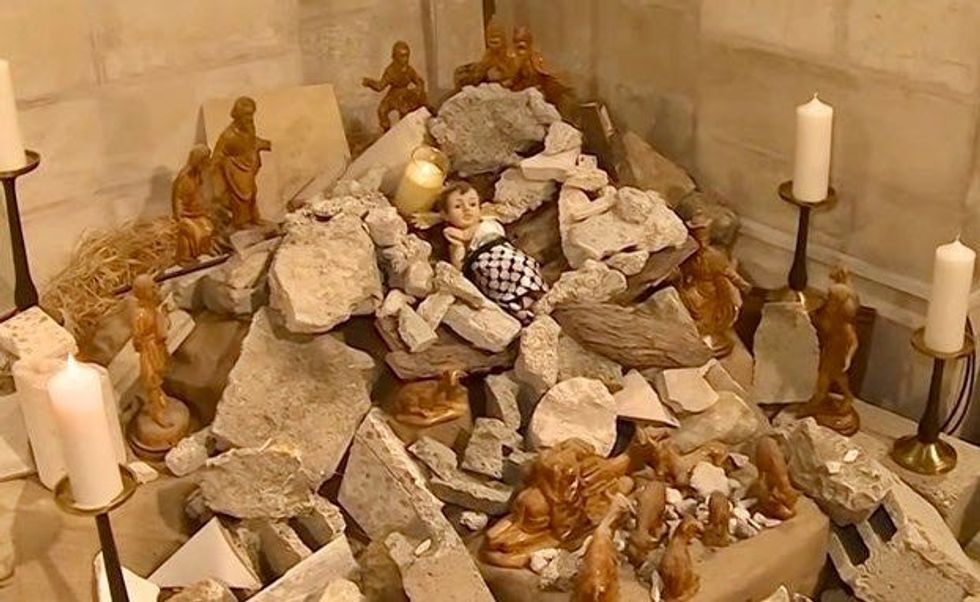
The animals in the manger are at the bottom of the ruins and the Three Wise Men are in the upper right. But what’s most striking is the sight of Joseph and Mary in the upper left corner, separated from their child by the rubble and unable to reach him. I imagine them not knowing if he’s dead or alive. Perhaps they wrote his name on one leg to identify him if the worst happens, like so many other Palestinian parents.
The childlike simplicity of the creche stays with me: the toy figures, the candles, and the doll itself, so unlike any real child — but so like a toy a real child might have.
According to the story, Jesus was born in a manger because the Romans forced everyone to return to the city of their birth to be counted in the census. Historians say that’s not true; people (only men, actually) were counted where they lived. But it’s true that the occupiers demanded that they be carefully counted.
Nothing in this story—nothing—teaches us to side with the oppressor against the oppressed.
That particular colonial practice hasn’t changed. As Israeli architect and author Eyal Weizman writes in his book, Hollow Land: Israel’s Architecture of Occupation:
An important aspect of Israel’s overall domination ... is manifested in its control of the population registration. Every Palestinian birth in Gaza, death in the West Bank, marriage in Jerusalem, or change of address in Galilee must be entered into Israel’s Interior Ministry database in order to exist. No one can travel, work, open a bank account, or even emigrate without it.
We know how the Christmas story ends. This child becomes a leader, a prophet, the epitome of marginalized humanity: despised, hunted, convicted, and sentenced to death.
Nothing in this story—nothing—teaches us to side with the oppressor against the oppressed.
Joe Biden is Catholic. So was one of my grandmothers. (The other was Jewish.) Like many a Catholic grandmother, mine terrified me with the prospect of damnation at a very young age. But people carry their own kind of hellfire. The Catholic faith and litany is also rich with beauty and profundity. My life has been enriched by its art, music, and literature. A Catholic monsignor helped me recover from drugs and alcohol. I know the dark side of the Church’s history, but I know its other side, too.
I can’t help but wonder how the president reconciles his faith with his support for today’s occupiers. Pope Francis, the Holy Father, said of the conflict: “we’ve gone beyond war. This is terrorism.” He used the word “terrorism” again after Israeli snipers shot and killed two women sheltering in a Gaza church – “in cold blood” and “without warning,” according to Church officials there.
I believe the president is a sincere Catholic. That’s why I don’t understand how he can reconcile his actions with his faith. I don’t know why he isn’t moved by the image of the infant in the rubble, even after 8,000 children – perhaps many more – have died. I don’t know why he sides against the homeless, the refugees, the laboriously counted and still unseen people suffering under occupation.
I believe the president is a sincere Catholic. That’s why I don’t understand how he can reconcile his actions with his faith.
I’m grateful to Rev. Isaac, “he who smiles,” for creating this work. I hope he and his neighbors can smile again someday soon. I’m haunted by his portrayal of two parents unable to reach their child under the ruins. Of the mother — the divine mother — who for Christian and Muslims is a uniquely sacred figure for all of humanity. Of the mother, afraid. Of the mother who is every mother living under oppression.
By most Christian accounts, Mary was a teenaged girl—probably no older than 14—when an angel appeared and revealed her destiny. That’s a heavy weight to place on a young girl’s shoulders. But it’s no heavier than the weight a mother or father carries when they hold their dead child in their arms.
As for the president, perhaps at some point he learned the Litany of Loreto, one of the prayers of praise for the mother, Mary. It includes these words:
Mother of hope.
Mirror of justice.
Mystical rose.
Gate of heaven.
Morning star.
Solace of migrants.
Comfort of the afflicted.
Queen of Martyrs.
Queen of peace.
And it concludes:
Lamb of God, who takes away the sins of the world
Lamb of God, who takes away the sins of the world
Lamb of God, who takes away the sins of the world