
SUBSCRIBE TO OUR FREE NEWSLETTER
Daily news & progressive opinion—funded by the people, not the corporations—delivered straight to your inbox.
5
#000000
#FFFFFF
To donate by check, phone, or other method, see our More Ways to Give page.


Daily news & progressive opinion—funded by the people, not the corporations—delivered straight to your inbox.
"What we are seeing has nothing to do with keeping Jews safe and everything to do with crushing dissent," said one Barnard College student.
Jewish students and academics for Palestinian rights and free speech on Wednesday condemned a congressional hearing in which House Republicans repeatedly conflated opposition to Zionism and Israeli crimes against Palestine with antisemitism, while Democratic lawmakers warned against the weaponization of civil rights to suppress dissent.
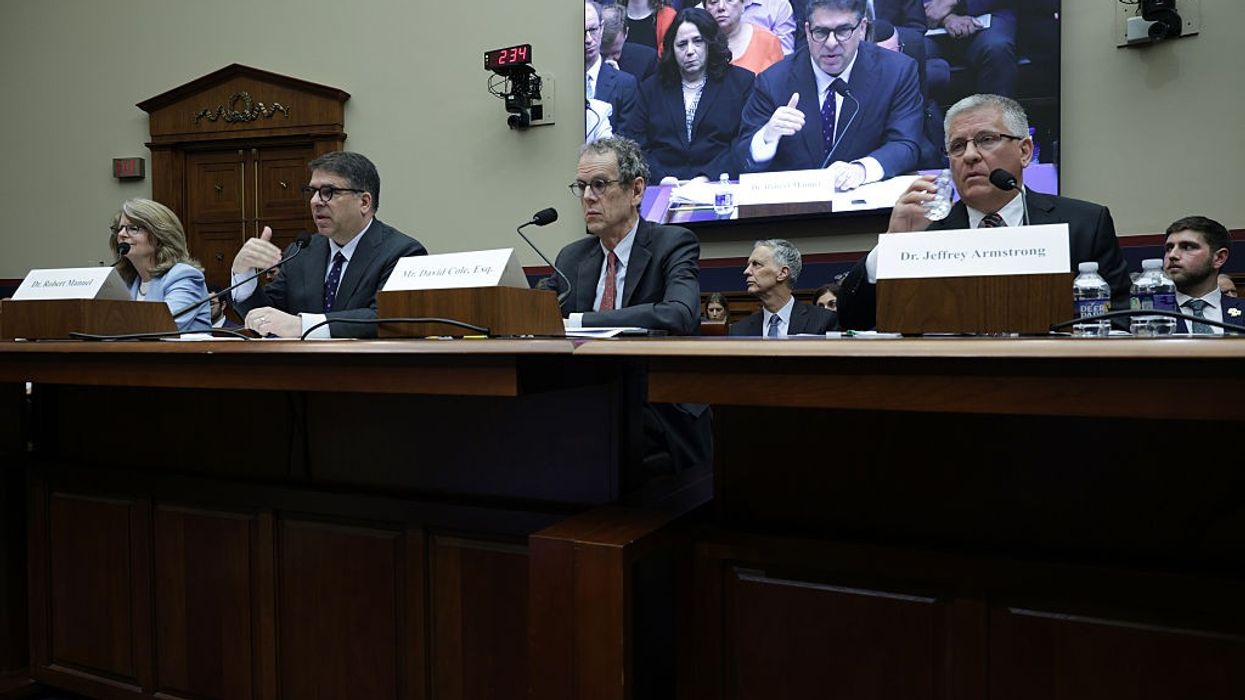
The House Education and Workforce Committee held the hearing—titled "Beyond the Ivy League: Stopping the Spread of Antisemitism on American Campuses"—which followed last year's panel on antisemitism, both real and contrived, at Columbia University.
This time, the presidents of Haverford College, DePaul University, and California Polytechnic State University were grilled by lawmakers including committee Chair Tim Walberg (R-Mich.), who said that Israel should deal with Gaza "like Nagasaki and Hiroshima" and was a manager at the Moody Bible Institute, which according to a memo from a group of mostly Jewish Haverford professors, "trains students to convert Jewish people to Christianity."
The memo notes that committee member Rep. Mark Harris (R-N.C.) once said Jews and Muslims will never know "peace in their soul" until they renounce their religions and accept Jesus Christ as their lord and savior. Another committee member, Rep. Mary Miller (R-Ill.), said that Nazi leader Adolf Hitler was "right" about political movements' need to capture youth support, before later apologizing.
Yet these and other Republican lawmakers on the panel pressured the three university presidents to crack down on constitutionally protected speech, while conflating support for Palestine and criticism of Israel with antisemitism.
"Haverford employs faculty members who engage in blatant antisemitism with no apparent consequences," said Walberg. "For example, one professor declared online that Zionism is Nazism."
Asked by Walberg if the phrase "long live the intifada"—an affirmation of Palestinians' legal right to armed resistance against Israeli oppression—is "protected speech at Haverford's campus," college president Wendy Raymond incorrectly said, "That is an antisemitic form of speech."
Walberg also falsely called the Hamas-led October 7, 2023 attack on Israel "unprovoked" and singled out students and faculty who praised Palestinians who resist Israel—which is facing a genocide case at the International Court of Justice and whose prime minister and former defense minister are fugitives from the International Criminal Court, where they are wanted for alleged war crimes and crimes against humanity, including extermination and forced starvation, in Gaza.
DePaul University president Robert Manuel said he was "deeply sorry" for "mistakes" made at the Chicago school, where two Jewish students were brutally attacked last November in what prosecutors have charged as a hate crime, while touting the banning of pro-Palestine groups including Students for Justice in Palestine from campus.
While noting that the Constitution "doesn't protect antisemitic violence, true threats of violence, or certain kinds of speech that may properly be labeled 'harassment,'" Georgetown University Law Center professor and former ACLU national legal director David Cole told the committee that the First Amendment "protects speech many of us find wrongheaded or deeply offensive, including anti-Israel advocacy and even antisemitic advocacy."
Cole accused the committee of making "broad-based charges of antisemitism without any factual predicate."
"To be honest, and with all due respect, the hearings this committee held on this same subject last year are reminiscent not of a fair trial of any sort, but of the kind of hearings the House Committee on Un-American Activities used to hold," Cole contended. "And I think we can all agree that the HUAC hearings were both a big mistake and a major intrusion on the First Amendment rights of Americans."
Cole also took aim at U.S. President Donald Trump's weaponization of antisemitism to threaten and defund colleges and universities that don't crack down on Palestine defenders, stressing that "the government may not threaten funding cuts as a tool to pressure recipients into suppressing such viewpoints."
Dozens of Jewish Haverford students signed an open letter to members of the House Education Committee ahead of Wednesday's hearing stating that "we are all deeply concerned by how you are weaponizing our pain and anguish for your own purposes."
Letter to the Editor: Jewish Haverford Students Reject Congress’ Weaponization of Antisemitism haverfordclerk.com/letter-to-th...
[image or embed]
— Karen Masters ( @karenlmasters.bsky.social) May 7, 2025 at 12:15 PM
"It is clear to us that these hearings will not, and have no desire to, protect us or combat antisemitism," the letter says. "Instead, this congressional hearing weaponizes antisemitism to target freedom of speech on college campuses, silences political dissidents, and attacks students who speak out in solidarity with Palestine. It is a blatant assault on our Black, brown, transgender, queer, noncitizen, and Palestinian peers."
A day before the hearing, the group Jewish Voice for Peace Action (JVPA)—which called the panel a "kangaroo hearing"— brought nine Columbia University and affiliated students to Capitol Hill to meet with members of Congress and "speak about their experiences as Jewish students who have been steadfastly committed to advocating for the safety and freedom of the Palestinian people."
Columbia junior Shay Orentlicher said that "I'm here asking my representatives to call for the release of my friend Mahmoud Khalil and to put real pressure on the Trump regime," referring to the permanent U.S. resident facing deportation after helping to lead pro-Palestine protests at the New York City university.
"I cannot stand to see the Trump administration smear Mahmoud as an antisemite when it could not be further than the truth," Orentlicher added.
Tali Beckwith-Cohen, a Jewish senior at Columbia-affiliated Barnard College, argued: "The Trump regime is using false allegations of antisemitism to disappear our friends, punish student protestors, and dismantle higher education. What we are seeing has nothing to do with keeping Jews safe, and everything to do with crushing dissent."
"Thousands of Jews on campuses across the country have spoken out in solidarity with the people of Gaza and we will not be silent," Beckwith-Cohen vowed.
JVPA political director Beth Miller contended that "the far-right does not care about Jewish safety."
"Trump and his allies in Congress are platforming neo-Nazis and Christian nationalists, all while pretending to care about antisemitism in order to take a hatchet to our communities and most basic freedoms," Miller added. "This is intended to silence the Palestinian rights movement, sow chaos, and sharpen authoritarian tools that will then be used to dismantle civil liberties and democracy itself."
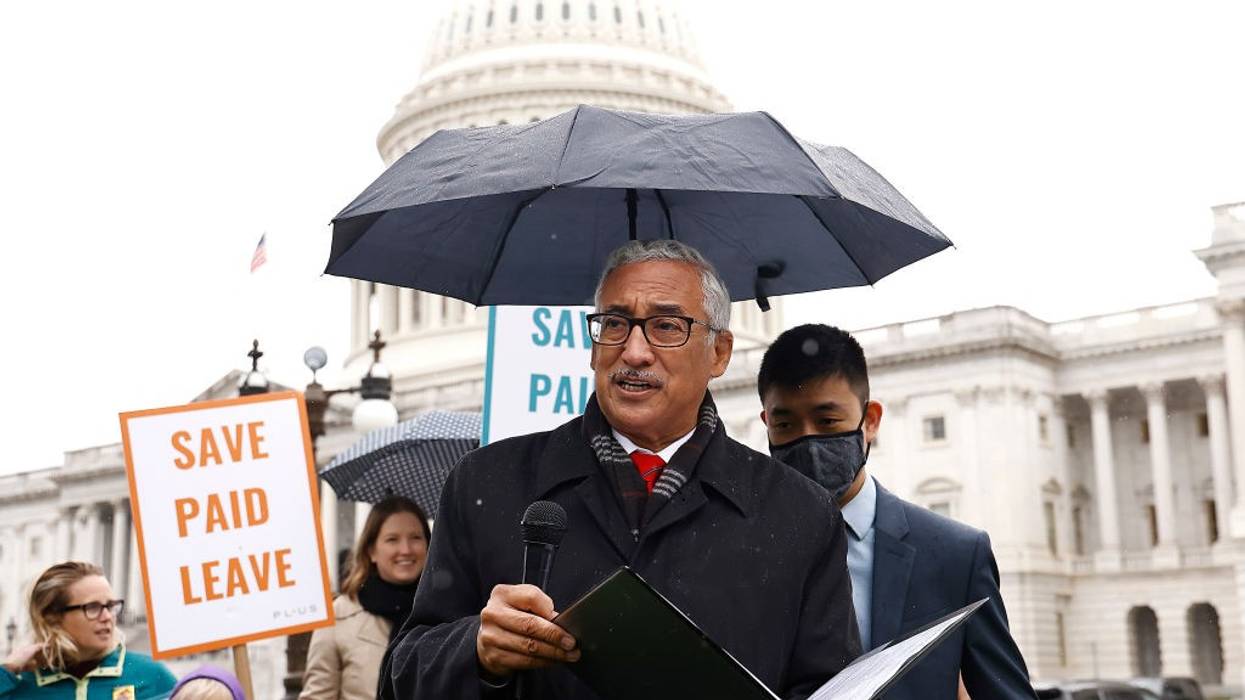
Rep. Bobby Scott (D-Va.), the ranking member of the House Education Committee, pushed back on Republicans' assertions during Wednesday's hearing, noting that "my colleagues on the other side of the aisle have not held any hearings on other forms of discrimination and hate, such as racism, Title IX gender violations, Islamophobia, homophobia, or the challenges of meeting the needs of students with disabilities."
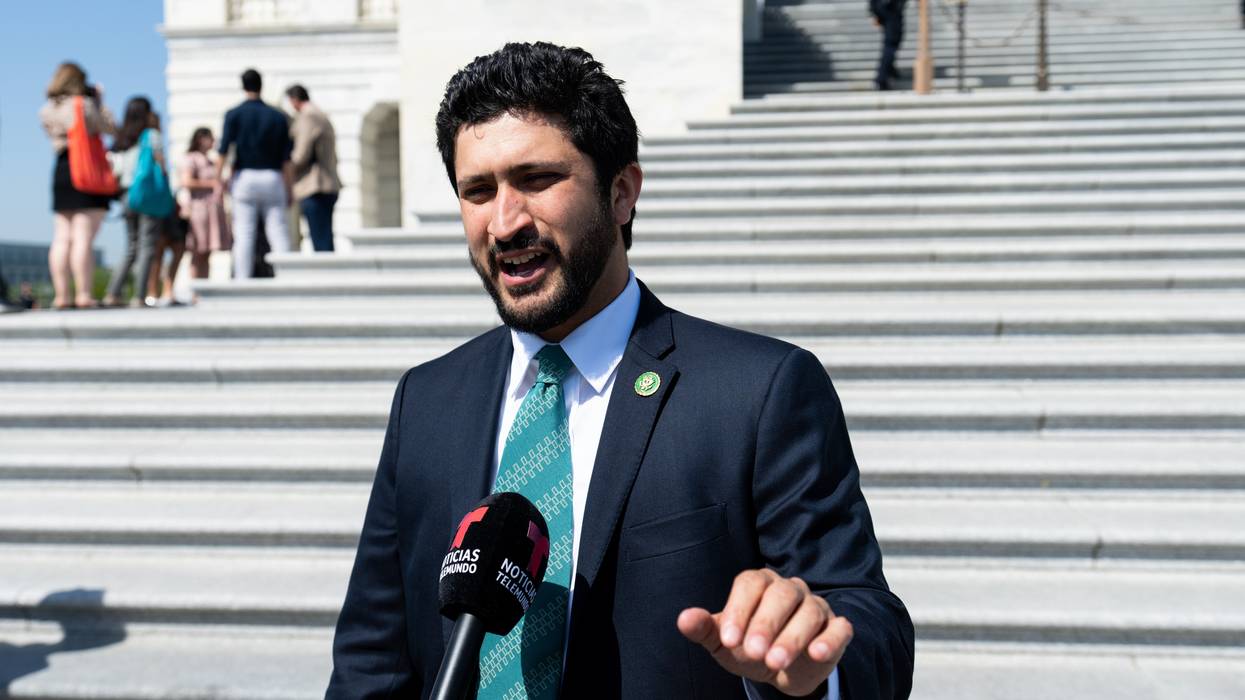
Rep. Greg Casar (D-Texas) noted that Trump praised attendees of the deadly 2017 "United the Right" white supremacist rally in Charlottesville, Virginia as "very fine people," and that Health and Human Services Secretary Robert F. Kennedy Jr. "spread an antisemitic conspiracy theory that Covid was engineered to target white and Black people but spare Jewish people."
Casar asked committee Republicans to condemn these and other antisemitic incidents by raising their hands. None did.
Antisemitism is an assault on all of our values. So why would Republicans cut funding to address hate crimes or protect synagogues? Republicans are not trying to keep Jewish students safe. They're trying to keep the Israeli government safe from any form of criticism.
[image or embed]
— Congressman Greg Casar ( @repcasar.bsky.social) May 7, 2025 at 10:24 AM
"Not a single Republican today has been willing to condemn any of this antisemitism," Casar lamented. "Unfortunately, the party of 'very fine people on both sides' or ' Jewish space lasers' does not give a damn about stopping antisemitism. If my Republican colleagues want to stop the spread of antisemitism, maybe they should stop apologizing for and promoting antisemites."
Rep. Ilhan Omar (D-Minn.) argued that "it is abundantly clear that the cynical work of the majority party on this committee is now being expanded and weaponized by the [Trump] administration seeking to squash dissent."
"Political protest, anti-war protest, pro-Palestinian protest—this is all protected speech under the First Amendment, regardless of citizenship status," Omar said after listing a number of Palestine defenders, including green-card holders, targeted for deportation by the Trump administration.
"Using immigration authorities to target, abduct, and detain noncitizens for their activism is a clear violation of their rights and a hallmark of an authoritarian government," she added.
Asserting that "throughout history, college campuses have been the places where worldviews, politics, cultures meet," Rep. Summer Lee (D-Pa.) said that "some of the most transformative movements for justice in this country were ignited by students on college campuses."
"We cannot allow them to use efforts to divide our marginalized communities against each other."
"Now, that tradition of protest, academic freedom, and the core principle of free speech is under attack," Lee noted. "Not genuinely in the name of safety and student well-being, but under the guise of control used to suppress the voices of marginalized groups."
Lee said that it's clear that committee Republicans don't care about tackling antisemitism and other forms of bigotry "because they've dismantled and closed regional offices for civil rights... tasked with investigating antisemitism, that they have not spoken out against the Nazi salutes of Elon Musk or the Great Replacement Theory that led to the largest antisemitic massacre in my district."
"They have done nothing about anti-Blackness—I won't hold my breath for a hearing on that," she continued.
"We haven't acknowledged that our safety and our liberation are tied together," Lee added. "We cannot allow them to use efforts to divide our marginalized communities against each other... We are the closest we have ever been—ever been—to losing our civil liberties. We have to fight against it."
"We know it won't be easy," said the AFL-CIO president. "There's no fight more righteous than ensuring that every single worker who wants a union has a fair shot to join or form one."
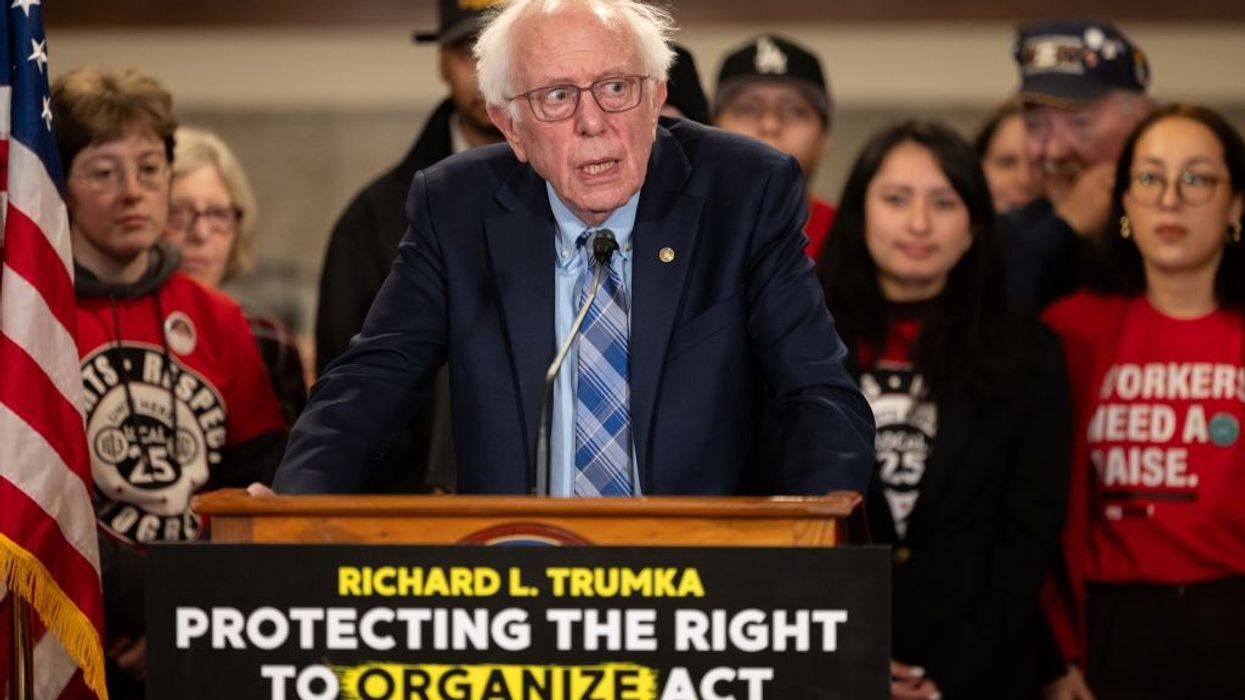
As U.S. Sen. Bernie Sanders and Congressman Bobby Scott reintroduced the Richard L. Trumka Protecting the Right to Organize Act on Wednesday, labor union leaders prepared to fight for the legislation that would strengthen workers' rights.
While Sanders (I-Vt.) and Scott (D-Va.) have long led the battle for the bill on Capitol Hill, most Democrats in Congress—including both minority leaders—also support the PRO Act, which features a wide range of policies intended to hold companies accountable for violating employees' rights and make it easier for workers to form and negotiate with a union.
"Never before in the history of our nation have income and wealth inequality been greater than today. Workers are falling further and further behind. In response, millions of Americans have expressed their desire to join a union," Sanders said in a statement. "However, the billionaire class is fighting with all its might to put down attempts by workers to exercise their constitutional right to unionize."
The PRO Act's reintroduction comes as U.S. President Donald Trump and billionaire Elon Musk work to gut the federal government while congressional Republicans—who have narrow majorities in both chambers—work to cut healthcare and food assistance programs that serve working-class people to fund tax giveaways for the ultrawealthy and corporations.
"Congress has an urgent responsibility to ensure that workers can join a union and negotiate for higher pay, better benefits, and safer workplaces."
Sanders pointed to Trump's decision "to illegally fire National Labor Relations Board Member Gwynne Wilcox and effectively shut down the NLRB," and warned that "without a functioning NLRB, corporate bosses can illegally fire unionizing workers, flagrantly violate labor laws and render free and fair union elections near impossible."
"Supporting the immediate reinstatement of Member Wilcox and the swift passage of the PRO Act would be major steps toward building real worker power," added the senator, who is the ranking member of the Senate Committee on Health, Education, Labor, and Pensions. "The PRO Act is long overdue and I am proud to be introducing this bill."
Scott also framed the bill as a necessity, saying that "unions are essential for building a strong middle class and improving the lives of workers and families. Regrettably, for too long, workers have suffered from anti-union attacks and toothless labor laws that undermined their right to form a union."
"As union approval remains at record highs, Congress has an urgent responsibility to ensure that workers can join a union and negotiate for higher pay, better benefits, and safer workplaces," he argued. "The PRO Act is the most critical step Congress can take to uplift American workers. I urge my House and Senate colleagues on both sides of the aisle to join me in advancing the most significant update for workers' labor organizing rights in over 80 years."
Labor leaders also called on members of Congress across the political spectrum to back the bill—which largely lacks GOP support, but is co-sponsored by Rep. Brian Fitzpatrick (R-Pa.).
"In too many workplaces, in too many industries across the country, big corporations and billionaire CEOs still retaliate against us for organizing," said AFL-CIO president Liz Shuler, who has led the federation since the bill's namesake, Trumka, died in 2021.
"They refuse to negotiate our contracts, force us to sit through hours of anti-union propaganda and engage in illegal union-busting every day," she said of companies and executives. "Now they have an unelected, unaccountable union-buster trying to illegally fire tens of thousands of our fellow workers in federal jobs and an administration rolling back the workplace protections."
Shuler added that "we know it won't be easy, but the labor movement never backs down from a righteous fight. And in today's economy, where our workers' hard-earned paychecks are covering less of what they need while still facing unsafe conditions and a lack of respect on the job, there's no fight more righteous than ensuring that every single worker who wants a union has a fair shot to join or form one."
American Federation of State, County, and Municipal Employees president Lee Saunders reiterated AFSCME's support for the legislation on Wednesday, calling out billionaires and big business for "anti-union extremism" that "is deepening economic inequality, halting progress on health and safety, and harming millions."
"The PRO Act will loosen billionaires' grip on our economic future and make clear that their days of using illegal union busting tactics without consequence are over," he said. "This legislation will level the playing field, giving workers the legal protections they need to organize without fear of retaliation or obstruction. It's about time Congress prioritized workers over billionaires and gave them a fair shot at improving their workplaces."
Other groups that support the PRO Act include the American Federation of Teachers, Communications Workers of America, International Association of Machinists and Aerospace Workers, International Brotherhood of Electrical Workers, National Nurses United, Service Employees International Union, United Autoworkers, and United Steelworkers, among others.
The right to a union means fair wages, benefits, and security—but corporate greed stands in the way," the Laborers' International Union of North America said on social media Wednesday. "The PRO Act fights back! Congress must choose: Stand with working people or bow to Wall Street. The time is now!"
"We will not stand by and allow the impact that dismantling the Department of Education would have on the nation's students, parents, borrowers, educators, and communities."
U.S. Sen. Bernie Sanders on Thursday led five members of Congress in a warning against the Trump administration's plan to "unilaterally dismantle" the Department of Education and demanded answers from the acting head of the agency about recent moves "to put federal workers on administrative leave, coerce employees into leaving their jobs, provide access to students' sensitive data, and illegally freeze vital funding."
"Over the course of two weeks, the Trump administration issued sweeping executive orders and sought to broadly and illegally freeze federal financial assistance," the lawmakers—Sanders (I-Vt.), Sen. Patty Murray (D-Wash.), Sen. Tammy Baldwin (D-Wis.), Rep. Bobby Scott (D-Va.), and Rep. Rosa DeLauro (D-Conn.)—wrote in a letter to acting Education Secretary Denise Carter.
"Federal employees have been targeted, in some cases for simply following the law. Elon Musk is attempting to shut down the work of entire agencies while gaining access to some of the federal government's most far-reaching and sensitive data systems. Media reports indicate a similar effort may be underway at the Department of Education," the lawmakers noted.
The letter continues:
The Department [of Education] has been a target of President [Donald] Trump and his unelected advisers since even prior to his inauguration. And recently, the department has put workers on administrative leave for attending trainings promoted by former Secretary Betsy DeVos, once touted among results achieved by the department, and coerced employees into leaving their jobs. Workers at the department—like those across the government—have been made to fear their jobs will be reclassified so that they lose employment protections. Some staff from the entity referred to as the Department of Government Efficiency have reportedly gained access to internal department data systems, including financial aid systems that include personally identifiable information on millions of students. These actions appear to be part of a broader plan to dismantle the federal government until it is unable to function and meet the needs of the American people.
"We will not stand by and allow this to happen to the nation's students, parents, borrowers, educators, and communities," the lawmakers stressed. "Congress created the department to ensure all students in America have equal access to a high-quality education and that their civil rights are protected no matter their ZIP code."
"We urge you to provide information on the steps the department is taking to ensure the continuity of programs that Americans depend on, the ability of the department to effectively administer programs for their intended purposes without waste, fraud, and abuse, and the safeguards in place to protect student data privacy," the legislators added.
Specifically, the letter asks for a list of officials "who have been granted access to personally identifiable or sensitive information," an "explanation of all steps the department has taken to protect" such data, the names of "all individuals placed on administrative leave or terminated" since Trump took office and all department communications to such employees, and confirmation that the department "has not frozen, paused, impeded, blocked, canceled, or terminated any awards or obligations since January 20."
The lawmakers' letter came on the same day that nearly 100 Democratic members of the House of Representatives wrote to Carter requesting a meeting to discuss "reports that the Trump administration has plans to illegally dismantle or drastically reduce" the Department of Education via executive order.
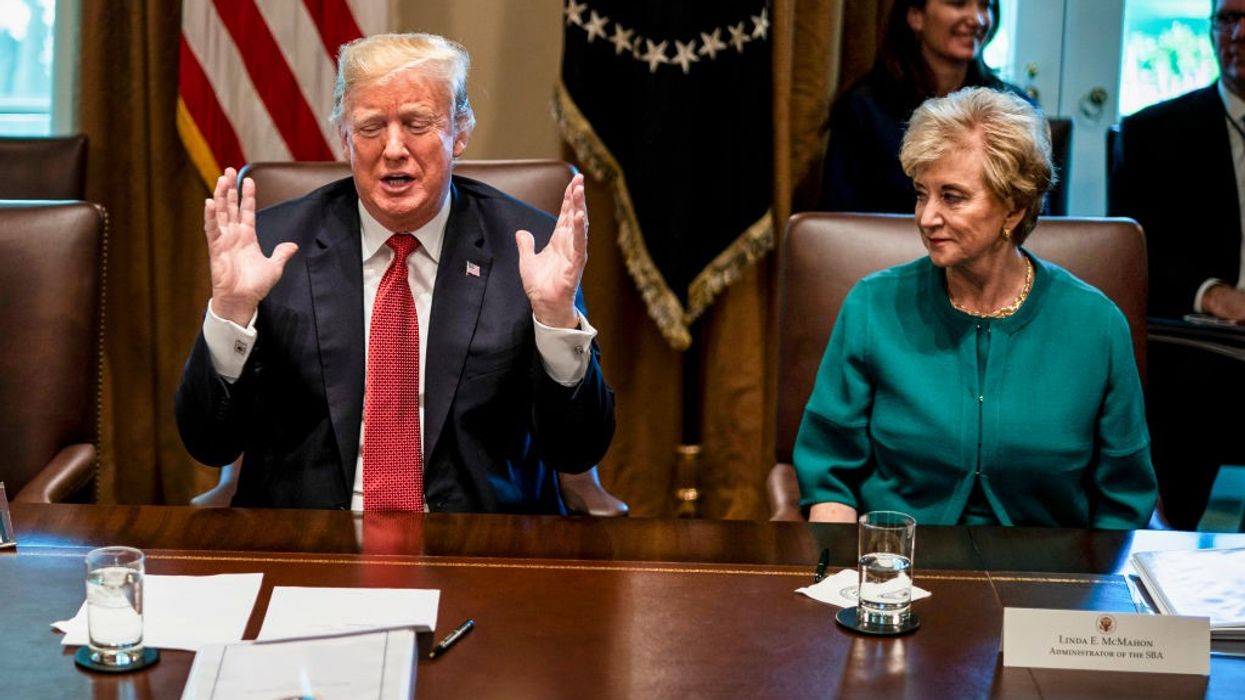
Both letters came ahead of next week's scheduled Senate confirmation hearing for Linda McMahon, a top fundraiser for Trump's campaign whom the president subsequently nominated for education secretary. McMahon—a billionaire who led the Small Business Administration during Trump's first term—is expected to face tough questions from Democratic senators about what one campaigner called her "documented history of enabling sexual abuse of children and sweeping sexual violence under the rug" during her tenure as World Wrestling Entertainment CEO.
The very future of the Department of Education is uncertain, as Trump has repeatedly vowed to abolish the agency, which was established during the administration of President Jimmy Carter in 1979.
"I told Linda, 'Linda, I hope you do a great job and put yourself out of a job,'" Trump quipped earlier this week.
"This bill will help level the playing field and, once again, restore the balance of power between workers and their employers," said Rep. Bobby Scott.
A group of Democratic U.S. House members on Friday unveiled legislation "aimed at bolstering protections for America's workers and ensuring accountability for employers who flout labor and employment laws."
The Labor Enforcement to Securely (LET'S) Protect Workers Act was introduced by Rep. Bobby Scott (D-Va.)—the ranking member of the House Committee on Education and the Workforce—and House Labor Caucus Co-Chairs Mark Pocan (D-Wis.), Debbie Dingell (D-Mich.), Donald Norcross (D-N.J.), and Steven Horsford (D-Nev.).
The bill's sponsors said their legislation is based on the premise that "employment laws are a promise to our nation's workers" meant to "secure the most basic rights of work."
"That promise is broken," they contended. "Recent shocking revelations about massive increases in the number of children illegally overworked and trafficked into dangerous jobs—just over 85 years since the passage of the Fair Labor Standards Act, which was enacted to eliminate that very problem—is the latest example of the ways that this promise to America's workers is broken."
Across the U.S., Republican state lawmakers have been advancing legislation to remove restrictions on child labor, despite several high-profile workplace deaths of minors. At the federal level, Sen. James Risch (R-Idaho) and Rep. Jared Golden (D-Maine) last year introduced a bill that would allow 16- and 17-year-olds to work in the logging industry.
The LET'S Protect Workers Act sponsors highlighted rampant wage theft and overtime violations, workplace injuries, and union-busting by employers who "know that even if a resource-starved Department of Labor catches a violation, the penalties are a mere slap on the wrist."
"People should be able to come home at the end of the day—alive, well, in one piece, and with all the wages they worked hard to earn," the lawmakers asserted. "Children should be in schools, not dangerous workplaces, and workers should be able to organize a union without interference or the threat of retaliation from their employers."
According to House Education and Workforce Committee Democrats, if passed, the LET'S Protect Workers Act would:
"Every American should be fairly compensated and be able to return home safely at the end of the day," Scott said in a statement Friday. "Unfortunately, shortcomings in our labor laws enable unethical employers to exploit workers, endanger children, and suppress the right to organize—with little accountability."
"That's why I'm proud to introduce the LET'S Protect Workers Act, which will hold bad actors accountable and strengthen penalties for labor law violations," he added. "This bill will help level the playing field and, once again, restore the balance of power between workers and their employers."
In a joint statement, Dingell, Horsford, Norcross, and Pocan said that "the lack of meaningful enforcement makes it all too easy for bad faith actors to get away with illegally violating workers' rights—from firing workers for organizing a union, to allowing children to work overnight shifts, or jeopardizing workers' safety by ignoring workplace regulations."
"We're proud to join Ranking Member Scott in introducing this bill to crack down on unscrupulous employers and to ensure that workers receive the protections they deserve," the lawmakers added.
Earlier this month, nearly 50 labor organizations led by the AFL-CIO and representing a wide range of U.S. workers urged congressional Democrats to resist Republican efforts to roll back rules enacted by the Biden administration to protect worker rights amid relentless attacks by abusive employers.
Specifically, the labor groups warned that Republicans are trying to use the Congressional Review Act—which was enacted to strengthen oversight of federal rulemaking—to overturn pro-worker rules enacted by the Department of Labor and other government bodies.
Meanwhile, Republicans including former President Donald Trump—the 2024 GOP nominee—have been trying to woo U.S. workers with proposals including a tax exemption for tipped employees panned as a "
hollow promise" by experts and by inviting Teamsters president Sean O'Brien to speak at the Republican National Convention last week.
In response to Republicans' dubious courting of U.S. labor, Rep. Greg Casar (D-Texas)—who is a co-sponsor of the LET'S Protect Workers Act—recently called for holding what would be a largely symbolic vote on the PRO Act. The bill was revived last year by Scott and Sen. Bernie Sanders (I-Vt.) and, if passed, would expand labor protections including the right to organize and collectively bargain.
"If Republicans wanna talk like they're pro-worker, then let's have a vote on the PRO Act next week," Casar
said on social media last week. "Let's see which politicians are for unions and which ones are all talk. Dems are ready to vote, how about you guys?"
"Let's see which politicians are for unions and which ones are all talk," said the Texas Democrat.
As former U.S. President Donald Trump's new running mate and a union leader's speech spark discussions about the Republican Party and organized labor, one Democratic congressman on Tuesday suggested a test to see who is actually pro-worker.
Rep. Greg Casar, a Texas Democrat with a history of
advocating for workers, called for holding a vote on the Richard L. Trumka Protecting the Right to Organize (PRO) Act when his colleagues in Congress return to Capitol Hill next week.
"If Republicans wanna talk like they're pro-worker, then let's have a vote on the PRO Act next week," Casar said on social media. "Let's see which politicians are for unions and which ones are all talk. Dems are ready to vote, how about you guys?"
Introduced by Rep. Bobby Scott (D-Va.) and Sen. Bernie Sanders (I-Vt.), the PRO Act "expands various labor protections related to employees' rights to organize and collectively bargain in the workplace." The vast majority of its co-sponsors are Democrats.
"Dems are ready to vote, how about you guys?"
Casar specifically called out House Speaker Mike Johnson (R-La.) and Sen. Josh Hawley (R-Mo.), who on Tuesday wrote for Compact Magazine about International Brotherhood of Teamsters general president Sean O'Brien's Monday night speech at the Republican National Convention (RNC), acknowledging that it "came as something of a shock."
Hawley called the speech "a watershed moment" and said that "Republicans have a chance to turn the corner on labor." He also took the opportunity to highlight some of his own positions, such as more sick days for rail workers. The senator left out that he has backed "right-to-work" laws that ban union security clauses in collective bargaining agreements and opposed the PRO Act.
O'Brien—who responded by saying that Hawley "is 100% on point"—had, as The Washington Post's Lauren Kaori Gurley put it, "showered praise" on the senator during his speech. The Teamsters leader also stressed the need for pro-worker reforms.
"Labor law must be reformed," O'Brien said. "Americans vote for a union but can never get a union contract. Companies fire workers who try to join unions and hide behind toothless laws that are meant to protect working people but are manipulated to benefit corporations. This is economic terrorism at its best. An individual cannot withstand such an assault. A fired worker cannot afford corporate delays and these greedy employers know it. There are no consequences for the company, only the worker."
He declared that "we need corporate welfare reform. Under our current system, massive companies like Amazon, Uber, Lyft, and Walmart take zero responsibilities for the workers they employ. These companies offer no real health insurance, no retirement benefits, no paid leave, relying on underfunded public assistance. And who foots the bill? The individual taxpayer. The biggest recipients of welfare in this country are corporations, and this is real corruption. We must put workers first."
O'Brien was invited to speak at the RNC by Trump, who on Monday secured enough delegates to become the Republican nominee and announced U.S. Sen. JD Vance (R-Ohio) as his running mate—creating a ticket that Liz Shuler, president of the AFL-CIO, called "a corporate CEO's dream and a worker's nightmare."
Teamsters spokesperson Kara Deniz told the Post that the union leader requested to speak at the Democratic National Convention next month but has not yet received an invitation.
Unlike the Teamsters, several major labor groups endorsed Biden for reelection over a year ago. The Democrat describes himself as "the most pro-union President leading the most pro-union administration in American history"—and he has mostly avoided angering organized labor, other than working with Congress to block a national rail strike in December 2022.
Biden became the first sitting president in history to walk a picket line when he rallied with United Auto Workers members in September. The UAW endorsed him in January, when the group's president, Shawn Fain, sharply criticized Trump and warned that "rarely as a union do you get so clear of a choice between two candidates."
O'Brien struck a much different tone on Monday, praising the ex-president and "characterizing both parties as ambivalent about unions with room to improve," as Post reporter Jeff Stein pointed out on social media. In addition to Sanders, Stein highlighted, "there are 48 Senate sponsors of the PRO Act. They all caucus with the Democratic Party. Zero are Republicans."
Only Sens. Mark Kelly (D-Ariz.), Mark Warner (D-Va.), and Kyrsten Sinema (I-Ariz.)—who ditched the Democratic Party shortly after the 2022 election—have joined with the chamber's Republicans to oppose the PRO Act. In the GOP-controlled House, the bill is backed by every Democrat but just three Republicans: Reps. Lori Chavez-DeRemer (Ore.), Brian Fitzpatrick (Pa.), and Christopher Smith (N.J.).
"On June 21, 2023, the Senate Committee on Health, Education, Labor, and Pensions chaired by Sen. Bernie Sanders passed the PRO Act 11-10," Warren Gunnels, the panel's majority staff director, noted Tuesday. "Every Democrat on the committee voted yes. Every Republican on the committee voted no."
Rep. Becca Balint (D-Vt.) said, "To the Republicans at the RNC who want to appear to support American labor, here's an idea: Come join us to pass the PRO Act."
"Raising the federal wage floor is the single most efficient, effective—and wildly popular—bipartisan tool we have to deliver economic stability to working people," said one supporter of the legislation.
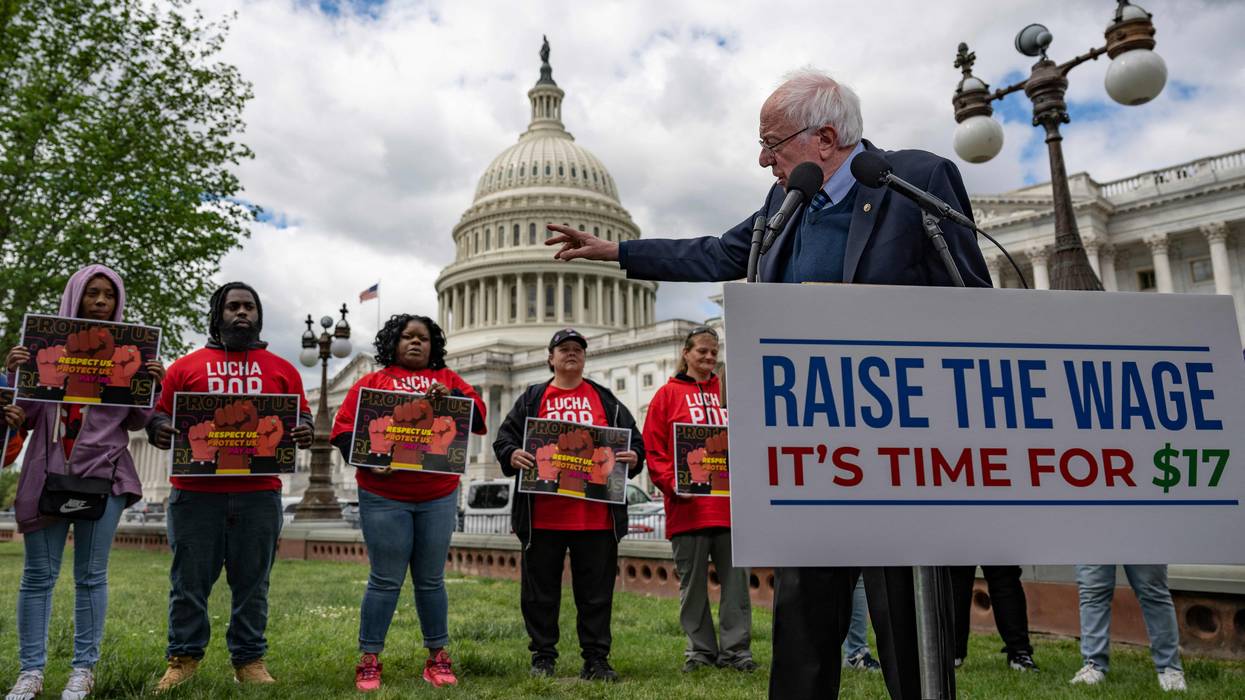
Economic justice advocates applauded Tuesday as U.S. Sen. Bernie Sanders and Congressman Bobby Scott formally introduced the Raise the Wage Act of 2023, which would increase the federal hourly minimum wage from $7.25 to $17 by 2028.
The legislation was first announced in May but the lawmakers finally unveiled the bill text a day after the 14th anniversary of the last time the national wage floor was lifted. In the years since 2009, the Fight for $15 movement has pressured several U.S. state and local governments to boost wages, but Republicans and some Democrats in Congress have blocked similar federal efforts.
"The $7.25 an hour federal minimum wage is a starvation wage. It must be raised to a living wage—at least $17 an hour," Sanders (I-Vt.), who chairs the Senate Committee on Health, Education, Labor, and Pensions, said in a statement. "In the year 2023, a job should lift you out of poverty, not keep you in it."
"At a time of massive income and wealth inequality and record-breaking corporate profits, we can no longer tolerate millions of workers being unable to feed their families because they are working for totally inadequate wages. Congress can no longer ignore the needs of the working class of this country. The time to act is now."
Scott (D-Va.) declared that "no person working full-time in America should be living in poverty. The Raise the Wage Act will increase the pay and standard of living for nearly 28 million workers across this country."
That works out to about a fifth of the U.S. workforce, according to the Economic Policy Institute—which also found in an analysis published Tuesday that the bill "would provide an additional $86 billion annually in wages for the country's lowest-paid workers, with the average affected worker who works year-round receiving an extra $3,100 per year."
Scott, ranking member of the House Committee on Education and the Workforce, stressed that "raising the minimum wage is good for workers, good for business, and good for the economy. When we put money in the pockets of American workers, they will spend that money in their communities."
At a Tuesday press conference to promote the bill, Scott was joined by House Minority Leader Hakeem Jeffries (D-N.Y.), Congressional Progressive Caucus Chair Pramila Jayapal (D-Wash.), Labor Caucus Co-Chair Donald Norcross (D-N.J.), Well-Paid Maids owner Aaron Seyedian, and Frances Holmes, who makes $13 an hour working a seasonal job at a baseball stadium St. Louis, Missouri.
"I've been in the Fight for $15 for a decade and I'm here to plead with Congress, the senators, people that vote, just anybody that'll hear our story," said Holmes, explaining her difficulty paying for rent, utilities, and food for her family. "Workers like me, we need your help."
Along with hiking the federal minimum wage over five years, the bill would phase out the subminimum wage for tipped workers, teens, and people with disabilities, and tie future increases to median wage growth. In addition to Sanders and Scott, the legislation is co-sponsored by 146 House members and 29 senators.
The bill is also backed by dozens of groups, including the AFL-CIO, Business for a Fair Minimum Wage, Demand Progress, Indivisible, Leadership Conference on Civil and Human Rights, National Employment Law Project, National Network to End Domestic Violence, One Fair Wage, Oxfam America, Patriotic Millionaires, Service Employees International Union, and United for Respect.
"Raising the federal wage floor is the single most efficient, effective—and wildly popular—bipartisan tool we have to deliver economic stability to working people," said Patriotic Millionaires chair Morris Pearl, a former managing director at BlackRock.
"Moreover, doing so will strengthen and expand the economic base for businesses across the country," Pearl added. "To preserve American democratic capitalism, we must raise the wage floor substantially and close its gaping holes. This piece of legislation is a step in the right direction."
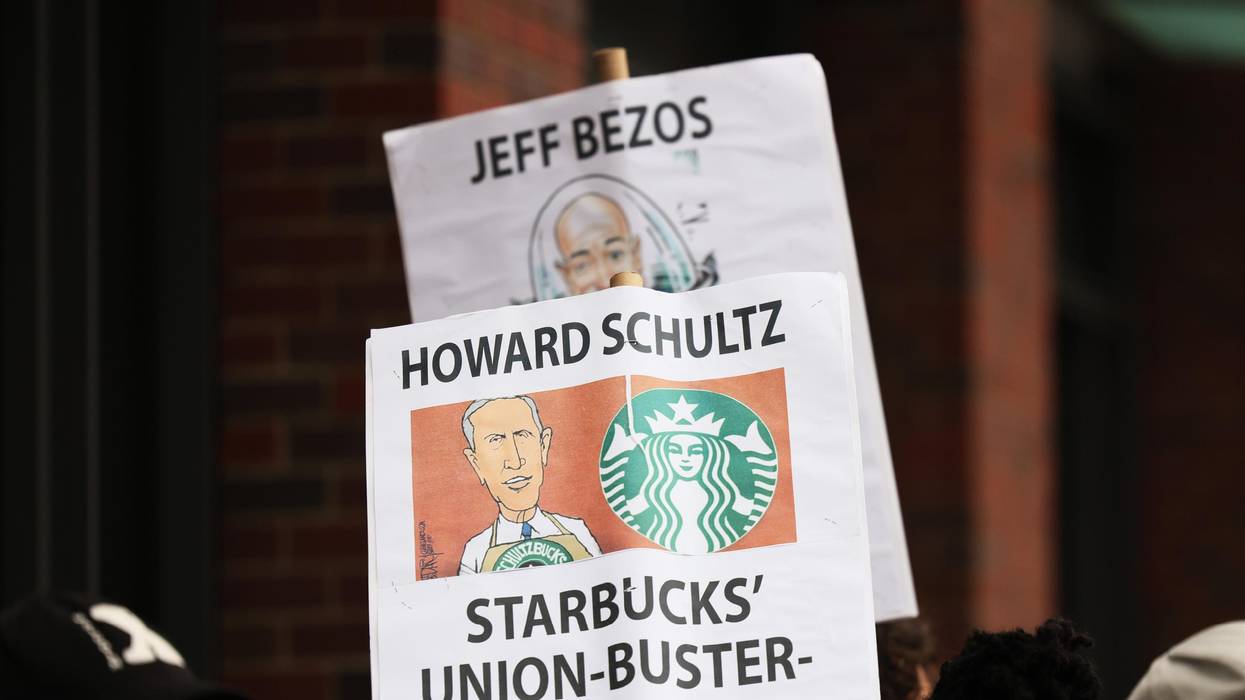
A group of two dozen Starbucks workers is calling on the Democratic-controlled House labor committee to seek testimony from billionaire CEO Howard Schultz on the coffee company's relentless--and, according to employees and organizers, blatantly unlawful--efforts to crush unionization drives at shops across the United States.
In a letter dated April 15 and first publicized Monday by the progressive media outlet More Perfect Union, 24 Starbucks employees from Arizona and California urged Rep. Bobby Scott (D-Va.) to use his "authority as chairman of the House Committee on Education and Labor" to "invite Howard Schultz to appear before your committee and answer to this behavior and disregard for federal labor law."
"It now appears that Starbucks is doubling down on a deeply anti-worker, illegal set of practices across the country."
The letter was also signed by Lynne Fox, the president of Workers United, a Service Employees International Union (SEIU) affiliate that is vying to organize Starbucks locations nationwide.
"Since the first elections in Buffalo in late 2021, Starbucks has conducted an unprecedented, aggressive anti-union campaign of harassment, captive audience meetings, and illegal firings of union leaders and supporters," the letter notes, pointing to the National Labor Relations Board's (NLRB) formal complaint last month alleging that Starbucks illegally retaliated against two Phoenix employees for working to organize their shop.
"This past week, the NLRB has advised us that they have found merit that Starbucks unlawfully fired six of seven members of the workers' organizing committee in Memphis," the letter continues. "The company fired this group known as 'the Memphis 7' to spread fear of organizing at Starbucks stores across the nation. Many similar cases remain pending across the country."
The workers, who also alleged "consistent surveillance" by Starbucks management and the company's anti-union law firm, delivered their letter to Scott last week following a string of union election victories in Oregon, Pennsylvania, and Massachusetts--wins that brought the total number of unionized Starbucks shops in the U.S. to 20.
According to organizers, more than 200 Starbucks locations across the country have filed for union elections with the NLRB, and additional applications are flowing in on a daily basis.
"In the face of clear and consistent evidence of support for the union from partners in store after store," the workers wrote to Scott, "it now appears that Starbucks is doubling down on a deeply anti-worker, illegal set of practices across the country."
Last week, workers at several Starbucks locations walked off the job to protest hour cuts and other anti-union tactics that the company's management is pursuing as organizing victories mount.
Schultz, an experienced executive with a long anti-union track record, was brought back as Starbucks' CEO on an interim basis earlier this month, a move that workers characterized as part of the company's effort to blunt organizing momentum.
During a town hall with Starbucks employees on April 4, the day he began his third stint as CEO, Schultz claimed that U.S. companies are "being assaulted" by union drives and made clear that he is going to fight attempts to organize Starbucks shops.
"My job in coming back to Starbucks is to ensure the fact that we, the collective we, co-create, reimagine a new Starbucks with our partners at the center of it all," Schultz declared. "As a pro-partner company. A company that does not need someone in between us and our people."
In their new letter, the Starbucks workers argued that "the recent re-appointment of Howard Schultz as interim CEO sends a clear signal to partners."
"We are well aware of his anti-union posture and actions over the decades. Howard Schultz himself came to Buffalo in November of 2021 to try to bust our union," they wrote. "Howard Schultz told one co-worker during an anti-union 'listening session' last week that if they 'hated' Starbucks then why don't they find another job. We don't hate Starbucks. Lexi Rizzo, a 24-year-old partner with almost 7 years at the company spoke for us when she said, 'We fight for what we love.'"