

SUBSCRIBE TO OUR FREE NEWSLETTER
Daily news & progressive opinion—funded by the people, not the corporations—delivered straight to your inbox.
5
#000000
#FFFFFF
To donate by check, phone, or other method, see our More Ways to Give page.
Daily news & progressive opinion—funded by the people, not the corporations—delivered straight to your inbox.
Martha Waggoner, mwaggoner@breachrepairers.org
Hundreds of poor and low-wealth people marched through Wall Street, chanting "if we don't get it, shut it down" and carrying signs as the Poor People's Campaign brought its Mobilization Tour to the heart of capitalism on Monday.
The Moral March on Wall Street, led by the New York Poor People's Campaign, began at the Museum of the American Indian and moved past the New York Stock Exchange before ending at Trinity Church Wall Street for a mass meeting where impacted people and faith leaders spoke. The NYPPC invited the co-chairs of the Poor People's Campaign: A National Call for Moral Revival - Bishop William J. Barber II and Rev. Dr. Liz Theoharis - to speak.
"We are here to tell the stock exchange and Wall Street to stop trading our lives, that we want living wages and health care and clean air and voting rights," Rev. Dr. Theoharis, who lives in New York City, said during the march. "And we want them now! And if we don't get them, we'll shut it down."
Kelly Smith, a tri-chair of the NYPPC, said at the meeting that she was called to this work about four years ago, when she became overcome with worry about the struggles in her family, community, city, state and nation such as a lack of healthcare and more recently, New York City's evictions of people from homeless camps.
"I worry for my son. I worry that he'll be able to find a living wage. I worry that he lives in a world where his Black skin is valued less than my white skin." she said. "And I could worry and worry and worry and wring my hands. Or, I could stand up. I could speak up. I could fight. Rev. Barber, it has meant so much to me when you said if you knew this was your last breath, what would you do? ... Well, we are going to stand up. We are going to speak out. And we are going to mobilize for June 18th in Washington, D.C."
Along with the NYPPC, representatives from campaigns from Maine, Massachusetts, Vermont, and Rhode Island joined the march and rally as part of a Mobilization Tour stop on the way to the Mass Poor People's & Low-Wage Workers' Assembly and Moral March on Washington and to the Polls.
"We've got to do this (June 18th) because our politics are trapped in the lies of scarcity and the lies of scarcity to keep alive the lies of trickle-down economics and the lies of neoliberalism, which leave people out. The false narrative of Christian nationalism and racism and militarism and climate devastation," Bishop Barber said.
"You've got a mess. These kinds of politics turn us against each other, blame the poor for their poverty even though we live in the midst of abundance. And we know that poverty is not so much a personal choice as a political consequence of policies. We have the resources to meet the needs of everybody. The only thing we don't have enough of is moral consciousness and the will to do what's right. And that's our job - to shift the moral narrative of this nation," he said.
Faith leaders representing different traditions also spoke at Trinity Church Wall Street, explaining why they're mobilizing for the June 18th assembly and march. Trinity Church Wall Street is a historic church, with its current building (the third) constructed from 1839 to 1846. In 2020, it gave over $24 million in grants, with a focus on organizations that work with undocumented immigrants, undocumented immigrants, domestic violence survivors, homeless families, and formerly incarcerated adults and youth. The 2020 grant-giving nearly tripled its New York City grants from 2019.
The program can be viewed here.
Poverty is not a personal choice but a policy choice and even before COVID, these policies were killing and hurting people, with 250,000 dying from poverty each year in the US. The action called attention to the needs of the 8.6 million poor and low-income people in the state and the 140 million people nationally who were poor or low-income before COVID.
Volney Gordon, who has been homeless for 15 years since being priced out of New York City and who now lives in Washington, Vermont, said he "became an expert in poverty on these very streets - in the shadow of obscene wealth and amidst the headquarters of institutions that, having built their wealth on the backs of our class, have waged an all out war on those very same people.
"The ruling class doesn't want us to strategize across lines of division because our strength, the strength of the working class, the poor, is what powers this machine," Gordon, a liver cancer survivor, said in prepared remarks.
Brenda Temple, a low-wage worker who lives in public housing in New York City, said she's part of a campaign to demand that Mayor Eric Adams stop the privatization of public housing and let residents manage the developments.
"Privatization of public housing ends public housing," she said in prepared remarks. "This is nothing less than an attack on the poor. "We need decent housing, affordable to the over 140 million of us Americans who can't afford to live in our own country. ... We demand decent public housing. We demand to manage our own homes. We demand more democracy. "
Stephanie Heslop, who helped lead the unionization effort at a Starbucks in Ithaca, said she lives paycheck to paycheck.
"It is our labor that has made Starbucks the multi-billion dollar company it is and all we are asking for is what we deserve," she said. "In return we have been met with threats, harassment, cuts in hours, and some workers have even been fired. The company is using the massive wealth they have made off our labor to try to prevent us from exercising our fundamental right to unionize, and I find that deeply shameful--but it also gives me hope, because in spite of all that we're still winning. Our solidarity is stronger than their ill-gotten wealth. And if we can do it, if Amazon workers on Staten Island can do it, then other workers can too!"
OTHER VOICES
Jennifer E. Cuffee-Wilson of the Shinnecock/Montauk Nation said her community lives on Long Island, one of the richest parts of the country:
"We are surrounded by nothing but billionaires. And one of the billionaires is (former NYC Mayor Michael Bloomberg and Bloomberg had the nerve to go on national television and tell them that Shinnecock Indian nation is disastrous" and they need help.
"Well, are they helping us know? No. but he's got a house out there. He's living on stolen land."
Pamela Poniatowski, tri-chair, Rhode Island Poor People's Campaign
"I was not aware that more than 70% of households with disabled members living below the poverty line do not receive federal housing assistance. But I now know because I was waiting for housing for three years and it seems I'm one of the lucky ones, only waiting three years for housing.
"There are still millions of people waiting for housing, just look around. We can see them in every state. It is heartbreaking and there are 140 million people who are just one emergency away from losing everything. The waiting list for housing anywhere is years long. What are we expected to do during those years?"
Josh Kaupilla of Maine, poor, gay, formerly homeless
"I grew up with that shame-mongering by politicians, public figures, and family members. Though I wish those days were past, I know firsthand how these ideas divide families and keep poor people from recognizing their shared interest. How much longer do we have to start over, to run, to face homelessness, addiction, abusive situations; with stability, belonging and safety so often out of reach?
"The truth is their distorted moral narrative is what's deepening the suffering in our country and making us all less secure. Division is what THEY seek, then what we need to do is come together."
Amy Tai of Massachusetts
"Most nights I wake up with my heart racing because I cannot imagine what kind of future my 16-year-old son will have or not have because of climate devastation. I have spent countless hours working to help friends who are on the brink of homelessness. I cry every day because I see the toll of racism on my loved ones. I cry every day because I am witnessing the injustice and violence committed against poor people, Black and Brown and Indigenous people, in our country is gut-wrenching. I myself have personally experienced anti-Asian violence and it is terrifying."
The Poor People's Campaign: A National Call for Moral Revival, is building a generationally transformative digital gathering called the Mass Poor People's Assembly and Moral March on Washington, on June 20, 2020. At that assembly, we will demand that both major political parties address the interlocking injustices of systemic racism, poverty, ecological devastation, militarism and the distorted moral narrative of religious nationalism by implementing our Moral Agenda.
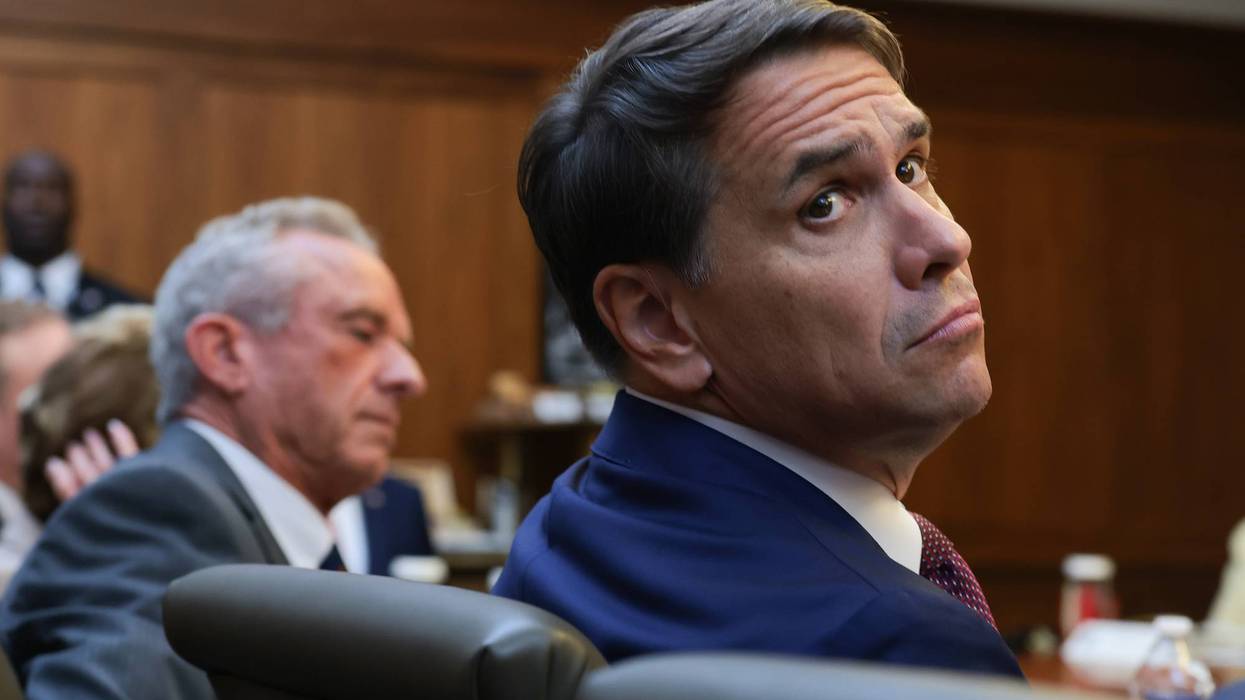
"Todd Blanche has one client, and it’s not the American people," said one coalition of advocacy groups.
Senate Democrats and advocacy groups are making the case for the full Senate to block Todd Blanche from being confirmed as US attorney general after Republicans on the Senate Judiciary Committee voted to advance his nomination Tuesday along party lines.
Sen. Dick Durbin (D-Ill.) said Blanche, currently President Donald Trump's acting attorney general, "has aided and abetted the most corrupt administration in the history of the United States."
Democratic colleagues described Blanche's support for Trump's $1.8 billion "weaponization fund," his neglect of survivors abused by Jeffrey Epstein, and his obstruction of investigations into killings and misconduct by immigration agents, as evidence that he is, in the words of Sen. Sheldon Whitehouse (D-RI), "probably the most discreditable person ever to seek the office of attorney general."
Their criticisms were echoed by anticorruption watchdogs and rights groups, who argued that Blanche, who was previously Trump's personal lawyer, was still acting like it even while serving as Acting Attorney General.
“Senators must urgently do the right thing and block Blanche," said Lisa Gilbert, the president of the watchdog group Public Citizen, who referred to him as a "Trump crony."
"If we make Todd Blanche America’s lawyer at the head of the Justice Department," Gilbert said, "we are accepting a man... who rubberstamped the corrupt IRS deal that Trump made with himself to shield all the Trumps and their businesses, not only from enforcement of any taxes they may have dodged or any fines or payments they may owe to American taxpayers, but from ‘any and all’ related consequences for violating any federal criminal or civil law."
In recent days, Blanche committed to kill the so-called "slush fund" in exchange for support from Republican holdouts like Sens. John Cornyn (Texas) and Thom Tillis (NC).
Gilbert and other co-chairs of the Not Above the Law Coalition—a collective of anticorruption advocacy groups—said that the agreement was "an unenforceable piece of paper that Trump never signed" and have warned that Blanche will revive efforts to pay government funds to Trump supporters, including those who took part in the January 6, 2021 Capitol insurrection, as soon as he is confirmed.
Following Tuesday's vote, Cornyn said that Blanche "gave us the assurances that [the fund] was dead and would not be revived, and in this case we have no alternative but to take his word."
Arisha Hatch, the executive director of the women's organization UltraViolet, said the Republicans who voted for Blanche had also sided against "the majority of the American people, who demand integrity from our elected leaders and want everyone involved in Jeffrey Epstein's network—including those who enabled it—to be held accountable."
Epstein survivors have criticized Blanche for his role in overseeing the DOJ’s highly scrutinized release of files related to his alleged crimes, including the department's exposure of victims’ private information and intimate photos while omitting information that identified prominent associates, including Trump himself.
At the urging of Tillis, Blanche held an hour-long meeting where he met with victims of Epstein's abuse, who said in a letter published Tuesday that he appeared dismissive of their concerns.
"When we met with Todd Blanche, he interrupted us. He told us to 'get to the point.' He told us to report what happened to us to the FBI. We already have," the survivors said. "Some of us have been reporting these crimes for decades. This was a check-the-box meeting designed to secure Senator Tillis' vote."
Maya Wiley, the president of the Leadership Conference on Civil and Human Rights, added that Blanche had "pursued baseless claims against civil rights organizations, sought sweeping access to state voter data, permitted a lawless [Immigration and Customs Enforcement]," echoing criticisms about the DOJ’s withholding of evidence from Minnesota prosecutors related to the killings of Renee Good and Alex Pretti by federal agents.
Republicans control the Senate by a margin of 53-47 and are down a vote with Sen. Mitch McConnell (R-Ky.) currently absent, meaning that just three defectors could be enough to block Blanche's confirmation, which could come to a vote within days.
"The Senate doesn’t need unanimous courage to block Blanche," said Brett Edkins, managing director for policy and political affairs at the progressive advocacy group Stand Up America. "It needs a few Republicans willing to put country over party.”
Gilbert, Edkins, and the other co-chairs of the Not Above the Law coalition—Praveen Fernandes, vice president of the Constitutional Accountability Center and Kelsey Herbert, campaign director at MoveOn—noted Blanche's own statements that the DOJ, long described as a politically neutral agency, was not independent from the president, and a slip-up during a confirmation hearing during which he referred to himself as Trump's lawyer.
"Todd Blanche has one client, and it’s not the American people," the advocates said. "Committee Republicans just chose not to see it. The full Senate now has the final word, and every senator should use it to reject this nomination.”
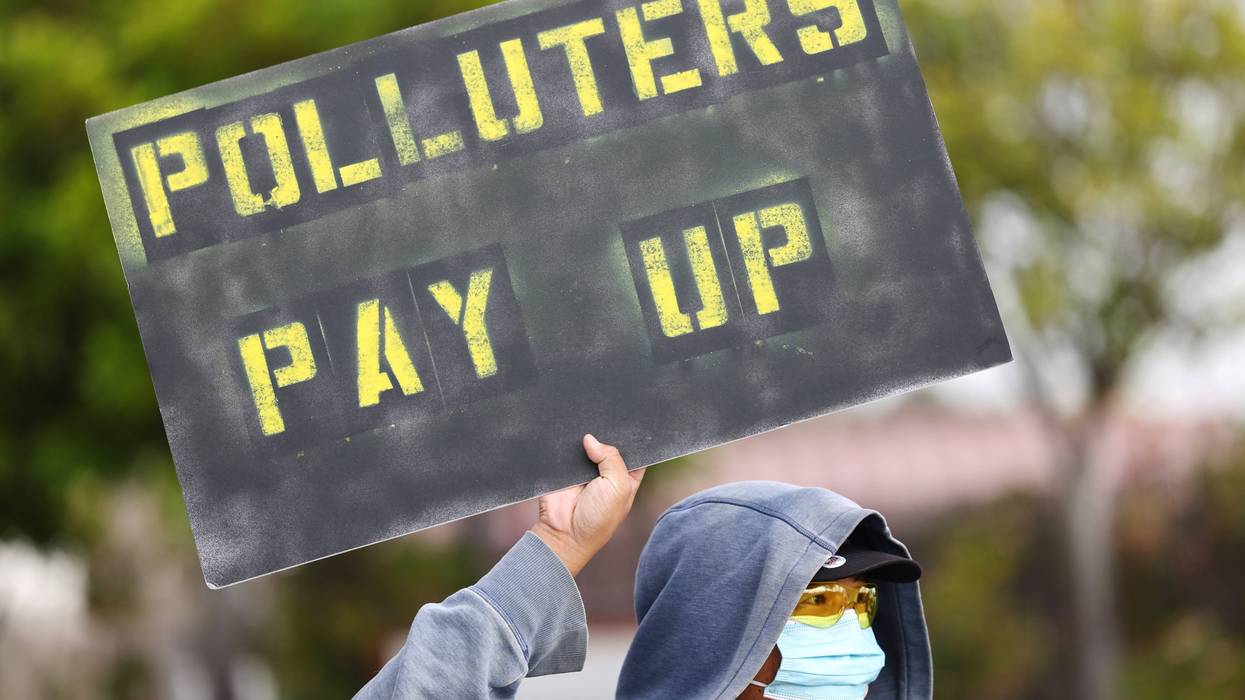
"If this is a genuine change of heart from a president whose budget bill included $18 billion in taxpayer handouts to Big Oil, we welcome it," said one organizer. "But talk is cheap, here's the real test."
After President Donald Trump echoed climate campaigners' longtime condemnation of fossil fuel giants' massive profits—uttering "the only thing" the climate-denying president "has said about energy policy since taking office that makes any sense," according to one advocate, organizers on Tuesday urged him to put his money where his mouth is by backing a windfall profits tax for companies like Chevron and Exxon Mobil.
In the Oval Office on Monday, Trump called on those corporations and others to slash prices and give some of their record-breaking profits—specifically those made since the president joined Israel in waging an unprovoked war against Iran on Feb. 28—"back to the public.”
"They're making too much money, based on a shortage," said Trump, while noting that he is a "big free enterprise guy."
"I don't like it... Chevron, too much money. Exxon Mobil, too much money," he said. "When you look at one company, they made 12 times what they made the year before? Give some of that back to the public, and they'd better cut the retail price."
“Too much money.”
“Chevron too much money.”
“Exxon Mobil too much money.”
President Donald Trump attacked oil majors ExxonMobil and Chevron for earning windfall profits from energy shortages created by the U.S.-Iran war, demanding that both companies cut prices and return… pic.twitter.com/I3CfmmQlqv
— Drop Site (@DropSiteNews) August 3, 2026
With oil and consumer gas prices skyrocketing since Trump and Israel started the war, resulting in Iran's retaliatory measure of effectively closing the Strait of Hormuz, which a fifth of the world's oil supply ordinarily travels through, Exxon reported that its second-quarter profits more than doubled compared with last year. The company took in $14.5 billion, while Chevron reported profits of $12 billion compared with $2.5 billion in 2025—nearly a 400% increase.
BP also reported profits that were $2.35 billion higher than last year.
An analysis by the Guardian published Tuesday showed that eight of the world's largest oil companies made nearly $93 billion in profits in the three months following the invasion.
Chevron just announced its highest quarterly earnings ever. Shell clocked its second-highest quarterly profits. ExxonMobil doubled its earnings.Combined, the three companies raked in, on average, some $404 million in profits every day for the last three months.
[image or embed]
— Make Polluters Pay (@polluterspay.bsky.social) August 3, 2026 at 12:16 PM
The climate action group 350.org noted that the record profits of oil and gas giants come as "communities across the world endure record-breaking heatwaves, wildfires, and rising living costs"—and as governments from around the world prepare to resume negotiations on a United Nations Framework Convention on International Tax Cooperation, where a "mandatory surtax on highly polluting industries is gaining support as part of that process."
Two Democratic lawmakers in the US, Rep. Ro Khanna of California and Sen. Sheldon Whitehouse of Rhode Island, introduced the Big Oil Windfall Profits Tax Act in March.
“From Bordeaux to Phoenix to Mumbai, families are living through the cost of climate delay, while the companies most responsible bank blockbuster bonanzas," said Anna Jellema, executive director of 350.org. "That is not a coincidence; it is a business model. Governments meeting in New York this month have a genuine opportunity to change it. Calls are growing across the political spectrum for a proper global profits tax, so the industry that helped cause these disasters pays towards the recovery, the solutions and the protection people need. It’s simple fairness: Those who caused the damage and profited from it should pay to fix it.”
Candice Fortin, US campaign manager for 350.org, emphasized that the latest comments from Trump, whose Interior Department just moved to weaken restrictions on Arctic drilling, must be taken with a grain of salt.
In the same Oval Office statement on Monday, said Fortin, "Trump criticized countries championing wind energy and supported more oil extraction in the North Sea."
"We don't just need to tax fossil fuels' windfall profits now, to be then forget about later," said Fortin. "We need to end our dependence on oil, gas, and coal—and we need a permanent mechanism to make the fossil fuel industry pay its fair share and redirect those revenues towards protecting people and communities from the climate and cost-of-living crises."
"If this is a genuine change of heart from a president whose budget bill included $18 billion in taxpayer handouts to Big Oil, we welcome it," added Fortin. "But talk is cheap, here's the real test: Will Trump throw his weight behind the Big Oil Windfall Profits Tax bill, which his party has been stonewalling in Congress since March?"

“This report is a ready-made roadmap for prosecutors, investigators, and members of Congress to finally start holding the Epstein class accountable," said Sen. Ron Wyden.
A yearslong Senate investigation released on Tuesday revealed how some of the world's largest banks allegedly broke federal money laundering laws by failing to stop or promptly report financial transactions that allegedly helped sustain the sex trafficking of children and young women by Jeffrey Epstein, the late billionaire and former friend of President Donald Trump.
Released by Senate Finance Committee Ranking Member Ron Wyden (D-Ore.), "Looking the Other Way" examines "how years of complicity by top officials at multiple Wall Street Banks enabled Jeffrey Epstein to transfer hundreds of millions of dollars around the world to finance his sex trafficking operation."
"Major compliance failures at several Wall Street banks enabled Epstein for years," the publication states. "By failing to report—or choosing not to report—his suspicious financial transactions to federal law enforcement, these banks allowed Epstein to send cash payments and wire transfers to his victims, friends, and collaborators around the world. The bankers who needed to be asking questions didn’t ask them. Jeffrey Epstein’s crimes were hiding in plain sight."
"The investigation found significant evidence that JPMorgan Chase (JPMC), Deutsche Bank, and Bank of America violated federal anti-money laundering laws by failing to screen and report Epstein’s suspicious financial transactions in a timely manner," the report continues.
"A review by Sen. Wyden’s staff of records housed at the US Department of the Treasury as well as internal bank records determined that top executives at major Wall Street banks were aware of Epstein’s suspicious financial activity for years but withheld information from the US government and protected Epstein from federal scrutiny," the publication says.
According to the report:
Wall Street banks looked the other way as Epstein withdrew millions of dollars in cash with no clear business purpose and was party to thousands of suspicious wire transfers worth more than $1 billion. These banks failed to conduct appropriate due diligence on more than $170 million in payments to Epstein from billionaire Leon Black. In fact, documents reviewed during this investigation demonstrate that JPMC’s senior leadership repeatedly protected Epstein as a client despite repeated warnings from internal compliance personnel.
The documents also show that even after JPMC formally terminated Epstein as a client due to human trafficking concerns, the bank still waited years to report his activity to regulators, and top bankers eagerly continued to work with him informally and through other channels where he could continue to be a source of referrals for other ultrawealthy clients.
The three banks were among four financial institutions from which House Judiciary Committee Ranking Member Jamie Raskin (D-Md.) last year demanded records concerning over $1.5 billion in “suspicious” financial transactions tied to Epstein’s trafficking ring.
“I said from the start that if you want to get to the bottom of the Jeffery Epstein cover-up, you had to follow the money," Wyden said Tuesday in a statement announcing the report's publication.
"My small team of investigators did what Trump’s attorney general and treasury secretary said was impossible: They connected the dots and found evidence of multiple crimes related to Epstein’s associates," the senator continued. "Bank records they reviewed, along with public court filings, detail a shocking pattern of the biggest Wall Street banks in the country choosing to ignore clear evidence of sex trafficking and money laundering, just to keep a wealthy client on the books."
"This report is a ready-made roadmap for prosecutors, investigators, and members of Congress to finally start holding the Epstein class accountable," Wyden added.
That's highly unlikely to happen under the current Republican-controlled Congress. Republicans spent years insisting the Epstein case exposed elite corruption, promising full transparency, and rallying behind Trump's 2024 reelection bid in part because he vowed to release every file.
Trump, former Attorney General Pam Bondi, FBI Director Kash Patel, and others promised transparency. Instead, the Trump administration has missed legal deadlines, released heavily redacted records, and withheld millions of pages in what critics say are violations of the bipartisan Epstein Files Transparency Act. Signed by the president last year, the law compelled the Department of Justice (DOJ) to publish all unclassified Epstein-related records within 30 days and explain every omission to Congress.
Acting US Attorney General Todd Blanche, Trump's former personal attorney, angered many Epstein victims and others by announcing that there was no evidence of a secret client list, by falsely claiming that the DOJ was fully complying with the law, and by meeting with Epstein’s co-conspirator Ghislaine Maxwell in prison shortly before she was suspiciously transferred to a lower-security prison.
The Senate Judiciary Committee voted 12–10 Tuesday along party lines to advance Blanche's nomination to become permanent attorney general, sending it to the full upper chamber for a confirmation vote expected later this week.
As the Trump administration fails to fully comply with the Epstein Files Transparency Act, its authors—Reps. Ro Khanna (D-Calif.) and Thomas Massie (R-Ky.)—recently proposed an updated version of the legislation, which strengthens the original by allowing state attorneys general, Epstein victims, members of Congress, and certain prosecutors to sue the DOJ if it fails to release required records.
The business-focused news site Bloomberg sought comment from the three banks. Deutsche Bank declined to respond, JPMC said it began notifying regulators “after the full scope of [Epstein's] crimes became public in 2019," and a spokesperson for Bank of America said that "we take our legal and regulatory responsibilities seriously and, as we have previously said, the bank did not facilitate wrongdoing.”
An attorney for Black told Bloomberg that the report's assertions “outrageous and false.”
Wyden's report came on the same day that The New Republic's Ellie Quinlan Houghtaling revealed that CBS' "60 Minutes" killed its own scoop on Wall Street's long-standing financial ties to Epstein after the network's incoming Trump-aligned boss, Bari Weiss, fired correspondent Sharyn Alfonsi, who led the investigative report. Alfonsi had interviewed Wyden for the segment.
Yep. Earlier this year I was interviewed by Sharyn Alfonsi of 60 Minutes about my Epstein investigation. Subsequently, CBS pulled the segment and fired the reporter. The MAGA buyout of media is aiding the Trump administration’s Epstein cover up.
[image or embed]
— Senator Ron Wyden (@wyden.senate.gov) August 4, 2026 at 7:17 AM
"Yep," Wyden said on Bluesky, confirming his interview with Alfonsi. "The MAGA buyout of media is aiding the Trump administration’s Epstein cover-up."

"O nation, why are children getting killed in Gaza? Why are women getting killed in Gaza?" asked a Civil Defense spokesperson at the service. "Why are massacres committed against innocents in Gaza?"
Palestinians on Tuesday held a mass funeral in the Gaza Strip for more than 100 people killed in a 2023 Israeli attack as the local Ministry of Health's confirmed death toll for Israel's genocidal assault climbed to at least 73,377.
Since Israel launched its war on Gaza after the October 7, 2023 Hamas-led attack, experts have warned the true toll could be much higher, with an unknown number of remains trapped beneath the ruins of the besieged territory.
Tuesday's funeral in Gaza City was for 112 people, including 40 children, who were among the over 300 killed in a November 22, 2023 Israeli attack on the Sabra neighborhood, in which "warplanes flattened a residential block," according to The Associated Press.
For the funeral, the bodies were wrapped in Palestinian flags, with photos of the dead attached.
As CBS News detailed:
One mourner showered flower petals over the covered bodies of the Hassayna and Abu Sharia clan as women and children watched from atop partly demolished buildings around the earthen square. A banner with the faces of dozens of children served as the backdrop of a speech from the spokesperson of Gaza's Civil Defense.
"O nation, why are children getting killed in Gaza? Why are women getting killed in Gaza?" asked Mahmoud Basal at the service. "Why are massacres committed against innocents in Gaza?"
The words "Stop the genocide in Gaza," in both Arabic and English, had been scrawled on the podium he spoke from.
Mourners also held signs with messages in both languages. One said in English, "Children of Gaza have the right to live."
Gaza's Civil Defense said that while these remains were found in wrecked buildings in the area, as part of a search operation launched nearly two weeks ago that involved 136 hours of "arduous" work, at least 157 others are still missing.
Given the limited equipment in Gaza, despite months of a supposed ceasefire, "the crews were digging with their hands through masses of reinforced concrete," said Mohammed Abu Dan, who supervised the operation, according to Reuters.
"Many bodies disintegrated and evaporated because of the intensity of the explosion," he explained.
After the funeral prayers, one relative, Taysir al-Hassayna, told the AP, "The only crime of these martyrs was that they remained steadfast and resilient in their homes, believing that these homes would protect them."
For those who haven't been found, al-Hassayna added, it's "as if their bodies had evaporated without a trace."
Al Jazeera reported that surviving relatives used the funeral "to renew accusations that Israel committed war crimes in Gaza and demanded international investigations into the attack and the hundreds of bodies still believed to be buried under rubble across the territory."
The International Criminal Court in November 2024 issued arrest warrants for Israeli Prime Minister Benjamin Netanyahu and Yoav Gallant, his former defense minister, citing alleged crimes against humanity and war crimes, and Israel faces a genocide case led by South Africa at the International Court of Justice.
The latter tribunal has directed Israel to "take effective measures to prevent the destruction and ensure the preservation of evidence related to allegations" of violations of the Genocide Convention, but a report published Monday details how Israeli soldiers and civilian contractors are systematically removing potential proof from Gaza.
Specifically, the Geneva-based Euro-Mediterranean Human Rights Monitor said that at least 10 million tons of rubble "have been removed, crushed, or moved from their original sites within the areas under Israel's unlawful military control, which encompass about 66% of the Gaza Strip."
Meanwhile, as Common Dreams reported earlier Tuesday, US President Donald Trump's Board of Peace for Gaza appears to be going back on the disarmament deal it reached last week with Hamas, potentially jeopardizing the entire process—a development that didn't surprise Tariq Kenney-Shawa, the associate director of editorial for the Institute for Middle East Understanding.
"The Board of Peace is just the administrative and fundraising arm of Israel's occupation of Gaza," he said. "It exists to facilitate Gaza's ethnic cleansing and concentration camps in a way that is palatable and profitable for the international community."

Wyden's claims about CBS came on the same day its parent company's CEO, David Ellison, defended the proposed megamerger between Paramount and Warner Bros.
Sen. Ron Wyden on Tuesday charged that the takeover of CBS by David Ellison, the son of right-wing billionaire Larry Ellison, helped President Donald Trump's White House cover up information about the late billionaire sex offender Jeffrey Epstein.
Wyden's (D-Ore.) claims about CBS came on the same day his office released a report alleging that top Wall Street banks "looked the other way and allowed Epstein to have ready access to the mountains of cash he used to lure, harbor, and transport his victims."
In a social media post, Wyden revealed that he was interviewed several months ago by former "60 Minutes" correspondent Sharyn Alfonsi, where he presented evidence his office had gathered about big banks' role in facilitating Epstein's illicit activities.
The interview never aired, Wyden said, because CBS "subsequently... pulled the segment and fired the reporter."
Wyden added that "the MAGA buyout of media has unquestionably aided the Trump administration’s cover up here."
David Ellison, whose father was a megadonor to Trump's 2024 campaign, assumed control of CBS last year after his media company Skydance merged with Paramount, the network's parent company.
Shortly afterward, Ellison hired right-wing commentator Bari Weiss to serve as CBS News' editor-in-chief, and she has since gone on a firing spree of several longtime "60 Minutes" producers and journalists, including Alfonsi, Scott Pelley, Tanya Simon, and Cecelia Vega.
The Paramount CEO's ambitions for controlling media properties extend well beyond CBS, as his company is currently in the process of acquiring Warner Bros. Discovery, the parent company of both CNN and HBO.
A federal judge last month paused the $110 billion megamerger between Paramount and Warner Bros., citing “compelling evidence that the combined firm resulting from the transaction will possess substantial market share in the wide-release theatrical distribution market,” making it “likely to violate antitrust laws.”
The New York Times on Tuesday published an editorial by Ellison in which he defended the merger and insisted that he could be trusted as a good steward of CNN, vowing to give its news team "independence."
"Our journalists will continue to answer to the facts and to all the people they serve—not to any party or cause," Ellison wrote. "These were founding principles for both CNN and CBS News, for legends like Ted Turner and Edward R. Murrow, and it is exactly that kind of independence that has always fueled the greatness of '60 Minutes.'"
However, CNN media reporter Brian Stelter noted in a Tuesday news analysis that Ellison's Times op-ed made no mention about "upheaval" that Weiss has caused at CBS News, which has led to a decline in ratings at both the network's evening news program and its morning show.
"His first year owning CBS News has been defined by ratings struggles, shakeups, and controversies, mostly stemming from his appointment of Weiss as editor-in-chief," Stelter explained. "I don't hear anyone making the case that CBS News has earned back a whole lot of trust... Ellison's op-ed sidesteps the debate altogether."
Former CNN anchor Jim Acosta similarly expressed skepticism of Ellison's claims in a social media post.
"Ellison appointed Bari Weiss to run CBS News and look at the damage done there," Acosta wrote. "Stands to reason he’ll do the same at CNN. Watch what they do. Not what they say or write."
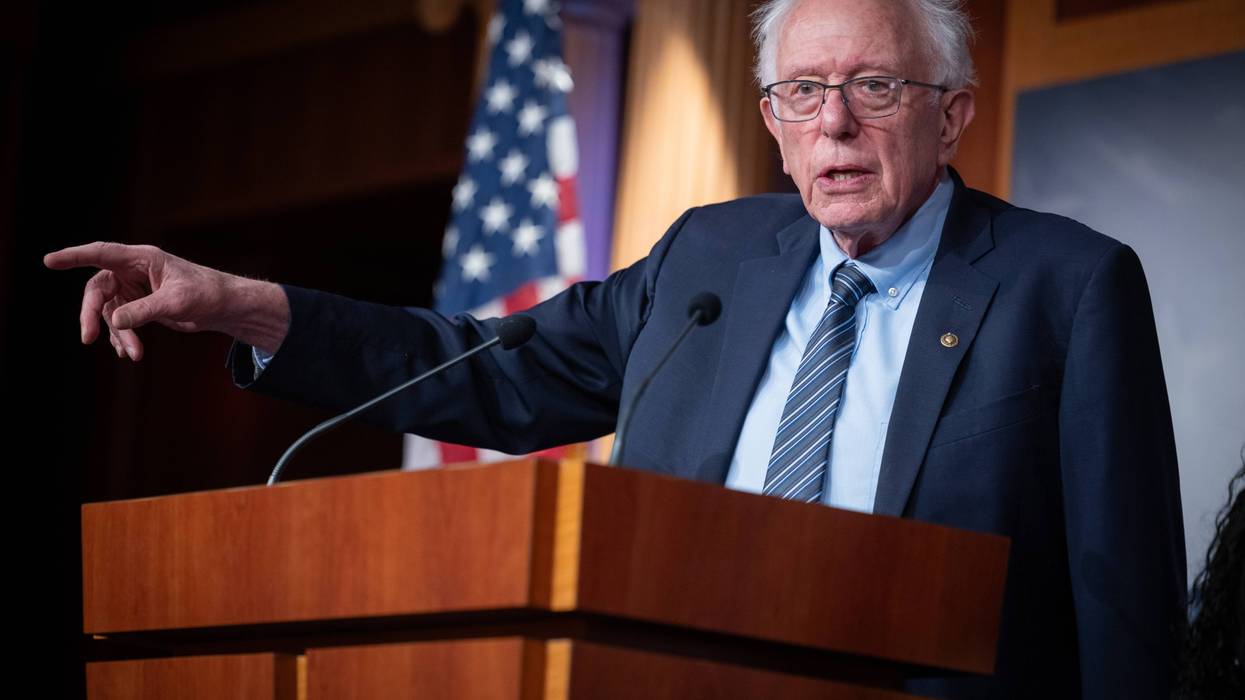
"If the Democratic Party is ever to regain the faith of ordinary Americans it must stand firm on the issue of Social Security," said Sen. Bernie Sanders.
US Sen. Bernie Sanders on Tuesday warned his Democratic colleagues against supporting bipartisan legislation that would open the door to fast-tracked Social Security cuts under the guise of rescuing the New Deal program from insolvency.
In a Dear Colleague letter, Sanders (I-Vt.) wrote that the best and most popular way to extend the life of Social Security and expand its modest benefits is to lift the payroll tax cap, which currently exempts annual income above $184,500 from taxation. But the senator argued that the Protecting Retirement Opportunities and Maintaining Income Security for Everyone (PROMISE) Act—introduced last month by a bipartisan group of senators—"moves us in exactly the wrong direction."
"The so-called PROMISE Act would direct four unelected members of the Social Security Advisory Board to produce, in little more than a month, a proposal to make Social Security solvent for the next 50 years—with virtually no transparency, no meaningful public input, and no accountability," Sanders wrote. "If the Advisory Board reaches an agreement, Congress would be required to vote on their proposal during the lame-duck session after the November elections when Republicans still control the Senate and the House."
"If the board cannot reach an agreement, the PROMISE Act would allow any member of Congress to force a vote on their own Social Security proposal under expedited procedures without the opportunity to amend it or seek a compromise—also during the lame-duck session," Sanders continued. "In other words, Members of Congress who have been defeated at the polls or who have chosen to retire could determine the future of Social Security for the next half century."
The PROMISE Act's lead sponsors are Sens. Bill Cassidy (R-La.), Dick Durbin (D-Ill.), Thom Tillis (R-NC), Tim Kaine (D-Va.), John Cornyn (R-Texas), Angus King (I-Maine.), and Alan Armstrong (R-Okla.). Five of the bill's seven sponsors either lost reelection or aren't running again in 2026.
"In other words, members of Congress who have been defeated at the polls or who have chosen to retire could determine the future of Social Security for the next half century," Sanders wrote in his letter. "Even more significantly, a political party that was repudiated by the electorate in the midterm elections could determine the fate of Social Security. That would be absurd, anti-democratic, and unacceptable."
Many Republicans (and some Democrats) want to cut Social Security. Not acceptable.
At a time when many seniors are struggling, we must INCREASE benefits and extend solvency by scrapping the cap on taxable income and requiring the wealthy to pay their fair share.
— Sen. Bernie Sanders (@SenSanders) August 4, 2026
Sanders isn't alone in warning against the PROMISE Act. A week after the bill's introduction, the AARP's executive vice president expressed opposition in a letter to Cassidy and Durbin, writing that "we strongly object to fast-tracking Social Security changes through Congress, as your bill would do."
Max Richtman, president and CEO of the National Committee to Preserve Social Security and Medicare, echoed Sanders' concern that the legislation's changes "would likely occur during a lame-duck session, after the election, when many members are on their way out."
"Those members could be asked to vote on sweeping changes to Americans’ earned benefits, when they’ll no longer be accountable because they’re leaving office. I think that’s a real problem," said Richtman. "And I think members of Congress should be 100% responsible for any changes to the Social Security program."
"We will strengthen and expand Social Security by requiring the wealthiest Americans to finally pay the same percentage of their income into Social Security as tens of millions of working people."
In early June, Social Security's Board of Trustees said in its annual report that—in the absence of congressional action—the program will be unable to pay out full benefits by the end of 2032. At that point, the Social Security trust fund "will be sufficient to pay 78% of total scheduled benefits," the trustees said.
Sanders argued on Tuesday that the solution is straightforward: "strengthen and expand Social Security by requiring the wealthiest Americans to finally pay the same percentage of their income into Social Security as tens of millions of working people do today."
Last year, Republicans blocked Sanders' attempt to pass via unanimous consent his legislation to expand Social Security benefits by $2,400 a year per recipient. The expanded benefits would be funded by subjecting all annual income above $250,000 to Social Security payroll taxes.
According to the senator's office, his legislation would ensure Social Security's solvency for the next 75 years. Data for Progress polling shows Sanders' proposal is overwhelmingly popular, with 80% of US voters supporting the measure.
"If the Democratic Party is ever to regain the faith of ordinary Americans it must stand firm on the issue of Social Security," Sanders wrote on Tuesday. "That means: We will not cut Social Security benefits. We will not raise the retirement age. We will not reduce cost-of-living adjustments. We will not privatize Social Security."
"We will not support procedural shortcuts that make it easier to reduce earned Social Security benefits behind closed doors while limiting public debate," Sanders continued. "Instead, we will strengthen and expand Social Security by requiring the wealthiest Americans to finally pay the same percentage of their income into Social Security as tens of millions of working people do today."
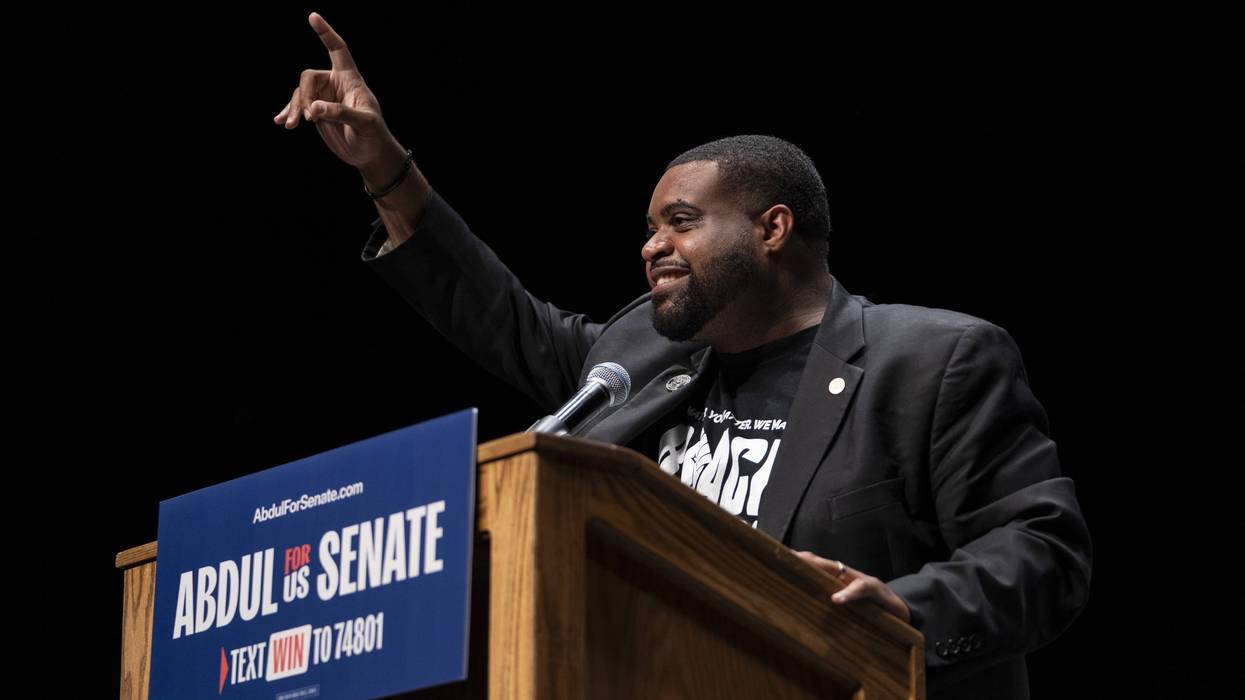
"The Democratic establishment threw everything it had at Abdul El-Sayed," said one podcaster. "If he wins, the reverberations will be felt far outside of Michigan."
Voters in five states are going to the polls Tuesday to cast ballots for US House and Senate candidates, including several who aim to continue a recent streak of progressive victories that—as Colorado democratic socialist Melat Kiros said after she won her own primary race last month—will send a message to "both parties, to Donald Trump, and to the entire country.”
Major races in which progressives are hoping to beat corporate-backed, centrist Democrats are set to be decided in Missouri and Michigan, and observers have pointed to unprecedented outside spending on the primaries—including more than $100 million that's been poured into races by the American Israel Public Affairs Committee (AIPAC) as public support for Israel plummets—as clear evidence that the political establishment views left-wing challengers as formidable opponents.
With AIPAC taking an outsized role in funding a number of centrist primary campaigns this election cycle, the results Tuesday night are expected to reveal whether the lobby group can continue to influence elections and US policy regarding Israel, while a growing number of Americans view Israel negatively following nearly three years of its US-backed assault on Gaza.
Dan Pfeiffer, a former Obama administration staffer who co-hosts the podcast "Pod Save America," said that with the Democratic establishment particularly throwing its weight behind pro-Israel US Rep. Haley Stevens (D-Mich.) in the race between her and progressive former public health official Abdul El-Sayed in Michigan's US Senate race, Tuesday will be "the culmination of one of the most heated and expensive Democratic Senate primaries in history."
"The Democratic establishment threw everything it had at Abdul El-Sayed," said Pfeiffer. "If he wins, the reverberations will be felt far outside of Michigan."
The Michigan Senate race is arguably the most high-profile race taking place Tuesday, but in a number of House districts in the state and elsewhere, progressives are vying for seats in Congress in hopes of increasing the number of Democrats who would use their power to advocate for programs like Medicare for All and universal childcare and against massive Pentagon budgets and US aid to Israel.
Key races include:
McKinney, a former labor organizer, is running to unseat Thanedar in the state's 13th District, and recently notched endorsements from the Democratic Socialists of America and Rep. Summer Lee (D-Pa.). Sen. Bernie Sanders (I-Vt.) and Rep. Rashida Tlaib (D-Mich.) have also thrown their support behind McKinney.
The state lawmaker's website states that he is running "because I’ve lived through the same bull**** as you my whole life, right here at home in Detroit." He calls his city "the poster child for communities in need of the Green New Deal," pointing to lead-polluted water and "some of the most polluted air in the country."
He has also pushed to ban utility monopolies and government contractors, calling Thanedar "our multimillionaire congressman who bought this seat with his own money," and had pledged to defeat "the corporate and right-wing super PACs that will spend millions to support" Thanedar.
According to Punchbowl News, Thanedar is "heavily self-funding" his campaign and, along with the pro-cryptocurrency group Protect Progress, has spent $4.6 million on TV ads.
McKinney has also pointed to Thanedar's campaign funding from Detroit's unpopular energy utility company, DTE, and from AIPAC. According to The Intercept, "two-thirds of the money Thanedar raised in the last quarter came from AIPAC, which collects money from multiple donors and funnels it to the pro-Israel group’s preferred candidates... Less than a quarter of those donors listed Michigan as their state of residence."
Thanedar "was in the minority of House Democrats who voted against cutting $3.3 billion in military aid to Israel from a State Department spending bill" last month, The Intercept added.
In his "closing message" on Tuesday, McKinney told radio show host Dean Obeidallah that he doesn't "have any special interests pulling the strings."
"My special interest is the people of the mighty 13th District, and instead of continuing to send our taxpayer money to fund genocide and send it for bombs and weapons to kill families and children, or to start wars in Iran and spend over $1 billion a day on average, my focus is going to be taking those resources, our taxpayer money, and bringing it back home for people who need it the most," said McKinney.
As Michigan heads to the polls, @DonavanMI13 gave @DeanObeidallah his closing message, that he'll be a fighter for his district. pic.twitter.com/7VofIpa6tz
— SiriusXMProg.bsky.social (@SiriusXMProg) August 4, 2026
Lawrence has also been endorsed by Sanders, Tlaib, and a number of progressive groups in his race in the state's 7th District, where he and the two moderate candidates seek to oust US Rep. Tom Barrett.
Some polls have shown the progressive co-founder of Sunrise Movement in the lead by as many as six percentage points, but other recent surveys have shown Brink in the lead.
Lawrence has touted his energetic grassroots campaign, announcing on Monday that 864 volunteers had knocked on 100,000 doors in the district, which includes Lansing and the surrounding area.
Yesterday we knocked our 100,000th door. We've built a grassroots operation unlike anything Mid-Michigan has seen before.
864 volunteers got us here, and we're just getting started. We will hit even more by November to beat Barrett. pic.twitter.com/WDZJ7gYPDl
— William Lawrence (@WeWill2026) August 4, 2026
Lawrence has focused heavily on the push to build nearly 80 artificial intelligence data centers in communities in Michigan. President Donald Trump has demanded a deregulated approach, and people in towns and cities across the country have rallied against the facilities, arguing the massive water and energy consumption of data centers makes them undesirable additions to their communities.
Lawrence has joined Sanders and US Rep. Alexandria Ocasio-Cortez (D-NY) in calling for a nationwide moratorium on the construction of new data centers. In one campaign ad he was seen at a farm, saying, “Tech billionaires want to turn this field into a massive data center that’ll jack up our energy bills and ruin our home values... I’m running for U.S. Congress because I’ve never been afraid to stand up to corporate power."
Some in the Democratic establishment attacked Lawrence recently over comments he made in 2024 in which he said older Black leaders in the party have worked to defang "the white left." He apologized for the remark.
At a rally ahead of the primary, Lawrence told supporters that the campaign has "continued climbing" despite the attacks.
"And that's because there are real human beings in this campaign who are having real conversations, and that is cutting through the lies and the bullshit," he said.
Our campaign has continued to surge despite the millions of dollars in attacks misrepresenting my record.
We've built real relationships with our neighbors that the dark money outsiders can't buy with lies.
Our movement is ready to weather these smears from the GOP and beat… pic.twitter.com/sNgaoXYMBz
— William Lawrence (@WeWill2026) August 3, 2026
In the state's most closely-watched race, El-Sayed has taken direct aim at Stevens for benefiting from tens of millions of dollars in AIPAC money as he has run on the slogan, "Money out of politics, money in your pocket, and Medicare for all."
Stevens has been endorsed by Senate Minority Leader Chuck Schumer (D-NY), who has come under fire this election cycle for other endorsements including that of Maine Gov. Janet Mills in the New England state's Senate race, with progressives arguing Schumer has backed establishment candidates and ignored the energy around Medicare for All, taxing billionaires, and ending aid for Israel among the party's base.
Ben Rhodes, another former Obama staffer, said Monday that the party leadership "decided to back Haley Stevens in part out of fear of Abdul and the future he represents."
El-Sayed is an outspoken advocate for Medicare for All, but Stevens has appeared eager to center his identity as a Muslim American in the race, joining the centrist think tank Third Way in attacking him for campaigning with commentator Hasan Piker, an outspoken critic of Israel, and claiming last week that El-Sayed wants "to blame all of [his] problems on Jewish Americans."
The latter comment was widely condemned as "race-baiting."
El-Sayed closed his primary campaign out Tuesday with an ad featuring several of his high-profile endorsers as well as grassroots supporters.
"We need to talk about who we are and affirm what we're willing to fight for, and that's exactly why this movement is resonating with so many," said Rep. Ayanna Pressley (D-Mass.).
Time to vote, Michigan! For the many. For money out of politics. For money in your pocket. For Medicare for All. pic.twitter.com/e64Y9A4wuH
— Dr. Abdul El-Sayed (@AbdulElSayed) August 4, 2026
Numerous polls in recent weeks have shown El-Sayed far ahead of Stevens, particularly among younger voters.
Drop Site News highlighted a number of other Michigan races in which progressives are running, including organizer Abbas Alawieh in the 2nd state Senate district and Sanders-endorsed Eboni Taylor in the 3rd state Senate district.
In Missouri's 1st District in St. Louis, former US Rep. Cori Bush is running for a second time against Rep. Wesley Bell, who defeated her in the 2024 primary after nearly two-thirds of his campaign funding came from the United Democracy Project (UDP), a super political action committee affiliated with AIPAC. The group allocated more than $100 million toward defeating candidates that supported Palestinian rights and opposed US military funding for Israel that year.
Bush told Politico recently that this year's election is no different.
“One of us is of the people, by the people, and for the people,” Bush said in a recent interview. “The other one is paid for by AIPAC."
According to AdImpact, UDP has again spent more than $3 million on advertising in the primary.
While Bell has a clear financial advantage, he lacks the "grassroots army" Bush has, The Intercept recently reported, as well as voter engagement. The former county prosecutor has not shown up to several candidate forums.
Polling in the race has been scarce; a survey released in February that was sponsored by Bush's campaign showed Bell ahead by four points, with 17% of respondents undecided.
Jessica Montgomery, co-chair of the St. Louis DSA chapter, told The Intercept that voters in St. Louis are likely to show "buyer's remorse" regarding Bell in Tuesday's election.
He voted along with 74 other Democrats to "thank" US Immigration and Customs Enforcement in June 2025, when Trump was beginning his violent mass deportation campaign
“There’s a lot of very progressive voters in St. Louis who don’t like the fact that he voted to thank ICE,” Montgomery told the outlet. “I think they want someone who will be more adversarial and will fight back against the Trump administration.”
Bush said Monday that her opponent "is backed by billionaires, MAGA money, and AIPAC. But our movement is backed by the people."
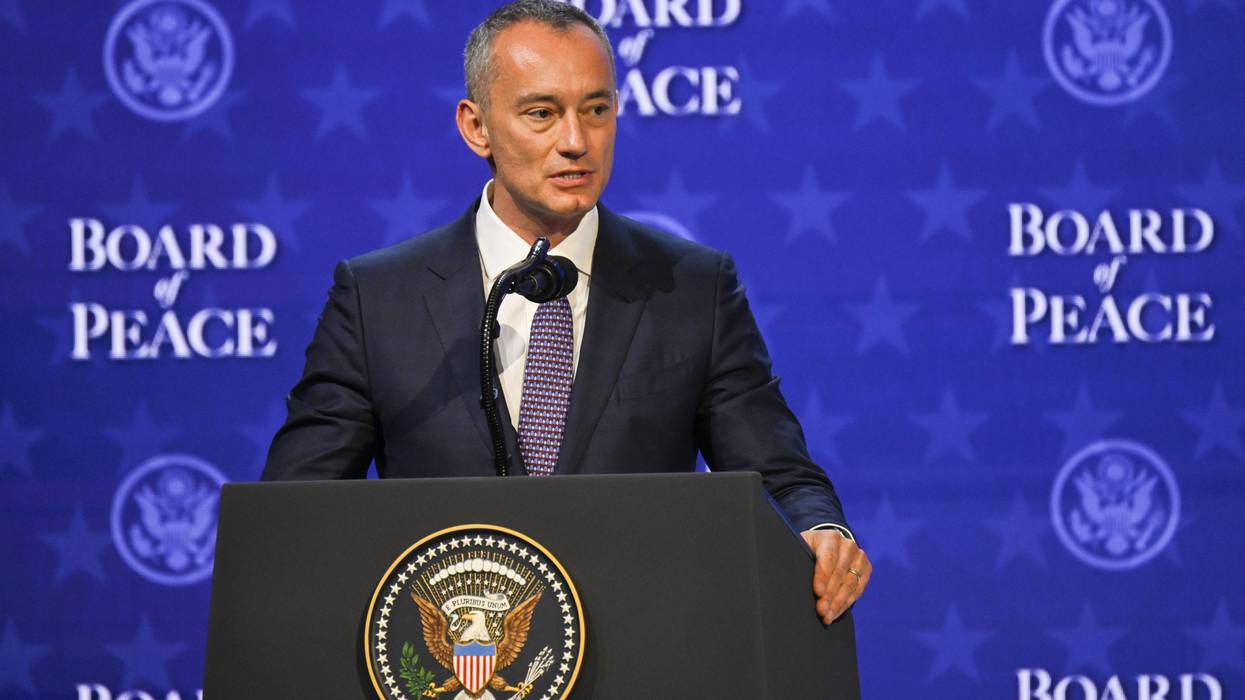
"This tweet is Netanyahu’s way of sabotaging the agreement," said one analyst.
US President Donald Trump's Gaza Board of Peace appears to be going back on the disarmament deal it reached last week with Hamas in order to meet Israel's demands, and it may throw the entire process into jeopardy.
A roadmap agreed to last week, which Trump touted as a massive diplomatic breakthrough, stated that Hamas would begin to decommission its arms in tandem with Israel halting its attacks and withdrawing its forces to the so-called "yellow line" agreed to during the first phase of the ceasefire in October 2025.
In the ten months since the deal, Israel has been gradually advancing its forces deeper into Gaza beyond the ceasefire line to the point where it now controls around 60-70% of Gaza, while its more than 2 million inhabitants are crammed into an area that has largely been reduced to rubble.
Last week's peace roadmap said explicitly that the gradual decommissioning of Hamas' heavy weapons, arms depots, production facilities, and tunnels "shall be linked to an Israeli withdrawal, in phases." Trump echoed this last week, stating that the Israel Defense Forces (IDF) would withdraw as disarmament proceeds.
Though Trump claimed Israel was "very happy" with the deal, its leaders have spent days crying foul, stating that withdrawal would only occur after Hamas completely disarms. Meanwhile, Hamas said it would only go along with the disarmament if Israel withdraws at the same time.
In defiance of the agreement's language calling to honor ceasefire commitments "without delay," Israel launched attacks across Gaza on Sunday that killed at least 18 Palestinians, the largest daily toll in weeks. Israeli Energy Minister Eli Cohen, a member of Prime Minister Benjamin Netanyahu's security cabinet, told Israel's Army Radio that there was no deal for it to halt attacks on Gaza.
The strategy appears to have worked. Following meetings between Netanyahu and the Board of Peace Gaza envoy, Nickolay Mladenov, on Monday, the board released a statement posted to social media that essentially rewrote the original agreement to match Israel's demands and claimed it had been part of the agreement from the start.
"Contrary to inaccurate reports, we note that the withdrawal of the IDF beyond the Yellow Line will take place only once decommissioning is complete, as Hamas committed to the mediators," the board said. "This applies to light weapons, heavy weapons, and the tunnels alike."
Hamas responded by reiterating that it and other armed factions in Gaza “remain committed to what was agreed regarding the implementation of the second phase of the ceasefire agreement, including all parties’ obligations,” and called for “a clear and official response” from Mladenov regarding what was agreed upon.
The new statement from the Board of Peace directly contradicted Mladenov's flat statement on Thursday that "withdrawal must move in lockstep with decommissioning."
Muhammad Shehada, a political analyst from Gaza at the European Council on Foreign Relations, said that the Board of Peace was "betraying the very agreement they just made" and "taking Netanyahu’s side fully."
"The roadmap explicitly said withdrawal must move in lockstep with decommissioning," he wrote on social media. "It never said withdrawal would happen only after decommissioning is fully completed."
"The roadmap made a distinction between 'heavy weapons' (e.g. tunnels, rockets, RPGs) and 'personal/light weapons,' and allowed Palestinian factions to retain light weapons for protection in case Israel reneges," he added. "Including light weapons now in this tweet is Netanyahu’s way of sabotaging the agreement."
Tariq Kenney-Shawa, the associate director of editorial for the Institute for Middle East Understanding, said the Board of Peace's abrupt reversal "shouldn’t surprise anyone."
"The Board of Peace is just the administrative and fundraising arm of Israel’s occupation of Gaza," he said. "It exists to facilitate Gaza’s ethnic cleansing and concentration camps in a way that is palatable and profitable for the international community."
Since the so-called “ceasefire” went into effect last October following two years of genocidal war, Israeli attacks have killed more than 1,200 Palestinians, bringing the official death toll above 73,000. Experts warn the true number of Palestinians who have been killed since Israel began its attacks in October 2023 is likely far higher.
July was the deadliest month for Palestinians this year, with more than 150 Palestinians killed. Israeli leaders have discussed fully "conquering" the strip, controlling it indefinitely, and moving in illegal Israeli settlers.

AIPAC has spent at least $104.3 million during the 2026 election cycle—a figure that's "likely to swell before the midterms are through," notes a new analysis.
The American Israel Public Affairs Committee, the powerful pro-Israel lobbying organization widely known as AIPAC, has poured more than $100 million into the 2026 midterm elections, with around $30 million dedicated to defeating progressive epidemiologist Abdul El-Sayed in Tuesday's Democratic US Senate primary in Michigan.
The $30.6 million that AIPAC's political action committee and super PAC, the United Democracy Project (UDP), have spent on the Michigan contest is the most money the organization has ever devoted to a single race, according to an analysis published Monday by Sludge. El-Sayed and his supporters have repeatedly called out his opponent, US Rep. Haley Stevens (D-Mich.), for benefiting heavily from AIPAC cash.
"The Michigan Senate primary is a fight as to whether billionaires and their super PACs will continue to control American politics, or whether we can have a government that represents working families," US Sen. Bernie Sanders (I-Vt.), who is supporting El-Sayed, wrote in a social media post on Monday. "Let’s elect Abdul El-Sayed."
More broadly, AIPAC has spent at least $104.3 million during the 2026 election cycle—a figure that's "likely to swell before the midterms are through," Sludge noted. The investigative outlet observed that AIPAC's super PAC—whose ads often include no mention of Israel—had $80 million of cash on hand as of the end of June.
The $104.3 million total does not include spending by super PACs quietly bankrolled by AIPAC. The American Prospect reported earlier this summer that AIPAC has been "routing campaign cash through anodyne-sounding pop-up shell PACs like 'Elect Chicago Women' or 'Affordable Chicago Now,' which received $5.3 million from United Democracy Project back in February for four races in Illinois, which resulted in two wins and two losses."
In addition to spending big to defeat El-Sayed in Michigan, AIPAC is backing incumbent US Rep. Wesley Bell against progressive challenger Cori Bush in Tuesday's Democratic primary race for Missouri's 1st Congressional District. Bell unseated Bush in the district's 2024 Democratic primary with the help of millions of dollars in AIPAC spending.
AIPAC's super PAC pumped more than $3 million into the Missouri primary last month, The Intercept's Akela Lacy reported over the weekend.
"One thing Bell does not have is Bush’s grassroots army," Lacy added. "Though he’s far outraised Bush and has outside spending in his corner, Bush is buoyed by organizers with the St. Louis chapter of Democratic Socialists of America... After being saturated with negative ads and mail from AIPAC and other groups that spent on the 2024 primary, St. Louis residents are slightly more prepared this time around, said organizers backing Bush’s campaign."
US Rep. Shri Thanedar (D-Mich.), who is facing progressive challenger Donavan McKinney on Tuesday, has also received significant campaign funding from AIPAC.

"I urge you to halt this illegal, costly, and ineffective operation."
Sen. Tim Kaine on Monday accused the Trump administration of committing murder with its campaign of military strikes against purported drug trafficking vessels, which has killed at least 221 people since its launch in September 2025.
In a letter sent to President Donald Trump, Kaine (D-Va.) said that he reviewed classified notifications sent to Congress related to the boat strike campaign and concluded that the US "is engaged in violent and fatal attacks against people far beyond those" whom the Department of Justice Office of Legal Counsel (OLC) said would be legitimate military targets.
Kaine didn't go into detail about the OLC's classified legal opinion justifying the strikes, but he said the evidence he has gathered suggests the US "has killed individuals who are not involved in narcotrafficking."
"They are murder victims," Kaine emphasized.
Kaine also pointed to a recent analysis conducted by the Drug Enforcement Administration, first reported on by The Washington Post last month, which found that the boat strike campaign "has had no effect on the flow of illegal drugs into the United States."
Kaine concluded his letter by urging Trump to "closely examine the circumstances of these strikes, to ensure that you are personally aware of the extent to which the leadership of the Department of Defense has exceeded your July 2025 directive, incurring massive expense and operating with dubious legality, and with no progress towards your stated objective."
"And once you have done so," Kaine added, "I urge you to halt this illegal, costly, and ineffective operation."
Despite Kaine's warnings, there is little sign that the administration is rethinking its boat strike campaign.
US Southern Command (SOUTHCOM) on Monday announced the formation of the Joint Task Force Western Hemisphere, a new command structure aimed specifically at combating international drug cartels.
Journalist Juan Esteban Silva described the announcement of the task force as "major shift" in US security strategy that is putting "Colombia and Venezuela... at the center of the conversation."
An analysis published by The Diplomatic Insight on Tuesday said the SOUTHCOM announcement "aligns with Trump administration’s anti-narcotics campaign under a permanent command structure with expanded geographic reach, part of what the administration has described as a 'maximum pressure' policy against transnational criminal networks in the hemisphere."
The analysis also noted that the new command structure replaces Joint Task Force Southern Spear, which has been responsible for carrying out boat strike operations in the Caribbean and Eastern Pacific Ocean.