

SUBSCRIBE TO OUR FREE NEWSLETTER
Daily news & progressive opinion—funded by the people, not the corporations—delivered straight to your inbox.
5
#000000
#FFFFFF
To donate by check, phone, or other method, see our More Ways to Give page.
Daily news & progressive opinion—funded by the people, not the corporations—delivered straight to your inbox.

The mayor’s response to the snowstorm has been described as an early test for his version of “common good” governance.
"God Bless sewer socialism." That's what historian David Austin Walsh had to say about New York City's swift response to the largest snowstorm it's seen in five years, which dumped over a foot of snow on the five boroughs this weekend.
Winter Storm Fern, which has ravaged the Northeastern United States, presented an early test for the city's left-wing mayor, Zohran Mamdani, who centered his insurgent campaign last year not simply on providing new free municipal services, but on making the ones New Yorkers already relied upon, like sanitation, more robust and accessible.
It was an agenda that led him to be compared to a breed of socialist mayor who focused less on lofty ideas and revolutionary rhetoric and more on using the power of government to remedy the everyday concerns of the public.
In October, just weeks before Mamdani's triumph in the general election, columnist E. J. Dionne Jr. wrote in the New York Times:
For history buffs, Mr. Mamdani has done the service of rekindling an interest in a largely forgotten American tradition, the “sewer socialists” who ran a significant list of cities in the last century. The most durable among them was Daniel Hoan, the socialist mayor of Milwaukee from 1916 to 1940. You don’t get reelected that often by being a failure.
Many socialist mayors did not mind being associated with repairing the grubbiest of urban amenities because doing so underscored their aim of running corruption-free governments that did whatever they could to improve the lives of working-class people in their jurisdictions. When lousy (or nonexistent) sewer systems led to illness and death in low-income and immigrant neighborhoods, said Michael Kazin, a historian at Georgetown University, building and fixing sewers became a powerful example of what “common good” governance could accomplish.
Mr. Mamdani knows sewer socialism’s history and has no qualms about identifying with it.
This weekend was the first opportunity for New York's youngest mayor in over a century to put this philosophy into action in a test of competence that past mayors have infamously failed—from Bill de Blasio, who was lambasted over the underplowing of certain neighborhoods, to Michael Bloomberg, who took heat for ditching the blizzard conditions for Bermuda, to John Lindsay, whose disastrous lack of preparation for a 1969 storm resulted in the deaths of at least 42 people.
As Walsh wrote on Friday, with the storm prepared to bear down, "Mamdani has a unique opportunity to prove that sewer socialism works, but the crucial first test is going to be not fucking up the snowstorm this weekend."
By then, Mamdani's preparations had long since begun, with the city fitting thousands of sanitation department trucks with snowplows, brining every highway and street in the city to make cleanup easier, and ensuring that enough shelter beds were available to protect those without homes from the elements.
The mayor also undertook a robust yet simple effort to communicate with New Yorkers about practical guidelines to stay safe through a series of upbeat PSAs and appearances on local news.
"Make no mistake, New Yorkers, the full power of this city's enormous resources is prepared, poised, and ready to be deployed," Mamdani said during a press conference on Saturday. "Every agency is working in lockstep with the other."
Though death tolls were considerably lower than in other storms of its magnitude, the storm did not pass without tragedy. At least one homeless man reportedly froze to death, while another six people have been found dead outside, though it's unclear if these deaths were weather-related.
But in all, the Times said "the city largely appeared to be prepared for the weather."
Crews headed out to begin clearing roads at 8:30 am, when precipitation had reached the requisite two inches; shortly after 7 pm, [Department of Sanitation spokesperson Joshua Goodman] said every single street under city control had been plowed at least twice; tens of millions of pounds of salt had been spread across the five boroughs; and 2,500 sanitation workers were rotating on 12-hour shifts to continue the cleanup.
Mamdani, meanwhile, was praised for his active role in the cleanup effort and for maintaining high visibility, where past mayors were accused of shirking into the background.
One widely shared video shows the mayor personally shoveling snow to free a stranded driver in the Williamsburg neighborhood of Brooklyn, home to a large Hasidic Jewish community.
Rabbi Moishe Indig, the executive vice president of the Jewish Community Council of Williamsburg, called it "hands-on leadership."
Even one of Mamdani's fiercest critics, Benny Polatseck, an aide to former Mayor Eric Adams, was complimentary to his response.
“Credit where due," he wrote Sunday afternoon on social media. "Looks like [Mamdani] is handling this storm very well so far."
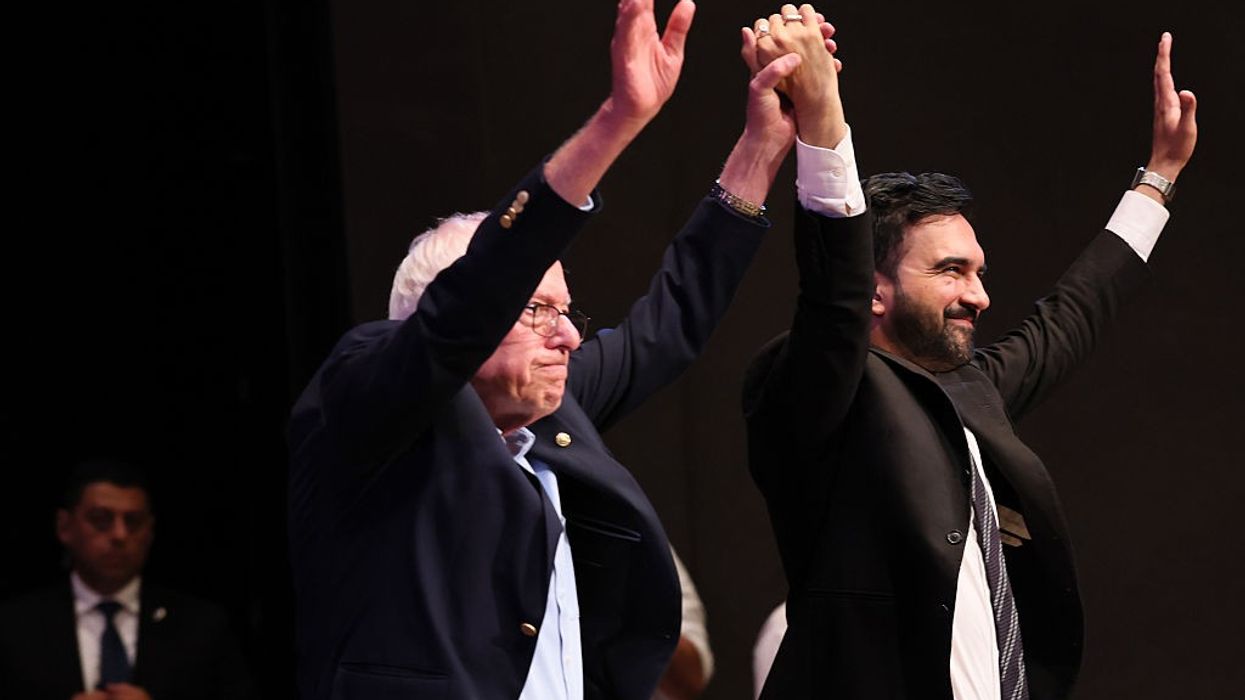
Voters trust Mamdani more on issues from affordability to crime to Israel-Palestine, but one strategist says party leadership is likely still refusing to back him due to "donor pressure."
Progressive state lawmaker Zohran Mamdani holds a "commanding" lead in New York's upcoming mayoral election, according to the latest polling. But his continued momentum is still not enough for some top Democrats to get behind him, even as President Donald Trump openly colludes with his rivals.
A New York Times/Siena poll published Monday has Mamdani, a democratic socialist state assemblyman, 22 points north of his nearest challenger, disgraced former New York Gov. Andrew Cuomo, whom he soundly defeated in the Democratic primary earlier this year.
Last week, several outlets reported that the Trump administration has been working behind the scenes to clear the field for Cuomo by offering administration posts to other mayoral candidates, including Democratic Mayor Eric Adams, and Republican contender Curtis Sliwa in exchange for them dropping out of the race.
Cuomo's identity as Trump's horse has ratcheted up the pressure for top Democratic leaders—namely the Empire state duo of House Minority Leader Hakeem Jeffries and Senate Minority Leader Chuck Schumer—to throw their weight behind Mamdani. But with the election now less than two months away, they have still refused to budge, to the increasing frustration of the party's base and its progressive leaders.
Last week, Rep. Alexandria Ocasio-Cortez (D-N.Y.) called out these leaders directly, asking on the steps of the Capitol: "Are we a party who rallies behind our nominee or not?"
"I am very concerned about the example that is being set by anybody in our party," she continued. "If an individual doesn't want to support the party's nominee now, it complicates their ability to ask voters to support any nominee later."
During a stop on his "Fighting Oligarchy" tour, Sen. Bernie Sanders (I-Vt.), a Brooklyn native, said New York Democrats should be "jumping up and down" to support a candidate who has galvanized young voters like Mamdani.
Speaking of party leadership, Sanders said: "It's no great secret that they're way out of touch with grassroots America, with the working families of this country, not only in New York City, but all over this country."
That sentiment was shared by the liberal tastemakers on the popular podcast Pod Save America. Former Obama speechwriter Jon Favreau called out leadership by name, saying their hesitancy to endorse Mamdani was "pathetic."
"Donald Trump's going to try to get Eric Adams out of the race so he can help Andrew Cuomo," Favreau said. "Meanwhile, Hakeem Jeffries and Chuck Schumer have not yet endorsed the candidate who won the Democratic primary in New York City, the choice of the Democratic voters. Because why, because they don't want to get involved in a primary in a city, in the state they represent?"
Favreau questioned what happened to the "rule that when a Democrat wins the primary, we've all got to unite behind the nominee... because we are facing an authoritarian threat."
Cuomo, he said, "is basically participating" in that threat by being "on Donald Trump's side."
According to CNN, this reluctance is widespread across New York Democrats:
Reps. Yvette Clarke, Dan Goldman and Ritchie Torres have not said they plan to support Mamdani. Rep. Gregory Meeks, who endorsed Cuomo in the primary, has also remained silent along with Rep. Grace Meng, who represents parts of Queens.
New York Gov. Kathy Hochul and Mamdani have had "a number of conversations," Hochul said recently, and the two have met in person. Speaking separately to a Politico reporter, Hochul dismissed the talks between Adams and Trump aides with a profanity. Still, she has not made an endorsement.
Sources told CNN that the reticence stems in some part from the "public threat by Mamdani's democratic socialist allies to primary Jeffries and other congressmen" as well as Mamdani's "ties to democratic socialists and his criticism of Israel."
Sanders countered that Mamdani's were "not radical ideas."
"We're the richest country in the history of the world," he said. "There's no excuse for people not having affordable housing, good quality, affordable, decent transportation, free transportation."
Not only did the Times/Siena poll find Mamdani leading in the coming election, but voters also said they trusted him most on issues across the board, including ones that party grandees fear will be liabilities.
He holds leads over all comers, not only on his bread and butter issues of affordability and housing, but also on crime, taxation, and the Israeli-Palestinian conflict.
In an interview on CNN, former Obama campaign manager David Axelrod suggested that the refusal to back Mamdani was probably the result of "donor pressure."
Though Mamdani has surged in recent months with small-dollar donors, big money in the city has been behind Cuomo and other centrist candidates.
The biggest of these is the billionaire-funded Fix the City PAC, which received an $8.3 million donation from former New York Mayor Michael Bloomberg, and as of late August had dropped more than $15 million to keep Cuomo afloat.
Another fund, called New Yorkers for a Better Future Mayor '25 has yet to declare a favorite, but has both barrels locked on Mamdani. Under a similar name, this PAC marshalled support for more than a dozen corporate-friendly city council candidates early this year, with support from the pro-Israel hedge fund manager Bill Ackman and several major players in New York's real estate industry. It has announced a goal of raising $25 million to defeat Mamdani in November.
Axelrod said that the party leadership's fealty to these donors over the groundswell of support for Mamdani was "a mistake."
"He ran on the issue of affordability and on a kind of positive politics that got—as Bernie said—many, many young people in that city to involve themselves in the process," he said.
Axelrod also added that, despite Jeffries' claim that Mamdani has yet to win over voters in the House leader's district, the insurgent candidate, in fact, "carried Hakeem Jeffries' district" by a 12-point margin.
Former Sanders foreign policy adviser Matt Duss said that Axelrod's diagnosis of "donor pressure" was "correct."
"But," he said, "we should also be completely clear that 'donor pressure' is just a polite way of saying 'political corruption.'"
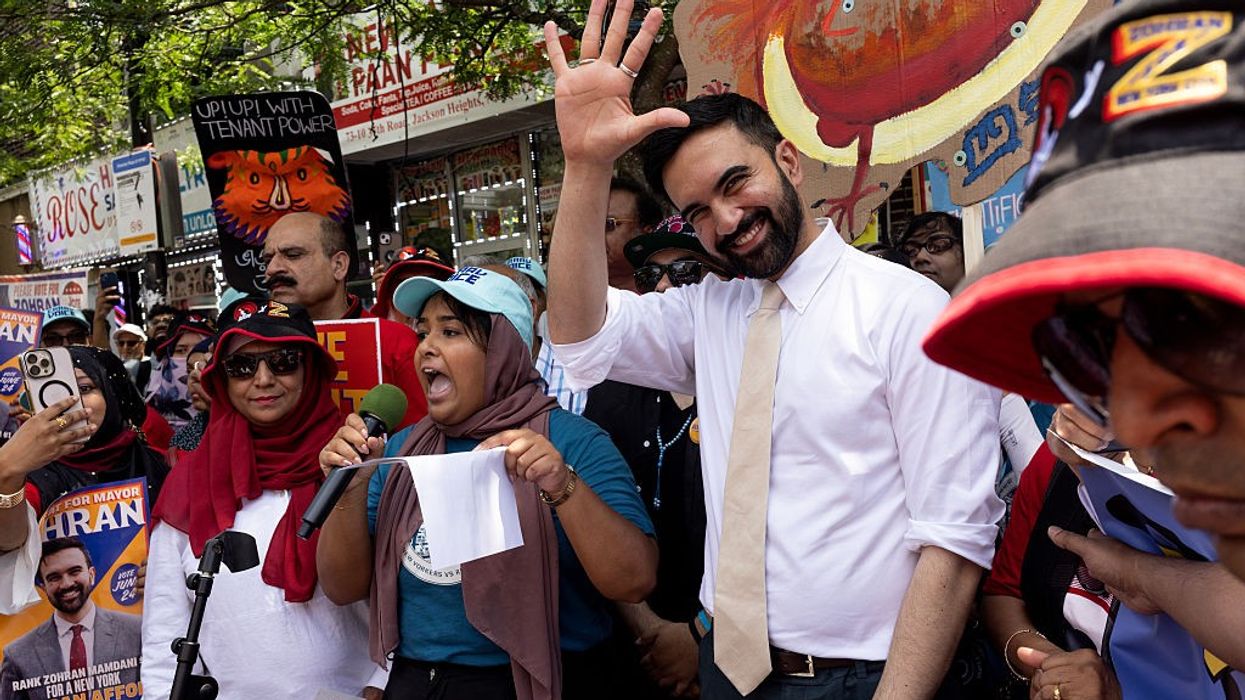
"This is a tale that we're seeing across this country, where it's a battle of organized money versus organized people," Zohran Mamdani said on the eve of the election.
As New Yorkers head to the polls Tuesday to vote on the final day of the city's Democratic mayoral primary, support for democratic socialist state Assemblyman Zohran Mamdani is surging and billionaire backers of disgraced former Gov. Andrew Cuomo are in panic mode, with some even threatening to leave the nation's largest city should Mamdani prevail.
Polls showed Mamdani and Cuomo running neck-and-neck down the home stretch into primary day. An Emerson College Polling/PIX11/The Hill poll published on the eve of the election showed Cuomo with a slight lead in the first round of the city's ranked-choice primary, with Mamdani ultimately winning the race after eight simulated ranked-choice elimination rounds.
The prospect a Mamdani victory is deeply worrying to many of the Wall Street bankers, corporate executives, real estate developers, mega-landlords and others who are bankrolling Cuomo—who resigned as New York governor in 2021 amid an accelerating impeachment push driven by sexual harassment allegations from at least 11 women, which he denied. Backers include billionaire former Mayor Michael Bloomberg; financiers Bill Ackman and Dan Loeb; Wall Street titans Blair Effron, Steve Rattner, and Antonio Weiss; Palantir founder and co-CEO Alex Karp; and former President Bill Clinton.
Responding to a June 20 social media post by Mamdani backer Sen. Bernie Sanders (I-Vt.) asking why billionaires are pouring money into Cuomo's campaign, Loeb retorted that "they love New York and don't want it to turn into a hellscape like San Francisco, Chicago, or Portland."
Billionaire John Catsimatidis has threatened to sell or close his Gristedes supermarket chain should Mamdani become the city's next mayor, a threat that some observers view as hollow. Other tax-dodging billionaires have vowed to leave the city altogether if Mamdani gets elected.
Asked Monday by City & State New York reporter Sahalie Donaldson how the city's business community feels about Mamdani possibly being the next mayor, Kathryn Wylde, who heads the pro-corporate Partnership for New York City, replied, "terrified."
Mamdani—a 33-year-old first-generation U.S. citizen born to Indian parents in Uganda—would be New York's first Muslim mayor if elected, a possibility that has fueled Islamophobic bigotry in the five boroughs and beyond. The New York Police Department's hate crimes unit said last week that it is investigating several death threats against the candidate.
Endorsed by progressives including Sanders, Rep. Alexandria Ocasio-Cortez (D-N.Y.), former U.S. Labor Secretary Robert Reich, the Sunrise Movement, and New York Working Families Party, Mamdani has represented the 36th State Assembly District in Queens since 2021. His platform calls for free public childcare and city buses, a rent freeze on stabilized housing, and city-owned grocery stores.
Appearing on CBS' "The Late Show With Stephen Colbert" Monday night, Mamdani called the race "a referendum on where our party goes."
Like so many elections around the country, today is about organized money vs. organized people.I believe people will win.
[image or embed]
— Zohran Kwame Mamdani (@zohrankmamdani.bsky.social) June 24, 2025 at 5:04 AM
"What we're talking about is a race that has now seen the most-funded super PAC in New York City's municipal history, a race that is, you know, one that billionaires and corporations want to buy," Mamdani continued. "And this is a tale that we're seeing across this country, where it's a battle of organized money versus organized people."
"And ultimately, it's a question for our own party of how do we move forward," he added. "Do we move forward with the same politicians of the past, the same policies of the past, that delivered us this present, or do we move forward with a new generation of leadership, one that is actually looking to serve the people?"
Addressing Mamdani's surging poll numbers, Sanders said Tuesday on social media that "the New York establishment is running scared."
"Despite spending millions against him, Zohran was ahead in the last poll," the senator noted. "If New Yorkers come out in good numbers today, Zohran Mamdani can become New York City's next mayor. Let's make it happen. Please vote."
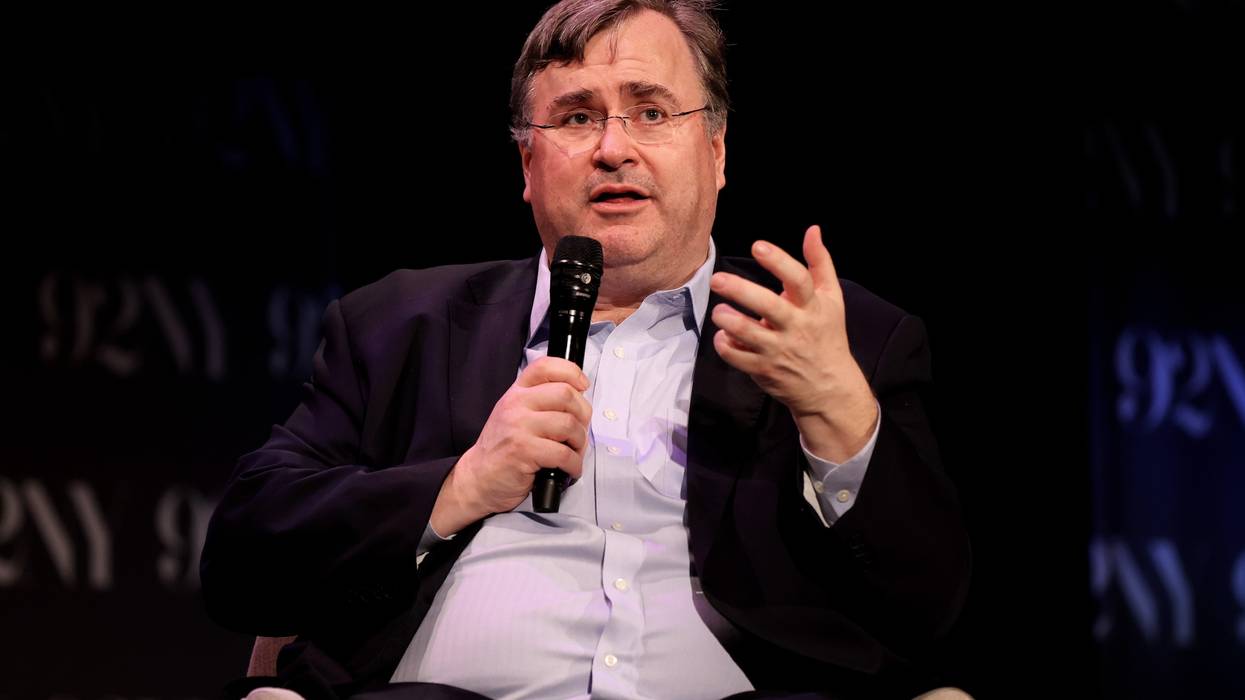
"Given the WelcomeFest lineup, it's clear that the donor class views Abundance as key to carrying out this self-serving crusade against populism."
Days after a national poll showed that the vast majority of Democratic voters want their party to focus on fighting corporate power and promoting policies that help working people instead of adopting the "Abundance" agenda pushed by centrist pundits and conservative Democrats, a watchdog revealed a new reason many voters may be unconvinced by the "Abundance universe."
According to an analysis by Revolving Door Project, the Abundance movement's political action committee counts a number of conservative, corporate-friendly billionaires among its funders, including members of the Walton family, former New York City billionaire Michael Bloomberg, and Wall Street executives Rob Granieri and Mark Heising.
The analysis was released the day before the centrist Welcome Party is set to host its annual event, WelcomeFest, featuring a lineup of speakers including U.S. Sen. Elissa Slotkin (D-Mich.), who has slammed progressives' use of the term "oligarchy," conservative Blue Dog Caucus chair Rep. Marie Gluesenkamp Perez (D-Wash.), and Derek Thompson, co-author of the book Abundance, which has been adopted in recent months a seminal text for politicians and commentators who reject progressives' demands for a true populist agenda.
The book argues partially that regulations and other bureaucratic "bottlenecks" make it harder to produce new housing and infrastructure.
"Given the WelcomeFest lineup, it's clear that the donor class views Abundance as key to carrying out this self-serving crusade against populism," said Henry Burke and Vishal Shankar of the Revolving Door Project.
Even more telling, said the group, is the list of donors to WelcomePAC, the Welcome Party's political action committee.
The PAC has received:
"The 'Abundance' movement is funded by GOP mega-donors," said Turner.
As Burke and Shankar wrote, organizers of WelcomeFest—or "Abundance Coachella"—are seeking to juxtapose their event with "the purportedly left-wing" Democratic National Convention, rejecting so-called "purity tests" but failing to offer "a compelling explanation for why swing and red state voters are flocking to the progressive-populist fight against oligarchy."
As it promises to offer "a vision for a depolarized United States, WelcomeFest "proudly touts the label of 'centrist insurgency.'"
The Welcome Party attempted to convince five House Republicans to caucus with Democrats in its push for depolarization, but "failed spectacularly," wrote Burke and Shankar—suggesting that the party and its agenda are now really focused only on moderation in one of the major political parties.
In a column at Common Dreams on Sunday, Aaron Regunberg of Public Citizen noted that proponents of the Abundance agenda like Adam Jentleson, former chief of staff to Sen. John Fetterman (D-Penn.), have taken pains to dismiss comparisons between "populist and abundance messaging."
The recent poll by Demand Progress made the comparisons impossible to ignore, Regunberg argued, showing that 81.6% of respondents said they'd be much more likely to vote for a candidate who wanted to "get money out of politics, break up corporate monopolies, and fight corruption."
Just 47.7% said they would prefer a candidate who promised to reduce "regulations that hold back the government and private sector from taking action" for working and middle-class Americans.
"At a moment when Democrats' efficacy in defeating Trumpism carries such existential stakes, these survey results demonstrate why many of us on the left have found the campaign to make abundance the new face of the Democratic Party so deeply concerning," wrote Regunberg. "If abundance isn't going to help Democrats defeat MAGA, then abundance advocates—or at least the ones who care about ending Trumpism—should stop trying to 'define the future of the Democratic Party.' Let's leave that work to the Democrats who are trying to orient our party around a vision that voters actually do find compelling."
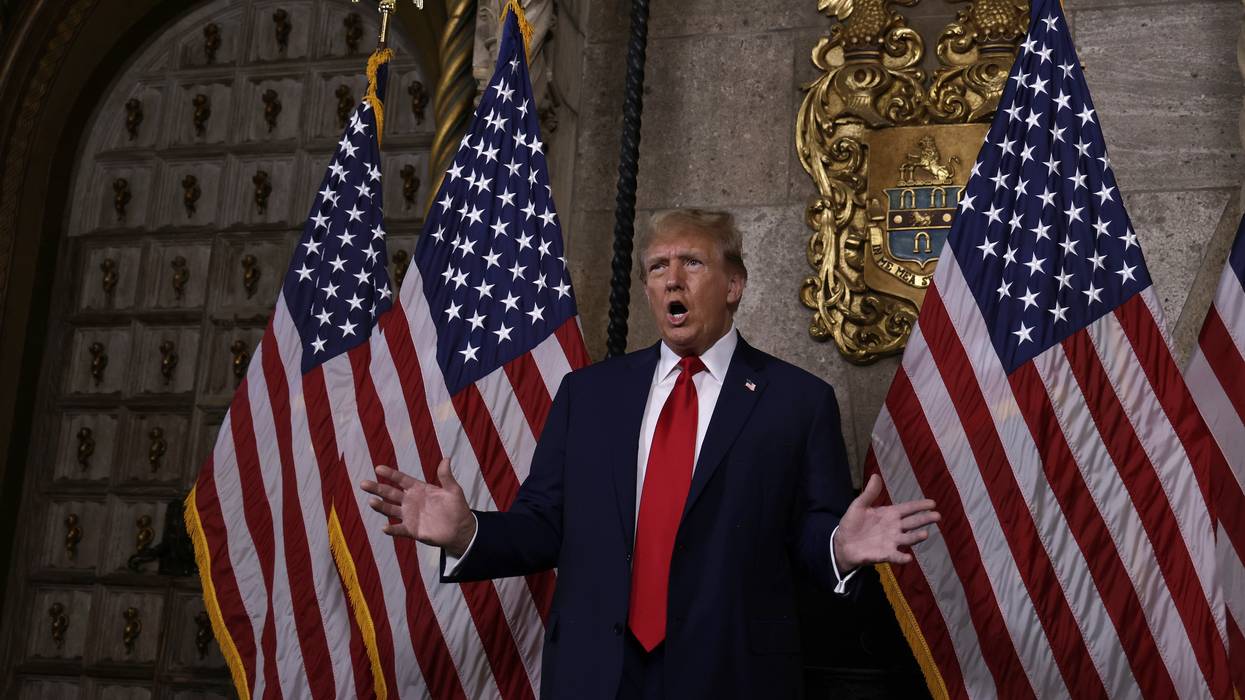
Timothy Mellon is one of at least a dozen billionaires backing Donald Trump's bid for another four years in the White House.
Billionaire businessman Timothy Mellon, the grandson of Gilded Age plutocrat Andrew Mellon, made a $50 million donation to a pro-Donald Trump super PAC last month, a day after the former president was convicted by a New York jury on 34 felony counts.
Mellon had previously donated $25 million to super PACs backing both Trump, the presumptive Republican nominee, and Robert F. Kennedy Jr., an independent presidential candidate. The New York Times noted late Thursday that Mellon, a reclusive GOP megadonor who has described safety net programs as "slavery redux," is "now the first donor to give $100 million in disclosed federal contributions in this year's election."
"The grandson of Andrew Mellon peering out from behind a shrubbery to drop $50 million on an effort to defeat the strongest anti-monopolist element in government in decades is poetic," The American Prospect's David Dayen wrote in response to Mellon's donation, alluding in part to the Lina Khan-led Federal Trade Commission's bold efforts to fight corporate consolidation.
Matt Stoller, director of research at the American Economic Liberties Project, wrote in his book on monopoly power and American politics that Andrew Mellon used his corporate empire and appointment as U.S. treasury secretary "to fuse government and business to make the world safe for monopolists."
"Unlike other tycoons, he did not specialize in one area. At one point, five Fortune 500 companies owed their lineage directly to Mellon: Alcoa, Gulf Oil, Mellon Bank, Carborundum, and Koppers. He controlled a network of ninety-nine banks. He had interests in coal, steel, chemicals, oil, sleeping cars, railroads, building construction, utilities, magnesium, and airplanes," Stoller wrote. "Mellon even commandeered the use of an entire element of earth—aluminum—through his control of the monopoly aluminum producer Alcoa."
Timothy Mellon's donation to the Make America Great Again Inc. super PAC was the largest single campaign contribution this election cycle and accounted for most of the roughly $70 million that the pro-Trump outfit raised last month.
The Times reported that "within days of the contribution," the super PAC "said in a memo that it would begin reserving $100 million in advertising through Labor Day."
Mellon is one of at least a dozen billionaires supporting Trump's bid for another four years in the White House. The former president has solicited donations from fossil fuel executives and hedge fund investors, promising to deliver regulatory rollbacks and more tax cuts if he defeats President Joe Biden in November.
Trump has also actively courted casino billionaire Miriam Adelson—his biggest 2020 donor and a fervent supporter of Israel—with apparent success: Politico reported last month that Adelson is "planning to play a major role in funding Preserve America, a pro-Trump super PAC founded during the former president's 2020 reelection campaign."
"How much Adelson will donate to the super PAC is not clear, though the person familiar with her plans said the group was expecting to spend more than it did four years ago when Adelson and her late husband, Sheldon, donated $90 million to Preserve America," the outlet noted. "Their funds accounted for about 85% of what the organization raised in total."
Biden's campaign, meanwhile, has received roughly $20 million in donations from billionaire former New York Mayor Michael Bloomberg. The Washington Post reported Thursday that "the transfer of funds includes a $19 million check to FF PAC, an independent pro-Biden group also known as Future Forward, and a max-out donation of $929,600 to the Biden Victory Fund, an amalgamation of Biden campaign and Democratic Party committees."
The unlimited spending of self-funding candidates helps drive up the costs of campaigns, making them too much of a rich person’s game and limiting the choices available to voters.
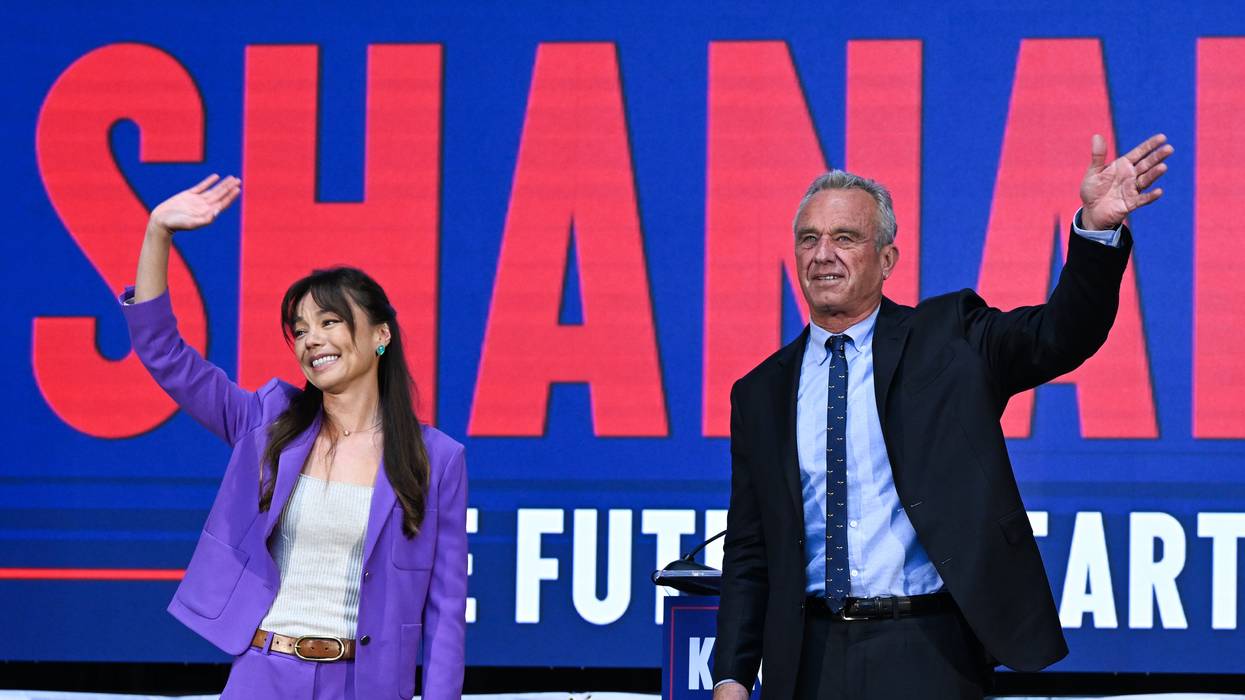
Independent presidential candidate Robert F. Kennedy Jr. announced Tuesday that his pick for vice president is Nicole Shanahan, a wealthy tech entrepreneur and lawyer. Shanahan’s prior political activity seems to be limited to giving money, including a $4 million donation to a pro-RFK Jr. super PAC to help fund a Super Bowl ad.
Kennedy’s campaign has raised far less than the 2024 front-runners, and he may see a running mate with the ability to self-fund as necessary to keeping his bid afloat.
In addition to the super PAC donation, Shanahan had given Kennedy’s campaign the maximum contribution of $6,600, but as a member of the ticket she can put up however much she wants. Thanks to the Supreme Court’s 2010 ruling in Citizens United, rich people, corporations, and other special interests can make unlimited donations to super PACs. But since super PACs are not supposed to coordinate their activity with campaigns, there are big advantages to Kennedy’s campaign having its own big-money spigot.
Politics should be open to all, not just a privileged few.
Kennedy’s choice highlights the crushing pressures of fundraising in today’s elections. Campaign costs have soared in the Citizens United era of unlimited donations to super PACs and “dark money” groups that keep their donors secret due to a boom in spending by the richest donors, making bigger and bigger donations increasingly essential to running for office.
The richest Americans increasingly throw their own hats in the ring, even though self-funders rarely win. In the 2022 congressional elections, 44 candidates each spent more than $1 million of their own money on their bids, and only six won. Billionaire Michael Bloomberg, the former mayor of New York, spent $1 billion on his own 2020 presidential campaign, which lasted just three months.
Even though they often lose, self-funders distort politics. Their unlimited spending helps drive up the costs of campaigns, making them too much of a rich person’s game and limiting the choices available to voters. In the 2018 Illinois gubernatorial election, voters faced a choice between two wealthy self-funders, each of whom spent tens of millions on their bids. Many otherwise promising candidates never even run, for fear of being unable to secure financing.
Some have suggested that self-funding candidates can’t be corrupted by special interests, because they are too rich to bribe. But that misses the reality that wealthy candidates typically already represent a special interest: the business and industry that got them (or their parents) rich. More generally, studies show that the affluent have different policy views than most Americans. For example, they unsurprisingly tend to oppose higher taxes on the wealthy.
Politics should be open to all, not just a privileged few. One key reform is public financing through small donor matching, which allows candidates without wealth or big donors to run people-powered campaigns. We should heed the warning of the first RFK to make a mark on American politics, who said, “we are in danger of creating a situation in which our candidates must be chosen from among the rich… or those willing to be beholden to others.”

ave you heard the latest about the strategic political genius of billionaire Michael Bloomberg?
The political brilliance, you might skeptically ask, of Michael Bloomberg?
The same Michael Bloomberg who had to spend a record $99 per vote to get himself elected mayor of New York in 2001, another $112 per vote four years later to get himself re-elected, and even more -- $174 per vote -- to win a third term?
The same Michael Bloomberg who sunk over $900 million into a bid for the 2020 Democratic presidential nomination and won only American Samoa before dropping out as "a billion-dollar flop"?
The same Michael Bloomberg who rushed into Florida this fall with a $100-million plan to get that state behind Joe Biden -- and again flopped royally?
Yes, the strategic brilliance of that Michael Bloomberg, at least according to Democratic Party apparatchiks in Florida. Earlier this week, they held a statewide conference call to proudly proclaim that their disappointing failure to carry Florida had actually been a brilliant political "feint" that, with Bloomberg's help, had scared the Trump campaign into plowing resources into Florida -- a state Trump figured to win handily -- instead of the much more competitive upper Midwest.
A brilliant "feint"? Really? Did former president Barack Obama know about the "feint" plan when he agreed to spend the election's precious final days campaigning in Florida? Was having Obama, Biden's best campaign surrogate, spend so much time in a we-know-we're-going-to-lose state part of the ruse?
This whole "feint" notion appears little more than a face-saving exercise on the part of Democratic Party operatives who burned through millions of Bloomberg's dollars. All quite understandable, of course. Political insiders within the Democratic Party -- and that galaxy of pollsters, consultants, and media buyers who circle around them -- have a vested personal interest in keeping billionaires like Bloomberg looking brilliant. They make big bucks helping billionaires realize their political fantasies.
But the problem here goes beyond a political insider class that's engorging billionaire dollars and flattering billionaire egos. These political insiders appear to buy into the core assumption behind plutocracies everywhere: that our wealthiest have something truly special to offer. The super rich, that core idea goes, must be super smart. How else could they have become so rich? Brilliance, in effect, both explains the existence of our billionaires and justifies that existence.
Bloomberg's foray into Florida, CNBC reports, actually had Democratic Party leaders in the state "privately becoming more convinced that they were going to defeat Trump." How could they not? They had a brilliant billionaire on their side.
In real life, billionaires don't bring any exceptional brilliance into the political process. They bring their billions. They bring outsized stashes of cash that can distort election outcomes and safeguard their fortunes. Witness the $200 million our tech giants spent this fall on a ballot initiative to kill protections for gig workers.
And these dollars, even worse, drop a suffocating ideological wet blanket over the campaigns that Democratic Party candidates run. In this fall's presidential contest, for instance, Joe Biden and Kamala Harris were formally running on a platform many analysts considered "the most progressive document to come out of a major national party in US history." The ideas in that platform -- everything from a $15 minimum wage and ending tax breaks for capital gains to making public colleges and universities "tuition-free" for most students -- had come out of joint task forces that brought together the party's left and moderate wings.
But the campaigns Democratic candidates up and down the ticket actually ran essentially ran away from anything that might overly discomfort the nation's most comfortable -- and let Donald Trump and his pals pose as champions of average people against America's overbearing elites. Trump came unnervingly close to winning. Many of his endangered pals did win.
Various national pundits are now savaging Republican movers and shakers for indulging Donald Trump, post-election, at his every narcissistic turn. But Democratic Party insiders remain largely free to indulge their super-rich benefactors. That has to change.
"Acquiescing to an unpopular and timid agenda that further entrenches the wealthy and the well-connected," as Senator Elizabeth Warren puts it, "will lead us to more division, more anger, more inequality and an even bigger hole to climb out of.
"Unless Biden unites the people against the oligarchs who dominate the nation," adds Guardian analyst George Monbiot, "the people will remain divided against each other."

President Donald Trump on Wednesday morning openly embraced a theory put forth by analysts earlier this week that he would try to misdirect the American people on election night by claiming a "landslide" victory that doesn't exist--leading grassroots organizers to begin planning for a chaotic post-election period during which the president is liable to claim that the counting of mail-in ballots is evidence of cheating by the Democratic Party.
While getting the details and implications of the story exactly backward, Trump tweeted the phrase "Rigged election?" along with a link to an article at right-wing website The National Pulse, titled "WARNING: Democrat Data Firm Admits 'Incredible' Trump Landslide Will Be Flipped By Mail-In Votes Emerging A Week After Election Day."
The article presented a right-wing narrative regarding what political data firm Hawfish this week called a "red mirage"--election night results which could give the appearance of a Trump victory before mail-in ballots have been tallied.
"He's laying the groundwork now to steal the election; we need to lay the groundwork now to fight back."
--Sarah Dohl, Indivisible
As Common Dreams reported Tuesday, Josh Mendelsohn, CEO of Hawkfish--founded by former Democratic presidential candidate Michael Bloomberg--warned that as in-person votes are counted on November 3, the president could claim victory as he appears to be in "a stronger position than he actually is."
Almost twice as many Democrats as Republicans plan to vote by mail to prevent the spread of Covid-19 pandemic, according to recent surveys, and Trump has been sowing doubt about the validity of mail-in ballots for months as it became apparent their use would skyrocket amid the coronavirus pandemic--despite the fact that the president himself voted by mail as recently as last month.
The National Pulse attempted to turn Hawkfish's warning on its head, claiming an election night victory by Trump--one that would not include millions of mail-in ballots--could be unfairly "flipped" after all of the votes are counted.
Natalie Winters of The National Pulse compared Hawkfish's projections with a warning from far-right British politician Nigel Farage about "'dark art operatives in the Democrats'...intent on 'abusing' mail-in ballots to secure a victory for [Democratic presidential candidate Joe] Biden."
"It's called counting votes," tweeted journalist Thor Benson in response to Trump's promotion of the article.
By twisting Hawkfish's warning to suit his own narrative about an election he says he is bound to win--despite the fact that his approval ratings have never risen above 49% during his presidency according to Gallup, and just 39% of Americans approved last week of his handling of the pandemic that's killed more than 850,000 people in the U.S.--"Trump is showing us his playbook," said Sarah Dohl, co-founder and chief communications officer at Indivisible.
"He's signaling that he may try to exploit the confusion surrounding this unique election cycle to declare a premature 'victory' when the counting of ballots has only just begun," Dohl told Common Dreams.
To counter Trump's narrative, pro-democracy grassroots organizers say, voters--36% of whom currently believe results will be available on November 3, according to an Axios-Ipsos poll released Tuesday--should shift their understanding of election night and begin preparing for an "election period" during which all the ballots must be counted.
"The fact is that we will not get results on election night--it may take days or even longer for states to count the unprecedented number of mail-in ballots needed to conduct a safe election after Trump botched the response to the coronavirus," Ryan Thomas of Stand Up America told Common Dreams. "The baseless charges being spread by Trump's allies and right-wing media about the election results is not only damaging to the foundation of our democracy, it's wholly un-American."
Stand Up America, Indivisible, and other advocacy groups are incorporating into their voter outreach efforts information about how the pandemic has created a situation which won't allow for all votes to be counted on election night.
" Donald Trump is not running a re-election campaign. He's running a power grab," said Ben Wessel, executive director of NextGen America, which joined the coalition. "We must be prepared to protect the integrity of this election and ensure that the voices of the people determine the outcome."
The organizations on Wednesday unveiled Protect the Results, a coalition that will mobilize Americans "should Donald Trump contest the election results, refuse to concede after losing, or claim victory before all the votes are counted."
"For months Trump has ignored democratic norms and threatened to reject the results of the 2020 election," said Liz Butler, vice president of organizing at Friends of the Earth Action, in a statement. "It is no surprise that a man who embraces brutal authoritarian dictators would question the legitimacy of our elections. Trump has used his position to benefit himself and his corporate cronies at the expense of our communities, and he's desperate to hold onto that power. His words are not bluster, and we must be prepared in November for this potential attack on our democracy."
Along with Trump's sabotage of the U.S. Postal Service, which millions are expected to rely on to mail in their ballots, and his baseless claims that the use of mail-in ballots will invite fraud, "This is just one more reason: we need to be ready to mobilize to protect the legitimate results of the election," said Dohl.
"He's laying the groundwork now to steal the election; we need to lay the groundwork now to fight back," she added.

Joe Biden is reportedly considering appointing businessman Michael Bloomberg and JPMorgan Chase CEO Jamie Dimon, both billionaires, to powerful leadership positions should Biden win the Democratic presidential nomination and defeat President Donald Trump in November.
Axios reported Monday that the former vice president and his campaign advisers are weighing Dimon for treasury secretary, a cabinet position tasked with overseeing the U.S. financial system. Biden is also considering Sen. Elizabeth Warren (D-Mass.) and Bank of America vice chair Anne Finucane for the top Treasury post.
Bloomberg, who dropped out of the presidential race last week and immediately endorsed Biden, "would be top possibility to head the World Bank" under a Biden administration, according to Axios.
Progressive observers were appalled, if not surprised, by the preliminary list of potential Biden appointees, which Axios reported just 24 hours before Democratic primary contests in six states.
"This shouldn't surprise anyone. This is who the Dem Party is," tweeted Glenn Greenwald, co-founder of The Intercept. "The establishment wing of the party didn't fall into line behind Biden despite the fact that he'd put Bloomberg and Jamie Dimon in his cabinet. They did it because of that. This is who they are, their ideology."
Sarah Jones, a writer for New York Magazine, tweeted that "probably the highest expectation anyone should have for a Biden presidency is that he'd be a caretaker president."
"The worst," Jones added, "is that he'd empower people like Bloomberg and Dimon and actively make the U.S. a worse place than it was when Trump was elected."
Biden advisers told Axios that the former vice president's cabinet picks would be tasked with implementing "a Return to Normal plan--a reversal of President Trump's unorthodox, improvisational style."
"Biden wants known, trusted people around him--many from the Obama years," Axios reported.
Critics, including members of Sen. Bernie Sanders' (I-Vt.) presidential campaign, said the list of potential appointees is further evidence that Biden, if elected, plans to make good on his promise to wealthy donors last June that "nothing would fundamentally change" under his presidency.
"This is maybe the most depressing thing you'll read all day," tweeted Tyson Brody, research director for the Sanders campaign. "Imagine after all this just to make Jamie Dimon treasury secretary. Not only would 'nothing fundamentally change,' things can be even worse for working people."
Warren Gunnels, senior adviser to Sanders, highlighted Dimon's role in the 2008 financial crisis as CEO of JPMorgan Chase and board member of the Federal Reserve Bank of New York:
Pointing to growing fears of a global financial meltdown as the coronavirus spreads globally, academic and writer Josh Mound tweeted that "Biden floating Dimon, Finucane, and Bloomberg for major economic positions just as the economy teeters on the edge of collapse for the second time in roughly a decade tells you all you need to know about the utter hopelessness of the mainstream of the Democratic Party."
Progressive advocacy group Democracy for America, which endorsed Sanders for president last week, echoed Mound.
"The fact that Joe Biden's advisers, when musing about cabinet picks, are debating between Elizabeth Warren, Jamie Dimon, and a Bank of America exec for treasury secretary pretty much tells you all you need to know about Joe's non-existent commitment to a progressive agenda," the group said.
Ryan Greenwood, director of Movement Politics for People's Action, which also backs Sanders, said, "Joe Biden wants to hand our economy to bankers and billionaires responsible for devastating attacks on the multiracial working class, especially people of color. We deserve better."
The Democratic Party, Greenwooda added, "cannot be the party of the multiracial working class and the party of the big banks and racist billionaires at the same time. We have to choose."

After Super Tuesday's results made clear that the 2020 Democratic primary is now a two-candidate race between former Vice President Joe Biden and Sen. Bernie Sanders, progressives called for an end to divisive infighting and some urged Sen. Elizabeth Warren to join Sanders in a united front against the party's deep-pocketed and organized establishment wing.
"I'm a Bernie supporter who builds with Warren supporters," tweeted Varshini Prakash, executive director of the youth-led Sunrise Movement, which endorsed Sanders in January. "This isn't the time for infighting and vitriol. Let's leverage our shared power to break through the wall of corporate media, win this primary, and defeat Trump. Let's #BuildTogether."
"The obstacle in the way of a more progressive future for Americans isn't Sanders, but the coalition forming around Biden. If Warren wants a righteous fight, this is it."
--Sarah Jones, New York Magazine
It was a call for progressive unity that others echoed both before and after Super Tuesday, which saw Biden win 10 of 14 states--including delegate-rich Texas--and take a narrow lead in pledged delegates. Sanders won four states, including California, the largest delegate prize of the night.
With the #BuildTogether hashtag making the rounds among both Sanders and Warren supporters, journalist Sam Adler-Bell said the "posts are quite obviously an effort to build goodwill between two support bases that absolutely must combine to defeat the corporate/billionaire wing of the party. I have no patience for anyone upset about it."
Roger Lau, Warren's campaign manager, sent an email to staffers Wednesday morning announcing that Warren is meeting with her team to "assess the path forward" after she failed to place higher than third in any of the Super Tuesday states, including her home state of Massachusetts.
"This decision is in her hands," wrote Lau, "and it's important that she has the time and space to consider what comes next."
Sanders campaign manager Faiz Shakir echoed that sentiment in an interview with CNN ahead of Super Tuesday. "She has been campaigning very hard, has raised a lot of money, and has earned a lot of votes," Shakir said. "She should be given the time and space to decide for herself about the future of her campaign."
Lau's announcement came shortly after billionaire businessman Michael Bloomberg dropped out of the presidential race Wednesday and immediately threw his support behind Biden, handing the former vice president an effectively bottomless source of financial support.
Tim O'Brien, who served as a senior adviser to the Bloomberg campaign, said the former New York City mayor plans to put his resources "in the broadest way possible behind Joe Biden's candidacy."
Investigative reporter Alex Kotch argued in a series of tweets that Bloomberg's decision to support Biden only increases the importance of Warren's next steps:
New York Magazine's Sarah Jones wrote Monday that because the Democratic establishment and big-money donors are rapidly coalescing behind Biden, it is time for Warren to leave the presidential race and support Sanders for the Democratic nomination.
"For Warren's supporters, this will be difficult to accept, and for good reason," wrote Jones. "The senator has spoken movingly of her working-class background, and introduced a slate of generous policies that represent long overdue corrections to corporate power. In debates, she can be fearsome. She is probably the first person to publicly humiliate Michael Bloomberg in years."
But without a realistic path to the nomination, Jones added, "it would be a catastrophic error in judgement for Warren to remain in the race till the convention."
According to a national Quinnipiac poll released last month, 33% of Warren supporters say Sanders is their second choice for president--a number Jones argued could rise if Warren backs Sanders with a full-throated endorsement.
"If she can make the case for Sanders, she'll help build a progressive front against a moneyed and well-organized moderate force," Jones wrote. "The time to do so is now. The obstacle in the way of a more progressive future for Americans isn't Sanders, but the coalition forming around Biden. If Warren wants a righteous fight, this is it."
Author and activist Naomi Klein, who actively supports Sanders in the campaign, expanded the call for a united progressive front by saying not only Warren, but anyone with reach and power who remains willing to fight for bold and transformative change, should join hands at this critical moment:
Biden benefited from a big show of unity. We need a supergroup of ppl who understand Biden is not up to it on a platform endorsing Sanders, #NotMeUs + pledging to help make it work. Our moment in history demands it.@ewarren @TomSteyer @JayInslee @AyannaPressley... add who else!
-- Naomi Klein (@NaomiAKlein) March 4, 2020
After President Donald Trump on Wednesday morning fired off a tweet seemingly intended to sow further division among Sanders and Warren supporters, comedian and Medicare for All activist Rob Delaney responded that "as with most ideas this suppurating wound of a person extrudes, it would be a good idea to do the exact opposite."
"I hope Sanders and Warren understand this and unite," Delaney wrote.