September, 01 2017, 02:15pm EDT

For Immediate Release
Contact:
Tel: (520) 623.5252,Email:,center@biologicaldiversity.org
At the Center for Biological Diversity, we believe that the welfare of human beings is deeply linked to nature — to the existence in our world of a vast diversity of wild animals and plants. Because diversity has intrinsic value, and because its loss impoverishes society, we work to secure a future for all species, great and small, hovering on the brink of extinction. We do so through science, law and creative media, with a focus on protecting the lands, waters and climate that species need to survive.
(520) 623-5252LATEST NEWS
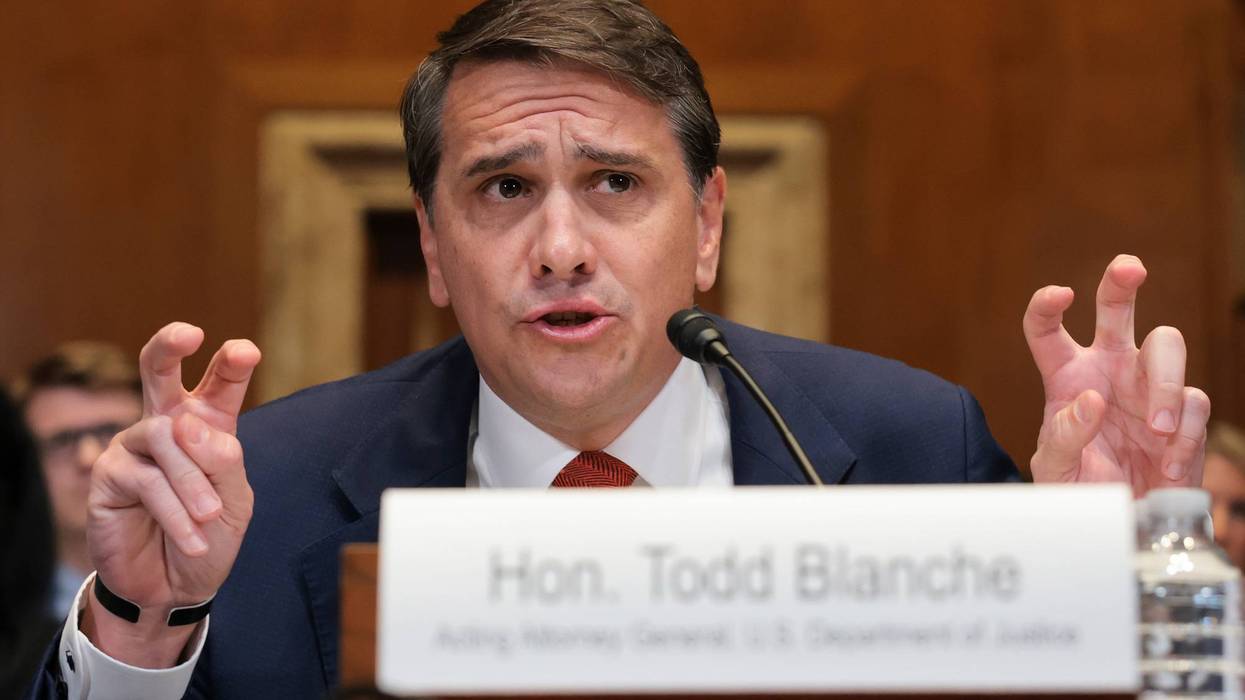
'Shameful': Trump DOJ Ditches Civil Rights and School Desegregation Cases
The new analyses of the cases—"Walking Away: DOJ's Abandonment of Civil Rights Cases for People of Color" and "Filling in The Gaps: Tracking The 50+ School Desegregation Cases DOJ Says It Is Ending"—were developed by Democracy Forward's oversight and accountability project Red Line for Civil Rights.
"People and communities rely on DOJ to pursue vital cases to address threats to civil rights under our nation's laws. The Red Line for Civil Rights reports don't just highlight the cases that have been abandoned, but also make clear the harm that DOJ's abandonment of its mission retreat has caused," said Democracy Forward president and CEO Skye Perryman.
The project found at least 36 abandoned cases and probes addressing discrimination against Black, Latino, and Native American people, from Voting Rights Act lawsuits and redlining settlements with banks to firefighter and police hiring issues.
There was United States v. Cobb County, Georgia, in which the DOJ alleged that credit checks and a written exam illegally screened out Black firefighter applicants, and United States v. Patriot Bank, a 2024 consent order over redlining of Black and Hispanic neighborhoods in Memphis, Tennessee.
In United States v. SouthEast Bank, the department argued that a student loan refinancing product discriminated against Alaska Native, American Indian, and Black applicants, and in United States v. City of Minneapolis, the DOJ concluded that police discriminated against Black and Native American in Minnesotans.
"The shameful withdrawal of DOJ resources from these cases and investigations highlights how this administration is abandoning communities across the country," said Megan Marks, a former leader in the department who is now the project's deputy director and managing editor. "Walking away from them doesn't mean the discrimination has been addressed. It just means DOJ is no longer watching."
In its second analysis, the project identified 56 school districts in 12 states where the department has moved to ditch or end a desegregation case, or did not oppose ending one—from Athens City, Alabama and Chesterfield County, South Carolina to South Bend, Indiana and Waterbury, Connecticut.
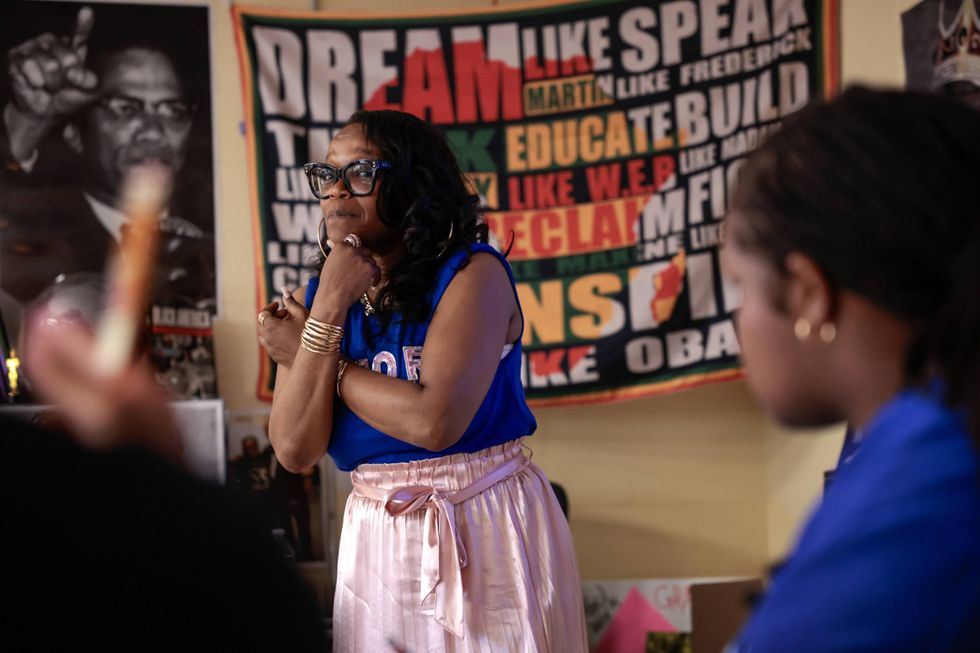 Tanisha Milton teaches a lesson on busing and the desegregation of Boston, Massachusetts public schools during an 8th grade civics class at TechBoston Academy on May 22, 2024. (Photo by Craig F. Walker/The Boston Globe via Getty Images)
"The Supreme Court held in its landmark 1954 case, Brown v. Board of Education, that segregating public school students by race violates the 14th Amendment's guarantee of equal protection," the report notes. "Since Brown, DOJ has monitored and enforced desegregation orders, reviewing evidence and often working collaboratively with school districts and, in some cases, private plaintiffs to support progress."
"This work was central to the Civil Rights Division's history. The Civil Rights Act of 1964 authorized DOJ to file its own school desegregation lawsuits against public schools or institutions of higher education and to join cases that families had already brought," the paper explains. "These school desegregation cases are how the promise of Brown reaches individual classrooms. Behind each of these cases are children, families, and a community that fought, sometimes at great personal risk, for the right to an equal education."
Shaheena Simons previously oversaw the Justice Department's desegregation docket but is now a senior adviser at the Lawyers' Committee for Civil Rights Under Law. In response to the report, she said that the "DOJ's haste to end these cases without deliberation or transparency is a betrayal of Black students who continue to face segregation and inequality in our schools."
"This retreat is part of a much bigger picture," Simons emphasized. "Not only has the Civil Rights Division abandoned its work to protect the rights of our most marginalized students, but it is also weaponizing civil rights statutes against them."
Democratic leaders in the US House of Representatives also spoke out about the project's findings. Education and Workforce Committee Ranking Member Bobby Scott (Va.) accused the "politicized" department of "turning its back on workers and students by abandoning entire categories of discrimination cases and ending the fight against school desegregation altogether."
Democrats on his panel "are committed to the protection of civil rights and to guaranteeing that all Americans are protected from discrimination in accordance with the civil rights laws that so many Americans fought to secure," pledged Scott, as his party prepares for next month's midterm elections, in which Republicans could lose control of one or both chambers of Congress.
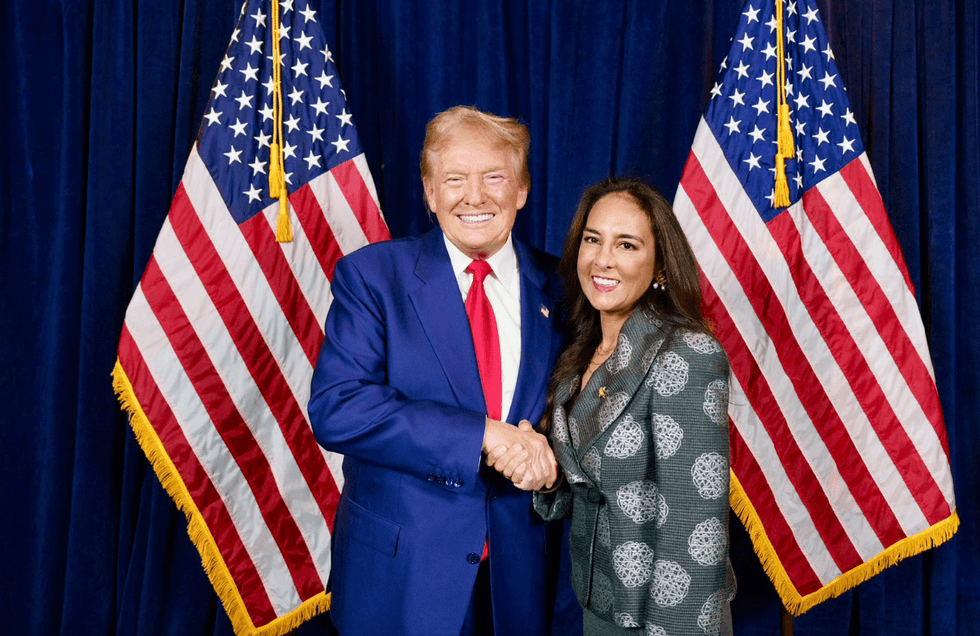 Harmeet Dhillon shakes hands with Republican US President-elect Donald Trump in a photo she posted on social media on October 31, 2024. (Photo: Harmeet Dhillon/X)
Fellow Democratic Congressman Jamie Raskin (Md.), a constitutional scholar and ranking member on the House Judiciary Committee, said that "Democracy Forward's reports expose the Justice Department's shocking betrayal of its central duty to protect Americans against race discrimination."
"While DOJ devotes its resources to persecuting Trump's political enemies, it has dropped protection of voting rights and is allowing discrimination to proliferate by abandoning school desegregation and job discrimination cases," he said, as the Trump administration pursues everyone from former Federal Bureau of Investigation Director James Comey to New York Attorney General Letitia James and Rep. Ilhan Omar (D-Minn.).
"We need a Department of Justice that stands by the rule of law and the rights of all Americans," Raskin asserted. "But this administration carries out presidential vendettas, covers up child sex trafficking, promotes corruption, and pardons and coddles violent felons in the president's private militia."


Most Popular