SUBSCRIBE TO OUR FREE NEWSLETTER
Daily news & progressive opinion—funded by the people, not the corporations—delivered straight to your inbox.
5
#000000
#FFFFFF
To donate by check, phone, or other method, see our More Ways to Give page.
Daily news & progressive opinion—funded by the people, not the corporations—delivered straight to your inbox.
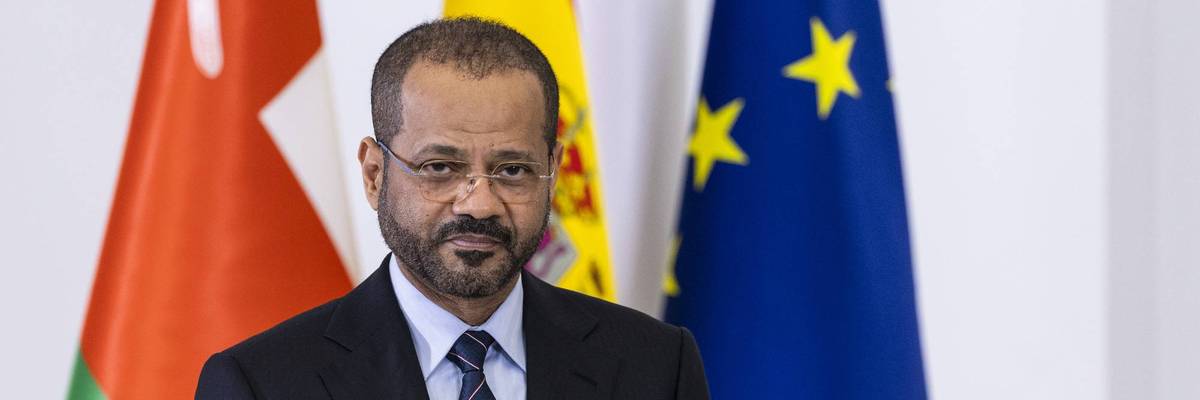
Oman's foreign minister, Badr Albusaidi, looks on during an event on November 5, 2025 in Madrid, Spain.
"The Omani FM decided to go public," suggested one observer, "so that the American people knew that peace was within reach when Trump instead opted for war."
Hours before President Donald Trump announced his decision to bomb Iran and pursue the overthrow of its government, the foreign minister of Oman appeared, in person, on one of the most prominent US television news programs to declare that a diplomatic breakthrough was possible.
"I can see that the peace deal is within our reach," Badr Albusaidi, the mediator of recent talks between the US and Iran, told "Face the Nation" host Margaret Brennan on Friday. "I'm asking to continue this process because we have already achieved quite a substantial progress in the direction of a deal. And the heart of this deal is very important, and I think we have captured that heart."
Pressed for specifics, Albusaidi said that Iran committed during the talks to renounce the possibility of amassing "nuclear material that will create a bomb"—a pledge that Trump claimed Iran refused to make as part of his justification for Saturday's strikes.
"This is something that is not in the old deal that was negotiated during President Obama's time," Albusaidi said, referring to the 2015 nuclear accord that Trump ditched during his first term in the White House. "This is something completely new. It really makes the enrichment argument less relevant, because now we are talking about zero stockpiling. And that is very, very important, because if you cannot stockpile material that is enriched, then there is no way you can actually create a bomb, whether you enrich or don't enrich. And I think this is really something that has been missed a lot by the media, and I want to clarify that from the standpoint of a mediator."
"There is no accumulation, so there would be zero accumulation, zero stockpiling, and full verification," the Omani foreign minister continued. "Full and comprehensive verification by the [International Atomic Energy Agency]."
In a social media post following the interview, Albusaidi reiterated that a deal "is now within reach" and implored all parties to "support the negotiators in closing the deal." Prior to Saturday's attacks, additional US-Iran talks were scheduled for next week.
Watch the full segment, which critics highlighted as evidence that the US-Israeli attacks on Saturday were aimed at forestalling a diplomatic resolution:
Trita Parsi, executive vice president of the US-based Quincy Institute for Responsible Statecraft, wrote in response to Albusaidi's remarks that "the Omanis are famously cautious."
"The Omani FM going on CBS to reveal what has actually been achieved in the negotiations is quite unprecedented. And what has been achieved is significant—Trump can indeed declare victory. Listen to this segment—it goes way beyond what Obama achieved," Parsi wrote. "But everything indicates that Trump won't take yes for an answer. That he will start a war of choice very soon."
"Which is probably why the Omani FM decided to go public," Parsi added. "So that the American people knew that peace was within reach when Trump instead opted for war."
According to one survey released earlier this month, just 21% of Americans support "the United States initiating an attack on Iran under the current circumstances."
Dear Common Dreams reader, It’s been nearly 30 years since I co-founded Common Dreams with my late wife, Lina Newhouser. We had the radical notion that journalism should serve the public good, not corporate profits. It was clear to us from the outset what it would take to build such a project. No paid advertisements. No corporate sponsors. No millionaire publisher telling us what to think or do. Many people said we wouldn't last a year, but we proved those doubters wrong. Together with a tremendous team of journalists and dedicated staff, we built an independent media outlet free from the constraints of profits and corporate control. Our mission has always been simple: To inform. To inspire. To ignite change for the common good. Building Common Dreams was not easy. Our survival was never guaranteed. When you take on the most powerful forces—Wall Street greed, fossil fuel industry destruction, Big Tech lobbyists, and uber-rich oligarchs who have spent billions upon billions rigging the economy and democracy in their favor—the only bulwark you have is supporters who believe in your work. But here’s the urgent message from me today. It's never been this bad out there. And it's never been this hard to keep us going. At the very moment Common Dreams is most needed, the threats we face are intensifying. We need your support now more than ever. We don't accept corporate advertising and never will. We don't have a paywall because we don't think people should be blocked from critical news based on their ability to pay. Everything we do is funded by the donations of readers like you. When everyone does the little they can afford, we are strong. But if that support retreats or dries up, so do we. Will you donate now to make sure Common Dreams not only survives but thrives? —Craig Brown, Co-founder |
Hours before President Donald Trump announced his decision to bomb Iran and pursue the overthrow of its government, the foreign minister of Oman appeared, in person, on one of the most prominent US television news programs to declare that a diplomatic breakthrough was possible.
"I can see that the peace deal is within our reach," Badr Albusaidi, the mediator of recent talks between the US and Iran, told "Face the Nation" host Margaret Brennan on Friday. "I'm asking to continue this process because we have already achieved quite a substantial progress in the direction of a deal. And the heart of this deal is very important, and I think we have captured that heart."
Pressed for specifics, Albusaidi said that Iran committed during the talks to renounce the possibility of amassing "nuclear material that will create a bomb"—a pledge that Trump claimed Iran refused to make as part of his justification for Saturday's strikes.
"This is something that is not in the old deal that was negotiated during President Obama's time," Albusaidi said, referring to the 2015 nuclear accord that Trump ditched during his first term in the White House. "This is something completely new. It really makes the enrichment argument less relevant, because now we are talking about zero stockpiling. And that is very, very important, because if you cannot stockpile material that is enriched, then there is no way you can actually create a bomb, whether you enrich or don't enrich. And I think this is really something that has been missed a lot by the media, and I want to clarify that from the standpoint of a mediator."
"There is no accumulation, so there would be zero accumulation, zero stockpiling, and full verification," the Omani foreign minister continued. "Full and comprehensive verification by the [International Atomic Energy Agency]."
In a social media post following the interview, Albusaidi reiterated that a deal "is now within reach" and implored all parties to "support the negotiators in closing the deal." Prior to Saturday's attacks, additional US-Iran talks were scheduled for next week.
Watch the full segment, which critics highlighted as evidence that the US-Israeli attacks on Saturday were aimed at forestalling a diplomatic resolution:
Trita Parsi, executive vice president of the US-based Quincy Institute for Responsible Statecraft, wrote in response to Albusaidi's remarks that "the Omanis are famously cautious."
"The Omani FM going on CBS to reveal what has actually been achieved in the negotiations is quite unprecedented. And what has been achieved is significant—Trump can indeed declare victory. Listen to this segment—it goes way beyond what Obama achieved," Parsi wrote. "But everything indicates that Trump won't take yes for an answer. That he will start a war of choice very soon."
"Which is probably why the Omani FM decided to go public," Parsi added. "So that the American people knew that peace was within reach when Trump instead opted for war."
According to one survey released earlier this month, just 21% of Americans support "the United States initiating an attack on Iran under the current circumstances."
Hours before President Donald Trump announced his decision to bomb Iran and pursue the overthrow of its government, the foreign minister of Oman appeared, in person, on one of the most prominent US television news programs to declare that a diplomatic breakthrough was possible.
"I can see that the peace deal is within our reach," Badr Albusaidi, the mediator of recent talks between the US and Iran, told "Face the Nation" host Margaret Brennan on Friday. "I'm asking to continue this process because we have already achieved quite a substantial progress in the direction of a deal. And the heart of this deal is very important, and I think we have captured that heart."
Pressed for specifics, Albusaidi said that Iran committed during the talks to renounce the possibility of amassing "nuclear material that will create a bomb"—a pledge that Trump claimed Iran refused to make as part of his justification for Saturday's strikes.
"This is something that is not in the old deal that was negotiated during President Obama's time," Albusaidi said, referring to the 2015 nuclear accord that Trump ditched during his first term in the White House. "This is something completely new. It really makes the enrichment argument less relevant, because now we are talking about zero stockpiling. And that is very, very important, because if you cannot stockpile material that is enriched, then there is no way you can actually create a bomb, whether you enrich or don't enrich. And I think this is really something that has been missed a lot by the media, and I want to clarify that from the standpoint of a mediator."
"There is no accumulation, so there would be zero accumulation, zero stockpiling, and full verification," the Omani foreign minister continued. "Full and comprehensive verification by the [International Atomic Energy Agency]."
In a social media post following the interview, Albusaidi reiterated that a deal "is now within reach" and implored all parties to "support the negotiators in closing the deal." Prior to Saturday's attacks, additional US-Iran talks were scheduled for next week.
Watch the full segment, which critics highlighted as evidence that the US-Israeli attacks on Saturday were aimed at forestalling a diplomatic resolution:
Trita Parsi, executive vice president of the US-based Quincy Institute for Responsible Statecraft, wrote in response to Albusaidi's remarks that "the Omanis are famously cautious."
"The Omani FM going on CBS to reveal what has actually been achieved in the negotiations is quite unprecedented. And what has been achieved is significant—Trump can indeed declare victory. Listen to this segment—it goes way beyond what Obama achieved," Parsi wrote. "But everything indicates that Trump won't take yes for an answer. That he will start a war of choice very soon."
"Which is probably why the Omani FM decided to go public," Parsi added. "So that the American people knew that peace was within reach when Trump instead opted for war."
According to one survey released earlier this month, just 21% of Americans support "the United States initiating an attack on Iran under the current circumstances."