SUBSCRIBE TO OUR FREE NEWSLETTER
Daily news & progressive opinion—funded by the people, not the corporations—delivered straight to your inbox.
5
#000000
#FFFFFF
To donate by check, phone, or other method, see our More Ways to Give page.
Daily news & progressive opinion—funded by the people, not the corporations—delivered straight to your inbox.
"The Religious Liberty Commission isn't about protecting religious liberty for all; it's about rejecting our nation's religious diversity and prioritizing one narrow set of conservative 'Judeo-Christian' beliefs," said one critic.
"Religious freedom for some is religious freedom for none."
That's what Rev. Paul Brandeis Raushenbush, president and CEO of Interfaith Alliance, said in a Monday statement as faith groups filed a federal lawsuit in the Southern District of New York over President Donald Trump's so-called Religious Liberty Commission.
Since Trump launched the commission last year, critics have warned that its true intent is to advance a Christian nationalist agenda. Brandeis Raushenbush, his alliance, Hindus for Human Rights, Muslims for Progressive Values, and the Sikh American Legal Defense and Education Fund renewed that argument in the complaint, which names Trump, US Attorney General Pam Bondi, the Department of Justice, the commission, and its leader, Mary Margaret Bush, as defendants.
"The government has no right to pick and choose which religious beliefs to promote, and which to marginalize," said Brandeis Raushenbush. "The Trump administration has failed to uphold our country's proud religious freedom tradition, and we will hold them accountable. Today's lawsuit is our recommitment to fight for religious liberty for all with every tool available to us."
The complaint argues that "the composition and operations of the commission violate the Federal Advisory Committee Act (FACA)," which Congress enacted in 1972 "to curb the executive branch's reliance on superfluous, secretive, and biased 'advisory committees.'" Under the law, "every advisory committee must meet public transparency requirements, be in the public interest, be fairly balanced among competing points of view, and be structured to avoid inappropriate influence by special interests."
"While this body is ostensibly designed to defend 'religious liberty for all Americans' and celebrate 'religious pluralism' it actually represents only a single 'Judeo-Christian' viewpoint," the complaint states. "It held its first three meetings at the Museum of the Bible and has closed its meetings with a Christian prayer 'in Jesus' name.'"
"Only one of its members is not Christian, and the Christian members do not represent the full diversity of the Christian faith," the filing continues. "The commission's meetings have repeatedly referenced the belief that the United States was founded as a 'Judeo-Christian nation' and the membership reflects that viewpoint. All members of the commission advocate for increased religiosity, and specifically their brand of 'Judeo-Christian' religiosity, in public life."
"The commission's members have promoted the primacy of a Judeo-Christian worldview in the public sphere, advocated for discrimination against minority groups under the guise of 'religious liberty,' and otherwise supported policies that threaten religious freedom for all those who do not conform to their particular worldview," the document details.
Ria Chakrabarty, senior policy director of Hindus for Human Rights, said Monday that "by stacking this Religious Liberty Commission with a narrow set of voices and hiding the commission's work from the public eye, the Trump administration is evading the transparency and balance that federal law requires."
"Hindus for Human Rights is proud to stand with our multifaith partners to defend a pluralistic democracy where Hindus, Muslims, Sikhs, Jews, Christians, Buddhists, and nonreligious people all belong as equals," she added.
A commission that claims “religious liberty” while excluding Muslims, Hindus, Buddhists, Sikhs—and nonreligious Americans—isn’t protecting freedom. It’s narrowing it.We’re challenging this commission in court. democracyforward.org/news/press-r...
[image or embed]
— Hindus For Human Rights (@hfhr.bsky.social) February 9, 2026 at 10:21 AM
Ani Zonneveld, president and founder of Muslims for Progressive Values, noted that "as a Muslim American organization, we have seen firsthand how elevating a singular religion above others, especially in a country as religiously diverse as the United States, leads to the oppression and possible persecution of minority faiths."
The plaintiffs are represented by Democracy Forward, which has filed over 150 lawsuits against the Trump administration since the president returned to power last year, and the decades-old Americans United for Separation of Church and State—whose president and CEO, Rachel Laser, stressed that "the Religious Liberty Commission isn't about protecting religious liberty for all; it's about rejecting our nation's religious diversity and prioritizing one narrow set of conservative 'Judeo-Christian' beliefs."
Blasting the commission's public meetings as "a vivid example of this favoritism," Laser added that its "true purpose and operations can't be squared with America's constitutional promise of church-state separation."
Specifically, Laser's group and other advocates of church-state separation have long pointed to the establishment clause of the First Amendment to the US Constitution, which bars government from making any "law respecting an establishment of religion."
"Since the nation's founding, the values of religious liberty and pluralism have been central to the American identity. These values are now under accelerated attack," declared Perryman, who's also on the Interfaith Alliance board. "The fatally flawed way this commission was assembled makes clear that the outcome isn't just un-American, it's against the law."
The UN’s International Organization for Migration warned that it “does not consider Libya to be a safe port for migrants.”
A United Nations agency said on Monday that 53 migrants are dead or missing after their boat capsized off the coast of Libya.
According to the UN's International Organization for Migration (IOM), the boat carrying the migrants capsized in "perishingly cold waters of the central Mediterranean Sea, north of the coastal town of Zuwara" on Friday.
At least two women, originally from Nigeria, survived the shipwreck and were rescued by Libyan authorities.
However, the rescued women offered little hope for finding other survivors, as one said her husband drowned, while the other said she lost both of her children who were aboard the vessel.
IOM noted that at least 375 migrants were reported dead or missing while journeying in the central Mediterranean Sea last month alone, and the agency said there are likely "many more tragedies" that have gone unrecorded.
In 2025, IOM reported 1,342 migrants dead or missing while traveling through the central Mediterranean.
IOM also warned migrants about trying to reach their destinations by traveling through Libya.
"IOM does not consider Libya to be a safe port for migrants," the agency said. "Investigations indicate that the victims had been held in captivity and subjected to torture to coerce ransom payments from their families."
The agency pointed to a recent raid of an underground facility in the region of Kufra, where authorities freed more than 200 migrants who had been detained by traffickers.
"Initial information suggests that the migrants had been held for a prolonged period in grossly inhumane conditions," IOM said of the facility.
"While seemingly minor, these little annoyances add up."
Corporate profits in the US have surged in recent decades, with subscription-based businesses reporting some of the biggest revenue growth as more Americans use streaming services and sign up for "subscribe and save" models in a quest for ease and convenience.
While promising consumers that subscribing to a service will save them money and time, subscription-based businesses have made canceling the services increasingly difficult, contributing to Americans spending 60% longer on the phone with customer service lines than they did two decades ago.
And although corporations hardly need the extra money, making cancellations more arduous for customers can boost their revenue by anywhere from 14% to over 200%, according to the think tank Groundwork Collaborative, which released a report Monday on what it calls "the annoyance economy."
The labyrinthine processes that millions of Americans face each year when they try to cancel subscription services is just one part of the annoyance economy, according to Groundwork, which detailed the seemingly endless time, money, and patience people spend "just trying to get basic things done"—as well as efforts by corporations and the Trump administration to make sure it stays that way.
While millions are struggling with the rising costs of groceries, healthcare, housing, childcare, and just about everything else, the report explains how—thanks to corporate greed and a White House intent on enabling it—Americans are also shelling out at least $165 billion per year in fees as well as lost time.
In addition to cancellation processes, the annoyance economy includes the $90 billion people across the US spend every year on junk fees when they buy concert tickets, make hotel reservations, and order food delivery; rental application fees that keep people from even attempting to move to new housing that could put them closer to work or school; and administrative healthcare tasks like obtaining coverage information and resolving questions about premiums and deductibles.
"While seemingly minor, these little annoyances add up," wrote Groundwork policy fellow Chad Maisel and Stanford University economist Neale Mahoney, the authors of the report, who cited a 2019 survey that found 1 in 4 respondents delayed getting healthcare or avoided it altogether specifically because of the administrative tasks they had to complete in order to get an appointment and make sure it was covered.
"All told, American workers collectively spend about $21.6-billion-worth of time each year dealing with healthcare administration, between calls, claims, explanations, and paperwork, according to a recent analysis."
Another new poll from Data for Progress found that nearly 80% of Americans reported "at least a little frustration" when coordinating their healthcare and filling out health insurance paperwork.
"All told, American workers collectively spend about $21.6-billion-worth of time each year dealing with healthcare administration, between calls, claims, explanations, and paperwork," reads the report, citing another recent analysis. "Polling confirms this: More than 1 in 3 Americans report dealing with health insurance headaches more than 20 times per year."
With frustration over health insurance companies' practices increasingly common, reads the report, "policymakers are missing important opportunities to take on a handful of egregious and particularly annoying practices."
Lawmakers could require insurance companies to make it easy for patients to fill out and submit claims online—instead of downloading, printing, and physically mailing claim forms with itemized receipts as Cigna requires patients to do.
Congress could also create a "healthcare sludge unit" to monitor and root out "needless friction throughout the healthcare experience."
Such a project could leverage tools "like 'blind shopper' experiments, public feedback lines, and direct engagement with industry to surface and fix barriers that waste patients’ time and erode trust."
The report also takes on the spam texts and calls that have become all-to-familiar to anyone with a cellphone.
"Text messaging, once reserved for conversation with friends and family, now resembles our email spam folders, dominated by unsolicited offers from companies, politicians, and fraudsters," wrote Maisel and Mahoney, who shared that on the day they wrote about spam in the report, "one of us received five spam calls, a text from 'Victoria' offering a $500-a-day job, and two breathless fundraising messages from political candidates we’ve never supported—or even heard of."
Those spam communications were some of the more than 130 million scam and illegal marketing calls Americans receive each day and the nearly 20 billion texts that were sent each month over the past year—leading "virtually all respondents" to Data for Progress' poll to report that the calls and texts are at least "a little frustrating" and 68% call them "very frustrating."
State and federal lawmakers could and should take action against spam calls and texts, said Maisel and Mahoney. Congress should modernize the Telephone Consumer Protection Act (TCPA), which was passed in 1991—well before companies began inundating Americans' inboxes with the newest robocalling and texting software.
"If a platform automatically dials from a stored list of numbers, it’s now exempt from the TCPA’s rules," reads the report. "The result: far more robocall and spam text operations can legally target people without their consent. Congress should update the definition of autodialer to include any callers and texters who automatically contact stored numbers, unless there’s real human involvement in sending each message."
Former President Joe Biden's Federal Communications Commission tried to close the "lead generator loophole,” which allows third-party marketers to collect people's contact information and sell it to dozens, sometimes hundreds, of businesses, but companies sued over the FCC's action and won in court.
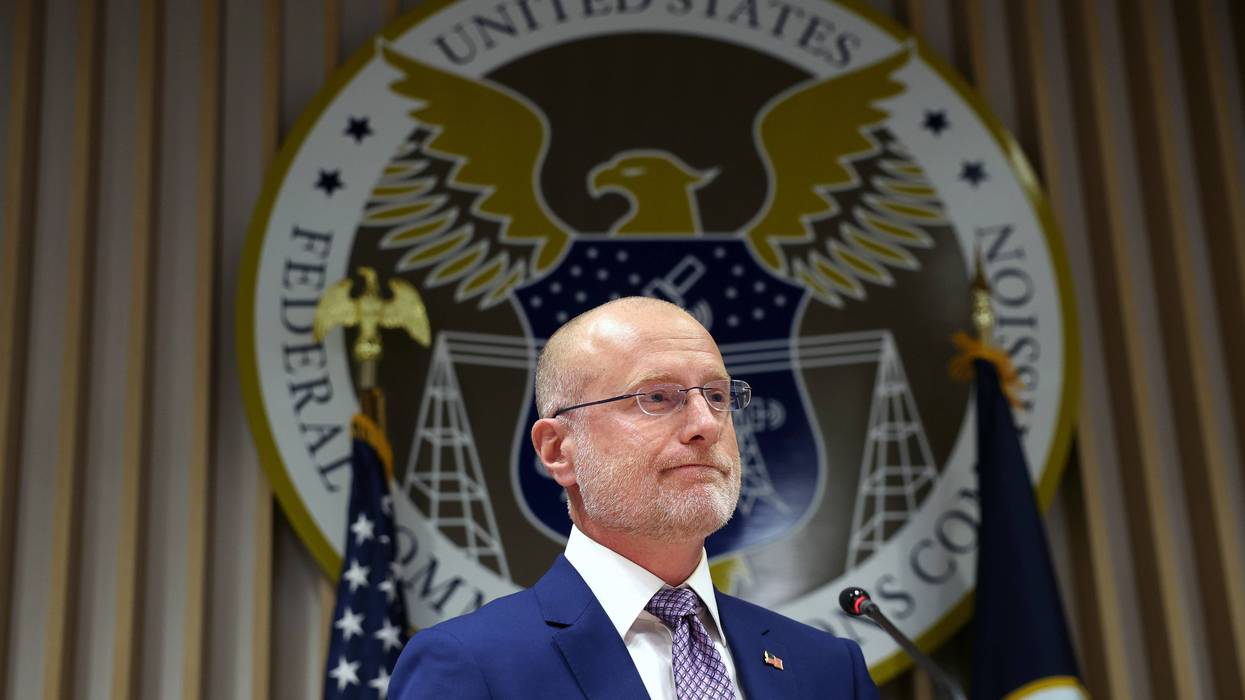
President Donald Trump could issue an executive order directing federal agencies "to leverage all available resources and authorities to end robocalls and spam texts once and for all," said Maisel and Mahoney.
But the authors noted that the Trump administration's mass layoffs across the government would make enforcement more difficult.
"The Department of Justice also needs to prioritize enforcement against bad actors," they wrote. "While the FCC can levy fines for violations, it cannot pursue their collection without the DOJ. Of the eight robocalling forfeiture orders referred by the FCC, the DOJ has pursued only two for collection."
In the case of the hoops consumers are made to jump through in order to cancel subscriptions and services, the report emphasizes that the federal government has made significant inroads before to help the public.
The Consumer Financial Protection Bureau (CFPB) intervened in 2023 and stopped Toyota Motor Credit from continuing its practice of routing all consumer calls through a hotline "where representatives were instructed to keep promoting products until a consumer asked to cancel three times, at which point they were told cancellation was only possible by submitting a written request."
Under the Biden administration, the Federal Trade Commission (FTC) was lauded by consumer advocates for its click-to-cancel rule in 2024, requiring sellers to “make it as easy for consumers to cancel their enrollment as it was to sign up."
But Trump's FTC last year delayed implementation of the rule after industry groups said that "it would take a substantial amount of time to come into compliance.” A federal appeals court then effectively killed the rule altogether.
While the fees that gradually trickle out of Americans' bank accounts into the annoyance economy are often small individually, the report emphasizes that they add up—and the consequences of these business practices and the government's failure to stop them "extend beyond wasted time and money."
"When life is reduced to jumping through an endless series of hoops—just to fix a billing error, secure a refund, or cancel a subscription—it breeds cynicism and disengagement," reads the report. "If the government can remove even a few of those obstacles, we can show the American people that someone is paying attention and begin the long process of rebuilding public trust."