

SUBSCRIBE TO OUR FREE NEWSLETTER
Daily news & progressive opinion—funded by the people, not the corporations—delivered straight to your inbox.
5
#000000
#FFFFFF
To donate by check, phone, or other method, see our More Ways to Give page.
Daily news & progressive opinion—funded by the people, not the corporations—delivered straight to your inbox.

"With every additional centimeter of sea-level rise," the lead author noted, "about 2 to 3 million people are put at risk of annual coastal flooding."
Following fresh warnings from scientists about governments not doing nearly enough to cut fossil fuel pollution and what that could mean for the warming planet, an international team of experts on Wednesday published "the most complete picture of ice loss from Greenland and Antarctica to date."
The polar scientists compared and combined 42 independent estimates derived from satellite observations for Earth's two main ice sheets to determine their gains and losses from 1972 in Greenland and 1979 in Antarctica until 2023—then released their findings in the journal Scientific Data.
The Ice Sheet Mass Balance Inter-comparison Exercise (IMBIE) team found a collective loss of about 11.3 trillion metric tons, or 12.5 trillion US tons.
Inès Otosaka, the professor from England's Northumbria University who led the study, told Reuters that "to put this very large number into context, 11.3 trillion tons of ice is enough ice to fill in a cube that would be 23 kilometers (14.3 miles) in height."
The Associated Press pointed out that it is also "enough frozen water to stack ice 5 feet (1.5 meters) deep across the continental United States."
The ice loss led to around 3.1 centimeters, or 1.2 inches, of global sea-level rise. Study co-author, IMBIE founder, and Northumbria professor Andrew Shepherd said in a statement that the figure "may sound small, but that puts another 6 to 9 million people at risk of coastal flooding and erosion."
The study stresses that "since the 1990s, the pace of ice loss from the Antarctic and Greenland ice sheets has accelerated, contributing to the increase in global mean sea-level rise, with the ice sheets now representing almost a quarter of global sea-level rise."
"Our dataset shows that Antarctic mass loss continues to be dominated by ice discharge from West Antarctica," the scientists explained, "rising in every decade of our record," from 29 billion metric tons per year in the 1980s to 163 billion in the 2010s. Across the ice sheet, that rate rose from 48 metric tons in the 1980s to 202 billion in the 2010s. The team estimated that during the study period, Antarctica lost a total of 4.78 trillion metric tons.
"Greenland was close to a state of balance in the 1970s but started to lose mass in the following decades," they explained. While the ice sheet lost about 60 billion metric tons annually in the 1980s and 57 billion in the 1990s, "losses then accelerated, reaching a rate three times higher in the 2000s," at 192 billion metric tons, and climbing to 264 billion in the 2010s. Overall, Greenland lost 6,215 trillion metric tons of ice from 1972 to 2023.
TK said that "by reaching back to the 1970s, we can now see how the ice sheets have changed across half a century. More than four-fifths of the ice lost was discharged into the ocean by faster-flowing glaciers, rather than melted at the surface—which tells us the long-term trend is being driven by the dynamic response of the ice sheets to a warming ocean."
International scientists have previously found that the ocean stores an estimated 91% of the heat from excess greenhouse gases, and the rate of ocean warming has more than quadrupled over the past four decades, as humanity has largely ignored experts' warnings to urgently phase out fossil fuels.
The new study was released less than two months ahead of the next United Nations Climate Change Conference (COP31) in Türkiye—where recent deadly fires have reignited demands for a swift global transition away from fossil fuels and stronger efforts to prepare vulnerable communities around the world for what UN scientists now warn is an inevitable, but potentially temporary, overshoot of the Paris Agreement's 1.5°C target for temperature rise this century.
Otosaka told Reuters that "when ice sheets melt, they contribute to rising global sea levels. And with every additional centimeter of sea-level rise, about 2 to 3 million people are put at risk of annual coastal flooding."
"These findings have implications for coastal planning," she added, "showing that we urgently need to develop plans for protecting coastal communities around the world from the impact of ice sheet melting."
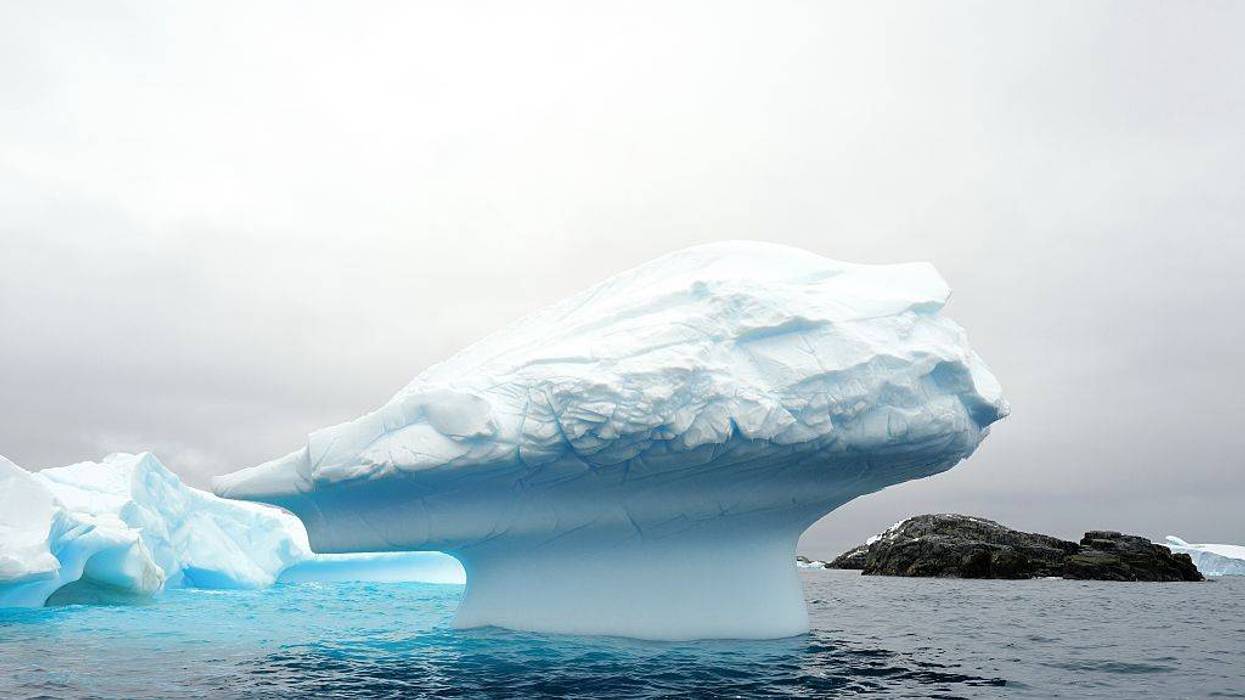
"The temperatures here went very high so everything outside melted,” said one scientist.
Climate scientists are sounding the alarm after an unprecedented heatwave hit Antarctica this month and delivered temperatures 20°C higher than normal.
According to a Friday report in The Guardian, temperatures at Antarctica's Trinity Peninsula this month hit peaks of over 15°C, even though it is the start of winter when ice typically expands on the continent. The prior record June temperature at the peninsula, 13.3°C, was set in 1998.
After weeks of above-average temperatures, scientists noticed that an area of sea ice that typically forms in the region—one roughly the size of France—was missing.
"It’s depressing,” Will Hobbs, an Antarctic sea ice expert at the University of Tasmania, told The Guardian. "It is remarkable that we are in June and there is no sea ice there."
Hobbs also predicted that the loss of sea ice is likely permanent at this point given the trajectory of global temperature changes.
Peter Fretwell, a scientist at the British Antarctic Survey, explained to the newspaper that the loss of sea ice poses a serious threat to penguin populations.
"Sea ice is forming too late and breaking up too early," Fretwell explained. "It leads to reduced breeding success and longer trips to moulting grounds."
In a separate interview with The Guardian last week, Raúl Cordero, a climate professor at the University of Groningen, expressed astonishment at the record-breaking Antarctic heat.
“This is absolutely crazy,” Cordero said. "That is a huge anomaly.”
Luis Muñoz, a Chilean glaciologist, told the newspaper he was shocked to step outside at King George's Island, located just north of Trinity Peninsula, and seeing the ground uncovered by snow.
"The temperatures here went very high so everything outside melted,” Muñoz explained. “Usually there is 20 centimeters of snow and a lot of ice on the ground at this time.”
Taking stock of the bigger picture, the newspaper reported that scientists are now fearful that some of the biggest glaciers in the region of the peninsula have now "past a tipping point" that could "push up global sea levels by four meters."
Such a rise in global sea levels would be unprecedented. Scientists estimate that global sea levels have risen by between 21 and 24 centimeters since 1880.
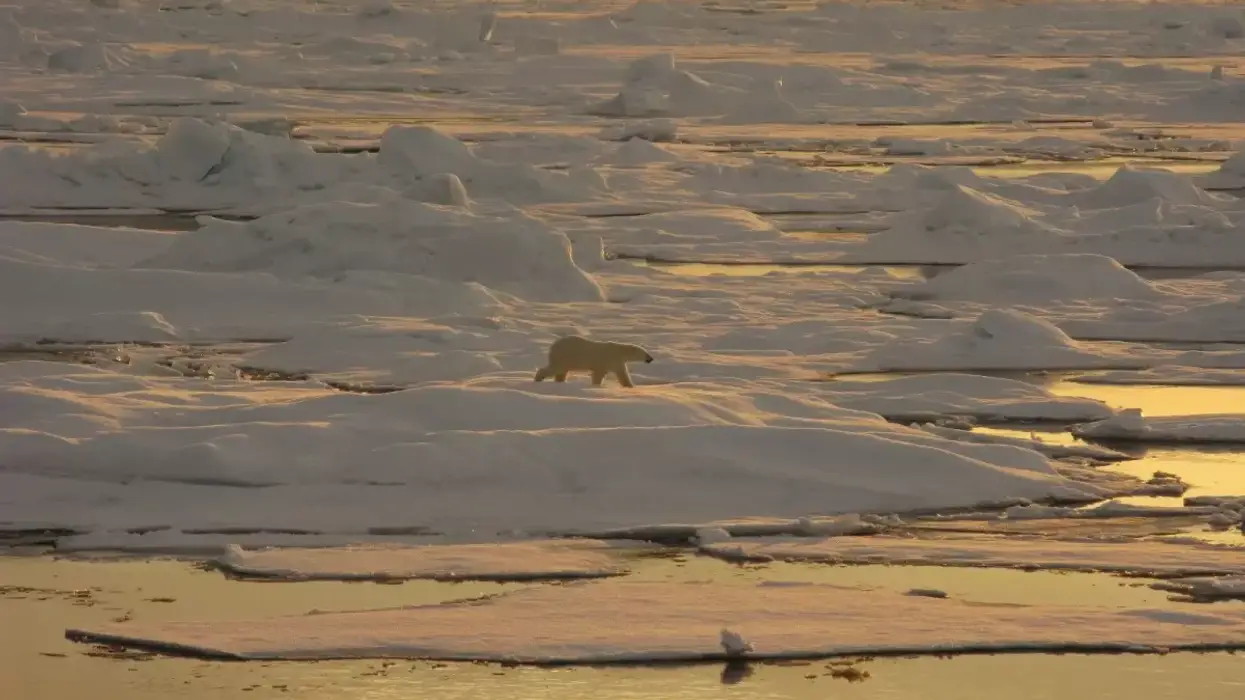
In addition to accelerating efforts to reduce global carbon emissions to reverse global warming, governments must urgently adopt strong, permanent protections for the entire Arctic Ocean.
On World Ocean Day, and the eve of the United Nations Ocean Conference in Nice, France opening Monday, the Arctic Ocean ecological crisis needs to be top of the list for attention by governments.
Given the well-documented, catastrophic decline of the Arctic Ocean sea ice ecosystem in recent decades due to climate change, coupled with the increasing threats and impacts from industry and military activity in the region, it is imperative that governments establish an International Arctic Ocean Sanctuary to preserve this extraordinary ecoregion as a global commons for peaceful, non-commercial, scientific purposes.
Covering approximately 5.4 million square miles, the Arctic Ocean is one of the most extraordinary and vibrant regions of the global ocean, and plays an important role regulating Earth’s climate.
Combined with the effects of climate change, industrialization and militarization would further accelerate the ecological and social collapse of the struggling Arctic Ocean region.
The Arctic marine ecosystem is globally unique, productive, and remains relatively unexplored. The ocean biome supports more than 7,000 identified species, many of which are found nowhere else on Earth—polar bears, walrus, several kinds of ice seals, narwhals, beluga whales, bowhead whales, some of the largest populations of seabirds in the world, and many unique fish and invertebrate populations. It hosts cold seeps, hydrothermal vents, stunning benthic habitats, a rich pelagic ecosystem that remains surprisingly active during winter darkness, and supports the subsistence cultures of coastal Indigenous Peoples.
However, this unique polar marine ecosystem is now one of the most endangered regions of Earth’s biosphere, suffering effects of climate change more severely than anywhere else. Arctic sea ice has declined by more than half in the last 50 years, losing about 1 million square miles in both summer and winter, has thinned from an average of four meters to about one meter, and could disappear entirely in summer by 2035. Multiyear sea ice has all but vanished. This remarkable decline has been caused by global carbon emissions from human activity, mainly fossil fuel use.
The loss of Arctic sea ice over the last half-century constitutes one of the largest declines in ecological habitat on Earth, rivaling the loss of tropical rainforests. The resultant Arctic Ocean ecological crisis is now severe, and predicted to get much worse in coming decades.
In addition to devastating impacts of climate change in the Arctic Ocean, commercial interests are clamoring to exploit ice-free offshore areas for oil and gas, methane hydrates, minerals, commercial fishing, shipping, and tourism. And Arctic coastal nations have made Extended Continental Shelf (ECS) seabed claims (pursuant to U.N. Law of the Sea, Article 76) beyond their 200-mile Exclusive Economic Zones (EEZs), a dangerous territorial expansion into international waters with an eye toward resource extraction.
As Arctic nations and others (China, India, etc.) advance their own parochial interests across the region, there is a growing competitive race to exploit Arctic offshore resources and to project military power across the region to secure these competing national interests. As such, the risk of military confrontation across the Arctic Ocean is escalating. Combined with the effects of climate change, industrialization and militarization would further accelerate the ecological and social collapse of the struggling Arctic Ocean region, and would clearly compromise the ability of the bioregion and its people to survive the 21st-century climate crisis.
In fact, the resource and political tensions in the Arctic Ocean today are remarkably similar to the Antarctic after World War II, that were resolved then by the leadership of U.S. (Republican) President Dwight D. Eisenhower proposing and negotiating the historic 1959 Antarctic Treaty. The international Treaty, now with 58 nation-state members, permanently protects the extraordinary 5.5 million square-mile Antarctic continent as a global commons for peaceful, scientific purposes, free from nuclear testing, military operations, economic exploitation, and territorial claims. The Antarctic Treaty remains the single greatest conservation achievement in history.
The same opportunity now presents itself with the Arctic Ocean. In addition to accelerating efforts to reduce global carbon emissions to reverse global warming, governments must urgently adopt strong, permanent protections for the entire Arctic Ocean to give this region and its people the best chance possible to survive the 21st-century climate crisis. Given the pace of decline, this may be our last best chance to do so.
While Arctic nations have begun protecting some areas off their coasts, still less than 5% of Arctic Ocean waters are in permanently protected status. This is clearly insufficient.
The proposed circumpolar Arctic Ocean Sanctuary must fully protect not only international waters beyond coastal state 200-mile EEZs across the 1.1 million square mile Central Arctic Ocean (as is currently proposed), but also the highly productive waters within the EEZs of Arctic coastal nations—Canada, Norway, Denmark and Greenland, Russia, and the U.S., where most ecological activity, human impact, and threat occurs. The sanctuary should permanently prohibit oil and gas leasing, mineral leasing, commercial fishing, military activities, improve shipping safety, reduce pollutants, and enhance scientific research.
To be sure, it is a big ask of the five Arctic coastal nations to contribute some of their claimed territory into a globally protected area, but this was the right thing to do in 1959 in the Antarctic, and it is the right thing to do now for the Arctic.
While the current federal administrations in the Russia and U.S. habitually oppose any and all environmental conservation proposals, perhaps presidents Vladimir Putin and Donald Trump might see this as a historic legacy in the midst of the environmental havoc they have caused, a chance to be remembered as Eisenhower is today for his leadership in negotiating the Antarctic Treaty. And just to note, former President Joe Biden ignored this request entirely, enacted no comprehensive permanent protections in the U.S. Arctic Ocean off Alaska, and made no effort to begin discussions on the International Arctic Ocean Sanctuary.
Global society has a historic choice to make with the imperiled Arctic Ocean. Should we continue our competitive industrial and military expansion into one of the last wild areas of the world, further degrading a region already unraveling due to human-caused climate change? Or should we protect and sustain this magnificent place for all time, giving it and its inhabitants, human and non-human, the best chance possible to recover from climate change this century?
How we answer this question will tell us a lot about ourselves and our future.
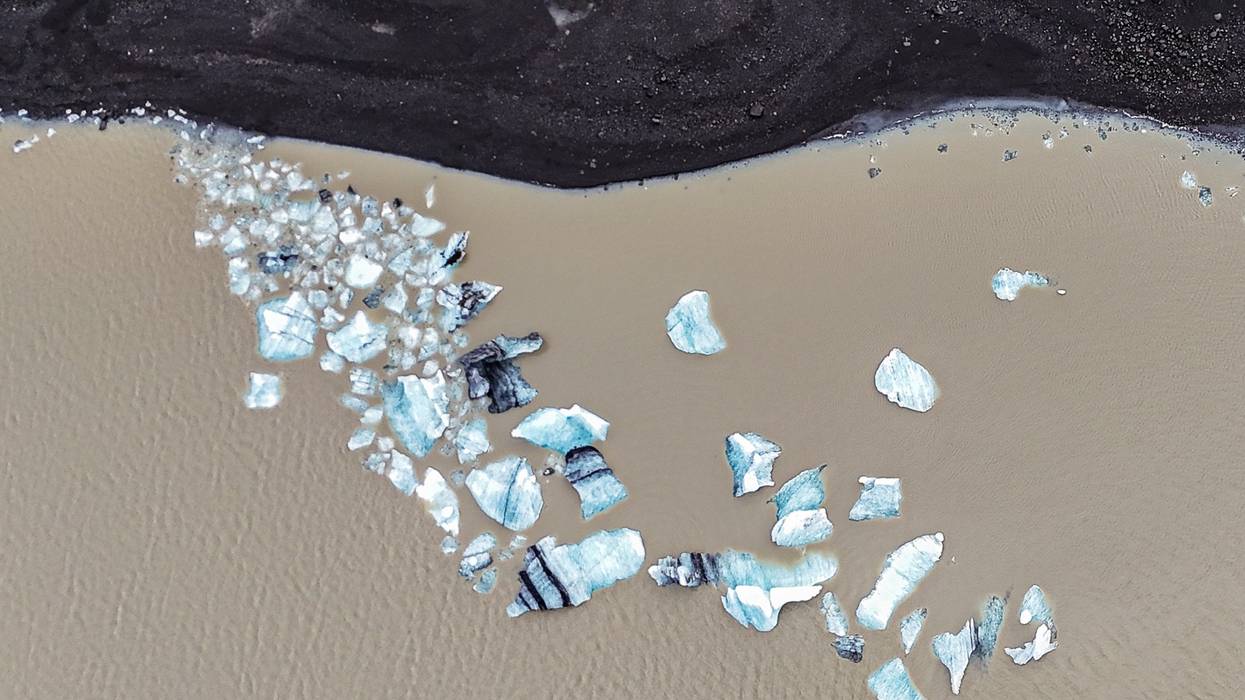
"The environment does not care about politics. Keep spewing greenhouse gases and face the consequences."
European Union officials said the Copernicus Climate Change Service had issued its latest "stark reminder of why climate action is urgent" when the bloc's program announced that it observed less sea ice covering the Earth's oceans last month than at any other point in recorded history.
In the Arctic, sea ice reached its lowest monthly extent on record, at 8% below average, in early February, and it remained below the previous record for the rest of the month.
The oceans were missing an area of ice roughly the size of the United Kingdom last month, according to Copernicus (C3S), and the finding was not an anomaly in recent sea ice observations.
February marked the third consecutive month in which record low sea ice levels for the corresponding month were observed in the Arctic.
C3S reported that in the Antarctic, sea ice levels have rapidly declined in 2025 after appearing to recover to near-record levels in December 2024.
Last month, sea ice near the South Pole reached its fourth-lowest monthly extent, at 26% below average.
C3S said the daily sea ice extent in the Antarctic may have also reached its annual minimum toward the end of the month, which will be confirmed later in March; if confirmed, it would be the second-lowest annual minimum in the satellite record.
"February 2025 continues the streak of record or near-record temperatures observed throughout the last two years," said Samanatha Burgess, strategic lead for climate at the European Center for Medium-Range Weather Forecasts. "One of the consequences of a warmer world is melting sea ice, and the record or near-record low sea ice cover at both poles has pushed global sea ice cover to an all-time minimum."
The melting sea ice was recorded as global average temperatures rose 1.59°C (2.8°F) above the pre-industrial average last month, making it the third-warmest February on record.
In Europe, the temperatures that most exceeded averages were recorded last month in parts of Scandinavia, Iceland, and the Alps. Outside of Europe, "temperatures were most above average over large parts of the Arctic."
The low extent of sea ice will lead to "more solar heat absorbed by the darker oceans," and "faster warming," said Simon Oldridge, a climate campaigner.
The loss of sea ice can also lead to the collapse of ocean currents that are crucial for marine life to thrive.
C3S reported on the record-low sea ice levels as campaigners in the U.S. and around the world condemned recent anti-climate actions taken by U.S. President Donald Trump and the Republican Party, including the country's exit from the Paris climate agreement, the GOP's passing of a bill to end a federal program aimed at reducing planet-heating methane emissions, and Trump's push to fast-track fossil fuel projects—as scientists warn that new extractive projects have no place on a pathway to limiting planetary heating and avoiding its worst impacts.
"The environment does not care about politics," said public health expert Ali Khan. "Keep spewing greenhouse gases and face the consequences."

As Noam once said, “if you assume there is no hope, you guarantee there will be no hope.”
In many of his recent writings, Noam Chomsky has warned that humanity has reached a very dangerous point because we are now living in a world of cascading crises. Indeed, when we look around us, we see a global web of crises. Economic inequality is destabilizing democracies and making a mockery of the vision of a decent society; armed conflicts continue to mark human existence; and nuclear weapons and global warming threaten humanity’s survival. Meanwhile, we must feel aghast over the fact that cynicism and irrationality continue to define the mindset of the powers that be. This is precisely the reason why Chomsky has always seen activism as our only hope.
What’s happening in Gaza is an abomination, one that the leaders of this world are watching coldly from a distance. The same can be said about climate collapse, which is as real as the daily slaughtering of scores of innocent women and children in Gaza by Israel’s military. Our global institutions are incapable of doing anything meaningful about these crises. Real power is in the hands of the most powerful nation-states and their leaders have opted to turn a blind eye to both disasters so as not to disrupt business as usual. Profits and geostrategic interests take priority over human lives and the environment. This is as clear as day, and it has always been so since at least the emergence of capitalism and the rise of the nation-state.
The current conflict in Ukraine began on February 24, 2022, and peace remains as elusive as ever. The U.S. wants peace in Ukraine as much as Netanyahu wants to see a ceasefire deal in Gaza. The continuation of the war in Gaza is vital to the continuation of Netanyahu's political career. In fact, Netanyahu will most likely celebrate by uncorking a bottle of champagne if an all-out war exploded in the Middle East. He knows he can’t possibly lose with the U.S. backing Israel. The cost of an all-out war in terms of human lives, either Israeli or Iranian or Arab lives, is simply irrelevant to him--or to Washington. Or what another war might do to the environment. The war in Gaza is also a war on the environment; in fact, it is “a widespread and deliberate act of ecocide,” according to a study by Forensic Architecture.
Profits and geostrategic interests take priority over human lives and the environment. This is as clear as day, and it has always been so since at least the emergence of capitalism and the rise of the nation-state.
As Chomsky has pointed out, “ history is all too rich in records of horrendous wars, indescribable torture, massacres and every imaginable abuse of fundamental rights.” But the great man has gone to great lengths to stress that the climate crisis is “unique in human history” and, like nuclear weapons, can destroy organized human life as we know it. Yet, humanity spends annually trillions of dollars on weapons and the military but finds it economically unrealistic to devote the necessary funds to protect the earth.
So much for rationality.
Indeed, consider the global implications of the melting of the Antarctica sea ice. It may be winter in the Southern Hemisphere, but the Antarctica is experiencing a major heat wave that has made temperatures rise 50 degrees Fahrenheit above normal. This is the second major heat wave in Antarctica in the last two years. The entire planet has experienced more than 1.5 Celsius of warming in the 12-month period between July 2023 and June 2024, but Antarctica warms twice faster than the rest of the world, according to latest observations. If all the ice vanished, sea levels might rise by more than 150 feet.
It is no longer an issue of if but when major coastal cities will go under.
We already know that the super-rich and powerful don’t care about the rest of us, but it seems they also don’t care about the future of their own children and grandchildren. As Chomsky has underscored in some of the email exchanges that we’ve had, their self-gratification is even greater now that they know that the climate crisis is speeding toward catastrophe.
Indeed, as Copernicus Climate Change Service Director Carlo Buontempo recently said in connection with the new record set for the daily global mean temperature “we are now in truly uncharted territory…”
We already know that the super-rich and powerful don’t care about the rest of us, but it seems they also don’t care about the future of their own children and grandchildren.
And this brings us to the question of activism, which, as already pointed out, Chomsky sees as our only hope to save the planet. It’s our only way to stop carnages; our only way to stop the criminal negligence of climate collapse. We need the greatest possible degree of public mobilization for the purpose of exerting influence on policymakers. But without thoughtless methods like destroying works of art that turn the public against climate activism.
Moreover, Chomsky believes that we have the knowledge, money, and technology to transition from fossil fuels to alternative sources of energy that are clean, affordable and sustainable. This is why he feels that the Green New Deal is exactly the right idea and finds the Global Green New Deal initiative laid out by the progressive economist Robert Pollin particularly attractive.
As far as the link between capitalism and the climate crisis goes, suffice to say that Chomsky understands better than most the forces behind environmental degradation and climate collapse. The economic system of capitalism, especially during its neoliberal phase, drives climate breakdown. Global temperatures started increasing at an alarming rate after neoliberalism became the dominant economic force. Nonetheless, Chomsky is also fully aware of the fact that time is running out and we cannot wait for the end of capitalism before the planet can be saved. This is why he finds it so vital that we find ways to get the world off fossil fuels quickly and fairly. We must reach carbon neutrality no later than 2050. And do so in a just manner. For Chomsky, a just transition is imperative to building the political power that would bring about a shift from the fossil-fuel economy to a regenerative economy. Because, again, social activism is our only hope, according to what many have described as the “ world’s conscience keeper for nearly half a century.”
And, no, hope is not an option. As Noam once said, “if you assume there is no hope, you guarantee there will be no hope.”
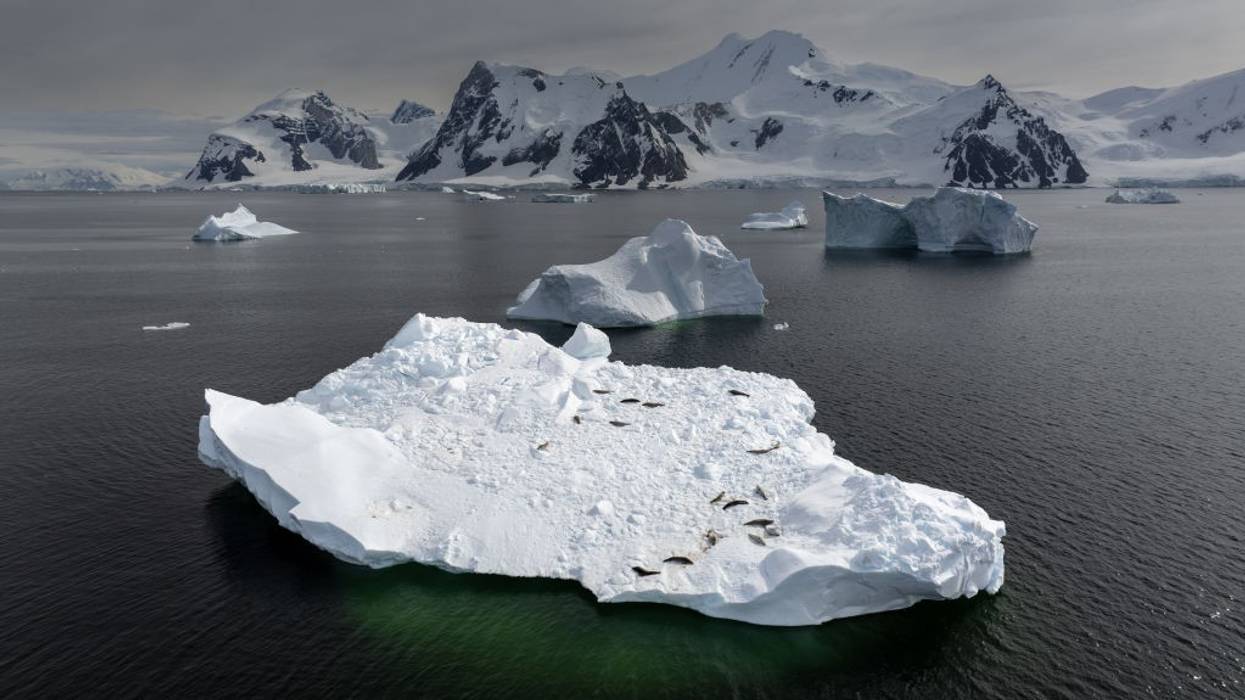
The long-lasting heatwave is an "eye-opening sign that climate change is starting to really transform the planet," a climate scientist said.
Antarctica is experiencing its second extreme heatwave in the last three years, with temperatures more than 50°F higher than normal, The Washington Post reported Wednesday.
The heatwave is notable not just for its intensity but also its timing and duration: It's hit during Antartica's winter and is expected to last. Temperatures of 36°F to 50°F above average are expected to persist up to 10 days, and July temperatures were already well above average before it began. The spiking temperatures were also spread across a large area, covering much of the continent, scientists said.
The world has faced exceptionally high temperatures in the last year, with 13 straight monthly heat records and counting, and the poles are warming at roughly twice the rate of the global average. Scientists say the changing conditions around Antarctica have increased the likelihood of higher winter temperatures on the continent.
"It is likely that having less sea ice and a warmer Southern Ocean around the Antarctic continent 'loads the dice' for warmer winter weather over Antarctica," Edward Blanchard, an atmospheric scientist at the University of Washington, told the Post.
Scientists warned that this heatwave was a sign of what's to come as the planet heats up thanks primarily to fossil fuel emissions.
"This historic warm spell in East Antarctica is an ominous example of the temperature spikes this polar climate could experience more of in a warming world," the Post reported.
Jonathan Overpeck, a climate scientist at the University of Michigan, said on social media that the heatwave is an "eye-opening sign that climate change is starting to really transform the planet."
In March 2022, Antarctica experienced the most intense heatwave in the planet's recorded history, with temperatures up to 72°F above normal. On-site scientists at the time wore shorts and removed their shirts to bask in the sun. The heatwave was the subject of intense scientific research in the two years that followed, with a 54-person team trying to decipher the causes, which they described as "head-hurting" in their complexity.
The 2022 heatwave contributed to reduced sea ice levels. Antarctica experienced the lowest summer and winter levels of sea ice ever recorded last year.
High temperatures in Antarctica are relative—this week's heatwave still had temperatures hovering at about minus-4°F. But sustained periods at such temperatures are highly unusual.
"The heatwave on the Antarctic Plateau is extraordinary more for its duration than for its intensity, although some values are notable," Stefano Di Battista, an expert on Antarctic temperatures, told the Post.
The heatwave is likely the result of changes in the stratosphere roughly 20 miles above ground, scientists said. At the South Pole, the stratosphere contains a polar vortex that is normally stable with cold temperatures and low pressure during the Antarctic winter, but a sudden stratospheric warming event occurred due to atmospheric wave activity, Amy Butler, an atmospheric scientist at the National Oceanic and Atmospheric Administration, told the Post.
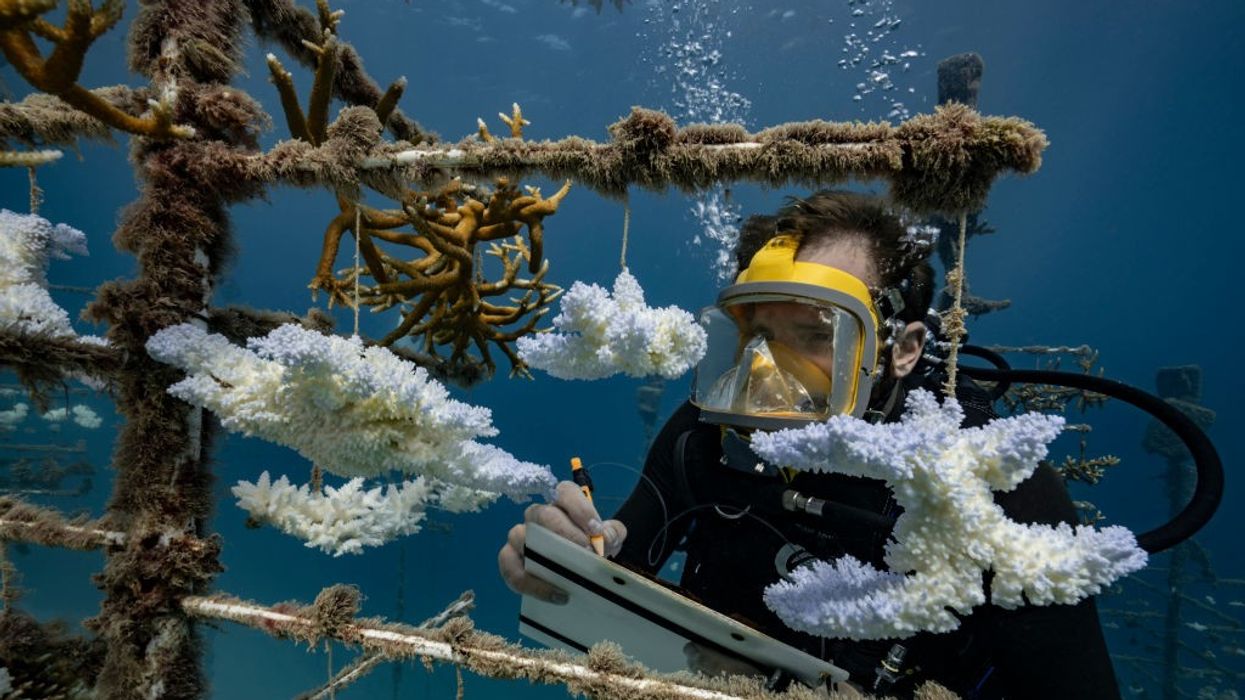
After 2023 was the hottest year in human history, experts warn that 2024 "has strong potential to be another record-breaking year."
While global policymakers continue to drag their feet on phasing out planet-heating fossil fuels, scientists around the world "are freaking out" about high ocean temperatures, as they told The New York Times in reporting published Tuesday.
A "super El Niño" has expectedly heated up the Pacific, but Times reporter David Gelles spoke with ocean experts from Miami to Cambridge to Sydney about record heat in the North Atlantic as well as conditions around the poles.
"The sea ice around the Antarctic is just not growing," said Matthew England, a University of New South Wales professor who studies ocean currents. "The temperature's just going off the charts. It's like an omen of the future."
Rob Larter, a marine geophysicist with the British Antarctic Survey who watches polar ice levels, told the paper that "we're used to having a fairly good handle on things. But the impression at the moment is that things have gone further and faster than we expected. That's an uncomfortable place as a scientist to be."
Last week, Jeff Berardelli, WFLA's chief meteorologist and climate specialist, also highlighted the warm North Atlantic and that "all signs are pointing to a busy hurricane season" later this year.
Noting that in the middle of this month, sea surface temperatures in the North Atlantic were around 2°F higher than the 1990-2020 normal and nearly 3°F above the 1980s, Berardelli explained:
That may not sound like a lot, but consider this is averaged over the majority of the basin shown in the red outline in the image above. A deviation like that is unheard of... until now.
To put it into more relatable terms, considering what's been normal for the most recent 30 years, the statistical chance that any February day would be as warm as it is right now is 1-in-280,000. That's not a typo. This is according to University of Miami researcher Brian McNoldy...
And that 1-in-280,000 is compared against a recent climate, which had already been warmed substantially by climate change. If you tried to compare it against a climate considered normal around the year 1900, the math would become nonsensical. Meaning an occurrence like this simply would not be possible.
McNoldy also stressed the shocking nature of current conditions to the Times, telling Gelles that "the North Atlantic has been record-breakingly warm for almost a year now... It's just astonishing. Like, it doesn't seem real."
The new comments from McNoldy and other scientists come on the heels of various institutions and experts worldwide recently confirming that 2023 was the hottest year in human history. Research also showed that it was the warmest year on record for the oceans, which capture about 91% of excess heat from greenhouse gases.
As Common Dreams reported last month, Adam Scaife, a principal fellow at the United Kingdom's Met Office, said that "it is striking that the temperature record for 2023 has broken the previous record set in 2016 by so much because the main effect of the current El Niño will come in 2024."
That's the warm phase of the El Niño Southern Oscillation, a climate phenomenon that also has a cool phase called La Niña expected later this year. Still, Scaife warned that "the Met Office's 2024 temperature forecast shows this year has strong potential to be another record-breaking year."
Throughout the record-shattering 2023, experts also expressed alarm. After an April study showed that the ocean is heating up faster than previously thought, the BBC revealed that some scientists declined to speak about it on the record, reporting that "one spoke of being 'extremely worried and completely stressed.'"
In July, when a buoy roughly 40 miles south of Miami recorded a sea surface temperature of 101.1°F just after a "100% coral mortality" event at a restoration site, Florida State University associate professor Mariana Fuentes told NPR that "if you have several species that are being impacted at the same time by an increase in temperature, there's going to be a general collapse of the whole ecosystem."
The following month, the European Union's Copernicus Climate Change Service announced that the average daily global ocean surface temperature hit 69.7°F, and deputy director Samantha Burgess said, "The fact that we've seen the record now makes me nervous about how much warmer the ocean may get between now and next March."
"The more we burn fossil fuels, the more excess heat will be taken out by the oceans, which means the longer it will take to stabilize them and get them back to where they were," Burgess emphasized at the time.
Last year ended with a United Nations climate summit that scientists called "a tragedy for the planet," because the final deal out of the conference—led by an Emirati oil CEO—did not demand a global phaseout of fossil fuels.
Azerbaijan, which is set to host this year's U.N. conference in November, has similarly selected a former fossil fuel executive to lead the event. The country also plans to increase its gas production by a third during the next decade.
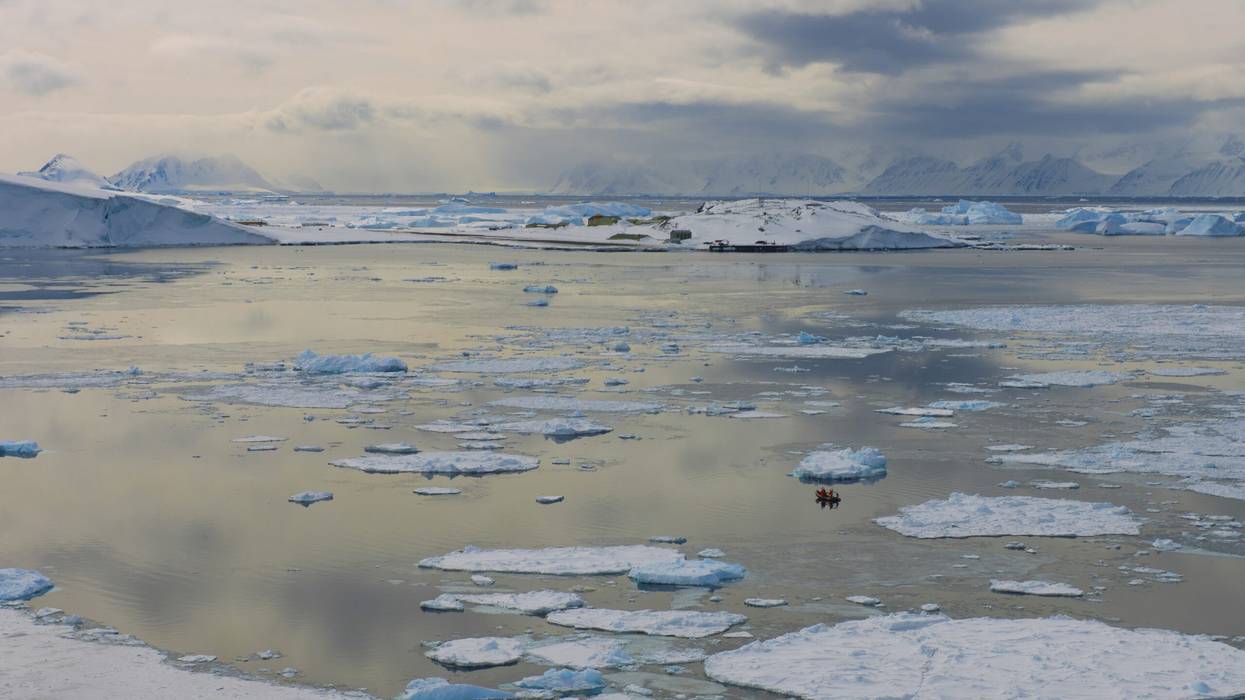
"We now have direct evidence that this ice sheet suffered rapid ice loss in the past," said a Cambridge researcher.
As European Union scientists confirmed that last month continued a worrying trend of historically high temperatures, U.K. researchers released a study Thursday warning how fossil fuel-driven global heating could lead to catastrophic and rapid ice loss in Antarctica not seen for thousands of years.
The study, published by researchers at the British Antarctic Survey (BAS) and the University of Cambridge in Nature Geoscience, relies on an ice core from the West Antarctic Ice Sheet that is over 2,100 feet long.
"We now have direct evidence that this ice sheet suffered rapid ice loss in the past," said senior author and Cambridge Earth sciences professor Eric Wolff in a statement. "This scenario isn't something that exists only in our model predictions and it could happen again if parts of this ice sheet become unstable."
"The very same processes we are seeing just beginning now, in areas like Thwaites Glacier, have played out before in similar areas of Antarctica and indeed, the pace of ice loss was equal to our worst fears about a runaway ice loss."
Study co-author and BAS researcher Isobel Rowell explained that "we wanted to know what happened to the West Antarctic Ice Sheet at the end of the Last Ice Age, when temperatures on Earth were rising, albeit at a slower rate than current anthropogenic warming."
"Using ice cores we can go back to that time and estimate the ice sheet's thickness and extent," she continued. The team measured stable water isotopes and the pressure of air bubbles in the core, and found that the ice sheet "shrank suddenly and dramatically" about 8,000 years ago.
"We already knew from models that the ice thinned around this time, but the date of this was uncertain," Rowell noted, referencing estimates of 5,000-12,000 years ago. "We now have a very precisely dated observation of that retreat that can be built into improved models."
Previous models also didn't indicate how quickly the retreat happened. However, the team's measurements showed that "once the ice thinned, it shrunk really fast," said Wolff.
"This was clearly a tipping point—a runaway process," he added. "It's now crucial to find out whether extra warmth could destabilize the ice and cause it to start retreating again."
University of Colorado Boulder glaciologist Ted Scambos was not involved with the study, but he called it "an excellent piece of detective work" and told CNN that its takeaway message is "the amount of ice stored in Antarctica can change very quickly—at a pace that would be hard to deal with for many coastal cities."
CNN pointed out that the study contributes to mounting warnings from scientists about conditions in Antarctica:
For example, the Thwaites Glacier, also in West Antarctica, is melting rapidly. A 2022 study said the Thwaites—dubbed the Doomsday Glacier for the catastrophic impact its collapse would have on sea-level rise—was hanging on "by its fingernails" as the planet warms.
This new study adds to these concerns, Scambos said. "[It] shows that the very same processes we are seeing just beginning now, in areas like Thwaites Glacier, have played out before in similar areas of Antarctica and indeed, the pace of ice loss was equal to our worst fears about a runaway ice loss."
As Common Dreams reported in October, a study published in Nature Climate Change found that the West Antarctic Ice Sheet—which contains enough ice to increase the global mean sea level by over 17 feet—faces an "unavoidable" increase in melting for the rest of this century.
"If we wanted to preserve it in its historical state, we would have needed action on climate change decades ago," lead author and BAS researcher Kaitlin Naughten said at the time—while also stressing that "we must not stop working to reduce our dependence on fossil fuels."
The release of that study preceded the 28th United Nations Climate Change Conference in Dubai. After COP28 ended in December with a final agreement that did not explicitly endorse a global phaseout of fossil fuels, scientists called it a "tragedy for the planet."
Despite the heat that the United Arab Emirates caught for having a fossil fuel CEO lead the latest summit, COP29 host Azerbaijan plans to have an oil executive head the next one, scheduled for November. Azerbaijan also plans to boost its gas production by a third during the next decade.
The COP29 host is far from alone. Global Witness revealed last month that the oil and gas companies that signed a decarbonization pact at last year's conference plan to burn through around 62% of the world's carbon budget by 2050—which sparked fresh demands for governments to stop caving to polluters and implement more ambitious climate policies.

"It really brings it home to us that what we are doing is very, very unusual in Earth's history," the lead author of a new study said.
The last time that levels of atmospheric carbon dioxide were as high as they are today, Greenland was free of ice and the savanna and grassland ecosystems where humans evolved didn't exist yet.
That's the conclusion of a study published in Science Friday, which researchers say compiles "the most reliable data available to date" on atmospheric carbon dioxide levels over the last 66 million years.
"It really brings it home to us that what we are doing is very, very unusual in Earth's history," lead author Baerbel Hoenisch of the Columbia Climate School's Lamont-Doherty Earth Observatory told Agence France-Presse.
"We've already pushed the atmosphere way beyond anything we've seen as a species."
By burning fossil fuels and clearing natural carbon sinks like forests, industrial capitalism has raised global carbon dioxide levels to 419 parts per million (ppm) today from around 280 ppm at the beginning of the industrial revolution.
"Rising atmospheric CO2 is the most obvious and startling expressions of our impact on the global environment," study corresponding author and University of Utah geologist Gabe Bowen wrote on social media. "The concentration has risen by ~50% in the past 100 years. Every year is now marked by the highest CO2 levels *ever observed* by humans!"
To understand how such a spike in carbon dioxide might impact Earth's climate and ecosystems, it's helpful to look at the past. This presents challenges, however, because the most reliable record of past carbon dioxide concentrations—gas bubbles preserved in ice cores—only goes back to around 800,000 years ago, when atmospheric concentrations of carbon dioxide were still at around preindustrial levels.
"Once you lose the ice cores, you lose direct evidence. You no longer have samples of atmospheric gas that you can analyze," Bowen said in a University of Utah press release. "So you have to rely on indirect evidence, what we call proxies. And those proxies are tough to work with because they are indirect."
Proxies are evidence in the geologic record that can stand in for carbon dioxide levels, such as mineral isotopes or the shape of fossilized leaves. Scientists have looked at these proxies before, but the current study represents the most comprehensive effort to date. A team of around 90 researchers from 16 countries spent seven years synthesizing and reviewing previous work under the banner of the Cenozoic CO2 Proxy Integration Project, according to the University of Utah and AFP.
The new study represents the scientific consensus on the carbon dioxide record, and it concludes that the last time carbon dioxide levels were around 419 ppm was 14 million years ago. That's much earlier than previous estimates of 3 to 5 million years ago.
However, the record goes back further than that to the Cenozoic Era, when the dinosaurs died and mammals began to emerge.
That record revealed a very clear pattern, Bowen tweeted: "CO2 goes up, the world warms. CO2 down, and things get icy."
The record enabled the scientists to predict the consequences of current and projected carbon dioxide levels.
"This is an incredibly important synthesis and has implications for future climate change as well, particularly the key processes and components of the Earth system that we need to understand to project the speed and magnitude of climate change," University of Utah biology professor William Anderegg said in the press release.
One of the report's messages, Bowen tweeted is that "the future is now."
"We've already pushed the atmosphere way beyond anything we've seen as a species," Bowen continued, "and if it stays this way we're in for big changes in the environment we live in."
If policy-makers don't restrict the burning of fossil fuels, atmospheric carbon dioxide could reach 600 to 800 ppm by 2100, AFP reported. According to the record, the last time levels were this high was 30 to 40 million years ago, when Antarctica was also ice-free and the Earth was home to giant insects.
Even today's concentrations are bound to have lasting consequences. For example, when carbon dioxide levels rapidly increased around 56 million years ago, it significantly altered ecosystems and took around 150,000 years to decrease again.
"We are in this for a very long time," Hoenisch told AFP, "unless we sequester carbon dioxide, take it out of the atmosphere, and we stop our emissions sometime soon."
However, the that doesn't mean the most extreme changes are locked-in. Instead, Bowen tweeted that the report was a "call to action."
"The geological changes we studied lasted for thousands and millions of years," Bowen said, "and if human-induced CO2 change is short-lived it won't have as big an impact on the climate."
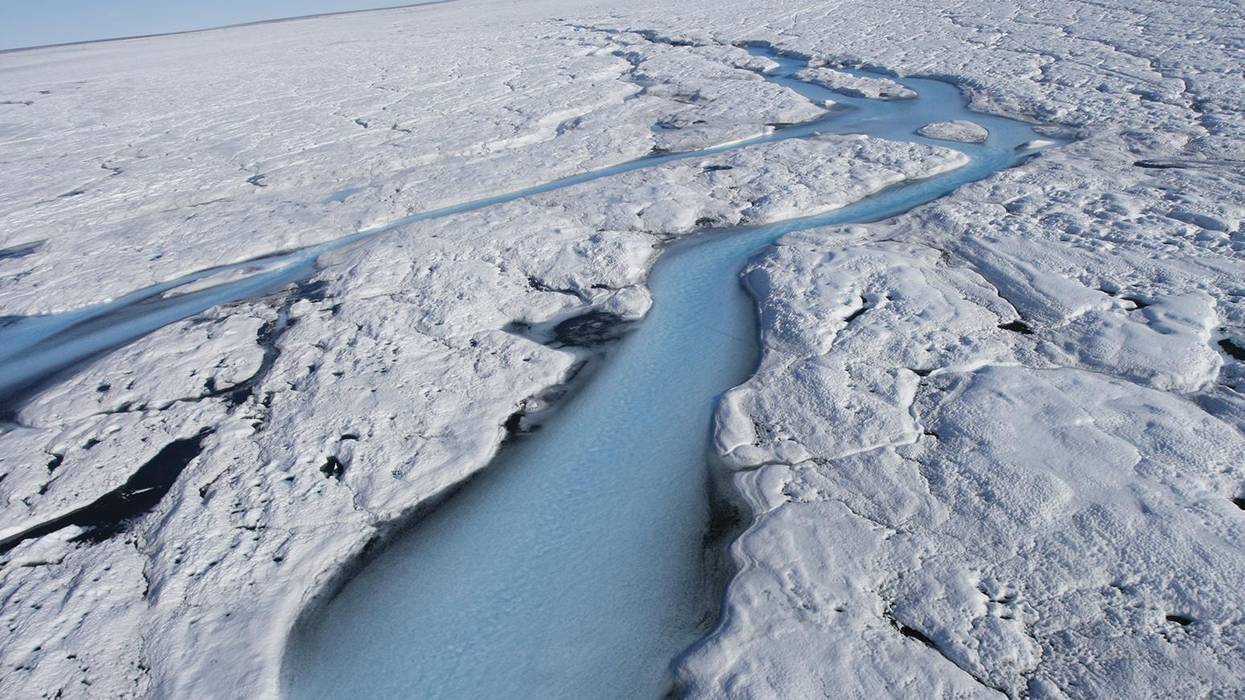
"Averting this crisis—and doing so equitably—must be the core goal of COP28 and ongoing global cooperation," one expert said.
An earlier version of this article said the sea levels could rise by 656 feet by 2100 if the Antarctic ice sheet started to melt. It has been corrected to reflect the fact that they would rise by 6.6 feet.
Current levels of global heating from the burning of fossil fuels and the destruction of nature risk triggering five tipping points that could throw Earth's systems further out of balance, with three more at risk of toppling in the next decade.
The Global Tipping Points Report, released Wednesday at the United Nations Climate Change Conference (COP28) in the United Arab Emirates, argues that policymakers have delayed climate action long enough that "linear incremental change" will no longer be enough to protect ecosystems and communities from the worst impacts of the climate crisis. However, world leaders can still choose to take advantage of positive tipping points to drive transformative change.
"The existence of tipping points means that 'business as usual' is now over," the report authors wrote. "Rapid changes to nature and society are occurring, and more are coming."
"Crossing these thresholds may trigger fundamental and sometimes abrupt changes that could irreversibly determine the fate of essential parts of our Earth system for the coming hundreds or thousands of years."
The report defines a "tipping point" as "occurring when change in part of a system becomes self-perpetuating beyond a threshold, leading to substantial, widespread, frequently abrupt and often irreversible impact." A group of more than 200 researchers assessed 26 different potential tipping points in Earth's systems that could be triggered by the climate crisis.
"Tipping points in the Earth system pose threats of a magnitude never faced by humanity," report leader Tim Lenton of Exeter's Global Systems Institute said in a statement. "They can trigger devastating domino effects, including the loss of whole ecosystems and capacity to grow staple crops, with societal impacts including mass displacement, political instability, and financial collapse."
Because current emissions trajectories put the world on track for 1.5°C of warming, this is likely to trigger five tipping points, the report authors found. Those tipping points are the melting of the Greenland and Antarctic ice sheets, the mass die-off of warm-water coral reefs, the thawing of Arctic permafrost, and the collapse of the North Atlantic Subpolar Gyre circulation.
The melting of just the Antarctic ice sheet, for example, could raise global sea levels by 6.6 feet by 2100, Carbon Brief reported, meaning 480 million people would face yearly coastal flooding. Three more tipping points could be triggered in the 2030s if temperatures rise past 1.5°C. These include the mass death of seagrass meadows, mangroves, and boreal forests, according to The Guardian.
"Crossing these thresholds may trigger fundamental and sometimes abrupt changes that could irreversibly determine the fate of essential parts of our Earth system for the coming hundreds or thousands of years," co-author Sina Loriani of the Potsdam Institute for Climate Impact Research told The Guardian.
Contributor Manjana Milkoreit of the University of Oslo said in a statement that "our global governance system is inadequate to deal with the coming threats and implement the solutions urgently required."
But that doesn't mean the report authors believe that hope is lost. Rather, they see it as a call to ambitious action at the current U.N. climate talks and beyond.
"Averting this crisis—and doing so equitably—must be the core goal of COP28 and ongoing global cooperation," Milkoreit said.
One way to do this is to take advantage of positive tipping points.
"Concerted actions can create the enabling conditions for triggering rapid and large-scale transformation," the report authors wrote. "Human history is flush with examples of abrupt social and technological change. Recent examples include the exponential increases in renewable electricity, the global reach of environmental justice movements, and the accelerating rollout of electric vehicles."
The report authors made six recommendations based on their findings: