SUBSCRIBE TO OUR FREE NEWSLETTER
Daily news & progressive opinion—funded by the people, not the corporations—delivered straight to your inbox.
5
#000000
#FFFFFF
To donate by check, phone, or other method, see our More Ways to Give page.


Daily news & progressive opinion—funded by the people, not the corporations—delivered straight to your inbox.
As Noam once said, “if you assume there is no hope, you guarantee there will be no hope.”
In many of his recent writings, Noam Chomsky has warned that humanity has reached a very dangerous point because we are now living in a world of cascading crises. Indeed, when we look around us, we see a global web of crises. Economic inequality is destabilizing democracies and making a mockery of the vision of a decent society; armed conflicts continue to mark human existence; and nuclear weapons and global warming threaten humanity’s survival. Meanwhile, we must feel aghast over the fact that cynicism and irrationality continue to define the mindset of the powers that be. This is precisely the reason why Chomsky has always seen activism as our only hope.
What’s happening in Gaza is an abomination, one that the leaders of this world are watching coldly from a distance. The same can be said about climate collapse, which is as real as the daily slaughtering of scores of innocent women and children in Gaza by Israel’s military. Our global institutions are incapable of doing anything meaningful about these crises. Real power is in the hands of the most powerful nation-states and their leaders have opted to turn a blind eye to both disasters so as not to disrupt business as usual. Profits and geostrategic interests take priority over human lives and the environment. This is as clear as day, and it has always been so since at least the emergence of capitalism and the rise of the nation-state.
The current conflict in Ukraine began on February 24, 2022, and peace remains as elusive as ever. The U.S. wants peace in Ukraine as much as Netanyahu wants to see a ceasefire deal in Gaza. The continuation of the war in Gaza is vital to the continuation of Netanyahu's political career. In fact, Netanyahu will most likely celebrate by uncorking a bottle of champagne if an all-out war exploded in the Middle East. He knows he can’t possibly lose with the U.S. backing Israel. The cost of an all-out war in terms of human lives, either Israeli or Iranian or Arab lives, is simply irrelevant to him--or to Washington. Or what another war might do to the environment. The war in Gaza is also a war on the environment; in fact, it is “a widespread and deliberate act of ecocide,” according to a study by Forensic Architecture.
Profits and geostrategic interests take priority over human lives and the environment. This is as clear as day, and it has always been so since at least the emergence of capitalism and the rise of the nation-state.
As Chomsky has pointed out, “ history is all too rich in records of horrendous wars, indescribable torture, massacres and every imaginable abuse of fundamental rights.” But the great man has gone to great lengths to stress that the climate crisis is “unique in human history” and, like nuclear weapons, can destroy organized human life as we know it. Yet, humanity spends annually trillions of dollars on weapons and the military but finds it economically unrealistic to devote the necessary funds to protect the earth.
So much for rationality.
Indeed, consider the global implications of the melting of the Antarctica sea ice. It may be winter in the Southern Hemisphere, but the Antarctica is experiencing a major heat wave that has made temperatures rise 50 degrees Fahrenheit above normal. This is the second major heat wave in Antarctica in the last two years. The entire planet has experienced more than 1.5 Celsius of warming in the 12-month period between July 2023 and June 2024, but Antarctica warms twice faster than the rest of the world, according to latest observations. If all the ice vanished, sea levels might rise by more than 150 feet.
It is no longer an issue of if but when major coastal cities will go under.
We already know that the super-rich and powerful don’t care about the rest of us, but it seems they also don’t care about the future of their own children and grandchildren. As Chomsky has underscored in some of the email exchanges that we’ve had, their self-gratification is even greater now that they know that the climate crisis is speeding toward catastrophe.
Indeed, as Copernicus Climate Change Service Director Carlo Buontempo recently said in connection with the new record set for the daily global mean temperature “we are now in truly uncharted territory…”
We already know that the super-rich and powerful don’t care about the rest of us, but it seems they also don’t care about the future of their own children and grandchildren.
And this brings us to the question of activism, which, as already pointed out, Chomsky sees as our only hope to save the planet. It’s our only way to stop carnages; our only way to stop the criminal negligence of climate collapse. We need the greatest possible degree of public mobilization for the purpose of exerting influence on policymakers. But without thoughtless methods like destroying works of art that turn the public against climate activism.
Moreover, Chomsky believes that we have the knowledge, money, and technology to transition from fossil fuels to alternative sources of energy that are clean, affordable and sustainable. This is why he feels that the Green New Deal is exactly the right idea and finds the Global Green New Deal initiative laid out by the progressive economist Robert Pollin particularly attractive.
As far as the link between capitalism and the climate crisis goes, suffice to say that Chomsky understands better than most the forces behind environmental degradation and climate collapse. The economic system of capitalism, especially during its neoliberal phase, drives climate breakdown. Global temperatures started increasing at an alarming rate after neoliberalism became the dominant economic force. Nonetheless, Chomsky is also fully aware of the fact that time is running out and we cannot wait for the end of capitalism before the planet can be saved. This is why he finds it so vital that we find ways to get the world off fossil fuels quickly and fairly. We must reach carbon neutrality no later than 2050. And do so in a just manner. For Chomsky, a just transition is imperative to building the political power that would bring about a shift from the fossil-fuel economy to a regenerative economy. Because, again, social activism is our only hope, according to what many have described as the “ world’s conscience keeper for nearly half a century.”
And, no, hope is not an option. As Noam once said, “if you assume there is no hope, you guarantee there will be no hope.”
Mainstream economics failed miserably in addressing the financial crisis of 2007-08, so why would it be any different now when it comes to making sense of the rising inflation of the past 18 months?
Since 2021, prices have surged dramatically across countries and inflation has become a global challenge. Global central banks delivered historic rate hikes in 2022 in order to tame inflation and continued doing so even when inflation was falling, thereby risking a global recession.
Indeed, for the past five months, average inflation in the U.S. has been at 2.4%. Across Europe, inflation has also been dropping. In Spain, for instance, consumer prices rose 5.8% in December, down from 6.8% in the previous month. The December figure represented the fifth consecutive month of declining inflation in Spain. Yet, the European Central Bank—which like the U.S. Federal Reserve has also set the target rate for inflation at the arbitrary number of 2% per year—plans to continue raising interest rates “significantly further” as it deems that inflation “remains far too high and is projected to stay above the target for too long.”
Meanwhile, both the U.S. and European economies are expected to enter a recession in 2023. For what it’s worth, the head of the IMF expects a full one-third of the world to slide into recession this year.
What has been causing the upward trends in inflation and why do central banks around the world keep raising interest rates, a policy which will slow economic growth and result in lower wage increases and fewer jobs? Several factors are at play in causing a surge in prices, which include the Covid-19 pandemic, geopolitics, and corporate mark-ups and profit margins, while pure capitalist logic and interests explain why central banks are raising interest rates to fight inflation.
These were some of the conclusions reached by the progressive economists who participated in an international conference on “Global Inflation Today” organized by the renowned Political Economy Research Institute (PERI) at the University of Massachusetts Amherst and held from December 2-3, 2022.
To start with, a co-authored paper by Robert Pollin (Distinguished Professor of Economics and Co-Director of PERI at UMass Amherst) and Hanae Bouazza shows convincingly that there is no justification why the Federal Reserve and other central banks aim for an inflation target of 2%. Indeed, their research finds “no consistent evidence supporting the conclusion that economies at any income level will achieve significant GDP benefit when they maintain inflation within low single digits, i.e., between the 0 – 2.5 percent inflation range.” Not only that, but the “evidence… suggests that, in general, economies are more likely to achieve higher GDP growth rates in association with inflation ranges in the range of 2.5 – 5 percent, 5 – 10 percent and, for the most part, 10 – 15 percent.”
These are significant findings which raise serious questions about the goals of macro policy. Indeed, if inflation-targeting policy is not conducive to promoting economic growth, what is its primary aim? Citing the work of scholars who have done extensive research around this question, such as Gerald Epstein (Professor of Economics and Co-Director of PERI at UMass Amherst) and others, Pollin and Bouazza suggest that corporate profitability is the primary aim of inflation-targeting policy. “Protecting the wealth of the wealthy” is the reason why the Fed has taken aggressive steps to tame inflation by raising interest rates, Epstein pointed out in a recent joint interview with Pollin.
With regard to the actual causes of inflation in 2021-22, a paper co-authored by Asha Banerjee and Josh Bivens of the Economic Policy Institute identifies the Covid-19 pandemic and the Russian invasion of Ukraine as key factors in the inflationary surge of the past 18 months or so but argues that profit mark-ups added immensely to inflationary pressures over the same period. Of equal importance here is that the authors present more than sufficient evidence to counter the mainstream economic perspective that lays the blame for the rise of inflation in the U.S. on the American Rescue Plan. Indeed, the data they present, on both the domestic and international fronts, does not support the claim that too much fiscal spending overheated the economies, fueling runaway inflation.
Another paper presented at the PERI conference, co-authored by C. P. Chandrasekhar and Jayati Ghosh, on how low-and middle-income countries can respond to inflation, also argues that there are more important factors than the pandemic and Russia’s invasion of Ukraine behind the current inflation crisis. The sharp rise in global prices of food and fuel, Chandrasekhar and Ghosh contend, was driven by “profiteering, price expectations, and associated speculation.” They show, for instance, that while there were sharp spikes in the prices of food and fuel between February and July 2022, “the supplies of oil and gas to Europe remained largely unaffected.”
The analyses on inflation and its causes, as well as the actual aims of inflation-targeting policy, made by all of the presenters at the PERI conference (which included many leading progressive economists such as William Spriggs, Gerald Epstein, Thomas Ferguson, Nancy Folbre, James K. Galbraith, Servaas Storm, and Isabella Weber, among others) can be described as a Progressive Political Economy Guide to Inflation. Indeed, they show how powerful heterodox economic approaches are in disclosing the real forces driving inflation and the actual reasons for central banks raising sharply interest rates. And, by extension, they also reveal the flaws and limitations of mainstream economics, which is in dire need of a major overhaul.In the wake of a United Nations report that activists said showed the "bleak and brutal truth" about the climate emergency, a leading economist on Friday highlighted a step that supporters argue could be incredibly effective at combating the global crisis: nationalizing the U.S. fossil fuel industry.
"With at least ExxonMobil, Chevron, and ConocoPhillips under public control, the necessary phaseout of fossil fuels as an energy source could advance in an orderly fashion."
Writing for The American Prospect, Robert Pollin, an economics professor and co-director of the Political Economy Research Institute at the University of Massachusetts Amherst, noted the Intergovernmental Panel on Climate Change (IPCC) and high gas prices exacerbated by Russia's war on Ukraine.
"If we are finally going to start taking the IPCC's findings seriously," Pollin wrote, "it follows that we must begin advancing far more aggressive climate stabilization solutions than anything that has been undertaken thus far, both within the U.S. and globally. Within the U.S., such measures should include at least putting on the table the idea of nationalizing the U.S. fossil fuel industry."
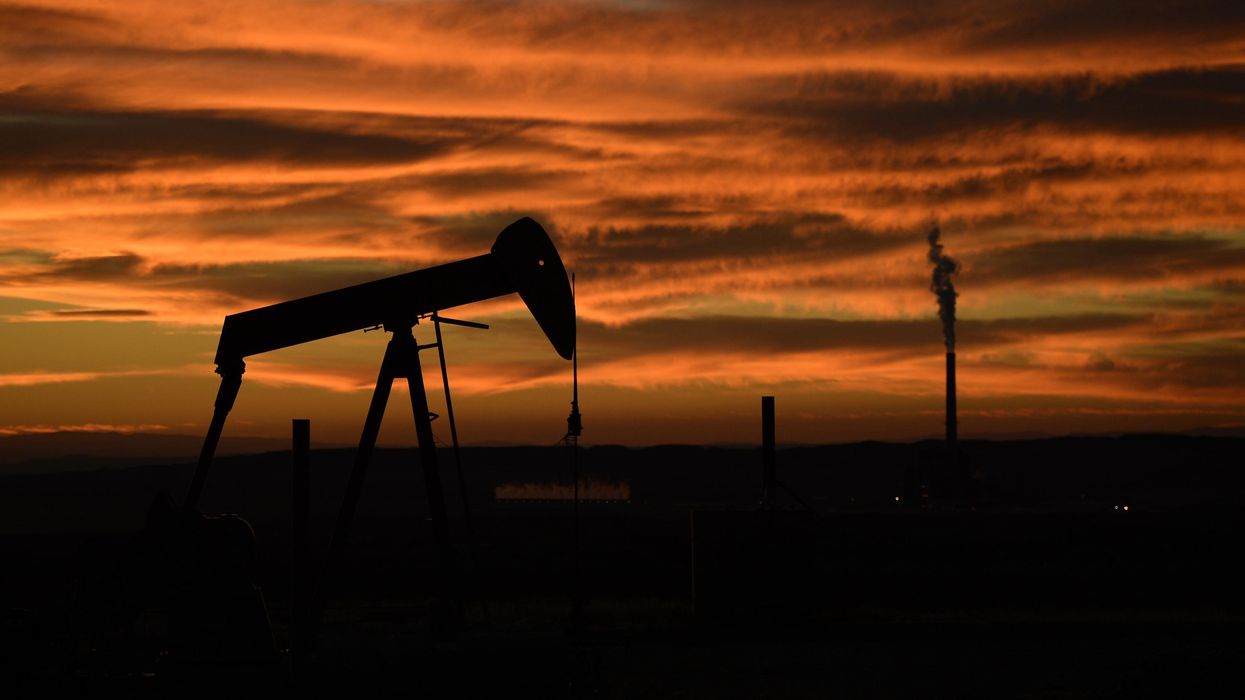
Asserting that "at least in the U.S., the private oil companies stand as the single greatest obstacle to successfully implementing" a viable climate stabilization program, Pollin made the case that fossil fuel giants should not make any more money from wrecking the planet, nationalization would not be an unprecedented move in the United States, and doing so could help build clean energy infrastructure at the pace that scientists warn is necessary.
The expert proposed starting with "the federal government purchasing controlling ownership of at least the three dominant U.S. oil and gas corporations: ExxonMobil, Chevron, and ConocoPhillips."
"They are far larger and more powerful than all the U.S. coal companies combined, as well as all of the smaller U.S. oil and gas companies," he wrote. "The cost to the government to purchase majority ownership of these three oil giants would be about $420 billion at current stock market prices."
Emphasizing that the aim of private firms "is precisely to make profits from selling oil, coal, and natural gas, no matter the consequences for the planet and regardless of how the companies may present themselves in various high-gloss, soft-focus PR campaigns," Pollin posited that "with at least ExxonMobil, Chevron, and ConocoPhillips under public control, the necessary phaseout of fossil fuels as an energy source could advance in an orderly fashion."
"The government could determine fossil fuel energy production levels and prices to reflect both the needs of consumers and the requirements of the clean-energy transition," he explained. "This transition could also be structured to provide maximum support for the workers and communities that are presently dependent on fossil fuel companies for their well-being."
Pollin pointed out that some members of Congress are pushing for a windfall profits tax on Big Oil companies using various global crises--from Russia's war to the ongoing Covid-19 pandemic--to price gouge working people at the gas pump. The proposal, he wrote, "raises a more basic question: Should the fossil fuel companies be permitted to profit at all through selling products that we know are destroying the planet? The logical answer has to be no. That is exactly why nationalizing at least the largest U.S. oil companies is the most appropriate action we can take now, in light of the climate emergency."
The economist highlighted the long history of nationalizing in the United States, pointing out that "it was only 13 years ago, in the depths of the 2007-09 financial crisis and Great Recession, that the Obama administration nationalized two of the three U.S. auto companies."
In addition to enabling the government to put the nationalized firms' profits toward a just transition to renewables, Pollin wrote, "with nationalization, the political obstacles that fossil fuel companies now throw up against public financing for clean energy investments would be eliminated."
Nationalization "is not a panacea," Pollin acknowledged. Noting that "publicly owned companies already control approximately 90% of the world's fossil fuel reserves," he cautioned against assuming such a move in the U.S. "will provide favorable conditions for fighting climate change, any more than public ownership has done so already in Russia, Saudi Arabia, China, or Iran," without an administration dedicated to tackling the global crisis.
Pollin is far from alone in proposing nationalization. Writing for Jacobin last month, People's Policy Project founder Matt Bruenig argued that "an industry that is absolutely essential to maintain in the short term and absolutely essential to eliminate in the long term is an industry that really should be managed publicly."
"Private owners and investors are not in the business of temporarily propping up dying industries, which means that they will either work to keep the industry from dying, which is bad for the climate, or that they will refuse to temporarily prop it up, which will cause economic chaos," he wrote. "A public owner is best positioned to pursue managed decline in a responsible way."
In a piece for The New Republic published in the early stage of the pandemic a few years ago, climate journalist Kate Aronoff--like Pollin on Friday--pointed out that nationalization "has a long and proud tradition of navigating America through times of crisis, from World War II to 9/11."
As Aronoff--who interviewed New College of Florida economist Mark Paul--reported in March 2020:
In a way, nationalization would merely involve the government correcting for nearly a century of its own market intervention. All manner of government hands on the scales have kept money flowing into fossil fuels, including the roughly $26 billion worth of state and federal subsidies handed out to them each year. A holistic transition toward a low-carbon economy would reorient that array of market signals away from failing sectors and toward growing ones that can put millions to work right away retrofitting existing buildings to be energy efficient and building out a fleet of electric vehicles, for instance, including in the places that might otherwise be worst impacted by a fossil fuel bust and recession. Renewables have taken a serious hit amid the Covid-19 slowdown, too, as factories shut down in China. So besides direct government investments in green technology, additional policy directives from the federal level, Paul added, would be key to providing certainty for investors that renewables are worth their while: for example, low-hanging fruit like the extension of the renewable tax credits, now on track to be phased out by 2022.
While Pollin, Bruenig, and Aronoff's writing focused on the United States, campaigners are also making similar cases around the world.
In a June 2021 opinion piece for The Guardian, Johanna Bozuwa, co-manager of the Climate & Energy Program at the Democracy Collaborative, and Georgetown University philosophy professor Olufemi O Taiwo took aim at Royal Dutch Shell on the heels of a historic court ruling, declaring that "like all private oil companies, Shell should not exist."
"Governments like the Netherlands could better follow through on mandates to reduce emissions if they held control over oil companies themselves," the pair added. "It is time to nationalize Big Oil."
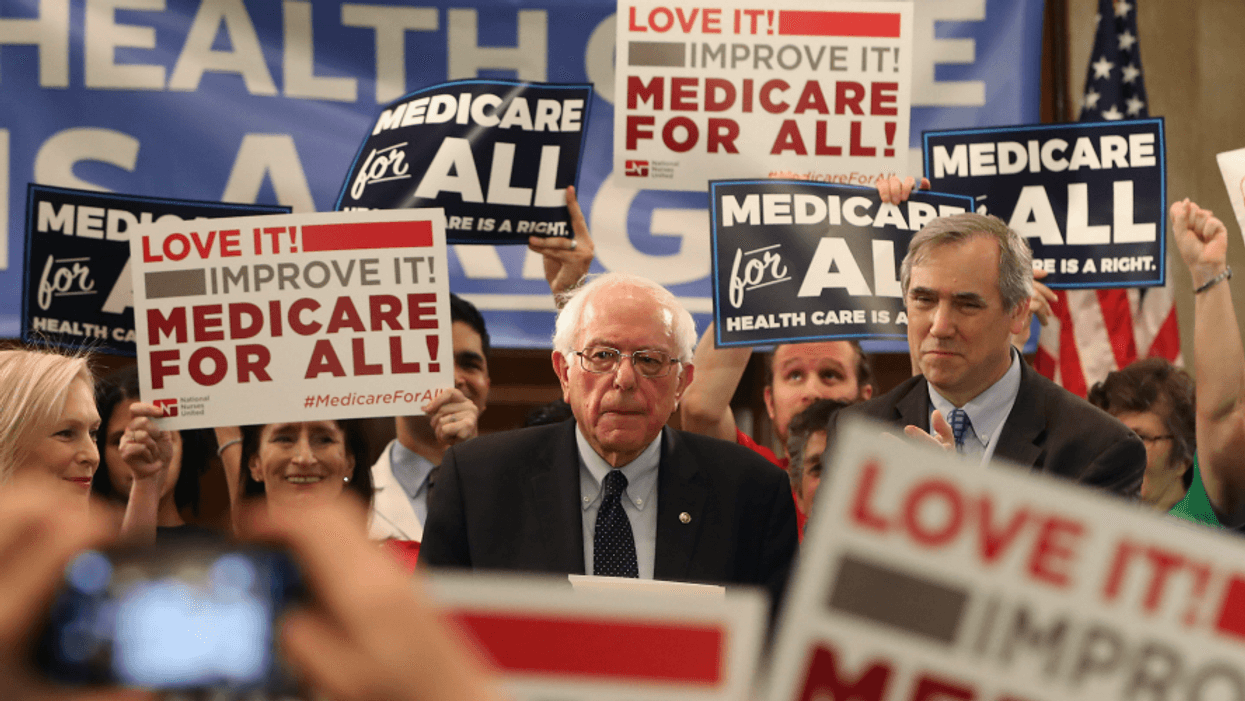
The Congressional Budget Office issued a report on May 1, 2019 titled "Key Design Components and Considerations for Establishing a Single-Payer Health Care System." This report reviews a range of considerations as regards the design and implementation of a single- payer system as applied to the United States. The Medicare for All bills currently before both the U.S. House of Representatives and Senate, as introduced by Representative Pramila Jayapal and Senator Bernie Sanders respectively, both advocate the adoption of a single-payer system for the U.S.
The CBO report (pdf) properly examines both the positive potential as well as matters of concern in establishing a single-payer system in the U.S. As the report states, "A single-payer system would present both opportunities and risks for the health care system."
Overall, the CBO report, as with all such analyses, needs to address two fundamental issues with respect to the establishment of a single-payer system for the U.S. These are: 1) Is a single-payer system capable of providing good-quality care to all U.S. residents; and 2) Is a single-payer system capable of significantly reducing overall U.S. health care costs while still delivering universal good-quality care? The report does not provide explicit answers, yes or no, to these questions. But it does present a framework for understanding how the U.S. could, in fact, establish a successful single-payer system.
"A single-payer system would provide coverage for the 114 million U.S. residents who are presently either uninsured or underinsured. Healthcare outcomes for these 114 million people--35 percent of the U.S. population--will therefore almost certainly improve under a single-payer system."
It is crucial to provide some context for recognizing the potential of a U.S. single- payer system as presented within the CBO report. It is especially illuminating to consider some basic indicators on the operations of the current U.S. health care system in comparison with those of other high-income economies. Thus, as of 2017, the U.S. spent $3.3 trillion on health care. This equaled 17 percent of US GDP, with average spending at about $10,000 per person. By contrast, Germany, France, Japan, Canada, the UK, Australia, Spain and Italy spent between 9 - 11 percent of GDP on health care, averaging between $3,400 - $5,700 per person. Yet, by most measures--including those based on the "amenable mortality rate," which tracks medically preventable deaths--average health outcomes in all of these countries are superior to those in the UnitedStates.
The most basic cause of this poor U.S. performance is inadequate access to good- quality care. Roughly 9 percent of the U.S. population, 28 million people, are uninsured. Another 26 percent, 86 million people, are underinsured--i.e. they have insurance but are unable to access medical care because their deductibles or co-pays are prohibitively high. A large share of the remaining 65 percent of the population who are adequately insured still face high costs as well as anxiety over whether they could manage financially when they face any serious health issue.
Within this context, how, then, does the CBO assess the prospects for a U.S. single-payer system delivering good-quality universal coverage as well as significantly reduced overall health-care spending? We can summarize their perspectives briefly.
Good-quality universal coverage
The CBO is clear, first of all, that a single-payer system would achieve universal coverage, in dramatic contrast with our present system. The report states, "People who are currently uninsured would receive coverage and some people who are currently insured could receive additional benefits under the single-payer system, depending on its design." In other words, a single-payer system would provide coverage for the 114 million U.S. residents who are presently either uninsured or underinsured. Healthcare outcomes for these 114 million people--35 percent of the U.S. population--will therefore almost certainly improve under a single-payer system.
The CBO does not take an explicit position as to whether a single-payer system will also deliver benefits for the 65 percent of the population which presently has full health-insurance coverage. On the one hand, the report does note both the prospects for both improved outcomes as well as reduced costs as regards this population cohort, observing that:
Unlike private insurers, which can experience substantial enrollee turnover over time, a single-payer system without that turnover would have a greater incentive to invest in measures to improve people's health and in preventive measures that have been shown to reduce costs.
It is also the case that both the Jayapal and Sanders bills offer more extensive coverage than is currently provided under a typical employer-sponsored policy, including significant support for long-term care. Expanding coverage in such ways should further improve overall health outcomes for those already insured. But the CBO also recognizes that the expansion of coverage to the uninsured and underinsured will entail increased overall demands on the country's supply of health care resources. It is therefore possible, as the report notes, that this could produce shortages in terms of availability of providers, which, in turn, could mean reductions in quality of care. This is a legitimate issue which the CBO has properly highlighted.
More specifically, the single-payer system will need to be capable of establishing measures through which the provision of provider services can increase to match the increased demand resulting from universal coverage. I examined this question in depth in a 200-page peer-reviewed study with co-authors released last November, "Economic Analysis of Medicare for All." In our study, we conclude that a single-payer system will produce major reductions in the administrative burdens throughout the whole health-care system. The CBO report also recognizes this prospect for major reductions in administrative burdens under single-payer. These dramatic cuts in administration will then mean significantly less paperwork for doctors and nurses, freeing them to spend more time treating patients. On balance, our study concluded that this effective increase in the providers' available time to treat patients should roughly match the increased demand for their services resulting from universal coverage.
Reducing Health-Care Costs
Much of the CBO report is focused around specific issues in designing the payment system. These include: provider payment methods; global budgets; capitated payments; payment rates for providers; and the setting of prescription drug prices. These are all critical concerns, and the CBO report is now a valuable resource in summarizing them. But the report does not take a position as to whether a U.S. single-payer system will be able to successfully control costs. Rather, the study concludes that:
The cost of a single-payer system would depend on various design choices such as the services covered, cost-sharing requirements, and provider payment rates.
In addition to those design choices, policymakers could consider using two other techniques to contain the growth of government spending on the single-payer plan and total health care spending: global budgets and utilization management. (p.26)
The CBO assessment here is indisputable. It is therefore incumbent on the designers of a single-payer system to consider the range of design choices with great care, to achieve the potential cost savings that are available through a well-designed system. It is evident from comparing the U.S. health care system with those of other high-income economies that there is massive potential for cost savings in the U.S. system, with, as noted above, the comparison countries spending between 9 - 11 percent of GDP on health care while the U.S. spends 17 percent. Within the present U.S. economy, every percentage point of GDP amounts to roughly $200 billion. Thus, even reducing our current health care spending by 2 percentage points relative to GDP would yield an astronomical $400 billion in savings, even while our healthcare system budget, as a share of GDP, would remain far above those of other advanced economics.
The CBO study is therefore to be commended for describing a range of measures through which a U.S. single-payer system can successfully implement significant cost savings while still delivering good-quality care for all residents. As such, the CBO study makes a positive contribution toward understanding the possibilities for creating a fair and workable health care system in the United States.
Medicare for All advocates, policy experts, and journalists pushed back strongly on Monday after an astroturf front group funded by the insurance and pharmaceutical industries misrepresented facts as part of a multi-pronged effort to convince the American public that a single-payer system would be more costly than the for-profit status quo.
On Twitter, in digital ads, and in memos to supporters and the press, the Partnership for America's Health Care Future (PAHCF) and its allies are ramping up their nationwide campaign to fight the momentum built by Sen. Bernie Sanders (I-Vt.) and other Medicare for All advocates as proponents show how the system would be more financially feasible for middle-class families and less costly overall.
Tweeting a link to a recent Washington Post article by Jeff Stein, the Partnership for America's Health Care Future (PAHCF) claimed that the piece showed that "Medicare-for-All would force middle-class families to pay more through massive tax hikes," without providing the context for the statement within the article.
Stein himself was among those who quickly rejected PAHCF's summation of the article.
Sanders, sponsor of a Medicare for All bill which has 15 co-sponsors in the Senate, was also among the critics that spoke out against PAHCF's blatant misrepresentation of the Post's reporting.
Journalists Libby Watson and Ryan Cooper, both of whom have written about Medicare for All extensively, also condemned PAHCF for its disingenuous statement about Stein's conclusions.
As Common Dreams has reported, PAHCF is a coalition of insurance companies, doctors' and hospitals' industry groups, and pharmaceutical giants whose aim is to stop the growing clamor for Medicare for All, a solution to the nation's healthcare crisis now supported by at least 70 percent of Americans.
Basing its campaign on the fact that providing government-funded health insurance for every American will require increased tax revenues, the group and its allies are repeating the claim that middle class taxes will rise--without noting that families will no longer have to pay premiums, deductibles, copays, and unexpected medical bills for treatment, as Stein and other reporters have made clear about Medicare for All.
As Robert Pollin, co-director of the Political Economy Research Institute (PERI) at UMass Amherst, wrote in a Wall Street Journal op-ed last week, "Families would pay these taxes instead of premiums, deductibles, and copays to private insurers. Except for those in the highest income brackets, this will produce significant savings for families as well as for businesses. Net health-care spending for middle-income families that now purchase insurance for themselves would fall by fully 14 percent of their income."
In response to the industry's group misinformation blitz on Monday, Sanders's policy adviser, Warren Gunnels, shared the conclusions of a number of studies from across the political spectrum which all show that Medicare for All would cost American families less in overall healthcare costs than the for-profit insurance model.
PAHCF's misrepresentation of the Post's facts is just one of the strategies it's employed. As the group launches a six-figure digital campaign, one Medicare for All advocate noted on Twitter, its partners and allies are currently spending hundreds of thousands of dollars to spread negative claims about the proposal on social media "at a time when Americans are dying on their couches because they can't afford insulin."
On Facebook, former health insurance executive-turned-universal healthcare advocate Wendell Potter recently debunked a two-minute ad released by PAHCF as the group was ramping up its campaign.
Potter, who heads the Business Initiative for Health Policy (BIHP), denounced the PAHCF's "bald-faced lies" about the number of Americans with employer-based health insurance, the affordability and quality of their healthcare, and the amount of control Americans have over the doctors they see and the care they receive as he set the record straight about what the country stands to gain from Medicare for All:
Right now when your doctor decides that you need medical attention you have to hope that your insurance company will decide to pay for it. Since insurance companies' only responsibility is to their shareholders they will look for any way they can to ignore your doctor and deny the claim. If we take the profit motive away from healthcare financing, doctors will be able to provide the treatment they know you need and you won't have to worry about drowning in medical debt. Seems like a no brainer.
On Monday, PAHCF also sent a memo to news outlets and supporters noting that powerful centrist Democrats have recently questioned the affordability of Medicare for All and that the Koch-funded Mercatus Center released a study last year showing that Medicare for All "would cost taxpayers approximately $32 trillion over 10 years"--leaving out the fact that the current system is projected to cost $35 trillion over the same period.
As House Speaker Nancy Pelosi this week unveiled legislation to shore up the Affordable Care Act, Medicare for All supporters made the economic, political, and moral case that Democrats should go all the way for single-payer instead of pushing incremental change.
"The incremental reform that I support is phasing in Medicare for All."
--Sen. Bernie Sanders "Now is not the time for watered-down, incremental measures that will only put a Band-Aid on a broken health care system," National Nurses United (NNU) president Zenei Cortez, RN, said in a statement.
"At a moment when the Trump administration is actively seeking to overturn the entire ACA," Cortez added, "Democrats have an opportunity to show real leadership with the transformative change that will most protect all Americans."
Pelosi introduced her bill as centrist Democrats rally around a number of healthcare half-measures, including Medicare for America and Medicare buy-ins.
The Partnership for America's Health Care Future--an insurance industry front-group--celebrated Pelosi's plan, but Cortez argued that it is "disappointing and totally inadequate to address the healthcare crisis confronting our country."
Sen. Bernie Sanders (I-Vt.), who is expected to unveil an updated version of his Medicare for All legislation within the next few weeks, also declined to support Pelosi's legislation in an interview with MSNBC's Chris Hayes this week.
"The incremental reform that I support is phasing in Medicare for All," said Sanders, who is running for president in 2020.
While Democrats in the Senate this week expressed varying degrees of concern over the idea of ending the for-profit system, Sanders unequivocally called for the elimination of private insurance companies, telling Hayes, "You are not going to be able, in the long run, to have cost-effective, universal healthcare unless you change the system."
"Poll after poll has shown that the majority of Americans favor a Medicare for All, single-payer health care system over a profit-driven health insurance system."
--National Nurses UnitedSanders' economic argument was backed up by Robert Pollin, economics professor at the University of Massachusetts Amherst.
In a Wall Street Journal op-ed published in print on Friday, Pollin argued that a Medicare for All system could save the U.S. trillions of dollars compared to the current for-profit system by slashing administrative costs and reducing prescription drug prices.
"Taking the cost reductions and expanded coverage into account, we estimated that Medicare for All could operate with an overall budget of $2.93 trillion--nearly 10 percent less than current spending," Pollin wrote, citing a study he authored last year.
Families would also see their overall healthcare costs drop significantly under Medicare, Pollin pointed out.
"Net healthcare spending for middle-income families that now purchase insurance for themselves would fall by fully 14 percent of their income," Pollin wrote. "Add it all up and Medicare for All is actually the cheaper option for good-quality care in the U.S."
According to recent polling data, likely Democratic primary voters prefer ambitious solutions over the kinds of incremental reforms offered by Pelosi and other moderate Democrats.
A Wall Street Journal/NBC News survey published earlier this month found that 55 percent of Democratic primary voters prefer a candidate who "proposes larger-scale policies that cost more and might be harder to pass into law, but could bring major change on these issues."
Forty-two percent said they favor a candidate who "proposes smaller-scale policies."
"Poll after poll has shown that the majority of Americans favor a Medicare for All, single-payer health care system over a profit-driven health insurance system," said Cortez of NNU, which is holding local canvassing operations throughout the nation to build grassroots momentum for Medicare for All.
"National Nurses United, along with our allies, will continue to build the grassroots movement for genuine health care justice and push to pass Medicare for All," Cortez concluded.
Jayapal is the co-chair of the Congressional Progressive Caucus, the largest caucus in the House. Among the bill's co-sponsors was Michigan Democrat Debbie Dingell. She replaced her late husband, John Dingell Jr., who was the longest serving member of Congress in history, holding the seat since 1955. John Dingell, who died in February at the age of 92, was a stalwart backer of single-payer health care, introducing legislation yearly during his 60-year tenure. He was inspired by his father, John Dingell Sr., who held that same congressional seat for the 18 years before his son. Dingell Sr. first proposed single-payer health care in 1943.
With the new Congress this year, the most diverse in history, the 75-plus-year-long effort to secure universal health care may be at a tipping point. Whether or not it passes--considered unlikely with the Senate and White House under Republican control--single-payer health care will undoubtedly be a central issue in the 2020 presidential race.
"Is this a bold and ambitious plan? Damn straight it is, because it has to be," Jayapal said as she announced the single-payer bill at a news conference outside the U.S. Capitol, standing in the cold, surrounded by colleagues and supporters. "The scale of our health care crisis is enormous, and our plan has to tackle the deep sickness within our for-profit system. ... If we can end slavery, if we can give women the right to vote, if we can send a man to the moon, then, God, we can do universal health care for every American."
On the rare occasions when "Medicare-for-all" advocates are interviewed on television, they are asked how much it costs. Fair enough, but what about the enormous costs of the current system? Speaking on the "Democracy Now!" news hour Wednesday, Jayapal said: "Our health care system today costs 18 percent of our GDP. In [the next] 10 years, we're going to be spending $50 trillion on our current health care system. ... It's not like we're spending all this money and we have better outcomes than the rest of the world. The United States is last among all of our peers in infant mortality rates, in maternal mortality rates, in terms of our life expectancy."
Economist Robert Pollin at the University of Massachusetts and his colleagues recently released a comprehensive analysis of "Medicare-for-all," confirming that not only would it not be too expensive, but would actually deliver better outcomes for less money. "Overall U.S. health care costs could fall by about 19 percent relative to the existing system," they write. The cost savings factor in the increase in demand for health care, as close to 30 percent of people in the U.S. are either uninsured or underinsured and, as a result, simply don't seek medical treatment when they need it, or preventive care.
Jayapal and her co-sponsors may have an unexpected ally in their quest for Medicare-for-all. In his book titled "The America We Deserve," published in the year 2000, American businessman Donald J. Trump wrote: "I'm a conservative on most issues but a liberal on this one. We should not hear so many stories of families ruined by health care expenses. We must not allow citizens with medical problems to go untreated because of financial problems or red tape. The Canadian plan also helps Canadians live longer and healthier than America. We need, as a nation, to reexamine the single-payer plan, as many individual states are doing."
The president endorsed single payer in 2000, but opposes it now. Whether or not he can be pushed to support it again, Jayapal is moving forward. She has support from Republican business owners and hospital executives, all who know the current for-profit health insurance system costs too much and fails the people of this country. For the increasingly large field of Democratic presidential hopefuls, "Medicare-for-all" has become a defining issue, embraced by many of the announced candidates.
After 75 years of debate, with health care costs spiraling out of control and the quality of medical care falling short of that in single-payer countries, the time is right for Medicare-for-all. It's a matter of life and death.
Forget for a moment about "Medicare for All." A proposal is gaining steam on the left that would overhaul the U.S. economy in a far more radical way. Known as a federal job guarantee, the plan would require the government to provide work on demand to any American at a minimum of about $12 an hour plus full benefits.
Beyond its cost, the job guarantee would turn the fundamental logic of work on its head. The federal job guarantee ... could greatly weaken the productivity of the overall economy, leading to a decline in output and further job losses.
Public policy should aim at helping unemployed people in ways that strengthen their potential, rather than making them lifelong dependents.
A federal job guarantee would cost more in its first two years than the entire New Deal, in today's dollars.
--Max Gulker, "The Dangerous Fantasy of a 'Jobs Guarantee,'" Wall Street Journal, Nov. 15, 2018
The prospect of a federal job guarantee must have really spooked Max Gulker, a researcher and writer for the free-market-oriented American Institute for Economic Research (AIER).
And for good reason. A federal job guarantee--under which the government would offer a job to anyone who needs one--would alter the balance of power in the labor market in favor of workers. And it would enlarge the size of the government considerably more than the New Deal did in the midst of the Great Depression.
In other ways, Gulker's diatribe against a job guarantee is simply off base--from his claim that a job guarantee would lead to a life of dependency and meaningless work to his assertion that it would have devastating macroeconomic consequences. The push for a guarantee of a job would not only put people to work but could also initiate government programs to confront today's ever-worsening environmental crisis.
The way Gulker tells it in his AIER report, "The Job Guarantee: A Critical Analysis," you would think that the current low unemployment rates had ushered in an economic nirvana where workers have jobs that they have freely chosen and offer them a steadily improving standard of living.
The truth is far different. Nine-plus years of economic expansion have pushed the official unemployment rate below 4 percent, but many workers still don't have jobs. The percentage of people 16 years and older in the labor force--the "labor force participation rate"--stood at 62.9 percent in October 2018, considerably below the 66 percent rate in December 2007 at the onset of the Great Recession. Also, the number of workers who want full-time jobs but are forced to take part-time work is going up, not down.
In addition, hourly wages corrected for inflation for production and non- supervisory workers--a key measure of workers' purchasing power--have gone up more slowly since June 2009, the official beginning of the current economic expansion, than in any of the previous 10 economic expansions since 1949. And in the last year, real hourly wages have barely budged, improving by less than 0.5 percent since October 2017.
If that is the best the labor market can do, why would most workers object if a federal job guarantee turned "the fundamental logic of work on its head"? Turning the job market on its head would seem to be exactly what's called for.
In his AIER report Gulker steadfastly maintains that labor markets are governed by "mutually beneficial cooperation." Employers hire workers who will create enough value for them to be profitable, and workers take their jobs only when they are offered an acceptable wage. And a job guarantee would replace this anodyne world of individual freedoms with coercive government mandates.
But in a real labor market not scrubbed clean of differences in power between employer and employee, workers often accept jobs, no matter how unsafe or how low the pay, out of desperation. A job guarantee would empower low-wage workers by offering them an alternative--another job. Gulker's warning of a job guarantee breeding "lifelong dependency" might give one pause. But why should it? Workers who get hired through a job guarantee would be no more dependent upon the wages and benefits from their jobs than workers in the private sector. And if "lifelong" means a work life without long spells of unemployment, surely that too would improve the lot of many workers.
Also, in practice, a job guarantee, the functional equivalent of a minimum wage with a public option, is hardly more interventionist than other labor laws or the rules that govern other sectors of the economy. For instance, the Federal Reserve sets a minimum interest rate, known as the "Fed Funds rate," on borrowing among commercial banks, which in turn influences interest rates throughout the economy, especially mortgage rates. The Fed also acts as a "lender of last resort" in an economic crisis, just as a job guarantee would allow the federal government to be an "employer of last resort" in an economic downturn.
For Gulker, a job guarantee is a recipe for economic disaster. For starters, Gulker takes issue with the employment estimates of the job-guarantee proposals. For instance, Randall Wray and his several Levy Institute co-authors calculate that their job-guarantee program would employ at most 15 million people in jobs with wages that average $15 an hour. And in their National Investment Employment Corps proposal economists Mark Paul, William Darity, and Darrick Hamilton put the number of people who would be attracted by their guarantee of jobs paying a minimum of $11.83 an hour (the wage necessary to reach the poverty line for a family of four), with health benefits, at 10.7 million people.
Even progressive economists worry about the size of these estimates. Dean Baker of the Center for Economic and Policy Research points out that the federal government workforce, excluding the postal service, is but 2.2 million workers. Economist Josh Bivens, from the Economic Policy Institute, calculates that 10.7 million people is about three times the number of K-12 public school teachers in the United States.
Gulker is convinced that a job guarantee would drain far more workers from the private sector than these estimates suggest. For instance, approximately 41 million workers currently earn less than $11.83 an hour. And Baker estimates that a job guarantee with a $15-an-hour wage and healthcare benefits would attract "at least 20 million people" or "perhaps 30 million."
The goal of a job guarantee could be accomplished by public-sector spending large enough to bring about genuine full employment, where there are at least as many job openings as there are persons seeking employment. William Vickrey, the Nobel Prize-winning economics maverick, estimated more than two decades ago that the traditional unemployment rate would need to fall to between 1 percent and 2 percent to bring about genuine full employment. Paul and his co-authors advocate lowering the more comprehensive U-6 unemployment rate, which accounts for workers marginally attached to the labor force and workers forced to work part-time, to 1.5 percent. Unemployment rates that low would surely empower workers just as a job guarantee would, by providing them with alternative employment.
Just what effect any job guarantee or public-employment option would have on the economy depends on what kinds of jobs it creates. Putting people to work to repair our crumbling infrastructure, whether in small or large projects, usually tops the list of public employment jobs, which typically also includes service jobs such as elder care, childcare, job training, education, and health services. There is especially solid evidence that infrastructure spending has a powerful positive effect on the economy. Even International Monetary Fund researchers assign a large multiplier, or bang for the buck, to the effect that a dollar of public investment has on economic output. In addition, the wages of all these workers would also lift the overall spending in the economy, increase economic growth rates, and help to maintain a full- employment economy.
A job-guarantee program would cost more than the New Deal did. Relative to the size of the economy, spending on infrastructure, the chief component of the New Deal, averaged 1.36 percent of GDP during 1933 to 1937, and was 2.96 percent of GDP in 1933, the year Roosevelt launched the New Deal.
Gulker, however, objects to using the New Deal as a standard to assess the cost of any jobs program today because our economic circumstances are vastly different than those during the Great Depression, which was a national and global emergency. But we are in the throes of another national and global emergency which demands immediate action. Research cited in the recent National Climate Assessment of 13 federal government agencies warns that unless the government acts quickly to reduce greenhouse gases, losses to the U.S. economy could reach 10 percent of GDP by the end of the century.
Alexandria Ocasio-Cortez, one of the newly elected progressive members of the House of Representatives, has called upon the Democratic Party leadership to establish a House Select Committee for a Green New Deal. Her Green New Deal would push to dramatically expand renewable power sources, construct an energy-efficient smart grid, and eliminate residential and industrial greenhouse-gas emissions as well as those from transportation, all within 10 years. Her proposal would also guarantee a living-wage job to every person who wants one.
What would such a program cost? In 2015, Political Economy Research Institute economist Robert Pollin proposed a similar Green New Deal agenda, "capable of delivering both a viable path to near-zero emissions and climate stabilization, as well as expanding good job opportunities." The heart of his proposal was to commit to investing 1.5 percent of GDP in infrastructure projects. Pollin's Green New Deal agenda would create 1.5 million jobs and its spending would push the economy closer to full employment. But reaching and sustaining genuine full employment would require yet more spending, well beyond even the 2.9 percent of GDP in the first year of New Deal infrastructure spending.
With an environmental crisis bearing down on us, and having suffered through a nearly decade-long economic expansion that has done so little to improve the lot of most workers, this is no time for half measures.
In a historic step toward replacing America's uniquely expensive and deadly for-profit healthcare system with a humane program that would leave no one behind, Rep. Pramila Jayapal (D-Wash.) on Wednesday will officially introduce Medicare for All legislation that policy experts and advocates have praised as comprehensive, strong, and "battle-ready."
"The state of our healthcare system is absolutely atrocious," Jayapal told reporters on the eve of the bill's release. "How is it possible that the United States, the richest country in the world, is the only major country that does not guarantee healthcare to our residents?"
"Accept no substitutes--only single-payer, Medicare for All can fix the grave dysfunctions and injustices of the American health care system."
--Dr. Adam Gaffney, PNHPPeople all over the U.S., she added, "are literally dying because they can't afford insulin or the cancer treatment they need."
What's needed, she said, is a "complete transformation of our health care system and we mean a system where there are no private insurance companies" providing essential healthcare services that would be guaranteed to all under her proposal. And what universal care means, she explained, was simple: "Everybody in, nobody out."
Under Jayapal's plan, the U.S. would transition to Medicare for All over a two-year period and every American would receive comprehensive coverage, including dental, vision, reproductive health services, mental health, long-term care, and more--all of which would be free at the point of use.
According to the congresswoman's office, "The Medicare for All Act of 2019 improves and expands the overwhelmingly successful and popular Medicare program, so that every person living in the United States has guaranteed access to healthcare with comprehensive benefits."
Scheduled for 11:15 AM ET, watch the introduction of the bill live streamed here:
In her explainer on the bill at Vox, journalist Sarah Kliff's called it "the most ambitious plan for government-run health care yet." Kliff reports:
Jayapal's bill envisions a future where all Americans have health coverage and pay nothing out of pocket when they visit the doctor or hospital. Her plan, the Medicare for All Act of 2019, describes a benefit package that is more generous than what other single-payer countries, like England or Canada, currently offer. The benefits in Jayapal's bill are even more generous than those included in Sen. Bernie Sanders (I-VT) Medicare-for-all plan.
Read the two-page summary of the bill here (pdf). Read the ten-page section-by-section overview here (pdf).
Along with lead co-sponsor Rep. Debbie Dingell (D-Mich.), Jayapal's 120-page legislation will be unveiled with the original backing of 106 House Democrats, and the Washington congresswoman said she expects that number to rise quickly amid surging grassroots energy behind Medicare for All as the only solution to America's healthcare crisis.
Organizations and labor unions backing the bill--including Public Citizen, National Nurses United, Center for Popular Democracy, Business Initiative for Health Policy, the American Federation of Teachers (AFT), and Physicians for a National Health Program (PNHP)--say that it has set a new bar for single-payer legislation in Congress, and that no one who believes in creating an affordable and universal system of care should settle for anything less.
"With the Medicare for All Act of 2019, we can provide coverage to every American, expand and improve coverage for every American - all at no additional cost, thanks to the massive waste and inefficiency that Medicare-for-All will eliminate. The time for Medicare-for-All has come."
--Robert Weissman, Public Citizen"Accept no substitutes--only single-payer, Medicare for All can fix the grave dysfunctions and injustices of the American healthcare system," said Dr. Adam Gaffney, president of PNHP and a critical care physician and faculty member at Harvard Medical School.
"Congress shouldn't be distracted with incremental plans like a Medicare buy-in or public option," Gaffney added, referring to the numerous half-measures Democrats have introduced as supposedly more "pragmatic" alternatives to Medicare for All. "The only way to achieve universal and comprehensive coverage is to eliminate the profits and waste of the private insurance industry, which drains hundreds of billions of dollars from our health care system each year."
Robert Weissman, president of Public Citizen, lamented, "In America, we pay more--much more--for healthcare than other countries, and we get less--much less."
"Tens of millions go uncovered," Weissman added, while "tens of millions more find that their insurance doesn't cover what they need and our health outcomes are inferior to other countries. We can do better. With the Medicare for All Act of 2019, we can provide coverage to every American, expand and improve coverage for every American--all at no additional cost, thanks to the massive waste and inefficiency that Medicare for All will eliminate. The time for Medicare for All has come."
A recent Public Citizen report, as Common Dreams reported last month, found that a Medicare-for-All system would reduce administrative costs by $500 billion per year and would cost patients less than employer-sponsored insurance. Showing the immense popularity of such a plan, as Common Dreams also recently reported, a January 2019 Harvard/Politico poll found that 68 percent of all voters, including 70 percent of Independents and 84 percent of Democrats, said providing health insurance coverage for everyone through a taxpayer-funded national plan is a high priority.
As Jayapal told reporters on Tuesday, she and her allies both inside and outside of Congress "will be pushing [the bill] as far as we can, as hard as we can, as fast as we can. Enough nibbling around the edges. We really need to transform the system."
To that end, National Nurses United (NNU)--the nation's largest nurses union and a longtime supporter of single-payer healthcare--has been among the groups organizing on the ground in states and local communities nationwide in order to build up grassroots support for Jayapal's bill in the House and a similar bill introduced by Sen. Bernie Sanders (I-Vt.) in the Senate.
"As the largest union of registered nurses in the country, we could not be more proud of Rep. Jayapal for leading the way on this legislation that will change and save our patients' lives," said NNU executive director Bonnie Castillo, RN, who praised the congresswoman's plan as "the most comprehensive Medicare for All act we have seen to date."
"It's the right bill, at the right moment--and now we are organizing an unprecedented grassroots movement to demand that our elected officials support this legislation," Castillo added, pointing to the more than 1,500 Medicare for All actions planned throughout the country to continue building grassroots momentum behind the plan.
While Jayapal's Medicare for All bill comes during a moment of unprecedented grassroots excitement, it will also be released as the insurance and pharmaceutical industries are marshaling their vast resources and political clout to squash single-payer and preserve the immensely profitable status quo.
As the details of Jayapal's bill trickled out Tuesday night ahead of its official release, the Partnership for America's Health Care Future--a coalition formed by leading pharma and insurance interests--put out a statement slamming Medicare for All as a "disruptive one-size-fits-all proposal" that is "the wrong path forward."
"Healthcare is a human right. We will need every single person in the country to help us, to stand with us, to organize, and to fight for this."
--Rep. Pramila Jayapal
Directed by Lauren Crawford Shaver, a former staffer on Hillary Clinton's 2016 presidential campaign, the Partnership is reportedly planning "a big nationwide effort" to squash Medicare for All before it gets off the ground. The coalition has the backing of the American Medical Association, the American Hospital Association, and other major private healthcare interests.
But while the Partnership and other powerful single-payer opponents like the U.S. Chamber of Commerce have pointed to the supposedly extraordinary costs of a universal program like Medicare for All, supporters have countered by citing recent studies--including one by a Koch-backed think tank--showing that single-payer would save the U.S. public trillions of dollars over the next decade.
"It's easy to pay for something that costs less," said economist Robert Pollin, co-director of the Political Economy Research Institute (PERI) at the University of Massachusetts, who authored a study late last year showing Medicare for All would save the U.S. more than $5 trillion over ten years.
Activists and policy experts have argued that Jayapal's legislation is sufficiently strong and comprehensive to withstand the insurance industry's assault, but the congresswoman emphasized that a mass mobilization of ordinary people across the nation will be necessary to compete with and ultimately overcome Medicare for All's deep-pocketed opponents.
"Healthcare is a human right. We will need every single person in the country to help us, to stand with us, to organize, and to fight for this," Jayapal declared. "Because the industry lobby is going to pour hundreds of millions of dollars into killing this bill, saying it costs too much, scaring you into thinking you're giving up something, pitting the healthy against the sick and the young against the old."
"It's time to ensure that healthcare is a right and not a privilege, guaranteed to every single person in our country," Jayapal concluded. "It is time for Medicare for All."
Suddenly Americans are debating big ideas that used to be off the table.
New ways to raise taxes on the rich and big corporations have been proposed by candidates Elizabeth Warren, Kamala Harris and Bernie Sanders.
A Medicare-style public health system to expand coverage and cut costs has the support of millions and many Presidential candidates - even as we defend Obamacare.
The Green New Deal has been swept onto the national debate by the dynamic grass-roots Sunrise Movement and by Rep. Alexandria Ocasio-Cortez and colleagues in Congress. With new urgency, sponsors call for massive public investment to retool our economy to stop global warming and create the next generation of good jobs.
Perhaps because of the huge public support for these big ideas, Donald Trump has tried to tar them with the old Cold War scare word: Socialism. This is likely to backfire - just as the Southern racists' attacks on civil rights workers as "Communist agitators" just helped spread the movement. SNCC organizers were greeted at Mississippi doorsteps with "We are so glad you Communists have come to help us vote."
Some cautious Democrats have greeted these big ideas with a warning about the dangers of going too far. "Stick to attacking Trump and his policies," they lecture, "that's what helped us win in the Congressional campaigns 2018."
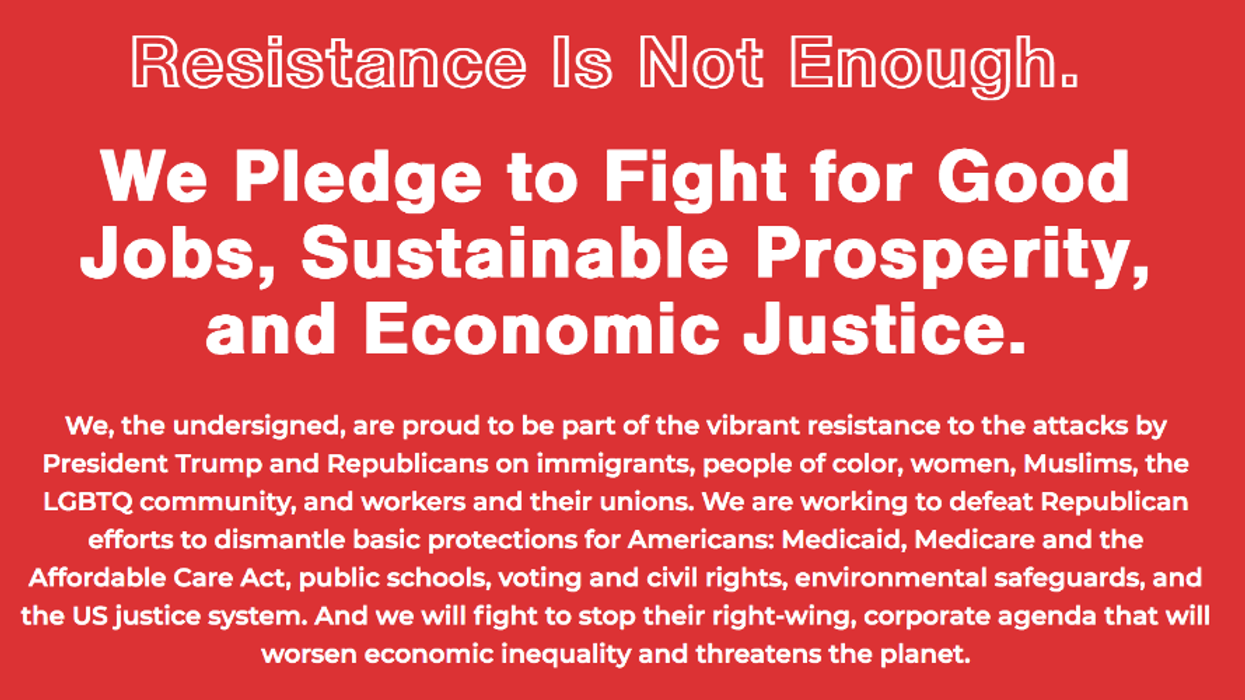
But over 90 well-known veterans of the successful 2018 campaign have signed a bold new Pledge to Fight for Good Jobs, Sustainable Prosperity and Economic Justice. And these initiators (including myself) have now been joined by 20,000 (and growing) grass-roots activists. Our message is "Yes, fight Trump - but Americans also want to hear big solutions to the large economic problem our country faces."
The Pledge document declares:
We will (continue to) resist Trump. But resistance is not enough. We therefore pledge that:
- We will fight for good jobs, sustainable prosperity and economic justice.
- We will work to build a movement that can make that agenda a reality.
Real change begins with a clear and coherent vision of a better America, and with citizens' movements dedicated to bringing that world into being. We offer this agenda for economic change in that spirit.
The group challenges the inside-the-beltway idea that Democrats need to choose between candidates that are "electable" and those who champion a bold agenda for change. Our signers make the case--and cite extensive polling--that the voters want candidates who know how the system has been rigged against working Americans. They argue that the most electable candidates are the ones with a plan to "un-rig" our government and to grow the economy and reverse inequality.
Note: I was one of the authors of the Pledge, and we found a great deal of enthusiasm from leaders we invited to join us, including the following leaders and thinkers:
Former Labor Secretary Robert Reich; economists Thea Lee, Robert Pollin and James K. Galbraith; African-American activists Rashad Robinson, Janet Dewart Bell, and Dedrick Asante-Muhammad; feminist leaders Gloria Steinem, Nita Chaudhary, and Toni Van Pelt; think tank directors Heather McGhee, Dorian Warren, Chuck Collins, and Angela Glover Blackwell; environmental leaders Bill McKibben, Annie Leonard, and Michael Brune; labor leaders Leo Gerard, Larry Cohen, Randi Weingarten, Chris Shelton, and Bonnie Castillo; business leaders like Leo Hindery Jr. and Charles Rodgers; activists and public intellectuals Manuel Pastor, Robert Borosage, Maria Echaveste, Jeff Faux, Heather Gautney, Eddie Glaude Jr., Zephyr Teachout, Richard Eskow, and Naomi Klein. Signers also include leaders of "resistance movement" groups, including MoveOn, People's Action, Democracy for America, Solidaire, Progressive Change Campaign Committee, Center for Popular Democracy Network, Public Citizen, Working Families Party, Ultra-Violet, Progressive Democrats of America, and Our Revolution. See all 90 initial signers.
The group will not endorse candidates. Individual signers will make those decisions on their own. But the group will ask candidates to tell Americans where they stand on the 11 planks of our economic agenda. And we will publish those positions on the website. Here is the Agenda that all signers of the Pledge have endorsed.
The first two planks of the group's agenda call for a strategy for economic growth and job creation that grows out of large-scale public investment to address real and pressing needs of our economy. They represent a dramatic contrast to the perpetual Republican "economic growth" plans which always involves tax cuts for the wealthy (and shredding important regulations). Progressives, often characterized as "redistributionist," clearly have a plan for sustainable economic growth.
1. Jobs for All by Rebuilding America
This plank takes seriously the warnings of the American Society of Civil Engineers, who have been ranking our infrastructure with marks of D or worse for decades. It also allows progressives to show they have a plan to achieve one of the major promises of candidate Trump, who has failed to deliver on infrastructure because he capitulated to the billionaire corporate wing of his party by giving away the revenue he needed in order to give them massive tax cuts.
2. Invest in a Green New Deal
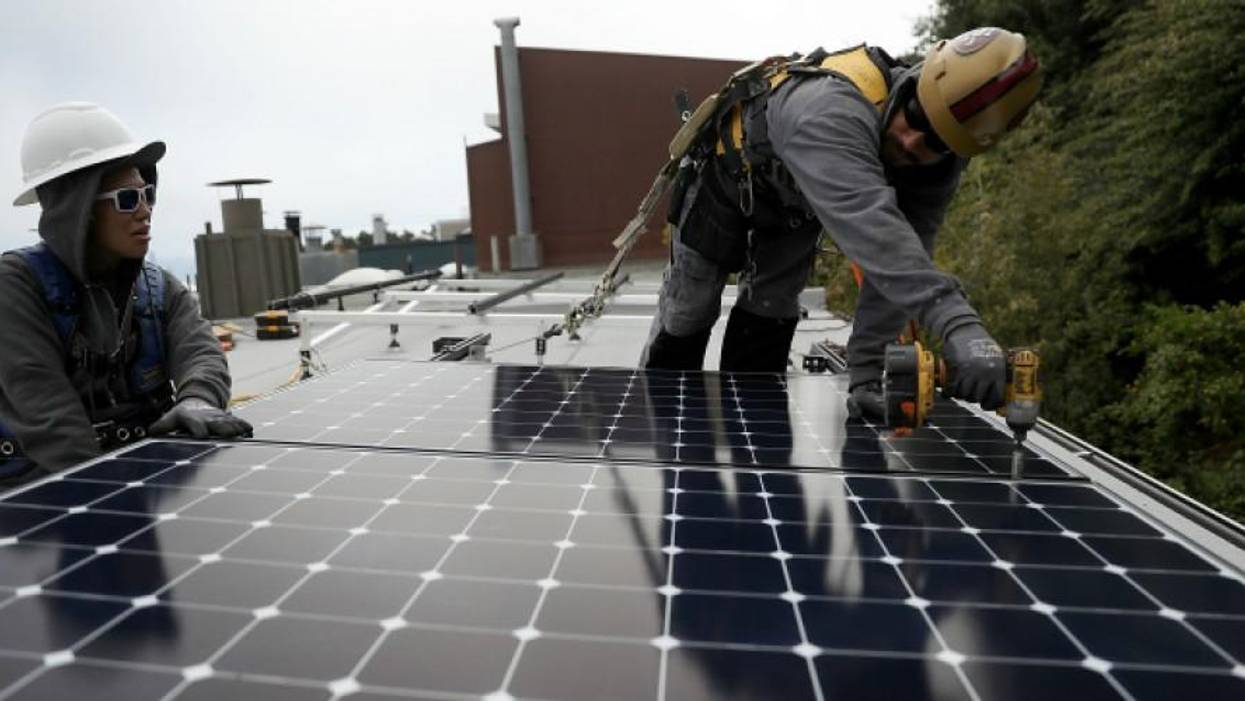
The Green New Deal plank calls for retooling the US economy to dramatically reduce carbon pollution and make our systems, from housing to transportation much more energy efficient. It sets a goal of dramatically reducing carbon pollution in order to meet (and exceed) the goals set by the UN Climate Panel in order to stop the disastrous warming of the planet. And, as the labor-environmentalist Apollo Alliance told Americans a decade ago, this transition can be a boon to the economy, creating a new generation of good jobs and putting us on the path to sustainable (not wasteful growth that will lead us off a cliff. If we act quickly, we can also become a global leader in the new manufacturing industries we need to create the green transition.
3. Empower Workers to Reduce Inequality
Lots of people (and candidates) are now talking about growing inequality and trends finding that the 400 richest Americans control more wealth than the bottom 60 percent. One essential key to raising wages and reversing inequality is strong unions. So signers pledge to fight for the right of workers to form unions and bargain collectively for better wages and benefits. Guaranteed labor rights should be complemented by action to lift the floor under every worker by guaranteeing a living wage, paid sick and vacation days, and affordable health care. We must curb CEO compensation policies that give executives personal incentives to plunder their own companies. And we should use the tax system to reward companies that pay their workers a decent proportion to what they pay their executives.
4. Opportunity and Justice for All - With Focus on Communities Harmed by Racism
In theory full employment and labor rights should provide opportunity for all. But we insist that special attention must be invested in those communities harmed by the legacy of slavery, Jim Crow, segregation, discrimination, deindustrialization, and destruction of the public sector. Neglected urban and rural communities and working people victimized by the worst economic and social effects of neoliberalism must be given targeted attention and investment. We also call for a fair and humane immigration policy, fundamental reform of our criminal justice system, an end to mass incarceration and targeted investment in areas of need are all central to meeting the promise of economic justice.
5. Guarantee Women's Economic Equality
Addressing women's economic problems will improve our economy for all. We should guarantee that women earn the same pay, protections and opportunities as men in the workplace and in society - including strengthened laws for reporting and preventing sexual harassment. Women must also be guaranteed affordable health care and the right to make choices about their own health and reproduction. Families must have access to high-quality child care, and all women must be guaranteed paid leave from the workplace for childbirth, illness and vacation, and a secure retirement - with Social Security credit for work in the household.
6. Medicare for All - And Shared Economic Security
The group declares health care is a right, not a privilege. And that requires moving to a Medicare for All universal public health care system. Our fight to defend Obamacare from Trump and his allies is a crucial first step to a promise of a high-quality and cost-effective health care for everyone. In addition, America needs a more robust social insurance system. Every worker deserves a secure retirement-- and we will work to create new pension systems, while we secure Social Security by "lifting the cap" that now exempts wealthy people from paying their fair share of Social Security taxes. We will strengthen and expand America's shared security programs -- Social Security, Medicare, Medicaid, unemployment, food support and housing assistance. No one in America should go hungry or homeless. Greater shared security makes the economy more robust by making our society more fair - and giving all people the confidence that comes from solidarity.
7. High-Quality Public Education - Pre-K to University
Every young person must have the right to high-quality, free public education from preschool through college. Public education must be controlled by the public, not by charter school hucksters. This requires that every community, in partnership with the state and Federal Governments must have the financing necessary to strengthen public schools, providing the necessary basics - preschool, smaller classes, summer and after-school programs, and skilled, well-paid teachers with rights on the job.
College education or skills training should be available without tuition at all public universities as a right of civic membership -- as was the policy in many states in the 1950s and 1960s. Education should be a public good that benefits all of society, not a commodity that indentures students to debt. We call for a national student debt jubilee that will cancel the debt burden imposed upon several generations seeking an education. Free college and debt cancellation will not only allow students and former students to live their lives without that burden, but it will also stimulate economic growth and unleash new civic activism.
8. Make Corporations and the Wealthy Pay Their Fair Share
Our public investment/growth, green transition, and justice agenda requires tax revenues. Yet the corporations and the rich do not pay their fair share in taxes--even though they pocket the greatest benefits from public investments.
It is time for the rich and corporations to pay their fair share of taxes. It is time to shut down the tax havens and tax dodges that enable companies to avoid taxes altogether. We should lift the cap on Social Security taxes, so rich people pay the same percentage of their income as the rest of us. We should tax the income of investors at the same rates we tax income from work. We need clear, simple, progressive corporate and individual taxes, closing loopholes and exemptions. And a tax on financial transaction can produce significant revenues. A fair tax system will allow us to invest in an economy that will work for all.
9. Close Wall Street's Casino
Financial deregulation has devastated our economy, and it has protected banks that are too big to fail, too big to manage, and too big to jail. The financial casino fosters ever more dangerous speculation, while investment in the real economy lags. The resulting booms and busts devastate families and small businesses.
In a new age of corporate concentration, American must revive the concept of anti-trust action to reduce corporate power. We need to break up the big banks, levy a speculation tax, and provide low-income families with safe and affordable banking services. We should crack down on payday lenders and other schemes that exploit vulnerable working families, offering instead safe and inexpensive banking via the postal system.
10. Rescue Democracy from the Special Interests
Big money has corrupted our democracy. Some might say democracy is not part of an economics agenda. But the same financial elites and corporations that buy and sell politicians use that political power to rig the economy so the top .01 percent gets massively richer while incomes decline for the rest of us. We pledge to reverse the Citizens United decision which gave corporations the right to spend unlimited money in politics. We will stop the attack on voting rights which has escalated just as a new majority of people of color, young people and working women has begun to exercise new power. We will fight for public financing of elections that bans corporate and big money - and for electoral reforms, like public matching of small donations, so people's candidates can compete with the candidates of the plutocrats. Finally, we pledge to change national and local political party structures so that progressive candidates get a fair shake in the nominating process and in general elections. And we will build a new progressive majority that can take back our democracy and our economic system.
11. A Global Economic Strategy for Working Americans
Our global trade and tax policies have been created for and by multinational companies. We must renegotiate trade deals and rethink tax policies that benefit the already-wealthy, while they encourage the export of whole American industries, drive down pay and worker protections, and harm the environment. We need more but balanced trade, and global standards that protect the rights of workers, consumers and the environment. That requires a crackdown on tax havens, currency manipulation, and deals that allow corporations to trample basic labor rights here and abroad. Finally, we need new policies that allow us to help existing US industries, by having our government buy American, policies that are now outlawed by trade deals. And we need active investment policies that grow new cutting-edge industries, like green energy systems. Our current national security policies commit us to policing the world. The result costs lives and drains public resources. We need a real security policy that makes military intervention a last resort, and focuses on global threats like climate change, poverty and inequality. We should reduce military budgets and properly support humanitarian programs.
We will see what impact the Pledge/Agenda will have on the 2020 political debate. The multiple-candidate field will create a dynamic very different from 2016. But polling shows a wide spectrum of voters want politicians to talk about (and fight for) a bold economic agenda. Senator Bernie Sanders got historic support in 2016 because he talked about an agenda that challenged corporate power and put forward a plan for big economic change. And, because Hilary Clinton didn't want to be crosswise with that progressive agenda, she took positions she might not have - and walked away from the TPP trade deal, which was very unpopular with the Democratic base. And, thanks to pressure from Sanders supporters, the Democratic Platform was more progressive than ever. Unfortunately, Clinton didn't talk about it much.
Bernie Sanders just got into the 2020 race this week, rightly reminding interviewers that many of the ideas candidates are now discussing - and that our Agenda is promoting - first gained respectability and widespread support as a result of his pioneering 2016 Presidential campaign. This year many other candidates are embracing some of those ideas. Using and online comparison, we will publicly keep track of the economic agenda positions each of these candidates take. What the voters will have to determine how much each candidate really means his/her promises - and whether they are willing to fight for the jobs, wages, pensions - and their economic futures - of working Americans.
Who knows? Some of the best candidates may cancel each other out. Even if the eventual nominee ends up being the most conventional Democrat in the race, all progressives will work hard to get rid of Trump. And after that we will unite to organize to push the new President--and a larger Congressional majority--to fight for a plan for economic transformation. This Agenda will not go away, no matter who wins the elections. Because the growing number of Americans who are endorsing the Pledge to Fight for Good Jobs, Sustainable Growth and Economic Justice see themselves as enlisting for a long-term movement for change - not just for the next campaign.