
SUBSCRIBE TO OUR FREE NEWSLETTER
Daily news & progressive opinion—funded by the people, not the corporations—delivered straight to your inbox.
5
#000000
#FFFFFF
To donate by check, phone, or other method, see our More Ways to Give page.


Daily news & progressive opinion—funded by the people, not the corporations—delivered straight to your inbox.
My country bombed a girl's elementary school. My country killed around 160 girls in an instant. Then, we all go to work on Monday—like nothing ever happened.
"To act is to be committed, and to be committed is to be in danger." —James Baldwin
An aerial photo shows rectangular tracings etched into dirt, one rectangle after the other, creating a grid across the land. A yellow excavator pulls piles of earth out from within the rectangular lines until each rectangle is six feet deep, then it moves onto the next. Men jump into the graves and shovel out what the excavator couldn’t reach. We don’t know if these men are the ones burying their own daughters, or if they knew the girls at all. But in my mind, I think they do—maybe they’re the uncles or the older brothers, and I hope to God it isn’t their fathers having to do something so devastating.
Wars have existed throughout all of human history, and this isn’t the first time hundreds of graves have been dug at once. I do wonder, though, if I were born in another time, if I would have seen such an image. The only thing I can be sure of is the reason why I saw the picture in the first place.
My country bombed a girl's elementary school. My country killed around 160 girls in an instant. My country is the reason that the men and women who loved those little girls have to pull their severed, bloody limbs from the rubble; find their backpacks covered in blood; and bury them forever. Then people like Karoline Leavitt, who will be remembered forever for being the spokeswoman for the human meat grinder, will refer to the mass slaughter as “propaganda” when asked about it. Then, we all go to work on Monday instead of setting the world on fire—like nothing ever happened. Like 160 girls’ lives weren’t extinguished while neocons and liberals alike justify regime change on the basis of state-sanctioned violence against women. Have we not all been here before?
When people are being gunned down in the street for resisting immigration raids, and environmental activists are shot execution style in the woods—to be committed is to be in danger.
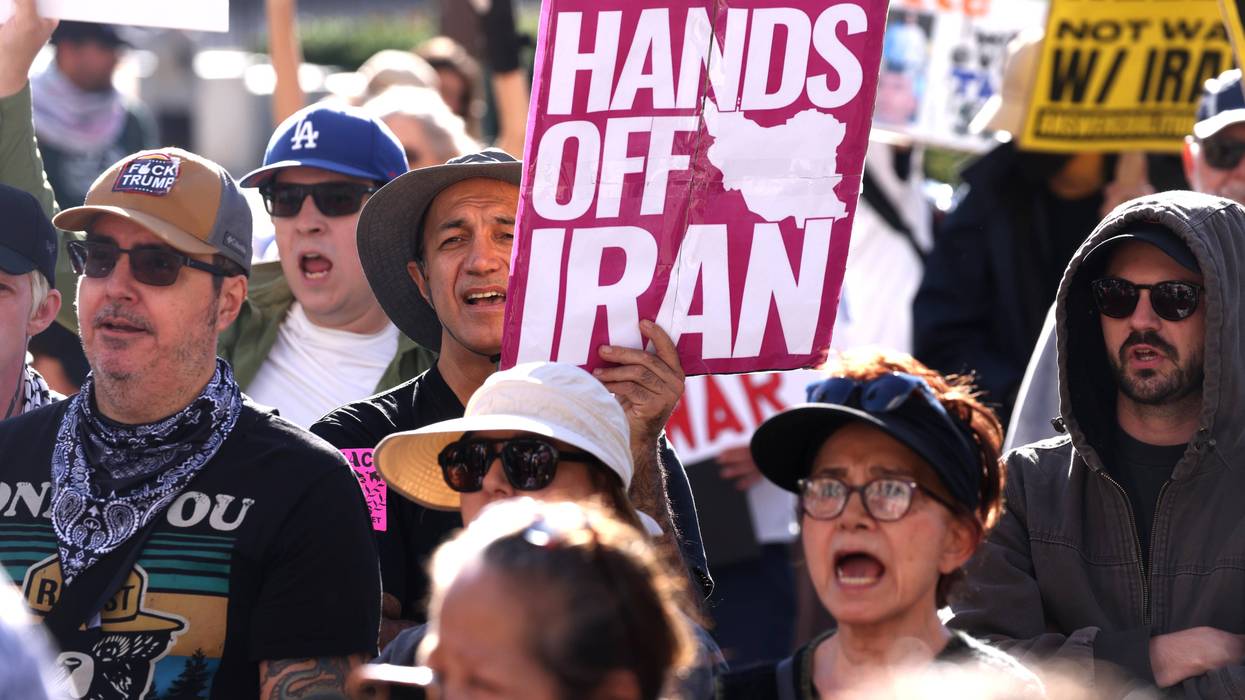
This carnage is not new to anyone who’s been paying attention. The protests in response to President Donald Trump’s war on Iran were small, and I would be lying if I said it didn’t depress me. Have we all gotten so used to this? Did seeing the videos of children broken to pieces in grocery bags or hanging from their own intestines from the sides of destroyed buildings in Gaza wear down our nerve endings? As time goes on, and the depravity continues, are we more content with our lives if we ignore our own humanity?
Ultimately, and this may be for my own sanity, I’ve come to the conclusion that it’s not because Americans do not care about the slaughter being carried out in their name. James Baldwin wrote in a letter to his nephew about racism, explaining why white people don’t act differently, even if they know racism is wrong, he says:
Many of them, indeed, know better, but, as you will discover, people find it very difficult to act on what they know. To act is to be committed, and to be committed is to be in danger.
He goes on to describe that if white people were to accept that they weren’t superior to Black people, it would turn their whole world upside down. It would be uncomfortable, for an undefined amount of time to live in a world where everything you “knew” to be true wasn’t anymore.
It would take an exhaustive amount of time to describe how life would change in the United States if people within the country decided that war wasn’t the answer to all of our problems—which has been our country’s fundamental “truth” for decades and decades. Our economy which is so centered around creating weapons and selling them, would need to be restructured completely. We would have to have a government that cannot act against the will of its people.
We would have to accept the “consequences” of not being able to plunder the Earth to its core and take over any country to seize its resources that we happen to need to fulfill the fantasy of endless growth and endless comfort. Eventually, the purpose of life wouldn’t be to have better and better things and be more and more convenient. The purpose of life would be to live, and live with dignity, and live with care. All of this, though, would come later.
The first hurdle in our way is the obvious repression that the pedophile warmongers in the White House can and will put us through if we collectively decide that we aren’t okay with them killing kids anymore. When people are being gunned down in the street for resisting immigration raids, and environmental activists are shot execution style in the woods—to be committed is to be in danger. That repression and that violence are just the tip of the iceberg. If history has taught us anything, it’s that the danger is worth it, that the “truth” we had before is nothing compared to the freedom we will have later. I hope we can all see that clearly, and I hope we’ve sat with it long enough to act, and act seriously.
In the coming weeks, how do we collectively decide to be brave instead of comfortable?
Why did the United States help topple a democratic government in Iran some 70 years ago—and how did that decision create the conditions we’re seeing today?
Every war of choice depends on public complicity.
Fifty-nine percent of Americans disapprove, but what can we do to stop this war? The justifications coming from the Trump administration are, by any honest accounting, muddled, contradictory, and changing by the day. There are so many unanswered questions, but a good place to start would be by asking did Iran become our enemy in the first place? Why did the United States help topple a democratic government in Iran some 70 years ago—and how did that decision create the conditions we’re seeing today?
To understand how Iran became an adversary, we can start by returning to the decision made by the United States and Britain to overthrow Iran’s Prime Minister, Mohammad Mosaddegh.
Mosaddegh was the sort of leader the US should have loved. He was anti-communist, at a time when containing the Soviet Union was the paramount US foreign policy aim. He pursued reforms that expanded the rights of women, and the political and economic conditions of the poor. He was widely respected internationally, and was named Time magazine’s Man of the Year in 1951.
Few Americans know this history. In Iran, though, it is remembered as the moment when the United States claimed the country’s petroleum wealth for itself and crushed a democratic government that sought to make life better for ordinary people.
His fatal crime in the eyes of Western powers, was nationalizing Iran’s oil production, which had been controlled by the British-owned Anglo-Iranian Oil Company.
“With the oil revenues, we could meet our entire budget and combat poverty, disease, and backwardness among our people,” Mosaddegh said in a 1951 speech to the United Nations. “By the elimination of the power of the British company, we would also eliminate corruption and intrigue.”
For British and US leaders, a sovereign nation asserting control over its own resources, rather than bowing to a foreign corporation, was intolerable. Likewise, battling the corrupting influences of a foreign company.
The intelligence agencies of the two nations launched a campaign to destabilize the Mosaddegh government, with media disinformation, targeted bribery, harrassment, lies to religious and political leaders, and orchestrated riots.
Finally, on August 19, 1953, Mosaddegh was overthrown in a coup backed by the CIA and Britain’s MI6.
The Shah of Iran, Mohammad Reza Pahlavi, was restored to power, and he appointed the CIA’s choice, General Fazlollah Zahedi, as prime minister.
The government outlawed Mosaddegh's National Front and arrested most of its leaders. The SAVAK secret police force, with funding and training from the US, conducted widespread repression. Over 130,000 were arrested, and thousands were tortured and executed. The Shah’s policies furthered the wealth and landownings of his own family and friends, while many farmers couldn't get access to land and were forced to migrate to cities and live in shanty towns.
Yet the US built warm relations with the new regime as US corporations gained control of 40% of the country’s oil fields along with access to much of the remaining output.
By the late 1970s, resentment toward the Shah’s authoritarian rule exploded into revolution. In 1979, the Shah was overthrown and the Islamic Republic was born. The new government defined itself partly in opposition to the United States—an enemy that many Iranians believed had stolen their democracy a generation earlier.
From that moment on, relations between Washington and Tehran were marked by mistrust, hostility, and periodic confrontation.
Few Americans know this history. In Iran, though, it is remembered as the moment when the United States claimed the country’s petroleum wealth for itself and crushed a democratic government that sought to make life better for ordinary people.
The overthrow of Mosaddegh was not an isolated episode. The United States has a long history of undermining governments that put their own citizens ahead of US economic interests.
In 1954, the CIA helped engineer the overthrow of Guatemala’s elected president, Jacobo Árbenz. His crime? Land reforms that would have given poor farmers opportunities for a livelihood while taking, and paying for, land unused by the United Fruit Company.
The result of the coup was a series of dictatorships. Political opponents, labor unions leaders, farmers, and human rights activists were imprisoned, “disappeared,” and executed. Wave after wave of genocidal massacres targeted Indigenous villagers. Land reform was reversed and poverty deepened.
We set up the next war when we fail to reckon with choices made in previous conflicts that created instability, oppression, abuses, poverty, and resentment.
Many Americans enjoy visiting this beautiful Central American country, but few know the role the US government played in impoverishing this small nation. Likewise, those calling for the deporting of Guatemalans rarely acknowledge the reasons these refugees are fleeing their communities.
Two decades later, the United States helped destabilize the democratically elected government of Salvador Allende in Chile, culminating in the US-supported military coup in 1973 led by Augusto Pinochet. The resulting dictatorship lasted for 17 years, leading to the exile of an estimated 200,000, the torture of tens of thousands, and the death of some 3,000 Chileans. The regime’s extreme economic policies brought about cuts in the safety net, a massive buildup in military spending, and high unemployment.
US copper mining companies benefited from the coup, receiving compensation for the nationalizations that had taken place under the Allende government. More importantly, international mining companies were permitted to extract enormous profits from subsequent mining operations.
In addition to enriching these foreign corporations, the coup prevented Allende from leading a successful socialist government that might have inspired others across the Americas to mobilize for more egalitarian governments.
Each case had its own circumstances. But the pattern is unmistakable: When governments around the world pursue policies perceived as threatening US corporate interests, Washington all too often resorts to clandestine interference or military attacks. And all too often, the justifications and patriotic propaganda is all that Americans learn about what took place.
There have been important exceptions to the widespread ignorance. US Marine Smedley Butler, who at the time of his death was the most decorated Marine in US history, saw firsthand who benefited from US wars. He wrote this in a 1935 magazine article:
I spent 33 years and four months in active military service and during that period I spent most of my time as a high class muscle man for Big Business, for Wall Street and the bankers. In short, I was a racketeer; a gangster for capitalism. I helped make Mexico and especially Tampico safe for American oil interests in 1914. I helped make Haiti and Cuba a decent place for the National City Bank boys to collect revenues in. I helped in the raping of half a dozen Central American republics for the benefit of Wall Street. I helped purify Nicaragua for the International Banking House of Brown Brothers in 1902–1912. I brought light to the Dominican Republic for the American sugar interests in 1916. I helped make Honduras right for the American fruit companies in 1903.
For many Americans, these episodes remain obscure chapters of history. Yet, in much of the world, these events set the stage for decades of poverty and political repression.
Wars are often described as tragic inevitabilities—conflicts that somehow spiral beyond anyone’s understanding. In reality, we set up the next war when we fail to reckon with choices made in previous conflicts that created instability, oppression, abuses, poverty, and resentment.
Each group occupies its own circle of complicity, and each gains in a different way. Some may claim ignorance and others may argue that they were powerless to intervene. But history suggests that silence and complacency can be powerful enablers of atrocities.
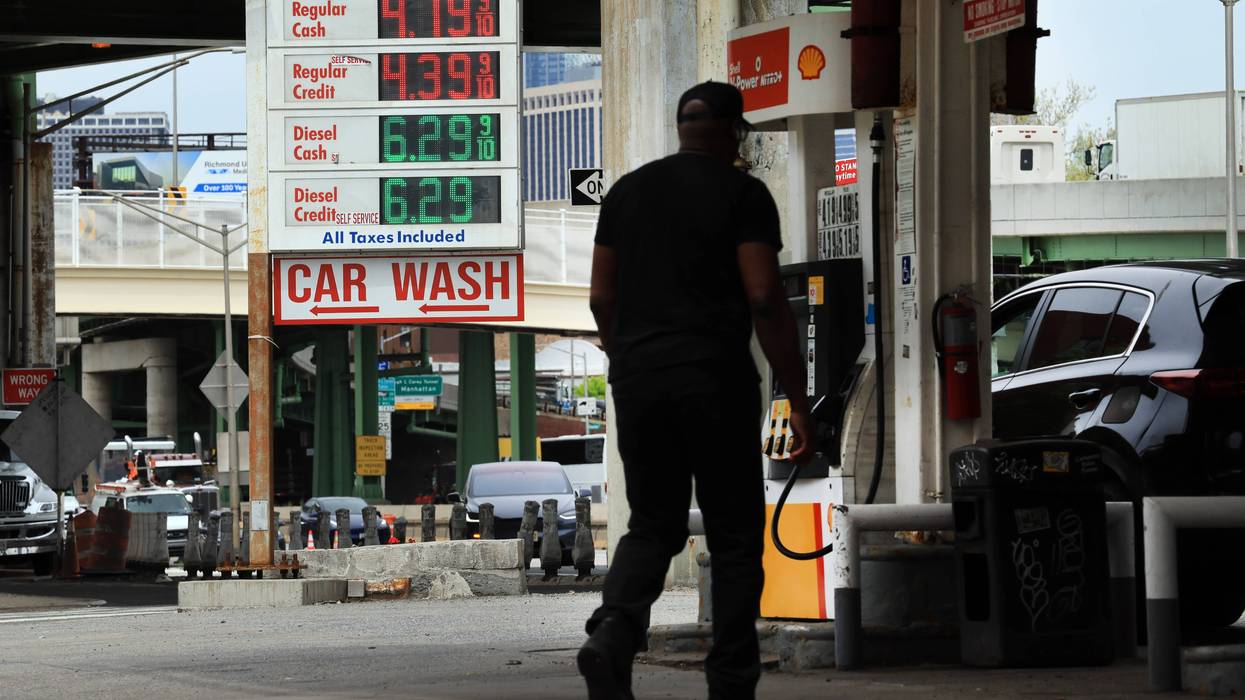
After disastrous wars in Afghanistan and Iraq, there are signs that this time might be different. A majority of Americans disapprove of the US bombing of Iran, according to a CNN poll taken immediately following the launch of the war. American service members have begun paying with their lives. The Center for American Progress estimates the war’s price tag already exceeds $5 billion—with safety-net programs in free fall and gas prices rising.
But it will take more than passive disapproval to stop yet another war of choice.
Reckoning with the abuses of the powerful and naming those profiting from the willful blindness in the face of atrocities are first steps toward ending the cycles of violence. All of us pay for these wars, whether through lives lost, democracies imperiled, excessive public spending on a bloated military-industrial complex, or through the neglect of needed investments at home.
An informed public—asking questions and refusing complicity—is the first step to stopping this and future wars of choice.
When there is so much pain and cruelty in the world, sometimes the most significant achievement is to create a community.
All the way back in 2023, the surgeon general diagnosed Americans as suffering from an epidemic of loneliness. More recently, amid the rise of American fascism, I started to notice that people were not only lonely but had also begun referring to the world as simply “the news.” Perceived that way — as a phenomenon pre-packaged via our devices — our bond with the world was distilled into just two options: consume the news or don’t. A sense of powerlessness is baked into such a perception.
By contrast, I remembered once reading an interview with billionaire Laurene Powell Jobs, who described the world as atoms constantly shifting and moving. With intention and focus, she pointed out, you can move those atoms yourself, and so move the world. Baked into that worldview was a sense of interconnectedness, not to mention power.
Was such a perspective a luxury of the billionaire class?
In fact, no. Lots of non-billionaires, including many young people, regard the world as so many moveable atoms and they’re acting accordingly. In the process, they’re piercing the isolation in their neighborhoods, schools, and even workplaces, while occasionally quelling their own loneliness, too.
A Party in the Park
In December, when thousands of ICE agents descended on Minneapolis, neighbors started checking in on one another. A woman I’ll call “M” learned something new about her South Minneapolis intersection: dozens of Ecuadorian families live within just a few blocks of her. (M chose to be identified only by her first initial to protect her privacy as well as her neighborhood collaboration.) She also learned that many of those immigrants were not going to work because they were too afraid to make the commute. As a result, their families were struggling to pay bills.
That was when a few people got onto a chat thread and organized a rideshare system for the neighborhood. The thread quickly grew and now, M told me, there are more than 200 people on a chat thread covering just a handful of city blocks through which neighbors connect for rides that get adults safely to work and kids safely to school.
“Just in our little neighborhood, we’re fielding 20 to 30 rides a day,” M told me, though we spoke after the official end of the Trump administration’s Operation Metro Surge — its local deportation-machine operation. (ICE is, however, still present in the area.)
Notably, that rideshare effort brought some unanticipated changes to their community. Neighbors, who previously hadn’t known each other at all, now spend time together daily, chatting and learning about each other’s lives.“This whole experience has rewoven who we consider our community,” M told me. “When this is over, we’re going to throw a big party in the park.”
Meanwhile, as Operation Metro Surge raged in the Twin Cities, some 1,500 miles away in central Florida, high school students were walking out of class in protest — not once, but over and over again, despite threats from administrators that they would be suspended or expelled.
“We have immigrants at this school, we have people who are afraid at this school,” a senior at Viera High School in Viera West, Florida, told a reporter in early February. She was disputing her school administration’s position that the protests aren’t about a “school-based” issue and shouldn’t take place during class time. On the same day, north of Orlando, a student at DeLand High School explained to a local news station that she felt a sense of community as she walked out with her peers to stand up for their classmates.
And central Florida is just one of many places where protesting ICE has become a community undertaking. Zoe Weissman was only 12 years old when she survived the school shooting in Parkland, Florida. She’s now a sophomore at Brown University, where she lived through a second shooting this past December. She told me that many young people at her school and elsewhere are involved in anti-ICE protests in part because they feel a responsibility for keeping each other safe. She noted that this distinguishes her generation from older cohorts, who assumed that they could rely on the authorities to take care of that for them. Indeed, this winter, kids left class in cities ranging from Milwaukee and Indianapolis to Phoenix and Reno.
But Weissman also said that she has personally observed people of all ages and from all walks of life starting to come together, both to take action against ICE and to support gun control (for which she’s a vocal advocate). “I’ve been really happy,” she told me, “about how many different types of people and age groups I’ve seen protesting.”
The homeschooled Luhmann brothers from a Chicago suburb are a notable example of such protesters. They began volunteering as community patrollers during Operation Midway Blitz, as thousands of people across Chicago were being arrested.
“We’re two white minors who have always had the privilege to live in America unbothered,” Ben Luhmann, 17, told a reporter in a video that was liked by more than a quarter of a million people on TikTok. “I’m going to use that privilege that shouldn’t be here, and do the right thing,” said his brother Sam Luhmann, 16.
Asked if she worries about the safety of her sons while they’re out observing ICE, their mother, Audrey, said yes. And yet, motivated by her Christian faith to look out for neighbors, she indicated that she was aware that Chicagoans of color worry every day about the safety of their kids. Given that reality, she added, “Why should my life be normal? Why should my family get to be safe and comfortable and go on about our days and just ignore what’s happening?”
As her son Sam put it, “We just need numbers of people out there keeping an eye on our neighbors.”
“A Long-Term Strategy for Survival Against a Fascist Regime”
“One of the instincts in moments like this is to get as small as possible, so that you don’t get hit by whatever might be coming,” said Jonathan Feingold, a law professor who studies racism at Boston University School of Law. Recognizing that getting small and staying quiet is not what he considers “a long-term strategy for survival against a fascist regime,” Feingold started talking with fellow professors who, like him, had been troubled by mounting repression on their campuses even before Donald Trump entered the White House a second time.
In the spring of 2024, as Feingold recounted, universities around the country deployed militarized force against student groups that were protesting Israel’s killing of tens of thousands of Palestinians in Gaza. Universities explained this use of force as a necessity to protect the safety of Jewish students, though such students were well represented in the ranks of the protesters. Now, in the second Trump administration, allegations of antisemitism and claims of securing Jewish safety are being used by the federal government to justify a broad attack on free expression on college campuses and to legitimize ICE abductions of noncitizens like Columbia University graduate student Mahmoud Khalil and Rümeysa Öztürk of Tufts University, who spoke up for the rights of Palestinians or criticized Israel.
“Jewish academics understood how Jewish identity was being wielded in order to come after our students, our colleagues, our institutions in deeply dangerous ways,” Feingold told me.
That’s why, a year ago, he co-founded a group called Concerned Jewish Faculty and Staff. Through that organization, he’s collaborated with colleagues both on his campus and elsewhere who decided that they needed to bring their religious background into today’s struggle for civil rights.
Notably, Feingold said their most significant achievement to date has been creating a community. “The way that life is structured in the United States is often isolating,” he told me, noting that the life of an academic can be particularly lonely. Today, however, he feels a sense of camaraderie with colleagues who are planning to meet to observe Passover for a second year in a row. As he put it, “On a personal level, it has created a source for me to reintegrate into Jewish communal life that I’m excited to be a part of.”
And he isn’t the only one who now feels excited. More than 1,400 people registered for the third Conference of the Jewish Left in Boston this February and I was among them. It’s true that, once upon a time, I often resented having to spend time working with other people in a shared effort to keep this world of ours from going completely to shit, even as I also felt lonely and didn’t know what to do about that. At some point last year, however, I realized I was starting to find the company I needed in the very sorts of gatherings I used to resent attending.
Indeed, I found it strangely enlivening to sit in a giant room with people so deeply motivated, even driven, to protect the fundamental rights of us all — so driven, in fact, that they were willing to show up on a frigid Thursday to form a new alliance to do so.
Breaking Bread and Pozole
Far from the Conference of the Jewish Left, in a warmer clime, the nonprofit LA Más supports the economic resilience of the working-class residents of northeastern Los Angeles, with a particular focus on people of color, non-native English speakers, and undocumented immigrants. While the organization primarily works to preserve affordability in neighborhood housing — which, in Los Angeles these days, requires incredible financial creativity — it has also recently started operating an outdoor market in nearby Cypress Park.
That market began as a comparte, or share: a place where members could gather and swap or share goods the way that some of them had done in their home countries. Then, residents suggested that they cook the foods of their homelands and bring them and homemade crafts to the market to sell to the larger community. Over the past year, that idea has become a biweekly night market called Somos NELA (an acronym for Northeast Los Angeles).
“It’s more than a market, more than an exchange of money,” says Helen Leung, the executive director of LA Más. The food sold there, she pointed out, is rooted in history, made with love, and outrageously tasty. The pozole (a Mexican soup) is her personal favorite.
As ICE has violently arrested community members, Leung said that some people who used to be very social at the market are now staying home. At the same time, she added, “We have seen more customers come out, customers who are showing up more and are spending more. They want to support the community members who are trying to make ends meet.”
Frequenting the Somos NELA market is one of an array of acts that people across the city have taken up to support one another. Leung, for instance, has been inspired by the formation of new collectives dedicated to helping families who have been separated, as well as emotionally and financially devastated, by ICE abductions. She noted that one group of eight women even took the striking step of renting a community space to offer support and mutual aid to families who have been harmed. And it’s not, she emphasized, an official nonprofit like LA Más. “These are,” she told me, “people who are figuring out how to change the system by themselves.”
The World Sometimes Shifts
Hundreds of people filed into a church on a winter evening in Amherst, Massachusetts, where I live, to learn how to be effective bystanders during an ICE raid. So many showed up that they spilled out the doors and some had to be turned away with instructions to attend the next training session. Once the program began, staff from an immigrant rights organization offered lots of practical advice and personal stories. Here is just one of those stories: upon noticing a vehicle with tinted windows idling in their neighborhood, a white citizen approached it, said a warm hello to those inside, and engaged them in polite conversation, asking, “Where are you from? What brings you to the area?” In some cases, that has proven to be an effective, nonconfrontational way of communicating to ICE agents that they are being watched and encouraging them to leave without abducting any residents.
In other words, sometimes you can change the way events unfold. Sometimes, you can even change the news.
And it wasn’t just practical advice that the bystander training provided. As I looked around, there were plenty of neighbors I knew, but many more I didn’t. I was feeling something I couldn’t quite identify.
Political scientists have long understood that loneliness is a precondition for authoritarianism, which depends on people being isolated and mistrusting one another. Hannah Arendt wrote about that in her 1951 tome The Origins of Totalitarianism, in which she described loneliness as tantamount to “the loss of one’s own self” because we are social creatures who confirm our identity in the company of others.
The news hasn’t improved since I started working on this article. Still, while doing so, I’ve found myself in the company of others — and that’s reminded me of something. When you make yourself go out into the world, however scary it might seem, and act to make it better, the world does sometimes shift. The atoms really do move.
This is not the time for over-analyzing every misstep, real or imagined, by the Bolivarian government. It is a time to relentlessly denounce the kidnapping of a president and a legislator.
Two days before his kidnapping, President Nicolás Maduro gave an interview to Spanish writer Ignacio Ramonet and explained that the war on Venezuela is a cognitive one, “because the war is for the brain, the brain handles emotions and handles concepts.”
The term cognitive war is relatively new, and it sheds light on recent discourse around Venezuela. One of NATO’s definitions characterizes cognitive war as unconventional warfare used to “alter enemy cognitive processes, exploit mental biases or reflexive thinking, and provoke thought distortions, influence decision-making and hinder actions, with negative effects, both at the individual and collective levels.” It goes beyond propaganda or psychological warfare. Another NATO source says it “is not the means by which we fight; it is the fight itself. The brain is both the target and the weapon in the fight for cognitive superiority.”
Maduro understood this, saying that “to counteract a cognitive war, you have to create a force of conscience, a force of values, a spiritual force, and fight with the truth. Our greatest weapon is not a nuclear rocket, our greatest weapon is the truth of Venezuela.”
In a recent Venezuela Solidarity Network webinar about the Venezuelan people’s reaction to the January 3rd attack, Ana Maldonado of the Frente Francisco de Miranda said, “The first victim of this war was truth.” She explained that hours after the bombing and kidnapping, Trump went on television to say the military operation was easy, and that narrative was widely accepted.
Erased from the collective memory were ten years of economic warfare that cost Venezuela tens (if not hundreds) of thousands of lives, $630 billion in damages, and a migration crisis that separated countless families. Erased were the attempted color revolutions of 2014 and 2017, the attempted presidential assassination of 2018, the imposition of a fake president in 2019, and the failed mercenary incursion of 2020. Erased was the U.S. declaring Venezuela “an unusual and extraordinary threat” in 2015 and the imposition of increasingly harsh unilateral coercive measures (so-called sanctions), including during the pandemic.
Erased was the months-long, still ongoing U.S. naval presence in the Caribbean and the declaration of a no-fly zone. Erased was the naval blockade that chased down and seized ships attempting to trade in Venezuelan oil.
No, the January 3rd attack wasn’t “easy,” nor was it a victory. Though the U.S. demonstrated its military advantage, it has not won the cognitive battle. “The superiority shown by the Venezuelan people surpasses anything [the U.S.] has done. Their military attack needed an internal war, a fratricidal war they did not achieve,” explained Maldonado. There was no such war, no coup, no regime change.
The January 3rd attack would have been the perfect opportunity for a new color revolution or rebellion. Maldonado stressed the failure of the "unprecedented cognitive war of provocations, intrigue, of wanting to seed doubts and division.” The grassroots, the government, the military and the police remain united behind acting President Delcy Rodríguez. “The fact that we have and continue to demonstrate such unity shows our superiority. Our superiority is organic. It is revolutionary. It is popular. It is the people … building people’s power,” Maldonado continued.
Venezuelans continue building people’s power, including through plebiscites on March 8, when the nation’s 5,336 communes vote on funding local projects. They are in constant mobilization, making it known they want peace and the return of Maduro and Flores. The streets are theirs, with Venezuelan fascists being increasingly sidelined. They are creating culture and insisting that “a unified people will not yield,” as musician Akilin sings in this video:
Those that claim that Venezuela is now a “protectorate” or “colony” that has sold out or been betrayed don’t seem to be in conversation with Venezuelan revolutionaries. The global solidarity movement, which should be organizing for Maduro and Cilia, calling for an end to sanctions and the withdrawal of U.S. forces from the Caribbean, instead finds itself having to counter such speculation, as Manolo de los Santos did in an excellent article.
A delegation of peace activists went to Venezuela in late February to hear directly from the people. In a report-back webinar, CODEPINK co-founder Jodie Evans observed that Venezuelans “are engaged in building a future…they are in constant dialogue [with each other] and trying to find ways to thread a needle.” The threats against Venezuela are ongoing and “horrific,” she said, noting that “these horrors are being breathed down their necks every day and they are staying quite committed.” The unity up and down the Bolivarian Revolution is what it needs to survive.
Yes, the United States controls the oil trade and pushed for changes in the hydrocarbon law. Yet there is reason to believe the Venezuelan people may see material gains from these concessions. The Venezuelan government is playing a long game that points towards sanctions relief. Domestically, the National Assembly approved an amnesty law aimed at reconciliation with the moderate opposition, which could be an important factor in preventing or blunting any future U.S. operations aimed at fomenting civil unrest. In these negotiations, the Venezuelan people’s red lines “haven’t been hit yet,” as Evans put it.
Maduro, in his final interview before the kidnapping, said he was “truly happy how millions of men and women in Venezuela and the world defend Venezuela’s truth.” In Venezuela, the defense of that truth happens every day, with constant mobilizations since the morning of the attack.
In the rest of the world, that defense feels lacking. This is not the time for over-analyzing every misstep, real or imagined, by the Bolivarian government. It is a time to relentlessly denounce the kidnapping of a president and a legislator. This is the moment to defend Latin America and the Caribbean as a zone of peace. It is an opportunity to counter Trump’s Monroe Doctrine, the plans for a “Greater North America,” and the so-called “Shield of the Americas.”
We can fight against this cognitive war by insisting on an alternative vision for US foreign policy, one in which the country becomes a good neighbor by centering its relationship with the hemisphere (and the world) on peace, solidarity and shared prosperity.