
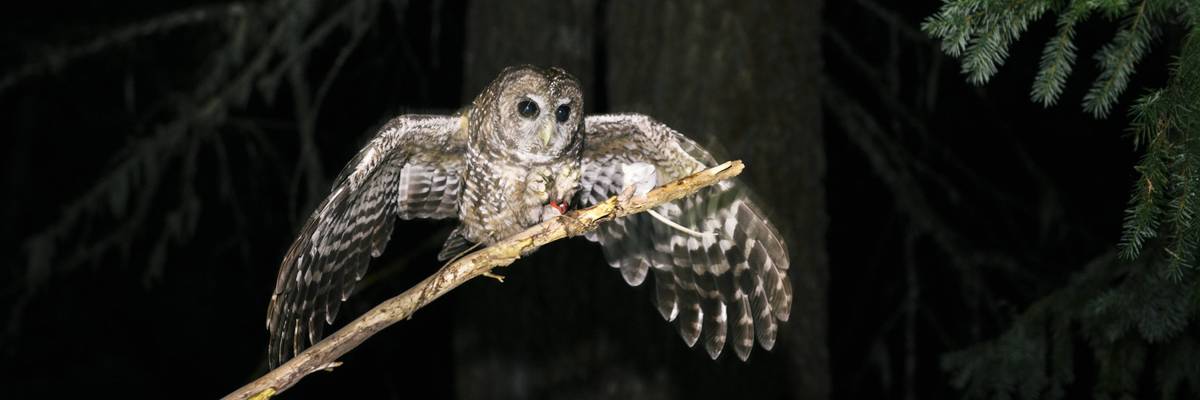
A female northern spotted owl catches a mouse on a stick held by Mark Higley, wildlife biologist for the Hoopa Valley Tribe, on the Hoopa Valley Reservation on August 28, 2024.
Mike Johnson to Unleash 'Catastrophic' Attack on Endangered Species Act
"When wildlife is already under immense pressure from habitat destruction, climate change, pollution, and industrial development, Congress should be strengthening the Endangered Species Act," said one advocate.
Conservationists warned Monday that "Earth Day could become Extinction Day" if Republican leaders in the US House of Representatives get their way.
Elected Republicans have long set their sights on the historic Endangered Species Act of 1973—and wildfire defenders sounded the alarm in December, when the Republican-led House Natural Resources Committee advanced Chair Bruce Westerman's (R-Ark.) ESA Amendments Act.
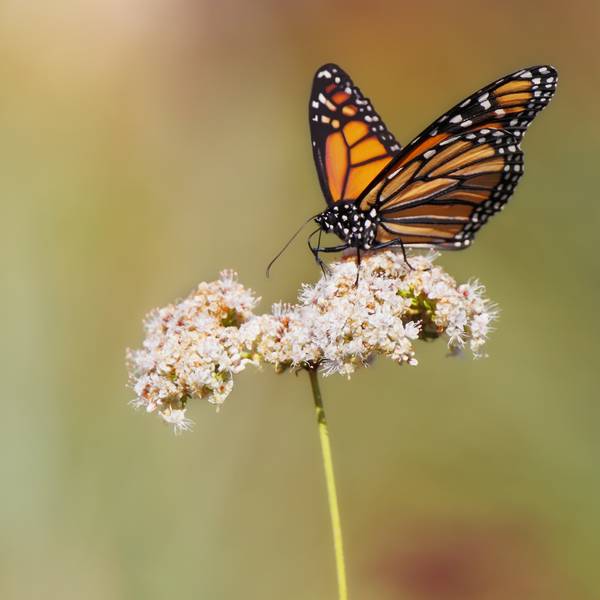
"If this bill passes, protections for species like the Florida manatee, monarch butterfly, and California spotted owl would immediately decrease," Earthjustice legislative director for lands, wildlife, and oceans Addie Haughey warned at the time.
Since then, President Donald Trump has continued his war on endangered species with his budget request for the 2027 fiscal year, and his administration's so-called "God Squad" unanimously approved an "unprecedented" exemption allowing fossil fuel operations in the Gulf of Mexico to ignore ESA protections.
Now, House Speaker Mike Johnson (R-La.) plans to take up Westerman's bill this week—potentially on Wednesday, Earth Day.
"At a time when wildlife is already under immense pressure from habitat destruction, climate change, pollution, and industrial development, Congress should be strengthening the Endangered Species Act, not tearing it apart," said Jewel Tomasula, policy director of the Endangered Species Coalition, which has hundreds of member organizations.
"If Rep. Bruce Westerman and Speaker Johnson have their way, Earth Day will become Extinction Day," Tomasula warned. "The urgency is real. This bill is catastrophic for threatened and endangered species."
Susan Holmes, the coalition's executive director, emphasized that "the Endangered Species Act works because it is rooted in science and because it recognizes a simple truth: Once a species is gone, it is gone forever."
"We should not allow politicians to dismantle protections that have saved bald eagles, gray whales, peregrine falcons, and so many other species from disappearing forever," she declared.
Holmes also noted that "the American people overwhelmingly support the Endangered Species Act" and "understand that protecting wildlife is not a partisan issue. It is about responsibility, stewardship, and ensuring that future generations inherit a world still rich with wild species and wild places."
Polling commissioned by IFAW and conducted online last year by Beekeeper Group found that over three-quarters of Americans say they are concerned about the environment, the welfare of animals, and conserving nature, and specifically support the goals of the ESA. That aligns with figures from surveys conducted over the past three decades, according to a 2025 analysis.
The U.S. House is scheduled to vote on the so-called "ESA Amendments Act" (H.R. 1897) on Earth Day, April 22. H.R. 1897 would drastically weaken the Endangered Species Act and decrease protections for threatened and endangered species.TAKE ACTION >>> wildernesswatch.substack.com/p/the-extinc...
[image or embed]
— Wilderness Watch (@wildernesswatch.bsky.social) April 20, 2026 at 3:23 PM
"Protecting the nation's wildlife and habitats has never been an issue of right or left—it is a shared value and a commitment to future generations," said Cassie Ferri, legislative analyst at Defenders of Wildlife, in a Monday statement. "Instead of honoring Earth Day, Congress is turning it into 'Destroy Earth Day' by attempting to dismantle one of our nation's most foundational conservation laws. We all depend on healthy ecosystems to thrive, and the vast majority of Americans want to preserve wildlife through a strong Endangered Species Act—yet time and again Congress blatantly disregards their voices."
The advocacy group director of legislative affairs, Mary Beth Beetham, said that "shameless attempts by some members of Congress to dismantle the Endangered Species Act demonstrate a profound disregard for how valuable this law is to wildlife conservation."
"The Endangered Species Act isn't just rhetoric—it's proven effective and has safeguarded imperiled species for more than 50 years," Beetham stressed. "This bill could be the driving force behind future extinctions and would set a dangerous precedent for wildlife legislation moving forward."
The U.S. House is expected to vote on H.R. 1897 next week—the most dangerous bill facing endangered species right now! It prioritizes profits over science-based safeguards and blocks judicial review. ACT NOW and tell your lawmakers #NOHR1897!ACT NOW at TeamWolf.Org!
[image or embed]
— Team Wolf (@team-wolf.bsky.social) April 17, 2026 at 4:01 PM
Defenders of Wildlife is among nearly 300 groups that have signed on to a Monday letter—shared with Common Dreams by another signatory, Humane World for Animals—urging US House members to "vote NO on HR 1897, which is a damaging bill that would dramatically weaken the ESA and make it harder, if not impossible, to achieve the progress we must make to address the alarming rate of extinction our planet now faces."
Westerman's bill, the letter says, "would significantly rewrite key portions of the ESA to prioritize politics over science and inappropriately shift responsibility for key implementation decisions from the federal government to the states, many of which do not have sufficient resources or legal mechanisms in place to take the lead in conserving listed species."
"It would place significant new administrative burdens on already overburdened agencies," the letter continues. "It would turn the current process for listing and recovering threatened and endangered species into a far lengthier process that precludes judicial review of key decisions."
While Republicans can pass legislation along party lines in the House, they usually need at least some Democratic support in the Senate—due to chamber rules, which can be changed—to send a bill to Trump's desk.
We are at a crossroads
This country and this world are at a monumental crossroads. In a few short weeks, US voters will have an opportunity to beat back the forces of fascism and confront the billionaires who are rigging the economy, our media system, and our democracy, making it increasingly impossible for ordinary people to get by. We’re not just talking about the election. We’re talking about what must be done once these fascist elements are vanquished from power. We need a bolder set of solutions than what either major party has so far been willing to offer and a working-class movement ready to fight like hell for it. Trump didn't emerge from nowhere. The conditions that fueled MAGA authoritarianism were created by decades of radical neoliberal economic policies and a corrupt political system dominated by corporate interests. They slashed taxes on the super-rich, promising that the benefits would trickle down. They said giveaways to the corporate titans would make life more affordable for the rest of us. It was all bullshit. And when a bitter, betrayed populace searches for someone to blame, right-wing demagogues have little trouble finding scapegoats. People know when they're being lied to, but you won't hear any of this from the corporate media. Only independent journalism—powered and funded by people who believe in building a better world—can deliver truly trustworthy daily news. Our Fall Campaign is underway, and we need your help. To power our newsroom through the rest of the year, we need to raise $125,000 by midnight on October 31. So if you share our vision, please contribute whatever you can to sustain our work. |
Conservationists warned Monday that "Earth Day could become Extinction Day" if Republican leaders in the US House of Representatives get their way.
Elected Republicans have long set their sights on the historic Endangered Species Act of 1973—and wildfire defenders sounded the alarm in December, when the Republican-led House Natural Resources Committee advanced Chair Bruce Westerman's (R-Ark.) ESA Amendments Act.
"If this bill passes, protections for species like the Florida manatee, monarch butterfly, and California spotted owl would immediately decrease," Earthjustice legislative director for lands, wildlife, and oceans Addie Haughey warned at the time.
Since then, President Donald Trump has continued his war on endangered species with his budget request for the 2027 fiscal year, and his administration's so-called "God Squad" unanimously approved an "unprecedented" exemption allowing fossil fuel operations in the Gulf of Mexico to ignore ESA protections.
Now, House Speaker Mike Johnson (R-La.) plans to take up Westerman's bill this week—potentially on Wednesday, Earth Day.
"At a time when wildlife is already under immense pressure from habitat destruction, climate change, pollution, and industrial development, Congress should be strengthening the Endangered Species Act, not tearing it apart," said Jewel Tomasula, policy director of the Endangered Species Coalition, which has hundreds of member organizations.
"If Rep. Bruce Westerman and Speaker Johnson have their way, Earth Day will become Extinction Day," Tomasula warned. "The urgency is real. This bill is catastrophic for threatened and endangered species."
Susan Holmes, the coalition's executive director, emphasized that "the Endangered Species Act works because it is rooted in science and because it recognizes a simple truth: Once a species is gone, it is gone forever."
"We should not allow politicians to dismantle protections that have saved bald eagles, gray whales, peregrine falcons, and so many other species from disappearing forever," she declared.
Holmes also noted that "the American people overwhelmingly support the Endangered Species Act" and "understand that protecting wildlife is not a partisan issue. It is about responsibility, stewardship, and ensuring that future generations inherit a world still rich with wild species and wild places."
Polling commissioned by IFAW and conducted online last year by Beekeeper Group found that over three-quarters of Americans say they are concerned about the environment, the welfare of animals, and conserving nature, and specifically support the goals of the ESA. That aligns with figures from surveys conducted over the past three decades, according to a 2025 analysis.
The U.S. House is scheduled to vote on the so-called "ESA Amendments Act" (H.R. 1897) on Earth Day, April 22. H.R. 1897 would drastically weaken the Endangered Species Act and decrease protections for threatened and endangered species.TAKE ACTION >>> wildernesswatch.substack.com/p/the-extinc...
[image or embed]
— Wilderness Watch (@wildernesswatch.bsky.social) April 20, 2026 at 3:23 PM
"Protecting the nation's wildlife and habitats has never been an issue of right or left—it is a shared value and a commitment to future generations," said Cassie Ferri, legislative analyst at Defenders of Wildlife, in a Monday statement. "Instead of honoring Earth Day, Congress is turning it into 'Destroy Earth Day' by attempting to dismantle one of our nation's most foundational conservation laws. We all depend on healthy ecosystems to thrive, and the vast majority of Americans want to preserve wildlife through a strong Endangered Species Act—yet time and again Congress blatantly disregards their voices."
The advocacy group director of legislative affairs, Mary Beth Beetham, said that "shameless attempts by some members of Congress to dismantle the Endangered Species Act demonstrate a profound disregard for how valuable this law is to wildlife conservation."
"The Endangered Species Act isn't just rhetoric—it's proven effective and has safeguarded imperiled species for more than 50 years," Beetham stressed. "This bill could be the driving force behind future extinctions and would set a dangerous precedent for wildlife legislation moving forward."
The U.S. House is expected to vote on H.R. 1897 next week—the most dangerous bill facing endangered species right now! It prioritizes profits over science-based safeguards and blocks judicial review. ACT NOW and tell your lawmakers #NOHR1897!ACT NOW at TeamWolf.Org!
[image or embed]
— Team Wolf (@team-wolf.bsky.social) April 17, 2026 at 4:01 PM
Defenders of Wildlife is among nearly 300 groups that have signed on to a Monday letter—shared with Common Dreams by another signatory, Humane World for Animals—urging US House members to "vote NO on HR 1897, which is a damaging bill that would dramatically weaken the ESA and make it harder, if not impossible, to achieve the progress we must make to address the alarming rate of extinction our planet now faces."
Westerman's bill, the letter says, "would significantly rewrite key portions of the ESA to prioritize politics over science and inappropriately shift responsibility for key implementation decisions from the federal government to the states, many of which do not have sufficient resources or legal mechanisms in place to take the lead in conserving listed species."
"It would place significant new administrative burdens on already overburdened agencies," the letter continues. "It would turn the current process for listing and recovering threatened and endangered species into a far lengthier process that precludes judicial review of key decisions."
While Republicans can pass legislation along party lines in the House, they usually need at least some Democratic support in the Senate—due to chamber rules, which can be changed—to send a bill to Trump's desk.
- Group Sues to Expose Trump 'Extinction Plan' as Study Shows 2,204 Species May Need Protection ›
- Conservationists Sound Alarm as Republicans Take Aim at Endangered Species Act ›
- Could Republican Majority Repeal the Endangered Species Act? ›
- Endangered Species Coalition Responds to Republican-led Congressional Attacks on Endangered Species Act and Gray Wolves ›
- In 'Major Earth Day Win,' House GOP Cancels Vote on Gutting Endangered Species Act | Common Dreams ›
- Opinion | We Are Closer Than We Think to Losing Our Wild Neighbors | Common Dreams ›
- 200+ Groups Call on Lawmakers to Oppose Permitting Reform That Would Gut Endangered Species Act | Common Dreams ›
Conservationists warned Monday that "Earth Day could become Extinction Day" if Republican leaders in the US House of Representatives get their way.
Elected Republicans have long set their sights on the historic Endangered Species Act of 1973—and wildfire defenders sounded the alarm in December, when the Republican-led House Natural Resources Committee advanced Chair Bruce Westerman's (R-Ark.) ESA Amendments Act.
"If this bill passes, protections for species like the Florida manatee, monarch butterfly, and California spotted owl would immediately decrease," Earthjustice legislative director for lands, wildlife, and oceans Addie Haughey warned at the time.
Since then, President Donald Trump has continued his war on endangered species with his budget request for the 2027 fiscal year, and his administration's so-called "God Squad" unanimously approved an "unprecedented" exemption allowing fossil fuel operations in the Gulf of Mexico to ignore ESA protections.
Now, House Speaker Mike Johnson (R-La.) plans to take up Westerman's bill this week—potentially on Wednesday, Earth Day.
"At a time when wildlife is already under immense pressure from habitat destruction, climate change, pollution, and industrial development, Congress should be strengthening the Endangered Species Act, not tearing it apart," said Jewel Tomasula, policy director of the Endangered Species Coalition, which has hundreds of member organizations.
"If Rep. Bruce Westerman and Speaker Johnson have their way, Earth Day will become Extinction Day," Tomasula warned. "The urgency is real. This bill is catastrophic for threatened and endangered species."
Susan Holmes, the coalition's executive director, emphasized that "the Endangered Species Act works because it is rooted in science and because it recognizes a simple truth: Once a species is gone, it is gone forever."
"We should not allow politicians to dismantle protections that have saved bald eagles, gray whales, peregrine falcons, and so many other species from disappearing forever," she declared.
Holmes also noted that "the American people overwhelmingly support the Endangered Species Act" and "understand that protecting wildlife is not a partisan issue. It is about responsibility, stewardship, and ensuring that future generations inherit a world still rich with wild species and wild places."
Polling commissioned by IFAW and conducted online last year by Beekeeper Group found that over three-quarters of Americans say they are concerned about the environment, the welfare of animals, and conserving nature, and specifically support the goals of the ESA. That aligns with figures from surveys conducted over the past three decades, according to a 2025 analysis.
The U.S. House is scheduled to vote on the so-called "ESA Amendments Act" (H.R. 1897) on Earth Day, April 22. H.R. 1897 would drastically weaken the Endangered Species Act and decrease protections for threatened and endangered species.TAKE ACTION >>> wildernesswatch.substack.com/p/the-extinc...
[image or embed]
— Wilderness Watch (@wildernesswatch.bsky.social) April 20, 2026 at 3:23 PM
"Protecting the nation's wildlife and habitats has never been an issue of right or left—it is a shared value and a commitment to future generations," said Cassie Ferri, legislative analyst at Defenders of Wildlife, in a Monday statement. "Instead of honoring Earth Day, Congress is turning it into 'Destroy Earth Day' by attempting to dismantle one of our nation's most foundational conservation laws. We all depend on healthy ecosystems to thrive, and the vast majority of Americans want to preserve wildlife through a strong Endangered Species Act—yet time and again Congress blatantly disregards their voices."
The advocacy group director of legislative affairs, Mary Beth Beetham, said that "shameless attempts by some members of Congress to dismantle the Endangered Species Act demonstrate a profound disregard for how valuable this law is to wildlife conservation."
"The Endangered Species Act isn't just rhetoric—it's proven effective and has safeguarded imperiled species for more than 50 years," Beetham stressed. "This bill could be the driving force behind future extinctions and would set a dangerous precedent for wildlife legislation moving forward."
The U.S. House is expected to vote on H.R. 1897 next week—the most dangerous bill facing endangered species right now! It prioritizes profits over science-based safeguards and blocks judicial review. ACT NOW and tell your lawmakers #NOHR1897!ACT NOW at TeamWolf.Org!
[image or embed]
— Team Wolf (@team-wolf.bsky.social) April 17, 2026 at 4:01 PM
Defenders of Wildlife is among nearly 300 groups that have signed on to a Monday letter—shared with Common Dreams by another signatory, Humane World for Animals—urging US House members to "vote NO on HR 1897, which is a damaging bill that would dramatically weaken the ESA and make it harder, if not impossible, to achieve the progress we must make to address the alarming rate of extinction our planet now faces."
Westerman's bill, the letter says, "would significantly rewrite key portions of the ESA to prioritize politics over science and inappropriately shift responsibility for key implementation decisions from the federal government to the states, many of which do not have sufficient resources or legal mechanisms in place to take the lead in conserving listed species."
"It would place significant new administrative burdens on already overburdened agencies," the letter continues. "It would turn the current process for listing and recovering threatened and endangered species into a far lengthier process that precludes judicial review of key decisions."
While Republicans can pass legislation along party lines in the House, they usually need at least some Democratic support in the Senate—due to chamber rules, which can be changed—to send a bill to Trump's desk.
- Group Sues to Expose Trump 'Extinction Plan' as Study Shows 2,204 Species May Need Protection ›
- Conservationists Sound Alarm as Republicans Take Aim at Endangered Species Act ›
- Could Republican Majority Repeal the Endangered Species Act? ›
- Endangered Species Coalition Responds to Republican-led Congressional Attacks on Endangered Species Act and Gray Wolves ›
- In 'Major Earth Day Win,' House GOP Cancels Vote on Gutting Endangered Species Act | Common Dreams ›
- Opinion | We Are Closer Than We Think to Losing Our Wild Neighbors | Common Dreams ›
- 200+ Groups Call on Lawmakers to Oppose Permitting Reform That Would Gut Endangered Species Act | Common Dreams ›