

SUBSCRIBE TO OUR FREE NEWSLETTER
Daily news & progressive opinion—funded by the people, not the corporations—delivered straight to your inbox.
5
#000000
#FFFFFF
To donate by check, phone, or other method, see our More Ways to Give page.
Daily news & progressive opinion—funded by the people, not the corporations—delivered straight to your inbox.

Noting that "70+ countries and one US state" have banned the chemical, the Michael J. Fox Foundation said that "this is a clear and critical message" to federal and state lawmakers that "the time to ban paraquat is now."
In a move cheered by advocates for public health and the environment, Vermont on Tuesday became the first US state to ban paraquat, a neurotoxic herbicide banned in over 70 countries but protected by the Trump administration despite being linked to Parkinson's disease.
Democratic Vermont Gov. Phil Scott signed H. 739, which bans the sale and use of paraquat, after the legislation was passed by the state Legislature with strong bipartisan support. The ban—which contains a provision allowing for limited use of the chemical on fruit orchards through the end of 2030—is set to take effect on November 1.
As Public Interest Research Group (PIRG) campaigner Liam Sacino recently noted, the US Environmental Protection Agency [EPA] acknowledges that "even a small amount" of paraquat "can be fatal, and there is no known antidote."
"The agency has also decided that due to health risks, it should never be used around home gardens, schools, recreational parks, golf courses, or playgrounds," Sacino added. "Regardless of these conclusions, the EPA still allows paraquat to be sprayed on farms, posing a potentially increased risk to those who work on the farms and live nearby."
The EPA paradoxically calls paraquat "an important tool for the control of weeds in many agricultural and non-agricultural settings," a stance promoted by the chemical industry, some of whose highly toxic products the pesticide-friendly Trump administration has designated as vital to US national security.
Ban advocates point to mounting evidence that paraquat exposure greatly increases the risk of developing Parkinson's disease, a neurodegenerative illness. One recent UCLA study found that the odds of developing Parkinson's could more than double for people living within 500 meters of paraquat application.
That study added to a body of research linking paraquat to Parkinson's that dates back to at least 2011, when National Institutes of Health researchers concluded that the brain disorder is “positively associated” with the herbicide. A 2013 paper published in the peer-reviewed journal Neurology found that exposure to paraquat roughly doubled the risk of developing Parkinson’s. In 2020, four of the world’s leading neurologists published a book citing paraquat as a cause of the ailment.
Parkinson's advocacy groups, including the Parkinson's Foundation and Michael J. Fox Foundation, hailed the Vermont ban.
The Michael J. Fox Foundation noted that "70+ countries and one US state have now banned paraquat."
"This is a clear and critical message to other states and our federal government: The time to ban paraquat is now," the group added.
Environmental groups also cheered the ban.
"We applaud Gov. Scott and the champions in the Legislature that made this moment possible that will protect all Vermonters, including farmers and children, from being exposed to this dangerous chemical,” Environmental Working Group legislative director Geoff Horsfield said in a statement.
“With Vermont leading the way, states across the country now have a clear path to end the use of one of the most toxic herbicides still on the market,” Horsfield added. “This is a turning point in the effort to protect public health from a chemical that has been tied to devastating neurological harm.”
Other states including California, New Jersey, New York, and Pennsylvania have either introduced bills to ban or strictly limit paraquat, or are considering doing so.
"We should not wait for federal action when we can act now to protect farmworkers and families," PIRG's Sacino said Tuesday.
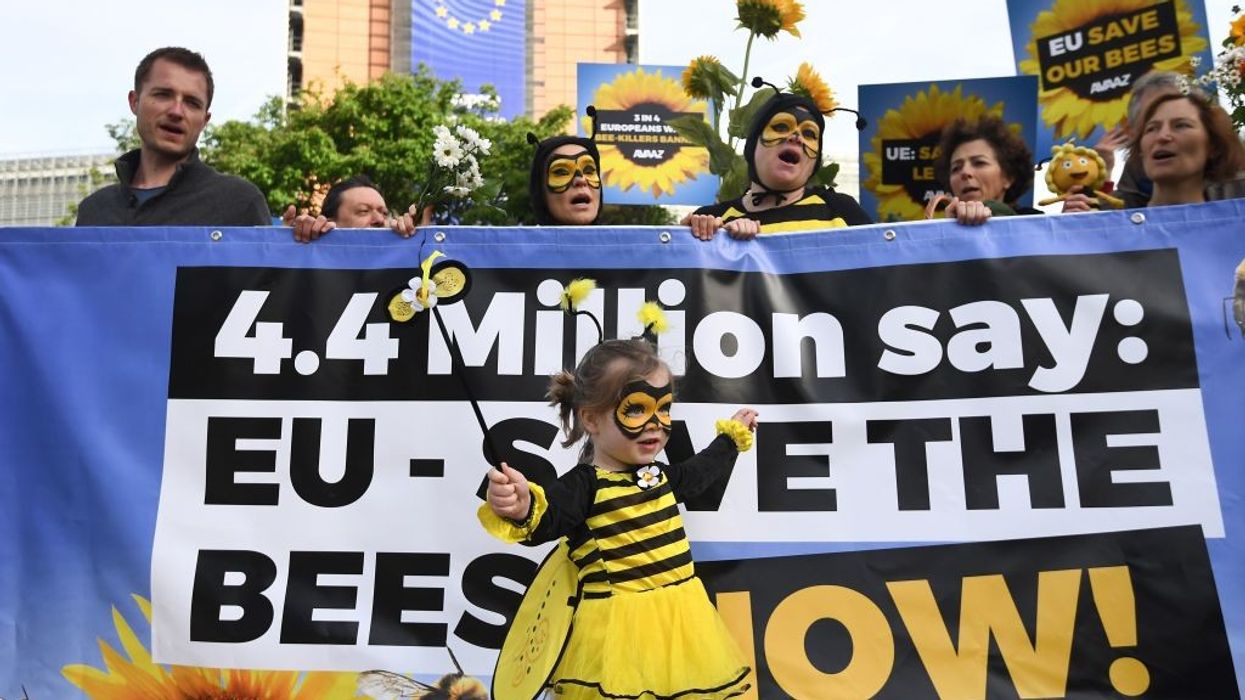
While it may be creepy to read an industry-funded dossier on you online, it pales in comparison to what other pesticide industry critics have faced.
As I head back from Cali, Colombia after attending the Convention on Biological Diversity this week, I’ve been thinking a lot about the attempts by countless advocates around the world to take on one of the biggest drivers of biodiversity collapse: toxic pesticides. Reducing the use of pesticides is one of the key ways we can help beneficial insect species rebound, protect vital pollinators, ensure thriving aquatic ecosystems, and much more—all while protecting human health.
With all that we know about the benefits to biodiversity of reducing pesticides, why haven’t we made more progress in tackling these toxic substances? The latest clue came to us last month thanks to an investigation by Lighthouse Reports, which revealed that the Trump administration had used taxpayer dollars to fund a pesticide industry PR operation targeting advocates, journalists, scientists, and UN officials around the world calling for pesticide reforms.
The investigation exposed the details of a private online social network, funded by U.S. government dollars, with detailed profiles of more than 500 people—a kind of Wikipedia-meets-doxxing of pesticide opponents. It showed how the network was activated to block a conference on pesticide reform in East Africa, among other actions.
My interest in the leaked private network is also personal: I’m one of those profiled, attacked for working on numerous reports, articles, and education campaigns on pesticides. In my dossier, I’m described among other things as collaborating on a campaign alleging pesticide companies “use ‘tobacco PR’ tactics to hide health and environmental risk.” Guilty as charged. While it may be creepy to read an industry-funded dossier on you online, it pales in comparison to what other pesticide industry critics have faced.
When you don’t have science on your side, you have to rely on slime.
There’s Dr. Tyrone Hayes, the esteemed UC Berkeley professor, who has persevered through a yearslong campaign to destroy his reputation by the pesticide company Syngenta whose herbicide atrazine Hayes’s exacting research has linked to endocrine disruption in frogs. There’s journalist Carey Gillam who faced a Monsanto-funded public relations onslaught for raising substantive questions about the safety of the company’s banner herbicide product, Roundup. There’s Gary Hooser, former Hawaii State Senator and Kauaʻi County Councilmember who weathered a barrage of industry attacks for his advocacy for common sense pesticide reform—a barrage so effective he lost his seat in office. The list goes on.
Why develop elaborate attacks on journalists and scientists raising serious concerns about your products? It’s simple: When you don’t have science on your side, you have to rely on slime.
This latest exposé does not surprise me, of course, nor many colleagues who are also listed in this private online network. I’ve been tracking industry disinformation and its attacks on those working to raise the alarm about the environmental and human health impacts of pesticides for decades: this is what companies do. They try to defame, marginalize, and silence scientists, journalists, and community advocates who raise concerns about the health harms of their products.
Growing up, I saw this up close. My father, the toxicologist and epidemiologist Marc Lappé, was a professor of medical ethics and a frequent expert witness in legal cases where chemicals were a concern. He died at age 62 of brain cancer. By the time he passed away, I had heard countless tales of his legal wranglings in depositions and on the stand. Cases where he served as an expert witness for lawsuits on behalf of people harmed by exposure to dangerous chemicals, lawsuits against some of the biggest chemical companies in the world.
Thanks to this investigation, we now have another example of how the pesticide industry tries to shift attention away from these very real concerns, even using taxpayer dollars to do it.
The defense attorney’s strategy with my father was always the same: undermine his expertise, rattle his equanimity so juries would trust well-paid lawyers, not my dad. There was the time they quoted an excerpt of one of his journal articles to make it sound like he was contradicting himself, which backfired when he asked the lawyer to read for the jury the rest of the paragraph, putting the words in context and solidifying his point. The worst story was from a trial not long after my stepmother died in a tragic accident, leaving behind my three younger half-siblings. As my dad walked to the stand, one of the defense lawyers said under his breath, “Marc, how was Mother’s Day at your house this year?” Slime indeed.
But while they have the slime, we have the science: We know that many of the pesticides now ubiquitous in industrial agriculture are linked to serious health concerns, from ADHD to infertility, Parkinson’s, depression, a swath of cancers, and more. The insecticide chlorpyrifos is so toxic there are no determined safe levels for children or infants. Paraquat, linked to Parkinson’s, is so acutely deadly a teaspoon of the stuff can kill you—something its largest producer, Syngenta, has known for decades. And, 2,4-D, the defoliant used in the Vietnam War to wipe out forest cover in that country has been linked to birth defects among children there—and in the United States—even decades after the war.
The threat for biodiversity is severe, too. A 2019 comprehensive review of more than 70 studies around the world powerfully tied widespread pesticide use to insect declines worldwide. And, as reported in the Pesticide Atlas (I edited the U.S. edition), despite these known risks, pesticide use is increasing in many regions in the world. In South America, pesticide use went up 484 percent from 1990 to 2017. In Brazil, alone, pesticide sales have shot up nearly 1000% between 1998 and 2008
Thanks to this investigation, we now have another example of how the pesticide industry tries to shift attention away from these very real concerns, even using taxpayer dollars to do it. As I land in Colombia, where tens of thousands are gathered to envision a world conducive to thriving biodiversity, I hope this reporting will remind policymakers to rely on science, not spin.
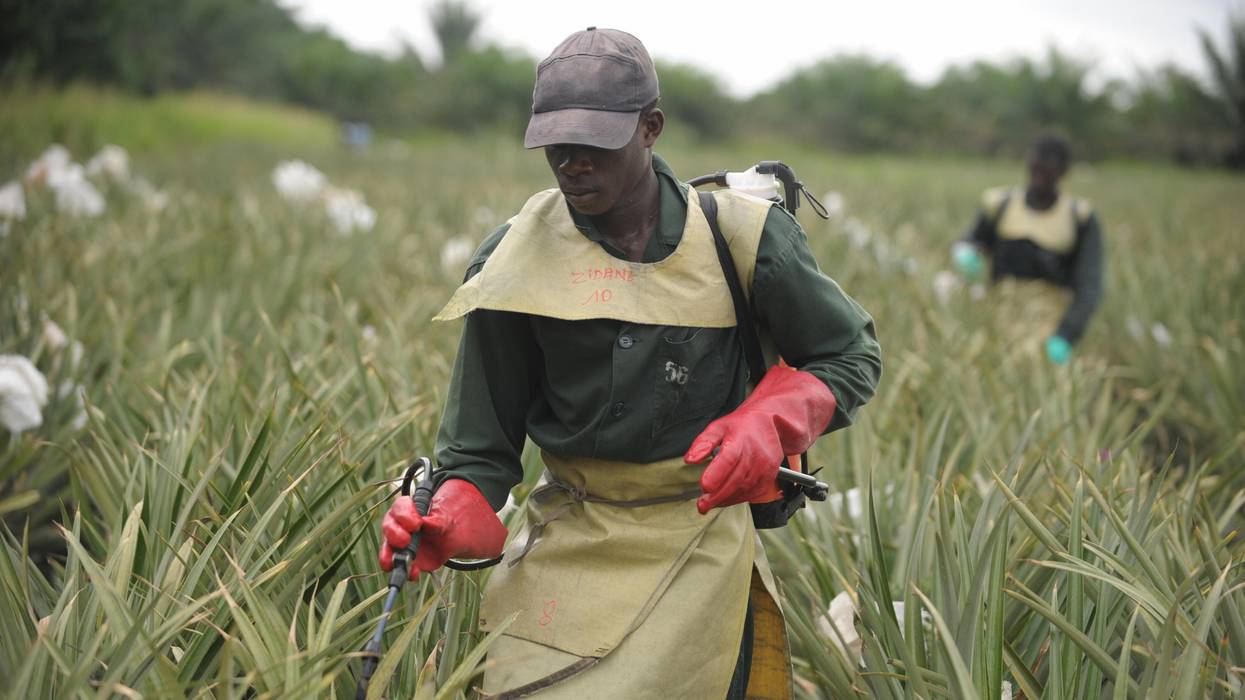
"It's one thing to have an industry come after you after publishing a critical article. This happens all the time in journalism," said writer Michael Pollan, one of those featured in the corporate files. "But to have your own government pay for it is outrageous."
New reporting published Friday exposes how U.S. taxpayer money was used to fund an elaborate effort by pesticide industry insiders to create detailed dossiers on public critics and environmentalist activists opposed to the widespread pollution created by agrochemical corporations.
The investigation was spearheaded by the nonprofit outlet Lighthouse Reports in collaboration with numerous outlets from around the globe, including The Guardian, Le Monde, The New Lede, ABC News, and the New Humanitarian. It details how outspoken critics of the pesticide paraquat—described as "among the most toxic agricultural chemicals ever produced"—were targeted by an "influence machine that works to suppress opposition to an $78 billion global industry."
While use of paraquat is banned in the European Union, it is still actively sold and applied on fields and farms in much of the world despite the documented harms it produces.
The year-long investigation, according to Lighthouse,
managed to penetrate a PR operation that casts those who raise the alarm, from pesticide critics to environmental scientists or sustainability campaigners, as an anti-science "protest industry," and used U.S. government money to do so.
The U.S.-based PR firm, v-Fluence, built profiles on hundreds of scientists, campaigners and writers, whilst coordinating with government officials, to counter global resistance to pesticides. These profiles are published on a private social network, which grants privileged entry to 1,000 people. The network's membership roster is a who's-who of the agrochemical industry and its friends, featuring executives from some of the world's largest pesticide companies alongside government officials from multiple countries.
These members can access profiles on more than 3,000 organisations and 500 people who have been critical of pesticides or Genetically Modified Organisms (GMOs). They come from all over the world and include scientists, U.N. human right experts, environmentalists, and journalists. Many of the profiles divulge personal details about the subjects, such as their home addresses and telephone numbers, and spotlight criticisms that disparage their work. Lawyers have told us this goes against data privacy laws in several countries.
The investigative team also released this video on Instagram detailing their findings:
Environmental writer and activist George Monbiot called the revelations "deeply shocking and appalling," and described the story as one which detailed how the U.S. government "funded attacks, denial, and outright lies to protect the pesticides industry from its critics."
The Guardian's reporting details how v-Influence—founded by former Monsanto executive Jay Byrne—received U.S. taxpayer dollars by subcontracting with another group that received a large USAID grant:
Public spending records show the USAID contracted with the International Food Policy Research Institute (IFPRI), a non-governmental organization that manages a government initiative to introduce GM crops in African and Asian nations.
In turn, IFPRI paid v-Fluence a little more than $400,000 from roughly 2013 through 2019 for services that included counteracting critics of "modern agriculture approaches"in Africa and Asia.
v-Fluence was to set up the "private social network portal" that would, among other things, provide "tactical support" for efforts to gain acceptance for the GM crops.
The reporting noted that prominent food writers, including Michael Pollan and Mark Bittman (both of whom have written critically of industrial agriculture), were among those listed in the private network to which industry heavyweights were given invite-only access.
"It's one thing to have an industry come after you after publishing a critical article. This happens all the time in journalism," Pollan told the Guardian. "But to have your own government pay for it is outrageous. These are my tax dollars at work."
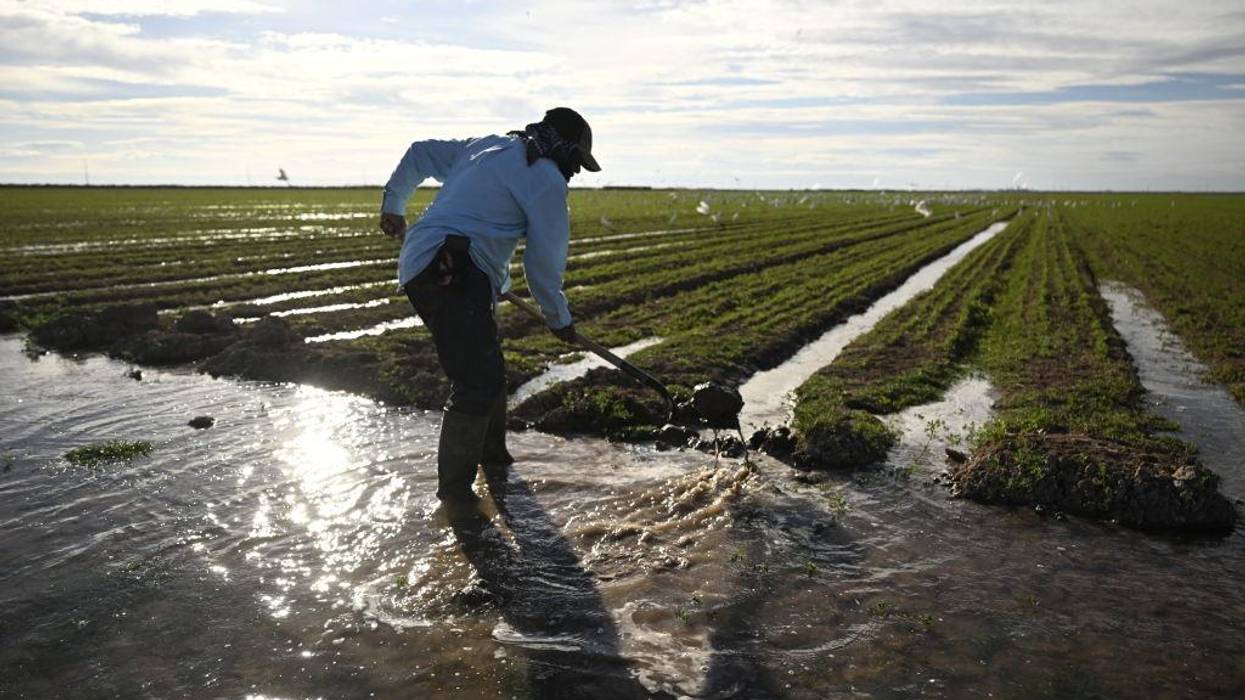
Farmworkers "should not be subjected to additional health risks due to the negligent actions of pesticide manufacturers, farm owners, and state regulatory agencies," said one analyst.
Concerns about the safety of paraquat, a highly toxic herbicide, pushed the U.S. Environmental Protection Agency in 2021 to ban its use on golf courses—but the weedkiller is still permitted for agricultural use, and a new first-of-its-kind analysis shows how the EPA's continued approval of the substance has put low-income Latino communities at disproportionate risk for health impacts.
The Environmental Working Group (EWG) found in a study released Wednesday that 5.3 million pounds of paraquat were sprayed over a five-year period in California, the only state with readily available figures on the herbicide.
Most of the weedkiller's use was concentrated in central counties where farms produce almonds, walnuts, alfalfa, and other crops—and where Latino people make up about 75% of the population and nearly the entire farm labor force.
Ninety-six percent of farmworkers in the state are Latino, and 90% of people in the agricultural workforce were born outside of the U.S., making immigrants who often work for low wages among the people who are most affected by continued use of paraquat on farms.
The ingestion of a single teaspoon of paraquat is considered deadly, which has led 60 countries to ban the chemical while the EPA released an analysis in January concluding that its health risks were outweighed by the economic benefits of using paraquat.
The weedkiller has been linked to non-Hodgkin lymphoma, respiratory damage, kidney disease, and childhood leukemia. Al Rabine, an analyst for EWG who authored the report, said the EPA has also ignored a "mountain of evidence" that paraquat causes Parkinson's disease.
An epidemiological study of central California found that people living within a third of a mile of where paraquat is sprayed are twice as likely to develop Parkinson's.
"Paraquat is not only a threat to our environment but also a direct danger to the health and well-being of these communities, particularly Latino populations, who make up the majority of the population," said Rabine. "The findings of our analysis underscore the urgent need for action by the state to protect these communities from the harmful effects of exposure to this toxic weedkiller."
Between 2017-21, EWG found, about 80% of the paraquat used on California crops was sprayed within Latino-majority census tracts. The group identified Kern County and the towns of Shafter and Wasco as "hot spots" for paraquat use.
"These three communities combined have over 80% Latino residents who witnessed almost 180,000 pounds of paraquat spraying during that time period," the group said.
In Kern County, which has a poverty rate of nearly 30%, EWG found that 1.2 million pounds of the herbicide were sprayed over roughly 1,200 square miles of farmland—threatening not only laborers who completed the work but also farmworkers who live in the surrounding communities, as paraquat can remain in soil and travel through the air—as well as coming home with workers on their clothing and potentially exposing their families.
EWG identified five "fatal flaws" in the analysis the EPA has used to defend its continued approval of paraquat for farming, including:
EWG called on the EPA to follow the lead of dozens of countries that have banned paraquat—but warned that states must not wait for the federal government to take action.
"Federal pesticide law sets a floor, not a ceiling—states can choose to restrict a chemical, even without an EPA ban," wrote EWG government affairs manager Geoff Horsfield and toxicologist Alexis Temkin. "To protect their residents and public health, state and local governments should exercise their power to ban paraquat."
Immigrant communities across central California, Horsfield said, "should not be subjected to additional health risks due to the negligent actions of pesticide manufacturers, farm owners, and state regulatory agencies."
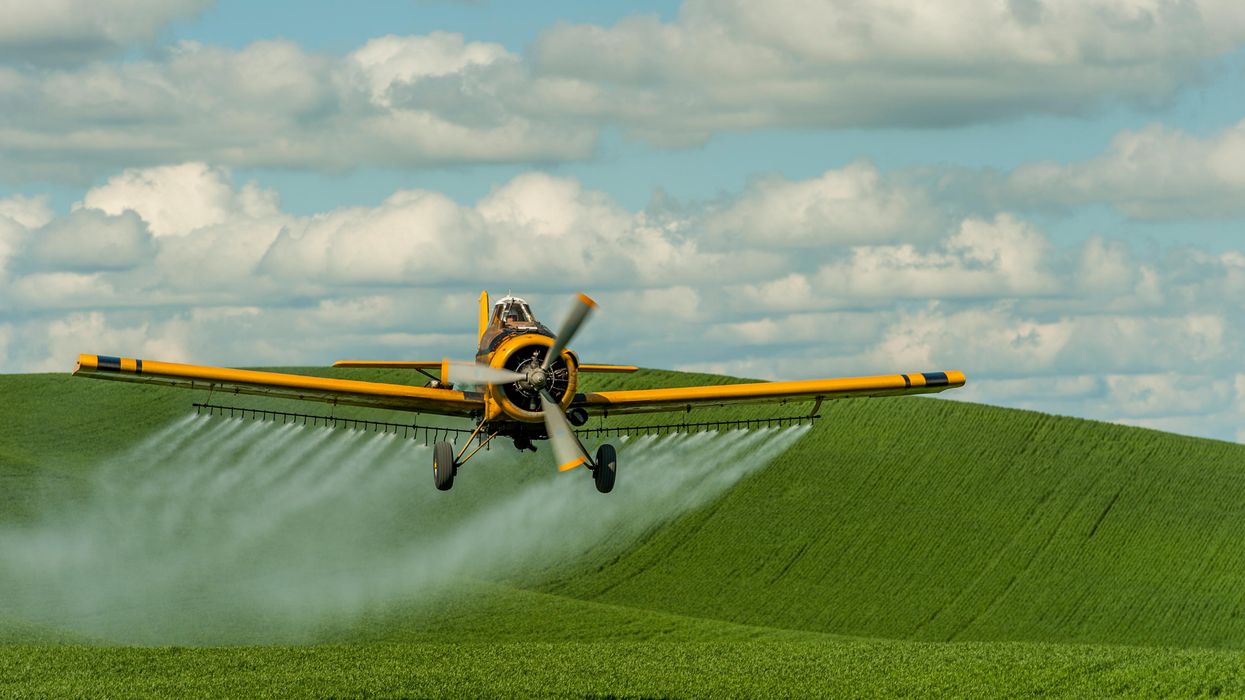
"It looks like the paraquat maker has adopted nearly every strategy we outlined in our book about bending science," said one author and former EPA legal adviser.
Internal documents published Friday by The Guardian and The New Lede shed new light on how multinational chemical giant Syngenta worked to conceal the link between its popular pesticide paraquat and Parkinson's disease.
According to the internal documents, Syngenta sought to "create an international scientific consensus against the hypothesis that paraquat is a risk factor for Parkinson's disease," in part by launching what company officials called a "SWAT team" to counter research that could threaten the corporation's "freedom to sell" the pesticide.
"It looks like the paraquat maker has adopted nearly every strategy we outlined in our book about bending science," Thomas McGarity, a former U.S. Environmental Protection Agency legal adviser and co-author of the 2008 book Bending Science: How Special Interests Corrupt Public Health Research, told The Guardian.
"Science matters. We have to be able to depend on science," McGarity added. "When it is perverted, when it is manipulated, then we get bad results. And one result is that pesticides that cause terrible things like Parkinson's remain on the market."
While a 2006 study found that rats administered paraquat exhibited neural degeneration similar to Parkinson's, a definitive link between paraquat and Parkinson's disease was discovered in 2011, when National Institutes of Health researchers concluded that the brain disorder is "positively associated" with the pesticide. A 2013 paper published in the peer-reviewed journal Neurology found that exposure to paraquat roughly doubled the risk of developing Parkinson's. In 2020, four of the world's leading neurologists published a book citing paraquat as a cause of Parkinson's.
More than 50 countries have banned paraquat, including Brazil, China, and the United Kingdom. The European Union has also banned the pesticide.
Syngenta argues that the evidence showing paraquat causes Parkinson's is "fragmentary and insufficient to establish" a link between the pesticide and the brain disorder.
"Recent thorough reviews performed by the most advanced and science-based regulatory authorities, including the United States and Australia, continue to support the view that paraquat is safe," the company told The Guardian for an October 2022 article showing internal Syngenta documents confirmed that corporate officials worried about the pesticide's link to Parkinson's.
However, as The Guardian reports in the new article:
The scientific record [Syngenta points] to as proof of paraquat's safety is the same one that Syngenta officials, scientists, and lawyers in the U.S. and the U.K. have worked over decades to create and at times, covertly manipulate...
The files reveal an array of tactics, including enlisting a prominent U.K. scientist and other outside researchers who authored scientific literature that did not disclose any involvement with Syngenta; misleading regulators about the existence of unfavorable research conducted by its own scientists; and engaging lawyers to review and suggest edits for scientific reports in ways that downplayed worrisome findings.
McGarity also said that when he worked at the EPA, pesticide lobbyists were known as "hall crawlers" for their incessant efforts to influence government officials.
Additionally, a revolving door between the chemical industry and government at all levels, from EPA bureaucrats all the way up to the Supreme Court—Justice Clarence Thomas is a former Monsanto attorney who refused to recuse himself from a case involving his former employer—helps corporations conceal the harms caused by their products.
In 2021, a coalition of groups sued the EPA over its decision to renew its approval of paraquat.
The new documents were published amid a raft of over 2,000 product liability lawsuits filed by farmers and others against Syngenta and Chevron, paraquat's former distributor. The first federal bellwether paraquat trial is set to begin in October.