

SUBSCRIBE TO OUR FREE NEWSLETTER
Daily news & progressive opinion—funded by the people, not the corporations—delivered straight to your inbox.
5
#000000
#FFFFFF
To donate by check, phone, or other method, see our More Ways to Give page.
Daily news & progressive opinion—funded by the people, not the corporations—delivered straight to your inbox.
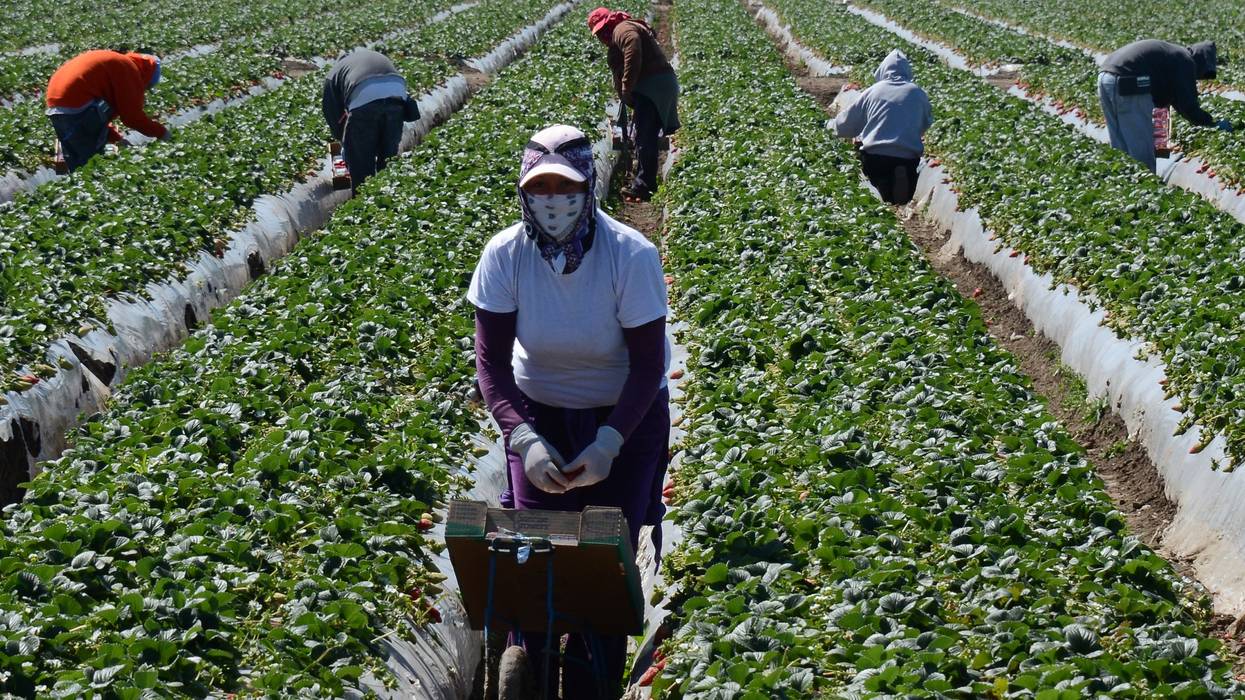
Farmworkers need local and state governments to come to their aid in implementing policies recognizing the urgency of lethal heat while learning from one another as they pass laws where there are none, and improving standards where they exist.
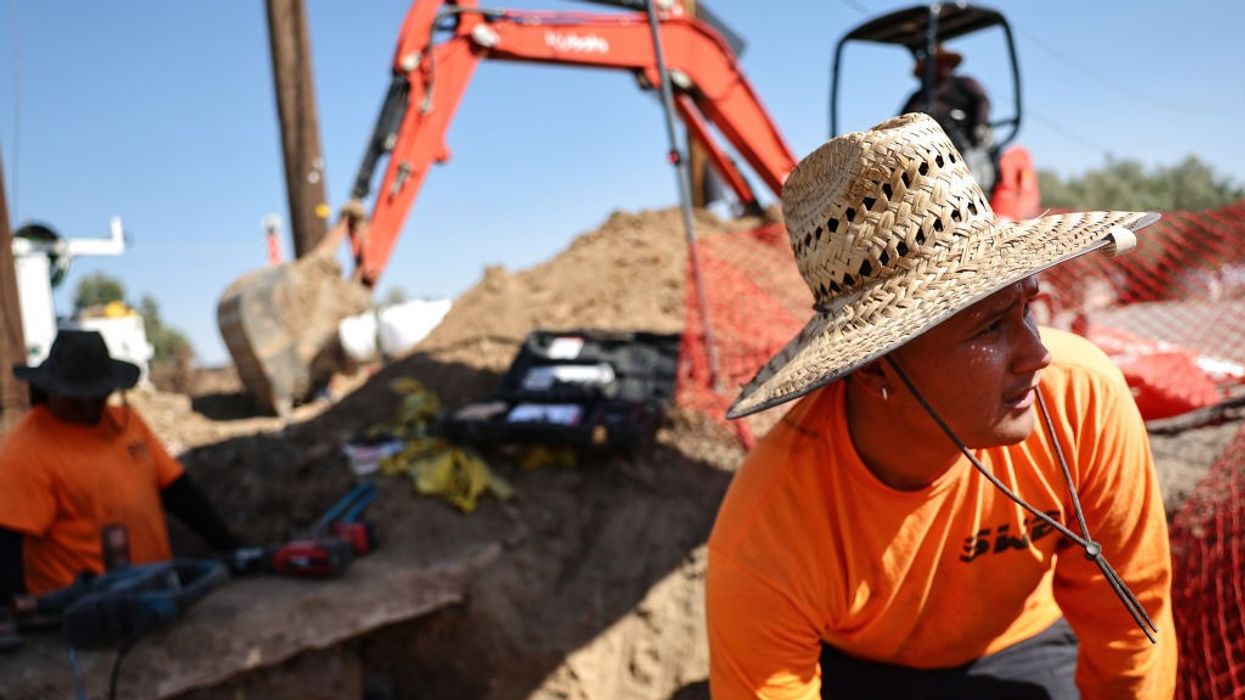
Have you ever had to fight off a rattlesnake in the dark while on shift? Or struggled to breathe through heart palpitations, in a remote field dozens of miles away from the nearest hospital?
Farmworkers are increasingly having these experiences as extreme heat in certain states has forced people to pick onions, grapes, and berries at night when it is cooler and the work more tolerable.
Compounding the struggle, there’s the accompanying impaired visibility and occupational safety risks for workers planting seeds and picking crops before sunrise. For those partially or primarily laboring during the day, heatwaves continue to become longer year after year, more intense, and therefore, more deadly. Making matters worse are conditions for those who work at the pace of piece rate work, which pushes farmworkers to do more and faster for potential pay fueling more intense physical labor from the workers at all given times.
In an ideal world, farmworkers would have rights and protections guaranteed by the federal government so that they could labor during the day, and if needed, at night, without risking their basic bodily integrity to bring food to our tables. In fact, in 2024 the Biden administration took steps in this direction with a proposed heat standard that would require employers to establish heat safety plans, provide water and shade, and institute paid 15-minute breaks every two hours when the heat index reaches 80°F. While a final version of the rule was proposed, it has not been finalized, which means that it remains in regulatory limbo. Moreover, with a federal government brazenly hostile to federal regulations, as evident in several environmental policy rollbacks, it is unlikely that nationwide protections for workers will come into force in the immediate future.
As of last year, most states have no legislation providing protections to workers in relation to extreme heat while working outside, inside plant nurseries, or in nighttime darkness.
Still, not all hope is lost. While federal action to the benefit of farmworkers leaves much to be desired, there has actually been significant motion at the state level. In fact, some states are actively configuring and approving heat protection standards, while others are improving upon regulations already in place.
Some states, like Arizona, mandate that employers need to provide water to workers and provide shade should temperatures rise above 100°F. The Georgia House Legislature has proposed a bill with similar specifications, but has not advanced it to be signed into law by the governor, similar to New Mexico’s proposed heat stress rule. More recently, the state of Virginia approved legislation in April 2026 directing its health and labor agencies to implement heat safety standards. Despite these positive trends, California continues to be the only state to regulate nighttime work in agriculture. California also has a much lower extreme heat stress limit for daytime work—80°F—than other states for when shaded areas must be provided.
Surprisingly, these states are outliers. As of last year, most states have no legislation providing protections to workers in relation to extreme heat while working outside, inside plant nurseries, or in nighttime darkness.
For the states that have regulations, the next step to support farmworkers is to build from this regulatory patchwork and make enforcement real. Improvement, however, is a continuous uphill climb.
Currently California is considered to be the state with the best farmworker protections, yet their agency responsible for the state’s occupational safety, Cal-OSHA, reported last year how the institution suffers from a severe lack of resources and staff. The dearth of resources is so bad that case backlogs are months long, as officials cannot spend time reviewing those that don't result in fatalities, leaving workers with limited recourse.
For other states, establishment of basic protections are still needed.
Texas, for instance, has no heat stress protections for workers. This, as the Lone Star state ranks among others like California for having the highest number of farmworkers. In 2023, the state of Texas actually took a step in the opposite direction by approving legislation restricting local governments from enacting rules that go beyond the state law, striking down some city ordinances that had previously guaranteed 10-minute water and shade breaks for some outdoor workers, such as construction workers. Accordingly, workers in this state deserve at minimum the right to access cool potable water, and time in the shade should temperatures reach a certain level.
Typically, by now the high temperature season would be wrapping up but many regions are still experiencing heatwaves. While the federal government continues to lean into deregulation, Congress recently advanced the Heat Workforce Standards Act of 2025 (HR 6213), to the House floor on July 21. If passed, this bill would prohibit the Occupational Safety and Health Administration from finalizing, implementing, or enforcing its proposed federal heat injury and illness prevention standard.
Farmworkers need local and state governments to come to their aid in implementing policies recognizing the urgency of lethal heat while learning from one another as they pass laws where there are none, and improving standards where they exist. The status quo—rattlesnakes and all—is not just absurd, but inhumane. Farmworkers deserve better.
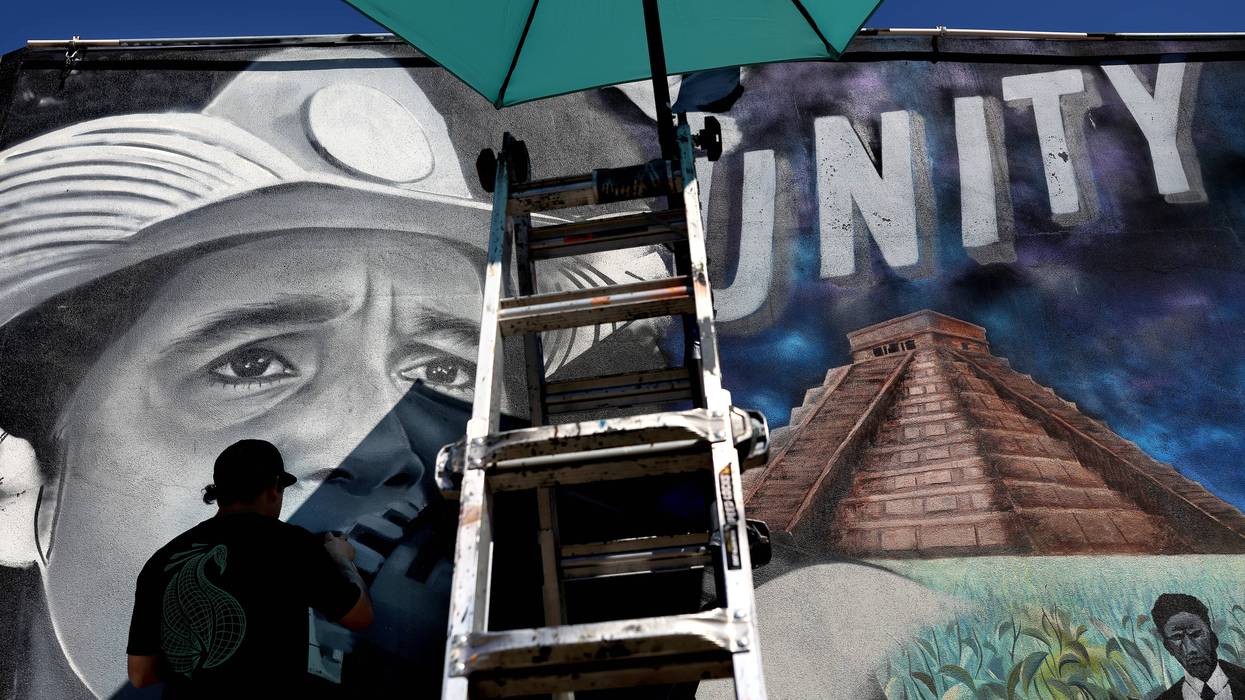
"The labor movement was organized not only to protect workers' paychecks and benefits, but also to ensure they are safe from any form of harassment, inappropriate conduct, or assault."
"Our collective power is what defines us and is our movement, and one person cannot tear our movement down," Alianza Nacional De Campesinas said in the wake of The New York Times reporting Wednesday on multiple sexual abuse allegations against late Mexican-American labor leader César Chávez.
"As a farmworker women's organization, many of us have experienced or witnessed the sexual abuse and silence women endure in many aspects of our lives," the group continued, adding that "we are deeply troubled and devastated" to learn about the reporting, and "we stand with Dolores Huerta, Ana Murguía, and Debra Rojas, who have bravely shared their painful stories."
Huerta, cofounded with Chávez a group that went on to become the labor union United Farm Workers (UFW). In her comments to the Times and a separate statement, the 95-year-old described two separate encounters with Chávez that led to pregnancies: "The first time I was manipulated and pressured into having sex with him... The second time I was forced, against my will, and in an environment where I felt trapped."
Murguía told the Times that Chávez molested her for four years, beginning when she was 13. Rojas said she was 12 when Chávez first groped her breasts in the same office where abused Murguía. When Rojas was 15, the newspaper reported, "he arranged to have her stay at a motel during a weekslong march through California, she said, and had sexual intercourse with her—rape, under state law, because she was not old enough to consent."
The reporting has sparked a wave of responses from labor groups, elected officials, and others who have expressed support for survivors and stressed, as Guardian US columnist Moira Donegan wrote Friday, that "the rightness of the movement for the dignity of workers, for the rights and respect of Latinos, and for a future in which there is more freedom and possibility for poor people... cannot be tarnished by Chávez's behavior."
UFW Foundation said this week that "as a women-led organization that exists to empower communities, the allegations about abusive behavior by César Chávez go against everything that we stand for."
Describing the alleged abuse as "shocking, indefensible and something we are taking seriously," the UFW Foundation also announced that it "has cancelled all César Chávez Day activities this month."
California lawmakers are planning to rename César Chávez Day, a state holiday celebrated on March 31, Farmworkers Day. Artists and officials have begun removing plaques, murals, and other memorials.
American Federation of Labor and Congress of Industrial Organizations president Liz Shuler and secretary-treasurer Fred Redmond said Wednesday that in light of "these horrific, disturbing allegations," the AFL-CIO "will not participate or endorse any upcoming activities for César Chávez Day."
"The AFL-CIO will always stand in solidarity with farmworkers who have fought for and won critical rights over generations through collective action, resilience, and extraordinary determination—a history that cannot be erased by the horrific actions of one person." said the pair. "The labor movement was organized not only to protect workers' paychecks and benefits, but also to ensure they are safe from any form of harassment, inappropriate conduct, or assault. Our commitment to safety and justice for farmworkers, immigrant workers, and all in our workplaces will never waver."
Advocacy and labor leaders also emphasized the importance of ensuring movements are save for their members. GreenLatinos founding president and CEO Mark Magaña told the survivors that "we stand with you and take this opportunity to recommit to our work supporting the farmworker community who toil in dangerous conditions, including extended exposure to extreme heat and deadly pesticides, while women farmworkers also continue to suffer from disturbingly high rates of sexual assault."
"To our community, the movement for justice and dignity for farmworkers is much bigger than one person," Magaña continued. "At a time when our communities are under serious attack, GreenLatinos remains committed to that movement. ¡Sí, Se Puede!"
Monica Simpson, executive director of SisterSong: Women of Color Reproductive Justice Collective, said that "Dolores Huerta, Ana Murguía, and Debra Rojas are showing us what real courage looks like. For decades, they kept secret the sexual abuse they experienced because of the power César Chávez held and his legacy within the labor and civil rights movements."
"That kind of silence doesn't just come from one person, it comes from systems and people in power who make women feel like speaking out will cost too much or threaten the very movement they helped build," Simpson argued. "We stand with Dolores Huerta, Ana Murguía, Debra Rojas, and all survivors. We're committed to building movements where no one has to carry harm or abuse in silence just to keep the work going. Our movements are bigger than one person, they belong to the people who build and sustain them. We have a responsibility to protect each other so everyone can be safe within them. That means choosing people over power and legacy, and creating spaces where safety, care, accountability, and dignity are the foundation of the work."
The revelations about Chávez come as President Donald Trump's administration pursues its mass deportation agenda and amid a fight for justice for survivors of Trump's former friend, convicted sex offender Jeffrey Epstein. Members in Congress continue to call out the US Department of Justice for the Epstein files it has withheld or heavily redacted.
US Sen. Ruben Gallego (D-Ariz.) said that the reports on Chávez "are shocking and disappointing about a leader that I for many years had looked up to, like so many Latinos growing up in the US. But as I have said many times this year—no one, no matter how powerful, is above accountability, especially when it comes to abusing young women."
"The farmworkers' movement has always been bigger than any one man," declared Gallego, who represents the state where Chávez was born. "It belongs to the thousands of hardworking people who have spent decades on the front lines fighting for the dignity of agricultural workers. We have to keep that fight going, especially now, when our community is under constant attack."
Gallego also recognized "the incredible bravery of the women who came forward," as did Sen. Alex Padilla (D-Calif.), who asserted that "there must be zero tolerance for abuse, exploitation, and the silencing of victims, no matter who is involved."
"Confronting painful truths and ensuring accountability is essential to honoring the very values the greater farmworker movement stands for—values rooted in dignity and justice for all," added Padilla.
Democratic Women's Caucus Chair Teresa Leger Fernández (D-NM) said that "the farmworker and civil rights movement was built by countless people—especially women and families who sacrificed everything for a better future. That history is bigger than any one person. Honoring that legacy means facing painful truths and continuing the work for justice with honesty and humanity."
The Congressional Hispanic Caucus said that "while it's heartbreaking when leaders are exposed as flawed beyond absolution, a just society has a duty to hold abusers accountable without exception."
"A movement stands on its values, not the misconduct of an individual.The strength of a movement is defined by its constituency, by its achievements and, yes, by its willingness to hold its leaders accountable," the CHC said. "We will always support the farmworkers who feed this nation, enrich our culture, and elevate our values. We commend the UFW's courage in standing by its constituency."
"We stand committed to work toward renaming streets, post offices, vessels, and holidays that bear Chávez’s name to instead honor our community and the farmworkers whose struggle defined the movement," the caucus added, noting that this March 31, it will "recognize and honor farmworkers and their arduous, essential work, and reaffirm our unequivocal commitment to survivor."
The US National Domestic Violence Hotline can be reached at 1-800-799-SAFE (7233), by texting "START" to 88788, or through chat at thehotline.org. It offers 24/7, free, and confidential support. DomesticShelters.org has a list of global and national resources.
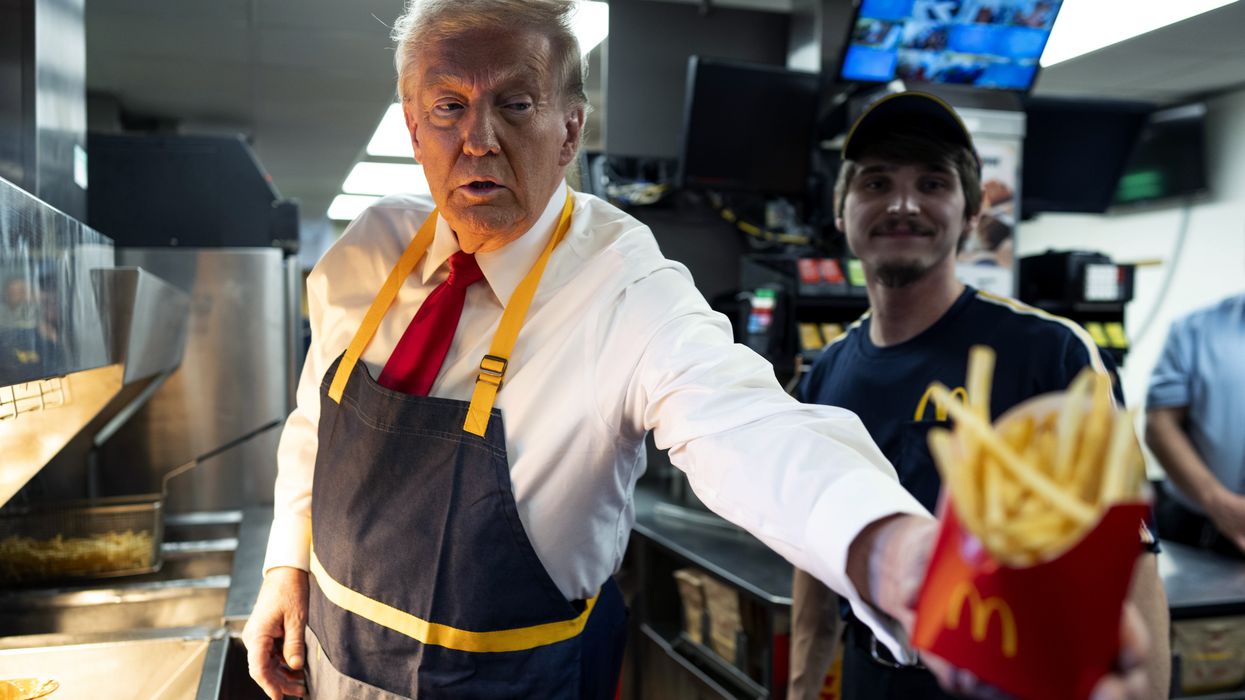
Trump administration policies have lowered wages, reduced employment, and made work less safe.
Although President Donald Trump’s Department of Labor announced in April 2025 that “Trump’s Golden Age puts American workers first,” that contention is contradicted by the facts.
Indeed, Trump has taken the lead in reducing workers’ incomes. One of his key actions along these lines occurred on March 14, 2025, when he issued an executive order that scrapped a Biden-era regulation raising the minimum wage for employees of private companies with federal contracts. Some 327,300 workers had benefited from former President Joe Biden’s measure, which produced an average wage increase of $5,228 per year. With Trump’s reversal of policy, they became ripe for pay cuts of up to 25%.
America’s farmworkers, too―many of them desperately poor―are now experiencing pay cuts caused by the Trump administration’s H-2A visa program, which is bringing hundreds of thousands of foreign agricultural workers to the United States under new, lower-wage federal guidelines. The United Farm Workers estimates that this will cost US farm workers $2.64 billion in wages per year.
As in the past, Trump and his Republican Party have blocked any increase in the federal minimum wage―a paltry $7.25 per hour―despite the fact that it has not been raised since 2009 and, thanks to inflation, has lost 30% of its purchasing power. By 2025, this wage had fallen below the official US government poverty level.
“Since Inauguration Day... the fever dreams of America’s corporate billionaires have come to life with a relentless assault on working people."
Furthermore, the Trump administration is promoting subminimum wages for millions of American workers. Although the Biden administration had abolished the previous subminimum wage floor for workers with disabilities by bringing them up to the federal minimum wage level, the Trump Labor Department has restored the subminimum wage. In addition, the Trump administration is proposing to strip 3.7 million home-care workers of their current federal minimum wage guarantee.
Trump’s Labor Department has also scrapped the Biden plan to expand overtime pay rights to 4.3 million workers who had previously lost eligibility for it thanks to inflation. And it is promoting plans to classify many workers as independent contractors, thereby depriving such workers of key labor rights, including minimum wages and overtime pay.
Not surprisingly, the US Bureau of Labor Statistics reported on December 18, 2025 that, from November 2024 to November 2025, the annual growth of the real wages (wages adjusted for inflation) of American workers had fallen to 0.8%.
Trump’s policies have also fostered unemployment.
Probably the best-known example of this is the Trump administration’s chaotic purge, led by billionaire Elon Musk, of 317,000 federal workers without any sort of clear rationale or due process. On top of this, however, it has shut down massive construction projects, especially in the renewable energy industry. Trump’s recent order to halt the huge wind farms off the East Coast is predicted to cause the firing of thousands of workers.
Ironically, as two economic analysts reported in mid-December 2025, “key sectors of the economy that are central to Trump’s agenda have contracted, with payrolls in manufacturing, mining, logging, and professional business services all falling over the last year.” Despite Trump’s repeated claims to be reviving US manufacturing through tariffs, 58,000 US manufacturing jobs were lost between April (when the administration announced its “Liberation Day” tariffs) and September 2025.
Consequently, US unemployment, which, during the Biden presidency, had bottomed out at 3.4%, had by November 2025 (the last month for which government statistics are available) risen to 4.6%. This is the highest unemployment level in four years, leaving 7.8 million workers unemployed―700,000 more than a year before.
Worker safety and health have also been seriously undermined by the Trump administration. According to the latest AFL-CIO study, workplace hazards kill approximately 140,000 workers each year, with millions more injured or sickened. Although the Occupational Safety and Health Administration is supposed to enforce health and safety standards, the Trump administration cut its workplace inspections by 30%, thereby reducing inspections of each site to one every 266 years.
Similarly, Trump has nearly destroyed the National Institute for Occupational Safety and Health, which provides research on workplace safety standards, by reducing its staffing from 1,400 employees to 150 and slashing its budget by 80%.
Through executive action, the Trump administration eliminated specific measures taken to protect workers. This process included blocking a Biden rule to control heat conditions in workplaces, where 600 workers die from heat-related causes and nearly 25,000 others are injured every year. Moreover, in the spring of 2025, the Trump administration announced that it would not enforce a Biden rule to protect miners from dangerous silica exposure and moved to close 34 Mine Safety and Health Administration district offices. Although a public uproar led to a reversal of the office closures, the administration then proposed weakening those offices’ ability to impose mine safety requirements and, also, weakened workplace safety penalties for businesses.
In addition, Trump appointed corporate executives to head relevant federal agencies, gutted Equal Employment Opportunity guidelines, and, in March 2025, issued an executive order that terminated collective bargaining rights for more than a million federal government workers. This last measure, the largest single union-busting action in American history, ended union representation and protections for 1 out of every 14 unionized workers in the United States.
In a special AFL-CIO report, issued on December 22, 2025, the labor federation’s president, Liz Shuler, and secretary-treasurer, Fred Redmond, declared: “Since Inauguration Day... the fever dreams of America’s corporate billionaires have come to life with a relentless assault on working people,” and “every day has brought a new challenge and attack: On federal workers. On our unions and collective bargaining rights. On the agencies that stand up for us and the essential services we rely on... On our democracy itself.”
Although Trump’s second term in office might have provided a “Golden Age” for the president and his fellow billionaires, it has produced harsh and challenging times for American workers.
Officials concluded he had to be hiding somewhere in the East Wing, hence the desperate effort to root him out with bulldozers.
At the end of his address to the nation on the economy, while fact-checkers were taking a break to avoid carpal-tunnel syndrome, President Donald Trump revealed the real cause of the nation’s economic problems: Joe Biden never actually left the White House, and as the enemy within, has stealthily made the decisions that have caused prices to rise during Trump’s first year back in office.
“Biden is a master of disguises,” Trump explained. “Some days he pretended to be Steve Miller, countermanding my orders to deport only the worst of the worse and directing Kristi Noem to deport every farmworker she could find in order to raise the prices of groceries. Then he was Treasury Secretary Scott Bessent, urging the Fed to lower interest rates in order to overheat the economy."
“Then he was Secretary of Energy Chris Wright, an old fossil fuel guy, undermining renewable energy in order to cause electricity shortages to raise energy prices."
“One day he even snuck into the oval office while I was taking a much needed nap. He removed the sharpie from my hand and used it to increase tariffs on everything Americans buy from overseas, raising prices since Americans pay the tariffs on imports. He even raised coffee and banana tariffs.”
In a giant security failure, the Secret Service had failed to check whether Biden was actually on the departing helicopter when he supposedly left the White House last January. And FBI head Kash Patel admitted he still could not locate former and now-de-facto-acting President Biden. But officials concluded he had to be hiding somewhere in the East Wing, hence the desperate effort to root him out with bulldozers.
“We had to destroy the White House in order to save it,” observed President Trump during a waking moment. “Just wait until next year. Prices on everything are going to come down, and they’ll go down fast, starting on day 366.”
When the state hunts its most essential—and most exploited—workers to meet deportation quotas, the myth of border security collapses.
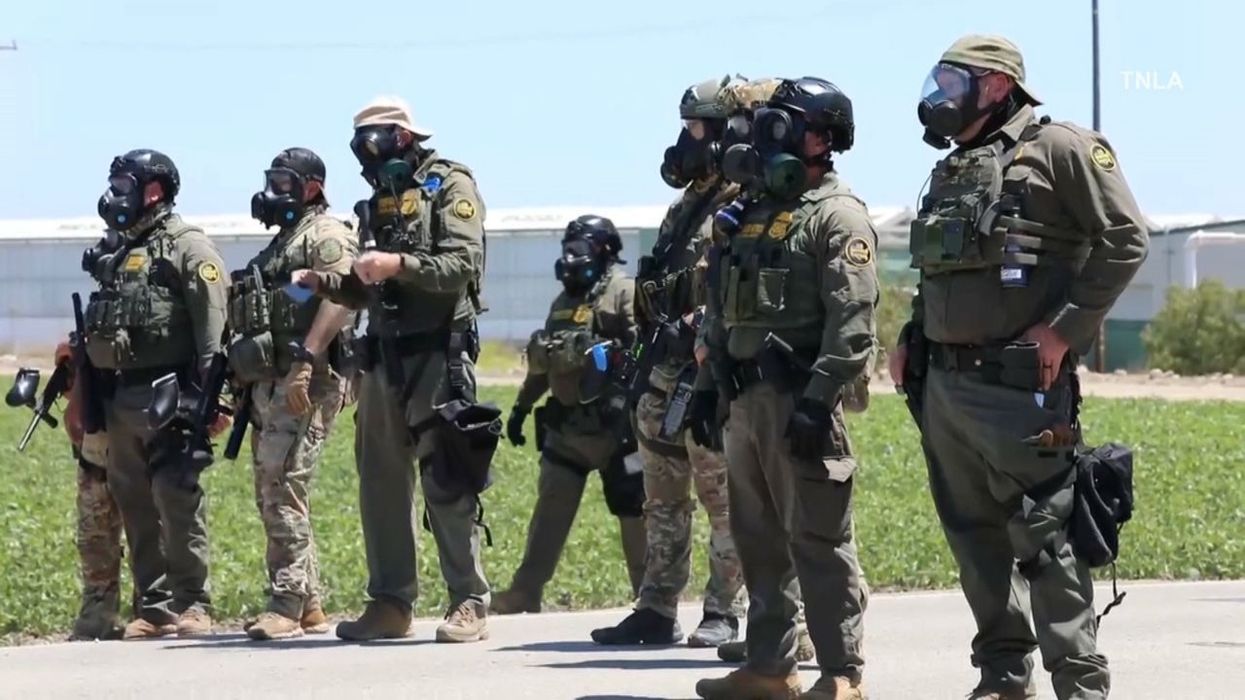
The targeting of farmworkers by US Immigration and Customs Enforcement lays bare the true intent and interests motivating the Trump administration’s mass deportation policy agenda. It also exposes the fundamental contradictions that shape the US political economy. The nature of the state’s abductions, caging, and deportations of those doing the backbreaking work of harvesting fields, is not only revealed by the fact that those detained are not “criminals.” It is the paradox, in which farm sustainers—pillars of the food system whose livelihoods feed communities within and beyond our borders—are being systematically expelled.
While ICE raids rage on in neighborhoods across the country, they are also notably taking place in the very heart of the food system: in labor camps and homes, fields and orchards, packing sheds, outside of schools and labor centers, and across small towns whose economies depend entirely on the people the state targets. ICE is taking advantage of the fact that farmworker communities are often rural and structurally marginalized.
A state that capitalizes against workers it labels as essential in times of crisis yet simultaneously categorizes as “illegal”—especially the moment deportation quotas prove profitable—shows how racial capitalism depends on legal precarity to function. In the agrifood system in particular, the precarity of farmworkers has underpinned how corporations and landowners increase their margins, while keeping the cost of food artificially low.
As activist and award-winning author, Harsha Walia, argues in Border and Rule, borders function not merely to exclude, but to produce a workforce that can be exploited precisely because its existence has been criminalized. The US government, whose imperialist record of consequential trade policies and debt agreements, exporting dumping under in the name of trade or "aid," imposition of sanctions, and military interventions in or with foreign nations, has made significant contributions to producing crises of migration. At the same time, the state determines the rights and protections those same migrants might have—migrants it requires as a key labor force. For migrant farmworkers in particular, this vulnerability and legal precarity is even more stark given the historical double standards within agriculture. Farmworkers are routinely carved out of basic labor protections, including being denied overtime rights and robust health and safety regulations. Their disposability is not accidental; it is legislated and maintained with the underlying political and economic assumption that those who are forced to look for work across borders can, or even should, remain unprotected and exploited.
To criminalize those who feed you is more than a contradiction. It is an indictment, revealing a society willing to squeeze labor while kidnapping and expelling the people who provide it.
So, even as US farmworkers are those whose skill and sweat stabilizes and maintains US agriculture—a foundation of public health and our economy—under President Donald Trump’s deportation siege, they find themselves under regular threat because of their supposed legal status.
According to US Department of Agriculture data, over 40% of US farmworkers are undocumented migrants. In California, that percentage is even higher, with estimates ranging from nearly half to upwards of 70%. This means that the state that grows approximately half of the US vegetables and over 75% of the country’s fruits and nuts is an easy target for ICE raids. Residents of Kern County, which has the highest concentration of agricultural workers in the state, recently witnessed the opening of California’s newest and largest migrant detention facility this fall. This facility is another signal to farmworkers that the state’s surveillance and criminalization of their community is becoming an inescapable part of daily life.
Additionally, in early October, the Department of Labor announced a new rule that slashes the wages of H-2A workers between $5 to $7 per hour, thereby transferring $2.46 billion dollars in wages from workers to employers each year. Crucially, US agriculture has become increasingly dependent on the H-2A program to address chronic labor shortages, as it permits eligible employers to recruit foreign workers for temporary agricultural jobs. The administration’s decision therefore not only undermines the wage protections intended to make the H-2A program a lawful and regulated alternative to undocumented labor, but also exposes its willingness to undercut the very workforce the program is purported to support. A coalition of California attorneys general led a letter noting the various consequences of the new rule, which they claim “abandons reliable farm-specific data,” and exacerbates "the roots of farmworker poverty for both H-2A workers and domestic farmworkers alike." United Farm Workers (UFW) has also launched a lawsuit intended to reverse the administration’s decision, which they claim reflects, “one of the largest wealth transfers from workers to employers in US agricultural history.”
In essence, the administration’s pursuit of farmworker communities serves no legitimate economic or social goal. Instead, it enacts government scapegoating: the creation of a rhetorical problem (“illegal workers”) and the violent pursuit of that manufactured threat in order to justify the ever-expanding profitability of the border-security apparatus. It is an exercise of racialized state theater, and a manifestation of a food system left to the logic of deregulation and cheap, disposable labor—labor the border itself ensures under the guise of protecting national security or state sovereignty. Reports from the federal Department of Labor indicate that ICE’s siege is already contributing to labor shortages and supply consequences, as farmworkers are too afraid to leave their homes. Farmer organizations have also expressed solidarity with farmworkers, noting their importance in keeping the food economy afloat.
The fear and suffering imposed on farmworkers should neither be reduced to the specter of a labor shortage. It is a fear that fractures community life, determines whether someone seeks medical care, and dictates whether a child goes to school. In the aftermath of raids, it leaves mothers, fathers, children, and their families terrorized and often unaccounted for. It also compounds the daily struggles of working in systems that maintain unsafe labor conditions and unfair wages, such as mounting food insecurity and chronic health issues.
These communities are not peripheral cogs in some vast, anonymous agricultural machine. They are the harvesters of our food. To criminalize those who feed you is more than a contradiction. It is an indictment, revealing a society willing to squeeze labor while kidnapping and expelling the people who provide it. It does not reflect lawfulness or the interests of "public safety."
While the going after farmworker communities in such a concentrated manner might be relatively new to the Trump administration, farmworkers’ long-standing legal precarity and fight for basic protections—while holding up such a huge portion of the food economy—is not. If targeting workers whose status is defined not by the role they play in feeding the nation or sustaining the economy, but by their documentation, does not underscore the structural flaws inherent in our entire economic system, it at least reveals the insincerity of Trump’s war on im/migrants and the choreography of the militarized border project. As ICE raids against farmworkers continue nationwide, the entire pretense of border security reveals itself as utterly transparent.
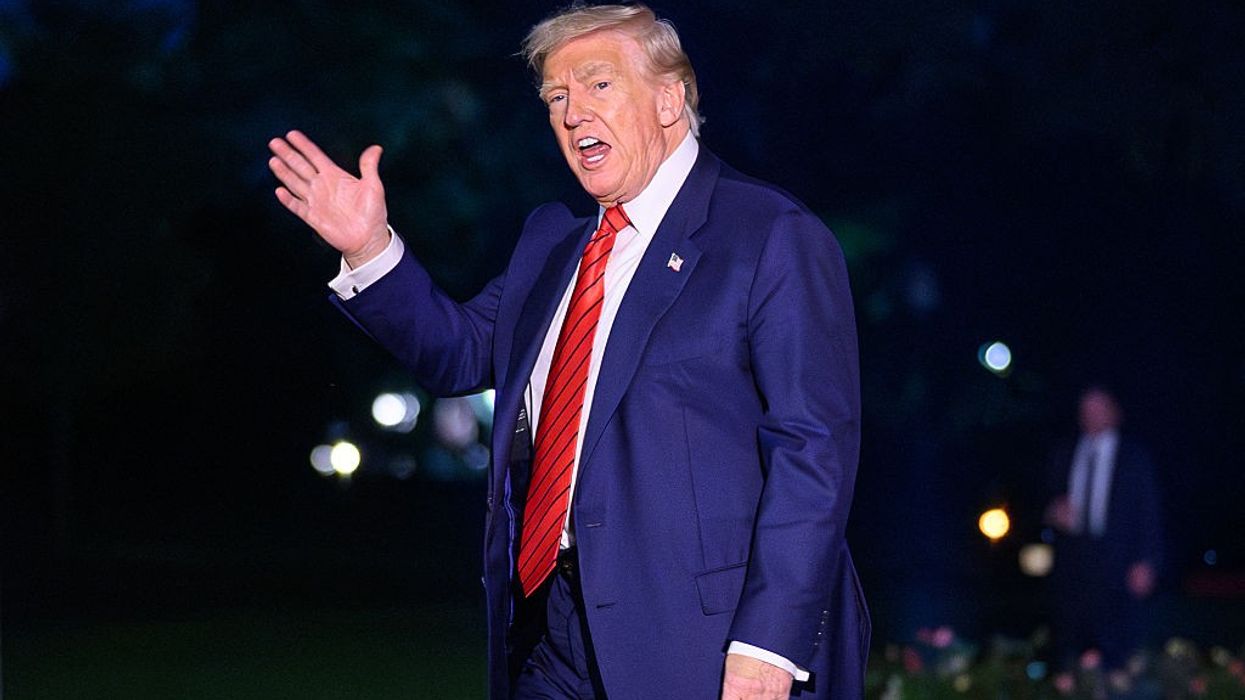
"The racism here is on steroids," said one critic about Trump's statements on immigrant farmworkers.
U.S. President Donald Trump gave a lengthy interview to CNBC on Tuesday and critics quickly pounced on the president for telling a large number of false claims on topics ranging from monthly jobs numbers to the price of gas to international trade agreements.
Toward the start of the interview, CNBC host Joe Kernen pushed back on Trump's claims that the Bureau of Labor Statistics had "rigged" job creation numbers against him and debunked a Trump statement that the BLS had covered up negative jobs data revisions under the Biden administration until after the November 2024 presidential election.
Trump, however, insisted that his statements about hiding downward revisions until after the election were correct even though the biggest downward revisions actually occurred in August 2024, well before the election took place.
Trump is on CNBC making a case that jobs numbers are rigged -- even as MAGA-friendly host Joe Kernen tries to push back pic.twitter.com/9jAkiCDI8h
— Aaron Rupar (@atrupar) August 5, 2025
Commenting on Trump's assertion, Media Matters for America senior fellow Matt Gertz described it as "completely backwards."
"The BLS announcement on November 1 [2024] showed weak growth of 12,000 jobs in October and downward revisions to August/September of 112,000," Gertz explained on X. "Then after the election, the October figure was revised upward. Impossible to tell if Trump is lying, dumb, or sundowning."
Nick Tiriamos, the chief economics correspondent for The Wall Street Journal, similarly said that Trump was "getting his dates wrong" when he asserted a cover-up of negative jobs numbers given that "the big downward revision" was reported before the election took place.
Trump also made also false claims about the price of gas in the United States falling to just $2.20 per gallon, which prompted Kernen to note that the lowest prices he's seen for gas in the U.S. were $2.80 per gallon.
TRUMP: Joe, looking at energy. Energy is down $2.20 cents a barre-- a gallon for a car
KERNEN: I've seen $2.80 pic.twitter.com/6GIfGG5JJf
— Aaron Rupar (@atrupar) August 5, 2025
National security attorney Bradley Moss slammed Trump for his claim about gas prices and added that the latest data show that inflation has been accelerating in recent months as the president's tariffs begin to force companies to raise prices.
"The rest of the country is suffering from higher prices on everything, and this senile old man is living in a fantasy world in which it's simply not happening," he wrote on Bluesky.
Trump proceeded to make false claims about the trade deal he had recently struck with the European Union when he said that the agreement gave him "$600 billion to invest in anything I want." This drew the ire of Steve Peers, a professor of E.U. and human rights law at Royal Holloway University of London.
"Well no, it's a vague, nonbinding, unwritten nonstatement about companies' future investment plans, not cash for him to personally control," Peers commented on Bluesky. "But enjoy your weird demented fantasy, I guess."
Another eye-popping Trump statement came when he tried to defend the use of immigrant labor in the American agricultural industry by claiming that the immigrants had unique physical attributes that were absent from American workers.
"People that live in the inner city are not doing that work," Trump said of the prospects of American citizens picking crops. "They've tried, we've tried, everybody tried. They don't do it. These people [immigrants] do it naturally. Naturally... they don't get a bad back, because if they get a bad back, they die."
Trump on undocumented farm workers: "People that live in the inner city are not doing that work. They've tried, we've tried, everybody tried. They don't do it. These people do it naturally. Naturally ... they don't get a bad back, because if they get a bad back, they die." pic.twitter.com/HxXtKtIPLa
— Aaron Rupar (@atrupar) August 5, 2025
This statement drew the attention of Branden McEuen, a historian at Wayne State University who specializes in teaching about the history of the eugenics movement. Specifically, McEuen linked Trump's statement to past racist beliefs about people of color being genetically predisposed to engage in manual labor.
"Trump saying people of color are naturally suited to farm labor sure sounds a lot like the slaveholders that said slaves were naturally inclined to servitude," he remarked.
SiriusXM radio host Michelangelo Signorile picked up a similar vibe from Trump's statement about farmworkers.
"The racism here is on steroids, as Trump tried to make [the] case to MAGA that farmers need exemptions," he wrote. "[Trump] says brown people do hard labor 'naturally' and don't get [a] bad back, while also saying they've tried to replace them with people 'in the inner city' but they can't get them to do the work."
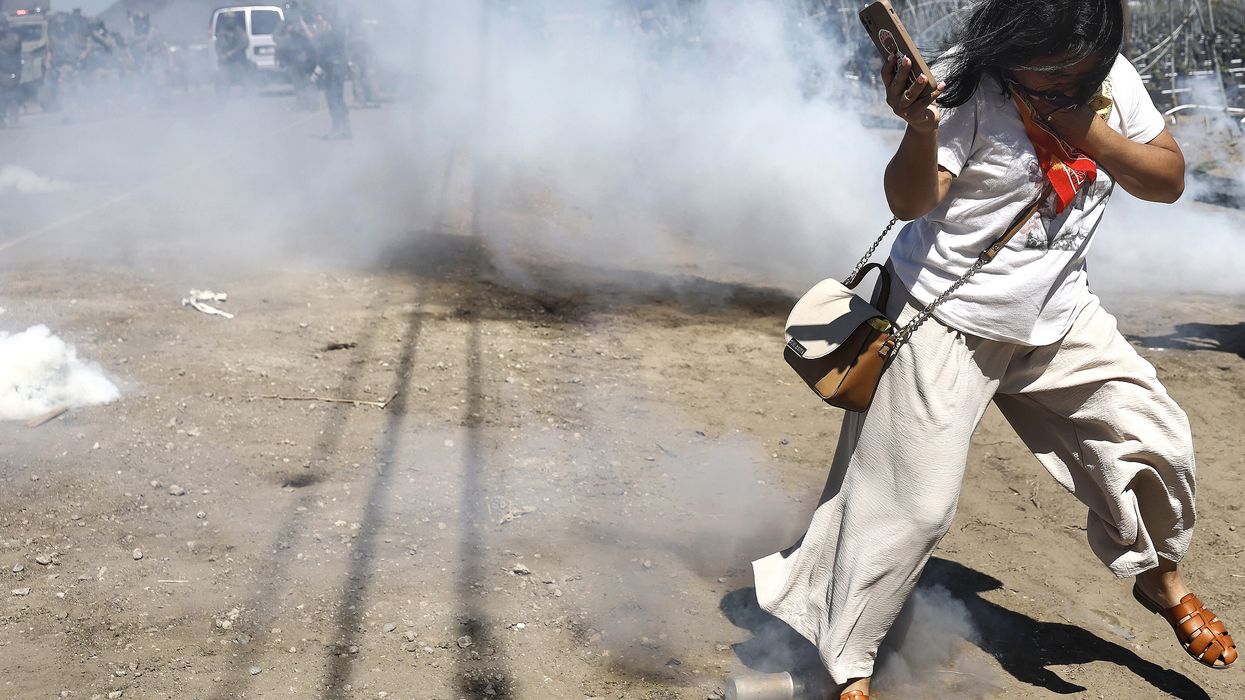
"ICE was conducting a raid using disproportionate displays of force against local farmworkers and our agricultural community," said U.S. Rep. Salud Carbajal, who was denied entry to one farm where he was attempting to provide oversight.
Federal immigration agents were met with a strong show of resistance Thursday when they raided two farms in Southern California—with hundreds of community members protesting the arrests of migrants at the facilities growing cannabis and vegetables.
Los Angeles-based independent journalist Mel Buer reported that hundreds of community members gathered to protest the raid by Immigration and Customs Enforcement (ICE) at Glass House Farms' facility in Camarillo, Ventura County, and supporters dropped "hundreds of pounds of water, food, and masks."
Local news outlet KTLA reported that "dozens of farmworkers were detained" in the raids at Glass House Farms' properties in Camarillo and Carpinteria.
Federal law enforcement first arrived in Camarillo at about 11:00 am, and the situation escalated as a crowd of community members gathered.
The federal agents first deployed tear gas into the crowd early Thursday afternoon.
Ventura County District 5 Supervisor Vianey Lopez told KTLA that as the federal agents used force on the protesters, she saw two government vans, each carrying about 15 people, leaving the farm.
"It is an ongoing situation that is very concerning for the safety of those showing up with anger and disappointment at what is happening to hardworking people in our community," Lopez said.
The immigration enforcement agents were joined by National Guard troops in military vehicles later that afternoon in Camarillo, according to The Guardian, as other federal agents carried out a simultaneous raid in Carpinteria, about 50 miles northwest in Santa Barbara County.
Carpinteria City Council members Julia Mayer and Mónica Solórzano were among a large crowd of community members who gathered to protest the raid, and they told the Santa Barbara Independent that federal officers "pushed us as a group into the ground" and threw at least one smoke grenade, causing Solórzano to injure her arm.
U.S. Rep. Salud Carbajal (D-Calif.), who represents Santa Barbara County and part of Ventura County, released a statement condemning the ICE raid and saying he had been "denied entry and not allowed to pass" when he attempted to "conduct oversight" over the raid targeting his constituents in Carpinteria.
"ICE was conducting a raid using disproportionate displays of force against local farmworkers and our agricultural community," said Carbajal. "There's been a troubling lack of transparency from ICE since the Trump administration started, and I won't stop asking questions on behalf of my constituents."
Carbajal is now one of several Democratic elected officials who have been denied the ability to oversee ICE operations. Rep. LaMonica McIver (D-N.J.) pleaded not guilty last month to forcibly interfering with federal officers—charges that stemmed from her attempt to conduct congressional oversight at an ICE detention center in Newark, New Jersey.
"These militarized ICE raids are not how you keep our communities safe. This kind of chaos only traumatizes families and tears communities apart. They are also a gross misuse of limited resources and a betrayal of the values that define us as Americans," said Carbajal, who noted that the identities of those detained in the raids had not been made clear.
In Camarillo, a resident named Judith Ramos told The Guardian that she had learned from her father, who worked in Glass House Farms' tomato fields, that "immigration was outside his job" on Thursday morning.
Ramos, a 22-year-old certified nurse assistant with two younger siblings, said her father told her "to take care of everything" if he was detained by ICE.
She was sprayed with a chemical substance when she arrived at the farm and joined the crowd of protesters, and told The Guardian that she did not know where her father was.
Gov. Gavin Newsom, a Democrat who has clashed with President Donald Trump and filed a lawsuit against the administration last month over its federalization of the California National Guard to respond to protests against immigration raids in Los Angeles, posted a video showing children running from the federal agents.
"Trump calls me 'Newscum,'" said the governor, "but he's the real scum."
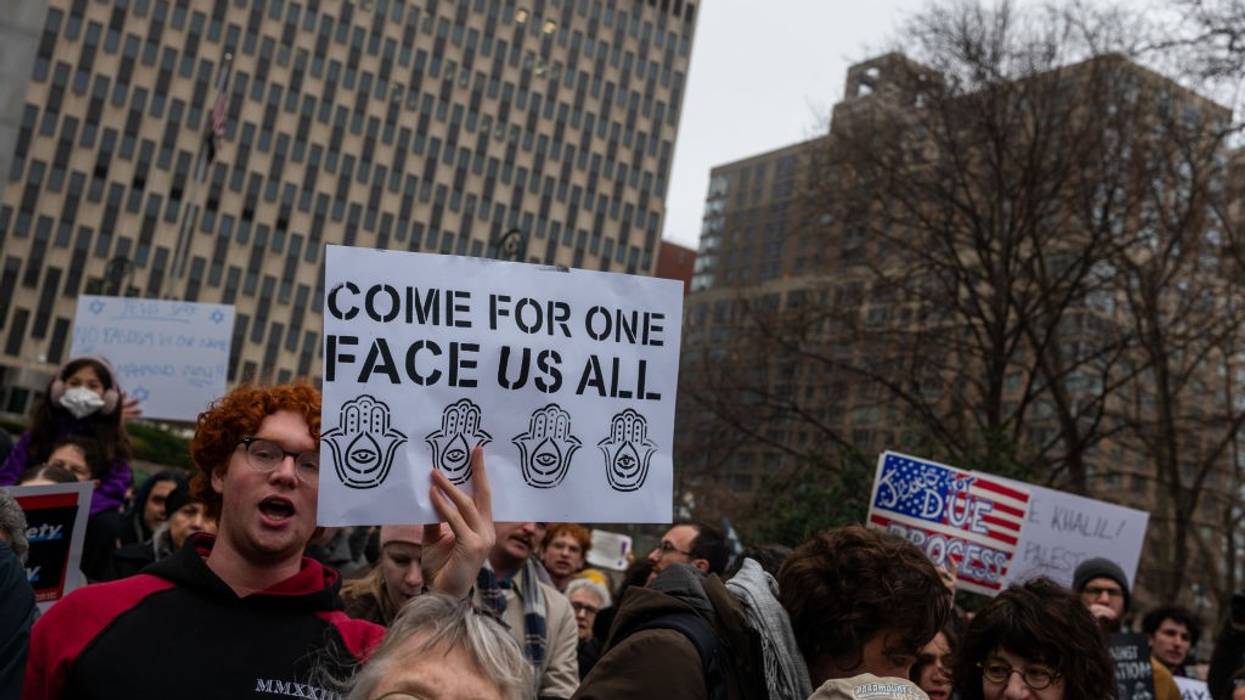
"Immigrants are not the enemy, we are part of the worker movement towards justice which includes fair wages, healthcare, education, housing, and solidarity," said one social justice group.
The Trump administration sparked a fresh wave of fury over its deportation agenda with the Tuesday detentions of Tufts University Ph.D. student Rumeysa Ozturk in Massachusetts and Alfredo "Lelo" Juarez Zeferino, a farmworker activist in Washington state.
The Boston Globe reported that Ozturk, a Turkish national, is a "student at the Tufts's doctoral program for Child Study and Human Development, according to her LinkedIn, and graduated with a master's degree from the Teachers College at Columbia University."
The Fulbright Scholar is one of several foreign academics—including multiple from Columbia in New York—targeted by Immigration and Customs Enforcement (ICE) after speaking out about the U.S.-backed Israeli assault on the Gaza Strip.
According to the Globe:
Ozturk does not appear to be a leading figure of the Pro-Palestinian protest movement at Tufts. But according to Ozturk's attorney, the student's photo and other identifying information were recently posted on Canary Mission, a website that documents individuals and organizations it considers to be antisemitic. Pro-Palestinian protesters say the site has doxxed and targeted them.
In March 2024, Ozturk co-authored an op-ed in the Tufts Daily, the university's student paper, criticizing the university's response to the pro-Palestinian movement and efforts by members of the student body to sever its ties to Israel.
"In a statement provided through her attorney, community activists said that Ozturk was 'ambushed' by ICE agents on the way to an Iftar dinner with friends after leaving her apartment," the newspaper noted. "Neighbors reported that unmarked cars had allegedly been surveilling the location for two days before apprehending her on the street."
Responding to reporting on social media, the group RootsAction
said: "Another pro-Palestine student kidnapped off the streets and disappeared by the Feds. Rumeysa Ozturk was abducted last night by ICE after leaving her apartment to go to Iftar dinner."
Jonathan Cohn, political director for the organization Progressive Mass,
declared that "the Trump administration's ICE goons are acting like kidnappers because that's what they are."
Authorities faced similar backlash for their actions toward Mahmoud Khalil, a legal permanent resident who last year helped lead protests and finished his graduate studies at Columbia. When Khalil's family released a video of his arrest earlier this month, his wife, Noor Abdalla, said, "This felt like a kidnapping because it was: Officers in plain clothes—who refused to show us a warrant, speak with our attorney, or even tell us their names—forced my husband into an unmarked car and took him away from me."
Not long after Khalil's detention, masked agents "abducted" Badar Khan Suri, a postdoctoral fellow at Georgetown University in Washington, D.C. One of Suri's attorneys called his case "emblematic of a broader strategy by the Trump administration to suppress voices—citizens and noncitizens alike—who dare to speak out against governmental policies."
An unverified video that appears to show Ozturk being taken into custody circulated on social media Wednesday.
Turkish PhD student Rumeysa Ozturk was detained by masked U.S. ICE agents yesterday while heading to an Iftar dinner in Massachusetts.
Ozturk, who held a valid F-1 visa and studied at Tufts University, was reportedly being watched for two days before her arrest.
She was on the… pic.twitter.com/eL92GyKE3J
— Clash Report (@clashreport) March 26, 2025
In a Tuesday email that did not name Ozturk, Tufts' president Sunil Kumar said: "We received reports that an international graduate student was taken into custody this evening by federal authorities outside an off-campus apartment building in Somerville. The university had no pre-knowledge of this incident and did not share any information with federal authorities prior to the event."
"From what we have been told subsequently, the student's visa has been terminated," Kumar continued. "We realize that tonight's news will be distressing to some members of our community, particularly the members of our international community. We will continue to provide information, support, and resources in the days ahead as more details become available to us."
Supporters of Ozturk are planning a rally in Powder House Square Park at 5:30 pm Eastern on Wednesday.
Meanwhile, on the other side of the country, Juarez "was detained violently by ICE," according to a Tuesday Facebook post from the social justice group Community to Community Development. "He was on his way to drop off his partner at her workplace, and ICE agents broke his car window when he tried to exercise his rights."
"We feel this is a targeted attack on farmworker leadership, and we must not allow this to continue," the group said, urging supporters to contact elected officials in Washington to demand his release. "Lelo's leadership and activism and leadership have been vital in protecting farmworkers and immigrants' rights and well-being."
"As unions, community organizations, student groups, and people who have decency, We Demand That ICE stays out of Washington and let workers be at peace," the group added. "Immigrants are not the enemy, we are part of the worker movement towards justice which includes fair wages, healthcare, education, housing, and solidarity."
The group's founder, Rosalinda Guillen, told The Seattle Times that Juarez, a 25-year-old berry picker and member of the Indigenous Mexican Mixteco community, has organized on behalf of farmworker rights in the state since he was just 14.
United Food and Commercial Workers International Union (UFCW) 3000 said in a statement that "we're furious over these credible reports of immigration enforcement violently detaining Alfredo 'Lelo' Juarez Zeferino, a longtime labor leader who fought for farmworkers and immigrant rights and who helped expose the existence of the very same unmarked ICE facility in Ferndale where he was reportedly held this afternoon."
"In response, our union members grabbed bullhorns and traveled directly to the facility to protest this injustice. We will continue to show up to worker-led actions as long as it takes," the union added. "By targeting workers like Lelo—and, reportedly, a union lab tech at the University of Washington—the Trump administration clearly aims to terrorize immigrant workers no matter how they came to this country. We will not stand for it."

"This work is an important example of how infectious diseases are influenced by climate conditions," said the lead author of a new report.
Scientists at the University of California noticed that cases of Valley fever, a respiratory infection that is spread only through the inhalation of fungal spores, only peaked in certain parts of the state in recent years—and when they set out to discover why, they found that drought may play a major role in rising cases of the disease.
In a study published in The Lancet Regional Health - Americas on Tuesday, the researchers explained that increased droughts in the state have created conditions for a growing number of people to inhale coccidioides spores, which thrive in soil and can be inhaled through dust.
The scientists analyzed cases of Valley fever from 2000-22, and found that cases have risen dramatically since the turn of the century—particularly from 2014-18 and again from 2018-22, two periods when reported cases tripled.
Cases of the seasonal illness have long been known to occur mostly between September and November, but the researchers found "there were certain years during which few or no counties had a seasonal peak in Valley fever cases," said lead author Alexandra Heaney, an assistant professor at the UC San Diego Herbert Wertheim School of Public Health and Human Longevity Science. "This made us wonder what was driving these differences in seasonality between years, and based on the timing we observed, we hypothesized that drought might be playing a role."
"Even though droughts appear to decrease Valley fever cases in the short term, the net effect is an increase in cases over time, particularly as we experience more frequent and severe droughts due to climate change."
During periods of drought, seasonal peaks of Valley fever were less severe, according to the study. It was after the dry periods, when heavy rains returned, that cases spiked.
The researchers suggested that the return of rainy weather could allow the heat-resistant coccidioides fungus to proliferate because of the newly moist soil and the influx of nutrients. Another hypothesis was that droughts cause a decline in the population of rodents that host the fungus.
"Because dead rodents are thought to be an important source of nutrients for the fungus, it may be able to survive and spread more easily in drought conditions," reported UC San Diego Today.
"This work is an important example of how infectious diseases are influenced by climate conditions," Heaney said. "Even though droughts appear to decrease Valley fever cases in the short term, the net effect is an increase in cases over time, particularly as we experience more frequent and severe droughts due to climate change."
The study comes a month after a music festival in the state's Central Valley was linked to 14 cases of Valley fever, which can cause joint pain and fatigue as well as respiratory symptoms and can spread to the bones or brain in rare, potentially fatal cases.
People who work outside, including farmworkers and construction workers, are most at risk for breathing in the fungus.
The scientists called for more thorough monitoring of the fungus, which can be difficult to detect and whose symptoms are often confused for other respiratory illnesses. They also called for people in the state to wear face coverings when coming into contact with soil and dust and to minimize time outdoors, if possible, during dry and dusty periods.
Heaney said the team is next looking at climate dynamics related to Valley fever in Arizona, where about two-thirds of cases occur in the United States.
"Understanding where, when, and in what conditions Valley fever is most prevalent is critical for public health officials, physicians, and the public to take precautions during periods of increased risk," said Heaney.
Knowing the true human toll resulting from soaring temperatures might help jolt the nation into action on climate change sooner and lessen the mitigation and resilience we will need.
Extreme heat and wildfire smoke should of course be defined as major disasters by the Federal Emergency Management Agency. According to the National Weather Service, heat kills more people in this nation than hurricanes, tornadoes, floods, and lightning combined. The Washington Post reported that extreme heat killed at least 28 people across the nation in the past week.
Yet, despite several requests from states over the years, most recently California during a 2022 “heat dome” and wildfires, no White House has ever approved a disaster declaration for heat or smoke.
Some states outright ignore the dangers in the name of greed. Over the last 13 months, Texas and Florida have enacted laws that block localities from issuing heat protection rules for workers. Nationally, the Biden administration proposed on July 2 new rules to protect workers from heat. But the U.S. Chamber of Commerce and a host of construction and agricultural lobbying groups have opposed the prospect of rules for months and are sure to oppose them in the courts.
It is clear that the opposition is willing to risk sacrificing lower-wage construction and farm workers to the sun’s brutality as executives count the cash in air conditioned offices. Farm workers make an average $13.59 an hour. Hispanic construction laborers make $15.34 an hour, well below the $25-an-hour living wage for a family of four in the Massachusetts Institute of Technology’s Living Wage Calculator. Farm workers respectively have 35 times and 12 times higher risk of heat-related injuries than in all other industries.
Making the latest case for disaster declarations is a consortium of 31 environmental, public health, labor, and justice groups, led by the Center for Biological Diversity. In a June 17 petition to FEMA, the groups warned that the record-breaking heat and fire disasters we are already experiencing are likely only the beginning. The world’s nations, particularly the top burners of fossil fuels such as the United States, have yet to unify to prevent uncontrolled global warming.
“These may be the coolest days and the cleanest air of the 21st century,” the petition said, “and it is already unbearably hot and unsafe for too many Americans.”
The petitioners hope that disaster declarations can unlock federal funds for short-term relief such as cooling centers, water supplies, emergency air conditioning and air filtration systems, and financial assistance for evacuations. Declarations could also lead to money for long-term, proactive mitigation, such as renewable energy storage and microgrids to withstand utility blackouts, and retrofitting of homes and buildings to be more energy efficient and weatherized.
That is vitally important for disadvantaged families who are more likely to live on shadeless, asphalt and concrete “heat islands.” Such communities are often already overburdened with pollution associated with fossil fuel burning and proximity to polluting industries. The petition called extreme heat a “harm multiplier” for these communities because of poor housing stock, difficulty in paying utility bills, and pre-existing poorer health.
In making their case, the 31 environmental groups cite data from the Intergovernmental Panel on Climate Change, projecting that financial cost of extreme heat in the United States will explode fivefold to half a trillion dollars a year by 2050.
There is something else that would make their case even stronger: Data on people. The federal government is woefully behind university researchers in calculating the current and future mortality of heat and smoke.
It should be just as much an emergency for the government to tell us the toll of heat and wildfire smoke. Especially since the government itself says “most heat-related deaths are preventable.”
Property damage from tornadoes, hurricanes, and floods is easy to visualize and leaves the costs of emergency assistance and repair without much question. Because of the nation’s overall wealth, which gives us relatively sturdier dwellings and stronger rebuilds, deaths from those weather disasters are a fraction of the fatalities suffered in lesser resourced parts of the world. For instance, while Hurricane Katrina took 1,400 lives in the US in 2005, Cyclone Nargis in the Bay of Bengal made landfall in Myanmar in 2008 and killed 140,000 people—100 times more people than Katrina.
People perishing by heat or smoke one by one in the privacy of their homes or in the sterility of hospitals is relatively invisible. An analysis of heat deaths by the Cincinnati Enquirer found that about half of heat deaths happen at home, often to people who lack air conditioning, are elderly with pre-existing medical conditions, or who are socially isolated.
The petition by environmental groups points to the current invisibility of heat deaths. It cites federal data saying there were 2,300 deaths last year where heat was listed as a factor on death certificates. That by itself was a record in nearly a half-century of such record keeping. But left as is, that toll would seem to pale next to last year’s nearly 43,000 car fatalities, nearly 43,000 gun-related deaths, or 107,000 drug overdose deaths.
The number of heat deaths is assuredly far more. Heat is often not listed on death certificates as a contributing factor to the final cause of death, such as kidney failure, organ failure, and heart attack. There is no uniform protocol tying together how the federal government, the 50 states, or the nation’s 3,000 counties calculate heat-related deaths.
University scientists and health and safety groups are filling in the gaps as best they can.
In 2020, a study in the journal Environmental Epidemiology determined that 5,600 deaths a year were attributable to heat from 1997 to 2006, eight times higher than federal figures. In 2022, researchers at the University of Pennsylvania and the Philadelphia Veterans Administration Medical Center calculated that the number of people who died from heat-related causes between 2008 and 2017 was two to three times higher than federal figures. The Penn and Philadelphia VA researchers also found that extreme heat days were associated with “significantly higher” cardiovascular mortality among adults.
This spring, Texas A&M climate scientists Andrew Dessler and Jangho Lee told the Associated Press that last year’s real national annual heat death toll may be 11,000, nearly five times higher than the 2,300 cited by the government.
In the work world, the federal Bureau of Labor Statistics says 43 workers died in 2022 from heat. But reports by Public Citizen, the most recent being in May of this year, estimate that as many as 2,000 workers a year (46 times more) die from heat and another 170,000 are injuries triggered by heat, such as becoming dizzy and falling off a roof.
But the injury might simply be listed as a fall without mention of heat. Public Citizen says government figures are “decidedly unreliable” and “notoriously problematic” because they are based on self-reporting surveys of employers and “less than half of employers even maintain the required records.”
No matter what number you’re looking at, all of them are likely to soar much higher without concerted global action on climate change. Without a drastic and immediate cut in fossil fuel emissions, the planet is currently staring at a 5-degree Fahrenheit rise in temperatures this century, with the U.S. being the world’s biggest historical contributor to global warming gases.
According to a study published last year by Lee and Dessler in the journal GeoHealth, the US suffered an average of 36,444 deaths a year from extreme temperatures a quarter century ago, with most of those deaths being cold-related. With a rise of 5 degrees Fahrenheit, that number could explode to 200,000 a year this century, driven significantly by shifts of heat mortality to Northern cities. Among the cities with the highest projected temperature increases are Minneapolis, Milwaukee, and Muskegon, Minnesota.
Parallel to that, and arguably worse, there is virtually no federal data on the fatal impacts of wildfire smoke. The National Oceanic and Atmospheric Administration (NOAA) lists a mere 535 deaths directly from wildfires over the last 45 years in its list of “Billion-Dollar Weather and Climate Disasters.” But there are likely thousands more from the smoke, which is associated with cardiovascular, ischemic heart disease, digestive, endocrine, diabetes, mental, and chronic kidney disease mortality.
Such smoke is not covered by the Clean Air Act, and there is growing evidence that it is eroding decades of gains in the nation’s air quality under the act. A new study by researchers at UCLA found that the fine particulate matter (known as PM2.5) in wildfire smoke that easily passes into the lungs and spreads throughout the body, contributed to the premature deaths of more than 50,000 people in California from 2008 to 2018, with an economic impact of between $432 billion and $456 billion.
Another study this spring by the National Bureau of Economic Research found that 16,000 people a year died from smoke PM2.5 across the US from 2011 to 2020. That study found that elevated long-term smoke concentrations “increase mortality rates at both low and high concentrations.” Wildfire smoke, as the nation found out last year with its orange-brown skies that dulled the sun into a moon-like disk, spreads for so many thousands of miles from its source that the study projects a “large mortality burden not only in regions where large fires occur but also in populous regions with low smoke concentrations (e.g., the eastern US).”
Juan Aguilera, a physician researcher at the University of Texas School of Public Health in El Paso, found that wildfire smoke stresses immune systems and triggers inflammation. He told National Public Radio that living in a wildfire-prone area is “something equivalent to smoking like one pack a day, or 10 packs a week.”
Today’s 16,000 deaths a year from wildfire smoke could grow to nearly 28,000 by mid-century under a high warming scenario and take a cumulative 700,000 lives by 2055, according to the National Bureau of Economic Research.
“Our research suggests that the health cost of climate-driven wildfire smoke could be among the most important and costly consequences of a warming climate in the US,” NBER scientists said.
That concern is bolstered by a new study by Australian researchers who found that the number of extreme wildfires has doubled since 2003, with the last seven years including six of the most extreme. Lead author Calum Cunningham told the New York Times last month, “That we’ve detected such a big increase over such a short period of time makes the findings even more shocking. We’re seeing the manifestations of a warming and drying climate before our very eyes in these extreme fires.”
Adaptation could cut into the mortality risk, but it alone is likely not enough, given how Lee and Dessler noted in their study: “Many adaptive responses (e.g., installing air conditioning, improved health care, better urban planning) are too expensive for poorer individuals or communities, so adaptation will necessarily require society to pay for much of the adaptation. This would represent a huge transfer of wealth from richer to poorer members of our society, a dicey proposition in today’s political environment.”
Even better, of course, would be a serious drive toward net-zero greenhouse gas emissions. The International Energy Agency says no new gas, oil or coal investment is necessary as renewables, energy efficiency and electrification already can deliver the vast majority of emissions reductions.
Though all heat-related disaster declaration requests to FEMA thus far have been denied, agency spokesperson Daniel Llargues told National Public Radio that “there’s nothing specific” in federal law that precludes such a declaration. “If a circumstance did occur where an extreme heat incident exceeded state and local capacity, an emergency or major disaster declaration request submission could be considered,” Llargues said in an email.
And the White House can make a disaster declaration regardless of FEMA’s recommendation. In May, President Biden overruled a FEMA denial of a major disaster declaration so parts of Massachusetts could get federal aid to recover from severe storms and flooding last September.
The process of FEMA better understanding a “circumstance” where extreme heat and wildfire smoke constitutes a disaster starts with a better understanding of the danger. Some parts of the government are trying to mine the data, such as the National Institute of Health’s Heat Information System.
Extreme heat and wildfire smoke also offers FEMA a fresh chance to create new paradigms of aid, to avoid inequities seen in other disasters. Current FEMA storm funding often maintains systemic racism, putting communities with more white residents and higher property values back on their feet, while low-income people and communities of color, historically hemmed into lower property values by redlining, are left on their knees.
As Politico wrote in 2022, FEMA grants to help richer families raise homes above flood levels “have helped turn dozens of wealthy or overwhelmingly white areas into enclaves of climate resilience. The communities are seeing rising property values and economic stability, while much of the nation faces devastating effects of rising seas and intensifying floods.”
One can only imagine the results if the same mentality is ultimately applied to communities marooned on “heat islands.” Seniors and Black adults are at disproportionate risk of cardiovascular deaths from extreme heat according to a Penn study last year. A 2022 Penn study warned, “As extreme heat events increase, the burden of cardiovascular mortality may continue to increase and the disparities between demographic subgroups may widen.”
The same can be said for those lower-wage farmworkers, construction workers and other industries where heat is a major risk. Often, the workers in those industries are disproportionately of color and immigrants. Other trades where heat is a high risk include landscaping, and indoor jobs in warehouses, restaurant kitchens, mills, and doing maintenance.
And let’s not forget public school teachers and staff, as huge percentages of the nation’s public school buildings are not equipped for the rising heat.
There are scientists, including UCS’s Juan Declet-Barreto, who have long called for standard methodology to more accurately determine whether excess deaths originated with heat or smoke exposure. Last year, Ashley Ward, the director of Duke University’s Heat Policy Innovation Lab, wrote in STAT that we need much better and uniformed coding for external causes of injuries and incentives for health systems to apply the codes for cases involving extreme heat. Without uniform coding, the public is left to weigh the emerging body of studies that have different estimations and may “add to the incorrect assumption that there is a lack of scientific consensus.”
Seconding the call for data collection is the Federation of American Scientists. Among its major list of recommendations is a “whole-of-government strategy to address extreme heat.” The federation said that true mortality counts are “essential to enhancing the benefit-cost analysis for heat mitigation and resilience.”
But having heat- and smoke-related mortality data is more than that. Knowing the true toll might help jolt the nation into action on climate change sooner and lessen the mitigation and resilience we will need. One only need think back to the peak of the COVID-19 pandemic and how critical data was to devise public health policy. Currently, the federal data on extreme heat and wildfire smoke itself constitutes a major disaster.