

SUBSCRIBE TO OUR FREE NEWSLETTER
Daily news & progressive opinion—funded by the people, not the corporations—delivered straight to your inbox.
5
#000000
#FFFFFF
To donate by check, phone, or other method, see our More Ways to Give page.
Daily news & progressive opinion—funded by the people, not the corporations—delivered straight to your inbox.
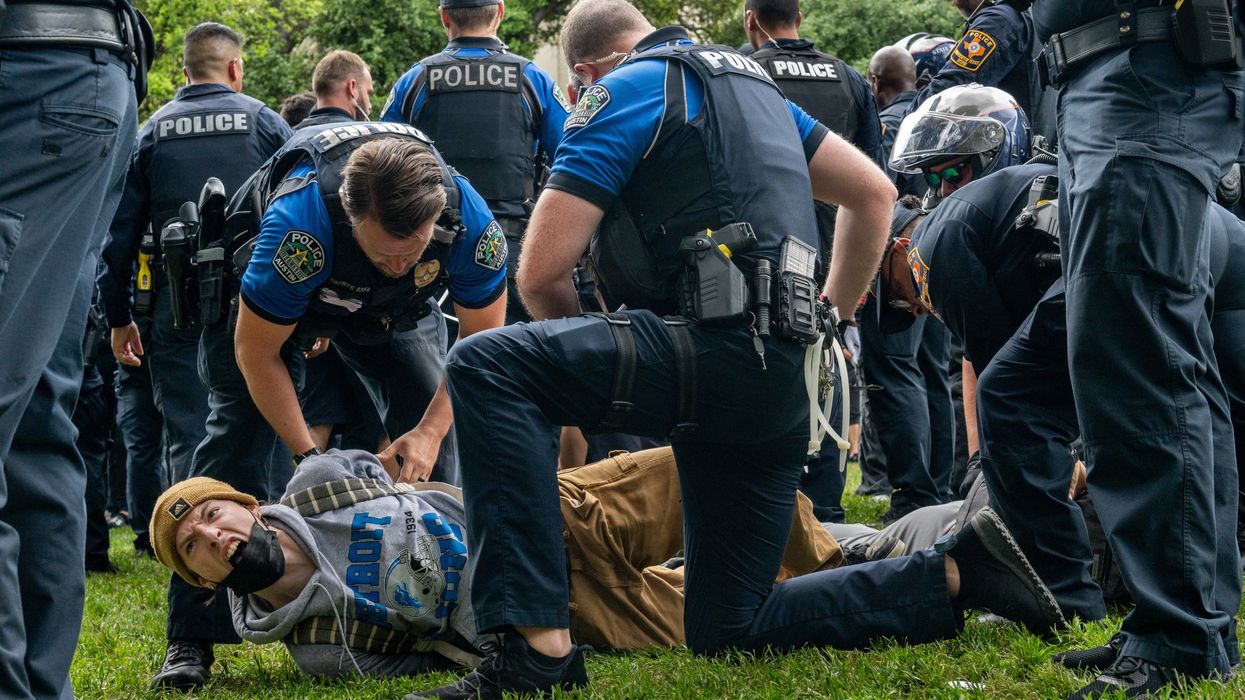
"We're urging schools once again to exercise restraint, practice de-escalation, and protect free speech and dissent on campus," said the director at the ACLU's Human Rights Program.
Three leading human rights groups on Thursday responded to U.S. university and college crackdowns on pro-Palestine campus demonstrations by jointly calling on higher education presidents and administrations to respect and protect "the right to protest under the First Amendment and other international human rights law," citing potentially unlawful uses of force.
"Universities are responsible for protecting both physical safety and free expression on campus," Jamil Dakwar, director of the ACLU's Human Rights Program, said in a statement. "It's deeply concerning to see universities needlessly expose students to police violence for peacefully expressing their political opinions. We're urging schools once again to exercise restraint, practice de-escalation, and protect free speech and dissent on campus."
In the open letter, the ACLU, Amnesty International, and Human Rights Watch (HRW) wrote that "we are exploring claims of heavy-handed and excessive responses by some university and college administrators and police following campus protests in support of Palestinian rights. In many cases, peaceful protests were met with use of force by campus police or local law enforcement summoned by university officials."
"Universities have a responsibility to protect academic freedom and the rights to freedom of expression, and to peacefully protest, and we will be watching to ensure they do."
Israel is on trial for genocide at the International Court of Justice over its ongoing assault on the Gaza Strip, launched after the Hamas-led October 7, 2023 attack. As the U.S. Congress and Biden administration have backed the Israeli campaign with billions of dollars in weapons and by blocking United Nations cease-fire resolutions, students and professors at campuses across the United States have gathered to call on their government and educational institutions to divest from the war.
While student demonstrations have occurred over the past year, they escalated last spring, when protesters from Columbia University in New York City to the University of Texas at Austin faced police violence. Meanwhile, Biden and federal lawmakers in both major parties smeared all the protests as antisemitic‚ even as Jewish students have often led the events. After cracking down on anti-genocide actions this spring, New York University even kicked off the current academic year in August with a new policy equating anti-Zionism with antisemitism.
The rights groups wrote that "we have serious concerns about the violent consequences when university officials call in police to quell protests, and the impact on freedoms of expression and peaceful assembly. Based on news reports, student protesters were often met with police in full body armor who used physical force, including batons, kinetic impact projectiles such as rubber bullets and foam-tipped rounds, and chemical irritants such as pepper spray and, in at least three instances, tear gas."
"Media reported witness accounts of injuries such as bleeding puncture wounds, head injuries, broken teeth, and suspected broken bones, most notably at the University of California Los Angeles, Columbia University, and the City College of New York, among others," the coalition highlighted.
The groups noted that "criticism of summoning law enforcement to disperse protests has been widespread, including from the Inter-American Commission on Human Rights and the United Nations high commissioner for human rights, and a number of U.N. human rights experts, including the U.N. special rapporteur on the right to education."
"While privately owned universities do not have the same obligations as state-owned universities, all universities have a responsibility to respect human rights," they explained. "Though not bound by the First Amendment, private universities are bound by their policy commitments to freedom of expression and academic freedom."
Tanya Greene, director of the U.S. program at HRW, stressed that "instead of resorting to police action that both shuts down free speech and heightens the risk of injuries, universities need to do more to protect student speech from violence and intimidation, and actively ensure that peaceful student expression continues without interference."
Amnesty International USA researcher Justin Mazzola said that "the information we have gathered on excessive use of force against student protesters is extremely worrisome and we are still in the beginning of our investigation."
"With the continuation of the Israeli military's assault on Gaza and the risk of U.S. complicity through the sending of weapons, campus protests in favor of stopping the violence and destruction will continue," Mazzola added. "Universities have a responsibility to protect academic freedom and the rights to freedom of expression, and to peacefully protest, and we will be watching to ensure they do."
The rights groups' letter and remarks came after a federal judge in Austin determined on Monday that pro-Palestinian student groups can sue multiple Texas universities' presidents and board members for alleged discrimination and First Amendment violations.
The judge's decision is "a major win for anti-genocide protestors across the country," said the Council for Islamic American Relations (CAIR), which is representing plaintiffs in Texas.
"The court's ruling confirms what we already knew," said Gadeir Abbas, a national deputy litigation director at CAIR. "The government cannot make special rules insulating Israel from criticism, and pretending those rules are about antisemitism does not save them from constitutional scrutiny."
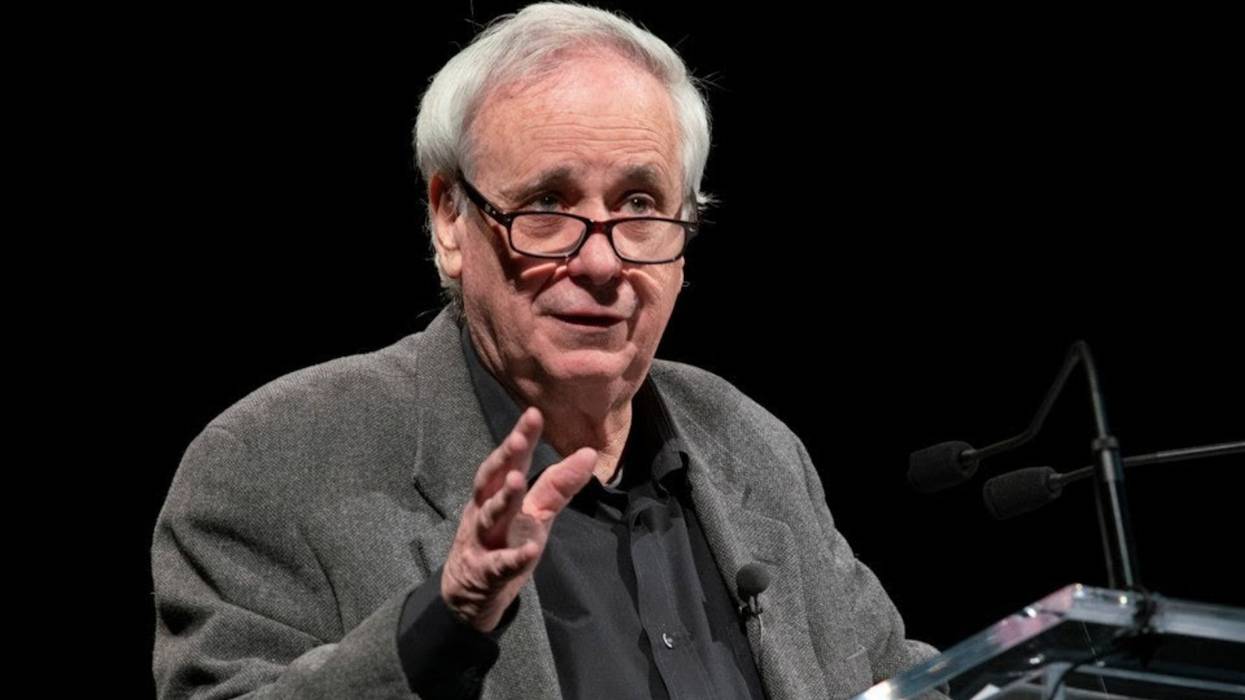
"The good news is—actions like this by the USA or European countries taken under pressure from the pro-Israeli lobby or Israel itself smell of sheer panic and desperation," the renowned author said.
In what one observer called "a whole new level of insanity and paranoia," renowned Israeli historian and professor Ilan Pappé—a staunch critic of Zionism—was detained and interrogated this week by Federal Bureau of Investigation agents as he entered the United States at Detroit's airport.
In a Wednesday Facebook post, Pappé said that he was questioned by FBI agents for two hours after arriving at Detroit Metropolitan Wayne County Airport on Monday.
He wrote:
The two-men team were not abusive or rude, I should say, but their questions were really out of the world! Am I a Hamas supporter? Do I regard the Israeli actions in Gaza a genocide? What is the solution to the "conflict" (seriously this what they asked!) Who are my Arab and Muslim friends in America... What kind of relationship [do] I have with them?
"They had [a] long phone conversation with someone, the Israelis?" he added, "and after copying everything on my phone allowed me to enter."
"I know many of you have fared far worse," Pappé wrote, referring to Dr. Ghassan Abu-Sittah, a British Palestinian plastic surgeon and rector of Glasgow University in Scotland who last month was denied entry to Germany—and by extension all 29 Schengen Area nations—before the ban was overturned earlier this week.
"The good news is—actions like this by the USA or European countries taken under pressure from the pro-Israeli lobby or Israel itself smell of sheer panic and desperation in reaction to Israel's becoming very soon a pariah state, with all the implications of such a status," he added.
Pappé's treatment sparked outrage among Palestine defenders.
"The detention and interrogation of internationally renowned Israeli anti-Zionist historian Ilan Pappé at Detroit airport by the FBI is latest in the long list of episodes of intimidation and bullying across the West to defend the indefensible—the Israeli genocide of Palestinians," University of California, Berkeley history professor Ussama Makdisi said on social media Wednesday.
Entrepreneur and geopolitical commentator Arnaud Bertrand said, "We've reached a whole new level of insanity and paranoia."
Pappé, 69, is a scholar of Palestinian history at the University of Exeter in England. He's published over 20 books including The Ethnic Cleansing of Palestine, an examination of the Nakba expulsion of more than 750,000 Arabs from Palestine by Zionist militants—who sometimes massacred Palestinians to sow terror among them—during the establishment of the modern state of Israel in the late 1940s.
He has also been a leading Israeli critic of Israel's ongoing assault on Gaza, which according to Palestinian officials has killed, maimed, or left missing more than 125,000 people since the October 7 attacks. During a Wednesday interview with Al Jazeera marking the 76th anniversary of the Nakba, Pappé asserted that Israel's current onslaught is "even worse" than the 1948-49 ethnic cleansing in many ways.
"What we see now are massacres which are part of the genocidal impulse, namely to kill people in order to downsize the number of people living in Gaza," he said. "Ethnic cleansing is a terrible crime against humanity but genocide is even worse."
Pappé's latest title, Lobbying for Zionism on Both Sides of the Atlantic, details "how pro-Israel lobbying groups influence the Middle East policies of Britain, the U.S., and others."
Reacting to the author's detention, ACLU human rights lawyer and New York University professor Jamil Dakwar said, "One wonders if this 'VIP welcome' related to his anti-genocide activism and his new book."
"The United States touts itself as a beacon of democracy and human rights, yet the committee's findings prove that this could not be further from the truth," said one ACLU campaigner.
The United Nations Human Rights Committee on Friday published what the ACLU called a "scathing" report admonishing the United States' record on a broad range of domestic and international issues, most of them adversely affecting the rights of minorities, women, poor people, and migrants.
The committee assessed U.S. compliance with the International Covenant on Civil and Political Rights (ICCPR), a major human rights treaty ratified by the United States in 1992.
"The United States touts itself as a beacon of democracy and human rights, yet the committee's findings prove that this could not be further from the truth," Jamil Dakwar, director of the ACLU's Human Rights Program, said in a statement.
The report praised the Biden administration for taking significant steps to protect LGBTQ+ people, racial minorities, and others. However, the committee said it "remains concerned at the lack of measures to effectively incorporate the covenant in the domestic legal order."
Among the areas of concern are the persistence of hate crimes including mass shootings, discrimination and abuse against Indigenous peoples and migrants including people legally seeking asylum, slow progress on climate justice, and failure to adequately combat human trafficking and forced labor.
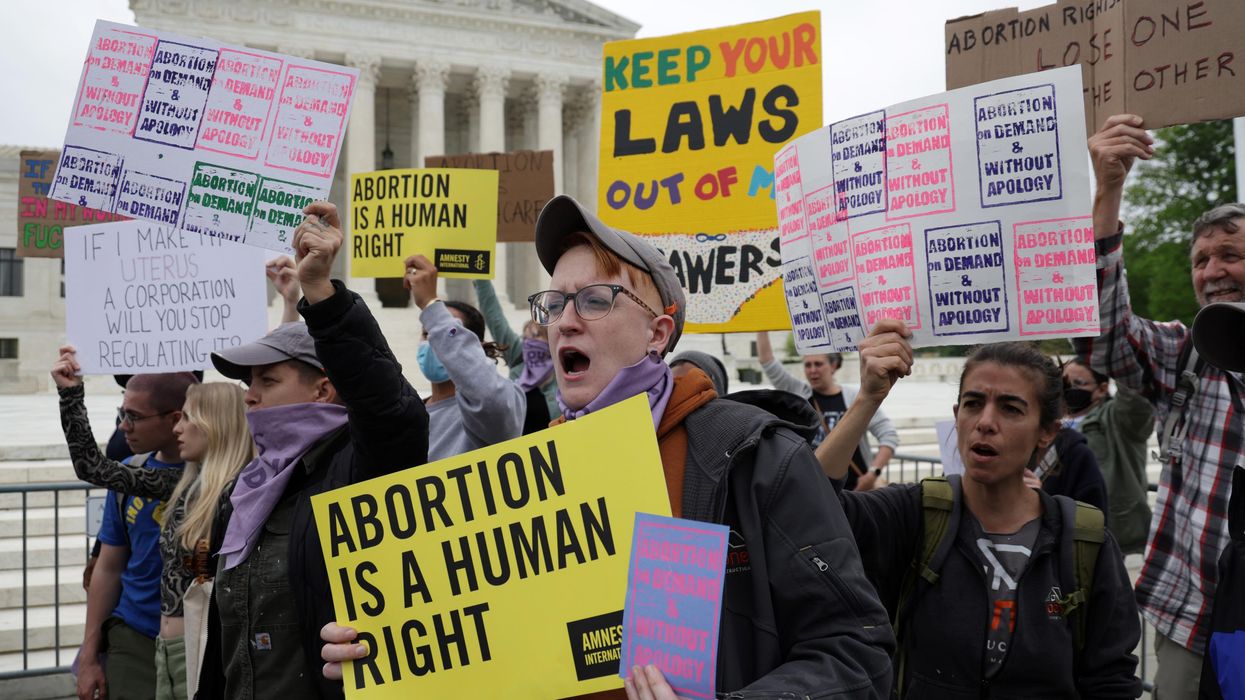
The report also decried violence against women, the epidemic of missing and murdered Indigenous women and girls, the high maternal mortality rate—especially among people of color—and the erosion of reproductive rights following the U.S. Supreme Court's 2022 Dobbs v. Jackson Women's Health Organization ruling.
The committee further said it was "gravely concerned at the continuing use of the death penalty," while expressing alarm over police brutality, racial disparities in the criminal justice system, solitary confinement in prisons, life sentences without parole, and the criminalization of unhoused people.
Violations of privacy and voting rights and attacks on freedom of expression, assembly, and the press are also highlighted in the report.
Abroad, the committee expressed concern over the continued operation of the U.S. military prison at Guantánamo Bay, the killing of civilians in Middle Eastern and African nations in drone strikes, and enduring impunity for the perpetrators of war crimes, including torture.
Dakwar said the report underscores "the critical need to prioritize and strengthen human rights at home and establish a national human rights institution to ensure that our most basic rights are protected."
“It is critical that the U.S. government take this opportunity to heed the United Nations' recommendations."
According to the U.N. Office of the High Commissioner for Human Rights, 84 nations had accredited NHRIs as of 2021.
“It is critical that the U.S. government take this opportunity to heed the United Nations' recommendations and deliver on behalf of the American people—including immigrants, racial and ethnic minorities, women and girls, LGBTQ+ people, incarcerated people, Indigenous people, and other marginalized communities that are disproportionately impacted by the government's continued violations," Dakwar stressed.
U.S. officials, he added, "must adopt a plan of action and concrete measures to address the large-scale rights violations identified by the committee, which cause harm to millions of people in the U.S. and those under its jurisdiction or those impacted globally by its actions and policies."
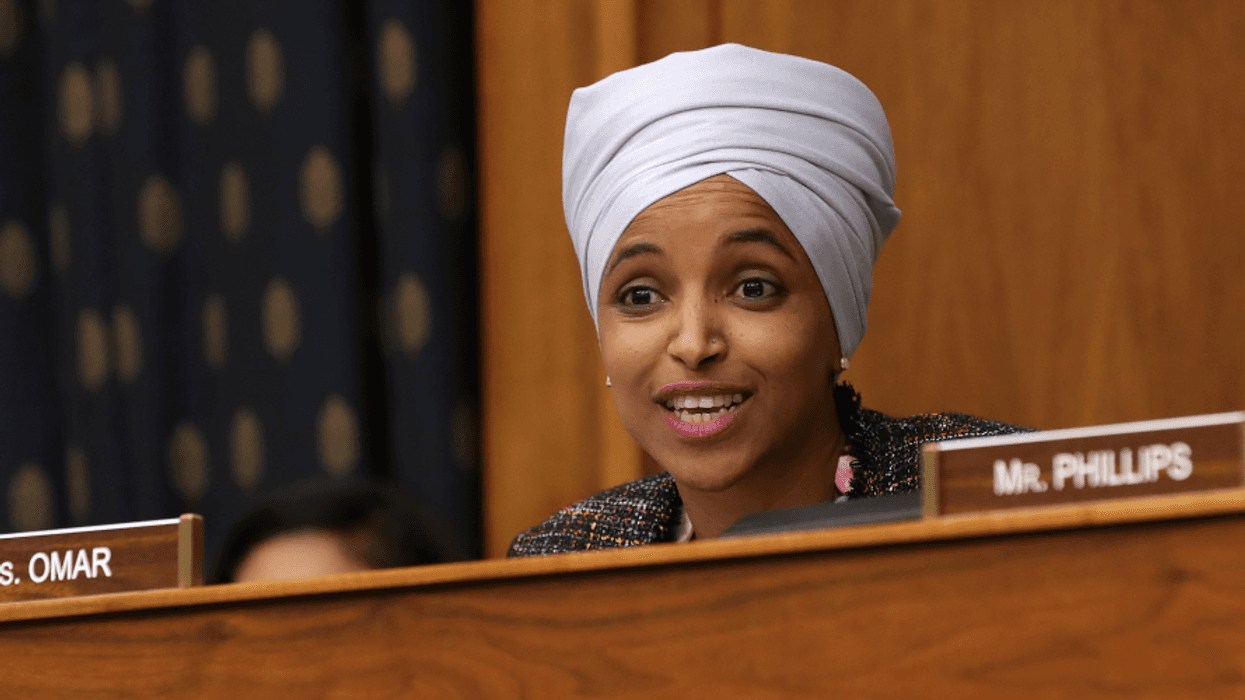
"The U.S. must walk the walk on human rights—not just talk the talk," said one Democrat.
Progressive U.S. lawmakers including Reps. Rashida Tlaib, Ilhan Omar, and Katie Porter on Tuesday joined a call for the Biden administration to take steps to form a national institution that would monitor and promote human rights within the United States, noting that the U.S. considers itself an arbiter of human rights standards across the globe.
The lawmakers sent the letter ahead of second Summit for Democracy, which the U.S. it set to host this week and at which representatives from countries around the world will be asked to "highlight specific initiatives that reflect their commitment to strengthening human rights and democracy domestically and through multilateral cooperation."
A National Human Rights Institution (NHRI) in the U.S., said the lawmakers, would allow the government to promote and monitor the implementation of human rights obligations, provide a public forum for the investigation of violations, establish mechanisms to advise and inform all branches of government on meeting human rights standards, and provide guidance to state and local human rights commissions.
"The United States should be a role model for protecting human rights, and that work starts here at home," said Porter (D-Calif.). "A National Human Rights Institution will help us lead the world in promoting civil liberties and championing government accountability. I hope President [Joe] Biden will use this opportunity to reaffirm our global commitments and rebuild our country's reputation as a strong voice for universal human rights."
Other signatories of the letter include Democratic Reps. James McGovern of Massachusetts, Cori Bush of Missouri, Jill Tokuda of Hawaii, Jamie Raskin of Maryland, Ayanna Pressley of Massachusetts, and Eleanor Holmes Norton of Washington, D.C.
The letter called on the Biden administration to form a commission that would study the creation of an NHRI.
The lawmakers joined a coalition of 85 civil society groups, led by the ACLU, which in December called for the creation of an NHRI that would "offer a meaningful path to encourage U.S. institutions... to adhere to human rights commitments that our government has made and to which we routinely call on other countries to adhere."
They sent the letter a day after six people, including three nine-year-old children, were shot to death at a school in Nashville—the most recent of 130 mass shootings in 2023 so far. The country is also awaiting a ruling by a right-wing judge in a case regarding the legality of the Food and Drug Administration's approval of mifepristone—a drug commonly used in medication abortions—which could further strip Americans of the right to access abortion care.
Right-wing politicians are also moving swiftly to block adolescents and adults from accessing gender-affirming healthcare across the country, and the United Nations Refugee Agency on Monday warned that the Biden administration's plan to block asylum-seekers from entering the U.S. if they travel to the southern border through a third country is "incompatible with principles of international refugee law."
"The best way for the United States to lead on human rights is by the power of example," said McGovern. "By establishing a presidential commission to explore creating a National Human Rights Institution for the U.S., the president will be taking an important, concrete step toward ensuring that we live up to the standards we expect of other countries. The U.S. must walk the walk on human rights—not just talk the talk."
The lawmakers noted that democracies around the world, including many U.S. allies, have established NHRIs to hold their own governments accountable for adhering to human rights standards domestically and abroad.
"While the U.S. has a long tradition of supporting human rights and democracy abroad, we have often failed to practice at home what we preach overseas and neglected to translate our own international commitments into domestic policy," said Jamil Dakwar, director of the ACLU's Human Rights Program. "For too long, we've been a shameful outlier. A National Human Rights Institution would bring some much-needed structure and help bring the U.S. in line with international human rights norms and full compliance with ratified treaties."
"The time for action is now," Dakwar added.