SUBSCRIBE TO OUR FREE NEWSLETTER
Daily news & progressive opinion—funded by the people, not the corporations—delivered straight to your inbox.
5
#000000
#FFFFFF
To donate by check, phone, or other method, see our More Ways to Give page.
Daily news & progressive opinion—funded by the people, not the corporations—delivered straight to your inbox.
The coalition cited the Trump administration’s "racist immigration policies, mass detention and deportation, and attacks on freedom of expression and peaceful protest."
A coalition of more than 120 US-based civil society groups on Thursday issued a travel advisory ahead of the upcoming FIFA Men's World Cup over what the ACLU called the "deteriorating human rights situation" in the United States amid the Trump administration's deadly anti-immigrant crackdown, suppression of free speech, and more.
Citing the "absence of meaningful action and concrete guarantees from FIFA"—world soccer's governing body—"host cities, or the US government," the coalition published a warning urging "fans, players, journalists, and other visitors traveling to and within the United States" for the tournament to "have an emergency contingency plan."
The US, Canada, and Mexico are jointly hosting the tournament, which is set to kick off with group stage matches in Mexico City and Guadalajara on June 11 and Los Angeles and Toronto the following day.
"World Cup games will be played in 11 different cities across the United States, which, like many localities, have already been the target of the Trump administration’s violent and abusive immigration crackdown," the coalition wrote.
BREAKING: We're joining over 120 organizations issuing a travel advisory to warn anyone visiting the U.S. for the 2026 FIFA World Cup of possible civil and human rights violations.FIFA must pressure the Trump administration to protect the people traveling to and working at the games.
— ACLU (@aclu.org) April 23, 2026 at 7:12 AM
"While the Trump administration’s rising authoritarianism and increasing violence pose serious risks to all," the advisory continues, "those from immigrant communities, racial and ethnic minority groups, and LGBTQ+ individuals have been and continue to be disproportionately targeted and affected by the administration’s policies and, as such, are most vulnerable to serious harm."
According to the groups, those harms potentially include:
Visitors are also advised to download Human Rights First's ReadyNow! mobile app "to notify trusted contacts in case of possible detention."
Journalists covering the tournament are urged to "consult resources from the Committee to Protect Journalists or Reporters Without Borders for information on how to keep themselves safe while entering the US and while reporting inside the country."
Daniel Noroña, Americas advocacy director at Amnesty International USA, said in a statement Thursday that “fans, journalists, and others traveling to the United States for the 2026 FIFA World Cup risk encountering a deeply troubling human rights landscape, shaped by the Trump administration’s racist immigration policies, mass detention and deportation, and attacks on freedom of expression and peaceful protest."
ACLU human rights program director Jamil Dakwar said that “FIFA has been paying lip service to human rights while cozying up with the Trump administration, putting millions of people at risk of being harmed and their basic rights violated."
“The Trump administration’s abusive actions continue to threaten our communities, tourists, and fans alike—and it’s past time that FIFA use its leverage to push for meaningful policy changes and binding assurances that will make people feel safe to travel and enjoy the games," Dakwar added.
FIFA faced worldwide ridicule for awarding President Donald Trump its first-ever Peace Prize last December amid his administration's illegal high-seas boat-bombing spree, and just ahead of his bombing of Nigeria, kidnapping of Venezuelan President Nicolás Maduro, launch of the US-Israeli war of choice against Iran, and threats to attack several other countries.
Despite US bombing that's killed thousands of its people—including hundreds of children—and FIFA's refusal to relocate its matches outside the United States, Iran, which easily qualified, is planning to take part in the tournament.
On Thursday, Iran's embassy in Italy decried what it called a "morally bankrupt" effort by US Special Envoy for Global Partnerships Paolo Zampolli to ban it from the tournament and replace its bracket slot with Italy, which is reeling from missing its third consecutive World Cup final.
"This is not what the American people want, it is a violation of our Constitution, and Congress must step up to end it."
"Congress alone has the power to declare war—it's that simple," US Rep. Pramila Jayapal proclaimed Thursday, introducing yet another resolution aimed at ending President Donald Trump and Israel's unauthorized assault on Iran.
"Trump has recklessly and thoughtlessly thrown us into another forever war that is threatening US service members' lives, civilians' lives in Iran and Lebanon, and is costing billions of taxpayer dollars every single day," said the Washington Democrat.
"This is not what the American people want, it is a violation of our Constitution, and Congress must step up to end it," Jayapal stressed, nodding to Article I, Section 8, which gives the federal legislature the power to declare war.
Jayapal, chair emerita of the Congressional Progressive Caucus, is the third CPC member to introduce a war powers resolution about Trump's illegal war on Iran this week, following Rep. Jared Huffman (D-Calif.) on Wednesday and Rep. Ro Khanna (D-Calif.) on Tuesday.
Khanna said that he introduced the bill in coordination with CPC "just so that we can continue to have options to have votes," according to Punchbowl News reporter Anthony Adragna. He and Congressman Thomas Massie (R-Ky.) previously introduced the first of three failed Iran war powers resolutions in the GOP-controlled House of Representatives.
There have been five failed votes in the Senate—which is also controlled by Republicans—most recently on Wednesday. In response, Minority Leader Chuck Schumer (D-NY) said that "if Donald Trump won't dig us out of this hole, Congress must step into the breach and exercise its constitutional authority over matters of war and peace."
"Democrats will continue to force votes on our resolutions every week until Senate Republicans see reason," Schumer vowed.
The vote results have largely fallen along party lines, though Sen. Rand Paul (R-Ky.) has joined Democrats in backing the bills, while Sen. John Fetterman (D-Pa.) has been the lone senator from his party to oppose the war powers resolutions on Iran.
However, as Center for International Policy senior fellow Sina Toossi noted on social media Thursday, "a very unpopular, costly war is starting to shift GOP politics."
Toossi pointed to Politico reporting that "several GOP senators are warning the president could face growing pushback, including them not supporting military action against Iran after the conflict hits the 60-day mark at the end of the month, if he doesn't articulate his plan."
On Tuesday, Trump extended a two-week truce for his and Israel's war on Iran, while also insisting that the US will continue its naval blockade against the country. After that announcement, Toossi stressed that "trust between the sides remains at zero and renewed war could break out at any time."
Israeli Defense Minister Israel Katz said Thursday that Israel is "prepared to resume the war" in Iran and is "awaiting a green light from the United States."
Meanwhile, following talks at the White House on Thursday, Trump announced that Israel and the Lebanese militant and political group Hezbollah have agreed to extend a related ceasefire by three weeks.
Trump and his Republican allies have routinely targeted their political opponents and entire ethnic and religious groups with threats of deportation and denaturalization.
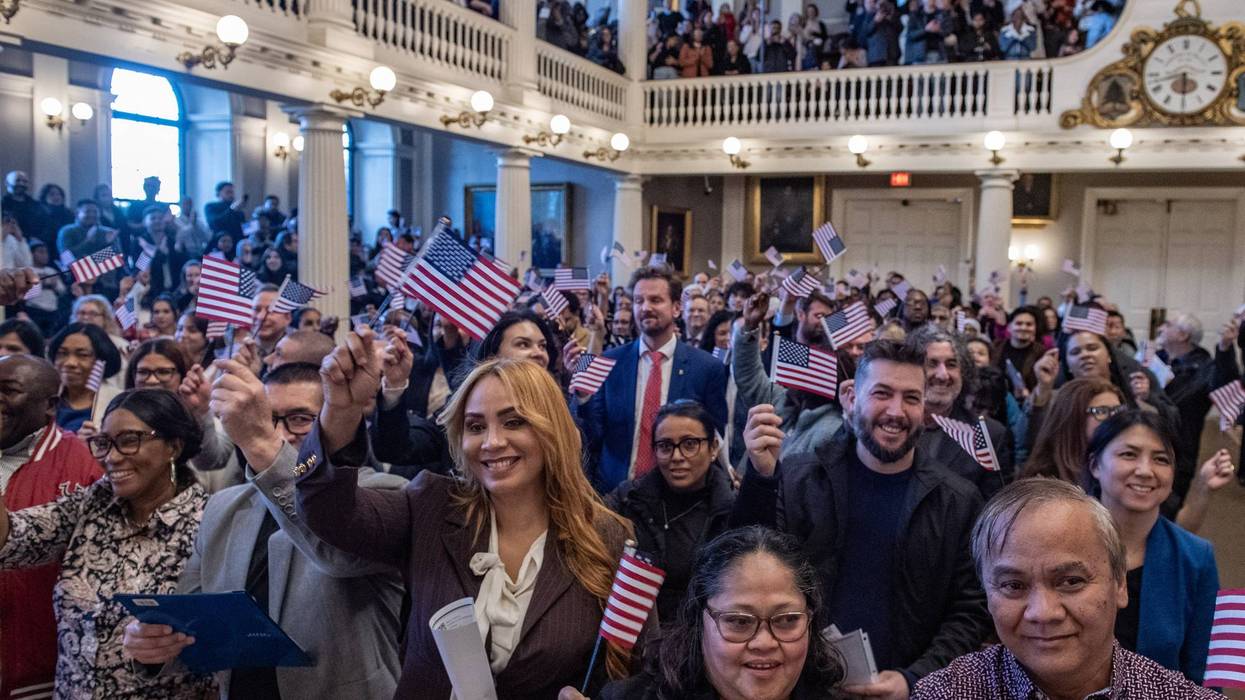
The US Department of Justice has referred hundreds of citizens for denaturalization, beginning what some fear will be a massive effort to strip Americans of their citizenship.
Months ago, it was reported that the Trump administration would seek to enlist the DOJ in its effort to revoke the citizenship of hundreds of people each month.
On Thursday, The New York Times reported that the effort to carry out what DOJ spokesperson Matthew Tragesser called "the highest volume of denaturalization referrals in history” had begun.
The paper reported that the DOJ had identified 384 foreign-born Americans whose citizenship it wants to take away and had assigned the cases to prosecutors in dozens of US attorneys' offices across the country.
President Donald Trump is trying to dramatically expand a process that Sameera Hafiz, policy director at the Immigrant Legal Resource Center, told the Houston Chronicle is typically reserved for "very rare extreme circumstances."
Federal law allows the government to ask courts to strip citizenship from those it can prove obtained it fraudulently. In some rare cases, people found to have committed egregious offenses like war crimes or the financing of terrorism have also been stripped of citizenship.
Between 2017 and the end of 2025, the federal government attempted to denaturalize just 120 citizens, less than a third of the number the Trump administration referred for denaturalization in just this first batch.
According to the Times, it is not clear why the 384 individuals referred to federal courts have been singled out. Tragesser said the administration was "laser focused on rooting out criminal aliens defrauding the naturalization process."
Aaron Reichlin-Melnick, a senior fellow at the American Immigration Council, said that these cases "are not exactly easy for the government to win," because "they have to go to a bench trial in front of a federal judge and prove material fraud."
But the DOJ has indicated that the range of people targeted for denaturalization could be much broader than just those found guilty of fraud.
The Trump administration's plans to pursue mass denaturalization first came to light last June when Assistant Attorney General Brett Shumate issued an internal memo calling on the DOJ's Civil Division to "prioritize and maximally pursue denaturalization proceedings in all cases permitted by law and supported by the evidence."
In addition to the fraudsters and human rights violators who have typically been subject to denaturalization, Shumate urged the department to go after those “who pose a potential danger to national security” and "any other cases... that the division determines to be sufficiently important to pursue," which suggested that much broader categories of people may be targeted.
"The way the memo suggests they're going to apply it is very broad and expansive, and it's shockingly dramatic because that's not the intention behind denaturalization," Hafiz said.
The Trump administration has frequently targeted protesters and activists, including those with legal status in the US, for deportation for expressing political opinions opposite those of the government.
Last year, hundreds of foreign-born students who participated in protests against US support for Israel had their visas stripped by the US State Department. Some—like Columbia student activist Mahmoud Khalil—were deemed a danger to "national security" based solely on their articulation of beliefs out of step with the Trump administration's foreign policy.
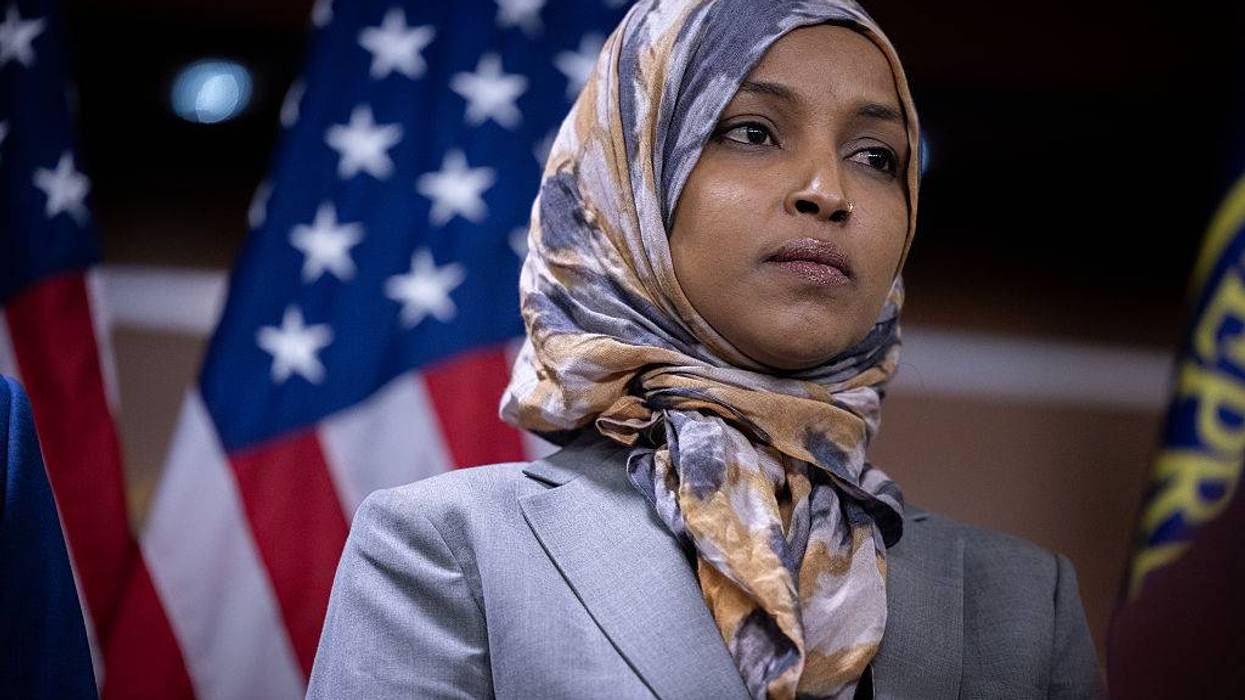
Trump and several members of the Republican Party have also called for the denaturalization of foreign-born political opponents, including the Somali-American Rep. Ilhan Omar (D-Minn.) and the Ugandan-American New York City Mayor Zohran Mamdani.
Earlier this week, Rep. Chip Roy (R-Texas) introduced legislation titled the "MAMDANI Act," which would deport and denaturalize any immigrant who "advocates for socialism, communism, Marxism, or Islamic fundamentalism.”
Rep. Andy Ogles (R-Tenn.), who has also pushed for the deportation of Mamdani, who is Muslim, recently said that non-Christians should not be allowed in America.
"We're not a melting pot," he said. "If you're building temples or mosques and undermining Christianity, you're not assimilating."
Trump, meanwhile, has expressed a desire to go after certain ethnic groups, particularly Somali-Americans, whom he has said have "low IQs" and described as "garbage". Most people of Somali descent living in the US are citizens, but Trump has said "I don't want them in the country" and said they should "go back where they came from."
Many Somali-American citizens were detained, often brutally, during US Immigration and Customs Enforcement's (ICE) massive operation in Minneapolis earlier this year.
Around the same time, the US Department of Homeland Security endorsed the idea of pursuing "100 million deportations," which would entail the removal of tens of millions of American citizens from the country, including many who were born in the United States. Ex-Border Patrol Commander Gregory Bovino, who oversaw Trump's mass deportation crusade for months, recently said he had a "master plan" to make this sweeping purge a reality.
Hafiz said the Trump administration's conduct has raised the possibility that the denaturalization push will be carried out in a "very broad and expansive way."
"That's very concerning," she said. "And we've seen in so many of the tactics that the Trump administration is using, what a slippery slope it is, how they say, 'This policy is to target one set of individuals,' and how that set of individuals just becomes broader as it's applied."
"Donald Trump and Stephen Miller want unfettered surveillance powers without any chance to enact protections, and Democrats must not give it to them," one campaigner warned.
A week after four Democrats helped Republicans pass a short-term extension of a controversial spying power with a dead-of-night vote in the US House of Representatives, Speaker Mike Johnson on Thursday released a bill that would renew the authority for three years—double the amount of time the Louisiana Republican and President Donald Trump were previously pushing.
As that bill text circulated, Demand Progress—one of the scores of civil society groups calling for privacy reforms to be included in any renewal of Section 702 of the Foreign Intelligence Surveillance Act (FISA)—took aim at those Democrats: Reps. Marie Gluesenkamp Perez (Wash.), Jared Golden (Maine), Josh Gottheimer (NJ), and Tom Suozzi (NY).
"Just like last time, Speaker Johnson's latest proposal lacks any meaningful privacy reforms, but this time, they're trying to renew FISA for three more years—twice as long as the Trump administration asked for," said Demand Progress senior policy adviser Hajar Hammado in a statement.
"Donald Trump and Stephen Miller want unfettered surveillance powers without any chance to enact protections, and Democrats must not give it to them," Hammado argued, referring to Trump's deputy chief of staff for policy and homeland security adviser.
"We need Reps. Gottheimer, Suozzi, Golden, and Gluesenkamp Perez to stand with the rest of Democrats and hold Donald Trump accountable," the campaigner emphasized. "A vote in support of this FISA bill, especially procedural votes to advance it, is both a vote to allow Donald Trump to continue invasive, warrantless surveillance of private American citizens, and to sabotage even the chance of protecting privacy."
FISA's Section 702 allows the US government to surveil electronic communications of noncitizens located outside the United States to acquire foreign intelligence information, without a warrant. However, it's been abused at least hundreds of thousands of times by the Federal Bureau of Investigation (FBI) alone—which has fueled calls for reforms, including closing the data broker loophole that agencies use to buy their way around the Fourth Amendment to the US Constitution.
"Speaker Johnson wants to pretend this bill is reform, but it's the same type of empty-calorie proposal that failed last week," warned Jake Laperruque, deputy director of Center for Democracy and Technology's Security and Surveillance Project. "There is nothing in this bill that would have prevented the abuses of FISA 702 we've already seen—snooping on lawmakers, protesters, and campaign donors—and there is nothing that would stop even worse abuses in the future."
"Members of Congress have a clear choice: They can support this proposal and give the FBI and other intelligence agencies a three-year blank check, or they can stand strong and demand real reforms to protect the American people," he said.
Elizabeth Goitein, co-director of the Brennan Center for Justice's Liberty and National Security Program, similarly stressed how the latest bill is "almost identical to the one that failed last week," explaining on social media that "the main 'reform' in Johnson's first proposal was a provision that merely restated existing law, under which the government may not 'target' Americans under Section 702 but may do so with a warrant or FISA Title I order."
"That provision was titled 'warrant requirement,' even though it imposed no new warrant requirement whatsoever. And it had zero relevance to the issue at the heart of the debate over Section 702, namely, backdoor searches," she noted. "Backdoor searches are not considered to be 'targeting' Americans for surveillance. Rather, they are searches of collected communications of foreign targets outside the United States for Americans' communications that were 'incidentally' swept in."
"Astonishingly, Johnson has chosen to feature this same do-nothing provision in his new proposal. This time, the drafters have dropped any pretense of creating new law and titled the provision 'Fourth Amendment Requirement for Targeting United States Persons,'" Goitein continued. "This is not a reform bill, and it's not a compromise. It's a straight reauthorization with eight pages of words that serve no serious purpose other than to try to convince members that it's NOT a straight reauthorization."
According to her: "House members didn't fall for it last week, and they shouldn't fall for it now. Speaker Johnson must allow the House to vote on the reforms that members and the American people are demanding, including a warrant requirement to access Americans' communications."
The GOP narrowly has the numbers to pass legislation with a party-line vote in the House, but some of the chamber's Republicans have joined in the calls for privacy reforms. Libertarian leaders, including Justin Amash, a former Republican congressman from Michigan, have forcefully spoken out against Johnson's efforts.
"House Republicans are spitting on the Constitution and spitting in all our faces," Amash said of the bill unveiled Thursday.
Calling out the House Permanent Select Committee on Intelligence, Senate Select Committee on Intelligence, and vast US Intelligence Community, Patrick Eddington, a senior fellow in homeland security and civil liberties at the libertarian Cato Institute, declared that "this is an HPSCI, SSCI, IC Trojan horse bill masquerading as something Fourth Amendment-compliant."
Senate Majority Leader John Thune (R-SD) "is threatening to take over negotiations if the House GOP can’t resolve differences quickly," according to Politico. In the upper chamber, Republicans need at least some Democratic support to pass a reauthorization bill.