

SUBSCRIBE TO OUR FREE NEWSLETTER
Daily news & progressive opinion—funded by the people, not the corporations—delivered straight to your inbox.
5
#000000
#FFFFFF
To donate by check, phone, or other method, see our More Ways to Give page.
Daily news & progressive opinion—funded by the people, not the corporations—delivered straight to your inbox.
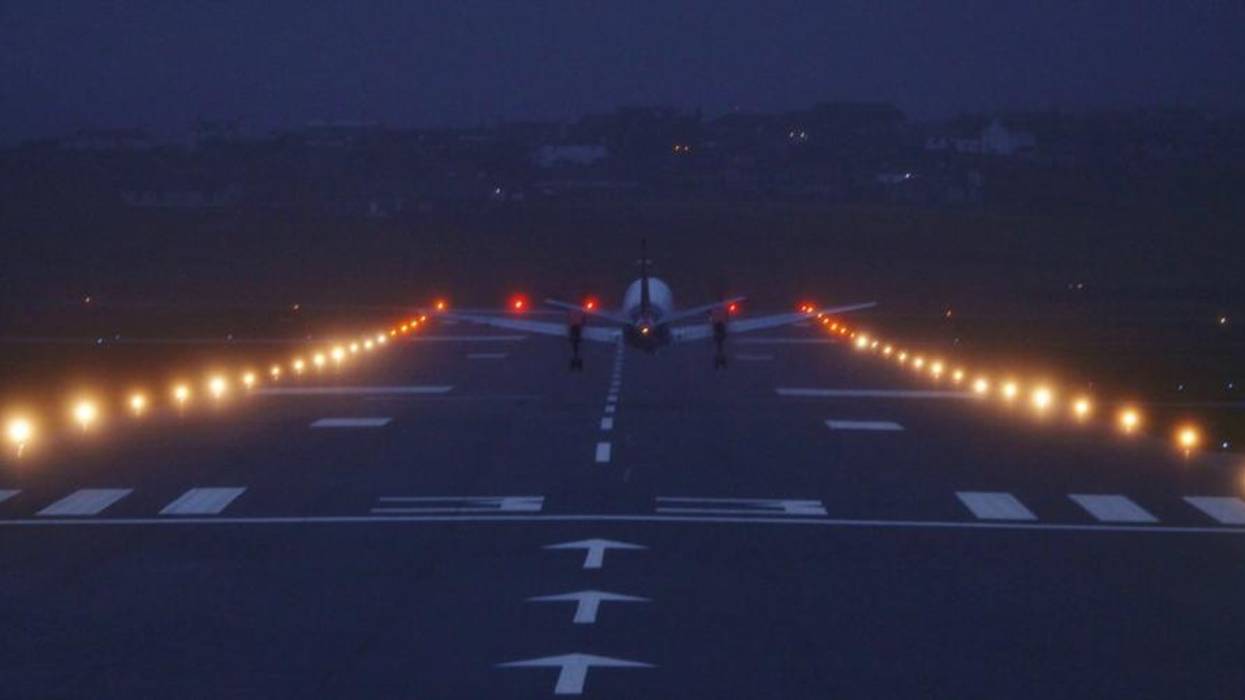
One night in October 2001, shortly after al-Qaeda's attacks on the World Trade Center and Pentagon, a private jet touched down in Karachi. Masood Anwar, a prominent Pakistani journalist, received an unexpected tip from a friend in the airport: "There were men in masks. They took a hooded man onboard in the early hours. Someone videotaped the entire thing. No one was allowed near the site."
Anwar's story, although no one knew it at the time, would be the start of a thread which led to the heart of the Central Intelligence Agency's most secret "War on Terror" operation: the "rendition, detention, interrogation" (RDI) programme, a nine-year covert effort which had scores of prisoners flown around the globe to be tortured in undisclosed sites.
The CIA started by grabbing terror suspects off the streets and transferring them in secret to interrogators in the Middle East. But soon the agency decided it needed to run its own detention facilities, or "black sites". Over the next few years, it set up a network of prisons and a fleet of private jets to move people between them.
In December 2014, the Bureau, alongside The Rendition Project, began a major project to trace the history of the RDI programme. The impetus for our investigation came from the long-awaited publication of a report into CIA torture by the US Senate Select Intelligence Committee. The authors of this report had high-level access to internal CIA documents, which they mined to produce a damning assessment of the torture programme's brutality, mismanagement and ineffectiveness. But they were compelled by the Obama administration, and by the CIA itself, to censor -- "redact" -- all parts of the report that could identify specific times and places where abuses had occurred.
This is important, because without being able to tie illegal activities to specific times and places, the quest for redress is hamstrung, and meaningful accountability -- legal, public, historical -- remains a mirage.
The Senate report did offer a crucial insight, however: the first complete list of prisoners held in the CIA's black sites. 119 names, each with a date of custody (redacted) and a record of how many days they were held (also partly redacted).
In the days after the publication of the Senate report, we set to work reconstructing this list to reveal the hidden dates. Figuring out a date often meant that we could match it to a flight record; matching to a flight record meant that we could determine where a prisoner was brought from or sent to. As we cross-correlated thousands of data points -- from declassified government documents, footnotes in the Senate report, aviation data, records of corporate outsourcing of rendition flights, legal cases, media reporting and NGO investigations -- the contours of the CIA's programme of secret detention and torture began to emerge more clearly. Rather than just understanding certain individual histories, we could begin to discern the entire scope of the programme's development.
More than four years later, we're publishing the results of our investigation in a 400-page report entitled CIA Torture Unredacted. It is the first time that the entirety of the CIA's detention programme has been systematically revealed.
When the Senate Committee released their report, fewer than half the names on the list of prisoners were known. We reported in 2015 that only 36 of those held by the CIA had been taken on to Guantanamo Bay, while the fate of many of the others remained a mystery. Seized in secret, held in secret, they were then disposed of in secret -- some back to their homes, some into continued custody in other countries, again often in secret
Since then, we've been able to establish the histories -- at least to some extent -- of around 100 prisoners. We've traced over 60 operations to transport them to and from prison sites. We've uncovered who was held in Afghanistan, and revealed more fully than before who was sent to the European black sites, in Poland, Romania and Lithuania. We've also brought to light further details of how deeply implicated the UK was in the overall running of the CIA's torture network.
Last year, some of our findings were cited in two judgments at the European Court of Human Rights, which held that Romania and Lithuania had assisted the US in illegally holding prisoners incommunicado on their territory. Elsewhere, our work has assisted legal teams, police inquiries and citizen accountability projects.
CIA Torture Unredacted is the most comprehensive public account of one of the most disturbing elements of the 'War on Terror': a global programme of systematic disappearance and torture, carried out by the world's most powerful liberal democratic states in contravention of laws which they purport to uphold. In the face of continued obstruction and denial by the governments involved, we hope that it will stand as a central reference point for all those interested in accountability, truth and the rule of law.
Targeted killings or assassinations beyond the battlefield remain a highly charged subject. Most controversial of all is the number of civilians killed in US covert and clandestine drone strikes since 2002.
The new White House data relates only to Obama's first seven years in office - during which it says 473 covert and clandestine airstrikes and drone attacks were carried out in Pakistan, Yemen, Somalia and Libya.
Targeted killings or assassinations beyond the battlefield remain a highly charged subject. Most controversial of all is the number of civilians killed in US covert and clandestine drone strikes since 2002.
The new White House data relates only to Obama's first seven years in office - during which it says 473 covert and clandestine airstrikes and drone attacks were carried out in Pakistan, Yemen, Somalia and Libya.
The US claims that between 64 and 116 civilians died in these actions - around one non-combatant killed for every seven or so strikes. That official estimate suggests civilians are significantly more likely to die in a JSOC or CIA drone attack than in conventional US airstrikes. United Nations data for Afghanistan indicates that one civilian was killed for every 11 international airstrikes in 2014, for example.
But for Obama's secret wars, the public record suggests a far worse reality. According to Bureau monitoring, between 2009 and 2015 an estimated 256 civilians have died in CIA drone strikes in Pakistan. A further 124 civilians are likely to have been slain in Yemen, with less than 10 non-combatants estimated killed in Somalia strikes. Similar tallies are reported by the New America Foundation and the Long War Journal.
So why have civilians been at greater risk from these covert and clandestine US airstrikes? Part of the answer lies in who the US kills. Many of those pursued are high value targets - senior or middle ranking terrorist or militant group commanders. Bluntly put, the higher the value of the target - and the greater the threat they represent to you - the more the laws of war allow you to put civilians in harm's way.
The CIA also frequently missed those same high-value targets. A 2014 study by legal charity Reprieve suggested that US drone strikes in Yemen and Pakistan had killed as many as 1,147 unknown people in failed attempts to kill 41 named targets.
It's also clear the CIA has been using a very different rule book. In an effort to lower civilian deaths in Afghanistan, international airstrikes on buildings and urban locations were mostly banned from 2008. Yet in Pakistan, more than 60% of CIA strikes have targeted domestic buildings (or "militant compounds") according to Bureau research.
When President Obama apologised for the accidental 2015 killing of US aid worker Warren Weinstein, he revealed that the US had kept the target building under surveillance for "hundreds of hours" - yet had never known there were civilians inside. Many of the women and children credibly reported killed by the CIA in Pakistan have died in similar circumstances - though few of their deaths have ever been conceded.
Then there have been the more shocking tactics employed by the CIA. There was the deliberate targeting of funerals and rescuers, again first revealed by the Bureau. And the widespread use of so-called signature strikes during the Obama years - the targeting of suspects based not on their known identities, but on their behavioural patterns.
In the most notorious such incident, at least 35 civilians died when the CIA targeted a tribal meeting in 2011 - an action which significantly damaged US-Pakistani relations. None of those deaths appear have been included in the White House's casualty estimates. Missing too are the 41 civilians - including 22 children - slain in a JSOC cruise missile strike on Yemen in 2009. These two events alone indicate more civilian deaths than all of those now admitted across seven years.
The CIA has long played down the number of civilians killed in its drone strikes. It was the Bureau which first challenged John Brennan after he claimed there had been no civilian deaths from CIA strikes for 15 months. The public record showed otherwise. Even leaked CIA documents demonstrated Brennan's economy with the truth.
US Special Forces have also long hidden the true effect of their actions. Leaked cables obtained by Wikileaks revealed that under Obama, Centcom conspired with Yemen's then-president to cover up US involvement in the deaths of civilians. And four years later, JSOC's bombing of a Yemen wedding convoy led (anonymous) CIA officials to criticise the elite unit - even as the Pentagon publicly denied any civilian deaths.
Friday's official White House estimates should be read in the context of these continued evasions and untruths. Though welcome as a general step towards improved transparency - and with new rules which may reduce the risk to civilians - they do little to reconcile the continuing gulf between public estimates and official claims.
The U.S. Pentagon is poised to dramatically increase the deployment of surveillance drones over "global hot spots" such as Ukraine, Iraq, Syria, the South China Sea, and North Africa, as well as expand its capacity for lethal drone strikes, the Wall Street Journal revealed on Monday.
The WSJ's Gordon Lubold reports, citing exclusive interviews with senior U.S. officials, that the number of daily flights by aircraft such as MQ-1 Predator and MQ-9 Reaper drones will surge by an estimated 50 percent. Further, the expanded drone program will "draw on the Army, as well as Special Operations Command and government contractors," in addition to the U.S. Air Force, which currently carries out most of the operations for the Pentagon and Central Intelligence Agency.
Lobuld reports: "The Pentagon envisions a combined effort that by 2019 would see the Air Force continue flying 60 drone flights a day, the Army contributing as many as 16, and the military's Special Forces Command pitching in with as many as four. Government contractors would be hired to fly older Predator drones on as many as 10 flights a day, none of which would be strike missions."
A detailed investigation published late July by the Bureau of Investigative Journalism revealed the extent to which the U.S. military has already relied on corporate entities for much of its surveillance and analysis. The probe raised the question of whether a private contractor's "risk assessment"- i.e., the determination of whether an individual should become a target—obeys an already "mushy" legal framework.
Monday's WSJ piece notes that other officials are reportedly pushing for even-broader surveillance capabilities, employing technologies known as "wide-area airborne surveillance pods," which increases "by as much as tenfold the quantity of surveillance feeds."
The news follows reporting also by Lobuld, as well as colleague Adam Entous, last week, which revealed that the U.S. is currently holding talks with several North African countries over the possibility of erecting drone bases within their borders, expanding the military footprint in order allegedly unmask so-called "blind spots" in Islamic State strongholds such as Libya and Tunisia.
According to the latest tally from the Bureau of Investigative Journalism, since 2002 there have been as many as 620 total U.S. drone strikes in Pakistan, Yemen, Somalia, and Afghanistan, killing up to 5,460 people including as many as 1,106 civilians.
Perhaps paradoxically in the digital age, the fog of war has never been denser.
Between 29 and 45 people were reported killed by an apparent air attack at the al Mazraq camp - some were said to have been burned beyond recognition. Depressingly, the victims also included children.
Although the attack came shortly after Saudi Arabia had launched an aerial bombardment of Yemen, Yemen's foreign minister, speaking from Riyadh, blamed artillery fired by the Houthi militia which stormed the country's capital Sanaa late last year. A Saudi spokesman meanwhile said that rebels had been firing from a residential area in response to a question about the bombing.
Before answers could be found about what happened at al Mazraq, the violence quickly moved on elsewhere. Dozens of civilians were were reported killed by an attack on a dairy factory in Hodeida the following day. Again, the details are still unclear.
The potential for more such atrocities to be carried out with impunity is increasing as the Yemeni state collapses and regional powers pile in.
Saudi Arabia, convinced that the Houthis are backed by Iran, is leading an air campaign with a coalition of 10 Gulf neighbours and North African allies. Warships thought to belong to Egypt have reportedly shelled Yemen from the sea. US officials have pledged that drone strikes will continue. And al Qaeda is taking advantage of the chaos, springing hundreds of criminals from a prison in the east of the country.
It has never been more important, nor more challenging, to ensure proper mechanisms for the recording of casualties are in place.
The UN's Office for Coordination of Humanitarian Affairs (Ocha) is doing the best it can. It is collecting, aggregating and publishing reports of casualties from any sources it can find. Its situation reports are providing vital insights into the bloodshed.
But it remains extremely difficult to record casualties from armed conflict accurately, even for the UN, which actually has its own staff in Yemen.
As Erich Ogoso, public information officer for Ocha Yemen, told the Bureau: "The biggest challenge is verifying information coming out of Yemen."
The challenges stem, in part, from the lack of independent on-the-ground reporting to corroborate the proliferation of videos and tweets.
Perhaps paradoxically in the digital age, the fog of war has never been denser.
These are also the challenges the Bureau has faced over the past four years in recording deaths from the US's ongoing war on terror in Pakistan, Somalia and Yemen itself.
We have tallied more than 400 US drone strikes in Pakistan since they began in 2004. And we have marked each reported drone, air and cruise missile strike in Somalia since 2007, and in Yemen since 2002.
The Bureau's casualty data includes information gleaned from court documents and leaked government databases. But it is built on open source information harvested from thousands of media and NGO reports. Our work relies on the brave work of journalists and researchers risking their liberty and lives.
In conflict situations, it's often simply not possible to get on-the-ground information. When US and Yemeni forces slowly forced al Qaeda out of its enclave in southern Yemen in 2012 for example, the ferocity of the fighting meant few details of specific drone attacks escaped the maelstrom.
And even when investigators have the opportunity to go back to the site of a strike after it has occurred, it can be difficult to pinpoint responsibility for it.
After a catastrophic air strike in the southern al Bayda governorate in September 2012, it took Human Rights Watch months of work to identify 12 civilians killed.
Blood money was paid in secret to the victims' relatives and a US official anonymously admitted Washington was responsible. But he wouldn't say if a drone or a jet carried out the strike - an important factor in determining who should be held to account. The airstrikes with fast jets in Yemen were under the control of the US military, whereas drone strikes hit Yemen at the behest of the CIA and the military command.
For all the frustrations, casualty recording is essential when confronted by official obfuscations or outright denials. Marking the deaths of people in conflict gives families and communities the chance to seek justice.
But gathering empirical evidence of deaths in conflict is also essential for scrutinising policy and challenging the government line when it deviates from the evidence.
When now CIA director John Brennan claimed in 2011 that the CIA had not killed a single civilian in Pakistan for almost a year, the Bureau's credible record of casualties enabled us to investigate this claim and demonstrate it was untrue.
A common code of practice in the recording of casualties by civil society organisations has evolved since Iraq Body Count first started in 2003, and the Every Casualty's International Practitioners network can offer practical help to organisations looking to do this work.
The UN's efforts to record casualties as part of its overall reporting on Yemen are important and should be supported. But to produce an authoritative record, they need to be complemented with more information, and with cross-referencing and fact-checking.
One contribution has recently been launched by the Global Voices network, which uses Checkdesk, an open-source tool that enables journalists to sort, analyse and verify the torrents of material produced by traditional and citizen journalists.
Scores of people have been killed already in Yemen and it appears many more may perish before stability is returned. These lives need to be marked, and the manner of their deaths recorded. Only in this way, can those responsible be held to account.
The Bureau's Naming the Dead project is supported by Joseph Rowntree Charitable Trust.
Two drone strikes have hit North Waziristan in Pakistan's tribal northwest, reportedly killing 16 people and ending the longest pause in drone strikes of the 10-year campaign.
Two drone strikes have hit North Waziristan in Pakistan's tribal northwest, reportedly killing 16 people and ending the longest pause in drone strikes of the 10-year campaign.
Prior to these attacks there had not been a drone strike in Pakistan since Christmas Day. The Pakistani government had requested that the US stop carrying out strikes to allow peace talks with the Pakistani Taliban (TTP) to take place, sources close to the negotiations told the Bureau in February.
But terrorist attacks and retaliatory air strikes by the Pakistani military continued throughout the peace talks, killing hundreds including civilians.
Any hope of the talks continuing ended on Sunday when the TTP launched an audacious 'joint operation' attacking Karachi airport, with members of the Islamic Movement of Uzbekistan (IMU), a group with a strong presence in North Waziristan. The five-hour assault killed at least 39, according to the BBC.
On Wednesday evening, the drone strikes resumed.
Get the data: Obama 2014 Pakistan drone strikes
The first attack hit a vehicle and houses in a village to the west of Miranshah, the main town of North Waziristan Agency in Pakistan's tribal belt. A local told NBC News the attack targeted a moving vehicle but also damaged two houses. A security official told AFP the vehicle was parked outside a house and both were hit in the strike. Up to six were reportedly killed. Unnamed local officials told reporters the dead included Uzbek militants and either members of the Punjabi Taliban or the Haqqani Network.
An unnamed 'senior intelligence official' told AFP that following the strike, intercepted communications revealed: 'One of the militants was asking others to reach the site and search for any one injured in the strike and also to dig out the dead bodies.'
Hours later drones attacked again, reportedly killing at least 10 alleged militants in the early hours of Thursday morning.
Reports disagreed over the details of this second strike, with AFP reporting that the drones targeted men who were digging out bodies at the site of the previous strike - a tactic previously exposed by the Bureau. 'Three US drones fired six missiles on militants who had gathered to dig the debris of a compound,' a security official told AFP. Two vehicles were also hit, he added. PTI also reported that the strike was at the site of the earlier attack, although it did not mention an attack on rescuers.
Related article - Bureau investigation finds fresh evidence of CIA drone strikes on rescuers
NBC News also reported that the attack took place in the same village as the previous strike, adding that it hit a house where explosives were being stored. 'I never heard such a huge and deafening blast,' Miranshah resident Javed Khan said. 'It jolted the entire tribal region, and everybody thought [the] house was targeted.
But other reports, citing locals, said missiles hit four separate houses and a pick-up truck in Dande Darpakhel. Intelligence officials and locals described seeing five to ten drones overhead.
None of the dead were identified by name.
Unnamed intelligence officials told Associated Press the attack targeted the Haqqani Network, the militant group that held US soldier Bowe Bergdahl captive until his release in a controversial prisoner swap earlier this month. The LA Times and others suggested the release had eased the way to a resumption in strikes as US officials had previously feared drone strikes could 'result in Bergdahl's death'.
The strikes come shortly after the Pakistani defence minister called for a full-scale military operation against the TTP in North Waziristan, telling a TV interviewer: 'The talks option has been pursued with sincerity by the government, but no result has come.'
The Pakistani foreign ministry issued a statement condemning the attacks as a 'violation of Pakistan's sovereignty' - a step that has become routine in recent years. The statement added: 'Additionally, these strikes have a negative impact on the Government's efforts to bring peace and stability in Pakistan and the region.'
But two unnamed 'top government officials' told Reuters the strikes were 'launched with the express approval of the Pakistan government and army'.
One told the agency: 'It is now policy that the Americans will not use drones without permission from the security establishment here. There will be complete coordination and Pakistan will be in the loop. We understand that drones will be an important part of our fight against the Taliban now.'
In his most comprehensive public comments yet on the US covert drone war, President Barack Obama has laid out the five rules he says the United States uses to target and kill alleged terrorists - including US citizens.
The president has also warned of the need to avoid a 'slippery slope' when fighting terrorism, 'in which you end up bending rules, thinking that the ends always justify the means.'
In his most comprehensive public comments yet on the US covert drone war, President Barack Obama has laid out the five rules he says the United States uses to target and kill alleged terrorists - including US citizens.
The president has also warned of the need to avoid a 'slippery slope' when fighting terrorism, 'in which you end up bending rules, thinking that the ends always justify the means.'
Obama's comments were made in an on-camera interview with CNN's chief White House correspondent Jessica Yellin. Only once before has the president publicly discussed the US covert drone policy, when he spoke briefly about strikes in Pakistan's tribal areas.
Now Obama says there are five rules that need to be followed in covert US drone attacks. In his own words:
1 'It has to be a target that is authorized by our laws.'
2 'It has to be a threat that is serious and not speculative.'
3 'It has to be a situation in which we can't capture the individual before they move forward on some sort of operational plot against the United States.'
4 'We've got to make sure that in whatever operations we conduct, we are very careful about avoiding civilian casualties.'
5 'That while there is a legal justification for us to try and stop [American citizens] from carrying out plots... they are subject to the protections of the constitution and due process.'
'Misreporting'
Obama twice referred to what he claims has been 'misreporting' by the media of his drones policy.
Apparently responding to recent allegations that his administration prefers to kill rather than capture suspects, the president said that 'our preference has always been to capture when we can because we can gather intelligence' but that it's sometimes 'very difficult to capture them.'
CNN's Yellin did not bring up the issue of civilian casualties - despite CNN itself reporting multiple civilian deaths in a suspected Yemen drone strike just hours earlier. However Obama insisted that 'we are very careful about avoiding civilian casualties, and in fact there are a whole bunch of situations where we will not engage in operations if we think there's going to be civilian casualties involved.'
Obama also took on the contentious targeted killing of US citizens - the subject of a number of high profile legal cases. Insisting that there was 'legal justification' for such killings, the president conceded that 'as an American citizen, they are subject to the protections of the constitution and due process.'
The US Department of Justice (DoJ) is presently trying to block publication of administration legal opinions which allegedly provided the justification for the killing of US citizen Anwar al Awlaki and others.
In a recent court submission the DoJ insisted that Obama's January comments on the covert drone war could not be taken as an admission that it was taking place: 'Plaintiffs speculate that the president must have been speaking about CIA involvement in lethal operations.... This is insufficient to support a claim of official disclosure.'
With Obama now publicly laying out the ground rules for the covert drone war, the DoJ's position appears further damaged.
'Slippery slope'
The president also discussed in some detail his moral concerns regarding the campaign, admitting that he 'struggle[s] with issues of war and peace and fighting terrorism.'
He said that he and his national security team needed to 'continually ask questions about "Are we doing the right thing? Are we abiding by the rule of law? Are we abiding by due process?"'
If that failed to happen, the president warned, there was the risk of a 'slippery slope... in which you end up bending rules, thinking that the ends always justify the means.'
The continuing deaths of civilians - and CIA tactics such as the deliberate targeting of rescuers - have led some to argue that the US is already bending or even breaking those rules.
* * *
Full transcript of President Obama's comments to CNN
Jessica Yellin: On April 30 your homeland security adviser John Brennan acknowledged for the first time that the US uses armed drones to attack terrorists. My question to you is, do you personally decide who is targeted and what are your criteria if you do for the use of lethal force?
Obama: I've got to be careful here. There are classified issues, and a lot of what you read in the press that purports to be accurate isn't always accurate. What is absolutely true is that my first job, my most sacred duty as president and commander in chief, is to keep the American people safe. And what that means is we brought a whole bunch of tools to bear to go after al Qaeda and those who would attack Americans.
Drones are one tool that we use, and our criteria for using them is very tight and very strict. It has to be a target that is authorised by our laws; that has to be a threat that is serious and not speculative.
It has to be a situation in which we can't capture the individual before they move forward on some sort of operational plot against the United States. And this is an example of where I think there has been some misreporting. Our preference has always been to capture when we can because we can gather intelligence. But a lot of terrorist networks that target the United States, the most dangerous ones operate in very remote regions and it's very difficult to capture them.
And we've got to make sure that in whatever operations we conduct, we are very careful about avoiding civilian casualties, and in fact there are a whole bunch of situations where we will not engage in operations if we think there's going to be civilian casualties involved.
So we have an extensive process with a lot of checks, a lot of eyes looking at it. Obviously as president I'm ultimately responsible for decisions that are made by the administration. But I think what the American people need to know is the seriousness with which we take both the responsibility to keep them safe, but also the seriousness with which we take the need for us to abide by our traditions of rule of law and due process.
Yellin: Sir, do you personally approve the targets?
Obama: You know, I can't get too deeply into how these things work, but as I said as commander in chief ultimately I'm responsible for the process that we've set up to make sure that folks who are out to kill Americans, that we are able to disable them before they carry out their plans.
Yellin: Are the standards different when the target is an American?
Obama: I think there's no doubt that when an American has made the decision to affiliate himself with al Qaeda and target fellow Americans, that there is a legal justification for us to try and stop them from carrying out plots. What is also true though is that as an American citizen, they are subject to the protections of the constitution and due process.
Yellin: Finally on this topic even Brennan said that some governments struggle with this. Do you struggle with this policy?
Obama: Absolutely. Look, I think that - A president who doesn't struggle with issues of war and peace and fighting terrorism, and the difficulties of dealing with an opponent who has no rules, that's something that you have to struggle with. Because if you don't it's very easy to slip into a situation in which you end up bending rules, thinking that the ends always justify the means. And that's not been our tradition, that's not who we are as a country.
Our most powerful tool over the long term to reduce the terrorist threat is to live up to our values and to be able to shape public opinion not just here but around the world, that senseless violence is not a way to resolve political differences.
And so it's very important for the president and the entire culture of our national security team to continually ask questions about 'Are we doing the right thing? Are we abiding by the rule of law? Are we abiding by due process?' And then set up structures and institutional checks so that you avoid any kind of slippery slope into a place where we're not being true to who we are.