

5
#000000
#FFFFFF
To donate by check, phone, or other method, see our More Ways to Give page.
Daily news & progressive opinion—funded by the people, not the corporations—delivered straight to your inbox.
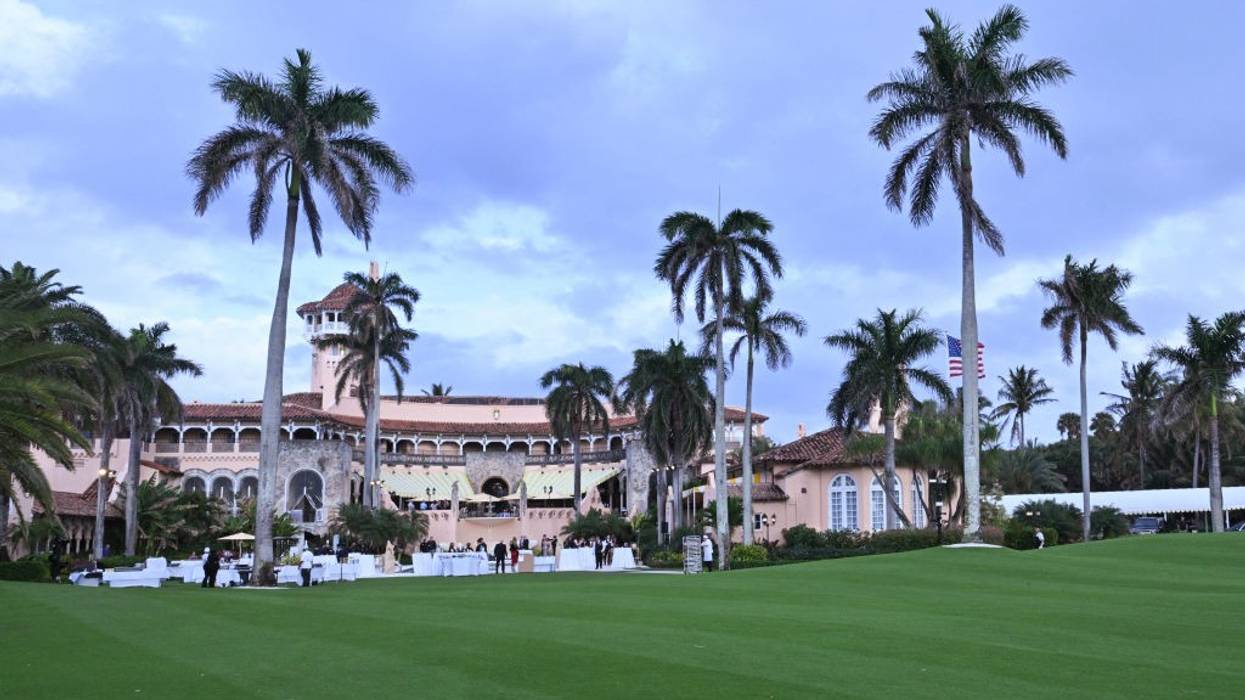
Trump has said that communities that don't want data centers "want to end up being backwards and poor."
President Donald Trump has said every American should want a data center in their town. But his home county in Florida just voted to block them.
In a 6-0 vote, commissioners in Palm Beach County—home to the president's luxurious private club and second residence, Mar-a-Lago—voted to enact a one-year moratorium on the construction of new "large-scale" data centers that use at least 50 megawatts of power.
The moratorium, approved on Thursday, came after Palm Beach residents expressed concerns shared by Americans around the country who’ve seen data centers move into their communities. Palm Beach already has some smaller data centers. But in July, it rejected a proposal for the 600MW Project Tango, following warnings about its potential effects on local wetlands and on families’ pocketbooks.
"Many communities want the economic benefits that data centers bring, but we all fear the higher power bills, the negative environmental impact, disruptive noise, and the depletion of water resources," explained one supporter of the moratorium at a county commission meeting on Thursday, according to the local ABC affiliate.
A poll conducted last month by Embold Research and published by Heatmap Pro found that 75% of Americans now oppose the building of AI data centers in their area, including 61% who registered strong opposition. Aversion to data centers crosses party lines, with majorities of Democrats, Republicans, and independents viewing them negatively.
As AI companies spend tens of millions bankrolling Trump and Republican candidates, members of the president's Cabinet, including Commerce Secretary Howard Lutnick and Energy Secretary Chris Wright, have scoffed at Americans' concerns about the tremendous water and energy use of data centers, which have been well documented as jacking up utility prices.
In a social media post last month, Trump himself said the only reason communities would not want a data center nearby is if they "want to end up being backwards and poor." Before that, he said that "smart communities" were "begging for them."
Sen. Bernie Sanders (I-Vt.), who has become one of Capitol Hill's leading critics of data centers and the artificial intelligence models they power, has said that if Trump truly finds data centers so desirable, he should “lead by example” by having his friend and megadonor, tech billionaire Elon Musk, build one at Mar-a-Lago.
"Trump says communities that oppose data centers will end up 'backwards' and 'poor,'" Sanders remarked Friday on social media. "Yesterday, Mar-a-Lago’s own Palm Beach County passed a year-long ban on these facilities."
"Maybe," the senator said, "Trump’s neighbors know something he doesn’t."
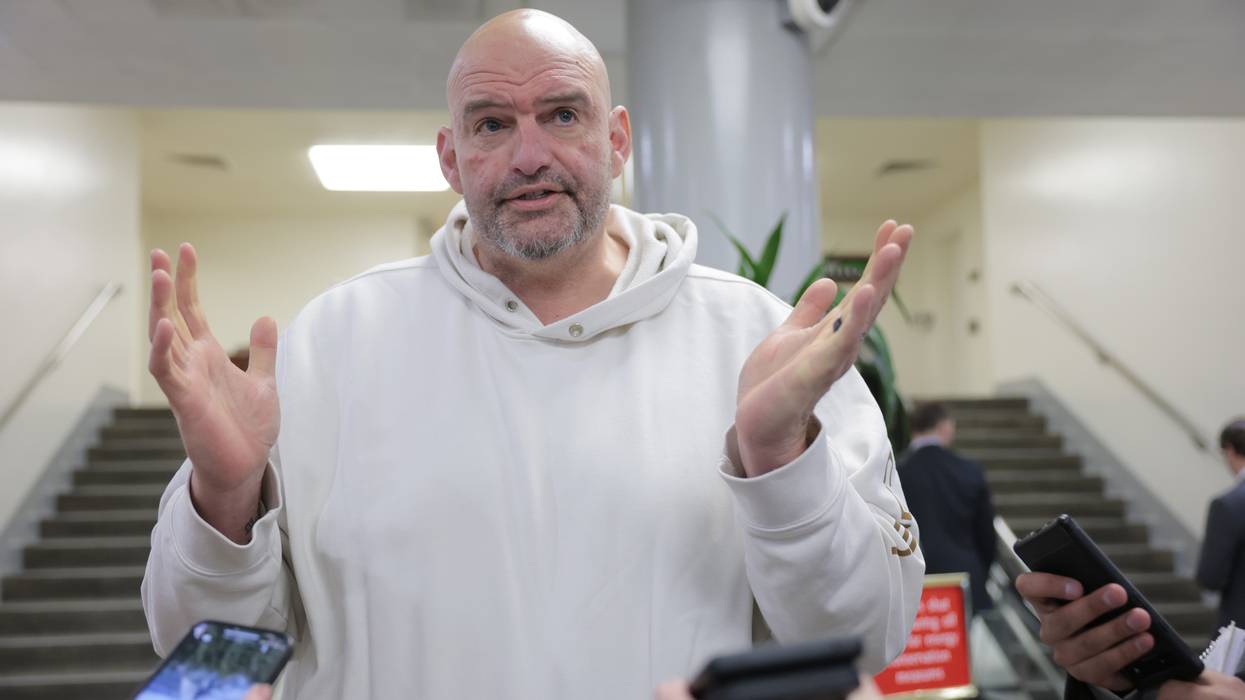
"This reckless war has cost American lives, innocent lives, tens of billions of dollars, and higher prices on nearly everything here at home. John and 49 Republican Senators voted in favor of all of that."
Democratic Sen. John Fetterman of Pennsylvania was the lone Democrat on Thursday to help Republicans in the US Senate vote down a resolution to end the "illegal" war of choice launched against Iran by President Donald Trump earlier this year.
In the 49-50 vote, the Republican majority blocked the latest resolution calling for an end to the war. While four Republicans—Susan Collins of Maine, Alaska's Lisa Murkowski, Rand Paul of Kentucky and Thom Tillis of North Carolina—joined Democrats by voting in favor, Fetterman became the deciding vote.
Rep. Chris Deluzio (D-Pa.) was among those expressing frustration with Fetterman, a lawmaker who has become a thorn in the side of his party since taking office and taking a hard right with his pro-war positions, accommodations to Trump, and determined support for pro-Israeli policies.
"John Fetterman just cast the deciding vote to keep the Iran War raging," said Deluzio. "This reckless war has cost American lives, innocent lives, tens of billions of dollars, and higher prices on nearly everything here at home. John and 49 Republican Senators voted in favor of all of that."
"Fetterman never fails to disappoint," said Susan Wild, a former Democratic member of the US House from Pennsylvania.
The vote came on the same day that an advocacy group representing American citizens with Iranian heritage sued the Trump administration for usurping the powers of Congress when it launched an "unconstitutional" war against Iran—a military conflict that has lasted nearly 7 months with no end in sight, causing misery across the Middle East and economic pain worldwide, including in the United States.
Filed in the US District Court for the District of Columbia on Thursday, the lawsuit, filed on behalf of the National Iranian American Council Action (NIAC Action), asks the court to declare that President Donald Trump's unprovoked attack on Iran violates the Constitution’s Declare War Clause.
In a statement, NIAC Action said the suit was brought "on behalf of its members whose families have been injured, displaced, economically devastated and are in continuing mortal danger as a result of a war that was never lawfully authorized."
Launched on Feb. 28, the US attack, in coordination with the Israeli government of Prime Minister Benjamin Netanyahu, was launched despite ongoing diplomatic efforts and active talks over US sanctions against Iran and questions about Iran's domestic nuclear program and its conventional missile capabilities. The war was initiated, according to the group,
without a declaration of war or other congressional authorization and that the war has continued, including repeated heavy bombardments and a naval blockade, despite this lack of authorization and the passage by both chambers of Congress of an explicit directive to terminate unauthorized hostilities against Iran.
“No President should have the power to take this country into an indefinite war by himself,” said NIAC Action president Jamal Abdi, in a statement. “Congress never authorized this war. Yet Iranian families are being bombed, American service members have been killed, and communities on both sides are being forced to bear the consequences. This lawsuit asks a fundamental question: can one person decide, on his own, to keep an entire nation at war?”
NIAC Action offered the example of one plaintiff, Nima Dilmaghani, whose cousin in Iran was injured when the company warehouse where she worked was bombed. Dilmaghani's cousin, the group explained, "suffered a broken leg, serious damage to their eardrums, and the loss of their index finger, which surgeons reattached but which has lost motion. Approximately ten of her coworkers were killed, and approximately ten more were injured. In a separate bombing, their apartment was destroyed while they were away at work. They are now working two jobs to survive." Other NIAC Action members have detailed similar stories.
Lawyers behind the lawsuit said that just because President Trump and other officials, including Secretary of Defense Pete Hegseth, have tried to argue that war against Iran is not a "war," that does not make it so.
“President Trump has spent months waging a war that Congress never authorized, while insisting that changing the terminology somehow changes the constitutional question,” said attorney Bruce Fein. “Calling a war a ‘military operation’ or an ‘excursion’ does not erase the Declare War Clause. The question before the Court is whether the President can continue these hostilities without the authorization the Constitution requires.”
While War Powers resolutions have been passed in the House to cease military operations in Iran, none of those have been binding on President Trump, and overall, Congress has stood aside in the face of what critics have described as criminal aggression and war crimes by Trump.
Sen. Bernie Sanders (I-Vt.) and other members of the Democratic Caucus in the US Senate, have continued to voice their opposition to Trump's war as poll after poll show that the US voting public—across the political spectrum—want the war, and the economic harm it has wrought—to end.
"The American people, overwhelmingly, want to end this horrific war in Iran," Sanders said after the failed vote. "Pathetically, today, nearly every Republican voted with Trump to keep the war going. When will Republicans represent their constituents and have the courage to oppose their mentally unstable leader?"

"Wow! The American people are so excited to know now that!" US Sen. Bernie Sanders sarcastically said of Trump's false prescription drugs claim.
Sen. Bernie Sanders on Thursday grilled President Donald Trump's nominee to lead the US Food and Drug Administration about the president's false claims about the price of prescription drugs in the US.
During a Senate confirmation hearing, Sanders (I-Vt.) asked Dr. Heidi Overton about Trump's boast at this year's State of the Union address about giving Americans the cheapest medications of any country in the world.
“President Trump has claimed... that he took prescription drugs from the highest price in the entire world to the lowest,” Sanders said in an incredulous tone.
“Wow!" he continued sarcastically. "The American people are so excited to know now that we pay the lowest prices in the world for prescription drugs.”
BERNIE SANDERS: Trump claims we pay the lowest prices in the world for prescription drugs. Wow! Is the president telling the truth?
FDA NOMINEE HEIDI OVERTON: There has been immense progress--
SANDERS: Do we pay the lowest prices like the president said? You just told us you… pic.twitter.com/X7gWNbSmik
— Aaron Rupar (@atrupar) September 24, 2026
"What do you think?" Sanders asked Overton. "Are we paying the lowest prices in the world for prescription drugs?"
"Senator... there has been immense progress, especially on individual products," Overton replied. "Right now, 89% of branded drugs have signed agreements to lower their prices and make that available..."
Sanders at this point interjected.
"Do we pay the lowest prices?" he asked. "The president said it. He's your boss... He just said we pay the lowest prices in the world for prescription drugs. It's true or it's not true. Is it true?"
"Senator, we have seen..." Overton began.
"Is it true that we pay the lowest prices in the world for prescription drugs, as President Trump has said?" Sanders persisted.
"So, senator, the results that we have seen for the American people... have dropped prices," she replied. "And right now [the Consumer Price Index] says that, for the first time in 60 years, prescription drug prices have gone down by 3%."
"Which may have something to do with the legislation that we passed several years ago," said Sanders, in reference to provisions in the 2022 Inflation Reduction Act that granted Medicare the power to negotiate lower prices for certain prescription drugs.
Even if Trump's policies were solely responsible for a 3% drop in drug prices, that would not make them the lowest in the world by any stretch of the imagination.
A 2024 study from the RAND Corporation found that Americans pay nearly three times as much for prescription drugs compared to the rest of the world.
Sanders' office last year released a report showing that, during the first year of Trump's second term, drug companies raised prices on 688 medications, with a median increase of 5.5%.
Trump has a long history of making false claims about reducing prescription drug costs, and has even said that he has slashed them by as much as 600%, which would mean that pharmaceutical companies are paying consumers to take their medications.

"When the future of humanity is at stake, we cannot let a handful of Big Tech CEOs write their own rules."
US Sen. Bernie Sanders and Rep. Greg Casar unveiled legislation on Wednesday that would pause advanced AI development and ban the creation or deployment of artificial superintelligence, which the lawmakers, industry insiders, and leading researchers believe poses a grave threat to humanity.
For the purposes of their legislation, Sanders (I-Vt.) and Casar (D-Texas) define superintelligence as "an AI that exceeds human cognitive performance and capabilities across most domains, or has sufficient capabilities to destroy or disempower humanity, including by overthrowing the federal government."
Casar and Sanders characterized their new bill, titled the Ban Artificial Superintelligence Act, as a commonsense, necessary, and urgent starting point for AI regulation, and said it should be a top legislative priority for Democrats if they retake the House and Senate in the November midterms.
Casar, the chair of the Congressional Progressive Caucus, said during a press call on Wednesday that, critically, the bill targets "recursive self-improvement," the process by which AI models build more advanced versions of themselves without human input.
The Texas congressman also noted the legislation's prohibition on the use of AI to design nuclear and biological weapons.
According to a summary released by Sanders' office, the new bill would "protect humanity" by:
"This issue is of monumental consequence," said Sanders, who dismissed accusations of alarmism when it comes to the threats posed by AI development.
"I'd rather be called an alarmist than a father or grandfather who is asleep at the wheel," the senator told reporters on a press call about the new bill.
AI researcher Jacob Coxon and other industry insiders have issued striking statements in recent weeks asserting that the technology, if not reined in, has the real potential to wipe out humanity in the near future, heightening concerns about the speed of AI development, the inability of its creators to control their models, and the absence of any corresponding action from the US Congress, which is controlled by Republicans who are broadly hostile to government regulation.
US President Donald Trump, the leader of the GOP, has flippantly dismissed calls to pause advanced AI development. In his address to the UN General Assembly on Tuesday, Trump said he is "not going to stifle growth of something that will be bigger than the Industrial Revolution."
"We will only encourage superintelligence," said Trump. "We're going to encourage it, not rein it in."
The president announced that he has directed his administration to use "super intelligence" instead of "artificial intelligence" in government documents going forward. From his remarks, it was apparent that Trump was unaware that superintelligence has a specific meaning in the world of AI.
"The word 'artificial' makes intelligence fake. It makes it sound fake," Trump said. "From this point forward, all of the United States' documents and hopefully the world's will be changed to use the much more accurate term 'super' as opposed to 'artificial.' So it's super intelligence... It sounds much better, it is much better."
Casar pushed back on Trump's position in a statement on Wednesday, saying, "Experts are warning that AI superintelligence, wielded by the wrong humans or by rogue AI, could kill countless numbers of people. But Donald Trump says he wants to encourage it."
"Something has to change," said Casar.
Sanders stressed during Wednesday's press call that supporters of reining in AI development and ensuring the technology is used to benefit all of humanity, rather than a small group of tech oligarchs, must "rally the American people" to their cause to overcome the nation's "corrupt campaign finance system," which AI giants are exploiting to pump tens of millions of dollars into the midterm elections.
“When you are racing towards a cliff, you don’t just ease up on the gas pedal. You hit the brakes," said Sanders. "When the future of humanity is at stake, we cannot let a handful of Big Tech CEOs write their own rules."
"Congress must act now," the senator added, "before it is too late.”
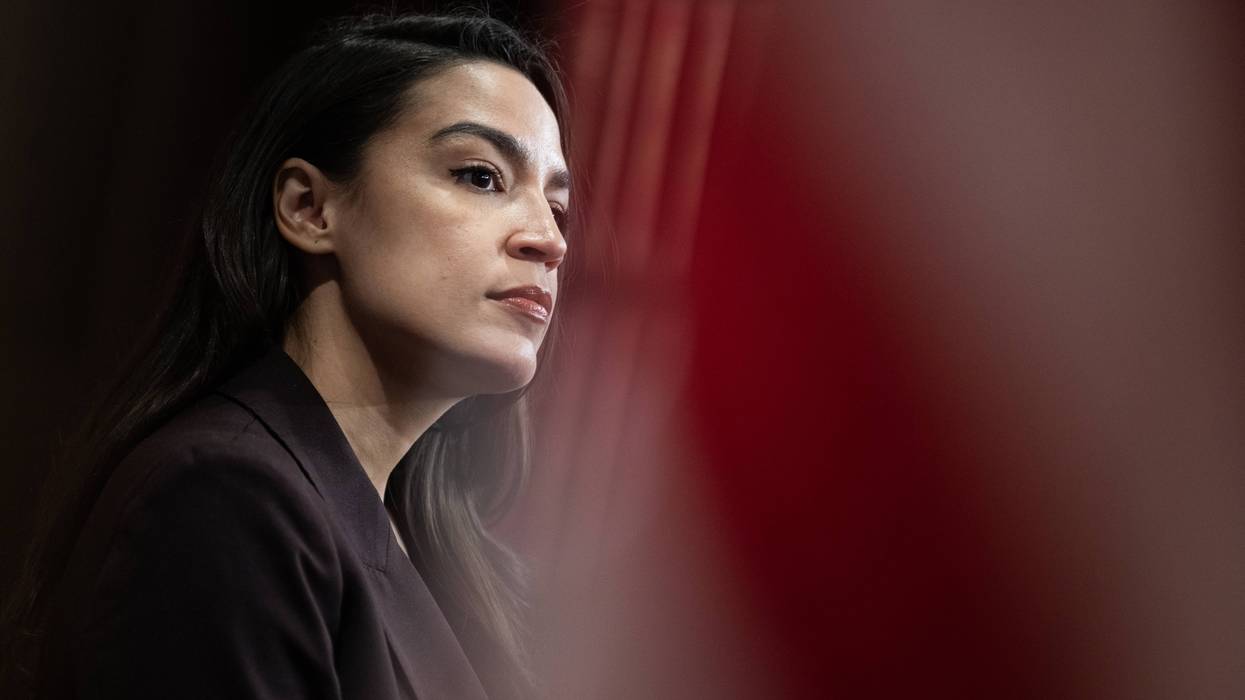
"Life doesn’t wait for you to be ready for things," the Democratic congresswoman said amid nationwide progressive political momentum. "Sometimes life just makes things ready for you."
As Rep. Alexandria Ocasio-Cortez weighs whether to run for president in 2028, there are numerous factors that complicate her decision: her identity as a Latina woman, her role as a leader in a progressive movement on the verge of unprecedented power, and her considerations about raising a family in the future.
Whatever decision the 36-year-old Democratic congresswoman makes, however, it will be “all or nothing,” she said in an interview published Tuesday by The New York Times, in which she spoke candidly about the stakes of what would be a historic and potentially transformative bid for the nation’s highest office.
Ocasio-Cortez (D-NY) became the youngest woman ever elected to Congress in 2018 in a victory over the Democratic Party establishment that became a model for the wave of progressive momentum that has defined this year’s cycle.
Amid what she described as the “ascendance” of her movement—marked by the insurgent victories of New York City Mayor Zohran Mamdani and Michigan Democratic Senate nominee Abdul El-Sayed over opponents with establishment support and big money behind them—Ocasio-Cortez is now wondering aloud whether her own moment has arrived.
“There’s an argument that some make that this is a very unique political window and, oftentimes in politics, you do only get one shot,” she said. “And you don’t—and just in life in general—life doesn’t wait for you to be ready for things. Sometimes life just makes things ready for you.”
But she is well aware of the obstacles and sacrifices, both personal and political. Having recently opened up publicly about receiving fertility treatments, she wondered aloud what a potential candidacy might mean for her life, including a possible future pregnancy.
She is also well aware that she would be up against the weight of very recent history. Two of the last three Democratic candidates for president, former Secretary of State Hillary Clinton and former Vice President Kamala Harris, were women, and they both lost to President Donald Trump after campaigns in which sexism—and, in Harris’ case, racism—featured prominently in attacks against them.
“Pretty candidly, I think about my identity," Ocasio-Cortez said. "I’m not naïve to the fact that we are living under a very regressive administration, and I happen to be a woman, and I, you know, happen to be Latina. And I think that there’s a lot of conversation about electability, and I don’t kind of shy away from those realities.”
Those realities are indeed hard to ignore, especially in contrast to her mentor, Sen. Bernie Sanders (I-Vt.), who ran two formidable Democratic primary campaigns for president in 2016 and 2020 and with whom Ocasio-Cortez embarked on a wildly successful "Fight Oligarchy" rally tour last year, speaking to large crowds in both red and blue districts.
Though they have long campaigned together and advance a platform centered on the same signature policies of Medicare for All, a Green New Deal, and a tax on billionaire wealth, Sanders consistently ranks among the most well-liked politicians in office, while a New York Times/Siena poll this month showed AOC with just 30% favorability, compared with 41% unfavorability among likely voters.
There are other paths in front of AOC that could put her on a more traditional long-term trajectory to the White House, which has never in modern history been occupied by a president who ascended straight from the US House.
She also said she was considering a primary bid against the Democratic Party's current Senate leader, Chuck Schumer (D-NY), whom many Democratic voters have come to see as the embodiment of all that is sclerotic and unchanging about their party's entrenched elite.
At a time when backing from corporations and other powerful special interests plays an unprecedented role in achieving political power, Ocasio-Cortez emphasized her near-exclusive backing from small donors, which she said makes her one of "very few people who are financially independent from special interests that are able to advocate directly for the needs of working people.”
Regardless of the decision she makes, she recognizes the enormous stakes.
“It’s very all or nothing,” she said. “If I were to run in this cycle, and not win, I would be done.”
“And I am not opposed to that,” she added. “That, in and of itself, does not exclude the decision... But it has to make it worth it.”
Ocasio-Cortez has previously emphasized that her "ambitions" have less to do with achieving the highest possible seat for herself than with helping her movement succeed.
“My ambition is to change this country,” she said during a forum in May. “Presidents come and go, Senate, House seats, elected officials come and go, but single-payer healthcare is forever, a living wage is forever, workers’ rights are forever, women’s rights, all of that.”
She told the Times that the question that will ultimately determine her path forward is: "Where can I do the most good?”

"If there was ever a time in human history, in our country and throughout the world, that we have got to come together and create a world not based on greed but based on justice, based on decency, now is the time."
US Sen. Bernie Sanders warned in a speech late Monday that the world is hurtling toward "an extremely dangerous global oligarchy" whose unprecedented concentration of wealth and political power endangers democratic institutions, the environment, and humanity's collective future as artificial intelligence rapidly advances.
"The oligarchs of today, worth hundreds and hundreds of billions of dollars, having investments all over the world, fervently believe that they are the masters of the universe, and that they, through their enormous wealth and power, have been ordained to rule the world," Sanders (I-Vt.) said in an address at the historic Riverside Church in Manhattan, where Martin Luther King Jr. delivered a famous speech condemning the Vietnam War. "Today we say to those oligarchs: This country, this world, belongs to all of us, not just you."
Sanders used his remarks, delivered as world leaders arrived in New York City for the United Nations General Assembly, to decry a massively unequal status quo under which political leaders cater to the needs of billionaire donors and corporate interests rather than the broader population, whose wages are being swallowed by rising costs and whose communities are increasingly devastated by pollution and war.
Sanders also warned about the rise of "right-wing demagogues" who are exploiting real material struggles and government failures to advance nefarious agendas that pit "working people against each other based on the color of their skin, where they were born, or their religion."
"Instead of producing more bombs and weapons and seeing the military-industrial complex enjoy huge profits, governments throughout the world need to come together to feed the children, take care of the vulnerable, and protect our planet from the ravages of climate change," said Sanders, calling for an end to US military assistance to Israel, which is using American-made weaponry to carry out its genocidal assault on the Gaza Strip.
"Never before in human history have so few people held so much wealth and so much power, never before in human history have we had such enormous concentration of ownership," the senator said, warning that advancements in AI technology could dramatically intensify the crises facing humanity if control isn't wrested from "a handful of Big Tech oligarchs."
Watch Sanders' full speech:
Sanders called on US President Donald Trump, a billionaire who has dismissed warnings about the threats posed by AI, and Chinese President Xi Jinping to "begin the process of negotiating a comprehensive treaty to establish a pause on advanced AI and a ban on AI superintelligence" when the leaders meet this week.
The progressive senator also cautioned against "despair and depression" in the face of pressing global challenges, saying, "We got to stand up, we got to fight back, we've got to create the kind of nation and world that you and I know we can create."
"If there was ever a time in human history, in our country and throughout the world, that we have got to come together and create a world not based on greed but based on justice, based on decency, now is the time," said Sanders.
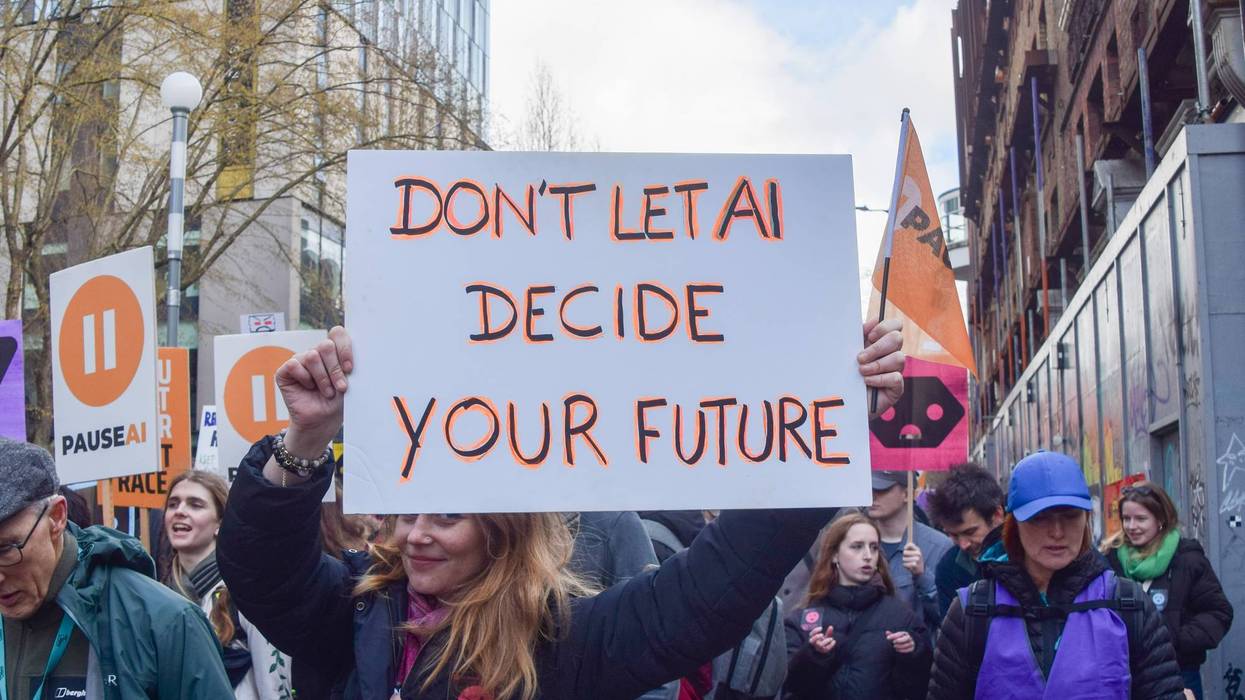
Will Democrats seize the moment and embrace the new AI-fueled economic populism? Or will they continue to succumb to the siren song of big money?
Last week, the unlikely duo of Bernie Sanders and Steve Bannon keynoted a Washington conference to demand a stop to AI, its data centers, and the risks AI poses to jobs and even to the human species.
Notably, both lambasted the corporate oligarchs behind AI.
The most potent force in American politics is anti-establishment fury at a system seen as rigged against average working people. AI has become Exhibit A.
It’s becoming obvious to much of America that giant corporations have been raking it in while workers have been taking it on the chin.
Until recently both parties largely avoided criticizing the wealthy corporate elites that funded their campaigns. In nature as in politics, one does not bite the hands that feed.
Trump Republicans have instead aimed populist fury at immigrants, LGBTQ+ people, Black and Latino people, “communists,” Muslims, so-called “woke” leaders, “coastal elites,” “childless cat ladies,” and other scapegoats.
Democrats—with the exceptions of Bernie Sanders, AOC, and a few others—have also avoided criticizing wealthy corporate elites, aiming populist fury at Trump.
This may be changing.
It’s becoming obvious to much of America that giant corporations have been raking it in while workers have been taking it on the chin.
As of mid-2026, according to the Bureau of Labor Statistics, the percentage of the total economy going to workers as wages fell to a record low of 52.9 percent (down from above 65 percent when tracking began in 1947) — leaving the rest to investors, business owners, and corporate profits.
AI is on the way to causing far more inequality—generating billions for its backers while reducing jobs and wages.
Trump and his regime, meanwhile, have exposed the greed, venality, cupidity, and corruption of America’s wealthy corporate elites by allowing them to do anything they want—including energy-guzzling, water-depleting AI data centers—as long as they kiss his assets by funding his PAC, paying for his ballroom, and singing his praises.
Trump has thereby unveiled the truth about corporate America that for years had been hidden behind corporate PR about “corporate social responsibility,” corporate charity, and “trickle-down” economics: The captains of corporate America are willing to throw average working Americans under the bus to make billions more.
Corporate avarice under Trump has become so blatant and corporate America’s contempt for the needs of average Americans so flagrant that most Americans are now catching on. In a recent NBC poll, 54 percent of Americans agreed that “When it comes to politics and society, nothing really matters because powerful people will always do whatever they want.”
AI may well be the final tipping point.
Data centers are unpopular—some 70 percent of the public opposes them. And Americans harbor deep suspicions of AI. Over 60 percent believe AI could destroy humanity (this includes 60 percent of Trump supporters).
Fears about AI are provoking larger concerns about wealthy corporate elites bribing politicians—not just to get generous subsidies for AI but also to reduce the corporate elite’s tax bills, kill off unions, slash social safety nets, deregulate Wall Street, attain no-bid government contracts, receive exclusive licenses, open tax loopholes, get tariff exemptions, use public lands, and become even bigger monopolies.
Because of Trump, Americans are coming to view those wealthy corporate elites as more aligned with Republicans than with Democrats. According to last week’s Times-Siena poll, when likely voters were asked which party the word “elitist” describes, 43 percent said Republicans while 33 percent said Democrats.
This is something of a return to how America’s two major political parties used to be viewed. Before World War II, Democrats were assumed to be on the side of working people against wealthy corporate elites. On the eve of his 1936 reelection, FDR told the American people they were fighting “business and financial monopoly, speculation, reckless banking, class antagonism, war profiteering…. We now know that Government by organized money is just as dangerous as Government organized by the mob.”
Will Democrats seize the moment and embrace the new AI-fueled economic populism? Or will they continue to succumb to the siren song of big money?
According to Politico, some Democratic political consultants are quietly urging candidates in the toughest battleground races to stay mum on AI “over fears that powerful and well-resourced pro-AI interest groups could spend money pummeling them in the final weeks of the midterms.”
It’s not just the future of the Democratic Party that’s at stake; it’s the future of America.
"We don't need Middle East dictators to control American media."
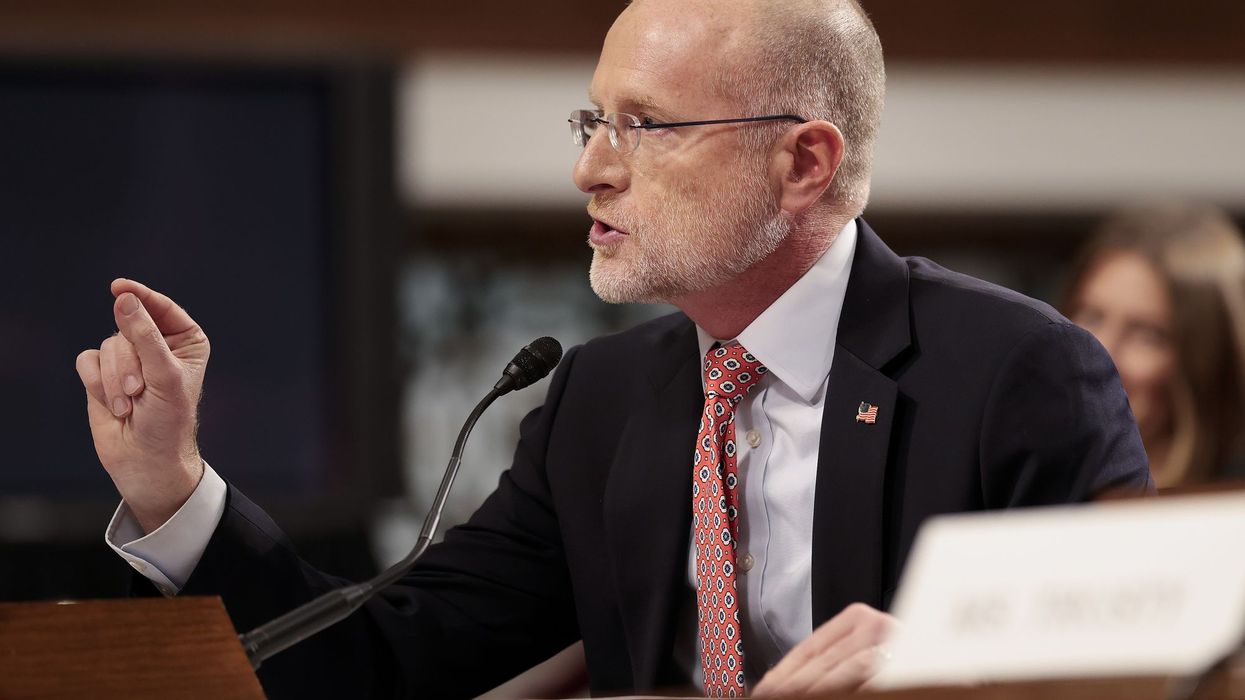
US Sen. Bernie Sanders on Friday joined a growing chorus of critics angered by the Federal Communications Commission's approval of foreign investment in the company that would be created if Paramount Skydance and Warner Bros. Discovery are allowed to merge.
Led by Chair Brendan Carr, an appointee of President Donald Trump, the FCC on Thursday approved Paramount's petition to allow foreign investors to hold over 25% of ownership. The commission concluded it would be in the "public interest" to greenlight a plan for 49.5% foreign ownership, including 38.5% from investment funds based in Qatar, Saudi Arabia, and the United Arab Emirates (UAE).
"Trump's FCC just approved Trump pal David Ellison's deal to allow Saudi Arabia, Qatar, and the UAE to own nearly 50% of a merged Paramount-Warner Bros," Sanders (I-Vt.) wrote on social media Friday, referring to Paramount's chair and CEO—and the son of billionaire Republican megadonor Larry Ellison.
The merged company would include CBS, CNN, HBO, the Discovery Channel, BET, Fandango, MTV, Nickelodeon, Paramount, PlutoTV, Showtime, TBS, The CW, TNT, Warner Bros., and more, the senator noted. He added: "Outrageous: We don't need Middle East dictators to control American media."
Anna Gomez, the sole Democratic commissioner, was similarly critical: "The FCC just let some of the most repressive governments in the world indirectly control nearly all of a combined Paramount-Warner Bros. An investment this large in one of America's biggest media companies doesn't just buy equity, it secures influence over what gets said and made."
"That's why I called for this new and novel issue to go to a full commission vote given what's at stake," she noted. "Instead, the FCC snuck this ruling out as a staff-level decision, with no public vote and no accountability for a call of this magnitude."
Welcoming Gomez's comments, Michael Sozan pointed to his and Andrew Miller's June article for the Center for American Progress highlighting that "the three Middle Eastern authoritarian regimes have deep financial relationships with Trump and his family, and... long records of human rights abuses and engage in media censorship."
"These autocracies could leverage Paramount's news outlets and other media properties to advance their own interests at the expense of the United States' national security and foundational rights, including press freedoms," the pair warned. "Given these factors, these foreign ownership levels are another reason why regulators must rigorously review this merger and take all lawful actions to block it."
As the Los Angeles Times reported:
Several groups, including the 1st Amendment nonprofit Free Press, asked the FCC to consider additional safeguards to shield the news organizations—CNN and CBS—from foreign control. One suggestion was to spin off CBS and CNN into a subsidiary that would be wholly owned by Americans.
Paramount and the FCC were dismissive, arguing "the concerns raised in the record... are speculative and unsupported," according to the FCC ruling.
While a Paramount spokesperson welcomed the FCC's decision not to block the plan—and pointed out that "when the proposed transaction with Warner Bros. Discovery closes, the Ellison family and RedBird will collectively hold the largest equity stake in the combined company and 100% of the voting shares, with no other equity participant having any governance rights"—fresh outrage mounted over the already widely criticized $111 billion merger.
Lee Hepner, an antitrust lawyer and senior legal counsel for the American Economic Liberties Project, addressed the questions: "But it's just indirect equity interests, right? What about the condition that the Saudis, UAE, and Qatar cannot interfere with or even comment on any decisions related to content?"
As he explained: "The only way that firewall is conceivably enforceable is if the FCC assigns an independent monitor to sit in on every meeting, taps every burner phone, and is invited to every Signal chat between any representative of Paramount and its new financial backers. The point is not that that should happen, but that this condition is patently unenforceable. Which is all to say, the FCC just approved the sale of a crown jewel of the entertainment and media industry to foreign interests that relish in exercising economic, political, and regional military leverage over the United States. All based on a pinky promise."
"The reality is that ownership alone, even of nonvoting, indirect equity interests, creates its own financial leverage and influence," he warned. "To the extent Paramount's new owners are prohibited from exercising influence, it's patently paradoxical. Paramount won't approve anything that risks losing half of its financial backing, including criticizing a regime that not too long ago ordered the execution of a Washington Post columnist, Jamal Khashoggi, who became an international figurehead for politically persecuted journalists."
"Does anyone think CBS' new leadership has the will, much less fortitude, to prioritize truth over financial ruin?" he added. "If this all sounds like a total mess, that's because it is. And it only becomes doubly worse if Paramount acquires Warner Bros.-Discovery."
Due to legal pushback from state attorneys general and unions, the merger—which some opponents have condemned as an "existential" threat—is on hold until the outcome of a trial scheduled to begin in March.
The effort comes as senators also sound the alarm about a possible nuclear energy agreement and the administration continues to greenlight arms sales to the kingdom.
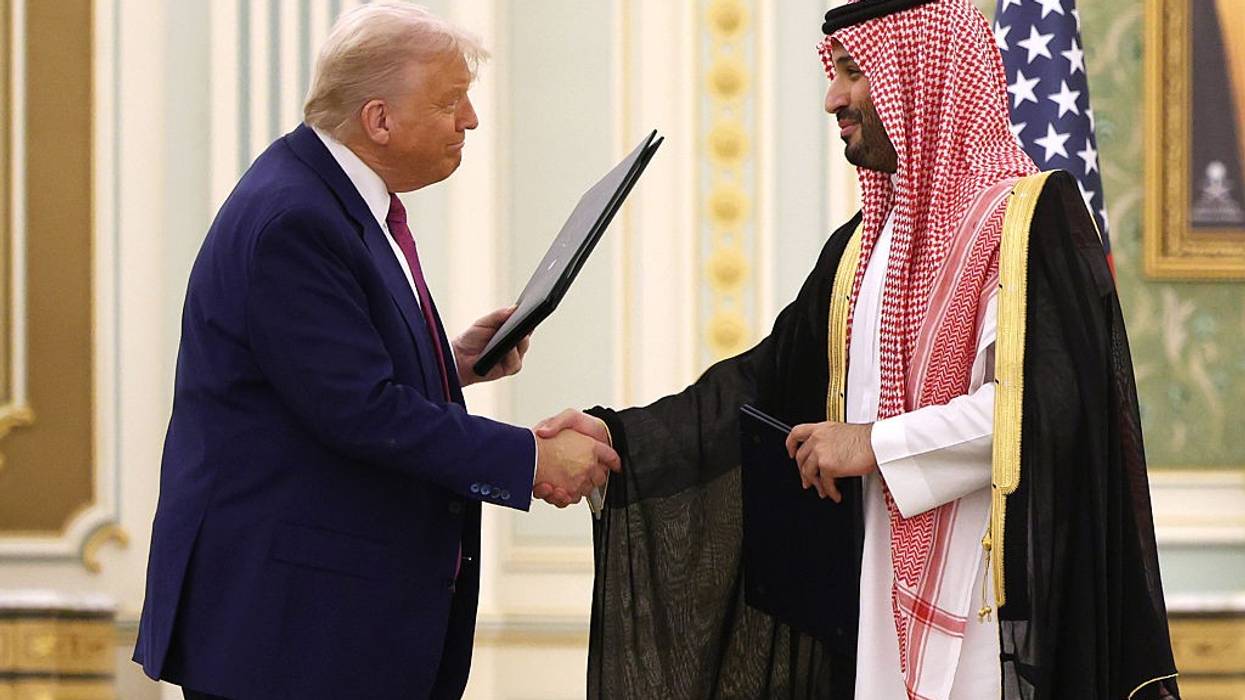
A trio of progressive US senators this week introduced legislation to block a $5 billion conventional weapons sale to Saudi Arabia while also pushing for the release of more details about President Donald Trump's proposed nuclear cooperation agreement with the Middle Eastern kingdom.
"The United States must not send thousands of conventional weapons to Saudi Arabia or allow it to develop a nuclear program," said Sen. Ed Markey (D-Mass.) in a Thursday statement—a day after he partnered with Sens. Jeff Merkley (D-Ore.) and Bernie Sanders (I-Vt.) to introduce the joint resolution of disapproval, which was referred to the Senate Foreign Relations Committee.
"I am deeply concerned by the kingdom's human rights abuses, the security of the region as the war in Iran rages on, and the proxy war that is escalating between Iran and Saudi Arabia in Yemen," Markey explained. "Further escalation in the Saudi-Iran proxy war will worsen an already dire humanitarian catastrophe in Yemen and risks setting off a nuclear arms race between Iran and Saudi Arabia."
The resolution targets a sale approved by the US State Department on September 4 that includes over 10,000 joint direct attack munition (JDAM) guidance kits. As Breaking Defense detailed, "The prospective transaction includes a similar number of dumb bombs—split almost evenly between 500 lb. and 2,000 lb. munitions—which, when equipped with a JDAM, can be used as a precision weapon."
The bill does not apply to the other possible sale to Saudi Arabia endorsed by the department that same day—$750 million for AGT-1500 engines and related equipment—or the $24.3 billion deal for F-35 Lightning II fighter jets, which the Trump administration greenlit Thursday, after the resolution was introduced.
The latest approval "comes nearly two months after Saudi Defense Minister Khalid bin Salman traveled to Washington to lobby senior Trump administration officials on the sale, with Riyadh hoping to advance the deal ahead of the midterms," Semafor noted. The upcoming US elections could lead to Trump's Republican Party losing control of Congress.
The warplanes sale could also face pushback from Congress. According to Politico, Rep. Raja Krishnamoorthi (D-Ill.), who sits on the House Intelligence Committee, warned that "it could put the crown jewels of American military technology within reach of the Chinese Communist Party."
US approves $24.3 billion sale of 48 F-35 stealth warplanes to Saudi Arabia.US intelligence analysts have raised the possibility that China could acquire F-35 technology through its partnerships with Saudi. Israel had been the only country in the Middle East to operate the jetsu.afp.com/SjRn
[image or embed]
— AFP News Agency (@en.afp.com) September 17, 2026 at 9:41 PM
In addition to unveiling their resolution about the JDAMs and bombs on Wednesday, Markey and Merkley, co-chairs of the bicameral Nuclear Weapons and Arms Control Working Group, led a bipartisan group of senators—including Sanders—in urging a pair of Trump Cabinet members to declassify two side letters associated with the administration's proposed nuclear deal.
The administration submitted the pending 30-year agreement—which would allow US companies to share nuclear power technology with the kingdom—to Congress after it was signed by US Energy Secretary Chris Wright and Saudi Energy Minister Prince Abdulaziz bin Salman in July.
Under Section 123 of the Atomic Energy Act, Congress has 90 days of continuous session to review the deal and either move to block it or let it take effect. The senators' new letter to Wright and Secretary of State Marco Rubio notes that "in previous 123 agreements, the executive branch publicly released the agreement along with side letters and related documents."
"Access to the full text is required for the Senate and the public to have a clear understanding of the commitments being made on the nation's behalf and those being made by Saudi Arabia to the United States," the senators argued. "Their public release would also allow civil society, independent experts, and other affected stakeholders to scrutinize the deal."
"Transparency and open debate are cornerstones of our democracy," they emphasized. "Congress and the American public must have a meaningful opportunity to review and debate the key components of the US-Saudi nuclear deal before it potentially enters into force. To that end, we call on you to declassify and release the two side letters without delay."
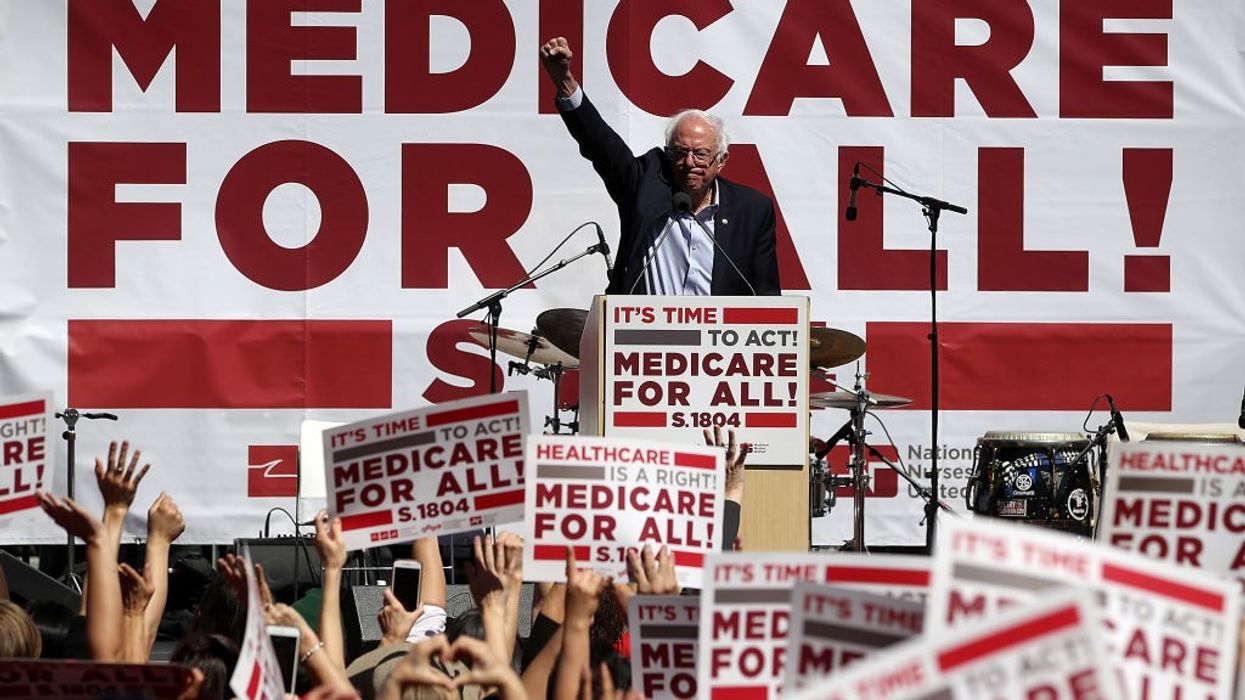
Everyone who wants Improved Medicare for All to become law should reach out to friends, family, and neighbors and urge them to get involved and we should create Improved Medicare for All clubs nationwide to galvanize this movement.
Reaching our destination won’t be easy. Americans have been fighting for universal, government-sponsored national health insurance for over 100 years. Progress was made in 1965 and 1972, when Medicare was enacted and expanded. Since, then, though, not only was Medicare not expanded; frustratingly, its opposition has succeeded in partially privatizing it.
The moment in which the nation finds itself does not appear particularly hopeful even for the country to remain the United States. Not since the Civil War has the nation been so divided.
Almost 100 years ago, the Great Depression brought economic collapse and with it, a serious threat to democracy. Like today, there was hostility to those perceived to be elites. The economic turmoil opened the door to widespread radical movements and demagogues.
Like today, “others” were scapegoated, along with the “elites.” Jews were a particular target. One extremely powerful, influential anti-Semite was radio preacher Father Charles E. Coughlin. At the height of his popularity, his Sunday radio show, Golden Hour of the Little Flower, which was broadcast over dozens of radio stations around the country, was heard by nearly one in four Americans and had a larger share of the listening audience than the more recent broadcasters Howard Stern, Rush Limbaugh, Paul Harvey, and Larry King put together. Before the 1936 Presidential election, he asserted. “This is our last election. It is fascism or communism. We are at the crossroads. I take the road to fascism.”
Another leader of the time seeking radical change was Louisiana Governor and then Senator Huey Long, who targeted the extreme income and wealth inequality which exploded during the so-called Roaring Twenties. His Share Our Wealth plan proposed confiscatory income, wealth, and inheritance taxes on the wealthiest and generous federal benefits for working and middle-income families. Just one year after announcing the plan, there were 27,000 Share Our Wealth local clubs, mainly in the South, with over 7.5 million members.
Long planned to run for president as a third-party candidate, even setting out his plans and strategy in his 1935 novel, My First Days in the White House. His plans came to an abrupt end, though, in September, 1935, when he was assassinated by the son-in-law of a political opponent whom Long had targeted and slandered.
Another radical leader of the time was socialist author and journalist, Upton Sinclair, who sought to expose corruption in business and government, while shining a spotlight on the horrendous working conditions at the time. In 1934, he ran for Governor of California on his “End Poverty in California” (EPIC) plan, which, like Long, he set out in a novel, the 1933 I, Governor of California, and How I Ended Poverty: A True Story of the Future. His plan called for the state to seize idle factories, farms, movie studios, and other businesses and convert them to worker-run co-ops, financed with progressive revenue. Two dozen candidates who ran on the EPIC plan won seats in the state legislature, including lawyer and journalist Culbert Colson, who successfully ran for Governor four years later, becoming the first Democrat in 40 years to win the office.
At base, people were suffering and open to radical solutions to address their misery. Franklin Roosevelt was undoubtedly the right person to meet that moment. He was extremely politically savvy, pragmatic, and smart. His speeches were inspiring and visionary. His famed fireside chats, named to convey a sense of cozy familiarity, established a strong personal connection between the president and the American people. He radiated optimism. Perhaps most importantly, he exuded compassion and empathy.
Though he enjoyed extraordinary wealth and privilege, his paralysis, resulting from contracting polio at age 39, was apparently transformative. His close colleague Frances Perkins, who became the first woman to serve as a Cabinet secretary to a president, described his transformation in her book, The Roosevelt I Knew. She witnessed Roosevelt undergo, she wrote:
“a spiritual transformation during the years of his illness….The man emerged completely warmhearted, with humility of spirit and with a deeper philosophy. Having been in the depths of trouble, he understood the problems of people in trouble.”
The brilliant achievements of the charismatic Roosevelt can continue to be felt today. His Social Security program was carefully crafted to embody basic American values, containing both progressive and conservative elements that continue to appeal to Americans across the ideological divide. Roosevelt’s legacy provides good news in today’s troubling time. As polarized and hostile as Americans are in general, we are overwhelmingly united in our support for Social Security and Medicare, which grows out of Roosevelt’s legacy. A 2025 Bipartisan Policy Center poll, for example, found that 91 percent of Americans believe that Medicare is valuable. That same poll found that 93 percent believe Social Security is valuable. Numerous other polls, taken over many years by groups across the ideological spectrum, have found similar results of unanimity of support.
Despite how divided and combative the American people are generally, these numbers provide a ray of hope. Supporters of Improved Medicare for All must build on this support systematically. The cause and its success may have the byproduct of helping to bring the country back to more normal, less fractured, and hostile times.
Notwithstanding Joe Biden’s 2020 victory, none of the Democratic presidential nominees in the last few election cycles nor the mainstream leaders of today’s Democratic Party appear to match Roosevelt’s political insights or capabilities. Senator Bernie Sanders (I-Vt.) showed that he can garner enthusiastic support, as has New York Mayor Zohran Mamdani, but the Democratic leadership has not embraced them or similar charismatic progressive leaders. Consequently, the Democratic Party has not spoken with one single clear voice and capitalized effectively on the broad support for Medicare and Social Security.
Unfortunately, unlike Roosevelt, the current politicians who appear most likely to win the 2028 Democratic presidential nomination do not appear to have the vision or charisma to capitalize on the popularity of Medicare and Social Security. There is no candidate with Franklin Roosevelt’s many gifts who is in a position to fully embrace Improved Medicare for All and ride it to victory, together with an expanded Social Security program. At this moment, the Democratic Party does not seem united in a path forward, certainly not one that would embrace as bold a vision as Improved Medicare for All.
Nevertheless, the political movements of the 1930s provide evidence that those policy goals can be achieved without a political leader. While the Share the Wealth and End Poverty in California grassroots movements had high-profile personalities leading the efforts, another astoundingly successful grassroots movement did not.
While policymakers in Washington were primarily focused on unemployment in the early years of the Great Depression, they apparently did not fully appreciate that hidden in the shadows of the unemployment numbers were impoverished, aged parents reluctantly dependent on their adult children for support. When Social Security became law in 1935, every state but New Mexico had poorhouses (sometimes called almshouses or poor farms). The vast majority of the residents were elderly. Most of the “inmates,” as they were often labeled, entered the poorhouse late in life, having been independent wage earners until they were no longer able to work.
Although official Washington was not focused on the plight of the elderly, ordinary people were. In September 1933, a Long Beach, California doctor, Francis E. Townsend, found himself at age 66 unemployed with no savings. He was gazing out his window when he spotted two elderly women, dressed in rags, rummaging through his garbage, searching for anything edible. It so upset Dr. Townsend that he sent a letter to the Long Beach Press-Telegram, his local newspaper.
His letter, published on September 30, proposed a plan. He proposed that the federal government provide every person aged 60 or older a pension of $200 per month, a princely sum in the 1930s. The only requirement, in addition to being retired and not a criminal, was that the recipient had to spend every penny within 30 days of receipt. He claimed that his plan would not only eradicate old-age poverty; it would so stimulate the economy that it would create jobs and end the Depression.
The idea spread around the country at a rate astonishing to believe in that pre-Internet, pre-social media world. A year after Townsend wrote his letter to the newspaper, Time magazine reported in its October 15, 1934, issue:
By last week the flow of money…was enough to pay the wages of 50 people….There were Townsend Clubs in every State except Delaware…. Between 2,000,000 and 5,000,000 people had put their names to petitions begging their Congressmen to vote the Plan into effect at once.
Even in the short time between the publication of Townsend’s letter and the establishment of Roosevelt’s Committee on Economic Security (CES), his interagency task force to develop the Social Security Act, supporters of the Townsend proposal were exerting considerable pressure on the Administration and Congress. At the height of CES’s work, mail from Townsendites averaged about 1,500 letters a day. In some congressional districts, a candidate’s position on the Townsend plan determined the outcome of the election.
By mid-October 1934, Townsend had acquired two million signatures on petitions urging congressional action on his plan. Just three months later, he was claiming to have 25 million signatures. The number of Townsend clubs had climbed to 25,000 across the country. The plan’s popularity was not hard to fathom. As political columnist, Mark Sullivan with The New York Herald Tribune explained: “The zeal of those promoting the plan is evangelical, almost fanatic.”
A Time magazine piece explained the political climate surrounding the plan:
The good doctor’s Old Age Revolving Pensions scheme, better known as the Townsend Plan, had by last week become one of the biggest political facts in the US. The early California groundswell of sentiment in its favor had grown to a tidal wave, battering at nearly every door in House and Senate Office Buildings.
In the end, the Townsend plan, which policy experts understood to be unworkable—benefits would have cost half the income of the United States, for example—was instrumental in enacting Social Security, because it provided the widespread pressure to address old age insecurity. That is the kind of pressure that today could get Improved Medicare for All enacted, as well.
To build such a movement is both easier and harder than it was almost 100 years ago. While American news consumption is much more siloed, social media, email chains, and the internet generally allow people to connect much more easily and effectively. Of course, people are drawn to a variety of important issues, including climate change, gun violence, and immigration. Nevertheless, similar to the 1930s with respect to old age insecurity, Americans appear to be reaching the end of their rope with respect to the nation’s health insurance companies, as was demonstrated by the strong, instantaneous outpouring of frustration with commercial health insurance in response to the murder of the UnitedHealthcare executive.
The movement for Improved Medicare for All already has powerful, effective, knowledgeable and resourceful leaders. They are members of a far-reaching, forceful coalition, the National Coalition for Medicare for All. The coalition meets regularly to strategize and advance the issue. They are doing a spectacular job in championing and pushing forward Improved Medicare for All. To help them succeed in its enactment, the rest of us should provide them with an overwhelming army of passionate, dedicated grassroots supporters.
The goal, as impossible as it might seem, is to build a broad-based, energized, and determined Townsend-like grassroots movement. Everyone who wants Improved Medicare for All to become law should reach out to friends, family, and neighbors and urge them to get involved. In addition to joining already-existing groups, such as MoveOn, Public Citizen, and Indivisible, supporters should create Improved Medicare for All clubs.
Those clubs should play a number of roles. First, the clubs could educate members and others about why Improved Medicare for All is so important. They could discuss at club meetings how health care is a right, not a privilege and how Improved Medicare for All is the only realistic way to get us there. Just as the Townsend clubs hounded their elected representatives, supporters should flood offices with phone calls, keep track of when their Senators and representatives are home from Washington, DD, and attend their town halls if they host them. If they don’t, the clubs can seek meetings with their members and staff. If their members won’t commit to cosponsoring Improved Medicare for All legislation, they should put pressure on them, including picketing their offices.
With or without membership in an Improved Medicare for All club, those wanting to help the effort have many other steps they can take. On this and many other issues, there are a multitude of effective civic and social organizations active on political issues, such as Indivisible, MoveOn, Public Citizen, and many more. If you have access to a union, they remain extremely important and effective actors with which to engage. With or without engagement with these organizations, it is perhaps most important to educate family, friends, and neighbors. Writing letters to the editor and posting on social media are helpful actions. If possible, there may be an opportunity to hold an event at a school, perhaps through the PTA, as well as at assisted care facilities, libraries, and other spaces. If you want to organize an event but want experts to be the speakers and/or panelists, that is relatively easy these days, particularly, if the speakers can appear virtually.
Moreover, because healthcare costs affect everyone, the issue of Improved Medicare for All can be tailored to a variety of organizations and groups. School groups may be concerned about the impact of healthcare costs on their budget. Women’s groups may be concerned about reproductive rights. Again, the point is to make the movement for Improved Medicare for All as large a mass movement as possible.
This moment in history may make enactment of Improved Medicare for All appear as far away as it possibly could be. However, the mythological phoenix should be the symbol of the effort. The phoenix, an immortal bird that continually arose from the ashes of its predecessor, symbolizes renewal after a period of hardship.