

SUBSCRIBE TO OUR FREE NEWSLETTER
Daily news & progressive opinion—funded by the people, not the corporations—delivered straight to your inbox.
5
#000000
#FFFFFF
To donate by check, phone, or other method, see our More Ways to Give page.
Daily news & progressive opinion—funded by the people, not the corporations—delivered straight to your inbox.

Kirsten Stade (202) 265-7337
The Office of Inspector General for the U.S. Environmental
Protection Agency has opened an investigation into the agency's
"partnership" with the coal industry to market coal ash and other
combustion wastes in consumer, agricultural and industrial products,
according to a report issued this week. The action underlines concerns
raised by Public Employees for Environmental Responsibility (PEER) that
EPA has been promoting the massive re-use of toxic coal ash without
understanding the long-term public health or environmental
consequences.
The EPA Office of Inspector General (OIG) report,
released on November 2, 2009, addresses why the agency did not release
a 2002 analysis on the cancer risk from exposure to coal ash until this
March. The agency still has not released a 2005 "sensitivity analysis"
on the same topic. While the report concluded that the OIG could find
no "evidence of any effort to improperly suppress the release of
scientific information during the rulemaking process" it did recommend
a new probe of why EPA was promoting coal ash prior to determining
whether these commercial applications were prudent or safe:
"We
identified a potential issue related to EPA's promotion of beneficial
use through its Coal Combustion Product Partnership and have referred
the question how EPA established a reasonable determination for these
endorsements to the appropriate OIG office for evaluation."
This
OIG investigation arose from an October 4th piece by CBS's "60 Minutes"
in which EPA Administrator Lisa Jackson admitted that her agency had no
studies indicating that coal ash re-use was safe: "I don't know. I have
no data that says that's safe at this point." The OIG also found that
EPA began its formal partnership with the coal industry and the
American Coal Ash Association to push commercial re-use of coal ash
during a period (2003-6) in which the agency's scientific reviews of
potential health and environmental effects had been suspended.
EPA
Administrator Jackson has pledged to determine whether coal ash should
be classified as a hazardous waste by the end of this year but agency
insiders report efforts to exempt any re-use of coal ash on the grounds
that it is a product and not a waste.
"I fear that EPA will say
that coal ash is hazardous in a sludge pond but is perfectly okay in
your living room carpet, nursery wallboard or kitchen counter," stated
PEER Executive Director Jeff Ruch. "EPA is supposed to be a regulatory
agency and, as such, should not be in a 'product partnership' with the
very industries that it purports to regulate."
EPA claims
credit for "beneficial" re-use of nearly half of all the coal
combustion wastes created - some 125 million tons - each year in the
U.S. In turn, this marketing effort generates between $11 and $13
billion each year for the industry, but industry derives immensely
greater economic benefit by avoiding costs it would face if coal ash
and the other combustion by-products were treated as hazardous waste.
###
Read the IG report
Look at the EPA-Coal Ash promotion partnership
See growing use of coal ash on farmlands
Watch the 60 Minutes segment on coal ash
PEER protects public employees who protect our environment. We are a service organization for environmental and public health professionals, land managers, scientists, enforcement officers, and other civil servants dedicated to upholding environmental laws and values. We work with current and former federal, state, local, and tribal employees.

One critic said he hopes the Hague-based tribunal will investigate the Trump administration's "illegal, unproven, expensive, destructive, and pointless boat strikes."
US Defense Secretary Pete Hegseth on Wednesday urged Latin American governments to quit the International Criminal Court, accusing the Hague-based tribunal of plotting to prosecute American and allied military personnel while defending the Trump administration’s increasingly aggressive—and, experts say, illegal—campaign against alleged drug traffickers.
"We are working together, we are building together, and we are training together," Hegseth said during a speech in Panama at a gathering of the Americas Counter Cartel Coalition (ACCC), a group of mostly right-wing regional governments. "We are killing terrorists. And we're defeating the failed and toxic ideologies of radical socialism and communism."
"Now, speaking of socialism, make no doubt about it, the international left, along with their enabling left-wing media, is plotting to unlawfully assert International Criminal Court jurisdiction over US and partner military personnel and operations," Hegseth asserted, offering no evidence or explanation to support his claim.
Legal experts, including former US military Judge Advocate General Corps attorneys, have argued that aspects of the Trump administration's bombings of boats allegedly smuggling drugs in the Caribbean Sea and Pacific Ocean—particularly Hegseth's alleged order to "kill everybody" and follow-up attacks targeting survivors—may constitute unlawful extrajudicial killings and war crimes. More than 220 people have been killed in at least 66 such strikes over the past 11 months, with survivors, victims' relatives, and regional governments claiming at least some of those killed were fishers with no narco-trafficking ties.
Hegseth has also been accused of promoting war crimes in the illegal US-Israeli war of choice on Iran by vowing that US forces would not be bound by "stupid rules of engagement," threatening to destroy critical Iranian civilian infrastructure like power plants and bridges, and by boasting that US forces were delivering "death and destruction from the sky all day long" as airstrikes killed hundreds of civilians, including 156 students and staff massacred at an elementary school in Minab on February 28.
"To be clear, there is no legitimate basis for the ICC's lawless power grab that they will entertain anywhere they can in the world," Hegseth said in Panama. "Our efforts in this effort are 100% lawful under the laws of armed conflict. It's striking that this so-called court and other globalist bodies undermine our efforts but do nothing to hold real terrorists and real tyrants accountable. And that's why the ICC poses a threat to your national sovereignty, your constitutional mandates, and the national interests of your people—just as it does ours."
"That's why I strongly encourage every ACCC member to leave the ICC, and reject their attempts to rob your governments and your courts of your sovereignty," he added. "I know as a soldier, I swore an oath to the Constitution, not some fake and illegitimate international court."
si
Trump's assault on the ICC, which began during his first administration, has escalated during his second term. In February 2025, the president issued an executive order declaring a national emergency over the ICC and authorizing sanctions against court personnel involved in investigations concerning the United States and Israel—two of whose leaders are fugitives from the tribunal.
In November 2024, the ICC issued arrest warrants for Israeli Prime Minister Benjamin Netanyahu and former Defense Minister Yoav Gallant for alleged crimes against humanity and war crimes in Gaza, including murder and forced starvation. The court also ordered the arrest of three Hamas leaders for the same categories of crimes allegedly committed during and after the October 7, 2023 attack on Israel, but Israeli forces extrajudicially assassinated all three of the men.
The warrants for the Israeli leaders incensed the Trump administration, which responded with sanctions and threats.
Last month, Secretary of State Marco Rubio announced a "campaign to dismantle" the ICC, promising to “teach” the court "the full meaning of American resolve." The State Department, meanwhile, said the campaign would seek to “systematically disable” the tribunal’s ability to operate or target US personnel.
The US is not a party to the Rome Statute governing the ICC. However, the treaty states that individuals from nonsignatory nations can be held liable for crimes committed in the territory of a member state, a situation applicable in Palestine, which is an ICC member, while Israel is not.
US disdain and animosity toward the ICC long predates Trump's presidencies. During the administration of George W. Bush, the US passed the American Service Members’ Protection Act—also known as the Hague Invasion Act—which authorizes the president to use “all means necessary and appropriate,” including military intervention, to secure the release of American or allied personnel held by or on behalf of the ICC.
The Trump administration is seeking to persuade countries to abandon the ICC.
Chad and Venezuela—where Trump ordered a January invasion to abduct President Nicolás Maduro and his wife—have announced plans to withdraw, with Chad saying its decision followed a call from a senior US diplomat. The ICC’s Assembly of States Parties has urged both countries to reverse course, warning that the departures threaten the global fight against impunity. The two nations join Burkina Faso, Mali, and Niger, which also initiated ICC withdrawals in 2026.
Only Burundi and the Philippines have actually completed withdrawals from the Rome Statute. Hungary, meanwhile, reversed its planned departure this year after voters ousted longtime right-wing Prime Minister Viktor Orbán.
Hegseth’s Panama appearance coincided with Colombia becoming the ACCC’s 19th member, as new right-wing President Abelardo de la Espriella requested joint US-Colombian military operations against drug cartels and trafficking.
The alignment marks a sharp turn from the government of former leftist President Gustavo Petro, which repeatedly criticized Trump administration boat strikes and supported the South African-led genocide case against Israel currently before the International Court of Justice, also in The Hague.
Such cooperation has led to US intervention in Ecuador's war on drugs. US and Ecuadorian forces are carrying out Operation Total Extermination, a joint counternarcotics operation beset by allegations of human rights violations, including arbitrary detention, torture, and destruction of civilian property.
Responding to reporting, University of Virginia researcher and doctoral student Joseph Bouchard wrote on X that the "ICC may investigate the US's illegal, unproven, expensive, destructive, and pointless boat strikes."
"They should, and hopefully hold these criminals accountable," he asserted. "They are killing hundreds of fishermen for no reason beyond cruelty."
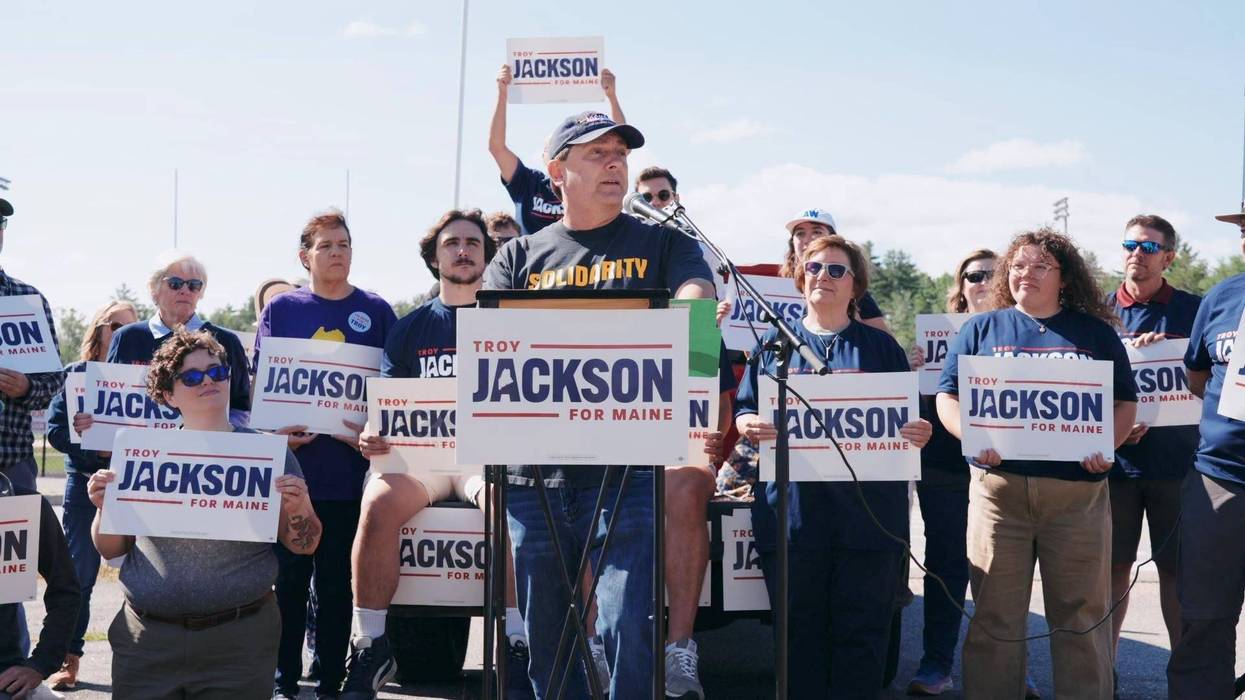
"They're scared of a movement that demands Medicare for All, prescription drug coverage, and a government that everyday people can be proud of and know works for them."
Troy Jackson, the Maine Democrat running to unseat Republican US Sen. Susan Collins in November, took aim at Elon Musk and other billionaires Wednesday evening for supporting his GOP opponent directly or through a key super political action committee.
"Look, the billionaires in the country know whose side they're on, and it's not ours," Jackson, a former logger and state Senate president, said in a brief video shared on social media, including Musk's platform X.
Jackson—chosen as the Democratic nominee via a convention process last month, after primary winner Graham Platner left the race following a rape allegation that he denied—pointed to a $42 million investment in the contest from the Senate Leadership Fund (SLF), whose backers include Musk and various other right-wing megadonors.
"They're here to prop up Susan Collins because they want her to continue to be a rubber stamp and get their income tax cuts," Jackson said. "They're already out with an ad attacking me and my family, to try and make sure that they totally don't talk about the issues."
SLF's 30-second ad, which launched Wednesday, notes his son's lobbying work and smears Jackson as "another dirty politician."
According to Jackson: "They're scared of a movement that goes against the things that they want. They're scared of a movement that demands Medicare for All, prescription drug coverage, and a government that everyday people can be proud of and know works for them."
Wednesday isn't the first time Jackson—who previously ran for governor—has called out billionaires, specifically Musk. After The New York Times reported last month that through his America PAC, Musk intends to spend up to $120 million on a program to help elect Republicans in at least eight states, including Maine, Jackson released a video stressing that the billionaire "doesn't care about us. Really doesn't care about Susan. He cares about him."
"So I would say to you Elon: Maine and really the whole United States doesn't want your dirty money in our politics," Jackson continued. "You don't get to buy the government that you want. This is about all of us coming together and fighting for the government that we deserve, and you're not in it."
Musk became the world's first trillionaire in June, when his company SpaceX made its public market debut, but his current net worth is estimated at over $860 billion, according to the regularly updated Bloomberg and Forbes lists. His trillionaire status came after the early months of the second Trump administration, when Musk was the de facto leader of the Department of Government Efficiency.
Reuters reported Thursday that new data from the American Federation of Labor and Congress of Industrial Organizations shows how Musk's controversial compensation plans for SpaceX and Tesla are benefiting other chief executives. Fred Redmond, the AFL-CIO's secretary-treasurer, said that his pay "changes the dynamic when other CEO compensation plans come up, boards use it as a reference."
The average ratio of CEO to worker pay at S&P 500 companies rose from 285:1 in 2024 to 312:1 last year, excluding Musk's Tesla compensation. When that is included, the ratio becomes 5,387:1. Redmond told Reuters that "as we talk to our members, they're pissed off over what's happening to them, and they feel as though they should be more vocal in terms of calling attention to inequality."
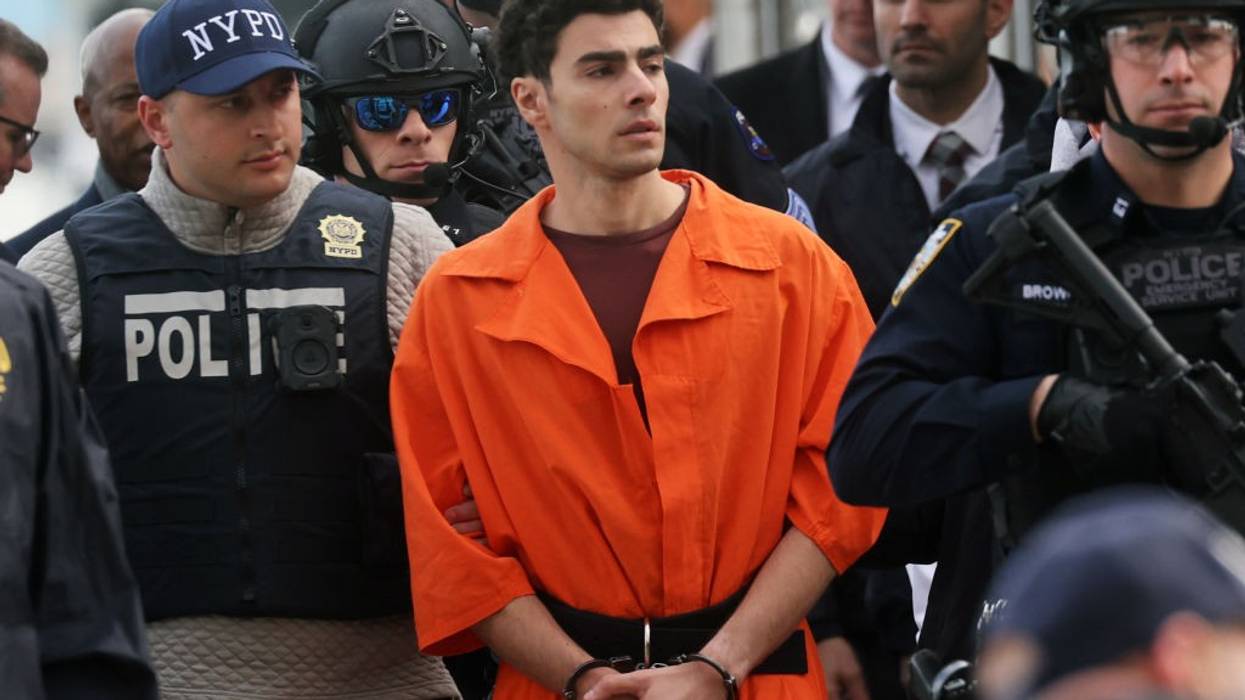
It is currently unclear which charges Mangione would plead guilty to as part of a plea agreement, according to NBC News.
Luigi Mangione is reportedly set to plead guilty to federal charges related to the 2024 murder of UnitedHealthcare CEO Brian Thompson.
According to a Thursday report from NBC News, prosecutors are negotiating a plea agreement where the 28-year-old Mangione will plead guilty to at least one of the federal charges that were brought against him.
The NBC report noted that it is unclear which charges Mangione would plead guilty to, and that the defendant could reverse his plea "at any time, even during the hearing."
In a December 2024 indictment, federal prosecutors charged Mangione with two counts of stalking, one count of murder, and a firearms offense for his alleged role in Thompson's killing.
Prosecutors had initially sought the death penalty for Mangione, but a federal judge in January dismissed the murder and firearms offense, thus taking capital punishment off the table.
Mangione also faces New York state charges, the most serious of which is murder in the second degree.
Manhattan District Attorney Alvin Bragg had initially charged Mangione with first degree murder in furtherance of terrorism, but a New York City judge last year determined that the defendant's alleged actions did not rise to the level of terrorism and dismissed the charge.
"While claiming to protect all Americans, the administration is rolling back systems that communities have long turned to for relief.”
Eighteen months into President Donald Trump's second term in the White House, the administration has systematically gutted the infrastructure within the federal government that for decades had worked to ensure that civil rights and anti-discrimination laws were being enforced—and has turned agencies "against the communities they were meant to protect," as one researcher at Human Rights Watch said Thursday.
In a new report, the organization detailed how four key agencies have been substantially weakened since Trump took office and almost immediately, with the help of tech billionaire Elon Musk and the Department of Government Efficiency, set about slashing the federal workforce and demanding that the civil servants who remained be "fully on board" with the president's right-wing agenda.
The report, titled "Remedies Abandoned: US Civil Rights Enforcement Under the Trump Administration," explains how the US Department of Justice's (DOJ) Civil Rights Division lost about 75% of its attorneys after the White House told staff that they were not to operate independently from the president; the Office of Civil Rights (OCR) at the Department of Education closed more than half of its regional offices and laid off nearly half its staff in one day; the Fair Housing Office at the Department of Housing and Urban Development (HUD) shrank from 31 staffers to 11; and the Equal Employment Opportunity Commission reached its lowest staffing level in over four decades.
With the federal civil rights enforcement workforce decimated, the White House has abandoned discrimination complaints at the four agencies and has carried out demands outlined in Project 2025, the right-wing policy blueprint put forward by the Heritage Foundation. In addition to pushing for the administration to reclassify civil servants like those who were pushed out of their civil rights enforcement roles, the document called for presidential control of the Justice Department and an end to "disparate impact enforcement."
In April 2025, three months after taking office, Trump signed an executive order directing all federal agencies to eliminate their analysis of disparate impact—the framework that confronts discriminatory policies based on their impacts rather than their intent—to the "maximum degree possible."
Disparate impact analysis, said HRW, "allows people to challenge hiring criteria, lending practices, school discipline policies, and housing regulations that produce discriminatory outcomes even when no one can identify a smoking gun like a policy that explicitly says 'exclude Black applicants.'"
The executive order and related directives that followed had a sweeping impact, with HUD dropping seven major housing discrimination and environmental justice cases months later, after they had been ongoing for years.
For example, the agency informed Chicago officials it would no longer monitor the civil rights agreement that had required zoning reform to end concentrated industrial pollution in Black and Latino neighborhoods.
"Department leadership said it would no longer treat environmental harms as fair housing violations in situations without explicit indication of intentional discrimination, in line with President Trump’s April 2025 order seeking to end disparate impact enforcement," reads the HRW report.
HUD has closed at least 115 fair housing complaints without issuing findings on the claims of discrimination, and career attorneys at the agency filed a whistleblower complaint last September showing they'd been barred from contacting complainants and working with the DOJ to resolve the matters.
"One of the ways we know that our democracy is functioning and healthy is that your rights don't just disappear because the political winds shift," said Trey Walk, a US program researcher at HRW.
NEW: The Trump administration has gutted federal civil rights enforcement in the United States, leaving the people the laws were built to protect without adequate remedies.
In a new report, HRW documents the administration’s efforts to unravel the work of four key agencies… pic.twitter.com/4VADDpmFDR
— Human Rights Watch (@hrw) August 13, 2026
The Education Department's OCR also appears to have resolved no racial harassment cases in 2025, despite the fact that in 2024, such complaints reached a new record among Black and Latino students.
The case of a 12-year-old boy in Lubbock, Texas, who had been interrogated by school officials without his parents present and falsely accused of a sexual offense, had been close to being resolved when the OCR office for the region abruptly closed in March 2025. When an attorney for families in Lubbock who had had open cases emailed the federal investigator who had been working on the complaints, they received an autoreply, saying the employee no longer had access to any of the case files.
"Numbers illustrate the scale of abandonment," reads the report. "With 11,985 education-related civil rights cases pending when the administration took office, OCR reached just 112 resolution agreements across all of 2025—1% of the caseload, and 78% fewer than the year before on the same budget. OCR reported no resolution agreements for sexual harassment, none for sexual violence, none for racial harassment, none for discriminatory school discipline, and none for seclusion and restraint of students with disabilities. The 2025 case resolution number is low, even compared to previous years when the agency was not adequately staffed or funded."
Walk said that the Trump administration "is targeting efforts to address discrimination without offering any alternatives. While claiming to protect all Americans, the administration is rolling back systems that communities have long turned to for relief.”
More than half of OCR's nationwide staff were among the 1,300 Education staffers whose jobs were cut in a single day in March 2025. Vince L., a career attorney at OCR who was one of 40 people interviewed by HRW for the report, said that in the administration's first weeks, he and his colleagues had received a directive essentially saying: "Stop all work. Decimate staffing. Divert resources to political witch hunts."
"Seven of 12 regional offices shut with no notice," he said. "Some people didn’t even know until their computers didn’t work. You’d come in the next morning and your badge wouldn’t work. That’s how you’d find out you were being terminated.”
Similar scenes played out at the DOJ's Civil Rights Division, where an attorney identified as Gloria A. described how the department's independence from the White House "flew out the window" early in Trump's term when lawyers were directed to carry out the president's political agenda.
“We viewed ourselves as attorneys for the United States,” another civil rights lawyer who was reassigned to complete administrative work, told HRW. “Which is different.”
A significant sign of the gutting of civil rights enforcement at the DOJ came when the agency moved to dismiss multiple consent decrees to reform police departments.
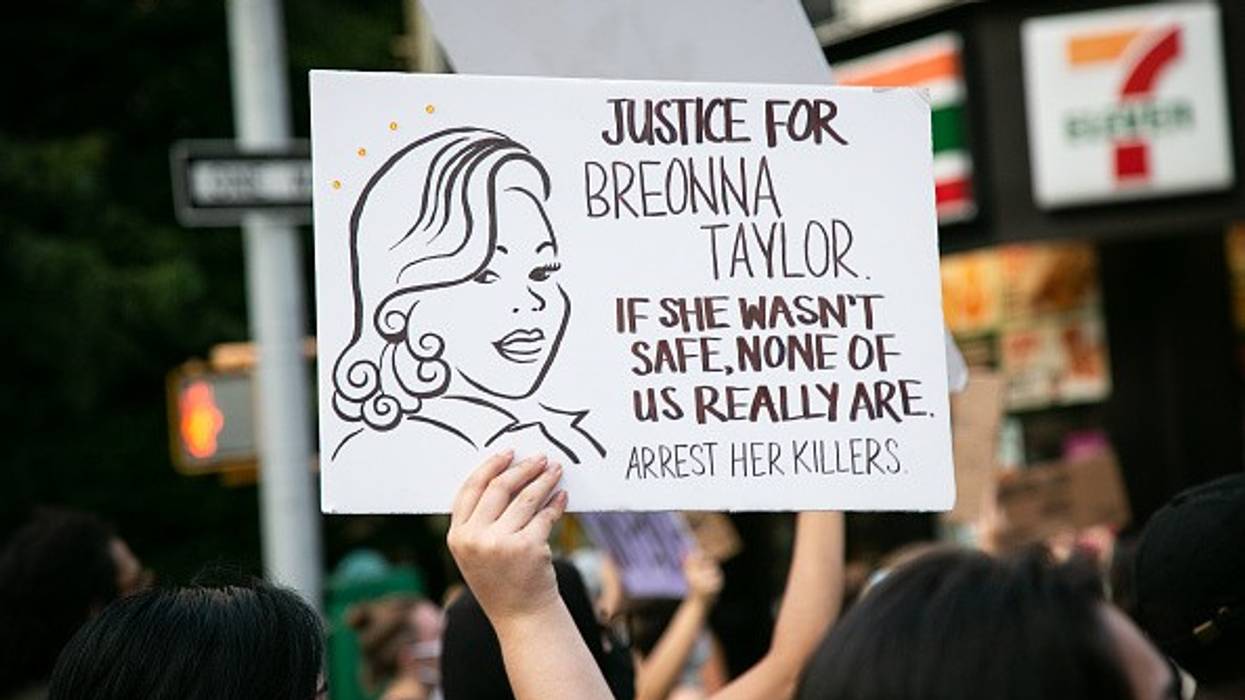
A two-year DOJ probe had found a pattern of racially discriminatory force by the Louisville Metro Police Department, where officers fatally shot Breonna Taylor in 2020, but the DOJ moved to dismiss the consent decree that had demanded reform at the police department just six months after it was signed.
A similar consent decree was dismissed around the same time, in May 2025, in Minneapolis—almost exactly five years after George Floyd was murdered by a police officer there.
"At least four other consent decrees to reform police departments across the US were dismissed in the same period," reads the report. "In each case, the department withdrew before any independent finding that the underlying violations had stopped."
HRW called on Congress to conduct oversight hearings on "the collapse of enforcement capacity at key federal agencies" and urged state legislatures to pass or strengthen disparate impact standards, create or fund state fair housing enforcement agencies with investigative authority, and create private rights of action under state law for discrimination claims previously only covered by federal enforcement.
It called on state agencies to expand intake capacity to take complaints currently not being accepted at the federal level and urged state attorneys general to consider challenging federal agency decisions, including case closure policies that have harmed state residents.
The group emphasized that it was not making formal recommendations to the White House or any federal agencies.
"The leadership of these agencies have not demonstrated good faith interest in improving anti-discrimination enforcement in the US," said HRW. "The immediate remedies lie with Congress, state and local actors, the media and civil society, and international bodies. A future administration will need to rebuild what has been dismantled by this executive branch."

A former top US intelligence official said the reliance on apparently faulty Israeli intelligence was "a great example of how we got into the war with Iran."
US and Turkish officials are reportedly suspicious that the supposed Iranian assassination plot that led President Donald Trump to make an elaborate escape from Ankara using a catering truck last month may have been a fabrication by Israeli intelligence.
Earlier this week, it was reported that Trump had to be secreted onto a nondescript plane to leave a NATO summit on July 8 after Israel passed an intelligence report to the CIA warning that Iran had planned to launch a missile at Air Force One. But new reporting indicates that neither Turkish nor American officials found the evidence all that compelling.
The alleged threat came at a highly volatile time, as the "memorandum of understanding" between the US and Iran to end nearly five months of war was on the verge of collapse, in part thanks to Israel's attempts to undermine it.
As Middle East Eye reported on Tuesday, Turkish officials suggested that the intelligence report was “probably a ruse by [Israeli Prime Minister Benjamin] Netanyahu’s government to portray itself as protecting Trump, derail negotiations with Iran, and undermine Trump’s apparently close relationship with [Turkish President Recep Tayyip Erdoğan].”
Turkey tightened security after US officials informed it of the plot. But after examining the details of the scheme—which purportedly involved using shoulder-fired missiles to attack Trump’s plane within a kilometer of the runway—they said they found the intelligence report highly implausible.
“Of course, we took the report very seriously and tried to assist our American counterparts as much as possible,” one person familiar with the matter said. “Yet it was very clear to us that there was no way this report was true.”
It turns out that it wasn't just Turkish officials who felt this way. The Washington Post on Wednesday cited a senior US official who said that the CIA analysts who'd received the report from Israel "did not view the intelligence as compelling and conveyed that skepticism to Trump administration officials."
Another official said the report was “Israeli-derived, not US-generated, and viewed as low confidence.” The Secret Service acted on the report anyway out of an abundance of caution.
Nevertheless, the Post indicated that there was a striking amount of doubt among US intelligence officials about the motives of one of the country's top allies, whom they suggest passed the information along to nudge Washington toward Israel's own foreign policy objectives:
Some US intelligence officials saw Israel’s sharing of the warning about threats to Trump’s life as designed less to inform than to influence the president’s decision-making and US policy in the region, a current and a former US official said. Israel views Iran as by far its most urgent near-term threat.
But it views Turkey as a medium- to long-term threat and is anxious about warming ties between Washington and Ankara, bolstered by the personal rapport between Trump and Turkish President Recep Tayyip Erdoğan, the current official said.
It “fit a broader pattern of Israeli intelligence reporting that some officials see as designed as much to shape presidential decision-making as to inform it,” the former official familiar with the matter said.
Iranian leaders have denied any attempt to assassinate Trump. As they try to push him to admit defeat in the war the US and Israel started in February and accept a series of harsh surrender terms, they are having a laugh at his reaction to what they say was a fabricated plot.
Abbas Araghchi, Iran's foreign minister, portrayed it as part of a larger pattern of the US having been misled by faulty Israeli intelligence.
Netanyahu was notably one of the driving forces behind Trump’s mistaken belief that an operation to topple the Iranian government would be quick and painless.
"The US has long miscalculated due to intelligence failures," Araghchi wrote Thursday on social media. "Case in point: The war on Iran. Now, an even bigger miscalculation on the Strait of Hormuz."
"Worse than fake news is fake intelligence," he said. "Be careful."
Joe Kent, the former director of the US National Counterterrorism Center, who resigned in March after accusing Trump of being manipulated into starting the war by false reports that Iran posed an imminent threat, said that “the story of Trump secretly switching airplanes is actually a great example of how we got into the war with Iran... ‘Israeli-derived, not US-generated, and viewed as low confidence’ by our own intelligence agencies.”
"It’s smart to take all threats seriously," Kent said. "But if you’re basing a decision about going to war on information from a liaison intel service or an 'ally,' it’s important to remember they are most certainly providing that information to influence us as well as inform us."

"This agency is completely out of control," said the Democratic nominee for US Senate in Minnesota.
Fresh off a resounding US Senate primary victory, Minnesota Lt. Gov. Peggy Flanagan on Thursday castigated her Republican general election opponent for praising federal immigration agents' treatment of children during their siege of Minneapolis.
During an interview on MS NOW, Flanagan highlighted GOP Senate nominee Michele Tafoya's support for US Immigration and Customs Enforcement (ICE), whose violent operations in the Twin Cities area last winter resulted in widespread protests, including an unprecedented one-day general strike.
"Michele Tafoya, my Republican opponent, she used footage of ICE in the streets of Minnesota during her launch video, and recently said... 'ICE treated children really, really well,'" Flanagan said. "Tell that to Liam Ramos or to the children who have been separated from their parents. This agency is completely out of control."
Peggy Flanagan: "Michele Tayofa, my Republican opponent, used footage of ICE in the streets of Minnesota in her launch video, and recently said 'ICE treated children really really well.' Tell that to Liam Ramos or to the children who have been separated from their parents." pic.twitter.com/Vy9kKpYZkq
— Aaron Rupar (@atrupar) August 13, 2026
Five-year-old Liam Ramos in January was abducted by ICE agents during his walk home from school and sent along with his father, an Ecuadoran asylum seeker, to the Dilley Immigration Processing Center in Texas, where family members said the child grew sick from eating spoiled food. In February, Ramos and his father were released and sent back to Minnesota.
Elsewhere in the interview, Flanagan was asked about Republican attacks on her and Minnesota Gov. Tim Walz for purportedly not doing enough to prevent healthcare fraud in their state, and she quickly turned the tables back on Tafoya and President Donald Trump.
" Republicans are going to run against every Democrat on fraud, because they want to distract from what's happening under the most corrupt president we've ever seen," she said. "They want to talk about fraud, they have to talk about the fact that, right out of the gate, Donald Trump got rid of 17 inspectors general whose whole job it is to police fraud at the federal level."
Peggy Flanagan: "Republicans are going to run against every Democrat on fraud, because they want to distract from what's happening under the most corrupt president we've ever seen ... Michele Tayofa and Republicans up and down the ballot are going to have to answer for that. The… pic.twitter.com/dyMqisM1AH
— Aaron Rupar (@atrupar) August 13, 2026
"He's pardoned 70 white-collar criminals who have stolen billions of dollars in Medicaid and Medicare," Flanagan continued. "And every day, this guy is making money hand over fist from the Oval Office, from his... cryptocurrency, through hundreds of millions of dollars in insider trading. And Michele Tayofa and Republicans up and down the ballot are going to have to answer for that. The grift has to stop."

One critic said the Commodity Futures Trading Commission's "cheerleading for prediction markets truly knows no bounds."
Consumer advocacy groups are accusing the Trump administration of engaging in "lawlessness on behalf of well-connected gambling interests" after the Commodity Futures Trading Commission instructed the prediction market giant Kalshi to continue operating in New York, in defiance of a federal court order.
In a Tuesday statement, the CFTC said it "exercised its emergency authority" and "ordered" Kalshi to "continue to operate in accordance with the Commodity Exchange Act’s Core Principles." The statement came weeks after a federal judge denied Kalshi's bid to prevent New York from enforcing its gambling laws against the platform, which allows users to "trade on the outcome of real-world events." The CFTC's action also came after New York sued Kalshi for allegedly "running an illegal gambling operation."
Benjamin Schiffrin, director of securities policy for the advocacy group Better Markets, said in a statement that it appears the CFTC "believes that the law does not apply to it."
"Now that New York has sued Kalshi to prevent it from circumventing state gambling laws, the CFTC has directed Kalshi to continue to operate even if a court enjoins it from doing so," said Schiffrin. "This is not the first time the CFTC has directed Kalshi to violate a court order. It did so after a Michigan state court ordered Kalshi to void, cancel, and refund some bets. The CFTC is now directing Kalshi to violate the orders of a federal court. Its cheerleading for prediction markets truly knows no bounds."
New York's lawsuit, filed late last month, seeks a court order stopping Kalshi from "operating as an unlicensed gambling business and requiring the company to pay fines, forfeit all illegal gains, and pay restitution to users."
The CFTC, headed by Trump-appointed Chairman Michael Selig, has launched a sweeping effort to prevent states from regulating prediction markets, arguing the federal agency has sole regulatory authority over the platforms. States have pushed back, accusing the CFTC of exceeding its powers.
In a statement on Wednesday, Public Citizen's Tyson Slocum called the CFTC's intervention on behalf of Kalshi in New York "a massive overreach."
“After the federal court rejected gambling platform Kalshi’s request to continue offering gambling products to New Yorkers while the state challenged their legality, the CFTC has swooped in, declaring a phony emergency, and issued an order allowing Kalshi to defy federal courts and a US state," said Slocum. "The Commodity Exchange Act should not permit such gambling platforms, and until there is reasonable and lawful regulation at the federal level, states should be the ones—not the CFTC—making the decisions on how to regulate gambling.”

"He never wavered for a single moment from carrying out his mission, reporting the news, delivering the truth, and exposing the atrocities of the Israeli genocide in the Gaza Strip," said one journalist of Al Jazeera correspondent Anas al-Sharif.
Just over a year after six journalists—Anas al-Sharif, Mohammed Qraiqea, Ibrahim Zaher, Mohammed Noufal, Mohammed al-Khalidi, and Moamen Aliwa—were assassinated in an Israeli strike on their tent outside Al-Shifa Hospital in Gaza City, a collective of media workers on Wednesday set out to ensure that all 270 Palestinian reporters who have been killed while covering Israel's nearly three-year assault on the exclave are remembered by the world.
The New York War Crimes collective, a project of Writers Against the War on Gaza (WAWOG), said it initially aimed to gather remembrances of al-Sharif, a 28-year-old Al Jazeera correspondent who was born in Jabalia refugee camp and started his career as a volunteer for Al-Shamal Media Network before becoming internationally known for his "ceaseless coverage" of Israel's US-backed assault on Gaza.
The responses the collective got, said the organizers, "transformed the project. Anas, his colleagues told us, would not have wanted to be remembered as a singular hero, but as a servant of the Palestinian cause."
"So, over the course of the following year, we gathered spoken testimonies from fellow journalists, photographers, cameramen, journalism professors, students, and workers across the media sector in Gaza," reads the website for the project, titled A Living Record. "Each contributor was asked to record a personal remembrance of one or more martyrs, to tell a small part of the history that, as [journalist] Samira Nassar says, should be written in gold."
A number of journalists spoke to WAWOG about al-Sharif, who reported from northern Gaza while the Israel Defense Forces (IDF) were heavily restricting humanitarian aid there as they waged intense attacks there on refugee camps and other civilian infrastructure.
"All the journalists were in awe—really in awe—of him," said Isra al-Madallal. "Just the fact that he was in the north while all the other journalists were in the south was enough to make everyone keep asking, 'How are you? Where are you? What are you doing? What is happening? May God keep you steadfast.' And the starvation—that was something that they lived through together, something intense."
Another colleague, Doaa Shaheen, said Al-Sharif served as "the voice of Jabalia, the voice of the north as a whole; he never left
"He never wavered for a single moment from carrying out his mission, reporting the news, delivering the truth, and exposing the atrocities of the Israeli genocide in the Gaza Strip," said Shaheen, adding that when her fellow Jabalia camp native was killed she thought: "So that’s it? He’s been martyred? So where is Anas’ voice?"
Freelance journalist Baraa Lafi remembered Mariam Abu Dagga, a visual journalist who extensively documented how children were being affected by Israel's attacks, which have been called a genocide by leading human rights groups and Holocaust scholars. She photographed overwhelmed hospitals as medical workers struggled to care for sick and injured Palestinians, as well as documenting the impact of Israel's blockade on humanitarian aid.
Lafi was wounded in the Israeli double-tap strike on Nasser Hospital that killed Abu Dagga, as well as Moaz Abu Taha, Hussam al-Masri, Ahmad Abu Aziz, and Mohammad Salama, just weeks after Al-Sharif and his colleagues were killed.
"As a journalist, Mariam was brave. Braver than many men," said Lafi. "Everyone could see that. Mariam in the field was not unassuming and timid—no. She was fearless. She ran toward the fire, she was first on the scene. If she saw an injured child in distress, she would stop and comfort them. If she saw someone upset, she would stop and stay by their side. If Mariam saw a mother searching for her children—whether during famine or bombardment—she would stop filming and stay by her side, going with her from hospital to hospital to help her find them."
WAWOG collected remembrances from several reporters of "journalists as a collective," with Bisan Owda, who won the Peabody Award in 2024 for her coverage of the war on social media, saying that despite Israel's slaughter of more than 73,000 Palestinians and decimation of the exclave's civilian infrastructure, "there’s still goodness here, in this small place, in the ground underneath us, in those who fight the evil spreading through the rest of the world. To me, those are the people and journalists of Gaza."
"To me, these individuals were daring enough to dream, to believe that we can make a difference," said Owda. "We are brave. We are the ones who have the courage to document with our cameras, to change the narrative, change our current conditions, and to draw attention to our people’s oppression. To change what is happening. You are dealing with the bravest people on the face of the Earth. They are the ones spreading the truth to combat every false narrative in the world."
As The Living Record was published Wednesday, protesters rallied outside The New York Times headquarters in New York City to demand accountability for the killing of journalists in Gaza, while Drop Site News correspondent Mohamed Awad was detained by Israeli forces in Ramallah, the West Bank.
WAWOG said that in the fall, as the third anniversary of Israel's assault on Gaza approaches, it plans to publish more eulogies of Gaza journalists who have been killed in the exclave.

"What we are witnessing in Gaza is not a series of isolated shortages, it is a policy of attrition by design."
The renowned humanitarian group Doctors Without Borders said Wednesday that the Israeli government is still restricting the entry of engine oil and generator parts to the Gaza Strip, imperiling life-saving hospital functions and other essential services in the decimated territory.
Doctors Without Borders, known internationally as Médecins Sans Frontières (MSF), noted that Gaza's remaining healthcare system relies "almost entirely" on generators, "with most electricity cut by Israeli authorities and much of the electrical infrastructure destroyed." The group said that in some Gaza facilities, its teams barely have sufficient engine oil to last a month and have been forced to "buy engine oil at the local market at exorbitant prices."
Filipe Ribeiro, MSF's head of mission in Palestine, said that "what we are witnessing in Gaza is not a series of isolated shortages, it is a policy of attrition by design."
"For more than two years, we have observed Israel's policies restricting the entry of supplies," said Ribeiro. "These policies do not merely delay aid; they dismantle the very systems people rely on to survive."
Israel's continued restriction of supplies comes as the country's military, which is armed by the United States, keeps up its deadly bombing of the strip despite a purported ceasefire deal that took effect in October 2025. Israeli attacks have killed more than 1,200 people in Gaza since the start of the ceasefire agreement. The Israeli government, headed by Prime Minister Benjamin Netanyahu, has rejected a US-backed plan for Hamas disarmament in exchange for Israeli withdrawal from Gaza.
Earlier this week, a group of United Nations experts condemned Israel's recent "strikes on hospitals and shelters, the killing of police officers and UN-contracted staff, attacks on fishers, and abductions and abuses by armed groups reportedly collaborating with the Israeli military, as well as the killing of humanitarian workers, who through their work protecting and promoting fundamental human rights, are human rights defenders."
"These restrictions have become increasingly far-reaching, also preventing the entry of routine items ranging from ointments for skin diseases to rubber seals needed for medical sterilization equipment."
According to MSF, Israel's sustained attacks and obstruction of supplies "extend far beyond hospitals."
"Without engine oil, all transport services could stop, including much-needed water trucks during the peak of summer heat, ambulances, buses transporting medical staff to work, and trucks delivering humanitarian supplies," the group said. "Bakeries and flour mills also rely on generators, meaning food production could also be affected."
MSF characterized Israel's continued obstruction of engine oil and spare generator parts as "one piece of a larger pattern of structural violence imposed by Israeli authorities to intentionally restrict access to vital services and supplies as part of the ongoing genocide against Palestinians in Gaza."
"These restrictions have become increasingly far-reaching, also preventing the entry of routine items ranging from ointments for skin diseases to rubber seals needed for medical sterilization equipment," the group said. "The shortages now impact virtually every aspect of life in Gaza, leaving hospitals and humanitarian organizations without basic supplies."
Ribeiro said in a statement that "the items change, but the logic remains the same: reducing people to conditions in which life becomes untenable, and dignity is systematically stripped away through the denial of the most ordinary, most essential goods."
"This is not bureaucracy," he added. "It is a deliberate effort to make existence itself impossible."

Police have used Flock cameras to stalk their exes, track abortion patients, and spy on protesters—among other abuses.
A new database launched Wednesday that details more than 100 cases of alleged abuse by law enforcement officers using Flock Safety's nationwide camera network is adding fresh urgency to the growing backlash against automated license plate readers.
The database, published by the Institute for Justice (IJ)—a libertarian nonprofit public interest law firm based in Arlington, Virginia—documents "romantic stalking, wrongful stops and detentions, non-law enforcement use, and other types of misconduct."
"Automated license plate readers (ALPRs) were sold to American communities as a targeted tool for catching car thieves and finding missing people," IJ said in an introduction to the database. "What they actually purchased has grown into something far broader and more frightening: an AI-powered network of cameras that photograph and log the movement of every driver who passes, whether or not they are suspected of any crime."
"Companies like Flock Safety have now blanketed thousands of communities with ALPRs, quietly assembling powerful mass surveillance systems that can reconstruct where people have been, when, and how often, all without a warrant," the institute continued. "This dragnet surveillance threatens the freedoms the Fourth Amendment was adopted to protect. These concerns aren’t just abstractions: Every day, innocent people are harmed by officials’ abuse and misuse of these ALPRs."
"When the government can track the everyday movements of ordinary people—to their jobs, their churches, their doctors, their protests—it holds a kind of power over private life that the Constitution does not allow," IJ added.
Among the cases highlighted in the database are those of a Florida sheriff's deputy who allegedly used an ALPR to track and pull over a woman after seeing her at a television shoot, a Texas deputy who reportedly searched tens of thousands of Flock cameras while trying to locate a woman who had allegedly obtained a medication abortion, and a Georgia police chief who reportedly tracked his former girlfriend and her teenage daughter hundreds of times.
The database's authors warn that even those 100-plus cases may represent only a fraction of the actual misconduct. Officers often provide vague explanations when searching ALPR databases, making systematic detection of abuse difficult. In one case in Norfolk, Virginia, for example, IJ found that three generic search terms accounted for nearly one-third of roughly 230,000 searches over two years. One officer repeatedly entered “la la la la” as a justification without apparently attracting scrutiny.
Growing public angst over ALPRs is increasingly transcending partisan lines. As Common Dreams reported last month, the backlash has prompted dozens of communities to cancel or reject Flock contracts. According to Ban Flock Cameras, 82 contracts across 28 states had been terminated between August 2021 and May 2026, including 39 cancellations during the first five months of this year alone.
"It's my professional opinion that Flock is a dystopian violation of our rights," Ohio State University professor Viet Trinh said Monday during a public safety audit in Columbus.
"What I mean by that is that it inverts the very nature of how police are supposed to function," he explained. "So in traditional investigations, a crime is supposed to happen first, and then detectives are supposed to identify a list of plausible suspects, and then those suspects are placed under investigation."
"But under Flock, we are all—everybody in this room, every day, every time we get into our cars—we are all under investigation at all times for all crimes," Trinh continued. "Then, when a crime actually does occur, the police have a list of pre-investigated suspects. That's you, that's me, that's everybody in this room who gets in a car, that's everybody in this city."
"So today in Columbus, our constitutional rights—especially our Fourth Amendment rights—are flagrantly violated every single day as a matter of regular government policy," he asserted.
Trinh contended that Flock "is not a tool for investigating crimes, and that misnomer has apparently bamboozled several people in this room."
"Flock is, at its very foundation, a tool for investigating pre-crimes," he stressed. "Not crimes, but pre-crimes."
"So others in this room have implied that we can reform Flock, we can have Flock and preserve our civil liberties, we can make this technology work for us," Trinh noted, adding that "it is not a technology that can be made righteous."
"On this matter, we cannot and we can never have our cake and eat it too," the professor added. "To believe otherwise is hubris."