

SUBSCRIBE TO OUR FREE NEWSLETTER
Daily news & progressive opinion—funded by the people, not the corporations—delivered straight to your inbox.
5
#000000
#FFFFFF
To donate by check, phone, or other method, see our More Ways to Give page.
Daily news & progressive opinion—funded by the people, not the corporations—delivered straight to your inbox.
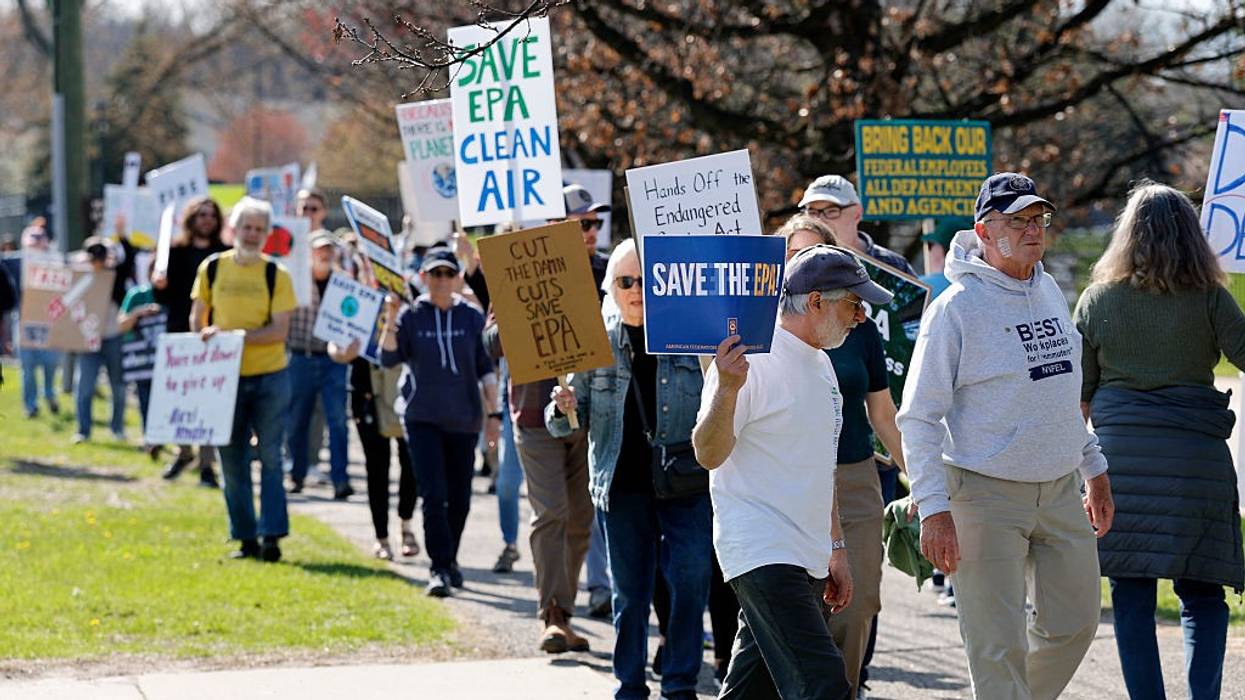
Silencing our union members, working on the front line of environmental protection, is beyond dangerous. It strips away a critical check against political interference in science. And that can only mean more threats on the horizon to the air you breathe and the water you drink.
Labor Day is a time to honor the workers who keep our country safe, strong and healthy. But this year, while families fire up their grills and celebrate the dignity of work, the Trump administration is continuing its brazen assault against the very workers who protect the air you breathe and the water you drink.
On August 8th, the Trump administration issued an executive order banning AFGE Council 238, our union representing more than 8,000 Environmental Protection Agency (EPA) workers nationwide. The executive order categorized the EPA as a “national security” agency, an absurd and illegal misrepresentation of EPA’s historic mission to protect human health and the environment.
We are under no illusions: this move has nothing to do with national security. This action was about silencing the scientists and staff at the EPA and clearing the way for corporate polluters to have free rein.
This Labor Day, don’t just thank workers. Stand with EPA workers and make your voice heard too. Because protecting our rights is protecting your right to clean air and safe drinking water.
Here’s why banning our union matters. First, it means that science is on the chopping block. Practicing sound science is critical to protecting human health, and EPA scientists are your first line of defense against toxic chemicals, smog and hazardous waste.
For years, our union fought to secure ‘scientific integrity’ protections into our union contract so scientists wouldn’t be punished for telling the truth. Last summer, this became a reality in our most recent contract, which prohibited retaliation against EPA scientists who follow sound scientific principles.
The fight solidified the importance of sound science to EPA’s mission to protect human health and the environment, and it underscored our union’s role as one of the public’s strongest safeguards against political infringement on EPA’s work to protect clean water and air.
Now, with Trump illegally terminating our contract, that safeguard protecting EPA’s scientific integrity is gone. Trump’s political appointees and corporate lobbyists will have a freer hand to rewrite science and weaken safeguards against environmental hazards like air pollution, toxic chemicals, and hazardous waste.
Second, it means transparency at the agency is out the window. Our union no longer has the protections to hold the agency accountable to its mission to protect your air, your land and your water.
In 2019, the Minnesota Pollution Control Agency tried to hide flaws in a very controversial water permit proposal submitted by PolyMet Mining by asking that they not be documented and instead have EPA merely read the critical information over the phone. Our union blew the whistle and released communications showing that the two agencies colluded to keep the critical comments away from the public. After our union’s disclosure, MPCA’s permit action was overturned, thereby protecting the St. Louis River and Lake Superior.
Without our union, that cover-up might never have seen the light of day.
That is why silencing our union is so dangerous. It strips away a critical check against political interference in science. And that can only mean more threats on the horizon to the air you breathe and the water you drink.
That’s why federal unions, including ours, are actively working to push Congress to pass H.R. 2550, the Protect America's Workforce Act. This bill would restore collective bargaining rights and stop Trump’s illegal executive order in its tracks. As Congress returns from recess on September 2, we need your voice too: call or email your representatives, demand they support the bill and that they sign a discharge petition to bring the bill to the House floor.
This Labor Day, don’t just thank workers. Stand with EPA workers and make your voice heard too. Because protecting our rights is protecting your right to clean air and safe drinking water.
AFGE Council 238 will continue to fight the Trump administration’s illegal executive order. We will not be silenced, and we won’t stop defending the air you breathe, the water you drink, and the planet we all call home.

"Maybe in the DOGE boys' video game simulations, it doesn't matter if they lay off hundreds of staff from the FAA. In the real world, however, it will make flying less safe," said Public Citizen's Robert Weissman.
As the Trump administration began firing hundreds of Federal Aviation Administration employees amid a surge in plane crashes, a leading U.S. consumer advocacy group warned Monday that the slash-and-burn approach of Elon Musk's Department of Government Efficiency is making the "next air travel disaster more likely."
While Musk recently said that DOGE will "aim to make rapid safety upgrades to the air traffic control system," critics have countered that the Trump administration's termination of FAA personnel, including critical air traffic control maintenance staff, poses major risks.
"Maybe in the DOGE boys' video game simulations, it doesn't matter if they lay off hundreds of staff from the FAA. In the real world, however, it will make flying less safe," Public Citizen co-president Robert Weissman said in a statement. "Just like having fewer people safeguarding the nation's nuclear arsenal will make the risk of a nuclear accident much greater."
Elon’s DOGE rampage will be a wake up call for what a decimated government really means. Cuts to FAA? Higher risk of plane crashes. Cuts to Forest Service? Higher fire risk. Cuts to the CDC? Higher pandemic risk. Cuts to the EPA? Higher toxic exposures risk — and on and on.
[image or embed]
— Public Citizen (@publiccitizen.bsky.social) February 17, 2025 at 11:03 AM
Weissman continued:
The Musk rampage through government is making it virtually certain that we will suffer through otherwise avoidable health, safety, and economic catastrophes. Cutting the Forest Service increases fire risk, cutting the [Centers for Disease Control and Prevention] and blocking information-sharing risks worsening infectious disease outbreaks, cutting the [Consumer Financial Protection Bureau] guarantees Big Bank and predatory loan ripoffs, cutting [Food and Drug Administration] staff increases the risk for dangerous devices, drugs, and food additives, cutting the [Environmental Protection Agency] will increase the risk of mass toxic exposures, and on and on.
"If permitted to proceed, the mindless Musk-Trump governmental annihilation is going to touch every American community, imposing tragedy upon tragedy," Weissman added.
In a Monday social media post, U.S. Congressman Don Beyer (D-Va.) said that "mass firings of FAA workers—at a time when they already have serious staffing problems—would be dangerous at any time," but "Musk and Trump doing this weeks after the deadliest crash in years is stupid beyond belief."
Public Citizen's warning came on the same day that a Delta Air Lines flight from Minneapolis to Toronto crashed and overturned on landing. The FAA said all 80 people aboard the flight were rescued. At least a dozen people were injured in the crash, three of them critically, according to the Toronto Star.
While the FAA firings were not a factor in Monday's accident, the Toronto crash was the latest in a recent surge in air disasters. Last month, 67 people were killed when an American Airlines jet and an army helicopter collided at Ronald Reagan Washington National Airport in Washington, D.C. According to initial reports, only one air traffic controller was working both civilian and military flights when the crash occurred.
On January 31, seven people died when a medical transport jet crashed near Philadelphia, 10 people were killed in a February 6 Bering Air commuter flight crash in Alaska, and one person died when a private plane belonging to Mötley Crüe singer Vince Neil crashed during landing in Arizona last Monday after its landing gear failed to properly deploy.
We condemn the decision to fire these safety inspectors. Everywhere I go I am asked, “is it safe to fly?” My response is yes because thousands of frontline workers ask that all day long. If federal workers can’t do their jobs, we can’t do ours. 1/2 www.passnational.org/index.php/ne...
[image or embed]
— Sara Nelson (@flyingwithsara.bsky.social) February 15, 2025 at 1:59 PM
David Spero, national president of Professional Aviation Safety Specialists, the union representing more than 11,000 FAA and Defense Department personnel who install, inspect, and maintain air traffic control systems, said in a statement Saturday that the Trump administration's terminations "will increase the workload and place new responsibilities on a workforce that is already stretched thin."
"This decision did not consider the staffing needs of the FAA, which is already challenged by understaffing," Spero added. "Staffing decisions should be based on an individual agency's mission-critical needs. To do otherwise is dangerous when it comes to public safety. And it is especially unconscionable in the aftermath of three deadly aircraft accidents in the past month."

"Both of these chemicals have caused too much harm for too long, despite the existence of safer alternatives," said one environmental campaigner.
The Biden administration's Environmental Protection Agency on Monday announced a permanent ban on a pair of carcinogenic chemicals widely used in U.S. industries, including dry cleaning services and automative work.
The announcement includes the complete ban of trichloroethylene—also known as TCE—a substance found in common consumer and manufacturing products including degreasing agents, furniture care and auto repair products. In addition, the agency banned all consumer uses and many commercial uses of Perc—also known as tetrachloroethylene and PCE — an industrial solvent long used in applications such as dry cleaning and auto repair.
Jonathan Kalmuss-Katz, a senior attorney at Earthjustice, applauded the move but suggested to the Post that it should have come sooner.
"Both of these chemicals have caused too much harm for too long, despite the existence of safer alternatives," Kalmuss-Katz.
The EPA's decision, reports the New York Times, was "long sought by environmental and health advocates, even as they braced for what could be a wave of deregulation by the incoming Trump administration."
The Times reports:
TCE is known to cause liver cancer, kidney cancer and non-Hodgkin’s lymphoma, and to damage the nervous and immune systems. It has been found in drinking water nationwide and was the subject of a 1995 book that became a movie, “A Civil Action,” starring John Travolta. The E.P.A. is banning all uses of the chemical under the Toxic Substances Control Act, which was overhauled in 2016 to give the agency greater authority to regulate harmful chemicals.
Though deemed "less harmful" than TCE, the Times notes how Perc has been shown to "cause liver, kidney, brain and testicular cancer," and can also damage the functioning of kidneys, the liver, and people's immune systems.
Environmentalists celebrated last year when Biden's EPA proposed the ban on TCE, as Common Dreams reported.
Responding to the news at the time, Scott Faber, senior vice president for government affairs at the Environmental Working Group (EWG), said the EPA, by putting the ban on the table, was "once again putting the health of workers and consumers first."
While President-elect Donald Trump ran on a having an environmental agenda that would foster the "cleanest air" and the "cleanest water," the late approval of EPA's ban on TCE and Perc in Biden's term means the rule will be subject to the Congressional Review Act (CRA), meaning the Republican-control Senate could reverse the measure.
In his remarks to the Times, Kalmuss-Katz of Earthjustice said that if Trump and Senate Republicans try to roll back the ban, they will be certain to "encounter serious opposition from communities across the country that have been devastated by TCE, in both blue and red states."
"Trump is not in office yet, and the Democrats have the power to do so much more in the coming weeks to stand up to this fossil fuel agenda, and we need them to seize this moment," said one campaigner.
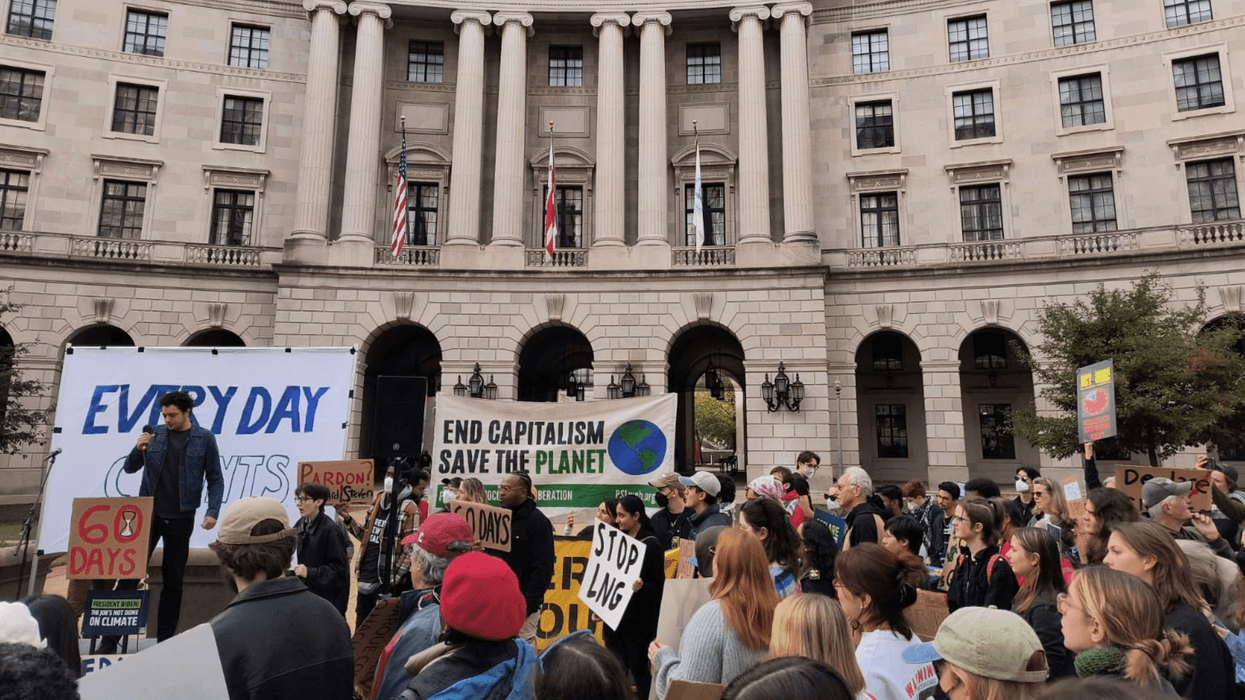
With the clock winding down on President Joe Biden's tenure and the dark cloud of Republican President-elect Donald Trump's imminent administration looming, activists rallied Sunday in Washington, D.C. to demand that the Biden administration "use every tool possible to make progress on climate justice" while there's still time.
Under the rallying call "Biden make a final stand, fossil fuels destroy this land," members and allies of groups including the Green New Deal Network, 350.org, Center for Biological Diversity, Fridays for Future USA, Extinction Rebellion D.C., Sunrise D.C., Oil Change International, Food & Water Watch, and others gathered outside the headquarters of the U.S. Environmental Protection Agency (EPA)—which will be run by fracking champion Lee Zeldin if Trump's nominee is confirmed by what will be a Republican-controlled Senate.
"The stakes could not be higher. Donald Trump and his fossil fuel allies are about to take control of the White House, doubling down on dirty energy policies that are destroying our planet and our communities," Food & Water Watch policy director Jim Walsh told attendees of Sunday's protest. "We will not stand by idly and watch them put the profits of fossil fuel companies above the health and well-being of our communities."
"Trump is not in office yet, and the Democrats have the power to do so much more in the coming weeks to stand up to this fossil fuel agenda, and we need them to seize this moment," Walsh continued. "We know the truth: To protect our communities, we must phase out fossil fuels. No more drilling! No more pipelines! No more permits! We need bold action on climate, and we need it now!"
In addition to calling on congressional Democrats to reject a permitting reform bill introduced earlier this year by Sens. Joe Manchin (I-W.Va.) and John Barrasso (R-Wyo.) that critics have linked to Project 2025, a conservative coalition's agenda for a far-right overhaul of the federal government.
Walsh called the proposed legislation—which has previously been derided as Manchin's "dirty deal"—a "giveaway to the fossil fuel industry masquerading as some sort of bipartisan energy solution."
"In reality, this bill will clear the way for decades of pollution and climate chaos," Walsh added. "It will poison communities for the profits of fossil fuel interests. This will do nothing except forward Donald Trump and the Project 2025 agenda."
Walsh also called on Biden to reject half a dozen permits related to the export of liquefied natural gas.
The rally coalition is calling on Biden to take the following action during the remaining 63 days of his administration:
"President Biden has the power to act today," Walsh stressed.
"Louisiana has given industrial polluters open license to poison Black and brown communities for generations," and the new ruling from a Trump-appointed judge will only magnify the problem, a campaigner said.
A right-wing federal judge in Louisiana on Thursday permanently blocked two federal agencies from enforcing civil rights legislation that could protect Black communities from disproportionate pollution in the state, drawing condemnation from environmental justice advocates.
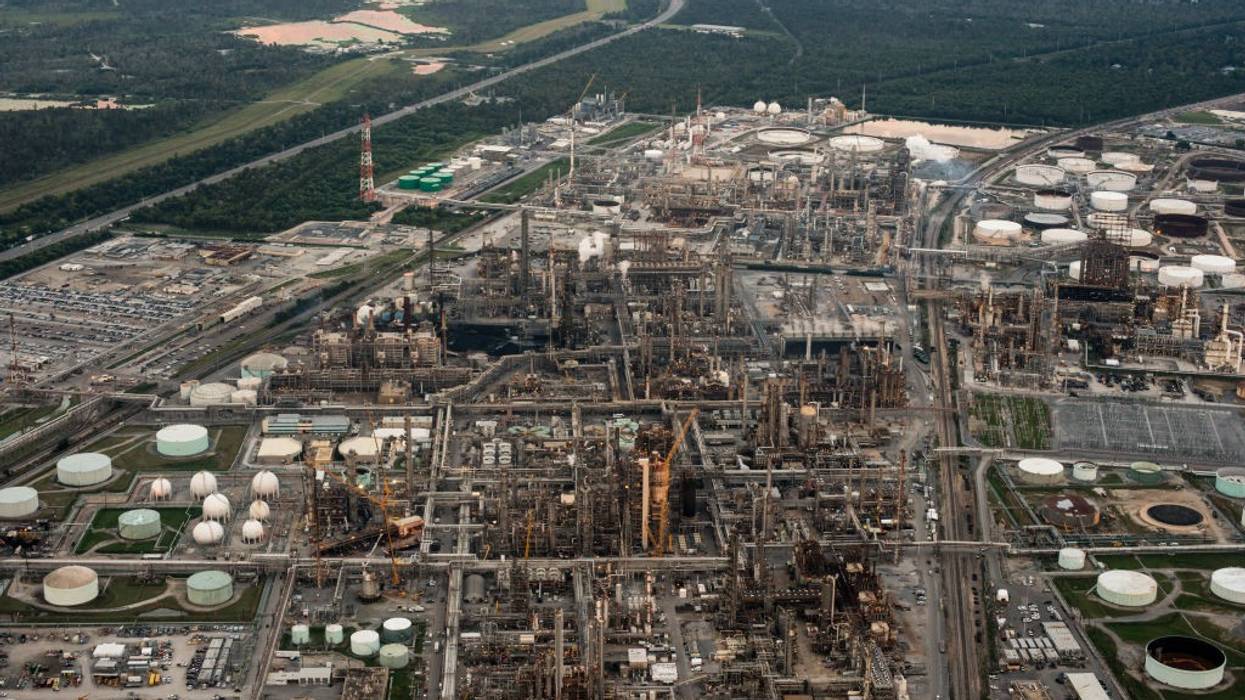
The two-page ruling, issued by U.S. District Court Judge James Cain, who was appointed to the federal bench in 2019 by then-President Donald Trump, is a setback in the push for accountability for corporate polluters, most notably in "Cancer Alley," a roughly 85-mile stretch that runs along the Mississippi River from Baton Rouge to New Orleans.
Cancer Alley is home to a disproportionate number of poor and working-class Black people who have highly escalated risks of cancer thanks to the long line of petrochemical plants in the corridor. A recent study showed that the air there is far worse than previously realized.
"Louisiana has given industrial polluters open license to poison Black and brown communities for generations, only to now have one court give it a permanent free pass to abandon its responsibilities," Patrice Simms, a vice president at Earthjustice, said in a statement.
The ruling forbids the U.S. Environmental Protection Agency (EPA) and the U.S. Department of Justice from enforcing "disparate-impact requirements" under Title VI the 1964 Civil Rights Act in the state of Louisiana. The ruling affects permitting for industrial projects and could, according to Earthjustice, even be applied to "basic services such as sewage, drinking water, and health services." Cain opted not to make the ruling effective nationwide.
The main events leading up to Thursday's decision began in January 2022, when Earthjustice filed a complaint to the EPA on behalf of St. John the Baptist Parish, a majority-Black community in the heart of Cancer Alley. The EPA then opened an investigation into whether Louisiana state agencies had failed to protect the parish from environmental health threats. The agency was preparing to negotiate reforms with the Louisiana Department of Environmental Quality. This was part of a nationwide EPA effort to tackle environmental racism.
However, Louisiana, like other states, fired back. In May 2023, then-Attorney General Jeff Landry, who is now governor, filed a lawsuit—the same lawsuit Cain ultimately ruled on—against the EPA to block the investigation. The next month, the EPA dropped its investigation, disappointing parish residents and human rights groups. The Intercept later reported that the agency dropped the investigation because of fear the state's case would reach the U.S. Supreme Court.
Cain could then have dropped Louisiana's suit, but, in a move that may have been aimed at preventing future such investigations, he moved forward with it, issuing a 77-page temporary injunction in January that laid the groundwork for today's far briefer decision, which made the ruling permanent.
In the temporary injunction, Cain put forth ahistorical and power-blind arguments about race that are common in right-wing circles.
"To be sure, if a decision-maker has to consider race, to decide, it has indeed participated in racism," the judge wrote. "Pollution does not discriminate."
Earthjustice warned that though Cain's ruling applies only in Louisiana, "it may embolden other states to seek similar exceptions and create a chilling effect on civil rights enforcement by other federal agencies."
"DCPA is so dangerous that it needs to be removed from the market immediately," said an EPA official, but advocates said the move was "long overdue."
Taking a rare step to "prevent imminent hazard," the U.S. Environmental Protection Agency on Tuesday issued an emergency order suspending all uses of an herbicide that has been linked to irreversible health risks for unborn babies.
The EPA issued the order after years of pushing AMVAC Chemical Corporation, the sole manufacturer of dimethyl tetrachloroterephthalate, to submit data about the risks posed by the chemical, which is also known as Dacthal and DCPA.
The agency estimated in 2023 that a fetus could be exposed to levels of DCPA four to 20 times greater than the safe limit, if a pregnant person handled products treated with the herbicide.
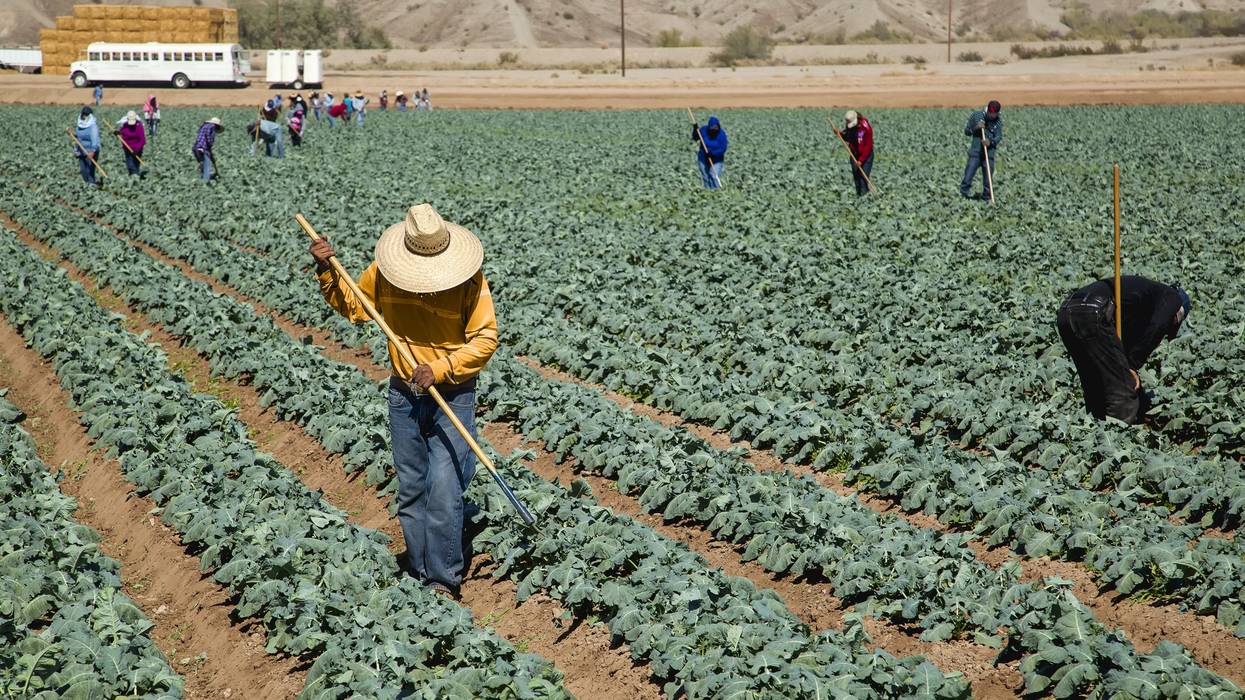
The chemical is used on crops including broccoli, onions, cabbage, and Brussels sprouts in the U.S., but has been banned since 2009 in the European Union.
Exposed fetuses can suffer effects including low birth weight, impaired brain development and motor skills, and decreased I.Q., according to the agency.
"DCPA is so dangerous that it needs to be removed from the market immediately," Michal Freedhoff, assistant administrator for the EPA's Office of Chemical Safety, said in statement. "In this case, pregnant women who may never even know they were exposed could give birth to babies that experience irreversible lifelong health problems."
"Countless people have been exposed to DCPA while the EPA abdicated its responsibility. The agency should have taken action decades ago, when it first identified the human health risks posed by this toxic crop chemical."
The Environmental Working Group (EWG) called the suspension of DCPA "welcome news," but said it was "long overdue." The group's research found that even though the EPA has collected evidence of DCPA's health risks, up to 200,000 pounds of the herbicide were sprayed on crops in California in some recent years.
"For years, EWG and other public health advocates have warned about the serious risks the weedkiller poses to farmworkers, pregnant people, and other vulnerable populations," said senior toxicologist Alexis Temkin. "Countless people have been exposed to DCPA while the EPA abdicated its responsibility. The agency should have taken action decades ago, when it first identified the human health risks posed by this toxic crop chemical."
Mily Treviño Sauceda, executive director of Alianza Nacional de Campesinas, also known as the National Farmworkers Women's Alliance, said the emergency order was "a great first step that we hope will be in a series of others that are based on listening to farmworkers, protecting our reproductive health, and safeguarding our families."
"Alianza is pleased to see the EPA make this historic decision," she said. "As an organization led by farmworker women, we know intimately the harm that pesticides, including dimethyl tetrachloroterephthalate... can inflict on our bodies and communities."
William Jordan, a volunteer with the Environmental Protection Network and a former deputy director for programs in the EPA's Office of Pesticide Programs, noted that the agency made the emergency order and bypassed the lengthy process of canceling DCPA's approval due to the harm the chemical causes—the first time in 40 years that the EPA has taken the step.
"The Environmental Protection Network endorses the strong regulatory action taken by EPA to address the extraordinary risks to unborn children posed by the use of pesticides containing DCPA," said Jordan. "EPA's order immediately suspending all sales, distribution, and use of DCPA products is the only way to avoid the harm to children that would result from continued use of this dangerous pesticide."

"Basically the entire infrastructure of how the EPA considers science and develops rules is very much under attack," a nonprofit director said.
A second Trump administration would cripple the U.S. Environmental Protection Agency's ability to protect the public from toxic "forever chemicals," The Guardian reported Sunday, citing experts inside and outside the agency.
Per- and polyfluoroalkyl substances (PFAS), a class of about 16,000 synthetic compounds that break down only very slowly, have been linked to a wide array of serious medical conditions including cancer. The EPA under the Biden administration has instituted limits on PFAS levels in drinking water and other PFAS regulations that industry groups oppose.
Experts warn that allies of Republican nominee Donald Trump aim not just to roll back Biden-era regulations but fundamentally reshape the agency.
"Basically the entire infrastructure of how [the] EPA considers science and develops rules is very much under attack," Erik Olson, legislative director at the Natural Resource Defense Council, told The Guardian.
An unnamed EPA employee told the newspaper that a second Trump administration would seek to disempower agency experts and let political appointees make key regulatory decisions.
"They want a small group of 20 people making the rules, and the rest of the agency can go to hell as far as they care," said the EPA employee, who spoke on the condition of anonymity.
Project 2025, a roadmap for Republican governance produced by the right-wing Heritage Foundation, proposes deregulation of PFAS, narrowing the definition of the class of toxic compounds, and elimination of the EPA office that assesses chemicals' toxicity.
Project 2025, to the extent that it's known about, has proven unpopular with the American public, and Trump has tried to distance himself from the plan, but has close links to its authors, at least 140 of whom worked in the former president's administration.
Project 2025's proposals on forever chemicals are aligned with the aims of the American Chemistry Council, the fourth largest lobbying group in the country. During his first term, Trump appointed ACC leaders to key positions in the EPA, and critics of the former president argue that his second administration would be even more unabashedly pro-industry.
"The Trump administration learned some lessons and would be much more surgical and effective at affixation next time," the NRDC's Olson said.
The unnamed EPA employee said a Trump victory might even mean the abolishment of the EPA's entire Office of Research and Development.
ACC members 3M and DuPont developed PFAS in the mid-20th century and used them in a wide range of products, even with knowledge of their toxicity and the way that the accumulate in the human body, according to a series of exposés in recent years, notably by the journalist Sharon Lerner in her work at ProPublica and The Intercept. A recent article of Lerner's in The New Yorker showed that 3M long concealed the dangers of PFAS.

"This is truly frightening news," the author of a new study said. "Lacing pesticides with forever chemicals is likely burdening the next generation with more chronic diseases and impossible cleanup responsibilities."
Pesticides used on crops in the United States are increasingly laced with "forever chemicals," making it likely that they are being spread in common foods and waterways, according to a study published Wednesday.
The peer-reviewed study, published in Environmental Health Perspectives, is the first full review of the presence of per- and polyfluoroalkyl substances (PFAS) in pesticides. The authors, from three nonprofit groups, found that 14% of the active ingredients in U.S. pesticides were PFAS—including 30% of the active ingredients approved by regulators in the last 10 years—as were an unquantified amount of the inert ingredients.
"This is truly frightening news because pesticides are some of the most widely dispersed pollutants in the world," said Nathan Donley, environmental health science director at the Center for Biological Diversity. "Lacing pesticides with forever chemicals is likely burdening the next generation with more chronic diseases and impossible cleanup responsibilities."
"This is a multigenerational threat," he wrote on social media after the study's release. "The true harm won't be realized in my lifetime, but in my children's and grandchildren's lifetimes. Our shortcomings should not be their burden to bear."
New research from PEER, @CenterForBioDiv, and @ewg published today in @EHPonline found that more and more toxic PFAS, known as “forever chemicals,” are being found in U.S. pesticide products, contaminating our food, our homes, our gardens, and our pets.https://t.co/fggGAYrafM
— PEER (@PEERorg) July 24, 2024
After being developed by chemical companies in the mid-20th century, PFAS were lightly regulated and little scrutinized for many decades, even as they gained widespread use in household products. However, they've drawn increasing scrutiny in recent years, as more and more studies have emerged about their potential dangers, including links to cancer and a host of other diseases and serious health issues.
The forever chemicals are now incredibly widespread and can be found in the blood of the overwhelming majority of Americans. A study published earlier this month found that certain common foods, such as white rice and eggs, were associated with a higher level of PFAS in the body.
Two types of PFAS thought to be among the most toxic, PFOA and PFOS, have been found in pesticide products, likely due to the leaching of fluorinated containers, the new study suggests. The Environmental Protection Agency (EPA) banned certain uses of fluorinated containers in December, but an industry legal challenge succeeded in federal court in March, weakening the regulatory effect.
The EPA announced new regulations on PFAS in drinking water in April but utility and chemical companies have filed several legal challenges. The chemicals industry, meanwhile, faces the prospect of its own momentous legal challenges, due to the way it concealed the dangers of its products for so long.
To coincide with the new study's publication, Emory University researchers, who weren't involved with the study, wrote a "perspective" for Environmental Health Perspectives that cited a need for much stronger federal regulation.
"The regulations surrounding pesticides are currently outdated and ineffective, so this discovery of PFAS presence in pesticide formulations represents a new opportunity for the EPA to improve the scientific validity of pesticide risk assessment to better capture real-world exposure scenarios," the Emory researchers wrote.
The study authors themselves have been critical of the EPA. Public Employees for Environmental Responsibility (PEER), one of the three nonprofits that conducted the study, sued the EPA in February for failing to adequately disclose PFAS health and safety data.
Kyla Bennett, PEER's science policy director, attacked the agency, which uses a narrower definition of PFAS than the Organization for Economic Cooperation and Development and has often waived often immunotoxicity study requirements for pesticides, in a statement on Wednesday.
"I can think of no better way to poison people and the environment than to spray PFAS-laden pesticides on our crops and in our homes," Bennett said. "The blame for this contamination crisis lies squarely on EPA's shoulders."

The environmental and public health challenges posed by PFAS are immense. EPA needs to do much more than it is doing.
Every day there is a new headline about discoveries of dangerous amounts of toxic per- and polyfluoroalkyl substances or PFAS in groundwater, municipal wastewater systems, in soil outside military bases and on farms, in freshwater fish, in human blood, and even in mothers’ milk. It seems like the PFAS pollution crisis is out of control.
This April, the Environmental Protection Agency (EPA) finally set a maximum drinking water contamination limit for two of the oldest and most widespread PFAS. That limit was set at 4 parts per trillion, but EPA also acknowledged that there is no safe amount of PFAS for human consumption.
While this was an important regulatory step, EPA does not appear to have grasped the implications of its own action. Removing PFAS from our water will be very, very expensive, and it will not stop the endless cycle of contamination. To stop this crisis, EPA must interrupt the flow of PFAS reaching our water, soil, and food chain every day.
Although it is far less expensive and far more feasible to prevent PFAS from reaching the environment in the first place than removing these aptly named “forever chemicals,” EPA does not yet have a PFAS containment strategy.
In fact, it seems that EPA is spending more time impeding PFAS containment than implementing it. Consider these examples:
Plastic Containers. Inhance Technologies fluorinates an estimated 200 million containers a year for a wide array of products, such as chemicals, pesticides, personal care products, and fuels, as well as edible oils and flavorings. The fluorinated linings create PFAS which leach into the containers’ contents. This means PFAS contaminates a huge portion of all U.S. commerce.
Yet, EPA moved to block a citizen suit against Inhance on the grounds that EPA was handling the issue. After EPA’s enforcement effort was invalidated by the 5th Circuit Court of Appeals, EPA declined to appeal or take any other action. As a result, the citizen groups are gearing up again to seek a ban on these PFAS-laden containers in favor of available alternative barrier technologies that do not create PFAS.
Biosolid Fertilizers. Biosolid fertilizers are made from sewage sludge. PFAS are not removed at wastewater treatment plants, and EPA does not limit the amount of PFAS they can contain. Yet under the Clean Water Act, EPA has long been required to identify toxic pollutants in biosolids and adopt regulations to prevent harm to human health or the environment. Unfortunately, it is a responsibility the agency has neglected for decades.
Meanwhile, farms, ranches, and dairies ranging from New Mexico to Maine have been devastated by PFAS contamination from biosolids. Unfortunately, EPA has ignored their pleas for assistance. Now some of these victimized farmers are suing EPA for its failure to prevent set standards for PFAS in biosolids.
Pesticides. PFAS have been found in many insecticides at incredibly high levels. These PFAS are being taken up into the roots and shoots of plants, which means that they are entering our food supply through contaminated soils, water, and the pesticides themselves. Since these are “forever chemicals,” this contamination will last long after the pesticide application.
Ignoring a growing trove of evidence, EPA contends there are no PFAS in pesticides and is discouraging states from testing. The agency has even gone so far as to publish faulty test results in attempt to conceal that scientists had confirmed widespread presence of PFAS in pesticides.
Landfills. Disposal, transportation, and importation of PFAS remains largely unregulated. For example, huge amounts of PFAS are leaching out of U.S. landfills, burned in incinerators, and injected underground with no regulations. Meanwhile, the agency has resisted efforts to designate hundreds of dangerous PFAS chemicals as “hazardous waste,” and regulate them stringently from cradle to grave.
Artificial Turf. Currently, there are an estimated 18,000 synthetic turf sports fields in the U.S., with more than a thousand new installations each year. All brands of artificial turf tested contain PFAS in carpet grass fibers. Besides the direct human exposure, PFAS is leaching off these fields into nearby surface and groundwater, some of which are sources of drinking water,
In addition, there is growing evidence that the PFAS on these surfaces is rubbing off on players’ skin with worrisome consequences. Yet, EPA has yet to even look at this exposure vector.
The environmental and public health challenges posed by PFAS are immense. EPA needs to do much more than it is doing. If the agency will not help abate exposures, it should at least get out of the way and allow states and NGOs to stop this contamination crisis.
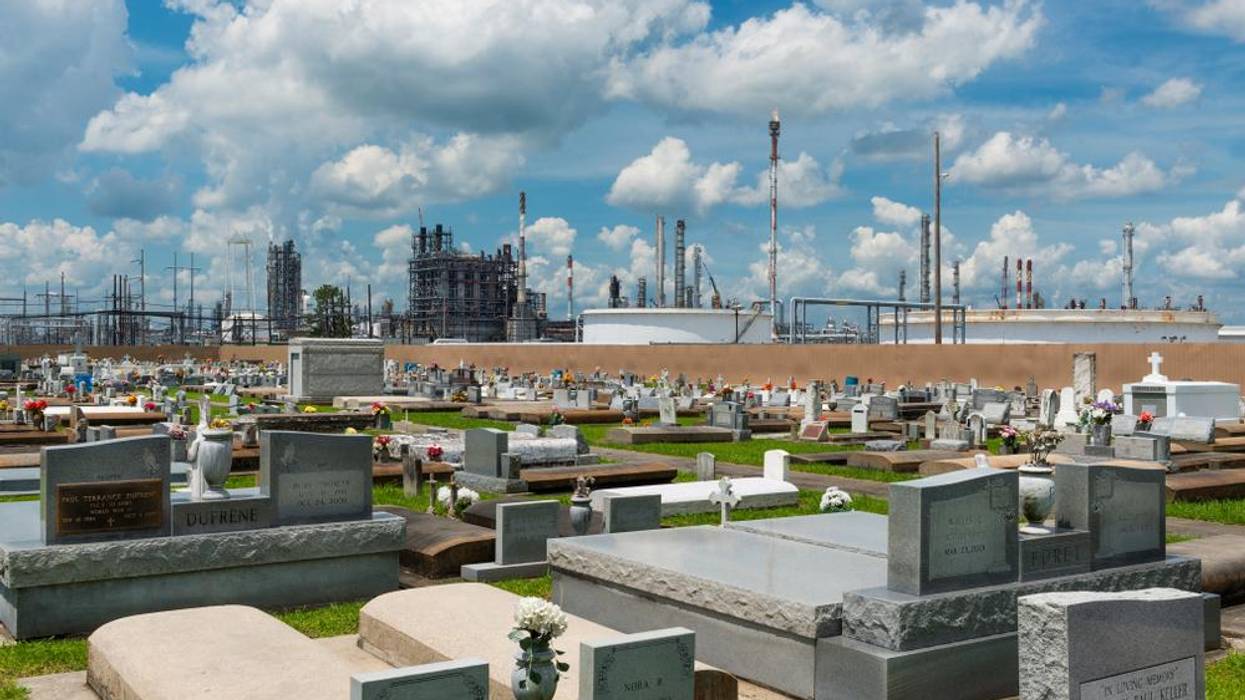
"Many of the states that have signed the petition have historically allowed these harmful facilities to be placed in predominantly Black and brown communities," said one advocate.
Led by Florida Attorney General Ashley Moody, Republican leaders in 23 states on Tuesday filed a petition making clear their aim to allow petrochemical companies and other corporations to continue operating pollution-causing facilities without regard for the "disparate impact" they can have on low-income communities of color.
The attorneys general of states including Mississippi, Alabama, and Texas wrote to Environmental Protection Agency (EPA) Administrator Michael Regan, asking him to amend Title VI under the Civil Rights Act of 1964.
The law prohibits recipients of federal funds from discriminating against residents based on race and national origin and allows residents to petition the EPA arguing that state agencies have intentionally discriminated or disparately impacted a particular community.
Title VI has underpinned hundreds of legal cases, including recent EPA investigations into the 85-mile stretch of land in Louisiana known as Cancer Alley, where dozens of petrochemical plants have been built and health experts have observed a disproportionate number of cancer cases and other medical problems among the predominantly Black population.
The attorneys general said they object to the Biden administration's use of Title VI to "advance what it calls 'environmental justice,'" and complained that the EPA aims to create "a condition in which no racially or economically defined group experiences adverse environmental impacts."
Andre Segura, vice president of litigation at the environmental legal group Earthjustice, said Wednesday that the Republican attorneys general aim to "eviscerate civil rights protections just to make it easier for industrial polluters to continue with business as usual."
"Everyone should be alarmed by these outrageous efforts," said Segura. "The fact is, many of the states that have signed the petition have historically allowed these harmful facilities to be placed in predominantly Black and brown communities, without regard for the health and safety of residents."
Manuel Fernandez, president of Miami-Dade County Democrats in Florida, said the effort was "embarrassing" and called on Moody to resign.
The petition was filed three months after U.S. District Court Judge James Cain Jr., an appointee of former President Donald Trump in Louisiana, ruled that Title VI requirements amount to "government overreach."
The EPA halted its Title VI investigation into the Louisiana Department of Environmental Quality (LDEQ) last year a month after Louisiana Attorney General Jeff Landry, a Republican, sued the agency over its Title VI regulations. The EPA had been probing whether the LDEQ placed the historically Black town of St. John the Baptist Parish at risk by allowing companies to build petrochemical plants nearby.
There are more than 50 pending cases regarding Title VI violations, Earthjustice said.
"These decades-old Title VI regulations are critical tools for the federal government to use to ensure that funding is not used to perpetuate this toxic legacy," said Segura, "and the EPA should swiftly reject this petition."