

5
#000000
#FFFFFF
To donate by check, phone, or other method, see our More Ways to Give page.
Daily news & progressive opinion—funded by the people, not the corporations—delivered straight to your inbox.

"Tupac said it decades ago, it continues to be true."
He may prefer Biggie over Tupac, but New York City Mayor Zohran Mamdani gave a nod to the latter's immortal observation on misplaced national priorities during an interview in which he condemned the US-Israeli war against Iran.
"I've made clear my very deep opposition to this war in Iran," Mamdani told Richard Gaisford in a "Talk to Al Jazeera" segment aired Thursday on the Qatari news network. "It is an opposition not just of a procedural nature or a political nature, but frankly of a moral nature."
"We are speaking about a war that has killed thousands of civilians, a war that is deeply unpopular across this city and across this country," Mamdani said. "Not just because of what we are seeing it result in, but also because it is utilizing tens of billions of dollars to kill people, money that could otherwise be spent on making life easier for people across this city and this country."
"The very things that I often speak about that are necessary for working class New Yorkers that we are told are impossible or unrealistic, they would cost a fraction of this tens of billions that we're seeing," the mayor asserted.
Gaisford asked Mamdani if he is frustrated that "$900 million a day [is] being spent on the war, when you have projects that cost much less that can make a difference."
"I think it should frustrate all of us, you know what I mean?" the democratic socialist mayor replied. "Tupac said it decades ago, it continues to be true, about the fact that we always seem to have money for war but not to feed the poor. And that is not the way politics should be; that is not what Americans want politics to be."
Mamdani was referring to Tupac Shakur's 1993 track "Keep Ya Head Up," which contains the lyrics, "You know, it's funny when it rains it pours/They got money for wars, but can't feed the poor."
Shakur's 1998 song "Changes" also feels relevant today, as the slain rapper asks, "Can't a brother get a little peace?/It's war on the streets and the war in the Middle East/Instead of war on poverty, they got a war on drugs so the police can bother me."
Watch Mamdani's interview with Gaisford here:
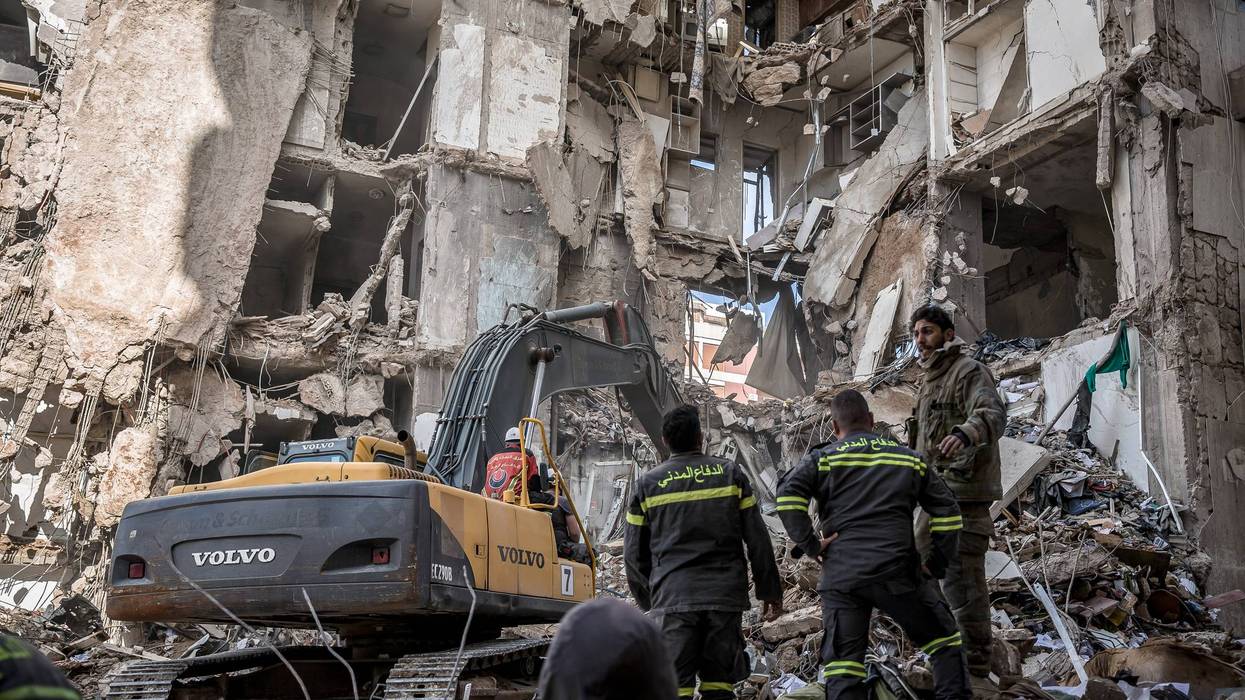
The United Nations Children's Fund warned that Israel's continued assault on Lebanon "poses a grave risk to the ceasefire and the efforts toward a lasting and comprehensive peace."
A United Nations agency said late Thursday that Israel's massive bombardment of Lebanon earlier this week killed or wounded more than 180 children, a statement issued as the Israeli military vowed to continue assailing the war-ravaged country—potentially derailing ceasefire efforts in Iran and across the region.
The UN Children's Fund, widely known as UNICEF, said the toll from Israel's assault on Wednesday brought the total number of children killed or wounded in Lebanon since March 2 to at least 600. The agency said it is "receiving reports of children being pulled from under the rubble, while others remain missing and separated from their families."
"Many are experiencing trauma, having lost loved ones, their homes, and any sense of safety," UNICEF said. "Across the country, more than one million people have been uprooted, including an estimated 390,000 children, many for the second, third, or even fourth time."
UNICEF went on to echo growing concerns in the region, and around the world, that Israel's continued bombing and invasion of Lebanon "poses a grave risk to the ceasefire and the efforts toward a lasting and comprehensive peace."
"The children in Lebanon cannot be left behind," the UN agency said.
UNICEF's statement came as the chief of staff of the Israel Defense Forces said Lebanon is the Israeli military's "primary combat" zone and that the IDF is "in a state of war, we are not in a ceasefire."
US President Donald Trump and Israeli Prime Minister Benjamin Netanyahu have both insisted that Lebanon was not included in the Iran ceasefire agreement announced late Tuesday—a claim that Iranian leaders and Pakistan's prime minister, who is mediating peace talks, have said is false.
On Thursday, Trump said Netanyahu agreed during a phone call to "low-key it" in Lebanon. But in a recorded statement addressed to residents of northern Israel on Thursday, Netanyahu declared: “There is no ceasefire in Lebanon. We continue to strike Hezbollah with force, and we will not stop until we restore your security.”
Netanyahu's decision to escalate Israel's attacks on Lebanon—killing hundreds of people and leveling entire neighborhoods—just hours after Trump announced the ceasefire deal with Iran fit with a longstanding pattern of the Israeli government undercutting diplomacy.
Jamal Abdi, president of the National Iranian American Council, wrote for The Intercept on Thursday that Israel "has worked ceaselessly to prevent any off-ramp from confrontation between the US and Iran," noting that "in 1995, when Iran and the US flirted with economic rapprochement by opening the Iran oil industry to American investment and development, Israel and AIPAC lobbied Congress and President Bill Clinton to block it."
"Netanyahu is widely thought to benefit from wars—from Gaza to Iran and now, most critically, in Lebanon—to shore up his political fortunes. He faces an election in October, and losing could lead to the revival of corruption charges that might land him in prison," Abdi noted. "The question now may unfortunately not be whether Iran and the US can find a compromise. Instead, the fate of the global economy and, not least, Iranians themselves, could rest between Netanyahu and Trump, who faces his own political challenges in midterm elections this year."
US Sen. Chris Van Hollen (D-Md.) wrote Thursday that "Netanyahu urged Trump to start this war, now Trump must demand he help end it."
"Who's calling the shots here?" Van Hollen asked.

“America’s small businesses, workers, and families are really feeling pain at the pump—all thanks to Trump’s illegal war on Iran,” the Massachusetts Democrat said.
An analysis published Thursday by the office of US Sen. Ed Markey estimates that the average American motorist will pay nearly $1,100 extra for gasoline in 2026 due to President Donald Trump's war of choice on Iran.
"The data highlights a worsening affordability crisis, with the average American family facing an annual increase of $1,096 this year if gas prices remain at $4.14 per gallon—a shocking increase of $1.16 per gallon since Trump launched his war on Iran in February," Markey's (D-Mass.) office said.
"These numbers are likely an underestimate," the analysis notes. "Many analysts predict gasoline prices will rise higher without a permanent end to the war. Instead of investing in energy independence, Trump has done everything in his power to destroy American-made affordable clean energy... and double down on the fossil fuels that are now skyrocketing in price."
"As Americans pay more at the pump, fossil fuel industry executives profit," Markey's office said. "During Trump’s first year in office, the five largest oil companies—ExxonMobil, Chevron, ConocoPhillips, Shell, and BP—made more than $75 billion dollars in profits."
Fossil fuel interests spent $445 million to help elect Trump and other Republicans in 2024. And while some Big Oil executives are reportedly upset that the ceasefire agreement with Iran apparently includes Iranian control of the Strait of Hormuz and the power to charge tolls to tankers passing through the vital waterway, industry executives sold a reported $1.4 billion in shares before and during the war that they may subsequently buy back during market dips fueled by the volatility caused by Trump's actions.
“America’s small businesses, workers, and families are really feeling pain at the pump—all thanks to Trump’s illegal war on Iran," Markey, the ranking member of the Senate Small Business and Entrepreneurship Committee, said in a statement introducing the analysis. "Instead of delivering real relief to the American people, Trump is doubling down on his reckless economic policies, which are only driving up energy prices, enriching his oil and gas buddies, and worsening the affordability crisis for everyone else."
“In uncertain times like these, gas prices go up like a rocket but come down like a feather," he added. "This administration must get serious about alleviating the crisis he alone created, or risk further throttling families’ finances and putting even more pain on Main Street.”
A Pew Research Center survey published earlier this week revealed that gas prices are Americans' biggest concern about the Iran War, with 69% worried about higher fuel costs. By comparison, 61% said they were concerned about sending ground troops to invade Iran, 59% fretted over high casualties among US troops, and 56% said they fear a terror attack on the United States.
This isn't the first time that Markey has shined a spotlight on the economic harm to American families caused by the actions of a president who campaigned upon core promises of lower consumer prices—including gasoline—and no new wars. Last month, Markey asked the Bureau of Labor Statistics to “immediately undertake and publish a comprehensive analysis of the likely consumer price impacts” of the war over the next 6-12 months.
Our nation is at a moral crossroads.Trump asked Congress for over 1 trillion to fund the Department of Defense and his war of choice. To get it, MAGA Republicans want to defund childcare. Healthcare. Education. I won't stand for that.
[image or embed]
— Ed Markey (@edmarkey.bsky.social) April 9, 2026 at 3:31 PM
Markey's analysis came on the same day that the National Priorities Project at the Institute for Policy Studies published a report estimating that the average American taxpayer gave $4,000 to the federal government last year “for militarism and its support systems."
That cost is likely to rise even further if Congress approves Trump's request for a record $1.5 trillion US military budget for the next fiscal year.
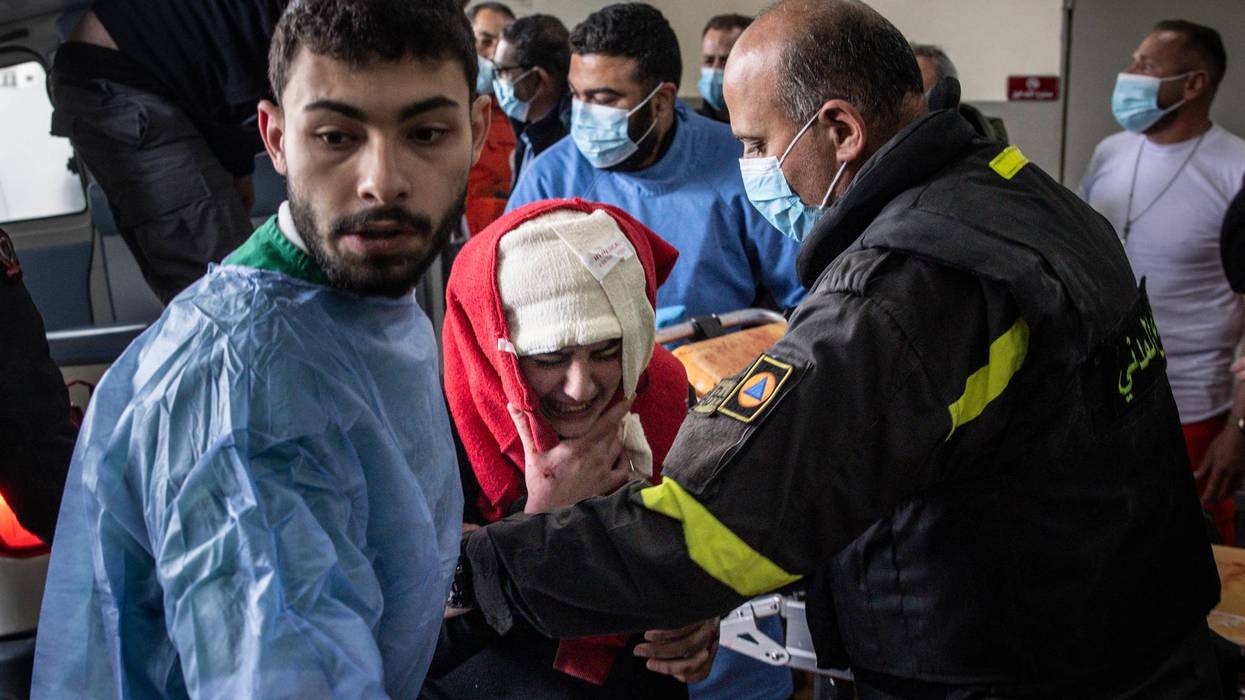
"Civilians in Lebanon are already paying an unbearable price with children, health workers, and journalists amongst those killed—the latest attacks will only escalate this devastating human toll," said one campaigner.
Humanitarian campaigners, civil rights defenders, and progressive members of Congress were among those calling on the Trump administration to pressure Israel to stop bombing Lebanon after Israeli airstrikes killed or wounded more than 1,400 people—many of them civilians—on Wednesday.
In what Amnesty International called an "unprecedented escalation," the Israel Defense Forces said it carried out the “largest coordinated wave of strikes” of its renewed war on Hezbollah in Lebanon. Around 100 sites in the country were bombed in one 10-minute period alone in what the IDF dubbedr "Operation Eternal Darkness."
Lebanese officials said that at least 303 people were killed and 1,165 others wounded by Israeli strikes on Wednesday, the deadliest day of attacks since Israel resumed bombardment of Lebanon and likely since it started bombing its northern neighbor after the Hamas-led Palestinian attack of October 7, 2023.
While Lebanese authorities do not break down casualties according to combatant status, officials and residents of the capital city of Beirut said that civilians were the main victims of Wednesday's bombings, which targeted apartment towers and other civilian structures in numerous densely populated urban areas.
One witness, a woman named Fatima, told Amnesty International what she saw in the immediate aftermath of an IDF strike on a building across the street from her home in Beirut's Salim Salam neighborhood.
“It was apocalyptic," she said. "Bodies on the ground. Blood everywhere. I saw countless wounded adults and children. I walked further but it was the same scene in the other neighborhoods too. I did not know where to go. I just walked aimlessly trying to get as far as possible. It was a nightmare.”
Dr. Firass Abiad, a surgeon and wformer Lebanese health minister, told The Guardian that American University of Beirut Medical College, where he works, received about 70 patients at the same time, a situation he said was intentionally caused by Israel "to flood the health system."
“There was a 90-year-old who I just left a bit ago. He passed away from his wounds," he said. "There was nothing we could do. These are civilians who, without any warning, their whole apartment building was flattened. So you can imagine the severity of injuries that we’re getting.”
Shaden Fakih, a 24-year-old calisthenics trainer, described trying to find his friend who was inside a building when it was bombed. He couldn't locate his friend, but he was seen carrying an elderly woman from the rubble.
"There’s no Hezbollah here, the Israelis are just getting happy when they bomb people, it’s not about Hezbollah," Fakih said in an interview with The Guardian. “Just stop bombing us. If you want to kill Hezbollah, go for it, but don’t kill civilians, because you’re creating anger in us against Israel and we will have to act like Hezbollah just to defend our country. But I don’t want to do that, I just want to live in peace."
“It’s been the worst day since the war started," he added. "And what I’m most sad about is that my pretty Lebanon, our beautiful Lebanon, soon it will all be brought down to the ground.”
As Common Dreams reported, Israeli strikes have wiped out entire families in Lebanon and Iran. In Gaza, more than 2,700 families have been erased from the civil registry.
Responding to Wednesday's attacks, Amnesty International Middle East and North Africa regional director Heba Morayef said that “just hours after the world cautiously welcomed news of a US-Israeli ceasefire with Iran, in Lebanon the nightmare for civilians has become more terrifying."
“Even before today’s attack... more than 1,500 people had been killed and over a million people displaced from their homes across the country," Morayef continued, referring to Israel's bombardment of Lebanon after Hezbollah began launching rockets and drones southward in solidarity with Palestinians in Gaza. Israel's genocidal assault on Gaza has left more than 250,000 Palestinians dead, injured, or missing.
"Civilians in Lebanon are already paying an unbearable price with children, health workers, and journalists amongst those killed—the latest attacks will only escalate this devastating human toll," Morayef added. "These attacks are a reminder that states must immediately halt the transfer of arms and weapons to Israel given the overriding risk that they will be used to commit serious violations of international humanitarian law."
The Washington, DC-based Council on American-Islamic Relations (CAIR) said in a statement late Wednesday, “Once again, Israel’s genocidal government is trying to derail a ceasefire and ensure peace does not succeed by slaughtering innocent civilians."
"The Trump administration must stop them from carrying out this brutal plan," the group added. "Israel has demonstrated time and again that it cannot be trusted to abide by peace agreements. It is time for our government to cut all support for Israel’s atrocities.“
These and other groups, as well as governments in the Mideast and beyond, and US progressives, are demanding that Lebanon be included in the ceasefire. Although Israel agreed to the truce, the government of Prime Minister Benjamin Netanyahu—who is wanted by the International Criminal Court for alleged crimes against humanity and war crimes in Gaza—asserts that the deal does not include Lebanon.
Iran categorically rejects Israel's claim and is using its leverage over the Strait of Hormuz to pressure Israel to reconsider its stance.
Some US progressives called for President Donald Trump to pressure Israel to stop attacking Lebanon, and for a suspension of American arms transfers to the IDF.
"It is unconscionable we continue to provide aid to Israel as they continue to murder civilians and violate international law in Lebanon, Gaza, and the West Bank," Rep. Ilhan Omar (D-Minn.) said Thursday on Bluesky. "No more money to Israel’s genocidal apartheid regime."