SUBSCRIBE TO OUR FREE NEWSLETTER
Daily news & progressive opinion—funded by the people, not the corporations—delivered straight to your inbox.
5
#000000
#FFFFFF
To donate by check, phone, or other method, see our More Ways to Give page.
Daily news & progressive opinion—funded by the people, not the corporations—delivered straight to your inbox.
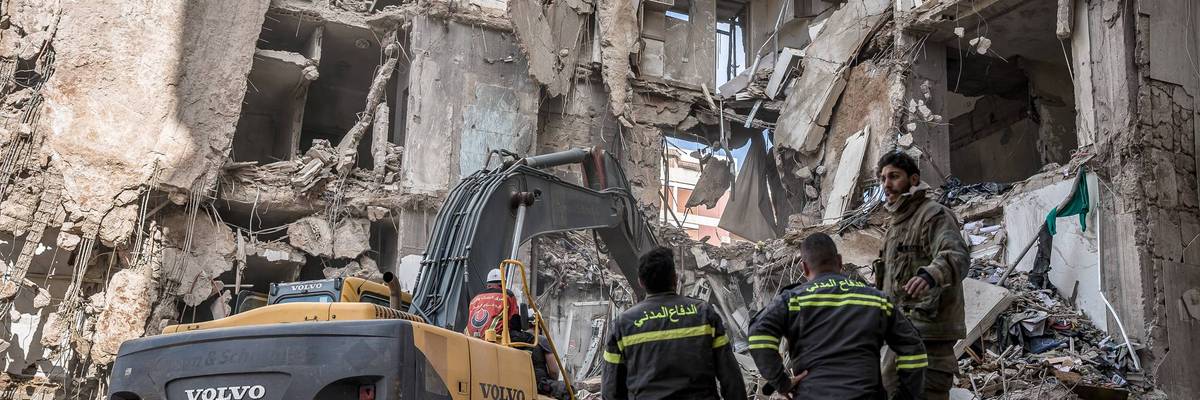
Rescue workers continued to search for missing people in the Beirut neighborhood of Tallet al-Khayat on April 8, 2026.
The United Nations Children's Fund warned that Israel's continued assault on Lebanon "poses a grave risk to the ceasefire and the efforts toward a lasting and comprehensive peace."
A United Nations agency said late Thursday that Israel's massive bombardment of Lebanon earlier this week killed or wounded more than 180 children, a statement issued as the Israeli military vowed to continue assailing the war-ravaged country—potentially derailing ceasefire efforts in Iran and across the region.
The UN Children's Fund, widely known as UNICEF, said the toll from Israel's assault on Wednesday brought the total number of children killed or wounded in Lebanon since March 2 to at least 600. The agency said it is "receiving reports of children being pulled from under the rubble, while others remain missing and separated from their families."
"Many are experiencing trauma, having lost loved ones, their homes, and any sense of safety," UNICEF said. "Across the country, more than one million people have been uprooted, including an estimated 390,000 children, many for the second, third, or even fourth time."
UNICEF went on to echo growing concerns in the region, and around the world, that Israel's continued bombing and invasion of Lebanon "poses a grave risk to the ceasefire and the efforts toward a lasting and comprehensive peace."
"The children in Lebanon cannot be left behind," the UN agency said.
UNICEF's statement came as the chief of staff of the Israel Defense Forces said Lebanon is the Israeli military's "primary combat" zone and that the IDF is "in a state of war, we are not in a ceasefire."
US President Donald Trump and Israeli Prime Minister Benjamin Netanyahu have both insisted that Lebanon was not included in the Iran ceasefire agreement announced late Tuesday—a claim that Iranian leaders and Pakistan's prime minister, who is mediating peace talks, have said is false.
On Thursday, Trump said Netanyahu agreed during a phone call to "low-key it" in Lebanon. But in a recorded statement addressed to residents of northern Israel on Thursday, Netanyahu declared: “There is no ceasefire in Lebanon. We continue to strike Hezbollah with force, and we will not stop until we restore your security.”
Netanyahu's decision to escalate Israel's attacks on Lebanon—killing hundreds of people and leveling entire neighborhoods—just hours after Trump announced the ceasefire deal with Iran fit with a longstanding pattern of the Israeli government undercutting diplomacy.
Jamal Abdi, president of the National Iranian American Council, wrote for The Intercept on Thursday that Israel "has worked ceaselessly to prevent any off-ramp from confrontation between the US and Iran," noting that "in 1995, when Iran and the US flirted with economic rapprochement by opening the Iran oil industry to American investment and development, Israel and AIPAC lobbied Congress and President Bill Clinton to block it."
"Netanyahu is widely thought to benefit from wars—from Gaza to Iran and now, most critically, in Lebanon—to shore up his political fortunes. He faces an election in October, and losing could lead to the revival of corruption charges that might land him in prison," Abdi noted. "The question now may unfortunately not be whether Iran and the US can find a compromise. Instead, the fate of the global economy and, not least, Iranians themselves, could rest between Netanyahu and Trump, who faces his own political challenges in midterm elections this year."
US Sen. Chris Van Hollen (D-Md.) wrote Thursday that "Netanyahu urged Trump to start this war, now Trump must demand he help end it."
"Who's calling the shots here?" Van Hollen asked.
Dear Common Dreams reader, It’s been nearly 30 years since I co-founded Common Dreams with my late wife, Lina Newhouser. We had the radical notion that journalism should serve the public good, not corporate profits. It was clear to us from the outset what it would take to build such a project. No paid advertisements. No corporate sponsors. No millionaire publisher telling us what to think or do. Many people said we wouldn't last a year, but we proved those doubters wrong. Together with a tremendous team of journalists and dedicated staff, we built an independent media outlet free from the constraints of profits and corporate control. Our mission has always been simple: To inform. To inspire. To ignite change for the common good. Building Common Dreams was not easy. Our survival was never guaranteed. When you take on the most powerful forces—Wall Street greed, fossil fuel industry destruction, Big Tech lobbyists, and uber-rich oligarchs who have spent billions upon billions rigging the economy and democracy in their favor—the only bulwark you have is supporters who believe in your work. But here’s the urgent message from me today. It's never been this bad out there. And it's never been this hard to keep us going. At the very moment Common Dreams is most needed, the threats we face are intensifying. We need your support now more than ever. We don't accept corporate advertising and never will. We don't have a paywall because we don't think people should be blocked from critical news based on their ability to pay. Everything we do is funded by the donations of readers like you. When everyone does the little they can afford, we are strong. But if that support retreats or dries up, so do we. Will you donate now to make sure Common Dreams not only survives but thrives? —Craig Brown, Co-founder |
A United Nations agency said late Thursday that Israel's massive bombardment of Lebanon earlier this week killed or wounded more than 180 children, a statement issued as the Israeli military vowed to continue assailing the war-ravaged country—potentially derailing ceasefire efforts in Iran and across the region.
The UN Children's Fund, widely known as UNICEF, said the toll from Israel's assault on Wednesday brought the total number of children killed or wounded in Lebanon since March 2 to at least 600. The agency said it is "receiving reports of children being pulled from under the rubble, while others remain missing and separated from their families."
"Many are experiencing trauma, having lost loved ones, their homes, and any sense of safety," UNICEF said. "Across the country, more than one million people have been uprooted, including an estimated 390,000 children, many for the second, third, or even fourth time."
UNICEF went on to echo growing concerns in the region, and around the world, that Israel's continued bombing and invasion of Lebanon "poses a grave risk to the ceasefire and the efforts toward a lasting and comprehensive peace."
"The children in Lebanon cannot be left behind," the UN agency said.
UNICEF's statement came as the chief of staff of the Israel Defense Forces said Lebanon is the Israeli military's "primary combat" zone and that the IDF is "in a state of war, we are not in a ceasefire."
US President Donald Trump and Israeli Prime Minister Benjamin Netanyahu have both insisted that Lebanon was not included in the Iran ceasefire agreement announced late Tuesday—a claim that Iranian leaders and Pakistan's prime minister, who is mediating peace talks, have said is false.
On Thursday, Trump said Netanyahu agreed during a phone call to "low-key it" in Lebanon. But in a recorded statement addressed to residents of northern Israel on Thursday, Netanyahu declared: “There is no ceasefire in Lebanon. We continue to strike Hezbollah with force, and we will not stop until we restore your security.”
Netanyahu's decision to escalate Israel's attacks on Lebanon—killing hundreds of people and leveling entire neighborhoods—just hours after Trump announced the ceasefire deal with Iran fit with a longstanding pattern of the Israeli government undercutting diplomacy.
Jamal Abdi, president of the National Iranian American Council, wrote for The Intercept on Thursday that Israel "has worked ceaselessly to prevent any off-ramp from confrontation between the US and Iran," noting that "in 1995, when Iran and the US flirted with economic rapprochement by opening the Iran oil industry to American investment and development, Israel and AIPAC lobbied Congress and President Bill Clinton to block it."
"Netanyahu is widely thought to benefit from wars—from Gaza to Iran and now, most critically, in Lebanon—to shore up his political fortunes. He faces an election in October, and losing could lead to the revival of corruption charges that might land him in prison," Abdi noted. "The question now may unfortunately not be whether Iran and the US can find a compromise. Instead, the fate of the global economy and, not least, Iranians themselves, could rest between Netanyahu and Trump, who faces his own political challenges in midterm elections this year."
US Sen. Chris Van Hollen (D-Md.) wrote Thursday that "Netanyahu urged Trump to start this war, now Trump must demand he help end it."
"Who's calling the shots here?" Van Hollen asked.
A United Nations agency said late Thursday that Israel's massive bombardment of Lebanon earlier this week killed or wounded more than 180 children, a statement issued as the Israeli military vowed to continue assailing the war-ravaged country—potentially derailing ceasefire efforts in Iran and across the region.
The UN Children's Fund, widely known as UNICEF, said the toll from Israel's assault on Wednesday brought the total number of children killed or wounded in Lebanon since March 2 to at least 600. The agency said it is "receiving reports of children being pulled from under the rubble, while others remain missing and separated from their families."
"Many are experiencing trauma, having lost loved ones, their homes, and any sense of safety," UNICEF said. "Across the country, more than one million people have been uprooted, including an estimated 390,000 children, many for the second, third, or even fourth time."
UNICEF went on to echo growing concerns in the region, and around the world, that Israel's continued bombing and invasion of Lebanon "poses a grave risk to the ceasefire and the efforts toward a lasting and comprehensive peace."
"The children in Lebanon cannot be left behind," the UN agency said.
UNICEF's statement came as the chief of staff of the Israel Defense Forces said Lebanon is the Israeli military's "primary combat" zone and that the IDF is "in a state of war, we are not in a ceasefire."
US President Donald Trump and Israeli Prime Minister Benjamin Netanyahu have both insisted that Lebanon was not included in the Iran ceasefire agreement announced late Tuesday—a claim that Iranian leaders and Pakistan's prime minister, who is mediating peace talks, have said is false.
On Thursday, Trump said Netanyahu agreed during a phone call to "low-key it" in Lebanon. But in a recorded statement addressed to residents of northern Israel on Thursday, Netanyahu declared: “There is no ceasefire in Lebanon. We continue to strike Hezbollah with force, and we will not stop until we restore your security.”
Netanyahu's decision to escalate Israel's attacks on Lebanon—killing hundreds of people and leveling entire neighborhoods—just hours after Trump announced the ceasefire deal with Iran fit with a longstanding pattern of the Israeli government undercutting diplomacy.
Jamal Abdi, president of the National Iranian American Council, wrote for The Intercept on Thursday that Israel "has worked ceaselessly to prevent any off-ramp from confrontation between the US and Iran," noting that "in 1995, when Iran and the US flirted with economic rapprochement by opening the Iran oil industry to American investment and development, Israel and AIPAC lobbied Congress and President Bill Clinton to block it."
"Netanyahu is widely thought to benefit from wars—from Gaza to Iran and now, most critically, in Lebanon—to shore up his political fortunes. He faces an election in October, and losing could lead to the revival of corruption charges that might land him in prison," Abdi noted. "The question now may unfortunately not be whether Iran and the US can find a compromise. Instead, the fate of the global economy and, not least, Iranians themselves, could rest between Netanyahu and Trump, who faces his own political challenges in midterm elections this year."
US Sen. Chris Van Hollen (D-Md.) wrote Thursday that "Netanyahu urged Trump to start this war, now Trump must demand he help end it."
"Who's calling the shots here?" Van Hollen asked.