SUBSCRIBE TO OUR FREE NEWSLETTER
Daily news & progressive opinion—funded by the people, not the corporations—delivered straight to your inbox.
5
#000000
#FFFFFF
To donate by check, phone, or other method, see our More Ways to Give page.
Daily news & progressive opinion—funded by the people, not the corporations—delivered straight to your inbox.
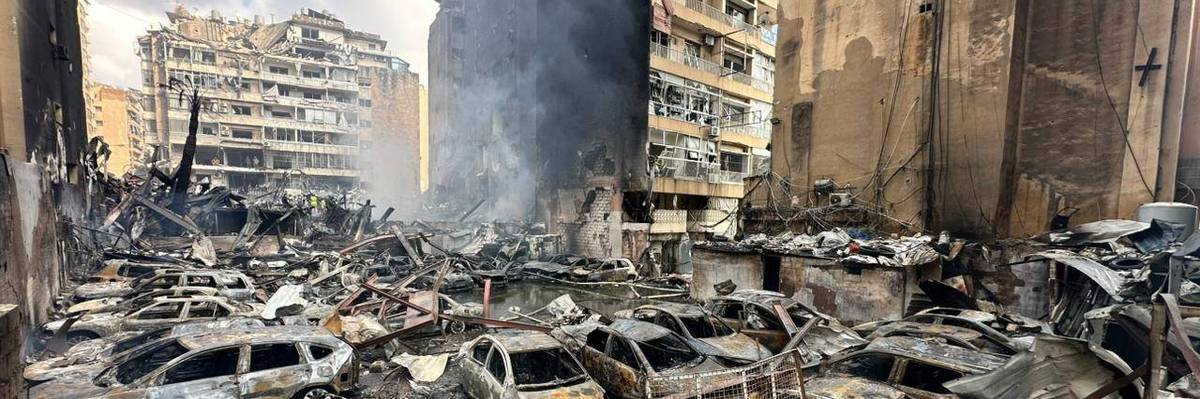
Bombed-out apartment towers and vehicles are seen in Beirut on April 8, 2026 amid escalating Israeli bombing.
One senior Iranian official said his country is considering resuming strikes to put Israel's "aggressor regime in its place," while others warned Iran might quit the shaky ceasefire altogether.
Iran said Wednesday that it is blocking shipping through the Strait of Hormuz over Israel's escalating bombardment of Lebanon, actions that are threatening to unravel the tenuous ceasefire agreed to less than a day ago.
Fars, an Iranian state media outlet, reported that “simultaneous with Israel’s attacks on Lebanon, the passage of oil tankers through the Strait of Hormuz has been stopped," while Reuters said that "more than 180 tankers believed to be inside [the] strait, with hundreds more waiting" for access.
The developments came after two tankers were reportedly allowed to pass through the vital waterway—through which around 20% of the world's oil is shipped—in the wake of Tuesday's ceasefire agreement between the United States, Israel, and Iran.
While Israel accepted the two-week truce, it insists that the agreement does not apply to its ongoing war on Hezbollah in Lebanon. Iran counters that halting attacks on Lebanon is one of the 10 points in the Pakistan-brokered deal, which Israel is violating.
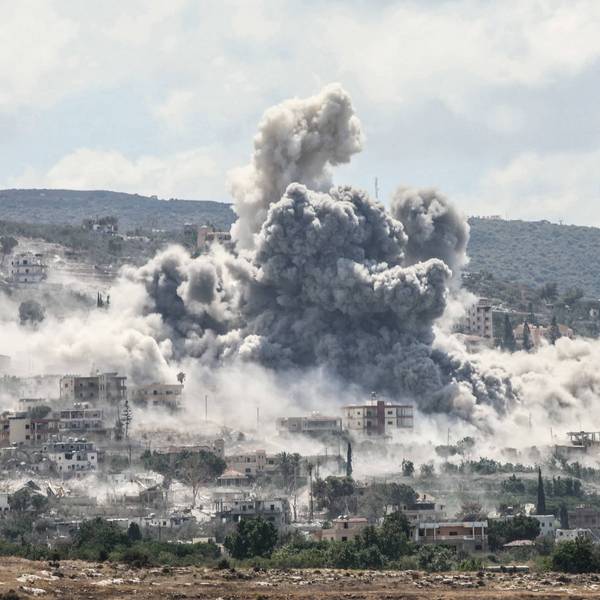
Over the past 24 hours, Israeli forces have ramped up their already intense bombing of Lebanon to levels described as "apocalyptic." Lebanon's Health Ministry said at least 254 people have been killed and 1,165 others wounded by Israel Defense Forces (IDF) bombing throughout the country, with some official sources telling media outlets that as many as 300 people have been killed.
More than 100 sites across Lebanon were reportedly bombed within a period of just minutes, including densely populated urban areas. In southern Lebanon, the dead include 12 medics, according to officials cited by Reuters.
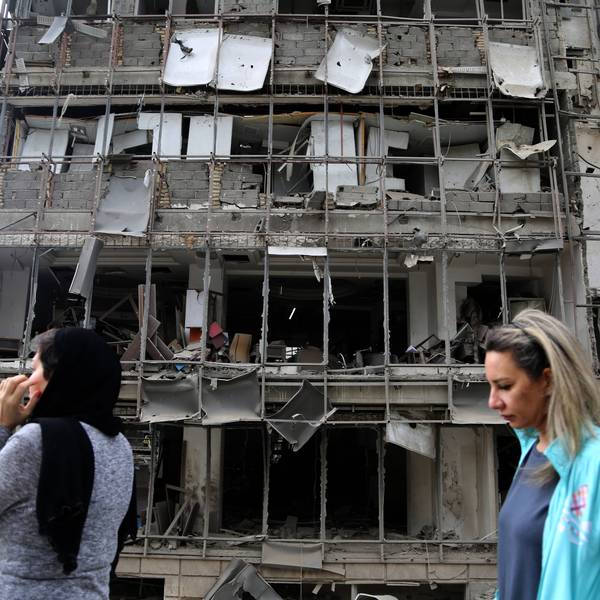
Israeli forces have targeted civilian structures including apartment towers, claiming without providing evidence they were being used by Hezebollah.
Lebanese Prime Minister Nawaf Salam on Wednesday implored sympathetic nations to put pressure on Israel to stop the bombing.
"All of Lebanon's friends are called upon to help us stop these attacks by all available means," he said.
Iran's Press TV reported Wednesday that Iranian leaders are considering resuming full-scale counterattacks in response to Israel's escalation. According to the outlet, a senior Iranian official said that the time has come to "put this aggressor regime in its place."
Iranian and international media outlets also reported Wednesday that Iran might withdraw from the ceasefire altogether if Israel keeps bombing Lebanon.
“The conditions for a ceasefire between Iran and the United States are clear and explicit: America must choose either a ceasefire or the continuation of war through Israel; both cannot coexist,” Iranian Foreign Minister Abbas Araghchi wrote on Telegram. “The world is witnessing the killings in Lebanon. Now the ball is in America’s court, and global public opinion is watching to see whether this country will fulfill its commitments or not.”
In a Wednesday interview with Al Jazeera, Israeli political commentator Ori Goldberg described Israel's intensified attacks on Lebanon as “a pyrotechnics show meant to demonstrate Israel’s effectiveness while ultimately demonstrating its despair."
“The only entity that can stop it is the international community that will defend Lebanon’s sovereign rights, which have been violated for decades but are now almost nonexistent,” he said.
Goldberg added that Israeli Prime Minister Benjamin Netanyahu "bet it all" on US President Donald Trump and "lost."
Some Israeli leaders, especially on the far-right, are reportedly furious over their exclusion from Trump's decision to suspend attacks on Iran.
"He thought he could keep Trump on a short leash," Goldberg said of Netanyahu. "He messed that up. So now what he has is Lebanon, which has been Israel’s favorite stomping ground in terms of sovereignty violation and aggression generally."
Since the 1980s, Israeli forces have killed more than 20,000 people, many of them civilians, in Lebanon. Israeli forces have occupied parts of Lebanon several times, including for the last 18 years of the 20th century. Some right-wing Israelis want their country to conquer some or even all of Lebanon, which they consider part of a "Greater Israel" promised to them by their deity figure.
Israeli Defense Minister Israel Katz—who, like Netanyahu, stands accused in an International Court of Justice case of inciting genocide in Gaza—said Wednesday that "the IDF carried out a surprise strike on hundreds of Hezbollah terrorists at command centers across Lebanon" in what he called "the largest concentrated blow Hezbollah has suffered since Operation Beepers," when dozens of people including children were killed by booby-trapped exploding communication devices.
Netanyahu and Yoav Gallant, Katz's predecessor, are wanted by the International Criminal Court for alleged crimes against humanity and war crimes in Gaza, where 29 months of Israeli war and siege have left more than 250,000 Palestinians dead, maimed, or missing and the Gaza Strip in ruins. More than 700 Palestinians have been killed in Gaza since a ceasefire took effect there six months ago.
Regional and international observers condemned Israel's escalation in Lebanon, which Iraqi government spokesperson Bassem al-Awadi called "evidence of its hostile plan to sabotage the truce" and "perpetuate conflict."
Qatar's Ministry of Foreign Affairs called on the international community "to fulfill its responsibilities by compelling the Israeli occupation authorities to halt their barbaric massacres and repeated attacks on Lebanon, and to hold them accountable for respecting international covenants and laws.”
Dear Common Dreams reader, It’s been nearly 30 years since I co-founded Common Dreams with my late wife, Lina Newhouser. We had the radical notion that journalism should serve the public good, not corporate profits. It was clear to us from the outset what it would take to build such a project. No paid advertisements. No corporate sponsors. No millionaire publisher telling us what to think or do. Many people said we wouldn't last a year, but we proved those doubters wrong. Together with a tremendous team of journalists and dedicated staff, we built an independent media outlet free from the constraints of profits and corporate control. Our mission has always been simple: To inform. To inspire. To ignite change for the common good. Building Common Dreams was not easy. Our survival was never guaranteed. When you take on the most powerful forces—Wall Street greed, fossil fuel industry destruction, Big Tech lobbyists, and uber-rich oligarchs who have spent billions upon billions rigging the economy and democracy in their favor—the only bulwark you have is supporters who believe in your work. But here’s the urgent message from me today. It's never been this bad out there. And it's never been this hard to keep us going. At the very moment Common Dreams is most needed, the threats we face are intensifying. We need your support now more than ever. We don't accept corporate advertising and never will. We don't have a paywall because we don't think people should be blocked from critical news based on their ability to pay. Everything we do is funded by the donations of readers like you. When everyone does the little they can afford, we are strong. But if that support retreats or dries up, so do we. Will you donate now to make sure Common Dreams not only survives but thrives? —Craig Brown, Co-founder |
Iran said Wednesday that it is blocking shipping through the Strait of Hormuz over Israel's escalating bombardment of Lebanon, actions that are threatening to unravel the tenuous ceasefire agreed to less than a day ago.
Fars, an Iranian state media outlet, reported that “simultaneous with Israel’s attacks on Lebanon, the passage of oil tankers through the Strait of Hormuz has been stopped," while Reuters said that "more than 180 tankers believed to be inside [the] strait, with hundreds more waiting" for access.
The developments came after two tankers were reportedly allowed to pass through the vital waterway—through which around 20% of the world's oil is shipped—in the wake of Tuesday's ceasefire agreement between the United States, Israel, and Iran.
While Israel accepted the two-week truce, it insists that the agreement does not apply to its ongoing war on Hezbollah in Lebanon. Iran counters that halting attacks on Lebanon is one of the 10 points in the Pakistan-brokered deal, which Israel is violating.
Over the past 24 hours, Israeli forces have ramped up their already intense bombing of Lebanon to levels described as "apocalyptic." Lebanon's Health Ministry said at least 254 people have been killed and 1,165 others wounded by Israel Defense Forces (IDF) bombing throughout the country, with some official sources telling media outlets that as many as 300 people have been killed.
More than 100 sites across Lebanon were reportedly bombed within a period of just minutes, including densely populated urban areas. In southern Lebanon, the dead include 12 medics, according to officials cited by Reuters.
Israeli forces have targeted civilian structures including apartment towers, claiming without providing evidence they were being used by Hezebollah.
Lebanese Prime Minister Nawaf Salam on Wednesday implored sympathetic nations to put pressure on Israel to stop the bombing.
"All of Lebanon's friends are called upon to help us stop these attacks by all available means," he said.
Iran's Press TV reported Wednesday that Iranian leaders are considering resuming full-scale counterattacks in response to Israel's escalation. According to the outlet, a senior Iranian official said that the time has come to "put this aggressor regime in its place."
Iranian and international media outlets also reported Wednesday that Iran might withdraw from the ceasefire altogether if Israel keeps bombing Lebanon.
“The conditions for a ceasefire between Iran and the United States are clear and explicit: America must choose either a ceasefire or the continuation of war through Israel; both cannot coexist,” Iranian Foreign Minister Abbas Araghchi wrote on Telegram. “The world is witnessing the killings in Lebanon. Now the ball is in America’s court, and global public opinion is watching to see whether this country will fulfill its commitments or not.”
In a Wednesday interview with Al Jazeera, Israeli political commentator Ori Goldberg described Israel's intensified attacks on Lebanon as “a pyrotechnics show meant to demonstrate Israel’s effectiveness while ultimately demonstrating its despair."
“The only entity that can stop it is the international community that will defend Lebanon’s sovereign rights, which have been violated for decades but are now almost nonexistent,” he said.
Goldberg added that Israeli Prime Minister Benjamin Netanyahu "bet it all" on US President Donald Trump and "lost."
Some Israeli leaders, especially on the far-right, are reportedly furious over their exclusion from Trump's decision to suspend attacks on Iran.
"He thought he could keep Trump on a short leash," Goldberg said of Netanyahu. "He messed that up. So now what he has is Lebanon, which has been Israel’s favorite stomping ground in terms of sovereignty violation and aggression generally."
Since the 1980s, Israeli forces have killed more than 20,000 people, many of them civilians, in Lebanon. Israeli forces have occupied parts of Lebanon several times, including for the last 18 years of the 20th century. Some right-wing Israelis want their country to conquer some or even all of Lebanon, which they consider part of a "Greater Israel" promised to them by their deity figure.
Israeli Defense Minister Israel Katz—who, like Netanyahu, stands accused in an International Court of Justice case of inciting genocide in Gaza—said Wednesday that "the IDF carried out a surprise strike on hundreds of Hezbollah terrorists at command centers across Lebanon" in what he called "the largest concentrated blow Hezbollah has suffered since Operation Beepers," when dozens of people including children were killed by booby-trapped exploding communication devices.
Netanyahu and Yoav Gallant, Katz's predecessor, are wanted by the International Criminal Court for alleged crimes against humanity and war crimes in Gaza, where 29 months of Israeli war and siege have left more than 250,000 Palestinians dead, maimed, or missing and the Gaza Strip in ruins. More than 700 Palestinians have been killed in Gaza since a ceasefire took effect there six months ago.
Regional and international observers condemned Israel's escalation in Lebanon, which Iraqi government spokesperson Bassem al-Awadi called "evidence of its hostile plan to sabotage the truce" and "perpetuate conflict."
Qatar's Ministry of Foreign Affairs called on the international community "to fulfill its responsibilities by compelling the Israeli occupation authorities to halt their barbaric massacres and repeated attacks on Lebanon, and to hold them accountable for respecting international covenants and laws.”
Iran said Wednesday that it is blocking shipping through the Strait of Hormuz over Israel's escalating bombardment of Lebanon, actions that are threatening to unravel the tenuous ceasefire agreed to less than a day ago.
Fars, an Iranian state media outlet, reported that “simultaneous with Israel’s attacks on Lebanon, the passage of oil tankers through the Strait of Hormuz has been stopped," while Reuters said that "more than 180 tankers believed to be inside [the] strait, with hundreds more waiting" for access.
The developments came after two tankers were reportedly allowed to pass through the vital waterway—through which around 20% of the world's oil is shipped—in the wake of Tuesday's ceasefire agreement between the United States, Israel, and Iran.
While Israel accepted the two-week truce, it insists that the agreement does not apply to its ongoing war on Hezbollah in Lebanon. Iran counters that halting attacks on Lebanon is one of the 10 points in the Pakistan-brokered deal, which Israel is violating.
Over the past 24 hours, Israeli forces have ramped up their already intense bombing of Lebanon to levels described as "apocalyptic." Lebanon's Health Ministry said at least 254 people have been killed and 1,165 others wounded by Israel Defense Forces (IDF) bombing throughout the country, with some official sources telling media outlets that as many as 300 people have been killed.
More than 100 sites across Lebanon were reportedly bombed within a period of just minutes, including densely populated urban areas. In southern Lebanon, the dead include 12 medics, according to officials cited by Reuters.
Israeli forces have targeted civilian structures including apartment towers, claiming without providing evidence they were being used by Hezebollah.
Lebanese Prime Minister Nawaf Salam on Wednesday implored sympathetic nations to put pressure on Israel to stop the bombing.
"All of Lebanon's friends are called upon to help us stop these attacks by all available means," he said.
Iran's Press TV reported Wednesday that Iranian leaders are considering resuming full-scale counterattacks in response to Israel's escalation. According to the outlet, a senior Iranian official said that the time has come to "put this aggressor regime in its place."
Iranian and international media outlets also reported Wednesday that Iran might withdraw from the ceasefire altogether if Israel keeps bombing Lebanon.
“The conditions for a ceasefire between Iran and the United States are clear and explicit: America must choose either a ceasefire or the continuation of war through Israel; both cannot coexist,” Iranian Foreign Minister Abbas Araghchi wrote on Telegram. “The world is witnessing the killings in Lebanon. Now the ball is in America’s court, and global public opinion is watching to see whether this country will fulfill its commitments or not.”
In a Wednesday interview with Al Jazeera, Israeli political commentator Ori Goldberg described Israel's intensified attacks on Lebanon as “a pyrotechnics show meant to demonstrate Israel’s effectiveness while ultimately demonstrating its despair."
“The only entity that can stop it is the international community that will defend Lebanon’s sovereign rights, which have been violated for decades but are now almost nonexistent,” he said.
Goldberg added that Israeli Prime Minister Benjamin Netanyahu "bet it all" on US President Donald Trump and "lost."
Some Israeli leaders, especially on the far-right, are reportedly furious over their exclusion from Trump's decision to suspend attacks on Iran.
"He thought he could keep Trump on a short leash," Goldberg said of Netanyahu. "He messed that up. So now what he has is Lebanon, which has been Israel’s favorite stomping ground in terms of sovereignty violation and aggression generally."
Since the 1980s, Israeli forces have killed more than 20,000 people, many of them civilians, in Lebanon. Israeli forces have occupied parts of Lebanon several times, including for the last 18 years of the 20th century. Some right-wing Israelis want their country to conquer some or even all of Lebanon, which they consider part of a "Greater Israel" promised to them by their deity figure.
Israeli Defense Minister Israel Katz—who, like Netanyahu, stands accused in an International Court of Justice case of inciting genocide in Gaza—said Wednesday that "the IDF carried out a surprise strike on hundreds of Hezbollah terrorists at command centers across Lebanon" in what he called "the largest concentrated blow Hezbollah has suffered since Operation Beepers," when dozens of people including children were killed by booby-trapped exploding communication devices.
Netanyahu and Yoav Gallant, Katz's predecessor, are wanted by the International Criminal Court for alleged crimes against humanity and war crimes in Gaza, where 29 months of Israeli war and siege have left more than 250,000 Palestinians dead, maimed, or missing and the Gaza Strip in ruins. More than 700 Palestinians have been killed in Gaza since a ceasefire took effect there six months ago.
Regional and international observers condemned Israel's escalation in Lebanon, which Iraqi government spokesperson Bassem al-Awadi called "evidence of its hostile plan to sabotage the truce" and "perpetuate conflict."
Qatar's Ministry of Foreign Affairs called on the international community "to fulfill its responsibilities by compelling the Israeli occupation authorities to halt their barbaric massacres and repeated attacks on Lebanon, and to hold them accountable for respecting international covenants and laws.”