

SUBSCRIBE TO OUR FREE NEWSLETTER
Daily news & progressive opinion—funded by the people, not the corporations—delivered straight to your inbox.
5
#000000
#FFFFFF
To donate by check, phone, or other method, see our More Ways to Give page.
Daily news & progressive opinion—funded by the people, not the corporations—delivered straight to your inbox.

Framing many of the migrant’s deaths as in some sense war-related should force us to pay attention to ways in which fighting in or around their countries of origin might have impacted their fates.
Seeking news coverage about the Adriana, the boat crowded with some 700 people migrating to Europe to seek a better life that sank in mid-June off the coast of Greece, I googled “migrant ship” and got 483,000 search results in one second. Most of the people aboard the Adriana had drowned in the Mediterranean, among them about 100 children.
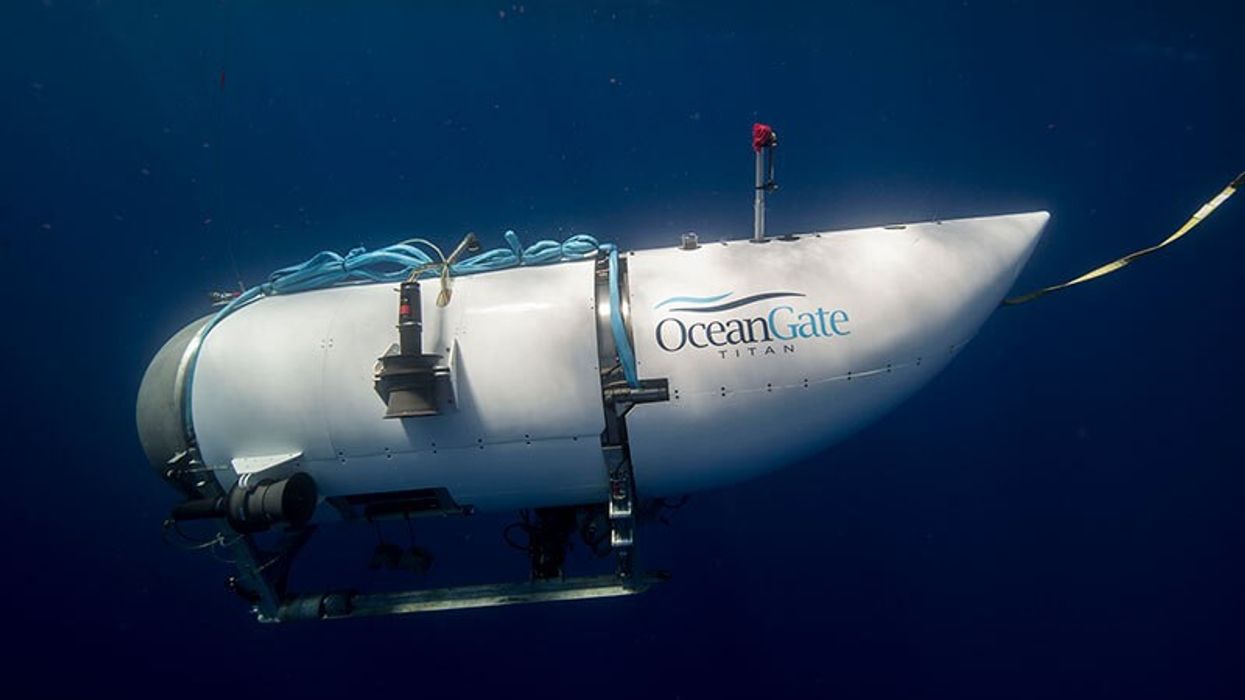
I did a similar search for the Titan submersible, which disappeared the same week in the North Atlantic. That kludged-together pseudo-submarine was taking four wealthy men and the 19-year-old son of one of them to view the ruins of the famed passenger ship, the Titanic. They all died when the Titan imploded shortly after it dove. That Google search came up with 79.3 million search results in less than half a second.
Guardian journalist Arwa Mahdawi wrote a powerful column about the different kinds of attention those two boats received. As she astutely pointed out, we in the anglophone world could hardly help but follow the story of the Oceangate submersible’s ill-fated journey. After all, it was the lead news story of the week everywhere and commanded the attention of three national militaries (to the tune of tens of millions of dollars) for at least five days.
Why do people care so much about rich men who paid $250,000 apiece to make what any skilled observer would have told them was a treacherous journey, but not hundreds of migrants determined to better their families’ lives, even if they had to risk life itself to reach European shores?
The Adriana was quite another story. As Mahdawi pointed out, the Greek Coast Guard seemed preoccupied with whether the migrants on that boat even “wanted” help, ignoring the fact that many of those aboard the small trawler were children trapped in the ship’s hull and that it was visibly in danger.
On the other hand, few, she pointed out, questioned whether the men in the submersible wanted help—even though its hull was ludicrously bolted shut from the outside prior to departure, making rescue especially unlikely. Glued to the coverage like many Americans, I certainly didn’t think they should be ignored, since every life matters.
But why do people care so much about rich men who paid $250,000 apiece to make what any skilled observer would have told them was a treacherous journey, but not hundreds of migrants determined to better their families’ lives, even if they had to risk life itself to reach European shores? Part of the answer, I suspect, lies in the very different reasons those two groups of travelers set out on their journeys and the kinds of things we value in a world long shaped by Western military power.
I suspect that we Americans are easily drawn to whatever seems vaguely military in nature, even a “submersible” (rather than a submarine) whose rescue efforts marshaled the resources and expertise of so many U.S. and allied naval forces. We found it anything but boring to learn about U.S. Navy underwater rescue ships and how low you can drop before pressure is likely to capsize a boat. The submersible story, in fact, spun down so many military-style rabbit holes that it was easy to forget what even inspired it.
I’m a Navy spouse and my family, which includes my partner, our two young kids, and various pets, has been moving from one military installation to another over the past decade. In the various communities where we’ve lived, during gatherings with new friends and extended family, the overwhelming interest in my spouse’s career is obvious.
Typical questions have included: “What’s a submarine’s hull made out of?” “How deep can you go?” “What’s the plan if you sink?” “What kind of camo do you wear?” And an unforgettable (to me at least) comment from one of our kids: “That blue camo makes you guys look like blueberries. Do you really want to hide if you fall in the water? What if you need to be rescued?”
In our militarized culture, we seize on the cosmetic parts like the nature of submarines because they’re easier to talk about than the kind of suffering our military has actually caused across a remarkably wide stretch of the planet in this century.
Meanwhile, my career as a therapist for military and refugee communities and as a co-founder of Brown University’s Costs of War Project, which might offer a strange antiwar complement to my spouse’s world, seldom even makes it into the conversation.
Aside from the power and mystery our military evokes with its fancy equipment, I think many Americans love to express interest in it because it seems like the embodiment of civic virtue at a time when otherwise we can agree on ever less. In fact, after 20 years of America’s war on terror in response to the September 11, 2001, attacks on the Pentagon and the World Trade Center, references to our military are remarkably widespread (if you’re paying attention).
In our militarized culture, we seize on the cosmetic parts like the nature of submarines because they’re easier to talk about than the kind of suffering our military has actually caused across a remarkably wide stretch of the planet in this century. Most of us will take fancy toys like subs over exhausted servicemembers, bloodied civilians, and frightened, malnourished migrants all too often fleeing the damage of our war on terror.
We live in an era marked by mass migration, which has increased over the past five decades. In fact, more people are now living in a country other than where they were born than at any other time in the last half-century.
Among the major reasons people leave their homes as migrants are certainly the search for education and job opportunities, but never forget those fleeing from armed conflict and political persecution. And of course, another deeply related and more significant reason is climate change and the ever more frequent and intense national disasters like flooding and drought that it causes or intensifies.
The migrants on the Adriana had left Afghanistan, Egypt, Libya, Palestine, and Pakistan for a variety of reasons. Some of the Pakistani men, for instance, were seeking jobs that would allow them to house and feed their desperate families. One Syrian teenager, who ended up drowning, had left the war-torn city of Kobani, hoping to someday enter medical school in Germany—a dream that was unlikely to be realized where he lived due to bombed-out schools and hospitals.
All in all, the Costs of War Project estimates that the war on terror has led to the displacement of at least 38 million people, many of whom fled for their lives as fighting consumed their worlds.
In my mind’s eye, however, a very specific shadow loomed over so many of their individual stories: America’s forever wars, the series of military operations that began with our 2001 invasion of Afghanistan (which ended up involving us in air strikes and other military activities in neighboring Pakistan as well) and the similarly disastrous invasion of Iraq in 2003. It would, in the end, metastasize into fighting, training foreign militaries, and intelligence operations in some 85 countries, including each of the countries the Adriana’s passengers hailed from. All in all, the Costs of War Project estimates that the war on terror has led to the displacement of at least 38 million people, many of whom fled for their lives as fighting consumed their worlds.
The route taken by the Adriana through the central Mediterranean Sea is a particularly common one for refugees fleeing armed conflict and its aftermath. It’s also the most deadly route in the world for migrants—and getting deadlier by the year. Before the Adriana went down, the number of fatalities during the first three months of 2023 had already reached its highest point in six years, at 441 people. And during the first half of this year alone, according to UNICEF, at least 289 children have drowned trying to reach Europe.
If there’s one thing I’ve learned—even if on a distinctly small scale—as a therapist in military and refugee communities, it’s this: A painful history almost invariably precedes anyone’s decision to embark on a journey as dangerous as those the migrants of that ill-fated ship undertook. Though I’m sure many on it would not have said that they were fleeing “war,” it’s hard to disentangle this country’s war on terror from the reasons so many of them made their journeys.
One Syrian father who drowned had been heading for Germany, hoping to help his three-year-old son, who had leukemia and needed a treatment unavailable in his devastated country, an area that the U.S. invasion of Iraq first threw into chaos and where war has now deprived millions of healthcare. Of course, it hardly need be noted that his death only ensures his family’s further impoverishment and his son’s possible death from cancer, not to mention what could happen if he and his mom were forced to make a similar journey to Europe to get care.
As many as 350 migrants on the Adriana were from Pakistan where the U.S. had been funding and fighting a counterinsurgency war—via drones and air strikes—against Islamist militant groups since 2004. The war on terror has both directly and indirectly upended and destroyed many lives in Pakistan in this century. That includes tens of thousands of deaths from air strikes, but also the effects of a refugee influx from neighboring Afghanistan that stretched the country’s already limited resources, not to speak of the deterioration of its tourism industry and diminished international investments. All in all, Pakistan has lost more than $150 billion dollars over the past 20 years in that fashion while, for ordinary Pakistanis, the costs of living in an ever more devastated country have only increased. Not surprisingly, the number of jobs per capita decreased.
One young man on the migrant ship was traveling to Europe to seek a job so that he could support his extended family. He had sold 26 buffalo—his main source of income—to pay for the journey and was among the 104 people who were finally rescued by the Greek Coast Guard. After that rescue, he was forced to return to Libya where he had no clear plan for how to make it home. Unlike most of the other Pakistanis on the Adriana, he managed to escape with his life, but his is not necessarily a happy ending. As Zeeshan Usmani, Pakistani activist and founder of the antiwar website Pakistan Body Count, points out, “After you’ve sacrificed so much in search of a better life, you’d likely rather drown than return home. You’ve given all you have.”
We certainly learned much about the heady conversations between the Titan’s OceanGate CEO, his staff, and certain estranged colleagues before that submersible embarked on its ill-fated journey, and then about the dim lighting and primitive conditions inside the boat. Barely probed in media coverage of the Adriana, however, was what it was like for those migrants to make the trip itself.
What particularly caught my attention was the place from which they left on their journey to hell and back—Libya. After all, that country has quite a grim history to be the debarkation point for so many migrants. A U.S.-led invasion in 2011 toppled dictator Muammar Gaddafi, leaving the country’s remote beaches even less policed than they had been, while Libya itself was divided between two competing governments and a collection of affiliated militias.
In such a chaotic setting, as you might imagine, conditions for migrants transiting through Libya have only continued to deteriorate. Many are kept in warehouses by local authorities for weeks, even months, sometimes without basic needs like blankets and drinking water. Some are even sold into slavery to local residents, and those lucky enough to move on toward European shores have to deal with smugglers whose motives and practices, as the Adriana’s story reminds us, are anything but positive (and sometimes terrorizing).
Consider how you would feel if you’d been adrift at sea, hungry, thirsty, and fearful for your life, when men in another boat armed and wearing masks approached you, further rocking a boat that was already threatening to capsize.
Onward, to the sea itself: When, some 13 hours after the first migrants called for help, the Greek Coast Guard finally responded, it sent a single ship with a crew that included four armed and masked men. The Guard alleges that many of the migrants refused help, waving the men away. Whether or not this was the case, I can imagine their fears that the Greeks, if not smugglers, might at least be allied with them. They also might have feared that the Guard would set them and their children, however young, on rafts to continue drifting at sea, as had happened recently with other migrant ships approached by the Greeks.
If that sounds far-fetched to you, then consider how you would feel if you’d been adrift at sea, hungry, thirsty, and fearful for your life, when men in another boat armed and wearing masks approached you, further rocking a boat that was already threatening to capsize. My guess is: not good.
It would be far-fetched to count people like the migrants on the Adriana as “war deaths.” But framing many of their deaths as in some sense war-related should force us to pay attention to ways in which fighting in or around their countries of origin might have impacted their fates. Paying attention to war’s costs would, however, force us Westerners to confront the blood on our hands, as we not only supported (or at least ignored) this country’s wars sufficiently to let them continue for so long, while also backing politicians in both the U.S. and Europe who did relatively little (or far worse) to address the refugee crises that emerged as a result.
To take language used by the Costs of War Project’s Stephanie Savell in her work on what the project calls “indirect war deaths,” migrants like the drowned Syrian teenager seeking an education in Europe could be considered “doubly uncounted” war deaths because they weren’t killed in battle and, as in his case and others like it, their bodies will not be recovered from the Mediterranean’s depths.
When we see stories like his, I think we should all go deeper in our questioning of just what happened, in part by retracing those migrants’ steps to where they began and trying to imagine why they left on such arduous, dangerous journeys. Start with war-gutted economies in countries where millions find slim hope of the kind of decent life that you or I are likely to take for granted, including having a job, a home, health care, and safety from armed violence.
I’ll bet that if you do ask more questions, those migrants will start to seem not just easier to relate to but like true adventurers on this planet—and not those billionaires who paid $250,000 apiece for what even I could have told you was an unlikely shot at making it to the ocean floor alive.
This deep-sea tragedy reminds us that even when the super-rich die doing foolhardy stuff, our government and media insist that we move heaven and earth to save them from their own recklessness.
Like many Americans, I was and remain enthralled by the coverage of the OceanGate Titan tragedy. Although death defying adventures are both above my paygrade and antithetical to my risk-averse temperament, the flood of articles and nonstop cable news segments on OceanGate CEO Stockton Rush, his victims, and the Titan rescue and recovery efforts piqued my interest because they are palpable expressions of the lives we do and do not value.
As many have already observed, just two days before the Titan submersible imploded near Newfoundland, hundreds of Syrian, Palestinian, Pakistani, and Egyptian migrant workers drowned when their overloaded boat sank off the coast of Greece. The media’s scant coverage of a tale of maritime misery centered on desperate, impoverished, brown immigrant workers stood in sharp contrast to the round-the-clock coverage devoted to Titan’s wealthy occupants. And while the juxtaposition triggered sufficient public outrage that CNN was ultimately compelled to acknowledge the disparity on air, the brief acknowledgement did nothing to shift the balance of coverage.
To describe the story of the Titan as sensational would be an understatement. Because the submersible’s occupants met their end during a descent to the world’s most famous shipwreck, the Titan’s tale is characterized by the kind of morbid symmetry that drives a Hollywood disaster movie, if not an Aesop’s fable. The fact that the Titan tragedy offers a window onto the hubris of the super-rich further amplifies the story’s resonance, insofar as it is an expression of our decades-long fascination with wealthy people and their excesses.
But what is so intriguing about the lives of wealthy risk-takers? If the answer to this question is that the wealthy embody our collective aspirations, how do we explain the fact that we don’t just vicariously revel in the super-wealthy’s triumphs, we regularly delight in their (excessive) tragedies?
The Titan tragedy offers a window onto the hubris of the super-rich further amplifies the story’s resonance, insofar as it is an expression of our decades-long fascination with wealthy people and their excesses.
A key element of the story is that neoliberalism’s combined commitment to socialism for the wealthy and social Darwinism for the rest of us, has nurtured a collective hero worship of the super-wealthy and a related culture of resentment toward the allegedly undeserving “bad people” and “morons” the rest of us are forced to compete against for scarce resources. Because the super-wealthy are… super-wealthy, we tend to presume that they’re smarter and basically better than the rest of us—a disposition affirmed by corporate bailouts, interest rate hikes that advantage investors by spiking unemployment and depressing wages, and real and imagined wealthy people’s decades long outsized imprint on popular culture. The super-wealthy are not just rockstars (even when they’re not), but because they are presumed to have made all the right moves, they have attained a stature akin to real-life superheroes.
If the super-wealthy exemplify what we might all achieve if we have “the smarts” or are willing to “put in the work,” the Titan tragedy makes plain that their stumbles only affirm their vaunted place in our society.
The Titan tragedy is an expression of the unhealthy reverence we have for the corporate innovator, our real-life superheroes.
Indeed, OceanGate reminds us that even when the super-rich die doing foolhardy stuff, our government and media insist that we move heaven and earth to save them from their own recklessness. Worse yet, even though the super-wealthy’s colossal blunders announce their fallibility, their apparent humanity does little to weaken their grip on either our imagination or our politics. Yes, the fact that our presumed natural betters would either build an inherently flawed submersible deathtrap or be taken in by the haughty exuberance of a blue-blooded charlatan brings our cultural heroes down to earth. However, because these bold risk takers are our “job creators” and the innovators who will eventually find a profitable way to remove carbon from our atmosphere or, failing that, spirit us off to a freshly terraformed Mars, all we can do is indulge their flights of fancy or mock them when they fly too close to the sun.
As countless cathartically cruel memes about the Titan reveal, schadenfreude most certainly informs some of the collective interest in the poorly conceived submersible’s fate. OceanGate’s Titanic trips cost between $105,000 and $250,000 per-person—far more than the average annual household income in the United States. Likening Rush’s arrogant disregard for the risks before him to that of Titanic Captain Edward Smith, film director and deep-sea explorer James Cameron has drawn parallels between the tragic ends of the Titanic and the Titan. But comparisons with the Titanic do the bad work of uncoupling the OceanGate CEO from his own historical moment—divorcing the man and his excesses from the troubled times that nurture(d) and permit(ted) them. Rush wasn’t just a bad actor. He was a symptom of a much deeper cultural and political problem that threatens us all, today.
The Titan tragedy is an expression of the unhealthy reverence we have for the corporate innovator, our real-life superheroes. Indeed, Rush’s hubris reflected much the same cost-cutting disregard for human life that characterized Boeing’s 737 MAX program— a reality that had likewise gone largely unrecognized until calamity struck. As was true of Ocean Gate, Boeing’s mismanagement of the MAX program was enabled by a language of “private sector innovation” that presumed corporate leaders were smarter and better than the rest us and should therefore be freed from the shackles of expert testimony and “stifling government oversight.”
Rush wasn’t just a bad actor. He was a symptom of a much deeper cultural and political problem that threatens us all
In contrast to the 737 MAX debacle, Rush’s arrogance led to the deaths of just five wealthy people (Rush among them). OceanGate certainly reveals the fallibility of the class that allegedly makes all the right decisions. Still, the evidence of the super-wealthy’s humanity only strengthens their sway over the popular imagination.
Our culture industry and, sadly, both major political parties insist that individual wealth will not only save us from precarity and alienation, but our personal wealth will allegedly pay dividends for our real and imagined communities. For most of us, the odds of acquiring super-wealth are only about as good as our chances of winning the Powerball. But by reminding us that the super-wealthy can make bad decisions that ultimately cost them their lives, the OceanGate tragedy offers hope, for some, that the rest of us mere mortals—who would never do something as risky as descending to the bottom of the ocean in an uncertified submersible—might escape a life of precarity by right-decisioning our way up the economic ladder.
The super-wealthy may be better than the rest of us, but they’re not gods. Our real-life superheroes are, thus, bound to fail from time to time.
Simply put, calamities like OceanGate make clear that flawed human beings can join the ranks of the super-wealthy. This, for what it’s worth, is much the same culture-work performed by the fiction that our Uber drivers and DoorDashers are up and coming entrepreneurs, rather than misclassified workers.
Superheroes take risks. The super-wealthy may be better than the rest of us, but they’re not gods. Our real-life superheroes are, thus, bound to fail from time to time. And as the popularity of the phrase “go big or go home” reveals, we have come to expect the super-wealthy to fail big—which is easy enough for them to do when taxpayers subsidize the risks.
The OceanGate disaster, former President Trump’s famous love for fast food, and even the much-anticipated Musk-Zuckerberg billionaire cage match would appear to close the divide between the super-wealthy and everyone else. But when these otherwise unrelatable superbeings have been humbled by either tragedy (in the case of the Titan) or contrived public spectacle (Trump, Musk, Zuckerberg) they remain very far removed from the rest of us.
Indeed, the contrast between the response to OceanGate and MAX 8 disasters tells the real story.
It took two crashes resulting in the deaths of nearly 350 passengers and crew engaged in mundane, commercial travel before the corporate media and regulators publicly acknowledged the inherent flaws in the 737 MAX’s design. By contrast, within a day of the disappearance of five wealthy adventurers, the U.S. and Canadian navies, assisted by several commercial deep-sea firms, mobilized a massive and very costly search and rescue operation. Moreover, even before formal confirmation of Titan’s implosion—unambiguous evidence of a fatal design flaw—coverage of the Titan quickly coalesced around well-documented concerns about Rush’s competence, leading to questions about government oversight over the submersible industry.
The real divide between the super-rich and the rest of us remains as wide as ever, despite their public failures and willingness to occasionally perform acts associated with the commoners.
Callousness toward victims of human tragedy is one of neoliberalism’s calling cards.
But does the fact that the lives of the super-wealthy matter more than the lives of everybody else mean we shouldn’t have empathy for wealthy victims of tragedy? Although the schadenfreude-fueled Titan memes may be expressions of discontent over the obvious class-skewed valuation of life in the United States, they are undeniably callous.
Of course, callousness toward victims of human tragedy is one of neoliberalism’s calling cards. Indeed, the regime’s liturgy proclaims an impartial invisible hand rewards and punishes the righteous and villainous, the smart and the dumb. If, in the wake of Hurricane Katrina, far too many Americans insisted that New Orleanians invited disaster by stupidly choosing to live in a port-city, that—like all port-cities—is at, just above, or just below sea level, why would we expect an out-pouring of empathy for super-wealthy risk-takers? After all, the victims of Hurricane Katrina, much like Boeing’s 737 MAX 8 victims, were not taking on exceptional risks.
The bizarre details of this particular case, notwithstanding, the Titan tragedy fits squarely within the frame of a broader societal malaise that begs two important questions. First, how many tons of bricks have to fall on us before we realize that government regulation of private industries—from banking to commercial aviation—is both better for the public at large and far cheaper than socializing wealthy risktakers’ hubris? Second, what is the future of this nation if neoliberalism’s insistence that working people don Milk Bone underwear in a dog-eat-dog world deadens our capacity to empathize with even our neighbors? Progressives cannot pushback against this insanity if we accept the claim that organizing efforts that emphasize our common concerns constitute a betrayal of real and imagined particular interests. Frankly, drawing attention to our mutual interest is a tried-and-true vehicle for nurturing cross-group empathy and broad investment in narrower, but nonetheless important, group interests.
OceanGate’s ill-fated Titan is an expression of a long-legged political problem with a very large cultural footprint. The cult of the super-wealthy and the related insistence that (unregulated) “private sector innovation” is our salvation are a danger to us all. When left to their own devices, our real-life versions of Tony Stark and Bruce Wayne can be every bit as dangerous as the fictional Gordon Gekko, Vilos Cohaagan, or Patrick Bateman.
We have seen what happens when things are built from substandard materials with faulty design.
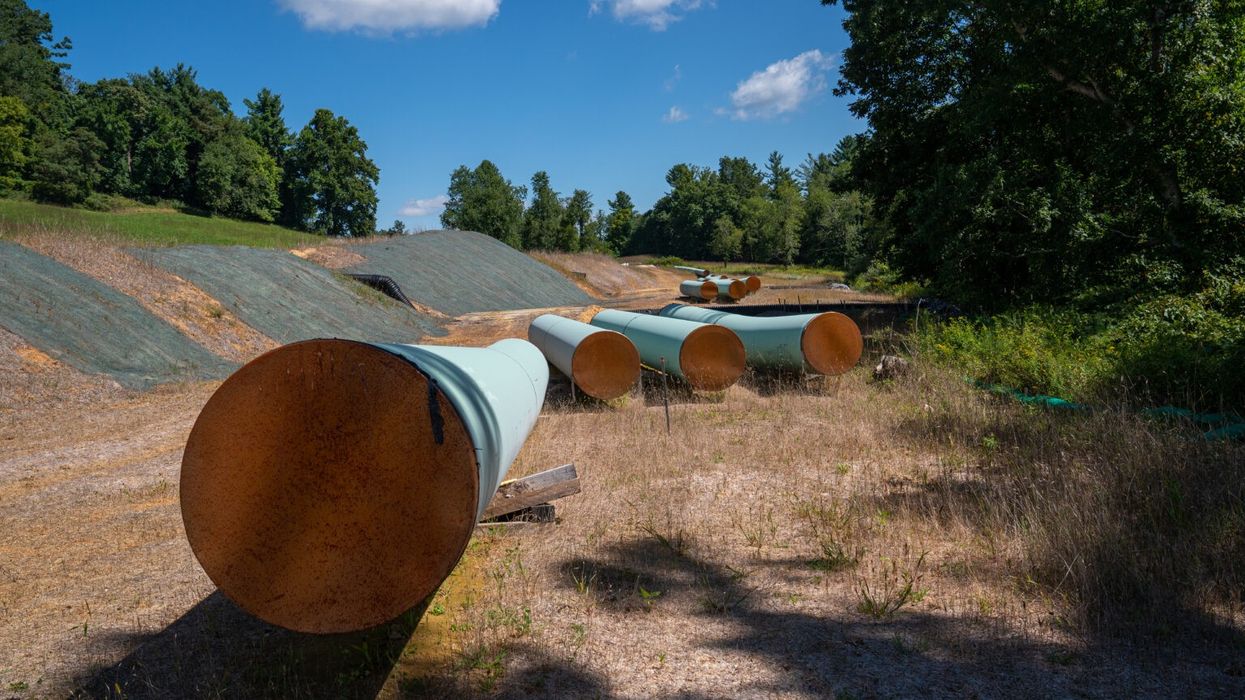
When President Biden agreed to the debt deal in May, the Mountain Valley Pipeline (MVP) became his pipeline. Climate scientists tell us it’s exactly the wrong thing to be building in 2023 but the president fast-tracked it anyway. He may claim that his hands were tied by Manchin and the Republicans who were willing to hold the economy hostage if they didn’t get their way. But no one is tying the President’s hands when it comes to an important safety measure regarding MVP.
For more than 50 years there’s been a federal law on the books that says all pipe must have an external coating that is “sufficiently ductile to resist cracking.” The purpose of the coating is to prevent corrosion over the many years and decades that the pipeline will be in service. The reason it has to be sufficiently ductile (flexible) to resist cracking is because 40-foot sections of pipe flex quite a bit when they are moved from the factory to the pipeyard to the right of way and finally into a ditch. The factory-applied coating is designed to flex but it loses its flexibility, as well as other qualities if it sits out in the sun for too long.
The National Association of Pipe Coating Applicators (NAPCA) says that the coating shouldn’t be exposed to the sun for more than six months but the MVP pipe was coated 6 or 7 years ago and most of it has been exposed to the sun in pipeyards or along right of ways ever since. The January 2020 issue of Corrosion Management reported (starting on p. 16) that the coating on Keystone XL pipe was “no longer fit for purpose” after it had sat out in the sun for years just as MVP’s pipe has. Every piece of KXL pipe that was tested failed the flexibility test and had cracks in the coating. Cracked coating is obviously no longer corrosion-proof.
The coating shouldn’t be exposed to the sun for more than six months but the MVP pipe was coated 6 or 7 years ago and most of it has been exposed to the sun in pipeyards or along right of ways ever since.
In 2010 a gas pipeline exploded in San Bruno. It killed eight people, injured more than 60 and destroyed or damaged more than 100 homes. It was a 30-inch pipeline. MVP is a 42-inch pipeline that can operate at four times the pressure. It is critical that MVP pipe have a top-quality and corrosion-proof coating, which it currently does not. We know that because of the Corrosion Management study and NAPCA’s warning.
MVP wants to get the pipe buried as soon as possible and they will no doubt claim that either the coating is fine and doesn’t need to be recoated, or that they can somehow properly recoat it in the field. It would be absurd to believe what they say. This is a company that has already paid millions of dollars in fines for hundreds of violations. And Biden should be told that half of the emissions gains from his highly touted EV (electric vehicle) sales last year were wiped out by the year’s number one climate disaster, a methane leak that MVP’s builder couldn’t get under control for thirteen days.
There are only two ways to properly address the coating problem. Either replace all the pipe with new, recently coated pipe or ship all the pipe in the field back to the plant for stripping, cleaning, and recoating, which is what a Keystone XL pipeline manager said was necessary, because the coating process is quite involved and can only properly occur in a factory setting. See this two-minute video.
After the recent submersible disaster in the North Atlantic occurred, we learned that the builder and captain of the Titan sub had been repeatedly warned by experts that his vessel was unsafe because it was built with inferior materials. He disagreed…and he was right…until he wasn’t.
The company building the Mountain Valley Pipeline will be like that guy. They will insist the coating is fine. But they aren’t the captain of this ship. Joe Biden is. This is his call, not Manchin’s or anyone else’s. The chain of command, from the bottom up, is the Pipeline and Hazardous Material Safety Administration (PHMSA), the U.S. Dept of Transportation, DOT Secretary Pete Buttigieg, and ultimately President Biden. He can enforce the safety rule and ensure that the coating is sufficiently ductile to resist cracking or he can ignore all the warnings like the captain of the Titan did…and then someday maybe send his thoughts and prayers.
Meanwhile, the rescue effort mounted for wealthy tourists lost on the Titan shows what’s possible when those in danger are treated like do.
Recent weeks saw two terrible tragedies at sea.
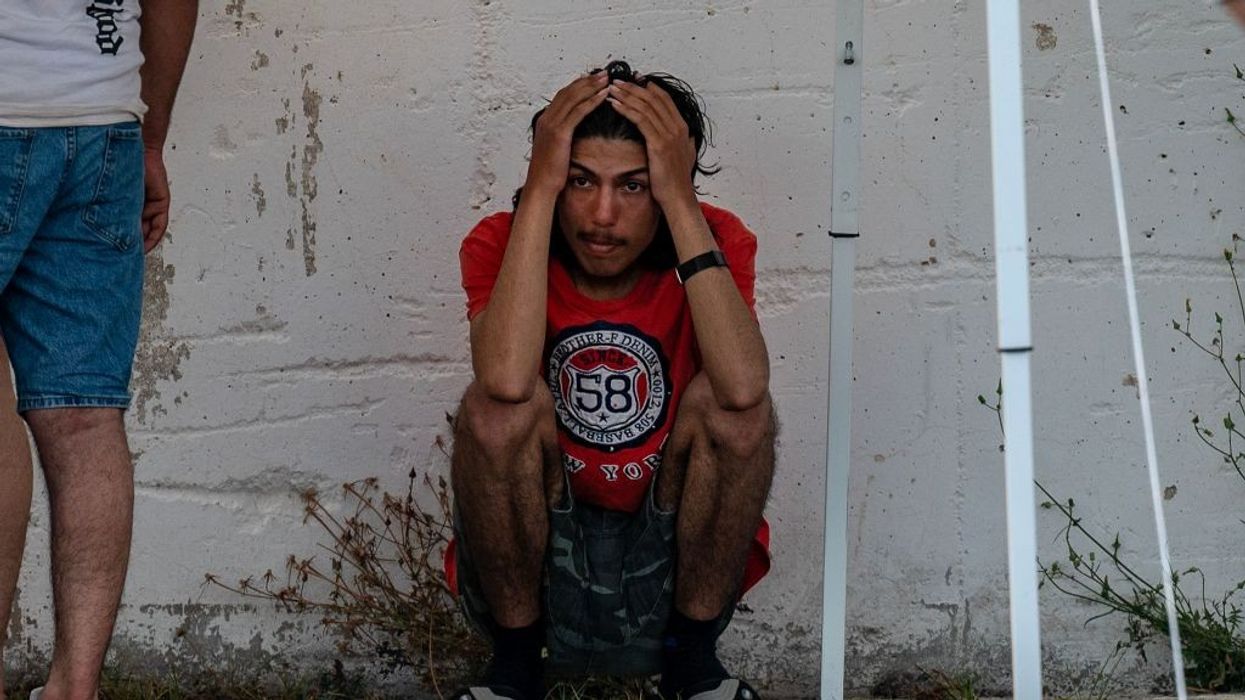
In one, five explorers died when the Titan submersible imploded in the North Atlantic. In the other, over 600 refugees — most of them women and children — drowned in the Mediterranean when their fishing trawler sank.
Both voyages ended in a heartbreaking loss of life. But there were vast differences between the two tragedies in media attention and government response, highlighting just how unequal our world has become.
On board the Titan were two billionaires and one of their sons, along with a CEO and research director of companies tied to undersea adventure tourism. They were headed for the wreckage of the Titanic, which sank 111 years ago.
How many might have been saved if immigration policy were grounded in keeping migrants safe, rather than keeping them out?
When the Titan lost contact with its mother ship less than two hours after descent began, calls for assistance immediately went out. Help came quickly from the U.S. and Canadian coast guards and navies, along with support from France and offers from other countries.
Sonar-equipped planes, undersea diving equipment, trained divers, and search ships of every variety steamed to the area. Meanwhile, breathless coverage of the tragedy stayed on the front pages around the world as TV news counted down the hours of oxygen left in the small craft.
The rescue cost is unknown, but initial estimates are in the area of $100 million — a cost that will be footed by taxpayers.
Compare this to the story of the Adriana, which sank off the coast of Greece just two days after the Titan went down. The Adriana was thought to be carrying over 700 people, of whom just 104 survived. No women or children were among the survivors.
The limited news coverage of the Adriana included nothing like the up-close-and-personal human stories of the lives and dreams of the five men aboard the Titan. Except for a few, we don’t even know their names.
They were desperate migrants, many of them refugees, from countries wracked by war, poverty, climate disasters, and human rights violations — including Afghanistan, Syria, Palestine, Pakistan, and Egypt. They were sailing from Libya in a decrepit fishing boat, hoping to make it to Europe alive.
The Greek coast guard quickly realized the ship was in trouble, but didn’t try to rescue the desperate passengers on the deck. Greek authorities made claims — vehemently disputed by ship captains nearby, migrant advocates, and the passengers themselves — that the ship had turned down offers of assistance.
The ship had been in distress almost two days before it sank, but help didn’t come until it was too late. How many might have been rescued with one-tenth the resources that were rushed to save the five billionaires and millionaires on the Titan?
Europe’s racist approach to migration starts and ends with preventing African, Asian, and Arab migrants from entering European territory. But it’s not just a European problem.
Indeed, the continent’s policies on migrants bear a tragic — indeed criminal — similarity to our own in the United States. As thousands of desperate refugees and migrants have died crossing the Mediterranean, thousands more from Central America, the Caribbean, and beyond have died trying to cross the desert along the U.S.-Mexico border.
How many might have been saved if immigration policy were grounded in keeping migrants safe, rather than keeping them out?
The rescue effort mounted for those lost on the Titan shows what’s possible when those in danger are treated like they matter. U.S. officials should work just as hard to rescue poor and endangered migrants as they do the billionaires — their lives matter just as much.
All travelers, whether migrants or millionaires, deserve rescue.
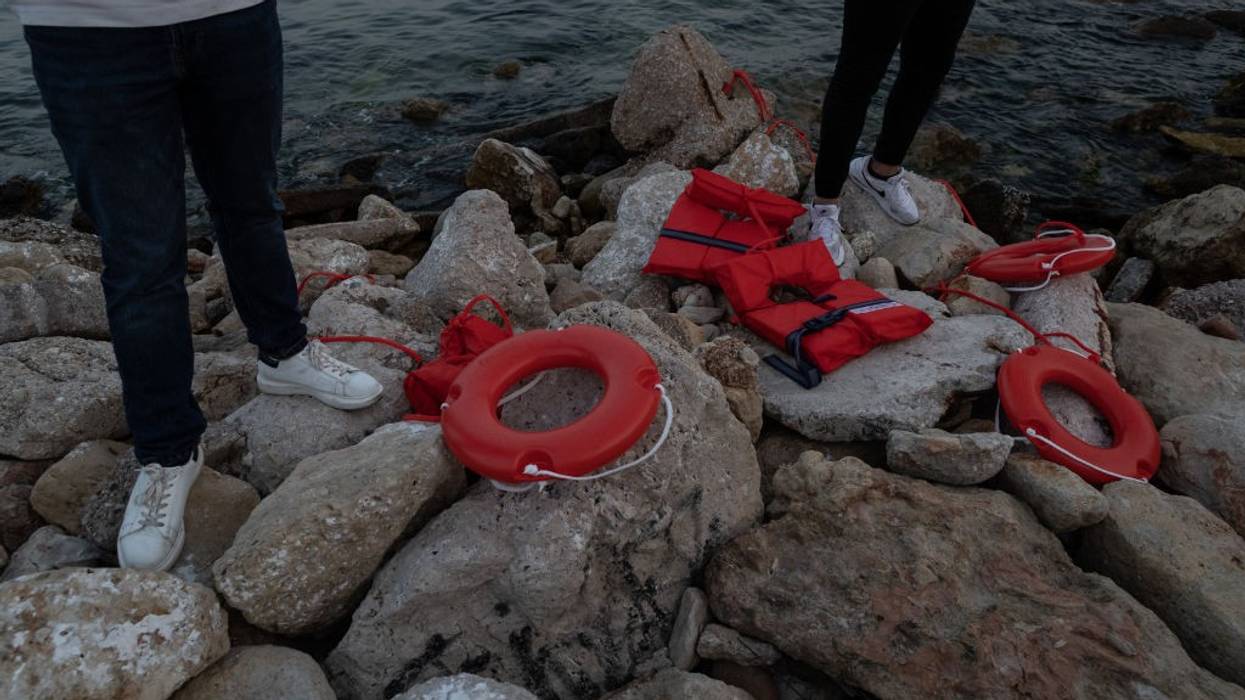
Titan and Adriana are two vessels recently lost at sea, four days and 4,000 miles apart. The five men who lost their lives on the Titan have been getting wall-to-wall coverage in the media worldwide. Meanwhile, the estimated 700 who died when the Adriana sank off the coast of Greece, mostly women and children, have been essentially forgotten.
Passengers on the Titan were wealthy; two were billionaires. Each had paid $250,000 for an adventure of a lifetime, a deepsea dive to view the wreckage of the Titanic, the “unsinkable” passenger liner that sank in 1912 after hitting an iceberg. Those crammed onto the ramshackle Adriana fishing boat were seeking not adventure but refuge from war, poverty, climate change, or any of the many other life-threatening crises that force people to flee their homes with little more than the clothes on their back. They paid human traffickers to ferry them from Libya to Europe.
Perhaps the most notable difference between these two disasters was how the world responded to them. Governments immediately spent millions mounting a search and rescue operation to find the Titan, submerged somewhere in the north Atlantic, deep below an area twice the size of Connecticut. Media outlets provided continuous coverage, with one launching a countdown clock predicting when the submersible’s oxygen would run out. The U.S. Coast Guard and Navy and the Canadian government sent planes and boats to the search area. France and Canada each deployed deep sea robots. People around the world watched and waited breathlessly.
The U.N. High Commissioner for Human Rights estimates that close to 1,200 have perished so far this year in dangerous sea crossings to Spain, Italy, and Greece. These deaths, about the same number as died on the Titanic, are surely an undercount.
Meanwhile, in Greece, officials knew the exact location of the overcrowded, disabled Adriana. Shocking details are now emerging of its sinking on June 14. First-hand accounts, reported in El País, suggest the Greek Coast Guard could have saved the doomed vessel’s 400-750 passengers, but opted not to.
El País reported:
“The Greek authorities had been aware of the ship’s presence since 11 am on June 13 and, in addition to keeping it under surveillance, ordered two ships in the area to deliver food and water to those onboard. They never activated a rescue operation, despite the conditions in which the ship was sailing, not even when the ship’s engine broke down at 1:40 am. Between 2:04 am and 2:19 am, the old metal fishing trawler jolted violently and then disappeared right before the eyes of the Greek coastguard. It is still not clear what happened, but the sea swallowed everything up.”
(The Adriana’s sinking at 2:19 am grimly paralleled that of the Titanic, which sank at 2:20 am. Both sank in water over 12,000 feet deep.)
Most or all of Adriana’s roughly 100 survivors were helped not by Greek authorities but by a private yacht that had responded to the distress call. Among the survivors were 47 Syrians, 43 Egyptians, 12 Pakistanis, and two Palestinians. All were men, as they were traveling above deck on the Adriana. Hundreds of women and children were trapped below deck, and went down with the ship.
“I am struck by the alarming level of tolerance to serious human rights violations against refugees, asylum seekers, and migrants that has developed across Europe,” Dunja Mijatović, Council of Europe Commissioner for Human Rights, said on June 19, one day before World Refugee Day. “Reports of human rights violations… are now so frequent that they hardly register in the public consciousness.”
Mijatović continued, “Last week’s shipwreck off the Greek coast is yet another reminder that, despite many warnings, the lives of people at sea remain at risk in the face of insufficient rescue capacity and coordination, a lack of safe and legal routes and solidarity, and the criminalisation of NGOs trying to provide life-saving assistance. Elsewhere in Europe, pushbacks at land and sea borders, violence against refugees and migrants, denial of access to asylum, deprivation of humanitarian assistance, and the harassment of refugee rights defenders, are widely documented.”
The International Migration Organization’s Missing Migrant Project puts the Mediterranean migrant death toll at over 27,000 since 2014. The U.N. High Commissioner for Human Rights estimates that close to 1,200 have perished so far this year in dangerous sea crossings to Spain, Italy, and Greece. These deaths, about the same number as died on the Titanic, are surely an undercount. Just this week, 39 migrants are believed to have drowned attempting to cross from Morocco to Spain’s Canary Islands.
The Titan and the Adriana disasters were very different, but both were preventable. All travelers, whether migrants or millionaires, deserve rescue. The global response to the Titan’s disappearance should be the model for how we respond to migrant vessels in distress. Knowing the names and the plights of those seeking refuge is what makes the world care.
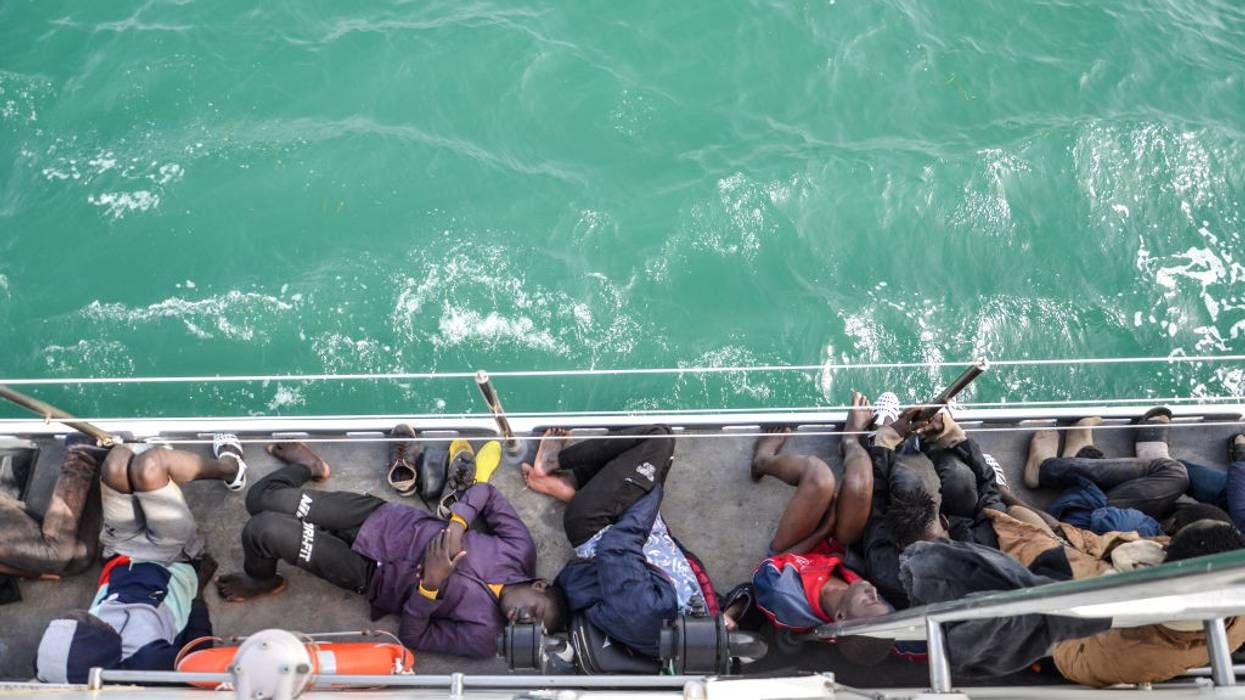
A story of two sinking vessels in a world of extreme inequality.
The sinking of two vessels—the Andrianna, filled with hundreds of desperate migrants, and the Titan, with a handful of multi-millionaires—provides a vivid picture of the world today. All drowning deaths in the ocean are tragic, and one has to sympathize with the families who have lost loved ones. Yet these events also dramatically demonstrate global economic inequality and injustice.
Those who died on the Titan have names. Stockton Rush, chief executive and founder of OceanGate, was the pilot of the Titan. Hamis Harding was a British businessman, chairman of Action Aviation based in Dubai, and an explorer. Paul-Henri Nargeolet was director of underwater research for RMS Titanic, Inc., an American firm that owns the rights to the wreck of the Titanic. And finally, Shazad Dawood and his 19-year-old son Sulem Dawood were scions of one of Pakistan’s wealthiest families.
The rich can pay hundreds of thousands of dollars for an undersea adventure, while the poor spend the last of their savings to crowd onto an overloaded fishing boat in hopes of getting to Europe and finding a job.
The four passengers paid $250,000 each for the macabre adventure of descending to 12,500 feet below the surface to see the wreckage of the Titanic where 1,517 people died after the ship hit an iceberg in 1912. The vessel went missing on June 18. The U.S. and Canadian coast guards did everything possible, dispatching ships and planes to locate and save those five. But debris found on June 22 indicates that the submersible vessel apparently imploded.
By contrast, many of those who died when the Andrianna capsized on June 14 still have no names. The ship, an overloaded fishing vessel, sailed from Libya to Italy, carrying between 400 and 750 migrants from various countries. Some 104 were rescued, hundreds of others remain unaccounted for, many of them women and children who were below decks. There were Egyptians, Syrians, Pakistanis, Afghans, and Palestinians among the survivors and perhaps other nationalities among the dead. These passengers were mostly poor people heading for Europe in the hope of finding a way to make a better living and take care of themselves and their families.
But many European governments don’t want any more immigrants, particularly poor people of different nationalities, colors, religions, and languages. With rightwing governments in power in several European countries, all semblance of solidarity has disappeared. The Greek Coast Guard saw that the vessel was in trouble but declined to assist it.
The sinking of these two vessels should lead Europeans and people around the world to examine their consciences.
Here, then, is the split-screen reality of those who sail the high seas. The rich can pay hundreds of thousands of dollars for an undersea adventure, while the poor spend the last of their savings to crowd onto an overloaded fishing boat in hopes of getting to Europe and finding a job. Governments mobilize their resources to rescue the rich, but turn their backs on the poor in distress. The sinking of these two vessels should lead Europeans and people around the world to examine their consciences.
What would it have been like if the million dollars that those four individuals spent to visit the Titanic had been spent instead on helping those several hundred migrants? Let’s take it one step further. There are about 45 million migrants in the world today, driven by climate change, economic crises, and oppressive governments. Taxing the global rich, who clearly have more money than they need, could provide considerable resources for addressing this migration crisis.
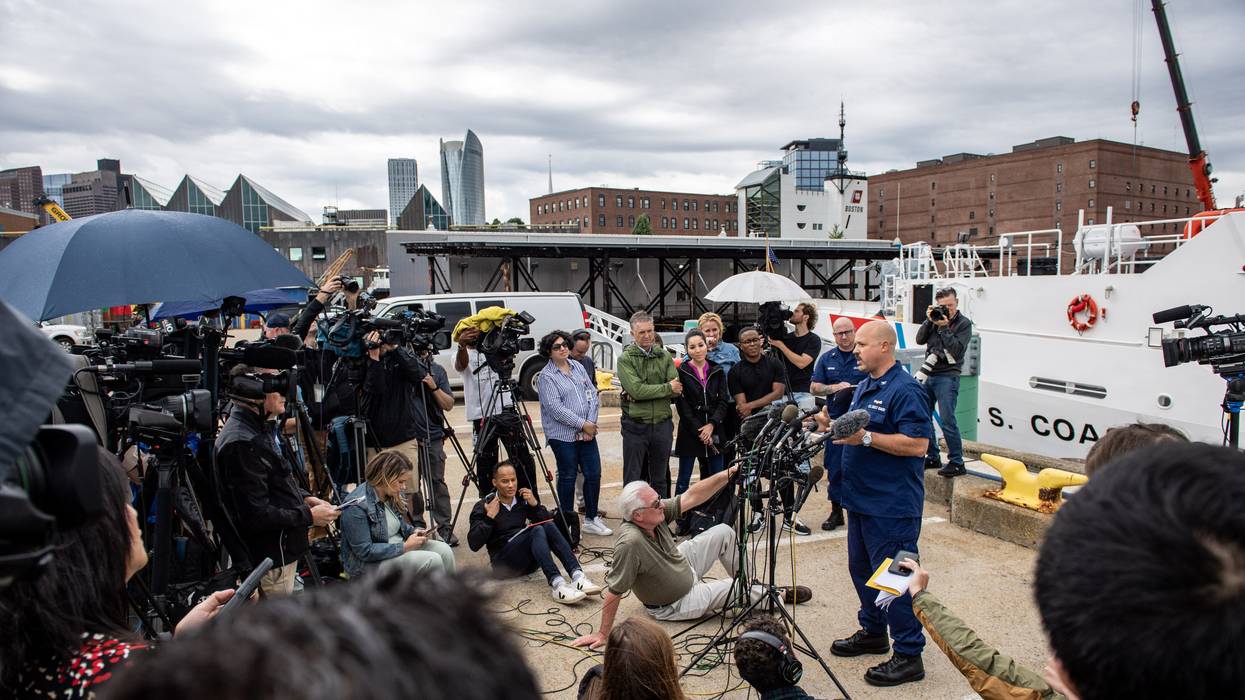
"Hundreds of refugees just died on a boat that collapsed in the Mediterranean," said one journalist, "and that situation has already stopped being news on most major platforms."
As a growing international team of rescue workers held out hope that the crew and passengers of a missing submersible vessel may be signaling that they're still alive on Wednesday, human rights advocates were among those who couldn't help but notice the juxtaposition between the rescue efforts and those that were carried out last week to save hundreds of migrants who were attempting to cross the Mediterranean when their overloaded boat capsized.
The Titan, a vessel owned by the deep sea exploration company OceanGate Expeditions in Washington State, lost contact with the ship that deployed it less than two hours after embarking on what should have been a two-and-a-half-hour journey to the Titanic in the north Atlantic Ocean. The submersible, which is 22 feet long and nine feet tall, was piloted by OceanGate CEO Stockton Rush and carried four tourists who paid $250,000 each to travel to the shipwreck.
The story of OceanGate, its history of dismissing safety concerns about its voyages on what one reporter called a "jerry-rigged" vessel, and the feared fate of the passengers—who include a maritime expert, an explorer and aviation executive, and a businessman traveling with his 19-year-old son—has captivated many since the submersible went missing, with The New York Times providing live coverage of the rescue mission.
The submersible was estimated to have enough oxygen to last the crew and passengers until Thursday if they are still alive. As The New Republic reported Tuesday, a former OceanGate employee raised concerns about the Titan's ability to safely travel to the Titanic, which lies nearly 13,000 feet below the ocean's surface. A vessel traveling to the wreckage would face crushing pressure changes, which submersible pilot David Lochridge told the company could cause "large tears" in the carbon fiber vessel. Lochridge was fired after voicing the concerns, and Rush has openly derided deep sea diving safety regulations.
But as four Canadian Coast Guard ships and other rescue vessels were deployed Wednesday to join surveillance aircraft and remote-operated vehicles that have been searching an area the size of Massachusetts following the detection of "banging sounds" underwater, human rights advocate Kenneth Roth was among those who contrasted the massive search operation with the "pathetic" response to an imminent shipwreck last Wednesday that left more than 500 migrants missing and presumed drowned.
The Greek Coast Guard said this week that "smugglers" in control of the overcrowded fishing boat, which was headed for Italy, rejected offers of help before the boat sank in front of authorities, and officials in Greece have noted that no "SOS" signal had been sent from the ship.
But experts say the Coast Guard violated a 2014 European Union law which requires governments to help ships when there is "the existence of a request for assistance, although such a request shall not be the sole factor for determining the existence of a distress situation."
"If the Greek Coast Guard recognized the boat as in distress, and this is an objective assessment, they should have tried to rescue them no matter what," Markella Io Papadouli, a lawyer at the Advice on Individual Rights in Europe Center, told The New York Times on Monday.
Those running the ship were reportedly intent on reaching Italy, but the boat's captain reported to the Hellenic Search and Rescue Center that overcrowding was causing it to rock "dangerously."
"You have an obligation to rescue," said Papadouli. "Negotiating with the smugglers is like negotiation with plane hijackers."
Critics also noted that the passengers who could afford a spot on the Titan and embarked on the trip despite OceanGate's acknowledgment on waiver forms that tourists could be "permanently disabled or killed" have also received outsized media attention in recent days compared to the hundreds of refugees who perished in the second-deadliest migrant shipwreck on record.
"The submersible's disappearance has arguably been the biggest news story of the last 24 hours. That's understandable in some ways," wrote Alex Shephard at The New Republic on Tuesday, "There is both the possibility of an improbably happy ending or of unspeakable tragedy—another element of a compelling news story."
But Shephard argued the migrant ship disaster should also have been treated as "a huge news story, one that hits at both Europe's ongoing refugee crisis and the callousness with which many European nations treat migrants who are desperately trying to reach their shores. Yet it has received scant attention in the American media—and the missing submersible story has dwarfed what coverage there has been."
Laleh Khalili, a professor of international politics at Queen Mary University of London, called the gap in attention paid to the two catastrophes "unspeakable."
"I want everyone in this submersible to be rescued and found alive because despite the sheer incredulity of this situation, they're human," said Kristina Drye, a communications analyst at USAID. "But hundreds of refugees just died on a boat that collapsed in the Mediterranean, and that situation has already stopped being news on most major platforms."
The 19-year-old passenger's "dad put him on this boat so they could feel something thrilling, something associated with invincibility," she added. "I don't think it ever crossed their mind that they would feel fear. And yet there are hundreds of kids, crossing dozens of borders, whose parents send them knowing they will only feel fear, and that no one is invincible."
"And if anyone needs to feel something that deep, that badly," Drye continued, "just watch the struggle of people who are escaping one life to try to create some semblance of another. And watch them fail in that effort through no fault of their own."