

SUBSCRIBE TO OUR FREE NEWSLETTER
Daily news & progressive opinion—funded by the people, not the corporations—delivered straight to your inbox.
5
#000000
#FFFFFF
To donate by check, phone, or other method, see our More Ways to Give page.
Daily news & progressive opinion—funded by the people, not the corporations—delivered straight to your inbox.
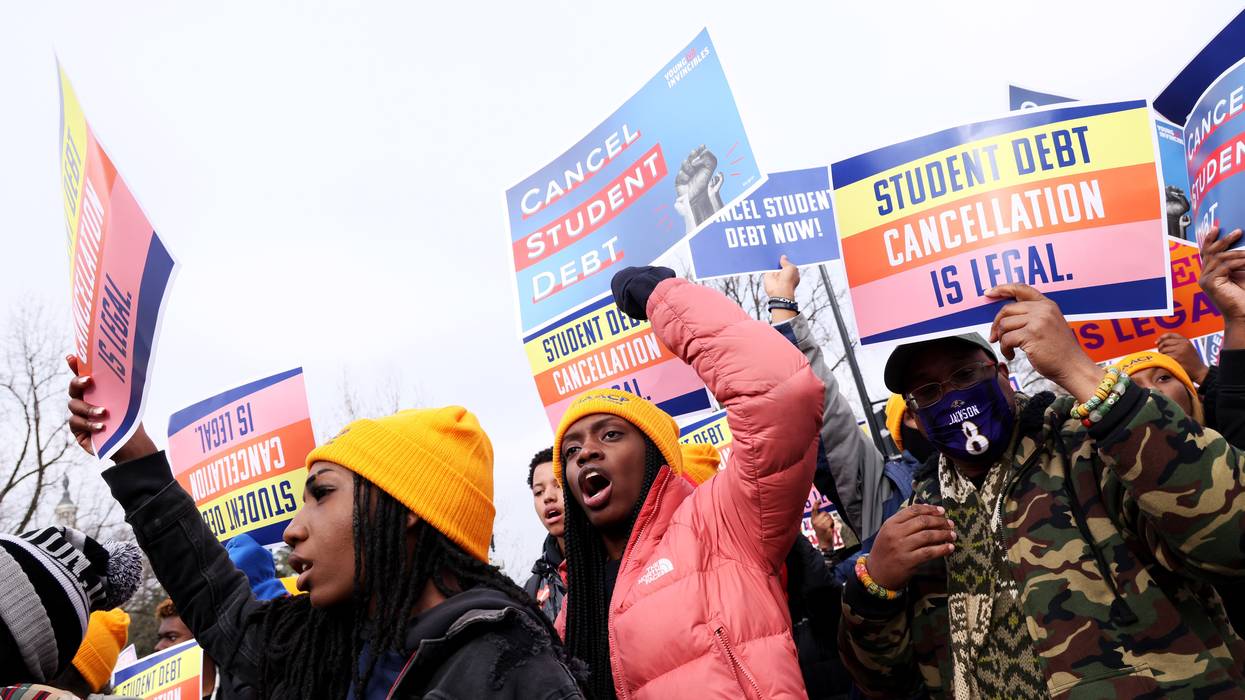
"The Biden administration needs to actually discharge this debt immediately before more lawsuits or judicial bullsh*t happens," said the Debt Collective.
A federal judge in Michigan has rejected an effort by a pair of right-wing think tanks to stop the Biden administration from canceling the student debt of roughly 804,000 borrowers who have been making payments on their loans for more than two decades.
In an 18-page decision on Monday, U.S. District Judge Thomas L. Ludington of the Eastern District of Michigan—a George W. Bush appointee—ruled that the Cato Institute and the Mackinac Center for Public Policy lacked standing to challenge the Biden administration's move, which is expected to automatically wipe out close to $40 billion in federal student loan debt—a small fraction of the $1.6 trillion in outstanding federal student loan debt in the U.S.
Mike Pierce, executive director of the Student Borrower Protection Center, wrote in response to the ruling that the lawsuit "was the last barrier to debt relief for more than 800,000 people who had been in debt for decades."
"These borrowers were cheated by predatory companies like Navient and failed by gross mismanagement by [the U.S. Department of Education]," Pierce added. "This is long-delayed justice."
As I'm reading this, I'm struck by just how thorough & devastating this opinion is for @CatoInstitute and @MackinacCenter.
This is an opinion by a Republican-appointed judge hand-picked by the plaintiffs.
He can barely hide his disdain for Cato and Mackinac wasting his time. pic.twitter.com/lAEfRai0S0
— Mike Pierce (@millennial_debt) August 14, 2023
The lawsuit by Cato and the Mackinac Center targeted the Biden administration's recently announced changes to the income-driven repayment (IDR) program, which bases monthly student loan payments on borrowers' income and makes borrowers eligible for debt cancellation after around 20 years of qualifying payments.
The program has long been plagued with issues, failing to deliver promised relief for borrowers. A report published last year by the Government Accountability Office (GAO) found that a tiny percentage of eligible borrowers actually had their debt canceled under the program.
On Monday, President Joe Biden announced that his administration has begun the process of discharging the student loan debt of 804,000 borrowers who have been in repayment for more than 20 years.
"Because of errors and administrative failures of the student loan system that started long before I took office, over 804,000 borrowers never got the credit they earned, and never saw the forgiveness they were promised—even after making payments for decades," Biden said.
The Debt Collective, a group that has implored the Biden administration to use its legal authority to cancel all outstanding federal student loan debt immediately, welcomed the Michigan judge's ruling.
"This is good—but we've seen this playbook before," the debtors' union wrote. "The Biden administration needs to actually discharge this debt immediately before more lawsuits or judicial bullsh*t happens."
The decision comes weeks before federal student loan repayments, which were paused during the Covid-19 pandemic, are set to resume for the first time in over three years.
On September 1, student loan interest will restart, followed by the resumption of payments in October. The Consumer Financial Protection Bureau has warned that millions of borrowers could struggle to make their payments once the pause is lifted.
The debt ceiling deal that the Biden White House reached with House Republicans in May cemented the end of the student loan payment freeze. Shortly after Biden signed the deal into law, the U.S. Supreme Court's right-wing majority struck down the administration's plan to cancel up to $20,000 in federal student loan debt for tens of millions of borrowers.
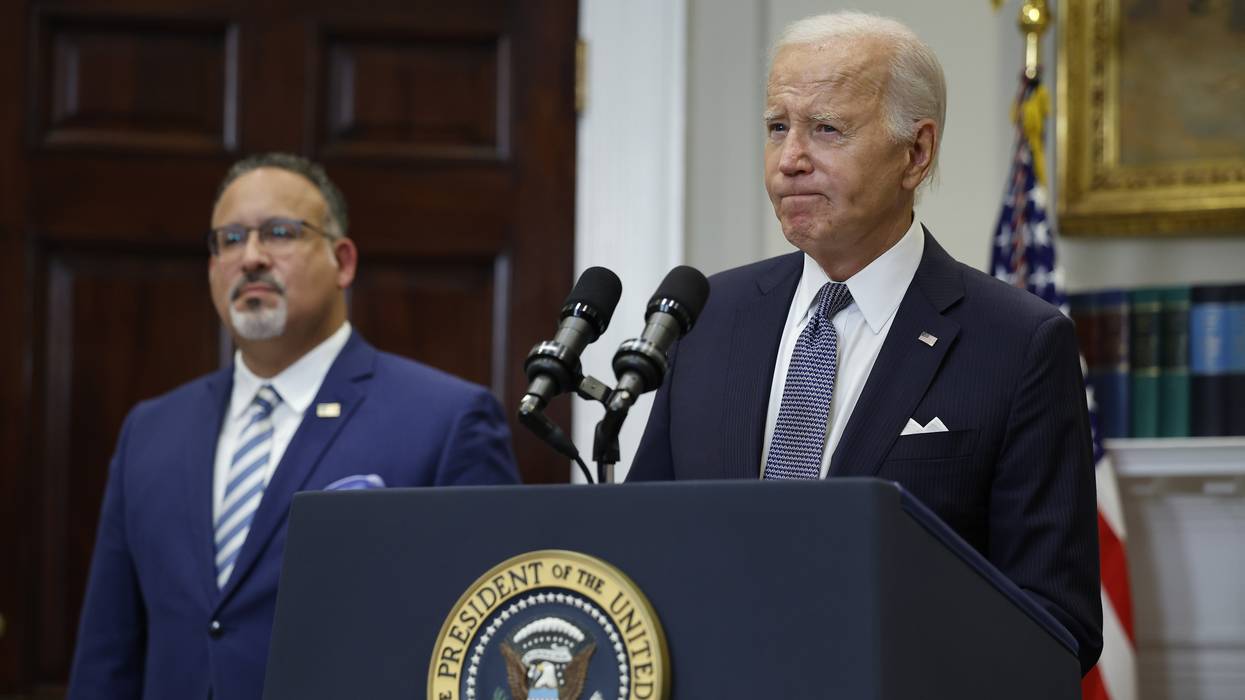
"This is only the tip of the iceberg," said one campaigner. "Now, our leaders need to finish the job."
The Biden Education Department announced Friday that it will soon begin eliminating the federal student loan debt of more than 800,000 borrowers after implementing fixes to income-driven repayment plans, a move that advocates welcomed while urging the administration to use its authority to provide relief to all borrowers.
In a press release, the Education Department said its changes will cancel $39 billion in federal student loan debt—a tiny fraction of the $1.6 trillion in outstanding federal student loan debt in the United States.
"The forthcoming discharges are a result of fixes implemented by the Biden-Harris administration to ensure all borrowers have an accurate count of the number of monthly payments that qualify toward forgiveness under income-driven repayment (IDR) plans," the agency said. "These fixes are part of the department's commitment to address historical failures in the administration of the federal student loan program in which qualifying payments made under IDR plans that should have moved borrowers closer to forgiveness were not accounted for. Borrowers are eligible for forgiveness if they have accumulated the equivalent of either 20 or 25 years of qualifying months."
"Make no mistake—over 804,000 people are receiving relief with this action because of 804,000 failures."
Persis Yu, deputy executive director and managing counsel at the Student Borrower Protection Center, applauded the change as "a huge victory" for the roughly 804,000 borrowers who "have been trapped in decades of never-ending payments."
"But make no mistake—over 804,000 people are receiving relief with this action because of 804,000 failures—and this is only the tip of the iceberg," said Yu. "Now, our leaders need to finish the job. We look forward to the administration's ongoing efforts to enact further relief efforts and ensure they include defaulted borrowers—those who have truly fallen between the cracks and who have been continually left behind."
After the U.S. Supreme Court struck down its student debt cancellation plan last month, the Biden administration announced what's expected to be a lengthy rulemaking process aimed at wiping out student debt via the Higher Education Act (HEA) of 1965—a broader authority than the 2003 law the Education Department cited for its original plan.
The Debt Collective warned at the time that the administration's slow-walked approach will give right-wing opponents ample time to prepare a legal assault on the new program. Instead, the debtors' union argued, the administration should use its HEA authority to cancel student debt immediately.
The group echoed that message in response to the Education Department's announcement on Friday, which came months before student loan repayments are set to resume.
"The Supreme Court ruled against HEROES authority power—but there are other tools in their toolbox," the group tweeted. "They can cancel all of it. Today."
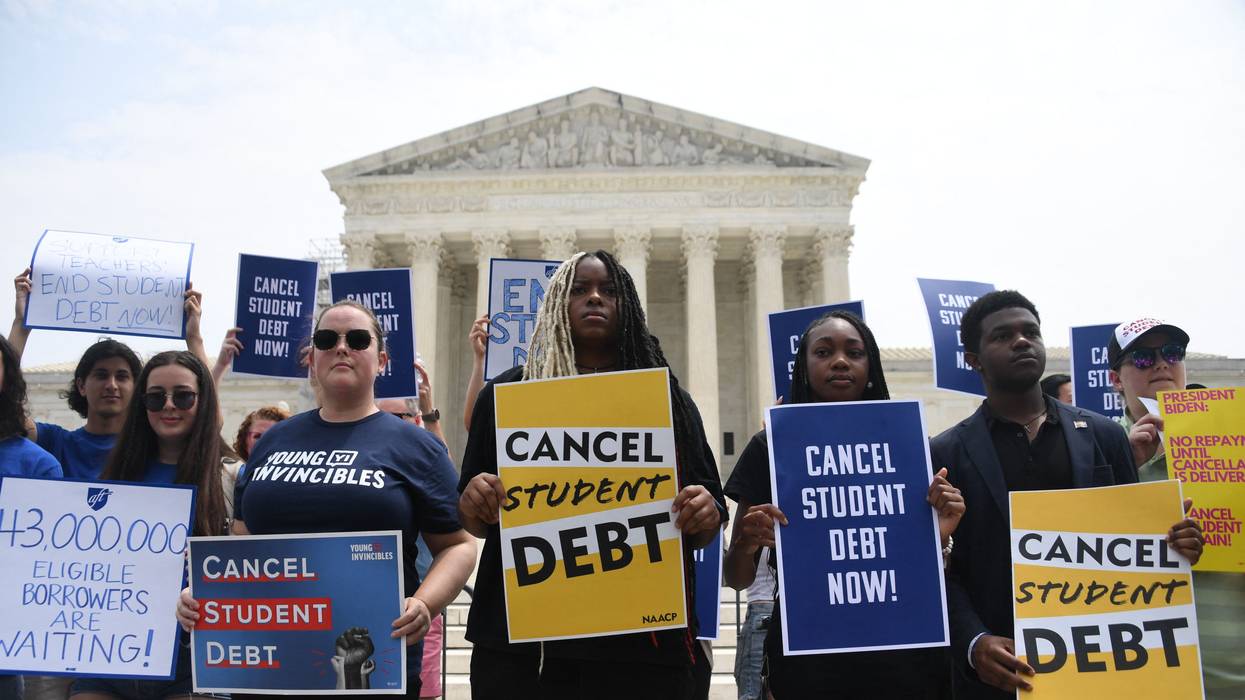
One campaigner said Biden must "use the full might of the federal government" to cancel student debt "in the face of this lawless and shamefully political ruling."
Progressive lawmakers and campaigners said Friday that President Joe Biden must immediately pursue alternative paths to student debt cancellation after the Supreme Court's right-wing supermajority struck down his program, denying relief to more than 40 million borrowers just months before the scheduled end of the loan repayment pause.
Rep. Ayanna Pressley (D-Mass.), one of the most outspoken supporters of student debt cancellation in Congress, said Biden and Education Secretary Miguel Cardona must "use other tools available to them to swiftly cancel student debt."
"The people demand and deserve this long overdue economic relief and a promise is a promise," said Pressley, a member of the Congressional Progressive Caucus (CPC). "The Biden administration should act immediately. I won't let up."
CPC Chair Rep. Pramila Jayapal (D-Wash.) similarly urged Biden to "utilize other ways to cancel student debt," warning that "inaction is not an option."
"It cannot be overstated how devastating this ruling is," Jayapal continued. "Before the pandemic, more than 25% of borrowers were behind on payments and 9 million borrowers were in default, with one borrower defaulting every 26 seconds. The Department of Education estimates those statistics will only get worse for millions without cancellation, and new research shows 1 in 5 borrowers will struggle financially when payments resume."
"Time to keep Biden's feet to the fire to actually fight to cancel student debt."
Invoking the previously fringe "major questions doctrine"—which holds that federal agencies must have highly specific authority to act on matters of "vast economic and political significance"—the Supreme Court's conservative justices ruled that Congress did not clearly grant the Education Department the power to cancel student debt when it passed the HEROES Act of 2003.
In her dissent, liberal Justice Elena Kagan excoriated the major questions doctrine as "made-up" and said the court's conservatives only invoked it because "the majority's 'normal' statutory interpretation cannot sustain its decision."
Debt relief campaigners and Democratic members of Congress have argued for years that Biden should use the Higher Education Act (HEA) of 1965—which legal experts say clearly gives the secretary of education the power to wipe out student debt—to eliminate loan balances for tens of millions of Americans.
Under the HEA, the education secretary has the power "to enforce, pay, compromise, waive, or release any right, title, claim, lien, or demand" related to federal student loans.
"It is very important to note this SCOTUS ruling does NOT remove Biden's ability to pursue student loan forgiveness," Rep. Alexandria Ocasio-Cortez (D-N.Y.) tweeted Friday. "The Biden admin can use the HEA (Higher Ed Act)—our position from the start—to continue loan forgiveness before payments resume. They should do so ASAP."
Echoing that message, Sen. Elizabeth Warren (D-Mass.) wrote that "the president has more tools to cancel student debt—and he must use them."
Sen. Bernie Sanders (I-Vt.), the chair of the Senate Health, Education, Labor, and Pensions Committee, declared that "if Republicans could provide trillions of dollars in tax breaks to the top 1% and profitable corporations, if they could cancel hundreds of billions in loans for wealthy business owners during the pandemic when Trump was president, and if they could vote to spend $886 billion on the Pentagon, please don't tell me that we cannot afford to cancel student debt for working families."
"I am urging the Biden administration to implement a Plan B immediately to cancel student debt for tens of millions of Americans who are struggling to pay the rent, put food on the table, and pay for the basic necessities of life," Sanders said. "Despite this legally unsound Supreme Court decision, the president has the clear authority under the Higher Education Act of 1965 to cancel student debt. He must use this authority immediately."
Following the high court's ruling, which sparked protests outside the Supreme Court building, Biden said in a statement that he "will stop at nothing to find other ways to deliver relief to hard-working middle-class families."
The president said he will announce later Friday afternoon "the next steps" his administration intends to take to provide long-overdue relief to federal student loan borrowers, who collectively hold around $1.7 trillion in student debt.
The Debt Collective, a debtors' union fighting for total cancellation, said Biden's actions in response to the Supreme Court's ruling should be held to a high standard.
"No application. No notice and comment. No return to repayment," the group wrote on Twitter, arguing that such requirements "give the GOP a chance to kill cancellation."
"Time to keep Biden's feet to the fire to actually fight to cancel student debt," the group added.
Survey results released Friday by the Student Borrower Protection Center (SBPC) and Data for Progress show that a majority of U.S. voters would support the Biden administration using legal authority other than the HEROES Act of 2003 to cancel student debt.
Mike Pierce, SBPC's executive director, said in a statement that Biden must "stand with student loan borrowers and use the full might of the federal government to answer their demand for justice and relief in the face of this lawless and shamefully political ruling."
"Borrowers cannot afford to wait any longer," said Pierce.
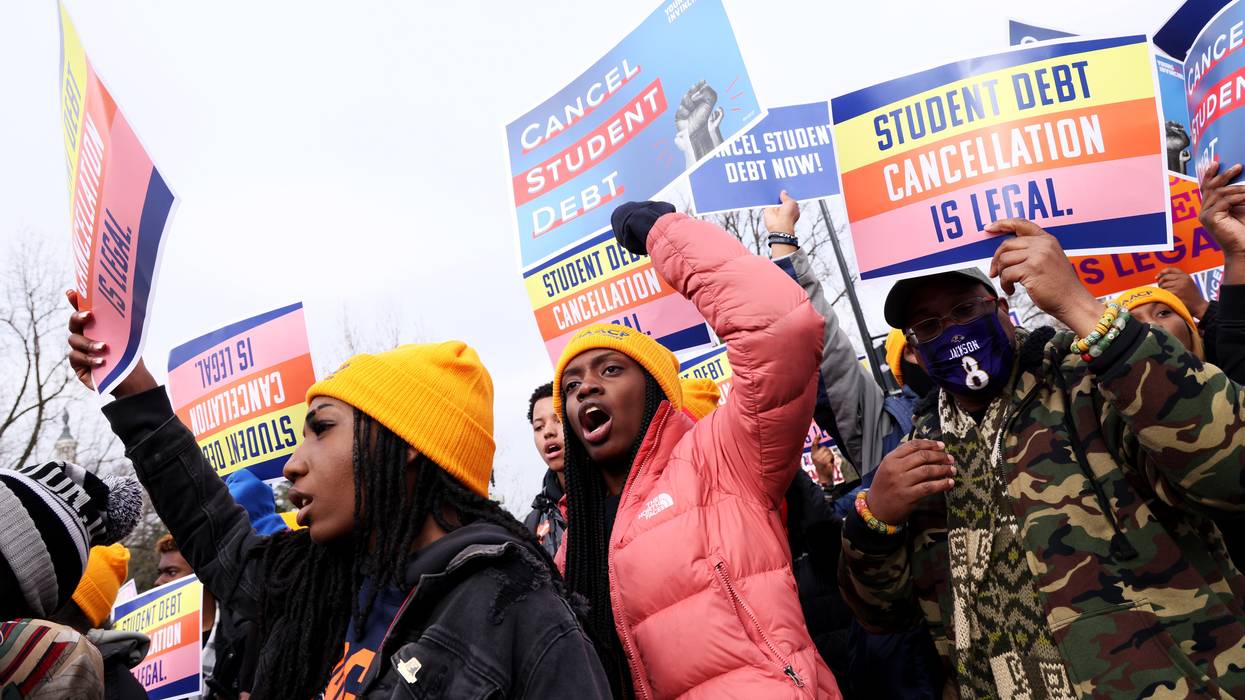
"The Supreme Court can strike this iteration of relief down, but it won't have the last word," said one organizer.
The U.S. Supreme Court on Friday sided with a group of Republican attorneys general and struck down the Biden administration's student debt cancellation program, undercutting efforts to deliver relief to tens of millions of borrowers.
In a 6-3 ruling along ideological lines, the high court's six conservative justices ruled that the GOP officials had standing to sue even though the Missouri student loan servicer they alleged would be harmed by the debt relief program was not part of the case.
Chief Justice John Roberts wrote the majority opinion, which ruled that the emergency power the Biden administration cited—the 2003 HEROES Act—"does not authorize" the Education Department's debt cancellation program.
The Supreme Court unanimously dismissed a separate challenge to the student debt relief program brought by two individual plaintiffs whose lawsuit was funded by the billionaire-backed Job Creators Network Foundation.
In her dissent in Biden v. Nebraska, liberal Justice Elena Kagan wrote that "at the behest of a party that has suffered no injury, the majority decides a contested public policy issue properly belonging to the politically accountable branches and the people they represent."
"So in a case not a case," Kagan added, "the majority overrides the combined judgment of the legislative and executive branches, with the consequence of eliminating loan forgiveness for 43 million Americans."
Debt relief campaigners pledged to keep up the fight, imploring the Biden administration to swiftly use his authority under the Higher Education Act of 1965 to enact broad-based debt cancellation.
"Debtors getting angry, hopeful, and organized is what put student debt cancellation on the political map," said Astra Taylor, co-founder of the Debt Collective. "We've won billions of dollars of relief so far, and we're just getting started. The Supreme Court can strike this iteration of relief down, but it won't have the last word."
The Supreme Court's decision to block debt relief sets the stage for an economic disaster.
In October, after being paused during the coronavirus pandemic, student loan repayments are set to resume, leaving borrowers who are already struggling financially with hundreds of dollars in additional payments each month.
"Student loan relief is a promise from President Biden to more than 40 million families," said Melissa Byrne, a debt relief campaigner and executive director of We the 45 Million. "It is our chance for dignity. He must immediately implement a plan B including finding a different path to ensure no repayment begins until cancellation is delivered."
"Failure to deliver student loan relief," Byrne added, "is not an option."
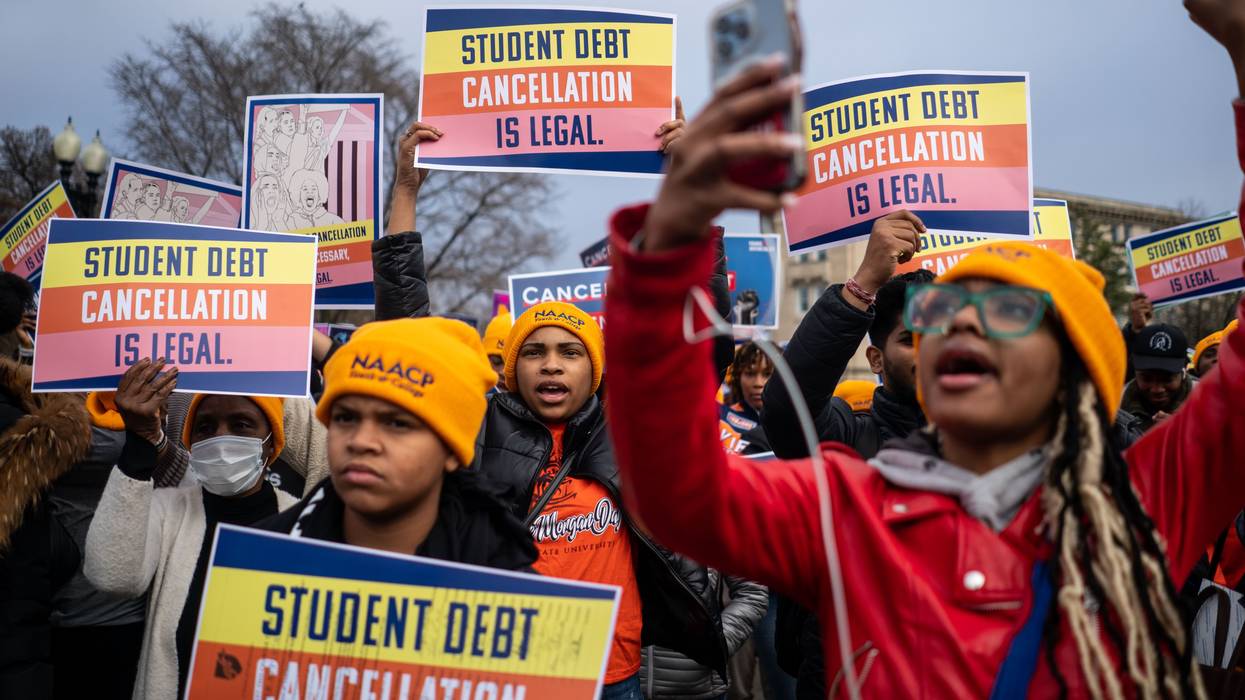
If the Supreme Court strikes down the student debt cancellation, said one campaigner, Biden "needs to act, and act fast."
Barring unforeseen circumstances, the U.S. Supreme Court on Friday will hand down its long-awaited ruling on the Biden administration's pending student debt relief program, a decision with huge implications for tens of millions of borrowers and the broader economy.
Organizers are preparing for the worst despite the glaring flaws in right-wing plaintiffs' arguments against debt relief, which rely heavily on supposed harms to a student loan servicer that is not even part of the case.
Astra Taylor, a co-founder of the Debt Collective, tweeted late Thursday that "SCOTUS will likely strike down Biden's current student debt relief plan tomorrow at 10:00 am."
"POTUS better have a Plan B," Taylor added. "He needs to act, and act fast."
White House officials have thus far declined to say whether the administration has an alternative plan ready in the case of an unfavorable ruling from the Supreme Court, which is dominated by conservative justices—including one who has faced calls to recuse over his ties to a billionaire hedge tycoon with financial connections to the groups working to block relief.
Speaking to The Messenger on Thursday, Taylor said it is "imperative" that the Biden administration act swiftly after the Supreme Court's decision even in the case of a ruling that upholds the president's program—a possibility given justices' skepticism over whether the plaintiffs have established legal standing to challenge the plan.
If the administration "moves like a snail" after the high court ruling, Taylor warned Thursday, another right-wing judge could issue "an injunction on baseless grounds."
"They need to deliver," said Taylor, "because people's lives are on the line."
Adam Green, co-founder of the Progressive Change Campaign Committee (PCCC), echoed Taylor's concerns, telling The Messenger that the White House must "not dilly-dally and let the right-wing file more lawsuits."
Bloomberg reported earlier this week that the PCCC "has a mobilization campaign ready to bombard the White House with emails and phone calls urging Biden pursue an alternative path if the court overturns his student loan forgiveness program."
Debt relief campaigners have long argued that the emergency authority the Biden administration invoked to cancel up to $20,000 in student loan debt per eligible borrower is too narrow and highly vulnerable to legal challenges. Instead, advocates say Biden should use his power under the Higher Education Act of 1965 to cancel all outstanding student loan debt.
"We cannot afford to give up on cancellation, no matter what the Supreme Court decides," Satra D. Taylor, director of higher education and workforce with the advocacy group Young Invincibles, said after a rally outside the White House last week.
"Student debt cancellation is legal," Taylor added, "and we must provide relief for over 40 million borrowers now."

"This is ugly. And it is only going to get worse," warned one advocate.
The Consumer Financial Protection Bureau warned Wednesday that millions of federal student loan borrowers in the U.S. could struggle to make payments once forbearance ends in late August—a timeline codified by the debt ceiling measure that President Joe Biden signed into law over the weekend.
The consumer agency, also known as the CFPB, has been tracking the finances of student loan borrowers throughout the coronavirus pandemic, during which repayments and interest have been frozen—collectively saving borrowers hundreds of billions of dollars.
But in an update on Wednesday, the CFPB estimated that more than one in 13 borrowers are behind on payments other than their student loans, financial pain that will intensify once the student loan payment pause lifts.
"These delinquencies are higher than they were before the pandemic, despite a small seasonal decrease in the most recent data," wrote CFPB economists Thomas Conkling and Christa Gibbs.
The pair also found that roughly one in five of the 32 million federal student loan borrowers in the CFPB's sample "have risk factors that suggest they could struggle when scheduled payments resume," such as "pre-pandemic payment assistance on student loans" and "delinquencies on other credit products since the start of the pandemic."
"As of March 2023, around 2.5 million student loan borrowers had a delinquency on a non-student loan, an increase of around 200,000 borrowers since September 2022," the CFPB economists wrote. "Borrowers with large balances relative to their income may find their scheduled monthly student loan payments especially difficult to manage if they are not enrolled in income-driven repayment (IDR) plans when the payment pause ends."
Conkling and Gibbs also point to other factors that could complicate the repayment process for many borrowers, including the large number of loan accounts that have been transferred to different servicers over the past several years.
"This change could complicate the transition to repayment for the 44% (or more than 14 million) of borrowers in our sample who will have to work with at least one new servicer after more than three years of suspended payments," they wrote. "So far, more than 17 million accounts for federal student loans have been transferred, and more transfers—either to different servicers or different servicing technology platforms—are expected in the coming months, ultimately reaching more than 30 million accounts."
"This is going to be a massive disaster that will crescendo right in time for the '24 election."
The CFPB's findings confirmed debt relief advocates' fears about restarting payments, particularly if the U.S. Supreme Court sides with right-wing challengers and strikes down the Biden administration's student debt cancellation plan. A decision from the high court is expected this month.
"This is ugly. And it is only going to get worse," Mike Pierce, executive director of the Student Borrower Protection Center (SBPC), wrote in response to the CFPB's findings. "It is going to be very, very bad."
Ben Kaufman, SBPC's director of research and investigations, agreed, warning of profound financial consequences for borrowers and major political implications.
"This is going to be a massive disaster that will crescendo right in time for the '24 election," Kaufman tweeted Wednesday.
The Biden administration was already planning to end the student loan payment pause 60 days after a Supreme Court decision on debt relief or 60 days after June 30—whichever comes first.
But the debt ceiling agreement negotiated by Biden and House Republican leaders cements that timeline into law and potentially hinders the administration's ability to implement another pause in the future, sticking the average federal student loan borrower with hundreds of dollars a month in additional financial burden.
The American Prospect's David Dayen called the looming restart of student loan payments an "oncoming train wreck," noting Wednesday that "the Office of Federal Student Aid (FSA), which is tasked with managing this impending chaos, has no additional funding to do it, and its budget was already inadequate."
Because of the huge number of loan account transfers that have occurred over the past three years, "millions of borrowers will get a notice from a private company they've never interacted with, telling them to resume payments on a loan that's been dormant for years," Dayen wrote. "If every borrower used StudentAid.gov to keep up with their account, and these companies were perfectly diligent, this might go smoothly."
"But student loan servicers have a terrible track record; Navient was described by the Consumer Financial Protection Bureau in 2017 as having 'systematically and illegally failed borrowers at every stage of repayment,'" he added. "If you want to see an example of how this might spiral out of control, look no further than the Medicaid purge now happening across the country."

"What if payments begin and millions—literally millions—of people default on their debt?" the Debt Collective asked. "What if seniors get their Social Security checks garnished en masse?"
House Republicans weren't ultimately able to include a full repeal of President Joe Biden's pending student debt cancellation plan in the new debt ceiling agreement, but they did reach a deal with the Biden White House to insert a provision that campaigners say could be devastating for millions of borrowers across the country.
Tucked in the 99-page legislation that Congress could vote on this week is language prohibiting the education secretary from using "any authority to implement an extension" of the federal student loan repayment pause, which remains in place as the U.S. Supreme Court considers a pair of legal challenges to the Biden administration's debt relief plan.
If passed, the repayment pause enacted early in the Covid-19 pandemic and extended eight times—saving borrowers hundreds of billions of dollars in payments and interest—would be terminated 60 days after June 30, 2023 unless another extension is "expressly authorized" by Congress.
House Speaker Kevin McCarthy (R-Calif.)—who attended California State University, Bakersfield when tuition and fees were an inflation-adjusted $1,982—wasted little time touting the provision as he made the media rounds over the weekend, declaring in a Fox News appearance that the "pause is gone" if the debt ceiling bill passes.
Debt relief campaigners responded with alarm.
"This has huge and catastrophic financial implications for 50 million+ people," the Debt Collective, the nation's first debtors' union, wrote on Twitter.
The Biden White House had already pledged to end the student loan repayment pause 60 days after the Supreme Court decides the fate of student debt cancellation or 60 days after June 30—whichever comes first.
The debt ceiling agreement codifies that pledge into law, potentially complicating the White House's ability to authorize another pause if the Supreme Court agrees with the right-wing challengers' deeply flawed legal case and strikes down the administration's debt cancellation plan.
The Debt Collective pointed to that possibility late Monday, noting that the Biden administration "was gearing up to resume payments because they were going to simultaneously cancel lots of debt—20 million accounts zeroed out."
"Because of Covid's impact, the Biden admin said returning to repayment needed to be coupled with relief," the group wrote. "If SCOTUS rules student debt relief is legal, Biden can say he took action on student debt—the second-largest household debt in the country. The problem is, WE DON'T KNOW what SCOTUS will rule. We're still waiting. Basically this debt ceiling deal puts the cart before the horse."
"The debt-ceiling bill agreement reached by lawmakers is deeply harmful to millions of American families—the worst thing for borrowers would be a sudden and startling restart of payments."
Education Secretary Miguel Cardona insisted that, under the new agreement, the Biden administration would still retain the "ability to pause student loan payments should that be necessary in future emergencies."
But the Debt Collective warned that it could take the Biden administration weeks or months to implement another pause if it decided one was needed. The administration could also choose not to try to implement another freeze even if millions struggle to make payments.
"What if payments begin and millions—literally millions—of people default on their debt?" the Debt Collective asked. "What if seniors get their Social Security checks garnished en masse?"
Due to funding shortfalls, the Education Department doesn't expect to have the capacity to begin collecting student debt payments again until October.
The financial firm Jefferies estimates that once federal student loan repayments begin, they will cost roughly 45 million borrowers a combined $18 billion per month, potentially having a significant impact on the broader U.S. economy in addition to placing major strain on individuals and families.
The average federal student loan payment in the U.S. is around $400 per month—though the Biden administration is working to finalize rules aimed at lessening that financial burden.
Natalia Abrams, president and founder of the Student Debt Crisis Center, said in a statement Monday that "it is imperative that lawmakers prioritize the wellbeing of millions of Americans by keeping payments paused until comprehensive and permanent debt cancellation is delivered."
"The debt-ceiling bill agreement reached by lawmakers is deeply harmful to millions of American families—the worst thing for borrowers would be a sudden and startling restart of payments," said Abrams. "Not only does it unnecessarily codify the end of pandemic relief measures that are still desperately needed, but it also sends a disheartening message that the ongoing efforts to assist borrowers are being rolled back before permanent relief promised by the Biden administration has been delivered."

"Two Democrats voted with Republicans to say that not only should student debt relief be repealed, not only should the pause on payments end, but that you should make retroactive payments from previous months."
Two House Democrats—Reps. Jared Golden of Maine and Marie Gluesenkamp Perez of Washington—faced backlash on Wednesday after voting for a GOP resolution that would repeal President Joe Biden's student debt relief program, which is currently on hold as the U.S. Supreme Court weighs a pair of deeply flawed legal challenges.
The resolution, led by Rep. Bob Good (R-Va.), aims to make use of a law called the Congressional Review Act (CRA), which allows members of Congress to overturn rules issued by federal agencies. The GOP's student debt measure passed the House by a vote of 218 to 203.
Debt relief campaigners warned that the resolution's impact would be disastrous.
In addition to blocking the potential cancellation of up to $20,000 in student debt per eligible borrower, the measure would roll back "at least four months of paused payments and $5 billion per month in waived interest charges, requiring the U.S. Department of Education to send surprise loan bills to tens of millions of borrowers, even potentially impacting the 8th (and current) payment pause," the Student Borrower Protection Center warned.
A report published earlier this week by the American Federation of Teachers and the Student Borrower Protection Center says the Republican measure would "reinstate the debt of more than 260,000 public service workers who have achieved [Public Service Loan Forgiveness] since September 2022, restoring a debt burden that amounts to more than $19 billion overall and more than $72,000 per person."
The Debt Collective, the United States' first debtors' union, decried the Republican resolution and its two Democratic supporters, both of whom represent tens of thousands of people who would benefit from student debt cancellation.
"Jared Golden represents Maine-02. We know there are at least 100,975 student debtors in his district that he voted against today," the Debt Collective tweeted following Wednesday's vote. "Marie Gluesenkamp Perez represents Washington-03. There are at least 93,749 student debtors in her district that she voted against today. Shame."
"Today," the group wrote, "two Democrats voted with Republicans to say that not only should student debt relief be repealed, not only should the pause on payments end, but that you should make retroactive payments from previous months."
As of this writing, Golden and Perez—co-chairs of the right-wing Blue Dog Coalition—have not issued statements explaining their votes.
Golden publicly criticized the Biden administration's student debt relief plan last year, calling it "out of touch" even though polling has shown the program is popular.
Republican backers of the resolution dismissed advocates' claims that repealing the Education Department's student debt relief program would hit borrowers with surprise bills, brushing aside such concerns as "not based in reality."
But critics of the resolution stress that it would both block Biden's student debt relief plan and nullify the most recent federal student loan payment pause.
According to the Congressional Research Service, any rule revoked by a CRA resolution of disapproval "would be deemed not to have had any effect at any time, and even provisions that had become effective would be retroactively negated."
Thus the warnings of retroactive interest payments and other consequences for those who have benefited from programs that are "intertwined with the payment pause," such as Public Service Loan Forgiveness.
"Right-wing proponents have gone to great lengths to mislead their own colleagues and deny the truth—this effort would push hundreds of thousands of public service workers back into debt and require the government to charge tens of millions borrowers for interest that has already been canceled," Mike Pierce, executive director of the Student Borrower Protection Center, said in a statement Wednesday.
"Should this become law, it will cause irreparable damage to the student loan system and undermine Americans' trust in their government," said Pierce. "This is exactly what extreme conservative lawmakers want, they are just afraid to say it."
The resolution now heads to the U.S. Senate, where—under the CRA—Republicans can force a vote despite being in the minority.
The measure would require just a simple majority to pass the narrowly Democratic upper chamber, though President Joe Biden has threatened to veto the resolution if it reaches his desk.
Sen. Bill Cassidy (R-La.) is leading the Senate resolution, which currently has 47 Republican co-sponsors.
The Washington Post reported Wednesday that "although Sens. Joe Manchin III (D-W.Va.) and Jon Tester (D-Mont.) have criticized the debt relief plan, it's unclear whether they will join the Republican effort to dismantle the program."
"Tester's office said he is taking a look at the resolution, while Manchin's office declined to comment," the Post added.
In a floor speech ahead of Wednesday's vote, Rep. Ayanna Pressley (D-Mass.) said it is "unconscionable but unsurprising" that Republicans are attempting to overturn the Biden administration's student debt relief program.
"Rather than work to alleviate the burden of the student debt crisis," Pressley said, "Republicans are advancing a cruel proposal that would harm 43 million people, hit tens of millions of borrowers with surprise loan bills, and reinstate the debt of over 260,000 public service workers—including our nurses, educators, firefighters, and servicemembers."
"The Senate must vote down this measure," Pressley continued. "The president has made clear he would veto this harmful resolution and stands by his decisive action on student debt relief. Millions of people, from all walks of life, stand to benefit from the president's plan, and we won't stop fighting to deliver the relief the people demand and deserve."

"The Supreme Court risks making a ruling affecting millions of people's lives without essential, accurate information," warns a new analysis from the Roosevelt Institute and the Debt Collective.
The argument at the center of Republican officials' case against President Joe Biden's student debt cancellation plan is "categorically false," according to an explosive new report released Tuesday by the Roosevelt Institute and the Debt Collective.
With debt relief for tens of millions of people hanging in the balance, the GOP state officials who brought the case told Supreme Court justices in late February that they have legal standing to challenge the Biden administration's student debt cancellation plan because if it took effect, it would "cut MOHELA's operating revenue by 40%."
MOHELA is Missouri's state-created higher education loan authority, and the supposed financial harms it would suffer under the student debt cancellation plan are critical to the right-wing officials' case. If the Republican plaintiffs can't prove that MOHELA—which is not itself a plaintiff in Biden v. Nebraska—would suffer concrete harm from student debt cancellation, their case falls apart.
According to the new report by the Roosevelt Institute and the Debt Collective, not only would MOHELA not be harmed by the Biden administration's student debt relief plan—it would actually see its direct loan revenue rise if the plan is enacted.
"Our new research examining this claim suggests that MOHELA's year-over-year revenue from direct loans will actually increase substantially, even after debt relief," the report states. "Assuming President Biden's proposed cancellation goes through, we estimate that MOHELA will service more than twice the number of accounts it serviced at the beginning of the Covid payment pause. It will also earn nearly twice as much revenue servicing federal direct loans as it has in any year prior to cancellation."
The groups said their findings were bolstered by internal MOHELA documents that they obtained through a public records request. MOHELA's "own internal impact analysis," the report notes, "shows it would make more revenue the first year after cancellation is processed than it did in 2022 or any prior year."
"The entire premise of the lawsuit against student debt relief rests on the idea that 43 million student debtors shouldn't get relief for which they were already approved because one of the corporations contracted by the government to collect student debt, and thus the state of Missouri, will be financially harmed in the process," the report concludes. "Our analysis reveals this assertion to be false. In contrast, MOHELA will earn higher revenue than ever before, even after cancellation is administered—contradicting the plaintiffs' argument and calling into question their claims to standing."
Thomas Gokey, a co-founder of the Debt Collective and an author of the report, told The Lever on Tuesday that "it's really hard to stop student debt cancellation because you need to find someone who is harmed by it" to establish standing to sue.
"And the truth is, nobody is actually harmed by student debt cancellation," said Gokey. "It benefits everybody. It benefits people who don't have student debt."
Biden v. Nebraska, one of two student debt cancellation cases currently before the Supreme Court, has been placed on a fast track, meaning that "the Republican attorneys general trying to stop student debt cancellation for 43 million borrowers have at no point been obliged to verify the basic facts of this case," the Roosevelt Institute and the Debt Collective stressed.
"As a result, the Supreme Court risks making a ruling affecting millions of people's lives without essential, accurate information," the progressive groups said.
The report also highlights that, as part of its contract with the Department of Education, "MOHELA agreed not to 'object to or protest [Federal Student Aid's] allocation or reallocation of existing borrower loans, and further waives and releases all current or future claims against [FSA]... regarding its current allocation decisions and methodology for existing borrower loans.'"
"Maybe that's why MOHELA never joined the lawsuit," The American Prospect's David Dayen suggested in his write-up of the new report. "But none of that matters to this Supreme Court. They are on the verge of accepting a standing argument of a fake plaintiff who never joined the case, based on an assertion of harm that in the final analysis is actually a benefit, while ignoring a signed contract that flatly prohibits the fake plaintiff from suing at all."
"I know we're in a post-fact era, but this is really something," Dayen continued. "If the court doesn't pay careful attention to this report, more than 40 million student borrowers could experience continued financial hardship because the justices would rather violate numerous principles of jurisprudence than let Joe Biden help anyone. The conservatives on the court are obviously not mathematicians or experts in student debt servicing or financing. But they don't appear to be judges, either, at least in the sense of following the law."

"You should not have to face financial ruin because you want a damn education!" said Sen. Bernie Sanders. "Education, from child care to graduate school, is a human right. It should be free to all."
Borrowers, advocates, and lawmakers converged on the steps of the U.S. Supreme Court on Monday night and Tuesday morning to defend President Joe Biden's stalled student debt relief plan as justices prepared to consider a pair of right-wing challenges to the popular proposal.
Attendees argued that Biden's move to erase up to $20,000 in student debt for federal borrowers with individual incomes under $125,000 and modify the income-driven repayment program is just, legal, and necessary. Although it falls short of progressives' demands for universal cancellation, speakers made clear that the White House's plan is key to improving economic security.
"You should not have to face financial ruin because you want a damn education!" Sen. Bernie Sanders of Vermont said during Tuesday morning's rally. "Education, from child care to graduate school, is a human right. It should be free to all."
"Today we say to the Supreme Court, listen to the needs of millions of struggling people," Sanders added. "Do the right thing. Support Biden's proposal to cancel student debt."
"President Biden's executive authority to provide student debt relief to borrowers is abundantly clear."
After Monday night's rally, some campaigners planned to camp out overnight in a bid to secure seats in the courtroom for Tuesday's oral arguments, which began at 10:00 am ET.
In both Biden v. Nebraska—brought by the Republican-led states of Nebraska, Missouri, Arkansas, Iowa, Kansas, and South Carolina—and Department of Education v. Brown—filed with the support of billionaires by a pair of plaintiffs who claim they were unfairly excluded from relief—the right-wing-controlled Supreme Court will decide whether Biden's plan exceeds the U.S. Department of Education's (DOE) authority and whether the lawsuits have legal standing.
In a Tuesday statement released ahead of the hearing, Democratic Rep. Cori Bush of Missouri said, "Today, far-right Republican attorneys general will bring baseless and politically motivated arguments to the Supreme Court in opposition to providing student debt relief promised to 40 million borrowers across our country."
"Regardless," said Bush, "President Biden's executive authority to provide student debt relief to borrowers is abundantly clear—just look at the facts."
Bush continued:
Fact: The basis of the Republican AG's case relies on the claim that this relief plan threatens the profits of loan servicers such as MOHELA and states will be financially injured. Yet, in response to an October letter I sent to MOHELA, they denied involvement in the case and discredited Republicans by stating that they don’t operate to make profits and remain committed to complying with contractual obligations set forth by the U.S. Department of Education.
Fact: Republicans claim that states, like Missouri, also rely on revenue from loan servicers like MOHELA. Yet, MOHELA hasn’t paid their bills to the state in over a decade and owes over $100 million to the state of Missouri.
Fact: President Biden's student debt relief plan would provide 40 million borrowers across our country—including 144,000 of my constituents—with life-changing financial relief. Following the economic devastation of the pandemic, we need transformative policy solutions to foster an equitable economic recovery.
"I know what it's like to carry crushing student debt and to have to make impossible choices between paying rent or paying an exorbitant student loan bill," said Bush. "And I've heard from people across the country who have shared how this relief would change their lives—from being able to afford child care, to paying their medical bills, to being able to put food on the table."
"The facts are clear, and I implore the Supreme Court to affirm the president's executive authority to cancel up to $20,000 in student debt," she added. "I'm confident the Biden-Harris administration's plan will withstand these hurdles and provide the much-needed relief to borrowers."
Right-wing lawmakers and activists filed numerous lawsuits after the White House announced its student debt cancellation bid in August. Applications for relief closed in November after a federal judge appointed by former President Donald Trump blocked Biden's plan. At the time, 26 million borrowers had already applied for or were automatically eligible for relief, and 16 million applications were given the green light and sent to loan servicers.
While GOP members of Congress argue that student debt relief is a regressive policy whose benefits would flow disproportionately to wealthy households, DOE data released earlier this month dispels that myth. According to a Politico analysis of the data, over 98% of people who applied before the portal was frozen reside in ZIP codes where the average per-capita income is under $75,000. Nearly two-thirds of applicants live in neighborhoods where the average person makes less than $40,000 per year.
With his relief measures obstructed, Biden extended the pause on federal student loan repayments—a measure that was introduced at the beginning of the Covid-19 pandemic in March 2020 and had been set to expire on December 31, 2022—through June 30, 2023. Payments are set to restart 60 days after that date, or 60 days after the high court hands down its decision, whichever comes first.
The Debt Collective, however, tweeted Monday night: "We're not paying that damn student debt no matter what the Supreme Court and its corrupted judges say."