

SUBSCRIBE TO OUR FREE NEWSLETTER
Daily news & progressive opinion—funded by the people, not the corporations—delivered straight to your inbox.
5
#000000
#FFFFFF
To donate by check, phone, or other method, see our More Ways to Give page.
Daily news & progressive opinion—funded by the people, not the corporations—delivered straight to your inbox.
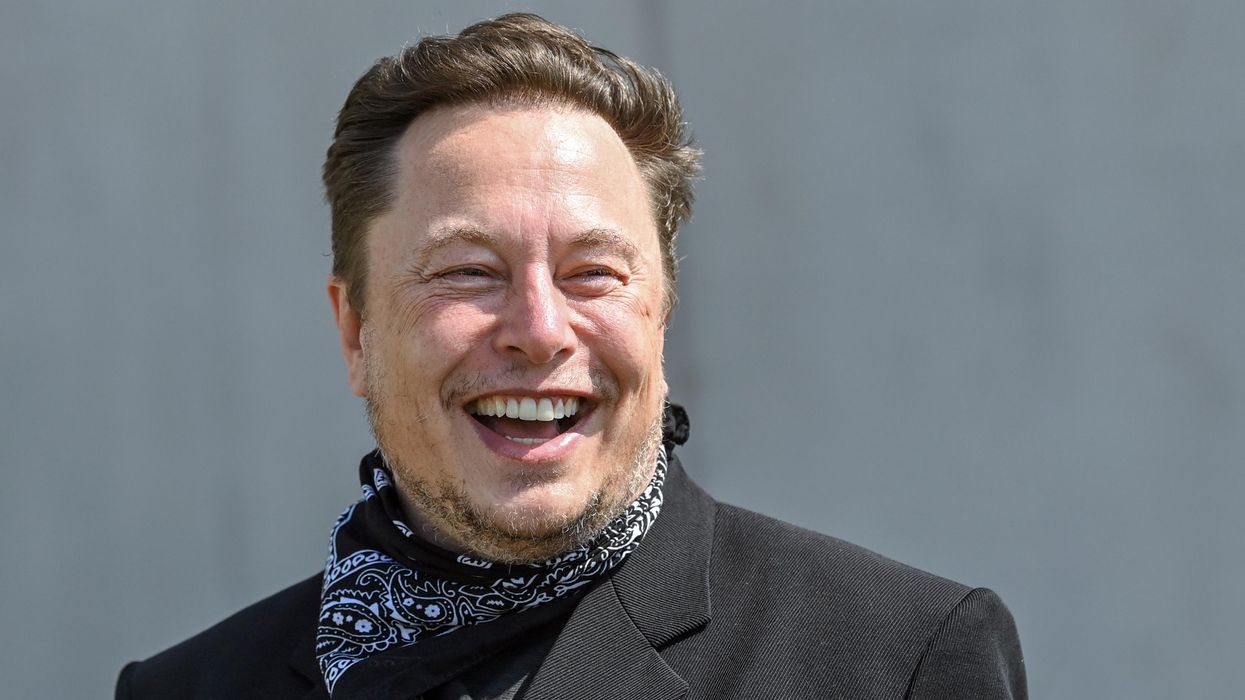
"I can think of no good reason why political operators who have demonstrated a blatant disregard for the law would need access to these sensitive, mission-critical systems," Sen. Ron Wyden said.
Elon Musk and his team at the Department of Government Efficiency—or DOGE—have been granted access to a sensitive Treasury Department payment system that contains the personal information of every American who receives tax refunds, Medicare, Social Security, and other payments from the government.
Newly approved Treasury Secretary Scott Bessent gave Musk surrogates access to the system late on Friday, five people familiar with the situation told The New York Times. Bessent's decision came the same day as news that David Lebryk, a career Treasury official who was acting secretary before Bessent's confirmation, would step down after arguing with DOGE members over access to the system run by the Bureau of Fiscal Service that pays out over $6 trillion a year.
"Sources tell my office that Treasury Secretary Bessent has granted DOGE *full* access to this system," Sen. Ron Wyden (D-Ore.) wrote on social media on Saturday. "Social Security and Medicare benefits, grants, payments to government contractors, including those that compete directly with Musk's own companies. All of it."
"Americans don't want an unelected and unaccountable billionaire dictating what working families can and cannot afford."
Former Labor Secretary Robert Reich also responded with shock to the news: "An unelected billionaire, with no actual congressional authority or governmentt experience, now has access to Treasury payment systems and sensitive information about millions of Americans who receive Social Security checks, tax refunds, and other payments. What could go wrong?"
The news heightens fears that Musk and the Trump administration are attempting to gain authoritarian control over the federal government by ousting or sidelining career civil servants and undermining Congress, which has the constitutional authority to decide how the government should spend its money.
DOGE gained access to the Treasury payment system on the same day that an official at the Office of Personnel Management said that Musk allies had locked career civil servants out of a computer system containing the personal information of federal employees. The news also capped a week in which the Trump administration attempted to freeze all federal grants and loans, a move that has been temporarily blocked by two judges.
Wyden, the ranking member on the Senate Finance Committee, sent a letter demanding answers from Bessent on Friday when reports first emerged that Musk's team had tried to gain access to the system.
"To put it bluntly, these payment systems simply cannot fail, and any politically motivated meddling in them risks severe damage to our country and the economy," Wyden wrote. "I am deeply concerned that following the federal grant and loan freeze earlier this week, these officials associated with Musk may have intended to access these payment systems to illegally withhold payments to any number of programs. I can think of no good reason why political operators who have demonstrated a blatant disregard for the law would need access to these sensitive, mission-critical systems."
Other Democratic lawmakers also voiced concerns on social media about the news.
"Elon Musk, the richest man on Earth, is rooting around in Social Security and Medicare payment systems. He's reaching his hands into our pockets and firing anyone who tries to stop him. This reeks of corruption—it must stop," Rep. Pramila Jayapal (D.-Wash.) wrote.
Sen. Elizabeth Warren (D-Mass.) called the news "alarming' and said that Congress must investigate.
People familiar with the situation told The New York Times that no payments had yet been blocked and that the stated mission of the DOGE team was to review payments, not to stop them. Musk suggested in a social media post on Friday that he was looking for inapropriate expenditures, but also that blocking funds might be appropriate.
"The DOGE team discovered, among other things, that payment approval officers at Treasury were instructed always to approve payments, even to known fraudulent or terrorist groups," he wrote on social media on Friday. "They literally never denied a payment in their entire career. Not even once."
Former Treasury officials told the Times that funds are dispersed by a comparatively small staff who rely on the agencies that earmark the funds to vet them. Don Hammond, who ran the system at the turn of the millennium, also told The Wall Street Journal that, while there were certain automatic safeguards in place, it was not the role of Treasury to approve or reject specific payments.
"Legally, if you want to stop a payment from taking place, the place to do that is at the agency level," Hammond said.
Responding to the article on social media on Sunday, Groundwork Collaborative executive director Lindsay Owens wrote: "The Treasury system makes the payments (cuts checks). It doesn't decide who to pay or how much. A little like an employer using a payroll processor. Musk has infiltrated the system to stop payments. It's a coup."
In an op-ed published by MSNBC on Saturday, Owens went into greater detail about her concerns, outlining three reasons why Musk might want access to the Treasury payment system.
Owens noted hat Musk wasn't "chasing these cuts for their own sake. He's helping congressional Republicans attempt to pay for a new round of tax breaks for corporations and the ultrawealthy—including Musk himself."
"It's nice to believe in a fantasy in which Musk and DOGE work alongside civil servants to improve technology and services for Americans and save a few bucks along the way. But all evidence points to the contrary," Owens continued. "The richest man in the world, whom no one elected to any government position, is seeking unprecedented access to confidential information, including information pertaining to his own business interests, and seems hell-bent on cutting off as much funding as possible for the programs that matter to the rest of us."
Owens pointed to a recent poll finding that only around one-third of Americans approve of DOGE, and that 52% disapprove of Musk.
"Americans don't want an unelected and unaccountable billionaire dictating what working families can and cannot afford," she concluded. "If Musk is going to continue running the government like one of his failed businesses, perhaps someone should force his 'resignation' too."
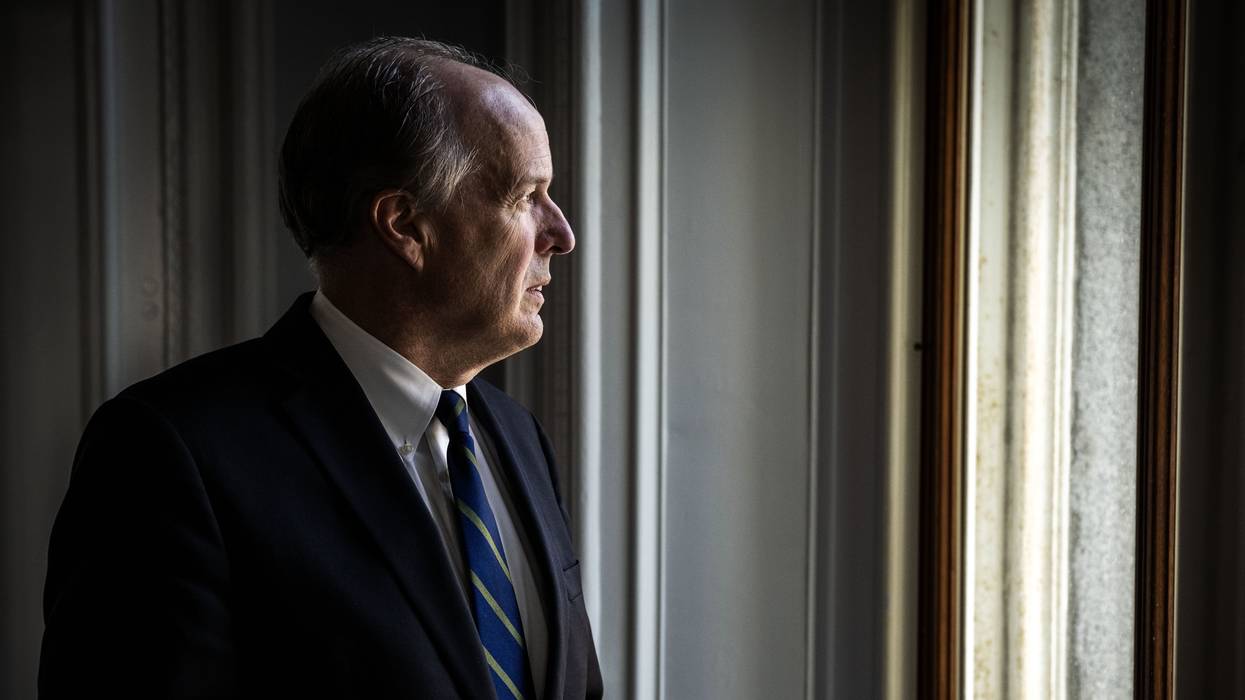
"Elon Musk, who NO ONE VOTED FOR, wants to mess with our earned benefits," said one advocacy group. "Hell no."
President Donald Trump has claimed the spending cuts he proposes won't impact Medicare and Social Security, but new reporting on the sudden departure of the U.S. Treasury Department's highest-ranking career official after a dispute over the payment systems that distribute those benefits sparked concern that Trump's billionaire backer, Elon Musk, could have plans for the popular programs relied on by millions of Americans.
The Washington Post reported Friday that David Lebryk, who has served in numerous high-level roles at the Treasury Department since 1989 and was temporarily named acting treasury secretary by Trump before the confirmation this week of his nominee, Scott Bessent, would soon leave the department.
According to the newspaper, Lebryk has clashed with allies of Musk, whom Trump has named to lead his new Department of Government Efficiency (DOGE), over access to payment systems that the agency uses to distribute more than $6 trillion annually to households and businesses.
Social Security and Medicare benefits, paychecks for federal employees, and payments to government contractors and grant recipients all flow through the payment systems run by the Bureau of Fiscal Service, among thousands of other functions.
Since Trump won the election in November, officials Musk has named as DOGE staffers have been asking for access to the payment systems, and the demands have been reiterated since the president took office last week, the Post reported.
Mark Mazur, who served in the department under Presidents Barack Obama and Joe Biden, said the push for access to the systems from an advisory committee aligned with a partisan agenda suggests "bad intentions" from Musk and his allies.
"This is a mechanical job—they pay Social Security benefits, they pay vendors, whatever," said Mazur. "It's not one where there's a role for nonmechanical things, at least from the career standpoint. Your whole job is to pay the bills as they're due. It's never been used in a way to execute a partisan agenda."
Since Trump's inauguration, the new administration has signaled its desire to disrupt government funding of long-established programs, most notably when the Office of Management and Budget (OMB) issued a memo directing federal agencies to "pause all activities related to obligations or disbursement of all federal financial assistance."
That memo, which was later rescinded, raised alarm about a freeze on the funding of programs like Head Start, Meals on Wheels, and Medicaid.
The executive order that created DOGE last week ordered agencies to ensure the advisory body has "full and prompt access to all unclassified agency records, software systems, and IT systems." DOGE's push for access to the Bureau of Fiscal Services payment systems suggests that it also wants control of those mechanisms.
Lindsay Owens, executive director of the progressive advocacy group Groundwork Collaborative, said the dispute that led to Lebryk's imminent departure showed that "the Trump administration's claims that they won't touch Social Security and Medicare are obviously lies."
"Musk and his DOGE cronies are already demanding unprecedented access to the payment system that distributes these funds and are ousting any civil servant who gets in their way," said Owens. "It's barely been two weeks and Musk has already caused a level of chaos and inefficiency we've never before seen in government."
The idea that "good government technocrats could work with Musk and DOGE to improve technology and services" has been proven to be "all grift," added Owens in a post on Musk's social media platform, X.
While advocates and lawmakers have said DOGE could work to reduce military spending, which has risen by 50% since the beginning of the 21st century and hit $820 billion in 2023 despite the Pentagon failing seven consecutive audits, the Trump administration has appeared laser-focused in its first weeks on addressing spending that impacts millions of low-income and working Americans.
" Elon Musk, who NO ONE VOTED FOR, wants to mess with our earned benefits," said Social Security Works, an advocacy group that works to protect the benefit for retired Americans. "Hell no."
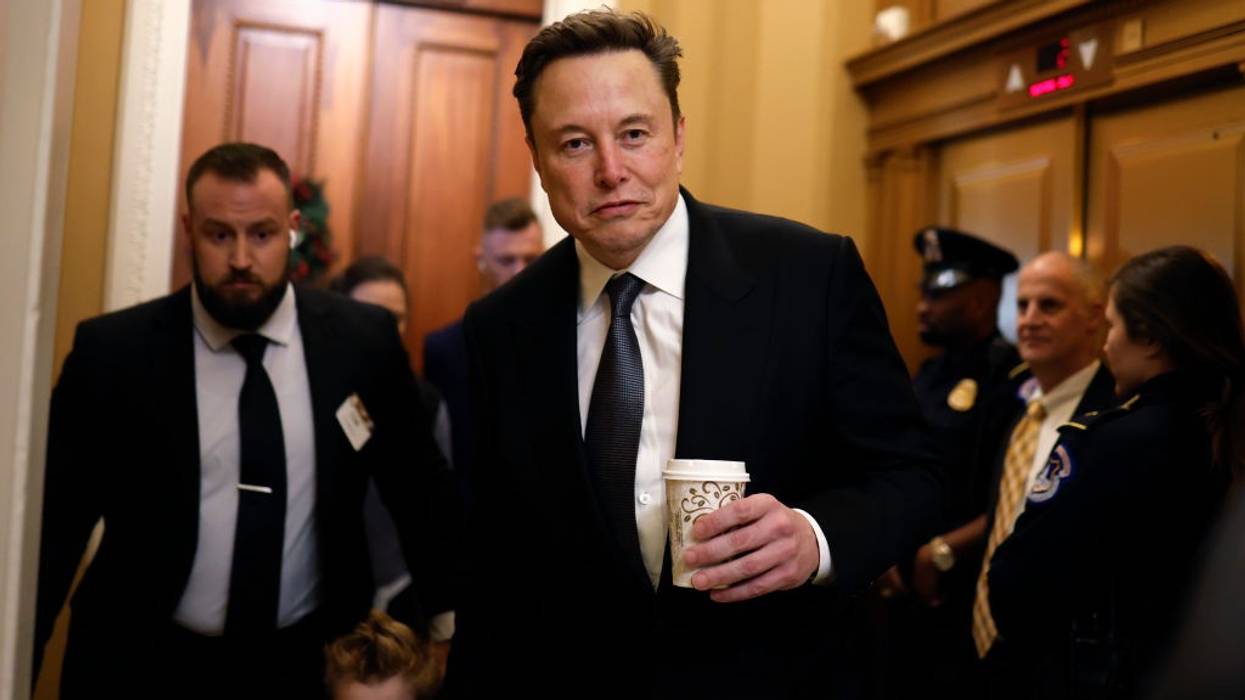
"Americans see right through Musk's scheme to pay for his own tax breaks by defunding Social Security, Medicaid, and Medicare," said one critic.
Mega-billionaire Elon Musk conceded Wednesday that he's not likely to achieve his fantastical goal of slashing $2 trillion from the federal budget, an admission that one critic said underscores the folly of the so-called Department of Government Efficiency.
"President-elect [Donald] Trump hasn't even taken office and Elon Musk is already admitting failure on DOGE's deeply unpopular and unrealistic agenda," Lindsay Owens, executive director of the Groundwork Collaborative, said in a statement. "Americans see right through Musk's scheme to pay for his own tax breaks by defunding Social Security, Medicaid, and Medicare."
Musk, the world's richest man and a close ally of Trump, said in an interview Wednesday that cutting $2 trillion in federal spending would be an "epic outcome" but described it as a "best-case" scenario. Economists have dismissed Musk's $2 trillion target as absurd, given that the entire annual discretionary budget was $1.6 trillion for Fiscal Year 2024.
Bobby Kogan, senior director of federal budget policy at the Center for American Progress, said Thursday that Musk's lower target of $1 trillion in cuts is also "too large," noting that "if you protect Social Security, Medicare, vets, and defense, it would mean cutting every other program by 45% on average." Republican lawmakers have floated similarly outlandish cuts.
Opponents of the Department of Government Efficiency—an advisory commission set to be led by Musk and fellow billionaire Vivek Ramaswamy—have warned it is a thinly veiled effort to target Social Security, Medicare, Medicaid, and other nondiscretionary programs, a concern amplified by recent comments from GOP supporters of the panel.
"I am a strong advocate of discussing this and reevaluating them, and I do believe, at the end of the day, there will be some cut," Rep. Greg Lopez (R-Colo.) said of Medicare and Social Security outside of the first meeting of the House DOGE Caucus.
Musk said ahead of the 2024 elections—on which he spent heavily to influence—that spending cuts he envisions would "necessarily" bring "some temporary hardship," but he hasn't specifically detailed which programs he would target.
"If the incoming president follows through on even a fraction of the $2 trillion in cuts that Musk and his allies have promised, the pain will be felt well beyond struggling small-town America," journalist Conor Lynch wrote for Truthdig earlier this week. "Veterans, especially, who voted overwhelmingly for the president-elect, could be in for a rude awakening."
"Shortly after being tapped to be Musk's co-chair at the so-called Department of Government Efficiency, Vivek Ramaswamy posted on X that the first order of business should be to eliminate all spending on programs with expired authorizations from Congress, which amounts to over half a trillion dollars," Lynch noted. "Users were quick to point out that if Trump followed Ramaswamy's advice, he would instantly defund healthcare for veterans, which is by far the largest spending program on that list."

"This is a common-sense set of policies," said Lindsay Owens of the Groundwork Collaborative. "We need a new ban at the federal level."
The executive director of a leading progressive think tank said in an appearance on CNBC Monday that Democratic nominee Kamala Harris is "exactly right" to target corporate price gouging as part of her broader economic agenda, countering a flurry of bad-faith attacks on the proposal from economists, pundits, Republican lawmakers, and GOP presidential nominee Donald Trump.
"This is not price controls," Lindsay Owens of the Groundwork Collaborative said of Harris' proposed crackdown on food and grocery corporations that exploit emergencies such as the coronavirus pandemic to jack up prices.
Owens stressed that some 40 U.S. states—including Republican-dominated Texas—have laws in place to prevent corporate price gouging in times of crisis and pointed out that Trump, who described Harris' plan as "full communist," used the Defense Production Act (DPA) in an effort to prevent the price gouging of medical supplies during the Covid-19 pandemic.
The American Bar Association noted that the Trump administration turned to the DPA "due to the lack of comprehensive federal legislation addressing price gouging."
Owens went on to observe that a federal jury recently found Cal-Maine Foods, Inc. and other major egg suppliers guilty of conspiring to limit egg supply in the U.S. in order to keep prices elevated. Cal-Maine came under fire last year for posting a massive profit surge that the company blamed on disruptions caused by a bird flu outbreak.
"So this is a common-sense set of policies," Owens said of Harris' proposed federal ban on price gouging in the grocery and food sectors. "We need a new ban at the federal level on the books."
Watch:
Wow go listen to @owenslindsay1 explain how prices are actually set on earth to this CNBC host, who naively believes that “supply and demand” exonerates large companies from any culpability in fueling inflation. (I hope the Harris campaign is paying attention to her!) pic.twitter.com/6sDdMhxeei
— Hal Singer (@HalSinger) August 19, 2024
Matt Stoller, director of research at the American Economic Liberties Project, applauded Owens for "citing actual evidence of price gouging by egg producers, including that they were culling their flocks during a shortage to hike prices."
"Imagine that, evidence!" Stoller wrote on social media.
Owens' remarks came after CNBC anchor Joe Kernen and Stephen Moore, an economic adviser to Trump and a senior visiting fellow at the Heritage Foundation—the far-right group spearheading Project 2025—spent several minutes attacking Harris' proposed federal price gouging ban as a violation of "Economics 101" and a "real assault on the whole free enterprise system."
Such assessments are characteristic of much of the response Harris' plan has received from talking heads, newspaper columnists and editorial boards, GOP lawmakers, and establishment economists. Sen. Tom Cotton (R-Ark.), whose home state has an anti-price-gouging law on the books, claimed Harris' plan would result in "bread lines."
And while The Washington Post's editorial board and other critics of Harris' plan simply asserted that "'price gouging' is not causing inflation," recent survey data shows that U.S. voters blame large corporations for "taking advantage of inflation" to drive up prices—a view bolstered by research.
A Groundwork report released earlier this year estimated that corporate profits drove more than half of U.S. inflation between April and September 2023.
On top of proposing the first-ever federal ban on price gouging in the food and grocery sectors, Harris is calling for "clear rules of the road to make clear that big corporations can't unfairly exploit consumers to run up excessive profits on food and groceries" as well as "new authority" for the Federal Trade Commission "and state attorneys general to investigate and impose strict new penalties on companies that break the rules."
"As president, I will go after the bad actors," Harris said during a Friday rally in Raleigh, North Carolina. "My plan will include new penalties for opportunistic companies that exploit crises and break the rules, and we will support smaller food businesses that are trying to play by the rules and get ahead."

"We can raise the corporate tax rate and disincentivize this corporate profiteering that's costing Americans so much," said Groundwork Collaborative executive director Lindsay Owens.
The U.S. Congress should hike taxes on corporations that have been jacking up prices across the American economy to pad their bottom lines, one expert said Monday in a video message marking national Tax Day.
"These days most Americans are thinking a lot more about high prices than they are about taxes. But the two things are actually connected," said Groundwork Collaborative executive director Lindsay Owens, pointing to a 2017 law that delivered massive tax breaks to corporations and the rich.
Portions of that measure, which former President Donald Trump signed into law, are set to expire at the end of next year, prompting fresh calls for reforms aimed at reversing its damaging impacts. Billionaires have collectively gotten more than $2 trillion richer since the law's enactment, and corporate tax dodging has become even more prevalent.
Owens noted that in addition to rewarding themselves and their shareholders, corporations that benefited from the 2017 Tax Cuts and Jobs Act (TCJA) "also raised your prices."
"Why? Because they got to keep more of the winnings," Owens explained. "It was a lot more fun to overcharge you when they didn't have to send as much of it back to the Treasury Department."
When lawmakers revisit the TCJA, Owens said, they should "tackle this corporate greed at the source." A recent Groundwork analysis found that corporate profits drove 53% of inflation in the U.S. between April and September of last year.
"We can raise the corporate tax rate and disincentivize this corporate profiteering that's costing Americans so much," she added.
What do high prices and tax policy have in common? More than you may think.
On Tax Day, our Executive Director @owenslindsay1 explains — WATCH: pic.twitter.com/lYvJtZZG6j
— Groundwork Collaborative (@Groundwork) April 15, 2024
Owens' remarks came days after Republicans on the House Ways and Means Committee made clear they intend to pursue more tax cuts for big businesses and the wealthy if they take full control of Congress and the White House next year.
During a recent fundraiser at the home of a billionaire investor, Trump—the GOP's presumptive 2024 presidential nominee—said he would work to extend the expiring TCJA provisions if reelected. Making the law's tax cuts for individuals permanent, as Trump and Republican lawmakers have proposed, would overwhelmingly benefit the rich.
"If Democrats take over both houses of Congress in 2024, and [President Joe] Biden gets a second term, they must reverse the regressive tilt of the Trump tax law—raising more revenue while advancing the interests of low- and moderate-income families across the country rather than those of the wealthy," former U.S. Labor Secretary Robert Reich wrote in a blog post on Monday.
"Tax cuts for people making over $400,000 should end on schedule in 2025," Reich added. "The Trump tax law's provisions primarily benefiting high-income households are costly and do not trickle down."
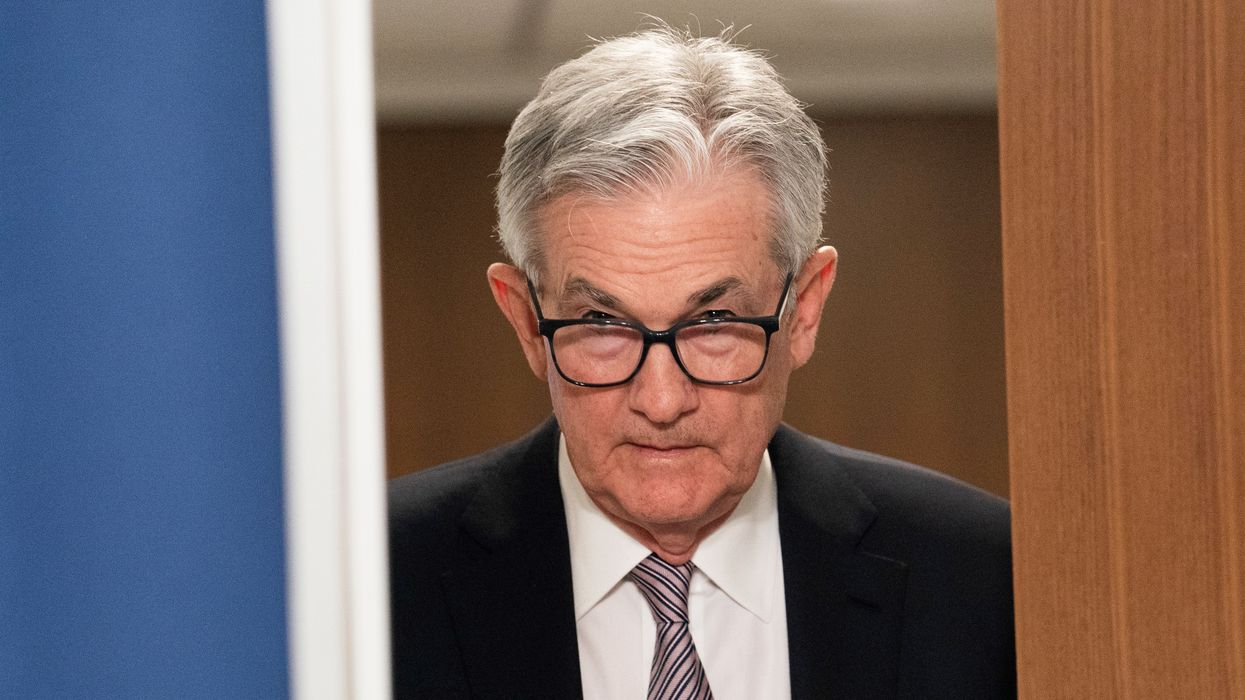
“The verdict is in: we don't have to choose between low prices and low unemployment. We can have both," said one economist.
Progressive economists on Wednesday welcomed newly released U.S. inflation data as further evidence that price increases can be brought under control without crushing the labor market and throwing millions out of work.
But they also warned that the still-strong job market could falter, with devastating consequences for workers, if the Federal Reserve keeps raising interest rates in the coming months.
"The verdict is in: We don't have to choose between low prices and low unemployment. We can have both," said the Groundwork Collaborative's Lindsay Owens after the Labor Department released new data showing that the Consumer Price Index (CPI) rose 4.9% in April compared with the previous year—a cooler figure than analysts expected.
"Today's inflation numbers show 10 straight months of falling inflation on the heels of a 53-year record low unemployment rate," Owens said, referring to last week's better-than-anticipated jobs report. "The only thing left to do now is to ensure that [Fed Chair Jerome] Powell doesn't screw it up with needless rate hikes that would accelerate instability in financial markets and jeopardize our strong labor market."
Heidi Shierholz, president of the Economic Policy Institute, called the new CPI data "good news for working people," noting that "inflation is nearly back to pre-recession rates, while the unemployment rate is at 50-year lows."
The new CPI figures came a week after the Federal Reserve imposed its 10th consecutive interest rate increase since March 2022, ignoring repeated warnings from outside experts, lawmakers, and even the Fed's own economists that the aggressive attempt to slow the economy and tamp down inflation risks a disastrous recession and mass job loss.
During a press conference last week, Powell left the door open to a pause of interest rate hikes at the Fed's June meeting but did not make a firm commitment, pledging only to "be driven by incoming data meeting by meeting."
Progressives advocates and experts, including Owens, have consistently argued for more than a year that interest rate increases—which target economic demand by raising borrowing costs—are the wrong response to inflation driven by many factors beyond the Fed's direct control, from pandemic-induced supply chain snags to corporate profiteering.
While prominent pundits have dismissed the notion that corporate profit-seeking during the pandemic helps explain persistently high inflation in the U.S. and across the globe, mainstream publications such as The Wall Street Journal have determined that progressive economists were right to emphasize big business pricing power as a significant culprit.
"There are signs that companies are doing more than covering their costs," the Journal reported last week. "According to economists at the [European Central Bank], businesses have been padding their profits. That, they said, was a bigger factor in fueling inflation during the second half of last year than rising wages were."
Major companies have used the windfalls from their price hikes to reward investors. The watchdog group Accountable.US noted in a report released Wednesday that Mondelez, which owns Belvita and Chips Ahoy!, "saw a shocking 142% increase in quarterly earnings after announcing price hikes, which empowered it to spend $928 million in dividends and stock buybacks for their wealthiest shareholders."
"It shouldn't come as a shock that Chair Powell’s actions have eroded public trust in the central bank."
A Gallup poll released Tuesday showed that just 36% of U.S. adults have either a "great deal" or a "fair amount" of confidence in Powell, a former private equity executive first nominated to the Fed chairmanship by former President Donald Trump.
President Joe Biden renominated Powell to the critical post in late 2021 despite outspoken opposition from some Democratic lawmakers, including Sen. Elizabeth Warren (D-Mass.).
"The 36% rating for Powell is the lowest Gallup has measured for him during his six years as Fed chair. It is also the lowest reading Gallup has had for any prior Fed chair," the polling organization noted in a summary of its findings.
Owens said in response to the survey that "it shouldn't come as a shock that Chair Powell's actions have eroded public trust in the central bank."
"Instead of fighting for a strong labor market and securing our banking system, Chair Powell has enacted 10 consecutive rate hikes and put us at risk of a recession," said Owens. "Americans want a Fed that is on their side, not the side of big banks."