

SUBSCRIBE TO OUR FREE NEWSLETTER
Daily news & progressive opinion—funded by the people, not the corporations—delivered straight to your inbox.
5
#000000
#FFFFFF
To donate by check, phone, or other method, see our More Ways to Give page.
Daily news & progressive opinion—funded by the people, not the corporations—delivered straight to your inbox.

"This militarized spending comes at the expense of federal programs—like public housing—that actually do prevent crime and improve health and education outcomes," said researcher Hanna Homestead.
Last week, when Trump federalized Washington, DC's police force and deployed the National Guard to occupy its streets, one of his main orders was to "end vagrancy" by destroying homeless encampments and arresting and forcibly relocating the people taking shelter there.
But according to an investigation published on Wednesday by Hanna Homestead of the National Priorities Project, in collaboration with The Intercept, deploying the National Guard and "getting rid of the slums" is costing far more than it would cost to simply provide housing to every homeless person in the city.
Governors from six US states have sent troops to Washington to help Trump's effort, swelling the ranks to nearly 2,100 who will soon be on patrol.
According to previous reporting, National Guard deployments cost the US government $530 per guard member each day. Using that figure, Homestead estimated that it would cost just over $1.1 million.
She added that "the number of troops will likely continue to grow. And with no deadline for the DC deployment, those costs could add up for months or even years."
According to the most recent data from the Department of Housing and Urban Development (HUD), there are about 5,600 people experiencing either sheltered and unsheltered homelessness in DC on a given night. Operating an affordable housing unit for each one of them, the data shows, costs about $45.44 per person, per day, on average in DC.
Providing affordable housing to every homeless person in DC would cost an estimated $255,166, which is 4.3 times less than the cost of Trump's military deployment.
"Taxpayers like you and me bear the cost of this cruel power grab," Homestead said. "This militarized spending comes at the expense of federal programs—like public housing—that actually do prevent crime and improve health and education outcomes."
Last week, White House Press Secretary Karoline Leavitt told reporters that over 70 encampments had been cleared since Trump's order to federalize the police. She also said that over 600 people had been arrested, though it was not specified how many of them were homeless.
Trump has sought to conflate homelessness with criminality, suggesting that the nation's capital had been "overtaken by violent gangs and bloodthirsty criminals, roving mobs of wild youth, drugged-out maniacs, and homeless people."
While his solution has been a show of military force against people with nowhere to go, a large body of research suggests that the approach of providing "Housing First"—meaning a stable place to stay with no preconditions for sobriety or treatment—reduces crime.
A 2021 study from UCLA found that providing homeless people with targeted housing assistance reduced the probability of committing a crime by 80%.
"Arresting or ticketing people for sleeping outside makes homelessness worse, wastes taxpayer money, and simply does not work," said Jesse Rabinowitz of the National Homelessness Law Center. "The solution to homelessness is housing and supports, not handcuffs and jails."
But in addition to a crackdown on the homeless, the Trump administration is also pushing to eliminate funds for public housing. The White House's proposed budget for fiscal year 2026 slashes funding for HUD's Continuum of Care program, which provided cities with funding for initiatives to house the homeless.
According to the National Alliance to End Homelessness, the proposal would effectively end funding of permanent supportive housing for 170,000 residents and potentially increase the number of homeless people in the US by 36%.
"Arresting people for no reason other than the fact that they have no home is inhumane and unjust," said Amber W. Harding, executive director of the Washington Legal Clinic for the Homeless. "It is particularly cruel to do so knowing that federal and local housing programs have been slashed and that DC does not have enough shelter beds."
"Fines, arrests, and encampment evictions make homelessness worse, further traumatize our homeless neighbors while disconnecting them from community and support," said Dana White, Director of Advocacy at Miriam's Kitchen, a DC-based homeless services organization. "If policing resolved homelessness, we wouldn't have homelessness here in DC or anywhere else in this country."
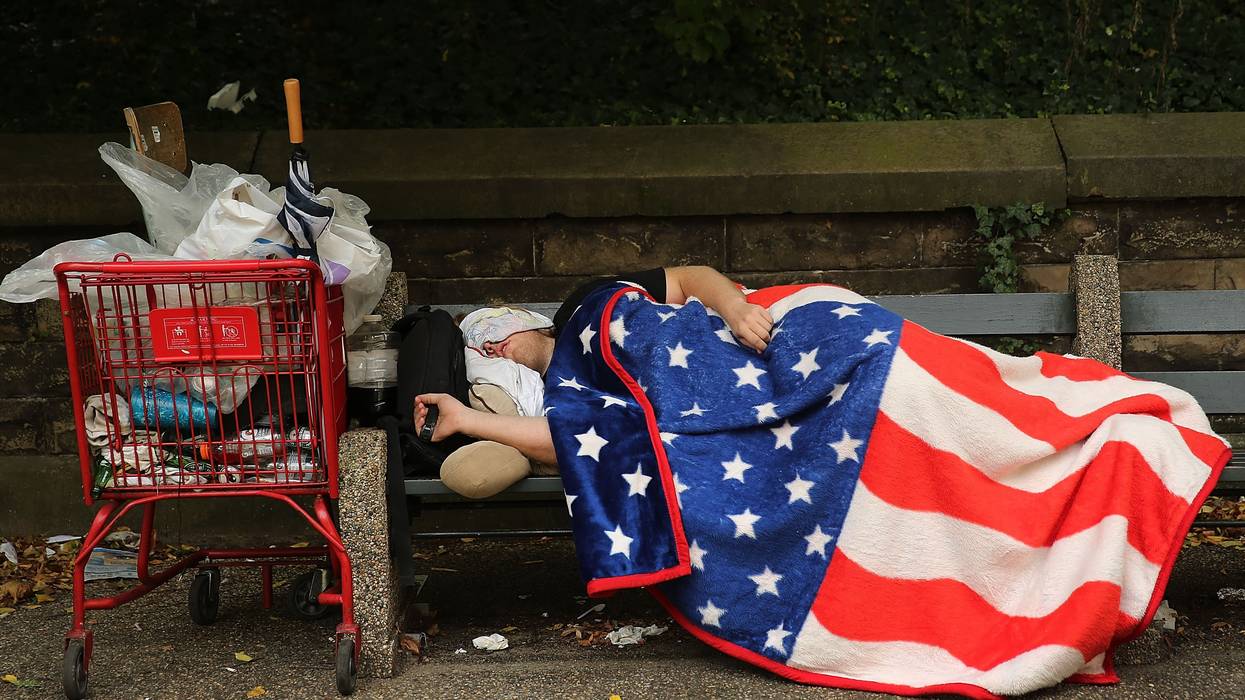
The Trump administration’s actions will mean that fewer people who struggle to keep a roof over their heads will get the help they need.
A record number of people are struggling to afford housing, and leaders from across the political spectrum have called for action.
But the Trump Administration, including Elon Musk and the “Department of Government Efficiency” (DOGE) has taken one step after another that will undermine the most effective policies to help people afford housing, including cutting Housing and Urban Development (HUD) staff, withholding urgently needed funds, and making harmful policy changes.
In 2023, 24 million people lived in low-income households that paid over half their income in rent, forcing them to shift money away from other basic needs and often leaving them one setback away from eviction. In January 2024, 770,000 people across the country—an all-time high—couldn’t afford housing at all and were forced to live in shelters, cars, tents, or other unsafe and unstable circumstances.
Rather than squandering resources on costly tax cuts for the wealthy, policymakers should be expanding effective programs toward the goals of ending homelessness and ensuring everyone has a stable, affordable home.
Elon Musk and DOGE have reportedly called for discharging at least half of HUD staff overall, sometimes using tactics that may be illegal. Specifically, the proposals would cut:
Staff in these offices play a critical role in ensuring that tens of billions of dollars of badly needed federal funds are distributed promptly and used efficiently. Layoffs on the scale that DOGE is seeking will lead to delays and waste, resulting in people and communities around the country getting less help to address urgent needs.
In addition, the administration has interrupted the normal flow of HUD funds that are used to address housing needs, again sometimes through means that are likely illegal. HUD attempted in January to withhold funds as part of a broader federal funding freeze, which multiple federal courts have ordered the administration to temporarily halt while they review the action. HUD does not appear to have intentionally withheld funds for vouchers and other rental assistance so far, but the uncertainty created by administration policies has led to payment delays that could cause some landlords to stop accepting vouchers, making it harder for voucher holders to find homes they can rent.
Meanwhile, HUD has yet to deliver any of the $3.6 billion in homelessness assistance funding awarded January 17, which communities are counting on to provide rental assistance, shelter, outreach, and other services to people experiencing homelessness. While HUD notified at least some grantees that they will begin to receive funds soon, the uncertainty has disrupted community planning efforts and the final awards may include abrupt policy changes that could complicate implementation. The administration has also canceled contracts for organizations that help protect people from housing discrimination and provide technical assistance that plays a crucial role in effectively implementing HUD programs—even though the administration provided no evidence that the organizations were failing to perform as required.
Finally, HUD officials have proposed or discussed a series of policy changes that would make it harder for many people in need to receive housing assistance. HUD has said it will publish a rule rolling back non-discrimination protections that guarantee access to safe shelter and housing assistance for transgender and nonbinary people, who experience disproportionately high rates of homelessness. And it has already published a rule weakening fair housing requirements.
HUD officials have also called for evicting or cutting off rental assistance for people who don’t meet burdensome work requirements, a step that would increase administrative costs and expose many children, people with serious health conditions or caretaking responsibilities, and others to severe hardship.
Rather than squandering resources on costly tax cuts for the wealthy, policymakers should be expanding effective programs toward the goals of ending homelessness and ensuring everyone has a stable, affordable home. And they should make targeted reforms to address shortcomings of those programs to make them even more effective at addressing pressing housing needs. The administration’s actions will have the opposite effect, making it harder for people to afford housing and exit homelessness.
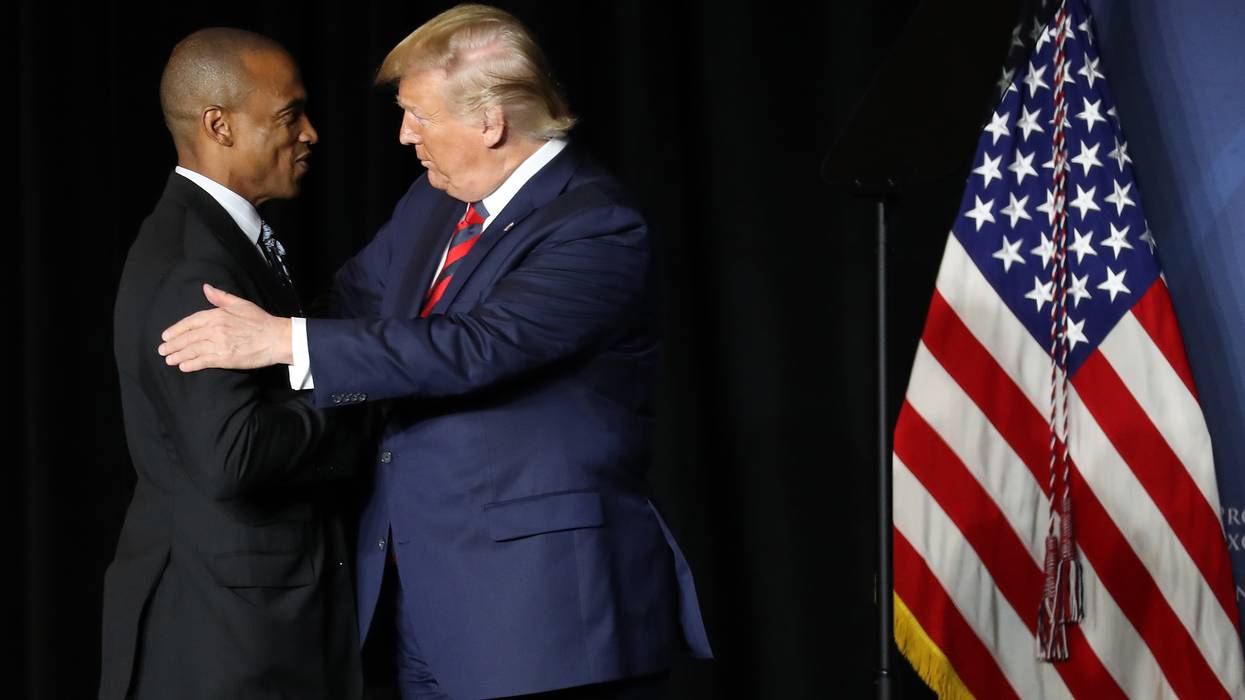
A Trump-Turner housing agenda appears destined to continue the worst aspects of our nation’s approach to affordable housing: a relentless diversion to the already-wealthy of resources supposedly designated for the housing needs of the poor.
Donald Trump has nominated former Texas state representative Scott Turner as his secretary of Housing and Urban Development, the $70 billion federal agency that administers rental assistance and public housing programs, enforces fair housing laws, and provides community development grants to local communities.
Other Trump cabinet nominees, like potential Health and Human Services Secretary Robert F. Kennedy Jr., have attracted attention for the ways they may shift the traditional priorities of the agencies they would lead. Turner has flown under the radar.
Perhaps that is because dramatic changes to HUD would need congressional approval, which was denied when Trump tried to slash the department during his first administration. Or maybe it is because, in many respects, Turner does not seem inclined to significantly alter U.S. housing policies.
As for likely HUD Secretary Turner, he is most associated with yet another housing giveaway to the rich.
That is not a good thing.
A Trump-Turner housing agenda appears destined to continue the worst aspects of our nation’s approach to affordable housing: a relentless diversion to the already-wealthy of resources supposedly designated for the housing needs of the poor.
This reverse Robin Hood approach to U.S. housing began in the 1970’s, when the Nixon administration and Congress began switching our affordable housing investment away from public housing to subsidizing for-profit landlords. Now, we fund wealthy landlords, often corporate landlords, via direct payments such as the Housing Choice Voucher program and Project-Based Section 8 program, in return for the for-profit landlords temporarily housing low-income tenants. 558F Low-Income Housing Tax Credits are designed to provide a tax shelter for wealthy investors.
This profit-soaked combination costs taxpayers six times more each year than public housing does. But public housing is far more efficient, for the simple reason that it bypasses private profits. Public housing is also hugely successful in providing high-quality, low-cost housing when there is adequate investment in maintenance and upkeep.
That is why other nations, who have far less homelessness, evictions, and housing-insecure people than we do, prioritize public housing. They divert little if any government support to for-profit landlords. And it is why U.S. for-profit landlords have been pushing for generations to block U.S. public housing from the funds it needs to ensure safety and keep up maintenance. The resulting deterioration of U.S. public housing undercuts competition for private landlords and creates a narrative justifying the delivery of housing dollars to the private sector.
But those privatized programs are deeply flawed. The Low-Income Housing Tax Credit often leads to rents higher than poor families can afford. The program known as LIHTC has been characterized by housing researchers as “a better-than-nothing gimmick that helps the poor by rewarding the rich.” Even that characterization is too generous for some legislators, who call LIHTC “legalized theft of government assets.”
Similarly, project-based Section 8 housing directs government dollars to for-profit landlords as payment for low-income tenants’ rent. But, like LIHTC, the program allows those landlords to convert their buildings to market-rate rentals after they use the government subsidies to pay off their debt on the properties. By contrast, public housing provides affordable housing in perpetuity.
There is even less lasting impact coming from the largest low-income housing program in the country, Housing Choice Vouchers. We provide a full $30 billion per year in voucher payments to landlords, often large corporate landlords, but those landlords can end their involvement at the end of each tenant’s lease, leaving the low-income renter without housing. It is another low-risk high-yield arrangement for the wealthy and raw deal for the poor: little wonder that the Project 2025 blueprint drafted by Trump supporters champions vouchers even as it slams other HUD programs.
As for likely HUD Secretary Turner, he is most associated with yet another housing giveaway to the rich. During Trump’s first administration, Turner served as executive director of the White House Opportunity and Revitalization Council, which focused on promoting opportunity zones, a program created by Trump’s 2017 Tax Cuts and Jobs Act.
The program rewards the wealthy’s investment in economically distressed areas—opportunity zones—with huge tax breaks. But investigations by ProPublica and Congress show that the definition of what areas count as opportunity zones is far too broad, and the guidelines for who benefits from the investments are far too loose. As a result, money invested in expensive hotels, high-rent apartment buildings, and even luxury condominiums as a superyacht marina escapes taxation. Politically connected billionaires lobby for the land where they develop to be designated an opportunity zone, then rake in the benefits.
The Brookings Institution says opportunity zones operate as a subsidy for gentrification. “The direct tax benefits of opportunity zones will flow overwhelmingly to wealthy investors,” the Center on Budget and Policy Priorities says. “But the tax break might not do much to help low-income communities, and it could even harm some current residents of such communities.”
So, despite the relative quiet around Scott Turner’s nomination, we know some important things about him. We know that he champions opportunity zones as an addition to the already abundant tax benefits the U.S. showers on landlords and real estate investors. And we know that he is a fierce critic of anti-poverty programs, as he has made multiple public statements about government assistance being harmful and even disastrous.
But we also know that the likely next HUD secretary is concerned about that alleged harm only when assistance is provided to the poor. The wealthy can count on Trump and Turner to keep the pipeline of government housing money wide open and flowing their way.

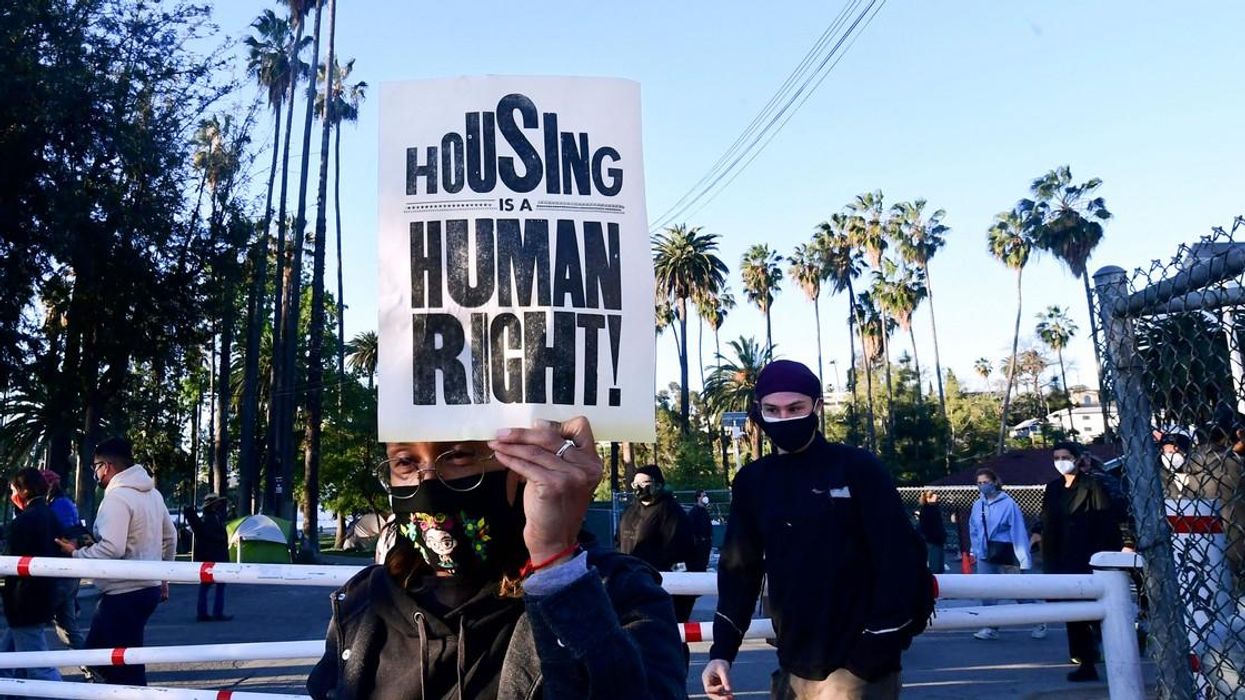
"Because we believe that housing is a human right, like food or healthcare, we believe that more Americans deserve the option of social housing."
"It's becoming nearly impossible for working-class people to buy and keep a roof over their heads. Congress must respond with a plan that matches the scale of this crisis."
That's according to U.S. Rep. Alexandria Ocasio-Cortez (D-N.Y.) and Sen. Tina Smith (D-Minn.), who on Wednesday introduced the Homes Act in a New York Times opinion piece and an event with supporters of the proposal on Capitol Hill.
"Because we believe that housing is a human right, like food or healthcare, we believe that more Americans deserve the option of social housing," the pair wrote in the Times. "That's why we're introducing the Homes Act, a plan to establish a new, federally backed development authority to finance and build homes in big cities and small towns across America. These homes would be built to last by union workers and then turned over to entities that agree to manage them for permanent affordability: public and tribal housing authorities, cooperatives, tenant unions, community land trusts, nonprofits, and local governments."
"Our housing development authority wouldn't be focused on maximizing profit or returns to shareholders," the congresswomen continued. "Rent would be capped at 25% of a household's adjusted annual gross income. Homes would be set aside for lower-income families in mixed-income buildings and communities. And every home would be built to modern, efficient standards, which would cut residents' utility costs. Renters wouldn't have to worry about the prospect of a big corporation buying up the building and evicting everyone. Some could even come together to purchase their buildings outright."
In addition to establishing the new authority under the Department of Housing and Urban Development, the bill would repeal the Faircloth Amendment, which prevents the use of federal money for building new public homes. Under the new plan, construction would be funded by congressional spending and Treasury-backed loans.
"In New York, the average worker would need to clock in 104 hours a week to afford a one-bedroom apartment," Ocasio-Cortez said in a statement. "This country is staring down a full-blown housing crisis. A crisis where affordable housing is slipping out of reach."
"This bill would create more than 500,000 jobs and create 1.25 million affordable housing units," she noted, declaring that "everyone deserves a place to call home."
It's not just New York City where lower-wage people are struggling to keep a roof over their heads. Smith pointed out that "more than 90% of workers cannot afford a modest one-bedroom apartment. Americans across the country are bidding for homes against the wealthiest financial firms and they're losing."
"We have a severe housing crisis," she stressed. "The private market cannot meet this moment on its own. The Homes Act meets peoples' needs through social housing."
As Jacobin's Samuel Stein wrote Wednesday:
The housing system sketched out in the Homes Act looks nothing like what we are used to in the United States. Though we have an important social housing legacy, we have never normalized decommodification as the cornerstone of our housing system.
Introducing legislation like the Homes Act does not accomplish that goal in and of itself, but it offers us a concrete depiction of what that transition could look like. It also highlights the severe disjuncture between what our housing and urban planning system does right now—promote private profits in real estate while minimizing the public provision of housing—and what we need it to do.
The goal of legislation like this is not to pass it immediately, since no sober person would expect the current U.S. Congress to line up in support. Nor is the goal to supplant the messy work of organizing with the schematic and technical language of legislation. Instead, the point is to inspire organizing: to show that the status quo is not the only way our housing could operate, to give tenant organizations a concrete and affirmative vision to build toward, and to offer socialist candidates for office a platform to run on.
The bill to create a social housing authority—introduced less than two months out from the U.S. general election—is backed by the Center for Popular Democracy (CPD) and its affiliates from across the country.
"Working families are being forced to make sacrifices in order to pay the skyrocketing cost of keeping a roof over their heads, while corporate landlords and Wall Street executives are getting even richer," said CPD co-executive directors Analilia Mejia and DaMareo Cooper. "This legislation provides a clear alternative to for-profit housing. It creates a framework to make community-owned, permanently affordable green social housing a reality."
Advocates from both sponsors' states also spoke out in favor of the bill.
"In Greater Minnesota, counties and towns don't have staff to build affordable housing projects, financing is another huge issue. We don’t have as many philanthropic organizations or financial institutions as urban areas," explained Noah Hobbs, policy director at One Roof Community Housing in Duluth. "This bill is the first real investment we've had in years. We're incredibly proud to endorse this legislation."
Aisha Hernandez, secretary of the Coalition to Save Affordable Housing at Co-op City in the Bronx, said that "cooperative housing gave me the ability to co-own my home. A few years ago, my neighbors and I came together to ensure our housing stays affordable, that our management is working in the interest of homeowners and prevent any corporate takeover of Co-op City."
"We are co-owners, not at the whims of corporate landlords," Hernandez added. "I want my fellow Americans to have the same access to housing that co-op has afforded me. This bill has the ability to do that. So let's get it done."
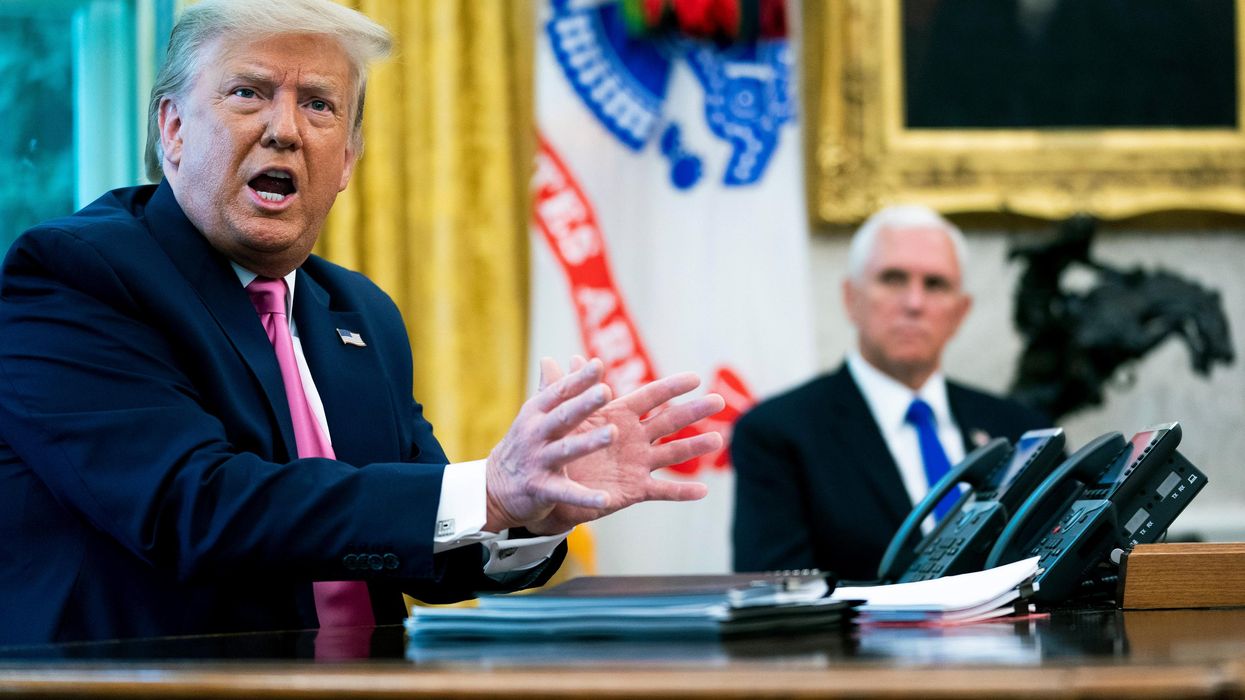
The group's leader said the media should "cover the Biden vs. Trump election as a comparison between how each president administered the immensely important executive branch."
The Revolving Door Project on Monday released a set of reports on corruption and mismanagement in executive agencies during the Trump presidency, calling on the media to focus on presumptive Republican nominee Donald Trump's poor governing record as he campaigns to retake the Oval Office.
The new reports, called "retrospective memos," show that Trump's executive branch was rife with cronyism and corporate influence from 2017 until 2021. RDP, a watchdog group focused on the executive branch, released the reports as a way to fight "Trumpnesia" and focus the political discussion on the governance records of Trump and President Joe Biden, a Democrat seeking reelection.
"Donald Trump's most important legacy as president wasn't what he said, or even what bills he signed, but how he turned the federal government into a favor machine to benefit his family and cronies," Jeff Hauser, RDP's executive director, said in a statement. "The media should not focus on the aesthetics of this week's presidential debate but rather cover the Biden vs. Trump election as a comparison between how each president administered the immensely important executive branch."
"It's important to revisit how poorly he ran the executive branch his first time round."
RDP issued eight memos, covering disaster management, the environment, financial regulation, housing, immigration, labor, education, and transportation.
Each provides evidence of a Trump administration that was "utterly indifferent to the public interest," as Timi Iwayemi, RDP's research director, said in the statement.
In many cases, Trump appointees were hostile to the original aims of the agencies. they served.
Mick Mulvaney, Trump's choice to lead the Consumer Financial Protection Bureau, tried to roll back rules limiting predatory payday lending—a practice that "preys on the working poor," the financial regulation memo says.
Mulvaney—who's now suggesting a "revenge-a-thon" against Trump's foes—also appointed political cronies and failed to undertake the enforcement actions against companies that were the CFPB's raison d'être. A 2019 feature in The New York Times Magazine was titled, "Mick Mulvaney's Master Class in Destroying a Bureaucracy From Within."
Trump's National Labor Relations Board was led by Peter Robb, a management-side lawyer who was the Reagan administration's lead attorney on litigation dealing with the air traffic controllers' strike of 1981, in which the federal government fired about 11,000 workers and banned them from being rehired. Like Trump's Department of Labor, which was ultimately run by the son of former Supreme Court Justice Antonin Scalia, the NLRB under Robb was pro-management—and reportedly dysfunctional.
Other federal agencies were hardly more committed to serving the public interest in the late 2010s.
"Trump's Interior Department advanced the interests of extractivist industry on public lands while refusing to account for how its actions would worsen climate change," according to RDP's environment memo. "The Trump administration auctioned off over 10 million acres of land and water to oil and gas drilling, including by drastically reducing the size of national monuments like Bears Ears in Utah, a sacred homeland to five tribal nations, in order to open them up to development."
The Department of Housing and Urban Development, run by former presidential candidate Ben Carson, was plagued by "handouts to friends and family," a series of "deadly budget cut proposals," and a "war on fair housing," according to the RDP's housing memo.
Trump's disaster management choices were particularly consequential. The Federal Emergency Management Agency " horrifically" mismanaged the response to two consecutive hurricanes that hit Puerto Rico in 2017, which got minimal—and very delayed—relief compared to Texas communities that were hit by a hurricane during that period.
RDP's catalog of Trump administration failures is designed to clarify the stakes of the 2024 election.
"The series serves as a reminder to the public that the president's primary responsibility is to direct the vast apparatus known as the executive branch of the federal government," RDP said. "Sadly, former president Donald Trump either neglected this responsibility or wielded it in favor of corporations throughout his four years in office."
Iwayemi said "Even as current conversations wisely focus on Project 2025 and Trump's promise to leverage executive power to harm political enemies, it's important to revisit how poorly he ran the executive branch his first time round as a cure to the public's apparent Trumpnesia."
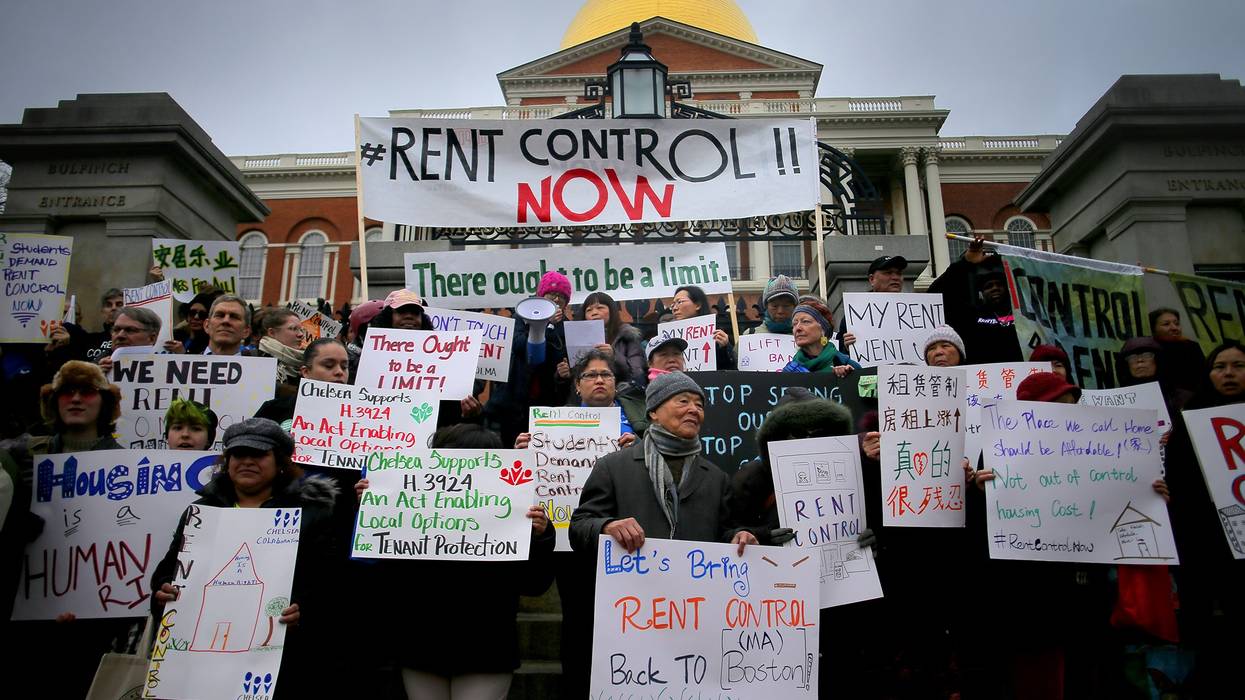
The new rent cap heralds a shift in tenant organizing in the U.S. from building power in local struggles to influencing federal policy.
For the past several years, tenant unions from disparate locations like Kansas City, Missouri; Bozeman, Montana; and Louisville, Kentucky have been canvassing door-to-door, lobbying at the White House and Congress, and convening loud, passionate demonstrations in their home communities and at the national headquarters of corporate landlords. They have earned admiring profiles in The New York Times and Time Magazine and have been featured on National Public Radio. What they have not done is win a tangible federal victory for renters.
After tenants demanded cancellation of rent and mortgage obligations in response to the Covid-19 pandemic, the government instead issued $46 billion in Emergency Rental Assistance to landlords with no strings attached, filling the coffers of serial evictors and institutional slumlords with notorious health and safety records. After tenants called for renter rights to be enshrined in federal law, the Biden administration’s early 2023 Blueprint for a Renters Bill of Rights was so lacking in actual policy to accompany its lofty language that the nation’s landlord lobbyists gleefully claimed victory.
“Over the past several decades, the federal government has not only abdicated its responsibility tenants, it has actually become the financial enabler of some of the worst landlord business practices,” says Tara Raghuveer of the National Tenant Union Federation.
But, as of last month, that may be changing.
That is when the Biden administration announced it would impose a cap on rent increases on Low-Income Housing Tax Credit (LIHTC) housing. The 10% annual increase limit is far higher than the 3% cap that tenant unions have been pushing for, and the limitation to the LIHTC program leaves out a great deal of other federally financed and subsidized housing. But the new rule could apply to over a million households. And perhaps more importantly, it shows for the first time that the tenant union movement can make its power felt on the national stage.
“For many of these landlords, rent-gouging, evictions, and poor conditions are part of the business model, and what makes their business model work is the favorable terms they receive from our federal government.”
“It’s a huge win, and it wouldn’t have happened if not for tenant unions beating the drum for the past several years demanding that every dollar of federal financing and subsidies be conditioned on tenant protections,” Raghuveer says. “The federal government is finally recognizing its responsibility to protect tenants from price-gouging.”
It seems the landlord lobby agrees. The same organizations that cheered the words-only Biden Blueprint a year ago have joined together to bitterly criticize the new rent cap.
“You’re discouraging the creation of supply,” the CEO of the National Housing Conference complained to The Washington Post.
Landlords were particularly disturbed by the Biden administration explicitly dismissing their increasingly discredited argument that rent limits decrease the supply of affordable housing.
“We’ve seen no evidence that this limitation—even those much lower than 10%—have limited the supply of new affordable housing nationally,” said Department of Housing and Urban Development spokesman Zachary Nosanchuk.
The new rent cap also heralds a shift in tenant organizing in the U.S. Although tenant unions have traditionally built their power through local struggles, laws passed by state legislatures in places like Missouri and Kentucky put ceilings on local housing reforms. At the same time, federal financing plays an enormous role in the housing industry. In 2022, the Federal Housing Finance Agency, or FHFA, which manages both Fannie Mae and Freddie Mac, purchased $142 billion in mortgages issued by banks to multifamily landlords, thus assuming the risk of nonpayment. So tenant unions argue that this federal government largesse should come with conditions, specifically limits on rent hikes, obligations to keep the housing clean and safe, and promises not to evict tenants or not renew leases except for good cause. These types of tenant protections on federally backed housing could apply to over 12 million rental units, nearly one in three renting households in the country.
Winning these conditions and ensuring that the new rent cap is fully enforced are the next steps for the tenant union movement looking to build on the momentum of this win.
“For many of these landlords, rent-gouging, evictions, and poor conditions are part of the business model, and what makes their business model work is the favorable terms they receive from our federal government,” Raghuveer says.
“The rent is too damn high, and the government is in business with our landlords.”
Policy makers, elected officials, funders, and activists need to update that definition to represent the much larger number of people who are actually experiencing homelessness.
November is National Homelessness Awareness Month, and it has been over 14 years since the federal government last updated its definition of homelessness. It is time to change that to reflect how people experience homelessness today, and to secure more funding to end housing instability.
An individual is considered homeless if they lack a fixed, adequate nighttime residence (including those staying in a homeless shelter), lose their residence without another place to go, or are fleeing domestic violence.
Millions of people cycle in and out of homelessness each year. And that’s just when counting by the narrow federal definition. The actual number is likely far higher.
Counting temporary doubled-up housing situations as at-risk of homelessness makes less sense when individuals are experiencing literal homelessness every other night.
As a 2016 study highlighted, many people who lose their stable housing make the difficult decision to move into others’ homes. Examples of this include a parent and adult child living together, couchsurfing with friends, or two families living together. In 2019, 3.7 million people lived in households like this, most of whom are viewed by the government as at-risk of homelessness.
But staying temporarily with a friend or family member is not permanent stable housing. People living in doubled-up households represent a wide variety of situations, and those who need help to avoid losing what little stability they have shouldn’t be denied it because they don’t match a stereotypical view of being homeless.
There is precedent for this. Since 2009, unaccompanied youth between 18 and 25, as well as families with children, have been considered under a more extensive definition of homelessness by the U.S. Dept. of Housing and Urban Development (HUD). Youth and families with children are considered homeless if they have not lived independently in permanent housing for a long time, frequently move, and anticipate this will continue. The definition for these groups includes doubled-up households. In the 2022-2023 school year, 61% of homeless children in New York City were living in doubled-up households.
Many individuals older than 25 and without children meet this criteria. People who experience federally defined homelessness sometimes temporarily stay with friends or family. For many of them, however, these arrangements are usually not a long-term solution, and are not an indication that they don’t need services.
Another 2022 study shows even these short stays can threaten an individuals’ priority for homeless services, such as shelters and housing, and jeopardize their ability to permanently exit homelessness.
Denying access to assistance perpetuates racial disparities in homelessness services.
A 2013 report for HUD found that Black, Hispanic, Asian, Indigenous, and other non-white households were more likely to be doubled-up than white households. Doubled-up households were concentrated in cities and other urban areas across the United States. Latinx people experiencing homelessness are more likely to live in doubled-up housing conditions to avoid living in a shelter or on the street.
To be sure, those in the at-risk category are already eligible for homeless prevention services through HUD’s Emergency Solutions Grant such as permanent rental subsidies, eviction prevention, and rapid rehousing programs. Rapid rehousing programs offer short-term services like finding rental housing, covering move-in costs, rent, deposits, utilities, and negotiating with landlords.
Homelessness prevention, however, is a small piece of the overall federal response to homelessness, with the least amount of funding and the lowest priority. Counting temporary doubled-up housing situations as at-risk of homelessness makes less sense when individuals are experiencing literal homelessness every other night.
Permanent rental vouchers keep people housed. Yet families can spend up to six years on the waitlist for the Housing Choice Voucher, a permanent rental subsidy, especially if they are only at-risk of homelessness.
Policy makers, elected officials, funders, and activists need to update the definition of homelessness to represent the much larger number of people who are actually experiencing homelessness. It is vital to dedicate more resources to those who are staying in precarious housing situations that can leave them homeless on the streets or in shelters at any time.

There is no developed country in the world besides the United States where the very ill, mothers who have just given birth, elderly people who worked all their lives, and veterans who fought for their country are unhoused.
Yesterday, I read a story about a family of four—granted two were very young—so excited about all the money they were saving living in a tiny house. Today, the story was about a young man who had no cash, so he has tricked out a semitruck interior. Last week it was a renovated shipping container from Lowe's, the week before, it was a fully fixed-up ancient school bus. Some of these projects look like they might be OK places to live, especially if you live in a climate where you can be outdoors much of the time—a very quickly shrinking portion of the world.
What is going on? This is the wealthiest country in the history of the world, as Noam Chomsky reminds us. I am 69 years old. The people in my generation, and even more the generation older than I, were able to purchase homes at prices that haven't been seen for decades, at sweet mortgage interest rates that made it possible in many cases for one parent to work and the family to prosper. This mostly applies to white Americans, as the GI Bill (for the WWII generation) mainly helped almost all returning white GI's become homeowners.
When I was starting to look for my own housing, amazing deals on land and fixer-uppers, as well as reasonably priced starter homes, existed and in fact were still abundant in some cities and states. Even for Black home buyers, who had been blocked by redlining (policies created by banks to keep the suburbs white), 40 years ago homes were more affordable and many Black families took advantage of relatively low prices to purchase homes.
What appears to be happening is that, like so many other long term failures, the housing crisis can be laid at the dead, unmourned feet of Ronald Reagan.
Today, there are no housing bargains. In fact, in many states and cities, there is no housing at all for anyone except the most affluent. With no real incentives from the government to build workforce housing, developers build to make the largest profit possible—and the large profits are in luxury housing. In my state, Vermont, not only is the great housing deal a thing of the past, but there are also no rentals available. Some friends recently applied for a rental in my small town, Brattleboro, and when the landlord told them he would rent to them, he informed them that he had received 119 applications, and the place was on the market for about a week, if that.
What appears to be happening is that, like so many other long term failures, the housing crisis can be laid at the dead, unmourned feet of Ronald Reagan. Before 1980, the federal government actually used to build housing. During Reagan's transformational eight years as president, he essentially disposed of the idea that building housing is an obligation of the government. Reagan sponsored a completely inadequate supposed substitute for building the housing desperately needed by a fast growing country. The population has grown by a full third from 1980 until today—the federal government has not built any housing for the 105 MILLION more people who now populate the country.
The Reagan plan, which has been an abject failure, was to give tax breaks to developers to build a small number of market-rate apartments in their upscale projects. Reagan said in 1981 that every church and synagogue should take in 10 homeless families and voila! no more homeless. He also turned his back on a scandal in which U.S. Department of Housing and Urban Development money was given to Republican consultants to confer on how to stop building housing altogether instead of the intended use: building and repairing low-income housing. It seems to some that the housing crisis has happened quickly, but I would argue that it has been four decades in the making.
In every other developed country, there is social housing for those in need. In Vienna, Austria, the social housing is so desirable that 78% are renters, many by choice. The rentals are mixed income, and are a major social network in the city. How social housing is viewed in Europe varies by country, but there is nothing like the problems poor people face in the United States. There is no developed country in the world besides the United States where the very ill, mothers who have just given birth, elderly people who worked all their lives, and veterans who fought for their country are unhoused.
We will continue to see the youth, and the not so young, of America creatively housing themselves—whether it is the shed set up in Mom and Dad's back yard, the ubiquitous garage and basement apartments for the more fortunate, old, used RVs, or possibly a regrowth of house shares, communes, and other methods of keeping a roof over one's head. What is highly unlikely is that we will see a time in the near future where the current younger generation is heading to the local savings and loan for a mortgage.