SUBSCRIBE TO OUR FREE NEWSLETTER
Daily news & progressive opinion—funded by the people, not the corporations—delivered straight to your inbox.
5
#000000
#FFFFFF
To donate by check, phone, or other method, see our More Ways to Give page.
Daily news & progressive opinion—funded by the people, not the corporations—delivered straight to your inbox.
"Courts across the country keep rejecting Big Oil's attempts to escape justice for their climate deception," said one advocate.
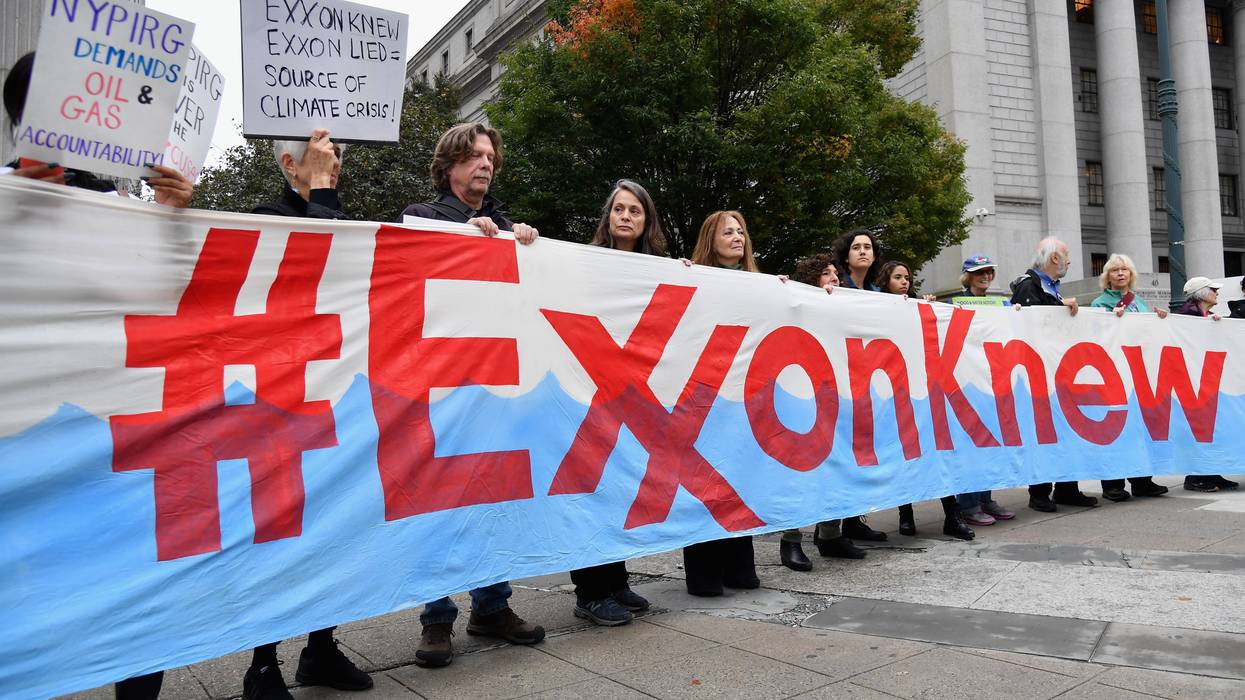
Advocates celebrated Monday after a Boulder, Colorado judge rejected attempts by ExxonMobil and Suncor Energy subsidiaries to dismiss a landmark lawsuit that seeks damages for the harms the fossil fuel companies have inflicted on the climate and local communities.
The lawsuit, brought in 2018 by the city and county of Boulder, argues that mounting climate costs "should be shared by the Suncor and Exxon defendants because they knowingly and substantially contributed to the climate crisis by producing, promoting, and selling a substantial portion of the fossil fuels that are causing and exacerbating climate change, while concealing and misrepresenting the dangers associated with their intended use."
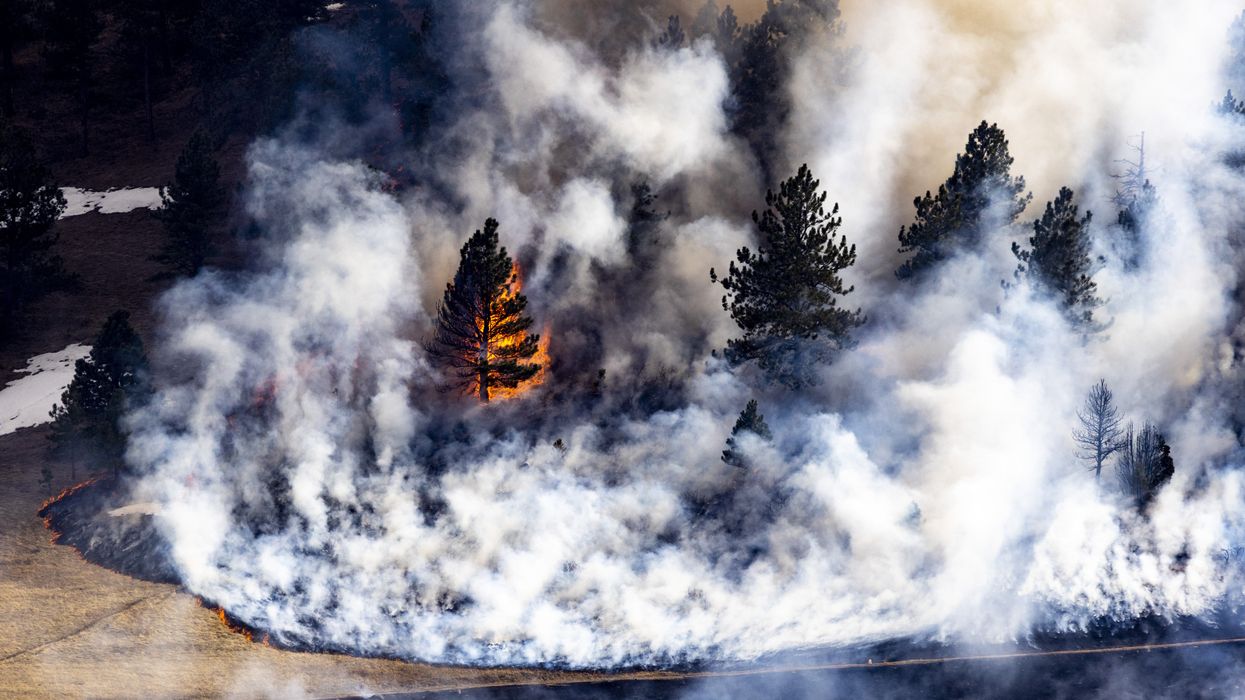
Colorado Public Radio noted Monday that the lawsuit "cites the 2010 Fourmile Canyon fire and 2013 floods as examples of climate disasters in Boulder County."
"The case was filed before the Marshall fire swept through the area in the winter of 2021, incinerating more than 1,000 homes and causing more than $2 billion in damage in what is now considered the most destructive wildfire in state history," the outlet observed.
The legal challenge seeks relief under a Colorado consumer protection law and other local statutes, accusing the corporations of public and private nuisance, trespass, unjust enrichment, and civil conspiracy.
In an 81-page decision, Boulder County District Court Judge Robert Gunning rejected the Exxon and Suncor subsidiaries' claim that the state court lacked jurisdiction and concluded that "the public nuisance, private nuisance, trespass, conspiracy, and unjust enrichment claims may proceed against ExxonMobil, Suncor Energy, and Suncor Sales."
Ashley Stolzmann, Boulder County's commissioner, said Monday that the decision "reaffirms our stance: We are suffering from the impacts and heavy costs of the climate crisis, right here, right now."
"Today, we take a meaningful step towards accountability and ensuring our voices and hardships are acknowledged," Stolzmann added.
"The people of Boulder are now one crucial step closer to having their day in court to hold Exxon and Suncor accountable for their climate lies and the massive damages they've caused."
Monday's ruling represents the latest blow Exxon and Suncor have suffered during the yearslong legal battle. Last year, the U.S. Supreme Court rejected the companies' attempt to move the case to federal court.
"Since the beginning, defendants have been arguing against a case we did not plead," said Sean Powers, a senior attorney with EarthRights International, which is representing the plaintiffs.
"Plaintiffs are not trying to litigate a solution to the climate crisis, they are seeking redress for harms they have suffered and will continue to suffer," Powers continued. "The only conduct at issue is defendants' own: what they knew, when they knew it, and what they did with that knowledge."
Boulder is among the dozens of local governments that have sued oil and gas companies in recent years, aiming to hold the industry accountable for severely damaging the climate and deceiving the public about the dangers of its extractive business model.
Exxon has known for decades about the link between burning fossil fuels and planetary warming and has worked to cast doubt on the science as it continues to drill in the face of worsening climate extremes across the globe.
"The people of Boulder are now one crucial step closer to having their day in court to hold Exxon and Suncor accountable for their climate lies and the massive damages they've caused," Richard Wiles, president of the Center for Climate Integrity, said Monday. "Courts across the country keep rejecting Big Oil's attempts to escape justice for their climate deception, and sooner or later these companies will have to explain the evidence of their misconduct to a jury."
"There are plans in place to protect the European Netherlands against sea-level rise and other consequences of the climate crisis, but for Bonaire this is not yet the case," one plaintiff said.
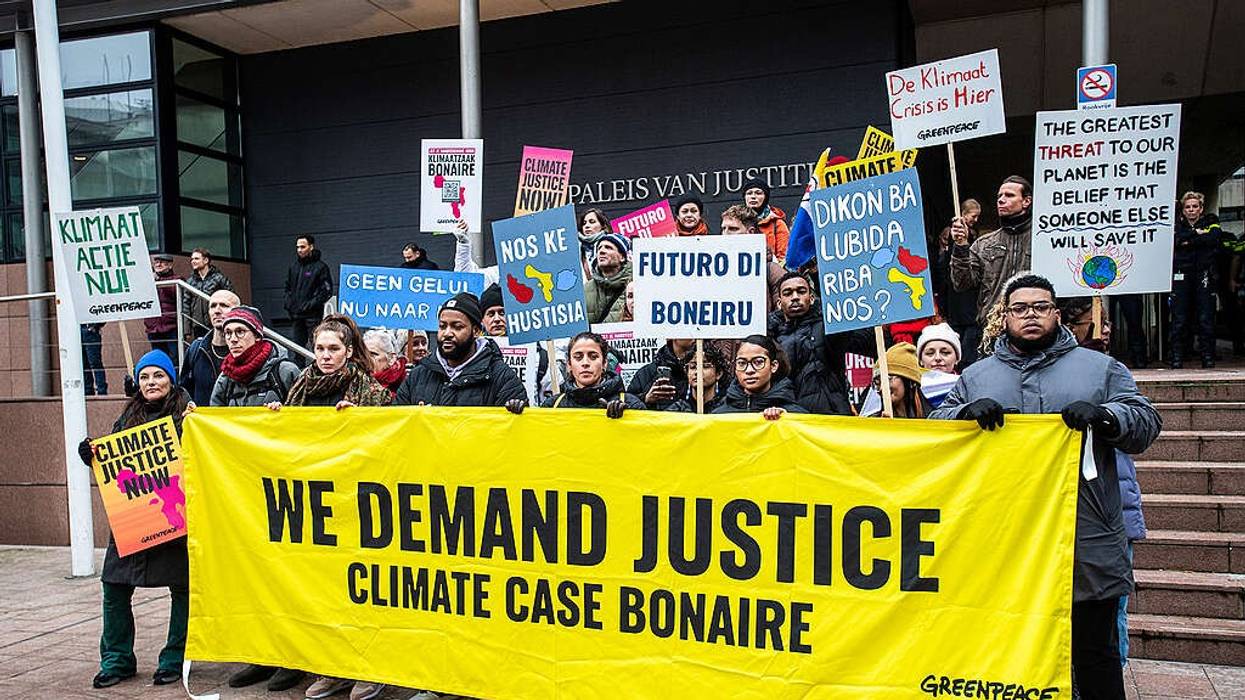
Eight residents of the Caribbean island of Bonaire sued the government of the Netherlands Thursday for not doing enough to protect the Dutch municipality from the climate emergency.
In the lawsuit, filed alongside Greenpeace Netherlands, the islanders demand that the Netherlands work with Bonaire to make a plan to protect it from the impacts of the climate crisis and that it do its "fair share" to limit global temperature rise to 1.5°C by reaching net-zero by 2040 instead of 2050.
"The time for talking is over, we have to act," plaintiff Kjelld Kroon, a 28-year-old program creator, said in a statement. "I don't want to have to wait any longer, and that's why I'm taking action today."
As a low-lying Caribbean island, Bonaire is especially vulnerable to the climate crisis. A study commissioned by Greenpeace found that sea-level rise could cause permanent flooding on parts of the island by 2050 and submerge one-fifth of it by 2100. Rising temperatures would also devastate the coral reefs that the island relies on for tourism, fishing, and protection from storms; damage infrastructure and cultural heritage; and harm public health through more frequent heatwaves and vector-born diseases.
"Climate change is happening right now on Bonaire. It's getting increasingly hot and the rain showers are more frequent and more extreme. These downpours are causing flooding, inundating many houses. Including my mother's house," Kroon said.
Despite these risks, the plaintiffs say that the Netherlands has violated their human rights by not doing enough to protect Bonaire from the impact of rising temperatures caused primarily by the burning of fossil fuels. The Netherlands has maintained a presence on Bonaire for nearly 400 years, and the island became a special municipality in 2010.
"It shouldn't matter whether you live on Bonaire, on Ameland, or in Valkenburg. It's the Dutch government's duty to protect all of us from the consequences of the climate crisis."
"The Caribbean Netherlands has been forgotten for too long," plaintiff Danique Martis, a 25-year-old social worker, said in a statement. "There are plans in place to protect the European Netherlands against sea-level rise and other consequences of the climate crisis, but for Bonaire this is not yet the case. It saddens me to see how, despite knowing their responsibility, the Dutch government has chosen to push our right to safety aside. For this reason, we are going to the court, so they have no choice but to act."
The plaintiffs sent a pre-trial letter to the Dutch government in May of 2023 to give it a chance to resolve their concerns without a trial, The Guardian reported.
However, the Netherlands responded that its net-zero timeline was sufficient. Plaintiffs also were not satisfied with meetings concerning adaptations.
"It shouldn't matter whether you live on Bonaire, on Ameland, or in Valkenburg. It's the Dutch government's duty to protect all of us from the consequences of the climate crisis," Andy Palmen, executive director of Greenpeace Netherland, said in a statement.
The lawsuit was delivered to the district court in the Hague Thursday as part of a protest march from the prime minister's office, according to Greenpeace. At the same time, plaintiffs held a press conference in the capital of Bonaire.
"The government has a duty to reduce global warming as much as possible, and right now it's failing to do so," Palmen said. "We demand more protective measures for Bonaire, and we want the Dutch government to speed up the reduction of carbon emissions from the whole of the Netherlands. This is in the interest of all of us."
This historic legal challenge seeks to make the defendants pay for the damage they have caused—and to stop the lying and obstruction.
“Humanity has opened the gates to hell.” That grim warning from U.N. Secretary-General António Guterres at New York’s Climate Ambition Summit came after the hottest summer on record as fires, floods and other climate-driven disasters have wreaked havoc around the world.
As an environmental lawyer working on the climate crisis for two decades, I’ve found it excruciating to watch the brutal toll mount. And I’m appalled to see the fossil fuel industry continuing to lie about climate science, block progress, and profit from its deadly, planet-heating product.
For years, the industry has blocked new legislation, slowed and watered down lifesaving agency rulemaking, and promoted false solutions like carbon capture and sequestration to actually prolong fossil fuel use.
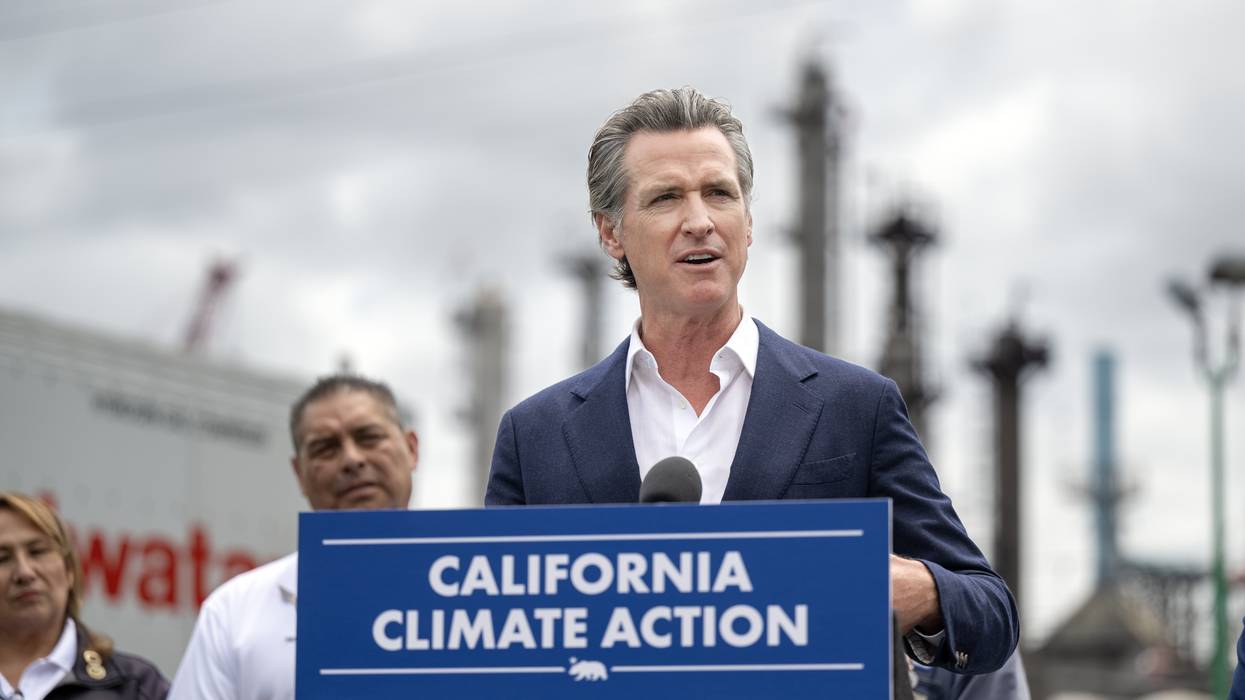
But I’m heartened by the lawsuit just filed by California Gov. Gavin Newsom and Attorney General Rob Bonta against five of the world’s largest oil companies and the American Petroleum Institute. Their game-changing legal action could supercharge California’s efforts to fight the climate crisis.
In the suit, filed on behalf of the people of California, the state challenges Big Oil for its decades-long deception campaigns. The industry’s disinformation was designed to prolong the fossil fuel era—and that’s exactly what it did.
California’s legal complaint makes the critical point that the defendants are still lying today, including through more subtly misleading advertising—greenwashing—that lulls people into thinking their dangerous products are somehow “low emissions” or environmentally friendly. The lawsuit seeks to make the defendants pay for the damage they have caused—and to stop the lying and obstruction.
Holding Big Oil accountable for the lies it has told and the damage it has done is incredibly important: Justice must be done. But this case also has the potential to boost all of California’s efforts on climate change by disrupting the fossil fuel industry’s successful, insidious campaigns to block progress.
For years, the industry has blocked new legislation, slowed and watered down lifesaving agency rulemaking, and promoted false solutions like carbon capture and sequestration to actually prolong fossil fuel use. California’s lawsuit, with its detailed catalogue of Big Oil’s misdeeds, makes it substantially harder for oil and gas companies to successfully deploy these tactics, even while the case is still pending.
The clarity with which the governor and attorney general are speaking about the case and the fossil fuel industry is also significant. In New York, Gov. Newsom said repeatedly, “The climate crisis is a fossil fuel crisis,” receiving well-deserved applause at the otherwise staid Climate Ambition Summit. This is important, because many people do not know that more than 85% of U.S. greenhouse pollution comes from oil, gas, and coal.
The governor’s case is also significant because California is the first jurisdiction with substantial fossil fuel production to bring a climate damages suit.
While California was once one of the world’s largest oil producers, production has been in decline for decades. Production, drilling, and permitting of new wells are all now dropping dramatically.
Indeed, this case builds upon historic steps Gov. Newsom has already taken to protect Californians from Big Oil, including banning fracking. He has also championed a statewide health-and-safety buffer law to protect people from toxic oil drilling near homes and schools.
The oil industry has delayed this lifesaving law by spending millions to qualify a referendum to overturn it. In November 2024, California voters will have the chance to vote to uphold the law and protect our kids from toxic oil industry pollution.
Newsom has also worked with the California legislature to pass a first-of-its kind price-gouging penalty law that established a new independent watchdog—the Division of Petroleum Market Oversight—to monitor the oil industry and prevent gouging. And with his executive order requiring that all new passenger vehicles sold in California be zero emissions by no later than 2035, Newsom is speeding the transition off oil altogether.
Other leaders should follow Gov. Newsom in holding Big Oil accountable—especially Pres. Joe Biden and his Justice Department. California’s leadership shows how we can thwart the oil industry’s horrific plans to disrupt climate action—and head off the hellish consequences.
Fossil fuel industry-driven opposition to climate action is growing fiercer as the climate accountability movement backs ExxonMobil and other major oil and gas corporations into a corner.
There have been several dramatic advances in climate corporate accountability this month. Tens of thousands of people marched in New York City and around the world, California filed a groundbreaking lawsuit and passed new corporate climate disclosure rules, and the Wall Street Journal published new revelations about ExxonMobil’s climate disinformation efforts.
Here are the key things you need to know about California’s advances and what’s new in the internal ExxonMobil documents.
California’s climate accountability lawsuit is groundbreaking in several ways:
The largest state by population, California has joined more than 40 cities, counties, and states across the United States and its territories that are suing the fossil fuel industry over climate damages or deception, or both. About one-quarter of US and US territory residents now live in a jurisdiction that has filed a fossil fuel industry accountability lawsuit.
With these innovative ingredients, California’s climate accountability lawsuit represents a pivotal development in the global climate movement, adding a powerful and long-anticipated voice to the growing chorus of jurisdictions across the United States and its territories that are holding the fossil fuel industry accountable for its role in climate damages and deception.
A recent Wall Street Journal investigation of internal ExxonMobil documents sheds light on the corporation’s ongoing strategy to cast doubt on climate science—even after former Chair and CEO Rex Tillerson supposedly acknowledged the risks of climate change and the corporation claimed to stop funding groups that promote climate denial. (For an overview of the Journal investigation, check out this article in The Guardian. For more about Tillerson’s real track record on climate change, see two HuffPost columns by my colleague Elliott Negin here and here.)
The documents the Journal obtained show that in 2012, ExxonMobil sought to gather information about and exert influence over the UN Intergovernmental Panel on Climate Change (IPCC). It is not clear exactly what influence ExxonMobil had over the IPCC at that time. However, a decade later, in its sixth assessment report, the IPCC itself acknowledged that disinformation about climate science had sowed uncertainty about climate science and delayed action.
Tillerson, meanwhile, dismissed the Paris climate agreement goal of keeping global temperature increase to well below 2 degrees Celsius above preindustrial levels (and striving to limit it to 1.5 degrees C) as “something magical.” Worse still, just months before the agreement was signed, Tillerson asked, “Who is to say 2.5 is not good enough?”
Climate scientists, that’s who.
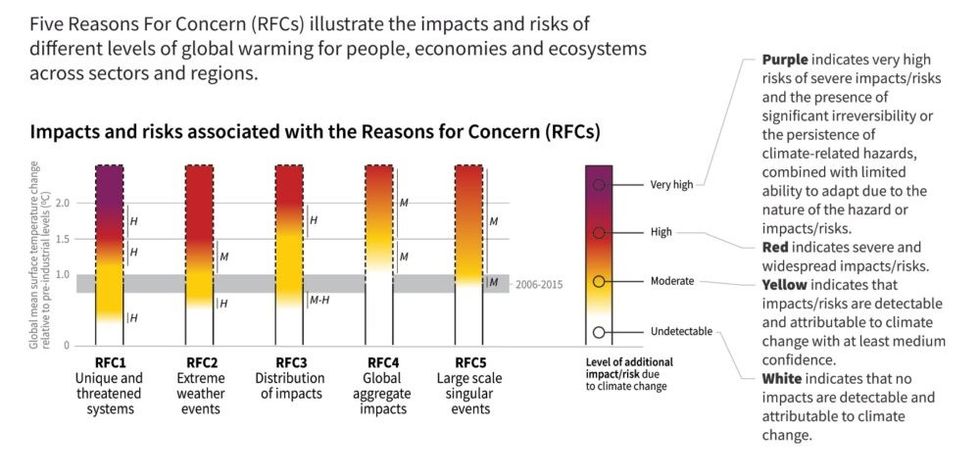
Woods is apparently following the playbook drafted by Exxon’s former head of corporate research in 1988: “1. Protect the value of our resources (oil, gas, coal). 2. Preserve Exxon’s business options.”
The Wall Street Journal revelations demonstrate how essential it is for internal corporate documents to be made public so the public can fully comprehend what major oil and gas companies knew about the dangers their products pose to the global climate, as well as the devastating harms that have resulted from their lies, obstruction, and delay tactics.
In July 2023, more than 20 members of Congress sent two letters to the US Department of Justice (DOJ) calling for investigation and legal action against the fossil fuel industry over climate deception. These letters reprised previous congressional calls for DOJ action in 2015 and 2016, which relied heavily on UCS research.
Mandatory and standardized corporate disclosures are necessary to prevent companies from employing greenwashing, paltering (using technically true statements to create an overall false impression), and data cherry-picking to misrepresent corporate actions or plans. Such disclosures also would help investors evaluate a corporation’s exposure to climate-related financial risk, which is why regulators in the European Union, United Kingdom, and Canada are beginning to demand them.
This month, the California Legislature passed two bills to strengthen corporate climate disclosures:
UCS joined with Environment California, the Natural Resources Defense Council, and Sierra Club California to urge Gov. Newsom to sign the bills, highlighting the opportunity for California to lead the country in corporate transparency and ensure the public has the information it needs to hold companies accountable for their role in the climate crisis and mitigate further harm.
Newsom just announced that he plans to sign the legislation. As it did with its vehicle emissions standards and its 100 percent renewable energy standard, California can set the pace for national and global action.
California’s laws should also motivate the US Securities and Exchange Commission (SEC) to finalize its climate disclosure rule, which it proposed in March 2022. As my colleague Laura Peterson has explained, disclosure of Scope 3 emissions is key to understanding the big picture of a company’s climate impact. Not surprisingly, the fossil fuel industry is behind efforts to weaken the SEC rule as part of its overall attack on environmental, social and governance (ESG) investing.
Fossil fuel industry-driven opposition to climate action is growing fiercer as the climate accountability movement backs ExxonMobil and other major oil and gas corporations into a corner. Climate litigation is a key tool for corporate climate accountability, and science is essential to support efforts to hold fossil fuel corporations accountable for their role in the climate crisis. (That’s probably why ExxonMobil and its codefendants are so worked up about a meeting UCS and the Climate Accountability Institute convened in La Jolla, California, in 2012, to explore lessons from tobacco control that could be applied to secure accountability for climate change damages.)
California’s lawsuit, like other cases filed in the United States in recent years, depends on the physical science of climate attribution and social science research on climate disinformation. You can learn more about how to engage at the intersection of science, climate litigation and the law in the Research on the Record toolkit an upcoming webinar series offered by UCS’s Science Hub for Climate Litigation.
Besides conducting invaluable research, scientists are taking to the streets, and nearly 400 of them signed a letter to President Biden endorsing the demands of the March to End Fossil Fuels ahead of this week’s Climate Ambition Summit hosted by UN Secretary-General António Guterres, who has called for phasing out fossil fuels to avoid climate catastrophe. Now it’s time for scientists to provide their evidence in courtrooms in California, across the country, and around the world.
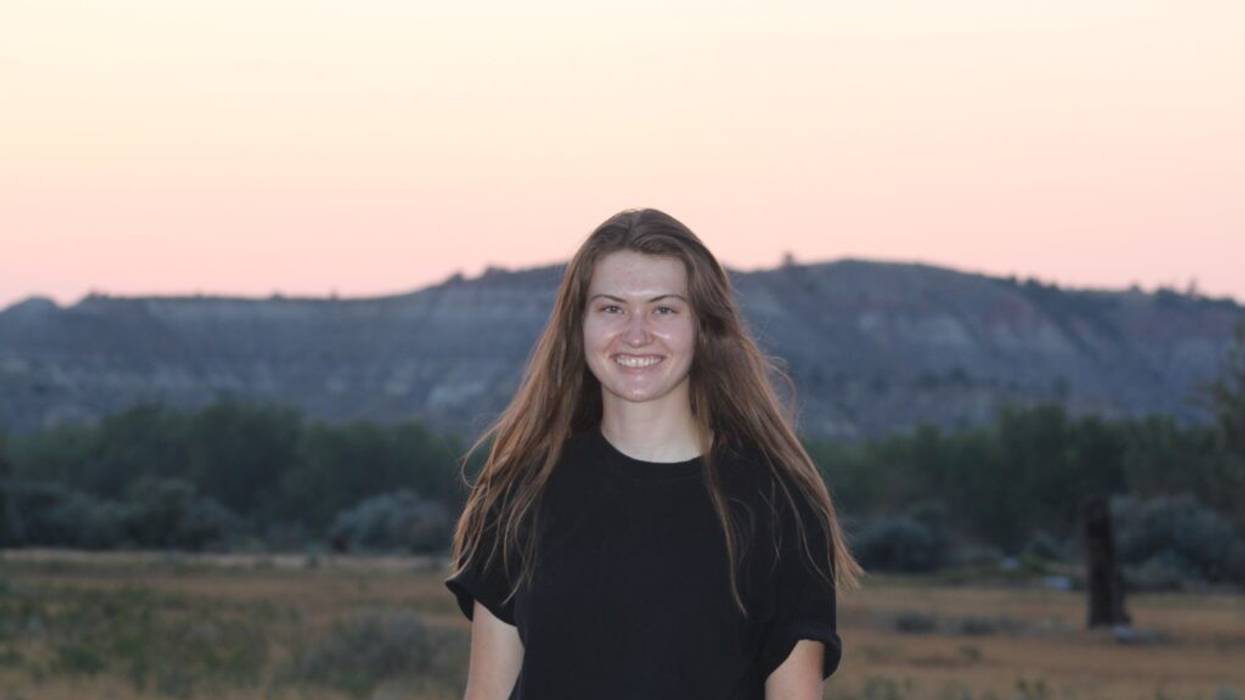
Today’s youth are taking on a lot, but that’s because there’s a lot to take on.
Today I am in Helena to stand in solidarity with the youth plaintiffs of Held v. Montana as they work with their legal team to make the case that the state has violated their constitutional right to a clean and healthful environment. I’m an environmental attorney, but this time, I’m headed to court in a different capacity — as a mom.
None of the plaintiffs in Held v. Montana are my biological children, but they feel like my kids. I’ve known one of the plaintiffs since she was 5 years old, and now she’s borrowing my clothes for depositions. I’ve watched these kids grow up and shared their fear and heartbreak as they’ve seen floods and wildfires wreak havoc on their communities and the beautiful state we call home. But I’ve also been deeply inspired by the way these youth plaintiffs and their peers are turning their lived experience into meaningful action.
Back in January, I traveled to Helena with two students from the Park High Green Initiative for the climate advocacy day at the Capitol. They jumped at a last-minute opportunity to speak, despite the fact that they had tests to study for, and that one of them was celebrating their 16th birthday. They wrote their speeches in the car and delivered them a couple of hours later, pleading with Montana’s leaders to take action on climate. The newly 16-year-old asked: “How many more birthdays will I have where the air is breathable?”
While many of their peers are preparing for school dances and soccer games, they’re preparing to go to court.
I don’t remember what I was doing on my birthday at age 16, but it wasn’t that. Then again, I didn’t turn 16 in a world when 500-year weather events seemed to make headlines a couple times per year. Today’s youth are taking on a lot, but that’s because there’s a lot to take on.
For decades, youth have stepped up to lead in areas where adults have failed to lead. Leaders like Xiuhtezcatl Martinez of Earth Guardians and Greta Thunburg have been outspoken activists from an early age. The Held v. Montana plaintiffs aren’t the first youth to sue their state–they are represented by Our Children’s Trust, a non-profit law firm that has sued state governments on behalf of youth in all 50 states–but this suit does stand apart as the first of their cases to go to trial.
Watching these youth march boldly up the ivory tower of our judicial system, it’s easy to forget that they started this process as kids, tweens, and teens. While many of their peers are preparing for school dances and soccer games, they’re preparing to go to court. They’re sitting in conference rooms, surrounded by attorneys, aware that this process is likely to last years, if not decades. They aren’t doing it for fun, or for media attention, or to fill in a college resume. They’re doing this because they see this as the fight of (and for) their lifetime and they don’t want to be haunted by the question: “How many more birthdays will I have until the air is unbreathable?”
It isn’t fair that they should have to shoulder this burden that they inherited by no fault of their own.
As a mother, I feel an uncomfortable mix of pride, anger, and fear as I support these youth through the legal process. It isn’t fair that they should have to shoulder this burden that they inherited by no fault of their own. My maternal instinct tells me to protect these kids and shelter them from the grueling legal process. But, every time I talk with them, I’m reminded how unfair it would be to stand in their way of speaking truth to power. These kids don’t want to idly wait for the adults in their lives to take action. It’s our job as parents to put opportunities in front of our kids and give them the balance of space and support they need to make their own decisions.
As I prepare to lend my full support to these youth, I’m calling on parents across the nation to summon their support for the courageous youth in their community confronting the climate crisis. The Held v Montana trial is a not-to-miss historic first. It’s why I’ll be there along with a large cheering section of family, friends, students from our Park High Green Initiative and other supporters. When you hear about the crowds gathered on the courthouse steps to cheer on the plaintiffs, you’ll know why.
This op-ed originally appeared in the Billings Gazette.
The French bank BNP Paribas "continues to write new blank checks to the largest fossil fuel companies without setting any conditions for an oil-free, gas-free ecological transition," said one campaigner.
A trio of advocacy groups on Thursday launched the world's first climate lawsuit against a commercial bank, alleging that the Paris-based firm BNP Paribas is violating its legal obligations by continuing to finance planet-wrecking oil and gas development on a massive scale.
BNP Paribas, Europe's largest funder of fossil fuel expansion projects, "continues to write new blank checks to the largest fossil fuel companies without setting any conditions for an oil-free, gas-free ecological transition," said Alexandre Poidatz, an advocacy officer at Oxfam France, which joined Friends of the Earth France and Notre Affaire à Tous in filing the unprecedented lawsuit.
"With this lawsuit," Poidatz continued, "we would like to reiterate that our organizations are firmly resolved to see the judge reach a verdict that forces the bank to honor its promises."
The groups specifically accuse BNP Paribas of violating France's duty of vigilance law, which—according to a summary from the European Coalition for Corporate Justice—"establishes a legally binding obligation for parent companies to identify and prevent adverse human rights and environmental impacts resulting from their own activities, from activities of companies they control, and from activities of their subcontractors and suppliers, with whom they have an established commercial relationship."
In October, the three advocacy organizations formally warned BNP Paribas that they would take the company to court if it failed to bring its business practices into line with French law within three months.
The groups said Thursday that BNP Paribas has dismissed their call to immediately stop financing new fossil fuel projects, which are imperiling hopes of limiting planetary warming.
"BNP's reaction indicates that Europe's leading funder of fossil fuel development is rejecting our organizations' urgent request to stop supporting new oil and gas projects, even though this request is based on science and was recently reiterated by the United Nations secretary-general," the groups said, pointing to a press release the company issued last month.
Justine Ripoll, a campaigner with Notre Affaire à Tous, said in a statement Thursday that "the French duty of vigilance law imposes an obligation on multinationals in all sectors to take action to protect human rights and the environment, and to do so efficiently."
"The financial sector has a huge responsibility in our collective ability to comply with the Paris agreement," said Ripoll. "This first climate litigation against a commercial bank is undoubtedly the first of many around the world."
As Reuters reported Thursday, the climate coalition is modeling its legal action after a prominent 2021 case in which a Dutch court ordered Shell to slash its carbon emissions by 45% by 2030. Shell is appealing the decision.
BNP Paribas was Shell's top banker between 2016 and 2021, according to a recent report, providing the oil giant with $8 billion in fossil fuel financing during that period.
"BNP Paribas was the biggest banker of offshore oil and gas over the six-year period since the Paris agreement," the report found.