

SUBSCRIBE TO OUR FREE NEWSLETTER
Daily news & progressive opinion—funded by the people, not the corporations—delivered straight to your inbox.
5
#000000
#FFFFFF
To donate by check, phone, or other method, see our More Ways to Give page.
Daily news & progressive opinion—funded by the people, not the corporations—delivered straight to your inbox.
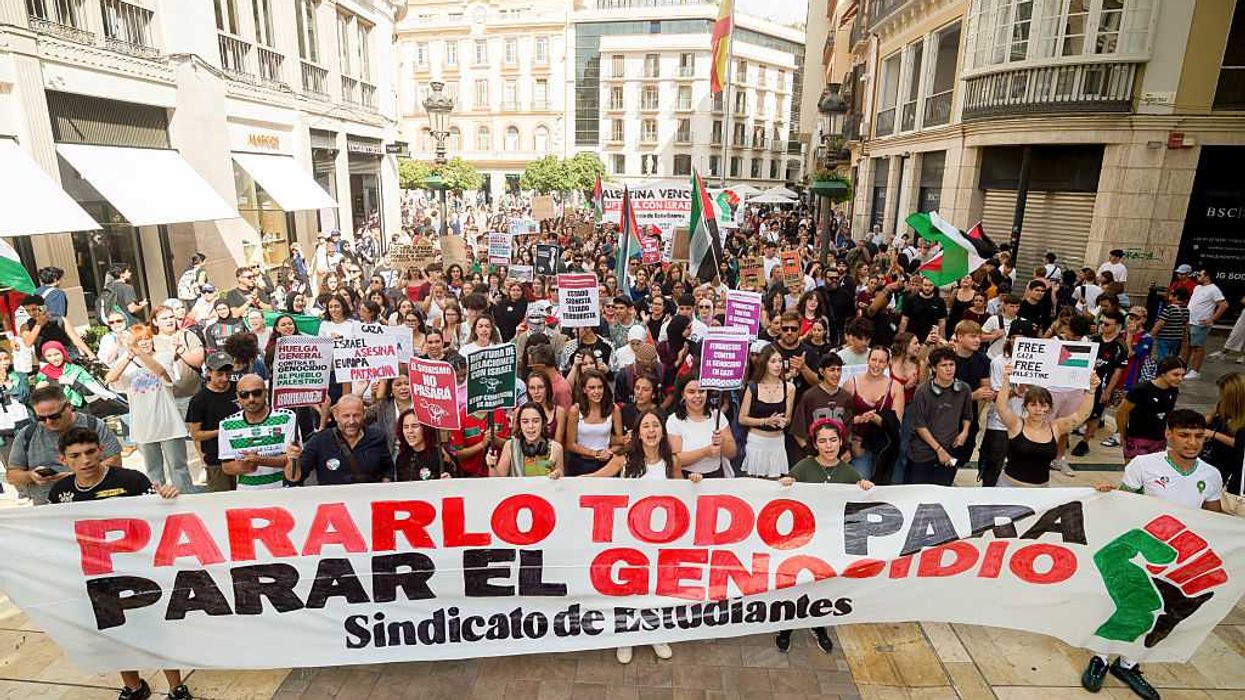
"While young people like us are being killed and subjected to genocide in Palestine, we cannot be in class," said one protester in Madrid.
Tens of thousands of students walked out of classrooms in cities and towns across Spain on Thursday to protest Israel's ongoing US-backed genocide in Gaza and abduction of Global Sumud Flotilla members, dozens of whom are Spanish.
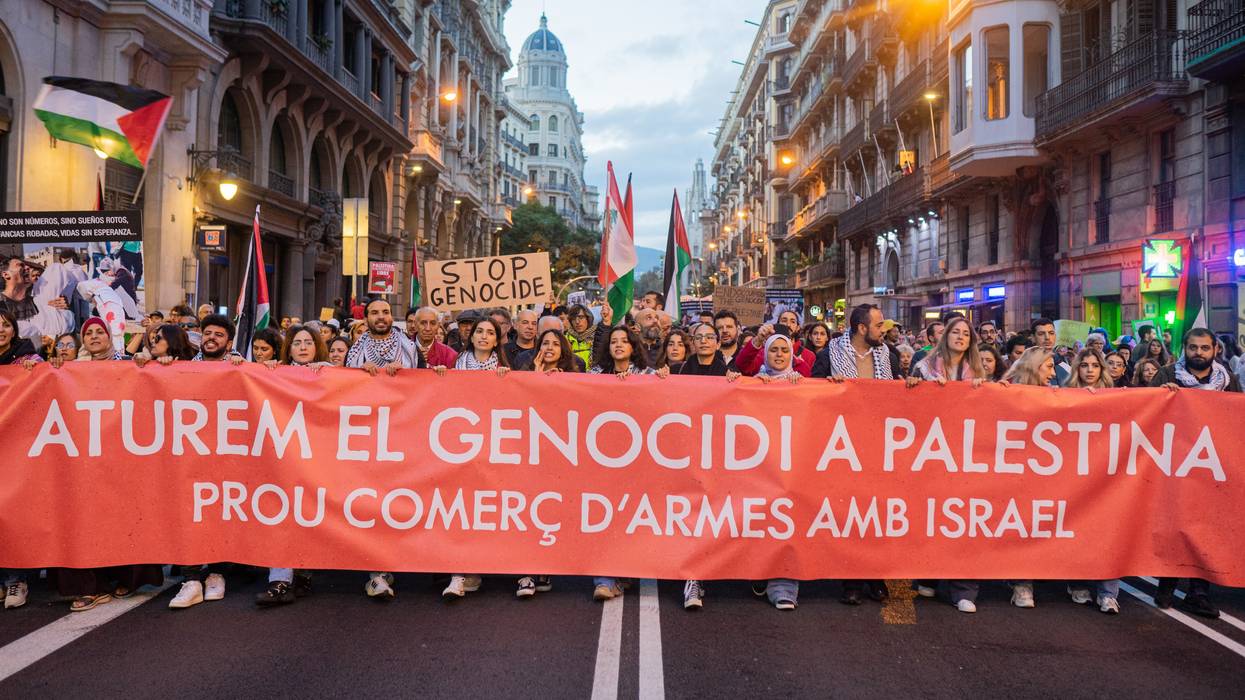
The National Students' Union organized Thursday's protests under the slogan "stop the genocide against the Palestinian people." Demonstrations, which took part in at least 39 cities and towns, varied in size from small groups to thousands who turned out in Barcelona and the capital Madrid, where students held banners with messages like "Stop Everything to Stop the Genocide," "All Eyes on the Global Sumud Flotilla," and "Free Palestine!"
"We're not going to look the other way," the union said in a statement. "The Palestinian cause is the cause of the youth and the millions who stand for human rights and social justice. That is why... we called the general student strike to empty the classrooms and fill the streets with dignity."
Maria, a Spanish student interviewed by Turkey's Anadolu Ajansı in Madrid, said: "While young people like us are being killed and subjected to genocide in Palestine, we cannot be in class. The whole world must do everything it can to stop this genocide.”
Another Madrid protester, Francesca—an Italian student studying in Spain—told Anadolu that “we must pressure governments to stop Israel."
"Allowing genocide in full view of the world is unacceptable," she added. "The killing of women, children, and students in Palestine must end."
In Barcelona—whose former leftist Mayor Ada Colau was among the dozens of Spaniards who set sail for Gaza from the port city—an estimated 6,500 students and others took to the streets Thursday.
"What I can do is be here, with my presence," student Donia Armani told El País. "The more people, the better; so the Palestinians will not be alone."
Armani's mother added, “The Palestinians are like a brotherly people, we feel a lot from the absurd images we see."
Ana, a 14-year-old student protesting in Barcelona, said: “I think it’s very bad what’s happening," adding that Israel does "not let food arrive and also bombs them, which causes many, especially small children, to die, and I am very sorry."
Thursday's walkouts took place as Israeli forces continued assaulting Gaza on Thursday, killing scores of Palestinians amid a backdrop of ongoing famine and forced displacement. Since October 2023, Israeli forces have killed at least 66,225 Palestinians in Gaza, although experts say the actual death toll is much higher. At least 168,938 other Palestinians have been wounded, and thousands more are missing and presumed dead.
Spain's socialist-led government has been a leading critic of Israel's genocide in Gaza, taking numerous proactive steps including cutting off arms transfers to the erstwhile ally, prohibiting the shipment of fuel to the Israeli military, formally recognizing Palestinian statehood, and backing South Africa's genocide case currently before the International Court of Justice in The Hague.
The Spanish Foreign Ministry says at least 30 Spaniards are among the many Global Sumud Flotilla activists seized by Israeli forces in international waters overnight Thursday while attempting to deliver desperately needed humanitarian aid to Gaza.
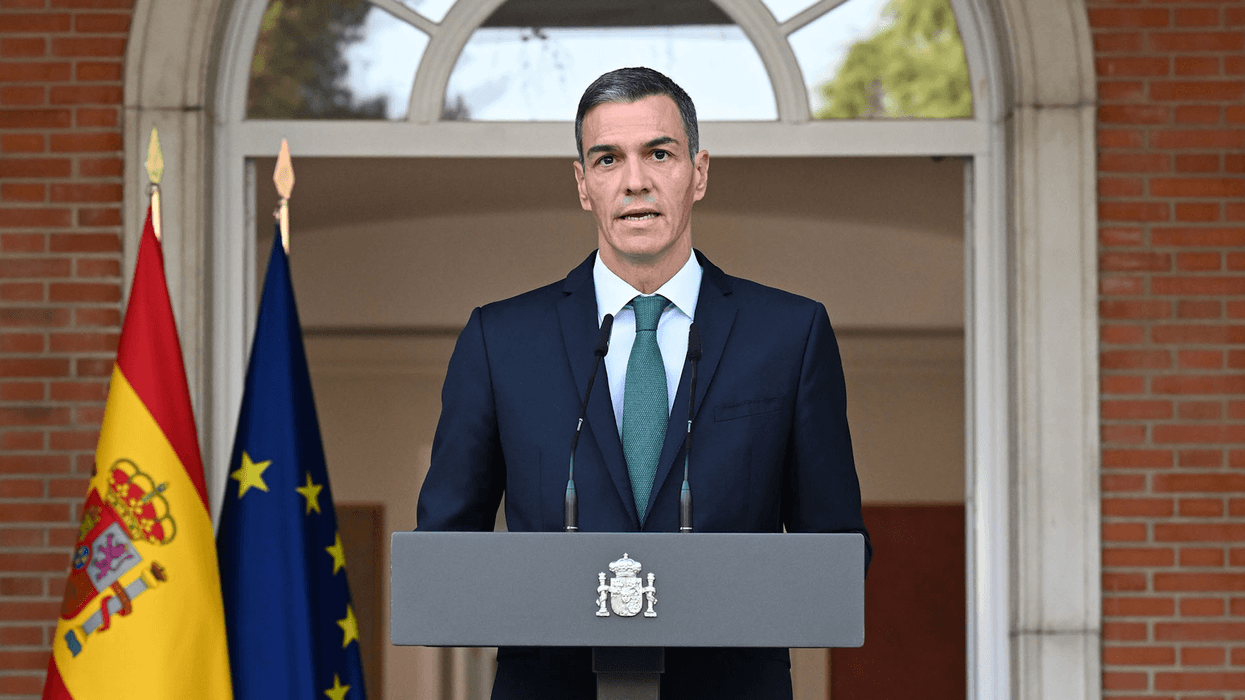
"This is not self-defense," Spanish Prime Minister Pedro Sánchez asserted, "it is the extermination of a defenseless people and a violation of every international law."
Spanish Prime Minister Pedro Sánchez on Monday announced a series of nine new measures—including a total arms embargo—aimed at pressuring the government of fugitive Israeli Prime Minister Benjamin Netanyahu "to stop the genocide in Gaza."
Sánchez, who leads the Spanish Socialist Workers' Party (PSOE), announced the steps during a speech in which he first acknowledged the historical suffering of the Jewish people, which includes the 1492 ethnic cleansing of Jews from Spain.
"The Jewish people have suffered countless persecutions, deserve to have their own state, and to feel secure," Sánchez said. "That is why the Spanish government has condemned Hamas' attacks from day one."
However, "there is a difference between defending your country and bombing hospitals or starving innocent children," the prime minister continued. "This is an unjustifiable attack on the civilian population, which the [United Nations] rapporteur has described as genocide."
"Sixty thousand dead, two million displaced, half of them children," Sánchez said. "This is not self-defense, it is not even an attack—it is the extermination of a defenseless people and a violation of every international law."
The nine measures—which must be approved by lawmakers and the Cabinet—include:
"Spain does not have nuclear bombs. We cannot stop the Israeli offensive alone, but we will not stop trying," Sánchez said, recognizing the limitations of Monday's action.
Spain's new measures come in addition to its earlier steps toward an arms embargo, promotion of several UN ceasefire resolutions, support for the International Criminal Court's (ICC) effort to bring Netanyahu to justice and the International Court of Justice's (ICJ) ongoing South Africa-led genocide case against Israel, and formal recognition of Palestinian statehood.
Individual Spanish politicians have also taken action for Palestine, including former Social Rights Minister Ione Belarra, an early proponent for ICC prosecution of Netanyahu and others; former leftist lawmaker and Palma City Councilmember Lucia Muñoz, a participant in the Global Sumud Flotilla; and former Barcelona Mayor Ada Colau, another flotilla member whose city cut ties with Israel prior to the Gaza genocide over "the crime of apartheid against the Palestinian people."
The Global Sumud Flotilla—whose other members include Mandla Mandela, Susan Sarandon, and Swedish climate activist Greta Thunberg—set sail from Barcelona last month and was warmly welcomed Sunday upon a stopover in Tunis, Tunisia en route to the coast of Gaza, where activists will attempt to break an Israeli blockade and deliver desperately needed humanitarian aid.
The Israeli government responded to Sánchez's announcement with its customary allegation of antisemitism and an entry ban on Deputy Prime Minister Yolanda Díaz and Youth Minister Sira Rego.
"It is a point of pride that a genocidal state is banning me," said Díaz, a member of the Communist Party of Spain and Sumar movement.
Spain subsequently recalled its ambassador from Tel Aviv. The Spanish Foreign Ministry said the government "would not be intimidated in its defense of peace, international law, and human rights."
According to figures from the Gaza Health Ministry—which experts contend are likely a vast undercount—at least 64,522 Palestinians have been killed by Israeli forces in Gaza since October 2023, most of them women and children. More than 163,000 others have been wounded, and thousands more are missing and presumed dead and buried beneath rubble.
Hundreds of thousands of Gazans are starving to death in a famine largely caused by Israel's "complete siege" of the coastal exclave. At least hundreds of Palestinians have starved to death in what hunger experts and every United Nations Security Council member except the United States have called a man-made catastrophe caused by Israeli policies and practices.
The ICC warrants issued last year for Netanyahu and former Israeli Defense Minister Yoav Gallant accuse the pair of crimes against humanity and war crimes, including forced starvation and murder.
On Monday, Spain also condemned what it called a "terrorist attack" that left six people, including Spanish citizen Yakov Pinto, dead in a mass shooting north of occupied Jerusalem.
Sánchez's announcement followed pro-Palestine and anti-genocide protests in cities including the capital Madrid, where demonstrators rallied outside the Israeli Embassy on Saturday and shouted messages including, "It's Not a War, It's a Genocide!" and "Israel Kills, Europe Sponsors!"
GENOCIDIO EN GAZA
Concentración, hoy 06/09, delante de la embajada de Israel (Madrid)...
"No es una guerra, es un genocidio"
"Israel asesina, y Europa patrocina"
"Israel bombardea con bombas europeas"
"Esta embajada está ensangrentada" pic.twitter.com/rRH4T6zS7f
— Christophe Deschamps (@ChristopheDes16) September 6, 2025
On Sunday, demonstrators gathered in Madrid's Callao Square, where participants read aloud the names of many of the more than 18,500 Palestinian children killed by Israeli forces in Gaza, followed by the word "murdered."
According to a June Pew Research Center survey, 75% of Spanish respondents have a negative view of Israel, with 46%—the highest percentage of any non-Muslim nation in the 24 nations polled—having a "very unfavorable" view of the country.
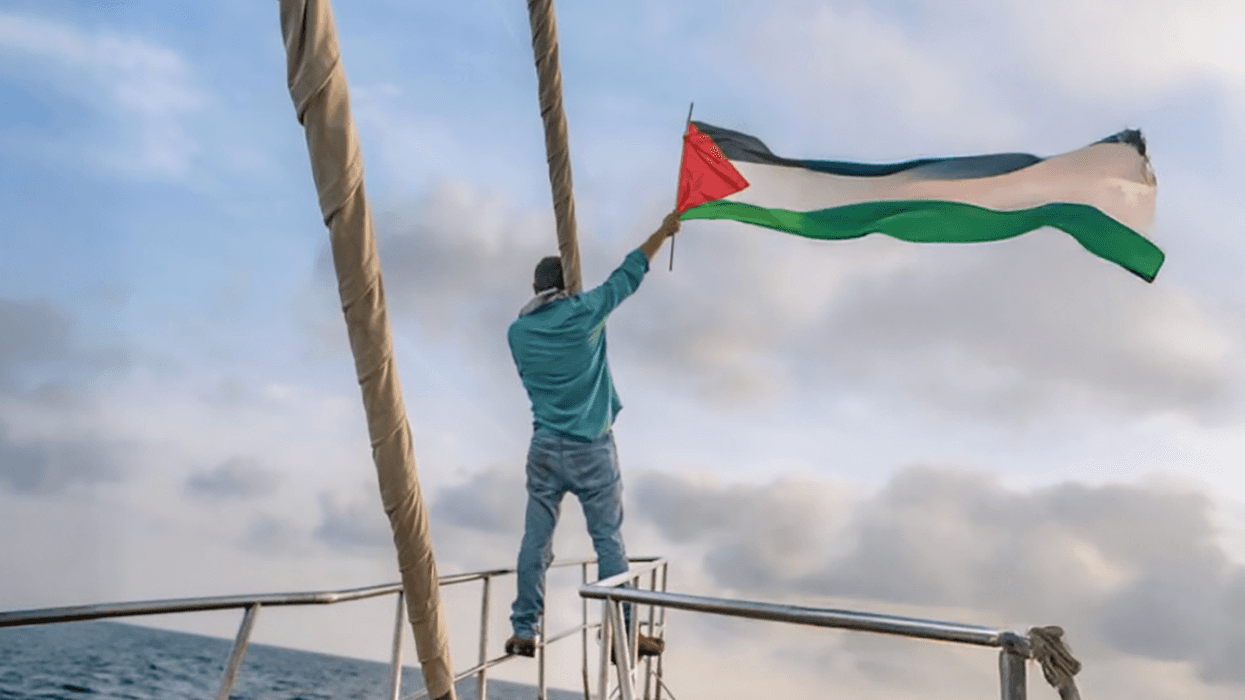
"Our boats carry more than aid. They carry a message—the siege must end. The greater danger lies not in confronting Israel at sea, but in allowing genocide to continue with impunity."
Palestine defenders are preparing for the latest—and largest—Freedom Flotilla Coalition mission to set sail for Gaza in an attempt to break Israel's US-backed genocidal siege on the embattled Palestinian territory.
Dozens of boats carrying hundreds of activists from as many as 44 nations are set to take part in the Global Sumud Flotilla—sumud means "perseverance" in Arabic—as it attempts to run Israel's naval blockade and deliver desperately needed humanitarian aid including food, medicines, and baby formula to the starving people of Gaza.
"We are a coalition of everyday people—organizers, humanitarians, doctors, artists, clergy, lawyers, and seafarers—who believe in human dignity and the power of nonviolent action," Global Sumud Flotilla's website explains.
In addition to "everyday people," flotilla participants include Swedish climate activist Greta Thunberg, American actress Susan Sarandon, Irish actor Liam Cunningham, leftist Portuguese parliamentarian Mariana Mortágua, former Barcelona Mayor Ada Colau, and Mandla Mandela, the grandson of former South African President Nelson Mandela.
Israel "is starving and killing the people of Gaza," Mandela—whose grandfather was not only a hero of his country's anti-apartheid struggle but also a staunch supporter of Palestinian liberation—said Friday on behalf of the South African flotilla delegation. "We are a diverse group of international activists calling for urgent global action to compel Israel to open Gaza's borders to aid and end its genocide of the Palestinian people."
"We ask that South Africans of conscience join us," he added. South Africa is leading an ongoing genocide case against Israel at the International Court of Justice (ICJ) in The Hague that is officially or informally supported by around two dozen nations.
Colau said earlier this week that "to end the genocide in Gaza is the duty of all of us, so we have to do what is in our power to do it if governments, including the government of Spain, do not do what they can to stop the criminal state of Israel."
Spain has joined the ICJ genocide case against Israel, has formally recognized Palestinian statehood and urged other nations to do so, and has taken significant steps toward an arms embargo on Israel.
"Although Spain has positioned itself more than other governments and recognized the Palestinian state, words are not enough when thousands of children are being killed," Colau said Friday in an interview with RTE.
At least 18,500 children are among the more than 63,000 Palestinians killed by Israeli forces in Gaza since October 2023—although the official Gaza Health Ministry figures are likely a vast undercount, according to peer-reviewed studies.
"This is my third attempt to try to sail with humanitarian aid to break Israel's illegal siege on Gaza and open up a humanitarian corridor," Thunberg, who is a member of the flotilla steering committee, told Middle East Eye Thursday.
"There have been 38 previous attempts just for the Freedom Flotilla Coalition (FFC) and now with the Global Sumud Flotilla," Thunberg continued. "This is unprecedented. We are mobilizing people from all over the world with dozens of boats sailing from Barcelona first, and then more boats joining us from other ports around the Mediterranean Sea."
"We are doing this because we are facing a genocide," she added. "We are seeing people being deliberately deprived of their basic means to sustain life. And this is a continuation of the suffocating oppression that Palestinians have been living under for decades, and we simply have no choice if we have any sense of humanity left, we cannot just sit by and watch this unfolding."
The Gaza Famine—officially declared last week by the authoritative Integrated Food Security Phase Classification—has claimed at least hundreds of Palestinian lives in what experts say is an engineered effort by Israel. The International Criminal Court arrest warrants issued last year for Israeli Prime Minister Benjamin Netanyahu and former Defense Minister Yoav Gallant, who ordered the "complete siege" on Gaza fueling the famine, list forced starvation, along with murder, as alleged crimes against humanity and war crimes committed by the pair.
Earlier this year, the FFC vessels Conscience, Madleen, and Handala each separately tried to break the blockade but were thwarted by Israeli forces in international waters, an apparent violation of maritime law. Flotilla activists were beaten, kidnapped, jailed, interrogated, and deported by Israel.
Fifteen years ago, Israeli forces raided one of the first FFC convoys carrying humanitarian aid to Gaza. The Israeli attackers killed nine volunteers aboard the MV Mavi Marmara, including Turkish-American teenager Furkan Doğan.
The Sumud Flotilla comes as Israeli forces ramp up Operation Gideon's Chariots 2, a campaign of conquest, occupation, and ethnic cleansing of Gaza backed by the administration of US President Donald Trump. On Thursday, Israeli Finance Minister Bezalel Smotrich proposed the systematic annexation of Gaza over the coming months if Hamas keeps fighting, as well as the implementation of Trump's plan to ethnically cleanse the Palestinian exclave and transform it into the "Riviera of the Middle East."
Israel's siege of Gaza has been in effect in varying degrees of severity since 2006 in response to Hamas' rise to power in the strip.
"The idea is to put the Palestinians on a diet, but not to make them die of hunger," a senior adviser to then-Israeli Prime Minister Ehud Olmert said at the time.
Now Palestinians are dying of hunger, and the world has increasingly had enough.
"Our boats carry more than aid," Global Sumud Flotilla said. "They carry a message—the siege must end. The greater danger lies not in confronting Israel at sea, but in allowing genocide to continue with impunity."
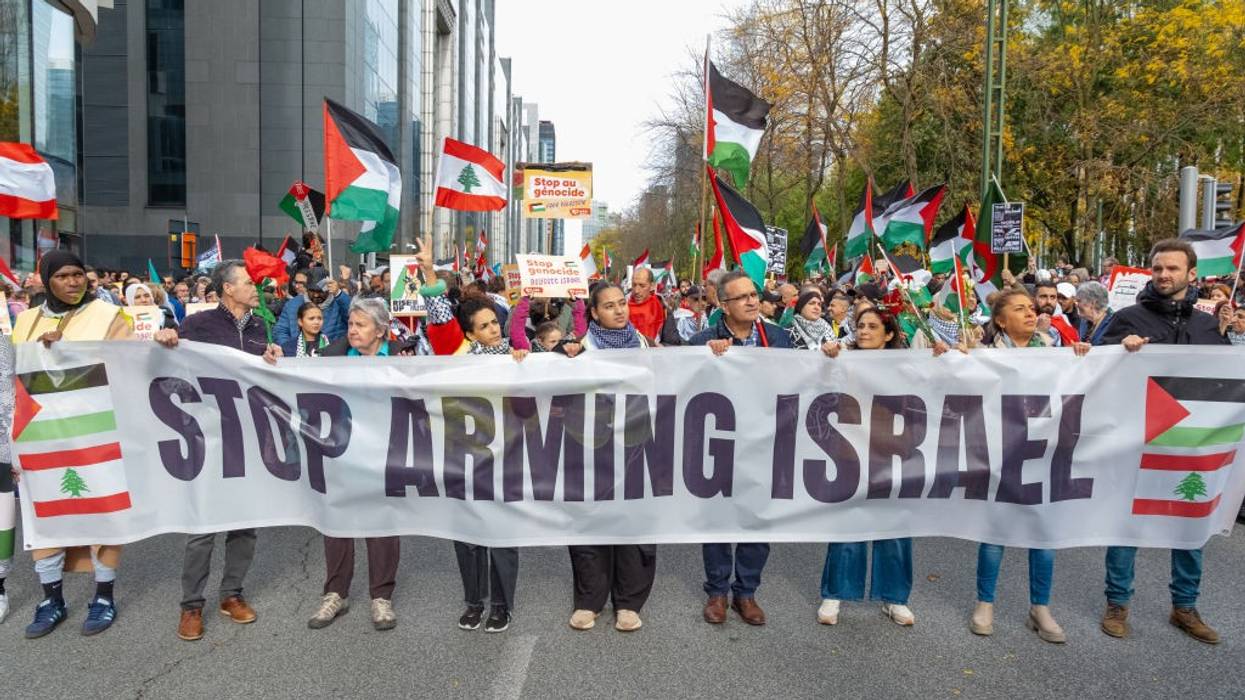
"The evidence is clear: The genocide in Gaza and the systematic nature of the abuse of Palestinian detainees recall the worst historical abuses committed by colonial powers against Indigenous populations."
Progressive International's Palestine Delegation—whose members were attacked earlier this week by Israeli soldiers and settlers in the illegally occupied West Bank—on Thursday issued "an urgent call to governments across the globe" to impose "a total energy, economic, and arms embargo against Israel" to punish its ongoing 13-month U.S.-backed assault on Gaza.
The Palestine Delegation—which was co-convened by Progressive International (PI), the National Lawyers Guild of the United States, and the International Association of Democratic Lawyers—released a report containing findings of members Ada Colau, the former mayor of Barcelona and lead delegate; Marc Botenga, a Belgian member of European Parliament (MEP) from the Marxist-socialist Workers' Party; and Jaume Asens, a leftist MEP from Spain.
"The Israeli regime must urgently be subject to total isolation on all fronts."
"The evidence is clear: The genocide in Gaza and the systematic nature of the abuse of Palestinian detainees recall the worst historical abuses committed by colonial powers against Indigenous populations... seeking their liberation, from the concentration camps used by Britain against the national liberation movement in Kenya to the internment of millions of Algerians by France," the report states.
Israel's 398-day assault on Gaza has killed or injured at least 155,000 Palestinians, including those who are missing and feared dead, while forcing nearly the entire population of the coastal enclave from their homes and causing widespread starvation and sickness. The International Court of Justice in The Hague is weighing evidence of genocide presented by South Africa in a case backed by more than 30 nations and regional blocs and thousands of experts, advocates, and rights groups around the world.
"Any government providing arms, energy, economic, or diplomatic support to Israel is complicit in these crimes against humanity—and threatens the basic integrity of the international order," PI asserted. "The Israeli regime must urgently be subject to total isolation on all fronts—economic, military, cultural, political, and diplomatic—to lay the groundwork for the end of the genocide and the dismantling of the colonial occupation in Palestine."
The U.S. boosts Israel with tens of billions of dollars worth of armed aid and unwavering diplomatic support. Other nations including Germany, Italy, the United Kingdom, Canada, and India also provide Israel with substantial backing.
The PI delegation said it "arrived in Palestine amid sustained efforts by Israeli authorities to prevent access to the occupied territories and obscure the conditions of deprivation, detention, apartheid, and annexation endured by the Palestinian people."
Delegation members got a small taste of what Palestinians living in the occupied territories endure when they were reportedly attacked with tear gas and stun grenades by armed Israeli settlers and Israel Defense Forces (IDF) troops Monday while accompanying West Bank farmers in Qusra as they attempted to harvest from the olive trees that are the lifeblood of Palestine's rural economy and a frequent target of land-grabbing settlers trying to drive Arabs away.
Last month, IDF soldiers fatally shot Hanan Abu Salameh, a 59-year-old Palestinian woman who was working with relatives in her family's olive grove in the village of Faqqua, located east of Jenin in the northern West Bank.
"We are dealing with something as simple as harvesting olives," said Colau. "And even this has now been turned into an act of war by the illegal settlers and the army."
Earlier this week, around 50 countries joined in a call for an arms embargo on Israel. All but one of the nations—Norway—are in the Global South. They include: Bangladesh, Brazil, China, Colombia, Cuba, Egypt, Indonesia, Iran, Iraq, Kazakhstan, Malaysia, Mexico, Morocco, Palestine, Russia, South Africa, Sudan, Turkey, United Arab Emirates, Venezuela, and Vietnam.
"It's not a war, it's a genocide," said Councilmember Ada Colau. "We not only need to denounce it, we must act and not stay on the sidelines."
The city council of Barcelona, Spain's second-largest city, voted Friday to suspend relations with Israel's far-right government over what the party behind the move called the "genocide" in Gaza.
Introduced by the leftist Barcelona en Comú party—which asserted that "no government can turn a blind eye to a genocide"—the resolution demands the municipal government discontinue "institutional relations with the current government of Israel until there is a definitive cease-fire, and respect for the basic rights of the Palestinian people and compliance with United Nations resolutions are guaranteed."
The resolution also calls for requiring public contracts to ensure that "no operator belongs to or carries out" activities "that go against international humanitarian law" and "rejects and condemns attacks against the population civilian, both Israeli and Palestinian, as well as any action constituting collective punishment, such as the forced displacement of population, the systematic destruction of homes and civilian infrastructure, or the blocking of the supply of energy, water, food, medical supplies and medicines to the population of the Gaza Strip."
Barcelona en Comú Councilmember Ada Colau said in a statement that "it's not a war, it's a genocide, and as [Spanish] President Pedro Sánchez has stated, it is unbearable, and if it is unbearable, we not only need to denounce it, we must act and not stay on the sidelines."
"Every 10 minutes, a child dies in the Gaza Strip under the bombs of one of the most powerful armies in the world," she added.
Colau, whose eight-year tenure as Barcelona's mayor ended in June, earlier this year
announced her city was cutting ties with Israel and ending its symbolic 25-year-old "twin cities" relationship with Tel Aviv due to the Israeli government's "crime of apartheid against the Palestinian people."
Barcelona's current mayor, Jaume Collboni of the Socialists' Party of Catalonia, reversed Colau's move in September.
Earlier this month, Barcelona dockworkers also showed solidarity with Palestinians by refusing to load or unload military materials onto any ship bound for Israel or any conflict zone where they could be used against civilians.
The new Barcelona resolution urges Israel and Hamas to make permanent the temporary four-day ceasefire that began Friday morning, as well as an end to Israeli violence against Palestinian civilians in the illegally occupied West Bank and the unconditional and safe release of all hostages taken by Hamas.
On Friday, Hamas freed 24 captives—13 Israeli women and children, 10 Thai nationals, and one Filipino—as part of the cease-fire agreement. Israel released 39 Palestinian women and minors from behind bars to fulfill its end of the deal. Hamas has agreed to free 50 of its hostages in exchange for the release of 150 Palestinians imprisoned by Israel.
Israeli forces have arrested thousands of Palestinians on what critics claim are often dubious grounds meant to give Israel leverage and bargaining chips.
According to the Gaza Health Ministry, nearly 15,000 Palestinians, including more than 4,000 women and over 6,000 children, have been
killed by Israeli bombs and bullets since the Hamas-led attacks on southern Israel that left around 1,200 people dead and 240 others kidnapped. The international humanitarian group Oxfam
said Thursday that newborn babies are dying from preventable causes in Gaza's hospitals due to the Israeli siege.
More than 36,000 Palestinians have been wounded by Israeli attacks on Gaza, while around 7,000 others—including over 4,700 children—are missing and presumed dead. More than 1.7 million Gazans have been forcibly displaced and around half the homes in the besieged strip have been damaged or destroyed, according to United Nations agencies.
At least 255 Palestinians have also been killed by Israeli soldiers and settlers in the occupied West Bank and East Jerusalem.
In addition to the Barcelona councilmembers who voted Friday for the resolution, other Spanish officials have also called for cutting ties with Israel's government over its Gaza onslaught.
Last month, outgoing Social Rights Minister Ione Belarra, who also leads the leftist Podemos party, urged her country's coalition government to petition the International Criminal Court to open a war crimes investigation of Israeli Prime Minister Benjamin Netanyahu for Israel's indiscriminate bombardment of Gaza and for cutting off food, fuel, and electricity from the besieged strip's 2.3 million residents.
On Thursday, Belarra criticized Sánchez—a member of the Spanish Socialist Workers' Party—for visiting Israel this week, arguing that his trip "only serves to whitewash Netanyahu and to equate the state of Israel, an occupying power that perpetrates a genocide, with the victims of the Palestinian people."
"Such inaction," she added, "is absolutely unbearable."
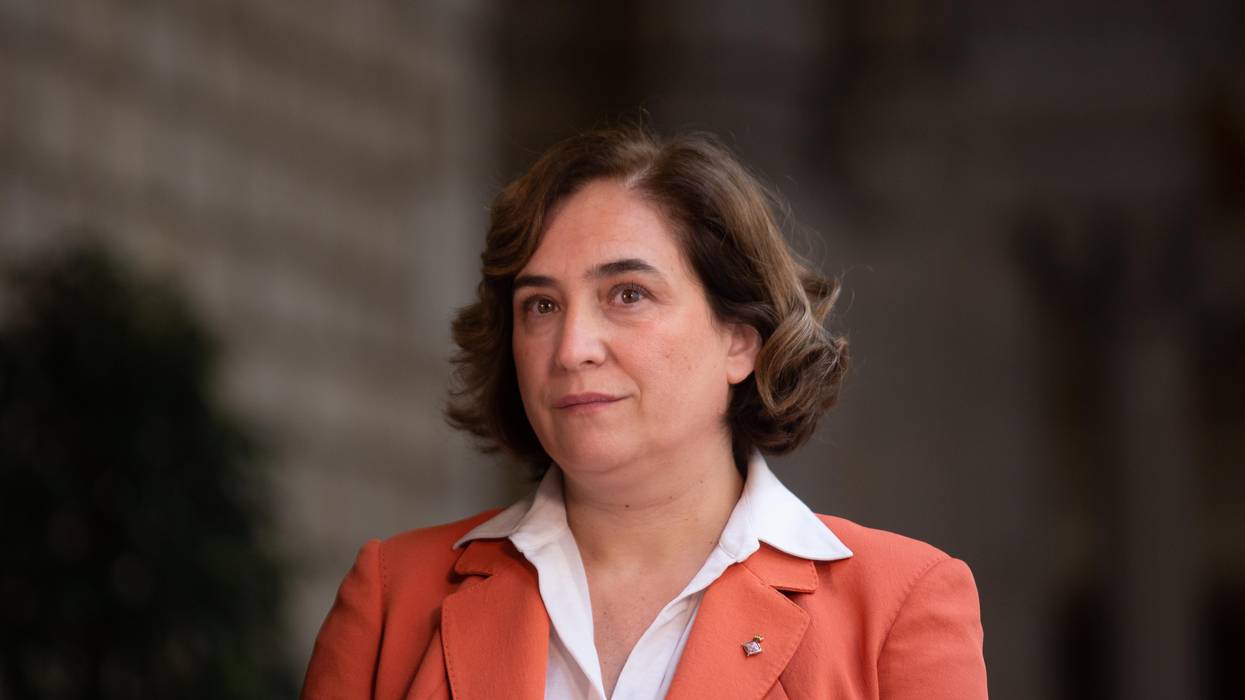
"We cannot be silent," said Colau.
Barcelona Mayor Ada Colau on Wednesday announced her city is cutting ties with Israel and ending its symbolic 25-year-old "twin cities" relationship with Tel Aviv over the Israeli government's violent anti-Palestinian policies.
Colau said at a press conference that the city council came to its decision in response to campaigning by more than 100 rights groups and 4,000 residents, who urged her to cut ties with Israel.
In a letter to Israeli Prime Minister Benjamin Netanyahu, the leftist mayor said her constituents called on her to "condemn the crime of apartheid against the Palestinian people, support Palestinian and Israeli organizations working for peace, and break off the twinning agreement between Barcelona and Tel Aviv."
She added that she is "temporarily" suspending Barcelona-Israel relations "until the Israeli authorities put an end to the system of violations of the Palestinian people and fully comply with the obligations imposed on them by international law."
"We cannot be silent," wrote Colau.
The letter and Colau's announcement to the press come two weeks after an Israeli military raid on a refugee camp in the occupied West Bank killed at least nine Palestinians, including an elderly woman.
Colau said groups in Barcelona began urging her to cut ties with Israel after an 11-day air assault on Gaza in May 2021.
Groups including Amnesty International, Human Rights Watch, and the Israel-based B'Tselem have accused the Israeli government of imposing apartheid policies on Palestinians, including its military occupation of the West Bank and its construction of settlements on Palestinian land.
Michael Lynk, the United Nations special rapporteur on Palestinian human rights, also called Israel's treatment of Palestine "apartheid" last year.
The Sanctions National Committee (BNC), one of the groups that helped push the Barcelona city council to hold Israel accountable, applauded Colau's move.
"Barcelona has become the first city council to suspend ties with apartheid Tel Aviv in solidarity with the Palestinian people, a move that is reminiscent of the historic and courageous city councils that pioneered cutting links with apartheid South Africa," BNC said in a statement.
Losing Barcelona. That was the headline on the story in Jacobin this week. A local vote in a far-off city; had I not just returned from Barcelona, I might have left it at that. possibilitiy
The truth is, US media give us so little coverage of goings-on elsewhere, and so little context as to why Americans should care, there's little incentive to keep up; but Barcelona's different. For close to a decade now, it's been what my friend Sol Trumbo Vila calls a beacon for the possibilities of transformative change at the city level.
Led by former housing activist Ada Colau, who was elected Mayor in May 2015, Barcelona's government has been in the hands of a movement that had become a political party--Barcelona en Comu.
Led by former housing activist Ada Colau, who was elected Mayor in May 2015, Barcelona's government has been in the hands of a movement that had become a political party--Barcelona en Comu. They won office on a pledge to "develop the city as a commons," meaning a place for people, not a profit center for speculators and extractive corporations. In office, Colau halted new hotels, stopped thousands of foreclosures, supported worker owned cooperatives, and formed the state's largest publicly-owned utility. They also encouraged a free, neutral, cooperatively owned broadband network called Guifi.net that offers low price WiFi and a prize-winning alternative to the telecom giants.
Colau established new systems of governance with more local consultation. Did she solve all the problems of an austerity-hit city hemmed in by bans on borrowing, hiring and expanding the public budget? No. Did she figure out ways to work with others without disappointing their base? Not always. Most damaging was their fence-sitting on the Catalan independence question. Having seen the footage of heavily armed federal police literally batoning people as they clung to their forbidden ballot boxes, I get it why separatist Ernest Maragall may have scored 4,800 more votes than Colau in this May's vote.
But Losing Barcelona? Maragall and Colau actually stood neck and neck in council seats when the Jacobin article appeared. They were both left of center parties. Colau could have teamed up with him to stay in government but lose the Mayor's post, or she could have partnered with more left-of-center winners--Pedro Sanchez's socialist party (PP), which came in second after a high profile surge in national elections earlier in the month. In the end, Colau was re-elected mayor by the city council with the support of the Socialists and the backing of former French prime minister, Manuel Valls.
So, Losing Barcelona? Even if Colau had lost the election, the commons agenda is seeded deep into the city. In an interview, even crusty Maragall endorsed support for cooperatives and digital democracy and the Fearless Cities network that Colau and others helped to start.
And at the level of principle, Colau has not finished making change yet. Having polled her base last weekend, Colau put the question to the people. Barcelonans had the chance to vote on what deal she should make. Let the people decide. Putting that principle into practice has got to be a win, no matter what.

Eighty years ago this April, Spain fell under a thirty-year dictatorship after Right beat Left in a brutal civil war. That history feels acutely alive to me today, and not just because, for the first time in my life, I'm in Spain.
General Franco's rebels, backed by Mussolini and Hitler and the religious extremists of the day, defeated the Republic and its cobbled-together army of anarchists, communists and internationalists over three years (1936-39). My grandfather, Claud Cockburn, was there with the fighting in Spain's central plains and in the city of Barcelona as it was hanging on, watching bombs hit the northern mountains that I've been looking at for days.
Today, Spain is holding steady. Prime minister Pedro Sanchez and his socialist party expanded power in regional and national elections and became the biggest social democrat block in the EU. The nationalist populists did less well than they bragged they'd do in most of Europe, but the Left's parties generally did the same, and progressives are relying on the Spanish and Portuguese to hold the bigots at bay in Brussels while, from Brazil to Bethlehem and Bombay to DC's Beltway, the stink of fascism is in the air.
It was windy yesterday, and between rain showers, we talked about being buffeted by old tensions: nationalism vs internationalism, authoritarianism vs democracy, elitism vs cooperation, patriarchy and racism vs intersectionality and the common good.
"The story of resilience resonates," said Loren Harris, Chief Program and Strategy Officer with the Kenneth Rainin Foundation in Oakland, which supports organizations working in the arts, education, and health. History is part of what draws internationalists like Harris back to this region. Another is its experiment in solidarity.
"In the twentieth century, it was monarchy that was crashing. Today, it's the rule of capital," said the Democracy Collaborative's Marjorie Kelly,* who, with Harris, was part of a delegation to study the area's co-operatives.
Claud described the co-ops and free clinics that helped Barcelonans survive under siege. For the past four years, Barcelona en Comu has been continuing that tradition, expanding public assets and public decision-making under the city's first female mayor, activist Ada Colau. Here in Basque country, which was occupied and punished by Franco, a liberation theologian preached job creation through cooperation and birthed the Mondragon Federation, now the biggest network of worker-owned cooperatives in the world. Recently, the OECD reported that this co-op rich community has one of the narrowest wealth gaps on the continent, which is to say, the rich extract less relative to the poor--or put another way, the place is more fair.
In Barcelona, Claud read from the wall posters: "We want prosperity for the whole people and we know this is possible within our democratic republic; that is why we defend the Republic, just as we defend the rightful liberties of Catalonia, the Basque country, Galicia and Morocco."
As ever, Spain's Left has fissures. This Sunday, a Catalan separatist edged out Ada Colau in the race for Mayor. Left voters are a majority, but their parties are divided here, and globally, as they've been before.
There's no war in these mountains--no Guernica being bombed tonight. Still, I recall Claud describing how stakes pile high slowly as the barometer moves to storm.
As one onlooker told Claud almost 80 years ago, "I suppose you and I think the rich are going to sit quiet and--what's the phrase--accept the verdict of the people? Like hell they are."
Which way is the barometer moving? Next stop for me is Barcelona.
*Marjorie Kelly's forthcoming book with Ted Howard, The Making of a Democratic Economy: Building Prosperity for the Many, Not Just the Few will be out inJuly from Berrett-Koehler Publishers.

After a top Italian official threatened to close off all of the country's ports to refugees and, along with Malta, barred a ship carrying more than 600 migrants rescued in Mediterranean Sea to dock--a move critics decried as a blatant violation of international law--advocates praised Spain on Monday for offering "safe port" to the vessel.
"It is our obligation to help avoid a humanitarian catastrophe and offer a safe port to these people, as such meeting with the obligations of international law."
--Spanish Prime Minister
Pedro Sanchez
"It is our obligation to help avoid a humanitarian catastrophe and offer a safe port to these people, as such meeting with the obligations of international law," Spain's new Prime Minister Pedro Sanchez said, according to the Spanish newspaper El Pais.
U.N. High Commissioner for Refugees Filippo Grandi called Sanchez's decision "courageous and welcome," while emphasizing that "irrespective of how European countries choose to manage their sea borders, the principle of rescue at sea is one that should never be in doubt."
Grandi added that he is willing to meet with concerned governments to discuss "arrangements for search and rescue operations in the Mediterranean and to avoid any repetition of the situation in which the Aquarius found itself."
Despite confirmation from Sanchez and Valencia's regional premier about Spain's plans to work with the U.N. to designate a safe port, SOS Mediterranee tweeted that Aquarius has been refueled and provided with emergency food and water by the Maltese navy but has not received additional instructions to begin moving again from its current position between Italy and Malta.
SOS Mediterranee and Medecins Sans Frontieres--also known as Doctors Without Borders--said the vessel currently has 629 people aboard, including 123 unaccompanied minors, 11 children, seven pregnant women, 15 people who are suffering serious chemcial burns, and several others who are recovering from hypothermia and nearly downing to death.
Human rights groups have sharply criticized both Malta and Italy for rejecting the ship. Elisa De Pieri, an Amnesty International researcher focused on Italy, accused both nations of turning their backs "on their obligations under international law."
"The men, women, and children aboard the Aquarius have risked their lives on perilous seas to escape horrific abuses in Libya only to find themselves caught in an unconscionable political stand-off between two European states," she said, while also pointing out that "keeping NGO boats at sea waiting for a port means that fewer rescue ships are available to assist people who may be in distress right now."
Many of the migrants were even rescued by Italian naval units before being transferred to the Aquarius, the Guardian reported. The newspaper noted that Italian voters' frustration over some 600,000 African migrants who have fled to Italy by boat in the past five years contributed to the recent electoral success of the League, a far-right political party.
Italian Interior Minister Matteo Salvini, a member of the party, wrote in a Facebook post on Sunday that Aquarius should have docked in Malta, and slammed France and Spain for their responses to the global refugee crisis. "From today, Italy will also start to say no to human trafficking, no to the business of illegal immigration," he wrote. "We will shut the ports."
Ahead of Spain's announcement, both the mayor of Barcelona, Ada Colau, and the mayor of Valencia, Joan Ribo, had reportedly offered to take in the refugees. Ribo had said the city would be "mobilizing all its resources so that Valencia will be the docking point if there are no other options," adding that he found it "completely inhuman" that a ship "could be left adrift in this situation."
The Guardian captured the current conditions aboard the ship in a short video:

With International Women's Day events and protests planned around the world, Spanish women took the bold step on Thursday of staging a nationwide "Feminist Strike" under the rallying call, "If we stop, the world stops."
"We call for rebellion and a struggle against the alliance of the patriarchy and capitalism that wants us to be obedient, submissive and quiet."--March 8 Commission
"It is not our aim to organize a "classic" workers strike but to go beyond this format: our plan is to paralyze all the different invisible tasks and activities that women usually do, in all different levels and places," reads the manifesto of the March 8 Commission, which organized the action.
Marches are being held in 200 cities and towns in Spain, with organizers urging women to stop all paid and unpaid work including domestic chores and to avoid spending money.
The historic walkout is meant to call attention to Spain's persistent gender wage gap, domestic violence, and sex discrimination in the workplace--while also offering a stark view of the contributions of women.
| Tweets about #internationalwomensday #feministstrike #internationalwomensday2018 | |
"Today we call for a society free of sexist oppression, exploitation and violence," said the March 8 Commission. "We call for rebellion and a struggle against the alliance of the patriarchy and capitalism that wants us to be obedient, submissive and quiet. We do not accept worse working conditions, nor being paid less than men for the same work."
Hundreds of trains were canceled across the country on Thursday as a result of the strike, and Madrid's subway service came to a grinding halt.
The mayors of Madrid and Barcelona both spoke out in support of the protest, and 82 percent of Spaniards told El Pais this week that they saw valid reasons for the strike.
"As people in public positions, we have the duty to mobilize on behalf of those who can't go on strike," said Ada Colau, Barcelona's mayor. "This is the century of women and of feminism; we've raised our voices and we won't stop. No more violence, discrimination, or pay gap!"
Other protests were planned in countries around the world. Hundreds of women wore pink and purple at a demonstration against authoritarian President Rodrigo Duterte, with protesters handing roses to the mothers, widows, and sisters of those killed in Duterte's war on drugs.
Hundreds of South Koreans rallied in Seoul, with many carrying #MeToo signs to highlight the global anti-sex discrimination movement that took off there recently.
And in France, the newspaper Liberation raised its price for the day by 50 cents--for men only--to highlight the wage gap.