December, 22 2016, 02:15pm EDT

For Immediate Release
Contact:
Vanessa Ramos, vanessa.ramos@sierraclub.org, (512) 586-1853
Kristin Henry, kristin.henry@sierraclub.org, (415) 977-5716
Sierra Club to Oklahoma Supreme Court: OCC Order Is Unconstitutional
OCC’s Order Protects Shareholders, Not Ratepayers
OKLAHOMA CITY
Sierra Club filed its opening brief today with the Oklahoma Supreme Court asking it to overturn a decision by the Oklahoma Corporation Commission (OCC) that approves Oklahoma Gas & Electric (OG&E)'s proposal to spend $500 million to retrofit OG&E's Sooner Power Plant--a 37-year old coal-fired power plant which has barely operated since last year. Sierra Club contends that the OCC's decision unlawfully puts protecting shareholders from financial risk above protecting ratepayers. If the decision stands, families, small businesses, and churches in much of Oklahoma will experience large monthly rate increases to subsidize operation of a plant that cannot economically compete with more modern sources of electricity--especially wind power.
"Customers are exasperated and ready to push back on OG&E's many attempts to get ratepayers to bail out an idle, dirty coal plant built in the 1970s," said Johnson Bridgwater, Director of the Oklahoma Chapter of the Sierra Club. "OG&E should use this money, time and effort to implement cleaner sources of energy that benefit the ratepayer, advances Oklahoma's economy, and provides entrepreneurs with a share in the booming clean energy economy. The OCC is constitutionally empowered to stand up for ratepayers, and right now it is only standing up for OG&E's shareholders."
OG&E first requested approval in 2014 from the OCC to retrofit the Sooner Power Plant and to recover half a billion dollars of ratepayer money for this retrofit. The OCC denied that request, along with other requests, finding that OG&E failed to demonstrate the financial benefit of installing expensive scrubbers for numerous reasons, including ignoring future ratepayer-funded investments that would be needed to maintain the aging Sooner coal plant. The OCC also concluded that OG&E's plan put customers at risk because it missed opportunities to lock in record-low prices for wind-based electric power.
Barely two months after the OCC rejected OG&E's first request for a bailout, the company filed another request seeking pre-approval of its decision to install scrubbers at the Sooner plant to remove the risk that shareholders would not be able to recover the $500 million for the retrofit. OG&E didn't provide any new information to alleviate the OCC's concerns about risks to ratepayers; in fact, OG&E asked the OCC to make its decision based on the same record from the previous case. Sierra Club and other parties asked the OCC to stand by its previous decision to protect ratepayers as the risks for ratepayers had increased since its previous decision. The independent regional electricity transmission organization, the Southwest Power Pool (SPP), had shut down OG&E's Sooner plant in the intervening period and put it on standby reserve.
In May 2016, the OCC approved OG&E's latest request. The OCC determined that its authority allowed it to preapprove OG&E's plan without addressing the plan's impacts upon ratepayers. The OCC bypassed the crucial questions of cost and ratepayers' interests, while at the same time explicitly stating that it was relieving the risk to OG&E and its shareholders that it would be unable to recover those costs from the ratepayers in the future.
Sierra Club's brief filed today to the Oklahoma Supreme Court argues that both the Oklahoma Constitution and statutes prohibit the OCC from shirking its obligations to protect ratepayers. The Commission's general constitutional and statutory mandate is limited to ensuring that a utility's decisions have "a reasonable and fair effect upon the rights of the public," most importantly a reasonable impact to ratepayers.
"The Oklahoma Corporation Commission (OCC) should focus on its job of protecting ratepayers from unfair rate hikes," continued Bridgwater of the Oklahoma Chapter of the Sierra Club "The Oklahoma Constitution and the Commission itself both say it is the responsibility of OCC to protect ratepayers' rights, not serve as a business consultant for OG&E."
The Sierra Club is the most enduring and influential grassroots environmental organization in the United States. We amplify the power of our 3.8 million members and supporters to defend everyone's right to a healthy world.
(415) 977-5500LATEST NEWS
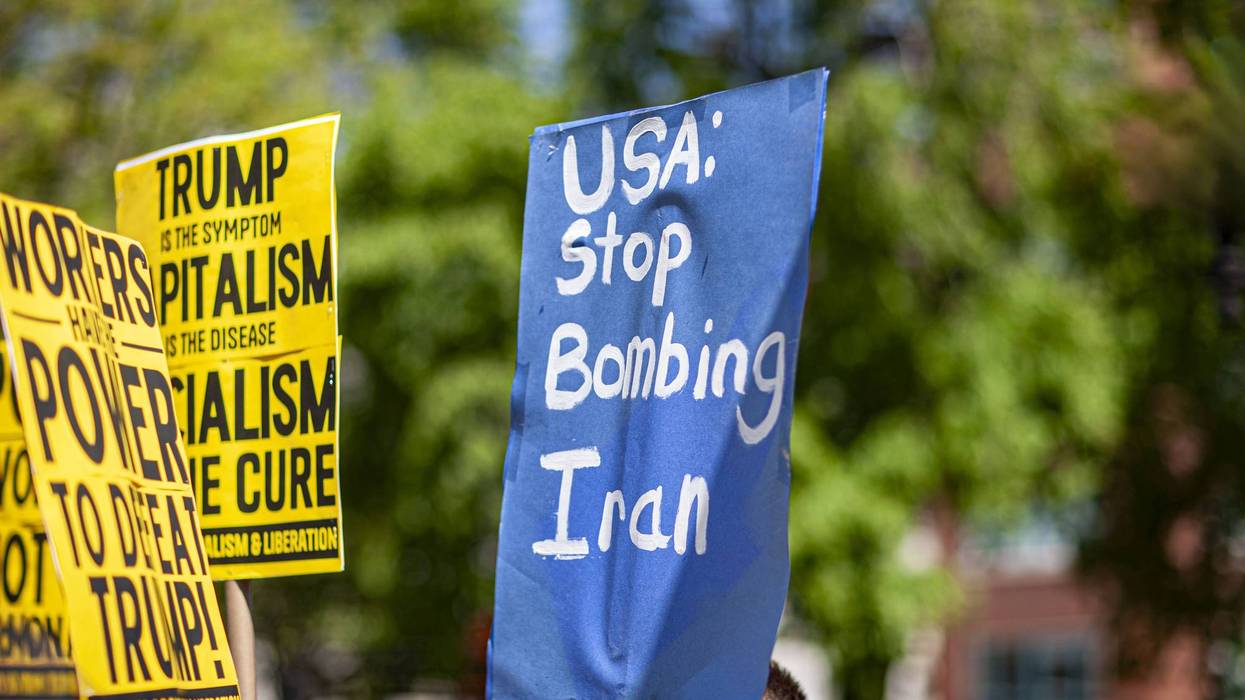
Poll Shows US Voters Have Disapproved of Trump's War of Choice Against Iran From Beginning to End
Only 38% of Americans supported the war in its first days, and nearly two-thirds said in the latest polling they disapproved of the president's handling of Iran.
Jun 19, 2026
As talks to end the US-Israeli war on Iran were delayed Friday by continued attacks by the Israel Defense Forces in Lebanon, new polling showed Americans are eager to see the conclusion of the conflict that began in February—confirming that at no point since the Trump administration and Israel began the assault has the war been popular with the public.
Nearly two-thirds of respondents to an Associated Press/NORC Center for Public Affairs Research poll taken from June 11-17 said they were unhappy with President Donald Trump's handling of issues with Iran, which he began attacking as he insisted the country must not have enriched uranium that can be used to make a nuclear weapon and that the US must "destroy their missiles."
One independent voter from Plano, Texas told the AP that he was frustrated by Trump's decision to wage an unprovoked war on Iran—which followed an invasion of Venezuela and threats against Greenland and Cuba—after the president made ending US foreign wars a central campaign promise in 2024.
“I would like the war to end,” the voter, Donald McBride, told the AP. “The original objective of the war was to end the Iranian regime, and that’s just not possible. I don’t really know why we’d continue fighting.”
The poll was in line with an analysis of eight reputable surveys that were taken in early March, just days after Trump and Israeli Prime Minister Benjamin Netanyahu began the attacks—a decision Secretary of State Marco Rubio said was made by the Trump administration because the White House believed Iran would retaliate against bombing that Israel was intent on starting.
Those surveys found that just 38% of voters approved of the military strikes against Iran in the days after they began, with polling expert G. Elliott Morris warning that "wars only get less popular” over time.
That quickly proved true in this case, with Americans almost immediately feeling the effects of Iran's retaliatory strategy after the country effectively closed the Strait of Hormuz, sending gas prices skyrocketing. In late April, 78% of respondents to a Reuters/Ipsos poll said they were very concerned about the rising cost of fuel, and 77% blamed Trump.
Fifty-eight percent also told Reuters two months into the Iran War that they'd be less likely to vote for a candidate who supported Trump's actions against Iran.
In the poll released Friday, 53% of voters said the US military action against Iran has gone "too far," slightly down from 59% who said so in March. The poll was taken as the US released a memorandum of understanding with Iran and as the president indicated a retreat from the central demands he had made regarding Israel's missiles and nuclear program, which Iranian officials have maintained is not for military purposes.
Keep ReadingShow Less
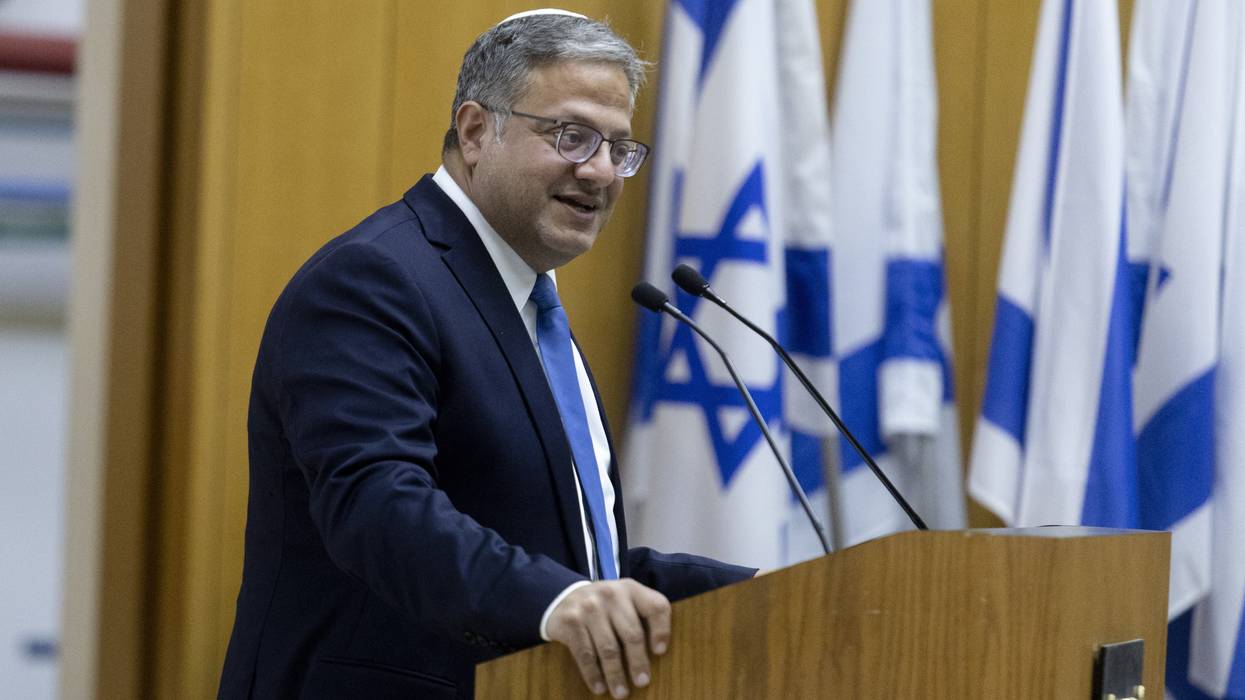
'Psychopath' Ben-Gvir Slammed for Demand That 'All Lebanon Must Burn'
Ben-Gvir's invocation of mass slaughter came as the US is trying to negotiate an end to President Donald Trump's illegal war with Iran.
Jun 19, 2026
Israeli National Security Minister Itamar Ben-Gvir drew widespread condemnation on Friday when he declared that "all Lebanon must burn" shortly after four Israeli soldiers were killed in a fight with Hezbollah.
In a social media post, Ben-Gvir said that Israel should retaliate for the deaths of the soldiers with a scorched-earth military campaign aimed at killing large numbers of Lebanese people.
"For every tear of an Israeli mother, a thousand Lebanese mothers must weep," the far-right Israeli Cabinet member wrote. "Enough with the ping-pong. In the Middle East, you don’t win with measured responses and restraint—you need to go berserk. To obliterate. To crush the terror."
Ben-Gvir also took a subtle shot at the Trump administration, which has called for Israel to cease its military operations in Lebanon so that the US and Iran can negotiate an end to the illegal war of choice President Donald Trump launched earlier this year.
"With all due respect to the Americans, Israel must make it clear to the entire world that the blood of our sons and the security of our citizens are not forfeit," he wrote. "All of Lebanon must burn."
Ben-Gvir's demands for mass slaughter were widely condemned as the ravings of a genocidal maniac.
"You are a psychopath and one of the greatest threats to the security of Israel and of Jewish people around the world," journalist Yashar Ali wrote in response to Ben-Gvir. "You belong in a psychiatric institution, not in a government role."
Humza Yousaf, former first minister of Scotland and leader of the Scottish National Party, argued that Ben-Gvir's ravings should end any question about the nature of Israel's current government.
"For those who continue to deny Israel has any intention of committing genocide then read this tweet from a minister at the heart of the Israeli government," Yousaf wrote. "He belongs in the Hague, convicted and in a jail cell."
Trita Parsi, executive vice president of the Quincy Institute for Responsible Statecraft, said that Ben-Gvir's post should make Western nations reconsider which nation is the largest obstacle to achieving peace in the Middle East.
"While regional states are intrinsically involved in efforts to bring about peace in the region," Parsi noted, "this Israeli cabinet minister tweets that 'All of Lebanon must burn!' And he repeats that call twice in the post. When will the West ask the question that never gets asked: How is the rest of the region supposed to live in peace and security next to a state that behaves like this?"
British journalist Owen Jones remarked that, in calling for mass killing in Lebanon, Ben-Gvir "sounds like a Nazi."
"If this wasn't Israel," Jones added, "everybody would say he sounds like a Nazi."
Keep ReadingShow Less
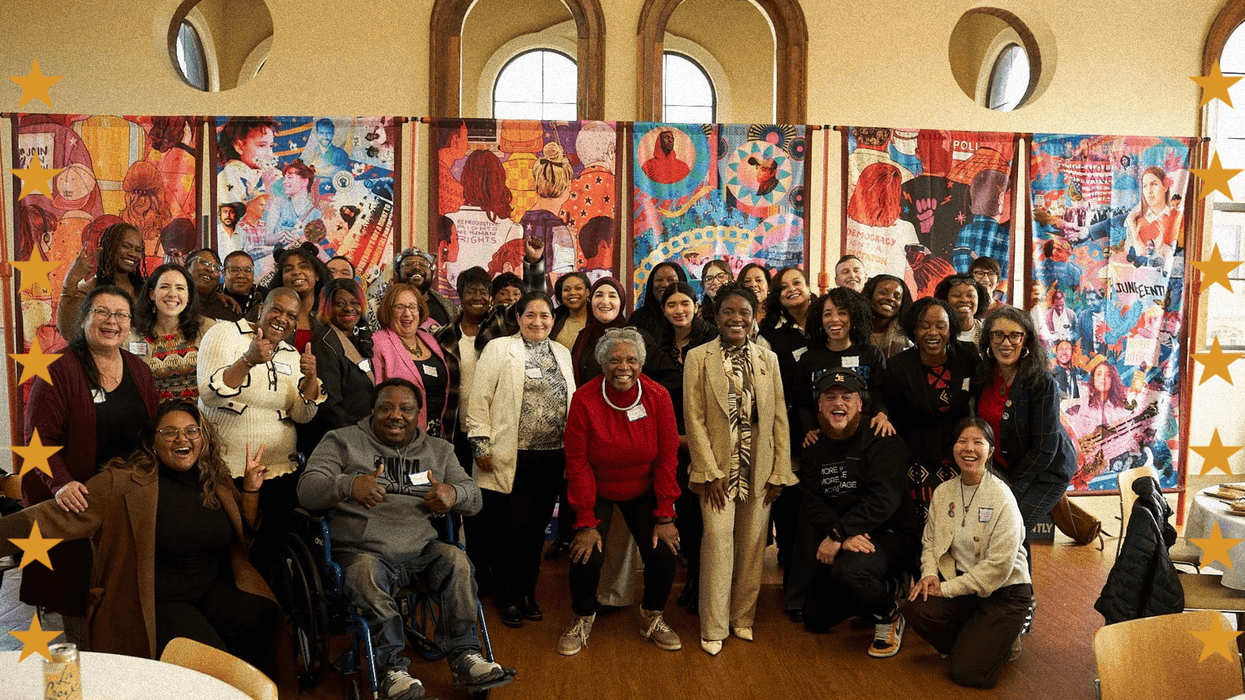
Pro-Democracy Coalition Plans Mass Mobilization to Counter Trump-Centered 250th Birthday
The Next250 coalition is focused on building a future in the US in which Americans declare their "interdependence" and work together to secure economic justice and an inclusive democracy.
Jun 19, 2026
With the 250th anniversary of the United States' independence approaching, much of the planned celebration has been centered not on highlights of the country's history, the communities that changed the nation by demanding progress on voting and civil rights, or how far the US has come since the Declaration of Independence was signed.
Instead, President Donald Trump has increasingly placed himself and his own views on American history at the center of the semiquincentennial celebration—insisting on a "Freedom 250" UFC fight on the White House lawn, arranging for his own image to appear on US passports and commemorative gold coin, calling himself “the Number One Attraction anywhere in the World" as he stepped in to headline the Great American State Fair after numerous performers dropped out, and using taxpayer dollars earmarked for the 250th birthday to hold an event devoted to the absurd and ahistorical claim that the US was founded as a Christian nation.
Ahead of the official "Freedom 250" events planned for July 4, a coalition of progressive groups—including One Fair Wage, Workers Center for Racial Justice, the Council on American Islamic Relations, and Jews for Racial and Economic Justice—are mobilizing to direct the country's attention away from Trump, Christian nationalism, and even the country's history and its independence—and toward a future in which Americans celebrate their "interdependence."
"Interdependence means recognizing that our lives, communities, and futures are connected," reads the Next250 coalition's website. "It means understanding that none of us are free, safe, or thriving alone, and that the well-being of our communities, democracy, environment, and future generations depends on how we care for one another now."
On June 27, a week before Independence Day, people from across the US are planning to attend a national mobilization in Washington, DC where the coalition will "reckon with our nation’s history and simultaneously declare a shared vision for the future of the country."
The event will amplify the Declaration of Interdependence, a document that focuses on the "collective destiny" of everyone in the US.
"We are one nation, interdependent, woven together by the strength of our ideals, our shared history, and the extraordinary land we live on—stewarded since time immemorial by Indigenous nations whose sovereignty and leadership continue today," reads the declaration. "We can bring this vision to life only by recognizing our common destiny, honoring our shared humanity, and working together."
"Today, too many people in the United States are struggling to meet their basic needs, while a tiny few have more money than nations," the document continues. "Too many of us are feeling disconnected from our neighbors, have lost faith in government, and are longing for community. People do not feel safe from violence. Wildfires, floods, and extreme weather are destroying whole communities. We join together in our shared values to carve a path toward a better future for ourselves and each other."
The declaration pledges to look ahead and build a nation where:
- All people are treated with dignity and respect;
- Everyone feels safe in every community;
- Access to clean, green spaces is abundant;
- Every person who works earns a living wage and benefits that allows families work-life balance.
The mass mobilization planned for June 27 has been years in the making. Key organizers—including political activists Linda Sarsour and Carmen Perez-Jordan and One Fair Wage president Saru Jayaraman—have gathered inspiration for the gathering and the declaration from communities across the country at town halls in Hartford, Detroit, and New York City, as well as "listening sessions" in dozens of states.
The town halls, like the event planned for the 27th, have included music and art exhibitions as well discussions about a more inclusive and democratic future for the US.
The organizers, Sarsour told Common Dreams, "really tried to use the themes, the words that came out of those listening sessions, and to develop this Declaration of Interdependence."
"What it really reaffirmed for me personally and for the folks that were involved is that majority of people agree on very fundamental universal values and principles," Sarsour added. "People want safety. People want dignity. People want to thrive. People are tired of just the survival mode."
The coalition found that "living wages" were an issue that people across the country "fundamentally agree on."
"Everyone, regardless of political party, regardless of where you live in the country, no one wants to work three jobs to support their families," said Sarsour. "So this idea of economic justice and living wages is actually a universal principle and value that people hold in this country."
A majority of Americans also agree on "sensible gun reform," she told Common Dreams, and—despite Trump's insistence that the climate crisis is a "scam," most people in the US do not agree with him. Widespread agreement has also been found when it comes to reproductive rights, with voters in red states like Kansas and Kentucky voting in favor of protecting abortion access in recent years after the Supreme Court's right-wing majority overturned Roe v. Wade.
"I think that when you have conversations about universal values, the question is like, 'What do you think your neighbors want?'" said Sarsour. "And I think everyone is like, 'Yeah, of course, why wouldn't my neighbor want to also make a living wage? Why wouldn't my neighbor also want to have access to healthcare?' It's just, we just never give the opportunity to our people to, to think about these things or ask them, prompt them on these questions about others."
Keep ReadingShow Less
Most Popular