SUBSCRIBE TO OUR FREE NEWSLETTER
Daily news & progressive opinion—funded by the people, not the corporations—delivered straight to your inbox.
5
#000000
#FFFFFF
To donate by check, phone, or other method, see our More Ways to Give page.


Daily news & progressive opinion—funded by the people, not the corporations—delivered straight to your inbox.

The Syrian government should immediately release Tal al-Mallohi, a 19-year-old high school student and blogger held incommunicado without charge for nine months, Human Rights Watch said today. She has been held by Syria's security services since being detained on December 27, 2009.
State Security (Branch 279), one of Syria's multiple state security agencies, summoned al-Mallohi to Damascus for interrogation in December and immediately detained her. Two days later, members of State Security went to al-Mallohi's house and confiscated her computer, some CDs, books, and other personal belongings. Since the arrest, the security services have not allowed her family to communicate with her and have not offered any explanation for the arrest.
"Detaining a high school student for nine months without charge is typical of the cruel, arbitrary behavior of Syria's security services," said Sarah Leah Whitson, Middle East director at Human Rights Watch. "A government that thinks it can get away with trampling the rights of its citizens has lost all connection to its people."
It is unclear why the authorities have detained al-Mallohi. According to her family, al-Mallohi, who is in her last year of high school, does not belong to any political group. Some Syrian activists have expressed concerns that security services may have detained her over a poem she wrote criticizing certain restrictions on freedom of expression in Syria. Her blog, which contains poetry and social commentary, focuses mostly on the plight of Palestinians and does not address Syrian political issues. Her homepage shows a picture of Gandhi with the quote, "you will remain an example."
On September 1, al-Malouhi's mother issued a public appeal to President Bashar al-Asad urging him to provide her with information about her daughter.
Human Rights Watch is one of the world's leading independent organizations dedicated to defending and protecting human rights. By focusing international attention where human rights are violated, we give voice to the oppressed and hold oppressors accountable for their crimes. Our rigorous, objective investigations and strategic, targeted advocacy build intense pressure for action and raise the cost of human rights abuse. For 30 years, Human Rights Watch has worked tenaciously to lay the legal and moral groundwork for deep-rooted change and has fought to bring greater justice and security to people around the world.
"Big businesses that get refunds need to get the money back to their customers; ‘everyday low prices’ is not the way to do it," said US Sen. Ed Markey.
The Trump administration on Monday launched a portal designed to facilitate refunds on around $166 billion taken in from tariffs that the US Supreme Court struck down as unconstitutional earlier this year.
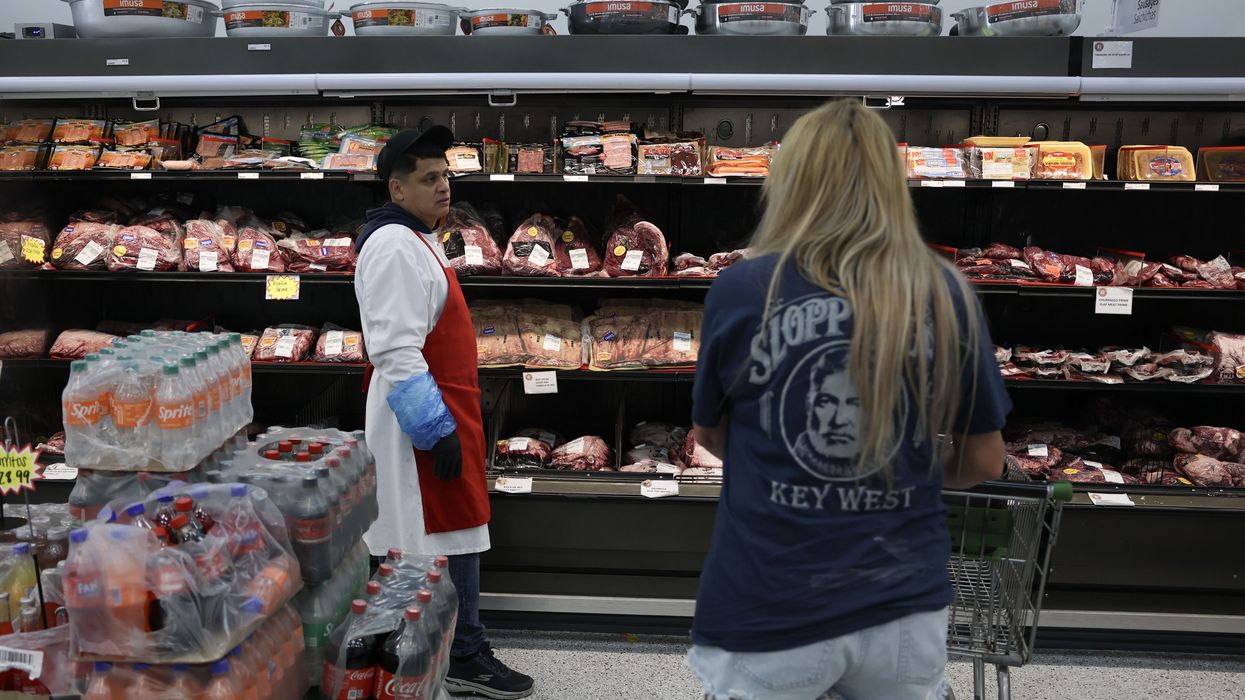
But only businesses that directly paid President Donald Trump's sweeping import taxes are eligible for relief—not the millions of Americans who paid higher prices as a result of the illegal tariffs. As The New York Times observed, "The extent to which consumers realize any gain hinges on whether businesses share the proceeds, something that few have publicly committed to do."
US Sen. Ed Markey (D-Mass.), the top Democrat on the Senate Small Business and Entrepreneurship Committee, said in a statement Monday that big corporations that passed tariff costs onto consumers are set to "benefit the most" from the Trump administration's refund system, given that they are better-equipped to deal with the complicated application process and potential issues with the newly created portal.
Markey faulted the administration for its "shortsighted decision to not issue automatic refunds," instead choosing a convoluted application system that's expected to face issues due to massive demand. The Associated Press noted that "companies must submit declarations listing the goods on which they collectively put billions of dollars toward the import taxes the court subsequently struck down."
"If [Customs and Border Protection] approves a claim, it will take 60 to 90 days for a refund to be issued," the outlet observed. "The government expects to process refunds in phases, however, focusing first on more recent tariff payments. Any number of technical factors and procedural issues could delay an importer’s application, so any reimbursements businesses plan to make to customers likely would trickle down slowly."
"Big businesses must help ease the ongoing affordability crisis by passing on any refund savings they receive to customers and small businesses."
Democrats on the congressional Joint Economic Committee (JEC) estimated that, prior to the US Supreme Court's ruling in February, Trump's tariffs had cost US families over $1,700 each. Overall, American consumers paid more than $231 billion in tariff costs from February 2025 to January 2026, according to the JEC.
Markey said Monday that “American small businesses and families deserve to get their money back with interest."
"Big businesses that get refunds need to get the money back to their customers; ‘everyday low prices’ is not the way to do it," the senator said. "There must be no further delay or complicated hoops to jump through. CBP must ensure quick and easy refunds without further documentation. Big businesses must help ease the ongoing affordability crisis by passing on any refund savings they receive to customers and small businesses who paid them rather than waiting around for a rebate that may never come.”
Unlikely to receive relief from the Trump administration, some consumers harmed by tariffs are taking legal action against corporations that jacked up prices.
The American Prospect reported Monday that "while companies are pursuing tariff refunds and the Trump administration is levying new global tariffs to replace what was struck down, some consumers are filing their own lawsuits seeking relief for higher prices paid because of tariffs."
"Lawsuits have been filed against at least five corporations that plaintiffs say raised prices to pay for tariffs—costs set to be refunded to companies," the Prospect noted. "The proposed class action suits target Costco, EssilorLuxottica (the maker of Ray-Ban sunglasses), activewear company Fabletics, UPS, and FedEx."
US Energy Secretary Chris Wright told CNN on Sunday that gas prices might not drop below $3 until next year.
US President Donald Trump on Monday said his own energy secretary, former fracking executive Chris Wright, was incorrect when he said gasgas prices may not get below $3 per gallon until next year.
In a Sunday interview with CNN's Jake Tapper, Wright was asked when Americans could expect to see gas prices fall significantly after they spiked to over $4 per gallon on average nationwide because of Trump's illegal war of choice with Iran.
"I don't know," Wright responded. "That could happen later this year. That might not happen until next year."
In an interview with The Hill on Monday, Trump said Wright was "totally wrong" about the projection, and insisted that gas prices would plummet "as soon as [the war with Iran] ends."
Despite Trump's claims that gas prices will come down rapidly after the end of the war, The New York Times reported on Monday that the negative effects of Iran's closure of the Strait of Hormuz, which has choked off roughly 20% of global petroleum shipments, is just starting to be felt.
The impact of the strait's closure is being felt most acutely in East Asia, where oil supply shortages are having a ripple effect that is likely to spread throughout the world if the strait remains closed for much longer.
"Even if there is a peace deal soon," the Times reported, "the future... will likely include months of canceled flights, surging food prices, factory pauses, delayed shipments and empty shelves for products long considered quick and easy to buy worldwide: plastic bags, instant noodles, vaccines, syringes, lipstick, microchips and sportswear."
The Times added that "even if the Strait of Hormuz stabilizes tomorrow, it could take years for oil and gas output and shipping to reach fat prewar levels."
Bob McNally, founder and president of the consulting firm Rapidan Energy Group, echoed the Times' analysis in an interview with Newsweek published on Monday.
"It is likely we will feel the effects of energy disruptions through the end of the year," McNally explained. "Even if the conflict and disruptions were to end today, the ripple effects would be felt for many months. Just restarting Gulf production and flows would take three to four months. Repairing damage to facilities could take longer."
Mark Zandi, chief economist at Moody's Analytics, also projected more financial pain for US consumers in the months ahead.
"It doesn’t look like gasoline prices will return to pre-war levels anytime soon," Zandi wrote in a Sunday social media post. "That’s even if the war ends soon, which looks iffy, to say the least. And this abstracts from what Americans will need to shell out for higher prices on everything from groceries to airfares in the coming weeks and months. The financial pain caused by the war and its fallout on consumer spending and the economy is set to intensify."
"We write this letter to you with trembling hands and a heart full of pain, from amidst the ashes and ruins of the schools of the city of Minab."
Parents of children killed in the US bombing of an elementary school in southern Iran released a letter on Sunday applauding Pope Leo XIV for speaking out against war and urging him to "continue to be the voice of the voiceless children."
"We write this letter to you with trembling hands and a heart full of pain, from amidst the ashes and ruins of the schools of the city of Minab," reads the letter, first reported by Iran's PressTV. "We are the fathers and mothers of 168 children who, these days, instead of embracing the warm bodies of our children, press their burned bags and bloody notebooks to our chests; innocent children whose only crime was smiling in the classroom, but this crime, through the instigation and support of illogical warmongers, crashed down upon the heads of our innocent children."
More than 100 children were killed in the February 28 strike on Shajarah Tayyebeh elementary school in Minab, along with teachers and parents. Preliminary findings from the Pentagon indicate that the US was responsible for the strike, though the Trump administration has not formally admitted fault or apologized for the deadly attack, which came on the first day of the illegal US-Israeli war on Iran. Human rights groups have said the bombing should be investigated as a war crime.
In recent weeks, Trump administration officials and US President Donald Trump himself have lashed out at Pope Leo for condemning the Iran war and the president's genocidal threat to wipe out Iranian civilization, which the pope called "truly unacceptable."
The pontiff has not backed down, saying last week that he "will continue to speak out strongly against war, seeking to promote peace, promoting dialogue and multilateralism among states to find solutions to problems."
In their letter on Sunday, the parents of children killed in the Minab school bombing wrote to Pope Leo that "you, with an aching heart and a divine perspective, warned the awakened consciences of the world that 'hate is increasing, violence is worsening, and many have lost their lives.'"
"Today, the empty chairs of the classrooms in Minab are bitter testaments to this very truth; a truth brought about by the making of American bombs directed by illogical warmongers," they continued. "We thank you that amidst the tumult of war, you became the voice of righteousness and reminded everyone that lasting peace and tranquility are achieved 'not through force and weapons, but through the path of dialogue and the genuine search for a solution for all.'"
NEW: The families of more than 100 school children killed in the U.S. bombing of an Iranian school have written a letter of gratitude to Pope Leo XIV.
In it, they thank him for being a champion of peace and a voice for their deceased children.
The White House has yet to… pic.twitter.com/KZKmNoYwwu
— Christopher Hale (@ChristopherHale) April 19, 2026
The letter came as Trump issued fresh threats to indiscriminately bomb Iran's civilian infrastructure, further endangering a fragile ceasefire and the prospect of a lasting diplomatic resolution to the conflict.
According to Iranian authorities, the US-Israeli war has killed more than 3,300 people in Iran—including hundreds of children. Abbas Masjedi, the head of the Iranian Legal Medicine Organization, told PressTV that 40% of the bodies of Iranian victims were "initially unidentifiable due to the type of bombs and missiles" used by the US and Israeli militaries.