Trump Pharma Deals Called Distraction From 'Failed Plan to Lower US Drug Prices'
"Lasting relief requires transparent, enforceable measures that lower drug prices and hold big drug companies accountable," said one critic.
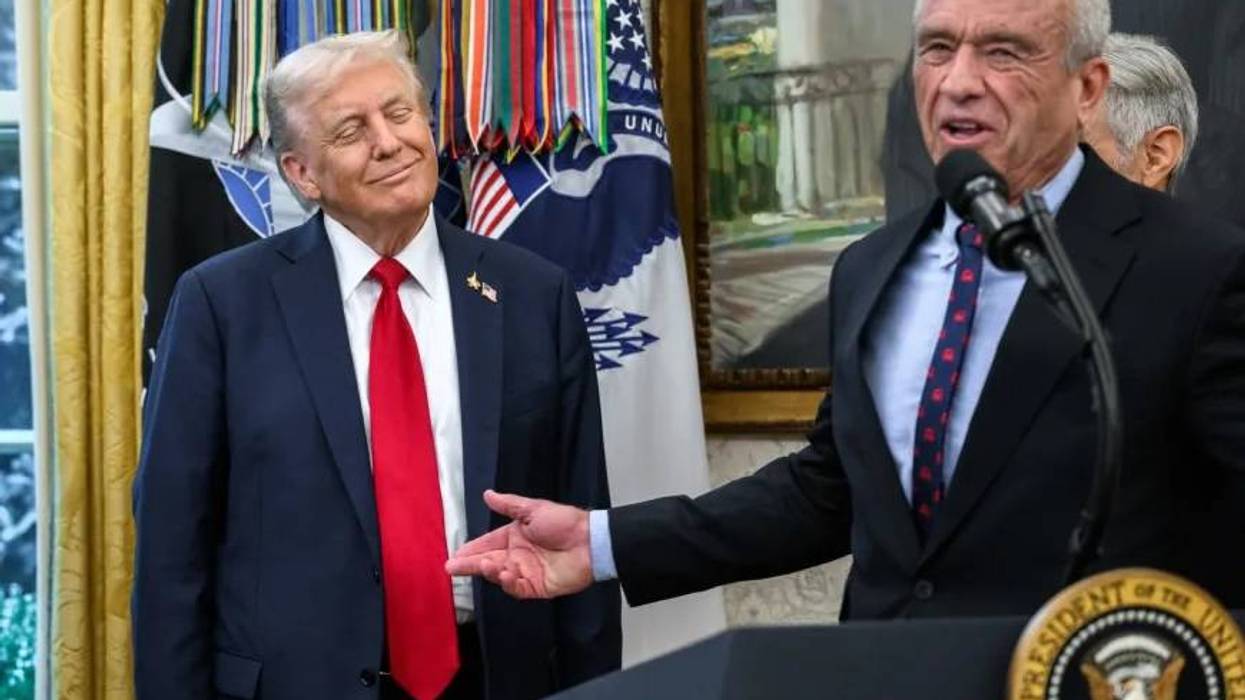
US President Donald Trump on Monday announced nine more agreements with pharmaceutical manufacturers intended to lower prescription drug prices nationwide, bringing the total to 26, but patient advocates responded skeptically.
The administration previously struck "most favored nation" (MFN) deals with 17 large drug manufacturers. The new ones with midsized companies—Alcon, Astellas Pharma, BeOne Medicines, BridgeBio, CSL, Kyowa Kirin, Sun Pharma, Teva Pharmaceuticals, and UCB—mean that 89% of the branded drug market is subject to an agreement, according to a White House fact sheet.
"It has been nearly a year since Trump announced his first secret MFN deal with Pfizer, and he has almost nothing to show for it," Peter Maybarduk, Access to Medicines director at the watchdog group Public Citizen, said in a Monday statement. "The new deals are a distraction from the administration's failed plan to lower US drug prices to the levels paid in other wealthy countries."
Earlier this month, Public Citizen released an analysis of Trump's policies to cut drug costs, including MFN deals. Maybarduk said at the time that "Trump has three kinds of drug pricing policy: fake, exaggerated, and not-real-yet, probably-won't-happen."
Following Monday's agreements, the campaigner argued that "a more serious approach would build international reference pricing into Medicare drug price negotiation. Instead, Trump is cozying up to Big Pharma and keeping American drug prices high."
"There still is no evidence that any pharma company has followed through on prior commitments to the Trump administration to launch new drugs at MFN price points," he explained. "Uptake of TrumpRx, which may cause consumers to overpay on medicines, has been lackluster."
TrumpRx is a government-operated website that helps patients find discounted prices and coupons for certain medications—and, as the Public Citizen analysis highlighted, the only part of the president's MFN program that is fully underway.
"The Centers for Medicare and Medicaid Services (CMS) has not announced any state participants in a pilot to test MFN-based prices in Medicaid," Maybarduk noted. "And CMS has failed to issue final rules to test MFN-pricing in Medicare, while simultaneously excluding almost all drug companies from these programs."
Public Citizen said it plans to immediately file a Freedom of Information Act request to obtain the texts of these "farce" deals—a pledge that came just days after US Sen. Elizabeth Warren (D-Mass.) highlighted that Health and Human Services Secretary Robert F. Kennedy Jr. has failed to publicize initial 17 agreements, despite agreeing to do so during an April hearing.
Like Public Citizen, the advocacy group Patients for Affordable Drugs was critical of the new deals, with CEO Merith Basey pointing out that "for decades, drug companies have been charging Americans at least four times more for brand-name medicines than people in other high-income nations."
"Patients need systemic reforms that will lower drug prices, rather than short-term, voluntary agreements whose terms remain secret," she asserted. "The deals announced today focus on Medicaid, where steep discounts already exist, and even then, states can choose whether to participate. Lasting relief requires transparent, enforceable measures that lower drug prices and hold big drug companies accountable."
As the industry trade publication Fierce Pharma reported, the large companies behind the initial deals "made a combination of drug pricing commitments and domestic investment pledges to win temporary immunity from the Trump administration's drug import tariffs," and "individual company press releases Monday, like UCB's, suggest that tariff immunity is still very much part of the MFN equation."
Although Trump's tried taking credit for a recent drop in medication costs, with the White House X account claiming Monday that he's "leveled the playing field, and made prescription drugs more affordable than ever for the American people," as Common Dreams reported earlier this month, experts have cited the Biden administration's policy allowing Medicare to directly negotiate some prices.
As Trump has touted his MFN deals, critics of the United States' for-profit healthcare system have in recent months renewed calls for shifting to Medicare for All—which new research shows would save over 114,000 lives and $1 trillion each year—and other healthcare reforms, including breaking up industry giants, capping drug prices, strengthening antitrust enforcement, and expanding the sector's workforce.