

SUBSCRIBE TO OUR FREE NEWSLETTER
Daily news & progressive opinion—funded by the people, not the corporations—delivered straight to your inbox.
5
#000000
#FFFFFF
To donate by check, phone, or other method, see our More Ways to Give page.
Daily news & progressive opinion—funded by the people, not the corporations—delivered straight to your inbox.
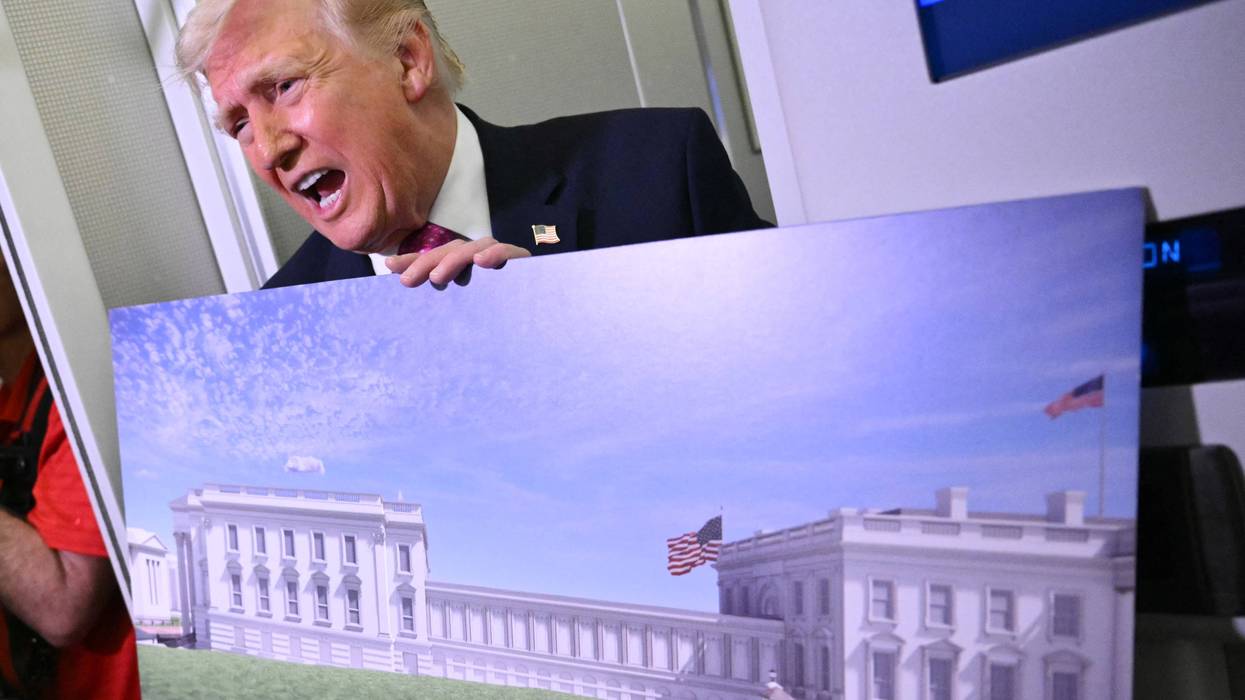
"As they push to build a $400 million ballroom, they are stripping disabled Americans of their meager benefits," said one congressional candidate.
The Trump administration is pushing forward with a new rule that could strip as many as 400,000 low-income adults with disabilities of hundreds of dollars per month.
ProPublica reported on Tuesday that the Trump administration was planning a major rule change to the Supplemental Security Income (SSI) program, which provides basic income to adults with severe disabilities like Down syndrome and autism and some indigent elderly people who may struggle to support themselves.
The program, which serves around 7.5 million Americans, typically provides payments of around $600-700 per month—enough to help pay for basic needs like food and shelter, but not enough to live on independently, especially for those already struggling due to disabilities. As a result, many SSI recipients still reside with family members.
Under the rule change, ProPublica reported that the administration would "penalize" these individuals "simply for living in the same home as their families, according to four federal officials, internal emails, and a federal regulatory listing."
According to the report:
The administration is working on a rule change that would deduct the value of a disabled adult’s bedroom from their SSI allotment, even if the family members they live with are poor enough to qualify for food stamps. This would mean slashing the benefits of some of the most low-income SSI recipients by up to a third... or ending their support altogether.
Kathleen Romig and Devin O’Connor of the Center on Budget and Policy Priorities explained the proposed rule change in a policy briefing in August:
Currently, very low-income disabled or older people who receive SSI can have their benefits reduced by up to one-third (about $300 a month) if they receive “in-kind support and maintenance,” including a place to stay. Similarly, SSI recipients can have their benefits reduced based on the income of their parents (if they are under 18) or spouse, under the assumption that they will contribute to an SSI beneficiary’s living expenses. However, these reductions don’t apply to beneficiaries who live in a household that receives “public assistance,” including food assistance programs like the Supplemental Nutrition Assistance Program (SNAP). That’s because households financially precarious enough to qualify for those benefits can’t afford to financially support SSI recipients...
SSI’s public assistance household rule has been updated to reflect the ways struggling families make ends meet—but the Trump administration proposal would return the program to the outdated criteria first established in 1980... This change would ignore the reality that families who receive SNAP have very low incomes—the typical multi-person SNAP household with at least one member who receives SSI has an annual income of around $17,000, well below the poverty line.
According to ProPublica, one woman with Down syndrome in Philadelphia, 22-year-old Shy’tyra Burton, who has struggled to find a job due to her intellectual disability, is expected to see her $994 monthly benefit cut by about $330 a month because she has continued to live with her father, Rondell, a sanitation worker.
He makes about $2,000 a month, or $24,000 annually—well below the federal poverty line for a single parent with multiple children. Even with the SSI payment, which allows Shy’tyra to pay for her own internet and meals, Rondell said that he's "still barely managing."
Using actuarial figures from the Social Security Administration (SSA), which administers the program, ProPublica determined that as many as 400,000 disabled people and indigent elderly people could lose some or all of their benefits.
"These are not people gaming the system," argued Rep. Mike Levin (D-Calif.), whose state could see more than 57,000 people lose benefits as a result of the cuts.
"Fewer than one in three applicants is approved," he said. "The process takes years and requires medical and vocational evaluations.
"The administration calls this rooting out waste, fraud, and abuse. It is not," he continued. "This policy costs more, helps no one, and punishes families for taking care of their own."
The rule change is being reviewed by the White House Office of Management and Budget (OMB), where it will be subject to editing before being sent back to the Social Security Administration, where it will face a period of public comment.
The OMB is administered by Director Russell Vought, one of the architects of the Heritage Foundation's far-right Project 2025 agenda. In addition to using last year's government shutdown to withhold SNAP benefits from around 42 million Americans and starve blue states of funding for federal programs, he has used the office to push for a full-fledged assault on benefits for the poor, disabled, and elderly, including those administered by the SSA.
Vought reportedly led the charge for the SSA to raise the age threshold for disabled adults receiving Social Security disability insurance from 50 to 60, or to remove age as a factor altogether when determining whether a disabled individual has the capability to work. According to the Urban Institute, the plan could have kicked 750,000 people off their disability payments and reduced payouts by $82 million over the next decade.
The administration ultimately backed off the proposal once it became clear that many of those hurt would be older coal miners and factory workers in red states, some of Trump's core demographics of support. But it is still reportedly soldiering ahead with its plan to cut SSI payments for those with disabilities.
Vought has justified these and other dramatic cuts as part of efforts to make the government more efficient. But ProPublica found that while cutting Burton’s benefit could save taxpayers about $11 per day, it could mean her father is unable to care for her, forcing her into a state facility that costs hundreds of dollars a day in public money.
"The Trump rule would have harmful consequences beyond the loss of benefits and eligibility, creating heartbreaking dilemmas for SSI recipients and their families," explained Romig and O'Connor. "It could discourage families from offering help to their loved ones, for fear of jeopardizing their meager benefits. It could force more people to turn to institutional care because they could no longer afford to live in the community."
Fred Wellman, a military veteran and Democratic candidate for the second congressional district in Missouri—a state where around 6,000 disabled and elderly people could potentially be affected by the proposed cuts—called the policy a “truly monstrous decision” especially in light of a recent Republican proposal for Congress to allocate $400 million for Trump’s White House ballroom project after a court ruled it could not be funded using donations.
"As they push to build a $400 million ballroom, they are stripping disabled Americans of their meager benefits," Wellman said. "Over and over, this administration and the GOP choose cruelty over caring. It’s just sick."
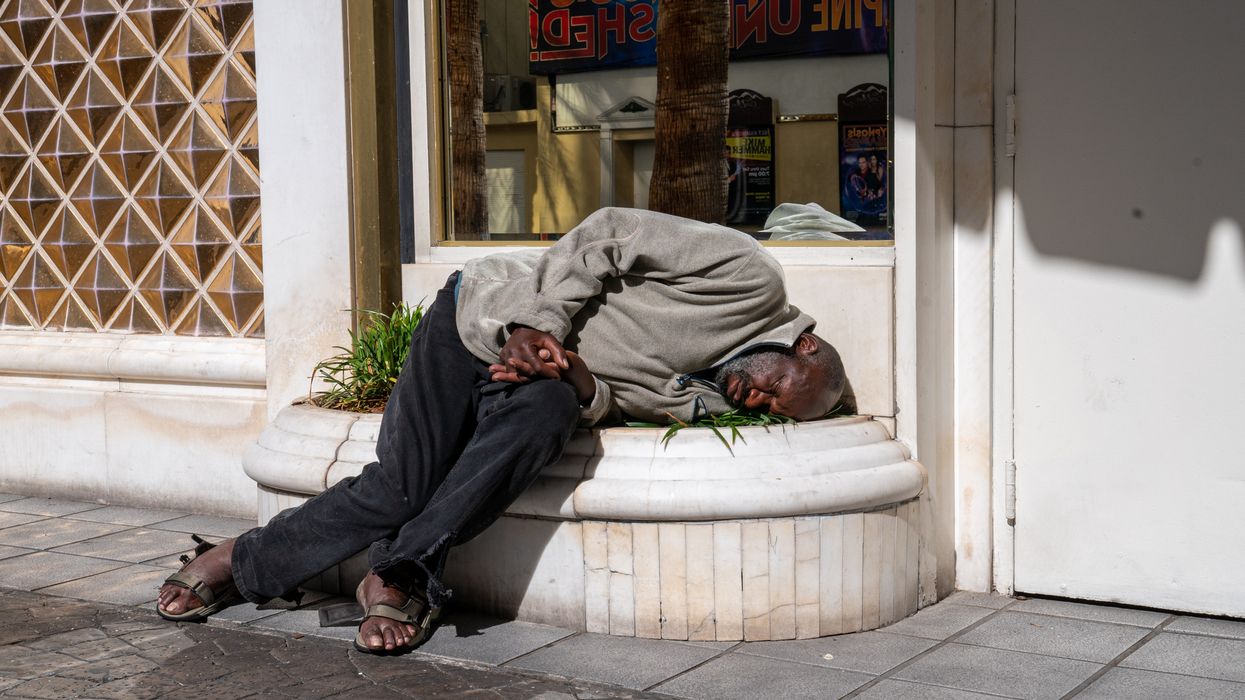
Supplemental Security Income checks should be increased to meet recipients’ needs.
Sarah’s situation was one we see a lot in eviction court. Hers was among the 3 of every 4 households whose incomes are low enough to qualify for a federal housing subsidy but do not receive it because we underfund the programs so dramatically. So Sarah had been living for a few years in a dilapidated house where her absentee landlord charged her well below market-rate rent—just $650 a month. The implicit bargain was that Sarah would not complain to the health department or anyone else about the caved-in ceilings, mold, broken appliances, and mice that came in through the many holes in the house’s rotting exterior.
That unholy arrangement unraveled when Sarah’s landlord sold the property to a buyer who discovered Sarah had no written lease and wanted to demolish the house. We met Sarah (not her real name) in court after she had ignored multiple notices to move.
“I know the judge is going to order me out of there,” she told us. But she had looked around at available rental units and couldn’t find anything for less than $900 a month. Which was a problem, because Sarah’s entire monthly income was only a few dollars more than that. “How am I supposed to live now?” she asked.
It's a good question.
A significant portion of our nation’s unhoused population are SSI recipients, limited to an income that doesn’t come close to covering the costs of housing, food, transportation, clothing, and other necessities.
Like 7.5 million other people in the United States, Sarah is a recipient of Supplemental Security Income, known as SSI. SSI is a federal program for persons who have little to no income or assets and are living with severe disabilities that leave them unable to work. Sarah, 67 years old, is legally blind, uses a wheelchair, and has multiple other chronic, debilitating conditions. That allows her to qualify for SSI.
But, to her point, it doesn’t allow her to live.
Sarah’s monthly SSI check is the maximum program amount of $967. Couples who are both eligible for SSI are maxed out at $1,450 per month. SSI recipients have to comply with tight restrictions on how much income they can make or assets they can own. Most are like Sarah, fully unable to work and with no other income. So they are condemned to poverty.
As Sarah was on the cusp of learning, SSI often condemns people to homelessness, too. A significant portion of our nation’s unhoused population are SSI recipients, limited to an income that doesn’t come close to covering the costs of housing, food, transportation, clothing, and other necessities.
“I’ve had many clients who received a monthly SSI check but still can’t afford the rent,” says Jesse Rabinowitz of the National Homeless Law Center. “When there is no housing, people have no choice but to sleep outside.” That grim reality of sleeping outside brings with it a significant chance of death from exposure, assault, and untreated health crises.
Mountains of evidence point to the main cause of homelessness being the problem faced by Rabinowitz’s clients and ours: a straightforward inability to pay monthly rent.
“I want to be absolutely clear that the reason people become unhoused is that they do not have access to housing that they can afford,” says Brian Goldstone, anthropologist and author of the new book, There is No Place for Us: Working and Homeless in America. “The answer isn’t addiction or mental illness; it’s that they didn’t have access to housing they could afford.”
As Sarah was learning, life on an SSI check means there is essentially no safe housing that she can afford. It wasn’t supposed to be this way. When Congress created the SSI program in 1972, the stated purpose was to “provide a positive assurance that the Nation’s aged, blind, and disabled people would no longer have to subsist on below poverty level incomes.” But the current SSI maximum benefit is well below the federal poverty line. The official poverty level itself is an underestimate of the costs incurred by people like Sarah who pay a “disability tax” of higher medical, transportation, and housing costs. That math is not mathing in particular for the women and persons of color who make up a disproportionate number of SSI recipients.
Because SSI in theory could ensure that all who cannot earn significant wages would receive a monthly stipend, it is sometimes compared to a universal basic income. But no one who has ever applied for SSI confuses the two. The program’s onerous financial and disability eligibility requirements make damn sure that there is nothing “universal” about SSI income. Less than half of all SSI applications are granted—less than a third of them at the initial application stage.
My and other service providers’ experience is that these systematic refusals occur despite the fact that the majority of SSI applicants we see are clearly eligible for the program. But the same disabilities and poverty-caused barriers that lead them to need SSI contribute to them getting snared in the red tape of the application process.
Just as we know that housing is the best response to homelessness, countless research studies confirm that increased income is a silver-bullet remedy for poverty.
Those who do successfully get enrolled in SSI face restrictive rules that all but guarantee they remain destitute. They are not allowed to receive more than $20 in cash or in-kind assistance from family or others. If a couple with disabilities marry, their combined monthly benefits are cut. Caps on savings leave SSI recipients unable to respond to life’s unexpected expenses like an uncovered medical cost or car repair. Ironically, this paternalism comes at a significant cost to taxpayers. SSI benefits are only 4% of the Social Security Administration’s outlay, but policing the program’s many recipient restrictions means SSI takes up 38% of the agency’s administrative costs.
SSI’s low benefit levels and many restrictions have been heavily criticized by poverty research and advocacy groups like the Center on Budget and Policy Priorities, Center for American Progress, and Brookings Institution. The organization Justice in Aging has long pushed for SSI reform.
“We need to improve the program by raising benefit levels, reducing barriers to access, and making it easier for people to afford the daily costs of living,” says Tracey Groninger, Justice in Aging’s director of economic security.
Legislation proposed in the last Congress aimed to do just that. The Supplemental Security Income Restoration Act, sponsored by 36 House members and endorsed by over 100 organizations, would have raised the SSI monthly benefit amounts to the federal poverty level and ratcheted back the prohibitive asset and outside income restrictions. In this Congress, the newly-introduced Savings Penalty Elimination Act would allow SSI recipients to keep more savings while retaining their eligibility.
The benefits-increase bill did not succeed, and has not yet been reintroduced. Hopefully, that changes soon. Just as we know that housing is the best response to homelessness, countless research studies confirm that increased income is a silver-bullet remedy for poverty. Increasing SSI benefits to a level that covers basic needs would have a dramatic effect on Sarah’s life, the lives of millions of others, and all of our communities.
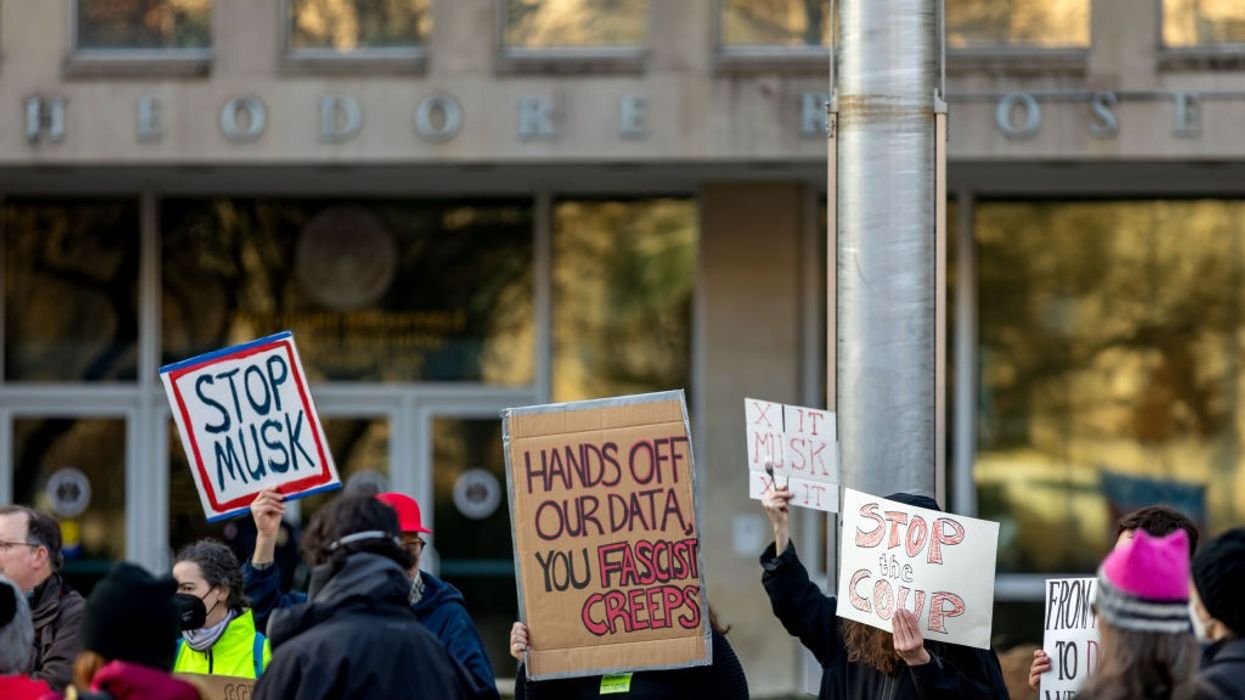
"There is no way to overstate how serious a breach this is. And my understanding is that it has already occurred," said the president of Social Security Works.
News that the acting head of the Social Security Administration left her post this past weekend after facing off with Elon Musk's lieutenants over their efforts to access government records set alarm bells blaring, with advocates warning that the unelected billionaire is moving to seize highly sensitive data.
"There is no way to overstate how serious a breach this is. And my understanding is that it has already occurred," said Nancy Altman, president of Social Security Works, a progressive advocacy organization that warned late Monday that "Elon Musk is stealing your personal Social Security data."
The Washington Post and other outlets reported Monday that Michelle King, a veteran of the Social Security Administration (SSA), left her position over the weekend after clashing with members of Musk's Department of Government Efficiency, an advisory commission known as DOGE that President Donald Trump has unleashed on federal agencies.
The New York Times reported that King stepped down after Musk's cronies sought access to "an internal data repository that contains extensive personal information about Americans."
In King's place Trump installed Leland Dudek, described by the Post as a "manager in charge of Social Security's anti-fraud office," to lead the Social Security agency until a permanent commissioner is confirmed. SSA administers retirement benefits and Supplemental Security Income (SSI) for tens of millions of Americans.
Max Richtman, president and CEO of the National Committee to Preserve Social Security and Medicare, said in a statement that "there is no justifiable reason for Musk and DOGE to have access to Americans' deeply personal information."
"Seniors, people with disabilities, and Americans everywhere of good conscience should be on high alert," said Richtman. "When a dedicated public servant resigns after more than 30 years due to the intrusive activities of Elon Musk and DOGE, that truly is a 'canary in a coal mine' moment."
"If there is an evil intent to punish perceived enemies, someone could erase your earnings record, making it impossible to collect the Social Security and Medicare benefits you have earned."
Altman noted Monday that SSA "has data on everyone who has a Social Security number, which is virtually all Americans, everyone who has Medicare, and every low-income American who has applied for" SSI.
"SSA has comprehensive medical records of people who have applied for disability benefits. It has our bank information, our earnings records, the names and ages of our children, and much more," said Altman. "Older people are disproportionately susceptible to scams. The data at SSA leaking would make the number of scams skyrocket. And, if there is an intent to punish perceived enemies, someone could erase your earnings record, making it impossible to collect the Social Security and Medicare benefits you have earned."
Altman told The Associated Press that "if there is an evil intent to punish perceived enemies, someone could erase your earnings record, making it impossible to collect the Social Security and Medicare benefits you have earned."
Musk's team of dozens of staffers—many of whose identities are not publicly known—have infiltrated departments across the federal government with the stated goal of rooting out waste and fraud, which critics say is merely a pretext for gutting critical programs that Trump and the unelected billionaire oppose. On Monday, advocacy groups filed an emergency lawsuit aiming to stop DOGE from accessing taxpayer data from the Internal Revenue Service.
"Hundreds of millions of Americans across the nation file taxes and provide sensitive, personal information to the IRS and they do so knowing that Congress has put in place protections to safeguard their data. DOGE is taking a wrecking ball to these protections and harming hardworking Americans and small businesses in the process," said Skye Perryman, president and CEO of Democracy Forward. "DOGE must not be permitted to trample on the American people's rights and that is why we are honored to represent our clients in this federal court challenge to put a stop to DOGE's lawless and harmful activities."
Speaking to reporters in the Oval Office last week, Musk claimed without evidence that his team uncovered "crazy things" in a "cursory examination of Social Security."
"We've got people in there that are 150 years old," Musk said. "Now, do you know anyone who's 150? I don't, OK. They should be in the Guinness Book of World Records."
Wired reported that "computer programmers quickly claimed that the 150 figure was not evidence of fraud, but rather the result of a weird quirk of the Social Security Administration's benefits system, which was largely written in COBOL, a 60-year-old programming language that undergirds SSA's databases as well as systems from many other U.S. government agencies."
"Because COBOL does not have a date type, some implementations rely instead on a system whereby all dates are coded to a reference point. The most commonly used is May 20, 1875, as this was the date of an international standards-setting conference held in Paris, known as the 'Convention du Mètre,'" Wired explained. "These systems default to the reference point when a birth date is missing or incomplete, meaning all of those entries in 2025 would show an age of 150."
"That's just one possible explanation for what DOGE allegedly found," the outlet added. "Musk could also have simply looked up the SSA's own website, which explains that since September 2015 the agency has automatically stopped benefit payments when anyone reaches the age of 115."
Martin O'Malley, the former governor of Maryland who served as SSA commissioner under the Biden administration, told the Post that Musk's team "will break" the Social Security system if they're given unfettered access.
"They will break it fast," O'Malley warned, "and there will be an interruption of benefits."
This story has been updated to include a statement from the National Committee to Preserve Social Security and Medicare.
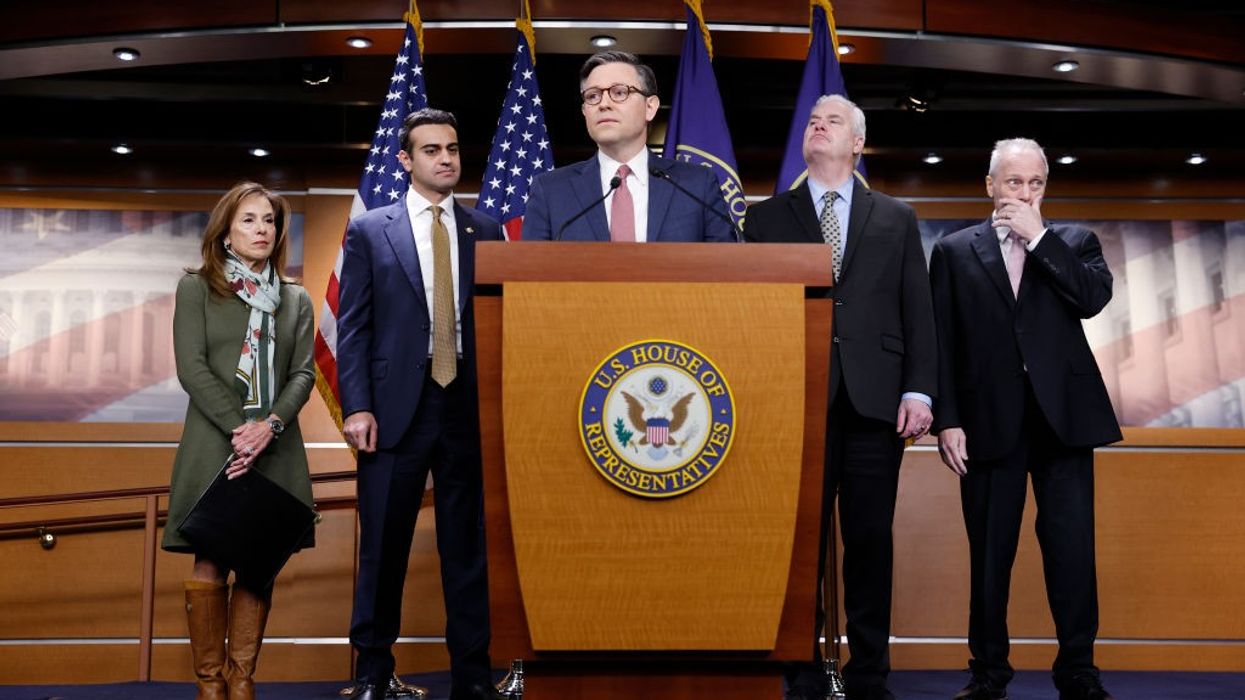
"House Republican leadership put a giant bullseye on Medicaid, with the intent to strip Americans of their healthcare benefits to pay for tax cuts for billionaires and big corporations."
House Republicans unveiled a draft budget resolution on Wednesday that calls for $4.5 trillion in tax breaks that would disproportionately benefit the wealthy while proposing $2 trillion in cuts to Medicaid, federal nutrition assistance, and other programs.
Lawmakers are set to mark up the House GOP's budget blueprint on Thursday as Republicans look to craft a sprawling reconciliation bill that can pass both chambers of Congress with a simple-majority vote. Last week, Senate Republicans released their own budget resolution that proposed significant cuts to Medicaid, the Supplemental Nutrition Assistance Program (SNAP), and other spending that benefits working-class families.
"Instead of tackling rising prices and delivering relief for American families, House Republicans are charging ahead with trillions of dollars in deeply unpopular tax breaks for billionaires like Donald Trump and Elon Musk," Alex Jacquez, chief of policy and advocacy at the Groundwork Collaborative, said Wednesday in response to the House GOP resolution.
"And, they're paying for their billionaire handouts by ransacking healthcare, food assistance, and other vital programs that American workers and families rely on," Jacquez added.
The new resolution released by the Republican-controlled House Budget Committee specifically calls on the chamber's energy and commerce panel to "submit changes in laws within its jurisdiction to reduce the deficit by not less than" $880 billion over the next decade. The House Energy and Commerce Committee has jurisdiction over Medicaid.
The measure also instructs the House Committee on Agriculture, which has jurisdiction over SNAP, to cut no less than $230 billion in spending between fiscal years 2025 and 2034.
"They wanna do a giant tax cut that disproportionately helps the rich while taking away people's health insurance and food while still adding trillions to the debt," Bobby Kogan, a former Senate Budget Committee staffer who is now senior director of federal budget policy at the Center for American Progress, wrote in response to the resolution.
Overall, the House GOP's budget resolution calls for $2 trillion in cuts to "mandatory spending" over the next decade, taking aim at a category that includes Medicaid, Medicare, Social Security, and SNAP. While Social Security benefits cannot be cut through the reconciliation process, Supplemental Security Income (SSI) can.
Congressional Republicans have outlined a number of ways they could slash Medicaid and SNAP, including punitive new work requirements that analysts say would strip benefits from tens of millions of low-income people.
But Families USA executive director Anthony Wright said Wednesday that "we don't need to know the mechanisms of how Medicaid would be cut to know the impact would be catastrophic: The sheer size of the proposed cuts means millions of Americans losing coverage, hospitals and clinics plunged into budget shortfalls, and healthcare services we all depend on being eliminated."
"This budget resolution is a five-alarm fire alert for our healthcare," said Wright. "House Republican leadership put a giant bullseye on Medicaid, with the intent to strip Americans of their healthcare benefits to pay for tax cuts for billionaires and big corporations."
Kobie Christian, a spokesperson for the progressive coalition Unrig Our Economy, issued a similarly scathing statement on Wednesday, arguing that House Republicans "showed us that what they value is more tax breaks for greedy billionaires and giant corporations with everyday people paying the price."
"At a time when everyday Americans face increasingly higher prices, Speaker Johnson and his stooges want to write billionaires a check and force working-class people to foot the bill for their outrageous tax breaks for corporations and the ultra-wealthy," said Christian. "Everyday Americans will not stand for these games—it's time for Republicans in Congress to end their campaign that puts the ultra-wealthy first on the backs of the rest of us."
Editor's note: Supplemental Security Income (SSI) is a safety net program that provides a very basic income to older adults and people with disabilities who have either no or very limited other income and resources. The maximum possible federal monthly benefit for an individual is currently $733. SSI has changed little since it was signed into law in 1972, and increasing numbers of recipients are living in poverty, going hungry, or becoming homeless. The SSI Restoration Act of 2015 would update the income and asset limits to better reflect reasonable assistance in today's dollars.
You work your whole life. You pay your taxes - boy, do you pay your taxes. Unlike upper-middle and upper-class folks who have tax preparers and accountants to help them with their taxes and find deductions and loopholes and so forth, you get slammed every year and you can barely keep afloat...then, the worst happens.
You get old and disabled, and you can't work anymore, and your disability/social security isn't really enough to live on, and you never were able to get much retirement money together, so the government gives you something called SSI. Between that and Social Security you still don't have enough to live on but what can you do?
To add indignity to insult, the government tells you how much money you can have in the bank and it ain't much, and then if you work they cut out some of the SSI so you still don't have enough to live on.
If someone lends you money to get by you can't repay the debt out of your Social Security or SSI because the government watches everything you do and they don't want you to borrow money or pay it back because the bottom line is the government is afraid to be cheated. Sadly enough, they are mostly afraid of being cheated by poor people. Rich people seem to be able to get away with murder.
So if you get a job you can't keep your SSI money. The government will take it back. For example, if you're getting $280 from SSI and you make $300 you are no better off than before you got a job. Probably worse off, because the SSI goes bye-bye and you have to pay taxes on your new income.
So, if you want to improve your lot (adding a swimming pool, perhaps, or more likely having a decent meal for a change), you will have to make twice as much to improve it; otherwise, like the Red Queen, you have to run like hell just to stay in place.
Now a bunch of politicians and well-wishers are trying to change the laws a little bit...not majorly, just minorly, to make it a little easier for us to survive. And yet they will run into obstacles.
I wish everyone who opposes making life a little better for poor old disabled people (or even poor old people) would put $10.00 in an envelope and send it anonymously to a poor old person.
In the meantime, I'm looking for a part-time or freelance job. I'm 72 and I'm broke and can't afford to live on Social Security and SSI and I don't really know what to do. Also, I'm in dialysis, so that chews up around four days a week. So I'll keep looking for a job, albeit futilely, and if I can figure out a way to rob a bank I might do that...I have an electric wheelchair and could do a slow-speed chase down the street if I had to....
So, whilst I'm thinking of it, if anyone out there wants to offer me a job I would be extremely happy, and also, I could use a nice little house with a yard for my dog and a couple of tomato plants and maybe a lemon tree or an avocado tree. Just thought I'd put that out there.
Cheers to all, and remember, wait for the supermarket sales! And never give up - fight to the bitter end.