

SUBSCRIBE TO OUR FREE NEWSLETTER
Daily news & progressive opinion—funded by the people, not the corporations—delivered straight to your inbox.
5
#000000
#FFFFFF
To donate by check, phone, or other method, see our More Ways to Give page.
Daily news & progressive opinion—funded by the people, not the corporations—delivered straight to your inbox.
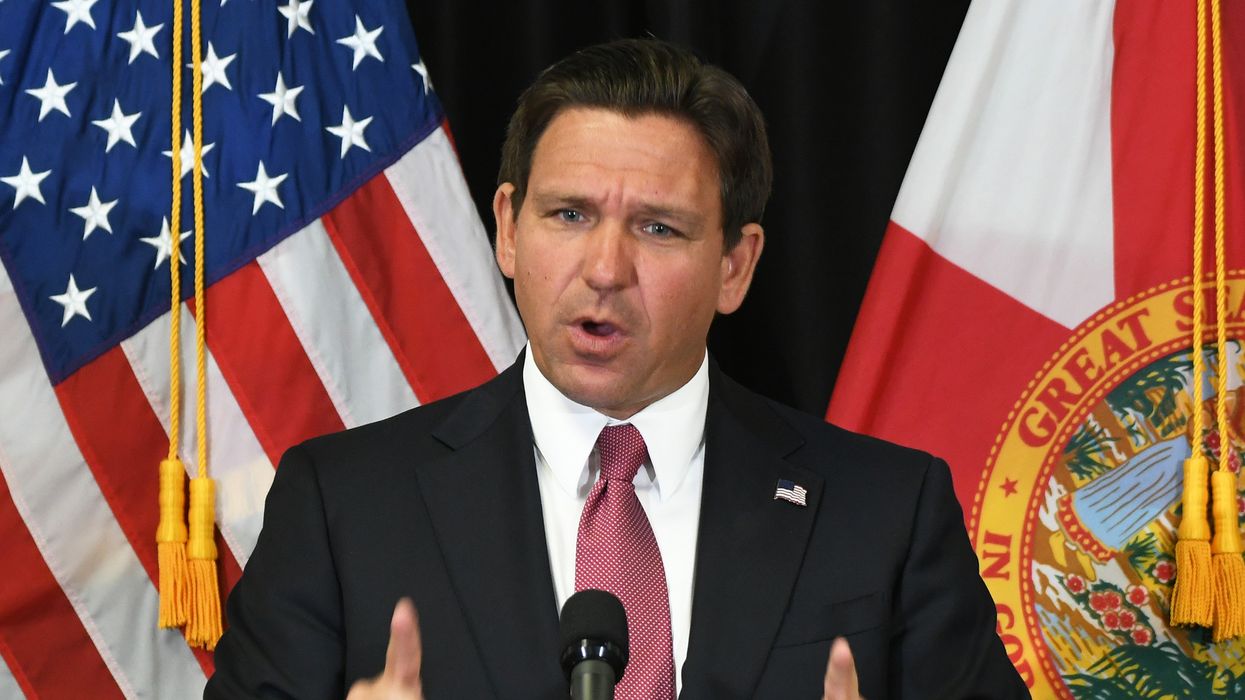
"People feel empowered to attack queer students because if the legislators can do it, they think they can do it too," one student told the human rights group.
Warning that hateful laws and policies will only spread if not challenged, legal experts joined human rights campaigners on Wednesday in calling on the Biden administration to take action against the "vicious" attacks on LGBTQ+ and Black people, both students and teachers, that Florida Gov. Ron DeSantis has waged through his state's schools.
Human Rights Watch (HRW) was joined by grassroots group Florida Rising and the Rule of Law Impact Lab at Stanford Law School in releasing a new report titled, "Why Do They Hate Us So Much?": Discriminatory Censorship Laws Harm Education in Florida."
The report's title stems from a question Black students asked one of teachers interviewed by HRW between January and April 2024, months after the state government released new standards for teaching African American history. The new standards teach students that Black Americans benefited from slavery and discourage students from learning about contributions Black individuals have made to U.S. history, asking children in Florida schools "to simply identify African American individuals," according to Education Week.
The new teaching standards, along with a number of laws passed by Republican lawmakers since 2021, have helped create "an environment of censorship and discrimination in classrooms that harms education for all Florida students but is especially hostile in its impact on Black Floridians and LGBTQ Floridians," said HRW in the report.
Through interviews with more than 60 teachers, students, administrators, and parents as well as reviews of Florida's education policies, court record, and media accounts, HRW found that in just over three years, the public school system in the state has devolved into an environment where educators and children fear retaliation for speaking about racism, LGBTQ+ rights, and other social justice issues.
"People feel empowered to attack queer students because if the legislators can do it, they think they can do it too," a high school student named Kara told HRW. "I've heard slurs being said constantly and no teacher bats an eye and it's like, whoa, why aren't you doing anything about it? We need more protections for queer students. We need schools that are an inclusive space."
A parent named Patricia told the group the DeSantis administration has waged "an attack on Blackness" that has led people across the state "to feel hopeless."
The new laws include a ban on so-called "critical race theory," a legal theory that is not taught on public K-12 schools but has been adopted as a flashpoint for conservatives who appear to define the term as any discussion of structural racism or the legacy of slavery in the U.S.; the Stop Wrongs Against Our Kids and Employees (Stop WOKE) Act, which limits classroom discussions of racism; and laws limiting classroom lessons on sexual orientation and gender identity, including one commonly known as the "Don't Say Gay or Trans" law.
The report notes that since DeSantis and the Republican Party began introducing the new laws, teachers have been fired and investigated for such supposed transgressions as refusing to remove a Black Lives Matter flag from a classroom, showing a Disney film that included a gay character, using the gender-neutral honorific Mx., and posting on social media about concerns over book bans.
Trey Walk, a U.S. democracy researcher for Human Rights Watch, noted that the report was released on Juneteenth, the national holiday which marks the day enslaved Black people in Texas learned that the Emancipation Proclamation had ordered their freedom. DeSantis has refused to make the day a state holiday and has not formally recognized the day since 2020.
"June 19 is Juneteenth, a time we should reckon with the devastating costs of suppressing information, including about slavery and its legacies, that will move the United States forward," said Walk. "We're also celebrating Pride Month, a time we cherish the freedom of LGBTQ people to be represented and valued, including in their schools."
Amrit Singh, executive director at the Rule of Law Impact Lab, said the Biden administration must enact "robust civil rights protections to combat this trend of discriminatory censorship and book bans in schools."
The groups called on President Joe Biden to hold a national summit on educational censorship and said Congress should increase funding for the Department of Education's (DOE) Office for Civil Rights; hold public hearings on censorship laws like those pushed by DeSantis; and pass the Books Save Lives Act to clarify that discriminatory censorship in schools violates the U.S. Constitution.
They also called on the DOE to increase community engagement with students, teachers, and families who have been impacted by censorship laws in schools; issue guidance clarifying that laws distorting or restricting classroom content may deny students from protected classes educational opportunities, which may amount a civil rights violation; and initiate compliance reviews in school districts and state where a large number of civil rights complaints are filed.
"The question all officials must now address is how to ensure students learn U.S. history and the contributions and cultures of the many people of the United States with accuracy and nuance," said HRW, "and discuss and think critically about these topics in a context where they may express their identities and their opinions free from discrimination and fear."
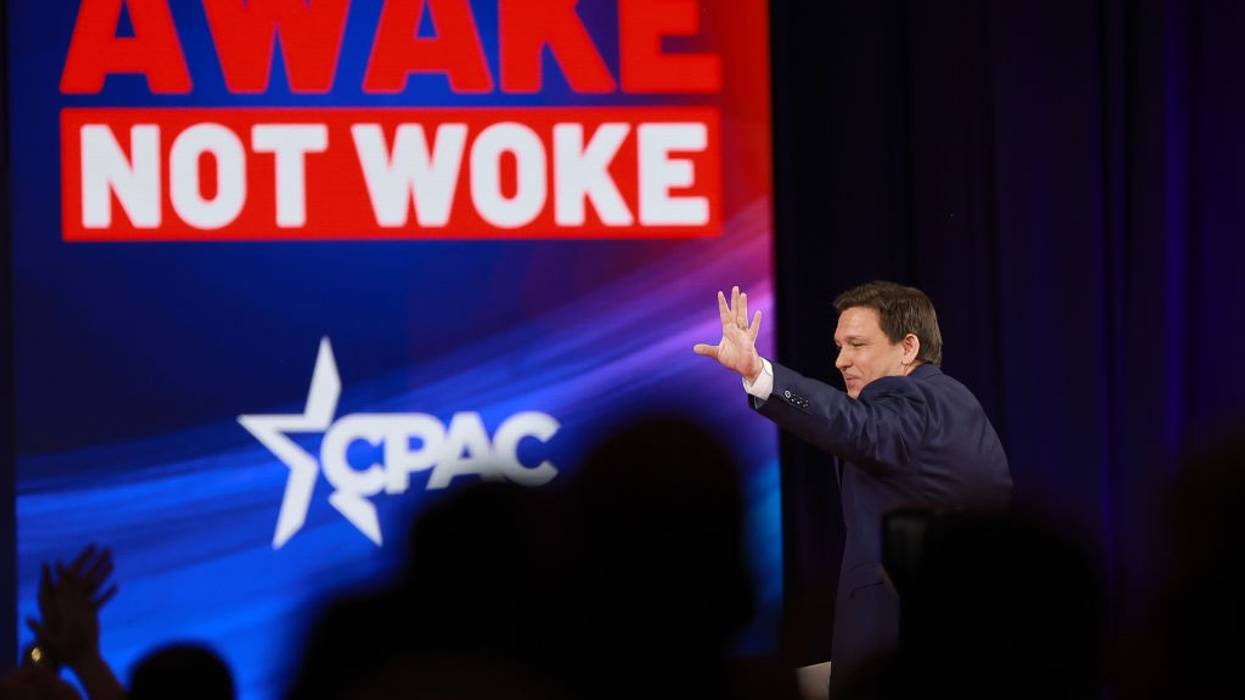
One Democratic Florida lawmaker called the unanimous ruling "another win for the First Amendment and another loss for DeSantis."
A federal appellate panel on Monday upheld a lower court's blockage of a key provision in Florida's law prohibiting employers from requiring workers to attend diversity, equity, and inclusion and other training that Republican lawmakers and GOP Gov. Ron DeSantis deride as "woke."
A three-judge panel of the 11th U.S. Circuit Court of Appeals in Atlanta said the workplace training provisions of the Stop Wrongs Against Our Kids and Employees (WOKE) Act—euphemistically rebranded by supporters as the Individual Freedom Act—violate the First Amendment.
"This is not the first era in which Americans have held widely divergent views on important areas of morality, ethics, law, and public policy," the panel's 22-page opinion states. "And it is not the first time that these disagreements have seemed so important, and their airing so dangerous, that something had to be done. But now, as before, the First Amendment keeps the government from putting its thumb on the scale."
Monday's ruling affirmed an August 2022 preliminary injunction by U.S. District Judge Mark Walker, who found the Stop WOKE Act violates First Amendment free speech protections and the 14th Amendment's Due Process Clause.
Decried by some critics as the "white discomfort law," the legislation—which was signed by DeSantis in April 2022—outlawed classroom discussion or corporate training that makes students or workers feel uneasy about their race.
"By limiting its restrictions to a list of ideas designated as offensive, the act targets speech based on its content," Judge Britt C. Grant, an appointee of former President Donald Trump, said in Monday's ruling. "And by barring only speech that endorses any of those ideas, it penalizes certain viewpoints—the greatest First Amendment sin."
Plaintiffs in the case and one of their lawyers joined free speech advocates in welcoming the decision.
"The government obviously has no right to patrol my workplace for words that some politicians don't like," Antonio McBroom, CEO of Primo Tampa, said in a statement. "And the government obviously has no right to substitute its preferences for those of any businesses' guests and team members."
Shalini Goel Agarwal, an attorney for Protect Democracy, which represented case plaintiffs, asserted that "speech codes have no place in American society, and elected officials have no business censoring the speech of business owners simply because they don't agree with what's being expressed."
"Barring employers from engaging in speech that powerful politicians don't like is a move straight out of the authoritarian playbook," the lawyer added.
The Stop WOKE Act is a key law in DeSantis' "war on woke" crusade that includes attacks on K-12 and higher education, protest rights, and the LGBTQ+ community. A lawsuit challenging the Stop WOKE Act's race-based higher education restrictions is currently proceeding in federal court.
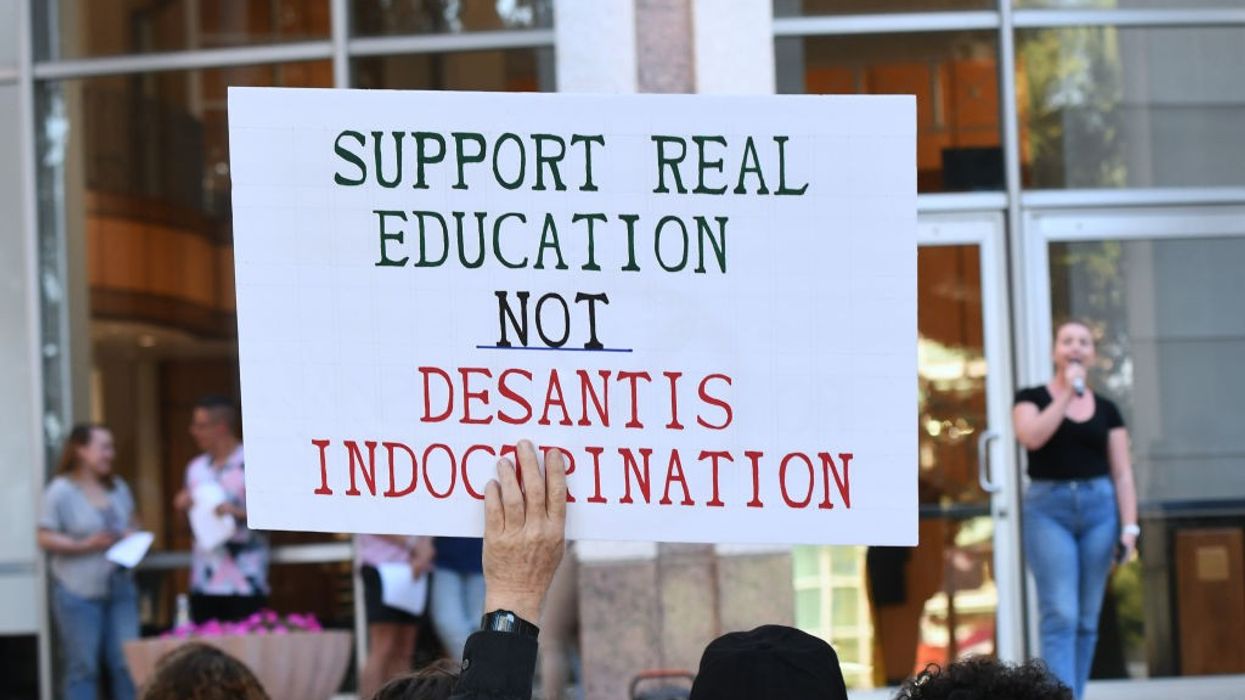
"Sadly, it's all part of the DeSantis playbook of eroding rights, censoring those he disagrees with, and undermining access to knowledge," said one critic.
The Republican-controlled Florida Board of Education on Thursday effectively banned Advanced Placement Psychology by notifying school district superintendents that teaching about sexual orientation and gender identity—key subjects in college-level psychology curricula—is prohibited under the state's so-called "Don't Say Gay or Trans" law.
That means class schedules for the fall semester—which begins next week in most Florida school districts—are in limbo for thousands of students. Last year, around 28,000 pupils in more than 500 Florida high schools took AP Psychology.
"What a terrible decision that is 100% politically motivated."
In a statement, the College Board—the New York-based national body that approves AP courses and runs SAT testing—called sexual orientation and gender identity "essential topics" in psychology.
"The AP course asks students to 'describe how sex and gender influence socialization and other aspects of development,'" the board explained. "This element of the framework is not new: gender and sexual orientation have been part of AP Psychology since the course launched 30 years ago."
"We cannot modify AP Psychology in response to regulations that would censor college-level standards for credit, placement, and career readiness," the body continued. "Our policy remains unchanged. Any course that censors required course content cannot be labeled 'AP' or 'Advanced Placement,' and the 'AP Psychology' designation cannot be utilized on student transcripts."
"To be clear, any AP Psychology course taught in Florida will violate either Florida law or college requirements," the College Board added. "Therefore, we advise Florida districts not to offer AP Psychology until Florida reverses their decision and allows parents and students to choose to take the full course."
As originally signed into law by Republican Florida Gov. Ron DeSantis in March 2022, H.B. 1557—dubbed the "Don't Say Gay or Trans" bill by critics—"prohibits classroom discussion about sexual orientation or gender identity" in grades K-3 or at any level "that is not age-appropriate." In May, DeSantis expanded the legislation to include all grades K-12.
Randi Weingarten, president of the American Federation of Teachers, condemned the "slippery slope of government censorship and bans" in DeSantis' Florida.
"Sadly, it's all part of the DeSantis playbook of eroding rights, censoring those he disagrees with, and undermining access to knowledge," Weingarten said of the 2024 GOP presidential candidate, whose campaign has been accused of embracing homophobia.
"Just this year, countless educators have been forced to remove or cover up their classroom libraries under threat of sanctions and jail, countless students have lost out because the governor ended AP African American Studies, and now this assault on AP Psychology," she added. "It's an unconscionable but far-from-surprising move from an extremist and increasingly unpopular leader who is fast becoming both a national pariah and a global embarrassment."
At the Human Rights Campaign, the nation's largest LGBTQ+ advocacy group, president Kelley Robinson said that "psychology is centered around people—all people."
"Erasing us from the curriculum ignores our existence, sets back Florida students who want to pursue psychology in higher education, and disrupts pathways for future mental health professionals to provide comprehensive, culturally competent mental healthcare for the LGBTQ+ community," she continued.
"College Board's AP Psychology curriculum is science-driven and endorsed by both educators and experts," Robinson noted. "Educational systems that reject the inclusion of LGBTQ+ people from their psychology courses are failing in their commitment to students."
Florida State Rep. Anna Eskamani (D-42) said in a statement, "As someone who graduated from Florida public schools with college credit via AP classes, I know how powerful and effective these classes are and I am sick to my stomach to see what Gov. Ron DeSantis and the Republican Party are doing in our state."
Florida Department of Education Spokesperson Cassie Pelelis accused the College Board of "attempting to force school districts to prevent students from taking the AP Psychology."
"The department didn't 'ban' the course," she insisted. "The course remains listed in Florida's Course Code Directory for the 2023-24 school year. We encourage the College Board to stop playing games with Florida students and continue to offer the course and allow teachers to operate accordingly."
During the previous academic year, educators, students, parents, and Democratic lawmakers reacted angrily after the DeSantis administration rejected a new high school AP African American Studies course—without even seeing its syllabus—claiming it violated the state's ban on "woke" education and lacked "educational value."
In March, the 11th U.S. Circuit Court of Appeals upheld a lower court's preliminary injunction against the Stop WOKE Act.

"Prohibiting ideas in the name of freedom is not freedom at all," said one critic of a bill that would outlaw teaching systemic racism in college courses. "It is censorship."
Civil liberties defenders on Wednesday decried yet another bill passed by Florida's GOP-controlled Legislature attacking academic freedom, while calling on Republican Gov. Ron DeSantis to take the unlikely step of vetoing the measure.
S.B. 266 would require Florida's Board of Education and its state university system's board of governors to establish faculty committees tasked with reviewing and, if deemed necessary, rejecting or adjusting all general education courses.
Under the bill, these courses "may not distort significant historical events or include a curriculum that teaches identity politics… or is based on theories that systemic racism, sexism, oppression, and privilege are inherent in the institutions of the United States and were created to maintain social, political, and economic inequities."
The Foundation for Individual Rights and Expression (FIRE) said that "this provision is flatly unconstitutional."
"Bans on ideas in the collegiate setting are unconstitutional, illiberal, and shortsighted," the group argued. "Prohibiting ideas in the name of freedom is not freedom at all. It is censorship."
S.B. 266 also prohibits universities and colleges from funding activities, speakers, events, and clubs that promote diversity, equity, and inclusion (DEI).
According to The Chronicle of Higher Education, Florida is one of 20 states where bills targeting DEI on college campuses have been introduced. Last week, Republican North Dakota Gov. Doug Burgum signed the nation's first law prohibiting colleges from mandating DEI training.
In Florida, critics compared S.B. 266 to the Stop WOKE Act, a censorship law signed by DeSantis last year limiting how state university professors teach race, gender, and U.S. history. The legislation is widely viewed by progressives as part of the GOP-led war on critical race theory, a graduate-level academic framework for understanding systemic racism in the United States. In March, a federal appeals court upheld a preliminary injunction against the law.
"Just as it was positively dystopian with the Stop WOKE Act, it remains unconscionable that the state Legislature has spent this much time and energy trying to prevent students and faculty from engaging in conversations with which legislators personally disagree," ACLU of Florida staff attorney Jerry Edwards said in a statement.
"Instead of engaging in meaningful policymaking to improve Floridians' lives, lawmakers have conjured a boogeyman out of thin air to expand the government's reach in all corners of our state," Edwards added. "Free speech does not end at the classroom door. The attack on free speech in education must end here. Gov. DeSantis must veto this unconstitutional bill."
Leah Watson, senior staff attorney with the national ACLU's Racial Justice Program, said that "S.B. 266 is part of a coordinated attack by partisan politicians on our right to learn about systemic racism, sexism, oppression, and privilege in higher education. It serves only to undermine progress toward racial justice and must not be allowed to go into effect."
"This attack on DEI will remove important support for students of color, erase their heritage from campuses and classrooms, and ultimately lead to increased racial bias," Watson added.
NAACP Legal Defense Fund senior counsel Charles McLaurin warned that "if enacted, the S.B. 266 bill in Florida will threaten the quality of higher education inside and outside the classroom."
Also on Wednesday, the Florida Senate voted to expand the state's so-called "Don't Say Gay or Trans" law—a ban on "classroom instruction on sexual orientation or gender identity"—through eighth grade. The original law signed by DeSantis last year was applicable in grades K-3.
Under the expanded law, high school teachers would be banned from discussing sexual orientation or gender identity in a manner that is not "age appropriate or developmentally appropriate" for students. The legislation also prohibits educators from addressing transgender students by their preferred pronouns.
S.B. 266 and the expanded Don't Say Gay or Trans law—both of which DeSantis are expected to sign—come on top of a series of GOP-led Florida laws targeting K-12 education that have been condemned as academic censorship. These include a ban on an Advanced Placement African-American history course for high school students and a mandate that every book in classroom libraries be vetted by a state-trained "media specialist."
On Wednesday evening, 14 people including members of Dream Defenders, Florida Rising, and Showing Up for Racial Justice were arrested after an hourslong occupation of DeSantis' Tallahassee office to protest a wide range of policies and actions including attacks on education and academic freedom.

"This is an important step in preserving the truth, civil liberties, and a better future," said one state ACLU attorney.
The 11th U.S. Circuit Court of Appeals on Thursday kept in place a preliminary injunction against Florida GOP policymakers' school censorship law in what rights advocates celebrated as "an important victory for professors, other educators, and students."
The appellate court denied a request from Florida Republican Gov. Ron DeSantis' administration and higher education officials to block a district judge's injunction that is currently preventing enforcement of the Stop Wrongs Against Our Kids and Employees (WOKE) Act—rebranded by its supporters as the Individual Freedom Act—in the state's public colleges and universities.
DeSantis' Stop WOKE Act "limits the ways concepts related to systemic racism and sex discrimination can be discussed in teaching or conducting training in workplaces or schools," parroting a Trump administration executive order that was ultimately rescinded by President Joe Biden, the ACLU explained last year.
The plaintiffs in one of the relevant cases, Pernell v. Florida Board of Governors, are represented by the national and state ACLU along with the Legal Defense Fund (LDF) and Ballard Spahr, who first filed the federal suit last August—the same day U.S. District Judge Mark Walker, an appointee of former President Barack Obama, issued a separate injunction against the law related to employers.
The new appeals court order upholds the injunction Walker issued in November, which began by quoting George Orwell's novel 1984. Calling the controversial law "positively dystopian," the judge wrote at the time that "the powers in charge of Florida's public university system have declared the state has unfettered authority to muzzle its professors in the name of 'freedom.'"
"All students and educators deserve to have a free and open exchange about issues related to race in our classrooms."
Leah Watson, a senior staff attorney with the ACLU Racial Justice Program, said Thursday that "the court's decision to leave in place the preliminary injunction is a recognition of the serious injury posed to educators and students by the Stop WOKE Act."
"All students and educators deserve to have a free and open exchange about issues related to race in our classrooms," Watson argued, rather than censored discussions that erase "the history of discrimination and lived experiences of Black and Brown people, women and girls, and LGBTQ+ individuals."
LDF assistant counsel Alexsis Johnson similarly stressed that "institutions of higher education in Florida should have the ability to provide a quality education, which simply cannot happen when students and educators, including Black students and educators, feel they cannot speak freely about their lived experiences, or when they feel that they may incur a politician's wrath for engaging in a fact-based discussion of our history."
The order also pertains to a challenge filed by the Foundation for Individual Rights and Expression (FIRE) in September.
"Professors must be able to discuss subjects like race and gender without hesitation or fear of state reprisal," FIRE said Thursday. "Any law that limits the free exchange of ideas in university classrooms should lose in both the court of law and the court of public opinion."
The Stop WOKE Act is part of a nationwide effort by Republican state lawmakers and governors—especially DeSantis, a potential 2024 GOP presidential candidate—to curtail what content can be shared and discussed in classrooms and workplaces.
"Since January 2021, 44 states have introduced bills or taken other steps that would restrict teaching critical race theory or limit how teachers can discuss racism and sexism," according to an Education Week analysis updated on Monday. "Eighteen states have imposed these bans and restrictions either through legislation or other avenues."
ACLU of Florida staff attorney Jerry Edwards warned Thursday that "lawmakers continue to threaten our democracy by attempting to curtail important discussions about our collective history and treatment of Black and Brown communities."
"This is an important step in preserving the truth, civil liberties, and a better future," Edwards said of the 11th Circuit's decision.
Though legal groups welcomed the order, the battle over the law is ongoing. The court will eventually rule on the merits of the case—which DeSantis' press secretary Bryan Griffin highlighted Thursday, adding, "We remain confident that the law is constitutional."
Opponents of the law are also undeterred, as Ballard Spahr litigation department chair Jason Leckerman made clear.
"The movement to restrict academic freedom and curtail the rights of marginalized communities is as pervasive as it is pernicious," he said. "We are proud of the work we have done so far with our partners, the ACLU and Legal Defense Fund, but the fight is far from over. Today, we'll take a moment to savor this result—and then we'll keep working."
This post has been updated with comment from FIRE and Gov. Ron DeSantis' press secretary.
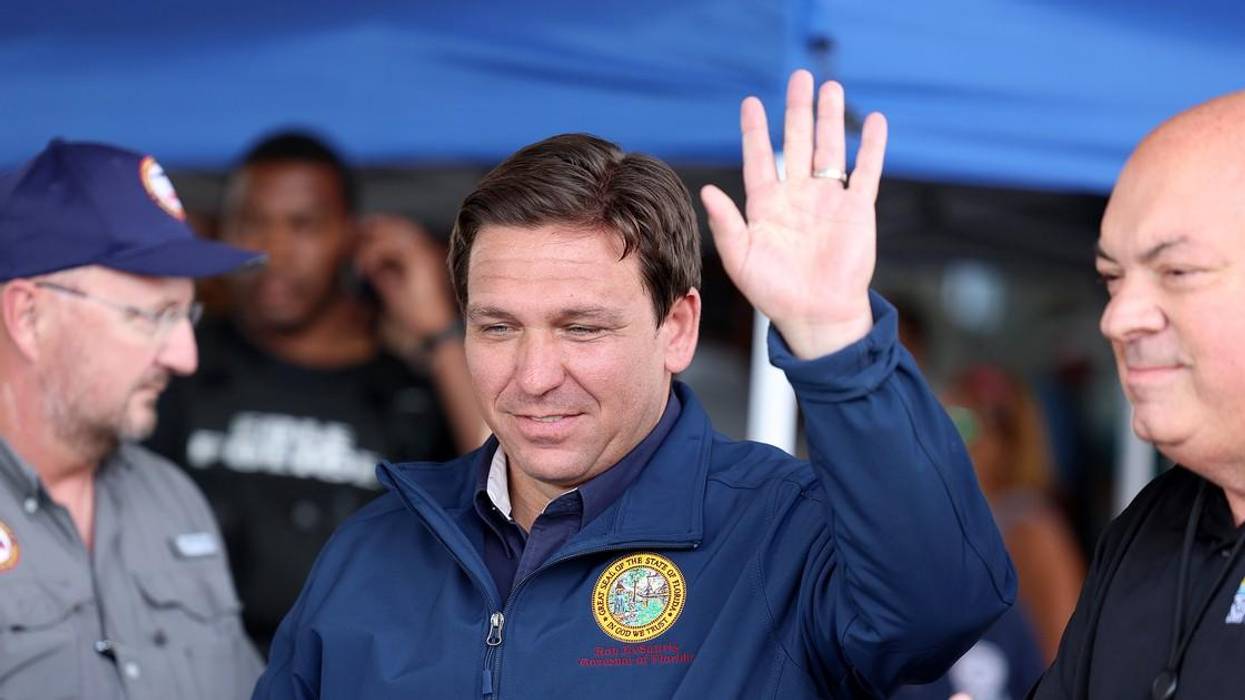
Playing the wannabe tough guy, he wants to troll his way to the White House as America's premiere culture warrior.
Ideological attacks on public education are central to the politics of Florida Gov. Ron DeSantis, who is carving out a brand as a book-burning, gay-phobic, transphobic, racist authoritarian. A Fauci-hater and anti-vax hero of right-wing media, DeSantis restricted instruction on gender identity and sexual orientation with his "Don't Say Gay" law. He limited what schools can teach about racism and diversity with his "Stop WOKE" law. He rejected math textbooks en masse for what the state called "prohibited topics," such as critical race theory; and he banned an Advanced Placement course in African-American studies for high school students on the grounds that it is a tool for "political indoctrination." Playing the wannabe tough guy, he wants to troll his way to the White House as America's premiere culture warrior.
His Trump-style, pugilistic approach was rewarded by Florida voters who reelected him by 19 percentage points. "Florida is where 'woke' goes to die" was DeSantis's sinister declaration in his inauguration speech, weaponizing "woke" to denounce any disliked policy from climate change to transgender rights, critical race theory, and the Black Lives Matter movement. He successfully appealed to the bigotries of the state's aging population, who were sadly bamboozled with racist culture war stunts like shipping legal migrants from Texas to Martha's Vineyard. They voted for a Trump poseur who performs cruelty for their enjoyment but wants to cut off Social Security and steal their nest eggs from under them.
As governor, DeSantis has failed to expand Medicaid, leaving hundreds of thousands of Floridians without health insurance. As a three-term congressman, DeSantis was a fierce opponent not just of the Affordable Care Act, but Social Security and Medicare. He voted to strip a quarter trillion dollars from programs that allow retired Americans to survive. Like most other Republicans in 2017, he voted to cut taxes on corporations, high-earners, and wealthy heirs. As president, he likely would slash what's left of the social safety net and use the proceeds to help the rich stay rich.
Single-minded about using the blunt-force gears of state to troll "the libs," DeSantis's anti-education crusade is doubly authoritarian—most obviously in its use of state power to suppress ideas and information, but also in its more subtle assumption that teaching is ultimately about imposing doctrines of one sort or another. As if he's auditioning for an anchor job, DeSantis is all over Fox News propagandizing the homophobic and racist laws he engineered.
"Gov. DeSantis understands culture war as public policy," barked Christopher Rufo, a DeSantis attack dog. Rufo—a MAGA activist who advised the DeSantis policy team on "Stop WOKE"—is essentially a chatbot who spews out an endless stream of culture war nonsense. A mini-DeSantis, he views anything related to addressing racism and diversity as "woke" while denouncing American schools as "hunting grounds" for pedophile teachers and suggesting that "parents have good reason" to worry about "grooming" in public schools.
Part of the "Stop WOKE" agenda pushed by DeSantis and Rufo, the "Individual Freedom" bill, bans the teaching of anything that might cause students to feel "guilt, anguish, or other forms of psychological distress." Yet the "freedom" it peddles is achieved by detaching Black children from knowledge of their own heritage and by "freeing" White children from dangerous feelings of solidarity with maltreated people. What DeSantis calls "psychological distress" is the spark of empathy children and adults feel from learning about the oppression of others. Even worse in the eyes of DeSantis, children might feel a sense of injustice and—inspired by the history of civil rights activists—want to better the world.
The legislation is part of a wave of "educational gag orders" banning the teaching of "divisive concepts"—all designed to chill classroom discussion of race and gender. Violations can trigger disciplinary action against faculty and enormous fines for their universities. But the gravest threat to academic freedom comes from a legal argument Florida has advanced in defense of the "Stop WOKE" Act.
In a brief filed in federal court, Florida's lawyers contend that faculty at public universities are government employees, in-classroom speech is "government speech," and the state "has simply chosen to regulate its own speech" with the "Stop WOKE" Act. Calling Florida's argument "positively dystopian" and noting it would give Florida "unfettered authority to muzzle its professors," the district court temporarily barred enforcement of the statute. But Florida has appealed, and the ultimate outcome of the case is uncertain.
With the various provisions of the "Stop WOKE" bill, "Don't Say Gay" bill, and now the rejection of the College Board's Advanced Placement African-American history, Florida leads an unrelenting, country-wide assault on truth and freedom of expression. Following Florida, other states want to suppress disfavored viewpoints in the form of laws that censor the histories and experiences of marginalized groups, especially Black and LGBTQ+ communities.
At least 18 states, for example, have laws or policies that restrict the teaching of race and gender. Typical prohibitions include outlawing "indoctrination"—viewed as teaching the history of slavery, racism, and Jim Crow—and forbidding discussions of gender identity, gender orientation, or critical race theory—the view that systemic racism is ingrained into American law and institutions. Along with promoting homophobia and hatred, this widespread attack on Black perspectives helps fuel the racial divisions that enable white supremacy, which serves to maintain the systemic racism that these laws try to ignore.
More than just "trolling the libs," these Florida laws have coerced librarians into becoming the reading police. DeSantis has made it clear that he doesn't want schools to acknowledge that LGBTQ+ people exist. He's banned the teaching of Black history classes on the grounds that lessons on people like Frederick Douglass or Rosa Parks "have no educational value." District officials there have launched reviews of the appropriateness of teachers' books as part of House Bill 1467, the state law mandating that school books be age-appropriate, free from pornography, and "suited to student needs." With the threat of legal action, Florida's Duval County Public Schools urged educators to "err on the side of caution" in determining whether a book "is developmentally appropriate for student use."
Some school districts even closed their libraries until all their books can be vetted to make sure they are in compliance and avoid felony charges. When a teacher raised concerns about such book removals, a school official warned the teacher that violating the state law could lead to third-degree felony charges for distributing "harmful materials" to minors. Students arrived in some Florida public school classrooms this month to find their teachers' bookshelves wrapped in paper. A Florida teacher was fired last week after posting a video of empty bookshelves that DeSantis called "a fake narrative." The efforts to conceal titles have stirred outrage from educators and parents, many of whom also shared images of bare wooden shelves or books veiled behind sheets of colored paper.
In his maniacal search for manufactured culture war assaults and new "libs to own," DeSantis has a bully's knack for finding easy targets among marginalized groups.
In his maniacal search for manufactured culture war assaults and new "libs to own," DeSantis has a bully's knack for finding easy targets among marginalized groups. He has fired the latest salvo in his educational culture war on New College—a tiny liberal arts school in Sarasota with a large LGBTQ+ population. Inaugurating a plan to remake Florida's educational system in his image and build his MAGA legitimacy ahead of a likely presidential run, DeSantis wants to fundamentally change the character of New College, which describes itself as "a community of free thinkers."
DeSantis's education commissioner has expressed a desire to transform the school into "Hillsdale of the South," referencing the conservative, Christian private college in Michigan that is a feeder school for right-wing politics and has close ties to both DeSantis and Trump. In response to a political assault on their academic freedom, New College students say they feel like they've been turned into guinea pigs in a right-wing social experiment.
The governor appointed a hard-right board of trustees that includes DeSantis' ventriloquist dummy Christopher Rufo, who decried what he called, "gender, grooming, and trans ideology in schools" and bragged on Twitter: "We are now over the walls and ready to transform higher education from within. Under the leadership of Gov. DeSantis, our all-star board will demonstrate that the public universities, which have been corrupted by woke nihilism, can be recaptured, restructured, and reformed."
The trustees promptly fired the school president and installed the former Republican state House Speaker and former DeSantis education commissioner Richard Corcoran as interim president. Corcoran told a Hillsdale National Leadership Seminar last summer that education was "100% ideological. Education is our sword. That's our weapon. Our weapon is education."
After ousting the college president, DeSantis unveiled higher education policies to weaken faculty tenure protections, eliminate diversity and equity programs, and mandate Western civilization courses. "The core curriculum must be grounded in actual history, the actual philosophy that has shaped Western civilization," said DeSantis. "We don't want students to go through, at taxpayer expense, and graduate with a degree in Zombie studies." Eliminating Zombie studies means students would not be able to explore the mysterious, malignant driving force of DeSantis's brain-dead voters.
Deepening a chill that had already taken hold across Florida's public schools and universities, the state asked students and faculty to fill out a survey about their political leanings and requested information about resources for transgender students. DeSantis' mouthpiece Rufo also targeted Florida State University, saying the school was led by a "sprawling bureaucracy dedicated to promoting left-wing narratives" that condemned American society as structurally racist, which FSU business professor Jack Fiorito called "exaggerated rubbish."
DeSantis attacks education as "indoctrination" to chase the votes of the most reactionary segment of the public. While claiming that the educational system is biased against conservatives, Christians, and white people and that teachers are pushing extreme leftist agendas, DeSantis legislates a system of right-wing indoctrination under the guise of fairness and impartiality. Aside from denouncing elite education, DeSantis—a graduate of Yale and Harvard—bashes the usual Fox News scourges and appeals to the grievance-fueled MAGA crowd. Like Trump, DeSantis harbors grudges and seeks revenge on enemies, real or perceived. In this, he echoes the MAGA mob's desire to punish and destroy immigrants, non-whites, and "woke" elites. The Trump-averse Republicans rallying to DeSantis are calculating that his synthetic, performative version of Trumpism will serve as an adequate substitute for the MAGA base.
The 2022 midterms hopefully showed that most people are sick of the MAGA clown show, the conspiracy theories, and the hate for its own sake. When voters get a whiff of DeSantis' boring act that strangely mimics Trump's gestures like a programmed automaton, they will find him as repulsive as Trump himself. His speech on Monday to the Fraternal Order of Police in a Chicago suburb provoked a fierce flurry of condemnations and criticism from the Illinois governor and Chicago mayoral contenders. Embattled incumbent mayor Lori Lightfoot got it right in her characterization: "Ron DeSantis has perfected being a bigoted, racist demagogue."