

SUBSCRIBE TO OUR FREE NEWSLETTER
Daily news & progressive opinion—funded by the people, not the corporations—delivered straight to your inbox.
5
#000000
#FFFFFF
To donate by check, phone, or other method, see our More Ways to Give page.
Daily news & progressive opinion—funded by the people, not the corporations—delivered straight to your inbox.
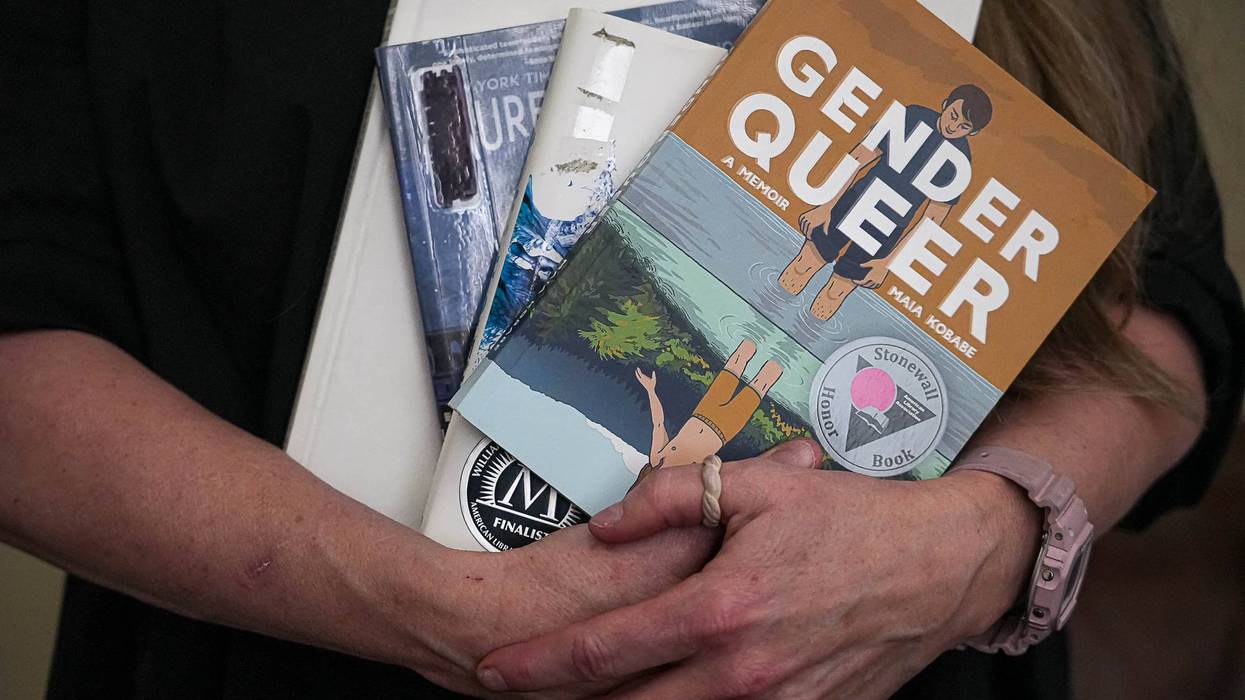
"In several cases, AI recommended banning books that were banned elsewhere, creating a snowball effect for frequently banned books while the expertise of librarians and the communities they serve are ignored."
PEN America released a report on Monday documenting nearly 12,000 book bans involving more than 7,300 individual titles in US schools during the 2025-2026 school year, which the organization said were the largest censorship case numbers it had ever recorded.
The state of Texas accounted for more than 8,100 book bans—roughly three-fourths of the nationwide total and more than double that of Florida, which was the second-most censorious state with over 3,200 book bans.
PEN America said that the surge in Texas book bans came from SB 13, a state law passed in 2025 that banned a broad array of books that censorship proponents view as "profane" or "indecent."
According to PEN America, the Texas book bans carried out over the last year have been particularly broad because officials in the state used artificial intelligence to make a recommended list of banned books.
"In several cases, AI recommended banning books that were banned elsewhere," the report notes, "creating a snowball effect for frequently banned books while the expertise of librarians and the communities they serve are ignored."
Sold, a 2006 young adult novel by journalist Patricia McCormick about a teenage girl in Nepal who gets sold into sexual slavery, was the most frequently banned book in the US.
Popular horror writer Stephen King was the most banned individual author, according to the report.
Kasey Meehan, director of PEN America’s Freedom to Read program, said that banning popular young adult titles was a particularly harmful policy given the broad decline in reading throughout the US.
"Schools should be doing everything possible to connect kids with reading by introducing them to engaging stories and formats," Meehan said. "Instead, many are doing the opposite, banning books that help kids see themselves in literature, deepen their understanding and empathy of others, and develop their imaginations."
Philomena Polefrone, senior manager of the Freedom to Read program, said the broad books bans documented by the PEN America report are due to "chilling directives from state politicians" that "have created chaos and fear."
"Unsure how to comply, districts are removing books en masse, sometimes with the ‘help’ of crude AI tools that only make the problem worse," Polefrone said. "Increasingly, these bans are invisible. Thousands of these cases are only recorded because of public information requests by Florida Freedom to Read and Texas Freedom to Read. Books paid for by taxpayers are being removed from shelves and the local community may not even know about it."

"Ordering a police visit to an individual’s home to discuss the individual’s speech can constitute a restriction on speech that would support a viewpoint discrimination claim," wrote a federal judge.
A federal judge has allowed a First Amendment lawsuit to proceed against Miami Beach Mayor Steven Meiner after he allegedly had police sent to a resident's house to question her over a social media post criticizing his support for Israel.
Judge Cecilia Altonaga of the US District Court for the Southern District of Florida on Monday denied defendants' motion to dismiss claims filed on behalf of Miami Beach resident and veteran Raquel Pacheco.
Altonaga said that "ordering a police visit to an individual’s home to discuss the individual’s speech can constitute a restriction on speech that would support a viewpoint discrimination claim."
On January 12, a pair of Miami Beach police officers showed up at Pacheco's door to question her about a post she made on Facebook criticizing Meiner, an outspoken supporter of Israel and its military assault on Gaza, which has killed more than 74,000 Palestinians, including over 21,000 children.
Pacheco referred to Meiner as someone who "consistently calls for the death of all Palestinians" and "tried to shut down a theater for showing a movie that hurt his feelings," referring to his attempt to have an independent theater's lease terminated after it held screenings of No Other Land, an Oscar-winning documentary made by Palestinian and Israeli filmmakers about the displacement of Palestinians and demolition of homes by Israeli settlers in the occupied West Bank.
Video of the interaction shows police asking Pacheco if the post came from her account and ignoring her as she told them she would not speak to them without a lawyer.
"This is freedom of speech," Pacheco responded. "This is America, right?”
The officers acknowledged that Pacheco was “not going to jail” and did not claim that she had threatened Meiner. One of the officers then explained that "what we’re just trying to prevent is someone else getting agitated or agreeing with the statement."
He added that Pacheco's statements could "probably incite somebody to do something" before telling Pacheco to “refrain from posting things like that." The officers then left and Pacheco was never charged with a crime.
Represented by the American-Arab Anti-Discrimination Committee (ADC), Pacheco filed a lawsuit in March alleging that Miami Beach officials had used police power to violate her First Amendment rights and deter her from criticizing the mayor and Israel. The lawsuit described it as part of a broader effort by officials to chill pro-Palestinian speech.
Emails released weeks after the incident revealed that Meiner personally flagged Pacheco's post to police, referring to it as a "dangerous escalation. Speaking to reporters on February 4, he defended his decision to alert the cops, saying that Pacheco's post was "absolutely false" and referring to it as "age-old antisemitism."
But Altonaga said Meiner's statements supported Pacheco's allegation that "her viewpoint motivated Meiner’s decision to send police to her home," allowing her viewpoint discrimination claim against him to proceed.
The court also allowed the ADC to proceed with its claim that the City of Miami Beach itself—including the mayor and police chief—had demonstrated a broader pattern of viewpoint discrimination against pro-Palestinian speech. The lawsuit cites Meiner's attempt to shut down the local theater, as well as its law banning government contractors from boycotting Israeli businesses, including those operating in territories illegally occupied by Israel.
It also cites Meiner and other Miami Beach officials' repeated pattern of arguing with and cutting off Pacheco and other pro-Palestinian speakers during city commission meetings while allowing pro-Israel speakers to talk with little obstruction.
During one meeting, Meiner reduced public comments for pro-Palestinian speakers to 60 seconds when they criticized the police response to Pacheco while allowing speakers who defended the police action or criticized Pacheco's pro-Palestine viewpoint to speak for around two minutes uninterrupted.
Jenin Younes, ADC's president and national legal director, said Monday's ruling was "a significant victory for Raquel Pacheco, for the First Amendment, and for all Americans who care about the right to free speech and dissent."
"The city downplayed what happened to Ms. Pacheco as a routine police visit," Younes said. "The court disagreed, recognizing that sending police to someone’s home to question and intimidate them over their protected political speech can itself violate the First Amendment."
"The government does not have to arrest you, prosecute you, or formally censor you to violate the First Amendment," he added. "The chilling effect of these actions is obvious.”
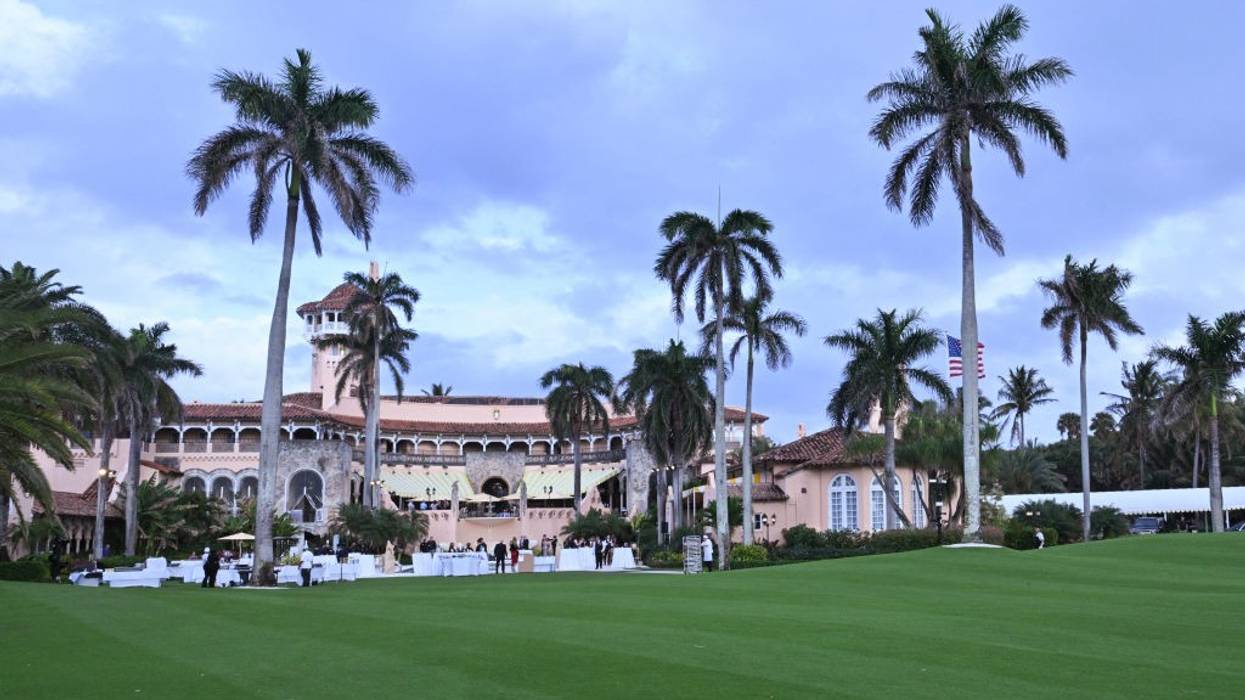
Trump has said that communities that don't want data centers "want to end up being backwards and poor."
President Donald Trump has said every American should want a data center in their town. But his home county in Florida just voted to block them.
In a 6-0 vote, commissioners in Palm Beach County—home to the president's luxurious private club and second residence, Mar-a-Lago—voted to enact a one-year moratorium on the construction of new "large-scale" data centers that use at least 50 megawatts of power.
The moratorium, approved on Thursday, came after Palm Beach residents expressed concerns shared by Americans around the country who’ve seen data centers move into their communities. Palm Beach already has some smaller data centers. But in July, it rejected a proposal for the 600MW Project Tango, following warnings about its potential effects on local wetlands and on families’ pocketbooks.
"Many communities want the economic benefits that data centers bring, but we all fear the higher power bills, the negative environmental impact, disruptive noise, and the depletion of water resources," explained one supporter of the moratorium at a county commission meeting on Thursday, according to the local ABC affiliate.
A poll conducted last month by Embold Research and published by Heatmap Pro found that 75% of Americans now oppose the building of AI data centers in their area, including 61% who registered strong opposition. Aversion to data centers crosses party lines, with majorities of Democrats, Republicans, and independents viewing them negatively.
As AI companies spend tens of millions bankrolling Trump and Republican candidates, members of the president's Cabinet, including Commerce Secretary Howard Lutnick and Energy Secretary Chris Wright, have scoffed at Americans' concerns about the tremendous water and energy use of data centers, which have been well documented as jacking up utility prices.
In a social media post last month, Trump himself said the only reason communities would not want a data center nearby is if they "want to end up being backwards and poor." Before that, he said that "smart communities" were "begging for them."
Sen. Bernie Sanders (I-Vt.), who has become one of Capitol Hill's leading critics of data centers and the artificial intelligence models they power, has said that if Trump truly finds data centers so desirable, he should “lead by example” by having his friend and megadonor, tech billionaire Elon Musk, build one at Mar-a-Lago.
"Trump says communities that oppose data centers will end up 'backwards' and 'poor,'" Sanders remarked Friday on social media. "Yesterday, Mar-a-Lago’s own Palm Beach County passed a year-long ban on these facilities."
"Maybe," the senator said, "Trump’s neighbors know something he doesn’t."
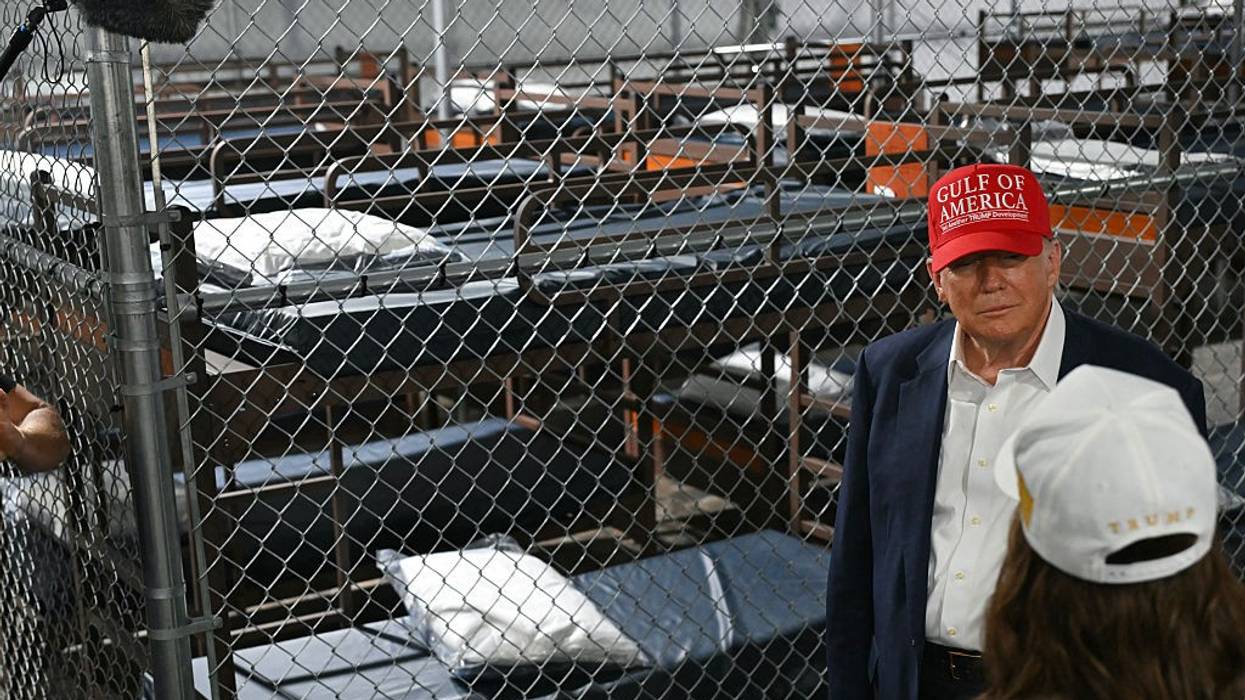
"DHS needs to be dismantled and held accountable for this complete inhumanity," said Rep. Pramila Jayapal.
While US President Donald Trump publicly joked about giant reptiles devouring would-be escapees from the now-shuttered Alligator Alcatraz immigrant detention center in the Florida Everglades, a newly published report by the Department of Homeland Security's internal watchdog confirms that the biggest dangers facing detainees at the notorious lockup were found inside its walls.
The DHS Office of Inspector General (OIG) found that staff at Alligator Alcatraz—officially called the Florida Soft-Sided Facility (FSSF)—"complied with intake and use-of-force standards but did not comply with standards related to environmental health and safety, special management units, medical care, food service, personal hygiene, and recreation."
Affirming reports from human rights groups like Amnesty International, the OIG reported on September 11 that staff at the facility, which was operated by the state of Florida and private contractors, "confined 79 detainees in small metal enclosures—each offering about 18 square feet of floor space—for periods ranging from several minutes to nearly two hours."
"Facility staff described the small metal enclosures as 'calming areas' for detainees to de-escalate and have time alone," the report states. "Staff further maintained that detainees asked to spend time in the small metal enclosures. We found at least one instance in which the small metal enclosures may have been used as a disciplinary tool."
NEW: DHS's Inspector General releases a scathing report about the Everglades detention camp known as "Alligator Alcatraz." The OIG finds that the now-closed camp, violated multiple ICE standards.The OIG also confirms detainees were punished with placement in a metal cage in the Florida heat.🧵
[image or embed]
— Aaron Reichlin-Melnick (@reichlinmelnick.bsky.social) September 14, 2026 at 8:53 AM
While held in the cages, detainees—who reported being shackled and locked to the ground—were subjected to dangerously high temperatures and swarms of mosquitoes. Amnesty described the use of the cages as a form of torture.
"Use of these small metal enclosures for any reason is unprecedented among detention facilities OIG has inspected and presents significant risks to detainee health and safety," the DHS report notes.
Responding to the report's findings, Congresswoman Pramila Jayapal (D-Wash.) said on social media that "this is nothing short of torture."
"DHS needs to be dismantled and held accountable for this complete inhumanity," she added.
The OIG report additionally found that "FSSF did not provide detainees with sufficient living space, creating cramped conditions for detainees who spent most of their time in their housing units, which may harm detainees’ physical and mental health."
According to the OIG, detainees had about 28 square feet of living space each when the facility was at maximum capacity, well below the 75-square-foot DHS benchmark.
Three-quarters of the detainees interviewed by the OIG said they did not have access to clean drinking water.
The OIG also found that detainees were generally permitted to shower just three times a week, and inspectors noted insects in the showers.
Detainee recreation was also limited to three one-hour sessions per week.
The OIG report ominously concludes that "although FSSF ceased operations in June 2026, the issues raised by the department’s
management response regarding [US Immigration and Customs Enforcement's] level of oversight and responsibility for immigration detention remain consequential."
The publication cites the Baker Correctional Institution—also known as "Deportation Depot"—in Sanderson, Florida, which has yet to undergo OIG inspection, and where detainees and their advocates have reported abuses and inhumane conditions similar to those alleged at Alligator Alcatraz.
Some critics of the new OIG report denounced what they said were critical omissions and falsehoods, including that FSSF complied with use-of-force standards. Clients of attorney Katherine Blankenship and other detainees at the facility said they were beaten—and one man had his wrist fractured—after complaining about not having phone access earlier this year.
The Associated Press reported in April:
When one detainee approached a guard, he was punched in the face. The guards then started beating other detainees in the cell. One of Blankenship’s clients was punched in the right eye, thrown to the floor, and beaten by several guards. He was kicked in the head and his shoulder and arm were injured. A guard put his knee on the detainee’s neck while restraining him, according to the attorney’s declaration, which included a photo made during a video call almost a week later showing the detainee with a bruised eye.
Other alleged abuses and inhumane conditions at Alligator Alcatraz not mentioned in the OIG report include rotten and maggot-infested food, 24-hour lighting, flooding, and denial of religious practice.
Some detainees also claimed they were held in the phone booth-sized cages for far longer than two hours.
“People ended up in the ‘box’ just for asking the guards for anything," one former detainee told Amnesty. "I saw a guy who was put in it for an entire day."
Glad folks are appalled by photos of the "phone booth" cage under an awning, but pls understand: This IG report is likely part of a cover-up. Amnesty Int'l interviewed detainees EIGHT MONTHS AGO who said the cage was half this size (couldn't stand up), had no awning, w feet chained to the bottom.
[image or embed]
— Gillian Brockell (@gillianbrockell.com) September 14, 2026 at 9:20 AM
Responding to the new OIG report, Congressman Adam Smith (D-Wash.) said Monday on social media that "people at Florida's Alligator Alcatraz were subjected to inhumane, unjust punishment, risking their health and safety while in federal detention. No person should be locked into an 18-square-foot cage, period."
Last year, Jayapal and Smith introduced the Dignity for Detained Immigrants Act, which Jayapal's office described as "legislation to enact guardrails and oversight on immigration detention, and to ensure civil and human rights are protected."
Since Trump returned to the White House in January 2025, more than 50 people have died in ICE custody, including detainees who died inside lockups, during transfers, and in hospitals while still under DHS control. The agency also announced earlier this year that it would stop reporting the deaths of people recently released from ICE detention.
Krish O'Mara Vignarajah, President and CEO of the advocacy group Global Refuge, said in a statement responding to the new OIG report that "there is no euphemism that can sanitize caging human beings. Calling a metal box a 'calming area' is an affront to the English language and to human dignity alike."
"The stark reality is that human beings, many of whom came to this country seeking protection, were crammed into spaces unfit to accommodate them, denied adequate medical care, food, and basic hygiene—and in at least one case locked in a cage as punishment," Vignarajah continued. "That is not immigration enforcement. It is cruelty, carried out in our name and on our dime, to the tune of more than a million dollars a day."
"The facility is closed, but the mindset that built it lives on," she added. "We cannot let Alligator Alcatraz become a blueprint. We call on Congress and the Department of Homeland Security to guarantee that no one held in the United States—regardless of where they were born or how they arrived—is subjected to conditions this administration's own watchdog has deemed inhumane."
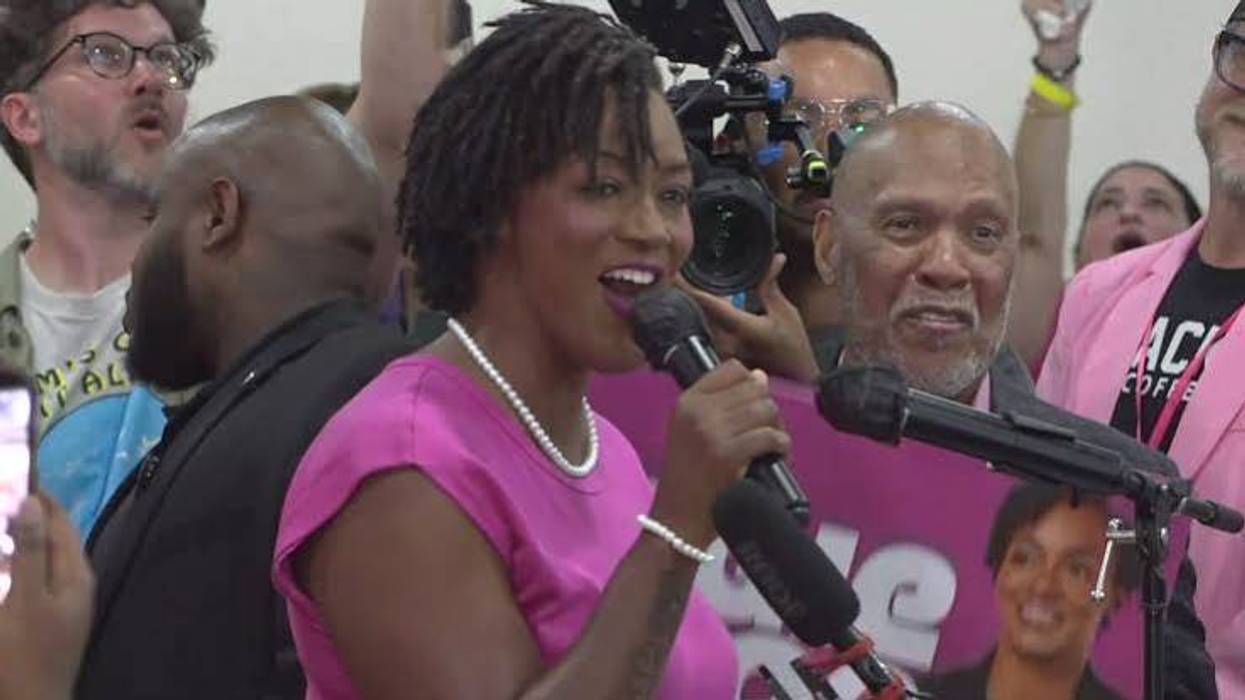
“I don’t care about corporations’ bottom lines. I care about people."
In a surprise upset described variously as "stunning" and "a shocker" in headlines, State Rep. Angie Nixon won the Democratic primary for the open US Senate seat in Florida on Tuesday, defeating Lt. Col. Alex Vindman, the former national security official who many presumed would sail to victory with the support of the party establishment and a massive cash advantage.
Nixon, a former union organizer and a member of the Democratic Socialists of America, will now face Sen. Ashley Moody, whom Republican Gov. Ron DeSantis appointed to the seat after former Sen. Marco Rubio became Secretary of State, in the general election.
In her victory speech, Nixon said the win "showed the world what organized people can accomplish," and vowed to continue her surprise run by defeating Moody, the heavy favorite in a state dominated by Republicans over recent years, in the general election.
“I don’t know about you but I was taught to love my neighbors… They call me extreme but these things are not radical. They are not extreme… So Ashley Moody can call us whatever she wants. But in November she will call me Senator.”
— Progressive Angie Nixon, after pulling off a… pic.twitter.com/kXIq15uCMA
— Drop Site (@DropSiteNews) August 19, 2026
Outspent by Vindman by an estimated 13-to-1 advantage—raising just $975,000 overall compared to the more than $16 million he had on hand—Nixon was credited with channeling growing voter frustration with the Democratic Party elites who have failed to deliver for working people.
In a Monday night campaign interview on the eve of the election, Nixon told CNN that too many corporate establishment Democrats are standing in the way of real progress on key issues like healthcare as families struggle with an exploding cost of living.
“I don’t care about corporations’ bottom lines," Nixon said. "I care about people."
Angie Nixon said Democratic leaders Hakeem Jeffries and Chuck Schumer should face scrutiny as too many “corporate-established Democrats” are beholden to companies rather than ordinary people. “I don’t care about corporations’ bottom lines; I care about people,” Nixon said.… pic.twitter.com/K9jfShul7g
— Drop Site (@DropSiteNews) August 19, 2026
Prominent national progressives championed Nixon's win.
"Democratic Socialist State Representative Angie Nixon, outspent more than 16 to 1, pulled off a HUGE upset to win the Democratic nomination for the US Senate in Florida," said Sen. Bernie Sanders (I-Vt.). "Congratulations, Angie!"
"Tonight Floridians sent a strong message that they need real progressive leadership to lower costs and protect our rights," declared Rep. Ayanna Pressley (D-Mass.). "Congratulations on your primary victory, Angie Nixon; let's keep up the momentum and send her to Washington in November!"
Noting her strong support for Palestinian rights, the advocacy group Jewish Voice for Peace Action heralded the importance of Nixon's willingness to speak out against US complicity in Israeli abuses when too many in the Democratic Party have remained silent.
“The people are rising up against the political establishment that has failed them," said Stefanie Fox, the group's executive director. "The time is now for candidates like Nixon who champion working people and fight relentlessly to defend the rights of all people from Florida to Palestine."
Ken Martin, chair of the Democratic National Committee, also celebrated Nixon's win.
“As an accomplished state representative and union organizer, Angie Nixon has dedicated herself to fighting for working families," said Martin. "AngiFloridians have chosen a proven leader with the experience and vision to lower costs, expand access to healthcare, make childcare and housing more affordable, fight for workers, protect public education, and deliver results for families across the Sunshine State. The DNC is ready to help elect Angie and work together to flip this seat, win the Senate majority, and deliver for all Floridians.”
While the celebrations poured in, Florida remains a deeply red state, and Nixon faces an incredibly tough uphill climb to defeat Moody in November.
In a social media post Tuesday night, Nixon told supporters: "We did it ya'll. Thank you to every person that put their heart into this campaign."
But "get ready," she added, "the fight has just begun."

"The hypocrisy is the point," said Rep. Ayanna Pressley.
President Donald Trump has pushed to strip millions of Americans of the right to vote by mail. But he doesn't seem to think these restrictions should apply to him.
The White House confirmed to The New York Times that the president voted by mail ahead of Florida's Republican primary on Tuesday, marking at least the third time he has done so since becoming president. He also voted by mail in a state legislative special election earlier this year and in the 2020 Republican primary.
Though Trump has repeatedly characterized mail-in voting itself as a form of "cheating" and pushed to abolish it for most Americans under his proposed SAVE America Act, White House spokesperson Olivia Wales said it was a "non-story" that he chose to participate in the practice himself.
"The SAVE America Act has commonsense exceptions for Americans to use mail-in ballots for illness, disability, military, or travel— but universal mail-in voting should not be allowed because it’s highly susceptible to fraud," she said. "As everyone knows, the president is a resident of Palm Beach and participates in Florida elections, but he obviously primarily lives at the White House in Washington, DC."
Florida notably does not distinguish between absentee and other forms of mail-in voting, allowing residents to cast votes without an excuse—so the system Trump used to vote by mail is the same one he wants to make illegal.
Failing to pass his SAVE America Act through Congress, Trump has attempted to restrict mail-in voting via executive order.
An order he signed in March required states to hand over lists of eligible voters to the federal government and said that the US Postal Service could block residents of states from voting by mail if they refused to comply. The order also directed the Department of Homeland Security (DHS) to create state "citizenship lists" to be sent to election officials.
This order has been blocked in federal court, and Trump has pushed for the Supreme Court to allow it to go into effect before the November 3 midterm election. Voting rights advocates have warned that if the order goes into effect, many eligible voters will be wrongly excluded because their names don't appear on DHS's federal lists.
There is scarce evidence that any form of mail-in balloting is susceptible to fraud anywhere near the levels that would be necessary to swing the result of an election.
An analysis by the Brookings Institution last year, which examined data from the right-wing Heritage Foundation's election fraud database, found that for every 10 million mail ballots cast, about four ballots were associated with voting fraud, though the database is not exhaustive.
It's not clear why voting by mail for convenience would be any more "susceptible to fraud" than doing so for illness, disability, military, or travel, as the White House claims.
In fact, the Brookings study found that states with universal no-excuse mail-in voting have the lowest rates of mail-in fraud, and some states, like Washington, have seen reductions in fraud after transitioning to universal mail-in voting.
Advocates for universal mail-in balloting have emphasized that it makes voting easier and more accessible than when it's restricted to election days at physical polling places. They also say restricting it is especially harmful to voters from racial minority groups who face greater barriers to in-person voting and are more likely to have absentee ballot applications rejected.
Rep. Ayanna Pressley (D-Mass.) rejected the idea that the right of other Americans to vote by mail was any less legitimate than Trump's right to do so.
"Trump just voted by mail AGAIN while trying to take away the right for millions of people to do the same," Pressley wrote in a social media post. "The hypocrisy is the point. We won't let Republicans attack the sacred right to vote, including by mail."

"Randy Fine is a menace to basic human decency," said one critic.
US Rep. Randy Fine, who has become notorious for his bigoted remarks against Muslims throughout his political career, was caught on camera Sunday rifling through the mailbox of a Florida voter.
A video that went viral on social media Monday shows Fine (R-Fla.) ringing the doorbell of a resident in Florida's 6th Congressional District, where he was canvassing for votes ahead of Tuesday's Florida congressional primary.
After the resident does not answer the door, Fine is seen opening up their mailbox and flipping through its contents for a few seconds.
Randy Fine just got caught committing a felony on camera. Your congressman just tried going through your mailboxes. That is a federal crime. I am calling on Randy Fine’s immediate removal from Congress & for an investigation to be opened. pic.twitter.com/UnyGquiS1S
— DannyKPolitics (@DannyKPolitics) August 18, 2026
Fine's office confirmed to TMZ on Tuesday that the Florida Republican, who was endorsed by President Donald Trump over the weekend, is the man seen in the video.
According to an article published by Legal Overview in May, opening another person's mailbox and touching their mail could run afoul of 18 USC § 1702 and result in felony charges for obstruction of correspondence.
Fine's potentially illegal actions drew ridicule from Rep. Mark Pocan (R-Wisc.), who observed in a Tuesday social media post that MAGA politicians seemingly can't stop committing crimes.
"Watch my 'colleague' Randy Fine break the law by going through someone’s mail," write Pocan. "MAGA movement’s newest hero is breaking federal law. Just like Daddy Trump. Time to throw these bums out in November!"
Former Democratic Florida US House candidate Barbie Harden Hall also mocked Fine.
"Why are you looking through someone’s mailbox while you’re out canvassing?" she asked. "Not only is it wrong, it’s creepy as fuck. Randy Fine is a menace to basic human decency."

"The flyovers will continue until morale improves," said the defense secretary.
A day after Secretary of Defense Pete Hegseth shared with the public his fixation on service members' levels of testosterone, the president's son mocked those who were alarmed by the US military's latest apparent display of might directed at Americans, mocking what he called the "low-T mainstream media."
Saying the stunned responses of many who saw a jet fly low over a crowded beach in Pensacola, Florida were simply "manufactured outrage," Eric Trump said the maneuver was "undoubtedly the highlight of these people’s day."
Trump's comments came as officials with the US Navy's elite Blue Angels said they were conducting a "thorough safety review" to determine whether the flyover violated the squadron's and the Federal Aviation Administration's (FAA) strict standards.
Online videos showed people gathered on the beach Wednesday morning for a "Breakfast with the Blues" flight demonstration event.
A jet flew close to the crowd, directly over the heads of the onlookers, overturning some chairs and umbrellas. A child was heard crying in one video posted by a local news outlet.
Dramatic video shows the U.S. Navy Blue Angels making a low-altitude flyover above Pensacola Beach, Florida, on Wednesday. Navy officials confirmed in a statement that Blue Angels leadership is "reviewing the circumstances surrounding the maneuver and conducting a thorough safety… pic.twitter.com/ZUa1ryk4X8
— ABC News (@ABC) July 15, 2026
In the "low-altitude pass," Blue Angels officials said, the aircraft "flew lower than standard profiles, resulting in a disturbance on the beach that affected civilian chairs and umbrellas."
"The safety of our hometown community, spectators, and our pilots is our highest priority," the statement continued. "Team leadership is reviewing the circumstances surrounding the maneuver and conducting a thorough safety review to ensure all operations adhere to strict Navy and FAA safety standards."
Hegseth struck a decidedly different tone than the flight demonstration squadron, which is known for its precision and strict safety protocols.
"The flyovers will continue until morale improves," said the defense secretary in a reference to a well-known, sardonic slogan.
Writer JP Hill called Hegseth's response to the flyover "fucking insane" and expressed hope that a result of the Trump administration would be "a realization that this brand of masculinity that's just an emotionally frozen 12-year-old in an adult body is stupid as shit."
Meanwhile, the White House posted on X an illustration that appeared to equate approval of the stunt with patriotism and freedom, writing, "It's okay to love America" above the image.
The maneuver in Florida came months after a live-fire weapons demonstration by the US Marines over Interstate 5 in California, during which a malfunction caused an artillery shell to explode prematurely and send shrapnel over the highway where traffic was flowing.
Writer and podcaster Noah Kulwin wrote that the two recent maneuvers combined "leads me to believe: American military will accidentally cause a civilian mass casualty incident in the continental US before Trump’s term is out."

"Trump's DHS has lost the trust of the American people and can no longer be considered a reliable source of fact."
Nearly all Democrats in the US House of Representatives on Wednesday demanded independent investigations into federal immigration agents' recent fatal shootings of Johan Sebastián Durán Guerrero in Biddeford, Maine, and Lorenzo Salgado Araujo in Houston, Texas.
The men killed—immigrants from Colombia and Mexico—apparently weren't even the targets of the operations that claimed their lives earlier this month, Democrats stressed in their letter to the leaders at the US Department of Homeland Security (DHS) and its agency Immigration and Customs Enforcement (ICE).
"Both of these incidents have created enormous fear and outrage in the community, and raise serious questions about the safety of community members, regardless of immigration status," the nearly 200 members of Congress wrote to DHS Secretary Markwayne Mullin and ICE acting Director David Venturella.
The letter was led by Democrats from both states, Congresswomen Chellie Pingree (Maine) and Sylvia Garcia (Texas), as well as ranking members on key House panels: Reps. Bennie Thompson (Miss.) of the Committee on Homeland Security, Jamie Raskin (Md.) of the Judiciary Committee, and Pramila Jayapal (Wash.) of the Subcommittee on Immigration, Integrity, Security, and Enforcement.
"DHS agents have shot at least 22 people just since the start of President Donald Trump's second term. Six of these shootings have been fatal, resulting in the death of US citizens and individuals with no criminal records," wrote the lawmakers—who have also drawn attention to the dozens of immigrants who have died at ICE detention centers under this administration.
"In several of these cases, DHS and its component agencies made unsubstantiated allegations about individuals its agents have shot and even killed, including Renée Good, Alex Pretti, Ruben Ray Martinez, Marimar Martinez, and Julio Sosa-Celis," they highlighted. "DHS claimed that the shooting victims were attacking law enforcement officers, attempting to 'weaponize' their vehicles, and even called them domestic terrorists."
The Democrats emphasized that "in each case, evidence later emerged that contradicted these claims, showing that DHS representatives made false statements and DHS agents acted inappropriately, resulting in several cases against DHS's victims to be dismissed with prejudice. As such, Trump's DHS has lost the trust of the American people and can no longer be considered a reliable source of fact."
"We are calling for immediate independent investigations into both of these deaths, without interference. We are also calling on ICE to stop any removal proceedings against the witnesses to Mr. Salgado Araujo's killing for the duration of the investigation," they wrote, pointing to reported attempts by the administration to deport his brother, Victor Hugo Salgado Araujo, as well as two employees, Jose Trinidad Rojas Pliego and Daniel Tirado Pantoja.
Those three witnesses to the killing in Texas "should have no threat of retaliation or deportation to provide their testimony," the lawmakers argued. "Similarly, DHS must not interfere with any investigations into the death of Mr. Guerrero. Far too many people, Americans and noncitizens alike, are dead as a result of DHS's reckless actions."
The House Democrats aren't alone in their demand. The Fair Immigration Reform Movement, faith leaders, and labor advocates held a Wednesday press conference to call for "independent investigations and real accountability" after the deaths in Texas and Maine, as well as Florida.
The 28-year-old man who officials say died Tuesday after being hit by a tractor-trailer while fleeing federal immigration agents at a gas station in St. Augustine has not yet been publicly identified, but like the other two cases, he had been in a vehicle. Despite the rising death toll, Trump said Wednesday that he wants ICE to keep pulling over cars.
"No one can be guaranteed safety from this rogue agency, which has terrorized our community since long before the current administration, but is now capturing and even widening a net of Americans in their ruthless execution of the mass deportation agenda," said Lizeth Chacon, executive director of Workers Defense Action Fund, one of the groups demanding an independent probe.
"To end this brutal campaign for good, we must abolish ICE and offer a pathway to citizenship for all," Chacon declared. "The officers responsible for the killing of Mr. Lorenzo must be held accountable. We can and must dismantle this agency because ICE's next victim could be any of us. Mr. Lorenzo could be any of us."
Rev. Jodi Hayashida, an organizer from Multifaith Justice Maine, said Wednesday that "the most important fact about ICE is that it is simply the latest vehicle in this nation's long-standing practice of racialized state-sanctioned violence and terror, that this paramilitary force accountable to nearly no one and funded by billions of dollars pulled from our housing and healthcare does not provide the safety or security it promises. It is a threat to the well-being of all people."
"We know that death is an inevitable consequence of the existence of ICE, modifications to practices and policies are not enough," Hayashida added. "In the very short term ICE must not be allowed to investigate itself. We demand a full, transparent accounting of every single death, and then we demand that Congress stop funding this violence and remove ICE from our communities altogether."
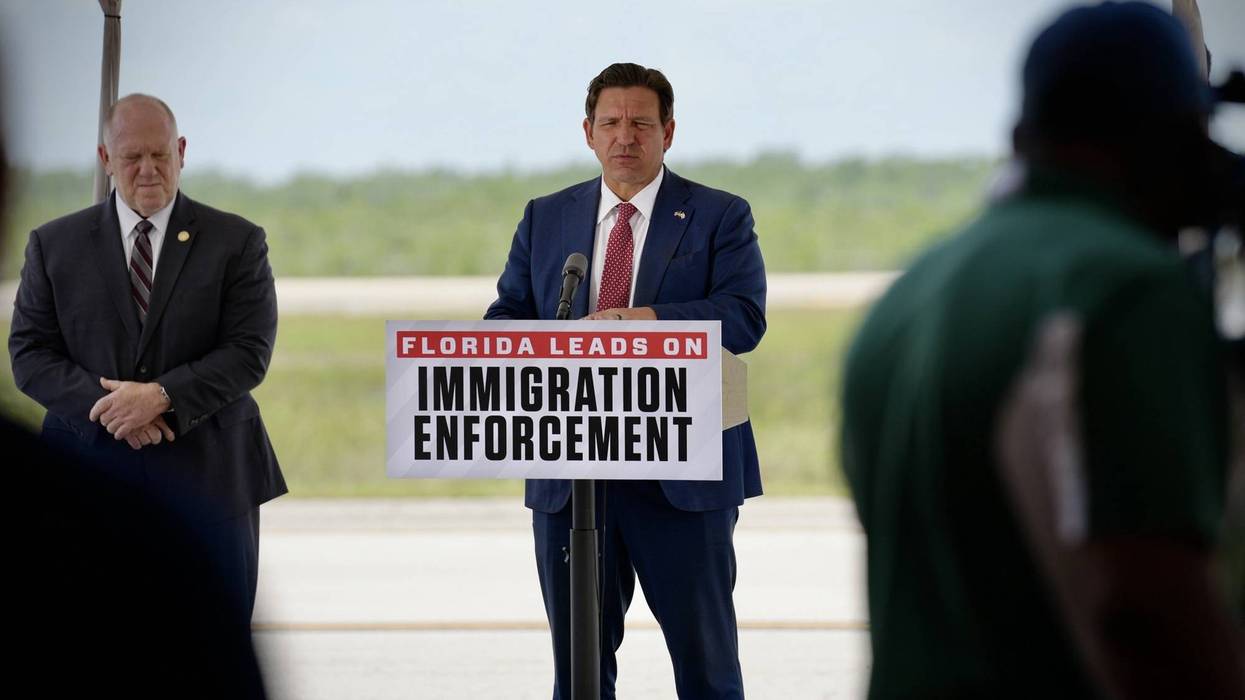
"The fact that this site ever existed is a travesty, given the cruelty behind it, horrific conditions, and blatant violations of due process," said the deputy director of the ACLU's National Prison Project.
While welcoming Republican Florida Gov. Ron DeSantis' confirmation on Thursday that the immigrant detention center dubbed "Alligator Alcatraz" has closed, rights advocates also renewed criticism of how immigrants are being treated across the country as President Donald Trump continues his deadly push for mass detention and deportations.
The facility in the Everglades opened last summer despite concerns about both human rights and the environmental impact. DeSantis said Thursday that "Florida led the way in increasing much-needed detention capacity and working with our federal partners to streamline deportations, removing thousands of the most dangerous criminal aliens from our country."
Despite claims from the president and his allies, federal data have shown that most immigrants detained during his second term lack criminal convictions. In addition to flooding US streets with agents from Customs and Border Protection as well as Immigration and Customs Enforcement, Trump has repeatedly demanded that Congress give CBP and ICE more funding.
"Our detention operations support has led to nearly 30,000 additional deportations, and Florida accounts for more than 40% of all state/local immigration arrests nationwide," DeSantis added Thursday. "Alligator Alcatraz has fulfilled this mission. Detainees who are still awaiting deportation have been transferred to other federal facilities, and demobilization efforts are underway."
Responding to the governor on social media, Thomas Kennedy of the Florida Immigrant Coalition said: "You wasted more than $1 billion of Florida's emergency response fund on a failed PR stunt that hurt people and destroyed families. You should never be anywhere near public office again."
As The Associated Press noted Thursday:
Immigration advocates said the center’s tents were never safe or humane for holding people. Detainees at the facility have talked about their difficulty accessing lawyers and described poor physical conditions, including worms in the food, toilets that didn't flush, floors flooded with fecal waste, and mosquitoes and other insects everywhere.
They described large white tents with rows of and rows of bunk beds surrounded by chain-link cages. The air conditioning could shut off abruptly in the sweltering Florida heat. Detainees could go days without showering or getting prescription medicine.
The state and national ACLU as well as Americans for Immigrant Justice (AIJ) had sued over the facility last year.
"The fact that this site ever existed is a travesty, given the cruelty behind it, horrific conditions, and blatant violations of due process. We challenged the Trump administration and the state of Florida over the facility, and now celebrate its closure," Carmen Iguina González, deputy director for immigration detention with the ACLU's National Prison Project, said Thursday.
Keisha Mulfort, deputy executive director and strategy officer of the ACLU of Florida, declared that "with its official closure, 'Alligator Alcatraz' seals its reputation as a ruinous venture. This detention center stands as a monument to what happens when a state government abandons its conscience in service of a federal cruelty agenda."
"The DeSantis administration deliberately built a detention facility in the middle of the Everglades—not despite the harsh conditions, but because of them—and spent over $1 billion of Florida taxpayers' money to do it," she pointed out. "That is not governance; that is cruelty dressed up as policy, and complicity dressed up as leadership. In spite of this, hundreds of thousands of Floridians protested, organized, called their legislators, and refused to look away. They made this moment possible, and we should name that clearly: This is what accountability looks like when the government won't hold itself accountable."
Mulfort also stressed that "as people are transferred to other facilities, the abuses do not disappear—they relocate." She and Iguina González pledged that the state and national ACLU will not stop tracking abuses of immigrants across the country.
"The nightmarish scene found at 'Alligator Alcatraz' is not wholly unique and reflects systemic patterns of abuse at other ICE detention facilities nationwide," Iguina González said. "We remain very concerned that people may be transferred to other sites with sordid and dangerous conditions, and we will continue to monitor this situation."
Paul Chavez, director of litigation and advocacy at AIJ, also emphasized that "closing this facility is an important step, but the government's obligation to respect due process does not end at the facility gates. Constitutional rights must follow every person wherever they are detained."
"We remain deeply concerned that people transferred out of this facility will continue to face mistreatment and civil rights violations in other detention centers," he said. "Americans for Immigrant Justice will continue to defend due process, offer free legal representation to low-income immigrants, and stand strong with our immigrant neighbors, friends, and their families."
After using $1 billion to brutalize immigrants, the concentration camp known as "Alligator Alcatraz" has been emptied. Its victims still need justice.truthout.org/articles/flo...
[image or embed]
— UAINE (@mahtowin1.bsky.social) June 22, 2026 at 10:36 PM
As for the environmental impact, The New York Times reported that after the Trump administration announced that detainees had been relocated, Paul J. Schwiep, an attorney for groups suing over Alligator Alcatraz, promised last week to continue the lawsuit against what he called the "secret gulag in the Everglades."
"They hope that they can slink away in the middle of the night without explaining to anyone what they did, why they did it, or how they proposed to clean up the mess that they've made," said Schwiep. "And we don't intend to let them get away with it."
Ripping the facility as an "internment camp," Congressman Maxwell Frost (D-Fla.) similarly asserted on Thursday that "the fight isn't over. We need accountability for the billions of taxpayer dollars wasted, the abuse and harm inflicted on detainees, and the damage done to one of Florida's most sacred ecosystems."