
SUBSCRIBE TO OUR FREE NEWSLETTER
Daily news & progressive opinion—funded by the people, not the corporations—delivered straight to your inbox.
5
#000000
#FFFFFF
To donate by check, phone, or other method, see our More Ways to Give page.


Daily news & progressive opinion—funded by the people, not the corporations—delivered straight to your inbox.
"You cannot continue with business as usual while Israel commits genocide in Gaza with full U.S. backing. Cease-fire is the only moral choice, and the world is watching your next move."
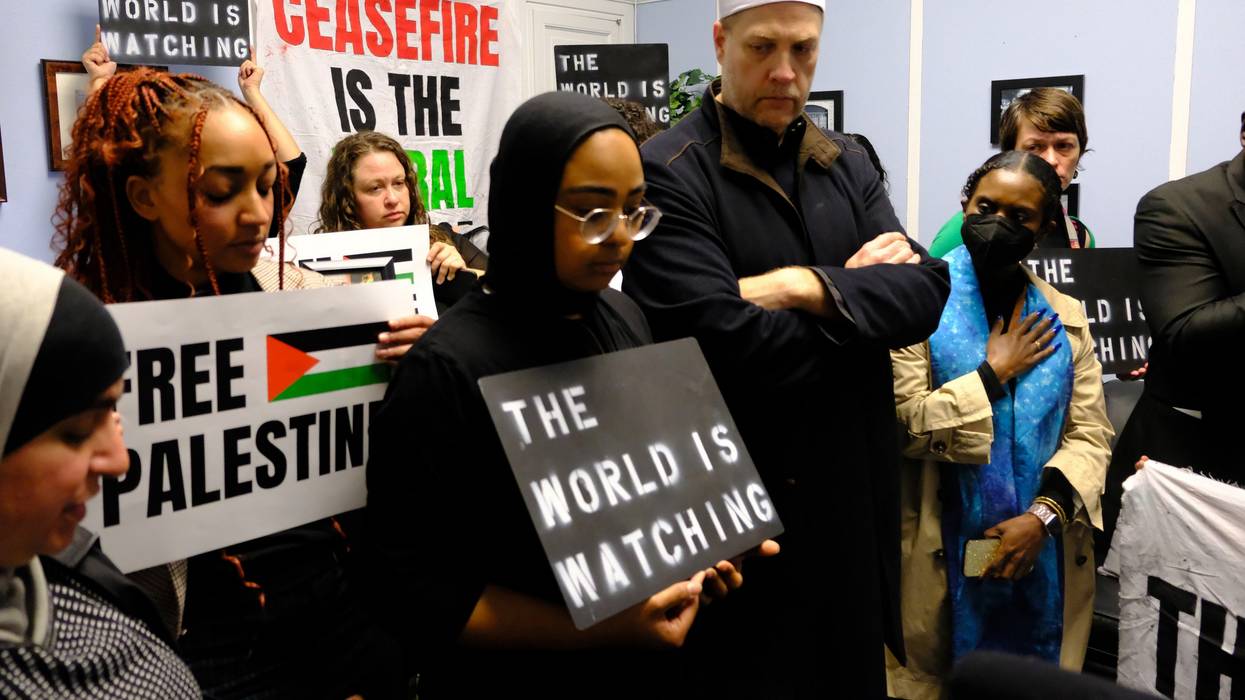
As the death toll from Israel's relentless and indiscriminate bombardment of Gaza approached 5,800 Palestinians—including over 2,300 children—a group of around 40 faith leaders calling for an immediate cease-fire led a Tuesday afternoon pray-in at the Washington, D.C. office of U.S. House Minority Leader Hakeem Jeffries.
The Christian, Jewish, and Muslim faith leaders and activists occupied the New York Democrat's office in the Rayburn House Office Building on Capitol Hill, where demonstrators opened their action with prayers for the thousands of Palestinians who have been killed since October 7.
Participants "highlighted the devastating impact of each bomb that has been dropped and each life cut short through a reading of nearly 200 names of those killed by American-made weapons, including entire families across generations," the organizers of the pray-in said.
"The actions send a clear message to the Democratic Party: You cannot continue with business as usual while Israel commits genocide in Gaza with full U.S. backing," the coalition added. "Cease-fire is the only moral choice, and the world is watching your next move."
The activists raised mirrors with the phrase "The whole world is watching" painted on the back in a symbolic move to compel members of Congress "to take a long, hard look at themselves and reckon with their complicity in Israeli war crimes."
Prayer leaders included Rev. André Greene of Varick Memorial AME Zion; Rabbi Alissa Wise; Imam Suhaib Webb; Rev. Dayna Edwards of Cedar Lane Unitarian Universalist Congregation; Minister Jessica Anderson, a Howard University divinity student; and Rev. William T. Young of Covenant Baptist United Church of Christ.
Groups leading the event included the Adalah Justice Project; U.S. Campaign for Palestinian Rights; Jewish Voice for Peace; Dream Defenders; Rising Majority; and the Kairos Center for Religions, Rights, and Social Justice.
"Today we stood at the office of House Minority Leader Hakeem Jeffries to ask for a cease-fire from the Israeli government because of the innocent deaths. We ask that he act swiftly in this moment of history," said Greene. "Peace must prevail! This is the moral thing to do!"
Wise said that "I am part of a growing, vocal segment of the American Jewish community that is pleading with our elected officials to not allow our grief to be used as justification for more deaths in Gaza."
"It is impossible to overstate the urgent need for Congress and the Biden administration to push for a cease-fire," the rabbi added. "Congressman Jeffries, as House minority leader, should play a key role in making that happen. Our prayers today were for peace, for a cease-fire, for justice before another life, another entire world, is lost."
Webb asserted that Democrats' failure to support a cease-fire "undermines their dedication to racial, economic, and environmental justice."
Like President Joe Biden, Jeffries has repeatedly declared his staunch support for Israel, despite a warning from hundreds of international legal scholars that Israeli forces may be committing genocide in Gaza.
According to a survey published last week by Data for Progress, 80% of Democratic and 68% of all U.S. voters believe the United States should support a cease-fire in Gaza.
However, as of Tuesday afternoon, only 17 other congressional Democrats had backed a resolution introduced last week by Rep. Cori Bush (D-Mo.) calling on the Biden administration to push for a cease-fire.
Meanwhile, the Biden administration is asking Congress to approve $14 billion in new U.S. military aid for Israel—which already receives nearly $4 billion from American taxpayers annually, with almost no conditions attached.
"Every Democrat in Congress who is allowing Israel to carry out mass atrocities in Gaza should know that the world is watching," Adalah Justice Project executive director Sandra Tamari said.
"The only moral choice is cease-fire," Tamari added. "We will continue disrupting business as usual until Hakeem Jeffries and the Democratic Party stop this genocide."
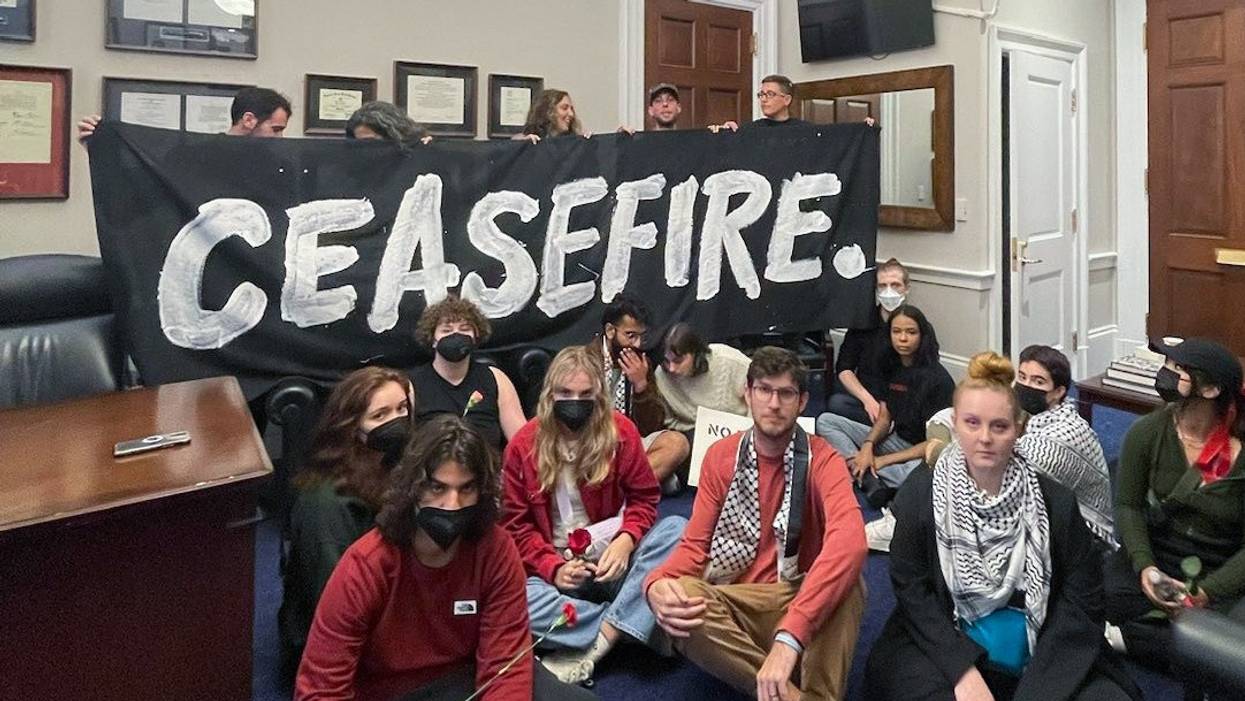
"Every member of the Congressional Progressive Caucus who refuses to call for a ceasefire to save lives should expect more disruptions," said one activist.
As the death toll from Israeli bombing in Gaza mounts and the threat of a broader regional war intensifies, Rep. Ro Khanna of California and other lawmakers are facing sustained pressure to join the small but growing group of House Democrats calling for a cease-fire in the besieged Palestinian territory.
Late last week, a Palestinian-led, multifaith, multiracial coalition of activists occupied Khanna's Capitol Hill office for four hours urging him to support the cease-fire resolution introduced by Reps. Cori Bush (D-Mo.), Rashida Tlaib (D-Mich.), and other House Democrats. Thus far, at least 18 Democratic lawmakers have backed the resolution.
The organizers of the protest—which included the Adalah Justice Project, Jewish Voice for Peace, Dream Defenders, and Dissenters—said in a statement Monday that they arrived in Washington, D.C. last week for a scheduled meeting with Khanna aimed at convincing him to sign onto the cease-fire resolution.
"These good-faith efforts were unsuccessful," the organizers said. "Despite activists' demands that the Congressman meet the urgent need with immediate action before hundreds more Palestinians are killed, Rep. Khanna abruptly ended the meeting, sneaking out of the office during the sit-in through a secondary exit to meet his family—a privilege denied to more than one million Palestinians in Gaza who have been displaced from their neighborhoods and homes and denied access to food and water as Israel relentlessly bombs the strip."
The sit-in came days after Khanna's political director resigned over the California Democrat's refusal to support a cease-fire in Gaza, where Israel's military has killed more than 5,000 people in just over two weeks of bombing.
Khanna wrote on social media late Monday that the Biden administration, which has thus far opposed calls for a cease-fire, "must demand that humanitarian aid be allowed in for civilians in Gaza" in compliance with international law.
But advocates argue that calls for Israel to respect international law and permit the free flow of humanitarian aid mean little in the face of the country's relentless bombing campaign, which has wiped out large swaths of the Gaza Strip and decimated the enclave's civilian infrastructure—damaging and destroying schools, hospitals, residential buildings, and more.
Sandra Tamari, executive director of the Adalah Justice Project, said in a statement Monday that "organizers will keep disrupting and occupying offices" to put pressure on lawmakers to support a cease-fire as the Biden administration asks Congress to approve an additional $14 billion in military aid for Israel.
"Every member of the Congressional Progressive Caucus who refuses to call for a cease-fire to save lives should expect more disruptions," said Tamari.
"You can't be a champion of forgotten communities if you cheerlead this war and the consequent destruction of Palestinian communities at home and abroad."
Last week, more than 400 congressional staffers anonymously signed an open letter urging their bosses to support a cease-fire to halt the carnage in Gaza—a step that would have the support of two-thirds of U.S. voters, according to recent polling.
Individual lawmakers are also facing calls from their former campaign staffers to back a cease-fire, which analysts say is needed to both protect Gazans and prevent the conflict from spilling over into a catastrophic regional conflict.
More than 260 staffers from Sen. Elizabeth Warren's (D-Mass.) 2020 presidential campaign have signed an open letter urging the senator to "demand an immediate ceasefire in Palestine and the return of Israeli hostages."
Additionally, as The Intercept reported last week, 16 former staffers from Sen. John Fetterman's (D-Pa.) campaign implored the senator to drop his vocal opposition to a cease-fire, writing in an open letter than his stance "has felt like a gutting betrayal."
"On the trail, your overarching promise was to 'Forgotten Communities'—people and places that get overlooked, written off, and left behind," the former staffers wrote. "You can't be a champion of forgotten communities if you cheerlead this war and the consequent destruction of Palestinian communities at home and abroad."
One group said the Republican governor's staff "is giving real Marie Antoinette vibes."
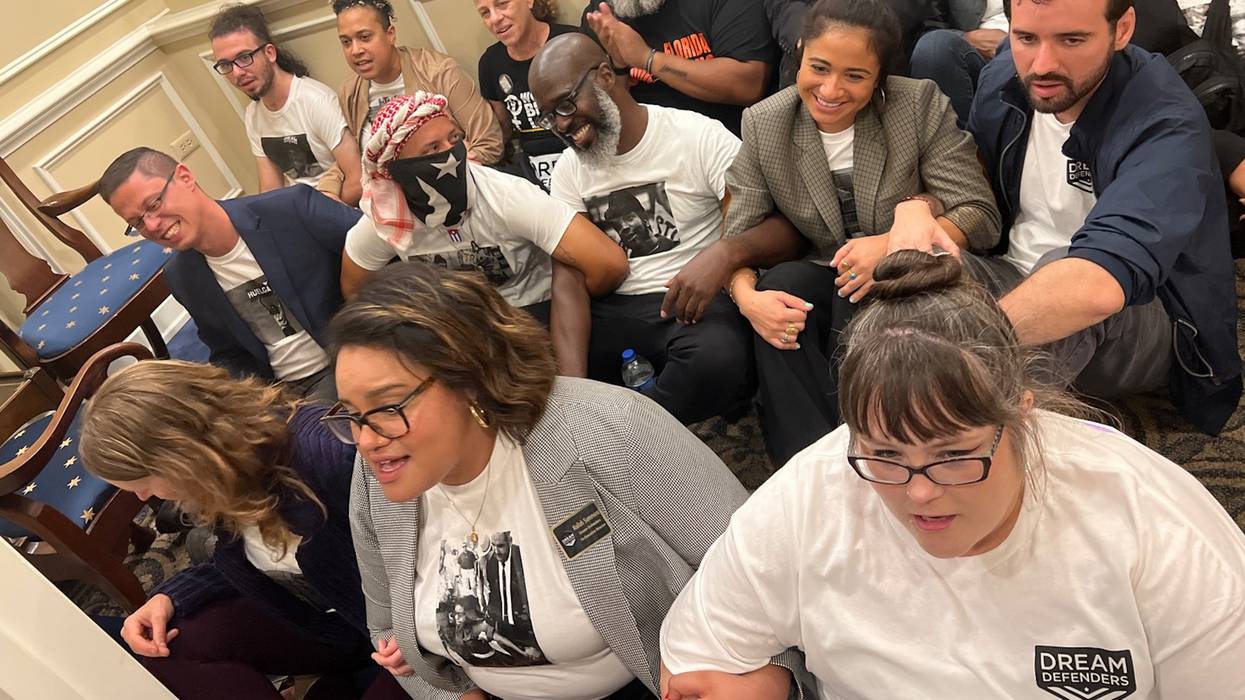
More than a dozen activists were arrested late Wednesday after occupying part of Republican Florida Gov. Ron DeSantis' office to protest his "fascist agenda," especially his support for a new anti-immigrant bill.
Protest organizers said 14 people were placed under arrest Wednesday evening. Earlier in the day, dozens of members of the Florida-based and youth-led Dream Defenders and allied groups including Florida Rising and Showing Up for Racial Justice had entered the lobby of DeSantis' office in Tallahassee, where around a dozen people sat and locked hands in front of the reception desk.
The activists—who said they would not leave until they met with the governor and presumptive 2024 GOP presidential contender—were protesting a wide range of DeSantis' policies and actions, including his support for S.B. 1718, a bill passed by both houses of Florida's Legislature that would ban cities and counties from funding organizations that issue identification documents to people who enter the U.S. illegally.
The bill also bans businesses from accepting identification—including out-of-state driver's licenses—from such immigrants, and forces hospitals to record patients' immigration status upon admission.
Video posted on social media by Dream Defenders shows at least one of DeSantis' staffers eating chocolate cake in front of the demonstrators.
One protester is heard saying in the video that "they sittin' here eatin' cake while the people of Florida are in crisis."
Florida Planned Parenthood Action tweeted that "as always, the cruelty is the point with this administration."
Florida Rising senior political adviser Dwight Bullard—a former Democratic state lawmaker—said in a statement that "Gov. DeSantis and Republican lawmakers have chosen to attack many of Florida's most vulnerable and historically marginalized communities with policies that attack who they are, who they love, and how and what they learn."
Showing Up for Racial Justice associate director Julia Daniel said that DeSantis "stokes division to try and make white people afraid, and I'm here to say that we will not be divided or tricked because we know that we are stronger when we stand together."
Common Dreams reported last month that advocacy organizations issued a travel advisory for Florida, with one of the groups, Equality Florida, citing DeSantis' "passage of laws that are hostile to the LGBTQ+ community, restrict access to reproductive healthcare, repeal gun safety laws and allow untrained, unpermitted carry, and foment racial prejudice" in warning that the Sunshine State "may not be a safe place to visit or take up residence."
Civil liberties and racial justice advocates are celebrating after a federal judge ruled Thursday that Florida's anti-protest law is unconstitutional and therefore unenforceable.
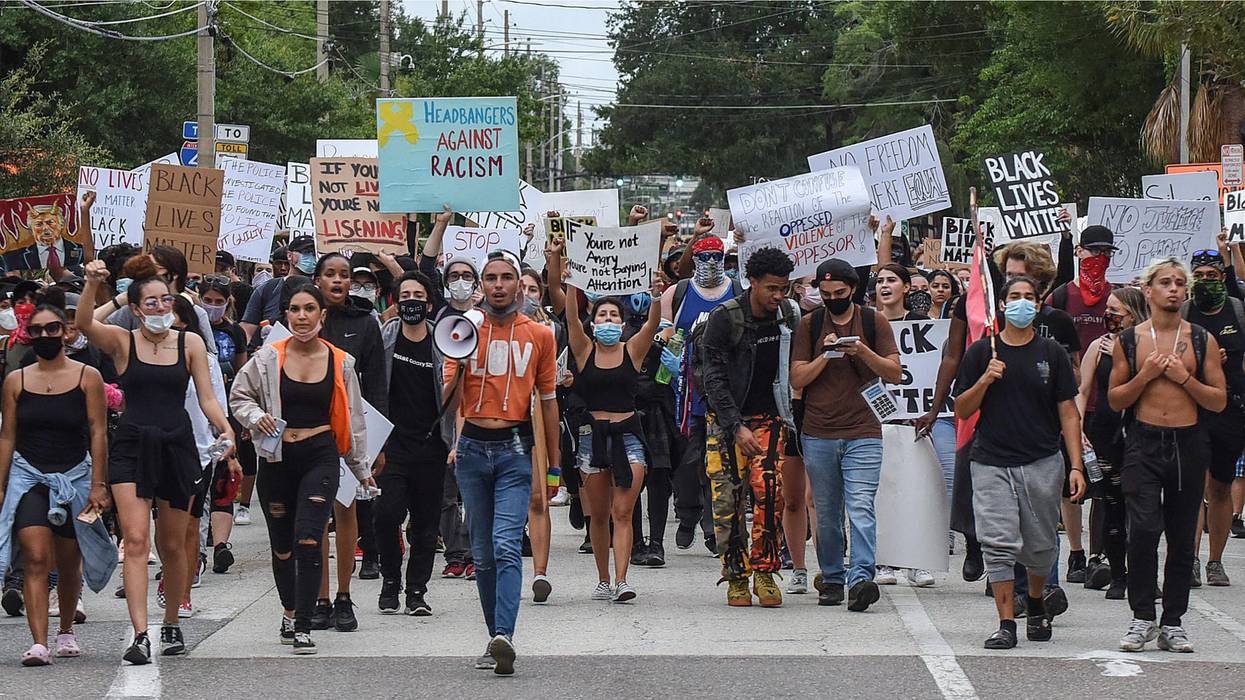
In his 90-page decision (pdf) granting civil rights groups' request for a preliminary injunction, U.S. District Judge Mark Walker said the law--passed by Florida's GOP-controlled House and Senate and signed in April by Republican Gov. Ron DeSantis in response to demonstrations against police violence and racial injustice--violates rights to free speech and peaceful assembly as well as due process protections.
The ACLU of Florida explained that a key provision of H.B. 1 "redefines the crime of 'riot' and imposes harsh penalties for those arrested under the law," including peaceful protesters.
Alluding to Florida's history of slapping anti-segregationists with baseless charges of incitement and rioting during the Jim Crow era, Walker enjoined DeSantis and three Florida sheriffs from enforcing the riot definition established by Section 15 of the law.
"If this court does not enjoin the statute's enforcement," Walker wrote, "the lawless actions of a few rogue individuals could effectively criminalize the protected speech of hundreds, if not thousands, of law-abiding Floridians."
The court's ruling came in response to a motion filed in July by the NAACP's Legal Defense Fund, the ACLU of Florida, the Community Justice Project, and private attorneys on behalf of Dream Defenders, the Black Collective, Chainless Change, Black Lives Matter Alliance of Broward, the Florida State Conference of the NAACP, and the Northside Coalition of Jacksonville.
In May, the same plaintiffs filed a lawsuit contending that Florida's anti-protest law violates the First and Fourteenth Amendments to the U.S. Constitution by repressing legally protected activities and criminalizing those who advocate for social change.
Following Thursday's ruling, the coalition said in a joint statement that the "decision enjoining enforcement of a key provision of H.B. 1 will greatly contribute to the safety of Black organizers and others affected by this unjust law."
"H.B. 1 effectively criminalizes our constitutional right to peacefully protest and puts anyone--particularly Black people demonstrating against police violence--at risk of unlawful arrest, injury, and even death," the groups continued. "This targeting of protesters is shameful and directly contradicts our Constitution. We are glad the court has agreed to suspend enforcement of this key provision while we continue to advocate to ensure that protesters in Florida can safely exercise their right to speak out against injustice."
While DeSantis and Republicans in the Florida legislature presented H.B. 1 as a response to the January 6, 2021 attack on the U.S. Capitol by a mob of Trump supporters, the measure was first proposed by DeSantis last September in reaction to the nationwide marches that erupted after a Minneapolis police officer murdered George Floyd in May of 2020.
"H.B. 1 was passed as a direct response to racial justice protests in 2020 and appears designed to target those who protest police violence," the civil rights coalition said Thursday. "Among other concerning provisions, the law risks criminalizing peaceful protest and shields those who injure or kill protestors--for example, by ramming their vehicles into protestors--from civil penalties."
GOP lawmakers in 34 states have introduced 81 bills this year to stifle dissent and criminalize people who demonstrate against police violence, fossil fuel pipelines, and other injustices. In addition to Florida's H.B. 1, punitive and discriminatory anti-protest laws have been passed in seven other states: Alabama, Arkansas, Iowa, Kansas, Montana, Oklahoma, and Tennessee.
"As states around the country threaten to pass similar legislation," the coalition added, the court's "decision serves as a powerful reminder that such unjust and unconstitutional efforts cannot stand."
NPR reported Thursday that DeSantis plans to challenge Walker's order at the 11th U.S. Circuit Court of Appeals.
A coalition of civil rights groups on Wednesday filed a motion in a Florida federal court seeking to block the state's recently enacted anti-protest law--which critics say targets racial justice demonstrators while letting right-wing protesters off the hook.
"We use protest as a vehicle for change and not only does this law silence our voices, but it puts our lives in danger."
--Nailah Summers, Dream Defenders
The ACLU of Florida, NAACP Legal Defense and Educational Fund, Inc. (LDF), and Community Justice Project (CJP), with Akin Gump Strauss Hauer & Feld LLP serving as counsel, filed a motion for preliminary injunction (pdf) in the U.S. District Court for the Northern District of Florida in a bid to block parts of H.B. 1, the so-called "anti-riot" bill introduced in the wake of last year's Black Lives Matter protests and signed into law by Republican Gov. Ron DeSantis in April.
The injunction was filed on behalf of Dream Defenders, the Black Collective, Chainless Change, Black Lives Matter Alliance of Broward, the Florida State Conference of the NAACP, and the Northside Coalition of Jacksonville.
"Among other things, the law risks criminalizing peaceful protest, shields those who injure or kill protestors (for example by ramming their vehicles into protestors) from civil penalties, discourages people from protesting, and otherwise infringes on First Amendment rights," the organizations filing the motion said in a statement. "The law was passed as a direct response to racial justice protests in 2020, and appears designed to target those who protest against police violence."
Critics argued that H.B. 1's civil legal immunity provision endangers lives and would have protected the neo-Nazi who murdered anti-racism protester Heather Heyer with his car in Charlottesville, Virginia in August 2017.
H.B. 1 is but one of scores of Republican-sponsored anti-protest bills introduced in dozens of states over the past year. As of late June, eight states have passed such laws.
The same groups that filed Wednesday's motion also sued DeSantis and other state officials in May over H.B. 1.
"This law has changed the landscape for what it means to organize and create safer conditions for our communities in Florida," said Nailah Summers, co-executive director of Dream Defenders, in a statement. "Protest has always been a vital tool for accountability for our public officials. We use protest as a vehicle for change and not only does this law silence our voices, but it puts our lives in danger."
"H.B. 1 is a punitive and unjust law created to silence communities, but protect vigilantes."
--Krystina Francois, The Black Collective
Krystina Francois, co-founder and board member of the Black Collective, said that "H.B. 1 is a punitive and unjust law created to silence communities, but protect vigilantes."
"Black Floridians deserve more than a law that continues to suppress their voices," asserted Francois. "Our constitutional right to assemble peacefully and demand justice from a society that would rather criminalize us than uplift our quality of life is necessary."
Ben Frazier, president of the Northside Coalition of Jacksonville, said that "H.B. 1 targets Black organizers, and their allies who stood up courageously to say 'Black Lives Matter!'"
"We protested against police brutality and against social, racial, and economic injustice," Frazier continued. "The enactment of H.B. 1 has frightened peaceful protesters from exercising their constitutional right to assemble and protest. Many of our supporters have declined to participate while expressing a fear of unfair arrests by law enforcement officers and the fear of potential bodily harm by vigilantes."
"The First Amendment, which guarantees our rights to voice our demands, is being muffled, strangled, and suffocated," he added. "H.B. 1 is undemocratic legislation that has stifled our constitutional rights by obstructing the activity of Black community organizers. H.B. 1 must be repealed, abolished, or simply outlawed."
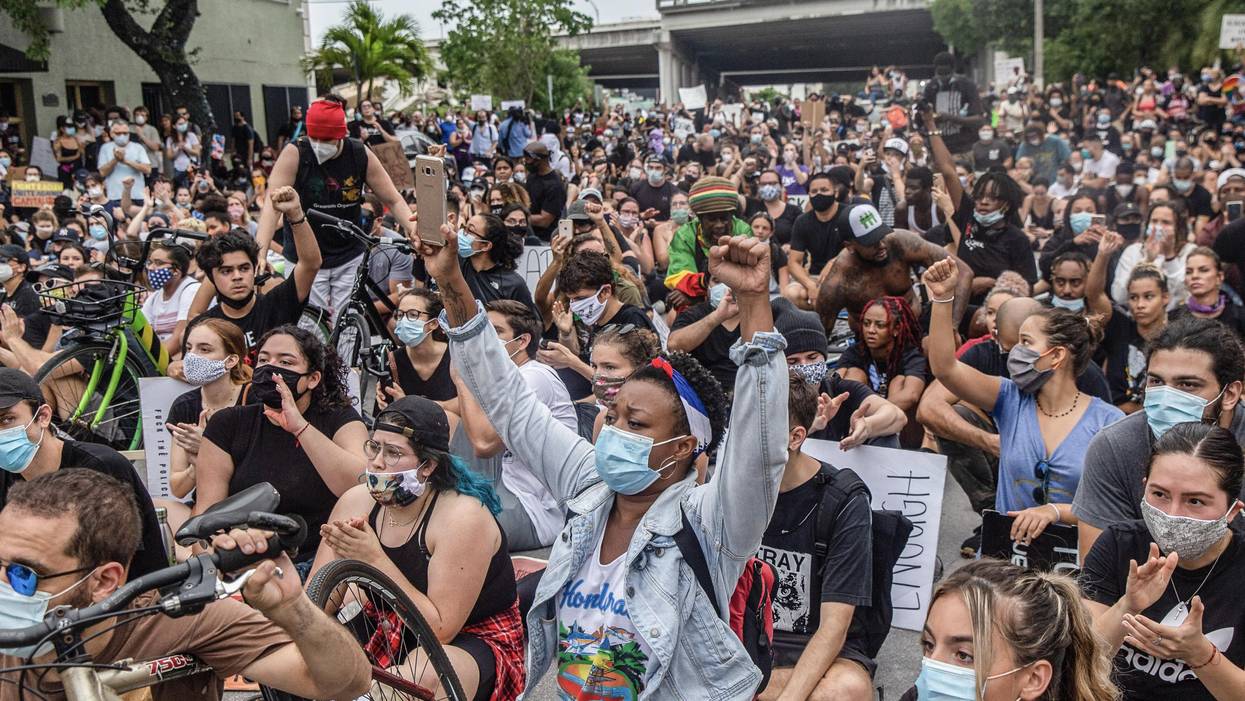
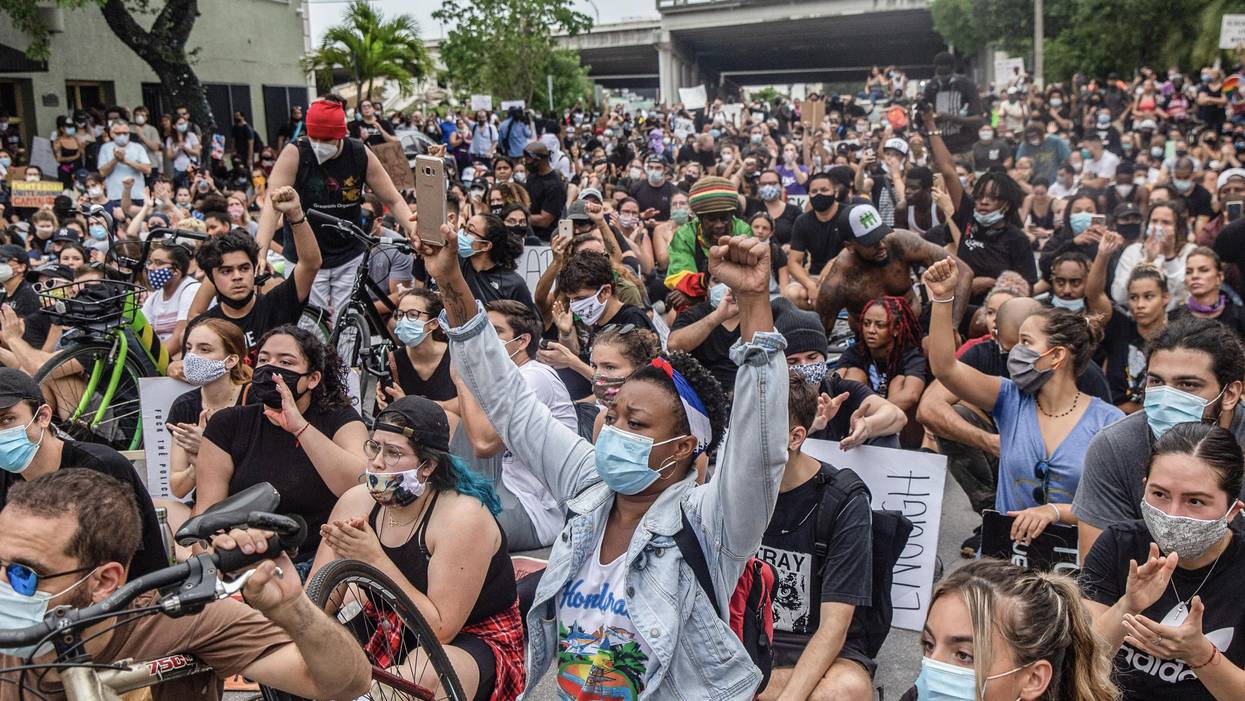
Underscoring what critics of H.B. 1 say is the law's discriminatory intent, the editors of the Miami Herald on Tuesday published an editorial decrying the hypocritical leniency shown to Cuban-American demonstrators and their supporters who blocked a Miami expressway on Tuesday in a show of solidarity with anti-government protesters in Cuba.
According to the South Florida Sun-Sentinel, "Police encouraged people to disperse--to no avail." People at "SOS Cuba" demonstrations in Tampa and Orlando also blocked major thoroughfares and ignored police orders to disperse.
There were no arrests reported at the Miami protest. Three men were reportedly arrested in Tampa for assaulting or resisting officers, while one man was reportedly arrested in Orlando for disorderly conduct. There were no reported arrests for violations of H.B. 1.
Addressing DeSantis' dodging of reporters' questions about the uneven application of H.B. 1, the Herald editors wrote: "Honestly, we would have been more impressed if he had just responded: 'Nah, the Miami-Dade demonstrators seeking human rights in Cuba have nothing to fear from my anti-riot law. We created it to subdue Black folks seeking human rights in the United States.'"
Writing for Latino Rebels, Thomas Kennedy said: "Let's be clear here, the only thing that changed in terms of the protests are the demands and who is organizing them. When it was Black Lives Matter protests, DeSantis vowed to throw the book at them and condemned them profusely but when it was Cuban protestors, it became politically inconvenient to enforce the very same law he advocated for months ago."
A black SUV, part of a Cubans for Trump caravan, rams into Jonathan Gartrelle, a Black Lives Matter activist at a small protest in downtown Miami on July 18, 2020. Video shows Gartrelle landing hard on the hood of the vehicle, then sliding off. The SUV speeds away.
The man who drove into Gartrelle, an unidentified Trump supporter, is the one who's pressing charges--against Gartrelle.
The driver claims Gartrelle stole a flag from his SUV. Police arrested Gartrelle a couple of days later, charging him with two felonies--one for escape and one for strong arm robbery--as well as misdemeanor counts of resisting an officer and obstructing a public street.
The law also makes it easier to charge entire groups of protesters for the actions of a single individual.
These charges are "hilariously overbroad," says Alex Saiz, Gartrelle's attorney and director of legal services for the Florida Justice Center. "As you read the arrest form, you think, 'This is nonsense.' "
Gartrelle is one of more than 14,000 demonstrators who were arrested at anti-racism protests during summer 2020.
Eventually, all of the charges against Gartrelle were dropped (except the misdemeanor for petty theft, still unresolved because of court delays related to Covid-19). But a new Florida law, part of a surge of draconian anti-protest state bills, puts future protesters at risk of far worse outcomes.
Signed into law in April, Florida's HB 1, the Combating Public Disorder bill, sets harsher penalties (and escalates some misdemeanor charges to felonies) for protesters who block roadways or deface public monuments. It also creates a new misdemeanor called "mob intimidation" and protects police budgets from cuts.
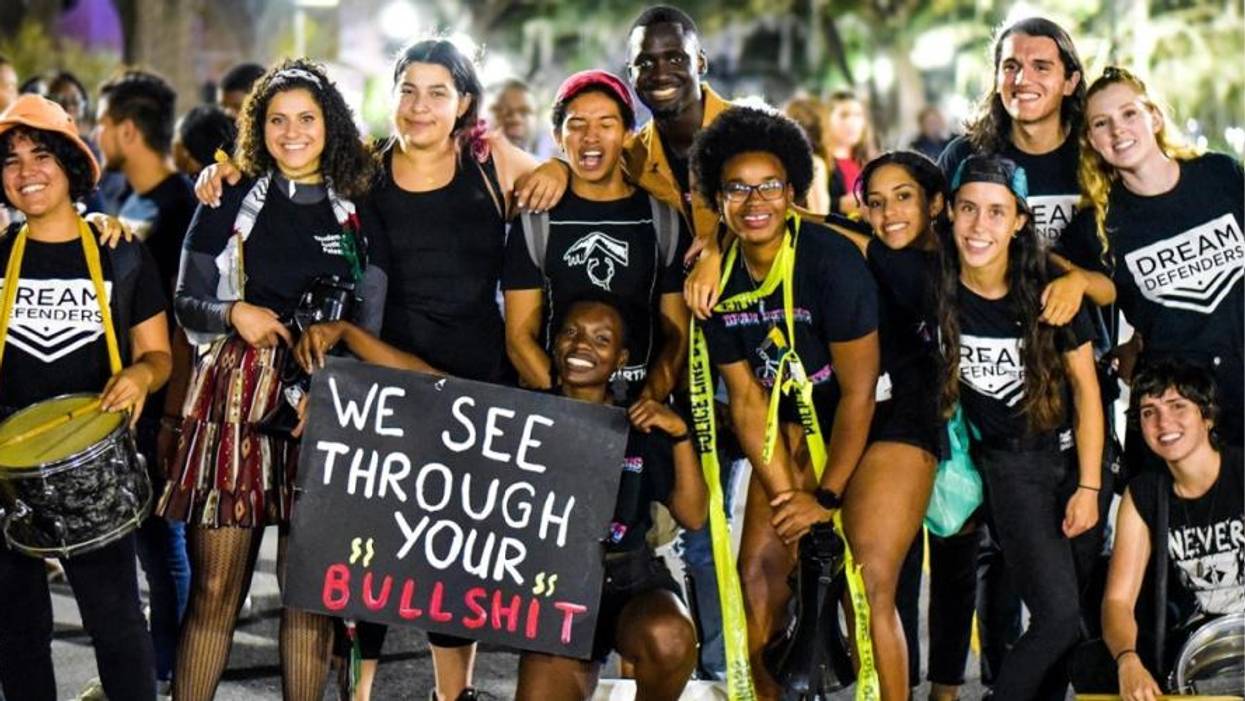
Dream Defenders, a youth-led, Miami-based abolitionist group (and member of the Movement for Black Lives), spearheaded an all-out campaign against HB 1 earlier this year. The organization sent tens of thousands of emails, canvassed, phone banked and hosted events to raise awareness about the "censorship bill," says Nailah Summers, interim co-director of Dream Defenders.
Republican Florida Gov. Ron DeSantis calls HB 1 the "strongest anti-rioting, pro-law enforcement measure in the country." But according to Max Gaston, staff attorney at the ACLU of Florida, "HB 1 is not an anti-riot law. It is an anti-protest law that suppresses First Amendment rights by criminalizing peaceful protest and silencing government dissent."
Under HB 1, Gaston says, "virtually every major demonstration in the last several years, from the Women's March to the March for Our Lives, would have involved a heightened level of danger from police and counter-protesters."
Law enforcement advocacy groups (particularly police unions) have lobbied hard for the new legislation--which generally increases discretion for police, prosecutors and judges-- in at least 14 states, contributing hundreds of thousands of dollars to the campaigns of the bills' sponsors.
"[HB 1] will almost inevitably result in more arrests, felony convictions and debilitating legal financial obligations," Gaston says. For example, the law "effectively authorizes police officers to decide in every instance what constitutes a riot, what conduct is criminal under the new law, and who can be arrested for merely assembling to highlight and discuss issues of public importance."
The law also makes it easier to charge entire groups of protesters for the actions of a single individual. If someone smashes a window during a protest, for example, any nearby demonstrator could face felony charges, Saiz says. This element of the law arguably creates an incentive for law enforcement to use unethical tactics to disrupt peaceful assemblies, such as planting provocateurs in crowds--a tactic wielded against civil rights groups in the past. From the FBI's COINTELPRO to the murder of Fred Hampton and countless other freedom fighters, law enforcement has long worked to protect white supremacy and destroy Black movements.
As for the driver who hit Gartrelle, new immunity protections from civil lawsuits for drivers who injure or kill protesters appear in bills passed in Florida, Oklahoma and Iowa, and have been introduced in Missouri and Nevada. Oklahoma's version even includes criminal immunity in some cases, which "emboldens those seeking to harm protesters," according to Gaston.
The new protection against civil liability comes in the wake of a number of instances of vehicle weaponization by people who align with the Right. Most infamously, in 2017, racial justice activist Heather Heyer was killed by a neo-Nazi driver in Charlottesville, Va., who also injured 19 other protesters.
According to the International Center for Not-for-Profit Law, Republican state legislators across 34 states have introduced more than 80 bills in the 2021 legislative season that criminalize protesting or grant civil immunity to people who harm protesters. Many of the proposed bills use language that copies elements of the Florida legislation. Some draw from a 2017 model bill drafted by the right-wing American Legislative Exchange Council at the behest of fossil fuel companies, the so-called Critical Infrastructure Protection Act. A response to the Dakota Access Pipeline protests, it set a precedent for severe criminal penalties against peaceful protesters.
Some of the new anti-protest bills extend beyond criminal punishment and cut basic benefits to people convicted of protest-related charges. A bill proposed in Minnesota, home of George Floyd and Daunte Wright, would make people convicted of a crime during a protest ineligible for student loans, food stamps, rental assistance and unemployment relief. SB 34, a Republican bill proposed in Indiana, would prohibit people convicted of unlawful assembly from holding state employment or elected office.
"The idea that the George Floyd protests were somehow so awful that we need to fundamentally change the way we see riots and protest is just complete fearmongering," Saiz says, adding that the intention is to create a chilling effect on free speech.
These anti-protest bills also come in the wake of an election cycle that saw record voter turnout and extremely close races-- most significantly in Georgia, where President Joe Biden won by a slim margin and two previously Republican-held Senate seats flipped in a run-off.
By creating new felony charges for protest, these bills threaten the constitutional right to vote. The vast majority of states disenfranchise people who have felony convictions--who are disproportionately Black--for some time. HB 1 creates "a substantial risk of disenfranchising more Black and Brown Florida voters," says Gaston, as citizens convicted of a felony are only eligible to vote after completing their sentence and paying often debilitating fines and fees. In 11 states, mostly in the South, an individual convicted of a felony can lose their voting rights indefinitely. In 18 states, people on parole or probation are barred from voting.
"Those wishing to exercise their First Amendment rights to assemble and protest" have no choice but to be "mindful of the risks HB 1 creates," Gaston says.
Organizers and activists around the country are girding themselves for the fight ahead.
In Missouri, a coalition of civil and human rights organizations, including the Organization for Black Struggle, came together in March to protest the state's anti-protest bill. In Oklahoma, dozens of demonstrators occupied the Capitol in April as the governor signed an anti-protest bill.
In some ways, Saiz says, the passage of HB 1 has galvanized demonstrators in Florida. "They feel like the government is actively trying to silence them," he says. "They feel like they have even more to protest. We've got clients who are planning protests of the anti-protest law."
The NAACP Legal Defense and Educational Fund, the ACLU of Florida and the Community Justice Project have also filed a federal lawsuit challenging Florida's law on behalf of a number of Black-led organizations, including Dream Defenders. The lawsuit argues that HB 1 violates the First and 14th Amendments by chilling protected speech, criminalizing protest and specifically targeting Black organizers.
Promises Nailah Summers, "We're putting our heart and soul into stopping this racist law."
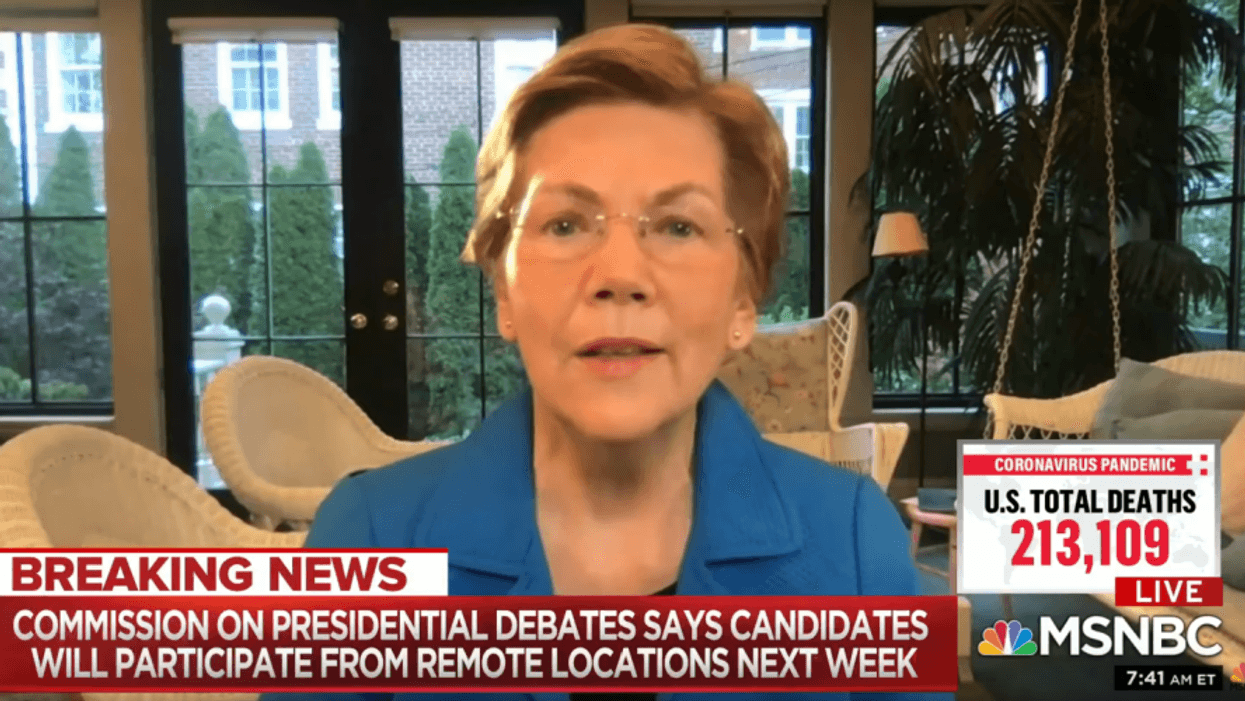
On the heels of a debate in which Vice President Mike Pence joined President Donald Trump in refusing to commit to a peaceful transfer of power if they lose the November election, Sen. Elizabeth Warren on Thursday emphasized the importance of beating the Republicans "bigly."
The Massachusetts Democrat and former presidential candidate, who is now backing Vice President Joe Biden and his running mate Sen. Kamala Harris (D-Calif.) in their bid to oust Trump and Pence, discussed the contest and concerns about the current administration live on MSNBC.
"This is a reminder of who Donald Trump is and who Mike Pence has signed up to play second fiddle to," Warren told host Joe Scarborough about them declining to say they will peacefully pass the reins if Biden and Harris are victorious in the race, for which early in-person and mail-in voting has already started.
After expressing alarm about the damage that the Trump administration has done so far to American democratic institutions during the president's first term, the senator stressed the significance of what happens over the next couple weeks until November 3--this year's official Election Day.
"We can't just afford to beat him by a little bit. We need to beat him--as Trump would say--bigly, because there can't be any dispute," Warren warned. "Because he is the man who will dispute it if he has the tiniest shred of anything that he can hold on to."
"This has to be one of those elections where we all get out and vote not only for the candidate that we care about," she said, "but get out and vote for our democracy."
While Warren urged Americans to participate in the election--and encourage others to do so--Trump decided that he wouldn't participate in the debate between him and Biden planned for next week, after the Commission on Presidential Debates announced the event would be held virtually due to the president's Covid-19 diagnosis.
CNN reported that Trump's campaign manager Bill Stepien accused the commission of "unilaterally canceling an in-person debate" to help Biden and said the president will instead hold a rally. Trump announced last week that he tested positive for Covid-19. He returned to the White House Monday after spending three nights in the hospital.
The ongoing pandemic is already driving a significant increase in early voting. According to Michael McDonald, a political science professor at the University of Florida who runs the U.S. Elections Project, at least six million Americans had cast ballots for the general election as of Thursday morning.
As Trump has repeatedly indicated over the past several months that he may not accept the election results if he is defeated, progressive advocacy organizations have pushed Americans to vote early--and in person, if possible, given concerns about mail delivery delays resulting from changes implemented by Postmaster General Louis DeJoy, a Trump megadonor.
More than 100 advocacy groups and labor unions have also recently come together to create the Protect the Results coalition, working to get out the vote and vowing to mobilize if the president won't accept a loss. Last week, organizers with four major youth organizations similarly launched #CountOnUs, promising to fight back if Trump tries to steal the election.
"So I'm excited to link arms with these other powerful organizations of young people ahead of the election, because this one will determine so much about our future," said Marie Rattigan of Dream Defenders, one of the youth groups. "Together, we're going to vote and organize like our communities and planet are at stake, because they are."
Leaders of Dream Defenders, March for Our Lives, Sunrise Movement, and United We Dream PAC announced Thursday that their youth-led advocacy groups have come together with a new mobilization effort to defeat President Donald Trump in November, "protect the ballot box from corruption, and lead a massive youth strike if Trump tries to steal the election."
"What we're building together will be crucial towards plugging young people into action who are feeling anxious about the state of our democracy, society, and planet."
--Zina Precht-Rodriguez, Sunrise Movement
Launched in the midst of early voting and just hours before Trump tested positive for Covid-19, the new collaborative effort called "Count On Us" comes as a response to growing concerns about the president's potential reelection and any unlawful attempt to hold onto power.
"We have reached our most defining moment in electoral politics where our collective ability to push forward the flagship agendas of our generation will be determined not just by how we vote going into November, but how we mobilize the morning after Election Day," said Sunrise deputy creative director Zina Precht-Rodriguez.
"This joint organizing platform will be the universal youth organizing tool of the foreseeable future through the election," Precht-Rodriguez added. "What we're building together will be crucial towards plugging young people into action who are feeling anxious about the state of our democracy, society, and planet."
The launch came on the heels of Trump's first debate with Democratic presidential nominee Joe Biden--during which the president continued to baselessly attack the security of mail-in ballots, which are expected to be widely used this year because of the pandemic that has now reached the Oval Office.
In the months leading up to Election Day, Trump has spread lies about voter fraud, refused to commit to a peaceful transition of power if he loses, and--along with other Republicans and right-wing groups--tried to make it harder for Americans to cast ballots in this cycle during a public health crisis.
"When we see things that need to change, we make it happen and we count on each other to stand up for what's right."
--Marie Rattigan, Dream Defenders
Such rhetoric and actions from the president and others have led progressive organizers to urge voters to cast ballots early--and in person, if possible--and to form response plans in case Trump refuses to leave office. Over 100 advocacy groups have joined the Protect the Results coalition.
The organizations behind the new youth-led platform have previously garnered international attention for their efforts to advance racial, climate, and immigrant justice and take on gun violence. They plan to hold their first joint mass call on Monday, October 5 at 8:00 pm ET.
"Our generation is at the forefront of the fight for democracy," declared Marie Rattigan, a lead organizer with Dream Defenders. "When we see injustice, we fight it. When we see things that need to change, we make it happen and we count on each other to stand up for what's right."
"So I'm excited to link arms with these other powerful organizations of young people ahead of the election, because this one will determine so much about our future," she added. "Together, we're going to vote and organize like our communities and planet are at stake, because they are."
The youth organizers' Count On Us website lays out their "Organize. Vote. Strike." plan for the ongoing election, explaining:
This fall, our generation has the power to defeat Trump and begin to transform this country forever.
We are the Dreamers who won protections for immigrants. We are the kids who took on the NRA. Our generation made Black Lives Matter a national rallying cry and the Green New Deal a political priority. Donald Trump and his billionaire friends know they're losing, so they are deliberately trying to tear us apart and convince us our voices don't matter, distracting us as they try to steal the election. We are coming together to stop them.
"For me and many others at March for Our Lives, our advocacy to end gun violence is not separate from how we navigate the world and the lived experience we bring to this work," said Daud Mumin, a student board member of the group that grew out of the youth organizing that immediately followed the 2018 mass shooting in Parkland, Florida.
"The future that we want and deserve is on the line this election and that's why young people are coming together in partnership."
--Gabriel Madison, United We Dream Action PAC"We're Black, we're Brown, we're immigrants and first-generation Americans--and all of these issues are deeply interconnected for us," Daud continued. "This election cycle, we're facing extreme indifference from the political establishment to the issues that impact young people the most. We are coming together to fight for our future, because we can't count on anyone else to do that for us."
Gabriel Madison, a United We Dream Action PAC member and first-time voter, echoed that message, saying that "the future that we want and deserve is on the line this election and that's why young people are coming together in partnership."
"Trump and his Republicans enablers have attacked everything that we care about, including deporting members of my undocumented immigrant community," Madison said. "I will be voting for the first time this election because my community is counting on me, and I know that the only way for all of us to thrive is if young people count on each other to vote Trump out and protect our democracy."
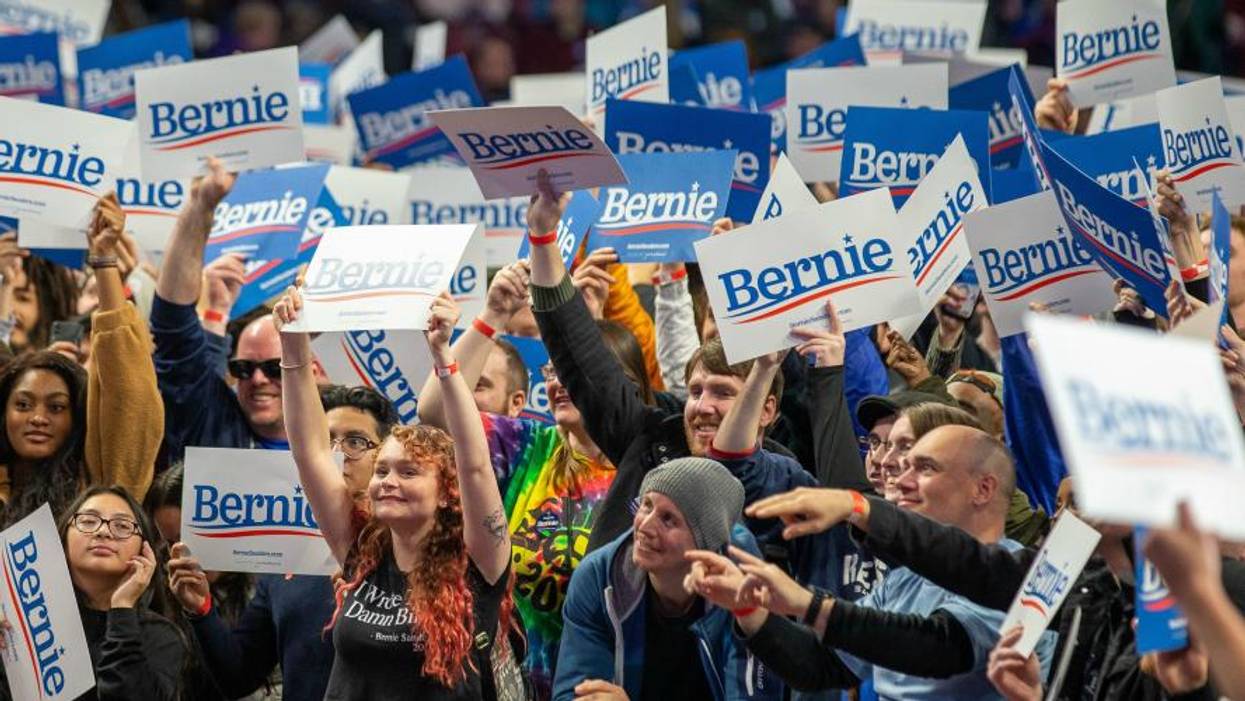
A diverse coalition of progressive advocacy groups has launched what it is billing as "the largest independent mobilizing commitment for any candidate" in order to turn out an additional 1.4 million voters in a slate of key primary states on behalf of Sen. Bernie Sanders and the working class movement his campaign has built.
Called "People Power for Bernie" and launched just days ahead of Monday's Iowa caucuses, the voter mobilization effort was organized by nine progressive groups representing millions of people across the U.S.: Center for Popular Democracy (CPD) Action, People's Action, Dream Defenders, the Sunrise Movement, Make the Road Action, Our Revolution, Democratic Socialists of America, Progressive Democrats of America, and Student Action.
" Bernie Sanders' campaign is about more than one election. It's about changing politics and shifting power from corporations and billionaires to the working class."
--Megan Svoboda, DSA for Bernie Campaign
"This is the political revolution in action," Natalia Salgado, political director with CPD Action, said in a statement. "Black, Brown, and working people are the core of Sanders supporters. Together, this powerful network of organizations will ensure that Sanders becomes our nominee."
Salgado stressed that the grassroots mobilization will continue into the general election against President Donald Trump if Sanders wins the Democratic nomination. "When he does," Salgado said, "we will work together to ensure that our political future includes us all--Black and Brown people, women, immigrants, working people, queer, trans, and gender non-conforming people."
The coalition said it plans to knock on doors, host rallies, phone bank, and organize on college campuses in key states and districts across the U.S., including the crucial early-voting states of Iowa, New Hampshire, and South Carolina; delegate-heavy Super Tuesday states like California and Texas; and battleground states like Michigan and Wisconsin.
The groups will operate independently of Sanders' presidential campaign.
"People's organizations from coast to coast are flexing our political muscle together to help elect Bernie Sanders," Angelica Romero, a member of immigrant group Make the Road Action, said in a statement. "With his commitment to stopping deportations that are tearing communities apart, standing up for workers and tenants, and ending the school-to-prison pipeline, Senator Sanders has struck a chord with immigrants, Black and Brown, and working-class voters across this country."
"We will be knocking on thousands of doors in critical primary and caucus states like Nevada to make sure our voices are heard," said Romero.
The grassroots initiative comes as Sanders continues his polling surge in the early voting states of Iowa and New Hampshire as well as nationally.
A national Wall Street Journal/NBC News survey released Friday found that Sanders is narrowly leading the Democratic presidential primary field, just a percentage point ahead of former Vice President Joe Biden.
"Bernie Sanders' campaign is about more than one election. It's about changing politics and shifting power from corporations and billionaires to the working class," said Megan Svoboda, chair of the DSA for Bernie Campaign. "But Bernie cannot do this alone."
"To win this election and the demands that he's running on, it will take a movement," said Svoboda. "A movement that will mobilize historic numbers of young people, union members, and working families across the country and keep fighting to the election, and then every day after."
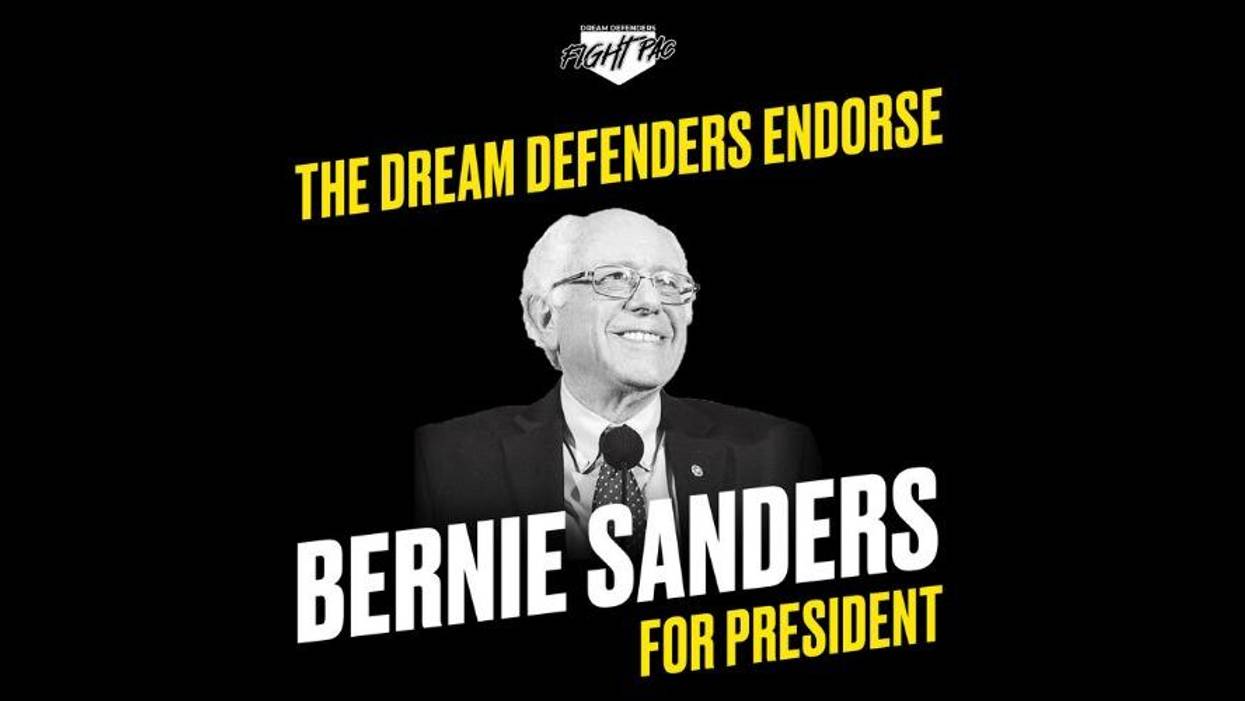
Praising the "visionary agenda" of Sen. Bernie Sanders and decrying the corporate media's treatment of him as a "fringe candidate" in the Democratic presidential primary race, the Florida-based social justice group Dream Defenders on Wednesday joined the massive grassroots movement Sanders is building for his second presidential run.
"Our people believe in Bernie and his vision for building power with us. He has the most diverse, the youngest, and the most working class base of any candidate."
--Dream Defenders
Dream Defenders initially formed to fight for justice for Trayvon Martin but has since blossomed into a broader "movement for freedom and liberation in Florida." A lengthy statement from the group's Fight PAC endorsing Sanders spotlighted his campaign slogan ("Not Me, Us") and explained that "Bernie is not our political savior. It is the movement behind him that will change this country."
"Our people believe in Bernie and his vision for building power with us," the statement said. "He has the most diverse, the youngest, and the most working class base of any candidate. He has more donations from students, Walmart Workers, Amazon workers and teachers than anyone else--at an average of $18."
"The mainstream media is afraid of this," the group added, condemning how some major media outlets have regarded Sanders' campaign. "That's why they've attempted to paint Bernie as some fringe candidate and his support base as comprised of only 'white Bernie bros' and erase the millions of black, brown, and immigrant youth and women at the helm of his campaign."
Welcoming the group's support in a tweet, Sanders thanked Dream Defenders for its "incredible" work in Florida, emphasized the power of young people, and reiterated his commitment to working with his movement "to create a nation where every person is able to live with justice and dignity."
Sanders also shared a video that Dream Defenders released detailing its history and goals. As the group's statement explained, "Because our lives and the lives of the people we love depend on it, we have chosen to take a side in this election: to stand against a world order rooted in greed, authoritarianism, and violence."
Dream Defenders highlighted how Sanders' agenda aligns with that of the group, including tuition-free public college, the elimination of student and medical debt, Medicare for All, a jobs guarantee, a moratorium on deportations, the reunification of separated families, overhauling the immigration system, ending mass incarceration, a just transition for incarcerated individuals, cutting the U.S. military budget, pursuing diplomacy with Iran, and respecting the rights of Palestinians.
"Bernie's track record is consistent. Throughout his career, he has pushed visionary ideas long before they were politically popular," the group said of Sanders, a democratic socialist. "Bernie is not offering band-aid solutions to the crises we are living in. He believes in a total transformation of our economic and political systems."
Pointing to recent polling that shows significant support among U.S. millennial voters for socialist political candidates, Dream Defenders added that "the media's erasure of young women, and people of color as core constituencies of the Bernie Sanders campaign reflects the establishment's discomfort with acknowledging that the working-class is in fact multi-racial, and the growing consensus that capitalism cannot save us."
Kshama Sawant, a former software engineer and economist who now serves on the Seattle City Council as a member of the Socialist Alternative Party, also endorsed Sanders for president on Wednesday.
Sawant, who announced her decision on social media, declared that "we need a political revolution against the billionaire class, an Organizer-in-Chief prepared to build the movement of millions needed to win far-reaching change."
The councilmember added that she strongly supports "Bernie's fight for Medicare for All and for a Green New Deal." The Socialist Alternative Party shared Sawant's announcement and also endorsed Sanders.
The endorsements Wednesday added to the growing collection of high-profile progressive individuals and groups backing Sanders' bid for the Democratic Party's nomination.
Sanders also has won the support of three "Squad" members--Democratic Reps. Alexandria Ocasio-Cortez (N.Y.), Ilhan Omar (Minn.), and Rashida Tlaib (Mich.)--former Michigan gubernatorial candidate Dr. Abdul El-Sayed, legal scholar Zephyr Teachout, the Democratic Socialists of America, and several leaders of the U.S. Youth Climate Strike group.