

SUBSCRIBE TO OUR FREE NEWSLETTER
Daily news & progressive opinion—funded by the people, not the corporations—delivered straight to your inbox.
5
#000000
#FFFFFF
To donate by check, phone, or other method, see our More Ways to Give page.
Daily news & progressive opinion—funded by the people, not the corporations—delivered straight to your inbox.

“I really believe the situation is very dangerous,” said one Russian politics expert during a week in which the two countries exchanged strikes.
Voices on both sides of the war between Russia and Ukraine have issued ominous statements during a week when the two countries traded escalatory missile strikes.
Russia launched a strike on the Ukrainian city of Dnipro using an experimental, hypersonic missile Thursday, according to Russian President Vladimir Putin. The attack followed Ukrainian strikes on Russian territory using western-made, long-range missiles.
"This is an escalation," said Tatiana Stanovaya, a senior fellow at the Carnegie Russia Eurasia Center told The New York Times. "I really believe the situation is very dangerous."
Moscow's missile was fired using a conventional warhead but "it could be refitted to certainly carry ... different types of conventional or nuclear warheads," Pentagon spokesperson Sabrina Singh said. Singh also described it as an "intermediate range ballistic missile."
Initial reports from Ukrainian officials said that the strike was an intercontinental ballistic missile, in contrast to Putin's characterization of the missile. According to the Financial Times, officials from Ukraine, Russia, NATO, and the U.S. have offered different exact classifications for the weapon.
Putin, in a televised address, made clear that the move was in response to Ukraine's use of western-made weapons to strike deeper into Russia.
The Ukrainian government had long sought the permission of western governments to use weapons like American-made Army Tactical Missile Systems, or ATACMS, and U.K.-produced Storm Shadow missiles. The U.S. began supplying the Lockheed Martin-produced ATACMS earlier this year, according to Defense One, but imposed restrictions on their use due to the escalatory implications of Ukraine using them to strike targets far inside Russian territory.
Ukraine launched strikes using both of those weapons this week following a policy shift from the Biden administration allowing their use, which at least one foreign policy expert cautioned was a "needlessly escalatory step."
"From that moment, as we have repeatedly underscored, a regional conflict in Ukraine previously provoked by the West has acquired elements of a global character," Putin said in his address, according to Reuters.
The comments come days after Putin also codified a change to the country's nuclear doctrine that lowered the threshold for potential nuclear weapons use.
Meanwhile, on the Ukrainian side, the country's former military commander Valery Zaluzhny offered a bleak prognosis of the war earlier this week, saying that he "believe[s] that in 2024 we can absolutely believe that the Third World War has begun."
The comments were in reference to the fact that Russia is enlisting the help of outside allies, such as North Korea, in its military effort.
Elsewhere, foreign policy experts cautioned against escalatory spiral.
Anatol Lieven, the director of the Eurasia Program at the Quincy Institute for Responsible Statecraft, offered an argument against what he sees as the underlying rationale of allowing Ukraine to attack Russia with U.S. and U.K.-supplied long range missiles.
"The official argument for the ATACMS and Storms Shadows decision is to put Ukraine in a stronger position before peace talks are initiated by Trump," he wrote in a piece published Thursday. "This is a dangerous gamble, because the missiles (which are guided to their targets by U.S. personnel) risk infuriating Russia without giving really critical help to Ukraine."
U.S. intelligence analysts have also warned that granting Ukraine the ability to use U.S., French and U.K.-supplied long-range missiles could prompt forceful retaliation by Russia; additionally, analysts cautioned that the missiles would likely not fundamentally change the course of the war.
In a similar vein to Lieven, Matt Duss, the executive vice president of the Center for International Policy and Robert Farley, an assistant professor at the University of Kentucky, argued in the pages of Foreign Policy this week that U.S. policymakers should pursue a negotiated peace for Ukraine, in part because "Ukraine does not have a path to a straightforward victory."
"If Trump makes good on his promise to end the war, supporters of Ukraine must be clear about the principles at stake and be careful not to let maximalist aims foreclose a durable negotiated settlement. We say this with the knowledge of what conceding Ukrainian territory to permanent Russian control could mean, and has already meant, for Ukrainians in those territories," they wrote.
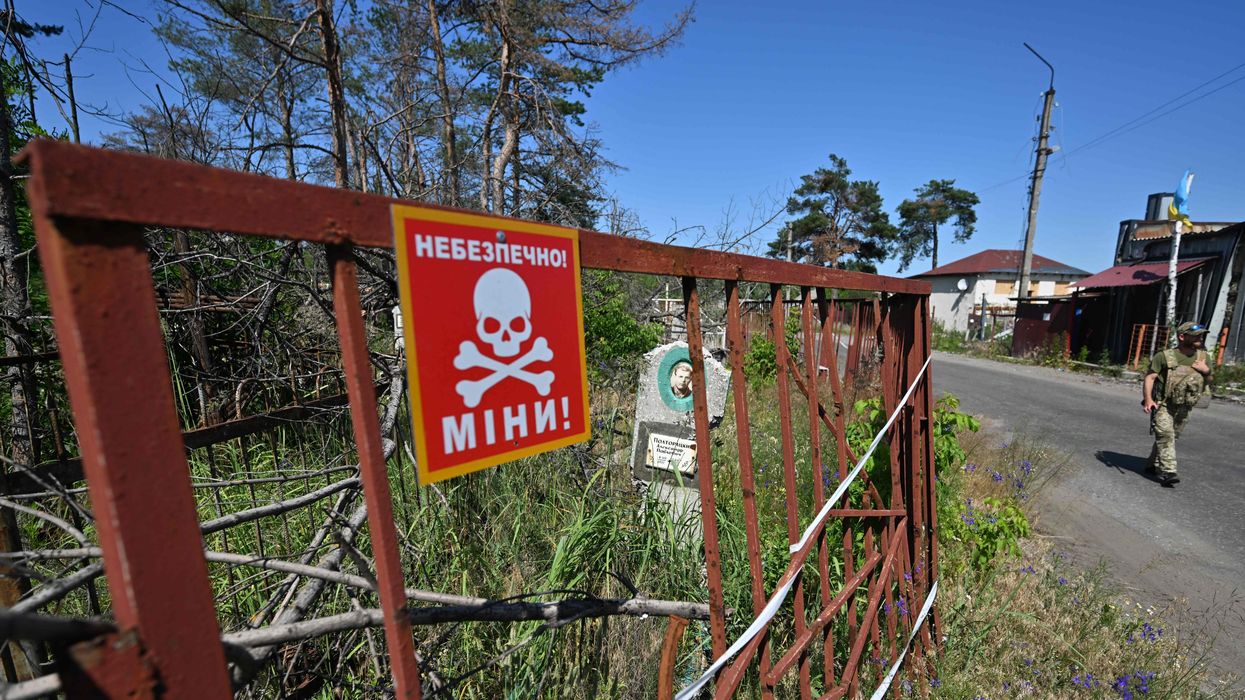
"Russian war crimes should not justify Ukrainian ones," stressed one human rights campaigner.
After gathering fresh evidence of the Ukrainian military's continued use of internationally banned antipersonnel landmines in their battle against Russian forces that invaded in early 2022, Human Rights Watch on Friday reiterated calls for Kyiv to stop using such weapons and hold anyone who has done so accountable.
Earlier this year, HRW documented Ukrainian homeland defenders' repeated firing of rockets scattering internationally banned antipersonnel mines last year "in and around the eastern Ukrainian city of Izium," a region occupied by Russian invaders.
HRW said Ukraine's launch of thousands of PFM-1 'petal' or 'butterfly' mines resulted in 11 verified civilian casualties, including one death and multiple lower leg amputations.
"These antipersonnel mines have had immediate and devastating consequences for civilians in and around Izium, including by tearing off limbs of residents as they go about their daily lives," Ida Sawyer, the director of HRW's crisis and conflict division, told The Washington Post on Friday.
The Ukrainian government has vowed to investigate the military's use of such inherently indiscriminate weapons that are banned under the 1997 Mine Ban Treaty, to which Ukraine is a signatory.
"Ukraine, exercising its right to self-defense in accordance with Article 51 of the U.N. Charter, fully implements its international obligations while Russian occupants commit war crimes, crimes against humanity, and genocide of the Ukrainian people," the Ukrainian Foreign Ministry said.
Unlike Ukraine, Russia is not bound by the Mine Ban Treaty. HRW says Russian forces have "used at least 13 types of antipersonnel mines in multiple areas across Ukraine, killing and injuring civilians."
HRW arms director Steve Goose said Friday that "the Ukrainian government's pledge to investigate its military's apparent use of banned antipersonnel mines is an important recognition of its duty to protect civilians."
"A prompt, transparent, and thorough inquiry could have far-reaching benefits for Ukrainians." he added, "both now and for future generations."
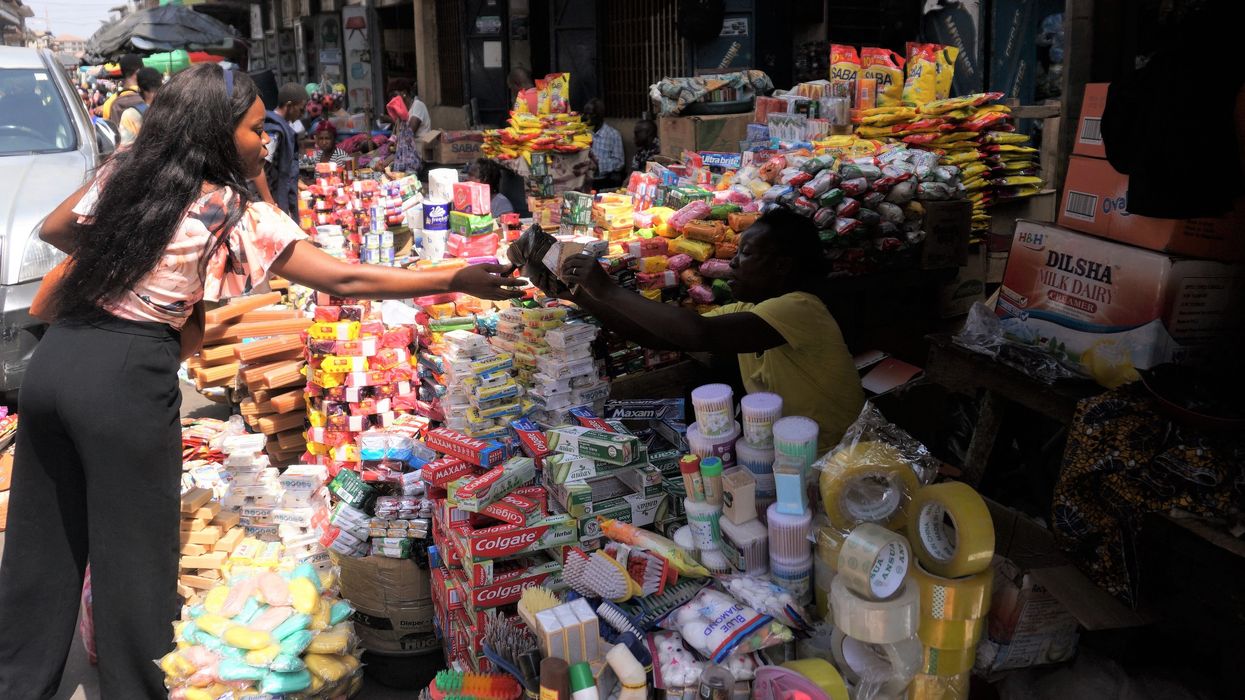
"The most vulnerable people around the world are bearing the brunt of skyrocketing food, fuel, and fertilizer prices, with women and girls the hardest hit."
A report published Monday by the international anti-poverty group ActionAid revealed that the cost of food, fuel, and fertilizer continues to increase in some of the world's most vulnerable communities due to Russia's ongoing 16-month invasion of Ukraine.
The survey of more than 1,000 community leaders and members from 14 countries in Africa and Asia plus Haiti conducted by the Johannesburg-based NGO found that some families are spending up to 10 times what they paid for necessities nearly 16 months ago.
This, despite the latest United Nations Food and Agriculture Organization Food Price Index—which tracks monthly changes in the price of a basket of food items in various countries—indicating a nearly 12% decline in global prices since February 2022, the month Russian forces invaded neighboring Ukraine.
Community leaders in almost all of the surveyed countries also reported an increase in child marriages, a sign of growing desperation among the world's poor.
"This pioneering research shows that since the onset of the war in Ukraine, the most vulnerable people around the world are bearing the brunt of skyrocketing food, fuel, and fertilizer prices, with women and girls the hardest hit," ActionAid global policy analyst Alberta Guerra said in a statement. "They are disproportionally affected by multiple crises that impact their food intake, education, their right to live free from child marriage, and their mental health and well-being."
Joy Mabenge, ActionAid's country director for Zimbabwe—a particularly hard-hit country where reported gasoline prices skyrocketed by more than 900%, the cost of pasta soared by as much as 750%, fertilizer was 700% dearer, and feminine hygiene pads increased sixfold in price—said that "food and fuel prices in Zimbabwe have been increasing on a near-daily basis, hitting the country's many families who live below the poverty line the hardest."
"They are literally living one day at a time, not knowing where their next meal will come from."
"In certain areas, some households cannot even afford one meal a day because the food prices have spun completely out of control, leaving many battling to keep their heads above water," Mabenge added. "They are literally living one day at a time, not knowing where their next meal will come from."
Some of the survey's findings include:
"Almost a year-and-a-half since the outbreak of the war in Ukraine in February 2022, the impact of the conflict is continuing to intensify in the world's most vulnerable hunger hot spots," ActionAid stated. "The price hikes are particularly alarming over a period when incomes have fallen nearly a quarter across the communities surveyed, or by 133% in one area of Ethiopia."
"Almost a year-and-a-half since the outbreak of the war in Ukraine in February 2022, the impact of the conflict is continuing to intensify in the world's most vulnerable hunger hotspots."
"Children's education prospects are also being threatened," the group added. "Community leaders... surveyed said that the increased cost of living had led to higher school dropout rates for boys as parents struggle to afford school fees or are forced to rely on child labor to support their livelihoods, while leaders in eight... countries said the same had happened for girls."
Roster Nkhonjera, a 40-year-old mother of five from Rumphi district in Malawi, said she had to take her children out of school due to untenable living costs.
"I have failed to pay school fees for my two children due to price hikes," she told ActionAid. "What I earn from my small business barely covers one meal a day for my children."
ActionAid said the news isn't all doom and gloom.
"The survey also revealed that many communities have shown resilience in tackling the impacts of the crisis, identifying and practicing sustainable coping mechanisms," the group said. "Community members in 12 of the 14 countries surveyed said that using agroecology was helping them to make savings on crop production. Agroecology means adopting farming practices that work with nature, such as using local manure to build soil fertility and reduce reliance on chemical fertilizers."
Guerra asserted that "social protection measures need to be urgently introduced, including free education services and free school meals, to assist the families who are most at risk."
"In the longer term, governments dependent on food imports must also invest in national and regional food reserves to act as buffers and reduce countries' vulnerability to food shortages and price rises," she continued.
"The catastrophic impacts we are seeing make it clear why a just transition to renewable energy and agroecological farming practices is needed now more than ever, both to protect communities from shocks but also to offer resilience against the climate crisis," added Guerra. "There is no time to waste."

"From 2015-2020, the U.N. attributed over 6,700 child casualties to Israeli forces. He has just verified 975 more in 2022," said one human rights campaigner. "Yet he still omits Israel."
Human rights defenders on Thursday condemned United Nations Secretary-General António Guterres' omission of Israel from a "list of shame" of countries that kill and injure children during wars and other armed conflict.
The Secretary-General Office's annual Children and Armed Conflict report—which is likely to be released publicly on June 30, according to one U.N. official—reportedly leaves Israel off the list of grave violators who harm children, despite Israeli forces' killing and wounding over 1,000 Palestinian minors over the past two years. The report states that 42 Palestinian children were killed and 933 others wounded by Israeli forces in 2022 alone.
Yet, according to one journalist who saw the report, Guterres noted "a meaningful decrease in the number of children killed by Israeli forces, including by airstrikes," in 2022.
That's because Israel conducted a major bombing campaign against Gaza in 2021 in which 67 children were among the 256 Palestinians killed. The report says Israeli forces killed a total of 78 children in 2021.
Guterres did say that "I remain deeply concerned by the number of children killed and maimed by Israeli forces" and by Israel's "use of live ammunition during law enforcement operations" as well "the persistent lack of accountability for these violations."
Noting that 2022 was the deadliest year for Palestinian children in the West Bank in 15 years, Jo Becker, advocacy director for children at Human Rights Watch, said Guterres' "unwillingness year after year to hold Israeli forces accountable for their grave violations against children has backfired, only emboldening Israeli forces to use unlawful lethal force against Palestinian children."
"From 2015-2020, the U.N. attributed over 6,700 child casualties to Israeli forces. He has just verified 975 more in 2022. Yet he still omits Israel from his 'list of shame,'" Becker tweeted.
Criticism of the Children in Armed Conflict report comes after seven Palestinians including two children—Ahmed Youssef Saqr and Sadeel Ghassan Naghniyeh Turkman, both 15 years old—died during and after a Monday raid by Israeli troops on the Jenin refugee camp in the illegally occupied West Bank. Turkman, who was shot in the head while recording the raid, succumbed to her injuries on Wednesday.
Another Palestinian child, 15-year-old Ashraf Morad Mahmoud Al-Sa'di, was killed Wednesday in an Israeli drone strike on a vehicle in which he was traveling north of Jenin, according to the charity Defense for Children International-Palestine.
Palestinian journalist Leila Warah discussed the youths' killings in a video for Mondoweiss:
Last year, Guterres said he was "shocked by the number of children killed and maimed by Israeli forces during hostilities, in airstrikes on densely populated areas, and through the use of live ammunition during law enforcement operations," declaring that "should the situation repeat itself in 2022 without meaningful improvement," Israel should be included on the blacklist.
"The secretary-general's threat to add Israeli forces and Palestinian groups to his 'list of shame' created an expectation that they would finally be held accountable," said Ezequiel Heffes, director of the Watchlist on Children in Armed Conflict—which has recommended Israel's inclusion on the "list of shame" every year since 2017.
"Although the mechanism has proven effective in changing warring parties' behaviors and strengthening protections for children in other conflicts, by failing to follow through on the threatened listing with Israel and Palestinian groups, he sends a message that they can continue committing grave violations against children without consequences."
The Children in Armed Confict analysis reportedly notes that Palestinian resistance forces—who are not on the "list of shame"—killed or maimed more than 100 children in 2022.
"If you do not list this government now, when will you list the Israeli government?"
Palestinian Ambassador to the U.N. Riyad Mansour on Thursday called the omission of Israel from Guterres' list "very disappointing to the Palestinian people and to the Palestinian children."
"The secretary-general made a big mistake in not listing this current Israeli government," Mansour said during a press conference. "This is the most extreme government, loaded with fascist elements. If you do not list this government now, when will you list the Israeli government? It's very unfortunate that he selected not to list them."
Israel isn't the only controversial omission from the list. While human rights advocates welcomed Russia's inclusion—the report directly attributes 136 child deaths to Russian and affiliated forces—some asked why Ukraine, whose homeland defenders killed 80 children last year according to the publication, was left off.
Saudi Arabia was removed from the list in 2020 even though it continues to lead an eight-year U.S.-backed coalition intervention in Yemen's civil war which UNICEF, the United Nations Children's Fund, says has killed more than 11,000 children.
"The U.N. needs to hold to account all governments, no matter how powerful, for their violations," Becker asserted Thursday.
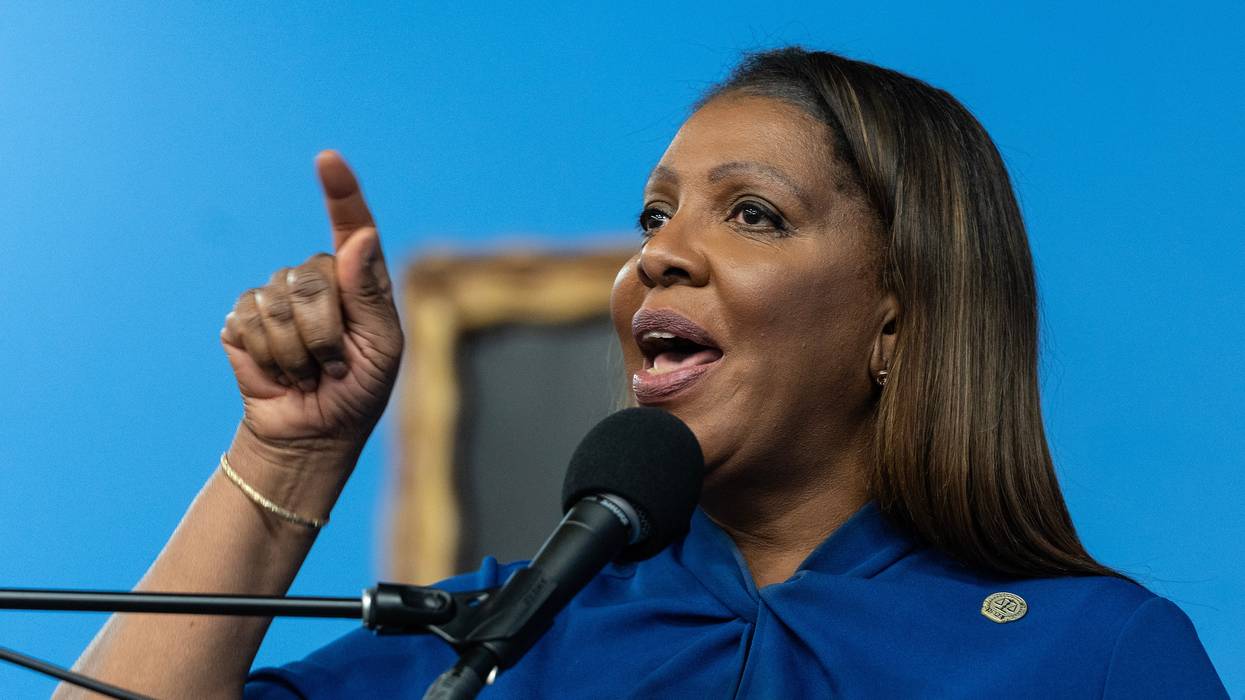
Democratic New York Attorney General Letitia James said her proposal "will bolster our efforts to crack down on price gouging and ensure that large corporations do not take advantage of New Yorkers during difficult times."
Citing the "soaring cost of essentials" that have "pushed hardworking New Yorkers to the brink," Democratic New York Attorney General Letitia James on Thursday proposed rules to strengthen enforcement of the state's anti-price gouging law.
James' office said the new rules would "make it more straightforward to investigate and combat price gouging by setting clear guardrails against price increases during emergencies."
The rules would "clarify that a price increase over 10% during an abnormal market disruption may constitute price gouging."
"When times get tough, New Yorkers can trust that my office will always have their back."
Furthermore, corporations with more than 30% market shares would be prohibited from increasing profit margins during abnormal market disruptions. Limits would be placed on dynamic pricing—when the cost of a good or service varies due to market conditions—and protections would be extended to "vital and necessary" products and services after market disruptions.
"The rules proposed by my office will bolster our efforts to crack down on price gouging and ensure that large corporations do not take advantage of New Yorkers during difficult times," explained James, who last year launched a probe into Big Oil price gouging.
"When times get tough, New Yorkers can trust that my office will always have their back," she added.
According to the Albany Times Union:
At least 10 states, including New Jersey and California, use the 10% threshold that James' office is proposing as setting the legal threshold for what qualifies as price gouging in New York. Others use higher thresholds, like Pennsylvania at 20%. (New York City has a 10% standard already on the books.)
If adopted, the 10% threshold is intended to provide clarity both from a legal lens and to business owners. It would in effect define the current standard for price gouging, which is "unconscionably excessive." Laws against price gouging in New York began in 1979, which followed a drop in production of oil after the Iranian revolution that then contributed to a spike in oil prices.
Corporations have used the Covid-19 pandemic, Russia's invasion of Ukraine, and inflation as pretexts to price gouge consumers.
"Price increases of necessary items during emergencies are unacceptable and illegal," New York state Sen. Kevin Thomas (D-6) said in a statement. "The responses to certain supply chain and market disruptions during the Covid-19 pandemic by companies made it clear that stronger enforcement of New York's price gouging statute was needed."
Rakeen Mabud, chief economist at the Groundwork Collaborative, applauded James "for protecting consumers and cracking down on the corporations that have been taking advantage of families and small businesses for far too long."
"The proposed rules will directly target big corporations that have been jacking up prices on essential goods to boost their bottom line," Mabud added. "States and policymakers across the country should take note of Attorney General James' proposal and work to protect consumers from exploitative corporate behavior."