

SUBSCRIBE TO OUR FREE NEWSLETTER
Daily news & progressive opinion—funded by the people, not the corporations—delivered straight to your inbox.
5
#000000
#FFFFFF
To donate by check, phone, or other method, see our More Ways to Give page.
Daily news & progressive opinion—funded by the people, not the corporations—delivered straight to your inbox.
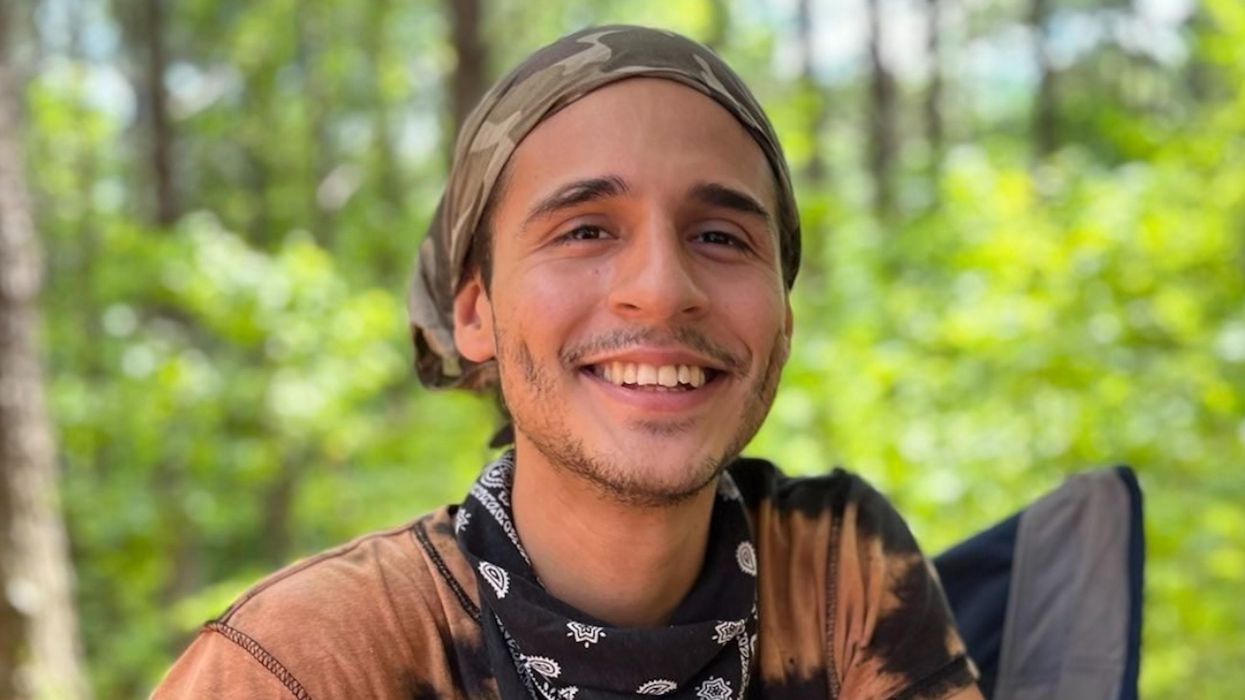
"The system has, once again, declared its own innocence," lamented one activist after a Georgia prosecutor's office said it would not charge the killers of Manuel Terán, better known as "Tortuguita."
Human rights advocates on Friday condemned a Georgia prosecutor's decision to not charge the state troopers who fatally shot forest defender Manuel Esteban Paez Terán—better known as "Tortuguita"—during a militarized January raid at a Stop Cop City protest camp outside Atlanta.
"The system has, once again, declared its own innocence," Stop Cop City activist Micah Herskind wrote on social media in response to the decision by the Stone Mountain Judicial Circuit District Attorney's office.
The Cop City Vote Coalition (CCVC) campaign said that "Tortuguita's memory and the memories of all those stolen by police killings demand that we all continue the collective struggle for a future without state violence."
Georgia State Patrol officers say they shot Terán after the 26-year-old Venezuelan activist opened fire on them, wounding an officer in the leg during the January 18 raid to evict protesters from the encampment protesting the $90 million, 85-acre Public Safety Training Center—widely known as "Cop City"—in the Weelaunee Forest just outside Atlanta city limits in DeKalb County.
According to a statement from Stone Mountain Judicial Circuit District Attorney Pro Tempore George Christian explaining the decision not to charge the troopers:
Terán... refused to comply with the lawful commands of the troopers to come out of a tent. The troopers used a 'less lethal' device known as a pepperball launcher in an effort to have Terán leave the tent. Terán responded by shooting four times his 9mm pistol through the tent, striking and seriously injuring a Georgia State Trooper. Six troopers returned fire resulting in the death of Teran.
"The use of lethal... force by Georgia State Patrol was objectively reasonable under the circumstances of this case," the prosecutor concluded.
A DeKalb County Medical Examiner's Office autopsy—which officials suppressed for months—revealed that Terán was shot 57 times and that there was no gunpowder residue on the victim's hands, which advocates say debunks claims that the activist fired first. There is no police bodycam video of the incident.
The Georgia Bureau of Investigation said that ballistics analysis proved a gun found at the scene of Terán's killing—a Smith & Wesson 9mm pistol GBI said the victim legally purchased in 2020—fired the bullet that wounded the trooper.
CCVC said that "from the start, the state's response to Tortuguita's murder has been to lie and cover up the facts."
"Today's announcement ruling the killing as 'reasonable' is just the latest in a long line of changing stories and withholding evidence," the campaign added.
Since Terán's killing, more than 40 Stop Cop City campaigners have been criminally charged as domestic terrorists, while over 60 activists have also been indicted under the state's Racketeer Influenced and Corrupt Organizations (RICO) Act—some for simply handing out fliers.
"These charges, like the previous repressive prosecutions by the state of Georgia, seek to intimidate protesters, legal observers, and bail funds alike, and send the chilling message that any dissent to Cop City will be punished with the full power and violence of the government," organizers with CCVC told The Appeal last month.
Friday's decision to not charge the troopers comes as CCVC attempts to get a referendum on the project on November's ballot. Although they've collected more than 115,000 signatures—more than double the number needed to qualify for the ballot—campaigners accuse Atlanta officials of voter suppression due to what they say is an onerous signature verification process created solely to thwart the initiative.
City officials are refusing to even start the signature verification process, arguing that the campaign may have missed an August 21 submission deadline. Although the deadline had been extended until September by a federal judge, an appeals court subsequently blocked enforcement of the extension, creating a state of legal limbo for the initiative.
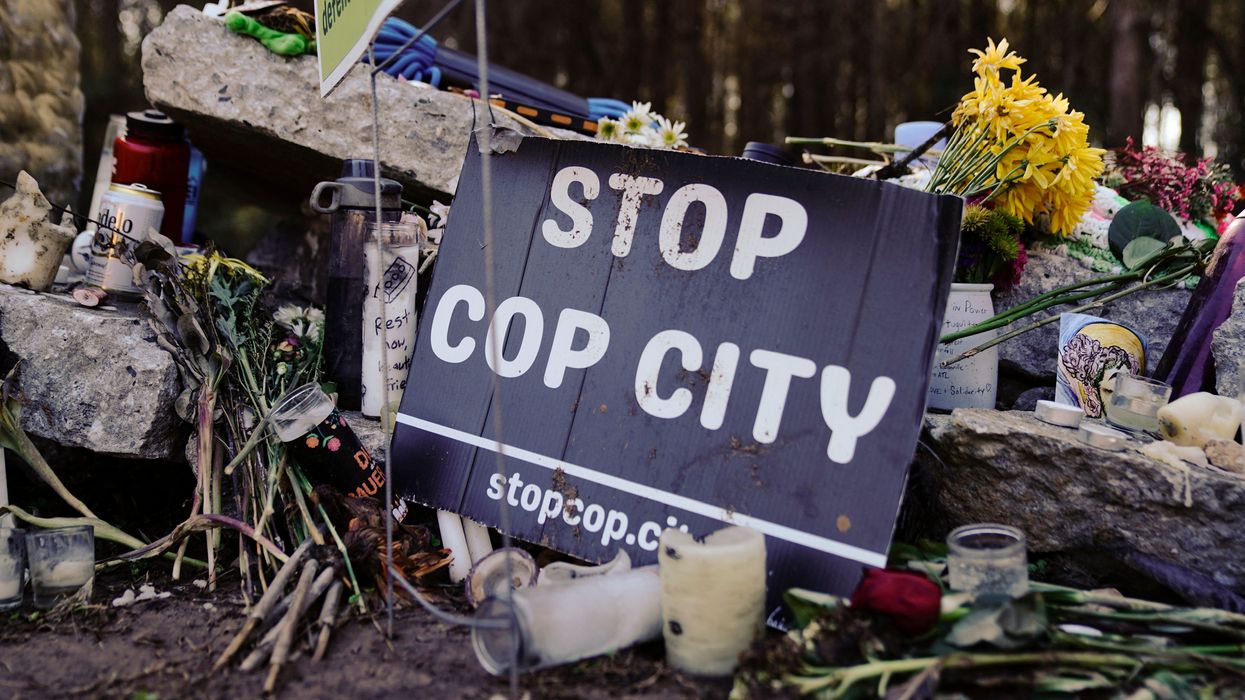
Backers of an Atlanta ballot measure to cancel the land lease enabling the controversial training complex now have less than two months to gather more than 70,000 signatures.
Opponents of the proposed Public Safety Training Center—widely known as "Cop City"—near Atlanta cleared an important administrative hurdle Wednesday as the city clerk's office approved their petition for a referendum on whether to cancel the controversial project's land lease.
The petitioners will now have just 58 days to collect signatures from 15% of Atlanta's registered voters—or 70,000-75,000 people—in order for the referendum to qualify for this November's ballot.
Paul Glaze, an organizer with Cop City Vote Coalition, told WXIA that more than 3,000 volunteer canvassers have already signed up to gather signatures.
"The mayor says the people of Atlanta want Cop City, that this is a thing the people want, and if that's true, no one should be afraid of a vote," Glaze said, referring to Democratic Mayor Andre Dickens, a supporter of the project. "We are committed to this and we believe in this."
The petition's approval follows months of protests inside and around Atlanta City Hall. Cop City opponents are set to launch a week of action this weekend to drum up support for the ballot measure and amplify opposition to the $90 million project, which is funded largely by the city of Atlanta and the Atlanta Police Foundation (APF).
Despite opposition from environmental, racial justice, Indigenous, and other groups, the APF—a private organization whose backers include major corporations like Amazon, Home Depot, Wells Fargo, JPMorgan Chase, and UPS—was granted permission in 2021 to build Cop City in the Weelaunee Forest in DeKalb County just outside Atlanta city limits.
The complex would be built on land stolen from the Muscogee people, many of whom were forced westward during the genocidal Trail of Tears period.
Earlier this month, the Atlanta City Council approved funding for the project.
In January, militarized police shot and killed Manuel Esteban Paez Terán, a 26-year-old protester also known as "Tortuguita" who officers claim opened fire on them, during a raid to violently remove forest defenders from the project site. A DeKalb County Medical Examiner autopsy—which officials suppressed for months—revealed that Terán was shot 57 times and that there was no gunpowder residue on the victim's hands, debunking the government's claim Terán fired first.
Police subsequently charged nonviolent anti-Cop City activists with "domestic terrorism," a move described as "unprecedented" by human rights defenders.
Police also arrested Marlon Scott Kautz, Savannah Patterson, and Adele Maclean of the Atlanta Solidarity Fund (ASF)—a legal aid group and bail fund supporting the Cop City protesters—in a dramatic militarized raid on June 1.
Authorities accused the trio of money laundering and charity fraud, with Georgia Deputy Attorney General John Fowler claiming that despite what "appears to be laudable [and] lawful" nonprofit work, the defendants "harbor extremist anti-government and anti-establishment views and not all of the money goes to what they say that it goes to."
Atlanta City Councilmember Liliana Bakhtiari responded by calling the organizers—who deny the allegations against them—"some of the best of our Atlanta mutual aid network" and condemning their arrests as "nothing more than an intimidation tactic by the state."
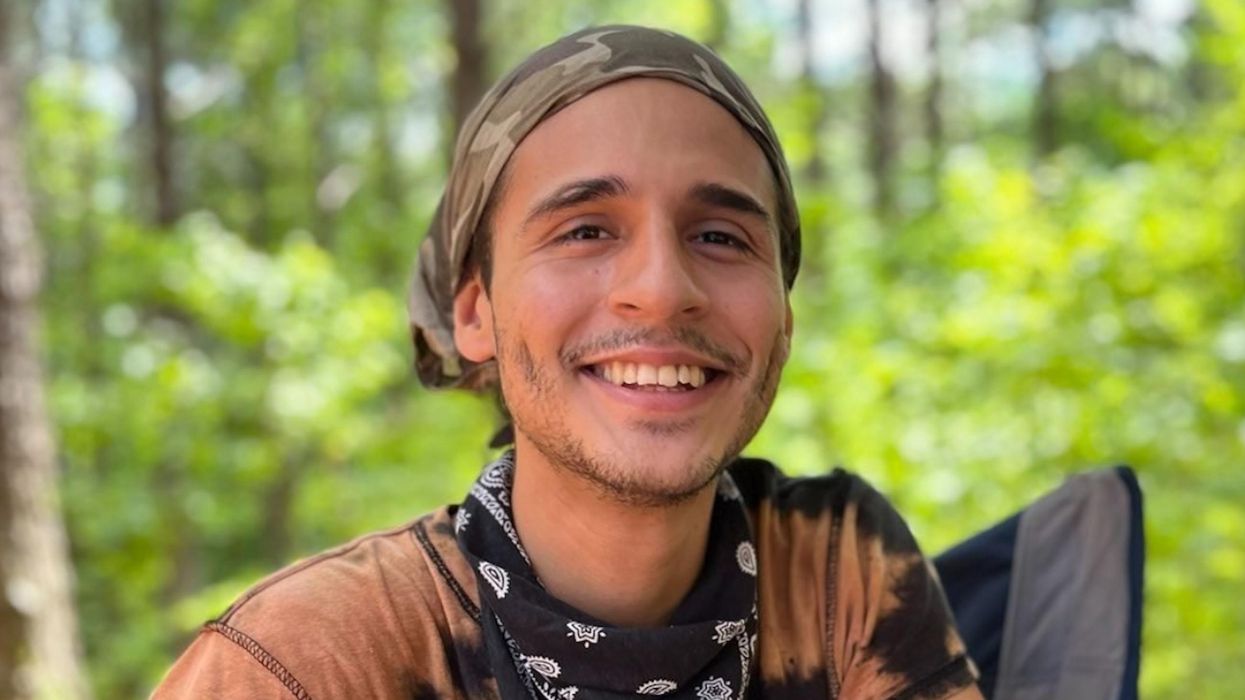
"Evidence Terán was executed is overwhelming," said a human rights lawyer after DeKalb County's autopsy report found no gunpowder residue on the hands of the activist whom police shot 57 times in purported self-defense.
Progressives expressed disgust Wednesday after DeKalb County released an autopsy showing that cops shot Atlanta forest defender Manuel Esteban Paez Terán 57 times and that there was no gunpowder residue on the victim's hands—debunking the government's claim Terán fired first.
The autopsy, which officials suppressed for three months, finally saw the light of day thanks to a public records request. Its results have prompted accusations of an attempted cover-up by the Georgia Bureau of Investigation (GBI).
"The GBI—the entity 'investigating'—clearly tried to craft a cover-up of an apparent police murder and failed."
Terán, commonly known as "Tortuguita," was killed during a January 18 raid on an encampment in the Weelaunee Forest. They were part of a collective that occupied the suburban Atlanta forest in a bid to prevent the construction of a $90 million, 85-acre police and fire training facility popularly known as Cop City.
The GBI has alleged that Terán shot and injured a state trooper before multiple officers from a joint task force returned lethal fire. But the autopsy found no gunpowder residue on Terán's hands, in addition to revealing that cops riddled the 26-year-old activist's hands, torso, legs, and head with nearly five dozen bullets.
"Terán did not fire a gun which obliterates the police narrative," human rights lawyer Steven Donziger tweeted. "Evidence Terán was executed is overwhelming."
"Georgia police buried the official autopsy of Terán for months until it was forced into the open today by a public records request," Donziger added. "The GBI—the entity 'investigating'—clearly tried to craft a cover-up of an apparent police murder and failed."
"Now that the cover-up is unraveling, will the public demand accountability?" the Atlanta Solidarity Fund asked on social media. "Will [Georgia State Police] get away with murder?"
In a statement, Tortuguita's mother, Belkis Terán, said, "We are devastated to learn that our child, our sweet Manny, was mercilessly gunned down by police and suffered 57 bullet wounds all over their body."
While the official autopsy report provides additional information, Tortuguita's loved ones continue to demand answers from the GBI, whose probe of the incident is ongoing.
"We cannot even begin to determine what happened on the morning of January 18 until the GBI releases its investigation," said family attorney Brian Spears.
His partner, attorney Jeff Filipovits, concurred: "There is no conceivable reason to continue to delay the release of its investigation. Only then can our clients and the community fully assess what happened in the moments leading up to Manuel's death."
Family members continue to question the GBI's ability to fairly probe the events of January 18 given that the bureau was involved in planning and executing the forest clearance operation that led to Tortuguita's death.
"Manuel was camping on publicly owned land that was not even on the future site of Cop City. Law enforcement went in with weapons and shot pepper balls," said Tortuguita's father, Joel Paez. "They created a violent situation and were ready to kill anyone who resisted. Now they will not even meet with us to explain what happened."
Tortuguita's family continues to urge the GBI to publish the results of its inquiry now, including forensic test findings, all audio and video recordings of the shooting, and interviews with officers involved.
"We are devastated to learn that our child, our sweet Manny, was mercilessly gunned down by police and suffered 57 bullet wounds all over their body."
Following the release of Tortuguita's autopsy, Bernice King, daughter of slain civil rights organizer Martin Luther King, Jr. and a longtime Atlanta resident, posed a question about the future of Cop City: "How could this info regarding the police shooting of a protester of the Public Safety Training Center NOT raise more concerns about the center's placement and purpose?"
The Atlanta City Council gave the Atlanta Police Foundation, a private organization, permission to build Cop City in 2021, four years after the Atlanta City Planning Department recommended transforming the Weelaunee Forest—deemed one of four "city lungs"—into a massive urban park.
Several forest defenders were detained and charged with felonies—under a 2017 Georgia law that expanded the definition of "domestic terrorism" to include certain property crimes—during mid-December raids on their encampment.
More forest defenders were arrested on the same charges on January 18, the day police fatally shot Tortuguita—the first or possibly second time that police have killed an environmental activist in modern U.S. history, according to experts.
Additional people are facing prosecution as a result of Republican Georgia Gov. Brian Kemp's crackdown on demonstrations held since Tortuguita's killing.
Atlanta Mayor Andre Dickens and DeKalb County CEO Michael Thurmond announced what they called a "compromise" for Cop City in the wake of Tortuguita's killing, but opposition to the project remains strong among local residents.
"Cop City is something that no one in the community asked for, and survey after survey shows that the majority of Atlanta residents are opposed," Kamau Franklin from Community Movement Builders, one of the organizations fighting against Cop City, said in February. "The mayor continues to run roughshod over the desires of the community."
Days after cops killed Tortuguita, a coalition of more than 1,300 progressive advocacy groups published a letter demanding an independent investigation as well as the resignation of Dickens, a Democrat who they said parroted "the rhetoric of extreme right-wing Gov. Brian Kemp" when he condemned protesters rather than police officers following the shooting.
The groups pointed out that Dickens and the Atlanta City Council have the authority to terminate the land lease for Cop City and implored local policymakers to do so immediately.
The effort to halt the construction of Cop City suffered a major setback last week, however, when "the DeKalb County Zoning Board of Appeals unanimously rejected an appeal of the project's land development permit," Axios reported.
Ikiya Collective, a signatory of the coalition's letter, warned earlier this year that the training set to take place at Cop City "will impact organizing across the country" as police are taught how to repress popular uprisings.
"This is a national issue," said the collective. "Climate justice and police brutality are interconnected, which is why we are joining the Stop Cop City calls to action with the frontline communities in Atlanta."
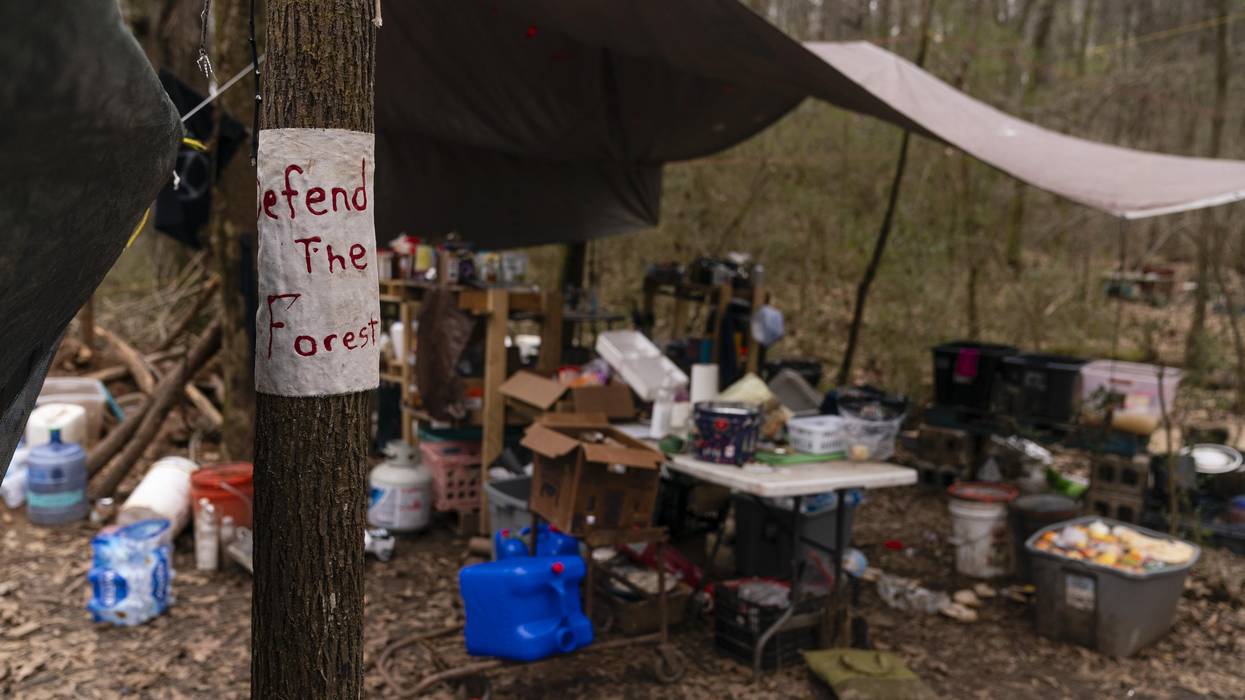
When it comes to deadly force, the doctrine of qualified immunity, recently reaffirmed by the courts, means an officer can effectively shoot to kill without consequences.
On the morning of January 18, agents from nine agencies, including the FBI and its local counterpart, the Georgia Bureau of Investigation, descended on a section of Atlanta’s South River Forest occupied by activists. For the past two years, hundreds had lived in the section of the Weelaunee forest, in tents and treehouses, in order to block its planned conversion into a police training facility—a “cop city” complete with a mock village, firing ranges, and a Black Hawk landing pad. That morning, the agents were under orders to “eliminate the future Atlanta Public Safety Training Center of criminal activity.”
It is still unclear why the task force opened fire. But after twelve shots rang out, Manuel Esteban Paez Terán, known as Tortuguita (or “Little Turtle”), a young, trans forest defender of Afro-Venezuelan and Indigenous ancestry, had been hit and killed.
Terán’s death marks the fifth protest fatality at the hands of US law enforcement since the start of the George Floyd rebellion in May 2020: David “Ya Ya” McAtee, was killed by a National Guardsman’s bullet in Louisville, Kentucky, on June 1, 2020; Sean Monterrosa, was gunned down by undercover police in Vallejo, California, the very next day. Michael Reinoehl and Winston “Boogie” Smith, Jr., both antifascists, were hunted down and “neutralized” by US Marshals within months of each other. And it’s not just protesters: In the past month, the police have killed Tortuguita, Tyre Nichols and Keenan Anderson.
This latest wave of police killings comes on the heels of the most lethal year on record for police-civilian encounters. Yet the response of the political class has been to capitulate to rightwing scare tactics and inflated claims of a crime wave, effectively writing yet another blank check for police violence.
It is becoming increasingly difficult to distinguish between centrist and conservative talking points; the Atlanta Journal-Constitution can read like the lurid headlines of the New York Post with their condemnation of “police abolitionists, environmental extremists, and anarchists.” Talking heads at Fox News, in between segments like “Antifa Is Ravaging America,” have been using leading Democrats to make their point that the tree-sit protests amount to acts of terror. All of this has made strange bedfellows of centrist Democrats and MAGA Republicans who, in a rare show of unity, have been loudly calling for a clampdown on “out of control crime” and beating the drum for “law and order.”
Right-wing talking points notwithstanding, the current landscape for protest policing is one that’s been shaped by the legacy of American apartheid, Southern lynch law, and centuries of slavery. As such, it is structurally skewed in favor of the police – and, according to multiple studies, systematically biased against Black Lives Matter and the political left. The bias is so extreme that officers are fully three times more likely to use force on “leftwing” protesters than rightwing ones.
And when it comes to deadly force, the doctrine of qualified immunity, recently reaffirmed by the courts, means an officer can effectively shoot to kill without consequences. In a context of renewed protest and possible civil unrest, current US law enforcement strategy, as we saw in Terán’s fatal shooting, makes escalation almost inevitable, de-escalation unthinkable, and lethal outcomes ever more likely for those at the receiving end of state violence.
But several mechanisms work together to create these conditions. The first is a military-style chain of command which sees itself at war with enemies domestic and foreign. This hierarchy leaves little room for ambiguity as to who was responsible for the killing of Terán: the commanding officers who gave the orders, the agencies that employed them, and the elected officials who deployed them against the forest defenders. Governor Brian Kemp has been leading the charge, vowing to "bring the full force of state and local law enforcement down on those trying to bring about a radical agenda" and calling for "swift and exact justice" aimed at "ending their activities."
Georgia’s governor has since gone one step further, declaring a state of emergency and calling up to 1,000 members of the National Guard, who, according to the declaration, “shall have the same powers of arrest and apprehension as do law enforcement officers.” A similar state of exception was in effect when David McAtee and Sean Monterrosa were executed by a National Guardsman and an undercover policeman, respectively, in June 2020.
Another link in the chain is the pipeline between the military and the police, whereby the tools, tactics, technologies, and advanced weaponry from America’s counterinsurgency wars overseas are imported, requisitioned, and reinvented for use on civilian populations here at home. The Pentagon’s 1033 program, which has experienced something of a revival under the Trump and Biden administrations, is partly responsible for this military supply chain, equipping local law enforcement with a seemingly limitless supply of “less-lethal” munitions, high-powered rifles, Mine-Resistant Ambush Protected vehicles, and full-spectrum battle equipment. Cop City itself represents a prime example of this failed approach to public safety.
Other military tools and tactics are brought to the police by way of programs like the private-sector Law Enforcement Charitable Foundation, the Department of Homeland Security’s Urban Areas Security Initiative, or the Federal Law Enforcement Training Center, headquartered in Glynco, Georgia. And yet studies now show that while militarization increases the risk of loss of life, it has little to no observable effect on measures of crime or safety.
And it’s not just a matter of surplus supply. It is also a question of political demand: Who has an interest in building “Cop City,” in the process displacing DeKalb County’s Black communities, and empowering the police to use deadly force to evict the forest defenders and end the protests? It’s not the people of Atlanta: During a public comment period after the mayor announced the plan to build the training facility, nearly 70 percent of the 1,166 responders expressed opposition to it.
All signs point to the Atlanta Police Foundation (APF): a private-public partnership that’s been a driving force behind “Cop City” and a major player in local politics. Its executive board is a veritable who’s who of corporate power and inherited wealth. Last year, the foundation expended large sums of its donors’ money lobbying for police expansion.
Another leading partner in the land grab is Shadowbox Studios, an entertainment firm whose real-estate tycoon CEO, Ryan Millsap, is “ideologically” aligned with the project due to a “deep respect for private property.” Millsap plans to turn another 40 acres of the forest into what demonstrators have called a “Hollywood dystopia.” Millsap has likened the protests to “organized crime,” while APF (formerly Coca-Cola) spokesman Rob Baskin has called them a "fringe group" that has "routinely resorted to violence and intimidation" against "police officers [and] executives from construction companies." Between Shadowbox Studios and the Fortune 500 firms that make up the board of the APF, the donor class has been unabashed in its incessant demand for a heavier hand.
Meanwhile, homeland security in Georgia appears to be engaged in a similar strategy, conflating tree-sits with terrorist acts, local activists with “outside agitators,” and environmentalism with “homegrown extremism.” It doesn’t appear to matter whether the persons of interest are armed or unarmed, sitting in a treehouse or sowing chaos in the streets: As the domestic terrorism charges against the Atlanta 19 reveal, the treatment is effectively one and the same. Atlanta’s assistant police chief, Carven Tyus, has admitted in private meetings with his advisory council “Can we prove they did it? No. Do we know they did it? Yes.”
We do not know exactly how or under what pretext the task force opened fire. One of the tactical officers involved was injured during the raid, but in the absence of body cam footage—or of any independent inquiry whatsoever—we may never learn the full story of what went down that day. But we are obliged to name the shooting of Terán for what it was: an extrajudicial execution, carried out by hired men armed with military assault weapons, paramilitary training, and qualified immunity from prosecution—in other words, a death squad in all but the name.
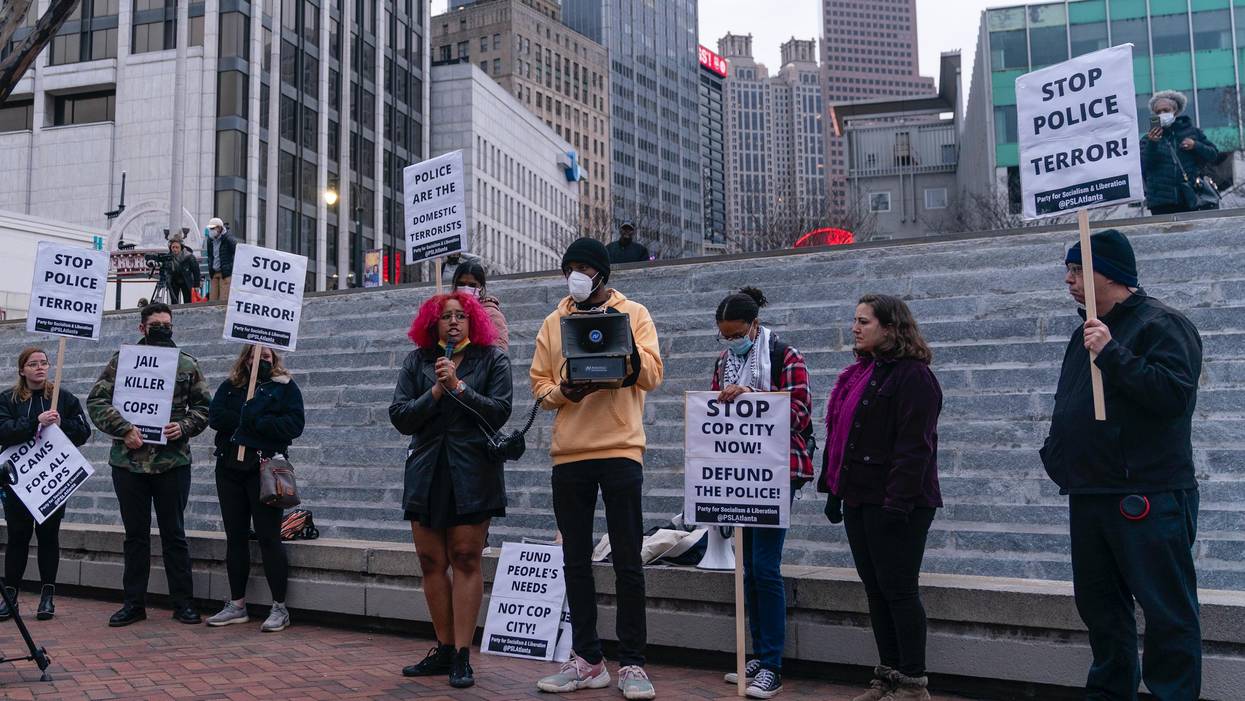
"Power concedes nothing without a demand," said the Atlanta Community Press Collective. "Ours is, 'Cop city must never be built—not here, not anywhere."
As Atlanta Mayor Andre Dickens and DeKalb County CEO Michael Thurmond announced Tuesday that construction of the $90 million, 85-acre police and fire training center known as "Cop City" will proceed under what Dickens called a "compromise," critics of the project had a resounding message: "Defend the Atlanta Forest. Stop Cop City."
Speaking during a press conference at Atlanta City Hall, Dickens, a Democrat, outlined changes to the project. Acknowledging "concerns about the environmental impact" of the project, the mayor said a 100-foot tree buffer would be added, and that 100 new hardwood trees would be planted for each one destroyed during construction. Dickens also said the complex's firing range would be moved further away from a nearby residential area.
Dickens also defended the type of police training that would take place at the facility, saying it "includes vital areas like de-escalation training techniques, mental health, community-oriented policing, crisis intervention training, as well as civil rights history and education."
However, activists—many of whom protested inside and outside City Hall chanting slogans including "APD, shut it down," referencing the Atlanta Police Department, and "Cop City will never be built"—were not swayed in their opposition to the project.
"Our firm line is no Cop City anywhere," Jasmine Burnett, organizing director at Community Movement Builders, told Unicorn Riot outside City Hall. "No destruction of the forest at all. I know, they're trying to harp on the fact that it's only 85 acres. And allegedly, the rest will be left for public use. But that's 85 acres too much."
"We are also calling for the charges to be dropped against all of the protesters who've been charged with any crimes, but especially the domestic terrorism charges," Burnett added, referring to the 19 nonviolent protesters facing prosecution under a 2017 Georgia law that expanded the definition of "domestic terrorism" to include certain property crimes.
Over the objections of environmental, racial justice, Indigenous, and other groups, the Atlanta Police Foundation (APF)—a private organization whose backers include major corporations like Amazon, Home Depot, Wells Fargo, JPMorgan Chase, and UPS—was given permission in 2021 to build what's officially called the Atlanta Public Safety Training Center in the Weelaunee Forest in DeKalb County just outside Atlanta city limits. Cop City would be built on land stolen from the Muscogee people, many of whom were forced westward during the genocidal Trail of Tears period.
Last month, militarized police shot and killed Manuel Esteban Paez Terán, a 26-year-old protester also known as "Tortuguita" who allegedly opened fire on them, during a raid to violently clear forest defenders from the site. While a few federal lawmakers have called for an independent probe, Georgia Democrats including U.S. Sens. Raphael Warnock and Jon Ossoff and former gubernatorial candidate Stacey Abrams have said little to nothing about the killing, or about Cop City in general.
Also protesting outside City Hall on Tuesday, community organizer Micah Herskind said: "How dare they stand in front of people and say, 'Oh, this plan, where we're tearing down trees, is actually good for people, and it's good for the economy, and it's—you know, it's actually going to protect people?' It's obviously false, and I hope that it's reported as such, because it's such classic, blatant spin, that they're taking us for fools if they think anyone would believe that tearing down trees and putting cement over it is protecting the environment. That's outrageous."
In a statement, the Atlanta Community Press Collective said that "like all other points of 'compromise,' this has proved empty rhetoric to cover over the undemocratic railroading of this project on to unrepresented, disenfranchised residents of Atlanta and DeKalb County. This is more backroom talk between powerful elites and their dark money contributors."
"Now, the city, DeKalb County, the APF, the funders and builders of Cop City collectively have blood on their hands, and it seems they are willing to get bloodier: These are the people in power goose-stepping us to climate apocalypse," the collective continued. "Police continue to kill at higher and higher rates. In 2022, more people in the U.S. were killed than in any other year on record. The police and their corporate and political backers have used lies, misinformation, and distorted half-truths at every step of this process. Why should we believe a word they say?"
"Power concedes nothing without a demand," the authors asserted. "Ours is: 'Cop city must never be built—not here, not anywhere. Not one blade of grass! Not one tree! Free the prisoners, drop the charges!'"
"The fight continues. The movement to stop Cop City is only growing," they added. "On February 19-26 we are calling for a Week of Solidarity to Stop Cop City, with protests throughout the U.S .and around the world."
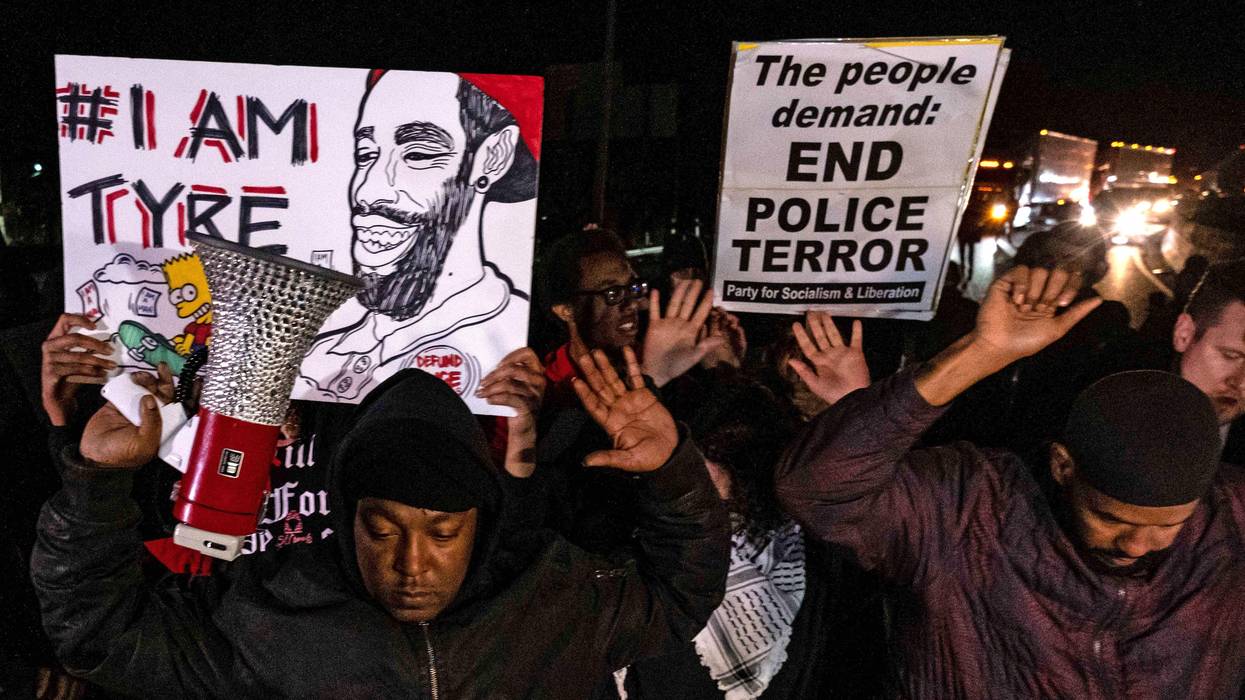
"These killer cops have got to go," chanted demonstrators in Chicago who carried signs that read, "Justice for Tyre Nichols" and "End police terror."
This is a developing story… Please check back for possible updates...
People took to the streets across the United States Friday night after the city of Memphis, Tennessee released videos of a January 7 traffic stop that led to five police officers being fired and charged with the murder of 29-year-old Black motorist Tyre Nichols.
MEMPHIS, TENNESSEE
The Memphis-based Commercial Appeal reported that protesters advocating for police reform shut down the Interstate 55 bridge that connects Tennessee and Arkansas:
As of 8:30 pm, more than 100 people remained on the Harahan Bridge with protest leaders saying they wanted to talk with Memphis Mayor Jim Strickland and Memphis Police Department Chief Cerelyn "C.J." Davis before disbanding. MPD officers closed off roads leading to the bridge―and several others downtown―but had not directly confronted protesters.
Protesters started moving off of the bridge around 9:00 pm. As they marched eastbound on E.H. Crump Boulevard towards police, they locked arms and chanted "we ready, we ready, we ready for y'all." Protestors then turned north, toward central downtown. As they passed by residences, some people came out on their balconies to cheer.
Surrounded by protestors on I-55, NBC News' Priscilla Thompson said that "they are chanting, they are calling the name of Tyre Nichols. They are calling for change."
Demonstrators and the Nichols family have called for disbanding the MPD Street Crimes Operation to Restore Peace in Our Neighborhoods (SCORPION) team that launched in 2021 and was involved in the traffic stop. The Memphis mayor said Friday afternoon that the unit has been inactive since Nichols' January 10 death.
The footage shows that after police brutally beat Nichols—pushing him to the ground; using pepper spray; punching and kicking him; and striking him with a baton—it took 22 minutes from when officers said he was in custody for an ambulance to arrive and take him to the hospital, where he later died from cardiac arrest and kidney failure.
ATLANTA, GEORGIA
In Georgia, though Republican Gov. Brian Kemp earlier this week signed an executive order enabling him to deploy 1,000 National Guard troops "as necessary" following protests in Atlanta over law enforcement killing 26-year-old forest defender Manuel "Tortuguita" Teran, those who gathered after the video release Friday night "expressed outrage but did so peacefully."
That's according to The Atlanta Journal-Constitution, which detailed that "a small but spirited crowd" of roughly 50 people formed in downtown Atlanta.
"We want to make one thing very clear, no executive order and no National Guard is going to stop the people for fighting for justice," Zara Azad said at the corner of Marietta Street and Centennial Olympic Park Drive. "We do not fear them because we are for justice."
BOSTON, MASSACHUSETTS
Just before the footage was released Friday, a vigil was held at "The Embrace" statue installed on Boston Common to honor Rev. Dr. Rev. Martin Luther King Jr. and his wife Coretta Scott King.
The Boston Globe reported that Imari Paris Jeffries, executive director of King Boston, which installed the monument, highlighted that the civil rights icon was assassinated while visiting Memphis in 1968 to advocate for sanitation workers whose slogan was "Am I a man?"
"Today we are thinking about Memphis and Brother Tyre, and the slogan of today is still, 'Am I a man?'" Jeffries said. "Seeing the humanity in each of us is the cornerstone of true change. Experiencing another heinous display reminds us that no family should feel this pain, ever. And there's still work to do."
"This is a problem that confronts us all," he added. "This is a problem that we need to defeat together, as a family, as a community."
CHICAGO, ILLINOIS
"From Memphis to Chicago, these killer cops have got to go," chanted about a dozen people who gathered near a police precinct in the Illinois city despite freezing temperatures, according to USA TODAY. Their signs read, "Justice for Tyre Nichols" and "End police terror."
Kamran Sidiqi, a 27-year-old who helped organize the protest—one of the multiple peaceful gatherings held throughout the city—told the newspaper that "it's tough to imagine what justice is here because Tyre is never coming back."
"That's someone's son, someone's friend lost forever. That's a human being's life that is gone," he said. "But a modicum of justice would be putting these killer cops in jail. A modicum of justice would be building a whole new system so that this can't happen again."
DALLAS, TEXAS
In Texas, The Dallas Morning News reported that Dominique Alexander, founder of the Next Generation Action Network, called Nichols' death a "total disregard for life, for humanity."
"The culture of policing is what is allowing these officers to feel like they can take our lives," Alexander said. "We want peace and calm in our communities, and we will do whatever is necessary to demand justice so our children don't have to deal with the same bullcrap we are dealing with now."
Around two dozen people who came together outside the Dallas Police Department headquarters Friday night shouted, "No justice, no peace" and "No good cops in a racist system," and held signs that said, "Stop the war on Black America" and "Justice for Tyre Nichols," according to the newspaper.
DETROIT, MICHIGAN
The Detroit branch of the Party for Socialism and Liberation (PSL) organized a Friday rally featuring speeches and a moment of silence. Michiganders held signs that declared, "Unions against police murder" and "Systems of racist police, violence must end."
"I'd like to see a civilian oversight board in every city, community control of the police department," 30-year-old Cameron Harrison, a member of the United Food and Commercial Workers Local 876 who attended the rally, told the Detroit Free Press.
"I'd like to see funding go away from weapons and [go to] jobs, housing, and water," said Harrison, adding that he does not need to watch the footage released from Memphis to know "what the police are capable of."
LOS ANGELES, CALIFORNIA
A demonstration outside the Los Angeles Police Department (LAPD) headquarters became "tense" late Friday after a "protest march grew out of a candlelight vigil for Nichols and
Keenan Anderson, who died this month after L.A. police pinned him to the ground and discharged a Taser on him at least six times in 42 seconds," according to the Los Angeles Times.
The videos of Memphis police brutalizing Nichols have provoked comparisons to the 1991 footage of LAPD officers brutally beating Rodney King—who survived the assault but died in 2012.
"My dad didn't die that night, but a big part of him did that we never got back," Lora Dene King, who was seven years old when her father was abused by police, told NBC News this week. She said that Nichols' death was "very triggering" for her and part of a "repetitive pattern" that includes her father, Eric Garner, and George Floyd.
"The whole situation is sickening to me, there is no reason he shouldn't be alive," she said of Nichols. "It'll just be another hashtag and we'll go on with our lives, and then it'll happen again."
NEW YORK, NEW YORK
In New York City, "protests were mostly peaceful, but emotions ran high," reported a local ABC affiliate, noting three arrests.
According to the outlet:
Demonstrators held up signs, chanting: "What's his name? Tyre! Say his name. Tyre!"
They demonstrated at Grand Central Terminal and Union Square, and crisscrossed the city, eventually bringing the Crossroads of the World to a screeching halt.
"When is this gonna end?" Bronx resident Chris Campbell said of police killings during a street interview with a CBS reporter.
"It's absolutely disgusting," PSL organizer Talia Gile said of the footage during a Friday speech in Philadelphia's Center City. "It shows the complete and utter disregard for human life. It shows the fact that police, no matter what their race is, are going to terrorize people because that's what the system is meant to do. It's meant to abuse its power against citizens."
Five former MPD cops, Tadarrius Bean, Demetrius Haley, Justin Smith, Emmitt Martin III, and Desmond Mills Jr.—who are all Black—were charged with second-degree murder and other crimes related to Nichols' death on Thursday.
After the videos were released Friday, Shelby County Sheriff Floyd Bonner Jr. announced that two deputies "who appeared on the scene following the physical confrontation between police and Tyre Nichols" have been relieved of duty pending the outcome of an internal investigation.
PORTLAND, OREGON
The Oregonian reported that in Portland on Friday night, "People kept mostly to sidewalks but blocked the Burnside Bridge for a few minutes as they stood to honor Nichol."
"The marchers chanted 'Whose lives? Black lives!' 'No justice, no peace,' and 'Say his name—Tyre Nichols!'" the newspaper added. "Some people knocked down road barriers but there were none of the clashes with police that had marked many of the nights of unrest in Portland after the 2020 killing of George Floyd by police in Minneapolis."
WASHINGTON, D.C.
Protests were held in the nation's capital Friday night on K Street Northwest and at Lafayette Square.
"It should not take the releasing of body cam footage of a Black man being murdered by police for people to jump to action, and for those who feel moved by this, and you should, ‘cause it could be any one of us standing out here today," said one speaker at the former event. "We urge you to not only protest, to not only engage on social media, to not only be flabbergasted and distraught and angry, but to take action."
Additional protests were planned for the weekend. The group ColorOfChange shared resources for demonstrators on Twitter:
"Tyre Nichols was a father to a 4-year-old boy, a son, a skateboarder, a beloved member of his community. And he was murdered after complying while the cameras were rolling," ColorOfChange president Rashad Robinson said in a series of tweets Friday. "Cosmetic 'solutions' like body cameras will not prevent the police from taking Black lives, nor will hiring Black police officers without reforming the overall racist, violent system."
"Now," he argued, "we must make sure the Memphis City Council takes action to end the practice of pretextual stops, hold officers accountable, eliminate the [Organized Crime Unit] and the SCORPION task force that killed Tyre, and fund a civilian response unit."

"Tortuguita's 'crime' was defending a forest in the heart of Atlanta—yet police moved in full force to evict the encampment, using their usual litany of brutal tactics," said one activist.
Police accountability advocates on Thursday called for an independent investigation after an activist was shot and killed during a multi-jurisdictional law enforcement raid on a forest encampment blocking the construction of a massive police training center just outside Atlanta popularly known as Cop City.
The Atlanta Journal-Constitution reports:
Details surrounding the deadly encounter near the planned site of Atlanta's public safety center continued to trickle out Thursday, as a wounded state trooper recovered and left-wing activists both mourned a fallen comrade and questioned the official account of events.
At least seven other people, meanwhile, were arrested and charged with domestic terrorism in connection with Wednesday's law enforcement operation in the southern DeKalb County woods.
Activists tied to the "Defend the Forest" movement identified the person killed by law enforcement—after allegedly firing at troopers first—as Manuel Teran, aka "Tortuguita." Online posts described Teran as a "beloved member of the community" who split time between Atlanta and Florida.
"We are devastated by the loss of our friend who was killed by the police. Tortuguita was a kind, passionate, and loving person, cherished by their community," said a statement published on the Atlanta Community Press Collective website.
"We don't know what happened yesterday," the statement acknowledged, adding that Teran was killed while "defending the forest."
According to Unicorn Riot, "throughout the day and into the night, efforts to extract forest defenders from the trees continued, with arborists cutting down trees and tree houses in an effort to remove protesters."
Jeff Ordower, North America director at the climate action group 350.org, said in a statement Thursday, "With heavy hearts, we stand with the Atlanta Forest Defenders and all of those who defend the land, the water, and the planet."
"Tortuguita's 'crime' was defending a forest in the heart of Atlanta—yet police moved in full force to evict the encampment, using their usual litany of brutal tactics," he added. "As we've seen all too often with police brutality, we can expect the usual false claims of 'self-defense,' coupled with an attempt to smear the victim and movement. Our movement will continue to stand up for intersectional justice—for the people and the planet."
In an Instagram post, the activist group Stop Cop City said that "in Manuel's name, we continue to fight to protect the forest and stop Cop City with love, rage, and a commitment to each other's safety and well-being."
The Atlanta Police Foundation, a private organization, was given permission in 2021 to build Cop City, a $90 million, 85-acre police and fire training facility in the Weelaunee Forest in DeKalb County on land stolen from the Muscogee people, many of whom were forced westward during the genocidal Trail of Tears period.
In 2017, the area was designated one of four "city lungs" by the Atlanta City Planning Department, which recommended the forest become a massive urban park. Instead, Cop City was approved.