

SUBSCRIBE TO OUR FREE NEWSLETTER
Daily news & progressive opinion—funded by the people, not the corporations—delivered straight to your inbox.
5
#000000
#FFFFFF
To donate by check, phone, or other method, see our More Ways to Give page.
Daily news & progressive opinion—funded by the people, not the corporations—delivered straight to your inbox.
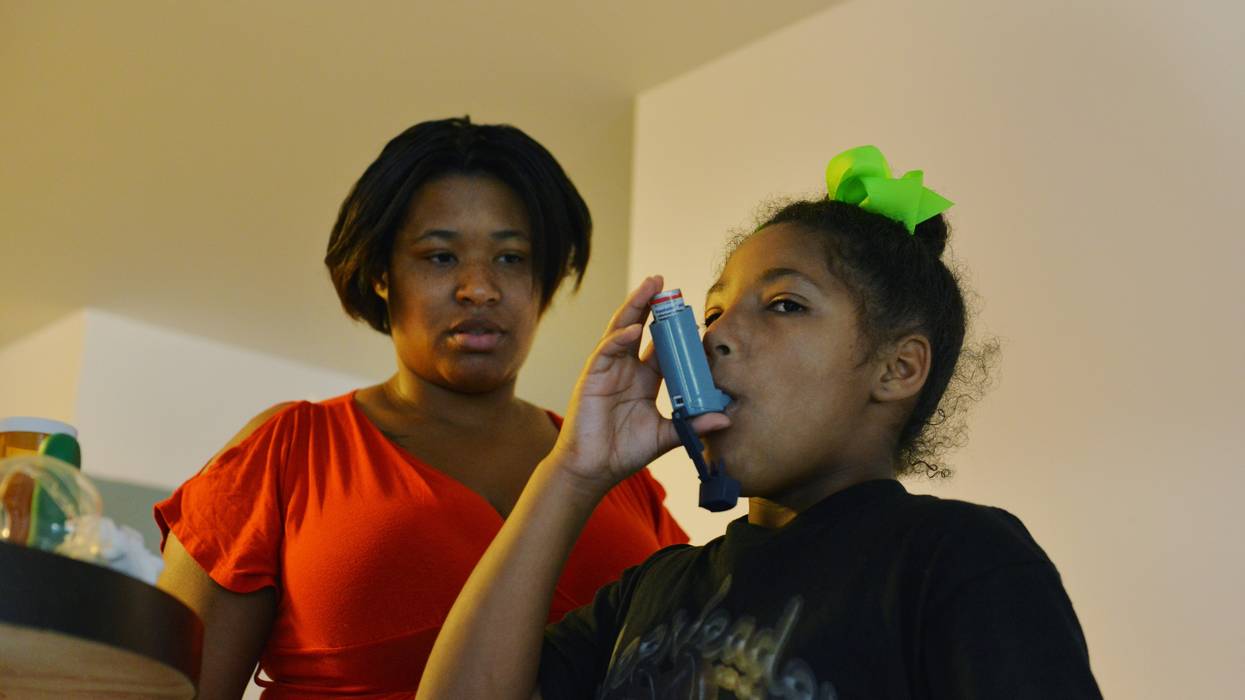
"No child in America should be sick or die because their parents cannot afford or access the inhalers they need to breathe," said Sen. Bernie Sanders.
U.S. Sen. Bernie Sanders on Tuesday urged a pair of pharmaceutical corporations to immediately slash the price tag of the generic version of the most commonly prescribed inhaler for children, continuing a pressure campaign that the Vermont Independent and his Democratic colleagues have been waging throughout the year with remarkable results.
Sanders' latest call was directed at GlaxoSmithKline (GSK) and Prasco Laboratories, which sells the authorized generic of Flovent—an inhaler that GSK pulled from the U.S. market earlier this year.
In March, after the Sanders-led Senate Health, Education, Labor, and Pensions (HELP) Committee launched an investigation into the high costs of inhalers, GSK announced it would join other companies in capping out-of-pocket costs for its asthma medications at $35 a month.
But GSK's pledge did not extend to Flovent's generic, which currently costs patients up to hundreds of dollars per month. Prasco Laboratories sells the generic product under a deal with GSK.
"Unfortunately, the retail price of this inhaler is between $172 and $313, and many insurance companies are refusing to cover it because the net price is more expensive than the brand-name version of Flovent," Sanders noted in a statement Tuesday. "Facing high prices and a lack of insurance coverage, families throughout the country are having a very difficult time purchasing inhalers for their children."
"The result: Pediatricians have observed a major increase in the number of children with asthma who have been admitted to hospitals," Sanders continued. "There are also reports that more children are dying. That is absolutely unacceptable. No child in America should be sick or die because their parents cannot afford or access the inhalers they need to breathe."
Nearly five million children in the U.S. have asthma, according to data from the Centers for Disease Control and Prevention, and an estimated 300 children and young adults in the country die from asthma attacks each year.
CNN reported earlier this year that GSK's decision to pull Flovent off the market in the U.S. put kids in danger of asthma flare-ups and visits to the ER."
Experts and lawmakers have accused GSK of yanking Flovent from the U.S. market to avoid paying significant federal penalties for raising the product's price tag above the rate of inflation.
"Instead of paying Medicaid the rebates it owed in 2024, GSK appears to have used a loophole to preserve its profits from years of exorbitant price increases," Sen. Maggie Hassan (D-N.H.) wrote in a letter to GSK's chief executive in early May. "GSK replaced both of its brand Flovent inhalers with an identical line of products licensed to a different manufacturer—a company that is conveniently exempt from Medicaid rebates, since it has no existing price history."
"Through your arrangement with Prasco Laboratories," Hassan added, "GSK appears to be circumventing Medicaid rebates to protect decades of profits gained by price gouging patients and public programs."
Sanders said Tuesday that, going forward, the focus of his Senate committee's investigation into inhaler costs and corporate price gouging will be on "the crisis of infants and children with asthma who have been struggling to receive the inhalers they need."
"These companies have a responsibility to make sure that children with asthma in America have access to the inhalers they need," said Sanders. "As the chairman of the HELP Committee, I will continue to do everything I can to make sure that the American people no longer pay, by far, the highest prices in the world for prescription drugs."
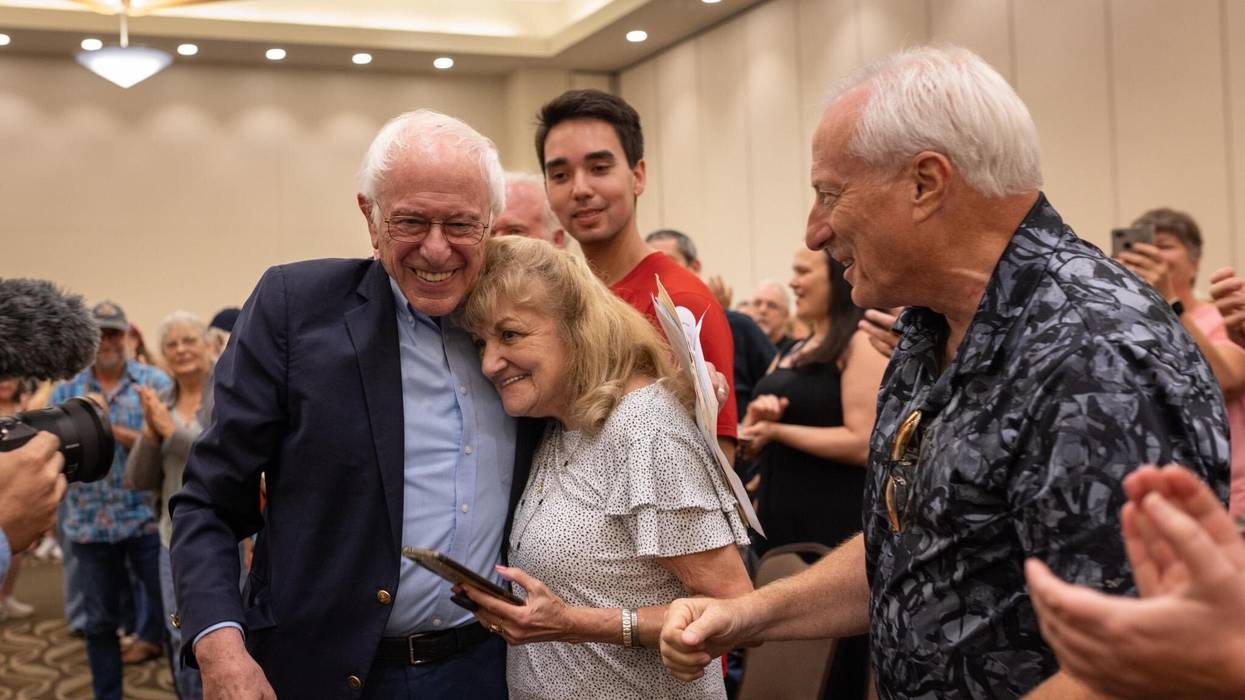
"Wanna know why I've worked for Bernie Sanders for 25 years? Moments like this," said the Vermont senator's staff director following an interaction during a weekend tour focused on lifting up the working class.
A town hall attendee in Maine took the opportunity to personally thank U.S. Sen. Bernie Sanders this past weekend for pressuring pharmaceutical giants to curb the sky-high prices of inhalers, lifesaving devices that millions of Americans with asthma rely on to breathe.
"I do want to thank you because I just called last week to order my asthma medication, my inhaler. And I've always been used to paying $300, and when they told me $20... I was amazed, and I couldn't understand why," the woman said during the event in Bangor on Saturday. "So I did a little research and I saw where you and President Biden have been working very hard. And because of that, I now pay $20 instead of $300."
In January, Sanders (I-Vt.) and several Democratic members of the Senate Health, Education, Labor, and Pensions (HELP) Committee
launched an investigation into what they described as "efforts by pharmaceutical companies to manipulate the price of asthma inhalers." The lawmakers found that AstraZeneca was charging $645 in the U.S. for the same inhaler it was selling for less than $50 in the United Kingdom.
By March, AstraZeneca, GlaxoSmithKline, and Boehringer Ingelheim—the three largest manufacturers of inhalers in the world—had each agreed to cap the out-of-pocket costs of their inhalers at $35. The price-cap announcements also came after the Federal Trade Commission (FTC) challenged some of the companies' inhaler-related patents, accusing the firms of abusing the patent system to prevent generic competition and keep prices elevated.
"Wanna know why I've worked for Bernie Sanders for 25 years? Moments like this," Warren Gunnels, Sanders' staff director, wrote in response to the interaction in Bangor. "Hearing a woman tell Bernie the cost of her inhaler fell from $300 to $20 and knowing she is one of the millions with asthma who benefited financially from our efforts to take on the greed of Big Pharma."
Watch the interaction between Sanders and the local resident:
Last year, asthma inhalers in this country cost as much as $649.
So, @POTUS and I worked together to lower the cost of this critical medication.
Today, millions of Americans with asthma pay no more than $35 for their inhalers.
Listen to what one patient had to say: pic.twitter.com/KPO6vnZctj
— Bernie Sanders (@BernieSanders) July 28, 2024
Sanders' event in Bangor was part of a weekend swing through Maine and New Hampshire aimed at rallying "working-class voters around an aggressive progressive agenda," as the senator's team put it.
During a rally in Portland, Maine on Saturday, Sanders formally backed Vice President Kamala Harris' bid for the White House and said that "the progressive movement... has got to do everything we can to get out on the streets, to knock on doors, get on phones, get on social media, and do everything that we can" to help her defeat Republican nominee Donald Trump in November.
I want to thank the 800 people in Portland, Maine who joined me this morning at a high-energy rally.
We must defeat Trump, elect VP @KamalaHarris, and create a government that works for all, not just the 1%. pic.twitter.com/l4CJnfo9yI
— Bernie Sanders (@BernieSanders) July 27, 2024
Sanders has urged Harris, the presumptive Democratic nominee, to place a working-class agenda at the heart of her presidential campaign as tens of millions of people across the United States struggle to afford housing, food, medicine, and other necessities as living costs remain high and wage growth slows.
"Homelessness, already at a record high last year, appears to be worsening among people with jobs, as housing becomes further out of reach for low-wage earners," The Washington Post noted Sunday. "The latest round of point-in-time counts—a tally of people without homes on one given night—shows a discernible uptick in homelessness in many parts of the United States, including Southeast Texas (up 61% from a year ago), Rhode Island (up 35%) and northeast Tennessee (up 20%)."
The local Portland Press Herald reported that Sanders used his Saturday rally to push "Harris and other lawmakers to support—and voters to demand—a slew of progressive policies," including Medicare for All, a federal minimum wage increase, and a revival of the boosted child tax credit that briefly cut U.S. childhood poverty in half.
"We have more income and wealth inequality than we've had in the history of this country," Sanders said. "Sixty percent of our people are living paycheck-to-paycheck. We have the highest rate of childhood poverty of almost any major nation on Earth. We are the only major nation not to have a national healthcare system."
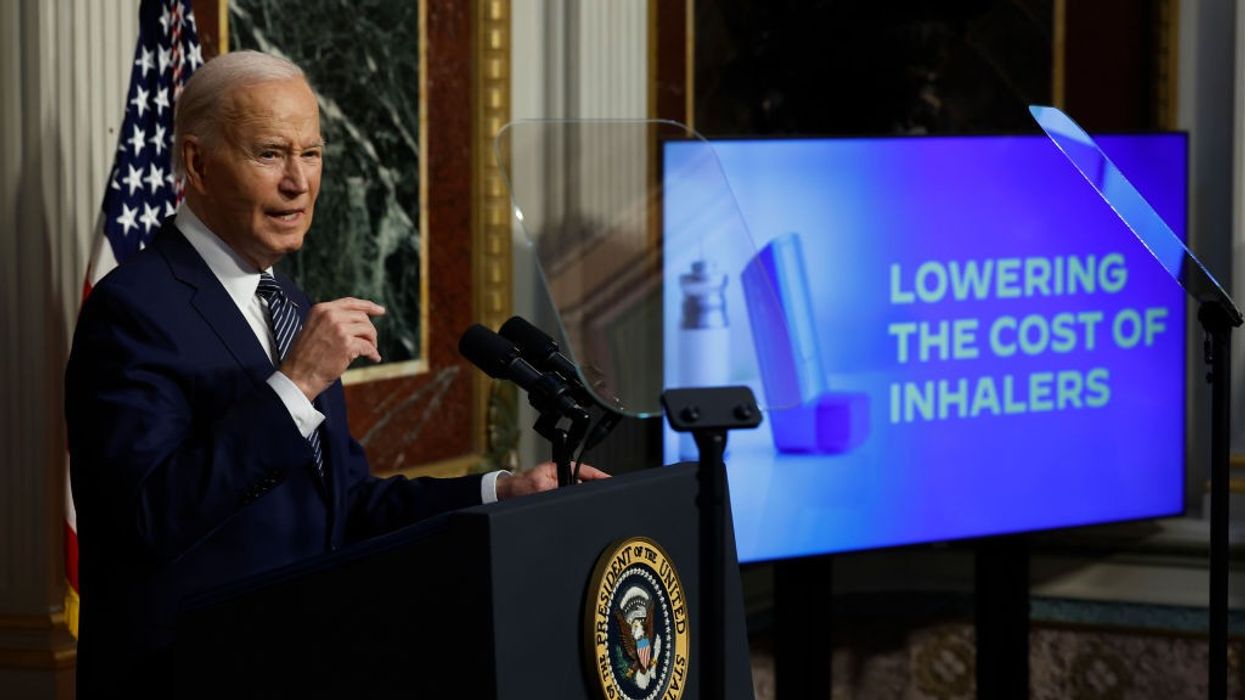
"Americans who have asthma and COPD should not be forced to pay, in many cases, 10 to 70 times more for the same exact inhalers as patients in Europe and other parts of the world," said the independent senator from Vermont.
Less than six months after launching a probe in the U.S. Senate into "the outrageously high prices" that asthma patients and others across the country pay for inhalers, Sen. Bernie Sanders celebrated the official start of a new program by one of the largest makers in the industry on Saturday to cap out of pocket costs at $35.
Sanders (I-Vt.), chair of the Senate Health, Education, Labor, and Pensions (HELP) Committee, said Saturday was "the first day of a new program instituted by the major pharmaceutical company Boehringer Ingelheim, which will allow people with asthma and COPD to purchase brand name inhalers at their local drugstore or pharmacy for only $35 dollars."
With the new cap, the company said in its announcement, eligible patients "who have had difficulty navigating the current healthcare system will now be able to afford the Boehringer inhalers they need."
Explaining its program, Boehringer said "the reduced out-of-pocket cost will be automatically applied at participating retail pharmacies for eligible patients with commercial insurance" and that more than 90 percent of pharmacies in the U.S. have agreed to participate in the program. "There are no forms to fill out or websites to go to—the discount happens electronically with no action required," said the company.
As Common Dreams reported in March, Combivent Respimat, one of Boehringer's inhaler products, previously carried a list price of around $500 in the U.S.—a number roughly 70 times what the company was charging for the same product in France, where patients could get the inhaler for just $7.
Sanders thanked Beohringer for finally instituting the program, which came after a sustained campaign by patient advocates and the investigation by the HELP committee.
"In my view, Americans who have asthma and COPD should not be forced to pay, in many cases, 10 to 70 times more for the same exact inhalers as patients in Europe and other parts of the world," Sanders said.
The committee's work led by Sanders triggered agreement from other large makers, namely AstraZeneca and GlaxoSmithKline, to initiate affordability programs as well.
"We look forward to AstraZeneca moving in the same direction—applying its $35 cap automatically at the pharmacy counter—in the next few weeks, and to GlaxoSmithKline following suit in the coming months," Sanders said Saturday. "We are waiting on word from Teva, the fourth major inhaler manufacturer, as to how they will proceed."
In April, President Joe Biden hosted a gathering at the White House where he credited Sanders and the HELP committee for spearheading the effort that led to the pharmaceutical companies caving under the public scrutiny. "Finally, we beat Big Pharma," Biden said.
Sen. Tammy Baldwin (D-Wis.), also a member of the HELP committee, championed the findings of the probe in March when the companies began to crack on the sky-high prices.
"We launched an investigation into big drug companies because the prices they were charging for inhalers just didn't add up," Baldwin said at the time. "And looks like we were right."
In his statement on Saturday, Sanders said the HELP committee wouldn't stop with inhalers as it continues "to do everything we can do to make sure that Americans no longer pay, by far, the highest prices in the world for prescription drugs."
"Americans who have asthma and COPD should not be forced to pay, in many cases, 10 to 70 times more for the same exact inhalers as patients in Europe and other parts of the world."
AstraZeneca announced Monday that it will cap out-of-pocket costs at $35 per month for U.S. inhaled respiratory medicines—becoming the second pharmaceutical giant to make that move since U.S. Sen. Bernie Sanders launched a probe in January.
The policy change—which will benefit patients with asthma and chronic obstructive pulmonary disease (COPD), including those who are uninsured and underinsured—is set to start in June, like the Boehringer Ingelheim decision announced earlier this month.
While welcoming the development, Sanders (I-Vt.) noted that it comes after the Senate Committee on Health, Education, Labor, and Pensions (HELP) that he chairs began investigating "the outrageously high cost of inhalers that 25 million Americans with asthma and 16 million Americans with COPD rely on to breathe."
"If AstraZeneca and Boehringer Ingelheim can cap the cost of inhalers at $35 in the United States, these other companies can do the same."
"In my view, Americans who have asthma and COPD should not be forced to pay, in many cases, 10 to 70 times more for the same exact inhalers as patients in Europe and other parts of the world," declared Sanders. "Since we launched that investigation, I have had conversations with all of the CEOs of the major manufacturers of these products."
The senator said he was "very pleased" with AstraZeneca's announcement, calling it "a very positive step which will help save Americans thousands of dollars a year on the inhalers they need to breathe."
The panel's probe—supported by Sens. Tammy Baldwin (D-Wis.), Ben Ray Luján (D-N.M.), and Ed Markey (D-Mass.)—also targets GlaxoSmithKline (GSK) and Teva. Sanders called on the pair to "take similar action," arguing that "if AstraZeneca and Boehringer Ingelheim can cap the cost of inhalers at $35 in the United States, these other companies can do the same."
Sanders pledged that his committee "will continue to do everything we can do to make sure that Americans no longer pay, by far, the highest prices in the world for prescription drugs."
In AstraZeneca's announcement, CEO Pascal Soriot called for federal action, saying that "we remain dedicated to addressing the need for affordability of our medicines, but the system is complex and we cannot do it alone. It is critical that Congress bring together key stakeholders to help reform the healthcare system so patients can afford the medicines they need, not just today, but for the future."
AstraZeneca highlighted that the cap will apply to medicines including Airsupra, Bevespi Aerosphere, Breztri Aerosphere, and Symbicort—which cost up to $645—and that the company "substantially reduced the list price" of Symbicort at the beginning of the year.
The Federal Trade Commission (FTC) in November disputed more than 100 patents held by pharmaceutical companies that make asthma inhalers, EpiPens, and other products listed in a Food and Drug Administration database, including Symbicort.
Acknowledging AstraZeneca's cap decision, FTC Chair Lina Khan said on social media Monday, "I urge the other firms whose patents FTC challenged—including GSK and Teva—to withdraw their improperly listed patents and drop costs for Americans."
"We launched an investigation into big drug companies because the prices they were charging for inhalers just didn't add up," said Sen. Tammy Baldwin. "And looks like we were right."
Starting in June, the German pharmaceutical giant Boehringer Ingelheim will cap co-pays for its inhalers at $35 for U.S. patients—a decision that came just two months after members of a Senate panel led by Sen. Bernie Sanders launched an investigation into inhaler price gouging.
Combivent Respimat, one of Boehringer Ingelheim's inhaler products, carries a list price of around $500 in the U.S. That's roughly 70 times what the company charges for the same product in France, where patients can get the inhaler for $7.
Boehringer Ingelheim said Thursday that it plans to reduce the list prices of some of its inhalers.
Sanders (I-Vt.), chair of the Senate Health, Education, Labor, and Pensions (HELP) Committee, called the company's moves "very positive steps in the right direction" and demanded that other major inhaler manufacturers "take similar action."
"A Vermont resident recently told my office that she has to pay $320 per month for Boehringer Ingelheim's Spiriva HandiHaler. As a result of today's decision, she could save more than $3,000 a year on the inhaler that she needs to breathe," Sanders said in a statement Thursday. "If Boehringer Ingelheim can take action to cap the cost of inhalers at $35 in the United States and lower the list price of some of the inhalers it manufactures, these other companies can do the same."
In January, Sanders and other Senate HELP Committee members announced a probe into "the extremely high prices" that Boehringer Ingelheim, AstraZeneca, and other companies charge for their inhalers.
"We launched an investigation into big drug companies because the prices they were charging for inhalers just didn't add up," Sen. Tammy Baldwin (D-Wis.), a member of the HELP panel, wrote on social media Thursday. "And looks like we were right."
We launched an investigation into big drug companies because the prices they were charging for inhalers just didn’t add up.
And looks like we were right.
I’m glad to see some of the price gouging end and proud to help lower costs for Wisconsin families. pic.twitter.com/QluMNCSwJA
— Sen. Tammy Baldwin (@SenatorBaldwin) March 7, 2024
Boehringer Ingelheim was also facing scrutiny from the Federal Trade Commission (FTC). In November, the agency said it believes some of the company's patents "may have been improperly listed in the Orange Book," which includes products the agency deems safe and effective.
"Patents improperly listed in the Orange Book may delay lower-cost generic drug competition," the FTC wrote in a letter to Boehringer Ingelheim. "By listing their patents in the Orange Book, brand drug companies may benefit from an automatic, 30-month stay of FDA approval of competing generic drug applications."
On Wednesday, as Reuters reported, a class-action lawsuit filed in federal court by the Massachusetts Laborers' Health and Welfare Fund accused Boehringer Ingelheim of "improperly submitting patents to the U.S. Food and Drug Administration to delay generic competition and inflate prices for its lung disease drugs Combivent Respimat and Spiriva Respimat."
"As a result of Boehringer's wrongful Orange-Book-listing scheme, there [are], to this day, no affordable generic versions of either Combivent Respimat or Spiriva Respimat," the lawsuit states. "Payors must continue to pay for expensive brand-name products, instead of affordable generic products that should have been available years ago. This has caused payors, including the plaintiff, to suffer many millions, if not billions, of dollars in overcharges over the past three years."