SUBSCRIBE TO OUR FREE NEWSLETTER
Daily news & progressive opinion—funded by the people, not the corporations—delivered straight to your inbox.
5
#000000
#FFFFFF
To donate by check, phone, or other method, see our More Ways to Give page.
Daily news & progressive opinion—funded by the people, not the corporations—delivered straight to your inbox.
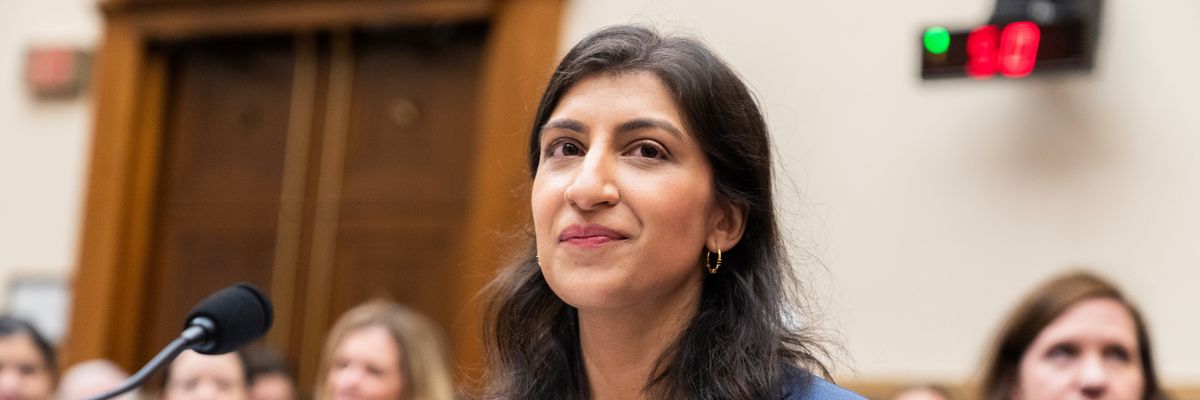
FTC Chair Lina Khan prepares to testify during a House Judiciary Committee hearing on July 13, 2023.
"We're thrilled to see the FTC crack down on over a hundred sham Orange Book listings, which keep lifesaving medicines like asthma inhalers and epinephrine prohibitively expensive for those who need them most."
The Federal Trade Commission on Tuesday disputed more than 100 patents held by pharmaceutical companies that make asthma inhalers, EpiPens, and other items listed in the Food and Drug Administration's so-called "Orange Book," which identifies products the agency considers safe and effective.
The FTC sent letters to 10 companies—including AbbVie, AstraZeneca, and Boehringer Ingelheim Pharmaceuticals—notifying them that the commission believes some of their patents are improperly listed in the FDA's Orange Book.
Drug companies have long been accused of abusing the FDA patent listing system to undercut generic competition. In its warning letters to the pharmaceutical companies, the FTC notes that "patents improperly listed in the Orange Book may delay lower-cost generic drug competition."
"By listing their patents in the Orange Book, brand drug companies may benefit from an automatic, 30-month stay of FDA approval of competing generic drug applications," the agency's letters explain. "In addition to delays resulting from such a stay of approval, the costs associated with litigating improperly listed patents may disincentivize investments in developing generic drugs, which risks delaying or thwarting competitive entry. The Supreme Court recognizes that improper Orange Book listings have prevented or delayed generic drug entry since at least the 1990s."
While the letters state that the FTC has chosen to make use of the FDA's formal dispute process to target the allegedly improper listings, the agency said it retains "the right to take any further action the public interest may require," including legal action.
In an interview on NPR Wednesday morning, FTC Chair Lina Khan said that companies are only supposed to list in the Orange Book patents covering active drug ingredients.
"Instead, we have found that firms are listing device patents that have absolutely nothing to do with the active ingredient," said Khan. "So they're instead covering the dispenser cap on a multidose eyedropper or the cap strap on an inhaler, which just keeps the inhalers in place."
"We've identified patents covering these components of devices," Khan added, "and that may in fact be resulting in Americans having to pay hundreds if not thousands of dollars more than they should be."
"Big Pharma has been intentionally gaming the United States' drug safety system to block other manufacturers from making and selling the same treatments at lower prices."
Consumer advocates applauded the FTC's move as a key step toward challenging the pharmaceutical industry's profit-seeking manipulation of the U.S. patent system.
"We're thrilled to see the FTC crack down on over a hundred sham Orange Book listings, which keep lifesaving medicines like asthma inhalers and epinephrine prohibitively expensive for those who need them most," said Erik Peinert, research manager and editor at the American Economic Liberties Project. "Big Pharma has been intentionally gaming the United States' drug safety system to block other manufacturers from making and selling the same treatments at lower prices."
Public Citizen also welcomed the FTC's action in a social media post:
The FTC's warning letters to drug companies came after the agency issued a policy statement signaling that it intends to "scrutinize improper Orange Book listings to determine whether these constitute unfair methods of competition."
The statement notes that "patents listed in the Orange Book must claim the reference listed drug or a method of using it."
"Brand drug manufacturers are responsible for ensuring their patents are properly listed," the statement continues. "Yet certain manufacturers have submitted patents for listing in the Orange Book that claim neither the reference listed drug nor a method of using it. When brand drug manufacturers abuse the regulatory processes set up by Congress to promote generic drug competition, the result may be to increase the cost of and reduce access to prescription drugs."
A report published earlier this year by the American Economic Liberties Project estimated that antitrust violations by the pharmaceutical industry—including shame Orange Book listings—cost U.S. patients, insurers, and federal health programs more than $40 billion in 2019 alone.
Dear Common Dreams reader, It’s been nearly 30 years since I co-founded Common Dreams with my late wife, Lina Newhouser. We had the radical notion that journalism should serve the public good, not corporate profits. It was clear to us from the outset what it would take to build such a project. No paid advertisements. No corporate sponsors. No millionaire publisher telling us what to think or do. Many people said we wouldn't last a year, but we proved those doubters wrong. Together with a tremendous team of journalists and dedicated staff, we built an independent media outlet free from the constraints of profits and corporate control. Our mission has always been simple: To inform. To inspire. To ignite change for the common good. Building Common Dreams was not easy. Our survival was never guaranteed. When you take on the most powerful forces—Wall Street greed, fossil fuel industry destruction, Big Tech lobbyists, and uber-rich oligarchs who have spent billions upon billions rigging the economy and democracy in their favor—the only bulwark you have is supporters who believe in your work. But here’s the urgent message from me today. It's never been this bad out there. And it's never been this hard to keep us going. At the very moment Common Dreams is most needed, the threats we face are intensifying. We need your support now more than ever. We don't accept corporate advertising and never will. We don't have a paywall because we don't think people should be blocked from critical news based on their ability to pay. Everything we do is funded by the donations of readers like you. When everyone does the little they can afford, we are strong. But if that support retreats or dries up, so do we. Will you donate now to make sure Common Dreams not only survives but thrives? —Craig Brown, Co-founder |
The Federal Trade Commission on Tuesday disputed more than 100 patents held by pharmaceutical companies that make asthma inhalers, EpiPens, and other items listed in the Food and Drug Administration's so-called "Orange Book," which identifies products the agency considers safe and effective.
The FTC sent letters to 10 companies—including AbbVie, AstraZeneca, and Boehringer Ingelheim Pharmaceuticals—notifying them that the commission believes some of their patents are improperly listed in the FDA's Orange Book.
Drug companies have long been accused of abusing the FDA patent listing system to undercut generic competition. In its warning letters to the pharmaceutical companies, the FTC notes that "patents improperly listed in the Orange Book may delay lower-cost generic drug competition."
"By listing their patents in the Orange Book, brand drug companies may benefit from an automatic, 30-month stay of FDA approval of competing generic drug applications," the agency's letters explain. "In addition to delays resulting from such a stay of approval, the costs associated with litigating improperly listed patents may disincentivize investments in developing generic drugs, which risks delaying or thwarting competitive entry. The Supreme Court recognizes that improper Orange Book listings have prevented or delayed generic drug entry since at least the 1990s."
While the letters state that the FTC has chosen to make use of the FDA's formal dispute process to target the allegedly improper listings, the agency said it retains "the right to take any further action the public interest may require," including legal action.
In an interview on NPR Wednesday morning, FTC Chair Lina Khan said that companies are only supposed to list in the Orange Book patents covering active drug ingredients.
"Instead, we have found that firms are listing device patents that have absolutely nothing to do with the active ingredient," said Khan. "So they're instead covering the dispenser cap on a multidose eyedropper or the cap strap on an inhaler, which just keeps the inhalers in place."
"We've identified patents covering these components of devices," Khan added, "and that may in fact be resulting in Americans having to pay hundreds if not thousands of dollars more than they should be."
"Big Pharma has been intentionally gaming the United States' drug safety system to block other manufacturers from making and selling the same treatments at lower prices."
Consumer advocates applauded the FTC's move as a key step toward challenging the pharmaceutical industry's profit-seeking manipulation of the U.S. patent system.
"We're thrilled to see the FTC crack down on over a hundred sham Orange Book listings, which keep lifesaving medicines like asthma inhalers and epinephrine prohibitively expensive for those who need them most," said Erik Peinert, research manager and editor at the American Economic Liberties Project. "Big Pharma has been intentionally gaming the United States' drug safety system to block other manufacturers from making and selling the same treatments at lower prices."
Public Citizen also welcomed the FTC's action in a social media post:
The FTC's warning letters to drug companies came after the agency issued a policy statement signaling that it intends to "scrutinize improper Orange Book listings to determine whether these constitute unfair methods of competition."
The statement notes that "patents listed in the Orange Book must claim the reference listed drug or a method of using it."
"Brand drug manufacturers are responsible for ensuring their patents are properly listed," the statement continues. "Yet certain manufacturers have submitted patents for listing in the Orange Book that claim neither the reference listed drug nor a method of using it. When brand drug manufacturers abuse the regulatory processes set up by Congress to promote generic drug competition, the result may be to increase the cost of and reduce access to prescription drugs."
A report published earlier this year by the American Economic Liberties Project estimated that antitrust violations by the pharmaceutical industry—including shame Orange Book listings—cost U.S. patients, insurers, and federal health programs more than $40 billion in 2019 alone.
The Federal Trade Commission on Tuesday disputed more than 100 patents held by pharmaceutical companies that make asthma inhalers, EpiPens, and other items listed in the Food and Drug Administration's so-called "Orange Book," which identifies products the agency considers safe and effective.
The FTC sent letters to 10 companies—including AbbVie, AstraZeneca, and Boehringer Ingelheim Pharmaceuticals—notifying them that the commission believes some of their patents are improperly listed in the FDA's Orange Book.
Drug companies have long been accused of abusing the FDA patent listing system to undercut generic competition. In its warning letters to the pharmaceutical companies, the FTC notes that "patents improperly listed in the Orange Book may delay lower-cost generic drug competition."
"By listing their patents in the Orange Book, brand drug companies may benefit from an automatic, 30-month stay of FDA approval of competing generic drug applications," the agency's letters explain. "In addition to delays resulting from such a stay of approval, the costs associated with litigating improperly listed patents may disincentivize investments in developing generic drugs, which risks delaying or thwarting competitive entry. The Supreme Court recognizes that improper Orange Book listings have prevented or delayed generic drug entry since at least the 1990s."
While the letters state that the FTC has chosen to make use of the FDA's formal dispute process to target the allegedly improper listings, the agency said it retains "the right to take any further action the public interest may require," including legal action.
In an interview on NPR Wednesday morning, FTC Chair Lina Khan said that companies are only supposed to list in the Orange Book patents covering active drug ingredients.
"Instead, we have found that firms are listing device patents that have absolutely nothing to do with the active ingredient," said Khan. "So they're instead covering the dispenser cap on a multidose eyedropper or the cap strap on an inhaler, which just keeps the inhalers in place."
"We've identified patents covering these components of devices," Khan added, "and that may in fact be resulting in Americans having to pay hundreds if not thousands of dollars more than they should be."
"Big Pharma has been intentionally gaming the United States' drug safety system to block other manufacturers from making and selling the same treatments at lower prices."
Consumer advocates applauded the FTC's move as a key step toward challenging the pharmaceutical industry's profit-seeking manipulation of the U.S. patent system.
"We're thrilled to see the FTC crack down on over a hundred sham Orange Book listings, which keep lifesaving medicines like asthma inhalers and epinephrine prohibitively expensive for those who need them most," said Erik Peinert, research manager and editor at the American Economic Liberties Project. "Big Pharma has been intentionally gaming the United States' drug safety system to block other manufacturers from making and selling the same treatments at lower prices."
Public Citizen also welcomed the FTC's action in a social media post:
The FTC's warning letters to drug companies came after the agency issued a policy statement signaling that it intends to "scrutinize improper Orange Book listings to determine whether these constitute unfair methods of competition."
The statement notes that "patents listed in the Orange Book must claim the reference listed drug or a method of using it."
"Brand drug manufacturers are responsible for ensuring their patents are properly listed," the statement continues. "Yet certain manufacturers have submitted patents for listing in the Orange Book that claim neither the reference listed drug nor a method of using it. When brand drug manufacturers abuse the regulatory processes set up by Congress to promote generic drug competition, the result may be to increase the cost of and reduce access to prescription drugs."
A report published earlier this year by the American Economic Liberties Project estimated that antitrust violations by the pharmaceutical industry—including shame Orange Book listings—cost U.S. patients, insurers, and federal health programs more than $40 billion in 2019 alone.