
SUBSCRIBE TO OUR FREE NEWSLETTER
Daily news & progressive opinion—funded by the people, not the corporations—delivered straight to your inbox.
5
#000000
#FFFFFF
To donate by check, phone, or other method, see our More Ways to Give page.


Daily news & progressive opinion—funded by the people, not the corporations—delivered straight to your inbox.
"I've been lucky to serve the American people and stir up some good trouble along the way. That's not changing anytime soon," Commissioner Ellen Weintraub wrote.
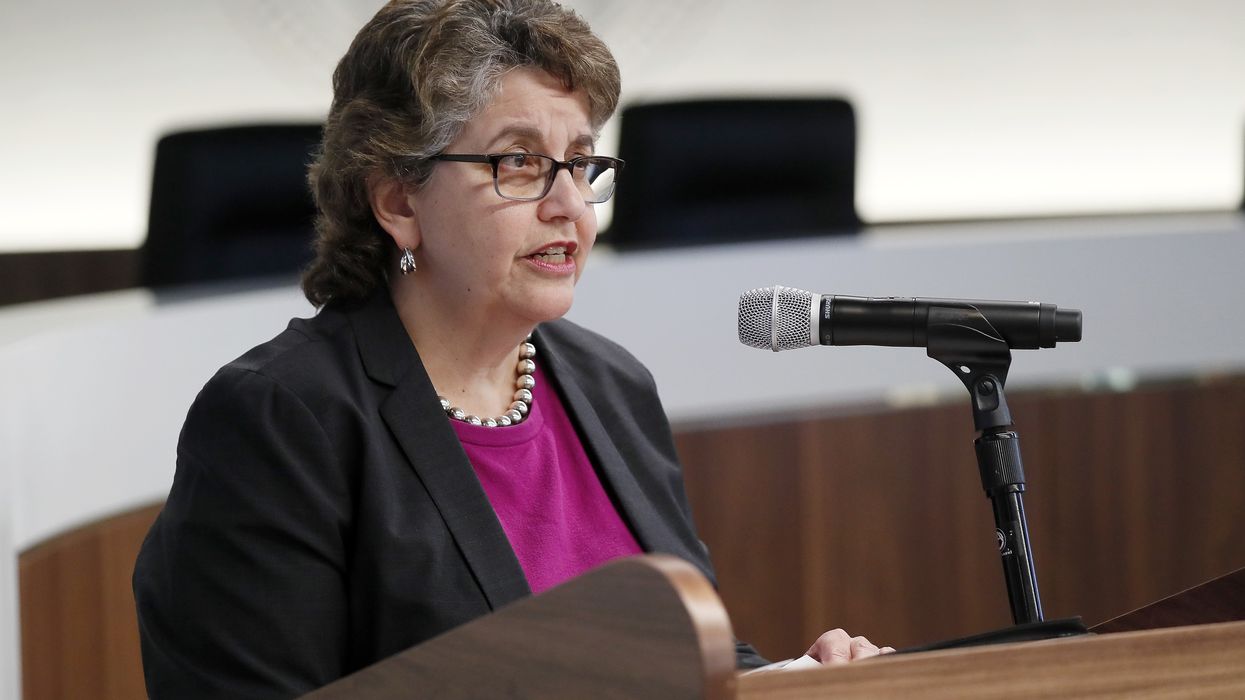
Federal Elections Commission Commissioner and Chair Ellen Weintraub said Thursday that U.S. President Donald Trump moved to fire her from the commission, but indicated she won't comply and called the directive legally invalid.
Weintraub shared a letter on X that read: "You are hereby removed as a member of the Federal Election Commission, effective immediately. Thank you for your service on the Commission," and appears to have Trump's signature below it. The letter is dated January 31, but in her accompanying post Weintraub said that she received the letter on Thursday.
"There's a legal way to replace FEC commissioners—this isn't it. I've been lucky to serve the American people and stir up some good trouble along the way. That's not changing anytime soon," wrote Weintraub, who has served as a commissioner at the independent regulatory agency that enforces federal campaign finance law since 2002. She was elected to chair the commission for 2025.
The FEC is headed by six commissioners and the body must have at least four in order to have a quorum. FEC commissioners are appointed by the president and confirmed by the Senate, and the Federal Election Campaign Act establishes six-year terms for commission members. However, commissioners can continue in their positions after those terms end in "holdover" status until the president nominates and the Senate confirms a replacement commissioner, according to the Congressional Research Service.
This is the case with Weintraub, who's term expired in 2007, and has remained on since in holdover status. Weintraub has also been the chief strategist behind a maneuver from the Democratic commissioners to force more deadlock on the commission in order to compel federal courts to step in and police federal election law, according to The New York Times.
"In the entire history of the bipartisan FEC no president has ever removed a commissioner from the opposing party without nominating a successor recommended by that party's leaders in Congress," wrote Daniel Weiner, the director of the Elections and Government Program at the Brennan Center policy institute. "This is an extraordinary break from that history, and there are strong arguments that it violates long-established federal law governing independent agencies."
Trevor Potter, Republican former chair of the FEC and the current president of Campaign Legal Center, said in a statement Thursday that Congress intentionally did not grant the president powers to remove FEC commissioners.
"With multiple FEC commissioners serving on expired terms and one vacant seat, Trump is free to nominate multiple new commissioners and to allow Congress to perform its constitutional role of advice and consent," he wrote.
He added: "It's contrary to law that he has instead opted to claim to 'fire' a single Democratic commissioner who has been an outspoken critic of the president's lawbreaking and of the FEC's failure to hold him accountable."
In 2020, Weintraub authored a long social media thread aimed at debunking some of Trump's claims around alleged vote-by-mail voter fraud.
Weintraub also told The New York Times that she thinks her public statements regarding FEC complaints focused on Trump's presidential campaigns may be why she's in the president's crosshairs.
"Preventing the disclosure of the sources of political spending would deprive voters of critical information and undermine the essential need for checks on monetary power," warned one democracy watchdog.
All three Republican members of the Federal Election Commission on Thursday voted in favor of a new rule change that would have made it even easier for right-wing megadonors to hide their political campaign contributions from public view.
While the three Democratic members forced a deadlocked vote that prevented passage of the proposal, pro-democracy watchdogs said the unanimous vote by the Republican-appointed members shows the powerful commitment by GOP forces to increase the ability for wealthy individuals and corporate interests to mask their political giving.
FEC chairman Sean Cooksey was joined by his two Republican colleagues Allen Dickerson and James "Trey" Trainor III in backing the measure, but all three Democrats—Commissioners Shana Broussard, Dara Lindenbaum, and vice chair Ellen Weintraub—voted against to nullify it.
The proposal, Sludge reported earlier this week, would "supercharge" the flow of so-called "dark money" in political campaigns and was proposed by Dickerson, a Trump-nominated member who "previously worked at an anti-campaign finance regulation organization funded by conservative political megadonors."
"As democracy faces its biggest test yet around the world, it is difficult to believe that the world's oldest democracy is even considering further eroding the public's right to know who is influencing their elections."
Dickerson's proposed rule change, per the FEC, would have allowed advocacy groups or campaigns to "withhold, redact, or modify contributors’ identifying information in campaign finance disclosure reports"—reports currently mandated so that the public is made aware of who is funding such organizations.
Ahead of the vote, Scott Greytak, director of advocacy for Transparency International U.S., said the implications if it passed would reach far beyond the United States.
"With half of the world's population living in countries that will hold a nationwide vote this year, the United States must embody and exemplify the importance of transparent and informed elections," Greytak said in a statement opposing the proposal. "As democracy faces its biggest test yet around the world, it is difficult to believe that the world's oldest democracy is even considering further eroding the public's right to know who is influencing their elections."
In a May 2 memo detailing his argument in favor of exempting donors from mandated disclosure requirements, Dickerson claims it is "a Constitutional right" because "Americans are entitled to make political contributions without being attacked, threatened, or fired."
In view of such arguments, which right-wing forces have made for some time, Stuart McPhail, director of campaign finance litigation with Citizens for Responsibility and Ethics in Washington (CREW), has explained why such bad-faith misdirection is an effort to obscure what's really going on.
While it's true that some groups historically were granted exemptions for donor disclosures—including the NAACP and the Socialist Workers Party (SWP), whose supporters and members faced coordinated, state-sponsored violence due to their political activities—claims like the one Dickerson makes, McPhail contends, fails on various merits.
"Campaign finance disclosure does not subject any viewpoint to discriminatory burdens," McPhail explained in a 2022 blog post. "Rather, the aim of the laws has nothing to do with expression at all: they target transfers of wealth that could be and are used to corruptly influence officials, defraud voters and undermine democracy. Rather than state-sponsored suppression, dark money funders face criticism from concerned and less powerful citizens."
It should be clear, he continued, that powerful "Dark money groups, their donors, and the candidates are trying to evade responsibility, not prevent retaliation." When people like Dickerson make such moves, argued McPhail, they are trying to help groups and their allies "to avoid accountability by hiding their donors and silencing critics who may speak out against them."
This is why Thursday's votes in favor of such a proposal, said Craig Holman, Ph.D., a government ethics expert with Public Citizen, should be viewed with alarm.
"Commissioners of the FEC, regardless of party affiliation, have always defended the need for disclosure of campaign money sources – until now," Holman said following the 3-3 vote. "Preventing the disclosure of the sources of political spending would deprive voters of critical information and undermine the essential need for checks on monetary power. It is truly disturbing to see half of the Commission now undermining that core principle, which is so important to an open democratic society."
While welcoming the rule, one advocate said it is "not enough to safeguard citizens and our elections."
Just over two weeks after New Hampshire voters were inundated with artificial intelligence-generation robocalls featuring U.S. President Joe Biden's fake voice telling them not to vote in their state's primary, the Federal Communications Commission on Thursday announced what one adocate called a "desperately needed" rule declaring such calls are illegal under federal law.
The FCC unanimously voted to adopt the declaratory ruling, saying calls like those made in New Hampshire are "artificial" under the Telephone Consumer Protection Act (TCPA).
The new rule goes into effect immediately, prohibiting people or groups from using voice cloning technology to create robocalls and giving state attorneys general civil enforcement authority.
According to the FCC, under the TCPA, the commission can also "take steps to block calls from telephone carriers facilitating illegal robocalls" and individual consumers or groups can bring a lawsuit against robocallers in court.
On Tuesday, the New Hampshire Department of Justice announced it had traced the robocalls from last month to a company called Life Corporation in Texas. The company made up to 25,000 of the calls.
Ishan Mehta, media and democracy program director for Common Cause, said the calls in New Hampshire last month represented "only the tip of the iceberg" and warned that "it is critically important that the FCC now use this authority to fine violators and block the telephone companies that carry the calls."
FCC Chairwoman Jessica Rosenworcel said that "bad actors are using AI-generated voices in unsolicited robocalls to extort vulnerable family members, imitate celebrities, and misinform voters. We're putting the fraudsters behind these robocalls on notice."
Robert Weissman, president of consumer advocacy group Public Citizen, said the rule will "meaningfully protect consumers from rapidly spreading AI scams and deception" and urged other federal agencies "follow suit and apply the tools and laws at their disposal to regulate AI."
"We need Congress to prohibit bad actors from using deceptive AI to disrupt our elections. The FEC, too, must clarify regulatory language to ban the use of deliberately deceptive AI in campaign communications."
The TCPA, however, is "not enough to safeguard citizens and our elections" from the larger threat of deepfakes and AI, warned Weissman.
"The Telephone Consumer Protection Act applies only in limited measure to election-related calls," he said. "The act's prohibition on use of 'an artificial or prerecorded voice' generally does not apply to noncommercial calls and nonprofits. So the FCC's new rule will not cure the problem of AI voice-generated calls related to elections."
Public Citizen has repeatedly demanded that the Federal Election Commission (FEC) promptly regulate deepfake images and videos, which have already been used in campaign materials by former President Donald Trump, who is running for the Republican nomination.
Last month, the FEC said a decision on deepfakes is likely several months away.
On Thursday, Nick Penniman, founder of CEO of political reform group Issue One, called the FCC's decision "a positive step" that is "not enough."
"The unregulated use of AI as a means to target, manipulate, and deceive voters is an existential threat to democracy and the integrity of our elections. This is not a future possibility, but a present reality that demands decisive action," said Penniman. "We need Congress to prohibit bad actors from using deceptive AI to disrupt our elections. The FEC, too, must clarify regulatory language to ban the use of deliberately deceptive AI in campaign communications."
"These guardrails are vital to ensure we have the necessary tools to effectively counter this growing threat," he added, "and protect our elections."
Mehta called on Congress to pass the Protect Elections from Deceptive AI Act, which would prohibit the distribution of deceptive AI-generated audio, images, or video relating to federal candidates in political ads.
"We hope that both the House and the Senate will follow the example of the FCC," said Mehta, "whose Democratic and Republican commissioners recognized the threat posed by AI and came together in a unanimous vote to outlaw robocalls utilizing AI voice-cloning tools."
"The comments from the FEC chair should sound the alarm for Congress and state legislators: You cannot count on the FEC to defend us from deepfakes," said one advocate. "It's up to you.”
Federal Election Commission Chairman Sean Cooksey pushed back on criticism this week that his agency is not taking necessary steps to stop political campaigns from using artificial intelligence-generated "deepfake" images in election ads—but a leading advocate said Thursday that Cooksey's defense sent one clear message: Americans can't "count on the FEC to defend us from deepfakes."
After Robert Weissman, president of the consumer advocacy watchdog Public Citizen, said this week that the FEC "hasn't managed to use its existing authority to head off the problem," Cooksey, a Republican, told The Washington Post that the commission is "working on" the issue.
The top elections regulator said the FEC is "diligently reviewing the thousands of public comments submitted" regarding a proposed ban on the use of AI to deliberately misrepresent politicians' words and actions in campaign ads by producing "deepfake" videos, audio clips, and images.
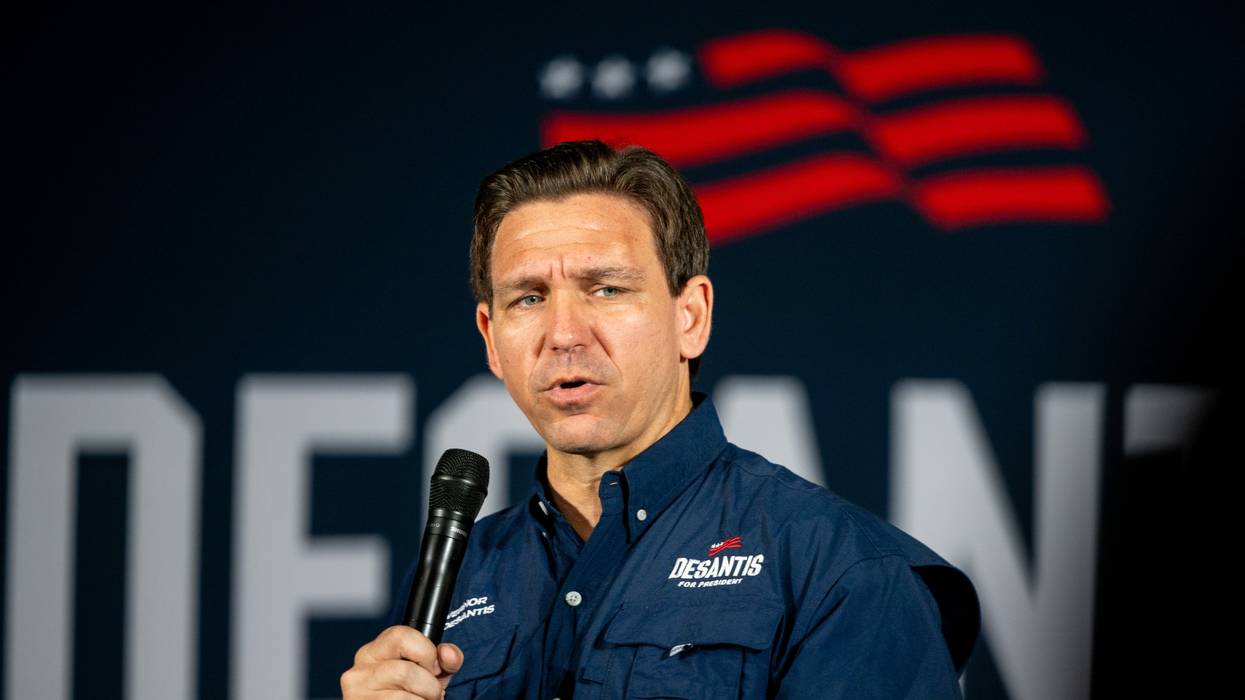
Deepfakes have already been used by the campaigns of former Republican President Donald Trump, who is running for reelection and won his party's Iowa caucus this week, and GOP presidential candidate Ron DeSantis.
"There's no reason for the Federal Election Commission to stand idly by and risk fraud and fakery overwhelming election integrity."
Despite this, Cooksey told The Post that the FEC "will resolve the AI rulemaking by early summer"—after many state primaries are over.
"The FEC's slow-walking of the political deepfake issue threatens our democracy," Weissman said Thursday. "The schedule described by FEC Chair Cooksey means that, even if the agency decides to proceed with a rulemaking on deepfakes, it's not likely to have a rule out in time for the 2024 election. That's intolerable."
"There's no reason for the Federal Election Commission to stand idly by and risk fraud and fakery overwhelming election integrity," added Weissman. "However, there's still time for the agency to expedite its action and get a clear rule in place. It must do so."
Public Citizen submitted multiple petitions to the FEC last year before the commission finally announced in August that it would consider establishing new rules barring campaigns from using deepfakes, making it clear that laws prohibiting candidates from deceiving voters in ads also apply to AI.
Federal lawmakers including Sens. Amy Klobuchar (D-Minn.) and Josh Hawley (R-Mo.) have proposed legislation to ban deepfakes, but party leaders have not yet pushed for a vote on specific bills. The Democratic National Committee has also called on the FEC to take swift action on Public Citizen's petition, but the Republican National Committee has claimed the FEC does not have the authority to regulate AI in campaign ads.
Cooksey's latest remarks, said Weissman on Thursday, "should sound the alarm for Congress and state legislators" who have so far not succeeded in passing legislation to codify a ban on deepfakes in federal law.
"You cannot count on the FEC to defend us from deepfakes," said Weissman, addressing lawmakers. "It's up to you."
A consumer advocacy group warns that deceptive images generated by AI are "one of the biggest threats to our elections."
As consumer advocacy group Public Citizen marked three months since the Federal Election Commission closed its public comment period on regulating artificial intelligence-generated "deepfake" images in election ads, the group on Tuesday questioned whether the FEC itself is "just a computer-generated illusion."
"Do we have a real Federal Election Commission?" asked Robert Weissman, president of Public Citizen, eight months after the group submitted its first petition asking the FEC to establish new rules banning deepfakes in campaign materials.
The organization and AI experts have repeatedly warned that "generative A.I. now poses a significant threat to truth and democracy as we know it," with campaign teams capable of altering images to show political opponents falsely appearing to say things they haven't said or appear at events they never attended.
Republican presidential candidate and Florida Gov. Ron DeSantis' campaign circulated fake images of former President Donald Trump embracing former White House Coronavirus Task Force chief Anthony Fauci last June, days after the FEC rejected Public Citizen's first petition.
Trump's reelection campaign has also distributed audio clips featuring deepfaked voices of DeSantis and Adolf Hitler, while former Chicago Democratic mayoral candidate Paul Vallas last year condemned a "deceptive impersonation video" that appeared to portray him making comments supporting police violence.
"The entire political world knows that a torrent of fraudulent deepfakes threatens to destabilize our fragile election system—maybe even decide elections—but so far the FEC hasn't managed to use its existing authority to head off the problem," said Weissman.
After Public Citizen submitted two separate petitions to the FEC last year, the commission announced in August that it would advance the group's request for rulemaking, opening a 60-day comment period. The group called on the FEC to clarify the meaning of "fraudulent representation" and make clear that political campaigns will be held accountable for using "deliberately deceptive AI-produced content."
As the comment period was set to close in October, Public Citizen reiterated its demand that the FEC clarify "whether and how deepfakes in campaign communications are covered under the law against 'fraudulent misrepresentation' (52 USC § 30124)."
In December, with no sign from the FEC that it would take any further action to establish new rulemaking, University of Washington AI expert Oren Etzioni told the Associated Press that with increasingly powerful and widely available AI technology that allows virtually anyone to create a deepfake video, photo, or audio clip, he expected "a tsunami of misinformation" in the 2024 election cycle.
"You could see a political candidate like President [Joe] Biden being rushed to a hospital [in a false video]," Etzioni told the AP last month. "You could see a candidate saying things that he or she never actually said."
Federal lawmakers including Sens. Amy Klobuchar (D-Minn.) and Josh Hawley (R-Mo.) have introduced legislation to regulate the use of AI in federal elections, but not in state or local races.
Barring all political campaigns from using AI-generated images and audio clips is "just a matter of choosing democracy over fraud and chaos," said Weissman.
"It's time, past time," he added, "for the FEC to act."
"If people don't ultimately trust information related to an election, democracy just stops working," said a senior fellow at the Alliance for Securing Democracy.
As 2024 approaches and with it the next U.S. presidential election, experts and advocates are warning about the impact that the spread of artificial intelligence technology will have on the amount and sophistication of misinformation directed at voters.
While falsehoods and conspiracy theories have circulated ahead of previous elections, 2024 marks the first time that it will be easy for anyone to access AI technology that could create a believable deepfake video, photo, or audio clip in seconds, The Associated Press reported Tuesday.
"I expect a tsunami of misinformation," Oren Etzioni, an AI expert and University of Washington professor emeritus, told the AP. "I can't prove that. I hope to be proven wrong. But the ingredients are there, and I am completely terrified."
"If a misinformation or disinformation campaign is effective enough that a large enough percentage of the American population does not believe that the results reflect what actually happened, then Jan. 6 will probably look like a warm-up act."
Subject matter experts told the AP that three factors made the 2024 election an especially perilous time for the rise of misinformation. The first is the availability of the technology itself. Deepfakes have already been used in elections. The Republican primary campaign of Florida Gov. Ron DeSantis circulated images of former president Donald Trump hugging former White House Coronavirus Task Force chief Anthony Fauci as part of an ad in June, for example.
"You could see a political candidate like President [Joe] Biden being rushed to a hospital," Etzioni told the AP. "You could see a candidate saying things that he or she never actually said."
The second factor is that social media companies have reduced the number of policies designed to control the spread of false posts and the amount of employees devoted to monitoring them. When billionaire Elon Musk acquired Twitter in October of 2022, he fired nearly half of the platform's workforce, including employees who worked to control misinformation.
Yet while Musk has faced significant criticism and scrutiny for his leadership, co-founder of Accountable Tech Jesse Lehrich told the AP that other platforms appear to have used his actions as an excuse to be less vigilant themselves. A report published by Free Press in December found that Twitter—now X—Meta, and YouTube rolled back 17 policies between November 2022 and November 2023 that targeted hate speech and disinformation. For example, X and YouTube retired policies around the spread of misinformation concerning the 2020 presidential election and the lie that Trump in fact won, and X and Meta relaxed policies aimed at stopping Covid 19-related falsehoods.
"We found that in 2023, the largest social media companies have deprioritized content moderation and other user trust and safety protections, including rolling back platform policies that had reduced the presence of hate, harassment, and lies on their networks," Free Press said, calling the rollbacks "a dangerous backslide."
Finally, Trump, who has been a big proponent of the lie that he won the 2020 presidential election against Biden, is running again in 2024. Since 57% of Republicans now believe his claim that Biden did not win the last election, experts are worried about what could happen if large numbers of people accept similar lies in 2024.
"If people don't ultimately trust information related to an election, democracy just stops working," Bret Schafer, a senior fellow at the nonpartisan Alliance for Securing Democracy, told the AP. "If a misinformation or disinformation campaign is effective enough that a large enough percentage of the American population does not believe that the results reflect what actually happened, then Jan. 6 will probably look like a warm-up act."
The warnings build on the alarm sounded by watchdog groups like Public Citizen, which has been advocating for a ban on the use of deepfakes in elections. The group has petitioned the Federal Election Commission to establish a new rule governing AI-generated content, and has called on the body to acknowledge that the use of deepfakes is already illegal under a rule banning "fraudulent misrepresentation."
"Specifically, by falsely putting words into another candidate's mouth, or showing the candidate taking action they did not, the deceptive deepfaker fraudulently speaks or act[s] 'for' that candidate in a way deliberately intended to damage him or her. This is precisely what the statute aims to proscribe," Public Citizen said.
The group has also asked the Republican and Democratic parties and their candidates to promise not to use deepfakes to mislead voters in 2024.
In November, Public Citizen announced a new tool tracking state-level legislation to control deepfakes. To date, laws have been enacted in California, Michigan, Minnesota, Texas, and Washington.
"Without new legislation and regulation, deepfakes are likely to further confuse voters and undermine confidence in elections," Ilana Beller, democracy campaign field manager for Public Citizen, said when the tracker was announced. "Deepfake video could be released days or hours before an election with no time to debunk it—misleading voters and altering the outcome of the election."
"A deceptive deepfake could swing the election results in 2024," the president of Public Citizen warned.
After recent election cycles dominated by fake news and the "Big Lie," members of Congress and advocacy groups are urging the Federal Election Commission to act on a new disinformation threat: deepfakes.
Advocacy group Public Citizen delivered a second petition to the commission Thursday asking it to issue rules and regulations for governing the spread of false, artificial-intelligence-generated soundbites, images, or videos in the 2024 race.
" Artificial intelligence poses a clear and present threat to our democracy," Public Citizen president Robert Weissman said in a statement. "A deceptive deepfake could swing the election results in 2024. Or a tidal wave of deepfakes could leave voters completely at a loss to determine what's real from what's fake, an impossible circumstance for a functioning democracy."
"What Americans will see on TV throughout the 2024 election cycle is doctored footage of candidates saying or doing things that may well be entirely fabricated."
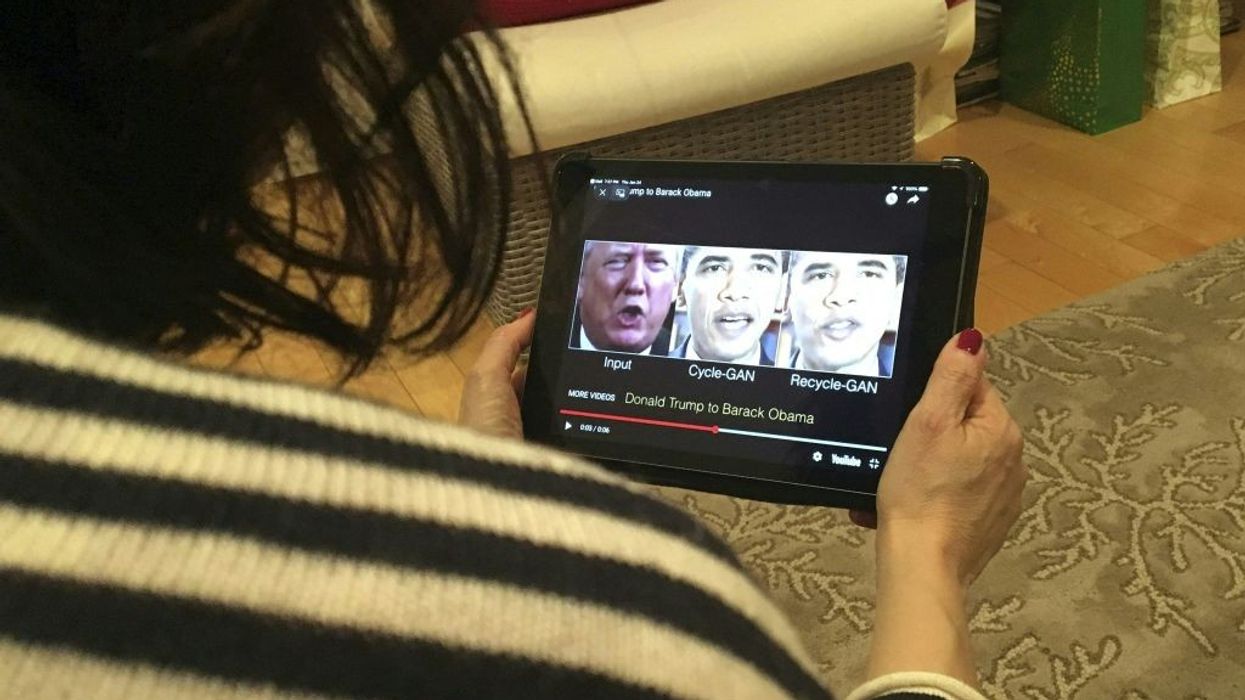
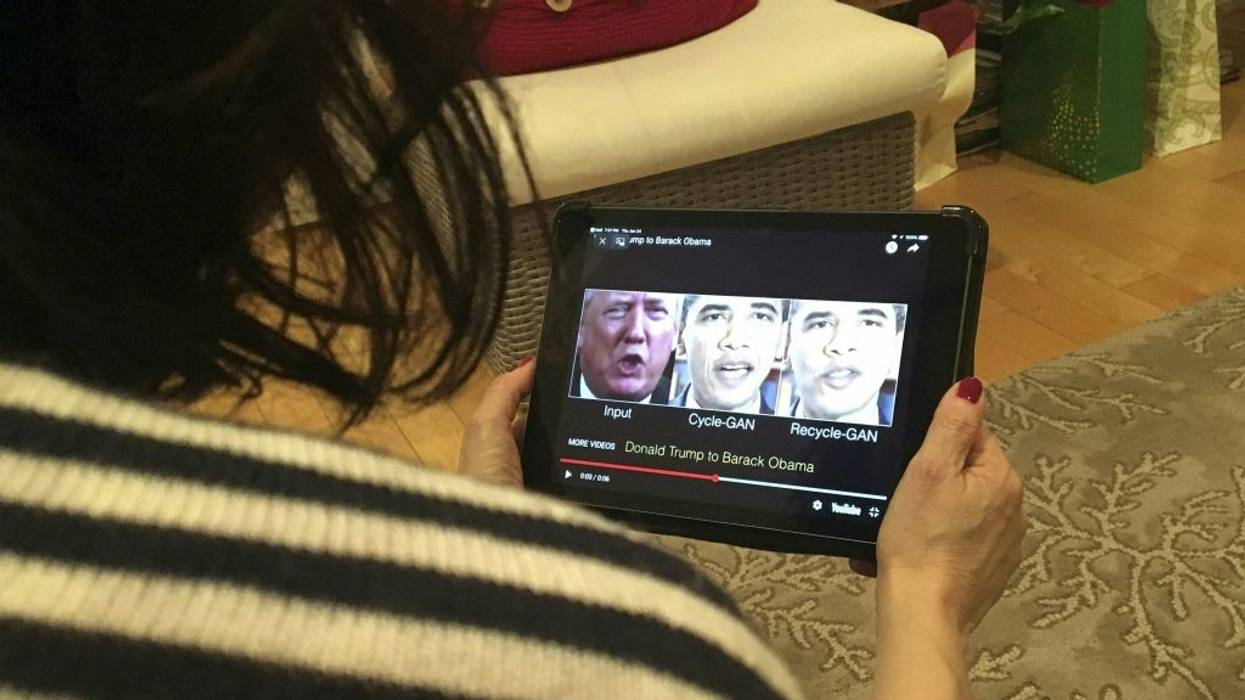
A deepfake is an AI-generated image, audio, or video that can convincingly stand in for reality. For example, the Republican presidential primary campaign of Florida Gov. Ron DeSantis recently spread a false image of rival candidate former President Donald Trump hugging former White House Coronavirus Task Force chief Anthony Fauci.
Advocates and experts worry that more and more of these images will proliferate as the 2024 race heats up. While now deepfakes have clear flaws that can be identified after careful study, these may become less clear as the technology improves, confusing ordinary viewers and potentially even digital technology experts.
"The integrity of our elections―already imperiled by those who refuse to accept election results that are not in their favor―will now be under constant siege from AI-generated 'deepfakes' in campaign ads," Craig Holman, a government affairs lobbyist for Public Citizen, said in a statement. "What Americans will see on TV throughout the 2024 election cycle is doctored footage of candidates saying or doing things that may well be entirely fabricated."
In particular, Public Citizen warned that a fraudulent image or video could go viral shortly before voters head to the polls in November.
To try and avoid this, the group first petitioned the Federal Election Commission (FEC) in May to "clarify when and how 52 U.S.C. §30124 ('Fraudulent misrepresentation of campaign authority') applies to deliberately deceptive AI campaign ads."
The FEC, however, refused. In a deadlocked 3-3 vote, it rejected the petition without even opening it to public comment, a move Public Citizen said was "highly irregular."
The two arguments offered by the FEC for its actions were that it did not have the authority to regulate deepfakes and that the original petition did not cite the regulation it wanted updated.
In its second petition, Public Citizen addressed both of these issues. It argued that 52 U.S.C. §30124 bars federal candidates or their representatives from "fraudulently misrepresenting themselves as speaking or acting for or on behalf of another candidate or political party on a matter damaging to the other candidate or party."
Deepfakes are precisely this type of fraudulent misrepresentation, Public Citizen wrote:
Specifically, by falsely putting words into another candidate's mouth, or showing the candidate taking action they did not, the deepfake would fraudulently speak or act "for" that candidate in a way deliberately intended to damage him or her. This is precisely what the statute aims to proscribe. The key point is that the deepfake purports to show a candidate speaking or acting in a way they did not. The deepfake misrepresents the identity of the true speaker, which is an opposing candidate or campaign. The deepfaker misrepresents themselves as speaking for the deepfaked candidate. The deepfake is fraudulent because the deepfaked candidate in fact did not say or do what is depicted by the deepfake and because the deepfake aims to deceive the public. And this fraudulent misrepresentation aims to damage the campaign of the deepfaked candidate.
Public Citizen said Rep. Adam Schiff (D-Calif.) and Sens. Ben Ray Luján and Amy Klobuchar (D-Minn.) would also circulate support letters in the House and Senate and ask the FEC to regulate deepfakes.
"Should the FEC fail to take immediate action on this issue, Americans will experience an unprecedented onslaught of misinformation and disinformation in the 2024 election cycle," Lisa Gilbert, executive vice president of Public Citizen, said in a statement. "All we are asking for is honesty―a request that should be readily bipartisan."
"As this complaint shows, foreign money may already be influencing the 2024 presidential election," said Saurav Ghosh of the Campaign Legal Center.
The Canadian financial services company ECN Capital was hit with a Federal Election Commission complaint on Monday for allegedly donating to the state political committees of Florida Gov. Ron DeSantis in violation of U.S. campaign finance laws.
The complaint filed by the Campaign Legal Center (CLC) is the second in recent weeks involving DeSantis, who CLC says violated federal law by transferring more than $80 million from a state political action committee to a super PAC backing his 2024 presidential campaign.
The new complaint against ECN Capital states that between October 2018 and August 2022, the company breached the Federal Election Campaign Act (FECA) by donating to DeSantis' last two gubernatorial campaigns and a state PAC formerly known as Friends of Ron DeSantis.
That state PAC, which is now controlled by DeSantis allies, is the same entity that funneled $82.5 million to a pro-DeSantis super PAC earlier this month, a move that is the subject of a separate FEC complaint filed against DeSantis last month.
"The recent, unprecedented rise of 'soft money' in federal elections undermines the crucial campaign finance laws that exist to uphold transparency, combat corruption, and safeguard the electoral process."
The CLC's complaint against Toronto-based ECN Capital also alleges that the corporation's U.S.-registered subsidiaries "made contributions totaling over $122,000 in connection with federal and state elections" between 2018 and 2022, "and there is reason to believe that ECN Capital's officers or directors may have participated in the decision-making process regarding these contributions—such that these contributions may also have violated FECA's foreign national contribution ban."
"FECA unequivocally prohibits foreign nationals, including foreign corporations, from making a contribution or donation of money or any other thing of value, in connection with any federal, state, or local election, and federal regulations further prohibit foreign nationals from participating in any decision-making process with regard to making a political contribution," the complaint notes.
Saurav Ghosh, CLC's director of federal campaign finance reform, said in a statement that "the recent, unprecedented rise of ' soft money' in federal elections undermines the crucial campaign finance laws that exist to uphold transparency, combat corruption, and safeguard the electoral process."
"As this complaint shows," Ghosh added, "foreign money may already be influencing the 2024 presidential election, which obviously undermines voters' ability to trust that the electoral process and their government are truly serving their interests."
The complaint urges the FEC, which is evenly divided between three Democrats and three Republicans, to investigate ECN Capital's donations to DeSantis' committees and "seek appropriate sanctions for any and all violations, including civil penalties sufficient to deter future violations, injunctive relief to remedy these violations and prohibit any and all future violations, and such additional remedies as are necessary and appropriate to ensure compliance with FECA."
It is now "even more imperative that Congress and states act immediately to outlaw deceptive deepfakes in elections," said the president of Public Citizen.
Public Citizen president Robert Weissman on Thursday condemned the U.S. Federal Election Commission for declining to consider his advocacy group's petition asking the government agency to ban or limit intentionally misleading campaign ads generated via artificial intelligence.
"The Federal Election Commission just shamefully refused to use its existing authority—or even accept comments on a proposal to use its existing authority—to address the oncoming stampede of deceptive deepfakes that threaten to trample our democracy," Weissman said in a statement.
"This is a shocking failure even for a notoriously feckless agency," he added. "The FEC's failure makes it even more imperative that Congress and states act immediately to outlaw deceptive deepfakes in elections."
On May 16, the FEC received Public Citizen's petition for rulemaking urging the agency "to specify in regulation or guidance that if candidates or their agents fraudulently misrepresent other candidates or political parties through deliberately false AI-generated content in campaign ads, that the restrictions and penalties of 52 U.S.C. §30124 are applicable."
The petition states that "a deepfake audio clip or video by a candidate or their agent that purports to show an opponent saying or doing something they did not do would violate this provision of the law."
Because "federal law already prohibits the kind of fraudulent misrepresentation that generative AI now makes possible," Public Citizen argued last month, "there is ample basis for an FEC rule banning or severely restricting AI in political campaigns."
But during its weekly meeting on Thursday, the FEC shot down the advocacy group's request to open a full rulemaking process to curb the use of political deepfakes, refusing to even publish the petition in the Federal Register, which would have allowed for public input on the matter.
The FEC deadlocked in a 3-3 party-line vote after Republican commissioner Allen Dickerson claimed a lack of jurisdiction to crack down on AI-generated deepfakes. He added that the agency, with his "full support," has asked Congress to expand its "authority on this point."
Bloomberg Law reported that "Democrats on the commission said the FEC typically doesn't reject motions to take comments on potential rulemaking—which precedes a vote on initiating new rules—and said the comments could have helped inform whether the commission has the authority to regulate deceptive AI-generated ads."
As Public Citizen noted last month in its petition: "Legislation has been introduced in Congress to require clear and obvious disclaimers on political ads whenever AI-generated content is used. For the time being, however, there are no such disclaimer requirements."
Meanwhile, the issue of manipulative AI-generated campaign ads is not a hypothetical one.
Earlier this month, Republican presidential candidate Ron DeSantis released a video showing AI-generated fake images of 2024 GOP rival Donald Trump embracing Anthony Fauci, the former chief of the White House Coronavirus Task Force who is the subject of numerous right-wing conspiracy theories.
In response, Public Citizen asked DeSantis' campaign to "pledge not to use deepfake technology to trick voters" and to remove the video of Trump and Fauci.
According to the group:
Generative AI and deepfake technology—a type of artificial intelligence used to create convincing images, audio, and video hoaxes—is evolving very rapidly. This is not a technology that advantages one candidate over another. Anyone can use it to deceptive effect. That's why all political players have an equal interest in preventing abuse of this technology.
Beyond the shared interest of all political candidates in not being victimized by a deepfake fraud, there is a broader public interest. Deepfake technology poses a genuine challenge to the future functioning of our democracy. If voters cannot trust the authenticity of what they see and hear online, it's hard to know how our democracy can work.
Public Citizen had already implored the two major parties and their leading presidential candidates to pledge not to use AI-generated deepfakes to defraud the electorate on May 16, before DeSantis declared his candidacy and released the deceitful ad featuring Trump and Fauci.
"One particularly alarming scenario is that an 'October surprise' deepfake video released shortly before Election Day could go viral—with no ability for voters to determine that it's fake, no time for a candidate to deny it, and no way to demonstrate convincingly that it's fake," the group said at the time. "Both parties, their presidential candidates, and the FEC can prevent this (and many other) easily foreseeable abuses of the technology by disavowing and banning AI in political campaigns now."
The group's newly rejected petition points out that "as the technology continues to improve, it will become increasingly difficult and, perhaps, nearly impossible for an average person to distinguish deepfake videos and audio clips from authentic media. It is an open question how well digital technology experts will be able to distinguish fakes from real media."
Earlier this week, Weissman stressed that "generative AI now poses a significant threat to truth and democracy as we know it."
"The technology threatens election-altering hoaxes, on the one hand, and a destruction of voters' ability to believe even truthful images and information, on the other," he warned.
"Deepfake technology poses a genuine challenge to the future functioning of our democracy," said Public Citizen. "If voters cannot trust the authenticity of what they see and hear online, it's hard to know how our democracy can work."
As Republican presidential candidate Ron DeSantis' campaign spreads fake images of 2024 GOP rival Donald Trump embracing former White House Coronavirus Task Force chief Anthony Fauci, a leading U.S. consumer advocacy group on Tuesday urged the Florida governor to take down and disavow the photos and pledge to stop using artificial intelligence-generate deepfake imagery going forward.
Agence France-Presse reported last week that images showing Trump hugging and kissing Fauci in a DeSantis campaign ad were likely deepfakes, sparking condemnation from Republicans who support the twice-impeached, twice-indicted former president's 2024 candidacy.
The video was shared on Twitter by "DeSantis War Room," a "rapid response" account launched last August.
It wasn't just Republicans who sounded the alarm on the ad's use of deepfake technology. On Tuesday, the consumer advocacy group Public Citizen asked DeSantis' campaign to "pledge not to use deepfake technology to trick voters" and to take down the video of Trump and Fauci.
According to the group:
Generative AI and deepfake technology—a type of artificial intelligence used to create convincing images, audio, and video hoaxes—is evolving very rapidly. This is not a technology that advantages one candidate over another. Anyone can use it to deceptive effect. That's why all political players have an equal interest in preventing abuse of this technology.
Beyond the shared interest of all political candidates in not being victimized by a deepfake fraud, there is a broader public interest. Deepfake technology poses a genuine challenge to the future functioning of our democracy. If voters cannot trust the authenticity of what they see and hear online, it's hard to know how our democracy can work.
"Generative AI now poses a significant threat to truth and democracy as we know it," Public Citizen president Robert Weissman said in a statement. "Every party and candidate should commit not to employ deceptive deepfakes, which definitionally involve tricking the public into believing something that is not true."
Last month, Public Citizen also called for the Federal Election Commission (FEC) to issue a rule prohibiting candidates from using manipulative generative AI in campaign ads.
"One particularly alarming scenario is that an 'October surprise' deepfake video released shortly before Election Day could go viral—with no ability for voters to determine that it's fake, no time for a candidate to deny it, and no way to demonstrate convincingly that it's fake," Public Citizen said. "Both parties, their presidential candidates, and the FEC can prevent this (and many other) easily foreseeable abuses of the technology by disavowing and banning deceptive deepfakes in political campaigns now."