SUBSCRIBE TO OUR FREE NEWSLETTER
Daily news & progressive opinion—funded by the people, not the corporations—delivered straight to your inbox.
5
#000000
#FFFFFF
To donate by check, phone, or other method, see our More Ways to Give page.


Daily news & progressive opinion—funded by the people, not the corporations—delivered straight to your inbox.
"With unprecedented amounts of Big Money flooding our elections, the American people deserve a fully functioning FEC that serves as a watchdog—not one that protects corrupt politicians and billionaire donors."
The federal body that oversees the nation's campaign finance system officially lost its enforcement and rulemaking powers Thursday following a pair of resignations and U.S. President Donald Trump's lawless firing of a Democratic official.
The Federal Elections Commission (FEC) was left with just three sitting members—one short of the four required for a quorum—after two Republican commissioners departed and Trump terminated Democratic Commissioner Ellen Weintraub in February.
While Weintraub called the firing illegal and said she intended to remain in office in defiance of the president, Politico noted that she "has not participated in recent commission votes and is no longer listed on the agency's website."
Daniel Weiner, director of the Elections and Government Program at the Brennan Center for Justice, noted Thursday that "such a shortfall" on the commission "has only happened three other times in the FEC's 50-year history, including twice during Trump's first term."
"Thanks in part to its evenly divided leadership, the FEC is nobody's idea of an aggressive watchdog, often deadlocking on partisan lines in important matters," Weiner added. "That gridlock has exacerbated the effects of Supreme Court decisions like Citizens United, for instance, by making it easier for candidates to outsource key campaign operations to super PACs that can raise unlimited amounts of money. But even a dysfunctional FEC is still important."
"Loss of the FEC's quorum won't keep data from being collected and published, but the commission won't be able to do anything to enforce reporting requirements against those who ignore them," he continued. "It also can't address novel legal issues that arise—for instance, in connection to online campaign activity, where significant reporting gaps remain."
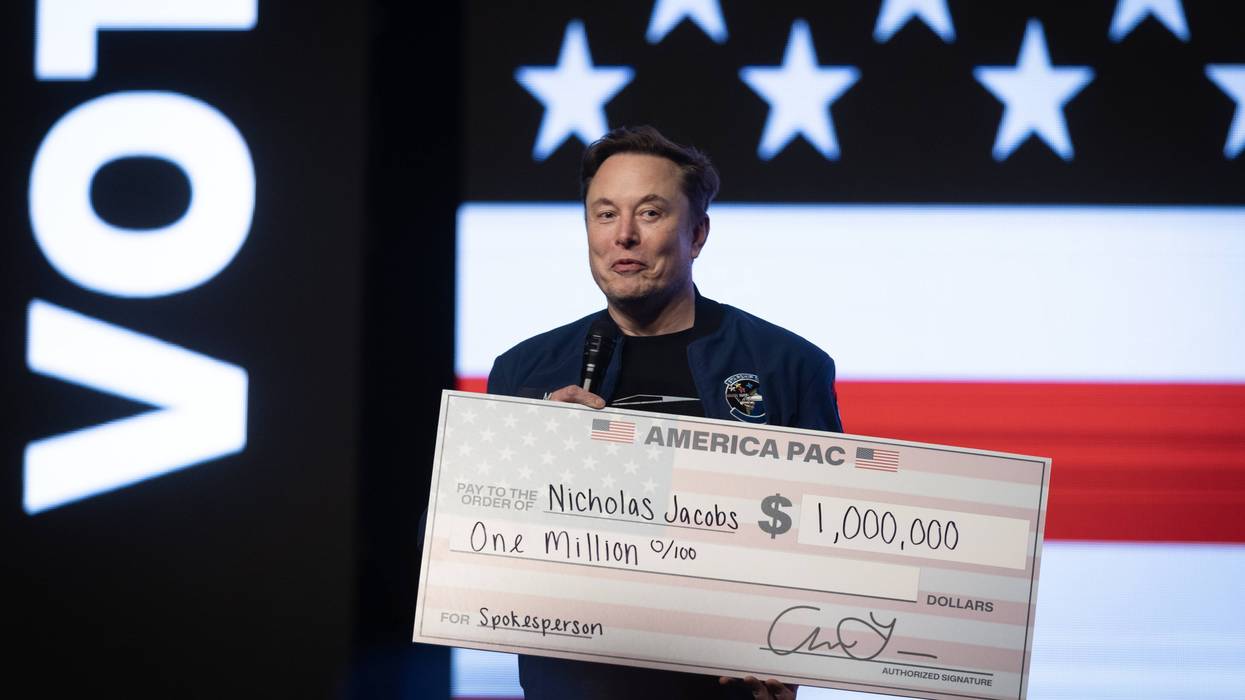
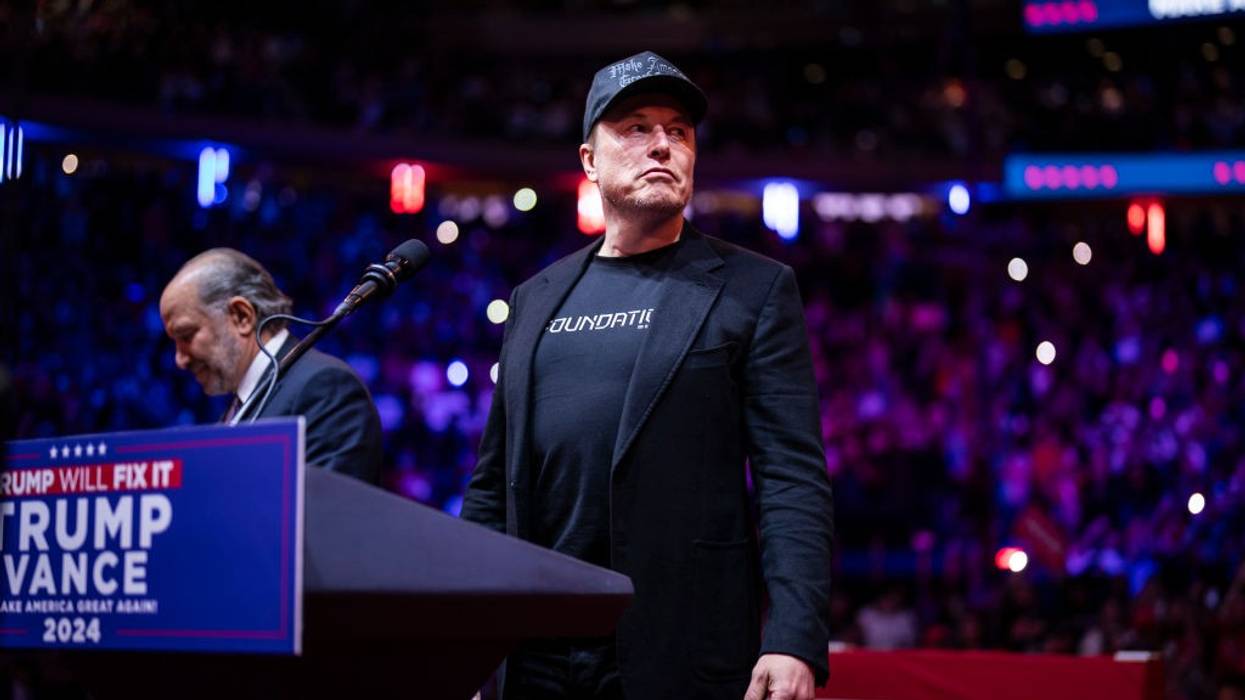
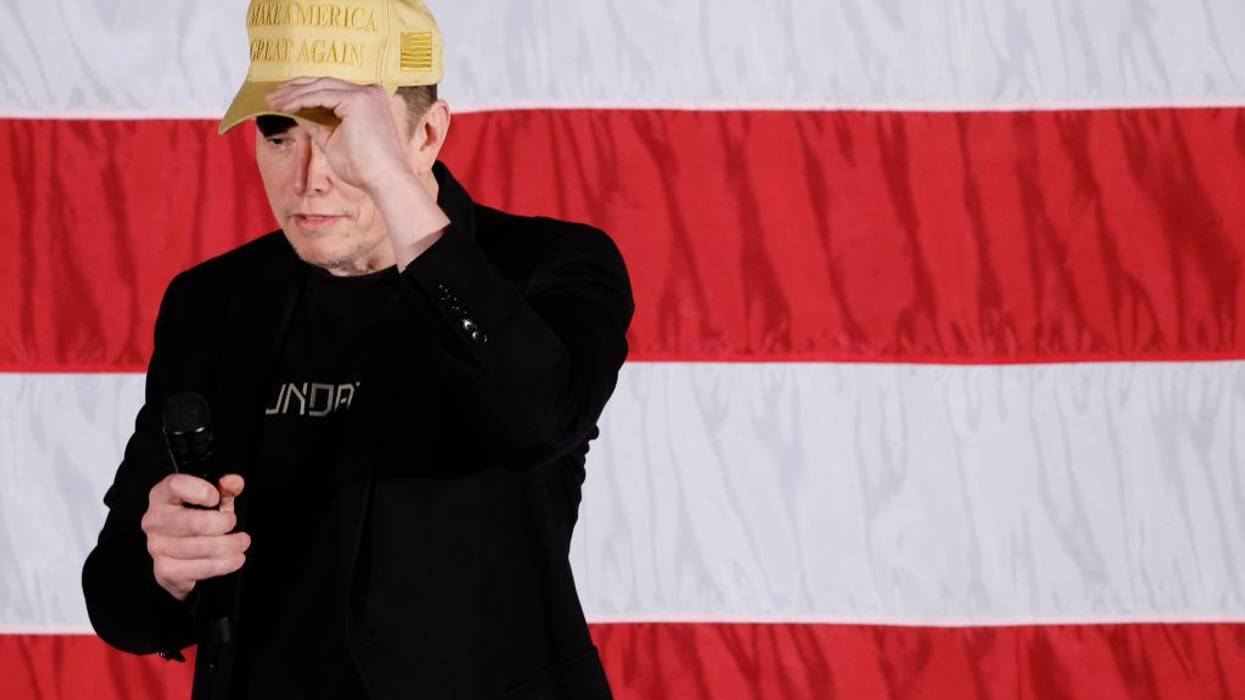
The FEC is once again virtually powerless just months after one of the most expensive elections in U.S. history, which saw the top 100 billionaire families in the U.S. pump $2.6 billion into federal contests. Elon Musk, the world's richest man, spent hundreds of millions of dollars in support of Trump's campaign and engaged in what experts and watchdogs called a "clearly illegal vote-buying" operation.
The anti-corruption group End Citizens United wrote on social media Thursday that "with unprecedented amounts of Big Money flooding our elections, the American people deserve a fully functioning FEC that serves as a watchdog—not one that protects corrupt politicians and billionaire donors."
"By gutting the agency," the group wrote, "the door has been left wide open to corruption in our elections."
The commission voted 4-0 to dismiss the complaint against the newspaper owned by billionaire Jeff Bezos—who donated $1 million to Trump's inauguration and cracked down on criticism of the president at the paper.
The Federal Election Commission on Thursday issued a unanimous decision dismissing a complaint by U.S. President Donald Trump's 2024 campaign accusing The Washington Post of "illegal corporate in-kind contributions" to then-Vice President Kamala Harris' failed Democratic presidential campaign.
The campaign finance watchdog OpenSecrets.org reported that the FEC commissioners voted 4-0 to reject the Trump team's allegation that the Post bought social media ads in a bid to boost news articles critical of the Republican nominee.
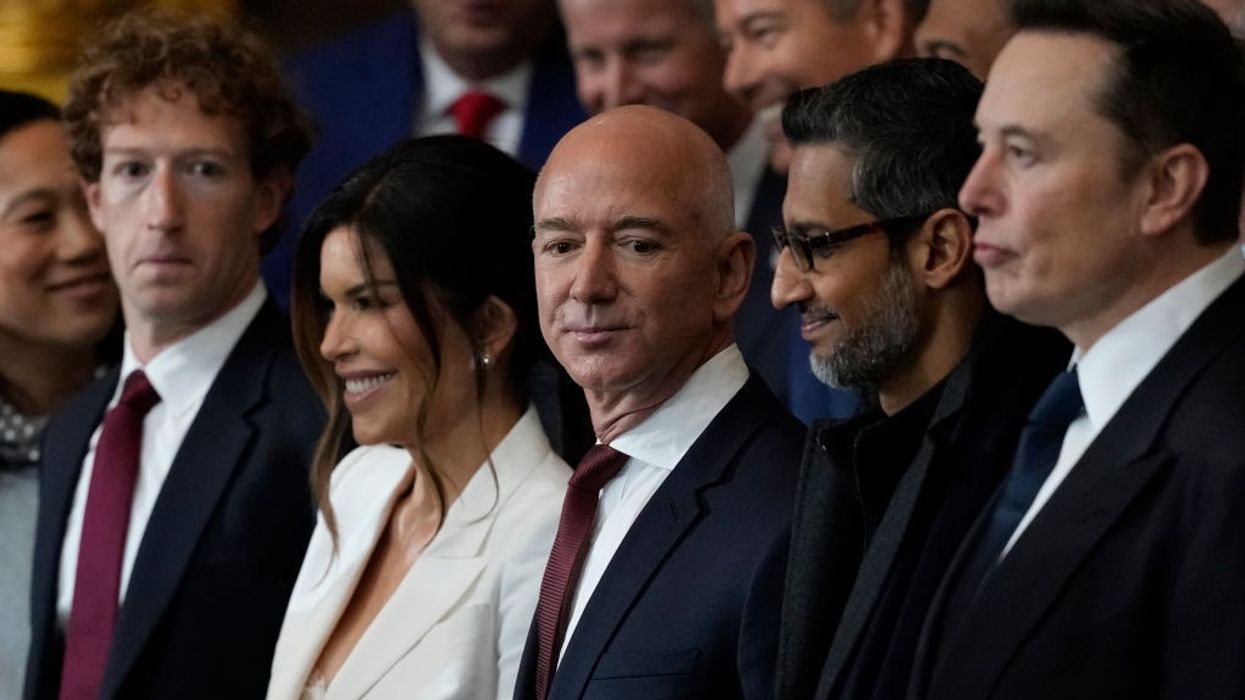
Lawyers for the Post—which is owned by billionaire Jeff Bezos, who donated $1 million to Trump's inauguration and sat with fellow oligarchs Elon Musk and Mark Zuckerberg at the January swearing-in, and who has cracked down on criticism of the president and his Cabinet at the paper—called the Trump campaign's allegations "speculative and demonstrably false."
As OpenSecrets.org's Dave Levinthal wrote:
Trump's campaign had alleged that The Washington Post was conducting a "dark money corporate campaign in opposition to President Donald J. Trump" and used "its own online advertising efforts to promote Kamala Harris' presidential candidacy... Trump's campaign also argued that the Post was not entitled to what's known as a "press exemption" for political content because it was "not functioning within the scope of a legitimate press entity."
The FEC general counsel's office disagreed and advised the commissioners to dismiss the complaint based on "an internal 'scoring criteria' for agency resources," Levinthal explained, adding that "the Post 'appears to have been acting within its legitimate press function and thus its activities are protected' by federal election laws' exemption for overtly journalistic activities."
"Given that low rating and the apparent applicability of the press exemption, we recommend that the commission dismiss the complaint, consistent with the commission's prosecutorial discretion to determine the proper ordering of its priorities and use of agency resources," the office advised.
"I've been lucky to serve the American people and stir up some good trouble along the way. That's not changing anytime soon," Commissioner Ellen Weintraub wrote.
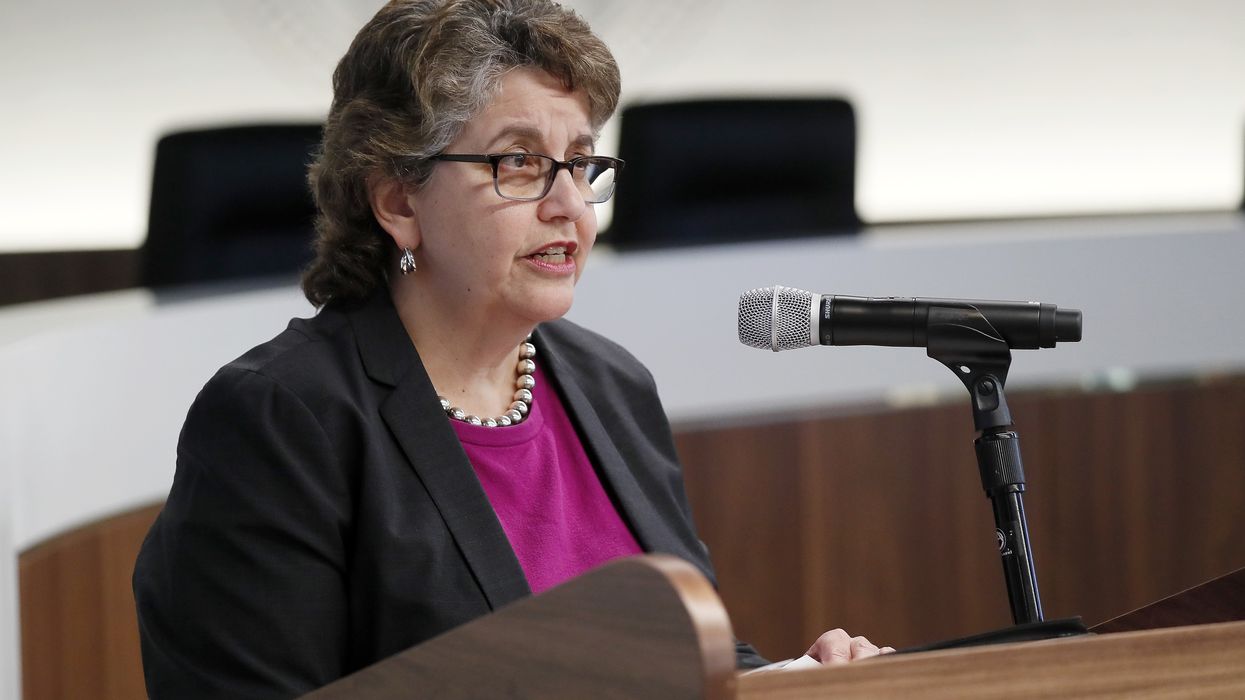
Federal Elections Commission Commissioner and Chair Ellen Weintraub said Thursday that U.S. President Donald Trump moved to fire her from the commission, but indicated she won't comply and called the directive legally invalid.
Weintraub shared a letter on X that read: "You are hereby removed as a member of the Federal Election Commission, effective immediately. Thank you for your service on the Commission," and appears to have Trump's signature below it. The letter is dated January 31, but in her accompanying post Weintraub said that she received the letter on Thursday.
"There's a legal way to replace FEC commissioners—this isn't it. I've been lucky to serve the American people and stir up some good trouble along the way. That's not changing anytime soon," wrote Weintraub, who has served as a commissioner at the independent regulatory agency that enforces federal campaign finance law since 2002. She was elected to chair the commission for 2025.
The FEC is headed by six commissioners and the body must have at least four in order to have a quorum. FEC commissioners are appointed by the president and confirmed by the Senate, and the Federal Election Campaign Act establishes six-year terms for commission members. However, commissioners can continue in their positions after those terms end in "holdover" status until the president nominates and the Senate confirms a replacement commissioner, according to the Congressional Research Service.
This is the case with Weintraub, who's term expired in 2007, and has remained on since in holdover status. Weintraub has also been the chief strategist behind a maneuver from the Democratic commissioners to force more deadlock on the commission in order to compel federal courts to step in and police federal election law, according to The New York Times.
"In the entire history of the bipartisan FEC no president has ever removed a commissioner from the opposing party without nominating a successor recommended by that party's leaders in Congress," wrote Daniel Weiner, the director of the Elections and Government Program at the Brennan Center policy institute. "This is an extraordinary break from that history, and there are strong arguments that it violates long-established federal law governing independent agencies."
Trevor Potter, Republican former chair of the FEC and the current president of Campaign Legal Center, said in a statement Thursday that Congress intentionally did not grant the president powers to remove FEC commissioners.
"With multiple FEC commissioners serving on expired terms and one vacant seat, Trump is free to nominate multiple new commissioners and to allow Congress to perform its constitutional role of advice and consent," he wrote.
He added: "It's contrary to law that he has instead opted to claim to 'fire' a single Democratic commissioner who has been an outspoken critic of the president's lawbreaking and of the FEC's failure to hold him accountable."
In 2020, Weintraub authored a long social media thread aimed at debunking some of Trump's claims around alleged vote-by-mail voter fraud.
Weintraub also told The New York Times that she thinks her public statements regarding FEC complaints focused on Trump's presidential campaigns may be why she's in the president's crosshairs.
While the court claimed that independent spending carries no substantial threat of corruption so long as it is truly independent and disclosed, the 2024 election dispensed with that illusion forever.
Citizens United v. Federal Election Commission, the Supreme Court’s controversial 2010 decision that swept away more than a century’s worth of campaign finance safeguards, turns 15 this month. The late Justice Ruth Bader Ginsburg called it the worst ruling of her time on the court. Overwhelming majorities of Americans have consistently expressed disapproval of the ruling, with at least 22 states and hundreds of cities voting to support a constitutional amendment to overturn it. Citizens United reshaped political campaigns in profound ways, giving corporations and billionaire-funded super PACs a central role in U.S. elections and making untraceable dark money a major force in politics. And yet it may only be now, in the aftermath of the 2024 election, that we can begin to understand the full impact of the decision.
Citizens United, while purporting to address the specific issue of corporate speech, effectively invalidated almost all limits on so-called independent political spending (i.e., money that doesn’t go directly to a candidate or party, although it is often spent in close cooperation with them). The decision ushered in an era in which super PACs—outside groups that can fundraise and spend without limit as long as they maintain some notional separation from campaigns—now deploy massive amounts of money to influence American elections. Most of it comes from a minuscule group of the wealthiest donors and special interest groups, whose political influence has greatly expanded, as has the potential for political corruption.
The court’s decision and others that followed shaped the 2024 election to a greater degree than any that came before it. Most notably, President Donald Trump substantially trailed former Vice President Kamala Harris in traditional campaign donations, which are subject to legal limits and must be disclosed. Yet he was able to compensate for this disadvantage by outsourcing much of his campaign to super PACs and other outside groups funded by a handful of wealthy donors. While such groups had spent hundreds of millions of dollars on ads in previous cycles, this was the first time they successfully took on many of the other core functions of a general election presidential campaign, such as door-to-door canvassing and get-out-the-vote efforts. Their activities unquestionably would have been illegal before Citizens United.
Roughly 44% ($481 million) of all the money raised to support Trump came from just 10 individual donors.
The donors who funded the president’s campaign and leveraged other resources to help him—most strikingly Elon Musk, the world’s richest person and owner of the social media platform X (formerly Twitter)—have played an unprecedented role in his transition, including shaping policy and meeting with world leaders. Musk in particular was instrumental in derailing a bipartisan budget deal in Congress in December, weeks before the president took office. And he and other major donors are now poised to be pivotal players in Trump’s administration.
The Trump campaign is just part of the story, however. Candidates’ reliance on big money and donor secrecy that accelerated in the wake of Citizens United continued to grow. Outside spending on congressional campaigns, also mostly coming from a select few major donors, broke records. Funds from groups that do not have to disclose their donors at all, known as dark money, kept proliferating and became even harder to track. And candidates and parties continued to bend even traditional fundraising rules to raise more big money.
To be clear, the Supreme Court is not solely responsible for the legal changes that made these activities possible; a dysfunctional federal regulator—the evenly divided Federal Election Commission (FEC)—and Congress have also played important roles. But none of it would have been possible without Citizens United and related decisions, which have played an enduring role in putting the very wealthiest donors at the center of U.S. campaigns and governance.
In the Citizens United case, a conservative nonprofit group challenged campaign finance rules that ostensibly prohibited it from promoting a film that criticized then presidential candidate Hillary Clinton shortly before the 2008 Democratic primaries. The Supreme Court could have issued a narrow opinion ruling on that specific group’s activities, but instead a 5-4 majority took the opportunity to rule that virtually all limits on “independent” political spending from corporations and other outside groups violated the First Amendment.
This conclusion doubled down on the reasoning of a 1976 decision, Buckley v. Valeo. Buckley held that campaign expenditures, money spent to influence voters, were akin to political speech and could not be subject to legal limits (although campaign donations—money given to fund the expenditures of another, such as a candidate—could be limited). The only permissible justification for any limits would be the prevention of quid pro quo corruption (i.e., bribery).
After Buckley, the court upheld some campaign safeguards, most notably in McConnell v. FEC (2003), in which it approved new restrictions on corporate and union campaign spending as well as the stricter contribution limits for political parties in the bipartisan McCain-Feingold campaign reform law, passed in 2002. Only a few years later, however, after a change in the court’s ideological composition, Citizens United reverses these decisions in key respects. The court’s ruling then set the stage for lower courts to hold that any group purporting to be independent of candidates cannot be subject to contribution limits.
While the chances for meaningful reform in the next Congress appear slim, state and local governments can and should lead the charge to make funding elections fairer and more inclusive.
The court did not stop there. In 2014’s McCutcheon v. FEC, another 5-4 majority struck down overall contribution limits on individuals’ donations to candidates, parties, and PACs, known as aggregate limits. Because such groups often fundraise jointly, McCutcheon allowed them to directly raise contributions that far exceed the maximum that any individual can give to a single candidate per election (a little more than $3,000 in 2024).
Through each decision, the court purported to preserve certain safeguards—most notably, transparency rules and independence requirements for outside groups like super PACs. But these protections are increasingly illusory because of weak rules and lax enforcement. The result has been torrents of political spending from a small group of the very wealthiest megadonors via super PACs, as well as steadily increasing amounts of untraceable dark money. Indeed, while Citizens United, like Buckley before it, claimed that independent spending carries no substantial threat of corruption so long as it is truly independent and disclosed, the 2024 election dispensed with that illusion forever.
As noted, the Supreme Court is not the sole cause for this changed landscape. Congress or the FEC could theoretically fill or at least mitigate many gaps in transparency rules and other laws. But the evenly divided FEC, which oversees campaign finance in federal elections, has usually done the opposite and instead created more loopholes. It almost never enforces laws prohibiting coordination that are supposed to keep candidates independent from allied super PACs and similar groups. Nor has it acted on numerous complaints related to untraceable money.
Congress, too, has repeatedly failed to implement safeguards. In the past 15 years, lawmakers have tried to pass meaningful reforms several times but have not succeeded. These efforts included bills that would ensure voters receive information about the large donors who spend money on campaign advertisements, improve FEC enforcement, shore up requirements to ensure that super PACs and other outside groups are truly independent of candidates and political parties, and create a viable public financing system for all federal elections.
In short, the other branches of government could do much more to update U.S. laws in light of the court’s decisions. Those decisions themselves, however, were the catalyst for the most critical changes that shaped the 2024 race.
Here are some of the key ways Citizens United and other decisions shaped the 2024 campaign.
A handful of megadonors helped Trump narrow the fundraising gap with Harris, and one of them essentially helped run his campaign. The most striking consequence of Citizens United continues to be the expanded influence of the very wealthiest donors. Last year, donors who gave at least $5 million to super PACs in the presidential race spent more than twice as much as they did in 2020. Roughly 44% ($481 million) of all the money raised to support Trump came from just 10 individual donors. The top 10 donors supporting Harris accounted for nearly 8% ($126 million) of her campaign. For both candidates, most of this money came from outside groups like super PACs.
Of course, super PACs closely aligned with major candidates aren’t new. What made 2024 different was that campaigns were able to rely on these megadonor-backed, purportedly independent groups for core campaign activities. That was possible in part because of Citizens United and in part because the FEC—which already permitted significant cooperation between campaigns and super PACs—effectively eliminated most restrictions on the campaigns’ ability to outsource core voter outreach to these groups.
These changes set the stage for Musk in particular to play a central role in the election. He gave at least $277 million to two super PACs that supported Trump and other Republicans and effectively became part of the Trump campaign, frequently appearing center stage at rallies. One super PAC, to which he donated roughly $240 million, funded direct mailings, canvassing, and “spokesperson consultants” in swing states for Trump. The second, pointedly named RBG PAC after Justice Ginsburg, ran ads in swing states apparently intended to blunt criticisms regarding Trump’s record on abortion (and did not disclose who had funded its spending until after the election).
Musk was far from Trump’s only billionaire backer. Others included venture capitalist David Sacks, who hosted a fundraiser in Silicon Valley where the cheapest ticket was $50,000 ($300,000 bought a more intimate dinner with Trump); casino owner Miriam Adelson, who put more than $100 million into her own pro-Trump super PAC; packaging supplies magnate (and major donor to the election denial movement) Richard Uihlein, who sent $49 million in last year’s third quarter alone to his pro-Trump super PAC; and many other Big Tech billionaires. Collectively, these funders helped Trump make up much of his fundraising disparity with Harris.
Strikingly, while Trump relied heavily on super PACs, his actual campaign operated with a skeleton staff of only a few hundred people (compared with Harris’s more than 2,500 employees across battleground states alone) and little other infrastructure.
Of course, Harris had her own billionaire backers, most of whom also donated through super PACs and dark money groups, including tech moguls Dustin Moskovitz, Reed Hastings, and Ben Horowitz and Microsoft founder Bill Gates. In general, they do not appear to have taken on the same sort of central operational role in her campaign, however.
Megadonors also spent heavily in other federal races. Overwhelmingly, they had no ties to the states where their money landed, significantly exacerbating a trend in which more and more out-of-state money is flowing into congressional races. In marquee races in Arizona, Pennsylvania, and Ohio, for instance, national super PACs fueled by wealthy donors outspent several candidates’ campaigns and heavily influenced close primaries and general election races. Ohio’s Republican Senate primary attracted more than $20 million from nationally funded independent groups (with the two biggest donors hailing from Pennsylvania and Illinois), and Arizona’s Democratic primary for the Third Congressional District lured in $5.3 million from outside groups—twice as much as the campaigns themselves did.
Massive spending was not the only way that billionaires were able to shape the 2024 race. Most notably, Musk leveraged his ownership of the social media platform X to support his preferred candidates. X amplified Musk’s activity, including his pro-Trump posts, so that they appeared in the feed of every subscriber, and took other actions that likely benefited Trump and other candidates, such as hosting Florida Gov. Ron DeSantis’s announcement of his own presidential campaign. Prior to Citizens United, the direct use of corporate resources to advocate for a candidate was typically limited to traditional press activities, which are exempt from most campaign finance rules. Now, however, a corporation like X—which, had it existed prior to Citizens United, would likely not have been categorized as engaging in press activity—has much broader leeway to harness its resources in support of its owner’s preferred candidates.
Dark money continued to dominate federal contests. While final numbers are not yet available, in 2024 anonymous sources directed more than $1 billion, at a minimum, to independent political committees supporting candidates on both sides of the aisle. The largest outside group supporting the Harris campaign was a super PAC funded by dark money groups. The Trump campaign also benefited from such secret spending, including by one group that reportedly raised $100 million over four years.
Dark money also played a pivotal role in many Senate and House races. The four dark money groups associated with House and Senate Democratic and Republican campaigns gave $182 million to their sister super PACs through the end of last September. These purportedly independent groups were, in practice, effectively part of each party’s campaign apparatus. This strategy is certainly not novel—for a decade, both parties have had shadow party super PACs through which they have been able to raise unlimited contributions. Still, while the numbers are not yet final, the flood of dark money likely broke records in 2024.
Thanks to legal loopholes and lax enforcement of current rules, tracking this surge of secret cash is becoming ever more difficult. Dark money groups are required to report spending for only certain activities, including independent expenditures and electioneering communications, which they increasingly do not run themselves. They are not required to disclose donations to other groups (although the recipients may have to disclose these donations) nor many types of campaign advertising, including most online ads, which surged last year.
Candidates and parties turned to joint fundraising committees to foot their big bills in new ways. Joint fundraising committees are PACs formed by multiple candidates, parties, and PACs to raise money together. These groups took on a much more significant role for campaigns last year. Because McCutcheon invalidated aggregate contribution limits, joint fundraising committees can raise enormous amounts in direct donations. In theory, participants are supposed to allocate donations pursuant to a prearranged formula.
In 2024, however, an FEC deadlock created a new loophole, allowing these fundraising entities to themselves run campaign ads without allocating their costs, effectively allowing some participants to subsidize others. Both parties availed themselves of this loophole, but Republicans in particular exploited it. The National Republican Senatorial Committee spent millions of dollars through joint fundraising committees, mostly in battleground states like Wisconsin, Pennsylvania, and Nevada. Democrats, who originally urged the FEC to crack down on this practice, responded by saying they would use the same tactics for ads going forward.
Fifteen years after Citizens United, federal campaign finance rules are more porous than at any time since Watergate. And with just a sliver of donors spending tens (even hundreds) of millions of dollars apiece, the opportunities for corruption are overwhelming. The Supreme Court has played a central role in eroding safeguards, but the other branches of government have done nothing to shore up rules in response.
While the chances for meaningful reform in the next Congress appear slim, state and local governments can and should lead the charge to make funding elections fairer and more inclusive. At the most basic level, states and large localities should require transparency for all political spending and specify that super PACs and other outside groups must be truly independent from candidates. They should eliminate loopholes that allow joint fundraising committees and similar entities to circumvent contribution limits. More states and localities should also join the many jurisdictions that already offer some form of public financing for elections, the most powerful solution to the problem of big money in politics. And state lawmakers can pass laws calling into question the legitimacy of Citizens United and the Court’s approach to campaign finance more broadly—as many antiabortion legislatures did with Roe v. Wade.
The expanded influence of wealthy donors and untraceable money draws opposition from the vast majority of Americans across virtually all political and ideological divides. With the Supreme Court unlikely to change course anytime soon, it will fall to other branches of government, including state and local policymakers, to enact commonsense reforms to help ensure that every American has a meaningful voice in the decisions that govern all of us.
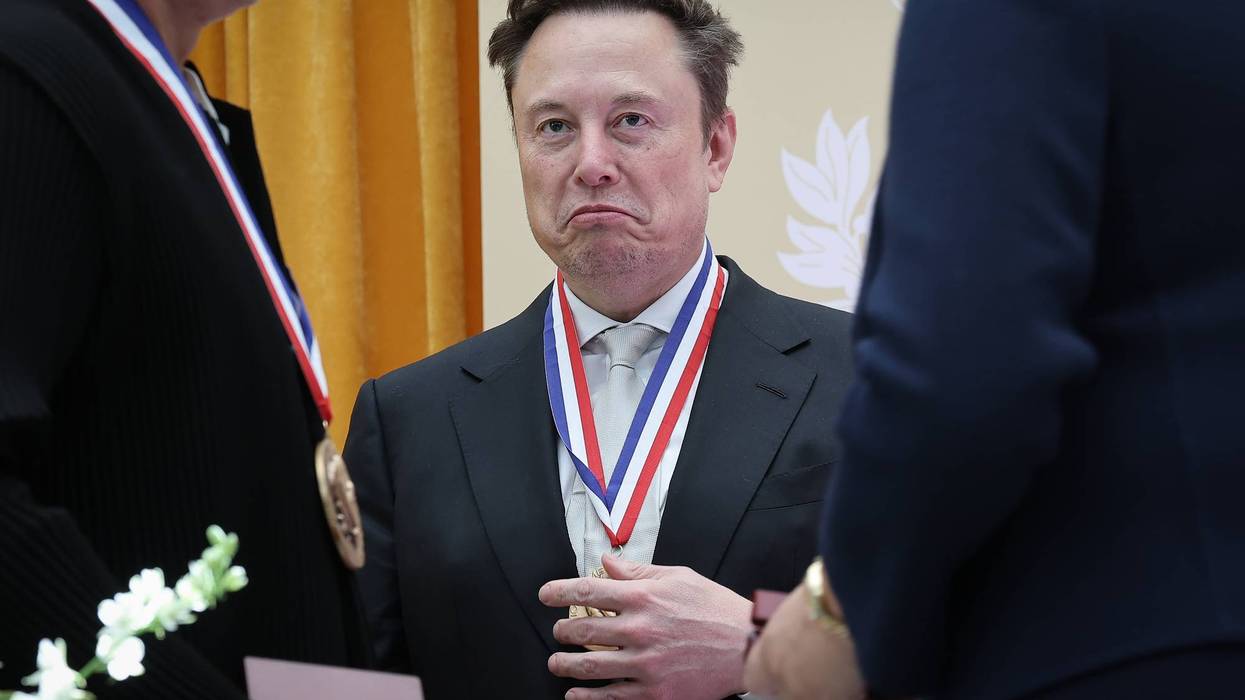
"Our greatest hope is to restore people's faith in our democracy and increase participation across the board," said the chair of the campaign behind the measure likely bound for the U.S. Supreme Court.
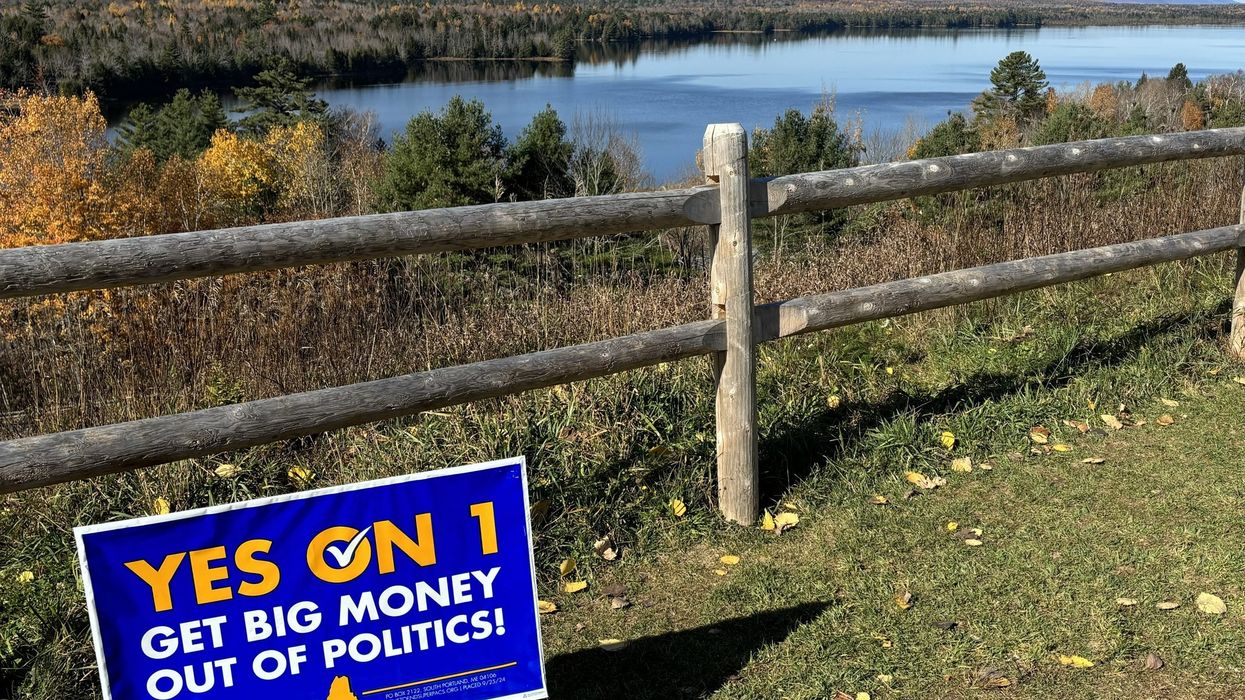
As billionaire-backed Republicans dominated U.S. elections on Tuesday, voters in Maine—among the top 10 states in terms of smallest populations—overwhelmingly approved a ballot measure to limit political spending, an initiative that could reach the country's top court.
Maine Question 1 targets super political action committees (PACs), dark money groups that, for the most part, are barred from directly contributing to or coordinating with a candidate but can raise and spend unlimited amounts of funds.
Question 1 asked Mainers, "Do you want to set a $5,000 limit for giving to political action committees that spend money independently to support or defeat candidates for office?"
WMTW reported earlier this year that "the $5,000 contributions cap would only apply to state races, not United States House or Senate races."
As of Wednesday afternoon, the measure had passed 531,573 to 186,707, or 74% to 26%, with 89% of the estimated vote reported, according to The New York Times.
"When the Supreme Court affirms what Maine voters have done, it could end super PACs everywhere."
"We're grateful to the Maine people for once again leading the way to help fix our broken political system," said Cara McCormick, chair of Maine Citizens to End Super PACs, which collected signatures to get the citizen-initiated measure on the ballot.
"The Maine people deserve a system that is not only free from corruption, but also free from the appearance of corruption," McCormick added. "Our greatest hope is to restore people's faith in our democracy and increase participation across the board."
The campaign highlighted that "some of America's leading constitutional law experts—Laurence Tribe, Lawrence Lessig, Neal Katyal, Al Alschuler, and others—have argued that Question 1 is the most immediate pathway to ending super PACs, the biggest source of dark money in elections."
Welcoming the measure's passage, Lessig declared Wednesday that "this is a great gift from Maine to democracy in America."
"We expect this initiative will be challenged," he explained. "But when the Supreme Court affirms what Maine voters have done, it could end super PACs everywhere."
As Maine Morning Star detailed Wednesday:
Since Buckley v. Valeo in 1976, the Supreme Court has allowed contributions to be regulated when there is a risk of "quid pro quo" corruption, essentially a favor for a favor. In the case of elections, if there is a risk someone could be making a donation to a candidate in exchange for a favor, only then can Congress regulate that contribution. In 2010, the Supreme Court extended this reasoning to corporations and unions in Citizens United v. Federal Election Campaign Act.
Three months later, in SpeechNow.org v. FEC, the U.S. Court of Appeals for the District of Columbia Circuit upheld that contributions to groups making independent expenditures can't corrupt or create the appearance of corruption. That decision essentially created the "super PAC," which can receive unlimited contributions but can’t contribute directly to candidates. Other lower federal and state courts followed suit, and the ruling was never reviewed by the Supreme Court.
The editorial boards of both the Bangor Daily News and Portland Press Herald backed the ballot measure, with the latter writing last month that "ours would be the first state in the nation since the Supreme Court's Citizens United ruling in 2010 to move to limit contributions to PACs that can make independent expenditures."
"We believe that political spending has spiraled out of control, in many cases, and that the absence of any limit on PACs is inappropriate and leaves America's system of campaigning and voting vulnerable to the whims of bad actors," the board argued. "If Maine can play a leading role in bringing some order and fairness to political spending nationally, we should seize the chance."
"The time to hold campaign finance violators accountable is now—not after illegal election spending has corrupted our democracy," said the research director of Public Citizen.
The progressive watchdog group Public Citizen accused the U.S. Federal Election Commission of abdicating its responsibility by failing to act in the face of "illegal" election spending by the cryptocurrency exchange giant Coinbase, a federal contractor.
Public Citizen noted in a statement Thursday that "federal law bars campaign contributions to political parties, committees, or candidates from federal contractors."
The group's statement came a day after Brian Armstrong, the CEO of Coinbase, pledged that his company would pump another $25 million into Fairshake PAC, a super PAC dedicated to electing candidates supportive of the crypto industry, which has spent big to influence the outcome of the 2024 elections. Fairshake has spent roughly the same amount of money supporting Democratic and Republican candidates, reflecting the extent to which both parties have sought to court the still-nascent crypto industry.
According to Public Citizen, Armstrong's pledge brought Coinbase's total 2024 election spending above $76 million. In August, Public Citizen filed a complaint with the FEC arguing that a portion of Coinbase's spending appears to be unlawful due to the company's multimillion-dollar contract with the U.S. Marshals Service.
"Coinbase has spent more than $50 million in what appears to be illegal campaign contributions from a federal contractor to attack candidates who might stand up to Big Crypto; meanwhile, the FEC is snoozing through the election," Rick Claypool, Public Citizen's research director, said Thursday.
"The time to hold campaign finance violators accountable is now—not after illegal election spending has corrupted our democracy," Claypool added.
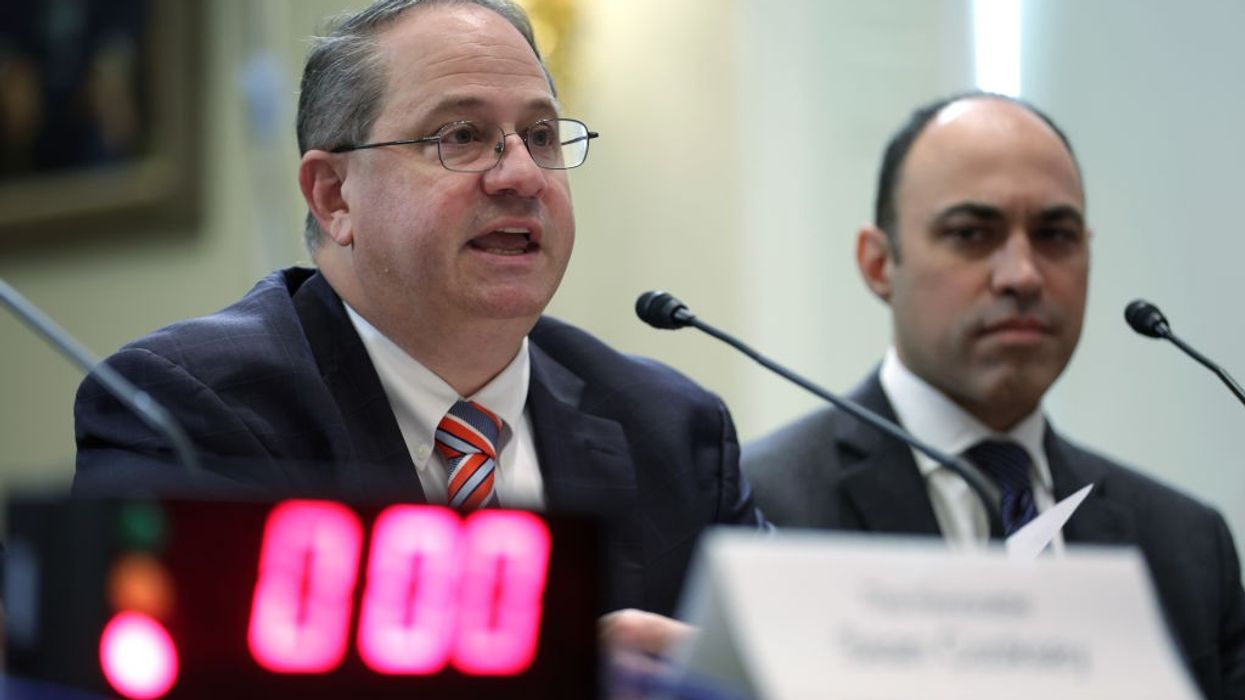
The FEC is currently chaired by Sean Cooksey, a Republican appointed by former president and GOP nominee Donald Trump. Evenly divided between three Democrats and three Republicans, the agency has faced backlash for refusing to take action to stem the proliferation of AI-generated deepfakes and illegal campaign spending.
What's more, as The New York Times reported earlier this year, the agency has moved aggressively in recent months to weaken already-inadequate constraints on political spending.
"One decision this spring that is already reshaping the 2024 presidential race allowed super PACs and campaigns for the first time to work together to plan and execute costly door-to-door canvassing operations," the Times noted.
Additionally, the commission "decided that a wealthy donor could put money into a trust that then could distribute donations to campaigns—while keeping the original source anonymous," the Times reported.
This year's federal election cycle is on pace to be the most expensive in U.S. history, according to OpenSecrets. An analysis released earlier this week by Americans for Tax Fairness found that billionaire families have pumped nearly $2 billion into federal elections so far—likely a significant underestimate, given that the sum excludes untraceable dark money.
The world's richest person has stepped up his contributions to a pro-Trump super PAC as he pushes a deregulatory agenda.
Billionaire Elon Musk gave $43.6 million to the America PAC in early October, raising his total contributions to the group to at least $118.6 million since July, according to federal filings released Thursday night.
America PAC is a super political action committee that supports Republican presidential nominee Donald Trump in battleground states such as Pennsylvania. Musk formed the super PAC in May and has contributed nearly all of its money. The additional $43.6 million moved him into second among Trump's backers, behind only Timothy Mellon, a banking heir who's given $150 million.
Musk, the wealthiest person in the world, also gave $10 million to the Senate Leadership Fund, a super PAC dedicated to electing Republicans in the upper chamber of the U.S. Congress, according to the new filings, which cover the first 16 days of October.
The world’s richest man has given at least $118 million to America PAC, a pro-Trump effort, since July. Thursday’s campaign finance filings are the last full accounting expected before Election Day. https://t.co/rDhbBF2jWm
— The Washington Post (@washingtonpost) October 25, 2024
Vice President Kamala Harris, the Democratic presidential nominee, maintained a sizable fundraising lead over Trump, both in official campaign cash and money for allied groups such as super PACs, the filings show. However, the money doesn't guarantee electoral success: Former Secretary of State Hillary Clinton, the Democrats' 2016 nominee, lost to Trump despite a roughly 2-to-1 cash advantage.
More billionaires reportedly favor Harris over Trump, but the conflicts of interest posed by Musk's political engagement—he has campaigned fervently in person in recent weeks—have drawn particular scrutiny from watchdog groups and journalists.
Musk's sprawling business empire includes SpaceX, Tesla, and X, formerly known as Twitter. His companies benefit from a wide array of government contracts and are also subject to regulations put in place by the executive branch, as well as scrutiny from the justice system; they face at least 11 criminal and civil investigations for alleged fraud or other misconduct.
Public Citizen, a watchdog group, on Tuesday released a report arguing that Musk was pushing for a Trump victory as a way to avoid corporate accountability.
Musk has openly acknowledged that he seeks large-scale deregulation.
"If Trump wins, we do have an opportunity to do kind of a once in a lifetime deregulation and reduction in the size of the government," he said at a conference last month.
Trump has said that he will appoint Musk to lead a new federal "efficiency commission" if elected—an idea Musk floated during an interview with the former president on X in August. Observers have questioned the legality of such an arrangement.
"That would essentially give the world's richest man and a major government contractor the power to regulate the regulators who hold sway over his companies, amounting to a potentially enormous conflict of interest," according to an investigation published Sunday in The New York Times.
Musk drew regulatory attention this week not for his business dealings but for his campaign tactics. The U.S. Department of Justice sent a letter to America PAC warning that it might be in violation of federal laws for paying voters, the Times reported.
The DOJ warning, which came alongside an outcry from Public Citizen and other watchdog groups, was issued because the super PAC established a lottery system that randomly awards $1 million each day to a registered voter in a swing state who signs a petition involving the right to bear arms. The giveaways appear to have continued on Thursday despite the DOJ warning, after an apparent pause on Wednesday, New York magazine reported.
The filings released Thursday night show that America PAC in early October received its first contributions from people other than Musk, including $2 million from former U.S. Secretary of Education Betsy DeVos and her family members.
Musk's $43.6 million in contributions to America PAC came in four parts: $11 million on Oct. 4, $10 million on Oct. 9, $7.9 million on Oct. 11, and $14.7 million on Oct. 15. The Thursday filing is expected to be the last of its kind that will be made public before polling closes on November 5.
Musk's latest attempt to aid Donald Trump "appears to veer smack dab into violating federal law against paying people to register and vote," said Public Citizen.
Billionaire entrepreneur Elon Musk may be able to "throw his money around in an attempt to directly influence the outcome of this election," as one legal expert said of his latest ploy to help Republican presidential nominee Donald Trump, but consumer advocacy watchdog Public Citizen on Wednesday said Musk has crossed a legal line in recent days by offering voters direct cash payments in exchange for signing a petition.
The group filed a formal complaint with the Federal Election Commission (FEC) over Musk's pledge to award a randomly selected registered voter in a swing state with $1 million each day until Election Day, if they sign a petition in favor of the First and Second Amendments.
The offer is only open to people in Pennsylvania, Nevada, Arizona, Michigan, Wisconsin, Georgia, and North Carolina, and those who are selected must become registered voters before signing the petition, which was launched by Musk's America PAC.
The requirement that prospective winners of Musk's lottery register to vote violates 52 U.S.C. §10307(c), Public Citizen said. The law reads in part that anyone who "pays or offers to pay or accepts payment either for registration to vote or for voting shall be fined not more than $10,000 or imprisoned not more than five years, or both."
"Elon Musk's behavior is just the latest—and most egregious—example of wealthy special interests distorting our political process at the expense of everyday voters."
So far, Musk has given four people—two in Pennsylvania and one in North Carolina—checks for $1 million.
"Elon Musk's $1 million giveaway to registered voters—and only registered voters—in swing states is a not-so-disguised attempt to buy votes and it appears to veer smack dab into violating federal law against paying people to register and vote," said Craig Holman, government affairs lobbyist for Public Citizen. "Public Citizen is filing a complaint with the Federal Election Commission challenging Musk's latest denigration of the right to vote freely and fairly."
Legal experts also raised alarm in August after CNBC reported America PAC was collecting personal information from people in battleground states with a website that appeared to help them register to vote—but didn't.
Musk's ties to Trump's campaign have also prompted the United Auto Workers to file federal labor charges against both men after they released an interview on X, Musk's social media platform, in which Trump praised the billionaire for firing striking workers. Their comments, said the UAW, amounted to "illegal attempts to threaten and intimidate workers who stand up for themselves by engaging in protected concerted activity, such as strikes."
On Monday, Campaign Legal Center executive director Adav Noti said the Biden administration should take action against Musk's offer to pay people to register in swing states.
"Elon Musk's behavior is just the latest—and most egregious—example of wealthy special interests distorting our political process at the expense of everyday voters," said Noti. "It is illegal to buy votes, it is illegal to buy voter registration, and the Department of Justice has the power to enforce these important laws through civil or criminal action."
"We need a clear FEC rule in place to deter fast-proliferating political deepfakes, which threaten electoral integrity and people's basic faith that what they see and hear is real—but the agency has utterly failed to deliver."
The Federal Election Commission on Thursday voted to forgo new rulemaking on the use of artificial intelligence in U.S. political campaign advertising, drawing sharp criticism from a watchdog group that said deepfakes threaten electoral integrity.
Public Citizen, the watchdog group, had last year petitioned the FEC to issue regulations clarifying that the use of deepfakes in political ads is illegal. The commission on Thursday formally declined to do so and instead voted in favor an anodyne "compromise" rule that states that artificial intelligence is subject to current regulations.
Robert Weissman, co-president of Public Citizen, said "compromise" was a "misnomer" and the FEC's position was in fact "compromised."
"We need a clear FEC rule in place to deter fast-proliferating political deepfakes, which threaten electoral integrity and people's basic faith that what they see and hear is real—but the agency has utterly failed to deliver," he said in a statement.
Fellow co-president Lisa Gilbert agreed, saying that "the threat of deepfakes is staring us in the face and unfortunately our elections agency has chosen to look the other way," and calling the decision "spineless and shameful."
It is OUTRAGEOUS that the FEC has not taken action to protect the upcoming election from political deepfakes.
Listen to @Rob_Weissman explain the threat AI-generated deepfakes pose to our democracy. pic.twitter.com/RCHWxKIMgy
— Public Citizen (@Public_Citizen) September 9, 2024
There are six FEC commissioners, including three from each major party, with a rotating chairmanship. Democrats have criticized the structure in recent years, arguing that Republican commissioners block meaningful regulations—four votes are needed to pass any rule—and have made the FEC toothless. They argue that a strong FEC is more necessary than ever given the massive increase in spending on U.S. elections that's occurred since the Citizens United ruling was issued in 2010.
For Public Citizen's petition, however, the problem was not just the Republican commissioners. Two Democratic commissioners, Dara Lindenbaum and Shana Broussard, declined to support the petition and instead helped craft the anodyne interpretative rule.
Democratic Commissioner Ellen Weintraub, the current vice chair, supported the petition and has commended an ongoing effort by the Federal Communications Commission to regulate AI use in political advertising. The FCC has proposed requiring a disclosure when AI has been used in the making of an ad, drawing praise from watchdog groups such as Public Citizen. The two federal agencies have sparred over the FCC's proposal.
Republican FEC members spoke out strongly against the Public Citizen petition at an open meeting Thursday, arguing that the commission had neither the authority nor the expertise to regulate an emerging technology. Current Chair Sean Cooksey published an op-ed in The Wall Street Journal last month titled "The FEC Has No Business Regulating AI." He issued a 10-page statement on his opposition to the petition on Thursday.
If Congress hasn't yet granted the FEC such authority—a matter of interpretation of the law, which dates to the 1970s—it's possible that it could do so, as there is some level of bipartisan support for legislation on deepfakes. Multiple bipartisan bills have been introduced to prevent the use of AI in political ads, including one brought forth this week by Reps. Adam Schiff (D-Calif.) and Brian Fitzpatrick (R-Pa.), among others.
Schiff told The Associated Press the bill was "modest" and "really probably the lowest hanging fruit there is" in addressing AI misuse in politics. He and Fitzpatrick acknowledged their bill was a long-shot but said they would try to attach it to must-pass legislation later in the year.
"The FEC is the nation's election protection agency and it has authority to regulate deepfakes as part of its existing authority to prohibit fraudulent misrepresentations," said Robert Weissman of Public Citizen.
An announcement by the U.S. Federal Election Commission on Thursday that it will not take action to regulate artificial intelligence-generated "deepfakes" in political ads before the November elections amounted to "a shameful abrogation of its responsibilities," said a leading critic of the technology.
A year after consumer advocate Public Citizen filed a petition with the FEC to demand rulemaking that would prohibit a political candidate or advocacy group from misrepresenting political opponents using deliberately deceptive deepfakes—fake images generated with AI—FEC Chair Sean Cooksey told Axios the commission will not propose any new rules this year.
Cooksey, a Republican, said he plans to close the pending petition on Thursday without taking any action, telling Axios that rulemaking to limit or prohibit AI in campaign ads would "overstep the commission's limited legal authority to regulate political advertisements."
"The better approach is for the FEC to wait for direction from Congress and to study how AI is actually used on the ground before considering any new rules," said Cooksey.
In other words, said Robert Weissman, co-president of Public Citizen, the FEC will "wait for deceptive fraud to occur and study its consequences before acting to prevent the fraud."
Weissman pointed out that while social media companies have made some rules to prevent political ads with AI from being posted, X owner Elon Musk himself recently posted a deepfake video on the platform that manipulated an image of Democratic presidential nominee and Vice President Kamala Harris, making it appear as though she was saying she was the "the ultimate diversity hire."
Musk posted the video in violation of his own company's rules, proving that "platforms cannot be trusted to self-regulate," Weissman said.
"Political deepfakes are rushing at us, threatening to disrupt electoral integrity. They have been used widely around the world and are starting to surface in the United States," added Weissman. "Requiring that political deepfakes be labeled doesn't favor any political party or candidate. It simply protects voters from fraud and chaos."
Weissman recently said on a newscast that without a ban on deepfakes in political ads, "it's entirely possible that we're going to have late-breaking deepfakes before Election Day, that show a candidate drunk or or saying something racist or behaving in an outrageous way, when they never did any of those things."
Weissman pushed back on Cooksey's claim that regulating deepfakes is out of the commission's realm.
"The FEC is the nation's election protection agency and it has authority to regulate deepfakes as part of its existing authority to prohibit fraudulent misrepresentations," said Weissman. "It should have acted on this issue long ago, before Public Citizen petitioned for rulemaking. When we did petition, the agency should have promptly acted to put a rule in place. It still could and should reverse the wrongheaded decision that Chair Cooksey has said is imminent, and act to protect voters and our elections."
Twenty state legislatures have taken action to prevent deepfakes from flooding local airwaves as voters prepare to head to the polls in the fall, but Weissman said the FEC's refusal to act "underscores the need for congressional action" and for the Federal Communications Commission to move forward with its own AI proposal.
The FCC in May proposed rules requiring on-air and written disclosures in broadcasters' political files when political ads contain AI-generated content.