

SUBSCRIBE TO OUR FREE NEWSLETTER
Daily news & progressive opinion—funded by the people, not the corporations—delivered straight to your inbox.
5
#000000
#FFFFFF
To donate by check, phone, or other method, see our More Ways to Give page.
Daily news & progressive opinion—funded by the people, not the corporations—delivered straight to your inbox.
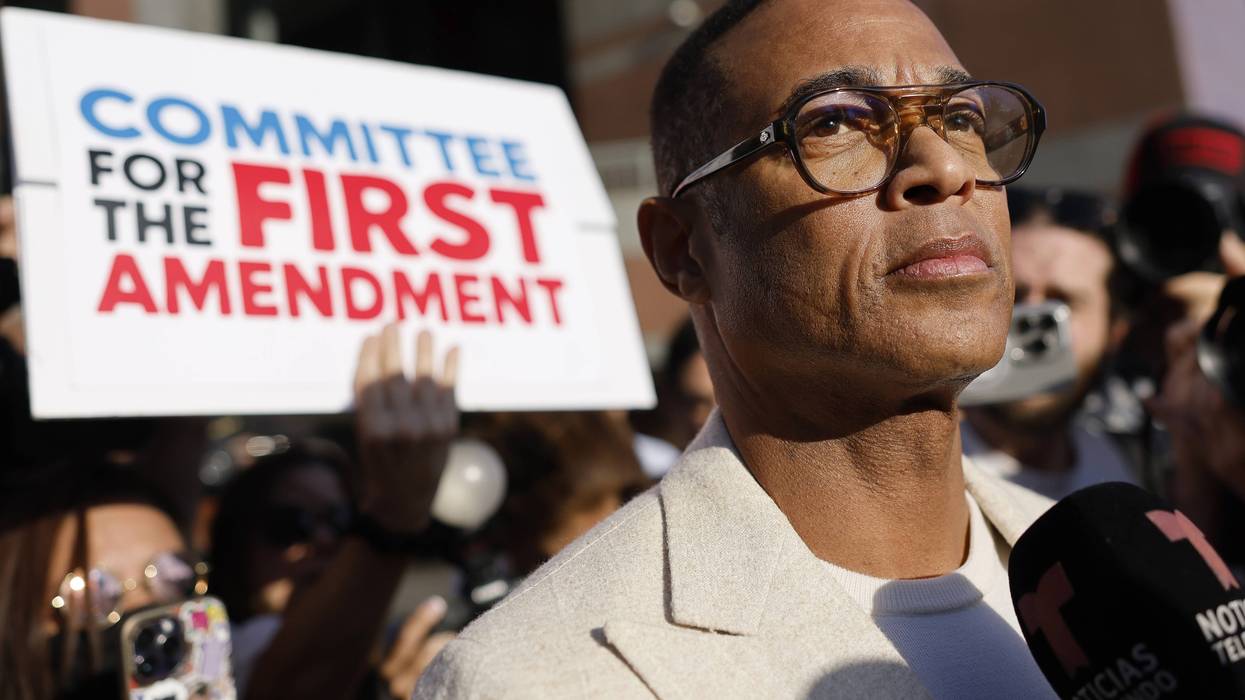
My experience as a university professor in Congo demonstrates that repressive governments may go after a variety of observers sympathizing with militant protesters by purveying false or distorted reports of their actions.
Former CNN anchor Don Lemon is under federal indictment for participating in a Minnesota protest group’s obstruction of a church service. He is scheduled to be arraigned Friday. News of his prosecution took me back more than five decades to when I was a young university professor in Zaire (now the Democratic Republic of the Congo). At that time, President Mobutu Sese Seko’s government threatened to arrest me for my alleged involvement in student disruptions.
In both cases, increasingly authoritarian governments decided to clamp down on independent observers—journalists or others—who sympathized with community activists. To do so, they distorted what actually happened to serve their political interests. Yet, I suspect that the last person President Donald Trump wants to be compared to is a corrupt, fallen, disgraced African dictator.
In December 1970, my university screeched to a halt as the entire student body boycotted classes. With support from Zairian professors and staff, the students called for the replacement of the Protestant missionary rector, criticized for incompetence and racism. From afar, I sympathized with their position. One day, with the university offering no information on the conflict, I accepted an invitation to hop onto a student bus. As a curious political scientist, I hoped to learn more about what my students were thinking. Arriving at a dormitory, I found myself enveloped in a crowd slowly moving forward. Suddenly, I found myself standing before a mock coffin for the rector emblazoned, “Rest in Peace.” Reaching for humor, I tossed a vine I had picked up onto the coffin. Then I walked away, seeing no opportunity for discussion.
Encountering one of my best students on campus a day or two later, I asked him what was happening with his movement. We discussed the students’ perspective and actions. I posed questions in the style of a neutral reporter or scholar. At a certain point, he reiterated the students’ expressed belief that the rector had discouraged his better qualified, potential replacement. Out of sympathy with the student demands and wanting to equalize our exchange, I shared relevant information I had, which appeared to confirm their suspicion. In doing so, I later realized, I yielded to an impulse that deserved more scrutiny.
Whether or not Lemon is convicted, the Trump administration’s approach of pursuing individuals who can be loosely linked to disruptive demonstrations is likely to continue.
Soon, I was surprised to learn that the rector’s supporters in the university were spreading exaggerated and false versions of my involvement in the protests. I was said to have knelt before the coffin, worked to replace a Protestant rector with a Jewish one, and actively participated in students’ subsequent siege, including minor violence, of university trustees’ meeting in a private home. Declassified State Department records show that Mobutu, his minister of the interior, and the American ambassador believed these baseless reports. I was ordered to fly with my family 800 miles to the capital and report to the minister. Over 10 anxious days, I finally managed to persuade the minister that my case should be “closed.”
Last month, Don Lemon live streamed a community protest group’s disruption of a religious service in a St. Paul, Minnesota church. In the context of community resistance to Immigration and Custom Enforcement abuses, the group had discovered that one of the pastors was an important ICE official. Lemon and eight others were charged under the federal FACE Act with conspiring “to injure, oppress, threaten, and intimidate” (including chants, yelling, and physical obstruction) multiple persons in the free exercise of religion—causing termination of the service, parishioners’ flight, emergency planning, and children’s fears.
Lemon himself was accused of certain “overt acts“ in and around the church:
Some MAGA activists condemned Lemon and the others for “storming” the church and committing an anti-Christian hate crime.
Yet, a detailed examination of Lemon’s hour-long live-stream video of the event shows a far different reality. He is mainly observing and interviewing—as I was in the Congo—plus publicly reporting on what he sees. Inside the church, he tells parishioners and viewers several times that he is “chronicling and reporting” and “not part of the activists.” He interviews protesters, the pastor, and parishioners, generally seeking their views in a neutral way. Sometimes his questioning cites protesters’ grievances, but he generally does not insist upon them. It is also clear from the video that he and nearby protesters are not obstructing the pastor, nor are they preventing parishioners from leaving the church.
Like me, Lemon indicates sympathy with the protesters, invoking the history of the US civil rights movement. At one point he tells viewers—but not others—that he supports the disruption because “you have to make people uncomfortable in these times [when ICE is committing abuses during operations against illegal immigrants].” “I believe…, he declares, "everyone has to be willing to sacrifice something.” Only once though does he seem to depart from neutrality with a parishioner. After an interchange in which he states ICE’s excesses are powering protests and his interlocutor maintains ICE is keeping America safe, he asks the latter, “Do you really believe that?” Then, as the man starts to walk away, Lemon persists by trying to present him with “facts” that immigrants have lower crime rates than natives and most detainees were not convicted of crimes.
Lemon also presents an alternative to the conflict: He suggests to both the pastor and a parishioner that they move from confrontation to calm discussion with the protesters, for that might reveal areas of agreement.
These are however minor chords in Lemon’s overall conventional reporting style. We might consider whether, in an age of flagging journalist legitimacy, a reporter’s acknowledgement of his personal perspective amid an effort to tell a story objectively can enhance audience trust.
Either way, Lemon’s remarks did not transform him into a member of the group besieging the church any more than my two encounters with student protesters made me into a member of the group besieging the trustees.
Together these cases warn that repressive governments may go after a variety of observers sympathizing with militant protesters by purveying false or distorted reports of their actions. Whether or not Lemon is convicted, the Trump administration’s approach of pursuing individuals who can be loosely linked to disruptive demonstrations is likely to continue. Worryingly, the head of the FBI has announced investigations of “paid protest campaigns” throughout the country including “organizers, protesters, and funding sources that drive illicit activities.”
When journalists are punished for observation, the public loses access to contested truth and fear becomes a tool of narrative control.
When federal agents arrested journalist Don Lemon and independent reporter Georgia Fort in connection with a protest inside a Minneapolis church, many commentators rushed to frame the incident as a straightforward defense of sacred space: Worship was disrupted, congregants were frightened, and the law intervened to restore order. That framing captures part of the truth—but it obscures the deeper constitutional and moral stakes at play.The arrests are not simply about a protest in a house of worship. They are about whether journalists can witness and document contentious public events—especially those where power, conscience, and institutional authority collide—without facing criminal charges for the act of seeing itself.
The legal action stems from a January demonstration at Cities Church in St. Paul, Minnesota, where protesters interrupted a service after learning that one of the church’s pastors also serves as an official with US Immigration and Customs Enforcement. For demonstrators, that dual role represented a profound moral contradiction: How can a religious leader entrusted with spiritual care also participate in an agency responsible for detention, deportation, and family separation?
Lemon was present to report. He did not identify as a participant, did not lead chants, and did not incite the crowd. He documented the scene, spoke with parishioners and protesters, and relayed what was happening to the public. Georgia Fort, a Minnesota-based independent journalist, was live streaming coverage of the protest and later live streamed her own arrest outside her home. Both were subsequently detained and charged.
Federal prosecutors allege that Lemon, Fort, and others conspired to interfere with religious worship, invoking the Freedom of Access to Clinic Entrances Act, a 1994 law that also applies to religious spaces. Lemon and Fort were released after initial court appearances. A judge placed limits on Lemon’s travel and contact but did not require pretrial supervision. No violence occurred during the protest.
Don Lemon and Georgia Fort did not interrupt worship. They interrupted silence.
That fact matters—but it does not end the ethical inquiry. Fear, particularly in contemporary America, is not abstract. Houses of worship have been sites of mass shootings, and the threat of violence is a lived reality for congregants across faith traditions. No one can read another person’s mind, and no one can fully know the intentions of a group entering a sanctuary in a volatile political moment. Even actions intended as nonviolent moral protest can be experienced as frightening.
Holding this truth is essential. Civil disobedience does not exist in a vacuum, and claims of nonviolence do not erase the perception of danger felt by others. Moral confrontation can be principled and still deeply unsettling. Ethical seriousness requires acknowledging that tension rather than dismissing it.
But fear alone cannot become the standard by which constitutional rights are curtailed—especially the rights of journalists whose role is to observe, document, and inform the public. The central question is not whether congregants felt afraid. It is whether that fear justifies arresting reporters who were not organizing, directing, or participating in the protest.
After his arrest, Lemon emphasized that he was being punished for doing what he has done for decades: covering the news. The First Amendment, he argued, exists precisely to protect that work. Fort echoed this concern, warning that criminalizing documentation of public events—particularly protests—poses a grave threat to journalism itself.
Almost immediately, a familiar dismissal surfaced: Don Lemon is not a “real journalist.” The argument is both unserious and dangerous. Who decides what journalism is? Cable news hosts routinely blend reporting, commentary, and political advocacy, often with privileged access to power. Independent journalists, freelancers, and live streamers—many of whom take on greater personal risk—are frequently denied legitimacy after the fact, especially when their reporting makes institutions uncomfortable.
If journalism is defined by function rather than branding, Lemon and Fort clearly qualify. They observed. They documented. They informed. For that, the state sent federal agents to their doors.
The irony is that Christianity itself has a long and uneasy relationship with disruption. In the Gospels, Jesus repeatedly confronted religious authorities, challenged imperial power, and disrupted ritualized comfort in the name of justice. The early Christian proclamation “Jesus is Lord” was not a private devotional claim; it was a public rejection of imperial sovereignty.
That tradition carried forward. The civil rights movement drew deeply from Christian theology to justify nonviolent confrontation with unjust laws and complicit institutions. Figures such as Martin Luther King Jr., Dorothy Day, Pauli Murray, and James Lawson understood that faith divorced from justice becomes hollow.
Acknowledging this history does not negate the fear congregants may have felt. It clarifies why moral confrontation so often occurs in places of symbolic authority. Sacred space has never been immune from ethical challenge—nor should it be.
This is where the Department of Justice’s response raises deeper concern. The arrests do not merely defend religious freedom; they signal to journalists that covering morally charged protests—particularly those implicating powerful institutions—may carry criminal risk. The chilling effect is unmistakable.
This pattern is not new. Over the past decade, journalists covering protests have faced arrests, equipment seizures, subpoenas, and legal threats. While the legal contexts vary, the cumulative message is consistent: Some forms of witnessing are increasingly treated as suspect. When journalists are punished for observation, the public loses access to contested truth. Fear becomes a tool of narrative control.
This is not a choice between religious freedom and press freedom. Both matter. But when the state treats observation as interference, the balance collapses in favor of power. Protection becomes insulation. Accountability becomes disruption.
Journalism is not a threat to faith. It is a threat to unaccountable authority—especially when that authority cloaks itself in moral or divine legitimacy. A functioning democracy depends on contested spaces, on the ability to observe power where it gathers, even when that power claims holiness.
Don Lemon and Georgia Fort did not interrupt worship. They interrupted silence.
The question now is not only whether Lemon and Fort will prevail in court. It is whether witnessing itself will remain a protected act in American public life—or whether fear, once invoked, will become a legal solvent capable of dissolving press freedom wherever power feels exposed.
If journalists can be arrested for documenting protest inside a church, the precedent will not remain confined to sacred spaces. It will travel—to campuses, courtrooms, town halls, and streets—wherever institutions claim moral authority and demand insulation from scrutiny.
A democracy that punishes witnessing does not preserve order. It preserves silence.
Pastors and the positions that they theologically take to influence the secular world does not insulate them or protect them from criticism or accusations of hypocrisy.
Don Lemon, a high profile personality was arrested on orders from US Attorney Pam Bondi, accusing him of violating the Federal Civil Rights of worshippers. Lemon, an independent journalist followed protesters into a church on January 18 to cover the event. The Trump administration known for its vindictiveness and with no love for the outspoken Lemon, who has expressed outrage over the policies and racism of the administration, felt obliged to make him an example. We have witnessed how these political rogues in the White House don't hesitate to wield power in a punitive and targeted way. Also arrested were Trahern Jeen Crews, co-founder of Black Lives Matter in Minnesota, Jamael Lydell Lundy, and local independent journalist Georgia Fort—each with high profiles in their own right. There were many other protesters and independent journalists that were in the church.
Following the arrests, Pam Bondi posted a statement to social media that read: “At my direction, early this morning federal agents arrested Don Lemon, in connection with the coordinated attack on Cities Church in St. Paul, Minnesota.” One of the church’s pastors, David Easterwood, heads the local ICE field office and given the high tensions and the killings of Renee Good and Alex Pretti—coupled with the unrestrained hostilities and overwhelming presence of DHS and other so-called law enforcement agencies—was the reason this particular church was chosen.
Department of Justice Assistant Attorney General Harmeet Dhillon said that her investigation of Lemon and others have to do with these people “desecrating a house of worship and interfering with Christian worshippers.” The post went on to state, “A house of worship is not a public forum for your protest! It is a space protected from exactly such acts by federal criminal and civil laws!”
This church is part of the Southern Baptist Convention (SBC), a conservative church movement that has its own history of racism, including its support of slavery, its stance against women in ministry, and homophobia. There was immediate outrage that a church’s worship service would be disrupted. Immediately the leadership of the Southern Baptist Convention recoiled.
The conservative church, often referred to as the white evangelical or charismatic church is one of the places that this right-wing "Make American Great Again" agenda garnered strength and energy to help Donald Trump and other MAGA adherents elected.
“I believe we must be resolute in two areas: encouraging our churches to provide compassionate pastoral care to these (migrant) families and standing firm for the sanctity of our houses of worship,” said the SBC's Trey Turner in a social media post. “No cause—political or otherwise—justifies the desecration of a sacred space or the intimidation and trauma inflicted on families gathered peacefully in the house of God,” stated Kevin Ezell, president of the North American Mission Board of the convention. He went on to argue that what "occurred was not protest; it was lawless harassment.”
I have served ministries in Chicago, Boston, and for 30 years in DC and am perplexed why churches would think that they are insulated from criticism from outside once they have made forays into the issues of the world? When churches intentionally enter into vital and important political discussions or take positions that affect the lives of people they have opened themselves to the critique and questions of those issues by the people affected by their positions.
This invites actions and disruptions that may manifest itself in worship. Disruptions to church services are not new. Civil Rights leader James Forman disrupted services at New York's Riverside Church in 1969 to demand $500 million in reparations from white churches. It was the Black Manifesto, an action aimed to force institutions to address their historical complicity in slavery. The protest led to increased discussions about religious accountability, with some institutions later adopting anti-poverty, and racism awareness initiatives.
Another example includes Stop the Church, a demonstration organized by members of AIDS Coalition to Unleash Power (ACT UP). In December 1989, that group disrupted Mass being led by Cardinal John O'Connor at St. Patrick's Cathedral in New York City. One-hundred and eleven protesters were arrested. The main objective of the demonstration was to protest O'Connor's opposition to the teaching of safe sex in the public school system, and his opposition to the distribution of condoms to curb the spread of AIDS. During the Free South Africa Movement there were numbers of church disruptions to press churches and denominations on divestment from South Arica. More recently worship services were confronted over the genocide in Gaza. Church disruptions are not new but bring urgency and concern evaluating the public policy positions of the church and at times pointing out the contradictions in the church and of the pastor.
The conservative church, often referred to as the white evangelical or charismatic church is one of the places that this right-wing "Make American Great Again" agenda garnered strength and energy to help Donald Trump and other MAGA adherents elected. It was from the conservative pulpits that pastors presented to their members that it was “God’s will” and that God took a flawed person like King David, known in the scriptures for adultery and murder, and like King David God anointed Trump even with all of his flaws. These statements or those of a similar bent were made behind many church doors to parishioners across the country. It was in these circles that people like Charles Kirk gained his notoriety and political influence among young white evangelicals with his brand of ridicule of “woke-ness,” DEI, Black people, and other people of color.
Behind worshipping doors across the country right-wing and predominantly white evangelical churches have impacted the society in fascist ways. The theology of these churches believe that God puts in place leadership. That leadership is appointed by God. But the reality is that divine leadership tends to be the assertion of those in positions to assert that point of view, dress it biblically, and asserted it as divine will. Those of us fighting bias and exclusion in the church observe how "God loves all the people that people in the church love, and hate all the people that people in the church hate!” That is hardly a divine equation. When Obama left the White House and Trump took office in his firs term, Paula White-Cain, a religious adviser to Trump wrote that Jesus had "finally returned" to the White House. This was a peculiar comment because the Obama's were deeply rooted in the church, and no one knew any church affiliation that Trump could claim.
Now I am not saying that people should indiscriminately target churches, but I am saying that churches when they enter the political fray to reshape the world and make politics for all the rest of us are open face the consequences of political discussions and critique whether in worship or not. In addition, Pastors and the positions that they theologically take to influence the secular world does not insulate them or protect them from criticism or accusations of hypocrisy.
There are pastors doing secular work, and that has been called “tent” ministry. These secular jobs supplement their church income. The pastor in St. Paul was involved in a “tent” ministry. A “tent” ministry is to have a secular position in addition to a church one. This raises another question of whether that secular job contradicts or compliments a person’s overall ministry. In the St. Paul ministry an important question emerged, the scriptures asks, ‘whether you can serve two masters,’ in this case ICE and the church. How can the church comfort and advocate for immigrants, which it claims it does, while arresting and deporting them? The protesters were calling out the contradiction.
Pam Bondi and others are interested in protecting their right-wing religious base and therefore are not interested in the history of church disruptions and advocacy. Churches are not exempt from the political or theological fray once they enter the public debate. Institutional churches should be held accountable as well as pastors who serve full-time or in ‘tent” ministries. What happened on January 18 in St. Paul, Minnesota is not beyond what is reasonable or appropriate. The pastor opened himself to the disruption and criticism. Instead of being outraged the pastor and others need to comprehend why they drew the anger of protesters who were spotlighting the lack of congruency in serving ICE and claiming to offer comfort to immigrants.

“The arrests today of Don Lemon and Georgia Fort for covering an anti-ICE protest are a blatant attempt to intimidate others from covering criticism of the administration and its policies," said an Amnesty International official.
The arrests of two US journalists on Friday over their reporting on a protest at a church in Saint Paul earlier this month sent shockwaves through rights organizations that have long defended reporters around the world from similarly blatant attacks on press freedom.
"The Trump administration cannot send federal agents after reporters simply because they don't like the stories being reported," said Clayton Weimers, executive director of Reporters Without Borders North America.
Former CNN anchor Don Lemon, now an independent journalist, and Georgia Fort, an independent reporter based in Minnesota, reported on and filmed a protest organized by local residents on January 18 against a pastor at a church who was also reported to be working as a US Immigration and Customs Enforcement (ICE) officer.
On Friday morning, federal law enforcement agents took the two journalists into custody, accusing them of a "coordinated attack on Cities Church." The Department of Homeland Security said Lemon was being charged with conspiracy and interfering with the First Amendment rights of worshippers, and cited the Freedom of Access to Clinic Entrances (FACE) Act—a law that prohibits intimidating or using force against people who try to access reproductive health services but also contains provisions covering places of worship.
Local political candidates Trahern Jeen Crews and Jamael Lydell Lundy were also arrested over the protest. Fort was released Friday afternoon.
"I should be protected under the First Amendment," she said upon her release. "I've been advocating for mainstream media journalists who have been brutalized for months. Do we have a Constitution? That is the pressing question that should be on the front of everyone's minds."
Shortly after Georgia Fort's release from federal custody, law enforcement in riot gear cleared out the 1st floor of the US District courthouse in downtown #Mpls, forcing everyone outside. The independent journalist spoke to reporters there. Here is a clip @FOX9 pic.twitter.com/VsAmClM3YY
— Paul Blume (@PaulBlume_FOX9) January 30, 2026
Weimers emphasized that federal authorities had previously filed a criminal complaint against Lemon over the protest, but it was rejected by a federal magistrate judge, which "enraged" Attorney General Pam Bondi.
“Time and time again we are seeing the Trump administration clamping down on free speech rather than upholding human rights. Black and Brown journalists have been particularly targeted for exercising their rights to freedom of expression."
Amnesty International USA also emphasized that the arrests were not just attacks on Lemon's and Fort's rights, but also "a critical threat to our human rights.”
“US authorities must immediately release journalists Don Lemon and Georgia Fort, said Tarah Demant. "Journalism is not a crime. Reporting on protests is not a crime. Arresting journalists for their reporting is a clear example of an authoritarian practice."
“The arrests today of Don Lemon and Georgia Fort for covering an anti-ICE protest are a blatant attempt to intimidate others from covering criticism of the administration and its policies," Demant said, noting that the arrests came as top Trump administration officials and agents on the ground have made clear the White House views people who film ICE agents—an action that is broadly protected by the First Amendment—are "domestic terrorists."
“Time and time again we are seeing the Trump administration clamping down on free speech rather than upholding human rights," she said. "Black and Brown journalists have been particularly targeted for exercising their rights to freedom of expression."
Chip Gibbons, policy director for Defending Rights and Dissent, noted that "journalists have an important role to play in covering protests" like the ones that have been taking place in Minneapolis and all over the country against Trump's deployment of federal immigration agents to detain and deport immigrants and US citizens alike, the majority of whom have had no criminal backgrounds despite the president's claim that the operation is targeting "the worst of the worst."
"Social movements are often vital parts of our nation’s history and it is essential that they be documented in real time," said Gibbons. "By covering the protesters and their message, journalists help to inform our public debates, helping Americans get vital information about sides of an issue that otherwise go ignored."
"It is for precisely this reason that we have repeatedly seen journalists covering protests across the United States being subject to brutality, false arrests, and bogus charges," he added. "The arrests of Don Lemon and Georgia Fort are clearly part of that shameful practice... Abusing the legal process to stage retaliatory arrests of a journalist is an attack on our democracy. We call on the charges to be dropped and any public officials involved with pushing them to resign from office immediately."
Lawyers’ Committee for Civil Rights Under Law president Damon T. Hewitt also noted that "targeting two acclaimed Black independent journalists for criminal prosecution sends a chilling message at a moment when independent Black media is more necessary than ever."
"Freedom of the press is not optional—it is foundational to a thriving multiracial democracy and is a vital constraint on government overreach," said Hewitt. "This is not just stifling dissent—it’s chilling speech and stifling basic access to information and facts, targeting viewpoints the administration dislikes, and retaliating against law firms, universities, nonprofit organizations, and now reporters who value truth, equality, and justice. This is authoritarianism. And it must not stand.”
Emily Peterson-Cassin, policy director for Demand Progress, said the Trump administration was "trying to scare journalists away from covering the events in Minnesota" by arresting Lemon and Fort.
"The Trump administration, she said, "is clearly waging an ongoing, unconstitutional campaign to intimidate a free and fearless press into submission and must be held accountable.”
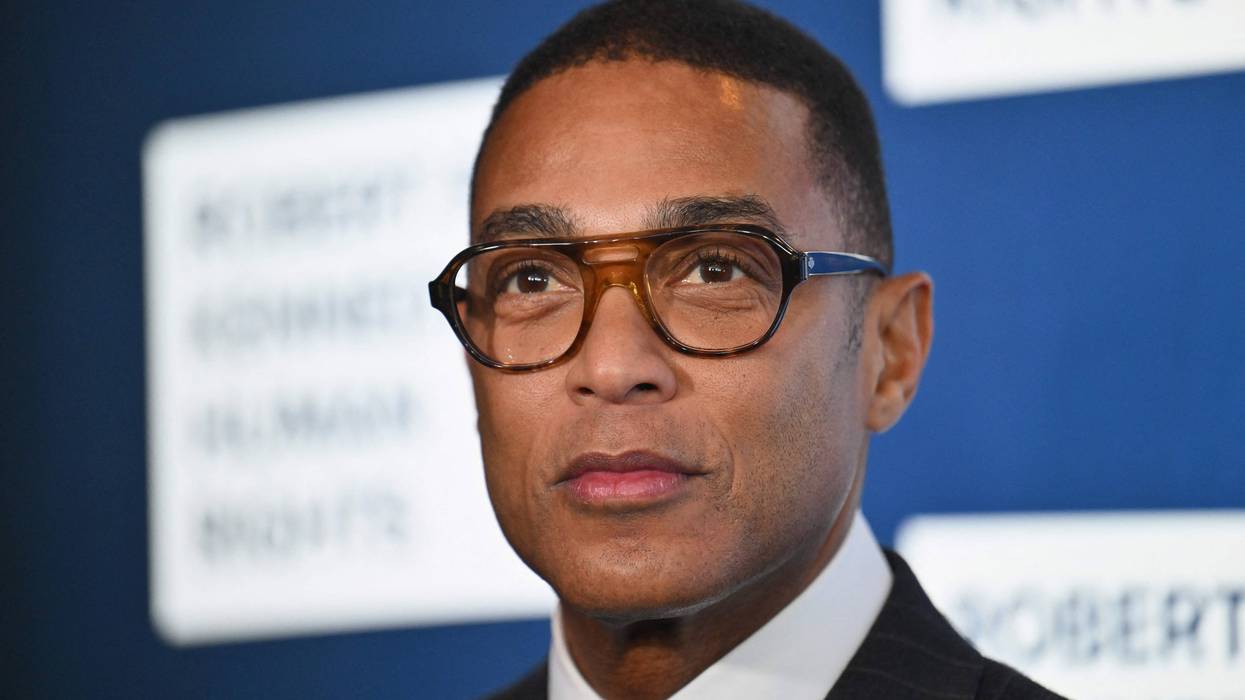
"I don’t care what your political beliefs or leanings are, what journalism outlet you represent," said one fellow journalist, "this absolutely cannot stand."
Journalists Don Lemon and Georgia Fort were among four people taken into custody by federal law enforcement agents on Friday, arrests that critics say represent a serious—and unconstitutional—escalation against the free press by a Justice Department under the control of President Donald Trump and Attorney General Pam Bondi, both of whom have repeatedly targeted reporters for doing their jobs.
The former CNN anchor had been accused of misconduct by Trump following his coverage of an anti-ICE protest that took place inside a Minneapolis church on Jan. 18. While organizers and participants of that protest—aimed at the pastor of the congregation who is also a federal immigration enforcement official—chanted and disrupted the service, Lemon later interviewed the pastor and covered the events as they took place.
Along with Lemon, independent Minnesota journalist Georgia Fort was named as among those detained in a public statement by Bondi, as well as local political candidates Trahern Jeen Crews and Jamael Lydell Lundy.
In a video posted to social media on Friday morning, Fort reported that federal agents were at her door with signed documents they said authorized her arrest.
🚨 BREAKING 🚨
ICE agents have taken @ByGeorgiaFort into custody in Minneapolis after having filmed the church protest of the pastor who doubles for an ICE agent.@donlemon @rolandsmartin @StatusCoup @JordanChariton @ACLUMN pic.twitter.com/FNOiY0QWAC
— Pastor Ben (@BenjaminPDixon) January 30, 2026
According to the Associated Press:
Lemon was taken into custody by federal agents in Los Angeles, where had been covering the Grammy Awards, his attorney Abbe Lowell said.
It is unclear what charge or charges Lemon is facing in the Jan. 18 protest. The arrest came after a magistrate judge last week rejected prosecutors’ initial bid to charge the journalist.
Lemon, who was fired from CNN in 2023, has said he has no affiliation to the organization that went into the church and that he was there as a journalist chronicling protesters.
Fellow journalists and free-press advocates swiftly came to defense of the journalists arrested and condemned the Trump DOJ over the arrest.
Seth Stern, chief advocacy officer for the Freedom of the Press Foundation (FPF), said the US government’s "arrests of journalists Don Lemon and Georgia Fort are naked attacks on freedom of the press. Two federal courts flatly rejected prosecuting Lemon because the evidence for these vindictive and unconstitutional charges was insufficient, and Lemon has every right to document news and inform the public. Instead of accepting that humiliating defeat, the government has now doubled down."
The arrests, Stern continued, "under bogus legal theories for obviously constitutionally protected reporting, are clear warning shots aimed at other journalists. The unmistakable message is that journalists must tread cautiously because the government is looking for any way to target them. Fort’s arrest is meant to instill the same fear in local independent journalists as big names like Lemon."
"Reporters in America are free to view, document, and share information with the public. This arrest is a constitutional violation, an outrage, an authoritarian breach, and utterly appalling.” —Lisa Gilbert, Public Citizen
"They arrested Don Lemon. This is horrifying," said Jemele Hill, a staff writer with The Atlantic. "I don’t care what your political beliefs or leanings are, what journalism outlet you represent, this absolutely cannot stand."
Jim Acosta, Lemon's colleague when they both worked at CNN, also condemned the arrest and declared: "The First Amendment is under attack in America!"
“Don Lemon’s arrest is an egregious violation of the 1st amendment," said Lisa Gilbert, co-president of Public Citizen, in a statement. "Reporters in America are free to view, document, and share information with the public. This arrest is a constitutional violation, an outrage, an authoritarian breach, and utterly appalling.”
Prior to Lemon's arrest, a magistrate judge who reviewed the case against the journalist ruled it as insufficient to justify an arrest warrant. But that didn't stop the Justice Department from pursuing the case further.
The New York Times reports:
Mr. Lemon is scheduled to appear in federal court in Los Angeles on Friday morning. Now that he has been arrested, he is likely to challenge the prosecution’s case by arguing that he was not protesting, but rather covering the event as a journalist.
“Once the protest started in the church, we did an act of journalism, which was report on it and talk to the people involved, including the pastor, members of the church and members of the organization,” Mr. Lemon said in a recent video. “That’s it. That’s called journalism.”
“Don has been a journalist for 30 years, and his constitutionally protected work in Minneapolis was no different than what he has always done,” Lowell, Lemon's attorney, said in his statement. “The First Amendment exists to protect journalists whose role it is to shine light on the truth and hold those in power accountable.”
His attorney said Lemon "will fight these charges vigorously and thoroughly in court.”
Victor Ray, an associate professor of sociology at the University of Iowa, said, "I'm not a huge Don Lemon fan, but this is totalitarian nonsense meant to threaten anyone who reports on the regime's horrors."
FPF's Stern said the targeting of journalists is even more reason for the others in the profession to stand firmly against the Trump administration's growing authoritarianism and intimidation tactics.
"The answer to this outrageous attack is not fear or self-censorship. It’s an even stronger commitment to journalism, the truth, and the First Amendment," he said. "If the Trump administration thinks it can bully journalists into submission, it is wrong. We’ve recently seen that even in the Trump era, public pressure still can work. It’s time to do it again. News outlets across the political spectrum need to loudly defend Lemon’s and Fort’s rights. Journalists are not making themselves the story, Trump is."
In a joint statement, the leaders of the Not Above the Law coalition, condemned the arrests and blamed Trump directly the DOJ's assault on press freedom.
“A president who censors and targets journalists attacks every American’s constitutional rights," the statement declared. "These charges must be dropped, and Congress must hold the Trump administration accountable for its systematic attacks on press freedom. A free press is non-negotiable for a functioning democracy.”