SUBSCRIBE TO OUR FREE NEWSLETTER
Daily news & progressive opinion—funded by the people, not the corporations—delivered straight to your inbox.
5
#000000
#FFFFFF
To donate by check, phone, or other method, see our More Ways to Give page.
Daily news & progressive opinion—funded by the people, not the corporations—delivered straight to your inbox.
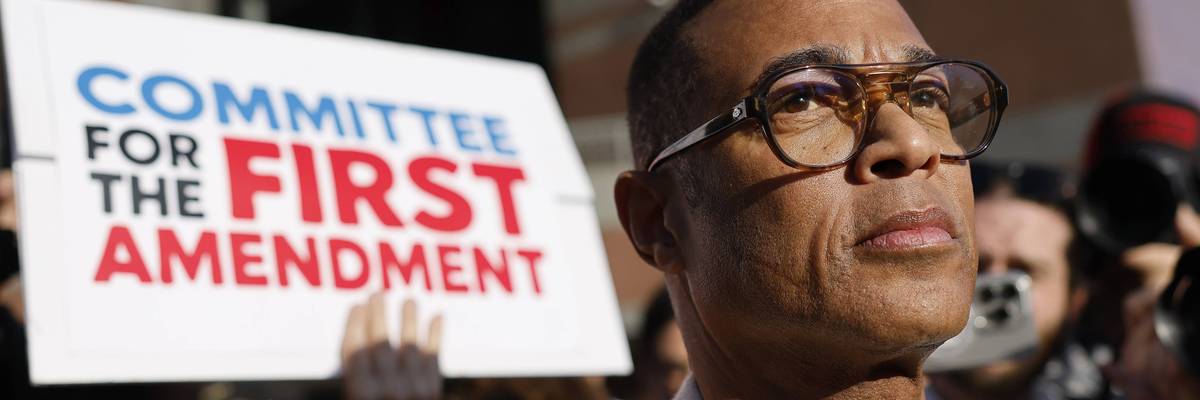
Journalist Don Lemon looks on after issuing a statement to media outside federal court on January 30, 2026 in Los Angeles, California. Lemon was arrested in Beverly Hills in connection to a protest he had covered at a Minnesota church. He was released without bail and is scheduled to appear in federal court in Minneapolis on February 9th.
Pastors and the positions that they theologically take to influence the secular world does not insulate them or protect them from criticism or accusations of hypocrisy.
Don Lemon, a high profile personality was arrested on orders from US Attorney Pam Bondi, accusing him of violating the Federal Civil Rights of worshippers. Lemon, an independent journalist followed protesters into a church on January 18 to cover the event. The Trump administration known for its vindictiveness and with no love for the outspoken Lemon, who has expressed outrage over the policies and racism of the administration, felt obliged to make him an example. We have witnessed how these political rogues in the White House don't hesitate to wield power in a punitive and targeted way. Also arrested were Trahern Jeen Crews, co-founder of Black Lives Matter in Minnesota, Jamael Lydell Lundy, and local independent journalist Georgia Fort—each with high profiles in their own right. There were many other protesters and independent journalists that were in the church.
Following the arrests, Pam Bondi posted a statement to social media that read: “At my direction, early this morning federal agents arrested Don Lemon, in connection with the coordinated attack on Cities Church in St. Paul, Minnesota.” One of the church’s pastors, David Easterwood, heads the local ICE field office and given the high tensions and the killings of Renee Good and Alex Pretti—coupled with the unrestrained hostilities and overwhelming presence of DHS and other so-called law enforcement agencies—was the reason this particular church was chosen.
Department of Justice Assistant Attorney General Harmeet Dhillon said that her investigation of Lemon and others have to do with these people “desecrating a house of worship and interfering with Christian worshippers.” The post went on to state, “A house of worship is not a public forum for your protest! It is a space protected from exactly such acts by federal criminal and civil laws!”
This church is part of the Southern Baptist Convention (SBC), a conservative church movement that has its own history of racism, including its support of slavery, its stance against women in ministry, and homophobia. There was immediate outrage that a church’s worship service would be disrupted. Immediately the leadership of the Southern Baptist Convention recoiled.
The conservative church, often referred to as the white evangelical or charismatic church is one of the places that this right-wing "Make American Great Again" agenda garnered strength and energy to help Donald Trump and other MAGA adherents elected.
“I believe we must be resolute in two areas: encouraging our churches to provide compassionate pastoral care to these (migrant) families and standing firm for the sanctity of our houses of worship,” said the SBC's Trey Turner in a social media post. “No cause—political or otherwise—justifies the desecration of a sacred space or the intimidation and trauma inflicted on families gathered peacefully in the house of God,” stated Kevin Ezell, president of the North American Mission Board of the convention. He went on to argue that what "occurred was not protest; it was lawless harassment.”
I have served ministries in Chicago, Boston, and for 30 years in DC and am perplexed why churches would think that they are insulated from criticism from outside once they have made forays into the issues of the world? When churches intentionally enter into vital and important political discussions or take positions that affect the lives of people they have opened themselves to the critique and questions of those issues by the people affected by their positions.
This invites actions and disruptions that may manifest itself in worship. Disruptions to church services are not new. Civil Rights leader James Forman disrupted services at New York's Riverside Church in 1969 to demand $500 million in reparations from white churches. It was the Black Manifesto, an action aimed to force institutions to address their historical complicity in slavery. The protest led to increased discussions about religious accountability, with some institutions later adopting anti-poverty, and racism awareness initiatives.
Another example includes Stop the Church, a demonstration organized by members of AIDS Coalition to Unleash Power (ACT UP). In December 1989, that group disrupted Mass being led by Cardinal John O'Connor at St. Patrick's Cathedral in New York City. One-hundred and eleven protesters were arrested. The main objective of the demonstration was to protest O'Connor's opposition to the teaching of safe sex in the public school system, and his opposition to the distribution of condoms to curb the spread of AIDS. During the Free South Africa Movement there were numbers of church disruptions to press churches and denominations on divestment from South Arica. More recently worship services were confronted over the genocide in Gaza. Church disruptions are not new but bring urgency and concern evaluating the public policy positions of the church and at times pointing out the contradictions in the church and of the pastor.
The conservative church, often referred to as the white evangelical or charismatic church is one of the places that this right-wing "Make American Great Again" agenda garnered strength and energy to help Donald Trump and other MAGA adherents elected. It was from the conservative pulpits that pastors presented to their members that it was “God’s will” and that God took a flawed person like King David, known in the scriptures for adultery and murder, and like King David God anointed Trump even with all of his flaws. These statements or those of a similar bent were made behind many church doors to parishioners across the country. It was in these circles that people like Charles Kirk gained his notoriety and political influence among young white evangelicals with his brand of ridicule of “woke-ness,” DEI, Black people, and other people of color.
Behind worshipping doors across the country right-wing and predominantly white evangelical churches have impacted the society in fascist ways. The theology of these churches believe that God puts in place leadership. That leadership is appointed by God. But the reality is that divine leadership tends to be the assertion of those in positions to assert that point of view, dress it biblically, and asserted it as divine will. Those of us fighting bias and exclusion in the church observe how "God loves all the people that people in the church love, and hate all the people that people in the church hate!” That is hardly a divine equation. When Obama left the White House and Trump took office in his firs term, Paula White-Cain, a religious adviser to Trump wrote that Jesus had "finally returned" to the White House. This was a peculiar comment because the Obama's were deeply rooted in the church, and no one knew any church affiliation that Trump could claim.
Now I am not saying that people should indiscriminately target churches, but I am saying that churches when they enter the political fray to reshape the world and make politics for all the rest of us are open face the consequences of political discussions and critique whether in worship or not. In addition, Pastors and the positions that they theologically take to influence the secular world does not insulate them or protect them from criticism or accusations of hypocrisy.
There are pastors doing secular work, and that has been called “tent” ministry. These secular jobs supplement their church income. The pastor in St. Paul was involved in a “tent” ministry. A “tent” ministry is to have a secular position in addition to a church one. This raises another question of whether that secular job contradicts or compliments a person’s overall ministry. In the St. Paul ministry an important question emerged, the scriptures asks, ‘whether you can serve two masters,’ in this case ICE and the church. How can the church comfort and advocate for immigrants, which it claims it does, while arresting and deporting them? The protesters were calling out the contradiction.
Pam Bondi and others are interested in protecting their right-wing religious base and therefore are not interested in the history of church disruptions and advocacy. Churches are not exempt from the political or theological fray once they enter the public debate. Institutional churches should be held accountable as well as pastors who serve full-time or in ‘tent” ministries. What happened on January 18 in St. Paul, Minnesota is not beyond what is reasonable or appropriate. The pastor opened himself to the disruption and criticism. Instead of being outraged the pastor and others need to comprehend why they drew the anger of protesters who were spotlighting the lack of congruency in serving ICE and claiming to offer comfort to immigrants.
Dear Common Dreams reader, It’s been nearly 30 years since I co-founded Common Dreams with my late wife, Lina Newhouser. We had the radical notion that journalism should serve the public good, not corporate profits. It was clear to us from the outset what it would take to build such a project. No paid advertisements. No corporate sponsors. No millionaire publisher telling us what to think or do. Many people said we wouldn't last a year, but we proved those doubters wrong. Together with a tremendous team of journalists and dedicated staff, we built an independent media outlet free from the constraints of profits and corporate control. Our mission has always been simple: To inform. To inspire. To ignite change for the common good. Building Common Dreams was not easy. Our survival was never guaranteed. When you take on the most powerful forces—Wall Street greed, fossil fuel industry destruction, Big Tech lobbyists, and uber-rich oligarchs who have spent billions upon billions rigging the economy and democracy in their favor—the only bulwark you have is supporters who believe in your work. But here’s the urgent message from me today. It's never been this bad out there. And it's never been this hard to keep us going. At the very moment Common Dreams is most needed, the threats we face are intensifying. We need your support now more than ever. We don't accept corporate advertising and never will. We don't have a paywall because we don't think people should be blocked from critical news based on their ability to pay. Everything we do is funded by the donations of readers like you. When everyone does the little they can afford, we are strong. But if that support retreats or dries up, so do we. Will you donate now to make sure Common Dreams not only survives but thrives? —Craig Brown, Co-founder |
Don Lemon, a high profile personality was arrested on orders from US Attorney Pam Bondi, accusing him of violating the Federal Civil Rights of worshippers. Lemon, an independent journalist followed protesters into a church on January 18 to cover the event. The Trump administration known for its vindictiveness and with no love for the outspoken Lemon, who has expressed outrage over the policies and racism of the administration, felt obliged to make him an example. We have witnessed how these political rogues in the White House don't hesitate to wield power in a punitive and targeted way. Also arrested were Trahern Jeen Crews, co-founder of Black Lives Matter in Minnesota, Jamael Lydell Lundy, and local independent journalist Georgia Fort—each with high profiles in their own right. There were many other protesters and independent journalists that were in the church.
Following the arrests, Pam Bondi posted a statement to social media that read: “At my direction, early this morning federal agents arrested Don Lemon, in connection with the coordinated attack on Cities Church in St. Paul, Minnesota.” One of the church’s pastors, David Easterwood, heads the local ICE field office and given the high tensions and the killings of Renee Good and Alex Pretti—coupled with the unrestrained hostilities and overwhelming presence of DHS and other so-called law enforcement agencies—was the reason this particular church was chosen.
Department of Justice Assistant Attorney General Harmeet Dhillon said that her investigation of Lemon and others have to do with these people “desecrating a house of worship and interfering with Christian worshippers.” The post went on to state, “A house of worship is not a public forum for your protest! It is a space protected from exactly such acts by federal criminal and civil laws!”
This church is part of the Southern Baptist Convention (SBC), a conservative church movement that has its own history of racism, including its support of slavery, its stance against women in ministry, and homophobia. There was immediate outrage that a church’s worship service would be disrupted. Immediately the leadership of the Southern Baptist Convention recoiled.
The conservative church, often referred to as the white evangelical or charismatic church is one of the places that this right-wing "Make American Great Again" agenda garnered strength and energy to help Donald Trump and other MAGA adherents elected.
“I believe we must be resolute in two areas: encouraging our churches to provide compassionate pastoral care to these (migrant) families and standing firm for the sanctity of our houses of worship,” said the SBC's Trey Turner in a social media post. “No cause—political or otherwise—justifies the desecration of a sacred space or the intimidation and trauma inflicted on families gathered peacefully in the house of God,” stated Kevin Ezell, president of the North American Mission Board of the convention. He went on to argue that what "occurred was not protest; it was lawless harassment.”
I have served ministries in Chicago, Boston, and for 30 years in DC and am perplexed why churches would think that they are insulated from criticism from outside once they have made forays into the issues of the world? When churches intentionally enter into vital and important political discussions or take positions that affect the lives of people they have opened themselves to the critique and questions of those issues by the people affected by their positions.
This invites actions and disruptions that may manifest itself in worship. Disruptions to church services are not new. Civil Rights leader James Forman disrupted services at New York's Riverside Church in 1969 to demand $500 million in reparations from white churches. It was the Black Manifesto, an action aimed to force institutions to address their historical complicity in slavery. The protest led to increased discussions about religious accountability, with some institutions later adopting anti-poverty, and racism awareness initiatives.
Another example includes Stop the Church, a demonstration organized by members of AIDS Coalition to Unleash Power (ACT UP). In December 1989, that group disrupted Mass being led by Cardinal John O'Connor at St. Patrick's Cathedral in New York City. One-hundred and eleven protesters were arrested. The main objective of the demonstration was to protest O'Connor's opposition to the teaching of safe sex in the public school system, and his opposition to the distribution of condoms to curb the spread of AIDS. During the Free South Africa Movement there were numbers of church disruptions to press churches and denominations on divestment from South Arica. More recently worship services were confronted over the genocide in Gaza. Church disruptions are not new but bring urgency and concern evaluating the public policy positions of the church and at times pointing out the contradictions in the church and of the pastor.
The conservative church, often referred to as the white evangelical or charismatic church is one of the places that this right-wing "Make American Great Again" agenda garnered strength and energy to help Donald Trump and other MAGA adherents elected. It was from the conservative pulpits that pastors presented to their members that it was “God’s will” and that God took a flawed person like King David, known in the scriptures for adultery and murder, and like King David God anointed Trump even with all of his flaws. These statements or those of a similar bent were made behind many church doors to parishioners across the country. It was in these circles that people like Charles Kirk gained his notoriety and political influence among young white evangelicals with his brand of ridicule of “woke-ness,” DEI, Black people, and other people of color.
Behind worshipping doors across the country right-wing and predominantly white evangelical churches have impacted the society in fascist ways. The theology of these churches believe that God puts in place leadership. That leadership is appointed by God. But the reality is that divine leadership tends to be the assertion of those in positions to assert that point of view, dress it biblically, and asserted it as divine will. Those of us fighting bias and exclusion in the church observe how "God loves all the people that people in the church love, and hate all the people that people in the church hate!” That is hardly a divine equation. When Obama left the White House and Trump took office in his firs term, Paula White-Cain, a religious adviser to Trump wrote that Jesus had "finally returned" to the White House. This was a peculiar comment because the Obama's were deeply rooted in the church, and no one knew any church affiliation that Trump could claim.
Now I am not saying that people should indiscriminately target churches, but I am saying that churches when they enter the political fray to reshape the world and make politics for all the rest of us are open face the consequences of political discussions and critique whether in worship or not. In addition, Pastors and the positions that they theologically take to influence the secular world does not insulate them or protect them from criticism or accusations of hypocrisy.
There are pastors doing secular work, and that has been called “tent” ministry. These secular jobs supplement their church income. The pastor in St. Paul was involved in a “tent” ministry. A “tent” ministry is to have a secular position in addition to a church one. This raises another question of whether that secular job contradicts or compliments a person’s overall ministry. In the St. Paul ministry an important question emerged, the scriptures asks, ‘whether you can serve two masters,’ in this case ICE and the church. How can the church comfort and advocate for immigrants, which it claims it does, while arresting and deporting them? The protesters were calling out the contradiction.
Pam Bondi and others are interested in protecting their right-wing religious base and therefore are not interested in the history of church disruptions and advocacy. Churches are not exempt from the political or theological fray once they enter the public debate. Institutional churches should be held accountable as well as pastors who serve full-time or in ‘tent” ministries. What happened on January 18 in St. Paul, Minnesota is not beyond what is reasonable or appropriate. The pastor opened himself to the disruption and criticism. Instead of being outraged the pastor and others need to comprehend why they drew the anger of protesters who were spotlighting the lack of congruency in serving ICE and claiming to offer comfort to immigrants.
Don Lemon, a high profile personality was arrested on orders from US Attorney Pam Bondi, accusing him of violating the Federal Civil Rights of worshippers. Lemon, an independent journalist followed protesters into a church on January 18 to cover the event. The Trump administration known for its vindictiveness and with no love for the outspoken Lemon, who has expressed outrage over the policies and racism of the administration, felt obliged to make him an example. We have witnessed how these political rogues in the White House don't hesitate to wield power in a punitive and targeted way. Also arrested were Trahern Jeen Crews, co-founder of Black Lives Matter in Minnesota, Jamael Lydell Lundy, and local independent journalist Georgia Fort—each with high profiles in their own right. There were many other protesters and independent journalists that were in the church.
Following the arrests, Pam Bondi posted a statement to social media that read: “At my direction, early this morning federal agents arrested Don Lemon, in connection with the coordinated attack on Cities Church in St. Paul, Minnesota.” One of the church’s pastors, David Easterwood, heads the local ICE field office and given the high tensions and the killings of Renee Good and Alex Pretti—coupled with the unrestrained hostilities and overwhelming presence of DHS and other so-called law enforcement agencies—was the reason this particular church was chosen.
Department of Justice Assistant Attorney General Harmeet Dhillon said that her investigation of Lemon and others have to do with these people “desecrating a house of worship and interfering with Christian worshippers.” The post went on to state, “A house of worship is not a public forum for your protest! It is a space protected from exactly such acts by federal criminal and civil laws!”
This church is part of the Southern Baptist Convention (SBC), a conservative church movement that has its own history of racism, including its support of slavery, its stance against women in ministry, and homophobia. There was immediate outrage that a church’s worship service would be disrupted. Immediately the leadership of the Southern Baptist Convention recoiled.
The conservative church, often referred to as the white evangelical or charismatic church is one of the places that this right-wing "Make American Great Again" agenda garnered strength and energy to help Donald Trump and other MAGA adherents elected.
“I believe we must be resolute in two areas: encouraging our churches to provide compassionate pastoral care to these (migrant) families and standing firm for the sanctity of our houses of worship,” said the SBC's Trey Turner in a social media post. “No cause—political or otherwise—justifies the desecration of a sacred space or the intimidation and trauma inflicted on families gathered peacefully in the house of God,” stated Kevin Ezell, president of the North American Mission Board of the convention. He went on to argue that what "occurred was not protest; it was lawless harassment.”
I have served ministries in Chicago, Boston, and for 30 years in DC and am perplexed why churches would think that they are insulated from criticism from outside once they have made forays into the issues of the world? When churches intentionally enter into vital and important political discussions or take positions that affect the lives of people they have opened themselves to the critique and questions of those issues by the people affected by their positions.
This invites actions and disruptions that may manifest itself in worship. Disruptions to church services are not new. Civil Rights leader James Forman disrupted services at New York's Riverside Church in 1969 to demand $500 million in reparations from white churches. It was the Black Manifesto, an action aimed to force institutions to address their historical complicity in slavery. The protest led to increased discussions about religious accountability, with some institutions later adopting anti-poverty, and racism awareness initiatives.
Another example includes Stop the Church, a demonstration organized by members of AIDS Coalition to Unleash Power (ACT UP). In December 1989, that group disrupted Mass being led by Cardinal John O'Connor at St. Patrick's Cathedral in New York City. One-hundred and eleven protesters were arrested. The main objective of the demonstration was to protest O'Connor's opposition to the teaching of safe sex in the public school system, and his opposition to the distribution of condoms to curb the spread of AIDS. During the Free South Africa Movement there were numbers of church disruptions to press churches and denominations on divestment from South Arica. More recently worship services were confronted over the genocide in Gaza. Church disruptions are not new but bring urgency and concern evaluating the public policy positions of the church and at times pointing out the contradictions in the church and of the pastor.
The conservative church, often referred to as the white evangelical or charismatic church is one of the places that this right-wing "Make American Great Again" agenda garnered strength and energy to help Donald Trump and other MAGA adherents elected. It was from the conservative pulpits that pastors presented to their members that it was “God’s will” and that God took a flawed person like King David, known in the scriptures for adultery and murder, and like King David God anointed Trump even with all of his flaws. These statements or those of a similar bent were made behind many church doors to parishioners across the country. It was in these circles that people like Charles Kirk gained his notoriety and political influence among young white evangelicals with his brand of ridicule of “woke-ness,” DEI, Black people, and other people of color.
Behind worshipping doors across the country right-wing and predominantly white evangelical churches have impacted the society in fascist ways. The theology of these churches believe that God puts in place leadership. That leadership is appointed by God. But the reality is that divine leadership tends to be the assertion of those in positions to assert that point of view, dress it biblically, and asserted it as divine will. Those of us fighting bias and exclusion in the church observe how "God loves all the people that people in the church love, and hate all the people that people in the church hate!” That is hardly a divine equation. When Obama left the White House and Trump took office in his firs term, Paula White-Cain, a religious adviser to Trump wrote that Jesus had "finally returned" to the White House. This was a peculiar comment because the Obama's were deeply rooted in the church, and no one knew any church affiliation that Trump could claim.
Now I am not saying that people should indiscriminately target churches, but I am saying that churches when they enter the political fray to reshape the world and make politics for all the rest of us are open face the consequences of political discussions and critique whether in worship or not. In addition, Pastors and the positions that they theologically take to influence the secular world does not insulate them or protect them from criticism or accusations of hypocrisy.
There are pastors doing secular work, and that has been called “tent” ministry. These secular jobs supplement their church income. The pastor in St. Paul was involved in a “tent” ministry. A “tent” ministry is to have a secular position in addition to a church one. This raises another question of whether that secular job contradicts or compliments a person’s overall ministry. In the St. Paul ministry an important question emerged, the scriptures asks, ‘whether you can serve two masters,’ in this case ICE and the church. How can the church comfort and advocate for immigrants, which it claims it does, while arresting and deporting them? The protesters were calling out the contradiction.
Pam Bondi and others are interested in protecting their right-wing religious base and therefore are not interested in the history of church disruptions and advocacy. Churches are not exempt from the political or theological fray once they enter the public debate. Institutional churches should be held accountable as well as pastors who serve full-time or in ‘tent” ministries. What happened on January 18 in St. Paul, Minnesota is not beyond what is reasonable or appropriate. The pastor opened himself to the disruption and criticism. Instead of being outraged the pastor and others need to comprehend why they drew the anger of protesters who were spotlighting the lack of congruency in serving ICE and claiming to offer comfort to immigrants.