SUBSCRIBE TO OUR FREE NEWSLETTER
Daily news & progressive opinion—funded by the people, not the corporations—delivered straight to your inbox.
5
#000000
#FFFFFF
To donate by check, phone, or other method, see our More Ways to Give page.
Daily news & progressive opinion—funded by the people, not the corporations—delivered straight to your inbox.
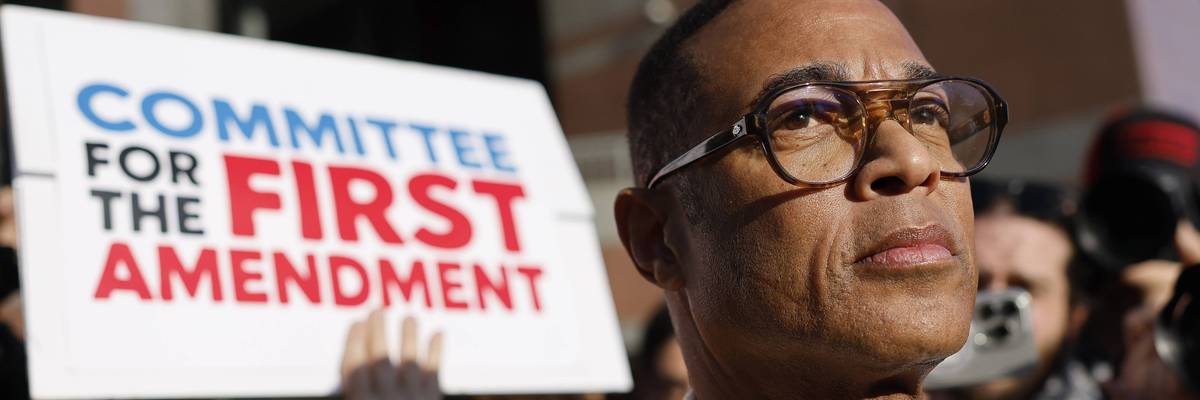
Journalist Don Lemon looks on after issuing a statement to media outside federal court on January 30, 2026 in Los Angeles, California.
My experience as a university professor in Congo demonstrates that repressive governments may go after a variety of observers sympathizing with militant protesters by purveying false or distorted reports of their actions.
Former CNN anchor Don Lemon is under federal indictment for participating in a Minnesota protest group’s obstruction of a church service. He is scheduled to be arraigned Friday. News of his prosecution took me back more than five decades to when I was a young university professor in Zaire (now the Democratic Republic of the Congo). At that time, President Mobutu Sese Seko’s government threatened to arrest me for my alleged involvement in student disruptions.
In both cases, increasingly authoritarian governments decided to clamp down on independent observers—journalists or others—who sympathized with community activists. To do so, they distorted what actually happened to serve their political interests. Yet, I suspect that the last person President Donald Trump wants to be compared to is a corrupt, fallen, disgraced African dictator.
In December 1970, my university screeched to a halt as the entire student body boycotted classes. With support from Zairian professors and staff, the students called for the replacement of the Protestant missionary rector, criticized for incompetence and racism. From afar, I sympathized with their position. One day, with the university offering no information on the conflict, I accepted an invitation to hop onto a student bus. As a curious political scientist, I hoped to learn more about what my students were thinking. Arriving at a dormitory, I found myself enveloped in a crowd slowly moving forward. Suddenly, I found myself standing before a mock coffin for the rector emblazoned, “Rest in Peace.” Reaching for humor, I tossed a vine I had picked up onto the coffin. Then I walked away, seeing no opportunity for discussion.
Encountering one of my best students on campus a day or two later, I asked him what was happening with his movement. We discussed the students’ perspective and actions. I posed questions in the style of a neutral reporter or scholar. At a certain point, he reiterated the students’ expressed belief that the rector had discouraged his better qualified, potential replacement. Out of sympathy with the student demands and wanting to equalize our exchange, I shared relevant information I had, which appeared to confirm their suspicion. In doing so, I later realized, I yielded to an impulse that deserved more scrutiny.
Whether or not Lemon is convicted, the Trump administration’s approach of pursuing individuals who can be loosely linked to disruptive demonstrations is likely to continue.
Soon, I was surprised to learn that the rector’s supporters in the university were spreading exaggerated and false versions of my involvement in the protests. I was said to have knelt before the coffin, worked to replace a Protestant rector with a Jewish one, and actively participated in students’ subsequent siege, including minor violence, of university trustees’ meeting in a private home. Declassified State Department records show that Mobutu, his minister of the interior, and the American ambassador believed these baseless reports. I was ordered to fly with my family 800 miles to the capital and report to the minister. Over 10 anxious days, I finally managed to persuade the minister that my case should be “closed.”
Last month, Don Lemon live streamed a community protest group’s disruption of a religious service in a St. Paul, Minnesota church. In the context of community resistance to Immigration and Custom Enforcement abuses, the group had discovered that one of the pastors was an important ICE official. Lemon and eight others were charged under the federal FACE Act with conspiring “to injure, oppress, threaten, and intimidate” (including chants, yelling, and physical obstruction) multiple persons in the free exercise of religion—causing termination of the service, parishioners’ flight, emergency planning, and children’s fears.
Lemon himself was accused of certain “overt acts“ in and around the church:
Some MAGA activists condemned Lemon and the others for “storming” the church and committing an anti-Christian hate crime.
Yet, a detailed examination of Lemon’s hour-long live-stream video of the event shows a far different reality. He is mainly observing and interviewing—as I was in the Congo—plus publicly reporting on what he sees. Inside the church, he tells parishioners and viewers several times that he is “chronicling and reporting” and “not part of the activists.” He interviews protesters, the pastor, and parishioners, generally seeking their views in a neutral way. Sometimes his questioning cites protesters’ grievances, but he generally does not insist upon them. It is also clear from the video that he and nearby protesters are not obstructing the pastor, nor are they preventing parishioners from leaving the church.
Like me, Lemon indicates sympathy with the protesters, invoking the history of the US civil rights movement. At one point he tells viewers—but not others—that he supports the disruption because “you have to make people uncomfortable in these times [when ICE is committing abuses during operations against illegal immigrants].” “I believe…, he declares, "everyone has to be willing to sacrifice something.” Only once though does he seem to depart from neutrality with a parishioner. After an interchange in which he states ICE’s excesses are powering protests and his interlocutor maintains ICE is keeping America safe, he asks the latter, “Do you really believe that?” Then, as the man starts to walk away, Lemon persists by trying to present him with “facts” that immigrants have lower crime rates than natives and most detainees were not convicted of crimes.
Lemon also presents an alternative to the conflict: He suggests to both the pastor and a parishioner that they move from confrontation to calm discussion with the protesters, for that might reveal areas of agreement.
These are however minor chords in Lemon’s overall conventional reporting style. We might consider whether, in an age of flagging journalist legitimacy, a reporter’s acknowledgement of his personal perspective amid an effort to tell a story objectively can enhance audience trust.
Either way, Lemon’s remarks did not transform him into a member of the group besieging the church any more than my two encounters with student protesters made me into a member of the group besieging the trustees.
Together these cases warn that repressive governments may go after a variety of observers sympathizing with militant protesters by purveying false or distorted reports of their actions. Whether or not Lemon is convicted, the Trump administration’s approach of pursuing individuals who can be loosely linked to disruptive demonstrations is likely to continue. Worryingly, the head of the FBI has announced investigations of “paid protest campaigns” throughout the country including “organizers, protesters, and funding sources that drive illicit activities.”
Dear Common Dreams reader, It’s been nearly 30 years since I co-founded Common Dreams with my late wife, Lina Newhouser. We had the radical notion that journalism should serve the public good, not corporate profits. It was clear to us from the outset what it would take to build such a project. No paid advertisements. No corporate sponsors. No millionaire publisher telling us what to think or do. Many people said we wouldn't last a year, but we proved those doubters wrong. Together with a tremendous team of journalists and dedicated staff, we built an independent media outlet free from the constraints of profits and corporate control. Our mission has always been simple: To inform. To inspire. To ignite change for the common good. Building Common Dreams was not easy. Our survival was never guaranteed. When you take on the most powerful forces—Wall Street greed, fossil fuel industry destruction, Big Tech lobbyists, and uber-rich oligarchs who have spent billions upon billions rigging the economy and democracy in their favor—the only bulwark you have is supporters who believe in your work. But here’s the urgent message from me today. It's never been this bad out there. And it's never been this hard to keep us going. At the very moment Common Dreams is most needed, the threats we face are intensifying. We need your support now more than ever. We don't accept corporate advertising and never will. We don't have a paywall because we don't think people should be blocked from critical news based on their ability to pay. Everything we do is funded by the donations of readers like you. When everyone does the little they can afford, we are strong. But if that support retreats or dries up, so do we. Will you donate now to make sure Common Dreams not only survives but thrives? —Craig Brown, Co-founder |
Former CNN anchor Don Lemon is under federal indictment for participating in a Minnesota protest group’s obstruction of a church service. He is scheduled to be arraigned Friday. News of his prosecution took me back more than five decades to when I was a young university professor in Zaire (now the Democratic Republic of the Congo). At that time, President Mobutu Sese Seko’s government threatened to arrest me for my alleged involvement in student disruptions.
In both cases, increasingly authoritarian governments decided to clamp down on independent observers—journalists or others—who sympathized with community activists. To do so, they distorted what actually happened to serve their political interests. Yet, I suspect that the last person President Donald Trump wants to be compared to is a corrupt, fallen, disgraced African dictator.
In December 1970, my university screeched to a halt as the entire student body boycotted classes. With support from Zairian professors and staff, the students called for the replacement of the Protestant missionary rector, criticized for incompetence and racism. From afar, I sympathized with their position. One day, with the university offering no information on the conflict, I accepted an invitation to hop onto a student bus. As a curious political scientist, I hoped to learn more about what my students were thinking. Arriving at a dormitory, I found myself enveloped in a crowd slowly moving forward. Suddenly, I found myself standing before a mock coffin for the rector emblazoned, “Rest in Peace.” Reaching for humor, I tossed a vine I had picked up onto the coffin. Then I walked away, seeing no opportunity for discussion.
Encountering one of my best students on campus a day or two later, I asked him what was happening with his movement. We discussed the students’ perspective and actions. I posed questions in the style of a neutral reporter or scholar. At a certain point, he reiterated the students’ expressed belief that the rector had discouraged his better qualified, potential replacement. Out of sympathy with the student demands and wanting to equalize our exchange, I shared relevant information I had, which appeared to confirm their suspicion. In doing so, I later realized, I yielded to an impulse that deserved more scrutiny.
Whether or not Lemon is convicted, the Trump administration’s approach of pursuing individuals who can be loosely linked to disruptive demonstrations is likely to continue.
Soon, I was surprised to learn that the rector’s supporters in the university were spreading exaggerated and false versions of my involvement in the protests. I was said to have knelt before the coffin, worked to replace a Protestant rector with a Jewish one, and actively participated in students’ subsequent siege, including minor violence, of university trustees’ meeting in a private home. Declassified State Department records show that Mobutu, his minister of the interior, and the American ambassador believed these baseless reports. I was ordered to fly with my family 800 miles to the capital and report to the minister. Over 10 anxious days, I finally managed to persuade the minister that my case should be “closed.”
Last month, Don Lemon live streamed a community protest group’s disruption of a religious service in a St. Paul, Minnesota church. In the context of community resistance to Immigration and Custom Enforcement abuses, the group had discovered that one of the pastors was an important ICE official. Lemon and eight others were charged under the federal FACE Act with conspiring “to injure, oppress, threaten, and intimidate” (including chants, yelling, and physical obstruction) multiple persons in the free exercise of religion—causing termination of the service, parishioners’ flight, emergency planning, and children’s fears.
Lemon himself was accused of certain “overt acts“ in and around the church:
Some MAGA activists condemned Lemon and the others for “storming” the church and committing an anti-Christian hate crime.
Yet, a detailed examination of Lemon’s hour-long live-stream video of the event shows a far different reality. He is mainly observing and interviewing—as I was in the Congo—plus publicly reporting on what he sees. Inside the church, he tells parishioners and viewers several times that he is “chronicling and reporting” and “not part of the activists.” He interviews protesters, the pastor, and parishioners, generally seeking their views in a neutral way. Sometimes his questioning cites protesters’ grievances, but he generally does not insist upon them. It is also clear from the video that he and nearby protesters are not obstructing the pastor, nor are they preventing parishioners from leaving the church.
Like me, Lemon indicates sympathy with the protesters, invoking the history of the US civil rights movement. At one point he tells viewers—but not others—that he supports the disruption because “you have to make people uncomfortable in these times [when ICE is committing abuses during operations against illegal immigrants].” “I believe…, he declares, "everyone has to be willing to sacrifice something.” Only once though does he seem to depart from neutrality with a parishioner. After an interchange in which he states ICE’s excesses are powering protests and his interlocutor maintains ICE is keeping America safe, he asks the latter, “Do you really believe that?” Then, as the man starts to walk away, Lemon persists by trying to present him with “facts” that immigrants have lower crime rates than natives and most detainees were not convicted of crimes.
Lemon also presents an alternative to the conflict: He suggests to both the pastor and a parishioner that they move from confrontation to calm discussion with the protesters, for that might reveal areas of agreement.
These are however minor chords in Lemon’s overall conventional reporting style. We might consider whether, in an age of flagging journalist legitimacy, a reporter’s acknowledgement of his personal perspective amid an effort to tell a story objectively can enhance audience trust.
Either way, Lemon’s remarks did not transform him into a member of the group besieging the church any more than my two encounters with student protesters made me into a member of the group besieging the trustees.
Together these cases warn that repressive governments may go after a variety of observers sympathizing with militant protesters by purveying false or distorted reports of their actions. Whether or not Lemon is convicted, the Trump administration’s approach of pursuing individuals who can be loosely linked to disruptive demonstrations is likely to continue. Worryingly, the head of the FBI has announced investigations of “paid protest campaigns” throughout the country including “organizers, protesters, and funding sources that drive illicit activities.”
Former CNN anchor Don Lemon is under federal indictment for participating in a Minnesota protest group’s obstruction of a church service. He is scheduled to be arraigned Friday. News of his prosecution took me back more than five decades to when I was a young university professor in Zaire (now the Democratic Republic of the Congo). At that time, President Mobutu Sese Seko’s government threatened to arrest me for my alleged involvement in student disruptions.
In both cases, increasingly authoritarian governments decided to clamp down on independent observers—journalists or others—who sympathized with community activists. To do so, they distorted what actually happened to serve their political interests. Yet, I suspect that the last person President Donald Trump wants to be compared to is a corrupt, fallen, disgraced African dictator.
In December 1970, my university screeched to a halt as the entire student body boycotted classes. With support from Zairian professors and staff, the students called for the replacement of the Protestant missionary rector, criticized for incompetence and racism. From afar, I sympathized with their position. One day, with the university offering no information on the conflict, I accepted an invitation to hop onto a student bus. As a curious political scientist, I hoped to learn more about what my students were thinking. Arriving at a dormitory, I found myself enveloped in a crowd slowly moving forward. Suddenly, I found myself standing before a mock coffin for the rector emblazoned, “Rest in Peace.” Reaching for humor, I tossed a vine I had picked up onto the coffin. Then I walked away, seeing no opportunity for discussion.
Encountering one of my best students on campus a day or two later, I asked him what was happening with his movement. We discussed the students’ perspective and actions. I posed questions in the style of a neutral reporter or scholar. At a certain point, he reiterated the students’ expressed belief that the rector had discouraged his better qualified, potential replacement. Out of sympathy with the student demands and wanting to equalize our exchange, I shared relevant information I had, which appeared to confirm their suspicion. In doing so, I later realized, I yielded to an impulse that deserved more scrutiny.
Whether or not Lemon is convicted, the Trump administration’s approach of pursuing individuals who can be loosely linked to disruptive demonstrations is likely to continue.
Soon, I was surprised to learn that the rector’s supporters in the university were spreading exaggerated and false versions of my involvement in the protests. I was said to have knelt before the coffin, worked to replace a Protestant rector with a Jewish one, and actively participated in students’ subsequent siege, including minor violence, of university trustees’ meeting in a private home. Declassified State Department records show that Mobutu, his minister of the interior, and the American ambassador believed these baseless reports. I was ordered to fly with my family 800 miles to the capital and report to the minister. Over 10 anxious days, I finally managed to persuade the minister that my case should be “closed.”
Last month, Don Lemon live streamed a community protest group’s disruption of a religious service in a St. Paul, Minnesota church. In the context of community resistance to Immigration and Custom Enforcement abuses, the group had discovered that one of the pastors was an important ICE official. Lemon and eight others were charged under the federal FACE Act with conspiring “to injure, oppress, threaten, and intimidate” (including chants, yelling, and physical obstruction) multiple persons in the free exercise of religion—causing termination of the service, parishioners’ flight, emergency planning, and children’s fears.
Lemon himself was accused of certain “overt acts“ in and around the church:
Some MAGA activists condemned Lemon and the others for “storming” the church and committing an anti-Christian hate crime.
Yet, a detailed examination of Lemon’s hour-long live-stream video of the event shows a far different reality. He is mainly observing and interviewing—as I was in the Congo—plus publicly reporting on what he sees. Inside the church, he tells parishioners and viewers several times that he is “chronicling and reporting” and “not part of the activists.” He interviews protesters, the pastor, and parishioners, generally seeking their views in a neutral way. Sometimes his questioning cites protesters’ grievances, but he generally does not insist upon them. It is also clear from the video that he and nearby protesters are not obstructing the pastor, nor are they preventing parishioners from leaving the church.
Like me, Lemon indicates sympathy with the protesters, invoking the history of the US civil rights movement. At one point he tells viewers—but not others—that he supports the disruption because “you have to make people uncomfortable in these times [when ICE is committing abuses during operations against illegal immigrants].” “I believe…, he declares, "everyone has to be willing to sacrifice something.” Only once though does he seem to depart from neutrality with a parishioner. After an interchange in which he states ICE’s excesses are powering protests and his interlocutor maintains ICE is keeping America safe, he asks the latter, “Do you really believe that?” Then, as the man starts to walk away, Lemon persists by trying to present him with “facts” that immigrants have lower crime rates than natives and most detainees were not convicted of crimes.
Lemon also presents an alternative to the conflict: He suggests to both the pastor and a parishioner that they move from confrontation to calm discussion with the protesters, for that might reveal areas of agreement.
These are however minor chords in Lemon’s overall conventional reporting style. We might consider whether, in an age of flagging journalist legitimacy, a reporter’s acknowledgement of his personal perspective amid an effort to tell a story objectively can enhance audience trust.
Either way, Lemon’s remarks did not transform him into a member of the group besieging the church any more than my two encounters with student protesters made me into a member of the group besieging the trustees.
Together these cases warn that repressive governments may go after a variety of observers sympathizing with militant protesters by purveying false or distorted reports of their actions. Whether or not Lemon is convicted, the Trump administration’s approach of pursuing individuals who can be loosely linked to disruptive demonstrations is likely to continue. Worryingly, the head of the FBI has announced investigations of “paid protest campaigns” throughout the country including “organizers, protesters, and funding sources that drive illicit activities.”