SUBSCRIBE TO OUR FREE NEWSLETTER
Daily news & progressive opinion—funded by the people, not the corporations—delivered straight to your inbox.
5
#000000
#FFFFFF
To donate by check, phone, or other method, see our More Ways to Give page.
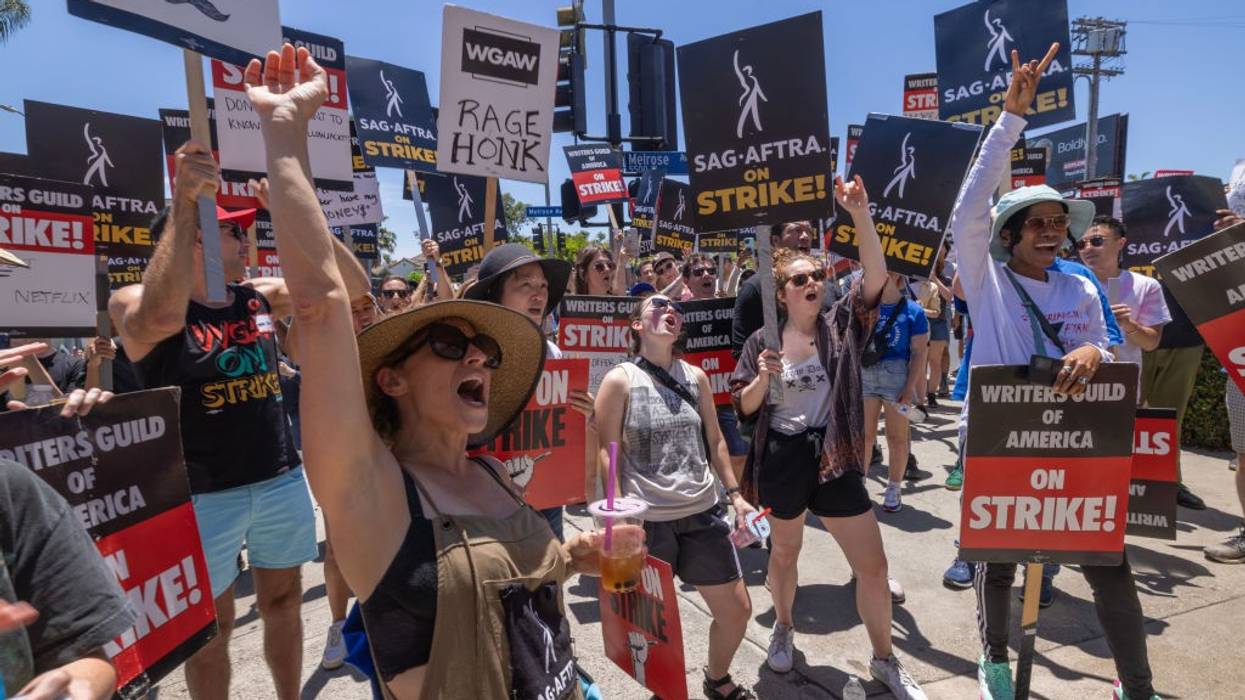
Daily news & progressive opinion—funded by the people, not the corporations—delivered straight to your inbox.
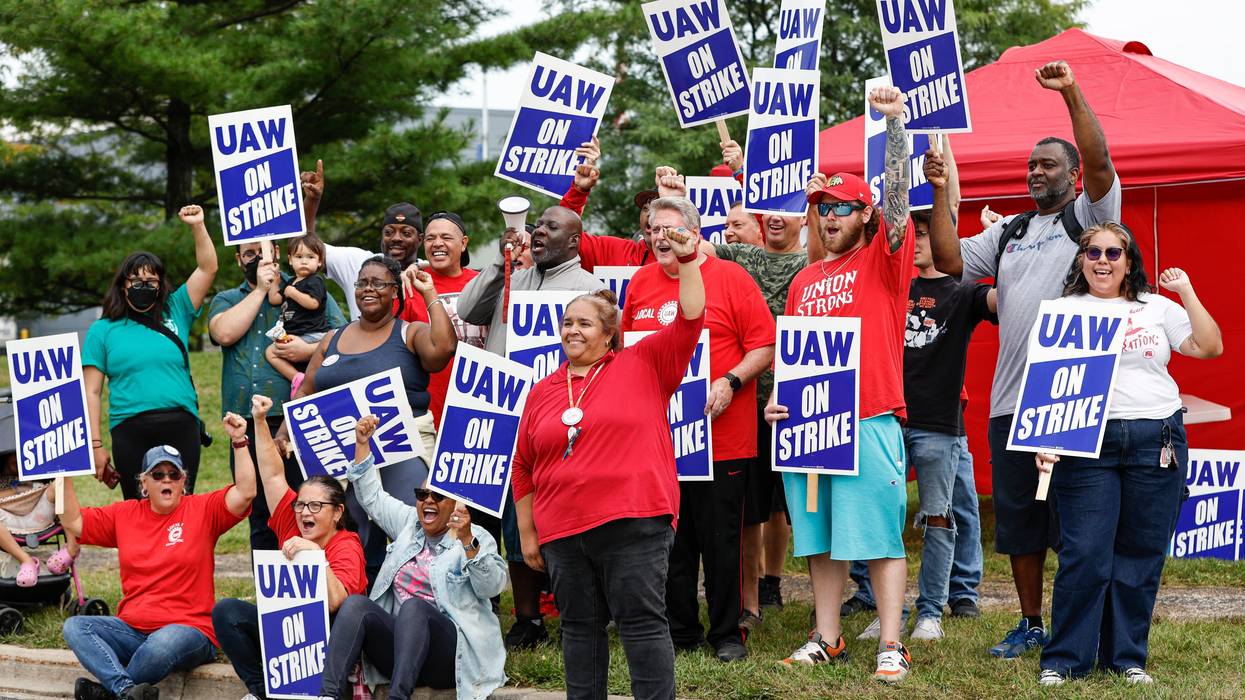
"From the United Auto Workers to nurses across the country, these strikes provided critical leverage to workers to secure better wages and working conditions," said one expert.
While federal data released on Wednesday shows nearly half a million workers last year participated in 33 major work stoppages—the most since the turn of the century—labor experts still stressed the need for more policies protecting the right to strike.
The Bureau of Labor Statistics noted that there has been an average of 16.7 U.S. work stoppages with more than 1,000 strikers over the past two decades, meaning last year's number was almost double the norm. BLS also said that 458,900 workers joined the 2023 strikes, and nearly 87% of them work in service-providing industries, including 188,900 with jobs in education and health.
In their analysis of the data, also published Wednesday, Margaret Poydock and Jennifer Sherer of the Economic Policy Institute (EPI) pointed out that "this is an increase of over 280% from the number of workers involved in major worker stoppages in 2022, which was 120,600. Further, it is on par with the increase seen in pre-pandemic levels during 2018 and 2019."
Poydock, a senior policy analyst at the think tank, said in a statement that "a surge of workers went on strike in 2023 to fight back against record corporate profits, stratospheric CEO pay, and decades of stagnant wages. From the United Auto Workers to nurses across the country, these strikes provided critical leverage to workers to secure better wages and working conditions."
Other notable actions include the actors' and writers' strikes that together effectively shut down television and film production for months. A report released last week by researchers at Cornell University and the University of Illinois—who, unlike the BLS, also tracked smaller U.S. actions—tallied 466 strikes and four lockouts involving a total of 539,000 workers.
"It's a historic moment for the labor movement," declared Robert Reich, a former U.S. labor secretary who is now a University of California, Berkeley professor. "Workers are done letting billionaires and corporations hoard all the wealth and power."
As Poydock and Sherer, EPI's State Worker Power Initiative director, wrote in their report:
It should be no surprise that workers are taking collective action to improve their pay and working conditions—but we should be asking why it is happening now. The U.S. economy has churned out unequal income growth and stagnant wages for the last several decades. Research shows that unions and collective bargaining are key tools in combating income inequality and improving the pay, benefits, and working conditions for both union and nonunion workers. However, the continued rise in collective action is not likely to increase unionization substantially unless meaningful policy change is enacted to ensure all workers have the right to form unions, bargain collectively, and strike.
The BLS said last month that "the union membership rate—the percent of wage and salary workers who were members of
unions—was 10% in 2023, little changed from the previous year."
"In the public sector, both union membership and the union membership rate (32.5%) were little changed over the year," the bureau added. "The number of union workers employed in the private sector increased by 191,000 to 7.4 million in 2023, while the unionization rate was unchanged at 6%."
Stressing that "the increase in major strike activity in 2023 occurred despite our weak and outdated labor law failing to protect workers' right to strike," Sherer argued that "federal and state action is needed to ensure the right to strike."
At the federal level, EPI supports several proposals. As Poydock and Sherer detailed:
"Right now, only a dozen states grant limited rights to strike to some public sector workers," the pair also highlighted. "States should also join New York and New Jersey in making striking workers eligible for unemployment benefits."
"The Democratic Party cannot claim to be the party of the working class if we allow AI to erode the earnings and security of the working class."
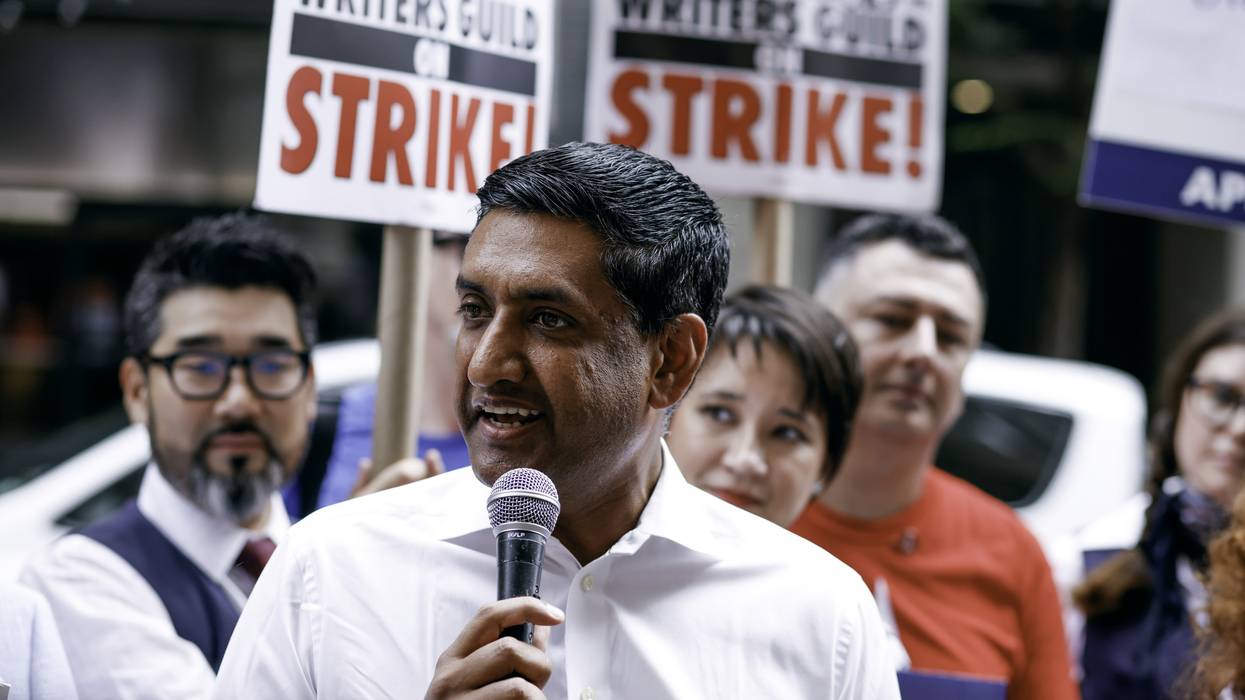
Democratic Congressman Ro Khanna, whose California district includes Silicon Valley, warned Thursday that to avoid catastrophic impacts of the artificial intelligence revolution, lawmakers and regulators must learn from "how unfettered globalization hollowed out the working class" in the United States, leaving "shuttered factories and rural communities that never saw the promised jobs materialize."
"Like globalization, AI will undoubtedly bring benefits—tremendous benefits—to our economy, with higher productivity, personalized medicine and education, and more efficient energy use," the congressman wrote in a New York Times opinion piece.
"Generative AI has the potential to help those with fewer resources or experience quickly learn and develop new skills," he noted. "The real challenge, though, is how to center the dignity and economic security of working-class Americans during the changes to come. And unlike the Industrial Revolution, which spanned half a century at least, the AI revolution is unfolding at lightning speed."
"Our generational task is to ensure that AI is a tool for lessening the vast disparities of wealth and opportunity that plague us, not exacerbating them."
Khanna stressed that "today the Democratic Party is at a crossroads, as it was in the 1990s, when the dominant wing in the party argued for prioritizing private sector growth and letting the chips fall where they may," ignoring prescient criticism from former Democratic Sens. Paul Wellstone (Minn.) and Russ Feingold (Wis.), as well as Independent Sen. Bernie Sanders (Vt.), who then served in the House.
After failing to heed their warnings, he argued, "the Democratic Party cannot claim to be the party of the working class if we allow AI to erode the earnings and security of the working class. The party can be forgiven once for the mistake of abetting globalization to run amok, just not twice."
"Technologies—our technologies—are meant to complement and enhance human initiative, not subordinate or exploit it," he asserted. "We must push for workers to have a decision-making role in how and when to adopt technologies, and we must insist on workers' profiting from the implementation of these technologies. Our generational task is to ensure that AI is a tool for lessening the vast disparities of wealth and opportunity that plague us, not exacerbating them."
Underscoring the urgency of his message, Khanna pointed out that in September, "tech's biggest names trekked to Capitol Hill for a forum on artificial intelligence" that "was reminiscent of Davos conferences in the 1990s and early 2000s," and this year alone, tens of thousands of workers at hundreds of companies could be laid off and replaced with AI.
Already, AI is factoring into labor negotiations and legislative battles. After California legislators last year overwhelmingly approved Assembly Bill 316, which would have required a human driver on self-driving trucks weighing over 10,000 pounds that are transporting goods or passengers for at least five years, Democratic Gov. Gavin Newsom vetoed it.
"Tech companies argue that replacing human drivers with AI is feasible, will reduce labor costs, and will therefore make it cheaper to transport goods and services. They lobbied heavily against the bill," explained Khanna. "I supported A.B. 316 because drivers say it's currently an unnecessary risk to have large trucks on public roads without a human on board. This is especially true if there is extreme weather, hazardous conditions, or heavy cargo on board. No one understands the safety risks at play here better than the drivers themselves, and it's both foolish and insulting to suggest they would make up such concerns to keep jobs that do not add value."
"It's not just the AI concerns of truck drivers that are causing divides in the Democratic coalition," the congressman continued, highlighting that the monthslong strikes of unionized writers and actors in Hollywood last year ended with deals that include provisions about artificial intelligence.
The California Democrat—who joined striking writers on the picket line—wrote that "even though writers' jobs are very different from truck drivers' jobs, labor solidarity is one of the few countervailing forces that can blunt the dehumanization of work motivated by short-term profit maximization in a world where AI is capable of suddenly disrupting both blue- and white-collar work."
Khanna—author of the 2022 book Dignity in a Digital Age: Making Tech Work for All of Us—published the Times piece amid fears about how AI will impact everything from mass surveillance and misinformation to healthcare and war, not only in the United States but around the world.
His Thursday column won praise from progressives across the country. Lorena Gonzalez Fletcher, head of the California Labor Federation, said that his piece is "truly a must-read for any policymaker" while Katrina vanden Heuvel, The Nation's editorial director and publisher, called it an "important read and issue for now and in '28."
"Workers stood up to Hollywood executives and held their ground to reach this agreement," said the president of the AFL-CIO. "ANYTHING is possible when we organize."
The union representing actors across the television and film industries announced late Wednesday that it reached a tentative contract deal with major studios, bringing to an end a monthslong strike that—combined with a simultaneous writers strike—shut down much of Hollywood's production.
In a statement, the Screen Actors Guild-American Federation of Television and Radio Artists (SAG-AFTRA) said the contract agreement is valued at over $1 billion and has "extraordinary scope," including significant pay increases, "unprecedented provisions for consent and compensation that will protect members from the threat of AI," and a "streaming participation bonus."
The tentative deal also includes pension and healthcare improvements and compensation boosts for background performers, according to SAG-AFTRA.
The union said full details of the tentative agreement—which must be ratified by members—won't be released until it is reviewed by the SAG-AFTRA National Board.
"We also thank our union siblings—the workers that power this industry—for the sacrifices they have made while supporting our strike and that of the Writers Guild of America," SAG-AFTRA added. "We stand together in solidarity and will be there for you when you need us. Thank you all for your dedication, your commitment, and your solidarity throughout this strike. It is because of YOU that these improvements became possible."
The tentative agreement was announced days after SAG-AFTRA rejected what the Hollywood studios described as their "last, best, and final offer" over a so-called "zombie" clause that critics said would allow studios to use the AI likenesses of dead actors without consent. It's unclear exactly how or whether that language was changed in the tentative agreement.
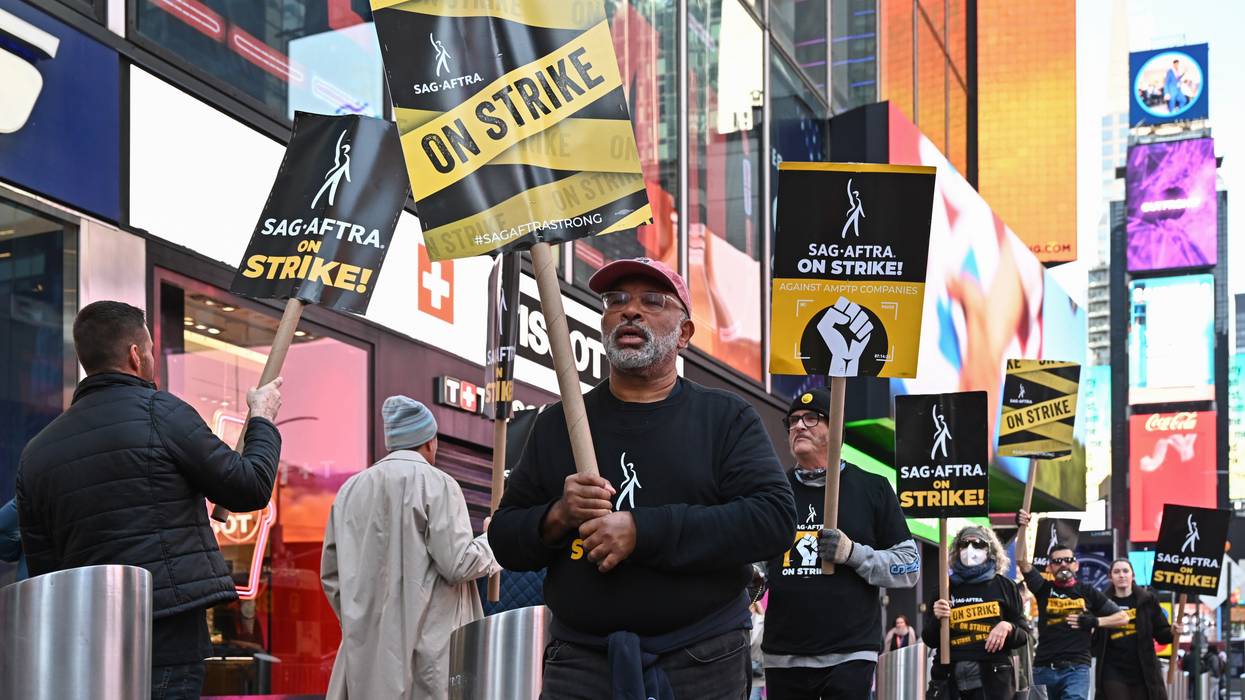
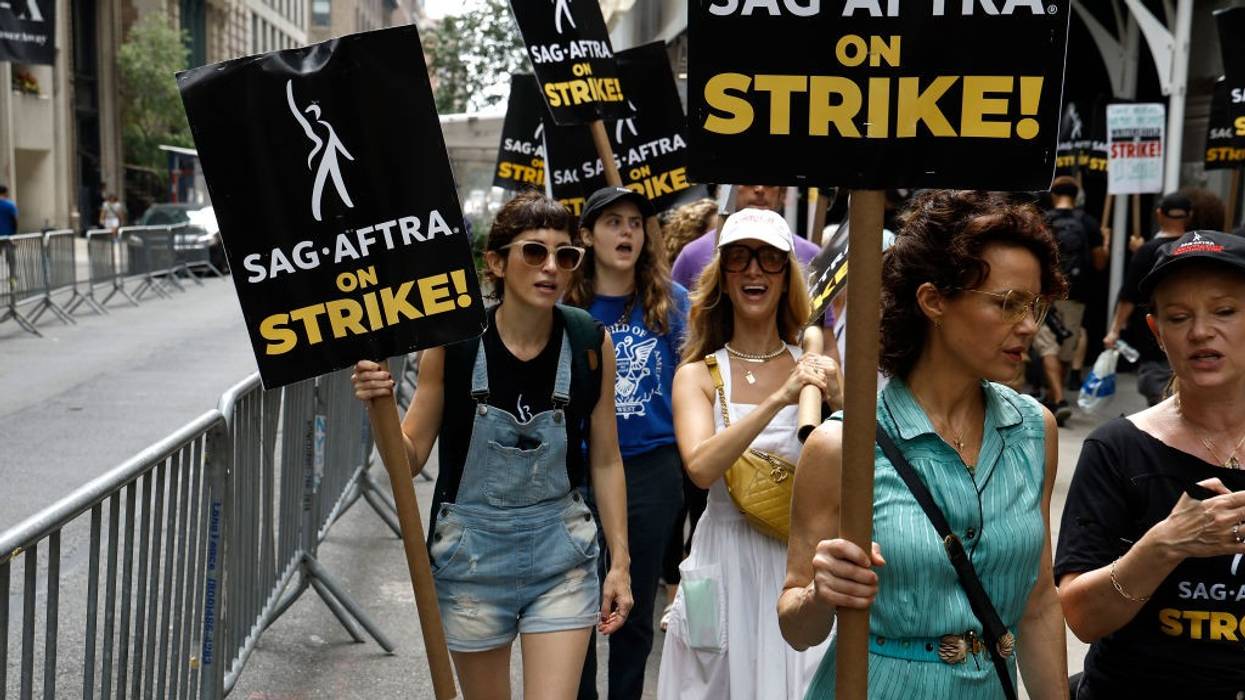
With a contract deal in hand after the longest strike in its history—nearly four months—SAG-AFTRA formally suspended the work stoppage just after midnight on Thursday and announced that "all picket locations are closed."
Dear #SagAftraMembers:
We are thrilled & proud to tell you that today your TV/Theatrical Negotiating Committee voted unanimously to approve a tentative agreement with the AMPTP. As of 12:01 a.m. PT on Nov. 9, our strike is officially suspended & all picket locations are closed. pic.twitter.com/FhvSRJQXFE
— SAG-AFTRA (@sagaftra) November 9, 2023
The Alliance of Motion Picture and Television Producers (AMPTP), which represents the studios, said in a statement that the tentative agreement "gives SAG-AFTRA the biggest contract-on-contract gains in the history of the union, including the largest increase in minimum wages in the last forty years; a brand new residual for streaming programs; extensive consent and compensation protections in the use of artificial intelligence; and sizable contract increases on items across the board."
"The AMPTP is pleased to have reached a tentative agreement and looks forward to the industry resuming the work of telling great stories," the statement added.
The SAG-AFTRA strike came to a close weeks after Hollywood writers reached a deal to end their work stoppage after nearly 150 days. Writers Guild of America members ratified the agreement last month.
Liz Shuler, president of the AFL-CIO, applauded SAG-AFTRA's tentative deal, writing on social media that "workers stood up to Hollywood executives and held their ground to reach this agreement."
"The SAG-AFTRA actors and performing artists showed the world the true power of collective action," Shuler wrote. "ANYTHING is possible when we organize."
"It's the cheap, dark future studios want," said one television writer. "Right now, SAG-AFTRA is the only thing preventing it. And they're fighting like hell."
Negotiations between the world's largest labor union representing screen performers and some of the most powerful studios in Hollywood were set to resume on Tuesday after union negotiators announced that they had rejected the companies' "last, best, and final offer," arguing that the terms did not include sufficient artificial intelligence protections for highly-paid actors.
The latest offer included language that would have cascading negative effects on the entire entertainment industry, said supporters of the ongoing actors' strikes.
The negotiating committee of the Screen Actors Guild-American Federation of Television and Radio Artists (SAG-AFTRA), including chief negotiator Duncan Crabtree-Ireland and union president Fran Drescher, told the union's 160,000 members Monday evening that they were "determined to secure the right deal and thereby bring this strike to an end responsibly." The union began a work stoppage on July 13 after more than a month of negotiations regarding residual pay, AI, and other issues.
The Alliance of Motion Picture and Television Producers' (AMPTP) supposed "final" offer included a requirement that studios and streaming services pay to make AI images with the likeness of highly-paid "Schedule F" performers, who earn more than the minimum for series regulars ($32,000 per TV episode) and feature films ($60,000).
But SAG-AFTRA is also demanding a provision that would require compensation for the re-use of AI scans and one that would require companies to secure consent from a deceased actors' estate to use an AI scan of them.
The language in the AMPTP's offer was derided as the "zombie" clause by television writer David Slack, who called the studios' proposal "a nightmare scenario" that would play out like an episode of the dystopian series Black Mirror.
While the clause pertains to highly paid actors, Slack noted that it would ultimately impact thousands of people who work across the entertainment industry, as the studios' goal appears to be gaining the ability to produce films and television without paying the actors who appear in them.
"The AMPTP's zombie clause also means less money for talent agents and managers—as performers making a good living right now are suddenly scanned once, given one check, and then sent home forever," said Slack. "And who is going to pay the publicists, PR firms, event managers, and press junket journalists for TV and movie premieres—when they start releasing shows where all the 'actors' were either not involved in the 'filming' or are already dead?"
Before the Writers Guild of America secured a deal that was ratified in October, ending the writers' strike after nearly five months, the union also refused to accept an AMPTP offer that was presented as its "best and final."
"The AMPTP tried their 'Last, Best, and Final' trick—and the SAG-AFTRA [negotiating committee] didn't blink," said Slack. "This is how you win."
"We have sacrificed too much to capitulate to their stonewalling and greed," said SAG-AFTRA.
The screen actors union in the United States on Thursday accused film studios of using "bully tactics" to pressure its 160,000 members into ending a historic strike after the Alliance of Motion Picture and Television Producers announced it was walking away from the latest round of negotiations, saying the two sides are too far apart on key issues.
The Screen Actors Guild-American Federation of Television and Radio Artists (SAG-AFTRA) called on members to return to picket lines Thursday morning to continue working to "help shape a fair industry for everyone" as leaders accused the AMPTP and four top studio CEOs directly involved in talks of trying to mislead the union about its latest offer.
Despite the studios' efforts, said SAG-AFTRA, "our fight continues."
The AMPTP said the talks were being suspended largely because of the actors' demand for a revenue sharing plan for successful streaming shows.
Union members should be entitled to revenue sharing amounting to about 2% of the money a show makes on streaming platforms, SAG-AFTRA has maintained since it went on strike July 14, allowing cast members "to share in the success of high-performing shows."
The AMPTP, joined by the "Gang of Four"—Netflix co-CEO Ted Sarandos, NBCUniversal chair Donna Langley, Warner Bros Discovery CEO David Zaslav, and Disney CEO Bob Iger—claimed Wednesday that the plan would be an "untenable economic burden" for studios, costing over $2.4 billion over the course of a three-year SAG-AFTRA contract, or about $800 million per year.
The four companies' annual profits range from $12 billion to $33 billion. SAG-AFTRA said in its statement Thursday morning that the revenue sharing proposal would cost the companies 57 cents per streaming platform subscriber per year and accused the AMPTP of "intentionally" misrepresenting the cost of the proposal to the press.
The studios overstated the cost "by 60%," SAG-AFTRA said.
The union also said the AMPTP's latest offer claims to protect "consent" for performers before their digital replicas can be used for artificial intelligence (AI), while the studios are actually "continuing to demand 'consent' on the first day of employment for use of a performer's digital replica for an entire cinematic universe (or any franchise project)."
"The companies are using the same failed strategy they tried to inflict on the WGA [Writers Guild of America]—putting out misleading information in an attempt to fool our members into abandoning our solidarity and putting pressure on our negotiators," said the union. "But, just like the writers, our members are smarter than that and will not be fooled."
In August, talks between the WGA and the AMPTP also stalled after the studios released an offer the union said was rife with "limitations and loopholes and omissions," including "disingenuous" claims that writers would be provided with increased residuals, AI protections, and working standards.
The WGA ultimately ended its own strike this week after securing a contract that includes higher pay than the AMPTP was originally willing to provide, better healthcare benefits, viewership-based streaming residuals, and AI regulations.
"We feel the pain these companies have inflicted on our members, our strike captains, IATSE, Teamsters and Basic Crafts union members, and everyone in this industry," said SAG-AFTRA. "We have sacrificed too much to capitulate to their stonewalling and greed."
WGA-East urged its members to continue picketing alongside unionized performers until AMPTP provides a satisfactory contract offer that allows working actors to earn a living wage amid rising inflation.
"Let's help pack our union family's picket lines today to show the AMPTP we're not going anywhere until we ALL have fair contracts," said the writers union.
"Even a plurality of voters who have an unfavorable opinion of labor unions (48%) support the strikes."
Two-thirds of likely U.S. voters support the ongoing writers' and actors' union strikes, while an overwhelming majority of voters across party lines agree with the strikers' demands, according to a Data For Progress poll published Friday.
The poll found 67% overall support for the Writers Guild of America (WGA) and Screen Actors Guild-American Federation of Television and Radio Artists (SAG-AFTRA) strikes, while just 18% of respondents opposed the actions.
Likely Democratic voters showed the strongest support for the strikes, at 82%, while 68% of Independents and 49% of Republicans back the labor stoppage.
"Even a plurality of voters who have an unfavorable opinion of labor unions (48%) support the strikes," Data for Progress noted.
Voters also overwhelmingly agree with the strikers' demands:
On the other hand, only 21% of survey respondents said they have a favorable view of Hollywood studios.
SAG-AFTRA national executive director and chief negotiator Duncan Crabtree-Ireland said in a statement: "The data shows that most people understand why the union was forced to go on strike. I suspect many are seeing the same dynamic playing out in their own lives, with employers undervaluing their contributions."
"That's why this fight is so important," he added. "Our demands aren't unreasonable, and it's a fundamental principle of fairness that workers should be fairly compensated for the value they bring their employer—in every industry."
The main concerns of the workers center around compensation on streaming platforms, such as Netflix and Amazon Prime, and artificial intelligence.
For the first time since 1960, actors and screenwriters are on strike at the same time.
As with many of the other strikes that have rippled across the United States over the past three years, this walkout is over demands for better pay and restrictions on their employers’ use of technology to replace paid work.
The actors’ strike began on July 14, 2023, after their union, SAG-AFTRA, voted to end negotiations with the Alliance of Motion Picture and Television Producers, which represents the major production studios. The main concerns of the union—which represents 160,000 actors and people in other creative professions—center around compensation on streaming platforms, such as Netflix and Amazon Prime, and artificial intelligence.
Screenwriters, who have been on strike since May 2, have similar concerns.
In 1965, executives made 15 times the average salary of their workers. By 2021 those top execs were earning 350 times more than the average worker—including actors.Screenwriters, who have been on strike since May 2, have similar concerns.
The two strikes have halted U.S. TV and movie production. Premieres are being canceled, and Emmy-nominated actors aren’t campaigning for those prestigious TV awards.
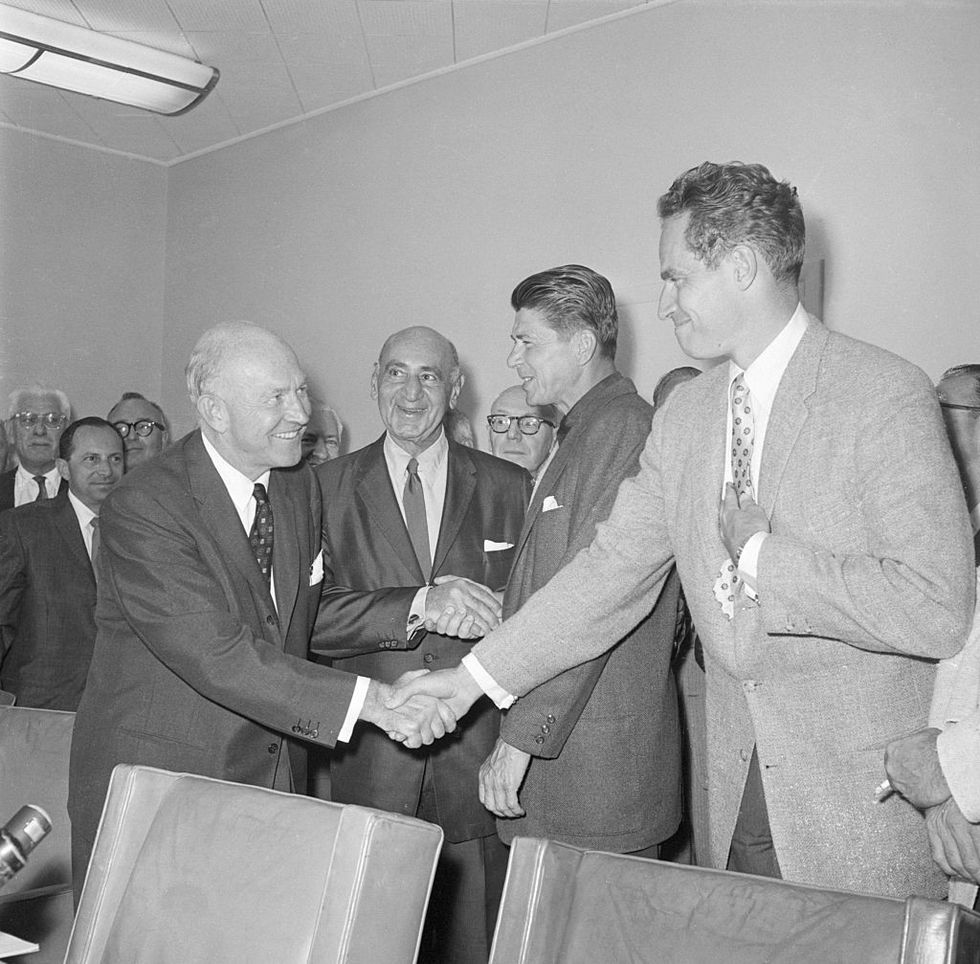
Charlton Heston (R) and then-Screen Actors Guild President Ronald Reagan shake hands with members of the Association of Motion Picture Producers after SAG ended its 1960 strike.
(Photo: Getty Images)
Ever since Louis Le Prince filmed the first movie, Roundhay Garden Scene, in 1888, actors have earned a living through their work being shown on screens small and large.
The first hit shows on TV aired in the mid-1940s, but actors initially earned far less from television than movies. Around 1960, with the advent of hits like Leave It to Beaver, Beverly Hillbillies, and Bonanza, TV became very profitable. TV’s growing prestige and economic heft gave television actors newfound power at the contract negotiating table.
Actors demanded that their craft be compensated for TV shows about as highly as for their film appearances. Led by future President Ronald Reagan and Charlton Heston—who went on to serve as a National Rifle Association president—the Screen Actors Guild went on strike on March 7, 1960. Among that union’s top demands: health care coverage and residuals for movies aired on television, reruns, and syndication.
Hwang Dong-hyuk, the creator of Squid Game, forfeited all residuals when he cut a deal with Netflix. It earned Netflix nearly US$1 billion, but Hwang got none of that bounty.
Residuals are a form of royalty paid to actors when movies and TV shows air on television after their initial run. That can include reruns, syndication, and the broadcasting of movies on television.
The actors union’s strike, which coincided then as today with a screenwriters strike, successfully negotiated a contract with executives that resolved the residuals conflict and secured health care coverage for its members.
That contract applied to broadcasting and, years later, cable TV.
But it doesn’t work for streaming, because streamed shows aren’t scheduled. Whereas Friends, a sitcom that initially aired on NBC, is available today on Max, formerly HBO Max, through syndication, and its actors receive relevant residuals, Orange Is the New Black originated on Netflix. Because it never runs on a different platform via syndication, the actors in its cast earn paltry residuals in comparison—even though viewers are still watching the show’s seven seasons.
Hwang Dong-hyuk, the creator of Squid Game, forfeited all residuals when he cut a deal with Netflix. It earned Netflix nearly US$1 billion, but Hwang got none of that bounty.
As I explained in my 2021 book, Streaming Culture, streaming has fundamentally changed the production and consumption of both TV and film while blurring the lines between them.
People consume different types of media through subscriptions and streaming technology than they do while watching broadcast TV and cable television. Actors and writers are concerned that their compensation hasn’t kept up with this transformation.
And the actors who are on strike argue that the formulas in place since 1960 to calculate residuals don’t work anymore.
In contrast, streaming residuals pay a flat rate for foreign and domestic streams.
Residuals paid for roles in broadcast TV shows are based on the popularity of those programs, with actors earning far more for hits like Grey’s Anatomy and NCIS than for duds. Hit shows can have a second life on streaming platforms and result in actors getting paid again for that earlier work.
In contrast, streaming residuals pay a flat rate for foreign and domestic streams. A streaming original film or TV show earns a set amount for residuals in its domestic market and second set amount for foreign markets. This fee doesn’t change based on popularity or the number of times a production is streamed.
But streaming has changed more than residuals for actors and writers. It has also transformed how TV shows are made.
Many TV seasons have grown shorter since streaming became the norm, falling from 20 or more episodes to 10 or fewer per season.
That’s because streamers started making shows with lower budgets, as it costs less to produce fewer episodes. The studios also cut costs by hiring fewer writers.
Since actors are typically paid per episode in which they perform, their salaries have dropped by virtue of having fewer appearances in even the most popular shows.
As gaps between seasons grow, some actors are having a harder and harder time making ends meet.
The gaps between seasons have also grown longer and more unpredictable. Every season of the nine-year run of Seinfeld on NBC began in the fall and ended the next spring, then picked up again the next fall.
Streaming shows are far less predictable.
Amazon Prime’s The Marvelous Mrs. Maisel paused for more than two years between seasons 3 and 4.
The same streamer aired the first season of Lord of the Rings: Power of the Rings, in September 2022, but Season 2 won’t be released until late 2024.
As gaps between seasons grow, some actors are having a harder and harder time making ends meet.
Another change has to do with the question of whether particular shows will keep going. In conventional broadcast or cable television, networks determine whether they will renew a show during the period known as “sweeps,” at the end of a TV season. Since streaming television has no defined seasons, these decisions can drag on.
This can leave actors and writers in limbo. And their contracts often stop them from working on other shows between seasons.
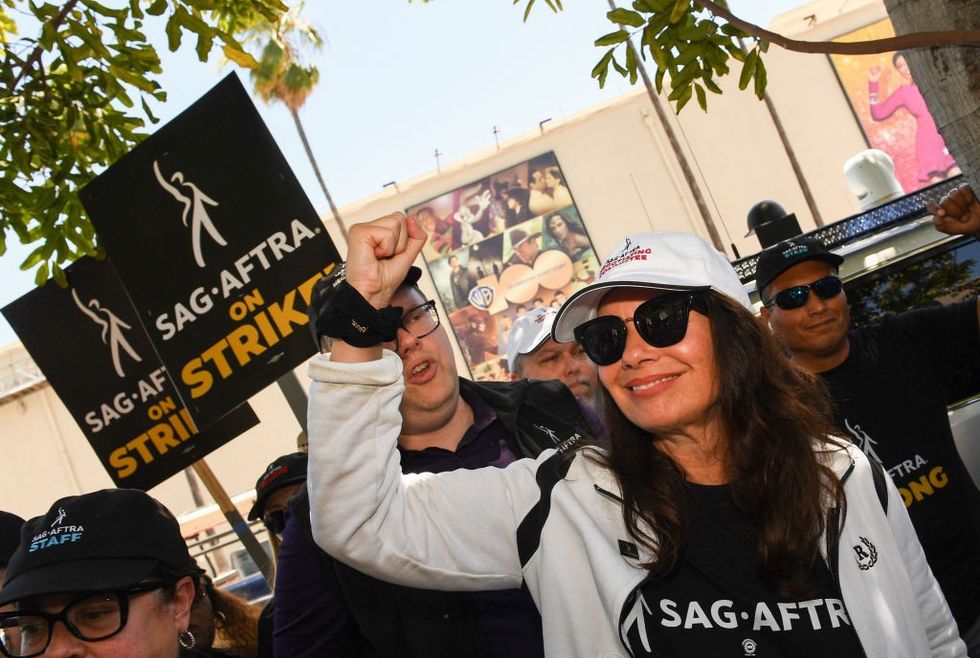
SAG-AFTRA President Fran Drescher joins Writers Guild members at a picket line outside of Warner Bros studio in Burbank, California, on July 14, 2023.
(Photo: Valerie Macon/AFP via Getty Images)
Although residuals and the number of episodes have until now been negotiable, perhaps the strike’s biggest issue is the studios’ use of artificial intelligence
Actors fear studios will use AI to replace actors in the future. Without a contract that says otherwise, once a studio films an actor, it can potentially use the actor’s likeness in perpetuity. This means a background actor could be shot for one episode of a TV show and continue to be seen in the background for seasons without pay.
That hasn’t happened yet, but many actors are certain it will.
As Drescher continually points out in her media appearances, 99% of actors are struggling on working-class incomes.
Actors object to the possibility that studios will seek to “own our likeness in perpetuity, including after we’re dead, use us in their movies without any consent, without any compensation to our performers, especially background performers,” said actor Shaan Sharma, best known for his role on The Chosen. “It’s inhumane. It is dystopian.”
Until now, actors and writers say, the studios have refused to negotiate over AI with actors or writers. But both unions see AI as a threat to their members’ livelihoods, a point SAG-AFTRA President Fran Drescher made on MSNBC.
As Drescher continually points out in her media appearances, 99% of actors are struggling on working-class incomes. Meanwhile, studio executives continue to increase their own pay. For example, in 2022, Netflix co-CEOs Reed Hastings and Ted Sarandos earned roughly $50 million each. Warner-Discovery CEO David Zaslav earned $39 million.
The gulf between what actors and top executives earn is a major difference between today’s actors and writer strikes and the 1960 strikes. In 1965, executives made 15 times the average salary of their workers. By 2021 those top execs were earning 350 times more than the average worker—including actors.
And while today’s biggest stars, like Pedro Pascal and Natasha Lyonne, earn millions for every performance, most actors struggle to make ends meet.
In Los Angeles, actors earn an average hourly wage of $27.73.
Meanwhile, studios are pulling in huge profits. For example, Netflix and Warner Bros. earned $5.2 billion and $2.7 billion in 2022, respectively.
As I explain in my new book, Digital Feudalism: Creators, Credit, Consumption, and Capitalism, striking actors and screenwriters are part of the wave of labor unrest in recent years. In my view, U.S. workers are rejecting a system that expects workers to buy more on credit while making a living with increasingly precarious jobs.
From Starbucks baristas to Amazon’s union organizers to the workers planning the pending UPS strike, more and more Americans are fighting for higher wages and more control over their schedules.
In fighting threats to their livelihoods, actors and screenwriters are the latest example of a national movement for stronger labor rights.
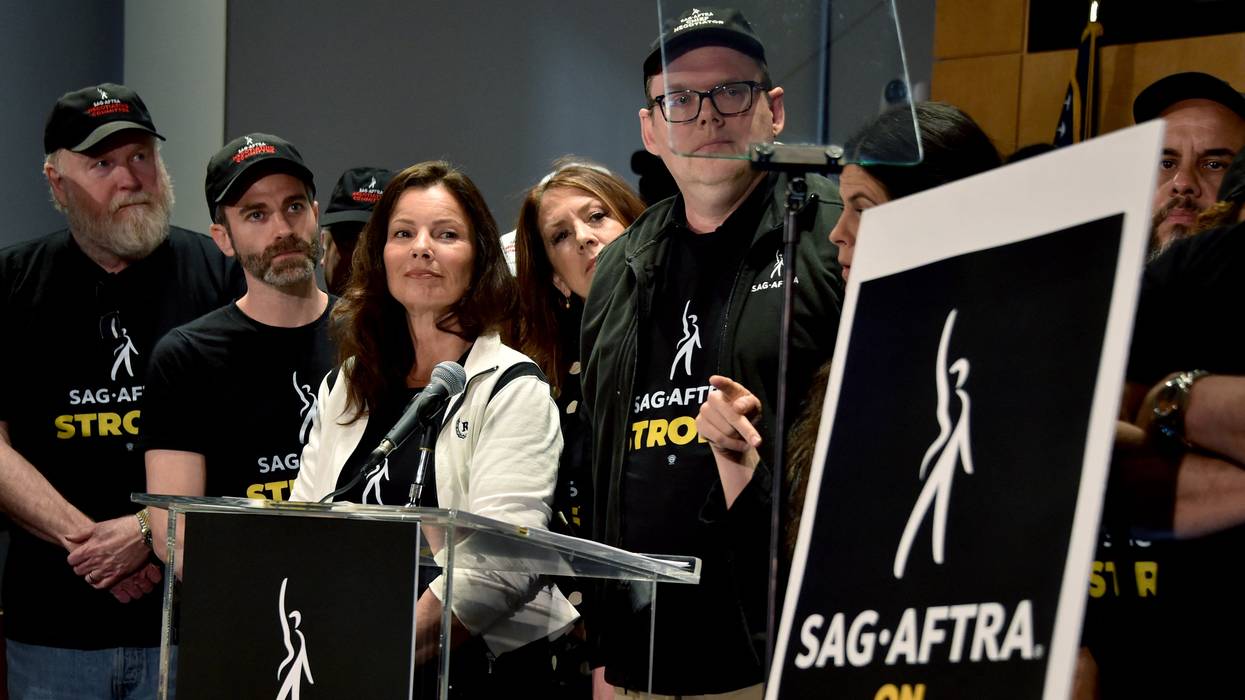
"The eyes of the world and, particularly, the eyes of labor are upon us," said Fran Drescher, president of SAG-AFTRA. "What's happening to us is happening across all fields of labor."
Powerful Hollywood studios are now up against more than 170,000 workers following a vote to strike on Thursday by the union representing television and film actors, as writers in the entertainment industry are now more than 10 weeks into their own work stoppage.
The dual strike marks the first time in 62 years that both writers and performers in the industry walked off the job to protest what they say are unfair working conditions and compensation—effectively grinding business in Hollywood to a halt.
About 160,000 actors are represented by the Screen Actors Guild-American Federation of Television and Radio Artists (SAG-AFTRA), and the union shares many of the concerns that prompted the Writers Guild of America (WGA) to go on strike in May, including the advent of artificial intelligence (AI) in entertainment.
The actors' three-year contract expired on Wednesday at 11:59 pm, after an extension from June 30 as negotiations with the Alliance of Motion Picture and Television Producers (AMPTP) continued.
Nearly 98% of voters in the actors union supported a strike authorization in a vote in June, and weeks later, more than 1,000 luminaries including Meryl Streep, Jennifer Lawrence, and John Leguizamo signed a letter saying they were "prepared to strike" to ensure that the vast majority of SAG-AFTRA members—who are not wealthy or famous and whose livelihoods depend on the union's demands being met—get the compensation and job security they need to continue working in the industry.
"We're looking to make sure that acting can be a sustainable career choice for people, not just the 100 most famous celebrities in the world, but for the whole large population of our membership," Duncan Crabtree-Ireland, national executive director and chief negotiator for SAG-AFTRA, told The New York Times. "They should be able to make a living and you know, pay a mortgage or pay rent like everybody else."
The union objects to how compensation for actors—particularly residual checks, which they typically receive for several years after appearing in a TV series—has been "severely eroded" in the age of streaming technology.
Actors are also concerned about how AI could be used to replicate their performances and images without compensation or permission, or potentially to replace them in films and television.
Veteran actor Fran Drescher, president of SAG-AFTRA, demanded that studios "wake up and smell the coffee!" at a press conference as the union announced the strike.
"We demand respect!" Drescher said. "You cannot exist without us!"
Drescher said the studios "plead poverty that they're losing money left and right, when they're giving hundreds of millions of dollars to their CEOs."
As the national board of the union met Thursday to vote on whether to call a strike, Disney CEO Bob Iger accused SAG-AFTRA and WGA of not being "realistic" in their demands.
Iger, noted Warren Gunnels, a longtime adviser to progressive Sen. Bernie Sanders (I-Vt.), "has an estimated net worth of $690 million... while the median pay of screenwriters has gone down by 23% over the past decade."
Drescher pointed out that the actors' strike comes as workers across industries are demanding fair pay and working conditions from employers that lavish executives with multimillion-dollar salaries and bonuses and direct their profits to shareholders while cutting employees' hours, paid sick time, and wages.
"The eyes of the world and, particularly, the eyes of labor are upon us," Drescher said. "What's happening to us is happening across all fields of labor. When employers make Wall Street and greed their priority and they forget about the essential contributors who make the machine run, we have a problem."