SUBSCRIBE TO OUR FREE NEWSLETTER
Daily news & progressive opinion—funded by the people, not the corporations—delivered straight to your inbox.
5
#000000
#FFFFFF
To donate by check, phone, or other method, see our More Ways to Give page.
Daily news & progressive opinion—funded by the people, not the corporations—delivered straight to your inbox.
With nine nuclear-armed nations and roughly 12,000 nuclear warheads on this planet, worries about nuclear war are unavoidable. However, the danger of a nuclear disaster at a seemingly “peaceful” nuclear facility is often ignored.
Nine countries now possess nuclear weapons and we have just seen the start of a new war in the Middle East over one more nation supposedly trying to acquire them. While we consider the dangers of such weapons and their capacity to cause massive destruction, we often overlook the risks associated with what still passes for “peaceful” nuclear power. With that in mind, let me revisit a moment when that reality should have become far clearer.
I had crawled into bed on March 10, 2011, opened my phone, and scrolled through my Instagram feed. The app was still fairly new then, and I was only following a dozen or so accounts, several from Japan. One amateur photographer there had posted photos minutes earlier of a fractured sidewalk and a toppled bookshelf. A massive earthquake had just rattled Tokyo.
A news article confirmed that a magnitude 7.9 quake had indeed struck 80 miles off the coast of Japan. Later, it was upgraded to 9.0, 1,000 times more powerful in terms of energy released. Holy shit, I thought. That’s huge! Worried, I emailed my old college friend Ichiro, who lived in Tokyo, to make sure his family was safe. A short while later, he replied that they were fine, but that a massive tsunami had indeed flooded the Tohoku region north of Tokyo. Many were dead.
“It’s horrible. It’s chaos,” he wrote me.
The nuclear industry has a reasonably polite name for a disaster like the one that was rocking Fukushima. They refer to it as a “beyond design-basis accident” because no single nuclear plant design can account for every possible problem it might encounter in its lifetime.
By the time Ichiro’s message arrived, distressing images of the tsunami were already circulating online and the death toll was rising fast, though the floodwaters were by then receding. As I watched heartbreaking videos of screaming onlookers, capsized boats, floating debris, and cars submerged like toys in a bathtub, another tragedy was unfolding that few, even inside the Japanese government, were aware of. A nuclear plant in Fukushima, operated by TEPCO (the Tokyo Electric Power Company), had been swamped by the tremendous flooding and lost all power.
The Fukushima Daiichi nuclear plant, built by General Electric (GE) in the mid-1960s, was designed to withstand natural disasters, but its creators never foresaw an earthquake like that. When the plant’s sensors detected the quake, its reactors automatically shut down. That emergency shutdown (or scram) halted its fission process, triggering backup power to keep cold seawater flowing through the reactors and spent-fuel containers to prevent overheating. Things at Fukushima were going according to plan until that massive tsunami battered the plant, washing away transmission towers and damaging electrical systems. There were backup generators in the basement, but those, too, had been inundated by waves of seawater, and an already bad situation was about to get far worse.
A power outage at a nuclear power plant is known as a “station blackout.” As you might imagine, it’s one of the worst scenarios any nuclear facility could possibly experience. If all electricity is lost, that means water is no longer being pumped into the reactor’s scalding-hot core to cool it down. And if that core isn’t constantly being cooled, one thing is certain: Disaster will ensue. The fission process itself may be complicated, but that’s basic physics. To make matters worse, there were three operating reactors at Fukushima Daiichi. Luckily, three others had already been shut down for maintenance. If power wasn’t restored in short order, that would mean that all three of Fukushima’s reactors were in very big trouble.
We would later learn that no one—not at TEPCO, GE, or among Japanese regulators—had ever considered the possibility that all the reactors might lose electricity at once. They had only drawn up plans for one reactor to go down, in which case the others could keep the plant running. But all of them offline, and every generator out of commission? There was no precedent or playbook for that.
The nuclear industry has a reasonably polite name for a disaster like the one that was rocking Fukushima. They refer to it as a “beyond design-basis accident” because no single nuclear plant design can account for every possible problem it might encounter in its lifetime. The fact that there’s a term for this should make you anxious.
Over the next several days, the emergency at Fukushima Daiichi only worsened. Every effort to restore power to its reactors hit a dead end. On-site radiation-detection equipment, which would have triggered warnings and guided evacuation efforts for those in danger, was no longer functioning. Plans to pump water into the reactors to cool them had faltered. Their cores kept overheating, and the boiling pools of spent fuel were at risk of drying out, potentially triggering a massive fire that would release extreme amounts of radiation.
Within three days, following a series of fires, hydrogen explosions, and panic among those aware of what was happening, Fukushima’s Units 1, 2, and 3 experienced full-scale core meltdowns. Over 150,000 people within an 18-mile radius had already been forced to evacuate, and radiation plumes would take two weeks to spread across the northern hemisphere, although the Japanese government wouldn’t admit publicly that any meltdown had occurred until June 2011, three months later.
The only good news for the 13 million people living 150 miles south in Tokyo was that, during and immediately after the meltdowns, prevailing winds carried much of Fukushima’s radioactive material away from the smoldering reactors and out to sea. It’s estimated that 80% of the fallout from Fukushima ended up in the ocean, meaning most of it headed east rather than toward population centers to the south and west. The other fortunate news was that the spent fuel containers had somehow survived it all. If their water levels in the pools had been drained, far more radiation would have been released.
But Tokyo wasn’t completely spared. After years of research, scientists discovered that cesium-rich microparticles had blanketed the greater Tokyo area, an unpopular discovery that drew backlash and threats of academic censorship. Areas around the Fukushima exclusion zones recorded the highest radiation levels. Japanese government officials continually downplayed the dangers of the accident and were reluctant to even classify the event as a Level 7 nuclear disaster, the highest rating on the International Nuclear Event Scale, which would have placed it on a par with the 1986 Chernobyl nuclear disaster. Japanese officials have also failed to conduct long-term epidemiological studies that would include baseline measurements of cancer rates, which has cast doubt on thyroid screenings that found troubling incidents of cancer far higher than researchers expected.
Prior to the earthquake, the ocean’s cesium-137 levels near Fukushima were 2 Becquerels (a unit of radioactivity) per cubic meter, well below the recommended drinking water threshold of 10,000 Becquerels. Just after March 11, 2011, cesium-137 levels there spiked to 50 million before decreasing as sea currents dispersed the radioactive particles away from the coast. The ocean, however, had been poisoned.
In the years that followed the Fukushima nuclear disaster, researchers documented a frightening, yet predictable trend. Radioactive isotopes in seawater were taken up by marine plants (phytoplankton), which then moved up the food chain into tiny marine animals (zooplankton) and, eventually, to fish. Cesium-137 consumed by fish can reside in their bodies for months, while Strontium-90 remains in their bones for years. If humans then eat such fish, they will also be exposed to those radioactive particles. The more contaminated fish they eat, the greater the radioactive buildup will be.
In 2023, over a decade after the incident, radiation levels remained sky-high in black rockfish caught off the Fukushima coast. Other bottom-dwelling species have been found to be laden with radioactivity, too, including eel and rock trout. Further concerns have been raised about the treated radioactive water that TEPCO continued to release into the ocean, prompting China to suspend seafood imports from Japan. Aside from those findings, there have been very few studies examining the effects of Fukushima’s radiation on ecosystems or on the people of Japan.
The world is unpredictable, and even the safest nuclear power plant can’t guarantee that it will hold up against whatever tragedy is coming next.
“Japan has clamped down on scientific efforts to study the nuclear catastrophe,” claims pediatrician Alex Rosen of International Physicians for the Prevention of Nuclear War. “There is hardly any literature, any publicized research, on the health effects on humans, and those that are published come from a small group of researchers at Fukushima Medical University.”
Recognizing such levels of radiation, even if confined to the waters near Fukushima, would cast the country’s nuclear industry as a significant threat—not only to Japan but globally. Any admission that Fukushima’s radiation is linked to increased cancer rates would raise broader concerns about nuclear power’s future viability. Radiation exposure is cumulative and, although Fukushima didn’t immediately cause mass casualties, it wasn’t a benign accident either. It took decades before it was accepted that Chernobyl had caused tens of thousands of excess cancer deaths. It may take even longer to completely understand Fukushima’s full effects. In the meantime, the still ongoing cleanup of the burned-out facilities may cost as much as 80 trillion yen ($500 billion).
It’s been 15 years since Fukushima’s reactors experienced those meltdowns, and we still don’t fully understand their long-term repercussions. Nuclear power advocates will argue that Fukushima wasn’t a serious incident and that nuclear technology is still safe. They’ll minimize radiation threats, remain optimistic that new reactor designs will never falter, dismiss the fact that there’s simply no permanent solution for radioactive waste, and overlook the inseparable connection between nuclear power and atomic weapons. After all, among other things, we’ll undoubtedly need nuclear energy to help power the artificial intelligence craze, right?
The operators and regulators at Fukushima were wholly unprepared for what unfolded on that fateful day in 2011. They never imagined that an earthquake of such magnitude could trigger a tsunami so immense that it would destroy the power grid, knock out water pumps, and disable backup generators. Likewise, no one can guarantee that nuclear plants or radioactive storage tanks are safe in war zones, or that the rivers and lakes needed to cool reactors globally won’t one day run dry or become too hot to do so—something that has already happened in Europe. Ultimately, we can’t anticipate every mishap, human error, or—especially in the age of climate chaos—every natural disaster that may come down the pike. The world is unpredictable, and even the safest nuclear power plant can’t guarantee that it will hold up against whatever tragedy is coming next.
Fifty miles south of where I live in Southern California, an old nuclear facility sits idle on the Pacific Coast in an earthquake-and-tsunami-hazard zone, not unlike the site where Fukushima was built. It’s not the only such plant in California, but it’s the one I often visit. When I’m there, I think about Fukushima and imagine what would happen if a similar, unexpected disaster reached California’s shores and how such an event would forever alter this land.
The morning light was peaking over the sandstone bluff, and the offshore breeze was soft and brisk. I’m barefoot in a wetsuit, trudging my surfboard down a dirt road at San Onofre, a state park in northern San Diego County, for a “dawn patrol” surf session. A series of high tides—likely made more extreme by rising sea levels—has eroded a large portion of the parking lot below, so the beach can only be reached on foot or by bike. I’m not complaining. It’s worth the short trek. The absence of vehicles down here also means fewer surfers in the water.
San O, as it’s lovingly referred to, has a rich surf history spanning 100 years. Duke Kahanamoku, the “father of modern surfing,” who popularized the ancient Hawaiian sport in Southern California and often visited San O in the 1940s, helped to solidify it as one of the region’s premier breaks and an early hub of SoCal surf culture. The waves are long and rolling thanks to an extensive cobblestone reef. It’s a magical place.
Things around here have changed quite a bit, however, since “The Duke” first paddled his heavy wooden board into the surf. Just down the beach, the San Onofre Nuclear Generating Station sits precariously perched 100 feet from the water. Its two large domes are an ominous sight. Constructed in the 1960s, the plant is no longer producing electricity, but the station’s 123 large concrete-and-steel storage vessels remain, housing 3.6 million pounds of highly radioactive waste. Since nobody wants the toxic stuff, it just sits there, looming, awaiting the next big earthquake like the one that shook Fukushima. San Onofre is designed to withstand a 7.0 shaker, but scientists believe the area is capable of producing one 10 times larger and 32 times stronger. With 8.4 million people living within a 50-mile radius, any geological upheaval at San O could make a hell of a mess. It’s a worrisome thought I’d rather not dwell on.
Although it is a state park, the ground that San Onofre sits upon is leased from the federal government because it lies within the 195-square-mile boundary of the Camp Pendleton Marine Corps base. More than a base, Camp Pendleton is a testing ground, where heavy artillery often booms in the distance. An occasional mock raid can occupy the beaches; helicopters sometimes swarm, and Amphibious Combat Vehicles crawl ashore. There’s even a faux Afghan village that was built at Camp Pendleton, costing taxpayers $170 million, where Marines can imagine terrorizing towns from Iran to Gaza. So strange that amid all this madness, San Onofre is where I search for solace.
In 2013, a radioactive gas leak from one of the nuclear plant’s steam generators, which are also within the military reserve, led to its closure. Southern California Edison (SCE), which operates the facility, reassured the public that there was nothing to be concerned about. Few, however, would consider SCE a trustworthy source. Over the years, the company has been caught in a series of lies about the safety of San Onofre, including falsifying firewatch records and grossly mishandling waste. Not dissimilar to TEPCO’s Fukushima deceit.
Like all nuclear power plants, San Onofre needed a lot of water to cool its three reactors, sucking in an astonishing 2.4 billion gallons of seawater a day. As you can imagine, that thirst had a serious impact on ocean ecology, killing fish and wrecking kelp beds. It’s taken over a decade, but some of what was destroyed is finally coming back to life after years of restoration. Despite the progress, discharge pipes still release radioactive effluent laced with cesium-137, cobalt-60, and tritium—a mile offshore 170 times a year. But SCE says there’s nothing to worry about. They also insist they don’t have much of a choice. All that leftover waste needs to be kept from overheating, and using seawater is the only option available.
It’s better not to think too much about a future Armageddon or what might be swimming beneath me while I’m out there bobbing between sets of waves. Surfing is supposed to help relieve my anxiety, not exacerbate it. It’s a little like backpacking in the wilds of Montana, which I also love to do, without constantly worrying about being chomped by a grizzly bear while in my sleeping bag. There are hazards to living in this crazy world—the worst of which, I’ve come to believe, are of the man-made variety.
As I slide my surfboard into the back of my van and peel off my wetsuit, I glance at San Onofre’s domes, which will start to be dismantled this year, and ponder the horrors still affecting Japan, fearing that someday a destructive tsunami may batter this beach, too. Sadly, it’s almost inevitable.
With nine nuclear-armed nations and roughly 12,000 nuclear warheads on this planet, worries about nuclear war are unavoidable. However, the danger of a nuclear disaster at a seemingly “peaceful” nuclear facility is often ignored. The future of atomic energy remains uncertain, but it is our duty to eliminate this hazardous energy source before another Fukushima triggers a war-like catastrophe all its own.
As the Trump regime tightens the screws of the embargo by further restricting oil access to the country, legacy media continue to toe the government’s line on the issue, with coverage that is either low on context or outright stenography.
The US government’s decades-long economic blockade against Cuba is in many ways not a complicated issue. The policy of restricting trade with the country’s communist government was put into full force under the Kennedy administration, with the explicit goal of causing enough economic hardship, hunger, and desperation to spur regime change.
The United Nations General Assembly has overwhelmingly and consistently voted to end the embargo since a resolution to that effect was first introduced in 1992. Member countries argue that the embargo violates international law. It has cost the country anywhere between $130-170 billion since its inception, and has restricted the Cuban people’s access to food and medicine. And it has not accomplished its primary goal of overthrowing the Cuban government.
These are key points that should be included in any article reporting on Cuba’s economic struggles. However, US journalists have consistently leaned into the US government’s framing of the issue: that the country’s communist government is largely or exclusively to blame for its financial woes (FAIR.org, 11/4/24).
As the Trump regime tightens the screws of the embargo by further restricting oil access to the country, a move that has been condemned by UN human rights experts as a further violation of international law (New York Times, 2/13/26), legacy media continue to toe the government’s line on the issue, with coverage that is either low on context or outright stenography.
President Donald Trump has tried to justify his administration’s significant escalation in tactics on the basis that Cuba represents an “unusual and extraordinary threat” to the security of the United States, primarily by supporting US geopolitical enemies. This accusation is not new: The country has previously been accused of hosting both Russian and Chinese spy bases. Despite neither claim being backed by evidence (Belly of the Beast, 2/6/26, 8/1/24), the Trump administration doubled down on them when rolling out its new and harsher set of policies.
But the administration also unveiled a new claim that upped the ante: Cuba has apparently been harboring Hamas and Hezbollah forces, not 90 miles off of our shores! “Cuba welcomes transnational terrorist groups, such as Hezbollah and Hamas,” reads an executive order from January 29,
creating a safe environment for these malign groups so that these transnational terrorist groups can build economic, cultural, and security ties throughout the region, and attempt to destabilize the Western Hemisphere, including the United States.
The administration did not provide evidence to support this claim, and none has surfaced, despite local journalists’ investigative efforts (Belly of the Beast, 2/2/26).
That hasn’t stopped legacy media from repeating the claim uncritically, with nothing more than an “alleged” or “accused” attached, suggesting reporters can’t be bothered to fact-check it. This could be found in coverage in both The Guardian (1/29/26) and CNN (2/1/26) at the beginning of the recent round of escalations.
A full month later—plenty of time for a serious reporter to get to the bottom of the allegations, or at least ask the administration what evidence it has—The Atlantic (3/1/26) relayed the claim yet again, with just as little evidence supporting it as when it was first made. Throwing in the word “alleged” does little to change the fact that the US government has been given primary control of the narrative in this media coverage.
Despite the abundance of evidence regarding the intentions of US foreign policy toward Cuba, legacy media often fail to give proper context when reporting on the topic.
The Cuban government has categorically denied harboring or supporting terrorist organizations (Granma, 2/2/26). But defying basic journalistic practice, neither The Guardian nor The Atlantic gave any space to the Cuban government to respond to the claims made against it.
The Atlantic did quote a source that pushed back on using Cuba’s designation as a “state sponsor of terrorism” as a rationale for overthrowing its government. But that designation long preceded Trump’s recent comments, and the article did not offer any challenge to the recent accusations. The CNN article included only that Cuban President Miguel Díaz-Canel said that Trump’s threats were made under “empty pretexts.”
Some recent New York Times reports, on the other hand, have shown a willingness to break from the official narrative. An article by reporter Frances Robles (1/30/26) on the decision to cut off fuel to the island noted that the administration hadn’t provided evidence to support its claims that Cuba is harboring Hamas or Hezbollah fighters.
The article’s sourcing is more robust as well. For instance, the Times gave Mexico’s President Claudia Sheinbaum space to oppose Trump’s decision, affirming her support for the sovereignty of the Cuban people and respect for international law. This was followed by Cuba’s foreign minister saying that what his government calls the “economic genocide” being enacted by Trump’s decision is built on “a long list of lies.” A social media post attributed to the Venezuelan government rounded out the opposing sources balking at the idea that Cuba constitutes a threat to the US.
The Times (2/20/26) challenged official terminology in another piece headlined “A New US Blockade Is Strangling Cuba.” The article, by Jack Nicas and Christiaan Triebert, explained that the term “blockade” is a contentious one:
The US government called its 1962 policy a “quarantine” to avoid using the word “blockade,” which legally could be interpreted as an act of war. The Trump administration has also avoided using the word “‘blockade.”
Regardless of the Trump administration’s refusal to call the recent change in policy a “blockade,” the article said, “it is functioning as one.”
The article also quoted Fulton Armstrong, “former lead Latin American analyst for the Central Intelligence Agency,” who agreed with the diagnosis. “Among us longtime Cuba watchers, we’ve always resisted people using the word blockade,” he says. “But it is indeed a blockade.”
(Of course, the Cuban government has considered the US’ economic punishment to be an illegal blockade and a “wartime measure” long before the recent escalation—Granma, 2/2/17.)
The article also had a rare reference to the possible illegality of US sanctions:
The United Nations has criticized the US policy as a violation of international law that has exacerbated the suffering of Cuba’s roughly 10 million residents.
Despite the abundance of evidence regarding the intentions of US foreign policy toward Cuba, legacy media often fail to give proper context when reporting on the topic. In a Reuters report (2/25/26) about the Trump administration allowing oil sales to private companies in Cuba amid the ongoing crisis, Secretary of State Marco Rubio was given space to blame the Cuban government for the country’s woes without any pushback.
“What the Cuban people should know is this: that if they are hungry and they are suffering, it’s not because we’re not prepared to help them. We are,” he said. “It’s that the people standing in the way of us helping them is the regime, the Communist Party.”
Are there any average citizens of Cuba who value their nation’s sovereignty, who don’t want their government to relent, or who blame the United States for enacting policies designed to hurt their own economy? Herald readers may never know.
The article allowed this quote to hang bizarrely in the middle of a story about the US exercising disproportionate power over the country. The article put very little blame on the US at all, noting that its recent escalations have only been “worsening an energy crisis in the Communist-run country that is hitting power generation and fuel for vehicles, houses, and aviation.”
Nowhere was the long history of US attacks on the Cuban economy mentioned. Nor was there any suggestion that Rubio, a man who boasted as a child that he would one day “lead an army of exiles to overthrow Fidel Castro and become president of a free Cuba” (Atlantic, 12/23/14), might be invested in policies that might achieve his childhood dream. Rubio’s recent admission (Belly of the Beast, 1/28/26) that the Trump administration would like to see regime change in Cuba, a condition that is itself codified into US law as a prerequisite for lifting the “embargo,” is glaringly absent as well.
Similarly, the Miami Herald (2/17/26)—long hostile to the Cuban government—depicted Rubio as simply urging the Cuban government “to make economic reforms as a way out of the impasse.” While documenting the poor conditions on the streets of Cuba, the Herald‘s Nora Gámez Torres reported:
The economic crisis, a deep economic contraction that has lasted years, has largely resulted from the failure of the socialist economic model, a hard-currency-hungry military stashing billions of dollars in its accounts, and years of Cuban leaders dragging their feet on urgently needed economic reforms. The Covid-19 pandemic and the tightening of US sanctions under the first Trump administration also played a part.
The “stashing billions” reference is to a bogus story the same reporter (Miami Herald, 8/6/25) published last year; Gámez Torres, who accused the Cuban military of having a huge secret reserve of cash based on a leaked spreadsheet, apparently failed to understand that a dollar sign is used to denote both US dollars and Cuban pesos (FAIR.org, 8/29/25). In her latest piece, the final line of the paragraph is the only reference to the decades-long history of economic warfare against the island.
“By design, these sanctions exist in order to suffocate the country economically, and they’re very effective in doing so,” Alexander Main, director of international policy at the Center for Economic and Policy Research, told FAIR. He notes that the sanctions are aimed at cutting Cuba off from the wider economic world. For instance, Cuba’s current placement on the US State Sponsor of Terrorism list has been deterring foreign investment in the country.
“It’s not going to happen because nobody wants to invest. They’re scared to death of running afoul of the sanctions criteria, so there’s this effect of overcompliance where companies are just not going to do it,” he says. “The risk of being hit by secondary sanctions is just way too high.”
And yet, throughout the Herald article, the US is depicted as simply wanting to “make economic changes,” “increasing external pressure” in an attempt to “reform the island’s hardline Marxist economy.”
The idea that the Cuban government has been rigid and unwilling to enact reforms is a false one, according to Main. “For better or for worse, they’ve taken a lot of measures to open up the economy,” including a major reform in 2021 that gave the private sector access to most sectors of the economy. “There’s a very limited number of sectors that remain completely under state control.”
“The problem with these reforms,” he says,
is that you can’t really implement them when there’s an embargo or blockade going on, when you’re basically restricting all of foreign capital from getting in, when you’re restricting the means of Cubans to import essential inputs for their own national production, when you’re starving the economy of cash. These reforms aren’t going to go very far.
Yet Cuban leaders are depicted throughout the Herald article as stubborn and cruel for refusing to give in to US pressure, which the paper’s choice of sources would have you believe is contrary to the interests of the people. Indeed, resisting extended economic attack, and refusing to allow the United States its God-given right to decide the structure of any country it chooses, is depicted as Cuban leaders being “willing to drown an entire people in the name of ideology,” by an unnamed “source in connection with Cuban officials.”
Are there any average citizens of Cuba who value their nation’s sovereignty, who don’t want their government to relent, or who blame the United States for enacting policies designed to hurt their own economy? Herald readers may never know, as the source given the most space to push back on the economic attack is a former Democratic congressmember from Miami. A quick reference to Cuban diplomats encouraging comparisons between the Trump admin’s actions and Israel’s in Gaza is also thrown in four paragraphs from the end of the article, though only in the context of “what some Cuba observers see as a strategy to blame the humanitarian crisis entirely on the United States and create a public-opinion crisis that would put pressure on the administration.”
The Herald gives priority to sources that are consistently critical of the Cuban government, though it is not especially difficult to find Cubans capable of giving a different perspective, as a video from Cuba-focused outlet Belly of the Beast (1/31/26) shows. The Herald’s reporting makes clear that the paper is capable of lifting up Cuban voices, just so long as those voices are singing the right tune.
Increasing the corporate tax rate would raise significant revenues and have little impact on overall investment, while the costs would be borne predominantly by wealthy shareholders of large corporations.
The Trump administration’s sweeping tariffs have harmed the economy by increasing input costs and uncertainty for businesses and raising prices for consumers, placing a particularly heavy burden on people with low and moderate incomes. Now President Donald Trump is floating the idea of replacing income taxes with tariffs—a proposal that could not plausibly make up for lost revenue and would follow the administration’s pattern of showering wealthy households with windfalls at the expense of households with incomes in the bottom half of the income distribution. This plan would raise taxes on people with incomes in the bottom 20% by $4,000 (26% of income) and the middle 20% by $5,300 (8.7% of income), while wealthy households would receive a $337,000 windfall (21% of income), on average.
Instead, policymakers should abandon the administration’s economically harmful and regressive tariffs and pursue more efficient and equitable revenue-raising policies. In particular, raising the corporate tax rate, which mostly taxes profits not inputs, would raise significant revenues and have little impact on overall investment, while the costs would be borne predominantly by wealthy shareholders of large corporations.
Beginning in February 2025, the administration announced and implemented sweeping taxes on imported goods, known as tariffs, justifying them in part on the need to raise revenues. The Supreme Court struck down some of these tariffs, but the administration responded by imposing a new set of replacement tariffs under a different authority. These tariffs are still highly significant: as of March 10, the effective tariff rate was 12% compared with 2.6% in early 2025. Underneath this average rate is a complex and highly variable tariff regime that differs considerably by country and type of product and has been subject to frequent changes over the past year.
Tariffs can play a useful role in trade policy as a way to remedy specific trade issues—such as the need to ensure domestic production of goods related to national security—but are highly flawed as a general revenue source because of the economic distortions they create and the burden they place on families with low and moderate incomes. To a much greater extent than other types of taxes, tariffs distort, or alter, households’ and businesses’ decisions about purchasing, investment, and savings in ways that can make them worse off. For example, high tariffs on imported steel encourage US companies to ramp up steel production instead of investing capital and labor into other sectors that might, absent the tariff, generate higher returns.
If tariffs are expanded to replace all or a substantial share of the federal income tax, most households, and especially those with the lowest incomes, would face a massive tax increase, while wealthy households would be substantially better off.
Tariffs can harm the domestic economy in other ways. By raising the price of imported business inputs (that is, goods that are used to make other goods, such as steel used in automobiles and buildings, including apartment buildings), goods manufactured in the US are often more expensive because of tariffs. Even producers of purely domestic goods may increase prices because of reduced competition from tariffed foreign goods. Moreover, the tariffs’ chaotic and haphazard implementation over the past year has created an uncertain environment that is harmful to businesses trying to decide when, whether, or where to invest.
Other countries may also impose their own tariffs on US products (or otherwise retaliate), which can reduce US exports and harm domestic markets, as happened when China paused purchases of US soybeans last year.
Tariffs are regressive because they place a heavier burden on households with low and moderate incomes than on high-income households compared to other taxes. If made permanent, the current tariffs would reduce after-tax incomes of households with incomes in the bottom 10% of the income distribution by about 1.4%, compared with 0.4% for households with incomes in the top 10%, according to Yale Budget Lab. For households struggling to afford to meet their basic needs, this tariff-driven income reduction could have serious consequences: Yale estimates that the administration’s tariffs last year would lead to hundreds of thousands more people living in poverty, with millions more seeing their incomes fall further below the poverty line. Higher tariffs would increase poverty more severely.
Economists generally agree that tariffs are a regressive tax, while federal income taxes are progressive. For example, tariffs are imposed on goods at a flat rate meaning that everyone purchasing those goods pays the same rate regardless of income, instead of a progressive rate structure that ensures high-income households pay higher rates than households with lower incomes.
For this reason, if tariffs are expanded to replace all or a substantial share of the federal income tax, most households, and especially those with the lowest incomes, would face a massive tax increase, while wealthy households would be substantially better off.
Importantly, this calculation ignores the fact that it would be impossible for tariffs to generate enough revenue to replace the income tax: The personal income tax alone generates $2.4 trillion in annual revenue while estimates suggest tariffs could realistically raise a maximum of only about $500 billion.
Increasing revenues by raising the corporate income tax rate would be a far better approach than the president’s harmful tariff scheme. Raising the corporate tax rate—which Republicans slashed in 2017—would raise substantial revenue in a progressive and efficient manner.
While tariffs are a tax on imported goods, including business inputs, the corporate income tax is a tax on corporations’ profits, or their net income after deducting expenses. Notably, a substantial (and growing) share of the corporate tax base consists of so-called “excess profits”—that is, profits above what a firm needs to justify an investment. Taxing those profits is efficient because it would not deter the firm from making break-even investments because they would remain profitable. A study by tax scholar Edward Fox estimated that as much as 96% of the corporate tax fell on excess profits from 1995 to 2013.
More of the corporate tax is falling on excess returns because the amount of those excess profits is rising, in part, due to declining competition and increasing concentration among corporations, which give businesses “market power” that allows them to raise their prices well above their costs. Another reason is that changes in tax policy have effectively exempted more of firms’ normal return on investments from taxation, meaning the corporate tax has applied more to excess profits. For example, the 2017 tax law allowed firms to immediately deduct the full cost of equipment purchases rather than deduct those costs gradually as the value of the investment declines—a change last year’s Republican megabill both made permanent and expanded.
Given the nation’s need for more revenues, policymakers should embrace sound, progressive policies like raising the corporate tax rate.
Some may argue that higher corporate taxes would simply be passed on to consumers through higher prices, but the corporate tax—as a tax on profits—allows businesses to deduct and exempt from taxation key input costs, especially labor. This means that it generally does not have a direct impact on firms’ pricing decisions. The traditional economic concern about raising corporate taxes is not that they raise prices, but that they can reduce investment and thus affect productivity and workers’ wages. Yet, because they often (and increasingly) fall on excess profits, they are less likely to reduce investment and are a relatively efficient source of revenue.
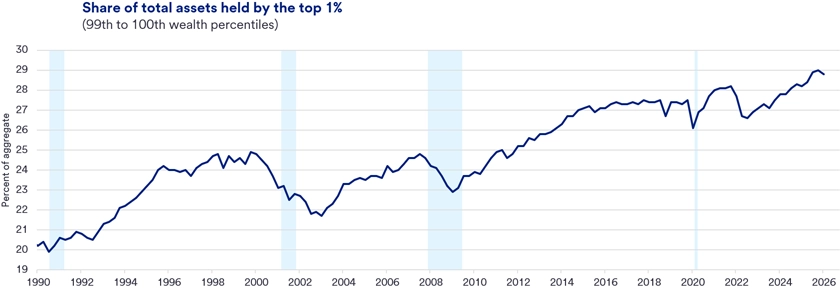
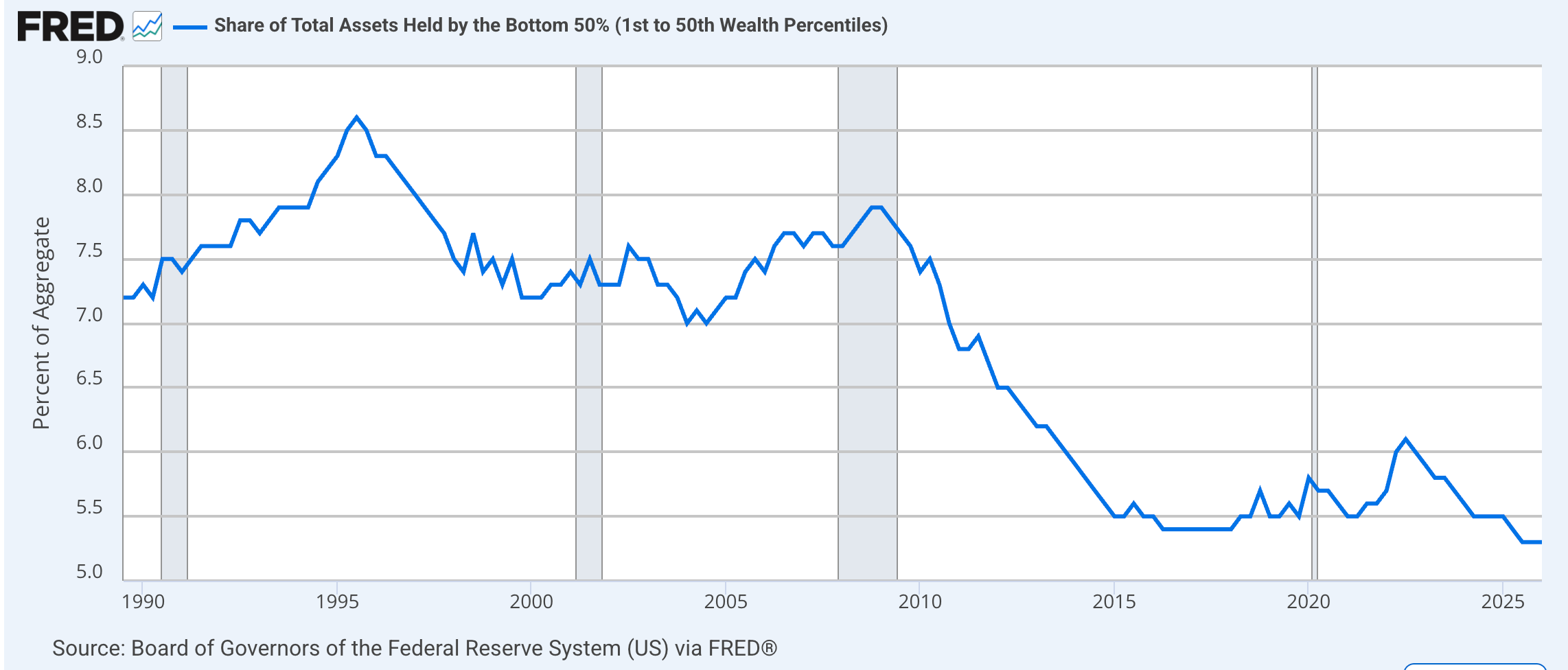
Raising the corporate tax rate would also make the tax system more progressive. Both conventional scoring authorities and outside experts (e.g., the Joint Committee on Taxation, Congressional Budget Office, Department of the Treasury, and the nonpartisan Tax Policy Center) agree that the corporate tax is predominately paid by shareholders and the owners of capital income. The ownership of corporate shares—as with other kinds of wealth—is highly concentrated among households with high net worth; households with net worth in the bottom 50% hold just 1% of equities. Because white households are overrepresented among the wealthy while households of color are overrepresented at the lower end of the wealth distribution due to racial barriers to economic opportunity, raising the corporate tax rate can also help reduce racial wealth inequality.
Evidence from the 2017 tax law supports the view that corporate tax cuts primarily benefit high-income households—and, inversely, that corporate tax increases would fall on those same households. The law cut the corporate tax rate dramatically from 35% to 21%, with people at the top of the income distribution receiving the vast majority of the resulting gain. One study found that people with incomes in the top 10% of the income distribution received 80% of the 2017 law’s corporate tax cuts benefit.
Moreover, raising the corporate tax rate has the potential to raise significant revenues; raising it to 28%—halfway between the current rate and the pre-2017 tax rate—would raise around $1 trillion over 10 years—enough to replace about two-thirds of the current tariffs.
Given the nation’s need for more revenues, policymakers should embrace sound, progressive policies like raising the corporate tax rate, while abandoning harmful tariffs and resoundingly rejecting the president’s disastrous proposal to replace income taxes with massive tariffs.
This year will feature, more than any time since the Civil War, an unprecedented referendum on democracy. Time is short, and both the danger of fascism and the opportunity to renew America are at our doorsteps.
President Donald Trump lied us into a war with Iran that now threatens to ignite the globe. He’s been accused of raping 13-year-old girls. He made a shocking joke in the White House on Thursday, speaking with the prime minister of Japan, about Pearl Harbor, provoking an international incident. He attacked Venezuela and is now threatening Cuba. And whatever Russian President Vladimir Putin wants, Trump gives him.
The man is poison. But it sure as hell didn’t begin with him.
Our country has been poisoned for decades now, and if we don’t remove the poison and start using the antidote, America may soon be completely unrecognizable as a “free” nation. It’s taken around 50 years, but we’re now at the point of maximum crisis.
First came the poison of big money corrupting politics.
Literally, no other developed country in the world allows this democracy-killing corruption that five corrupt Republicans on the Supreme Court legalized.
Back in 1971, Lewis Powell thought he saw a communist threat in Ralph Nader. Literally: he named him in his infamous manifesto, the Powell Memo, arguing that calls to regulate auto safety with seat belts and soft dash boards (Nader’s book Unsafe At Any Speed) were simply the first steps toward a socialist takeover of America.
“Perhaps the single most effective antagonist of American business,” Powell wrote, “is Ralph Nader, who—thanks largely to the media—has become a legend in his own time and an idol of millions of Americans.”
Nader (who wrote the Foreword to my book The Hidden History of Monopolies: How Big Business Destroyed the American Dream) and people like Rachel Carson, with the environmental movement her book Silent Spring had inspired, threatened, Powell believed, the core of America’s free enterprise system.
Regulation, Powell (a tobacco lawyer) asserted, was just step one to a total Stalinist takeover of America.
“The overriding first need,” Powell wrote, “is for businessmen to recognize that the ultimate issue may be survival—survival of what we call the free enterprise system, and all that this means for the strength and prosperity of America and the freedom of our people.”
The following year Richard Nixon put Powell on the Supreme Court, where he personally authored the 1978 Boston v Bellotti decision that claimed billionaire and corporate money in politics wasn’t bribery or corruption (as it had been under the law since the founding of the republic) but merely an exercise of First Amendment-protected free speech. Money wasn’t money: It was speech.
That decision greased the path for the later doubling down with Citizens United, and produced a tsunami of corporate money that flooded into the GOP in 1980 (at the time the Democrats were largely funded by labor unions; their embrace of corporate money would come in 1992 with Bill Clinton’s “New Democrats”), floating Ronald Reagan and his neoliberal Reagan Revolution into power.
Since then, big business and billionaires have discovered that the investment of a few million dollars into buying politicians can produce billions or even trillions in returns. When morbidly rich hedge fund guys poured a million or so dollars into Kyrsten Sinema’s coffers, for example, she demanded changes to the Inflation Reduction Act that saved them $14 billion.
That’s one hell of a return on investment, and similar deals are made every day now: The entire GOP and the “corporate problem solver” Democrats are all in on the scam.
Whether it’s money from fossil fuel, big pharma, big chemical, big banking, big airlines, big telcom, big tech, or any other billion-dollar industry in America, the entire GOP and a handful of those “problem solver” Democrats in the House and Senate have their hands out. Literally, no other developed country in the world allows this democracy-killing corruption that five corrupt Republicans on the Supreme Court legalized.
Next came poisonous memes designed to turn working people against each other.
As FDR and his Vice President Henry Wallace showed us, the most effective way to reverse the effects of fascist poison in the bloodstream of our body politic is for progressives to take power and put both the nation and the middle class back together.
The morbidly rich, and the corporations that made them that way, hate labor unions, aka “democracy in the workplace.” Unions reduce their profits and inhibit their ability to maximally exploit their workers; unionized workers also demand accountability, a word anathema to corporations.
Reagan promoted the idea that “union bosses” were exploiting union members for their own advantage and, even though the argument made no sense (unions don’t have stock or bonus systems like corporations, so “union bosses” get a salary just like everybody else), it was picked up by the media that was, itself, run by corporations unhappy about being unionized.
TV shows in the 1980s and 1990s routinely featured corrupt or mobbed-up “union bosses” as parts of their plots, while state after state adopted “Right To Work For Less” legislation, authorized by a Republican Congress over Harry Truman’s veto in 1947, that makes it difficult for unions to survive.
Right-wing radio and Fox “News” echoed the message, and, since Reagan’s election, we’ve seen union representation go from about a third of all Americans to around 10% in the private workplace today.
Along with the poisoning death of our unions came the destruction of the American middle class. When Reagan came into office some estimates put the middle class—a single family’s wage earner being able to buy a home, a car, take a vacation, put kids through school, and save for retirement or have a pension—at around 60-65% of American families. Today it’s under 45%.
Conservatives then set about poisoning American race relations.
This is not to say everything was hunky dory, but in the 1960s and 1970s we were making real progress. Politicians from both parties—with the broad support of the American people—passed Voting and Civil Rights laws; we made good faith efforts to integrate schools and workplaces; and even television shows in the 1990s, led by Norman Lear’s genius, brought positive portrayals of non-white and queer people to straight white people’s TV screens in a big way for the first time.
First came Nixon’s “Southern Strategy,” openly welcoming Southern white racists into the GOP. Next, tragically, in 1988 George H. W. Bush proved that appealing to white racism could still win elections with his notorious Willie Horton ads, setting the stage for two generations of race-baiting Republican politics that reached its zenith with Donald Trump’s racist declaration about “Mexican rapists” when he announced his candidacy in 2015.
The GOP continues this strategy today, promoting racial and religious fear and hate with Muslim bans and Immigration and Customs Enforcement raids, generating hysteria about brown refugees and fighting to block any true portrayals of American racial history in our schools.
Hustlers, with help from the GOP, poisoned Christianity next.
Reagan’s campaign hired born-again alcoholic George W. Bush to work out a deal to integrate the evangelical movement—which prior to 1980 was non-political and even supported abortion rights—into the GOP. Jerry Falwell became the face of this church-and-state merger, spewing his own brand of poison.
The week after 9/11, Falwell and Pat Robertson solemnly agreed on TV that the attack on the Twin Towers was merely their god’s punishment for America tolerating “sin.”
"What we saw on Tuesday,” Falwell said on Pat Robertson’s TV show, “as terrible as it is, could be minuscule if, in fact, God continues to lift the curtain and allow the enemies of America to give us probably what we deserve.”
Robertson replied:
Jerry, that's my feeling. I think we've just seen the antechamber to terror. We haven't even begun to see what they can do to the major population.
Falwell then doubled down:
The abortionists have got to bear some burden for this because God will not be mocked. And when we destroy 40 million little innocent babies, we make God mad.
I really believe that the pagans, and the abortionists, and the feminists, and the gays and the lesbians who are actively trying to make that an alternative lifestyle, the ACLU, People for the American Way, all of them who have tried to secularize America, I point the finger in their face and say, "You helped this happen.”
Robertson, nodding vigorously, added:
I totally concur, and the problem is we have adopted that agenda at the highest levels of our government.
And now we have evangelists like the newly reinvented Mike Flynn—a convicted and pardoned secret foreign agent who spied on us from within the White House—traveling the country today calling, essentially, for replacing our democracy with an authoritarian “Christian” government like in Russia and Hungary (and Germany and Italy in the past).
“If we are going to have one nation under God,” Flynn tells audiences repeatedly, “which we must, we have to have one religion. One nation under God, and one religion under God, right?”
Forget about the teachings of Jesus in the Sermon on the Mount and the Parable of the Goats and Sheep in Matthew 25; get yourself an AR-15 like Flynn recently strutted with on stage. And let’s do something about all those Jews and Muslims, like Nick Fuentes recommends!
The National Rifle Association (NRA) and weapons manufacturers then poured the poison of guns across our land.
Using the money Republicans on the Supreme Court authorized with the Bellotti and Citizens United decisions, combined with Justice Antonin Scalia’s twisted Heller decision, the Supreme Court and the NRA have unleashed an epidemic of gun violence in America.
The average of all countries in the world is 9.86 guns per 100 civilians. The United States is highest in the world at 120.5 guns per 100 people. Yemen, which is in the middle of a war with Saudi Arabia and dealing with an internal insurgency, comes in second at 52.8.
No other nation is even close; even Afghanistan and Iraq average around 20 deadly weapons in the hands of every hundred people. European and Asian countries range from 10 to as low as 1 gun per hundred people.
Over on Fox “News,” one brilliant idea to deal with the slaughter of our children in our schools was to issue “Ballistic Blankets” to every school. This is how sick and twisted the Republicans taking money from the gun industry and their allies have become.
Twenty years ago, car accidents were the leading killer of children and youth: Today it’s guns. This year, almost 11 out of every 100,000 children died from guns while only 8 per 100K died from car crashes. Nothing in America kills more of our children than the 400,000,000+ guns in which our country is awash (and that have made billions for the weapons industry).
White Supremacists are doing their best to poison our police and military.
There’s an active movement among white supremacist groups to spread the poison of fascism, racism, and hate to the government employees who carry the authority to legally kill people. As ABC News reported last March:
Based on investigations between 2016 and 2020, agents and analysts with the FBI's division in San Antonio concluded that white supremacists and other right-wing extremists would "very likely seek affiliation with military and law enforcement entities in furtherance of" their ideologies, according to a confidential intelligence assessment issued late last month."
And the epicenter for this appears to be Stephen Miller’s ICE.
“Semi-Fascist” MAGA Republicans are poisoning our system of governance.
Former President Joe Biden rightly called out the MAGA faction of the Republican Party; they are actively working to undermine our republic and replace it with their beloved autocratic strongman models of Viktor Orbán’s Hungary, Jair Bolsonaro’s Brazil, and Putin’s Russia. They’re even promoting Hungary and Orbán on Fox “News,” doing fawning specials live from Budapest featuring the Big Man himself.
In multiple Republican-controlled states, legislators have made it harder to vote—particularly for low-income people, minorities, and college students—while openly working to terrorize Black voters. Florida Gov. Ron DeSantis paraded a group of mostly Black “illegal voters” in Florida, while Texas politicians have promoted far and wide their arrests of Black “felon voters.”
It’s all about trying to terrify Black people away from the polls, if less severe efforts like outlawing “Souls to the Polls” by ending Sunday voting aren’t enough to swing elections to the GOP.
The Brennan Center documents how:
As of January 14, legislators in at least 27 states have introduced, pre-filed, or carried over 250 bills with restrictive [voting] provisions.
Dozens are now law, and next is their SAVE America Act, which they don’t expect will pass but they will point to when Democrats win this coming November, claiming those victories were the result of fraud.
Meanwhile, Republican appointees on the Supreme Court let Republican secretaries of state cancel the voter registrations of over 20 million Americans in the last dozen years with their Ohio decision.
The Supreme Court has also allowed Republican secretaries of state to reduce the number of voting machines and voting locations, particularly in Black, Hispanic, and college town neighborhoods, to force people wanting to vote into long, discouraging lines.
And they’re poisoning our social and news media.
In early 1944, the New York Times asked Vice President Henry Wallace to, as Wallace noted, “write a piece answering the following questions: What is a fascist? How many fascists have we? How dangerous are they?”
Vice President Wallace’s answer to those questions was published in The New York Times on April 9, 1944, at the height of the war against the Axis powers of Germany and Japan:
“The really dangerous American fascists,” Wallace wrote, “are not those who are hooked up directly or indirectly with the Axis. The FBI has its finger on those. The dangerous American fascist is the man who wants to do in the United States in an American way what Hitler did in Germany in a Prussian way.”
As if he had a time machine and could see the “conservative” media landscape today, Wallace continued:
“The American fascist would prefer not to use violence. His method is to poison the channels of public information. With a fascist the problem is never how best to present the truth to the public but how best to use the news to deceive the public into giving the fascist and his group more money and more power.
Today CNN is about to be taken over by a hard-right nepo-baby billionaire just like CBS and TikTok (which has banned my show). There’s a network of “nearly 1,300” websites purporting to be those of local newspapers but that are really right-wing propaganda operations, and dozens of actual right-wing “local” newspapers that are often stuck for free in people’s mailboxes.
Putin, Trump, Orbán, Xi Jinping, and other autocrats and right-wing billionaires are trying to poison democracies worldwide.
Donald Trump famously embraced autocrats, dictators, sheiks, and killers while snubbing leaders of democracies and working to destroy NATO and the United Nations. His family has taken in billions from the Middle East as he pursues a war against Iran that Netanyahu, Saudi Arabia, and the UAE have lobbied American presidents to undertake for over a generation.
Meanwhile, Russian and Chinese intelligence services run disinformation campaigns that fill social media with lies and information designed to tear democracies apart; they’re having considerable success in their efforts, including putting Trump in the White House in 2016 and 2024, and pushing through Brexit.
Forty-plus years of Reaganism... is best remedied by purging right-wing poisoners from political power and then taking active steps to rebuild our nation.
Republicans in Congress are even openly opposing Ukraine in that nation’s valiant battle against Russia’s terror campaign: Most recently it was 11 Republican Senators and 57 Republican members of the House who proudly voted with Putin over America and Ukraine.
Sen. Rand Paul (R-Ky.), who secretly carried a stash of documents (from Mar-a-Lago’s bathroom?) to Russia on behalf of Donald Trump to hand deliver to Putin’s intelligence service, even argued that we should end the Espionage Act, while his Republican colleagues were demanding Congress defund the FBI.
This November we can deliver the antidote to all this GOP poison.
This isn’t the first time “conservative” racists and fascists have poisoned America.
The oligarchs of the Confederacy did it in the first half of the 19th century, and progressive President Abraham Lincoln defeated them in the Civil War.
And the first third of the 20th century was haunted by the rise of the Klan and the Republican Great Depression, until progressive President Franklin Roosevelt declared political war on them, saying, “[T]hey hate me, and I welcome their hatred!”
As FDR and his Vice President Henry Wallace showed us, the most effective way to reverse the effects of fascist poison in the bloodstream of our body politic is for progressives to take power and put both the nation and the middle class back together.
FDR, Truman, and Dwight D. Eisenhower—two Democrats and a Republican—renewed the faith of the American people in the government our Founders created and many died to give us.
They taught us that civic engagement—voting and participating in our political system—is the best antidote to fascist poison.
Forty-plus years of Reaganism, as I lay out in my book The Hidden History of Neoliberalism: How Reaganism Gutted America, is best remedied by purging right-wing poisoners from political power and then taking active steps to rebuild our nation.
Steps that Republicans and a handful of sellout Democrats have fought tooth and nail in their service to spreading the fascist poison of giant monopolies and the morbidly rich. They profit from keeping working peoples’ wages and benefits low, exploiting student debt, and forcing our public schools into crisis with bizarre anti-diversity, equity, and inclusion laws and book bans.
This year will feature, more than any time since the Civil War, an unprecedented referendum on democracy. Fully 60% of Americans will have an “election denier” Trump-humping Republican on the ballot this November.
Time is short, and both the danger of fascism and the opportunity to renew America are at our doorsteps.
Double-check your voter registrations (they can be challenged by Republicans even in blue states) and do everything you can to wake up friends and neighbors to this very real danger to our republic. And get out on the streets on the 28th for No Kings Day!