

SUBSCRIBE TO OUR FREE NEWSLETTER
Daily news & progressive opinion—funded by the people, not the corporations—delivered straight to your inbox.
5
#000000
#FFFFFF
To donate by check, phone, or other method, see our More Ways to Give page.
Daily news & progressive opinion—funded by the people, not the corporations—delivered straight to your inbox.
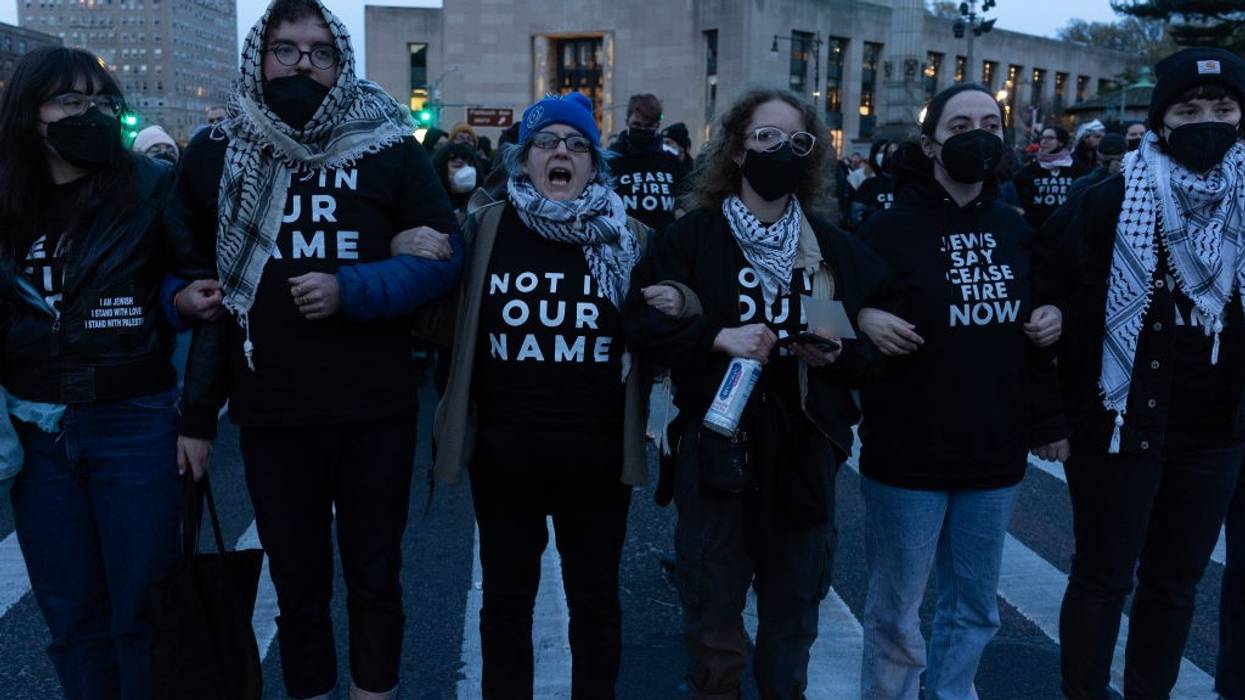
In a historical moment where Jewish identity is facing political and moral division, the inquisitive nature of the Four Children can inspire a new generation of Jewish families to question what we have been told about Palestinians in Gaza.
During the Passover seder, Jewish families recall our cultural yearning for freedom and liberation through storytelling and asking questions. This week, families across the Jewish world will gather to retell an ancient story, connecting with ancestors who passed on to us a generations-old struggle for justice and peace.
But what makes this night different from all other nights? This Passover, Jewish communities will continue to witness a rupture over Israel’s actions in Gaza, while Israel’s attacks on Iran and Lebanon will surely generate new questions. But, unlike the Four Children, or the child reciting, “Mah Nishtana,” many Jewish children will have their questions left unanswered.
By exploring what the Four Children might ask in this moment, and offering answers aligned to our Jewish values, we honor rather than shy away from the Jewish tradition of asking questions.
The wise one, what does he say? “What are the testimonies, the statutes, and the laws which the LORD, our God, has commanded you?” And you shall tell him the laws of Pesach.
If we truly want to honor our traditions and values, we must not shy away from difficult questions.
The wise child asks, “What are the testimonies of Palestinians in Gaza? What are the international laws that nations follow? What are the Jewish ethics which our ancestors have passed to us?”
When the wise child asks for testimony, you must share the countless firsthand accounts of Palestinians in Gaza who have endured deteriorating conditions and cruelty at the hands of the Israeli military.
When the child asks for statutes, you must guide them to United Nations reports, International Court of Justice cases, and International Criminal Court investigations that provide evidence of war crimes and genocide.
When the wise child asks for laws, you must show how our Jewish texts instruct us to value all life, command us against standing “idly by the blood of another,” and teach us to honor each soul as a universe.
The wicked one, what does he say? “What is this service to you?” He says, “to you,” but not to him. By thus excluding himself from the community he has denied that which is fundamental.
The wicked child asks, “Why do they deserve this?” “They,” the child says, and not Palestinians, not families, not human beings. When the child excludes others from humanity, they exclude themself. You must call them in and say, “we must stand with Palestinians facing genocide in Gaza.” “We,” and not, “I,” for our safety is intertwined.
The simple one, what does he say? “What is this?”
The simple child asks, “What is this?” What is the truth about Gaza?” He hears opposing narratives in the news, on his phone, and in his Jewish community. He hears Zionists describe the people who live in Gaza as terrorists, animals, and other dehumanizing labels justifying collective punishment. He sees another reality, a mosaic of humanity–children, doctors, journalists, and families– experiencing profound grief and suffering.
The simple child is confused, and we must direct him to seek truth and act in alignment with his Jewish values: Never again means never again for anyone.
As for the one who does not know how to ask, you must open [the story] for him [...]
And for the child who doesn’t know how to ask, you must open a path for them to question the narratives that Zionists tell of Palestinians in Gaza, just as Jewish culture teaches us to question, challenge, and debate our traditions and worldviews.
Passover is a testament to the power of retelling stories that resonate across generations. The Four Children, a key part of the Passover haggadah, have always acted as archetypes of Jewish engagement. In a historical moment where Jewish identity is facing political and moral division, the inquisitive nature of the Four Children can inspire a new generation of Jewish families to question what we have been told about Palestinians in Gaza.
If we truly want to honor our traditions and values, we must not shy away from difficult questions. Nor should our answers ignore the parts of our tradition that teach us to prioritize life, to love the stranger, and to challenge our worldviews. Our children deserve nothing less.
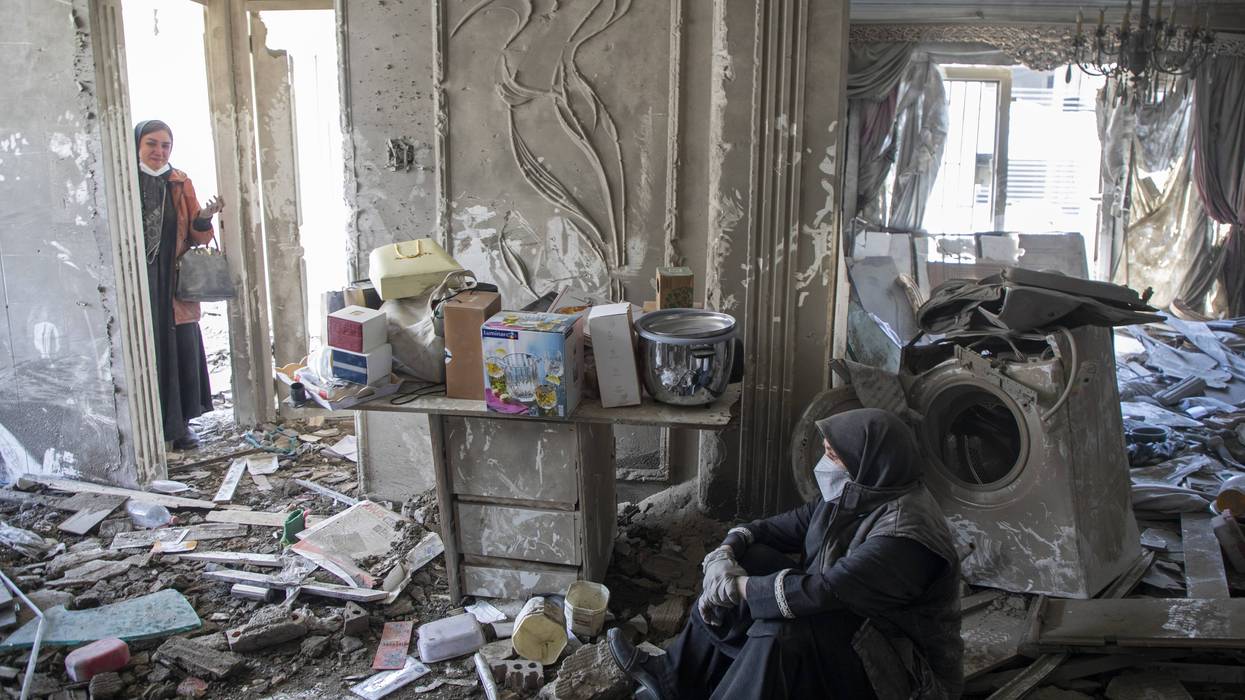
Passing this proposed budget would be a recipe for endless war, while undermining the nation's ability to address the truly pressing problems at home that demand our urgent attention.
It has been reported that the Pentagon on Friday will release a proposed budget for Fiscal Year 2027 of almost $1.5 trillion, with approximately $1.15 trillion in discretionary spending contained in the department’s regular annual budget and an additional $350 billion dependent on Congress including it in a separate budget reconciliation bill.
Whatever vehicles the administration chooses to promote this huge increase, it will be doubling down on a failed budgetary and national security strategy. If passed as requested, $1.5 trillion in Pentagon spending—in a single year–will make America weaker by underwriting a misguided strategy, funding outmoded weapons programs, and crowding out other essential public investments.
The current war in the Middle East is a case study in the ineffectiveness of an overreliance on military force in seeking to make America or the world a safer place. In his first term, President Trump abandoned a multilateral agreement that was effectively blocking Iran’s path to a nuclear weapon. Six years later, in his second term, the president initially justified his disastrous intervention against Iran as being motivated by fears of that very same program.
The current war in the Middle East is a case study in the ineffectiveness of an overreliance on military force in seeking to make America or the world a safer place.
Diplomacy worked. Reckless resort to force does not, as evidenced by the devastating human, budgetary, and global economic consequences of the current Middle East war. Passing a $1.5 trillion Pentagon budget would be a recipe for endless war.
Meanwhile, other, non-military investments needed to protect the lives and livelihoods of Americans are being sharply reduced. By one account, the first week of the war on Iran cost $11.6 billion. That’s more than the Trump administration proposed for the annual budgets of the Centers for Disease Control and the Environmental Protection Agency combined for this year. Yet addressing the climate crisis and the need to prevent future outbreaks of disease are essential to the safety and security of Americans.
The administration has also reduced our available tools of influence on the foreign policy front by decimating the Agency for International Development, laying off trained diplomats at the State Department, and withdrawing from major international agreements. This leaves force and the threat of force as virtually the last tools standing for promoting U.S. security interests.
Diplomacy worked. Reckless resort to force does not.
The Pentagon doesn’t need more spending, it needs more spending discipline. Spending billions of dollars on a Golden Dome system that can never achieve the President’s dream of a leak proof missile defense system is sheer waste, as is continuing to lavish funds on overpriced, underperforming combat aircraft like the F-35, or multi-billion dollar aircraft carriers that are vulnerable to modern high speed missiles.
The truth is, there are not enough factories, or skilled workers, or materials to effectively spend such a huge increase. It will be a recipe for waste, fraud and abuse.
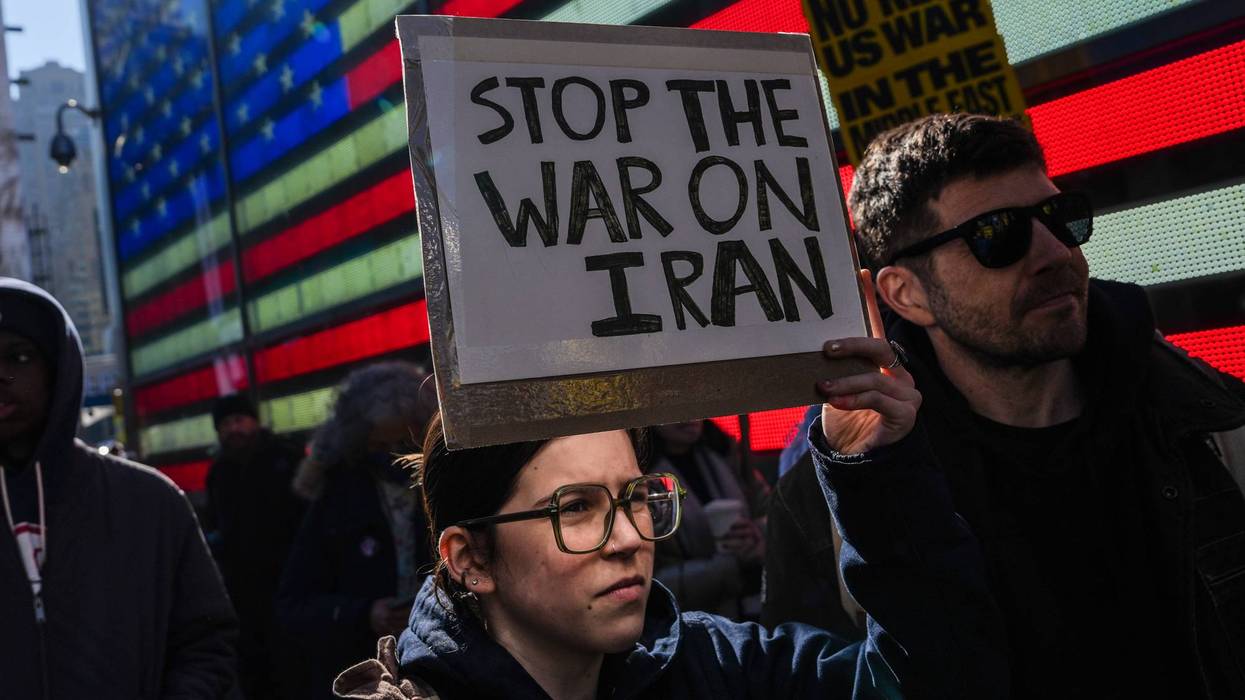
History tells us one thing: When we wage unjust wars that terrorize distant populations in far-off lands, the violence rarely remains confined there. Sooner or later, in one form or another, it returns.
What will the costs of the latest round of illegal, ill-fated US military adventurism in the Middle East amount to? Some of the toll is already clear. Washington has squandered billions of dollars on a reckless war of aggression against Iran. A merciless campaign of aerial bombardment has driven millions from their homes. American and Israeli airstrikes have rained destruction on 10,000 civilian sites and already killed more than 3,000 people in Iran and Lebanon. Among the dead are more than 200 children, many killed in a US strike on a girls’ school, a war crime that evokes the grim precedent of such past American atrocities as the 1968 My Lai massacre in Vietnam or the 1991 Amiriyah shelter bombing in Iraq.
The latest war has also dealt a potentially fatal blow to our already battered democratic institutions. It’s a war neither authorized by Congress nor supported by the public. Instead, it was launched by a president who refuses to submit to the law or heed the will of the people, claiming in true authoritarian fashion that he is the law, and that he alone embodies the popular will.
Such democratic backsliding has, however, been decades in the making, a predictable result of longstanding imperial impunity. Yet we may rapidly be approaching a point of no return. Even George W. Bush, in launching his catastrophic wars of choice in the region, sought to manufacture consent and present the case before the United Nations. Today, there is neither the pretense of legality nor of legitimacy.
The costs associated with this latest criminal war, measured in human lives; the misappropriation of national resources; and the erosion of the rule of law will only continue to mount. Yet there is also a less visible, less immediate price tag for such wars. If the history of American interventions in the region offers any guide, the full bill will likely not become apparent for months, years, or even decades. When it finally arrives, however, it will carry a familiar name: blowback.
In case after case, conflicts initiated or intensified by the United States appeared to subside, only to reemerge in new, more volatile forms.
For that reason, it’s important at this moment to recall the lessons Washington appears determined to forget. From Afghanistan to Iran, Iraq to Libya, the record is unmistakable. Yet as long as the historical amnesia that grips this country’s political establishment remains unchallenged, the same cycles of escalation and reprisal will undoubtedly persist in the years to come, threatening to once again draw the United States (and much of the world) ever deeper into the abyss of forever war.
While the post-9/11 “war on terror” is often invoked as the starting point of US militarism in the Middle East, the roots of conflict there stretch back nearly a century. The violence and instability unleashed after the attacks of September 11, 2001 represented less a rupture with the past than a continuation of long-established patterns of US policy. The seeds of the forever wars had, in fact, been planted decades earlier in the oil-rich soil of the region.
Direct American involvement began in the previous century in the years between the First and Second World Wars. By that point, petroleum had become not merely a valuable commodity but a strategic necessity for sustaining a modern industrial economy. The vast oil reserves discovered in the United States had propelled the American economy to global prominence and played a decisive role in fueling the Allied war effort during World War I. Yet policymakers in Washington understood that domestic reserves were finite. As petroleum became synonymous with power, economically, militarily, and politically, the United States increasingly turned abroad to secure new sources.
The Middle East emerged as a critical frontier in that search, drawing the region ever more tightly into the orbit of an expanding American empire. In 1933, Standard Oil of California secured an exploratory concession with the conservative monarchy of Saudi Arabia. The agreement created the Arabian American Oil Company (ARAMCO), laying the groundwork for the 1945 US-Saudi oil-for-security partnership that would become central to Washington’s future influence over the region’s geopolitical order.
Over the years, the insatiable thirst for oil only drew the United States ever deeper into the region. By 1953, American intervention assumed more overtly coercive forms. That year, in coordination with British intelligence, the CIA orchestrated the overthrow of Mohammad Mossadegh, Iran’s popular prime minister, who had committed a cardinal sin in the emerging Cold War years. In 1951, he presided over the nationalization of his country’s oil industry in an effort to return sovereign control of its resources to the Iranian people by wresting them from the exploitative grip of the Anglo-Iranian Oil Company, the precursor to British Petroleum.
Despite his staunchly nationalist rather than communist credentials, a fact understood in Tehran, London, and Washington, Mossadegh would then be cast as, at worst, a dangerous proxy of the Soviet Union and, at best, a threat to regional stability (as in, American hegemony). The coup that followed ended Iran’s fragile democratic experiment, secured continued access to Iranian oil for Western companies, and restored the Shah of Iran to power. His regime would then be sustained by a steady outward flow of oil and a nearly endless influx of US weaponry. With CIA backing, his secret police, SAVAK, would terrorize and torture a generation of Iranians.
Yet Washington celebrated this new arrangement, claiming that Iran had been transformed into an “island of stability,” and a cornerstone of the “twin pillar strategy,” in which Washington would outsource regional Cold War policing to compliant authoritarian allies in Iran and Saudi Arabia. Such subversion of nationalist movements and support for despotic monarchies, as well as the increasingly unequivocal backing of Israel, would generate intense backlash. Among the most visible early expressions of that was the 1973 OPEC oil crisis, demonstrating how US policy in the Middle East could reverberate domestically.
But the first unmistakable case of blowback arrived in 1979 with the Iranian Revolution. In that country, discontent had been simmering beneath the seemingly stable façade of the Shah’s rule for years. When the monarchy collapsed after months of protests and repression, the Islamic Republic would fill the political vacuum, drawing on the theological language of Shi’ism and the political rhetoric of opposition to the Shah, the United States, and Israel.
In the US, those developments were largely stripped of their historical context. Americans were instead cast as the innocent victims of irrational fanaticism. Why do they hate us? was the refrain that echoed across the Western media and the answers offered rarely confronted the long history of intervention and exploitation. Instead, they defaulted to a supposed civilizational conflict with Islam, which was portrayed as inherently antagonistic to “Western values.”
Such explanations obscured an uncomfortable reality—that the US had repeatedly undermined democracy across the region (as well as in other parts of the world) to advance its own interests. As a Pentagon commission report in 2004 acknowledged, the problem was not that people “hate our freedoms,” as President George W. Bush had reductively claimed, but that many “hate our policies.” In other words, the attacks on New York City and the Pentagon in Washington on September 11, 2001 were the ultimate, if deeply disturbing, expression of blowback.
Those widely resented policies from Washington were reinforced by its overreaction to the 1979 upheaval in Iran. That country’s new leader, Ayatollah Khomeini, sought not only to transform Iranian society internally but envisioned the Islamic Republic as the opening move in a broader anti-imperialist struggle across the Middle East. For Washington and its reactionary regional allies, the specter of such potential revolutionary contagion posed a profound threat.
In January 1980, in an attempt to contain the Iranian regime, President Jimmy Carter articulated a new foreign policy position that placed the US on a collision course in the region. The Carter Doctrine declared the Persian Gulf a “vital interest” of the United States, warning that any attempt by an outside power to gain control would be repelled by “any means necessary, including military force.” In that fashion, Washington asserted an explicit claim to a protectorate thousands of miles from its shores. The United States, Carter made clear, was prepared to send soldiers there to ensure uninterrupted access to oil.
The strategic reorientation that followed proved violent and far-reaching, while marking a shift away from East and Southeast Asia as the principal theaters of Cold War conflict. As Andrew Bacevich observed in his book America’s War for the Greater Middle East, if you were to measure US involvement by the number of troops killed in action, the transformation was striking. From the end of World War II to 1980 almost no American soldiers were killed in the region. Since 1990, however, virtually none have been killed anywhere except in what Bacevich termed the “Greater Middle East.”
Measured in American lives alone, the subsequent costs would number in the thousands. Measured in civilians killed across the region, the toll would be vastly greater. Over the past several decades US-led or -backed wars have contributed to the deaths of millions of people and the displacement of tens of millions more, producing one of the most devastating population catastrophes since the end of World War II.
The American shift toward the Middle East ensured that the United States would become deeply entwined in a cascade of conflicts. As regional actors moved either to defend a fragile status quo or exploit the upheavals that followed, Washington began instigating new conflicts in the region.
In Baghdad, Iraqi leader Saddam Hussein opposed the new government in Tehran on ideological and strategic grounds. The emergence of a revolutionary Shi’a state next door threatened his Sunni-dominated Ba’athist regime that ruled over a Shi’a majority in Iraq. At the same time, Saddam sought to exploit what he perceived to be Iranian weakness, pressing longstanding revanchist claims to the oil-rich borderlands of southwestern Iran.
Saudi Arabia viewed these developments with similar alarm. In the capital Riyadh, policymakers feared that revolutionary Shi’ism might threaten the legitimacy of the kingdom’s Sunni Wahhabi monarchy. The call for a Shi’a revolution also raised concerns about unrest in its oil-rich Eastern Province, where Shi’a workers faced economic exploitation and near colonial conditions. Similar anxieties reverberated across the other Gulf monarchies.
Violence begets violence, and imperial war has a way of boomeranging back upon those who initiate it.
The United States responded by doubling down on support for the remaining pillars of its regional order, Saudi Arabia and Israel, while seeking to contain and roll back the perceived threat posed by Iran. Still interpreting regional upheaval through the prism of the Cold War, US policymakers also expanded their involvement elsewhere. In Afghanistan, the CIA launched the largest covert operation in its history, channeling weapons and support to the Afghan mujahideen resisting the Soviet Union’s occupation of that country that began in December 1979.
The Soviet intervention itself was shaped by the shockwaves of the Iranian Revolution. Leaders in Moscow feared a militant Islam on their southern flank that might embolden similar currents within Muslim-majority regions of the Soviet Union.
In Iraq, the US publicly tilted toward Saddam Hussein while simultaneously engaging in illegal weapons sales to Iran, with the funds received being rerouted to bankroll another American-backed war in Nicaragua. Meanwhile, the Lebanese Civil War, worsened by Israel’s 1982 invasion of Lebanon, created the conditions for the rise of Hezbollah, which presented itself as a defender of marginalized Shi’a communities against Israeli military aggression and sectarian violence.
By 1986, after escalating regional violence and spillover, the administration of President Ronald Reagan took a step that paved the way for what would, in the next century, become Washington’s “War on Terror.” In April of that year, Reagan launched airstrikes in the dense heart of Tripoli on the home of Libyan leader Muammar Gaddafi, holding him responsible for acts of non-state terrorism abroad, including support for armed movements from the Palestine Liberation Organization to the Irish Republican Army.
That operation marked a significant escalation in the region and its justification would later be formalized as the Bush Doctrine: the claim that Washington could wage preemptive war anywhere against any state accused of supporting terrorism inside its country or outside its borders. That doctrine was no less illegitimate, illegal, or dangerous in the 1980s than it would become two decades later. As Daniel Ellsberg observed then (a point he would continue to press throughout his life, including after President Barack Obama ordered similar strikes on Libya in 2011), it seemed that the US had “adopted a public policy of responding to state-sponsored terrorism with US state-sponsored terrorism.”
In each instance, deeper involvement in the region produced deeper backlash. The US-backed Afghan jihad helped give rise to al-Qaeda in 1988 and paved the way for the Taliban’s seizure of power in 1996 and the failed 20-year American war in Afghanistan. The Iran-Iraq War of the 1980s set in motion a chain of events that culminated in the Gulf War of 1991, which laid the groundwork for the criminal 2003 US invasion of Iraq. The instability that followed not only expanded Iran’s regional influence but contributed to the emergence of the Islamic State. In Lebanon, the power vacuum that Hezbollah came to fill resulted in the 1983 barracks bombing in Beirut, the deadliest day for US Marines since Iwo Jima.
The pattern is difficult to ignore, despite our government’s persistent efforts to do so. Many of the actors Washington came to identify as its principal adversaries emerged either in direct response to US policies or had themselves once been cultivated by Washington in pursuit of short-sighted strategic aims. In case after case, conflicts initiated or intensified by the United States appeared to subside, only to reemerge in new, more volatile forms. Intervention produced instability; instability served to justify further interventions; and the cycle only repeated itself thereafter.
There is little reason to believe that Donald Trump’s war against Iran will prove any different. By now, the historical record should make that clear, which is why we must oppose the violence being carried out in our name, as it is wrong, criminal, and immoral. We must oppose it for the sake of our common humanity, but also for our own sake.
After all, history tells us one thing: When we wage unjust wars that terrorize distant populations in far-off lands, the violence rarely remains confined there. Sooner or later, in one form or another, it returns. Violence begets violence, and imperial war has a way of boomeranging back upon those who initiate it. We reap what we sow; the chickens, in time, invariably come home to roost.
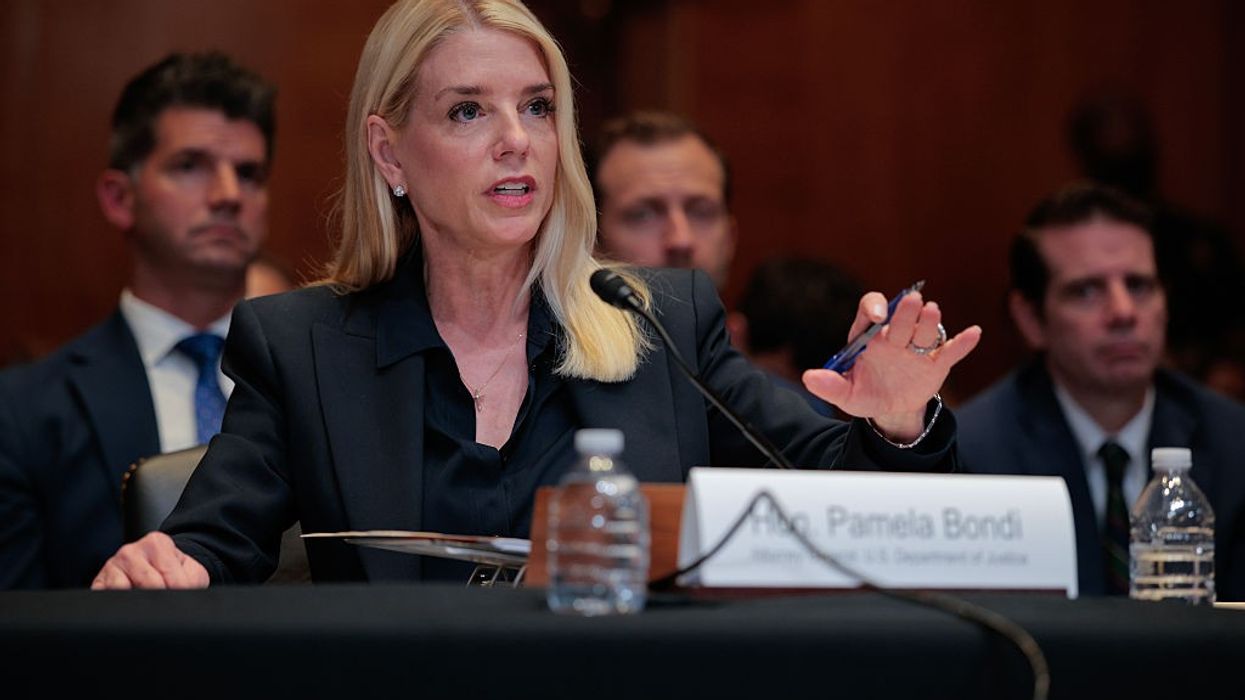
Trump is likely to appoint a successor who’s better at covering up his relationship with Epstein, more effective in prosecuting his enemies, and more convincing in pretending they believe what they’re saying in trying to justify Trump’s corruption.
There’s always a temptation to celebrate when President Donald Trump does something sensible, like firing his Attorney General, Pam Bondi—until you ask yourself why he’s done it.
Not since John Mitchell, who was Richard Nixon’s attorney general, has anyone done more to tarnish that office and damage the Justice Department than has Bondi.
But Trump didn’t fire her because she turned the Justice Department into a cesspool of corruption. Just the opposite. He fired her because she didn’t hide the corruption well enough. She failed to achieve all the corrupt goals he set for her: She didn’t make the Epstein files go away, didn’t fully prosecute his enemies, and wasn’t convincing enough in congressional hearings and on television in advocating for Trump.
Trump has been furious that the Epstein files continue to be a political liability. He’s upset that his MAGA base, and congressional Republicans who are responsive to it, doesn’t believe that the truth has yet been told about what the Justice Department knows about Epstein. He’s angry that so many continue to think there’s a continuing cover-up—which there surely is.
Trump doesn’t simply demand total loyalty from his lackeys. He wants them to convincingly act on the media and before Congress as if they’re motivated by sincere conviction rather than mere loyalty to Trump.
But he doesn’t want the cover lifted. To the contrary—he wants it slammed shut so tightly that the public will forget all about him and Epstein. To Trump, Bondi’s failure was to have left the cover open just enough that the public still demands a full accounting.
Similarly with Trump’s demand that she prosecute his enemies (a demand he mistakenly made public on social media). He’s not angry that she’s tried to do so; he’s angry that she’s bungled it so badly that several courts rejected her prosecutors’ attempts and several grand juries have even turned down her prosecutors’ requests to indict.
The same thing with her appearances on TV and before Congress. Trump doesn’t simply demand total loyalty from his lackeys. He wants them to convincingly act on the media and before Congress as if they’re motivated by sincere conviction rather than mere loyalty to Trump. Bondi failed at this, too.
There’s no cause for celebration in Trump’s firing Bondi because Trump is likely to appoint a successor who’s better at covering up his relationship with Epstein, more effective in prosecuting his enemies, and more convincing in pretending they believe what they’re saying in trying to justify Trump’s corruption.
In other words, someone who will be even worse than Bondi has been, undermining the rule of law.