May, 07 2025, 10:36am EDT

Ahead of McCarthyite House Committee hearing on College Campuses, Jewish Columbia Students Urge Congress to take Action Against the Trump Regime’s False Allegations of Antisemitism
On the eve of the Committee on Education and Workforce’s latest hearing, nine Jewish students from Columbia University met with members of Congress to urge them to speak out against the Trump’s regime’s authoritarian crackdown on dissent
Ahead of today’s House Committee on Education and Workforce kangaroo hearing grilling the heads of Haverford College, DePaul University, and CalPoly San Luis Obispo, Jewish Voice for Peace Action expresses grave concern that the far-right is using show trials and false allegations of antisemitism to censor the Palestinian rights movement, kidnap non-citizen student activists, crush free speech, and defund higher education.
On Tuesday May 6th, JVP Action brought nine students from Columbia University to meet with members of Congress to speak about their experiences as Jewish students who have been steadfastly committed to advocating for the safety and freedom of the Palestinian people. The students warned members of Congress that the Trump regime is using false allegations of antisemitism to crack down on dissent, and called for elected officials to do more to protect student activists from the Trump administration’s authoritarian attacks, and to call for the release of non-citizen student activists being targeted for deportation including their classmate Mahmoud Khalil who is currently a political prisoner in an ICE detention facility in Louisiana.
“I’m here asking my representatives to call for the release of my friend Mahmoud Khalil and to put real pressure on the Trump regime. I cannot stand to see the Trump administration smear Mahmoud as an antisemite when it could not be further than the truth,” said Shay Orentlicher, Jewish Junior at Columbia.
For the past 1.5 years, Columbia University and its student protests have remained in the public eye, yet very few Jewish student activists have been able to tell their stories. On May 6, a little over one year since the launch of the student encampment movement, these students traveled to Congress to tell their elected officials what it’s like being a Jewish student who supports Palestinian rights in an increasingly repressive campus environment. These students told members of Congress about the beautiful multicultural connection and grief that has been core to their activism on campus.
“This Passover we held a beautiful seder with not only our fellow Jewish students but also our community members in the broader anti-war movement at Columbia. Rooted in our tradition of remembrance and liberation, we came together to tell the story of Passover and offered a heartfelt prayer for Mahmoud’s freedom” said Carly Shaffer, a Jewish graduate student in SIPA and friend of Mahmoud Khalil's.
The students felt it was especially important to make their voices heard prior to today’s House Committee on Education & the Workforce hearing in which far-right members of Congress will once again operate under the guise of caring about antisemitism in order to attack the right to political dissent and free speech.
“The Trump Regime is using false allegations of antisemitism to disappear our friends, punish student protestors, and dismantle higher education. What we are seeing has nothing to do with keeping Jews safe, and everything to do with crushing dissent. Thousands of Jews on campuses across the country have spoken out in solidarity with the people of Gaza and we will not be silent.” said Tali Beckwith-Cohen, a Jewish senior at Barnard College.
“The far-right does not care about Jewish safety. Trump and his allies in Congress are platforming neo-Nazis and Christian Nationalists, all while pretending to care about antisemitism in order to take a hatchet to our communities and most basic freedoms. This is intended to silence the Palestinian rights movement, sow chaos, and sharpen authoritarian tools that will then be used to dismantle civil liberties and democracy itself.” said Beth Miller, Political Director of JVPA.
In one of many egregious examples of its absurd claims, in a letter to Haverford College ahead of the House Committee’s hearing tomorrow, the Committee’s Republican leadership refers to an academic talk given by Rabbi Dr. Rebecca Alpert about the history of Jewishness and anti-Zionism as an example of “antisemitism”. Rabbi Dr. Rebecca Alpert is not only a Rabbi, but also a scholar of Jewish history who was invited to speak on campus because of her expertise.
“My ancestors fled fascism and taught me to fight supremacy and fascism wherever it occurs. I am seeing rising fascism here as the Trump regime lies and targets non citizens, human rights activists, and everyone who challenges their authoritarian agenda. I refuse to be silent because I know that it was silence that allowed the persecution of my ancestors in Europe.” said Sarah Boris, who is a Senior studying English and Jewish studies at Columbia University.
Jewish Voice for Peace is a national, grassroots organization inspired by Jewish tradition to work for a just and lasting peace according to principles of human rights, equality, and international law for all the people of Israel and Palestine. JVP has over 200,000 online supporters, over 70 chapters, a youth wing, a Rabbinic Council, an Artist Council, an Academic Advisory Council, and an Advisory Board made up of leading U.S. intellectuals and artists.
(510) 465-1777LATEST NEWS
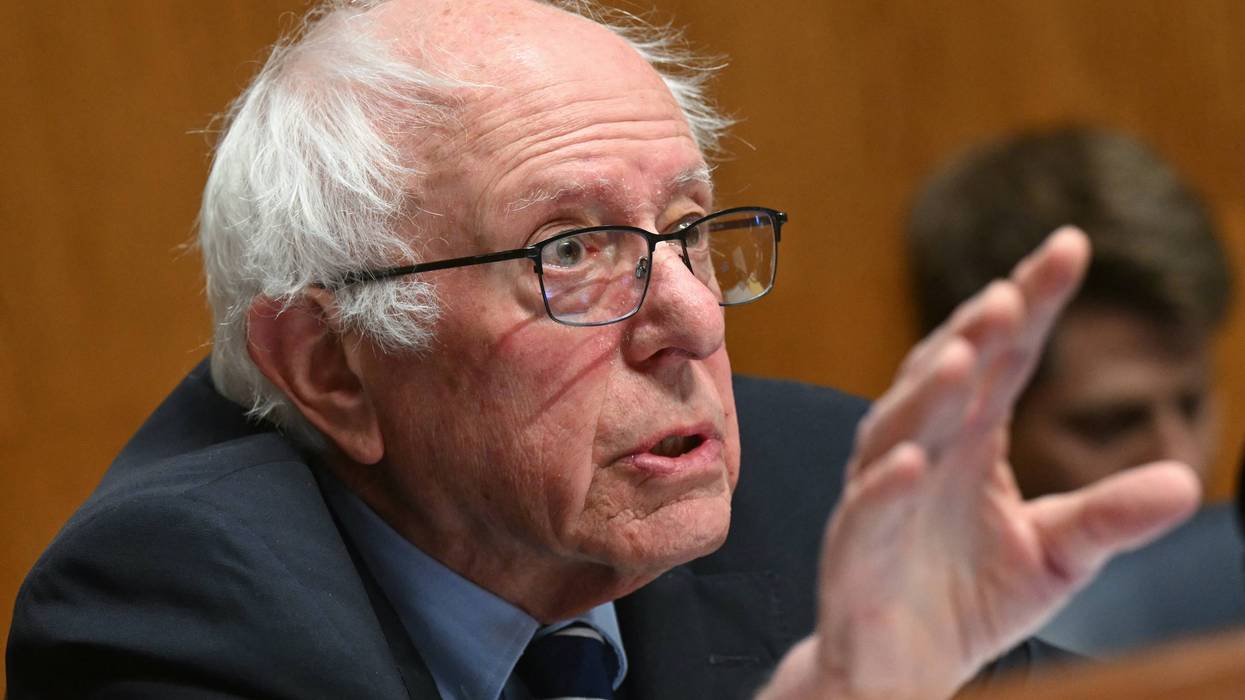
Bernie Sanders Leads Senators in Demand to End Super PACs in Democratic Primaries
“We cannot allow unlimited outside spending to distort our elections or drown out the voices of working people."
Apr 27, 2026
Sen. Bernie Sanders is leading a coalition of Democratic senators pushing for the party's leaders to require candidates to swear off billionaire- and corporate-backed super PACs, or political action committees, in this year's primary elections.
Sens. Jeff Merkley (D-Ore.), Tina Smith (D-Minn.), Elizabeth Warren (D-Mass.), Peter Welch (D-Vt.), and Chris Van Hollen (D-Md.) joined the independent senator from Vermont to send a letter to Senate Minority Leader Chuck Schumer (D-NY) and Democratic National Committee (DNC) Chair Ken Martin on Sunday.
Five of the senators are members of a group of Senate Democrats known as the "Fight Club" that has formed to oppose Schumer's preferred candidates in contested Democratic primaries, many of whom are closely aligned with the party's traditional corporate backers.
While the senators applauded the DNC's resolution last month broadly condemning the influence of dark money in party elections, calling it an "important first step," they said Democratic leaders needed to take more "concrete steps to curb the influence of dark money," particularly the artificial intelligence and cryptocurrency industries and the American Israel Public Affairs Committee (AIPAC).
"Corporate-funded super PACs are shaping the 2026 elections as we speak, and the scale of their resources is unprecedented," the senators said. "Crypto-aligned groups are preparing to spend $200 million, and AIPAC-affiliated groups already control more than $90 million. The AI industry has already spent over $185 million this year alone. These sums are being deployed to influence Democratic primaries and overwhelm candidates who rely on grassroots support."
April's broad anti-dark money resolution was passed by the DNC in lieu of one that directly singled out “the growing influence” of AIPAC, specifically over its more than $100 million spending blitz in 2024 to oust progressive candidates. Despite a dramatic shift toward opposition to Israel among Democratic voters over the past three years, that resolution was voted down by a DNC panel.
AIPAC continues to dump massive amounts of money behind its preferred candidates. The senators' letter notes that "in Illinois alone, outside groups spent over $50 million in recent Democratic primaries." Nearly half of that money was spent by AIPAC, which secretly funneled money to support its candidates using shell groups that appeared to be unaffiliated.
The group has used similar tactics in New Jersey and Pennsylvania. Ala Stanford, a candidate for Pennsylvania's 3rd District in Philadelphia, was recently revealed to have received $500,000 worth of backing from AIPAC through a super PAC despite claiming to have received no support from the Israel lobby.
Meanwhile, in Maine, a clique of Republican billionaires who back Sen. Susan Collins (R-Maine)—including Blackstone CEO Stephen Schwarzman and Palantir CEO Alex Karp—also recently dropped $2 million to fund an ad campaign seeking to hamper the chances of the Democratic Senate primary front-runner Graham Platner.
"We cannot allow unlimited outside spending to distort our elections or drown out the voices of working people," the senators said in Sunday's letter.
The senators noted Schumer's past statement that overturning the Supreme Court's 2010 ruling in Citizens United v. Federal Election Commission, which opened the door for the flood of corporate money into elections by allowing individuals to independently spend unlimited amounts in support of candidates, was "probably more important than any other single thing we could do to preserve this great and grand democracy.”
They said that while reversing the ruling remained a "critical long-term goal," the party "has the authority—and the responsibility—to act now with clear, enforceable rules."
"National and state parties should require all Democratic candidates to sign a pledge opposing billionaire- and corporate-backed super PAC spending on their behalf in Democratic primaries," they said. "The DNC, state parties, and committees working to elect Democrats to the House and Senate have many potential tools at their disposal to enforce that pledge, including withholding endorsements for those who make endorsements in the primary, and they should use whatever tools necessary to do so."
Sanders has said that simply requiring candidates to take a pledge is not enough and that party leaders need to be diligent about holding them to it.
“If the Democrats are going to be honest and consistent in terms of their concerns about money and politics, they’ve got to clean up, in my view, their own house immediately,” he said in an interview on Saturday. “That means getting super PACs out of Democratic primaries, congressional as well as presidential.”
Keep ReadingShow Less

'Death on the Job' Report Details Workplace Safety Decline Under Trump
"From the dismantling of critical federal agencies and laws to the expansion of unregulated, untested AI technology, the protections that workers fought and died for are under serious threat," said the AFL-CIO president.
Apr 27, 2026
Since returning to the White House last year, President Donald Trump has revived his war on workers and their labor unions, including by making US workplaces less safe, according to an annual report released Monday by the AFL-CIO.
The AFL-CIO published its 35th annual "Death on the Job: The Toll of Neglect" report on the eve of Workers Memorial Day on Tuesday, and in the lead-up to International Workers' Day, or May Day, on Friday—for which organizers have already planned more than 3,000 events demanding an economy that serves "workers over billionaires" across the United States.
"Over the last 35 years of this report, job safety agencies' resources have diminished dramatically, even as their responsibilities have grown immensely," the publication notes. "For instance, the Occupational Safety and Health Administration (OSHA) is now in charge of 85% more establishments, 44% more workers, and new hazards and technologies, yet Congress has reduced its budget by 10% and staffing by 26%, including a 16% reduction in inspectors."
"These percentages have massive impacts on such a tiny agency and very real personal effects on workers and their families," the report continues. "Agencies now have a paltry number of staff to write standards, analyze data, conduct inspections, perform oversight on states, orchestrate needed research on important hazards, and respond to emerging threats. The number of OSHA inspectors has now hit a new low, and the Mine Safety and Health Administration (MSHA) does not have enough inspectors to meet its statutory requirement to inspect each mine multiple times a year."
While "more than 735,000 workers now can say their lives have been saved since the passage" of the Occupational Safety
and Health (OSH) Act, "too many workers remain at serious risk of injury, illness, or death as chemical plant explosions, major fires, construction collapses, infectious disease outbreaks, workplace assaults, toxic chemical exposures, and other preventable tragedies continue to permeate the workplace," the document stresses.
"Workplace hazards still kill approximately 140,000 workers each year in the United States—including 5,070 from traumatic injuries in 2024 and an estimated 135,000 from occupational diseases each year," the report states. "That is more than 380 workers each day. Job injury and illness numbers continue to be severe undercounts of the real problem."
The publication points out that "Black and Latino workers are more likely to die on the job," while older workers and minors are also "at serious risk." According to the data, the deadliest industries in the United States are: agriculture, forestry, and fishing and hunting; mining, quarrying, and oil and gas extraction; transportation and warehousing; construction; and wholesale trade.
"It is a disgrace that in 2026, being Black, Latino, or an immigrant can still be a death sentence on the jobsite," declared AFL-CIO secretary-treasurer Fred Redmond, in a statement. He specifically called out the president's attacks on diversity, equity, and inclusion (DEI), as well as those on immigrant communities.
"Our new report makes it terrifyingly clear that the Trump administration's anti-DEI, mass deportation agenda will only make this crisis worse," Redmond said. "When workers are afraid that reporting threats to their safety could result in their work permits being revoked and their families being ripped apart, and when employers fear that reporting workplace data will hurt their bottom line, we are all less safe: workers of color and white workers, immigrant workers and US-born workers. We must fight the Trump administration's attacks on communities of color like our fellow workers' lives are on the line—because they are."
Faced with these "preventable" deaths, as AFL-CIO put it, the second Trump administration has taken an ax to job safety oversight and enforcement. Specifically, the report details, the administration has:
- Pushed out so many staff that job safety agency staffing is at new lows, leaving fewer inspectors than ever to cover a growing workforce;
- Instructed its OSHA and MSHA inspectors to focus on employer outreach and assistance, taking time and resources away from inspections with citations;
- Expanded OSHA penalty reductions for employers when they violate the law;
- Proposed twice to eliminate worker safety and health training grants, even though Congress has rejected these cuts so far;
- Proposed to eliminate the Chemical Safety and Hazard Investigation Board, in charge of independent, nonregulatory investigations after an industrial explosion, leak, or other major incident;
- Stopped conducting MSHA impact inspections, a critical enforcement tool for focusing on mines with a poor history of compliance with MSHA standards, high numbers of injuries, illnesses or fatalities, or other indicators of unsafe mines;
- Issued zero criminal referrals for violations of the OSH Act;
- Indefinitely halted the enforcement of the silica standard in coal and metal/nonmetal mining;
- Extended deadlines for companies to comply with important Environmental Protection Agency (EPA) chemical regulations that specifically protect workers, such as methylene chloride; and
- Proposed to remove dozens of OSHA and MSHA standards from the books and supported efforts to dismantle the regulatory process.
"Every worker should be able to go home safe and healthy at the end of their shift—but 55 years after the founding of the Occupational Safety and Health Administration, that fundamental right is in danger," warned AFL-CIO president Liz Shuler.
"From the dismantling of critical federal agencies and laws to the expansion of unregulated, untested AI technology, the protections that workers fought and died for are under serious threat," Shuler said, as the Trump administration lobbies against legislation that would regulate artificial intelligence in Republican-led states.
"The labor movement refuses to go backward," she added. "More than five decades after a Republican signed the landmark Occupational Safety and Health Act into law, we urge all members of Congress—from both sides of the aisle—to join us in this fight."
Both chambers of Congress are currently controlled by Trump's Republican Party, and recent votes on various war powers resolutions have demonstrated how most GOP lawmakers are unwilling to stand up to the president, even when he defies the US Constitution.
Keep ReadingShow Less

'Wars, Uncertainty, and Geopolitical Upheaval' Led to 2025 Global Military Spending Surge
"Given the range of current crises, as well as many states’ long-term military spending targets, this growth will probably continue through 2026 and beyond," said one researcher.
Apr 27, 2026
Global military spending around the world surged in 2025 in response to further eroding geopolitical stability, the Stockholm International Peace Research Institute revealed in a report released Monday.
In its annual report on trends in global military expenditures, SIPRI found that global military spending in 2025 totaled nearly $2.9 trillion, a 2.9% increase over defense spending in 2024. Global defense spending now accounts for 2.5% of global gross domestic product (GDP), the highest level since 2009.
Despite the Pentagon's ballooning budget, overall defense defense spending in the US actually decreased in 2025, as the Trump administration and the Republican-controlled US Congress stopped sending new military aid to Ukraine, which had received nearly $130 billion in military aid under President Joe Biden over the previous three years after it was invaded by Russia in 2022.
Even without additional US involvement, spending on the Russia-Ukraine conflict grew significantly in 2025, as Russia increased its defense spending by 6% and Ukraine increased its military expenditures by 20%.
"In 2025 military expenditure as a share of government spending reached the highest level ever recorded in both Russia and Ukraine," said Lorenzo Scarazzato, researcher with the SIPRI Military Expenditure and Arms Production Program. "Their spending is likely to keep growing in 2026 if the war continues, with revenues from Russia’s oil sales increasing and a major European Union loan expected by Ukraine."
The dip in US defense spending may not last long given that President Donald Trump has proposed a record $1.5 trillion military budget and the president's unauthorized war of choice with Iran has already cost US taxpayers an estimated $63 billion.
Both Israel and Iran spent less on defense in 2025 than the year before, although both countries are similarly likely to see a surge in spending given the conflict between the two countries that began when the US and Israel attacked Iran in late February.
Elsewhere in the world, the SIPRI report finds that defense spending in Europe grew by 14% in 2025, while growing just over 8% in Asia and Oceania.
The US, China, and Russia were the three biggest military spenders, and their combined spending of $1.48 trillion represented more than half of the global total.
Xiao Liang, researcher with SIPRI’s Military Expenditure and Arms Production Program, said that the big increases in defense spending came in response to "another year of wars, uncertainty, and geopolitical upheaval with large-scale armament drives."
"Given the range of current crises, as well as many states’ long-term military spending targets," the researcher added, "this growth will probably continue through 2026 and beyond."
Keep ReadingShow Less
Most Popular